Russians reject vaccines as Kremlin fears new covid-19 wave
Facing a rising wave of covid-19 infections and a vaccination rate that isnt keeping up, the Kremlin is trying to contain the epidemic without alarming Russians. Even insiders worry it wont succeed.
Unofficial government statistics show the third wave has begun, according to two officials with knowledge of the situation, who asked not to be identified in order to speak candidly. Months of upbeat assessments from the Kremlin that the situation is under control have depressed demand for vaccines, as much of the population no longer fears the virus, the officials said.
“Of course, we expect demand for the vaccines will grow,” Kremlin spokesman Dmitry Peskov told reporters on a conference call Wednesday, adding that data shows there isn’t a third wave currently.
“Indeed, there is an upswing, but this is not a wave, but rather a gradual little rise,” Vadim Pokrovsky, head of the Russian healthcare watchdog’s epidemiology institute, told the Govorit Moskva radio station Wednesday.
Moscow’s seven-day average of new infections is at the highest since January and it is adding cases faster than the U.K., which has more than five times the population. The national total has stalled at around 9,000 new daily cases, down from nearly 30,000 in December.
Russia is publicly projecting confidence over its handling of the pandemic after President Vladimir Putin rejected a second lockdown in favor of prioritizing the economy when infections surged last year, in contrast to many European leaders. While the economy is rebounding, it has come at the cost of one of the world’s highest death tolls.
The government continues to reject new domestic restrictions, though it recently barred travel to some popular tourist destinations including Turkey to reduce risks from imported strains.
Putin on Friday ordered weekdays made non-working between Russia’s May 1 and May 9 holidays after officials said it would help reduce the spread of the virus by curbing travel.
“The new trend points to the situation possibly becoming more difficult,” Anna Popova, head of Russia’s public health watchdog, told the president.
It’s “absolutely wrong” to talk of a third wave currently, a spokesperson for Russia’s virus response center said Wednesday.
Persuading Russians to take one of three domestic vaccines developed against covid-19 is proving a harder task amid ingrained public skepticism toward officials. Moscow has resorted to offering gift cards worth 1,000 rubles ($13) to motivate people aged over 60 to get their shots.
About two-thirds of Russians say they don’t want the vaccine, said Denis Volkov, an analyst at the independent Levada Center pollster. “Many people say, ‘why should I get a vaccine if the state doesn’t force me to?'” he said.
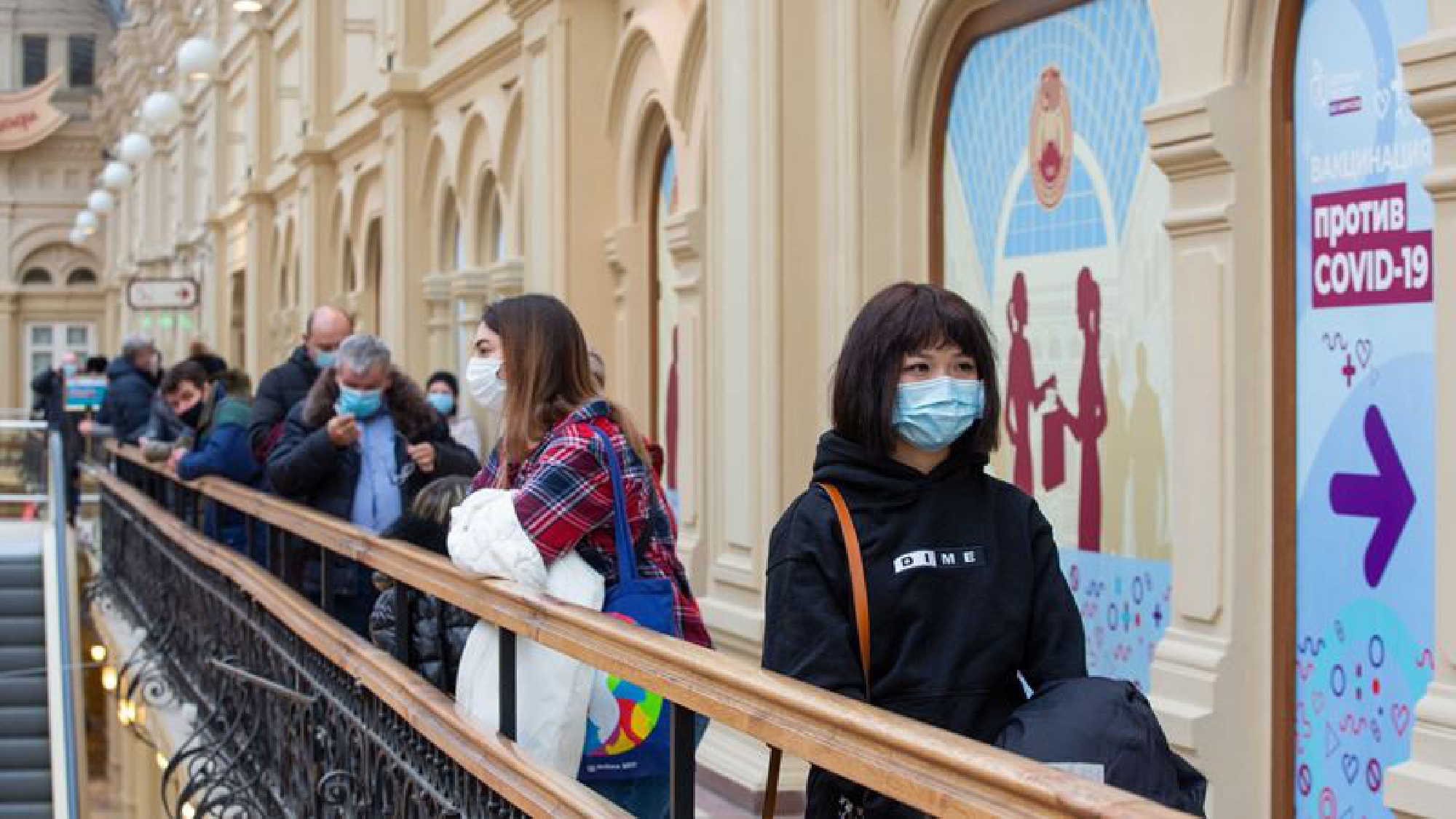
Vaccination centers operate at shopping malls in the capital to encourage people to get the free shots, including at GUM on Red Square.
“There were lines only during the first few days,” said Svetlana Reshetina, an administrator at the center. “I haven’t gotten vaccinated myself. I don’t trust it yet.”
Eva Avenel, 47, said she traveled from a Moscow suburb to be vaccinated after learning that Putin had his shot last month. “My friends kept trying to talk me out of it, saying it was harmful,” but she trusts Putin and “if he’s done it, then so have I,” she said.
Putin has touted Russia’s Sputnik V vaccine as a world leader, though domestic uptake lags and only about 8% of the population has received a dose.
Vaccination rates are improving and some 12.1 million people have had a first shot, Deputy Prime Minister Tatyana Golikova said Tuesday.
Russia needs 69 million people with antibodies either from vaccines or through recovery from illness to achieve herd immunity, according to Golikova. Putin has called for that threshold to be reached by the fall.
There’s little help from many Russian physicians, who “don’t have enough information about the vaccines and have a high level of distrust in them,” said Evelina Zakamskaya, editor-in-chief of Russia’s Doctor television station. “Very often patients make their decisions based on doctors’ anti-recommendations.”
A third wave in Russia is unavoidable, according to Alexander Dragan, an independent data analyst who estimates less than half of Russians have antibodies.
“It’s still not clear how viable the idea of herd immunity is with covid,” Dragan said. “In Brazil, the latest wave has been worse than the previous ones, despite the clearly high percentage of people who have had it.”
Published : April 29, 2021
By : Syndication Washington Post, Bloomberg · Evgenia Pismennaya, Jake Rudnitsky
The CDC changed its mask guidance for vaccinated Americans. Other countries are taking different approaches.
With some countries rapidly inoculating their populations against the coronavirus, and pandemic fatigue deepening, a common question has reverberated around the world: When can the masks come off?
In the United States, fully vaccinated individuals can now leave their masks behind when walking, jogging, biking or dining with friends outdoors, federal officials said Tuesday. Ditching a mask at small outdoor gatherings is also deemed safe, but the CDC still recommends masks for indoor activities.
More than 52% of eligible people in the United States have received at least one shot, and the Centers for Disease Control and Prevention guidance followed calls from public health experts to relax mask mandates outdoors, where transmission is less likely. But officials warned that crowded outdoor events – like sporting events and concerts – are still dangerous, so both vaccinated and unvaccinated attendees should keep their masks on.
Masks – and requirements to don them – have prompted debate around the world since the start of the pandemic. Widely accepted in some places, they have been protested or completely forgone in others. In the United States, federal guidelines have shifted over time, and individual states have imposed different requirements. Mask-wearing became highly politicized, complicating efforts to enforce usage. But in places like Hong Kong and Japan, face coverings were widely worn even before the pandemic, so everyday mask-wearing easily became routine.
Studies show that wearing masks is one of the most effective ways to reduce coronavirus transmission. Some public health experts argue that societal immunity isn’t yet high enough to take them off – particularly since vaccines are not 100% effective and questions remain about whether vaccinated people can transmit the virus. Some experts suggest that wearing a mask even if vaccinated can send a powerful signal to unvaccinated individuals – such as children – to do the same.
Other countries where sizable portions of the population are vaccinated have taken different approaches. Here’s a look at a few.
– Israel
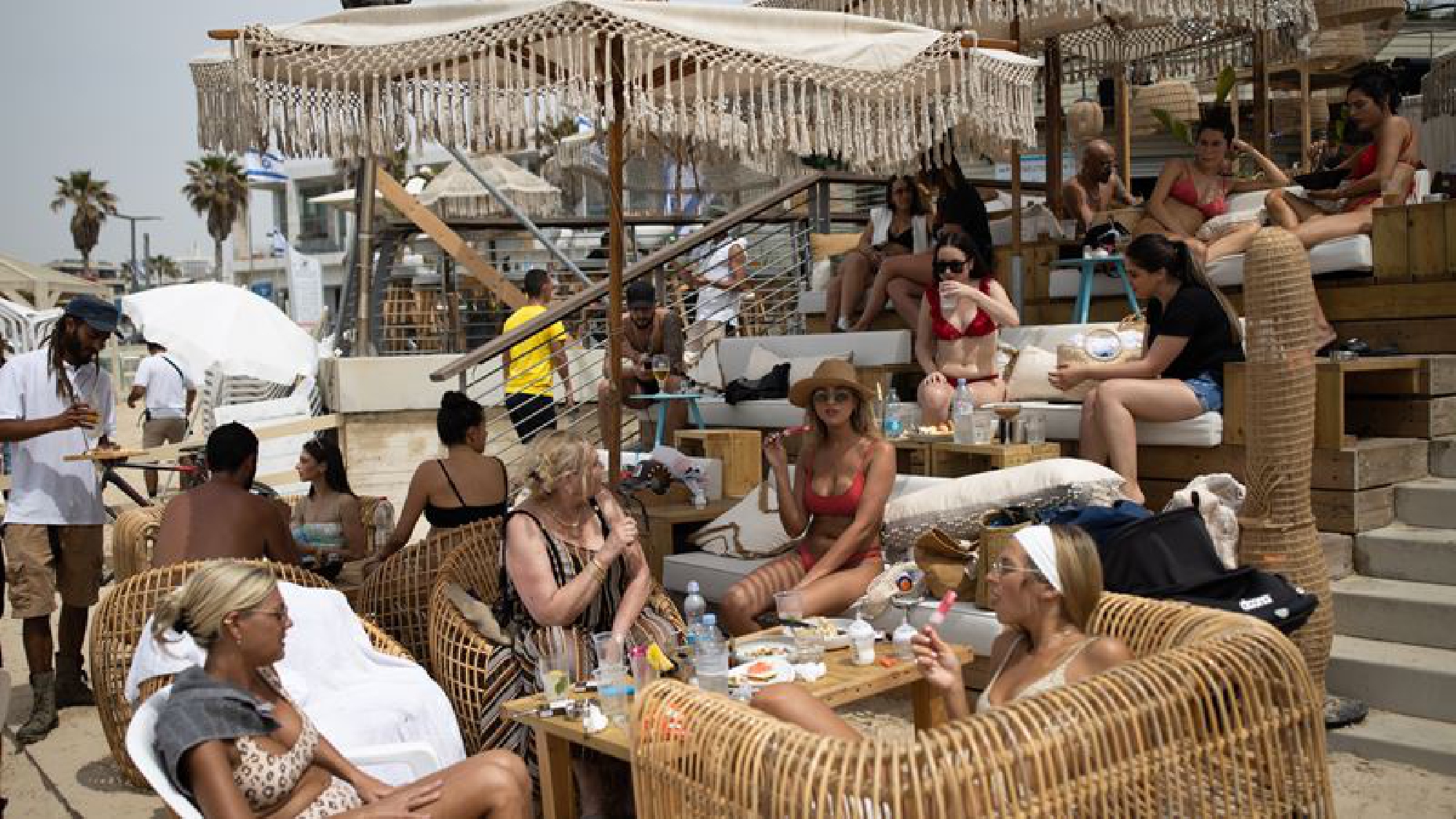
With the majority of its population now fully vaccinated, Israelis are flocking to restaurants, bars and concerts. Life in Israel is beginning to resemble a pre-pandemic reality – as evidenced by the recent proliferation of bare Israeli faces.
Earlier this month, the Israeli government lifted a mask mandate that had been in place for more than a year. Israelis are no longer required to wear masks outdoors, though masks are still obligatory in indoor public places and the Health Ministry recommends that people continue to wear them outside and at large gatherings. In schools, kids still have to wear masks indoors but can shed them between classes, while eating, or during gym class, according to the Times of Israel.
New daily coronavirus infections, which peaked at around 10,000 per day, now hover in the 80s. But health officials have said the pandemic isn’t over – and they’re keeping an eye on new variants that could prove more resistant to vaccines.
Still, reflecting many Israelis’ newfound optimism that the pandemic is almost behind them, Tel Aviv beachgoer Tzuriel Arviv told The Washington Post this month that he’s beginning to let his guard down.
“We had all kinds of habits,” Arviv said. “We would check ourselves, ‘Do we have a mask?’ Who ever imagined such a thing before? But now, we can forget it.”
– The United Kingdom
Previously a global virus hot spot – and the place where a particularly infectious and deadly variant was first detected – the U.K. has seen covid cases drop substantially from a peak in January.
More than 33 million people have received at least one dose of the vaccine, according to the BBC. Nineteen percent are fully vaccinated – but since the government is now prioritizing distributing first jabs, it could be a while before the rest of the population catches up.
Mask rules and other virus-related restrictions vary across England, Scotland, Wales and Northern Ireland. In England, home of extensive debate over mask-wearing and an initially resistant government, face coverings became mandatory on public transportation in June and inside shops and supermarkets in July. A host of other indoor settings also joined the list. Violators can be fined, though enforcement has been spotty.
Northern Ireland has mandated face coverings in shops since August and banks, restaurants, cafes and certain offices since October – but in businesses where social distancing systems are in place, masks aren’t required. Scotland’s government puts it bluntly: “you need to wear a face covering even if you have been vaccinated.” Masks must be worn in most indoor public and communal spaces there, and Scottish authorities recommend wearing face coverings outdoors where social distancing is tricky. Wales, meanwhile, still mandates that people over the age of 11 wear masks in all indoor public places.
As its vaccination campaign proceeds apace, the U.K. is rolling back restrictions in stages this spring. Public health conditions permitting, England aims to remove all legal limits on social contact by the end of June. But Health Secretary Matt Hancock has said that even when requirements lift, he hopes masks become the norm on public transport as a matter of “personal responsibility.”
– The United Arab Emirates
As infections in Dubai spiked in April 2020, the U.A.E. imposed a mask mandate and fined violators around $800 for noncompliance. Face coverings are required in public places, public transportation or commercial centers, when walking in “high-density public areas” outside and in private transportation. They can be removed when driving alone or with family, eating or drinking at restaurants, exercising or undergoing certain medical and beauty treatments. Children under 6 and people with qualifying medical conditions are exempted from the mandate.
With a harsh lockdown and strict enforcement system, the Gulf country brought its first coronavirus wave under control by the summer. Dubai opened its doors to tourists from across the world late last year, marketing itself as a restriction-free holiday destination. The influx led to a surge of coronavirus infections in January, prompting a reimposition of some restrictions and adding urgency to the Emirates’ aggressive vaccination campaign.
The U.A.E. has run one of the fastest vaccination campaigns in the world, and everyone in the country has been eligible for a vaccine since mid-March. But there has been some concern about the efficacy of the Chinese Sinopharm vaccine, a critical component of the U.A.E.’s vaccine drive. After a small number of people showed a weak antibody response after receiving two doses, some are being invited to receive a third booster shot.
For now, the mask mandate remains in place. But as the country races toward full vaccination, it appears the government may shift its focus to penalizing those who haven’t received the shot. Saif Al Dhaheri, a spokesman for the U.A.E.’s National Emergency Crisis and Disaster Management Authority, said in a statement last week that “strict measures are being considered to restrict the movement of unvaccinated individuals” and to bar them from entering certain places and accessing some services.
Glacial pace of vaccinations threatens Japans Olympic moment
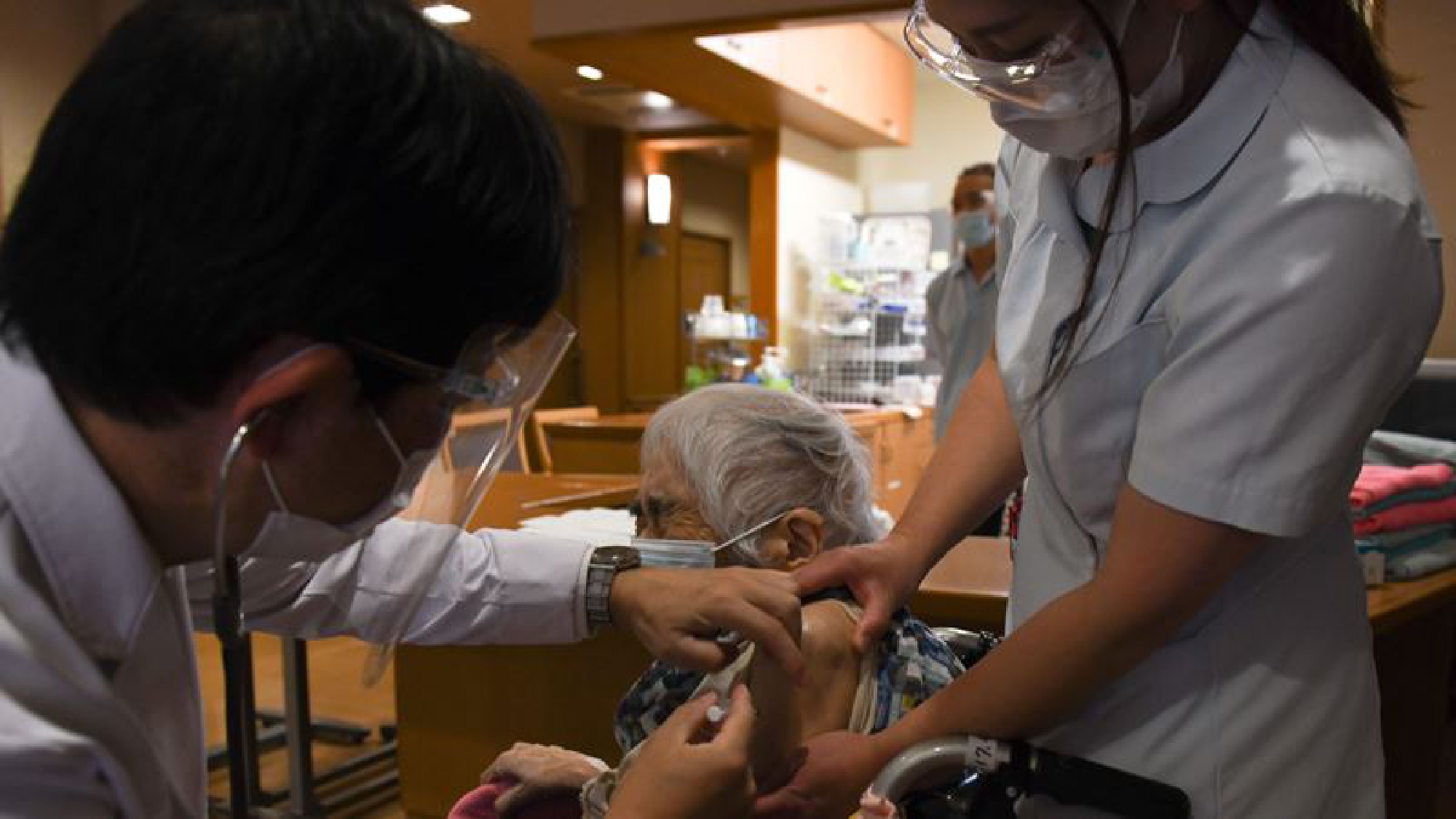
In the race to vaccinate citizens against covid-19, Japan should be a front-runner. It has nearly universal health care coverage and pharmaceutical prowess, not to mention a pending national election, a large elderly population and the looming Olympics to motivate political leaders to move fast.
Yet it has the dubious distinction of being among the worst performers when it comes to inoculations. Japan has given enough doses to cover just 1.1% of its population, the lowest among the 37 members of the Organization for Economic Cooperation and Development, according to Bloomberg’s vaccine tracker. That compares to 36% in the U.S. and nearly 35% in the U.K.
Within Asia, it trails China, India, Singapore and South Korea and is only slightly ahead of lower-income nations like the Philippines and Thailand.
Following Prime Minister Yoshihide Suga’s declaration of a state of emergency in some areas on April 23 to tamp down a new wave of infections, some frustrated Japanese are looking enviously at vaccine programs elsewhere and asking why their government hasn’t moved as quickly. After a year of watching devastating scenes unfold in places like the U.S. while the pathogen was relatively contained at home, it now seems like the tables have turned.
“I want vaccinations to proceed at warp speed,” billionaire Hiroshi Mikitani, CEO of e-commerce giant Rakuten Inc., tweeted on Tuesday. “Like America.”
Until recently, Japanese could take comfort knowing their country had responded better to the pandemic than its peers in the West. Since there was never a dizzying surge in cases and deaths, they didn’t clamor for covid-19 shots. But with the Olympics in three months and a third state of emergency upon them, public frustration appears to be growing, raising the pressure on Suga’s government to move more quickly.
He’s now instructed the Defense Minister to use the military to set up a mass vaccination site in Tokyo, the capital city, the first time the national government has directly engaged in vaccination administration — which had been devolved to municipal officials to carry out. Suga faces a party leadership poll in September and must call a general election by October.
It’s too little, too late, for some citizens.
Ray Fujii, a Tokyo-based partner at L.E.K. Consulting whose clients include health-care companies, blames the government’s lackluster preparation for the delay. While a slow supply of vaccines from Pfizer Inc. was to blame early on, that’s no longer the case, he said. Japan has likely received more than 15 million doses of the Pfizer shot, according to figures and estimates provided by the government in March.
“It’s not about Pfizer not shipping enough vaccines or we don’t have enough vaccines yet,” he said, instead putting the blame on poor distribution and lack of preparation. “It delays everyone’s business opportunities in Japan, so that pushes back the economic recovery from covid-19.”
Domestic polls conducted in recent months show as many as 80% of residents want to be immunized, and nearly half of those in a global survey by Ipsos and the World Economic Forum said they would get the shot within a month if it were available to them.
Japan’s slow rollout stems from several factors. The nation has a history of vaccine skepticism, dating back to an unproven scare about the safety of MMR shots in the 1990s, which made officials tread cautiously.
It also has a conservative medical culture, with people trusting only doctors and nurses to administer vaccines. A recent proposal to have dentists join in the effort created a debate over whether they were qualified.
A law that hands the responsibility of vaccinations to local municipalities resulted in uneven progress and frustration with the glacial movement of some community authorities. “Testing” of a new online reservation system added weeks to the delay.
Spared the rising death rates of other countries, Japan’s politicians and regulators also moved more carefully in greenlighting immunizations. So far, Japan has only authorized the vaccine developed by Pfizer and BioNTech.
Like India and China, Japan has always required pharmaceutical companies to conduct clinical trials locally before applying for approval, rather than accept data from studies done elsewhere, a rule that slows the process down substantially. Unlike India and China, Japanese companies didn’t develop homegrown covid-19 vaccines.
“From a crisis management perspective, I do think this will kick off a discussion about the need to have a made-in Japan vaccine,” said Tetsuo Nakayama, a professor at the Kitasato Institute for Life Sciences, whose research focuses on vaccines. “Coronavirus won’t end, it’ll likely continue into next year and the next, and people will want a made-in-Japan vaccine.”
While Japanese companies like Tokyo-based Daiichi Sankyo Co. are working on vaccine trials, they are far behind Western rivals. Daiichi has started the first phase of a local trial for an mRNA vaccine and will need to conduct a larger study before the shot can be approved.
“In Japan, vaccine development is very difficult,” said Masayuki Yabuta, executive officer for Daiichi Sankyo’s biologics division, citing nervousness around the experimental technology. The Covid-19 pandemic is the first time that the mRNA platform has been used in a vaccine; it’s now proven to be extraordinarily effective.
The delay in rolling out vaccines “has made us question how advanced Japan is in the context of adopting new technologies or accelerating even the development of Japan-originated innovation,” said John W. Carlson, co-chair of the health-care committee at the American Chamber of Commerce in Japan.
Vaccinations are expected to speed up in May as municipalities get the hang of the process, said Taro Kono, the cabinet minister in charge of the vaccination rollout.
Still, even an increased pace won’t result in covering a significant percentage of the population before the Olympics. Kono has said the Games do not factor into his planning.
Instead of inoculation, the government has laid out strict measures to protect the country from infection risks when more than 10,000 athletes and their entourages from around the world arrive in July. Foreign tourists are banned from attending, while a decision is due likely by June on whether locals can watch the sporting events.
Meanwhile, Suga’s government says it wants to complete vaccination of senior citizens by the end of July. That could require an average of about 740,000 shots per day, according to Citigroup economists Kiichi Murashima and Katsuhiko Aiba in a report published April 25.
“This goal strikes us as quite ambitious,” they wrote. “We note that some experts are rather skeptical about the attainability.”
Even if the Olympics are pulled off without any virus spread to the community, Japan’s lagging vaccine rollout will have consequences as G-7 peers race to re-open their economies and global business activity resumes. For some, it’s also partially erased the goodwill from Japan’s relatively effective containment of the virus that managed to avoid prolonged lockdowns or large-scale fatalities.
L.E.K. Consulting’s Fujii is looking into getting a vaccine when he has to travel to the U.S. for business later this year.
“It’s unbelievable that I actually have to think about it as an option,” he said. “That’s ridiculous.”
Published : April 29, 2021
By : Syndication Washington Post, Bloomberg · Bruce Einhorn, Lisa Du
Indias coronavirus death toll tops 200,000 as infections surge and anger grows
India on Wednesday reported another record number of coronavirus cases and deaths, nudging its official covid-19 death toll past 200,000 as the virus coursed through urban centers and out into rural areas, leaving broken families and communities in its wake.
In a new global record, Indian authorities logged 360,960 infections in a 24-hour period, bringing the total number of cases to more than 17.9 million. India also reported 3,293 deaths, even as experts warned that many virus fatalities were going uncounted.
India is driving a worldwide surge in cases, accounting for 38 percent of infections recorded in the seven-day period ending April 25, the World Health Organization said.
The global impact of the crisis has spurred some nations to step in and offer support, including the United States as President Biden who earlier this week pledged vaccine materials, therapeutics and oxygen concentrators.
Speaking Wednesday to “Good Morning America,” Centers for Disease Control and Prevention director Rochelle Walensky said that the United States was “deploying a strike team this week to go and assist” and working to get supplies to India “as soon as we can.”
Canada said Tuesday that it was sending $10 million to India’s Red Cross to fund ambulance services and personal protective equipment. And Singapore on Wednesday was transporting hundreds of oxygen cylinders to India on two C-130 aircraft.
South Korea also pledged to send “urgent medical supplies,” India’s ANI news agency reported, quoting the embassy in New Delhi.
China has repeatedly offered assistance to India, but Delhi has yet to accept those offers, pointing to a widening rift between the two countries, CNN reports.
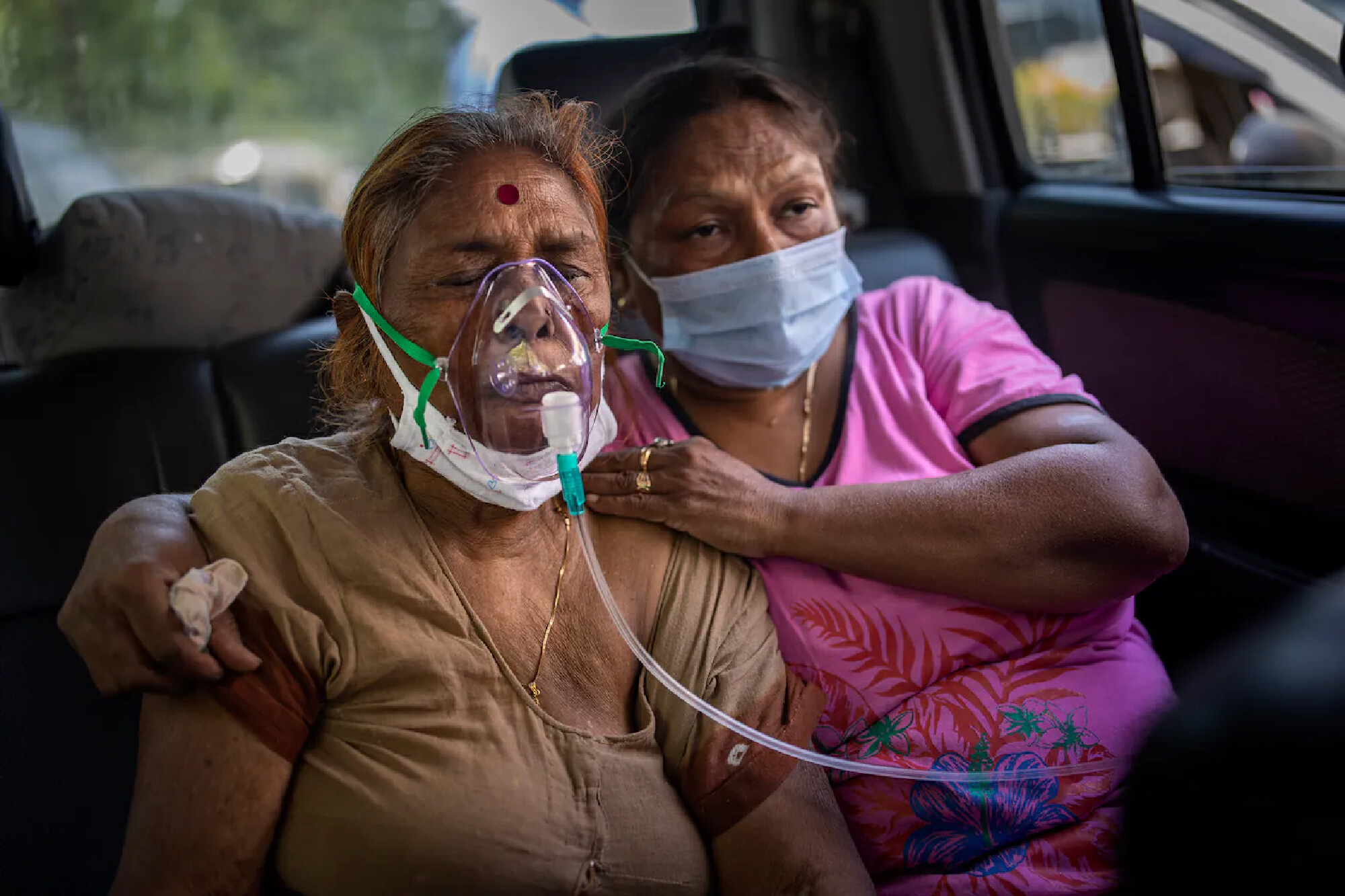
India’s hospitals have faced severe oxygen supply shortages as the devastating wave of cases overwhelms the country’s health-care infrastructure. Many Indians have taken to social media to crowdsource oxygen cylinders and lifesaving drugs, or even plead for information on open hospital beds.
“The state is not available anywhere,” political activist Sadaf Jafar said in an interview with The Washington Post.
On Wednesday, just 10 intensive care beds were available for covid-19 patients in the capital, New Delhi, a city of more than 17 million people, according to a government dashboard.
The government pledged to mobilize resources, including from the armed forces which said it was tapping into its own oxygen supply and pulling retired medical personnel back into service to assist with the crisis. Police in Uttar Pradesh, India’s most populous state, said they arrested dozens of people for selling oxygen cylinders and medicine used to treat covid-19 on the black market.
But in many places, that help may be coming too late. In some cities, including Delhi, makeshift crematoriums have been erected to cope with the growing number of dead. And over the past week alone, according to official figures, more than 2,000 infected people have died in India every day. That number is widely understood to be an underestimate: Journalists in the state of Gujarat found that more than 90 cremations and burials had taken place under coronavirus protocols in the past two days, but the state government’s data showed only eight deaths during that same time period.
“Cremations are now being held on pavements as bodies pile up,” India’s the Wire news website reported Tuesday from the city of Nashik, where last week an oxygen leak at a hospital killed 22 coronavirus patients.
The Scroll, another independent news website, reported that “people are dropping dead like flies” in villages in Uttar Pradesh, as the virus spreads to more rural regions of the country.
“In villages, people are dying of fever and breathlessness even before they can be tested for the disease,” the site reported.
Local media outlets reported Tuesday that the wave of fatalities has even reached the family of Prime Minister Narenda Modi, whose aunt died at 80 while undergoing treatment at a hospital.
The World Health Organization said Tuesday that multiple virus variants now circulating in India were accelerating the outbreak. At least two, which were first detected in Britain and South Africa, have been linked with higher rates of transmission.
One variant identified in India in December, known as B.1.617, has several mutations associated with increased transmissibility, the WHO said, but it was unclear if that variant was responsible for the surge.
Before the stunning increase in cases, the Indian government had described the virus as largely defeated and relaxed public health measures and allowed large crowds to gather for religious festivals and political rallies.
Outrage at the government over the crisis was growing. The Indian Medical Association issued a scathing statement describing Modi as a “failed prime minister” and “super spreader” who held massive political rallies instead of strengthening the country’s health care infrastructure.
On Wednesday, following a public outcry, authorities scrapped plans to use a luxury hotel in New Delhi as a coronavirus facility to treat India’s high court judges.
Government officials said the day before that they had reserved 100 rooms at the Ashoka Hotel to treat judges, court staff and their relatives, even as other hospitals in the city have turned away desperate and dying patients.
“Who is responsible for the oxygen and vaccine shortages? Where is the Indian state?” read a column posted Tuesday on the Wire.
Published : April 29, 2021
By : The Washington Post · Erin Cunningham, Antonia Noori Farzan
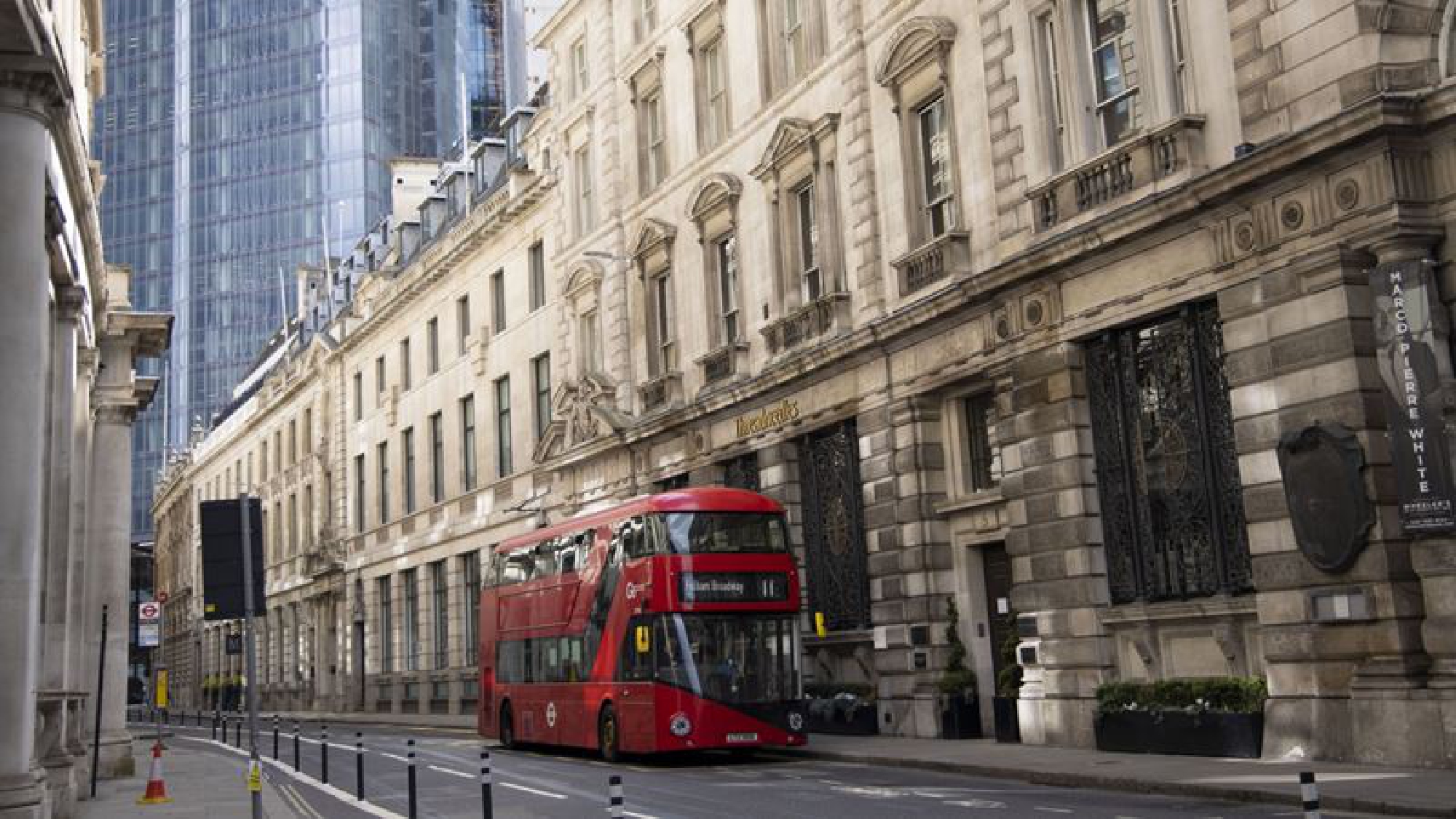
City of London plans for life after covid as its offices remain empty
The City of London is planning for life after the pandemic.
The overseers of the sparsely populated area announced plans on Tuesday to build at least 1,500 homes in the next decade, along with exploring new ways to repurpose empty space. It’s already flagged ambitions to develop 1.3 million square feet (122,500 square meters) of shopping space over 15 years.
The proposals come after lockdowns fueled fierce debates about the future of work, spurring some banks in both the Square Mile and Canary Wharf financial districts to accelerate plans to ditch office space. Vacancies across the City have soared 70% since the onset of the pandemic to 12 million square feet, according to Savills Plc.
“London remains a world-leading financial center but we also know that to remain so, we must adapt,” Catherine McGuinness, chair of the policy and resources committee at the City of London Corporation said at a virtual event hosted by Bloomberg on Tuesday to launch the plan.
We are “reimagining the Square Mile for the new normal and resurging from this difficult period better and stronger than ever,” she said.
The permanent residential population of the City is estimated to be around 8,000, compared with about half a million workers that thronged its streets from Monday to Friday before the pandemic.
The emphasis on more homes and shopping doesn’t mean the City is no longer building new offices; no fewer than nine new tower blocks are under construction or in the pipeline, a report outlining the proposals said.
But the Corporation is sending a firm message: the City is no longer just a bankers’ playground. It’s embarking on a five-year marketing campaign which could promote all-night events similar to Paris’s Nuit Blanche arts festival or traffic-free days on weekends during the summer. Empty and under-used spaces could also be let cheaply to workers in creative industries.
Visitors spend $2.8 billion (2 billion pounds) a year in the district, supporting 34,000 jobs across the culture, leisure, hospitality and retail sectors, according to the report outlining the proposals.
The Corporation will also seek to woo smaller, high-potential firms including technology companies and sectors not traditionally drawn to the City, such as bio-sciences, the report said. There are plans to make 5G technology available across the district.
“Every city around the world will be thinking about these things,” Danny Lopez, chief executive officer of cyber-security firm Glasswall Solutions, said at the virtual event. “We are entering a very long-term new chapter that’s going to take us quite a while to figure out,” he said.
Published : April 28, 2021
By : Syndication Washington Post, Bloomberg · Olivia Konotey-Ahulu
Aramco weighs sale of stake in natural gas pipelines
Aramco is considering the sale of a stake in its vast natural gas pipeline network to help free up cash and draw more international investors to Saudi Arabia, people familiar with the matter said.
The state-owned energy producer is holding preliminary discussions on the potential move, the people said, asking not to be identified because the information is private. Any deal could raise billions of dollars for Dhahran-based Aramco depending how a transaction is structured, they said.
The discussions are happening barely two weeks after the company announced that a consortium led by Washington-based EIG Global Energy Partners would invest $12.4 billion in its oil pipelines.
It’s unclear if the gas deal would be structured in a similar way. For the oil pipelines, investors will own a 49% stake in a new subsidiary that has leasing rights over the network. Aramco will retain ownership of the oil pipelines themselves and will likely continue to hold a majority stake in the subsidiary.
Governments in the Persian Gulf are increasingly using their energy companies to raise money and bolster their finances following last year’s coronavirus-triggered collapse in oil prices. Abu Dhabi National Oil Co. raised more than $10 billion last June by selling leasing rights over its gas pipelines to investors including Global Infrastructure Partners and Brookfield Asset Management. Qatar Petroleum is planning to sell up to $10 billion of what would be its first dollar bonds.
Aramco is also conducting a strategic review of its upstream business in a move that could see it introduce external investors to some of its oil and gas assets, Bloomberg News reported last week. Aramco Chairman Yasir Al-Rumayyan has started selling stakes in non-core assets to help maintain the company’s $75 billion dividend, almost all of which goes to the Saudi government.
Aramco’s Master Gas System is a network of pipelines connecting its production with processing sites throughout the kingdom. The infrastructure has a capacity of about 9.6 billion cubic feet per day, according to Aramco’s annual report.
Deliberations are at an early stage, and there’s no certainty Aramco will proceed with a transaction, the people said. Aramco, formally known as Saudi Arabian Oil Co., declined to comment.
The company reshuffled its senior management last year and created a division focused on “portfolio optimization,” which will “assess existing assets” and boost access to growth markets. It is headed by Abdulaziz Al Gudaimi, who reports to Chief Executive Officer Amin Nasser.
Saudi Arabia has the eighth-largest gas reserves globally and the largest in the Arab world after Qatar, according to BP. They had mostly been overlooked by the kingdom as it instead focused on its huge oil deposits. In recent years, the government has sought to increase gas production — which reached a record level in 2020 — to diversify the economy and transition to cleaner fuels for local power plants.
Published : April 28, 2021
By : Syndication Washington Post, Bloomberg · Dinesh Nair, Archana Narayanan, Matthew Martin
The refugee cap the Biden administration touted – then ditched – is back on the table
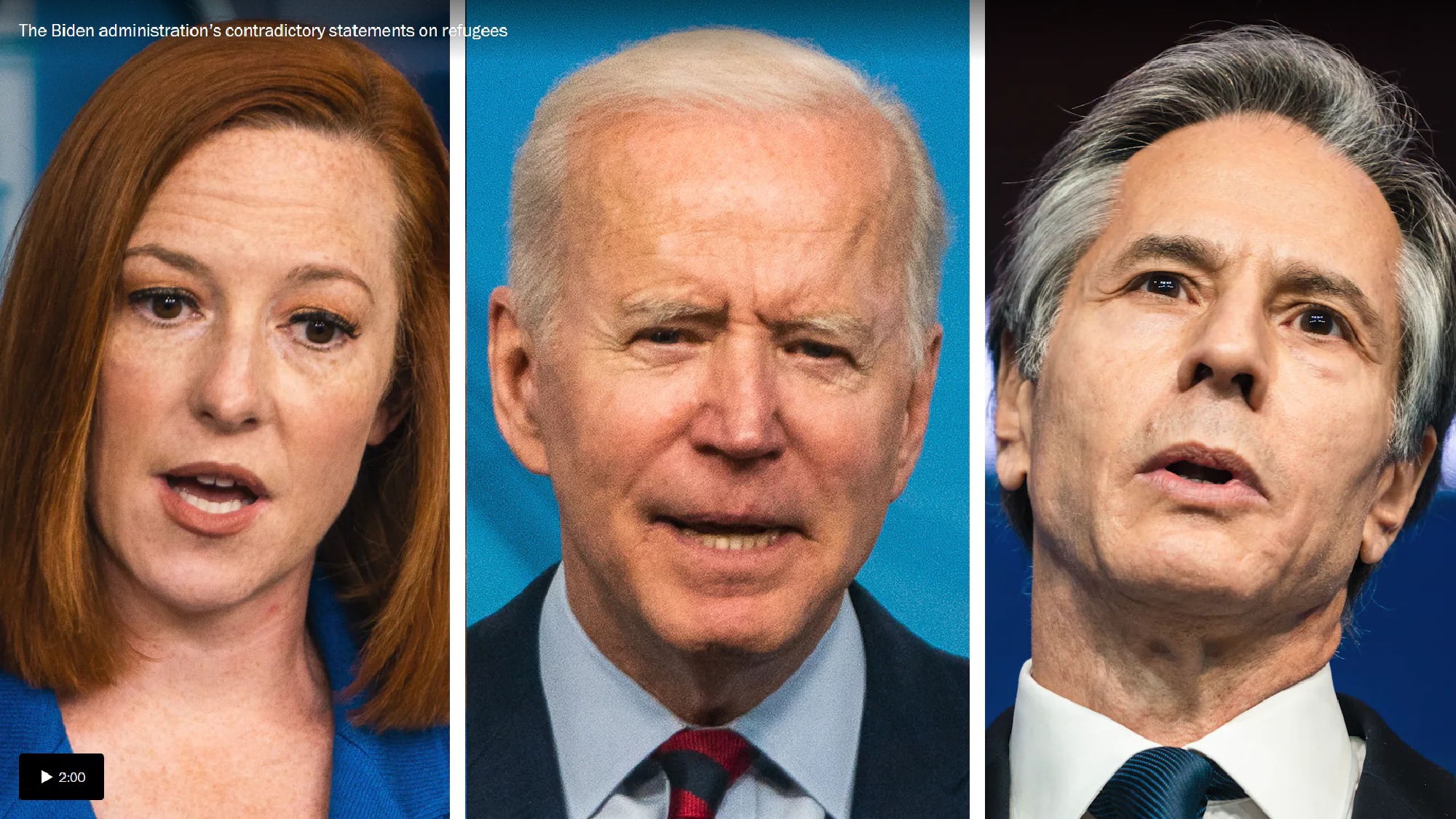
WASHINGTON – The White House is again considering setting the number of refugees who can enter the United States through September at about 62,500, according to three people familiar with the deliberations, under pressure from immigrant rights groups furious about President Joe Bidens recent retreat from that target.
Less than two weeks after White House press secretary Jen Psaki said Biden intends to announce a new cap for the fiscal year by May 15, but signaled that his original target was no longer realistic, people inside and outside the White House suddenly sound hopeful about landing at or near the number the Biden administration announced with some fanfare in February.
More than 30 Senate Democrats on Tuesday called for Biden to put the cap at the original target of 62,500.
“The United States must reject the previous administration’s cruel legacy of anti-refugee policies and return to our longstanding bipartisan tradition of providing safety to the world’s most vulnerable refugees,” the senators, led by Senate Judiciary Committee Chairman Richard Durbin, D-Ill., wrote in the letter, which was sent to the White House on Tuesday afternoon and obtained by The Washington Post in advance of its release.
One of the people familiar with the White House deliberations attributed the moving target in part to a review the White House is conducting of policy developments, progress and legal considerations relevant to the decision.
The people familiar with the deliberations, like others interviewed for this report, spoke on the condition of anonymity to describe private talks and emphasized that no final decisions have been made and that the timing of an announcement was up in the air. The White House has changed course abruptly before, including over the span of several hours on a single day this month, giving people inside and outside the building pause about drawing definitive conclusions about the plan.
During the daily press briefing on Tuesday, Psaki declined to say how likely it was that the president would set the new cap at 62,500. “If the cap is at that or close to that, it will continue to be challenging,” Psaki said.
She said one of the considerations at the White House is what message the nation is sending abroad. “We want to send a clear message, we are welcoming refugees,” she said. The 62,500 number was “always meant to be a down payment” on Biden’s larger pledge for the next fiscal year, Psaki said.
The United States has welcomed refugees – people seeking admission to escape persecution, oppression or warfare overseas – for decades. Presidents are empowered to set annual targets for how many people to try to admit.
The Post reported last week that after he announced he was lifting the cap in early February, Biden grew concerned about the government’s response to the surge of unaccompanied children at the U.S.-Mexico border, prompting a delay in issuing a new directive that frustrated and confused his allies.
On April 16, the White House announced that it would in the meantime keep in place a record-low cap of 15,000 set by the Trump administration last year. Biden overruled his top foreign policy and national security aides, including Secretary of State Antony Blinken, in deciding to keep the cap. The White House backtracked later that day after fierce blowback from allies.
Psaki said late that day that Biden was expected to set a final, increased cap by May 15 but gave little indication of what it would be, beyond suggesting that the number of refugees the president had previously aimed to admit was probably not feasible. “Given the decimated refugee admissions program we inherited, and burdens on the Office of Refugee Resettlement, his initial goal of 62,500 seems unlikely,” she said in a statement.
The unusual delay underlined the broader political concerns about immigration politics and policy shared by Biden and his top advisers. The president’s own misgivings fueled the decision more than anything else, according to people familiar with the matter. Now, Biden’s own initial opposition to raising the cap injects uncertainty into the ultimate decision.
The latest machinations follow intense private and public pressure from refugee advocates, who have lashed out at the White House for backing away from its promise. In a private videoconference last week, the heads of resettlement agencies who work with the government vented their frustration with White House aides, according to two people with direct knowledge of the conversation.
Ernesto Apreza, a senior adviser for public engagement at the White House, acknowledged during the call that administration officials needed to do a better job of keeping the refugee resettlement groups informed. The White House outreach in recent months “falls very short” of what it should have been, Apreza said, according to a person with direct knowledge of his comments.
Resettlement agency heads vented frustration about the White House strategy during the conversation. Mark Hetfield, the president of HIAS, a Jewish refugee resettlement organization, said the “talking points” he kept hearing from Psaki and others suggested that Biden has “an unwavering commitment to the refugee program.” Hetfield argued that the commitment “wavered for over two months,” according to a second person with knowledge of the conversation.
The tone of the letter senators sent Tuesday is more measured than the reaction some of them had after the earlier announcement.
Biden, in a speech at the State Department on Feb. 4, signaled that he would be much more welcoming of refugees than Donald Trump was as president. He vowed to raise the annual cap to 125,000 for the next fiscal year, which begins in October. On Feb. 12, his administration identified that more immediate step in a report sent to Congress: increasing the cap to 62,500 for the current fiscal year.
But the White House went quiet on the matter for about two months and Biden did not sign the directive known as a presidential determination. In the past, signing the paperwork was seen as a formality.
As the White House offered little explanation for its actions, criticism from Democrats and refugee advocates grew. Then, on April 16, the White House abruptly announced that it was not immediately raising the cap from 15,000.
That same day, Biden changed the regional allocation of refugees, loosening the restrictions Trump had placed on people coming from some African and Muslim-majority countries. Refugee advocates have cheered those efforts.
The president’s increasing concerns during the spring about the Office of Refugee Resettlement’s response to the surge at the border drove the delay, the people familiar with the matter said. The office is part of the Department of Health and Human Services and is responsible for both unaccompanied minors at the border and foreigners seeking refugee status.
Some refugee advocates have not been satisfied by this explanation, arguing that there is enough separation between the two responsibilities to ensure one should not have a huge impact on the other.
Psaki recently said that Biden “remains committed to the aspirational goal” of 125,000 for the next fiscal year.
Fully vaccinated people can go without masks outdoors except in crowded settings, CDC says
WASHINGTON – Federal health officials said Tuesday that fully vaccinated people should feel free to go without masks outdoors when walking, jogging or biking, or dining with friends at outdoor restaurants – a milestone development for tens of millions of pandemic-weary Americans after more than a year of masking up and locking down.
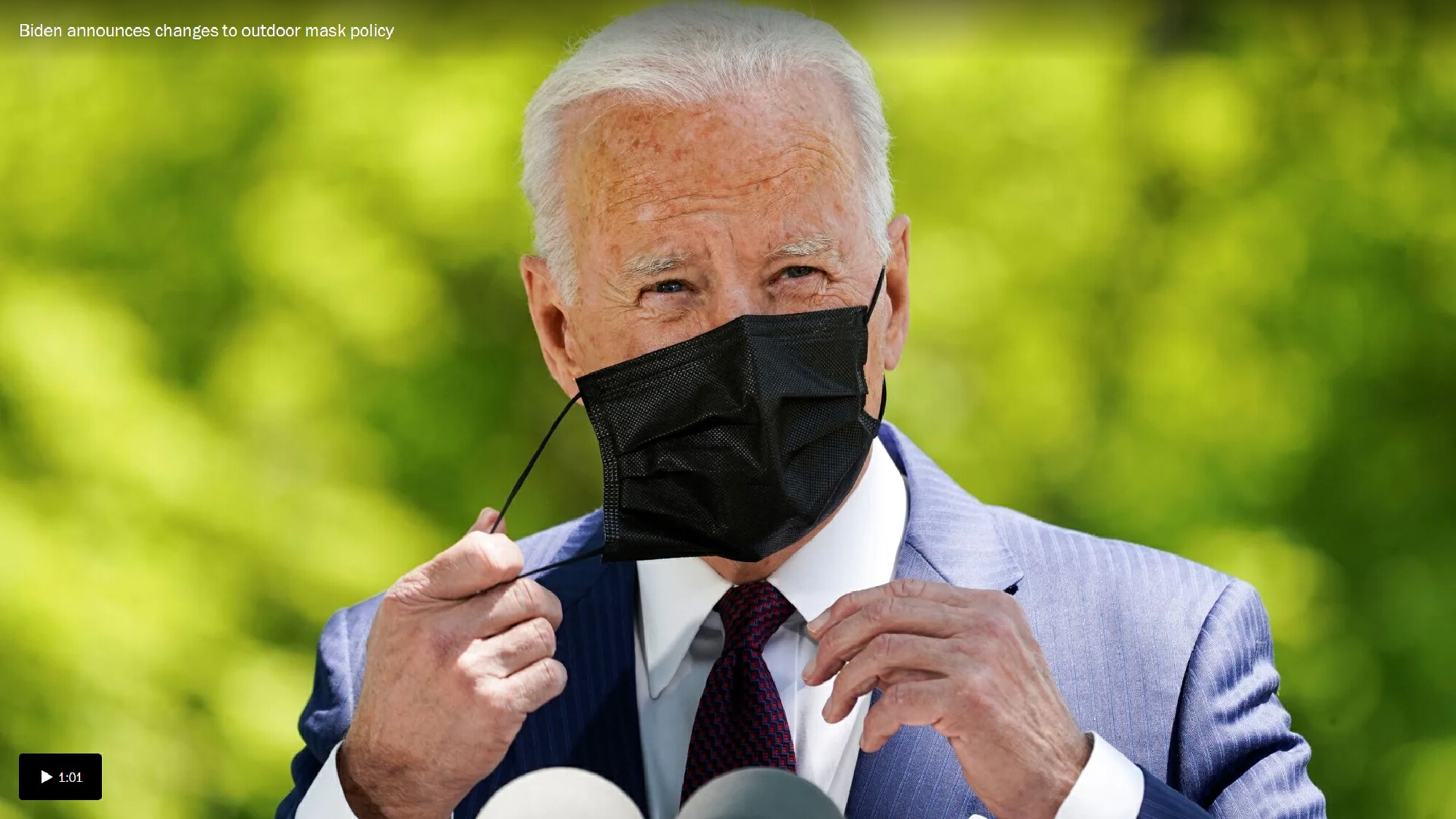
President Joe Biden touted the relaxation of guidance as another reason for people to get vaccinated, urging them to move forward to protect themselves and those around them, and so they can live more normally, by “getting together with friends, going to the park for a picnic without needing a mask.”
Biden had set July 4 as a target for when people could get together for backyard picnics with a sense of normalcy, and both the new mask guidance and his remarks were geared to encouraging people to continue getting the shots.
“I . . . want to thank everyone who has gotten the vaccine for doing your patriotic duty and helping us get on the path to Independence Day,” Biden said in remarks on the North Lawn of the White House. He arrived at the podium wearing a mask. He returned to the White House without one, saying he did not have to put it on until he got back into the building.
The latest guidance from the Centers for Disease Control and Prevention comes as more than 52% of eligible people in the United States have gotten at least one shot, but the pace of inoculations appears to be slowing in the face of vaccine hesitancy, especially among rural residents and Republicans who say the risks from the virus are overblown. Uptake has also been slower among communities of color because lack of health services and transportation have slowed access.
Officials said the changed guidance was aimed at helping those who are fully inoculated return safely to old routines, while encouraging others to get their shots to counter highly contagious new variants.
“Over the past year, we have spent a lot of time telling Americans what they cannot do, what they should not do,” CDC Director Rochelle Walensky said at a White House briefing Tuesday. “Today, I’m going to tell you some of the things you can do if you are fully vaccinated.”
The recommendations also address growing calls from experts in infectious diseases and other public health fields to relax mask mandates for the outdoors because breezes disperse airborne virus particles, distancing is easier, and humidity and sunlight render the coronavirus less viable.
For that reason, the guidance says that even unvaccinated individuals may forgo masks when walking, jogging or biking outdoors with household members. Officials still caution that crowded outdoor settings pose risks and urge everyone – vaccinated and unvaccinated – to wear masks when attending sporting events, live performances and parades.
A growing body of evidence suggests that fully vaccinated people are less likely to have asymptomatic infections or transmit the coronavirus to others. Officials do not know how long protection lasts and how much the vaccines protect against emerging virus variants.
But “taking steps toward relaxing certain measures for vaccinated people may help improve coronavirus vaccine acceptance and uptake,” the guidance states. “Therefore, there are several activities that fully vaccinated people can resume now, at low risk to themselves, while being mindful of the potential risk of transmitting the disease to others.”
– – –
Walensky cited several factors motivating the change in guidance: Falling coronavirus case rates and climbing vaccinations (more than 37% of those over 18 are fully protected) make outdoor settings safer than before. Indoor settings have almost 20 times the risk of transmission than outdoor ones, she noted.
If more people continue getting inoculated and case numbers drop further, she said, the CDC will release additional guidance for the fully vaccinated.
Asked how she would describe the nation’s situation now compared to last month when she spoke of a feeling of “impending doom” as infections mounted, Walensky said that if the United States follows measures taken by other countries where “vaccinations continue to soar and the cases plummet, that we should be in good shape.”
In addressing states that have outdoor mask requirements, Walensky said it is no longer necessary for fully vaccinated people to wear masks unless they are in crowded outdoor venues, such as stadiums and concerts, where it is hard to know who is vaccinated and who is not.
Tuesday’s guidance includes a color-coded chart that shows activities that fully vaccinated and unvaccinated people can do indoors and outdoors, and which ones can be done without masks. The safest activities, highlighted in green, are outdoors in small gatherings. Activities with the greatest risk are indoor settings that involve behaviors such as singing, shouting, heavy breathing, inability to wear a mask or inability to maintain physical distancing, such as indoor high-intensity exercise class.
The nearly 96 million Americans who are fully vaccinated can now forgo masks for many outdoor activities, including:
– Walking, running, hiking or biking outdoors alone or with members of your household
– Attending a small outdoor gathering with fully vaccinated family and friends
– Attending a small outdoor gathering with a mix of fully vaccinated and unvaccinated people
– Dining at an outdoor restaurant with friends from multiple households
Officials say some factors increase risk: crowding, time spent, lack of ventilation and high community transmission. That’s why the CDC says it is safest for fully vaccinated people to continue to wear well-fitted masks in these settings, including:
– Attending a crowded outdoor event, such as a live performance, parade or sporting event
– Visiting a barber or hair salon
– Going to an uncrowded indoor shopping mall or museum
– Going to an indoor movie theater
– Attending a full-capacity service at a house of worship
– Singing in an indoor choir
“The examples today show that when you are fully vaccinated, you can return to many activities safely . . . and begin to get back to normal,” Walensky said. “And the more people who are vaccinated, the more steps we can take toward spending time with people we love, doing the things we love to enjoy. I hope this message is encouraging for you. It shows just how powerful these vaccines are.”
The agency also provided guidance for fully vaccinated people in regard to working, quarantining and testing. Fully vaccinated workers no longer need to quarantine after an exposure, as long as they do not have symptoms. And fully vaccinated people without symptoms or known exposures may be exempted from routine screening tests – a change of enormous significance for schools trying to plan for summer school and fall reopening.
Monica Gandhi, an infectious-diseases expert at the University of California at San Francisco, applauded the CDC’s action after saying accumulating evidence shows the low risk of outdoor transmission.
“Viral particles disperse effectively in the outside air,” she said in an email, citing numerous studies, including one in Wuhan, China, that found that one of 7,324 infection events investigated was linked to outdoor transmission.
Gandhi noted that the World Health Organization says masks are not necessary outside unless physical distancing, which the agency defines as about three feet, cannot be maintained.
She and others have said it’s important for public health officials to provide incentives as “a great strategy to encourage those who are on the fence to get vaccinated.”
“Public health messaging since the time of HIV that focuses on positive, rather than negative, reinforcement has been shown to be more effective, so the CDC guidelines that vaccinated people don’t have to mask outdoors will hopefully help persuade some of the vaccine hesitant in the U.S. to get the vaccine,” Gandhi said.
The CDC guidance said there is limited data on vaccine protection in people who are immunocompromised. It urged people taking immunosuppressive medications to discuss the need for personal protective measures with their health-care providers, even if they are fully vaccinated.
– – –
Even before the CDC’s announcement, some states were moving to ease mask mandates: Kentucky Gov. Andy Beshear, a Democrat, on Monday cleared groups of fewer than 1,000 people to gather outside without masks. Massachusetts Gov. Charlie Baker, a Republican, on Tuesday said his state’s rule requiring masks outdoors would expire Friday, except in situations where social distancing is impossible.
The issue has become even more politically charged recently as conservative media figures have used their platforms online and on cable news to turn outdoor masking rules into a cause celebre. Fox News host Tucker Carlson urged viewers this week to contact child protective services to report the parents of children who wore masks outdoors.
“Your response when you see children wearing masks as they play should be no different from your response to seeing someone beat a kid in Walmart,” he said on his show, which is among the most watched on cable, regularly drawing 3 million viewers. “Call the police immediately, contact child protective services. Keep calling until someone arrives.”
His instructions were echoed Tuesday morning by Mollie Hemingway, a senior editor at The Federalist, a conservative publication. She tweeted: “Even if you’re an outdoor mask enthusiast at this late date, despite the complete lack of scientific support for same, I think we all can agree that masking children outdoors, at the very least, is abusive, right?”
The comments illustrate how face coverings, which were scorned by President Donald Trump, remain a marker of political identity more than a year into the pandemic.
Hong Kong to reopen bars, nightclubs to vaccinated people.
Hong Kong will ease social-distancing restrictions by allowing bars, nightclubs and karaoke parlors to reopen and operate past midnight only for vaccinated residents starting Thursday, as the government intensifies efforts to boost the citys lackluster inoculation drive.
Staff and customers must have had received at least a first vaccine dose for the venues to open their doors, Food and Health Secretary Sophia Chan told a briefing on Tuesday. Patrons will need to sign in using Hong Kong’s LeaveHomeSafe app.
The new rules will allow bars and nightclubs to remain open until 2 a.m., she said. Tables will be limited to just two people, with four people allowed in karaoke rooms.
The government is also studying a new mobile app venues can use identify customers’ vaccination status, Chan said.
“This vaccine bubble is a very important public health measure,” Chan said. “We can have a safe relaxation. But on the other hand, we can also mitigate the risk associated with the relaxation.”
While vaccine supply is abundant in Hong Kong, only about 11% of the population has gotten vaccinated with at least one dose, amid public distrust of the government and concerns about the efficacy of Chinese vaccines. The low inoculation rates could hamper the city’s efforts to reach the herd immunity crucial to fully reopening, prompting authorities to expand access to all adults and come up with measures favoring the inoculated to encourage more people to get jabs.
Restaurants will also be allowed to relax table limits and operating hours if staff are vaccinated, said Chan, but only in designated “zones” for inoculated customers.
Eateries whose staff have all received their first vaccine doses will be allowed to extend their dine-in hours to 12 a.m. and have up to six customers per table in the zones. Patrons will be required to sign in via LeaveHomeSafe. Capacity will be limited to 50%.
Measures will be further relaxed for restaurants whose staff have had both vaccine doses and a waiting period afterward of 14 days, Chan said.
Those eateries can operate until 2 a.m. and allow up to eight diners per table in the zones. Customers must be vaccinated with at least one dose and register to dine using LeaveHomeSafe. Capacity will be limited to 75%.
Capacity at companies’ annual general meetings with shareholders will also be relaxed to 50 people at indoor venues and 100 people at outdoor sites, Chan said. Participants aged 16 and above have to have completed their first vaccine doses, she said.
Pubs have been ordered shut since November but some have managed to operate until 10 p.m. by getting a license to serve food, while nightclubs have stayed closed. The ease in measures for those vaccinated comes after Hong Kong announced its long-awaited plans to introduce a quarantine-free travel bubble with Singapore next month.
Published : April 28, 2021
By : Syndication Washington Post, Bloomberg · Felix Tam, Natalie Lung, Alfred Liu
India politicians vow to pay women for housework as virus rages
As India battles the worlds worst virus outbreak, some key political parties are promising an unprecedented monthly payment to all homemakers in a bid to win crucial state elections.
If enacted the stipends would be some of the first in the world to specifically address women’s unpaid labor, which economists estimate accounts for up to 39% of global GDP and is often absent from official statistics. They would also represent a major cultural shake-up in a nation where women are overwhelmed with domestic duties and their participation in the workforce is among the lowest on the planet — a predicament exacerbated by covid-19.
India’s epidemic, which is now overwhelming hospitals in major cities, has hit women particularly hard. Many have reported a substantial or total loss of income since a nationwide lockdown last year, and housework has risen significantly as unemployed male migrants returned home.
Out of five states that count votes on Sunday, three are likely to implement the stipends. Both the ruling coalition and the opposition contenders down south in Tamil Nadu and Kerala have promised monthly income support to homemakers. That includes the country’s main opposition Congress party, which has pledged 2,000 rupees ($27) for homemakers each month in both the northeastern state of Assam and Kerala.
In West Bengal, Chief Minister Mamata Banerjee — one of Prime Minister Narendra Modi’s top political opponents nationally — has also promised monthly income support to female heads of 16 million households of up to 1,000 rupees per month.
After coming to power in 2011, Banerjee’s Trinamool Congress positioned itself as a progressive alternative to Modi’s Hindu nationalist Bharatiya Janata Party by launching a series of gender equity and social justice programs. While the BJP hasn’t adopted a similar policy for homemakers, it has several programs targeting women such as free education for girls and quotas for government jobs.
“The needle is slow to move on sticky social and cultural norms, but small positive steps can engender further change,” said Nalini Gulati, an economist at the London-based think tank International Growth Centre, and the managing editor of the research platform ‘Ideas for India.’
“Monthly income support by state governments — if implemented effectively — will put money in the hands of those who have been cash-strapped during the pandemic and address their unmet consumption needs,” she said. “This can also contribute towards creating demand in the economy as a whole.”
Uplifting women is vital for Asia’s third largest economy as Modi pushes to attract foreign investment and boost India’s economic heft globally. India’s gross domestic product could grow by 27% if women’s participation in the economy was raised to the same level as that of men, according to research by the International Monetary Fund.
Close to three-quarters of women are excluded from the workforce, leaving India ranked 145th out of 153 countries, according to the World Economic Forum’s Global Gender Gap report. The low participation is because about 60% of women take on full time domestic duties like cleaning, cooking, fetching water and giving care to children and in-laws, India’s Economic Survey reported in January.
Although women spend nearly six hours a day on unpaid domestic work compared with less than an hour for men, their contribution at home isn’t recorded in India’s national income.
The pledges to pay women for housework comes amid global debate about whether societies should do more to recognize and compensate women for the work they perform at home.
While more steps are required — including redistributing unpaid work in the household and better infrastructure to reduce the time it takes women to procure water and cooking fuel — the payments are a good start, according to Prabha Kotiswaran, a professor at the King’s college London who has written articles on the economic worth of homemakers.
“It is a globally unprecedented move,” she said, “which is necessary in a country where there is zero recognition of women’s unpaid work.”
Published : April 28, 2021
By : Syndication Washington Post, Bloomberg · Bibhudatta Pradhan