Oscars: 12 things to know, including Anthony Hopkinss win over Chadwick Boseman that led to a bizarre ending #SootinClaimon.Com

#SootinClaimon.Com : ขอบคุณแหล่งข้อมูล : หนังสือพิมพ์ The Nation.

https://www.nationthailand.com/international/40000260

Oscars: 12 things to know, including Anthony Hopkinss win over Chadwick Boseman that led to a bizarre ending


Among the memorable portions of the 93rd Academy Awards was when Glenn Close, who earned her eighth Oscar nomination for playing Mamaw in the widely panned “Hillbilly Elegy,” revealed an unexpected amount of knowledge about go-go music. That tells you quite a bit about the simultaneous chaos and uneventfulness of the Oscars this year.
Oscars: 12 things to know, including Anthony Hopkinss win over Chadwick Boseman that led to a bizarre ending

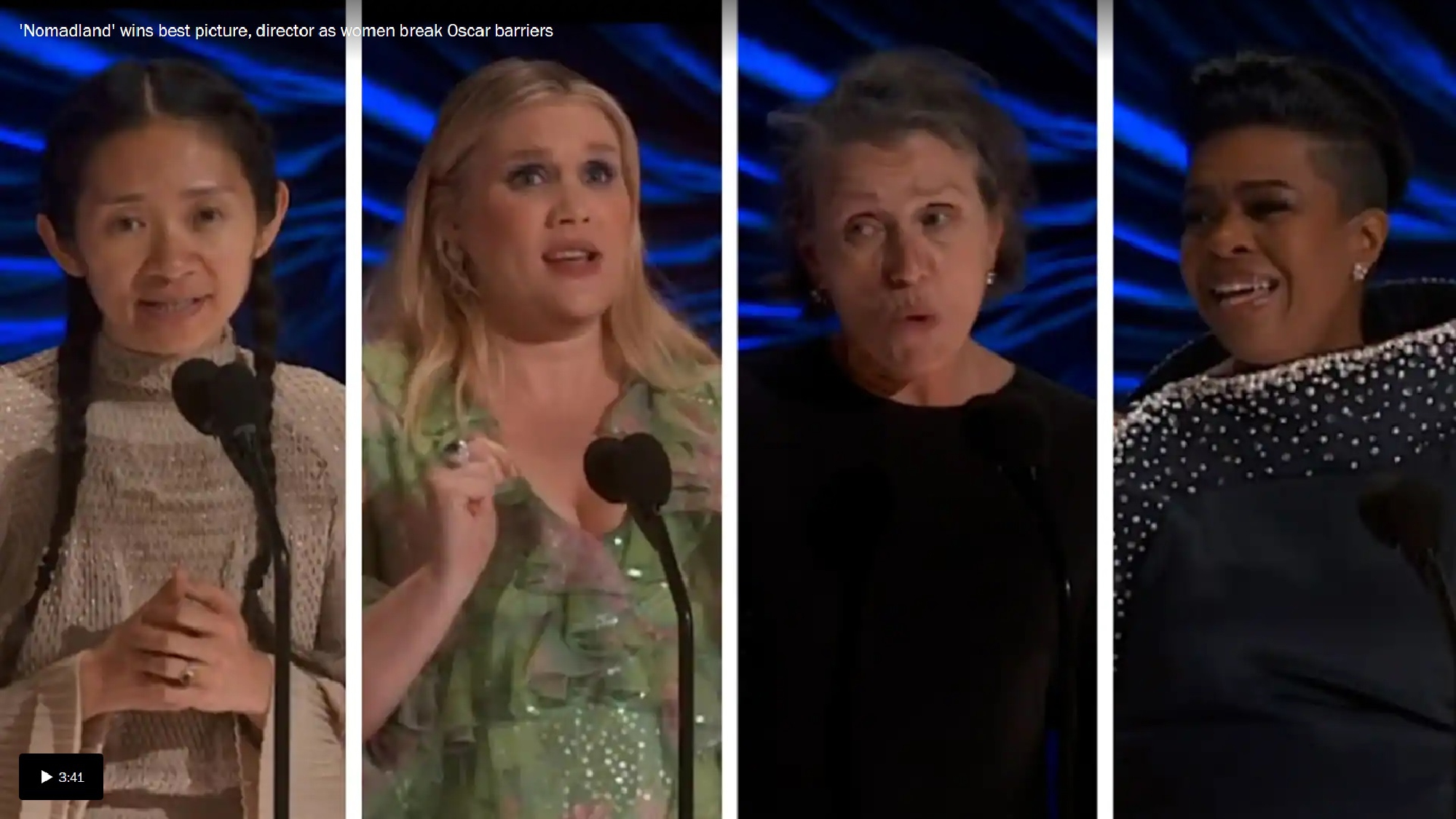
The ceremony did make history a few times, however, including “Nomadland” director Chloé Zhao becoming the first woman of color to win best director (a feat she quickly followed by winning best picture).

But what probably will be remembered most was the show’s disappointing ending, a result of the risky decision to switch up the order of categories. The ceremony was clearly gearing up to end with best actor front-runner Chadwick Boseman taking home the trophy for “Ma Rainey’s Black Bottom,” which would have allowed for a touching tribute after Boseman died last year at age 43. Instead, it ended with the late actor losing to Anthony Hopkins for his role in “The Father.” Hopkins didn’t attend the ceremony, anticlimactically leaving the show without a final speech.

With that, the Oscars were over. Here’s a rundown of what you might have missed.

1) The Chadwick Boseman-Anthony Hopkins incident was the night’s biggest upset

If ever there were proof that folks at the accounting firm PricewaterhouseCoopers actually keep their mouths shut about the names in every envelope, this ceremony would be it. Not only did they have Boseman’s “Black Panther” on-screen mother Angela Bassett introduce the “In Memoriam” segment, but whoever is in charge of the Oscars swag bags also included a non-fungible token of digital artwork honoring the late actor (perhaps a distasteful choice, many would argue).

Hopkins winning best actor was the biggest upset of the night, given that Boseman won a good number of awards leading up to the Oscars (including the Golden Globe, the Screen Actors Guild Award and various critic honors). It should be noted, though, that Hopkins also landed the BAFTA equivalent and earned a considerable amount of critical acclaim for his portrayal of a man with dementia in “The Father.” At 83, Hopkins became the oldest person to ever win an acting Oscar (a record previously held by Christopher Plummer, who won best supporting actor at 82 for his role in the 2011 film “Beginners”).

Although Hopkins was asleep at his home in Wales when his win was announced, he posted a video on Instagram several hours later. “At 83 years of age I did not expect to get this award. I really didn’t. Very grateful to the Academy,” he said, and gave Boseman a shout-out: “I want to pay tribute to Chadwick Boseman who was taken from us far too early. And again thank you all very much. I really did not expect this. So I feel very privileged and honored.”

2) Producers mixed up the ceremony, to mixed results

The decision to shoot the ceremony “like a movie,” as producer Steven Soderbergh put it, was one of many ways in which the telecast strayed from the norm. Not only did the team switch around the usual order of categories – leading to the anticlimactic best-actor reveal – but they also ditched the music that usually plays people off the stage, leading to lengthy speeches that admittedly included more off-the-cuff moments (we’re looking at you, Daniel Kaluuya).

The lack of a proper tribute to Boseman might also have stung more because of how rushed the “In Memoriam” segment felt, the song’s higher tempo matching the speed at which the montage flipped through photographs of the artists lost over the past year.

3) ‘Nomadland’ won big

Zhao was expected to win for “Nomadland,” given the overlap of Academy members eligible to vote for best director and the folks who already honored her work during the Directors Guild of America Awards earlier this season. But that makes the feat no less significant. Consider that these were the 93rd Academy Awards, and that Zhao is only the second woman to win best director (and the first woman of color to even appear in the category). The film was deemed best picture later in the night.

“Nomadland” also earned star Frances McDormand the trophy for best actress, which she won just a few years ago for “Three Billboards Outside Ebbing, Missouri” and in 1997 for “Fargo.” While accepting the award, McDormand quoted “Macbeth” – specifically, “I have no words: My voice is in my sword” – and let out a howl in honor of Michael Wolf Snyder, the film’s production sound mixer who died this year at 35.

4) There were a handful of milestone achievements

It makes sense that there were several historic feats achieved Sunday night, given the nominations constituted a landmark year for diversity. In addition to Zhao and Hopkins’s notable wins, McDormand, also a producer on “Nomadland,” reportedly became the Oscars’ most decorated living actress with four trophies to her name. (The only other actress to earn that many Academy Awards was Katharine Hepburn.)

Earlier in the night, best supporting actress Yuh-jung Youn became the first Korean person and second-ever Asian woman to win an acting Oscar. (Japanese American actress Miyoshi Umeki won best supporting actress in 1958.) Mia Neal and Jamika Wilson became the first Black winners in the makeup and hairstyling category for their work on “Ma Rainey’s Black Bottom.”

5) But wait, can we see actual clips from movies?

Lead-ins to awards at the Oscars are typically pretty cut-and-dried. Announce the nominee, show a marquee clip from the film and then show the actor, actress or team behind the work in the audience looking humbled by the applause.

What viewers got instead was an odd grab bag of introductions that included love letters to the best supporting actors from Laura Dern, and high school yearbook facts about the best animated short contenders from Reese Witherspoon.

For as much as the night is supposed to celebrate the best in film, maybe the show could have used, well, a little more of the films.

6) The Oscars could have finished on time but then there was trivia . . . and ‘Da Butt’

It seemed like the ceremony was going swimmingly and might have even ended as scheduled around 11 p.m. Eastern. But with about 20 minutes to go until that mark, comedian Lil Rel Howery and DJ Questlove ushered in the first and only comedic bit of the night’s proceedings: Music trivia. It was a fascinating enough idea to play some tunes and ask the stars whether the song in question won an Oscar, was nominated or snubbed.

Things started out a little rough when Howery asked Andra Day about Prince’s legendary title track to “Purple Rain” and censors had to bleep out her frank response about how the song wasn’t nominated. (However, the film’s score won the award.) Howery then went on to his “Get Out” and “Judas and the Black Messiah” co-star Kaluuya to ask about the Donna Summer showstopper “Last Dance.” (Kaluuya guessed it was a nominee; it won best song.)

But it was Kaluuya’s tablemate, Glenn Close, who delivered an award-worthy performance. Questlove spun some notes from “Da Butt,” a track written for Spike Lee’s “School Daze” from the iconic D.C. go-go band E.U. Howery retorted that there was no way the 74-year-old actress would know the song. That is, until one of the finest thespians of our time had one of the best line readings of her historic career.

“Wait a second,” Close said. “That’s ‘Da Butt.’ It was a classic song by the great Washington, D.C., go-go band E.U. Shout-outs to Sugar Bear, the Backyard Band and the whole DMV.” And then, well, Glenn Close did “Da Butt.”

Oscars: 12 things to know, including Anthony Hopkinss win over Chadwick Boseman that led to a bizarre ending

7) Yuh-jung Youn had the best speech of the night

The 73-year-old South Korean actress had little to prove after a prolific career acting in her native country. But Youn’s standout role in “Minari,” as the rascally grandma of the Yi family, propelled her to the attention of American film audiences.

It was her spirit in accepting the award – and playful ribbing of “Minari” producer Brad Pitt, who presented it to her – that won the night.

“Mr. Brad Pitt, finally, nice to meet you,” Youn began. “Where were you while we were filming in Tulsa? Very honored to meet you.”

She self-deprecatingly marveled that she beat out Close, and lovingly needled her two sons “who made me go out and work.” But her best zinger of the night may have been her teasing of the many people throughout awards season who mispronounced her name by putting emphasis on the wrong syllables (remember: sounds like “uh” and hard “J”).

“But tonight,” Youn said, “you are all forgiven.”

8) Daniel Kaluuya explained the birds and the bees

Kaluuya took home best supporting actor for his captivating portrayal of Black Panther leader Fred Hampton in “Judas and the Black Messiah.” The 32-year-old Brit has already established a memorable career of dramatic and thrilling roles in his relatively short time on the big screen, but it was his playful flourishes that charmed viewers – and embarrassed his mom and sister from across the pond.

His thank-yous seemed fairly normal at first. “I share this honor with the gift that is LaKeith Stanfield,” Kaluuya said, giving props to his co-stars. “The light that is Dominique Fishback.”

And Kaluuya dedicated much of his speech to the revolutionary work of Hampton in providing free health services, as well as feeding and teaching children. But then he gave viewers a look ahead to the after-party as well as his musings on existence.

“I’m going to get back to work – Tuesday morning. Because tonight, I’m going up!” Kaluuya said. “We got to celebrate life, man. We’re breathing, we’re walking, it’s incredible. . . . My mom met my dad, they had sex! It’s amazing! Do you know what I’m saying? I’m here!”

9) Tyler Perry sparked criticism with a line in his humanitarian award speech

Tyler Perry won the Jean Hersholt Humanitarian Award and took the stage after a rousing introduction from actress Viola Davis, who praised his years of charity and humanitarian work: “When he buys groceries for a thousand of his neighbors, supports a women’s shelter, or quietly pays tuition for a hard-working student, Tyler is coming from a place of shared experience,” she said. During an emotional speech, Perry spoke about his mother growing up in rural Louisiana in the Jim Crow South who grieved the death of Emmett Till when she was a young girl. The main lesson his mother taught him, he said, was to refuse “hate” and “blanket judgment.”

“With all of the Internet and social media and algorithms that want us to think a certain way, the 24-hour news cycle, it’s my hope that all of us would teach our kids . . . just to refuse hate,” he said. “I refuse to hate someone because they’re Mexican or because they are Black or White or LBGTQ, I refuse to hate someone because they’re a police officer, I refuse to hate someone because they’re Asian.”

While there was huge applause in the room, there was lots of criticism on social media for Perry squeezing “police officers” between marginalized groups.

10) Presenters and winners spoke out about equality and against police brutality

One of the most common complaints about award shows is: “I don’t want rich out-of-touch celebrities to lecture me!” Actress Regina King, who opened the show with a brief monologue, acknowledged this when she said that if the verdict in the Derek Chauvin case had gone differently in Minneapolis, and he had not been convicted of the murder of George Floyd, she would have traded in her heels for marching boots to join in protest.

“I know that a lot of you people at home want to reach for the remote when you feel like Hollywood is preaching to you,” she said. “But as a mother of a Black son, I know the fear that so many live with. And no amount of fame or fortune changes that.”

When Kaluuya accepted his best supporting actor trophy, he urged “unite and ascend” over “divide and conquer,” and he reminded everyone else in the room that there’s still a lot of work to do. Later, Travon Free and Martin Desmond Roe won the best live-action short for their film “Two Distant Strangers,” and wore custom Dolce & Gabbana tuxedos that listed the names of people killed by police in the jacket linings.

“Today, the police will kill three people. And tomorrow, the police will kill three people. And the day after that, the police will kill three people. Because on average, the police in America every day kill three people. Which amounts to about 1,000 people a year. And those people happen to disproportionately be Black people,” Free said. “James Baldwin once said, ‘The most despicable thing that anyone can be is indifferent to other people’s pain.’ And so I just ask that you please not be indifferent. Please don’t be indifferent to our pain.”

11) The best original song performances were relegated to the pre-show

For a show that was largely a giant snoozefest, you would think live performances of the five best original song nominees could have livened things up a bit. You would be mistaken! They were part of the pre-show on ABC, which was unfortunate, because even though they were prerecorded and filmed remotely, they were pretty great.

One highlight included the stunning scenery of Husavik, Iceland, as Swedish singer Molly Sandén impressed with “Husavik (My Hometown)” from Will Ferrell and Rachel McAdams’s comedy “Eurovision Song Contest: The Story of Fire Saga.” (She was also accompanied by a choir of adorable children wearing cozy sweaters.) And H.E.R. would have brought down the house with an energetic rendition of “Fight for You” from “Judas and the Black Messiah,” which ended up winning the category.

12) Fashion moments included LaKeith Stanfield looking dapper and lots of gold

The Oscars had a very scaled-down red carpet, but quite a few ensembles still made an impact – Stanfield and Zendaya, especially.

Gold also seemed to be a running theme of the night.

Published : April 27, 2021

By : The Washington Post · Sonia Rao, Hau Chu, Emily Yahr

Heres how Breeze, Valorants newest map, was built #SootinClaimon.Com
#SootinClaimon.Com : ขอบคุณแหล่งข้อมูล : หนังสือพิมพ์ The Nation.

https://www.nationthailand.com/international/40000259

Heres how Breeze, Valorants newest map, was built

On Friday, influencers and media crowded into an exclusive Discord server to organize groups of 10 for custom matches on “Valorants” upcoming map, Breeze. Amid hushed conversations about soon-to-be-leaked roster changes and complaints about worsening sleep schedules, there was a general sense of optimism, one that had been absent the last time Riot Games released a “Valorant” map. Maybe it was just the sunshine talking.

Heres how Breeze, Valorants newest map, was built

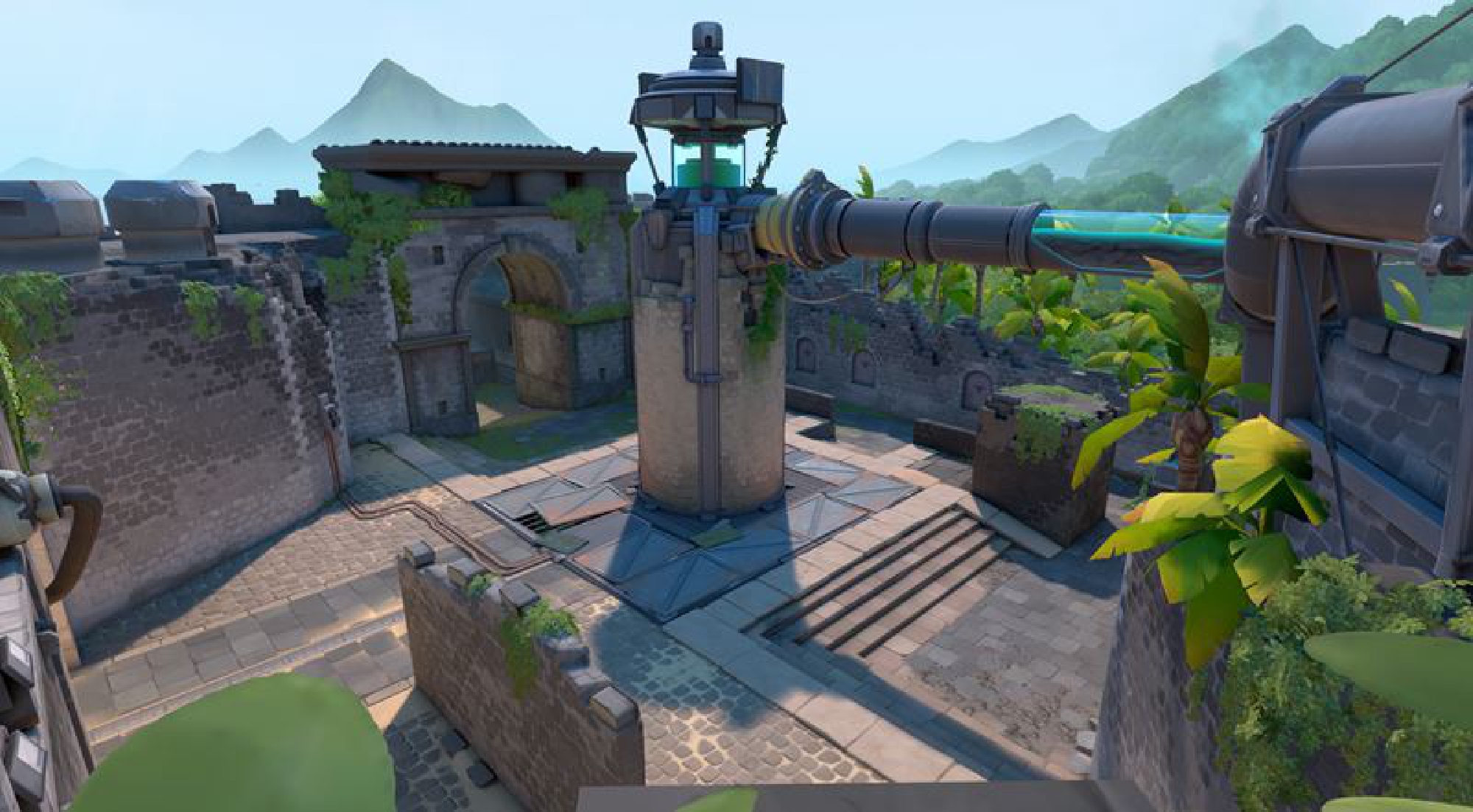
Breeze, inspired in part by creative director David Nottingham’s time living in Trinidad, unleashes “Valorant’s” agents upon a tropical playground. Cozy shops and eateries bake in the sun, nestled between a bleak colonial fortress and the wreck of a massive cargo ship. The husk of a bleach-white villa spectates from its perch on a nearby mountain. (“Valorant” dabbles in themes of haves versus have-nots, corporate versus authentic). Look up; are those seagulls hovering overhead?

Breeze is a far cry from the most recently released “Valorant” map, Icebox, the reception of which was chilly. Built like a rat’s maze, Icebox’s spate of angles and unusual elevation ranges – both experimental points of interest for Riot’s maps team – rubbed some players the wrong way. Compounding the displeasure was the map’s setting: a frozen-over shipping facility, stocked with shipping containers.

“We tried to make [Icebox] pretty, but it still was kind of cold and blue,” said Devon Fay, art lead for “Valorant” maps. “We were all kind of excited to work on something more tropical.”

As the first map developed entirely after “Valorant’s” launch last year, Breeze is an experiment, asking whether players can handle more: skirmishes over longer ranges and sites that are broader and less structured than any in the game so far. But it’s also the culmination of a year of Riot observing player behavior. Now, with the anniversary of the game’s public launch on the horizon, Breeze is a showcase for the developers’ ambitions, and the blueprint for where “Valorant” goes next.

– – –

Tactical shooters can be unforgiving of clumsiness and imprecision, and maps are carefully constructed to test players’ accuracy. But the process that kick-started work on Breeze was informal. First, the team decided on a few premises to test: wide open spaces and longer sightlines chief among them. Then, Salvatore Garozzo, level design lead at Riot, started cobbling together a rudimentary 3-D model.

“Some designers prefer to do sketches on paper . . . but I find that I’m more efficient in the 3-D environment, just using very, very large grid sizes and primitive shapes just to get a sense for what the space might feel like,” Garozzo said. “You just get something down, which is very helpful, because then you’re able to run around and start to get a sense of how the space feels to play in.”

Heres how Breeze, Valorants newest map, was builtHeres how Breeze, Valorants newest map, was built

Rendered mostly in grays and browns, this early phase of development (known as “greyboxing”) is designed to test gameplay, which extends beyond mere questions of movement and shooting. The sounds footsteps make on different surfaces and the permeability of pieces of cover – meaning, whether a bullet can pierce a wall or not – are all mapped out early, setting helpful parameters for concept artists and designers later down the line.

In early versions of the Breeze greybox, the map’s long ranges and wide chokepoints were longer and wider. For about three months, Garozzo and one other level designer, along with testers from across the “Valorant” dev team, homed in on the map’s final proportions. Variables often taken for granted by players were manipulated to find the right balance between the attacking and defending sides.

One crucial example was the placement of pre-round barriers, which restrict players’ access to the map during the buy phase. The barriers’ positioning helps determine which side gets access to what territory and when; the placement can change how much utility needs to be spent by each team off the bat. Early on, Breeze skewed in favor of the defending side; attackers had a hard time gaining a foothold in even the earliest parts of the map. Garozzo moved the defensive barriers back and pushed the attackers forward. Those updates changed the tenor of the attacking side’s strategies, allowing them to move around more comfortably and allocate players to cover flanks.

Then there was the difficult question of accommodating differences in play style, communication and skill range. One distinction that drove some of Garozzo’s early thinking was coordinated play versus solo play.

“How can we provide interesting experiences for teams to coordinate around while also making the maps enjoyable in that secure environment where maybe people aren’t even on comms with one another, or maybe not everybody’s being completely cooperative toward the same goal,” Garozzo said. “It’s a pretty complicated equation there.”

The mid lane, for example, used to be much more complicated. It gave attackers more opportunities to flex their strategic muscle, but the result was less fun when the coordination was not there, said Garozzo.

“The margins for error were razor-thin, and it was pretty difficult to coordinate around, especially if not all five players were on the exact same page. And even then it was still difficult,” Garozzo said.

Those first two to three months of sculpting in the greybox are make-or-break for the map. The gauged its confidence in the direction the map was taking. If things were not jelling, they would have jettison the project and picked up work on a different greybox.

Breeze was a no-brainer. “We felt pretty confident making the decision to move forward with Breeze just because we felt like what it would introduce to the game is fresh and exciting, and it’s just going to help us learn a lot about the limits of the combat spaces,” Garozzo said. “How far exactly can we push sightlines in terms of distance? How wide can we make spaces?”

But push the playerbase too far and it might push back. The reaction to Icebox, which similarly aimed to broaden the boundaries of what a tactical-shooter map could do, caught the team off guard – and informed some of the decision-making around Breeze.

“There were points through the development of Breeze where we’d have a bunch of different interactions on the map and we would think, maybe there’s just a little bit too much going on here. Maybe this is a little bit too complex,” Garozzo said. “Can we simplify this a little bit while still retaining the aspects that we really want to push for Breeze, the aspects that we think are critical for the map?”

– – –

Once the greybox is mostly in place, Nottingham and the art team get to work deciding on a theme and setting. Coming off Icebox, a warm, Caribbean setting felt like an obvious next step.

“Then we start what we call the blue sky concept phase, where we just unleash the concept artists, like, go HAM [wild], don’t think about readability, don’t think about if we can even do this,” said Fay, the art lead. “Let’s flesh out the coolest possible idea of this thematic that we’ve created.”

Images of boat graveyards – scuttled hulls as far as the eye could see – and old rum distilleries pleased the team. And the designers’ experience handling old-world styles (think the Venetian structures of Ascent) led to fruitful ideation around abandoned colonial forts.

“One of the first big concept paintings had a giant boat crashed on it,” Fay said. “That was immediately something that we were like, that’s cool. How do we iterate on that to make that look good?”

For the next two to three months, the concept artists worked on filling out every space on the map. Many took screenshots from the engine and drew over them, moving section-by-section and refining their ideas. This process was easier for some sections than for others. On some maps, like Icebox, the core theme informed the greyboxing; much of the map is built from stacked shipping containers. Breeze was open to interpretation, giving artists lots of flexibility.

Building the fort that makes up the map’s B site was easy. The team was working off fairly cut-and-dry reference material. On the opposite side of the map, though, the team was tasked with inventing a miniature city with a ramshackle look – but infused with stolen modern technology.

“Some of the concepts coming back, they had some bigger structures that didn’t look like they were just made kind of randomly. They looked like they had big steel structures that made us think, well, how did that get on this tiny island and how would they put that together?” Fay said. “And then once we kind of overcorrected, then everything looked random. Then you’re like, well, no one would ever live here. Like, this is complete chaos.”

By the time the 3-D artists get to the map, there’s little ambiguity about how a space should look and feel. That’s when the “art block out” process begins, and the team starts inserting rough art into the map. At this stage, everything is mostly still in greyscale. Gameplay is paramount – a phrase Riot’s developers repeated in interviews – and art block out allows Garozzo to intervene early and often if a piece of art has broken a sightline or changed the pace of play.

Once art blocking is done, “confidence is through the roof,” Fay said. “Now we just need to make it look even more pretty.” Artists start grabbing areas they’re excited about, and through a process of iteration, finalize spaces throughout the map. In the background, tests are always running, and minor changes are constantly being made in service of gameplay. Minor assets are moved around or even cut to keep the game running smoothly. The workflow is fluid, and artists are deputized to be creative.

“We will literally just say ‘this needs a call out’ and then one of our artists will just be like, ‘yeah, I’ll put a giant fan in the ceiling,’ ” Fay said, describing a room at the top of mid on Breeze. “It’s not prescribed. Every one of the artists on the team really puts their own fingerprint on it in a really cool way.”

Examples of this approach abound across the maps already in circulation. On Slack, a designer shared a drawing of a bicycle his son had made; Fay copied it into the game, and now the drawing can be found on the map Split. On Ascent, Garozzo needed a unique callout for a catwalk (now commonly known as “speedway”); as a joke, he sketched a picture of a dog and threw it onto a nearby wall. Now, the infamously bad drawing serves as a marker for lineups in-game. On Icebox, a throwaway joke about an “employee of the month” displayed on a screen in the map’s kitchen area was so well-received internally, it spawned a series of player cards, sprays and in-game models.

“We loved it right off the bat,” Fay said. “It was just random. [Our designer] had a task to get something to go on a screen. He came up with something funny and we were just laughing about it. It kind of took a life of its own.”

– – –

David Nottingham, “Valorant” creative director and keeper of the lore, was trying to be helpful in our interview. But he also did not want to give up Breeze’s secrets.

“I’m trying to walk that line of not wanting to get too explicit about the story because it’s something that we really want the players who enjoy digging for that stuff to find,” Nottingham said.

Nottingham’s tack in our conversation mirrored his approach to “Valorant”: Don’t just give the player everything; make them a participant in the puzzle. It’s a style of storytelling – the mystery box – popularized by director J.J. Abrams, and recently taken to its cultural apex by TV shows such as “Westworld” and “Wandavision.”

“I love thinking about how do we give people a rich world, both in the play experience and from a narrative point of view, that can give them those ingredients to be able to go and just craft their own theories and then create their own stories and run with it,” Nottingham said.

This lighter, hands-off approach to narrative started out of necessity. In the lead up to the “Valorant” launch, there was a “pretty intense push, all hands on deck” to tie up loose ends regarding the game’s universe and setting. At that stage, the team prioritized setting a solid foundation to sustain future exploration into the “Valorant” world.

Maps- and the environmental clues scattered across them – are prime mechanisms through which “Valorant” doles out morsels of story.

“[Breeze] is set on an island, and it’s an island with a history,” Nottingham said. “There’s all these storytelling clues we’ll build into the map. Like, there’s a mansion off in the distance. Who lived in that mansion?”

There are other approaches, but most of these (such as forcing players to sit through cutscenes) were deemed too obnoxious and counter to the game’s main goals. “Everything is about getting people into the game and not getting in their way,” Nottingham said.

If Icebox had a chilling effect on some of the map team’s design ambitions, it had a wholly different impact on Breeze’s development from a narrative perspective. Yoru, one of the game’s newest agents, and Icebox were being developed at the same time by separate teams. As creative director, Nottingham bounced between work on Yoru and Icebox and link the two through environmental details scattered across the Arctic base.

Riot will look to “ritualize” this process, in part by designing spaces across maps that can be changed in service of happenings across the “Valorant” universe. One example is the streetwear style shop on Split, which teases upcoming skin packs, agents and events.

“[Split] sort of reaffirmed something, which is something that we’re going to be investing more in, in the maps going forward, including Breeze, which is starting to bring in some sense of persistence or change over time, which is how the players can learn a little bit more about the world,” said Nottingham. “We’re not thinking of a map as a static, frozen-in-time element.”

This can be easier said than done: some spaces on the maps are sacred to players, and used exactingly to craft lineups for utility usage. Still, Nottingham hinted that the team hoped to make Breeze a living space, with dynamic storytelling areas similar to the busted containment chamber on Icebox, which teased Yoru’s release. Still, no space, or time, is really out of bounds for storytelling.

“I think a lot about how when you first drop into the game, you’ve got that time before the bubble comes down,” Nottingham said. “This is a great opportunity for players to express themselves, for giving players more tools to interact with a map or each other, for things that are going on in the world that are more dynamic, that you can explore and interact with during the pre-round.”

“Those are the types of things that I get really excited about and I want us to build over time, so that players really do start to feel like every time they’re going to drop into a map, there could be a new surprise, or something else that they’ll see that deepens their understanding of the world, or just is another fun way for them to communicate and express themselves to their teammates.”

Published : April 27, 2021

By : The Washington Post · Mikhail Klimentov

Vaccine shortage in India risks prolonging worlds health crisis #SootinClaimon.Com

#SootinClaimon.Com : ขอบคุณแหล่งข้อมูล : หนังสือพิมพ์ The Nation.

https://www.nationthailand.com/international/40000256

Vaccine shortage in India risks prolonging worlds health crisis


India is running out of vaccines just as a new wave of covid-19 infections batters the country, complicating Prime Minister Narendra Modis plan to inoculate the nations workforce while threatening to drag out the worlds worst health-care crisis.

Vaccine shortage in India risks prolonging worlds health crisis

In the financial hub of Mumbai, vaccinations began later than usual on Monday as vials ran low. The city has enough stock for the next three days but those getting their second dose will be accorded priority, the municipality said in a statement. This shortage is likely to get acute starting May 1 when the government plans to allow adults between the ages of 18 and 45 to get the jab, in addition to the ones above 45 that are eligible currently.

India is still struggling to get back on its feet as overwhelmed hospitals ran out of oxygen while new cases have risen to about 3.5 million since mid-April. Vaccine production has also been hit by the stockpiling of certain essential raw materials by the U.S.

In a tweet Sunday, President Joe Biden signaled help is on the way. Ingredients needed to produce Covishield, the Oxford University-AstraZeneca Plc vaccine made in India, have been identified and “will immediately be made available,” Emily Horne, a spokesperson for U.S. national security adviser Jake Sullivan, said in a statement.

India reported an unprecedented 352,991 new infections and 2,812 deaths on Monday for the prior 24 hours, though the actual toll may be much higher. These grim scenes are likely to continue for about a month, according to Ramanan Laxminarayan, director at the Center for Disease Dynamics, Economics & Policy in New Delhi.

“The latest epidemiological projections are that the peak won’t be reached for another two or three weeks nationwide,” Laxminarayan told Bloomberg TV on Monday. “The projections that are being used are that the peak will be at the point where the numbers will probably be three or four times that we have right now.”

Sankaran Punneri Peroor, 66, took his first dose on March 4 and is running out of time for the second. Several clinics canceled his appointment citing low stocks. On Monday morning, Peroor and his wife were among more than 100 people standing for hours under a scorching sun at the Maasaheb Meenatai Thackeray Hospital in Navi Mumbai. The hospital’s vaccination target for a day is 200.

“I managed to get admission in another private clinic which is 10 kilometers away from my residence. But on the vaccination day, the registration itself was canceled,” Peroor said. “I am pursuing all efforts as the coronavirus is spreading like wildfire.”

The latest wave of infections, which Modi called a “storm,” follows an unexplained lull earlier this year, during which India exported or gifted more than 60 million doses of its vaccine.

The resurgence in cases is also threatening to hinder the recovery of the $2.9 trillion economy, which slid into a recession last year because of lockdowns. Modi is reluctant to back a nationwide lockdown this year, but has left it to local governments to decide on measures needed to curb the spread of the virus.

The country’s two main cities — Mumbai and capital New Delhi — have already imposed tight restrictions on movement of people. The latter extended its lockdown through May 2. The state of Maharashtra, home to the nation’s financial hub, tightened its curbs last week.

The lockdowns are making it harder for citizens to commute and access vaccination centers, adding another layer of challenge.

The Sanjay Gandhi Memorial Hospital in New Delhi, which has the capacity to vaccinate at least 600 people a day, is seeing only around 400 turn up, according to medical superintendent P.S. Nayyer.

Mumbai’s so-called Jumbo Centre in Bandra Kurla Complex, which houses the Indian headquarters of global banks and a stone’s throw from the U.S. Consulate, had to suspend its shots on April 25 when it ran out of doses before supplies came in.

“We have restarted our vaccination drive since morning,” said Rajesh Dere, dean of the facility, adding 200,000 people have had their jabs at his center since the start of the program.

Additional help is also coming from the U.S. Development Finance Corporation. The agency will fund an expansion of the production capability of Indian vaccine maker Biological E Ltd., or BioE, to at least 1 billion doses by the end of 2022. Ventilators, therapeutics, rapid-test kits and personal protective equipment will be sent as well, according to the statement from Sullivan’s office.

Separately, on ABC’s “This Week” program on Sunday, Anthony Fauci, head of the National Institute of Allergy and Infectious Diseases, said the U.S. will consider sending India stockpiled doses of the AstraZeneca vaccine currently unapproved for use in the U.S. He also cautioned he didn’t “want to be speaking for policy right now.”

At a Monday event, the head of the World Trade Organization, Ngozi Okonjo-Iweala, urged rich nations to export more vaccines to ensure poorer countries aren’t left behind if the world wants to get through the pandemic.

“The shortage of coronavirus vaccines in India is an early warning,” said Chandrakant Lahariya, a New Delhi-based expert on public policy and health systems. “It reminds policymakers to do better planning and iron out the challenges identified.”

Published : April 27, 2021

By : Syndication Washington Post, Bloomberg · P R Sanjai, Dhwani Pandya, Bibhudatta Pradhan

Hong Kong and Singapore set date for long-awaited travel bubble #SootinClaimon.Com

#SootinClaimon.Com : ขอบคุณแหล่งข้อมูล : หนังสือพิมพ์ The Nation.

https://www.nationthailand.com/international/40000255

Hong Kong and Singapore set date for long-awaited travel bubble


A quarantine-free air travel bubble between Hong Kong and Singapore is finally slated to get off the ground with a start date of May 26, following setbacks that led to the plan initially being shelved last November.

Hong Kong and Singapore set date for long-awaited travel bubble

Largely shut off from the rest of the world during the pandemic, the two sides have been in talks for months to revive the travel corridor. In statements and briefings Monday, they laid out details and requirements for would-be travelers, with Hong Kong saying people must have had two vaccine doses at least 14 days before flying. There’s no such requirement from Singapore.

Cathay Pacific Airlines and Singapore Airlines will operate the flights, with the first Cathay trip slated to leave Hong Kong at 9:10 a.m. on May 26. Singapore Air’s departure that day is 8:40 a.m. They will start daily flights in the bubble from June 9 or 10. The agreement limits each flight to 200 travelers.

The travel bubble could lift traffic for both airlines by up to 3%, according to Bloomberg Intelligence transportation analyst James Teo, who called it a “small but significant step forward.”

Preparations for the travel corridor between the two major financial hubs have stuttered ever since it was shelved in November after coronavirus cases picked up in Hong Kong. A recent plan to announce its revival was canceled last week by Singapore, people familiar with the matter said at the time.

“It has been a long few months, but the conditions are now ripe again,” Singapore’s Transport Minister Ong Ye Kung said in a statement. “Both sides will need to stay very vigilant in the next month, so that we can launch the first flights smoothly.”

Despite occasional flare-ups, including at a dormitory for migrant workers in Singapore last week, Covid-19 caseloads in both cities are low and life is returning to normal. Hong Kong may reopen bars later this week and lengthen restaurant opening hours, among other steps to ease social distancing. Bringing outbreaks under control was key to opening the travel bubble.

Hong Kong Commerce and Economic Development Secretary Edward Yau said the requirement to get vaccinated, which doesn’t apply to children under 16, was designed to encourage people to sign up for inoculations. Only about 11% of the Hong Kong population has received at least one dose of a vaccine, according to Bloomberg’s Covid-19 Vaccine Tracker — less than half the rate in Singapore.

Travelers will have to take Covid-19 tests and can’t have visited any places other than Hong Kong or Singapore in the two weeks before departure. Travelers from Hong Kong will have to use Singapore’s TraceTogether mobile app, while those coming from Singapore will need the LeaveHomeSafe app in Hong Kong. Records will be retained after the trip.

Singapore Airlines called the travel bubble “an important milestone” in its recovery from the pandemic, while Cathay also welcomed the agreement and said it could be a showcase for the opening of similar lanes with other popular destinations.

Fares on a return Singapore Airlines’ flight in economy class on May 26 jumped after the announcement to about $730 (SG$968), from $618. Return economy tickets on Cathay were listed at $902 (HK$7,003) on the airline’s website, compared with $490 (HK$3,803) the previous day.

Hong Kong and Singapore have tight restrictions on travel. The former has been essentially off limits to non-residents and even they face lengthy stays in designated quarantine facilities upon arrival, which means that many people haven’t traveled at all since the start of the pandemic more than a year ago. That’s been reflected in Cathay’s numbers: The airline flew just 598 passengers a day on average in March.

Singapore last week eased restrictions on travelers from Hong Kong, who now can stay in home isolation for seven days rather than two weeks in a government-chosen hotel. Among its efforts to open up its borders, Singapore set up an area near Changi Airport to host business travelers without them needing to quarantine, provided they don’t leave the facility.

The plan comes as other parts of the world take steps to reopen more widely for travel. The European Union will recommend loosening restrictions to allow in fully vaccinated U.S. tourists this summer, the New York Times reported. Greece is starting to allow U.S. travelers earlier if they’ve been vaccinated or have proof of a negative Covid-19 test. The U.S. government, meanwhile, has said it won’t issue so-called vaccine passports due to privacy concerns.

Singapore has also proposed a travel bubble with Taiwan, Taipei-based Central News Agency reported Monday, citing Ong.

Disparate pandemic-related rules around the world have somewhat determined which vaccines people opt to take. In Hong Kong, there are two options, one made by China’s Sinovac Biotech and the other by Pfizer and BioNTech. China has so far only recognized Chinese-made shots, which means people eager to travel to the mainland have been more likely to sign up for Sinovac. But as its vaccines aren’t approved in the U.S. or Western Europe, those with family or business ties there are more inclined to take the other shot.

As of Sunday in Hong Kong, about 688,100 Sinovac vaccine doses had been administered and the total for Pfizer-BioNTech was 587,100.

Published : April 27, 2021

By : Syndication Washington Post, Bloomberg · Felix Tam, Kyunghee Park

Nearly every state has a hate-crime law. Why dont more people use them? #SootinClaimon.Com

#SootinClaimon.Com : ขอบคุณแหล่งข้อมูล : หนังสือพิมพ์ The Nation.

https://www.nationthailand.com/international/40000254

Nearly every state has a hate-crime law. Why dont more people use them?


Almost all of the states and the federal government have laws against hate crimes, meant to put an end to threats or violent attacks aimed at people because of their identity. But theres a catch: Across the country, those statutes are rarely used, experts say, yielding few investigations, arrests or prosecutions after alleged hate crimes occur.

Nearly every state has a hate-crime law. Why dont more people use them?

Researchers, advocates and law enforcement officials have described a breakdown at nearly every step of the justice system leading to a disturbing conclusion: Hate crimes go unpunished.

“Every step of law enforcement in this area is failing,” said Jeannine Bell, a law professor at Indiana University.

It’s difficult to precisely quantify the extent of the problem because there is no reliable, comprehensive data on these types of crimes, which can be defined as offenses based on the victim’s race, ethnicity, religion, sexuality, gender, gender identity or disability. And the lack of reliable numbers itself is also an impediment, obscuring the true toll of hate crimes.

But available federal data indicates a yawning gulf between the number of incidents that happen and what’s officially recorded. Police departments across the country reported just 7,134 hate crimes to the FBI in 2019, the most recent numbers available. Yet, when asked in surveys, victims report an average of more than 200,000 hate crimes per year, a Justice Department analysis found.

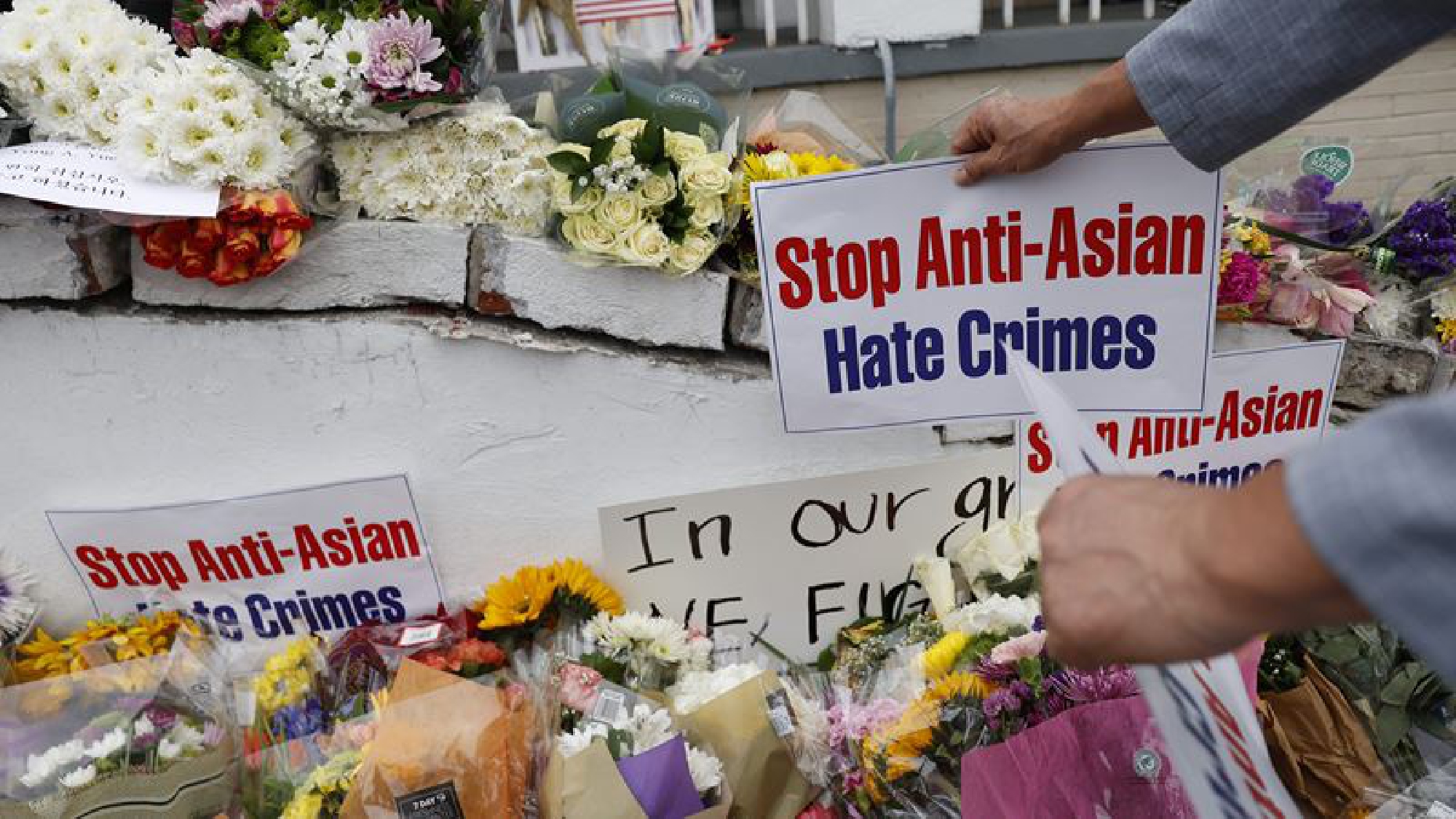
In recent months, the country has witnessed a string of high-profile attacks on Asian Americans, including brutal assaults on the elderly in California’s Bay Area and New York, and a mass shooting at Atlanta-area spas that killed eight people, including six Asian women. They have come during a year of racist, pandemic-inspired rhetoric that at one point flowed from the nation’s highest office. And this week, the Senate issued a bipartisan rebuke to that violence, passing a bill to improve authorities’ response to such crimes.

The attacks on Asians, along with a surge of white-supremacist violence and an ongoing reckoning with racism in the United States, have shone new light on the nation’s hate-crime laws and authorities’ struggle – some say failure – to use them.

Here are some of the most commonly cited issues, from residents who are wary of police not wanting to report incidents, to officers not taking them seriously and prosecutors refusing to bring charges.

– – –

The problems can begin right away, in the hours and days after a crime occurs. Will the victim report it? Will the police take it seriously?

Too often, experts say, the answer to one or both of those questions is no.

The Justice Department analysis – which examined survey data from 2013 to 2017 – estimated that fewer than half of the 200,000 annual hate crimes are reported to police. And of those, just 45 percent are reported as hate crimes.

One reason for this gap, Bell said, is that in most places police departments aren’t set up to recognize and respond to hate crimes, which are most often cases of low-level assault or vandalism.

“This is not crime that the police care about,” she said. “There isn’t a policing apparatus in the vast majority of places that is attuned to hate crimes.”

There is also a long-standing lack of trust between law enforcement and communities of color, along with some immigrant communities, making people leery of calling the police, said Steve Freeman, vice president of civil rights at the Anti-Defamation League (ADL).

“If in fact you don’t trust the police and you’re scared to go to the police and you give kids warnings about what to do if you encounter a law enforcement officer, it’s not rocket science to figure out why a victim isn’t going to the police to report a hate crime,” he said.

At the Matthew Shepard Foundation – named for the 21-year-old whose murder became a symbol for the gay rights movement – advocates often field emails from LGBTQ people recounting abuses they have suffered when targeted for their sexual orientation or gender identity. Again and again, the writers say they aren’t going to report the crimes because they live in a state without LGBTQ nondiscrimination laws, said Judy Shepard, mother of Matthew and president of the foundation’s board.

“They worry about retaliation, about revictimization,” Shepard said. “They’ll report to community centers, but they won’t tell the police.”

And in some immigrant communities, residents still carry perceptions of the police from their home countries, where authorities may have been violent or corrupt, said Sgt. Donnell Walters, president of the Ethical Society of Police and head of the community engagement unit at the St. Louis Police Department.

The answer to these issues is better, smarter policing, Walters said.

More officers should get to know the communities they serve better, he said, rather than showing up only at the scene of a crime or to enforce drug laws. But there should also be more education – of police and residents, because many people in both camps don’t understand hate-crime laws. In his nearly two decades as a police officer, Walters said he cannot recall ever responding to a hate crime or receiving training on how to identify and handle them.

Local prosecutors should play a larger role in teaching officers and even citizens the law, Walters said.

“We have to hold more than just law enforcement agencies accountable for officer behavior,” he said. “We need to start holding the judicial system and the presentation of laws accountable. We owe it to the community.”

– – –

Shanlon Wu was a young federal prosecutor in Washington, D.C., when a local case came across his desk: A shove and a slur – enough, he thought, to push for a hate-crime charge under the District’s statute.

But, Wu recalled, his supervisor advised him against it. Don’t make the case harder than it already is, he said, we don’t need another thing to prove. Wu listened then, but regrets it now.

“That is really an example of the prosecutors being very risk averse,” he said.

Not only is that mind-set damaging to a community’s trust in the justice system, Wu said, it is inaccurate. Because many hate-crime laws involve sentence enhancements – increasing the severity of punishment for an existing charge – prosecutors aren’t tasked with proving a separate crime.

And charging a hate crime, he said, does not necessarily make the underlying crime harder to prove – but it does send a message that these offenses matter. Conversely, he added, having these laws on the books without using them sends a message that they don’t.

Another misconception that Wu and other experts identified: The idea that it’s more difficult to prove intent in hate-crime cases. It’s no different from what happens “constantly, every day in courtrooms,” where prosecutors must use circumstantial evidence to show a defendant’s intent.

“With hate crimes, there seems to be this misconception that someone needs to be shouting something to prove that,” said Wu, who also served as counsel to then-Attorney General Janet Reno.

The fact they’re considered different is evidence of the problem, Wu said, describing a systemic bias.

“It’s not really different, it’s only thought of as different by prosecutors,” he said. “The averseness to using hate-crime statutes comes from the inheritance of implicit racism.”

But charging a defendant with a hate crime doesn’t guarantee a prosecution – far from it. ProPublica, the nonprofit investigative journalism outlet, examined five years of cases reported to Texas police as potential hate crimes. Of the 981, ProPublica found just eight convictions.

Some were dismissed for lack of evidence and others went unsolved. In many cases, prosecutors probably thought they couldn’t prove the defendant’s motivation, the report said. But several also conceded that they wield the charge as a bargaining tool in plea deal negotiations, using the prospect of a hate crime to secure a certain sentence then agreeing to drop that count.

“Is the burden of proof too difficult in hate-crime cases? The answer is no,” Wu said. “It’s the same burden of proof as any other type of crime, it’s no different.”

– – –

The laws themselves are often confusing and can vary state to state, offering uneven protection for different people and from different crimes.

Hate-crime statutes have their roots in 1960s civil rights laws, which forbade discrimination on the basis of race, religion and national origin. In 1979, the ADL conducted its first audit of antisemitic incidents, which helped lay the groundwork for the group’s first iteration of a model hate-crimes bill. Around that time, the first states began passing legislation to punish hate crimes, with California, Oregon and Washington among the earliest adopters.

Efforts to deal with bias-motivated crime accelerated after the 1993 Supreme Court case Wisconsin v. Mitchell – which involved a young Black man, Todd Mitchell, who was found to have assaulted a White boy because of his race. The decision affirmed that sentence enhancements for hate crimes are constitutional and do not violate a defendant’s First Amendment rights. The ruling jump-started state-level efforts to tackle hate crime, said Freeman, of the ADL.

The federal government also has its own law against hate crimes, but the Justice Department almost always defers to states, making what happens locally even more important. But state laws are a patchwork.

South Carolina and Wyoming are the only two states without a hate-crime law on the books. The Brennan Center for Justice, a nonpartisan law and policy institute, does not count North Dakota’s law because, it says, “lawmakers and law enforcement within North Dakota do not believe they have a hate-crimes law” and “no one has ever been charged of a hate crime” under the existing statute.

The ADL has also called Arkansas’ just-approved measure a “sham” and refused to classify Indiana’s statute as a hate-crime law because it excludes from its protected classes gender identity, gender and sex, and its language is too broad and vague, the group has argued.

Arkansas and Indiana are not the only states with laws omitting certain people. Just 20 states have what the ADL defines as a “fully inclusive” statute, which includes protections for the following categories: Race, religion, ethnicity, sexual orientation, disability, gender and gender identity. Most often, it’s gender identity and sexual orientation left unaddressed, which means the laws fail to protect gay and trans people, Shepard said.

“We’ve even gone backwards in some places,” she said. “Over half the states may have hate-crime laws, but they don’t protect the gay community.”

Elsewhere, battles have broken out over who the measure or proposal includes – namely, police officers. Some conservatives have equated animus directed at law enforcement with that directed at communities of color, but Freeman said such thinking “takes away the impact and the concept of the law.”

“Attacks on police officers are already well protected everywhere,” he said. “It’s a misunderstanding of what a hate-crime law is.”

Still more differences exist in states’ data collection requirements: Some tell agencies that they must track and report hate crimes; 17 states do not. Predictably, this has led to shoddy, incomplete statistics, further muddying the picture of bias-motivated offenses. Even federal law – the Hate Crime Statistics Act of 1990 – is toothless because it does not hold to account localities that fail to comply.

To wit: 86 percent of the country’s law enforcement agencies did not report a single hate crime to the FBI for its 2019 Crime in the United States report. Seventy-one cities with over 100,000 residents – including state capitals and major metropolitan centers – reported zero hate crimes, a metric that demonstrates how absurdly incomplete the data is, experts say.

The reasons for this range from a lack of funding, to poor training, to officials actively seeking to play down the number of hate crimes locally to avoid having their cities tagged as discriminatory, Freeman said.

Ultimately, hate-crime laws – like the crimes themselves – have an impact that radiates beyond an isolated case, advocates say. When the laws are enacted and used, they say, it sends a message that officials are taking the crimes seriously.

“For so many minority communities there is the concept of erasure – that their history here and the violence against them has been erased,” Wu said. “When you have a law on the books that you don’t use, it’s like erasing the law.”

Published : April 27, 2021

By : The Washington Post · Reis Thebault

Jeff Bezos challenges NASA moon contract award to Elon Musks SpaceX #SootinClaimon.Com

#SootinClaimon.Com : ขอบคุณแหล่งข้อมูล : หนังสือพิมพ์ The Nation.

https://www.nationthailand.com/international/40000253

Jeff Bezos challenges NASA moon contract award to Elon Musks SpaceX


Just over a week after it lost out on a high-profile and lucrative contract to build the next spacecraft that would land astronauts on the moon, Jeff Bezos Blue Origin filed a protest over NASAs decision, saying it was flawed.

Jeff Bezos challenges NASA moon contract award to Elon Musks SpaceX

NASA awarded Elon Musk’s SpaceX a $2.9 billion contract to build the lunar lander, a huge victory that surprised many in the space industry. Blue Origin had vigorously pursued the contract, building what it called a “national team,” including Lockheed Martin, Northrop Grumman and Draper, to compete.

It won the largest award in the initial round and was seen by many as the team to beat for what NASA calls the Human Landing System. The selection of SpaceX as the only contract recipient was a huge blow to Blue Origin and an embarrassment for Bezos, who was personally involved in the project and has talked openly about his lifelong fascination with the moon. (Bezos owns The Washington Post.)

In a statement, the company said that “NASA has executed a flawed acquisition for the Human Landing System program and moved the goalposts at the last minute. In NASA’s own words, it has made a ‘high risk’ selection. Their decision eliminates opportunities for competition, significantly narrows the supply base, and not only delays, but also endangers America’s return to the Moon.”

NASA said it had hoped to award two contract to ensure competition and redundancy in case one of the providers faltered. But it said it didn’t have the funding from Congress to pay for two contracts, and is pushing to return astronauts to the moon quickly for the first time since the last Apollo mission in 1972.

It said SpaceX’s contract was for the first lunar landing only and that there would be additional competitions for future missions. At his confirmation hearing last week, former senator Bill Nelson, President Joe Biden’s pick for NASA administrator, said he endorsed that approach.

“Competition is always good,” he said.

Blue Origin’s bid, the protest said, was $6 billion, or more than double SpaceX’s. Bob Smith, Blue Origin’s CEO, told the New York Times that he objected to the fact that NASA allowed SpaceX to update its payment schedule so that it fit “within NASA’s current budget.”

“We didn’t get a chance to revise and that’s fundamentally unfair,” Smith told the Times.

In the protest, filed with the Government Accountability Office, the company said that NASA failed to allow the competitors “to meaningfully compete for an award when the Agency’s requirements changed due to its undisclosed, perceived shortfall of funding for the multi-year program lifecycle.” It also alleged that NASA “changed the weight accorded to evaluation factors to make price (cost to the Government) the most important factor because of perceived funding limitations.”

NASA did not immediately respond to a request for comment.

In making the award earlier this month, NASA officials hailed it as a watershed moment that would allow the space agency to put the first woman and the person of color on the moon. “As the first human lunar lander in 50 years, this innovative human landing system will be a hallmark in space exploration history,” Lisa Watson-Morgan, NASA’s lunar lander program manager, said.

Bezos and Musk have battled over government resources before. In 2013, Blue Origin protested NASA’s decision to allow SpaceX to use launchpad 39A at the Kennedy Space Center. Given the fact that Blue Origin didn’t have a rocket capable of getting to orbit or flying people, Musk said the protest was ridiculous, and Blue Origin lost the challenge.

And he didn’t think Blue Origin had much of a chance of creating a human-rated rocket any time soon. “I think we are more likely to discover unicorns dancing in the flame duct,” he told SpaceNews at the time.

SpaceX recently launched its third human spaceflight mission from 39A. Blue Origin recently said that New Glenn, the big orbital rocket it’s been working on for years, would be delayed another year.

Bezos has long been enthralled by the moon and has said that watching Neil Armstrong and Buzz Aldrin walk on the moon when he was 5 years old was “a seminal moment” for him.

Blue Origin has been pitching its landing system, known as Blue Moon, since 2017, and Bezos, often described as the world’s richest man, has said he would invest in it heavily himself. In 2019, Bezos said that the program is “so ambitious that it needs to be done with partners. This is the only way to get back to the moon fast. We’re not going back to the moon to visit. We’re going back to the moon to stay.”

Published : April 27, 2021

By : The Washington Post · Christian Davenport

U.S. to share up to 60 million vaccine doses amid pressure to aid desperate countries #SootinClaimon.Com

#SootinClaimon.Com : ขอบคุณแหล่งข้อมูล : หนังสือพิมพ์ The Nation.

https://www.nationthailand.com/international/40000252

U.S. to share up to 60 million vaccine doses amid pressure to aid desperate countries


WASHINGTON – The United States will share up to 60 million doses of the AstraZeneca coronavirus vaccine with other countries, the White House said Monday, as the Biden administration faces growing pressure to help vaccinate the global population and cases spike around the world.

U.S. to share up to 60 million vaccine doses amid pressure to aid desperate countries

The move comes as India in particular faces an increasingly dire situation, with its health system showing signs of collapse – adding to the sense of urgent global need. The AstraZeneca vaccine, which is not authorized for use in the United States by the Food and Drug Administration, will be shipped out once it clears federal safety reviews, officials said.

The White House took pains to stress that the move will not affect the United States’ internal vaccination drive. “We do not need to use AstraZeneca in our fight against covid,” press secretary Jen Psaki told reporters, noting that the domestic U.S. push relies on vaccines made by other companies.

It is not clear how many of the AstraZeneca doses would go to India, but in the interim the United States announced other actions to help the struggling country, including sending raw materials to help India make its own vaccine.

The question of when and how to send vaccine overseas has been a vexing one for the White House. President Joe Biden’s promise to rid the United States of the coronavirus was a top campaign pledge, and he does not want to be seen as prioritizing other countries. Yet he also speaks often of restoring the United States to moral leadership in the world and showing compassion for other nations.

Monday’s decision came after weeks of pressure. Foreign policy staffers have been advocating for sharing more of the surplus, but senior White House officials did not want to send doses abroad as the United States scrambles to vaccinate its citizens, according to two people with knowledge of the matter who spoke on the condition of anonymity to discuss internal deliberations.

As it has become increasingly clear that AstraZeneca’s vaccine will not be a big part of the plan for vaccinating Americans, the people said, it became harder to justify not sending it to other countries.

But while many countries are desperate for vaccine, AstraZeneca’s version may not be their first choice. The vaccine has faced concerns about rare blood clots, its effectiveness against variants and its overall efficacy.

The European Union is suing the company for missed delivery targets, and South Africa stopped using the vaccine after a small trial found that it was not effective against the dominant variant in the country. The European Union also temporarily paused distribution of the vaccine while it investigated the blood clots associated with it, before ultimately resuming injections.

With all Americans 16 and older eligible for vaccination as of last week and countries such as India experiencing dramatic case increases, the White House’s calculations have appeared to shift. Last month, the United States said it would share a much smaller amount, about 4 million doses of vaccine, with Mexico and Canada.

“The India crisis has put the spotlight back on the United States in a dramatic and difficult way that’s very, very uncomfortable,” said Stephen Morrison, director of the Global Health Policy Center at the Center for Strategic and International Studies.

He said India’s spike in cases exposed a slowness by the United States to respond to the gap between the abundance of vaccine at home and the gaping need in the rest of the world. “We’re not being very fast. We’re not being very nimble and pivoting to a new position,” Morrison said. “We look a little sluggish.”

China and Russia have shared vaccines with neighboring countries and the developing world, raising concerns about U.S. geopolitical rivals making inroads while the United States holds back.

Even as the Biden administration now prepares to share vaccine, it could be weeks or months before those doses reach other countries, because the FDA must complete its safety review. AstraZeneca vaccine in the United States has been produced at an Emergent BioSolutions manufacturing plant in Baltimore that has since shut down production because of safety issues.

One major problem there occurred when 15 million doses of the Johnson & Johnson vaccine were contaminated by having the AstraZeneca vaccine mixed in. However, the AstraZeneca doses are not believed to have been affected, according to an administration official with knowledge of the situation who spoke on the condition of anonymity to discuss the sensitive matter.

Officials said the United States would ensure that vaccine doses were safe before sending them abroad.

“Over the next few months, before any AstraZeneca doses are shipped from the United States, the FDA will confirm any such doses meet its expectations for product quality,” Psaki said. “This is being done in the context of the ongoing review of all doses made at the plant where these AstraZeneca doses were produced.”

Administration officials also said discussions were underway to determine how exactly to allocate and distribute the doses once they are cleared by the FDA.

Given the gravity of the situation in India, U.S. officials have engaged in high-level calls with Indian officials about how the Biden administration can assist the country in the meantime. Biden spoke Monday with Indian Prime Minister Narendra Modi, pledging support as the country battles what is now arguably the world’s biggest coronavirus outbreak.

A senior administration official who spoke with reporters Monday afternoon but declined to be named, in accordance with White House policy, described the call as “warm and positive” and said Modi did not request any of the ready-to-use vaccine doses the United States has in its stockpile.

Instead, the United States will supply India with raw materials to manufacture the AstraZeneca vaccine on its own. It is also sending ventilators, personal protective equipment, oxygen-related supplies and therapeutic medicines. An American team of health experts will go to India to help fight the outbreak.

The rapidly deteriorating situation in India reflects the disproportionate share of vaccine supply between a small number of relatively rich nations and most of the world. Countries that the World Bank classifies as “high-income,” accounting for 16% of the world’s population, have locked up more than 50% of near-term supply, according to research from Duke University. By July, the Duke team estimates, the United States could be sitting on hundreds of millions of surplus doses.

Those purchases by wealthier countries have undercut an effort known as Covax, backed by the World Health Organization, that aims to get vaccine to low- and middle-income countries that would otherwise be cut out of the vaccine race. Biden has pledged $4 billion for Covax, an initiative that President Donald Trump spurned.

Covax’s goal for 2021 was to deliver about 2 billion doses to participating countries, but it has been stymied by funding shortages and a supply crunch. Covax has delivered about 43 million doses, and the crisis in India – where much of the vaccine for Covax will be made – could make things worse.

While the United States has fully vaccinated 28.5% of its population, India has vaccinated 1.55%, according to data from the U.S. Centers for Disease Control and Prevention and Our World in Data.

The abundance of vaccine in some rich countries has stoked envy and anger around the world. Several countries, including Namibia and Kenya, have called the gap “vaccine apartheid” and urged countries such as the United States to do more.

Some U.S. officials and business leaders say privately that the issue of vaccine distribution is more complicated than sometimes portrayed. The United States may need some of its surplus if it turns out that people must get regular booster shots to remain healthy, they say.

In addition, U.S. health officials may decide to begin vaccinating younger children, which also would require more vaccine. And setbacks to the vaccination drive are always possible, they add, such as the recent pause in the Johnson & Johnson vaccine because of rare blood clots.

Some activists suggest that one solution would be to suspend patent protections for the coronavirus vaccines so other countries and companies could manufacture them on their own.

The United States, Britain and members of the European Union have blocked a World Trade Organization proposal backed by roughly 80 nations to do so, but the organization will revisit the issue next month.

A Biden administration official, in the call with reporters on Monday, declined to elaborate on the administration’s thinking on the issue.

“We are looking at it but have nothing to say,” the official said.

A group of senators led by Bernie Sanders, I-Vt., Elizabeth Warren, D-Mass., and Tammy Baldwin, D-Wis., along with former heads of state and Nobel laureates, have urged Biden to support a temporary patent waiver, citing what they describe as an urgent moral need.

“We can’t in good conscience sit there and say, ‘Well, tough – we’re not going to require these pharmaceutical companies to license to you, and we’re not going to give the technology to you,’ ” said Rep. Ro Khanna, D-Calif. “That would be a total disaster not just on a humanitarian level but from a national security perspective of America’s standing in the world.”

Opponents of such a waiver say it would interfere with the global supply chain and slow down, not speed up, manufacturing and distribution of vaccine.

As Brazil, India and other countries see their cases multiply, more leaders inside and outside the administration are concluding that slowing the pandemic’s global spread is necessary to the health of Americans, not just those in other countries.

Biden administration officials said the United States must play a significant role in doing that. “This pandemic will not end unless we help the world end it,” an official said.

Published : April 27, 2021

By : The Washington Post · Tyler Pager, Annie Linskey, Emily Rauhala

Bidens broadband plan is bold but economic payoff unclear. #SootinClaimon.Com

#SootinClaimon.Com : ขอบคุณแหล่งข้อมูล : หนังสือพิมพ์ The Nation.

https://www.nationthailand.com/international/40000212

Bidens broadband plan is bold but economic payoff unclear.


President Joe Biden is betting $100 billion he can deliver a lifeline to rural America, and a boost to the economy overall, by making high-speed internet available to all Americans.

Bidens broadband plan is bold but economic payoff unclear.

It seems obvious the plan would help millions, especially in agrarian states where the Democratic party’s support is weakest. Estimating the precise impact, however, is virtually impossible because no one really knows how many Americans lack access to a service that’s considered vital to modern living.

“We have a better map of the Milky Way galaxy than we do of who is un- and under-connected in rural America,” University of Virginia professor Christopher Ali told the Senate Commerce Committee during a March hearing.

The Federal Communications Commission has set out to fix that, forming a task force charged with developing new, more accurate maps of broadband coverage, but the effort may not be complete until next year. In the meantime, broadband advocates are hoping all $100 billion remains in a broad infrastructure package the administration hopes to pass through Congress later this year. Republicans offered $65 billion for broadband in their infrastructure counter-proposal on Thursday.

“As a nation we have to think hard about this,” said Roberto Gallardo, director of Purdue University’s Center for Regional Development. “Are we going to let the coasts pull away and just leave the flyover country behind?”

If lawmakers need an example of how high-speed internet service can help a local community, they might look to little Jackson County in eastern Kentucky. Its population of 13,000 is spread over rugged terrain near the Daniel Boone National Forest.

Peoples Rural Telephone Cooperative, a local nonprofit utility, decided to build an all-fiber network beginning in 2008. About 90% of its $50 million investment was financed through federal loans and grants. Now, lightning-fast service reaches nearly every home and business in the county, a feat that’s garnered national attention.

From 2014, the year the project was completed, through 2019, just before the Covid-19 pandemic hit, unemployment in Jackson County dropped by 5 percentage points, more than in any other county in the state and more than twice the state average, according to data from the state government’s Kentucky Center for Statistics.

It’s hard to determine exactly how much of the improvement stems from the rollout of fiber-optic connections, and Jackson County is still poor, with a median income about half the U.S. average. But Betty Hays, an operations manager at Teleworks USA, an employment clearinghouse serving 23 counties across eastern Kentucky, insists it’s made a big difference.

“It’s been life-changing, life-saving,” she said. “We place people in legitimate, honest-to-God, put-money-in-your-bank-account, remote opportunities.”

The group matches workers to remotely-connected jobs with employers such as Amazon.com Inc. and Hilton Worldwide Holdings Inc. Examples run from tech support and customer service, to handling health insurance queries. Average pay is $13 an hour, with some as high as $20, in an area where most private-sector jobs pay the federal minimum of $7.25.

Those jobs don’t come without a reliable, fast connection. So, Hays said, the people of Jackson County have a distinct advantage. Many in nearby counties who rely on private providers pay more for much slower service, or have no broadband options at all.

A blizzard of academic studies offers evidence that ubiquitous, affordable broadband could deliver significant economic benefits. They point to income growth and lower rates of unemployment in rural areas, higher rural home values and property tax bases, a higher likelihood of new firms locating there, and even higher crop yields.

One of the most comprehensive studies, by economists at Purdue, examined the potential costs and benefits of extending broadband to all of rural Indiana. The authors concluded that revenue from broadband customers wouldn’t cover the system costs, but the total economic return would be as high as $4 for every $1 invested over 25 years.

Yet, economists are blind when asked to estimate the potential overall impact to U.S. economic output of Biden’s broadband plan because they don’t know how many people would gain access if it were implemented.

According to the Federal Communications Commission, fixed terrestrial broadband service was available to 94% of the U.S. population in 2018, and to 78% in rural areas, leaving a total of 20 million Americans unserved.

The reality is much worse. The FCC counts everyone in a census block – an area that may be home to hundreds of people over many square miles – as having broadband access if a single provider serves a single structure in that block, greatly exaggerating the FCC numbers.

“The previous mapping favored the incumbent service providers by allowing them to exaggerate their level of deployment,” said Ali of the University of Virginia.

Biden, in a tweet Saturday, said 35% of rural America lacks access to high-speed internet.

On top of that, many who do receive what’s labeled as broadband are stuck with little or no competition among providers, high prices and service speeds that can’t handle modern demands. And that’s all before the pandemic struck and made it even more crucial for tens of millions of workers and school children to have a robust connection to the outside world.

Broadband advocates and economists also stress that to get the most out of the plan, the Biden administration needs to concentrate on more than just building out access.

The biggest hurdle is affordability, said Brian Whitacre, an economics professor at Oklahoma State University. That’s why Biden’s plan needs more in the way of long-term subsidies for low-income users, he said. Congress in December appropriated $3.2 billion to help subsidize internet access, but the funds are expected to run out within months. A longstanding U.S. subsidy of $9.25 monthly, which has been criticized as inadequate, is set to continue.

“It’s not just the availability that makes a difference,” Whitacre said. “It’s the adoption.”

Published : April 26, 2021

By : Syndication Washington Post, Bloomberg · Christopher Condon, Todd Shields

Stop vaccine finger wagging, says top U.S. health official #SootinClaimon.Com

#SootinClaimon.Com : ขอบคุณแหล่งข้อมูล : หนังสือพิมพ์ The Nation.

https://www.nationthailand.com/international/40000211

Stop vaccine finger wagging, says top U.S. health official


The U.S. political divide on whether to get the coronavirus vaccine suggests that “maybe theres been too much finger wagging,” said the head of the National Institutes of Health.

Stop vaccine finger wagging, says top U.S. health official

“I’ve done some of that; I’m going to try to stop and listen, in fact, to what people’s specific questions are,” NIH Director Francis Collins said Sunday on NBC’s “Meet the Press.”

An NBC News poll released Sunday showed that 82% of Democrats had already been vaccinated or plan to be as soon as possible, against 45% of Republicans.

Almost one-quarter of Republicans said they won’t get vaccinated and another 10% said they’ll do so only if required. That hesitancy has been seen as a roadblock to the U.S. achieving herd immunity against covid 19.

“We’re all in this together. And clearly, if we’re going to be able to put covid-19 behind us, we need to have all Americans take part in getting us to that point,” Collins said.

Anthony Fauci, President Joe Biden’s chief medical adviser, has been among the U.S. health officials singling out Republicans, terming their attitude toward vaccines and public health measures like mask mandates and lockdowns “frustrating.”

“It’s almost paradoxical that, on the one hand, they want to be relieved of the restrictions, but, on the other hand, they don’t want to get vaccinated. It just almost doesn’t make any sense,” Fauci, director of the National Institute of Allergy and Infectious Diseases, said a week ago on CNN.

One Republican senator, Ron Johnson of Wisconsin, said last week that he was skeptical of the “big push” on vaccinations. Fellow GOP Senator Shelley Moore Capito on Sunday said Johnson’s comments hampered the effort to reach herd immunity in the U.S.

“I definitely think that comments like that hurt,” Capito, of West Virginia, said on CNN’s “State of the Union.”

Collins it was still unclear exactly what level of protection would confer herd immunity “with this particular virus.” But parts of the country are getting close to a 75% or 80% level of those with immunity, when vaccinations are combined with people who’ve already had Covid-19.

“But there are other places that are way behind, and those are the places we all worry about as the next hotspot,” he said. “What’s the next one? You can look at the map and say, ‘Where are vaccines lagging?’ Those are the places to worry about. And we can change that, if we can really inspire everybody to get engaged.”

About 90% of Americans now live within five miles of a vaccination site, Collins said.

Donald Trump is among those in the GOP who’ve recently urged supporters to get vaccinated. In an interview with the New York Post on Thursday, the former president called the shots “a miracle.”

Some 226 million vaccine doses have been given in the U.S. so far, with almost 42% of Americans having received at least one dose. That coverage ranges from 59% in New Hampshire to 30% in Mississippi, according to the Bloomberg vaccine tracker.

Published : April 26, 2021

By : Syndication Washington Post, Bloomberg · Jesse Hamilton, Ros Krasny

Men lag women in coronavirus vaccinations, especially in Black communities #SootinClaimon.Com

#SootinClaimon.Com : ขอบคุณแหล่งข้อมูล : หนังสือพิมพ์ The Nation.

https://www.nationthailand.com/international/40000210

Men lag women in coronavirus vaccinations, especially in Black communities


DJ Quicksilva was on the fence about getting vaccinated. The radio host, who lives in Prince Georges County, Md., had been eligible since January because he teaches at his DJ school in person. His doctor was pushing him to get the shot. But he did not trust a medical system he felt had too often failed Black men like him.

Men lag women in coronavirus vaccinations, especially in Black communities

When his wife got vaccinated in March, the pressure mounted.

“It is creating that separation in the house,” he said during a forum he hosted with doctors. “Like: ‘OK, baby, I’m vaccinated. What you going to do?’ I’m like: ‘Ugh. Jesus Christ.'”

Across the country, more women than men have been getting vaccinated, data shows, even though more men have been hospitalized for or died of covid-19. In the D.C. area, the gap appears especially wide among Black residents.

Local and state officials largely point to early eligibility guidelines that prioritized senior citizens and health-care workers, who are disproportionately female. Public health experts and community advocates say that perspective overlooks the important ways gender can intersect with race and income to drive vaccine hesitancy. Outreach efforts are failing to reach men of color, they say, particularly those who are poor or unemployed. A Washington Post analysis shows that the gender gap in D.C., Maryland and Virginia stayed consistent from March through early April, even as more adults became eligible.

“You got the hesitancy, you got the inconvenience, you got the misinformation and you got the machismo,” said the Rev. Derrick DeWitt of First Mount Calvary Baptist Church in West Baltimore, who has interceded on behalf of several female congregants struggling to get their husbands vaccinated. He said it has been especially challenging to engage older Black men, who are closer to the memory of the decades-long Tuskegee experiment, when government-financed doctors allowed syphilis to run unchecked through Black test subjects despite knowing that penicillin would cure them.

In Virginia, where the male-female divide is about 50-50, Black women are being vaccinated at nearly twice the rate of Black men, with a 26-point gap. Among White residents, in contrast, 58 percent of doses are going to women and 42 percent to men, a 16-point gap. Some diverse, dense communities in Northern Virginia, including Prince William County and Alexandria, have markedly larger gender disparities than more-rural localities in the southern and western parts of the state.

Maryland and D.C. said they did not have data cross-referencing gender and race. But in Maryland, which also has a fairly even split between men and women, there is a statewide gap between vaccinated men and women of 13 percentage points. In majority-Black Prince George’s and Baltimore City, the gaps are 17 and 16 percentage points.

“It boils down to trust, and trust is not something that is built easily in someone who has been wronged by the system,” said Quicksilva’s doctor, Fernando Porter.

Quicksilva, who hosts a daily show on 93.9 WKYS and travels frequently for work, said he was eventually persuaded to get his first dose of the Pfizer-BioNTech vaccine in late March. But now, disturbed by news that the Pfizer vaccine will probably require booster shots, he is wavering about his second dose.

“When you look at all the injustices, at the top of the totem pole are Black and Brown men,” said Quicksilva, 40. “The distrust has been there for so long.”

Porter said this point of view is common among the Black and Latino men he treats at his family practice in Silver Spring, with many wary of both the health-care system and the government.

“You have this double whammy of health care and government saying ‘Do this,'” Porter said. “For a lot of them it comes down to fear.”

Annapolis residents Mo Lloyd, 22, and Deonte Ward, 32, say they do not intend to get vaccinated. Ward said his wariness comes from incidents such as Tuskegee; Lloyd said he does not trust the three pharmaceutical companies producing the vaccines. “They’ve done some sketchy things in the past,” said Lloyd, citing reports from 2018 that Johnson & Johnson knowingly sold baby powder that contained small amounts of asbestos.

The only people in their families who have gotten vaccinated are women, the two men said. For Ward, it’s his aunt; for Lloyd, his mother.

Officials from D.C., Maryland and Virginia, along with those from nine local jurisdictions in the Washington metro area, said that aside from some targeted ads, they have not taken specific steps to increase vaccine turnout among men.

“The data that is used by us doesn’t take into particular account gender,” said Lt. Col. Andrew Collins, deputy chair of Maryland’s vaccine equity task force.

Elyn Garrett-Jones, a spokeswoman for the Baltimore County Department of Health, said that “while we are pushing for communities of color in general to get vaccinated, we have not singled out men as part of this effort.”

Gloria Addo-Ayensu, Fairfax County health director, said that “it is still too early in the mass vaccination process to draw firm conclusions about gender disparities.”

In Prince William, officials have not studied the intersection of race and gender in vaccine hesitancy, said health director Alison Ansher. She acknowledged that the gap is concerning, however, given that men constitute 57 percent of the covid-19 deaths in the county.

Men lag women in coronavirus vaccinations, especially in Black communities

https://www.washingtonpost.com/video/c/embed/4d004431-b87d-42a6-944d-42524b7fab65?ptvads=block&playthrough=false

Derek M. Griffith, director for the Center for Research on Men’s Health at Vanderbilt University, said that “if governments notice (the gender gap), they’re certainly not paying attention to it nor incorporating it into their rollout.”

Theories have emerged to explain the disparity – including that women traditionally take on family caregiving roles, which drives them to seek out vaccinations earlier than men. But Griffith said it is difficult to ascertain whether those theories are accurate, because research is scarce.

“There are huge racial differences in who gets vaccinated, and we know that,” Griffith said. “What I haven’t seen done well is a crossing of the race, ethnicity and gender patterns.”

Locally, Prince George’s is one of the few counties where officials are directly targeting the gender gap, including plans for a 24-hour vaccine-a-thon in mid-May focused on men. Members of the county’s Commission for Fathers, Men and Boys say they are volunteering at mobile vaccine clinics and planning public service announcements because they realize it is helpful for men to see people who look like them vouching for the shot.

Euniesha Davis, director of the county’s office of community relations, proposed the vaccine-a-thon after health department officials pointed out the gender divide in early data. She wants to partner with local go-go artists and make the event accessible by having appointments throughout the day. It will be open to everyone, but the emphasis is on drawing men.

“We are going to encourage wives to bring husbands, mothers to bring sons, sisters to bring brothers,” she said. “The message is: It’s not about you – it’s about the community.”

More efforts to bridge the gender gap are happening at the grass-roots level – doctors coaxing patients, barbers fielding questions from clients, pastors taking calls from exasperated wives.

Stephen B. Thomas, head of the Maryland Center for Health Equity at the University of Maryland, said he has heard numerous stories of “discordant households” split by the vaccine – and he is not surprised.

“Who runs the health in your house? My wife runs it in my house,” he said, adding that he has been disappointed not to see a more concerted government focus on gender. The key to such an effort, he said, is not to “shame” men but to “meet them where they are.”

Mike Brown, a Hyattsville, Md., barber who works with Thomas to promote men’s health, estimated that about 40 percent of his clients do not want to get vaccinated, and many baseless vaccine theories that he tries to debunk. Brown, who works in a Zip code with one of the highest coronavirus case rates in the state, started promoting men’s health a decade ago, after his father died of colorectal cancer that Brown believes could have been prevented with a healthier lifestyle.

He frames the decision to get vaccinated as a matter of personal responsibility. “If the coronavirus vaccination is Plan A, then what is your Plan B to stop this from ravaging our communities?” he asks the men who sit in his chair. “They can’t answer that question.”

Sherry Johnson-Miller, 46, is one of the women who pleaded with DeWitt to counsel her husband. As a certified nursing assistant at a Baltimore nursing home, Johnson-Miller was fully vaccinated by January. She has tried since then to persuade husband Joseph Miller, 50, to join her in the world of the immune.

She set up appointments, to no avail. Now, her 29-year-old son is also eligible but wavering.

“I’m the only vaccinated one. That’s what I’m dealing with,” she said during her lunch break Thursday.

With each passing week, Johnson-Miller said, she gets more frustrated with her husband for interfering with her plans to go to Las Vegas for their wedding anniversary in August. She will not travel with anyone who is not vaccinated, she said, not after seeing what the virus did to the residents at her nursing home. If Miller does not change his mind soon, she said, she will make plans to go on a “girls trip” instead. Her sister and most of her friends are fully inoculated.

“I’ll be gone in Vegas and having fun, and he’ll be stuck here,” she said, half-laughing. “See how he feels then.”

Published : April 26, 2021

By : The Washington Post · Rachel Chason, Rebecca Tan