
After crime plummeted in 2020, Baltimore will stop drug, prostitution prosecutions #SootinClaimon.Com

#SootinClaimon.Com : ขอบคุณแหล่งข้อมูล : หนังสือพิมพ์ The Nation.

https://www.nationthailand.com/news/30404196

After crime plummeted in 2020, Baltimore will stop drug, prostitution prosecutions

InternationalMar 27. 2021

By The Washington Post, Tom Jackman

BALTIMORE – Something happened in Baltimore last year. The coronavirus pandemic hit, and State’s Attorney Marilyn Mosby announced that the city would no longer prosecute drug possession, prostitution, trespassing and other minor charges, to keep people out of jail and limit the spread of the deadly virus.

And then crime went down in Baltimore. A lot. While violent crime and homicides skyrocketed in most other big American cities last year, violent crime in Baltimore dropped 20% from last March to this month, property crime decreased 36%, and there were 13 fewer homicides compared with the previous year. This happened while 39% fewer people entered the city’s criminal justice system in the one-year period, and 20% fewer people landed in jail after Mosby’s office dismissed more than 1,400 pending cases and tossed out more than 1,400 warrants for nonviolent crimes.

So on Friday, Mosby made her temporary steps permanent. She announced Baltimore City will continue to decline prosecution of all drug possession, prostitution, minor traffic and misdemeanor cases, and will partner with a local behavioral health service to aggressively reach out to drug users, sex workers and people in psychiatric crisis to direct them into treatment rather than the back of a patrol car.

“A year ago, we underwent an experiment in Baltimore,” Mosby said in an interview, describing steps she took after consulting with public health and state officials to reduce the public’s exposure to the coronavirus, including not prosecuting nonviolent offenses. “What we learned in that year, and it’s so incredibly exciting, is there’s no public safety value in prosecuting these low-level offenses. These low-level offenses were being, and have been, discriminately enforced against Black and Brown people.

“The era of ‘tough on crime’ prosecutors is over in Baltimore,” Mosby said. “We have to rebuild the community’s trust in the criminal justice system and that’s what we will do, so we can focus on violent crime.” In a city that still struggles with a high homicide rate and gun violence, even with the decline in crime,she said the policy shift will enable more prosecutors to be assigned to homicides and other major cases instead of misdemeanor court.

The pandemic accelerated an effort already underway by liberal prosecutors across the country to reduce or eliminate the prosecution of minor crimes. Not long after the coronavirus hit, prosecutors in Seattle and Brooklyn announced they would not pursue low-level offenses that don’t jeopardize public safety. In Washington state last month, the Supreme Court ruled that the state’s drug possession law was unconstitutional because it didn’t account for the defendant’s intent. King County Prosecuting Attorney Dan Satterberg said he already wasn’t pursuing such cases “because we did no good for people struggling with substance abuse disorder.”

In California, prosecutors in Los Angeles and Contra Costa counties have recently stopped taking people to court for drug possession and low-level misdemeanors. “The data suggests,” newly elected Los Angeles County District Attorney George Gascón said in an email, “that the bulk of misdemeanor caseloads – which represent the vast majority of filings in the United States – involve the prosecution of cases with minimal, and often negative, long-term impacts on public safety. It’s this reality that led to my policy prohibiting the filing of many first time low-level misdemeanors.”

But a number of legal experts said they had not seen an effort like Mosby’s in which behavioral health services were actively brought into the mix from the outset of cases. Baltimore Mayor Brandon Scott, a Democrat, issued a statement Friday lauding Mosby for “working with partners to stem violence in Baltimore and ensure residents have the adequate support services they deserve.”

But Sean Kennedy, a visiting fellow at the Maryland Public Policy Institute who studies and has written about Baltimore crime and arrest data, said forgoing the prosecutions of low-level crimes is a mistake in a city he called the “murder capital of America.”

“These ‘quality of life’ violations are more than a nuisance, they are precursors and directly proximate to much more serious and often violent crimes,” Kennedy said, such as human trafficking and drug-related shootings. Kennedy said Mosby dismisses violent crime cases “at record rates, rarely secures prison time for gun offenders and has presided over the largest rise in homicides in decades.”

Mosby said her policy decision is unrelated to a federal investigation of her and her husband’s personal and campaign finances. The initial changes in prosecution policy occurred a year ago, and their success caused her to make them permanent, she said.

The decision not to prosecute drug and nonviolent misdemeanor crimes meanta huge paradigm shift for police, Commissioner Michael Harrison said in an interview. Officers who made drug arrests saw prosecutors dismissing the charges at the jail, and so the arrests mainly stopped. Mosby said there were 80% fewer arrests for drug possession in Baltimore in the past year.

“The officers told me they did not agree with that paradigm shift,” Harrison said. He said he had to “socialize” both officers and citizens to this new approach. Harrison expected crime to rise. “It did not,” the chief said. “It continued to go down through 2020. As a practitioner, as an academic, I can say there’s a correlation between the fact that we stopped making these arrests and crime did not go up,” though he cautioned that the coronavirus could have had some impact. Mosby noted that the virus did not keep crime from rising in nearly every other big U.S. city last year. Even with its progress, Baltimore had 335 homicides in 2020 and killings are up in the first months of this year.

Harrison enthusiastically supported Mosby’s move to sign an agreement with Baltimore Crisis Response Inc., a private nonprofit group that provides services to people with mental health and substance use disorders. With the police, BCRI will launch a 911 alternative dispatch where calls for behavioral health issues are routed to BCRI, which can send a two-person mobile crisis team to a scene or immediately refer people to services. The state’s attorney’s office is also collaborating with three Baltimore groups that offer a variety of services to sex workers.

Social workers are “better suited to deal with these issues,” Harrison said. “For generations, we’ve been asked to be all things to all people. That never should have happened.”

The head of the Baltimore Fraternal Order of Police union did not return messages seeking comment.

Edgar Wiggins, executive director of BCRI, said that his agency taking a more immediate role in public response “gives us a conduit into a population that, honestly, we’ve not always had access to, and they haven’t had access to us.” He said mobile response teams will have a mental health professional and a registered nurse because “these folks often haven’t managed their health.” Immediate referrals for sex workers can be effective because “more often than not they have problems with substance use disorder and addictions. We want to divert people from involvement in the criminal justice system, which is not going to be helpful for their chronic problems.”

Mosby and others said that the racial justice protests of last summer provided further momentum for the need to revamp the justice system. Kobi Little, head of the Baltimore NAACP, said Mosby had been “responsive to the community’s needs and to calls for equity.” He said the new approach has led to “reduced policing and incarceration of Black people, increased access to crisis services” and “reduction in violent crime.”

Mosby asked public health researchers at Johns Hopkins University to examine the effect of her March 2020 policy shifts on public calls for police service and on rearrests of those who had charges dropped or warrants quashed. The number of 911 calls for drug or intoxication situations dropped from 131 per day before the pandemic to 88 per day in the eight months between March and December last year. Calls for prostitution or sex work dropped from six per day to three per day, the Johns Hopkins researchers found. The number of 911 calls for violent crimes did not drop significantly in the same period.

They also found that of 1,431 people who had charges or warrants dismissed at the outset, only five were rearrested. Though studies of recidivism typically look at three years to review reoffender data, the fact that only five reentered the system in eight months is “pretty unbelievable,” said Susan Sherman, a behavioral health professor at Johns Hopkins who specializes in helping marginalized populations. “In a world where drug decriminalization is happening around the country, the impact on the community is important,” Sherman said, and Mosby “really values having an understanding of these impacts.”

A number of big-city prosecutors have moved to decriminalize drugs, and Oregon voters decriminalized small amounts of drugs statewide. Miriam Krinsky, head of Fair and Just Prosecution, which advocates for liberal prosecutors, said many prosecutors are now getting their communities to treat drug abuse as a public health problem rather than a crime problem. “At a minimum, the criminal justice system needs to get out of the way and do no harm,” Krinsky said. “It’s been doing harm for decades. We need to stop trying to punish our way out of it.”

Mosby noted that 13% of the American population is Black, but 35% of those incarcerated for drug violations are Black. “As a prosecutor, our mission is justice over convictions,” Mosby said. “You have to understand the importance of rectifying the wrongs of the past.”

Millicent Wagner understands that. She said she spent years as a drug addict and prostitute on the streets of Baltimore before going sober and reuniting with her family more than two years ago. But she still had an outstanding prostitution warrant from 2018. Last fall, she reached out to Mosby’s office after hearing of the new policy, and records show it quickly dismissed her case.

Trying to resolve her warrant the old way – surrendering at the jail, possibly going into custody, waiting 30 days for a hearing – “would have devastated my child. It would have hurt him the most. It would hurt me, too. Just having to be back in the Baltimore city jail, all those things I’ve been staying away from.” Instead of being back in the system, she is getting a state identification card that she wouldn’t apply for with an outstanding warrant, plus a Social Security card, and then a job.

“I think this could help a lot of people in my situation that have turned themselves around,” Wagner said. “It’s hard.”

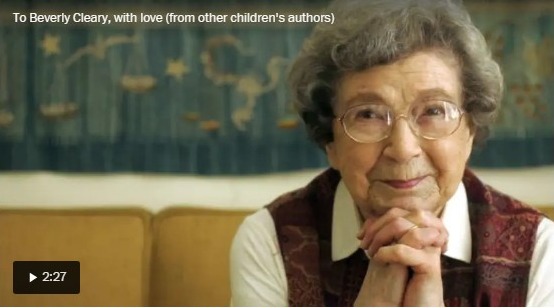
Beverly Cleary, beloved author who chronicled schoolyard scrapes and feisty kids, dies at 104 #SootinClaimon.Com

#SootinClaimon.Com : ขอบคุณแหล่งข้อมูล : หนังสือพิมพ์ The Nation.

https://www.nationthailand.com/news/30404195

Beverly Cleary, beloved author who chronicled schoolyard scrapes and feisty kids, dies at 104

InternationalMar 27. 2021

By The Washington Post, Harrison Smith, Becky Krystal

Beverly Cleary was a new librarian in Yakima, Wash., when, as she later recalled, “A little boy faced me rather ferociously across the circulation desk and said, ‘Where are the books about kids like us?’ “

https://www.washingtonpost.com/video/c/embed/91f4cedd-76d1-4667-bb14-7d5fae0f0ec0

She was stumped. There were many volumes about precocious British tots with “nannies and pony carts,” she said, but none that would appeal to “grubby neighborhood kids” like the boy before her – or to the adventure-seeking girl she had once been.

That encounter in the library set Cleary, who died March 25 at 104, on her way to becoming one of the most beloved children’s authors of all time, a chronicler of childhood who found the whole of human experience within the ordinary high jinks of growing up.

She died in Carmel, Calif., said her publisher HarperCollins, which did not give a cause.

She wrote more than 40 books, many about high-spirited youngsters such as the spunky Ramona Quimby and adventurous Henry Huggins, a third-grader with hair “like a scrubbing brush” and with a knack for getting into gentle scrapes with his mutt, Ribsy.

In her stories, quotidian tribulations – the challenges of managing an unwieldy paper route, dealing with a fractious sibling or coping with an absent parent – became tales of triumph.

The books sold more than 85 million copies and became, like the works of Maurice Sendak and Theodor “Dr. Seuss” Geisel, essential reading for generations of schoolchildren. They earned Cleary some of the highest distinctions in her field, including the Newbery Medal and Newbery Honor, as well as the National Medal of Arts, bestowed by President George W. Bush in 2003.

She aimed her stories squarely at an elementary school audience and hoped that, by creating relatable characters, she would inspire in her young readers a lifelong love of books. Her writing was distinguished by what essayist Benjamin Schwarz of the Atlantic magazine once called her gift for “photographic and psychological exactitude.”

She pulled heavily from memories of what she once described as her “free and wild” youth in Oregon, first on a farm and then in Depression-era Portland, employing what she called “all the bits of knowledge about children, reading and writing that had clung to me like burrs or dandelion fluff.”

Cleary frowned on the moralizing, didactic themes that dominated children’s literature in the first half of the 20th century. She set out not to impart wisdom but instead to portray children at play, and to capture their dialogue and the ways they sometimes venture into an adult world beyond their full comprehension.

Her stories paved the way for the more mature subject matter of later young-adult writers such as Judy Blume, who has credited Cleary as a significant influence.

The setting of Cleary’s first work, “Henry Huggins” (1950), was modeled on Hancock Street in Portland, where she lived as a child. In her book, she gave the street a more evocative name: Klickitat, after a nearby street in Portland whose name reminded Cleary of the sound of knitting needles.

The boys she knew inspired the book’s title character, who hunts for night crawlers in the park and struggles with whether to spend his silver dollar, a gift from a grandparent, on a pair of guppies at the pet store. (“He didn’t see how his mother could object to two quiet little fish that didn’t bark or track in mud or anything,” Cleary wrote.)

“Henry Huggins” spawned five sequels and a spinoff series featuring Cleary’s most beloved character, Ramona Quimby. She was the little sister of Henry’s friend Beatrice “Beezus” Quimby and was “tossed in,” Cleary said, to move the story along.

Feisty, redheaded Ramona first received top billing in 1955 with the publication of “Beezus and Ramona.” Seven sequels followed, including “Ramona the Pest,” her 1968 classic about adjusting to kindergarten, and “Ramona and Her Mother” (1979), which earned a National Book Award in 1981 for children’s paperback fiction.

The “Ramona” books, the last of which appeared in 1999, gained a following that even Cleary never expected.

“Little did I dream, to use a trite expression from books of my childhood, that she would take over books of her own, that she would grow and become a well-known and loved character,” she wrote in the second volume of her memoirs, “My Own Two Feet” (1995).

A film adaptation of the first “Ramona” book, with the reversed title “Ramona and Beezus,” starred Joey King as Ramona and Selena Gomez as her older sister and was released in 2010 to mixed reviews. It was one of the few spinoffs tolerated by the author, who generally loathed the merchandising of her work.

Cleary occasionally strayed from the realistic children’s fiction that was her hallmark, writing several young-adult novels about thwarted romances and first loves. She also wrote three children’s books about the adventurous rodent Ralph S. Mouse, beginning with “The Mouse and the Motorcycle” (1965).

She once told the Los Angeles Times that the “Ralph” novels emerged from a family trip to Britain, where she bought her son “some little cars and a little motorcycle” to play with after he became ill. When the family came home, she said, “a neighbor called me over to see a mouse that had fallen in a bucket in her garden. And the thought crossed my mind that that mouse was just the right size to ride that little motorcycle.”

A whiskered star was born.

Her work took a darker tone in later years, as even idyllic Klickitat Street, where kids were allowed to play and walk to school without parental supervision, became the scene of anxiety, loneliness and a feeling of helplessness. By “Ramona Forever” (1984), the title character’s troubles shifted from kindergarten messes to worries about a new baby in the family, the death of a cat, her father’s unemployment and the departure of a beloved aunt.

Another poignant work, “Dear Mr. Henshaw” (1983), earned Cleary the top honor in children’s literature, the Newbery Medal. The novel consists of letters between Leigh Botts, a schoolboy whose lunch is always getting stolen, and Boyd Henshaw, an author with whom Leigh began corresponding for a class assignment.

In a review for the New York Times, children’s writer Natalie Babbitt praised “Dear Mr. Henshaw” as Cleary’s finest book. “Dialogue has always been one of the strongest parts of her work,” she wrote. “And here, where all is dialogue, that strength can shine alone and be double impressive.”

The book differed from her other works, Cleary once observed, because it did not arise from a joke or funny idea. Leigh’s often-absent father is a truck driver, and his parents eventually divorce. There is no tidy ending.

“At first I was surprised because it wasn’t funny like your other books,” Leigh writes in one revealing letter to Henshaw, explaining that he had just finished the fictional author’s new work. He continued, “but then I got to thinking (you said authors should think) and decided a book doesn’t have to be funny to be good, although it often helps. This book did not need to be funny.”

– – –

Beverly Atlee Bunn was born April 12, 1916, in McMinnville, Ore., the nearest town with a hospital to the family farm in Yamhill. Her father, Lloyd, was the son of a farmer whose ancestors had arrived in Oregon by covered wagon in the mid-1800s.

Her mother, the former Mable Atlee, was an aspiring writer who headed west from Michigan in the early 1900s to teach. She founded a library in Yamhill, but the family relocated to Portland after losing the farm in an economic downturn.

There, her father worked as a bank security guard but was laid off during the Depression, a traumatic experience for the young Cleary that inspired a similar episode in “Ramona and Her Father” (1977).

“I sat filled with anguish, unable to read, unable to do anything,” she wrote in her first memoir, “A Girl From Yamhill” (1988), recounting the moment when she learned her father had been fired. “How could anyone do such a thing to my father, who was so good, kind, reliable, and honest?”

Chickenpox and then smallpox kept Cleary out of first grade for a time, and when she returned, she was placed with the least-proficient group of readers. She was in third grade when she finally started to grasp the fundamentals of reading. She recalled the moment it all came together: the rainy afternoon at home when she stumbled across Lucy Fitch Perkins’s children’s novel “The Dutch Twins.”

“I picked up a book,” she told the Philadelphia Inquirer. “My mother always kept them around, with high hopes. I looked at the pictures, and then the words, and discovered I was reading.”

In recent years, Cleary’s birthday became a reading holiday of sorts, with libraries and schools across the country celebrating it as Drop Everything and Read Day.

She graduated with a bachelor’s degree in English in 1938 from the University of California at Berkeley. After receiving a second bachelor’s degree, in library science, from the University of Washington in 1939, she became a children’s librarian in Yakima. She later settled in California’s Berkeley Hills, where she devoted herself to writing full time with the encouragement of her husband, Clarence Cleary, an accountant she married in 1940.

He died in 2004. Survivors include their two children, Malcolm and Marianne; three grandchildren; and a great-grandchild.

In “My Own Two Feet,” Cleary recalled a brief feeling of anxiety while working on her first book.

“It occurred to me that even though I was uncertain about writing, I knew how to tell a story,” she wrote, remembering her years as a librarian in Yakima. “What was writing for children but written storytelling? So in my imagination I stood once more before Yakima’s story-hour crowd as I typed the first sentence: ‘Henry Huggins was in the third grade.’ “

Piracy fears mount as ships take long way around Africa to avoid blocked Suez Canal #SootinClaimon.Com

#SootinClaimon.Com : ขอบคุณแหล่งข้อมูล : หนังสือพิมพ์ The Nation.

https://www.nationthailand.com/news/30404188

Piracy fears mount as ships take long way around Africa to avoid blocked Suez Canal

InternationalMar 27. 2021

By The Washington Post, Sudarsan Raghavan, Antonia Noori Farzan

CAIRO – Brand-new Kia automobiles, cases of Heineken beer, live animals and billions of dollars of crude oil and other commodities remained stranded in the Suez Canal throughout the day on Friday. Meanwhile, tugboats and dredgers tried to free a grounded container ship that has come to symbolize the perils of a global economy that relies on goods traveling around the world in larger and larger vessels.

The Ever Given, one of the largest container ships ever built, has been stuck in the canal since Tuesday, creating an increasingly expensive traffic jam on both sides of the waterway. Some tankers have already opted to travel around the southern tip of Africa instead, adding weeks to their journeys, through a region known for piracy.

“It just shows you how vulnerable our supply-chain lines are,” said Guy Platten, secretary general for the U.K.-based International Chamber of Shipping.

On Friday morning, the canal’s service provider, Leth Agencies, said in a tweet that the Ever Given “remains grounded in the same position” with tugboats and dredgers working to dislodge the vessel, which is blocking the flow of an estimated $12 billion in goods.

Meanwhile, the Japanese owner of the ship expressed hope that it could be freed by Saturday night. Yukito Higaki, president of Shoei Kisen Kaisha, apologized Friday for the “great trouble and concern,” according to the Japanese financial news website Nikkei Asia.

Egypt’s Suez Canal Authority said Friday afternoon that its dredging operations were roughly 87% complete, but navigational safety regulations prevented the dredging ship from moving too close.

The U.S. Navy plans to send a team of dredging experts to the canal to assess the problem, CNN reported.

With some experts predicting that freeing the ship could take weeks, a number of global shipping companies on Friday began seeking alternative routes.

“We’re now beginning to see even vessels that had entered the Mediterranean hang a U-turn,” Lars Jensen, the CEO of Denmark-based SeaIntelligence Consulting, told The Washington Post.

At least seven tankers carrying liquefied natural gas were diverted, including three steered toward the longer route to Europe via the Cape of Good Hope in southern Africa. Another nine tankers were expected to be diverted if the blockage continues into the weekend, an analyst for data intelligence firm Kpler told the Guardian newspaper.

At least four long-range oil tankers with the capacity to haul 75,000 tons of oil were also possibly headed around the Cape of Good Hope, London-based ship brokering firm Braemar ACM told Reuters, adding that shipping rates have nearly doubled this week “as the market starts to price in fewer vessels being available in the region.”

On the ship-tracking service Marine Traffic, several ships could be observed changing course Friday.

Detouring around Africa is likely to add a week or two to most itineraries and hundreds of thousands of dollars in additional fuel costs.

With more ships potentially being diverted to the Cape of Good Hope, piracy could increase. Pirates have long preyed on ships moving in the waters off the Horn of Africa, and the seas off oil-rich West Africa are now considered among the world’s most dangerous for shipping.

Over the past two days, the U.S. Navy said it has been contacted by shipping firms from multiple countries concerned about the heightened risks of piracy to ships being rerouted, a spokesperson for the U.S. Navy’s Fifth Fleet, based in Bahrain, told the Financial Times.

“There is a risk there, and it’s probably another reason why the ocean carriers will think twice before they actually go around the Horn,” said Genevieve Giuliano, a professor at the University of Southern California’s Sol Price School of Public Policy.

The Ever Given, operated by Taiwan-based Evergreen Marine Corp., was headed to the Netherlands on Tuesday when it ran aground in the 120-mile-long passage from the Red Sea to the Mediterranean during a dust storm. Exactly how the stranding occurred remains unclear, but experts have speculated that the containers stacked atop the ship could have acted like a massive sail propelling the boat forward in high winds.

Bernhard Schulte Shipmanagement, which is responsible for managing the ship’s crew and maintenance, has said that an investigation into the incident is underway. But officials have yet to release any details, including who has been questioned. Typically, Suez-based pilots guide the ship through the narrow passage, and the management company has said that two pilots were on board when the boat ran aground.

Continued failure to dislodge the ship could become a source of embarrassment for Egypt, where the canal and its pivotal role in global trade is a source of national pride. The country spent $8 billion in 2015 to widen parts of the canal, but not the section in question.

With more than 200 other ships stuck in the bottleneck, moving the Ever Given will only create a new set of headaches. Many of those vessels will arrive in European ports at the same time, and find they have nowhere to dock.

The unprecedented pileup could strain global supply chains already stressed by the coronavirus pandemic.

On top of the need to shuttle raw materials to industrial manufacturers and pharmaceutical companies, shipping firms are grappling with extraordinary demand for consumer products, which has created a scarcity of empty containers.

“There is this boom we are seeing which has never happened before,” said Nils Haupt, a spokesperson for Hapag-Lloyd, an international container shipping company.

Five of Hapag-Lloyd’s vessels are stuck near the Suez, including the New York Express, which is locked in the Great Bitter Lake, and the Tsingtao Express, one of many ships waiting in outer anchorage in Port Said.

The containers aboard many of the ships, with goods mostly from China, are destined for consumers in the United States and northern Europe. Treadmills, desks, coffee machines and home improvement supplies are among the shipments as many continue to work and exercise at home, Haupt said.

Just a few days into the blockage, Haupt does not expect the delay to hurt many consumers yet. While more than 200 vessels are in the line to traverse the Suez eventually, several of Hapag-Lloyd’s ships are among the many others that have already been rerouted.

While most consumer goods passing through the Suez Canal are headed from China to Europe, the cascading chain of dominoes will eventually reach America. “We’re all connected globally,” Platten said.

The ongoing crisis highlights how much of the world economy relies on seafarers, some of whom have gone a full year without taking a break or seeing their families because of the pandemic, Platten said.

Bertrand Tavernier, versatile and acclaimed French filmmaker, dies at 79 #SootinClaimon.Com

#SootinClaimon.Com : ขอบคุณแหล่งข้อมูล : หนังสือพิมพ์ The Nation.

https://www.nationthailand.com/news/30404186

Bertrand Tavernier, versatile and acclaimed French filmmaker, dies at 79

InternationalMar 27. 2021Bertrand TavernierBertrand Tavernier

By The Washington Post, Harrison Smith

Bertrand Tavernier, a French filmmaker who earned international acclaim for his humanistic, character-driven style and startling versatility, as well as for his tenacious efforts to promote and preserve cinematic history, died March 25 at his home in Sainte-Maxime, on the French Riviera. He was 79.

Tavernier was president of the Institut Lumière, a French film organization, which announced his death but did not give a precise cause. “His films will remain as masterpieces of French cinema,” former French interior minister Gérard Collomb said.

Mentored by directors Claude Sautet and Jean-Pierre Melville, Tavernier worked for more than a decade as a film critic, assistant director and publicist before making his first feature, “The Clockmaker of Saint-Paul” (1974), which he adapted from a Georges Simenon novel and shot with a handheld camera in his hometown of Lyon.

A contemplative drama about a widowed father who learns that his teenage son has murdered a factory foreman, the movie earned a runner-up prize at the Berlin International Film Festival and established Tavernier as a leader of a new generation of French filmmakers, succeeding the New Wave directors of the late 1950s and ’60s.

“His work is an abundance of invention and generosity, and in a way the opposite of the auteur theory that he once supported, since Tavernier never forces himself or a style upon us,” film critic Roger Ebert wrote in 2003. “If there is a common element in his work, it is his instant sympathy for his fellow humans, his enthusiasm for their triumphs, his sharing of their disappointments. To see the work of some directors is to feel closer to them. To see Tavernier’s work is to feel closer to life.”

Tavernier directed more than two dozen features and documentaries, including “Death Watch” (1980), a science-fiction fable starring Romy Schneider and, with cameras embedded behind his eyes, Harvey Keitel; “Coup de Torchon” (1981), a black comedy that received an Academy Award nomination for best foreign language film; and “A Sunday in the Country” (1984), a poignant family portrait about an elderly painter.

The winner of five César Awards, the French equivalent of the Oscars, Tavernier worked with actors including Isabelle Huppert, Julie Delpy and Dirk Bogarde, whose last screen role came in Tavernier’s bittersweet “Daddy Nostalgia” (1990), about a dying man visited by his estranged daughter, played by Jane Birkin.

Tavernier also emerged as a leading evangelist for international cinema, organizing the Institut Lumière’s annual film festival in Lyon, co-writing a 1,200-page history of American film and publishing a book of interviews with directors such as Robert Altman, Roger Corman and John Ford.

He was perhaps best known in the United States for “Round Midnight” (1986), about an American jazz musician – Dale Turner, played by saxophonist Dexter Gordon – who travels to Paris to play at a club named the Blue Note and is taken in by a French fan. Loosely based on pianist Bud Powell, Turner struggles with alcoholism and drug use, even as he remains consumed by a lifelong love affair with jazz.

“My life is music,” he says. “My love is music. And it’s 24 hours a day.”

Tavernier co-wrote the screenplay, as he did for most of his films, and insisted on casting Gordon, who had spent years in Paris and struggled with addiction himself. The actor wrote many of his own lines and received an Oscar nomination for best actor; pianist Herbie Hancock, who performed on-screen with Gordon and other real-life musicians, won the Academy Award for best original score.

“In most films, characters take the journey from A to Z,” Tavernier told the New York Times in 1985, while shooting “Round Midnight.” “In mine, they go from A to B.” His protagonists were often timid and hesitant, gradually moving toward moments of realization or acceptance while looking back on their lives.

Tavernier let them take their time. Many of his films were slow and meditative; in “Round Midnight,” musical interludes sometimes seemed to say more than the dialogue itself. “When I make movies,” he explained in the Times interview, “I like to explore, to dream.”

René Maurice Bertrand Tavernier was born in Lyon on April 25, 1941, nearly a year after the Nazi invasion during World War II. His mother was a homemaker, and his father wrote poetry and founded the literary journal Confluences, which “became the vehicle for dozens of writers actively engaged in the resistance movement,” according to the Virginia Quarterly Review.

After being diagnosed with tuberculosis, Tavernier spent part of his childhood at a sanitarium. He began going to the movies daily while at high school in Paris, accompanied by another student, Volker Schlöndorff, who later directed “The Tin Drum.” Tavernier went on to found a film club while studying at the Sorbonne, then dropped out of school after interviewing Melville, who offered him the chance to work as an assistant director.

He later said he was terrible at the job, perpetually frightened by his boss, who “behaved like a tyrant on the set.” But he found his footing in the industry after Melville suggested he become a press agent, a job that enabled him to work with French, Italian and American filmmakers, including Howard Hawks and Raoul Walsh.

Tavernier’s early films included “Let Joy Reign Supreme” (1975), a political satire set in 1720s France, and “A Week’s Holiday” (1980), starring Nathalie Baye as a brooding, dissatisfied schoolteacher who takes a brief vacation to reexamine her life.

His later works included “Life and Nothing But” (1989), about a group of French soldiers sifting through the soil around Verdun to identify victims of World War I; “L.627” (1992), about a police narcotics squad in Paris; and “Safe Conduct” (2002), which examined the French film scene during the Nazi occupation.

Tavernier’s first marriage, to screenwriter and collaborator Claudine “Colo” O’Hagan, ended in divorce. Survivors include his wife, Sarah Tavernier; two children from his first marriage, filmmaker Nils Tavernier and writer Tiffany Tavernier; and a number of grandchildren.

In 2016, Tavernier released “My Journey Through French Cinema,” a three-hour meditation on film, which explored some of the movies that had offered him direction when he was a boy recovering from tuberculosis.

“I wanted to say thank you to all those filmmakers, writers, composers for the way that they enlightened my life,” he told NPR. “They gave me dreams, gave me passion. And I think I survived – I survived because of the cinema. It gave me hope. The cinema gave me a reason to live.”

A Minnesota man can’t be charged with rape because the woman chose to drink beforehand, court rules #SootinClaimon.Com

#SootinClaimon.Com : ขอบคุณแหล่งข้อมูล : หนังสือพิมพ์ The Nation.

https://www.nationthailand.com/news/30404185

A Minnesota man can’t be charged with rape because the woman chose to drink beforehand, court rules

InternationalMar 27. 2021

By The Washington Post, Marisa Iati

After a 20-year-old woman took five shots of vodka and a prescription pill, she said she was standing outside a Minneapolis bar in May 2017 when a man invited her and a friend to a party. She agreed, but soon found out there was no gathering, she later testified.

She “blacked out” instead, waking up on a couch and found the man she had just met was allegedly sexually assaulting her, according to court records.

Almost four years later, the Minnesota Supreme Court unanimously ruled this week that Francios Momolu Khalil, 24, cannot be found guilty of rape because the woman got drunk voluntarily beforehand. The decision Wednesday overturned Khalil’s prior conviction of third-degree criminal sexual conduct, which had been upheld by an appeals court, and granted him the right to a new trial.

The ruling also poured fuel on an effort in the Minnesota legislature to expand the state’s definition of “mentally incapacitated” to include voluntary intoxication so that defendants such as Khalil can be convicted of more serious offenses.

At issue in Khalil’s case was a state law that says a person is only considered “mentally incapacitated” and incapable of consenting to sex if they are intoxicated on substances “administered to that person without the person’s agreement,” like if someone spikes a punch bowl at a party. In Khalil’s case, Justice Paul Thissen wrote in an opinion, no one disputes that the woman chose to become drunk.

“If the Legislature’s intended meaning is clear from the text of the statute, we apply that meaning and not what we may wish the law was or what we think the law should be,” Thissen wrote.

Khalil has been incarcerated since his sentencing in 2019. His attorney in the lower court said he expects his client to be released soon.

“When you have a 6-0 unanimous decision, that tells you that the courts have recognized what I was telling the district court judge all along: You cannot add your own elements to the law,” said the attorney, Will Walker. “Otherwise, nobody would ever have a fair trial.”

Khalil’s attorney in the Minnesota Supreme Court case declined to comment on the ruling.

On the evening of the alleged assault, the woman went to a bar in Minneapolis’s Dinkytown neighborhood with a friend, but the bouncer refused to let her in because she was drunk, according to court records. That’s when Khalil and two other men allegedly approached the woman and her friend and invited them to a party.

Khalil drove the women to a house in North Minneapolis, prosecutors allege. The friend later testified that the woman immediately laid down on the couch and fell asleep.

When the woman woke up to see Khalil allegedly raping her, she told him she didn’t want to have sex, court records say.

“But you’re so hot and you turn me on,” he allegedly replied.

The woman then lost consciousness and woke up between 7 a.m. and 8 a.m. with her shorts around her ankles, she testified. She and her friend left the house in a Lyft, and the woman went to a hospital to have a rape kit done later that day. She reported the case to Minneapolis police four days later, according to court records.

Minnesota is among a majority of states that treat intoxication as a barrier to consent only if the victim became drunk against their will. As of 2016, intoxication provisions in 40 states did not include situations where someone chose to consume drugs or alcohol, according to Brooklyn Law Review.

Definitions of rape have generally been expanding in recent decades, said Jill Hasday, a professor at the University of Minnesota Law School who has written about the history of marital rape. Courts that used to require women to prove that they displayed “utmost resistance” to unwanted sexual activity now apply what Hasday characterized as a more realistic understanding of how consent typically happens.

Minnesota rape survivors, advocates and dozens of legislators see the state’s voluntary intoxication defense as a loophole that still needs to be filled. Some legislators put forth a bill in 2019 to make voluntary drunkenness grounds for a felony rape charge, but the legislature instead convened a working group to study the issue. The bipartisan bill in the Minnesota House of Representatives emerged from that group’s report on possible changes to the law.

Under the existing statute, Khalil’s case could be charged as fifth-degree criminal sexual conduct, a gross misdemeanor, according to the court ruling. State Rep. Kelly Moller, a Democrat, a co-sponsor of the bill and a prosecutor, said that charge does not go far enough.

“I’ve heard from prosecutors that even charging this as a fifth-degree gross misdemeanor is almost insulting to the victim,” she said, “because it’s such a lesser crime and it doesn’t encompass what the victim actually experienced.”

Moller said she often hears from prosecutors and victims about sexual assaults that cannot be prosecuted because the victim had chosen to consume drugs or alcohol before the attack. Ata state House committee hearing in February, a woman testified that when she was raped in 2019, prosecutors told her they could not pursue her case because she had chosen to drink cocktails before she lost consciousness on the day of the attack.

Of the nearly 10 million U.S. women who have been raped while intoxicated, according to background in the court opinion, Moller said most become drunk by choice. She pointed to Khalil’s case to argue that some alleged offenders seek to prey on people in that kind of condition.

If Moller’s bill succeeds in making voluntary drunkenness grounds for a rape charge, prosecutors will still have to explore the defendant’s knowledge of the victim’s state of mind.

“The state still has to prove beyond a reasonable doubt that the defendant knew or should have known that the victim was intoxicated to the degree incapable of providing consent,” Moller said. “And that burden is high.”

Montgomery County police release video showing officers yelling at 5-year-old boy #SootinClaimon.Com

#SootinClaimon.Com : ขอบคุณแหล่งข้อมูล : หนังสือพิมพ์ The Nation.

https://www.nationthailand.com/news/30404184

Montgomery County police release video showing officers yelling at 5-year-old boy

InternationalMar 27. 2021

By The Washington Post, Dan Morse

Two Montgomery County police officers loudly berated a 5-year-old boy who had walked away from his school, calling him a “little beast” and telling him that “I hope your momma let me beat you,” according to a body-worn camera recording of the incident released Friday by the police department.

At one point, after the child was driven back to his school and walked into an office, one of the officers put her face inches from his, screaming “Ahhh!” five times as he was crying.

“Oh, my God, I’d beat him so bad,” she said, loud enough for the child to hear, before speaking him to him directly: “You do not embarrass me like this at school.”

The video of the January 2020 interaction aligns with many of the allegations in a lawsuit filed this year by the child’s mother. That matter is pending.

The recording also shows a school administrator openly telling the two officers the student’s past behavioral problems and commenting on his mother’s parenting methods while the child continues to cry feet away.

Community and political leaders reacted with horror as the video spread online.

“It made me sick,” said Montgomery County Council member Will Jawando, D-At Large, who pushed for the video’s release. “We all saw a little boy be mocked, degraded, put in the seat of a police car, screamed at from the top of an adult police officer’s lungs, inches from his face. This is violence.”

The Montgomery County school system released a statement describing the video as “extremely difficult” to watch.

“There is no excuse for adults to ever speak to or threaten a child in this way,” the school system said. “As parents and grandparents, we know that when families send their children to school, they expect that the staff will care for them, keep them safe and use appropriate intervention processes when needed.”

A police spokeswoman said the two officers in the video – identified in the litigation as Dionne Holliday and Kevin Christmon – were the subject of an internal department investigation that has concluded. They remain employed as sworn officers for the department, the spokeswoman said.

“A thorough investigation was conducted of the entire event,” the department said in a statement, saying it could not comment in its findings because such investigations are considered confidential under Maryland law.

Both the Montgomery County Police Department and school system, citing the pending litigation, declined to address the incident in detail.

A woman who answered a phone number listed for Holliday told a reporter not to call her again and hung up. Efforts to reach Christmon have been unsuccessful.

In a statement, the union representing Montgomery County police officers said its members do not receive training on how to “effectively communicate with a young child in distress” unless they are part of a specialized unit.

“It is clear, that the event and everything that has come after the event should have been handled better by all involved,” the statement from Fraternal Order of Police Lodge 35 said.

The statement also said the union members in the incident cooperated with a nearly year-long investigation, giving testimony on the incident in August before waiting “another six months for the police chief to take corrective action.”

Nearly 500 people have signed a letter online calling for the officers to be suspended or fired. The letter also demands the school system to review procedures for when police interact with children in schools.

“This footage makes it clear that officers terrorized this five-year-old child in the place any child should feel safe and protected – at school,” said Tiffany Kelly, a Montgomery County Public Schools parent and community activist, in a statement released by the Silver Spring Justice Coalition.

The lawsuit named four defendants: Holliday, Christmon, the Montgomery County government as a whole, and the Montgomery County Board of Education.

The officers were accused in the litigation of assault, intentional infliction of emotional distress on the child and other counts, according to court papers. The school system was accused of negligence.

“Employees of East Silver Spring Elementary School had a duty to exercise reasonable care to protect [the child] from harm and to properly supervise [him],” the litigation reads.

The incident unfolded around 1:30 p.m. on Jan. 14, 2020, when the student walked out of East Silver Spring Elementary School and police were called. They caught up to him along Silver Spring Avenue one block away. Christmon approached him and within a minute appeared to begin losing his patience, according to the video.

“Look at me,” he can be heard saying shortly before grabbing the student’s arm and walking him toward an assistant principal who had arrived from the school, according to the lawsuit.

“Christmon’s tone and demeanor directed at [the child] was more befitting a criminal rather than a scared five-year-old,” wrote the two attorneys who filed the lawsuit, Matthew Bennett and James Papirmeister.

The boy started to cry, according to the video, prompting the officer to respond: “Cut it out! Hey! Cut it out.”

At that point, his cries became interspersed with coughing. Christmon buckled him into the back seat of his squad car.

“I don’t want to go,” the boy can be heard saying between coughs.

“I don’t care,” the officer responded. “You don’t make that decision for yourself!”

The boy was terrified, the attorneys said, because “he thought he was going to be taken to jail.”

Two minutes later, they pulled up to the school. Both officers, the school administrator and the child walked toward the front door.

“That’s why people need to beat their kids,” the second officer, Holliday, said.

After getting inside an principal’s office, according to the lawsuit, Christmon forced the child onto a chair. His crying grew louder.

“Shut that noise up now!” Holliday said, moving close to his face. “I hope your momma let me beat you.”

The officers began discussing the student’s behavior in front of him.

The boy’s mother was called and placed on speaker phone.

“Calm down,” she could be heard saying. “Mommy coming, OK?”

Two minutes later, as another school administrator discussed the boy’s behavior from that day, Christmon told the boy: “That’s because you don’t get no whooping.”

The two officers continued discussing how he should be parented and kept in line.

“All that noise and stuff,” Holliday said. “Oh, it couldn’t be mine. It couldn’t be mine.”

“He don’t deserve no nap,” Christmon added. “Nothing but a spanking.”

The two could be heard laughing as Holliday compared him to a “little beast.”

“A crate,” she suggested. “Crate him.”

Christman bought up the name of a horror movie character. “Do you remember Chucky?”

With the boy still just feet away, Holliday asked an administrator if he could be booted from the school.

“What are the guidelines for getting him ejected from the facility?” she asked.

Bennett and Papirmeister said Friday that the child is receiving treatment for trauma.

“He has nightmares,” Bennett said. “He’s scared of the police now. It’s very upsetting for him.”

Papirmeister said the boy’s behavior – walking away from a school – cried out for an adult approaching calmly, maybe taking a seat next to him to ask about his day.

“You don’t have to be a social worker or licensed counselor to know how to approach a child like this,” Papirmeister said.

After his mother arrived, the adults spoke for a little bit in front of the boy.

Both officers repeatedly advised the mother to “beat” or “spank” the child at home.

“We want you to beat him,” Holliday said, adding, “Don’t use a weapon . . . but you can smack that butt repeatedly.”

The officers, the mom and at least one of the administrators finally moved to a conference room away from the child.

After speaking for a while, the child was let back in.

“I don’t like bad children, disrespectful children,” Holliday said. “I think they need to be beaten, and that’s what I told your momma.”

Christmon then pulled out his handcuffs, closing one of loops around one of the child’s tiny right wrist.

He then pulled both his hands behind his back.

“You know what these are for?” he asked the boy. “These people that don’t want to listen and don’t know how to act.”

One minute later, the officer slid the cuff off the boy’s wrist.

Holliday gave him some of the final words, speaking to him about his mom.

“I hope she does beat you when you go home because you deserve it so much for your actions today,” she said. “You were horrible.”

One of the world’s biggest ships, wedged across Suez Canal, is disrupting a key trade route #SootinClaimon.Com

#SootinClaimon.Com : ขอบคุณแหล่งข้อมูล : หนังสือพิมพ์ The Nation.

https://www.nationthailand.com/news/30404140

One of the world’s biggest ships, wedged across Suez Canal, is disrupting a key trade route

InternationalMar 26. 2021

By The Washington Post · Jennifer Hassan, Antonia Noori Farzan

Headaches continued to mount Thursday as a gigantic cargo ship remained stuck in Egypt’s Suez Canal for a third day, blocking a crucial choke point in global shipping.

“It is not really possible to pull it loose,” said Peter Berdowski, the CEO of Dutch salvage company Boskalis, which is helping Egyptian officials to dislodge the boat. Completely freeing the cargo ship “might take weeks,” he added, since the vessel is marooned on the canal’s sandy banks “like an enormous beached whale.”

At least 150 ships loaded with consumer goods, crude oil and live animals are stuck in an increasingly costly traffic jam as eight tugboats work to free the massive vessel.

The Ever Given, which is operated by Taiwan-based Evergreen Marine, was bound for the Netherlands on Tuesday when a dust storm hit, leading to heavy winds and poor visibility in the 120-mile-long passage from the Red Sea to the Mediterranean. Exactly what went wrong and led the boat to run aground remains unclear: While initial reports suggested that the dust storm had knocked out power aboard the ship, Bernhard Schulte Shipmanagement, which manages the ship, said Wednesday there was no mechanical or engine failure.

Suez Canal Authority officials and Evergreen Marine have blamed winds that reportedly reached up to 30 mph. But that explanation has garnered some skepticism, given that the ship weighs as much as 220,000 tons when fully loaded and was built to withstand much stronger gusts.

Some experts suspect that the ship’s massive size – it’s more than a quarter-mile long, making it one of the largest container ships ever built – may have been a major additional contributing factor.

Such immense ships present problems because the piles of containers on the deck effectively act like a giant sail, Bill Kavanagh, a lecturer in nautical science at the National Maritime College of Ireland who has navigated the Suez as a captain, told RTE. “It can easily destabilize the vessel and blow a vessel off course, and when you’re taking about a vessel of so many thousand tons of weight, its momentum is quite considerable, and it’s very hard to stop any movement caused by wind.”

On Wednesday, experts estimated that it could take days to dislodge the ship. By Thursday, some were saying it could take weeks.

“In our view the situation now looks unlikely to be heading for a swift resolution,” London-based Braemar ACM Shipbroking said in a note to clients Thursday, according to The Wall Street Journal. Shipping giants such as Maersk warned customers that the backlog probably would increase and that there was no way to know when commerce might be back to normal.

Japanese firm Shoei Kisen Kaisha, the owner of the Ever Given, apologized for the backup on Thursday, saying the company was “working hard to resolve the situation,” but it added that circumstances were “extremely difficult.”

The Suez Canal Authority posted a video of the rescue operation on social media Thursday – complete with an action movie soundtrack. In the 90-second clip, officials are seen heading toward the stranded ship, their eyes transfixed on the horizon as an intense beat plays in the background.

At least eight ships carrying live animals are stuck in the traffic jam, according to Bloomberg News data. Others are moving commodities such as cement and crude oil, meaning extended delays could have a ripple effect on nearly every industry around the world. The ship’s owner could face millions of dollars in insurance claims from companies that did not meet delivery targets because of the holdup or had perishable goods spoil during the wait.

While unexpected delays are par for the course in the shipping industry, worldwide supply chains were already hobbled by the continued disruptions caused by the coronavirus pandemic. Fears that shipments of crude from the Middle East could be delayed for days or weeks led global oil prices to spike Wednesday. An estimated 1.9 million barrels of oil typically pass through the canal on a regular day.

While ships can take an alternative route around the southern tip of Africa, as they did in the days before the canal, doing so could take a week or longer and rack up an additional half-million dollars in costs.

On Thursday, the British government said it was on hand to help free the ship.

“We are ready to provide any assistance that we can but have not been asked yet,” a spokesman for Prime Minister Boris Johnson said.

Jobless claims fall to lowest level of pandemic #SootinClaimon.Com

#SootinClaimon.Com : ขอบคุณแหล่งข้อมูล : หนังสือพิมพ์ The Nation.

https://www.nationthailand.com/news/30404138

Jobless claims fall to lowest level of pandemic

InternationalMar 26. 2021

By The Washington Post · Hannah Denham

WASHINGTON – New jobless claims fell to the lowest levels of the pandemic era, federal data shows, with a better-than-expected 684,000 filed last week.

Economists surveyed by Dow Jones had expected to see a number near 735,000 after filings spiked to 781,000 the week before. The latest tally is less than the prepandemic weekly high of 695,000, set in October 1982.

Mark Hamrick, senior economic analyst for Bankrate, said he welcomed the news, especially after months of downbeat economic trends.

“A positive surprise is welcome news,” Hamrick said in an email. “Given the combination of the dynamic nature of the quickly changing conditions involving the vaccinations, the economy itself and the challenges involved with new applications, as well as the states processing and reporting them into the Labor Department, there are a lot of moving parts.”

Last week’s 97,000 drop in initial unemployment claims is another sign that the economic impact of the coronavirus pandemic is easing. An additional 241,745 filed claims for Pandemic Unemployment Assistance, for gig and self-employed workers.

The total number of claims for all types of unemployment benefits was 18.95 million for the week ended March 6, according to Labor Department data.

Last week, the Federal Reserve released its most positive economic outlook in a year, projecting that the unemployment rate would fall from the current 6.2% to 4.5%, and that economic growth would see its fastest pace in four decades by the end of 2021.

“It’s just a lot of people who need to get back to work, and it’s not going to happen overnight,” Fed Chair Jerome Powell said in a March 17 news conference, explaining that the economy still has a ways to go to catch up to prepandemic levels. “The faster, the better.”

The surge in new coronavirus cases and hospitalizations has slowed in recent weeks, though health officials are monitoring states that have removed restrictions on businesses and mask-wearing. The United States has seen a 4% rise in new cases in the past week.

But Americans are still holding out hope that increasingly broadened access to coronavirus vaccines are the key to returning to work, more job availability, and an improved economy. Nearly 14% of the U.S. population, or about 43.8 million people, have completed vaccination.

Hamrick noted the $1.9 trillion stimulus package and the acceleration of vaccinations and supplies to power the economic trajectory.

“There is still a massive total number of individuals receiving some form of unemployment benefit, speaking to the challenges ahead in healing the economy,” he said. “On the employment front, one key issue will be labor force participation, which took a hit during the downturn. How many individuals will begin looking for work once again?”

Biden promises to tackle the nation’s crises, but says some may wait #SootinClaimon.Com

#SootinClaimon.Com : ขอบคุณแหล่งข้อมูล : หนังสือพิมพ์ The Nation.

https://www.nationthailand.com/news/30404137

Biden promises to tackle the nation’s crises, but says some may wait

InternationalMar 26. 2021Joe Biden speaks during his first formal news conference as president on Thursday, March 25, 2021. MUST CREDIT: Washington Post photo by Demetrius FreemanJoe Biden speaks during his first formal news conference as president on Thursday, March 25, 2021. MUST CREDIT: Washington Post photo by Demetrius Freeman

By The Washington Post · Sean Sullivan, Seung Min Kim

WASHINGTON – President Joe Biden on Thursday set a hierarchy for the country’s numerous crises, pledging to administer 200 million coronavirus vaccine shots by the end of April, repair the country’s infrastructure and move aggressively to expand voting rights – while presenting guns and immigration as secondary priorities.

In his first presidential news conference, Biden outlined a sort of triage, signaling that his focus for now is chiefly on addressing the pandemic and embarking on a push to rebuild roads, bridges and technology. He said most middle and elementary schools are on pace to open in the next five weeks, that he “can’t picture” troops being in Afghanistan in a year, and that he expects to seek reelection in 2024.

Much of the hour-long session was taken up with a discussion of the border, heated at times, as Biden rejected the notion that more migrants are coming because they have heard he is a “nice guy,” though lawmakers and experts have cited his welcoming rhetoric as a contributing factor. He blamed the Trump administration’s policies, saying they left him at a disadvantage, and said he has not traveled to the border because he felt it would be a distraction.

Biden made specific commitments on several fronts, such as the vaccination pledge, but was more vague on other topics, notably when he would seek to take up gun and immigration laws, calling them “long-term problems” to be addressed one at a time. The surge of migrants and the eruption of two mass shootings days apart have inflamed the national conversation, but Biden signaled he would not let that alter his timetable.

The president has yet to respond to pressure to issue executive orders tightening firearms laws or to deliver on a campaign promise to send gun-control legislation to Capitol Hill.

“It’s a matter of timing,” said Biden. “As you’ve all observed, successful presidents – better than me – have been successful in a large part because they know how to time what they’re doing. Order it, decide on priorities, what needs to be done.”

An evenly divided Senate has emerged as the biggest impediment to Biden’s agenda and on Thursday, he offered his strongest indication yet that he is open to doing away with the chamber’s 60-vote threshold on most legislation, known as the filibuster. But he stopped short of endorsing that, touting a more a modest reform but saying that if gridlock cannot be broken, “then we’ll have to go beyond what I’m talking about.”

Democrats are increasingly worried that despite having control of Congress and the White House, they will lose their chance to enact legislation on priorities they have long championed – climate change, immigrations, guns, voting rights and the minimum wage. The House is steadily stacking up a pile of bills at the Senate’s doorstep that Republicans are poised to block in the Senate.

The questions Biden faced on Day 65 of his presidency reflected the rapidly shifting slate of problems he is confronting. He faced no questions on the pandemic, an issue that has dominated the campaign and Biden’s early presidency, culminating in a $1.9 trillion relief bill he signed into law this month. He touted the $1,400 direct payments that have been distributed under that law.

Before taking questions, Biden announced that he was doubling his earlier goal of getting 100 million shots in people’s arms in his first 100 days – a goal he has already met. More than 133 million doses have been administered so far, according to data from the Centers for Disease Control and Prevention, and the country is on track to meet Biden’s revised goal.

“No other country in the world has even come close – not even close – to what we are doing. I believe we can do it,” Biden said. He called his goal “ambitious,” but vaccinations have accelerated to a point that his new target is well within reach.

Earlier Thursday, the White House announced a commitment of nearly $10 billion to address inequities in vaccine coverage based on race, income and geography, a discrepancy that has bedeviled health officials overseeing the immunization effort.

Biden said he was on pace to meet a goal he set of opening a majority of elementary and middle schools within his first 100 days. “We’re really close, and I believe in the 35 days left to go we’ll meet that goal as well,” he said.

As president-elect, Biden promised in December that “the majority of our schools can be open by the end of my first 100 days,” a target that he and his advisers have shifted several times since.

With the pandemic relief bill enacted, Biden said his “next major initiative” – to be unveiled next week – is to “rebuild both physical and technological infrastructure of this country, so that we can compete and create significant numbers of really good-paying jobs.”

White House officials have been preparing a roughly $3 trillion plan that is expected to be divided into two parts – one directly tackling infrastructure and a second focusing on other domestic priorities. That emerging package includes liberal goals such as free community college and universal prekindergarten.

Recent days have seen a collision of sorts between the tasks Biden has promised to tackle from the outset – the pandemic and the economy – and long-running problems that have erupted in unforeseen ways. Democrats and Republicans have struggled for decades to tackle gun violence and immigration reform, and Biden is clearly content to confront them in good time.

But the situation on the border has become more pressing, as Biden struggles to deal with two related challenges: a huge increase in migrants arriving at the border, many of whom are being turned away, and the need to house and care for thousands of unaccompanied children.

Biden framed the decision to accept children as a moral one, promising not to let young would-be migrants starve on the other side of the border. He repeatedly slammed former president Donald Trump’s hard-line policies, including separating families from their children.

While some current and former government officials have said Biden’s pledges to create a more humane system are fueling the rise in the number of people arriving at the border, the president pointed to other factors, including a desire by many people to arrive before hot summer weather as well as poor economic and social conditions in Central America.

“I guess I should be flattered people are coming because I’m the nice guy, that’s the reason why it’s happening,” Biden said sarcastically. He added, “Does anybody suggest that there was a 31 percent increase under Trump because he was a nice guy and he was doing good things at the border? That’s not the reason they’re coming.”

Biden said his administration was trying to expand its capacity to care for children. But officials have struggled to do so, leading to overcrowding and processing delays. There are more than 11,000 children under Department of Health and Human Services custody and nearly 5,000 more in U.S. Customs and Border Protection jails, according to government data released Wednesday. The number of children in the care of CBP is nearly twice the previous record.

Biden pledged to ramp up efforts to move children out of overcrowded CBP detention centers more quickly and improve the overall situation in short order. “They’ll get a whole hell of a lot better real quick or we’re going to hear some people leaving. OK?” he said.

Biden became most visibly animated when he condemned efforts by Republican legislatures nationwide to pass voting-restriction measures. His voice boomed across the East Room of the White House as he denounced the efforts as “sick.”

“The Republican voters I know find this despicable, Republican voters, folks out in the – outside this White House. I’m not talking about the elected officials, I’m talking about voters,” Biden said. “And so I am convinced that we’ll be able to stop this because it is the most pernicious thing.”

He added: “This makes Jim Crow look like Jim Eagle.”

Biden vowed to push the Senate to pass voting-rights legislation, but that could be an all-but-impossible task because of heavy Republican resistance.

Democrats used a budget maneuver known as reconciliation to pass Biden’s pandemic relief bill with a simple majority – and may seek to pass an infrastructure bill the same way – but other legislation will require 60 votes under Senate rules.

Biden said he believes the filibuster is a relic of the Jim Crow era and that he is willing to go beyond his current call to make it tougher for senators to stage filibusters “if there’s complete lockdown and chaos as a consequence” of the status quo.

He paused for several moments when pressed why he the filibuster should not be immediately abolished. “Successful electoral politics is the art of possible,” Biden said. “Let’s figure out how we can get this done and move in the direction of significantly changing the abuse of even the filibuster rule first.”

The filibuster also stands in the way of Biden passing his comprehensive immigration bill, and it represents huge hurdles to placing new restrictions on guns.

“The other problems we’re talking about, from immigration to guns and the other things you mentioned are long-term problems. They’ve been around a long time. And what we’re going to be able to do, God willing, is now begin one at a time to focus on those as well,” Biden said.

Asked whether he has made a decision about sending Congress a manufacturer liability bill like he promised during the campaign to do on Day 1 of his presidency or issue executive orders such as regulating so-called “ghost guns,” which his aides have considered, Biden replied, “All of the above.” But he quickly added, “It’s a matter of timing,” and made clear his next big priority is infrastructure.

Biden also addressed his own political future, though he gave less-than-definitive answers to questions about whether he would run for a second term in 2024, saying first that it was his “expectation” to do so, but later adding that he rarely plans big decision years in advance.

“I’m a great respecter of fate,” Biden said. “I’ve never been able to plan four-and-a-half to three-and-a half years ahead for certain.”

Viewing spots provide ways to enjoy Japan’s sakura #SootinClaimon.Com

#SootinClaimon.Com : ขอบคุณแหล่งข้อมูล : หนังสือพิมพ์ The Nation.

https://www.nationthailand.com/news/30404136

Viewing spots provide ways to enjoy Japan’s sakura

InternationalMar 26. 2021Traffic cones separate walking paths in Ueno Park in Taito Ward, Tokyo, on Saturday. MUST CREDIT: Japan News-Yomimuri photo.Traffic cones separate walking paths in Ueno Park in Taito Ward, Tokyo, on Saturday. MUST CREDIT: Japan News-Yomimuri photo.

By Syndication Washington Post, Japan News

TOKYO – The second cherry blossom season in the coronavirus era has arrived. Last year, many popular venues for viewing the colorful petals simply barred visitors. However, greater efforts are being made in 2021 to accommodate them.

Popular spots are getting creative about finding ways for people to enjoy viewing sakura, from establishing walking routes to drone broadcasts, in a bid to avoid another surge of infections while allowing all to enjoy the splendor of one of Japan’s quintessential trees.

“I was able to enjoy the cherry blossoms without worrying about the distance between me and other people,” a visitor to Ueno Park in Taito Ward, Tokyo, said delightedly on Saturday as he walked past rows of cherry trees along a path.

Ueno Park last year temporarily closed the main walking thoroughfare that is lined with cherry trees.

This year, the park banned entry in certain areas and prohibited parties. However, the main passage is open, although it is divided in the center by traffic cones as a means for people to stroll in opposite directions while admiring the blossoms. The number of security guards has been increased, and patrols are being conducted to make sure rules are followed.

Inokashira Park, which straddles the cities of Musashino and Mitaka in Tokyo, has security guards patrolling the grounds to prevent nighttime sakura viewing.

“Since the coronavirus outbreak is lingering, we’ve taken measures this year to avoid infections in order to open the park for people to relax there,” a Tokyo metropolitan government official said. “However, we’re concerned that there could be a surge of cases, so we’d like to prevent crowding.”

Shinjuku Gyoen National Garden is one of the most famous places for viewing sakura in Tokyo, as it has about 1,000 cherry trees on its grounds.

The garden was closed during sakura season last year, but reopened Tuesday because Tokyo’s state of emergency ended.

However, restrictions apply. Until April 25, entrance is only allowed by advance reservation. Groups of four or fewer people or a family living together are allowed to spread out picnic sheets and eat and drink while viewing the cherry blossoms.

Meanwhile, various entities will broadcast cherry blossoms online.

Drone Entertainment, a Chiba-based company that produces videos using drones, plans on March 27 to use drones to livestream cherry blossoms on YouTube. The company is also broadcasting in 4K cherry blossoms shot last year in about 50 locations across the country.

“We’ll be able to show the beauty of Japanese cherry blossoms to people around the world,” a spokesperson for the company said.

“One of the service’s features is that viewers can see the blossoms from the perspective of birds and flying insects above the trees as well as between them. I hope people will enjoy the program from the safety of their homes together with their families.”

The Chiyoda City Tourism Association in Tokyo has canceled its annual Chiyoda Cherry Blossom Festival. Instead, the association is livestreaming cherry blossoms along Chidorigafuchi Green Way on its website for everyone to enjoy from the comfort and safety of their homes.