Hong Kong tells consulates not to accept BNO passports, Reuters says
InternationalMar 26. 2021A copy of the British National (Overseas) passport sits in Hong Kong on Jan. 30, 2021. MUST CREDIT: Bloomberg photo by Paul Yeung.
By Syndication Washington Post, Bloomberg · Kari Lindberg
Hong Kong has told about a dozen foreign consulates to stop recognizing the British National (Overseas) passport as a travel document, Reuters reported.
The news agency on Thursday cited a letter it saw that demanded the Hong Kong passport should be used instead. A senior Western diplomat said most countries would ignore the order, according to Reuters.
Hong Kong’s government didn’t immediately respond to a Bloomberg request for comment.
Hong Kong and China both said in late January they would stop recognizing the passports, which Hongkongers normally use to enter countries such as the U.K., Japan or the U.S., as a travel document. The moves increased tensions with the U.K., but had little practical significance for the people of Hong Kong because they usually enter and exit the city with local identity cards.
The U.K. insisted last year that China should recognize BNO passports as valid. “They are legitimate international travel documents and that’s how you would expect them to be treated,” Prime Minister Boris Johnson’s spokesman, James Slack, said.
The U.K. created the passports before handing Hong Kong back to China in 1997. They allowed holders to visit Britain visa-free for up to six months, but didn’t automatically confer the right to live or work there.
U.K. Foreign Secretary Dominic Raab told the House of Commons last July — after China imposed a sweeping national security law on the former British colony — that a new “bespoke immigration route” will allow holders of BNO status to come to the U.K. without the current six-month limit.
BNO passport holders will be allowed to stay and work in the U.K. for five years, after which they can apply for settled status. A year later they can seek citizenship.
EU leaders face further AstraZeneca vaccine shortages
InternationalMar 26. 2021European Union flags fly outside the Berlaymont building in Brussels, on Dec. 18, 2020. MUST CREDIT: Bloomberg photo by Olivier Matthys.
By Syndication Washington Post, Bloomberg · Nikos Chrysoloras, Alberto Nardelli
When European Union leaders meet on Thursday afternoon to begin a two-day video conference, they’ll underscore the severity of the continent’s health situation and the need for member states to continue lockdowns that have roiled the economies of nations trying to curb the spread of Covid.
They’ll also discuss a controversial new proposal that will allow the EU to block the export of vaccines from pharmaceutical companies that haven’t met their commitments to the bloc. The new rules, unveiled Wednesday, would also block shipments to countries that don’t send full doses or ingredients back to the EU or that have better health situations or vaccination rates.
The leaders are under pressure to contain the pandemic, which has forced a new slate of restrictive measures throughout Europe. So far, the EU has administered 13 doses per 100 people, less than a third of what the U.K. has managed, according to Bloomberg’s Coronavirus Vaccine Tracker. The U.S. has administered 40 doses.
The issue of the Italian shots will still hang over the conversation of EU leaders. AstraZeneca has said that 16 million doses found in a police raid at the Italian site run by Catalent were meant to be shipped to Europe and another 13 million were allocated for Covax, the program to supply developing countries.
That may not entirely convince EU officials who have grown increasingly suspicious of AstraZeneca, which has repeatedly failed to meet its commitments on vaccine deliveries.
The drugmaker’s latest promise is for 30 million shots to be delivered to the EU this quarter, less than a third of its original commitment and it might even miss that target. As of Wednesday, the company had delivered just 18 million doses with a week to go before the deadline. AstraZeneca said that 10 million shots from the Italian storage facility should be delivered to EU countries by the end of the month.
Chancellor Angela Merkel called on Germans to be more optimistic and pull together to beat the coronavirus when she addressed the Bundestag on Thursday morning.
“You can’t achieve anything if you only ever see the negative,” Merkel told lawmakers in Berlin, a day after making a rare public apology over a botched plan for a hard Easter lockdown. She said that she can see “light at the end of the tunnel” even as aggressive mutations spread.
“We will defeat this virus, I am absolutely sure we’ll manage it,” she said. “So it’s about joining forces and looking forward positively, even if the situation remains difficult. That’s what I would ask for from every person in this country.”
Some member states have for weeks been trading nasty threats and accusations over the redistribution of vaccines. At the center of the row, which has spilled from private meetings into the public domain, is a decision taken by Austria and five other central and eastern European governments to turn down more expensive jabs to bet on the cheaper AstraZeneca shots. As part of the EU distribution agreements, the vaccines those countries didn’t want were purchased by other member states. Austrian Chancellor Sebastian Kurz has wrongly accused the bloc of running a “bazaar” for vaccine doses and some governments of securing secret deals.
The Austrian government had proposed that 10 million surplus doses of Pfizer-BioNtech be redistributed among the unhappy six, with several more well off and better inoculated members, including Germany and Malta, not receiving any. Others bristled at the Austrian proposal — and Kurz’s attitude. Germany has proposed redistributing some 3 million of those 10 million doses among countries, such as Bulgaria and Latvia, whose vaccination campaign is indeed behind but not to Austria. The balance would be shared among all 27 members.
Diplomats and officials say that it is not just about political point scoring — Austria has vaccinated a greater proportion of its population than the EU average and many countries, including Germany and France, while others like Bulgaria and Latvia genuinely need help.
While there’s still no solution, officials are trying to keep the spat from flaring up during the summit. The default option would be for all 10 million doses to be distributed pro-rata based on current arrangements, diplomats said, noting that either way, Kurz won’t be getting any extra shots.
When the meeting begins, the leaders will debate the pandemic before moving on to other topics, such as Russia, Turkey and how to boost the international role of the euro. The premiers will declare that lockdowns and curbs on travel must continue, amid a flare up in coronavirus infections across the bloc, according to the latest draft of their joint communique seen by Bloomberg.
At the same time, they’ll vow to begin preparations for a coordinated lifting of restrictions when the epidemiological situations allows it, the statement says. Crucially for tourism-dependent economies, leaders will give a nod for work to go ahead on digital passes, which will ease travel for those inoculated, recovered from the virus or who can show a recent negative test. The aim is to have the system up and running by June, just in time for this summer’s tourist season.
German Chancellor Angela Merkel threw cold water on hopes for a quick deal on EU vaccination passports, telling lawmakers in Berlin on Thursday that it will take time to sort out the details.
At the virtual summit, “we will talk about the next steps for the development of a so-called green certificate which should be ready by summer,” she said. “This is no easy task with 27 member states and will take a few more weeks.”
While the technical issues could be worked out quickly, she said the bloc will have to “look very closely” at the rights that a vaccination passport would allow.
The main part of the discussion may revolve around new rules introduced on Wednesday by the European Commission that pave the way for tougher curbs on vaccine exports. While aghast with AstraZeneca’s delivery delays, some countries are still reluctant to agree on measures that could potentially disrupt global supply chains. Meanwhile, a group of nations that had based their vaccine strategy on AstraZeneca’s shots will seek a so-called corrective mechanism to make up for the shortfall by getting extra doses from an accelerated batch of vaccines from Pfizer. The discussion could turn bitter.
Merkel backs off easter shutdown in German pandemic setback
InternationalMar 25. 2021Visitors form a socially distanced queue to enter a covid-19 test center in Berlin on March 19, 2021. MUST CREDIT: Bloomberg photo by Liesa Johannssen-Koppitz.
By Syndication Washington Post, Bloomberg · Arne Delfs, Iain Rogers
Chancellor Angela Merkel dropped plans for a five-day Easter shutdown amid massive criticism in the latest setback for Germany’s pandemic fight.
Merkel backed off the proposal in a hastily-arranged video conference with the heads of Germany’s 16 states, according to a person familiar with the discussions.
The meeting followed marathon talks earlier this week that produced no new policies to contain the disease as a third wave of infections grips Europe’s largest economy.
The Easter lockdown was the only fresh initiative after more than 11 hours of tense discussions between Merkel and state leaders that ended early Tuesday, but the proposal spurred widespread criticism, caught officials off guard and created confusion over the implementation.
“That was my mistake,” Merkel told state leaders, according to Bild newspaper. “I accept responsibility.” She is due to defend her actions to German parliament later on Wednesday.
Germany has struggled to lay out a clear plan in the face of a fresh surge in covid-19 cases and amid a sluggish vaccination campaign. That’s causing public frustration over the government’s handling of the crisis to grow just six months before a national election.
Merkel’s conservative bloc — also struggling with a scandal over lawmakers profiting off the pandemic — has tumbled in the polls. Its lead over the second-placed Greens narrowed to 8 percentage points this week, according to a polling average calculated by Bloomberg.
“If Angela Merkel admits a mistake and corrects it, then it deserves respect,” Marco Buschmann, a lawmaker for the opposition FDP party, said in a tweet. “If she sticks to a decision-making mechanism that systematically produces errors, that deserves criticism,” he wrote, adding that parliament should have a say in policies.
Under Germany’s federal system, most pandemic policies — notably those affecting health care and education — are in the hands of the states, limiting Merkel’s authority.
Amid the political confusion, hospitals are again filling up with covid-19 patients as the third wave of the disease takes hold even before the second completely receded, according to the head of the country’s intensive- and emergency-care association.
There are 3,194 covid patients in intensive care in Germany, the highest in more than a month and pushing the occupancy rate to over 85%, according to DIVI’s website.
“We are starting from a very high level,” the group’s president, Gernot Marx, said in an interview with Deutschlandfunk radio. “This is a matter of great concern,” he said, adding that he hoped the decision to enter a hard lockdown over Easter will prevent the health system from becoming overwhelmed.
By Syndication Washington Post, Bloomberg · Dina Bass
Microsoft’s latest takeover targets have baffled some analysts and investors who are well aware of the company’s spotty track record in consumer businesses and social media. What’s the appeal, they wonder, in digital properties such as TikTok, Pinterest Inc. or now Discord Inc., a chat app that’s popular with gamers?
The answer in Chief Executive Officer Satya Nadella’s mind is clear. “Creation, creation, creation-the next 10 years is going to be as much about creation as it is about consumption and about the community around it, so it’s not creating alone,” Nadella said in an interview last month. “If the last 10 years has been about consumption-we’re shopping more, we’re browsing more, we’re binge watching more-there is creation behind every one of those. But I see that phenomenon being much more democratized.”
For Nadella, the next decade of growth in cloud computing and internet use will be defined not by people watching and buying, but by those who are generating and exchanging their own content in different, thriving groups. Though he wasn’t referring specifically to acquisition strategy, his past purchases and current wish list illustrate that Nadella is eager to control some of the means of production.
Seen in the context of Nadella’s philosophy about the next phase of cloud innovation, Microsoft’s talks with Discord and its other recent potential targets don’t seem out of band. Looking back to his first major deals when he took over at the software giant in 2014, there’s a clear through-line-from the gaming community building worlds and servers on Minecraft to the professional social network and corporate think-posts of LinkedIn to the open-source projects hosted and collaborated on software code-sharing platform GitHub. In the interview, Nadella cited GitHub and LinkedIn as prime examples of those content-creation communities he expects to feature more heavily in the future of the cloud.
Discord, launched in 2015, has attracted more than 100 million monthly users with a free service that offers voice, video and text communications as well as gamer-friendly features, including the ability for users to broadcast the name of the game they are playing. The app became popular a few years ago, rising alongside smash multiplayer hits such as Epic Games Inc.’s Fortnite, and has long been a draw for celebrity gamers and social media influencers. Discord’s valuation soared to $7 billion last year, and people familiar with the talks said Microsoft was discussing a deal of more than $10 billion. Microsoft and Discord declined to comment.
Social media, meanwhile, has become the virtual way to start a small business or become an entrepreneur from anywhere in the world. Social networks are also realizing the value of their biggest creators and their key role in fueling the parent company’s financial success, with companies from Snap to TikTok to Facebook’s Instagram pouring funds into promoting their stars and helping them make more money.
Satya Nadella at the World Eonomic Forum in Davos, Switzerland, on Jan. 21, 2020. MUST CREDIT: Bloomberg photo by Simon Dawson.
For Microsoft, owning more creative communities is a chance to sell more cloud software and tools to the platform and its users. Discord specifically can also bolster Microsoft’s Xbox business, where the software maker is focusing more on getting gamers on subscriptions like Game Pass that they can use across consoles, PCs and mobile devices to access a library of titles. And as more young people grow up with operating systems, email, chat apps and productivity software from companies like Apple and Google, owning a community popular with that age group could acquaint them with Microsoft in a way their elders have been in the past because of Windows and Office.
Still, adding Discord would go a step beyond the programmer and office-worker communities where Microsoft has played for decades. Discord may be a clearer fit in the same way the purchase of Minecraft was, leveraging Microsoft’s 20 years in console gaming and even longer tenure in personal computer games. There’s evidence that Nadella wants to take that step-last year, he was prepared to spend tens of billions of dollars to acquire the U.S. assets of ByteDance Ltd.’s TikTok, the viral video-sharing app heavily used by teenagers, also far outside Microsoft’s core software demographic. The company also approached social media platform Pinterest about a purchase. ByteDance chose to pursue a rival TikTok bid from a group led by Oracle Corp., and any talks with Pinterest, which has a market value of more than $44 billion, didn’t result in a deal.
“Microsoft buying Discord would be a really strategic move-it shows that Microsoft understands the power of community in the context of the pandemic,” said Christophe Jammet, a managing director at Gather, an innovation consultancy. “While Discord has always been a persistent black sheep in the team/productivity comms space, it’s ubiquitous as a community platform for gamers and myriad sub-cultures.”
Nadella’s focus on bringing new creator communities into the Microsoft fold brings with it twin regulatory risks, around antitrust and content moderation. As U.S. and EU regulators look more closely at the power and influence of big tech, none of the large companies could reasonably expect deals, particularly acquisitions of large content platforms, to pass without considerable scrutiny.
There, at least, Microsoft has some experience, though less so on the content moderation side. Microsoft has had to keep offensive speech and harassment off platforms like Xbox Live and the Mixer game-streaming service it cancelled last year, but it hasn’t really been tested with the speed and volume of a large real-time social platform, where certain kinds of speech and programming could land Microsoft in hot water legally or with regulators. Mixer’s lackluster user numbers were part of why it shut down.
Discord has already been required to confront the kind of content questions being reckoned with by bigger services, like Facebook, Google’s YouTube and Twitter Inc. Discord had to take action to ban Nazi content after white supremacists used the service to plan the 2017 Charlottesville, Virginia, riot where a counter-protestor was killed. Earlier this year, it banned WallStreetBets, the investment group famous for fueling stock rallies for GameStop Corp. and AMC Entertainment Holdings Inc., over hate speech. Discord restored the group after insisting it improve moderation practices.
If Microsoft succeeds in buying the service, Nadella’s community strategy would get a big boost. To make it work, Microsoft will have to take on the difficult role of building up the communities it wants and shutting down the ones it doesn’t.
Treasurys’ pause from selloff spurs faith in bond recovery
InternationalMar 25. 2021A statue of Albert Gallatin, former U.S. Treasury secretary, stands outside the U.S. Treasury building in Washington, D.C., on July 16, 2018. MUST CREDIT: Bloomberg photo by Andrew Harrer.
By Syndication Washington Post, Bloomberg · Stephen Spratt, John Ainger
The selloff in Treasurys has taken a breather this week after the market’s worst run of losses in three years, shoring up confidence that there’s more room for a recovery in bonds globally.
U.S. benchmark yields traded little changed at 1.62% on Wednesday and have dropped around 10 basis points since Monday’s open, putting them on course to snap a run of seven weekly increases. That’s thanks to a combination of suspected buying from Asia, short covering and fresh option bets on calmer times ahead.
The rally has been mirrored elsewhere, with New Zealand seeing its biggest bond rally in a year and Europe’s safest debt climbing this week as fresh lockdowns across the continent are expected to weigh on the economic recovery. German bonds were on course for their longest run of gains since December.
The bond market’s reprieve “is likely to have legs,” according to Royal Bank of Canada strategists led by Peter Schaffrik, who recommend investors add further tactical longs. “The medical evidence regarding the efficacy of various vaccines vis-a-vis the new strains, and the spread of the new variants, is likely to have a significant bearing on the direction of markets going forward,” they wrote.
Positions in 10-year Treasury futures dropped the most in almost a month after Tuesday’s rally. A slump in open interest by almost 79,000 contracts — the equivalent of around $7.5 billion in 10-year notes — points to investors closing out positions following a surge in new shorts late last week.
Gains in Treasurys may get momentum from the potential return of Japanese investors, who drove more than $34 billion in foreign bond outflows in the last two weeks of February. Japan’s new fiscal year starts in April, so bond bulls will be on the lookout for new purchases.
The relative calm in Treasurys aided a bond rally in Asia, and reverberated across to Europe, where yields pulled back in core and periphery markets alike. German 10-year yields fell to a five-week low of -0.37%, putting focus on -0.40% as the next key level, according to Michael Leister, head of rates strategy at Commerzbank.
The price action marked a sharp contrast from last week, when benchmark yields surged to their highest level in more than a year and a gauge of longer-maturity bonds entered a bear market. Volatility had also been climbing amid a repricing of rates due to massive fiscal stimulus and vaccine rollouts.
But the fact that 10-year and 30-year yields have retreated from thresholds of1.75% and 2.50%, respectively — the highest closing levels this year — has encouraged some volatility sellers into the market.
A large trade on Tuesday saw a sale of so-called straddles in 10-year notes — a combination of a put and a call with the same strike and expiry — that expire on May 21. The investor raked in more than $24 million in premiums, with the bet paying off if yields stay within a 24 basis point range either side of Wednesday’s level of 1.60%.
One final source of short-term demand for Treasurys could come from quarter-end flows. Strategists at Bank of America estimated rebalancing out of equities into bonds may result in $41 billion of Treasury purchases, according to a recent note.
U.S. durable goods orders decrease for first time since April
InternationalMar 25. 2021A worker welds a lawnmower frame in Coatesville, Ind., on June 12, 2015. MUST CREDIT: Bloomberg photo by Luke Sharrett.
By Syndication Washington Post, Bloomberg · Reade Pickert
Orders for U.S. durable goods unexpectedly declined in February for the first time in nearly a year, indicating a pause in the months-long manufacturing rebound.
Bookings for durable goods — or items meant to last at least three years — decreased 1.1% from the prior month, the first drop since April, after an upwardly revised 3.5% gain in January, Commerce Department figures showed Wednesday.
Core capital goods orders, a category that excludes aircraft and military hardware and is seen as a barometer of business investment, dropped 0.8% after an upwardly revised 0.6% gain. The median estimates in a Bloomberg survey of economists called for 0.5% increases in both total durables orders and core capital goods bookings.
The figures likely represent a temporary softening in the rebound seen across the nation’s factories since the pandemic upended production and demand last year. Production is still being restrained by shortages of some raw materials and supply chain disruptions that are also driving up costs for manufacturers.
“In all likelihood, the February results were suppressed by unusually harsh weather that substantially disrupted economic activity in much of the South and Midwest,” Joshua Shapiro, chief U.S. economist at Maria Fiorini Ramirez Inc., said in a note. “There also could be an element of ‘digestion’ at play after very rapid gains in preceding months.”
Manufacturers are getting a tailwind from a gradual pickup in economic activity, still-lean inventories and robust business investment among companies. The report also showed unfilled orders for durable goods rose 0.8% in February, the most since September 2018.
Looking ahead, the latest stimulus package as well as future infrastructure packages should support investment.
The drop in overall durables was broad, including declines in bookings for motor vehicles, machinery and fabricated metals.
Other manufacturing data have been upbeat. The Institute for Supply Management manufacturing index hit a three-year high in February. And so far, March regional Federal Reserve manufacturing gauges have beat expectations. The Empire State general business conditions index rose to the highest level since November 2018 while the Philadelphia measure surged to the strongest since 1973.
Orders for commercial aircraft surged more than 103% in February from a month earlier. U.S. planemaker Boeing Co. reported 82 orders for the month, the second-best in two years.
Shipments of non-defense capital goods minus aircraft, a figure used to calculate investment in the government’s gross domestic product report, fell 1% in February, likely depressed by severe winter weather in the month.
Digging deeper:
– Excluding transportation, durable goods orders declined 0.9% after a 1.6% gain.
– Orders for motor vehicles and parts dropped 8.7%, while shipments decreased 8.9% amid severe weather and a shortage of semiconductors.
– Core capital goods orders increased an annualized 12.7% in the three months through February, while shipments rose 13.4%.
– Even with the decline in durables orders, the $254 billion value remains well above the year ago level.
– Inventories of durable goods rose 0.7% in February after a 0.3% decline a month earlier.
On Tuesday morning, the Ever Given sailed into the placid waters of the Suez Canal, the 120-mile-long link on its journey from the Red Sea to the Mediterranean, as it carried thousands of tons of cargo bound for the Netherlands.
Then a dust storm hit, limiting visibility and battering ships with heavy winds, according to the Suez Canal Authority. By midmorning, the massive ship – one of the largest in the world at more than 1,300 feet long, more than twice the height of the Washington Monument – was wedged sideways across the canal.
Dozens of boats piled up into a marine traffic jam on the crucial shipping lane as tugboats and diggers tried to free the vessel.
“Ship in front of us ran aground while going through the canal and is now stuck sideways,” Julianne Cona, an engineer on the Maersk Denver, wrote on an Instagram post showing her ship stuck behind the Ever Given. “Looks like we might be here for a little bit.”
Early Wednesday morning, the ship was “partially refloated” and moved along the banks of the canal, according to an update sent to The Washington Post by GAC, a port agent that cited sources with the Suez Canal Authority.
The vessel is being towed to another position and traffic in the canal will be back to normal soon, GAC said in a statement.
The Ever Given, which is operated by the Taiwanese firm Evergreen Marine and flagged in Panama, belongs to a modern class of massive cargo ships and can carry up to 220,000 tons of containers. In 2015, the Suez Canal underwent an $8.5 billion expansion to accommodate the ships and to set up two-way traffic headed both north and south – but its owners never envisioned one of those mega-ships blocking the whole route, experts said.
“The Egyptian government certainly did not expect the route to be blocked both ways by a single ship,” said Flavio Macau, a supply chain management expert at Edith Cowan University in Australia, in an interview with The Washington Post. “You can call it . . . karma, bad luck or a lack of engineering oversight.”
Either way, that’s what happened Tuesday morning after the Ever Given left Suez, Egypt, south of the canal, and headed north, according to GAC.
Around 7:40 a.m. local time, it ran aground. According to the Suez Canal Authority, the dust storm knocked out power to the ship before it ran aground.
“The container accidentally ran aground after a suspected gust of wind hit it,” Evergreen Marine told Agence France-Presse. “The company has urged the shipowner to report the cause of the incident and has been in discussions with relevant parties including the canal management authority to assist the ship as soon as possible.”
The accident quickly led to a backup in the busy canal – and nearly some other accidents, according to Cona.
“Right after they ran aground the ship behind us lost power and almost hit us,” she wrote on Instagram.
It was quickly clear that getting the Ever Given back on track would be a mammoth operation. Photos and satellite maps show its bow along the canal’s eastern boundary, while its stern nearly touched the western edge.
“From the looks of it that ship is super stuck,” Cona wrote on Instagram. “They had a bunch of tugs trying to pull and push it earlier but it was going nowhere.”
She added, “There is a little excavator trying to dig out the bow.”
Tugboats scrambled to try to “re-float the vessel,” according to Leth Agencies, which offers services to ships transiting the canal.
By Wednesday morning, they’d finally succeeded in dislodging the ship from the banks, GAC said, and tugs were working to get it back on its way.
Global shipping firms rely on the Suez Canal to move millions of tons of cargo and oil every day on the shortest route between Asia and Europe. Satellite maps early Wednesday showed dozens of boats idling in the Red and Mediterranean seas waiting for the canal to reopen.
Macau said that a delay of a day or two in the canal wouldn’t noticeably impact global shipping.
“Most ships waiting to cross the Canal at this time are tankers. Oil stocks are high across the globe and should be fine,” he said. “This is not the Canal’s busiest time of the year. Autumn and summer in the Northern Hemisphere would be more problematic.”
By The Washington Post · Rick Noack, Karla Adam, Quentin Ariès
BERLIN – The European Commission introduced new limits on coronavirus vaccine exports on Wednesday, in a move that could widen the rift between the European Union and its former member state Britain.
Though the revised rules do not constitute an outright ban, they will make reciprocity, a country’s epidemiological situation and its vaccination rate key criteria for export approval.
Expected to be in place for at least six weeks, the curbs could have a particularly strong impact on Britain, which has so far received more than 10 million doses from plants inside the E.U. – more than any other non-E.U. destination – but has exported no vaccines back to the bloc. Britain now has one of Europe’s lowest daily case numbers per capita and it has partially vaccinated more than 40 percent of its population, compared to just 9 percent in Germany and France.
As it lags behind both Britain and the United States in its vaccination campaign, the E.U. has seen growing anger from its citizens and a resurgence of the virus that has forced new lockdowns. Officials lay much of the blame with British-Swedish vaccine manufacturer AstraZeneca for failing to meet its production targets.
The path out of the pandemic is also being viewed as a critical post-Brexit test, pitting the 27-nation bloc’s communal approach against its former member’s go-it-alone model.
Britain’s departure meant it could negotiate is own vaccine deals without having to worry about unity or equity. It didn’t spend as long as the E.U. did negotiating prices or sorting through liability questions.
E.U. officials have defended their approach, saying it ensured that member countries weren’t competing with each other and poorer countries in the bloc weren’t left behind.
Officials have also cited the bloc’s commitment to supply other countries with doses produced within its territory, while Britain and the United States have not. Whereas more than 64 million doses had been distributed across E.U. member states and associated countries by the middle of this month, at least 41 million were exported outside the E.U.
“But open roads should run in both directions,” European Commission President Ursula von der Leyen was quoted as saying in a release on Wednesday.
During a parliamentary committee session on Wednesday, British Prime Minister Boris Johnson was asked if he’d rule out retaliating against the E.U.
“Vaccines are the product of international cooperation,” he said, adding, “I don’t think that blockades of either vaccines or of medicines or ingredients for vaccines are sensible.”
He implied that the E.U. could lose its status as a welcome home to Big Pharma if shipments were stopped.
“I would just gently point out to anybody considering a blockade, or interruption of supply chains, that companies may look at such actions and draw conclusions about whether or not it is sensible to make future investments in countries where arbitrary blockades are imposed,” he said.
Afterwards, the British government and European Commission issued a joint statement, saying: “We are all facing the same pandemic and the third wave makes cooperation between the EU and UK even more important.”
The two sides said they would continue discussion about how to “ensure a reciprocally beneficial relationship” and expand vaccine supplies.
“In the end, openness and global cooperation of all countries will be key to finally overcome this pandemic and ensure better preparation for meeting future challenges,” the statement read.
European Council President Charles Michel singled out Britain and the United States two weeks ago for having “imposed an outright ban on the export of vaccines or vaccine components produced on their territory.”
The Biden administration has since announced its intention to send some doses of the AstraZeneca vaccine – not yet approved for use in the United States – to Mexico and Canada.
Meanwhile, tensions between the E.U. and Britain have remained high, this week centering on doses produced at an AstraZeneca plant in the Netherlands. Both sides argue they should receive priority access.
An E.U. official said Wednesday the new criteria for vaccine exports are a way for the E.U. to “have a conversation with the U.K.” on vaccines “for the objective to not block exports, but to force AstraZeneca to produce for both the U.K. and the E.U.” The official did not expect exports of the Pfizer-BioNTech vaccine to be impacted, “as the company is respecting its contractual agreements with the European Union.”
European leaders are due to meet virtually on Thursday to discuss further measures at a summit that will also be attended by President Biden.
They are expected to endorse the revised export rules. German Chancellor Angela Merkel has said she is not in favor of a full ban, citing the risk that international supply chains could get disrupted as a result.
Until now, according to rules adopted in late January, E.U. members could only deny vaccine export requests if they deem a company to be in violation of its contractual obligations. That clause has been activated once, by Italy, to halt the export of 250,000 AstraZeneca doses to Australia.
Extra scrutiny by E.U. and Italian officials led to questions Wednesday about 29 million doses at a finishing plant outside of Rome.
AstraZeneca said 13 million were destined for lower-income countries through the COVAX partnership, and 16 million would be distributed to the E.U. later this month and next.
“It is incorrect to describe this as a stockpile,” the company said in a statement. “The process of manufacturing vaccines is very complex and time consuming. In particular, vaccine doses must wait for quality control clearance after the filling of vials is completed.”
While Europe’s vaccine rollout has been unexpectedly slow, the E.U. goal is to vaccinate 70 percent of adults in the bloc by the end of the summer.
People in low-income countries could be waiting until 2024.
Johnson took heat Wednesday for reportedly telling Conservative lawmakers that “capitalism” and “greed” were behind the success of the British rollout.
“The reason we have the vaccine success is because of capitalism, because of greed, my friends,” Johnson said, according to the Sun newspaper. He was speaking on Zoom to a group of Conservative lawmakers.
Unnamed government sources told various British media outlets that the comments were off-the-cuff and not about the argument with Brussels over vaccine supply. The Sun newspaper said Johnson told lawmakers on the Zoom call “I regret saying it” and “forget I said that.”
But to many scientists and public health experts, the remarks rang uncomfortably true, since wealthy countries have sapped up most of the vaccine doses and vaccine producers have opposed a push to waive intellectual property rights that could make it easier for developing nations to manufacture their own supplies.
WASHINGTON – Facebook has disrupted what it says is a China-based espionage campaign against Uyghur Muslim journalists, dissidents and activists living overseas, including in the United States, the social media giant announced Wednesday.
The company said it disrupted the hackers’ operations, which were carried out in part through the platform, and notified the targets. The victims belong to China’s Muslim minority and now live in countries such as Turkey and Kazakhstan, the company said.
The announcement came as the United States, Britain, Canada and the European Union this week announced sanctions on Chinese officials for violating the human rights of its Uyghur minority, whose forced assimilation and detention in reeducation camps in northwestern China has drawn international condemnation.
In December, Facebook launched an initiative to expose cyberespionage campaigns targeting journalists, dissidents and others, and this week’s operation marks its third such disruption. It has also taken action against hackers in Vietnam and Bangladesh.
Facebook said the hackers posed as journalists and human rights activists on the social media platform and sent links to malicious websites. Some of the sites were fake, mimicking popular Uyghur and Turkish news sites; some were legitimate sites frequently visited by their targets, said Nathaniel Gleicher, Facebook’s head of security policy.
Most of the victims wound up at the malicious sites through ways other than Facebook links, Gleicher said. But the links led Facebook to investigate the tactics the spies used.
Facebook has not identified the specific espionage group, which it has been tracking since last year, but through technical indicators was able to place the hackers in China.
“This activity had the hallmarks of a well-resourced and persistent operation, while obfuscating who’s behind it,” Facebook said in a blog post. The company said it shared information it had gathered on the hackers with federal law enforcement.
The Chinese Ministry of Foreign Affairs did not reply to a request for comment.
Threat research firms that have monitored the same group said the hackers worked for the Chinese government. “It’s absolutely a nation state,” said Steven Adair, founder and president of Volexity, a cybersecurity firm, which first detected the group in 2019 installing malware on Android phones. Volexity later saw the group, which it dubbed Evil Eye, exploiting Apple iOS devices.
“Who has the resources, time and money to compromise these sites, develop this malware, worth potentially millions of dollars and then spend so much time to go after the Uyghur diaspora?” he said. “The answer is very clear.”
Gleicher noted that the campaign was “super targeted.” Fewer than 500 individuals were identified as having been sent malware on their phones or devices, he said. Most of them were in Turkey, followed by Kazakhstan and the United States, which had fewer than 100. “They were very careful to be hitting their [target] community,” he said.
The hackers infected the devices only of individuals who met the target profile, apparently determined by IP address, browser, country and language settings, Gleicher said.
The group also set up websites that posed as third-party Android app stores, where they published Uyghur-themed applications, including keyboard, prayer and dictionary apps that contained malware, Facebook said.
Some of the Android malware was developed by two Chinese companies, Best Lh Technology and 9Rush Technology, the firm said.
Highlighting the espionage campaign educates the public and the victims, imposes costs on the hackers and aids the researcher community, Gleicher said.
“The majority of this behavior is intentionally designed to stitch together multiple platforms,” he said. “You see them using the open Internet, targeting Android and iOS, using messaging platforms.”
Besides disrupting the campaign, he said, “being public about what we see is another thing that we can do to help the broader community.”
Hong Kong suspends BioNTech vaccines on loose vial caps, stains
InternationalMar 25. 2021A community vaccination center in Hong Kong administering the BioNTech covid-19 vaccine is temporarily closed on March 24. MUST CREDIT: Bloomberg photo by Kyle Lam.
By Syndication Washington Post, Bloomberg · Jinshan Hong, Chloe Lo, Michelle Fay Cortez
Hong Kong and Macao temporarily suspended covid-19 vaccines manufactured by BioNTech because of a packaging defect, dealing a blow to inoculation drives seen as key to reviving the cities’ pandemic-battered economies.
BioNTech and Shanghai Fosun Pharmaceutical Group Co., which has the rights to market the mRNA vaccine across mainland China, Hong Kong, Macaou and Taiwan, have initiated an investigation into the issue and say there is no reason to believe product safety is at risk, according to statements from the Hong Kong and Macao governments.
Hong Kong officials said on Wednesday that they found tilted or loose vial caps and minor stains on a small number of bottles. There were some instances where caps had been pushed out after saline was injected to dilute the vaccine, causing spillage, officials said at a briefing Wednesday.
Vaccine workers had noticed the defective products and reported them to the city’s government, who informed the companies, said officials. It was BioNTech and Fosun which then asked Hong Kong to suspend its rollout.
Vaccines in defective packaging were disposed and haven’t been used in the city’s vaccination drive so far, which has seen about 150,000 people receive BioNTech shots. “People who’ve gotten BioNTech vaccines can relax,” said Constance Chan, Hong Kong’s Director of Health.
Still, the suspension risks eroding public confidence in the shot, which more Hong Kong residents were opting for over the vaccine made by Chinese firm Sinovac Biotech Ltd. The former British colony’s vaccine rollout has been beset by challenges including a number of post-vaccine deaths, public distrust in the Beijing-backed government and widespread hesitation.
The pandemic has trained an unusual level of scrutiny on vaccines and the processes for making and distributing them. Governments are sensitive to concerns covid shots were developed quickly and don’t want to be accused of covering up adverse events or problems, especially in politically polarized Hong Kong.
Most recently, a raft of European countries and some in Asia temporarily suspended the vaccine made by U.K. drugmaker AstraZeneca Plc after reports of serious blood clotting following inoculation, even as the European Medicines Agency affirmed the shots’ safety. The fracas has interrupted Europe’s vaccine rollout, which was already facing issues over supplies and distribution.
The affected batch of vaccines, 210102, was delivered to Hong Kong and Macao directly from Germany on Feb. 27, according to people familiar with the matter who declined to be identified as they’re not authorized to speak publicly. Of this batch, 585,000 doses were supplied to Hong Kong while some 100,000 doses were sent to Macao, they said.
Hong Kong in early March received another batch of doses, 210104, which brought its total supply of BioNTech shots to 1.3 million. Administration of this batch of shots has also been halted out of caution, said a government statement Wednesday.
BioNTech will conduct an investigation at its production facilities, while Hong Kong authorities will look into whether the logistics process — which Fosun is responsible for — caused the defects, the officials said. Representatives for Mainz, Germany-based BioNTech couldn’t immediately be reached.
Elsewhere in the world, BioNTech is partnered with Pfizer and their mRNA shot is one of the most widely used globally. The Hong Kong halt is the first known instance of a defect of this nature found in BioNTech’s shots, which have been administered to over tens of millions of people worldwide.
Any significant delay could raise questions for thousands of residents who have received their first BioNTech doses and are due to return for the booster in the coming weeks. The recommended window between BioNTech doses is three weeks, but the U.S. Centers for Disease Control and Prevention says the second round can be administered up to six weeks later if a delay is unavoidable.
As of Monday, about 5% of the financial hub’s residents had received their first vaccine shots. The government has told Hong Kong’s business and banking community that local coronavirus containment measures, which are some of the strictest in the world, can’t be relaxed until vaccination rates rise.
Though they didn’t detail how long the suspension would last, the city is aiming to maintain the schedule for administering boosters of the shots, which are set to start from Saturday after first doses were given on March 10.
Residents have signed up in droves for the BioNTech shots since Hong Kong widened eligibility to adults aged 30-59 earlier this month, an effort to boost vaccination rates to levels needed to fully reopen the economy.
Vaccination is also seen as key to reopening Macao, with the world’s biggest gambling hub effectively shuttered for much of the past year, hit by border curbs with the Chinese mainland.
Shipping and administering the BioNTech vaccine is tricky.
Each two-milliliter glass vial comes with a stopper and a flip-off plastic cap with an aluminum seal, and contains enough active ingredient to provide six doses once it’s been diluted with saline. It’s up to health-care providers to inject the saline into the original vial to dilute the thawed vaccine, which is then gently inverted 10 times — not shaken — to disperse the ingredients.

 A copy of the British National (Overseas) passport sits in Hong Kong on Jan. 30, 2021. MUST CREDIT: Bloomberg photo by Paul Yeung.
 European Union flags fly outside the Berlaymont building in Brussels, on Dec. 18, 2020. MUST CREDIT: Bloomberg photo by Olivier Matthys.
 Visitors form a socially distanced queue to enter a covid-19 test center in Berlin on March 19, 2021. MUST CREDIT: Bloomberg photo by Liesa Johannssen-Koppitz.
 Chief Executive Officer Satya Nadella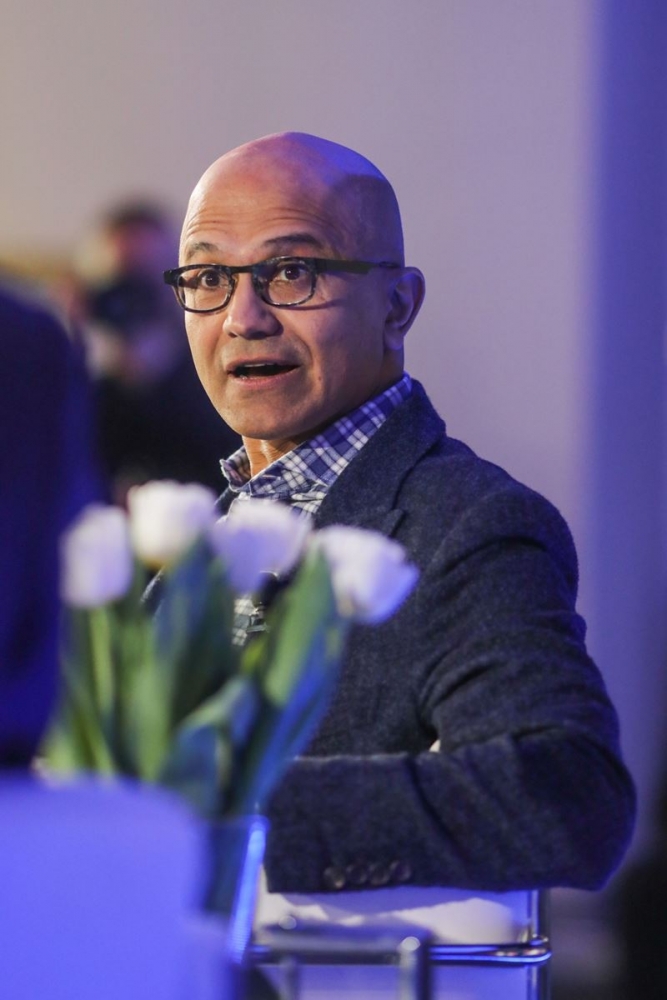
 A statue of Albert Gallatin, former U.S. Treasury secretary, stands outside the U.S. Treasury building in Washington, D.C., on July 16, 2018. MUST CREDIT: Bloomberg photo by Andrew Harrer.
 A worker welds a lawnmower frame in Coatesville, Ind., on June 12, 2015. MUST CREDIT: Bloomberg photo by Luke Sharrett.
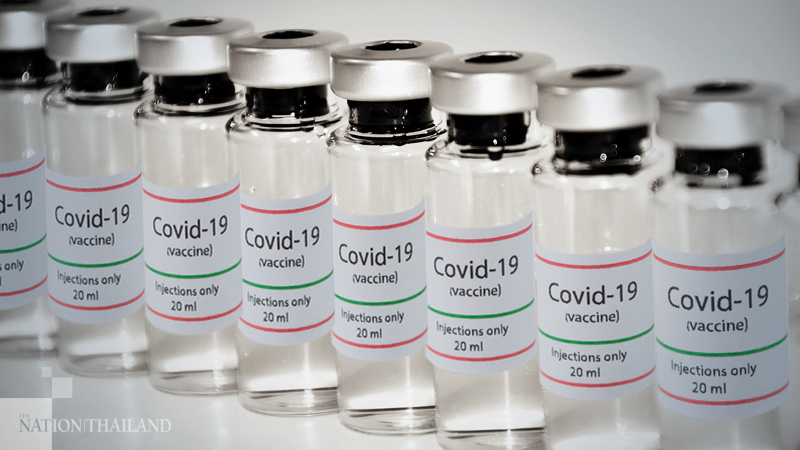

 A community vaccination center in Hong Kong administering the BioNTech covid-19 vaccine is temporarily closed on March 24. MUST CREDIT: Bloomberg photo by Kyle Lam.
 SootinClaimon.Com