UN urges Asia-wide cooperation to fight Covid and climate emergency #SootinClaimon.Com

#SootinClaimon.Com : ขอบคุณแหล่งข้อมูล : หนังสือพิมพ์ The Nation.

https://www.nationthailand.com/news/30404079

UN urges Asia-wide cooperation to fight Covid and climate emergency

InternationalMar 24. 2021The SMILE device monitors the temperature and stocks of vaccine in Indonesia to ensure safety in the supply chain. Photo Credit: UNDP Indonesia.The SMILE device monitors the temperature and stocks of vaccine in Indonesia to ensure safety in the supply chain. Photo Credit: UNDP Indonesia.

By The Nation (sponsored news)

The United Nations warned on Wednesday that Asia must ramp up regional cooperation to build resilience to the Covid-19 pandemic and the climate emergency – “the twin crises that threaten our future the most”.

The warning came in Bangkok at the opening of the 8th Asia-Pacific Forum on Sustainable Development hosted by the UN Economic and Social Commission for Asia and the Pacific (ESCAP).

The UN estimates the pandemic has pushed 89 million more people in the region back into extreme poverty at the $1.90 (Bt59) per day threshold, erasing years of development gains.

“The economic and educational shutdowns are likely to have severely harmed human capital formation and productivity, exacerbating poverty and inequality,” it added.

The meeting’s sidelines saw ESCAP, the UN Development Programme (UNDP) and the Asian Development Bank (ADB) launch the latest edition of the Asia-Pacific Social Development Goals Partnership Report.

Titled “Responding to the Covid-19 Pandemic: Leaving No Country Behind”, the report calls for a renewed focus on people and inclusive cooperation. A key finding was that the pandemic has accelerated digital transformation, driving technological innovation and rapid policy adaptations that are helping countries cope with Covid-19 challenges.

However, it said regional cooperation was crucial to mitigate future shocks and the threat of an uneven recovery between countries where some are left behind.

“We need cooperation that enables universal and affordable access to high-speed internet, new trade and tariff regimes, support across countries to transition faster to renewable energy and greener technologies, and governance that is more open, participatory, and accountable. This goes beyond old-style regional cooperation to one that learns from hard shocks such as Covid-19,” said Kanni Wignaraja, UN assistant secretary-general and director of UNDP’s Regional Bureau for Asia and the Pacific

UN under-secretary-general and executive secretary of ESCAP Armida Salsiah Alisjahbana urged countries to “formulate a set of policy packages that could create harmony between health and economy, and between economy and the environment”.

“As we prepare for sustainable and resilient recovery, let us remember that the SDGs are our compass and can continue to play a force for good in transforming our societies in the post-Covid-19 era,” said Alisjahbana.

More than 1,000 delegates representing governments, civil society, businesses, and international organisations are taking part in the online forum this week from March 23 to 29 to discuss sustainable recovery from the Covid-19 pandemic, in line with the 2030 Agenda for Sustainable Development.

These are the victims of the Boulder shootings #SootinClaimon.Com

#SootinClaimon.Com : ขอบคุณแหล่งข้อมูล : หนังสือพิมพ์ The Nation.

https://www.nationthailand.com/news/30404052

These are the victims of the Boulder shootings

InternationalMar 24. 2021People brought flowers to the Boulder Police Department in honor of officer Eric Talley, who was killed while trying to protect others. MUST CREDIT: Photo by Rachel Woolf for The Washington PostPeople brought flowers to the Boulder Police Department in honor of officer Eric Talley, who was killed while trying to protect others. MUST CREDIT: Photo by Rachel Woolf for The Washington Post

By The Washington Post · Michael E. Miller, Marisa Iati, Timothy Bella, Paulina Firozi, Colby Itkowitz, Amanda Miller

The 10 people who died when a gunman opened fire Monday in a grocery store in Boulder, Colo., ranged in age from 20 to 65 and came from all walks of life. But all died together in one of the most communal of places.

There was Eric Talley, 51, the police officer who joined the force late but threw himself wholeheartedly into the job that would ultimately cost him his life. Rikki Olds was a 25-year-old store manager whose infectious laugh and silly dances cheered up her colleagues. There was Kevin Mahoney, 61, a beloved father who died before he could meet his granddaughter, and Teri Leiker, 51, a longtime grocer who loved attending sporting events and singing songs from “Frozen.”

Suzanne Fountain, 59, was a community actress and “bright light.” Lynn Murray, 62, was a former photo editor whose work had appeared in the nation’s top fashion magazines. Denny Stong was the youngest to die. At just 20 years old, he was stocking shelves while training to become a pilot. Jody Waters was the oldest at 65. Also killed were Neven Stanisic, 23, and Tralona Bartkowiak, 49.

– – –

Lynn Murray, 62

Lynn Murray’s husband described her as a brilliant comet who streaked through everyone’s life – but also the anchor of his family, whose grace and beauty seemed to hold everyone in her sway.

“She was very much the center,” John Mackenzie said Tuesday. “She was the spiritual guide. She was the awareness and consciousness for all of us. She understood all of us better than ourselves. She knew how to console and how to fix anything and make it better. She was adored.”

Murray, an Ohio native, was a former photo producer and editor for Condé Nast and Hearst, supervising shoots that appeared in Cosmopolitan, Marie Claire and other fashion magazines, before she left to raise her children. She was so likable and good with people that she befriended New York’s “Soup Nazi,” the famously cantankerous vendor who became the subject of a “Seinfeld” episode.

“It’s like the comet that goes across the sky for 62 years,” said Mackenzie, 59. “We recognized how blessed we were. I’m standing here talking to you and waiting for her to come through the door, and it’s not going to happen.”

Mackenzie said he met his future wife at a photography studio in the late 1980s while she was supervising a shoot involving French photographer Jacques Malignon and he was working for an apparel firm. Mackenzie said they took advantage of everything the city had to offer by way of culture or social life, including dinners with their friend, the late Anthony Bourdain. Mackenzie and Murray married in 1995 in Mauritius and moved to Long Island. While their two children, Pierce and Olivia, were still young, but their own lives were still built around endless work days, nannies and long commutes to Long Island, Mackenzie said they decided to step back. They moved to Florida, where Murray quit her job to devote herself to parenting. Eventually they moved to Colorado to be near Olivia.

Mackenzie, in a lengthy interview by phone, ranged over many of the conflicting emotions and thoughts that have occupied him and his family since they learned that wife died inside the store.

“I walked around screaming at the world for two hours, you know? And I tried to talk to my wife,” Mackenzie said. “God you have no idea. I’m never going to see her again.”

– Freddy Kunkle

– – –

Eric Talley, 51

As an older brother, Eric Talley was always protective.

If his sister ever got in trouble when they were kids, he would take the blame. If she was picked on in school, he would make sure people knew not to mess with his little sister, Kirstin Brooks said of her brother.

That protectiveness carried into their relationship as adults. Talley would often call and check in with Brooks, 49, reminding her to take care of herself. He was the same way with his own family – his wife and his seven children, ages 7 to 20. Brooks described them as “a good, sweet, tight, close family.”

In 2010, after one of his closest friends died in a DUI crash, Talley quit his job in information technology, left behind his master’s degree and enrolled in the police academy at age 40, according to his friends and family. He would join the Boulder Police Department.

“It was remarkable to me that somebody would go to law enforcement from IT,” said Jeremy Herko, a lieutenant with the Arapahoe County sheriff’s office. “He lost pay. He lost time away from his family. He joined the police academy without a guaranteed job.”

Brooks, detailing all the things she said her brother excelled at – he had a black belt in karate, he was an “extremely fast” runner, he “once made a little engine out of a racecar” – said he was “just talented and gifted and loved.”

– Andrea Salcedo and Paulina Firozi

– – –

Rikki Olds, 25

Rikki Olds was a vibrant and strong-willed woman who had shrugged off a covid scare while working at King Soopers, only to be killed in Monday’s shooting. Olds had worked for Kroger grocery stores for about six years, said her uncle, Robert Olds. She was working as a manager Monday.

“Rikki was a very strong, independent, bubbly, outgoing person,” Robert Olds said. “She was a people person who loved life.”

Olds had been raised by her grandparents after a rough childhood, Robert Olds said. Her grandfather died a few years ago, but her grandmother is “absolutely devastated.” The last time the two spoke was on Saturday. It was her grandma’s birthday, but Rikki called to say she was sorry she couldn’t be there. She had to work.

“Rikki was the one who always said, ‘Okay, somebody’s not showing up to work, I gotta go to work, I gotta take care of it,” he said. “I cannot believe the adult that she was from her childhood.”

Olds grew up in nearby Lafayette, Colo., where she attended Centarus High School, her uncle said. Facebook photos show she often changed her hair color, occasionally rocking bright colors. It was a sign of her strong personality, he said.

“She was her own person,” Robert Olds said. “She didn’t care what you thought. She was going to do what she was going to do, and that was that.”

The pandemic had transformed the grocery store into an uncertain place to work at times, said Carlee Lough, a co-worker. But Olds had always lightened the mood with a joke, her infectious laugh or what everyone called her “gorilla dance.”

Olds would walk around, throwing her arms, making funny sounds as pop music played over the store’s speakers, Lough recalled with a laugh. “She was a fun-loving spirit. . . . She would do anything to make you smile.”

– Michael E. Miller

– – –

Denny Stong, 20

Denny Stong was training to become a professional pilot. He had worked long hours stocking shelves at King Soopers since late 2018 to earn money for airplane fuel, said Laura Spicer, the mother of Stong’s close friend.

When the coronavirus pandemic began last March, Stong added a border to his Facebook picture that read: “I can’t stay home, I am a grocery store worker” – an homage to essential workers who have risked their health throughout the crisis.

One day, Spicer said, she saw Stong at the store and asked him how he was doing.”

He gestured his hand like a plane coming off a runway and said, ‘I’m flying!'” Spicer said. “And my son said today, ‘I guess he really is now.'”

Stong was gregarious, generous, confident and loyal. He was drawn to anything fast, including old muscle cars, motorcycles, dirt bikes and airplanes.

A fan of the rock band Pink Floyd, Stong also liked model aircraft. He participated in the Boulder Aeromodeling Society, a club of about 77 people who design, build and fly model planes, said the group’s president, Aidan Sesnic. Stong was also passionate about the Second Amendment and requested donations to the National Foundation for Gun Rights this month for his birthday. “I’ve chosen this nonprofit because their mission means a lot to me, and I hope you’ll consider contributing as a way to celebrate with me,” he wrote on Facebook.

During a hike last summer, Stong egged on Spicer’s son Ben and motivated him to keep going. The pair had been planning to go camping once they received their coronavirus vaccines, Spicer said. Stong’s Facebook page is full of photos of him making goofy faces and sporting different hair colors. In his most recent profile picture, his hair is bushy and red.

“He occupied a space in the room,” Spicer said. “And now it’s like oxygen has left the room because he’s not there.”

– Marisa Iati

– – –

Kevin Mahoney, 61

Erika Mahoney tweeted a photo from her wedding day, her arm laced through her dad’s, her face looking up at him adoringly as he appears to be holding back tears before he walks her down the aisle.

The moment captured on a bright, happy day makes the news she shares with it that much more devastating.

“I am heartbroken to announce that my Dad, my hero, Kevin Mahoney, was killed in the King Soopers shooting in my hometown of Boulder, CO,” she wrote. “My dad represents all things Love. I’m so thankful he could walk me down the aisle last summer.”

Mahoney, a news director at KAZU, a public radio station in Monterey Bay, Calif., then shares in a second tweet that she’s pregnant.

I am heartbroken to announce that my Dad, my hero, Kevin Mahoney, was killed in the King Soopers shooting in my hometown of Boulder, CO. My dad represents all things Love. I’m so thankful he could walk me down the aisle last summer. pic.twitter.com/SLS2bdm5Hc

– Erika Mahoney (@MahoneyEb) March 23, 2021

“I am now pregnant,” she wrote. “I know he wants me to be strong for his granddaughter.”

She thanked Boulder law enforcement for their kindness and in a final tweet wrote, “I love you forever Dad. You are always with me.”

– Colby Itkowitz

– – –

Suzanne Fountain, 59

Helen Forster met Suzanne Fountain in the late 1980s when they were in a community play together. Forster and her husband, Nick, own a live music venue, eTown Hall, in downtown Boulder where Fountain then worked for many years as the front house manager, Forster said.

“She was just a bright light,” Forster said. “Just a delightful person to be around, her smile lit up the room. It’s a big loss. She was one of the kindest people I’ve ever known,” Forster said through tears. “Just in the way she dealt with people and in the way that she was always fair and calm and reassuring. She just was a joy to be around.”

Forster said she didn’t feel comfortable discussing anything outside her own relationship with Fountain.

“A lot of people love her. So many people, I couldn’t even begin to fathom. She’s touched a lot of people in her short life,” she said.

– Colby Itkowitz

– – –

Jody Waters, 65

Jody Waters brought Beanie Babies to Boulder.

Waters used to co-own a boutique called Applause, then part of Boulder’s downtown Pearl Street Mall pedestrian district, where the plush animals were first sold in Boulder in the 1990s.

Jenn Haney said friends gathered Tuesday at her clothing store, Island Farm, to remember Waters, who worked at the store for six years until recently taking time off to care for her new grandson.

“She just brought such a bright, sparkly energy, and the world’s just dimmer with her gone,” Haney said. “She loved retail, and she loved the customers. She made people really feel like they mattered.”

Lily Rood met Waters when Rood started working at Island Farm two years ago. Rood said Waters helped her get through a tough breakup.

“She told me to move into her neighborhood so she could look over me and be a mother figure to me,” Rood said. The two lived close to each other in a neighborhood across from King Soopers.

“We went out for margaritas one night, and we went straight back to my apartment, across the street from her, and we built my bed and my dresser. And to this day,” she fondly joked, referring to the margarita-laced, assembly, “I don’t want to jump on my bed, and a screw is definitely loose in my dresser.”

The Denver Business Journal published a feature on Waters’s boutique in time for Applause’s 20th anniversary in 1999.

The shop, which she co-owned, sold clothing and gifts “for mother and child.” Waters described her shopkeeping style as “a creative shopper who buys for other creative people,” according to the article. She didn’t try to set trends. She sold things she liked – including the Beanie Babies.

– Amanda Miller

– – –

Teri Leiker, 51

Teri Leiker was a longtime King Soopers employee who enjoyed attending sporting events and singing songs from the movie “Frozen,” according to friends who mourned her on social media.

“I am absolutely heartbroken to share the loss of my friend Teri Leiker,” wrote Katie Rinderknecht, a recent graduate of the University of Colorado at Boulder. She said she met Leiker through the university’s chapter of Best Buddies, which connects students with members of the community with intellectual and developmental disabilities.

“All she knew was how to love and support those that meant a lot to her,” wrote Rinderknecht, who could not be reached for comment. Another friend wrote that she would never forget Leiker singing songs from Frozen “on repeat.”

Leiker had worked at King Soopers for around 30 years and loved the job, a third friend, Alexis Knutson, wrote on Instagram, adding that she had met the older woman through the Best Buddies program in 2017.

“Teri was the most selfless, innocent, amazing person I have had the honor of meeting,” wrote Knutson, who could not be reached for comment. “Her shy friendship toward me turned into a sort of sisterhood.”

Photos on the Best Buddies Instagram account show Leiker decked out in UC Boulder sports gear, smiling. In an interview with the New York Times, Knutson said the two women – nearly 30 years apart – would talk often. “I always had a rule she couldn’t call before 9 a.m. because I like my sleep,” Knutson told the newspaper. “She would always call me at 6 a.m.”

– Michael E. Miller

AstraZeneca used ‘outdated and potentially misleading’ data that overstated effectiveness of its vaccine, panel says #SootinClaimon.Com

#SootinClaimon.Com : ขอบคุณแหล่งข้อมูล : หนังสือพิมพ์ The Nation.

https://www.nationthailand.com/news/30404051

AstraZeneca used ‘outdated and potentially misleading’ data that overstated effectiveness of its vaccine, panel says

InternationalMar 24. 2021

By The Washington Post · Carolyn Y. Johnson, Laurie McGinley, William Booth

WASHINGTON – The long-running saga behind the coronavirus vaccine developed by the drugmaker AstraZeneca and the University of Oxford made another dramatic turn Tuesday as independent monitors took the extraordinary step of questioning the company’s portrayal of its data – a move that cast into doubt the fate of the vaccine in the United States.

In a memo sent to company and government officials obtained by The Washington Post, experts who have been overseeing the vaccine trial expressed concern and disappointment that the drugmaker had presented “outdated and potentially misleading” data on its coronavirus vaccine, making the shots appear more effective than shown by fuller data.

On Monday, AstraZeneca and academic scientists trumpeted a vaccine that was 79% effective in its large U.S. clinical trial. That news release triggered concern among independent monitors who had seen more recent data, because when an additional month was taken into account, the effectiveness ranged from 69% to 75%.

The letter came from 11 leading statisticians, infectious-disease physicians and ethics experts appointed by the National Institutes of Health to review trial data for all the major coronavirus vaccines supported by the federal government. It says the company’s decision to use early data that puts the vaccine in the most favorable light is a scientific misstep that could erode trust in the shot.

The letter, sent late Monday, opens a rare window into the typically confidential interactions between a company and the Data and Safety Monitoring Board that polices patient safety and the scientific validity of clinical trials. These monitors are not distant observers or whistleblowers; they are independent experts granted inside access to the AstraZeneca results for months, seeing the full data before even the company has access.

“The DSMB is concerned that AstraZeneca chose to use data that was already outdated and potentially misleading in their news release,” the letter states. The data “they chose to release was the most favorable for the study as opposed to the most recent and most complete. Decisions like this are what erode public trust in the scientific process.”

In other circumstances, this turmoil might be seen as a technical issue, because the additional data does not appear to overturn the fundamental finding that the vaccine works. AstraZeneca released a statement Tuesday promising that the full analysis of its data would be available within 48 hours and indicated the results would be consistent with the analysis released Monday.

“We will immediately engage with the independent data safety monitoring board to share our primary analysis with the most up to date efficacy data,” the statement said.

But it appears to be the latest self-inflicted wound from the team behind the vaccine, which has stumbled with messy science and bungled communication for months.

Federal officials were taken aback by the board’s allegations. One said the way that AstraZeneca handled the results was the equivalent of “telling your mother you got an A in a course, when you got an A in the first quiz but a C in the overall course.” Another said the disclosure by the board would inevitably hurt the company’s credibility with U.S. regulators.

The officials spoke on the condition of anonymity because they were not authorized to talk publicly about the issue.

On Sunday, company officials shared with U.S. government officials the results they would present to the world Monday. A person familiar with the matter said they also shared a preliminary analysis that suggested the result would hold up when more data were considered.

But Anthony Fauci, director of the National Institute of Allergy and Infectious Diseases, said in an interview that he was “shocked” by the letter and the serious concerns it brought to light. On Monday, before receiving news of the letter, Fauci had said that “numbers don’t lie” and that the vaccine appeared to be effective.

“The irony of this is that it’s very likely a very good vaccine, and this sort of thing does nothing but cloud the picture. I don’t think it reflects on the vaccine,” Fauci said. “I think it reflects on how the data has rolled out.”

Outside experts, who were stunned by the turn of events, said the vaccine might still get FDA clearance, only to be shunned by a public spooked by the string of controversies involving AstraZeneca and Oxford.

“The whole thing has been a giant debacle, and it is entirely on AstraZeneca,” said Angela Rasmussen, a virologist with Georgetown University’s Center for Global Health Science and Security. “Are people going to want to take the vaccine? People may think, ‘There’s too much going on with this vaccine, and I want something that is more reliable.’ “

She said she would take the AstraZeneca vaccine today if it were available. But she worries that the data dispute will fuel vaccine hesitancy, with people becoming more suspicious of all coronavirus vaccines. “People might decide not to take any coronavirus vaccine at all,” she said.

The episode may be a sign of how fraught the relationship between the company and the U.S. government has become. Early Tuesday, the National Institutes of Health took the unheard-of step of disclosing that the data board, a typically obscure part of the clinical trials process, had raised concerns that the news release Monday was “an incomplete view of the data.”

Companies, scientists and participants are typically “blinded” to the data, unable to see who received a vaccine and who received a placebo. The data board can see past that firewall and make recommendations to the company about when to “unblind” and analyze the data.

David DeMets, a University of Wisconsin at Madison biostatistics expert, said that while he has no specific information on what occurred in this case, his experience serving on data safety and monitoring committees for nearly half a century was that it would be “very uncommon” for those experts to challenge a company or scientists on the content of a news release.

“Investigators and sponsors rarely present results that are in contradiction to the DSMB’s interpretation of the results,” DeMets said.

For weeks, the data board and the company had been going back and forth over how AstraZeneca was handling the data. When the experts initially saw the data supporting the 79% efficacy with data gathered through Feb. 17, they deemed that the vaccine efficacy number was “unstable” because of a large number of possible and probable cases that still needed to be adjudicated and might have changed the level of efficacy “enough to erode confidence in the results of the study.”

At a later meeting, with figures through March 16 that showed a vaccine efficacy of 75%, the data board advised that the data be released to the company, but “strongly recommended” the drugmaker go through 33 remaining cases that were possible or probable cases of illness because the effectiveness could slide down to 69%.

Adrian Hill, one of the scientists at Oxford who developed the vaccine, said in an email the episode illustrated “extraordinary behavior” by a data and safety monitoring board.

“Talk about efforts to maintain confidence in vaccines,” Hill wrote. “What is going on?!”

On Monday, Oxford and AstraZeneca appeared to have redeemed months of scientific missteps and poor communication when the company announced through news releases and interviews that its 32,000-person clinical trials in the United States, Chile and Peru showed that the vaccine was 79% effective in protecting volunteers from symptomatic covid-19, the illness caused by the coronavirus – and that it was 100% effective against severe illness.

The 79% efficacy figure in the AstraZeneca trials was higher than earlier clinical trials run by Oxford in Brazil, Britain and South Africa for the same vaccine, which found the shots 62% effective. The vaccine has been approved for use in ongoing inoculation campaigns in Britain and Europe. Millions of people have gotten their first dose.

Even before the trial results were released Monday, some federal officials were concerned about the efficacy of the two-dose AstraZeneca shot because a previous trial showed that the effectiveness was lower than the efficacy for the one-dose Johnson & Johnson vaccine. That sparked debate about how the AstraZeneca vaccine would fit into the U.S. vaccine strategy, especially with supplies of the Johnson & Johnson, Pfizer-BioNTech and Moderna products becoming more plentiful.

AstraZeneca said Monday that it would apply for emergency use authorization by the Food and Drug Administration in coming weeks. The U.S. government has ordered 300 million doses of AstraZeneca vaccine, but with three others vaccines already authorized, it is not clear what role the AstraZeneca shot will play in the United States.

Some researchers described the reaction by the U.S. scientists – and the public airing over the meaning of the AstraZeneca data – as highly unusual.

Stephen Evans, a professor of pharmacoepidemiology at the London School of Hygiene & Tropical Medicine, told reporters Tuesday that it is not unknown for a data monitoring board to disagree with investigators over the interpretation of trial results.

“It is usually done in private, so this is unprecedented in my opinion,” Evans said.

Others speculated that it may be a technical issue that can be resolved quickly.

AstraZeneca’s coronavirus vaccine was designed to be a cheap, easy-to-administer dose that would protect not just citizens of wealthy nations but also those in the most vulnerable countries.

But collaboration between Oxford researchers and one of the world’s biggest drug companies has been plagued with missteps as other vaccine rollouts gain speed.

First, there was confusing basic science, then missed delivery targets. Last week, a confidence-sapping pause in Europe followed reports of rare blood clots among several of the vaccinated.

And now comes resistance from independent monitors over AstraZeneca’s interpretation – and claims – of effectiveness in the U.S. clinical trials.

The Data and Safety Monitoring Board’s memo did not suggest that AstraZeneca had minimized potential side effects.

The European Medicines Agency, which regulates drugs in the European Union, declared the vaccine safe and effective and said it was not linked to a rise in the overall risk of blood clots. But the European agency did not rule out a possible link to rare cases of clotting in the brain, known as cerebral venous sinus thrombosis.

Jason Schwartz, assistant professor of health policy and management at the Yale University school of public health, said the vaccine is sure to receive heightened scrutiny from the FDA and its outside advisers and, even if it clears regulatory hurdles, could face public skepticism.

“One of the key moments yesterday was that it seemed to stop the bleeding on a string of missteps around this vaccine as it is being rolled out in Europe,” he said. “Now, that is being thrown into doubt and the hill to build public confidence has gotten that much steeper.”

And if the FDA does not authorize the vaccine, he said, “that could be interpreted by the rest of the world as a lack of confidence, so we have to be sensitive to the global implications of how the U.S. reviews the data.”

Fed chair, treasury secretary’s message to Congress: Recovery has a long way to go #SootinClaimon.Com

#SootinClaimon.Com : ขอบคุณแหล่งข้อมูล : หนังสือพิมพ์ The Nation.

https://www.nationthailand.com/news/30404046

Fed chair, treasury secretary’s message to Congress: Recovery has a long way to go

InternationalMar 24. 2021Federal Reserve Chair Jerome PowellFederal Reserve Chair Jerome Powell

By The Washington Post · Rachel Siegel

WASHINGTON – A year into the coronavirus pandemic, after the loss of millions of jobs and the closure of thousands of small businesses, the Federal Reserve and Treasury Department have a message for Congress: It could have been worse, and there’s still a long way to go.

Testifying before the House Financial Services Committee on Tuesday, Federal Reserve Chair Jerome Powell and Treasury Secretary Janet Yellen told lawmakers that the economy is slated for booming growth this year. But their sunny forecast was paired with reminders that at least 9.5 million jobs are still missing from the labor force and that fully healing the economy depends on getting the pandemic under control.

U.S. jobless rate will fall to 4.5% this year and inflation will rise temporarily, Fed projects

“We welcome this progress but will not lose sight of the millions of Americans who are still hurting, including lower-wage workers in the services sector, African Americans, Hispanics and other minority groups that have been especially hard hit,” Powell said Tuesday.

The economic outlook has significantly improved over the past few months and been buoyed by the recent passage of President Joe Biden’s $1.9 trillion coronavirus relief package and more-widespread vaccinations. Millions of Americans have started to see $1,400 stimulus payments hit their bank accounts. The Fed projects the U.S. economy will grow at its fastest pace in four decades this year, with the unemployment rate falling to 4.5%.

Still, there are plenty of challenges to getting the elements of the sprawling stimulus law out the door, along with many unresolved questions about how hundreds of billions of dollars allocated by the American Rescue Plan will actually be dispersed. On Tuesday, a number of lawmakers pushed for more regular oversight of the $1.9 trillion bill, noting mechanisms put in place after Congress passed the Cares Act last spring.

“Now that we have an addition $1.9 trillion to track, I would ask for your commitment along those same lines,” Rep. Patrick McHenry of North Carolina, the top Republican on the House Financial Services Committee, told Yellen, adding, “That would be encouraging that you’d continue the practice of your predecessor … to ensure appropriate oversight.”

Yellen agreed to work with the committee and other oversight groups, and laid out some of the challenges to implementing Biden’s bill. Yellen said earlier rounds of the Paycheck Protection Program often didn’t reach the country’s smallest businesses, especially those in rural and low-income areas. Rental assistance was frequently tied up in red tape. Many Americans still haven’t received their stimulus checks.

“And all this is just a fraction of Treasury’s work,” Yellen told the committee. “There are so many more relief programs, including one that will provide $350 billion in aid to state and local governments. Implementing all of it is more complicated than it sounds.”

Meanwhile, many Republican lawmakers, Wall Street investors and prominent economists are worried that the economy won’t be able to absorb a massive stimulus package and post-pandemic consumer spending, pushing prices rapidly upward. Their worry is that dangerous cycles of inflation will force the Fed to hike interest rates, triggering a new recession.

“Economic projections are increasingly positive,” McHenry said. But “with the addition of $1.9 trillion, there’s been a great deal of debate about what will happen with this amount of liquidity in financial markets.”

But the Fed and White House argue that inflation is not a pressing concern. Powell says that there would have to be substantial progress in the labor market before the Fed considers raising rates. Any price increases resulting from the economy reopening and people spending big on vacations or concert tickets will be temporary, he has said.

“Our best view is that the effect on inflation will be neither particularly large nor persistent,” Powell said Tuesday. “We’ve been living in a world of strong disinflationary pressures around the world really for a quarter of a century. We don’t think a one-time surge in spending leading to temporary price increase would disrupt that.”

Lawmakers pressed Powell and Yellen on a range of other issues, from the regulators’ research on digital currencies to banking regulations. Of particular focus was climate policy, which the Biden White House has made core to its agenda. The Fed increasingly points to climate risk as a threat to the financial system and financial stability.

As Powell and Yellen testified on Tuesday, Fed Governor Lael Brainard announced that the central bank is launching a Financial Stability Climate Committee, which will work closely with another Fed team focused on banks’ resilience to climate change.

Republicans in Congress have warned the Fed against delving too deeply into climate issues. They argue that climate policy is part of progressives political agenda and not the purview of the central bank, which is independent and aims for price stability and maximum employment.

“There’s concern in my district that the financial regulators may be moving towards regulation and supervision with environmental policy objectives, potentially discouraging banks from doing business with entire sectors of the economy,” Rep. Frank Lucas, R-Ok., said at Tuesday’s hearing.

Yellen said that even as climate issues are a top priority for the Biden administration, the Treasury Department doesn’t plan to regulate specific investments banks can or can’t make. Powell said that it’s the Fed’s job to better understand the risks climate change poses to the financial system, noting that many large banks are already making similar assessments themselves.

“We don’t a have new mandate,” Powell said. “This is consistent with our existing mandate of supervision of financial institutions. It’s just the same mandate but a different risk.”

Yellen and Powell will appear before the Senate Banking Committee on Wednesday.

10 people, including police officer, killed in Colorado shooting at grocery store; suspect in custody #SootinClaimon.Com

#SootinClaimon.Com : ขอบคุณแหล่งข้อมูล : หนังสือพิมพ์ The Nation.

https://www.nationthailand.com/news/30404020

10 people, including police officer, killed in Colorado shooting at grocery store; suspect in custody

InternationalMar 23. 2021

By The Washington Post · Paulina Villegas, Andrea Salcedo, Amanda Miller

BOULDER, Colo. – Ten people were killed at a King Soopers grocery store on Monday, including a Boulder police officer, after a shooter opened fire on customers and responding officers.

Law enforcement officials said a suspect was in custody but offered scarce details about the killings, including information about a possible motive.

Boulder Police Commander Kerry Yamaguchi said in a brief news conference that the suspect was being treated for an injury. Boulder County District Attorney Michael Dougherty, a Democrat, said officials were still working to notify family members of the victims.

Dozens of emergency vehicles lined the streets around the store Monday afternoon during a massive response to what police said was a shooting at the store. Witnesses described a chaotic scene, with customers rushing to exits at the front and back of the supermarket after shots were fired from a rifle. One witness told local media that the shooter did not say anything before opening fire.

Ryan Borowski, 37, had gone to King Soopers to grab a bag of chips and a soda. Borowski, who does not frequent the store, said he had thought about getting a pint of ice cream but changed his mind because the aisle was too far away and he wanted to leave quickly.

At about 2:30 p.m., just as Borowski was walking up to the checkout area, he heard a loud bang.

“My first hope was that it was an employee who dropped something,” he said. Then came the second bang. “By the third bang I was running. It was bang, bang, bang, bang, bang! I was thinking around eight.”

He added: “I saw a woman shorter than myself with a terrified look on her face running toward me, and at this point I turned, and people were saying things like: ‘Run, run! Go, run!’ Everybody was running, and everybody was scrambling.”

Borowski and a group of customers and employees ran toward the back of the store in a line, placing their hands on top of one another’s backs so they would not leave anyone behind, he said. “Don’t stop! Keep going!” he recounted telling people.

The group exited through the loading dock in the back of the store, he said, then hid under a semi-truck for a moment before running up a hill to the parking lot of a nearby Whole Foods.

Video from a witness who was live-streaming on YouTube from the King Soopers parking lot showed at least two people injured and motionless on the ground outside and a third just inside the front doors.

“There are gunshots inside the store! People ran out of the back door! The active shooter is still in there!” the witness shouted.

The live video showed heavily armed officers surrounding the building – with its front windows broken – and police could be heard trying to communicate with the attacker through a bullhorn. Officers were lifted onto the roof in a cherry picker.

At about 3:30 p.m. local time, a man in handcuffs who was bleeding down his leg was guided away from the building by police. Officials did not confirm whether the bleeding man was the suspect.

As details of the attack emerged slowly Monday evening, government officials shared their sorrow and condolences.

“My heart is breaking as we watch this unspeakable event unfold in our Boulder community,” Colorado Gov. Jared Polis, a Democrat, said in a written statement. “We are making every public safety resource available to assist the Boulder County Sheriff’s Department as they work to secure the store.”

Polis had said earlier that he was “closely watching unfolding events.”

Rep. Joe Neguse, D-Colo., sent his prayers to the Boulder community, first responders and law enforcement who responded to the “terrible incident,” he wrote on Twitter.

Meanwhile, those who experienced and survived the attack offered details of the horrific scene. A witness who spoke to The Denver Post said the gunman did not say anything – “he just came in and started shooting.”

Andy Arellano, 35, was working in the King Soopers meat department when he started to hear shots like “big hammers on a metal table,” said the Boulder resident.

“At the first, it was just like boom boom boom – it was three. Then suddenly boom, boom, boom, boom, and that’s when all the people started running.”

Employees and customers ran out of the back of the store, Arellano said. He never saw the shooter.

“I could hear the shots getting closer and closer,” he said. “The shots were so close that I started hearing that ringing bell with the gunshots.”

While waiting outside the police barrier across the street from the crime scene, he tried to contact co-workers. “I’m trying to, like, call my friends to see if they’re OK, and there’s no word of them.”

A man told 9 News that his grandchildren were in the store during the shooting. He said they hid in a closet as the incident unfolded and as police dropped into the store through the roof.

Daniel Douglas was in the store, picking up lunch and flowers for his girlfriend, when the gunshots began.

“Nobody knew what was going on, so we started screaming, ‘Hit the ground,’ ” he told Fox 31 Denver.

The shooter, Douglas said, moved to the front of the store while Douglas and other customers rushed to the back of the building, where he said many others were hiding and trying to escape. A co-worker kicked the emergency-exit door open so people could get out, he said.

“A lot of people were petrified. A lot of people were crying,” he said.

Another man, who said he was on his way to pick up coffee at the store, walked away from the incident unharmed. He told Fox 31 that he was “terrified” and “in shock” when he realized what has happening.

He said he called his mother to let her know that he was all right, then “it all kind of sunk in and I started panicking.”

“The fact that it’s happening all over America,” he added, “seeing it on the news, like, something I’ve grown up with, like people my age and my generation – we’re used to this, and its just never something that I think would happen in my town.”

There have been as many as nine school shootings in the area since the Columbine massacre in 1999, which left 12 students and a teacher dead. Four other major shootings have occurred within 20 miles of the suburban Columbine High School, including a 2012 shooting at a movie theater in Aurora that left 12 dead.

Fed’s digital dollar push worries Wall Street #SootinClaimon.Com

#SootinClaimon.Com : ขอบคุณแหล่งข้อมูล : หนังสือพิมพ์ The Nation.

https://www.nationthailand.com/news/30404003

Fed’s digital dollar push worries Wall Street

InternationalMar 23. 2021The Federal Reserve building in Washington, D.C., on Feb. 19, 2021. MUST CREDIT: Bloomberg photo by Samuel CorumThe Federal Reserve building in Washington, D.C., on Feb. 19, 2021. MUST CREDIT: Bloomberg photo by Samuel Corum
By Syndication Washington Post, Bloomberg · Joe Light

The financial services industry, braced for what could be its biggest disruption in decades, is about to get an early glimpse at the Federal Reserve’s work on a new digital currency.

Wall Street is not thrilled.

Banks, credit card companies and digital payments processors are nervously watching the push to create an electronic alternative to the paper bills Americans carry in their wallets, or what some call a digital dollar and others call a Fedcoin.

As soon as July, officials at the Federal Reserve Bank of Boston and the Massachusetts Institute of Technology, which have been developing prototypes for a digital dollar platform, plan to unveil their research, said James Cunha, who leads the project for the Boston Fed.

A digital currency could fundamentally change the way Americans use money, leading some financial firms to lobby the Fed and Congress to slow its creation — or at least ensure they’re not cut out.

Seeing the threat to their profits, the banks’ main trade group has told Congress a digital dollar isn’t needed, while payment companies like Visa Inc. and Mastercard Inc. are trying to work with central banks to make sure the new currencies can be used on their networks.

“Everyone is afraid that you could disrupt all the incumbent players with a whole new form of payment,” said Michael Del Grosso, an analyst for Compass Point Research & Trading LLC.

Lawmakers, U.S. Treasury Department officials and the Fed haven’t yet approved the rollout of a U.S. virtual currency, which could still be years away. Nor have they decided how a digital dollar would interact with the existing global payments network. Still, the U.S. and other countries seem committed enough to digitizing their currencies that it’s making financial industry executives nervous.

“The fire has been lit,” said Josh Lipsky, who has helped convene government officials from the U.S. and other countries working on digital currencies as director of the GeoEconomics Center at the Atlantic Council. “The world is moving very quickly on these projects.”

At issue are forms of digital cash being considered by the U.S. and other governments. The growing popularity of bitcoin, Ethereum and other cryptocurrencies, whose market value has grown to more than $1 trillion, inspired the projects. Unlike those privately created tokens, the new currencies would be issued by central banks as an alternative to paper bills. Cash wouldn’t go away, but its use would likely decline.

Using the currencies could be as simple as holding up the screen of a mobile phone to be scanned. Behind the scenes, the digital cash would move from one account to another. This is similar to how most money already works — the majority of U.S. dollars are just digital entries in bank accounts — but the new currency could potentially avoid the go-between of a commercial bank or credit-card network. For vendors, settlement would happen almost immediately, without having to wait for the money or worry about fraud.

The U.S. effort got an extra push last month, when Treasury Secretary Janet Yellen said such a project could help Americans who don’t have access to the banking system.

In video remarks last week to a payments conference in Basel, Switzerland, Federal Reserve Chair Jerome Powell may have eased some of the banks’ concerns when he said “digital currencies would need to be integrated into existing payment systems alongside cash and other forms of money.”

Powell in a Bank for International Settlements panel on Monday said the Fed has “an obligation to be on the cutting edge of understanding the technological challenges” and the costs and benefits of a digital dollar but wouldn’t rush the project. Powell also said the Fed wouldn’t proceed without support from Congress, ideally in the form of legislation.

Cunha said the Boston Fed and MIT hope to unveil some of their work in the third quarter, including at least two prototype software platforms that could move, store and settle transactions made with digital dollars. He wouldn’t say if either platform uses the blockchain technology that underlies bitcoin and other cryptocurrencies. Once the prototypes are released, Cunha said, others will be able to see and build on the code.

The Fed’s work is meant to show what’s possible without taking a stand on major issues that the central bank, Treasury and Congress must address, Cunha said. These include whether the Fed itself should host customer accounts, whether to allow anonymity, and what protections consumers would have in case of a cyber-breach or mistaken transaction.

“We think it’s important that we not wait for the policy debate because then we’ll be a year or so behind,” Cunha said. “This will take significant outreach to the industry and serious debate.”

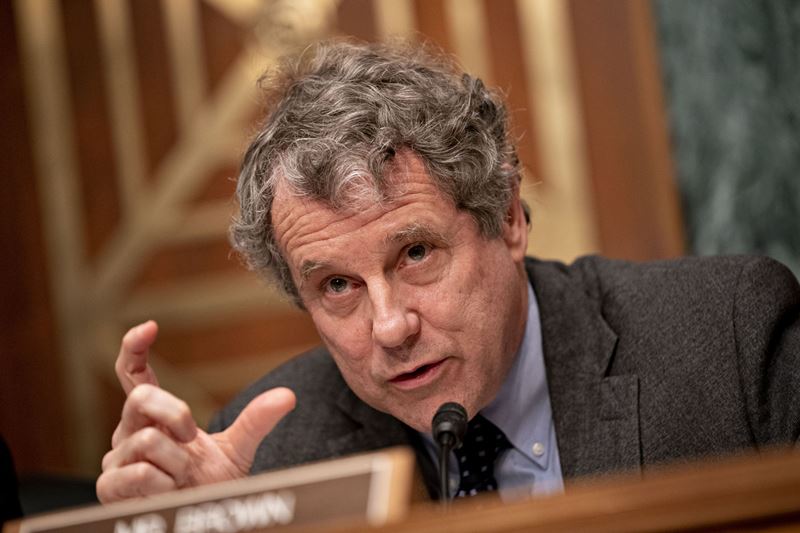
Sen. Sherrod Brown, D-Ohio, is urging the Federal Reserve to move quickly to create digital-currency accounts for Americans who can't easily access the financial system and must deal with payday lenders who charge higher fees and interest rates. Brown is photographed in 2020. MUST CREDIT: Bloomberg photo by Andrew Harrer

Sen. Sherrod Brown, D-Ohio, is urging the Federal Reserve to move quickly to create digital-currency accounts for Americans who can’t easily access the financial system and must deal with payday lenders who charge higher fees and interest rates. Brown is photographed in 2020. MUST CREDIT: Bloomberg photo by Andrew Harrer

The potential that the central bank could cut banks out of their middleman role in the lucrative U.S. payments system is causing angst among banks.

So is the push coming from Sen. Sherrod Brown, D-Ohio, the new chairman of the Senate Banking Committee. Brown is urging the Fed to move quickly to create digital-currency accounts for Americans who can’t easily access the financial system and have been forced to deal with payday lenders who charge higher fees and interest rates. Brown’s plan could threaten the deposits that commercial banks rely on to make mortgages and other loans.

“Rushing anything of this potential magnitude could introduce unintended consequences that threaten the stability of the banking system without contributing meaningfully to economic inclusion,” said Steve Kenneally, senior vice president of payments at the American Bankers Association.

The ABA, which says it’s lobbying Congress on the issue, last year in written testimony called the digital dollar a costly solution in search of a nonexistent problem.

Two lobbyists for a large bank said they’re in contact with lawmakers to keep track of the issue. They expect lobbying to pick up once banks can actually see the Fed’s work and how it might affect them, said the lobbyists, who requested anonymity to discuss internal conversations.

Interest in a digital currency has gathered momentum in part because many banks take days to give consumers access to checks deposited in their accounts and some charge stiff overdraft fees. Those without bank accounts sometimes must pay high fees to cash paychecks or transmit money to relatives.

Some of the profits of credit-card companies, such as Visa and Mastercard, could be at risk if the new currencies let Americans more easily make transactions without their involvement and fees.

Spokespeople from both companies say their firms are working with central banks to ensure the new currencies can run over their networks. Mastercard in February began to issue prepaid debit cards loaded with the “Sand Dollar,” a digital currency issued by the Bahamas.

“We’re increasingly having conversations with central banks as they think about designing potential central bank digital currency, CBDC, and we’re talking to them about how they think about design,” said Visa’s North America president Oliver Jenkyn, at a Morgan Stanley conference earlier this month. “So there’s a lot of talking, but there’s actually a lot of action alongside it as well.”

Other countries are further along. China is piloting a digital yuan in several cities. Lipsky said there’s a chance its currency could be ready for a broader debut at the 2022 Winter Olympics in Beijing, which he said could cause tensions if American athletes are asked to use a currency that the Chinese government can completely track.

Brown earlier this month sent a letter to Powell urging him to speed up the research. “We cannot be left behind,” Brown wrote.

Among other threats, Brown pointed to the development by Facebook Inc. and other companies of their own cryptocurrency, once called Libra. That currency, since renamed Diem, was slated to launch in 2020 but has struggled to win regulatory approval.

Advocates of existing cryptocurrencies, like bitcoin, have mixed feelings about the Federal Reserve muscling into the industry.

A Fedcoin could acclimate Americans to purchasing bitcoin, said Jerry Brito, who heads Coin Center, a cryptocurrency advocacy group. But depending on the government’s direction, such a currency could be used to track Americans’ spending, destroying the partial anonymity that was once the promise of crypto, he said.

A U.S. digital dollar could also put the final nail in the coffin for bitcoin as a means of exchange, Brito said. Crypto enthusiasts have already started to acknowledge that’s happening anyway, and instead tout the currency as a store of value or “digital gold.”

Biden determined to tax rich after windfalls from covid crisis #SootinClaimon.Com

#SootinClaimon.Com : ขอบคุณแหล่งข้อมูล : หนังสือพิมพ์ The Nation.

https://www.nationthailand.com/news/30404002

Biden determined to tax rich after windfalls from covid crisis

InternationalMar 23. 2021US President Joe BidenUS President Joe Biden

By Syndication Washington Post, Bloomberg · Nancy Cook

President Joe Biden’s economic team at the White House is determined to make good on his campaign pledge to raise taxes on the rich, emboldened by mounting data showing how well America’s wealthy did financially during the pandemic.

With Republican and business-lobby opposition to the administration’s tax plans stiffening, Democrats need to decide how ambitious to be in trying to revamp the tax code in what’s almost-certain to be a go-it-alone bill. Interviews with senior officials show there’s rising confidence at the White House that evidence of widening inequality will translate into broad popular support for a tax-the-wealthy strategy.

Biden himself has become convinced of the need, saying last week that those earning over $400,000 can expect to pay more in tax.

“2020 really did show him that there were so many of the fragilities across society” that need addressing, Heather Boushey, a member of the White House Council of Economic Advisers, said in an interview. Funding spending priorities given a shortfall in revenues from the 2017 Republican tax cuts “has really demanded the president sit down and think about both the enormous needs, and these questions we’re talking about as to how we tax,” she said.

Behind the scenes, aides have been working on a proposal to pay for some of the longer-term Biden agenda. Boosting income and capital-gains tax rates on top earners, along with levies on companies and an expansion of the estate tax, would help fund priorities such as infrastructure, climate change, and assistance for child care and home health care.

Lawmakers and the administration are stepping up discussions about what measures could pass later in the year. The Senate Finance Committee on Thursday will hold a hearing on the impact on employment and investment of the current U.S. international tax structure.

– – –

Senior members of the administration, including David Kamin, deputy director of the National Economic Council, and Lily Batchelder, who’s been tapped to become assistant Treasury secretary for tax policy, have been working for years on options to raise revenue from the best-off Americans.

Kamin, who with Batchelder mapped out potential reforms in a 2019 paper called “Taxing the Rich: Issues and Options,” signaled in an interview that the following options are among those under discussion:

– Removing “step up in basis” for estates, which revalues assets such as stocks and real estate at market prices, rather than their original purchase cost — reducing tax liabilities

– Taxing capital gains for wealthy Americans at income-tax rates, which are higher

– A minimum tax for large companies

“The idea of finally eliminating what is a massive loophole, in that the highest income Americans escape tax on their wealth by addressing step up in basis and then taxing capital gains as ordinary income, is a major reform of our system, which I think is needed,” Kamin said.

“These would be major accomplishments, which would pretty fundamentally shift how our tax system treats the richest Americans and the largest corporations so they can’t escape tax in the ways they now can,” he said.

The administration is also looking at rolling back a portion of former President Donald Trump’s income-tax cuts, aides say.

“Anybody making more than $400,000 will see a small-to-a-significant tax increase,” Biden said in an interview with ABC earlier this month. For those under that level, there won’t be “one single penny in additional federal tax,” he said.

Major aspects of the plan have yet to be detailed, including the specifics of the threshold for higher taxes. The White House clarified last week that the $400,000 figure applies to families, but Deputy Press Secretary Karine Jean-Pierre suggested Friday that the level at which tax hikes would kick in for individuals isn’t yet set.

“It’s a little early — we’re still working out through the process,” Jean-Pierre said.

The so-called K-shaped recovery, in which wealthier Americans thrived even as low-income and many middle-class workers suffered from job losses, evictions, food insecurity and health risks associated with working in-person jobs during covid-19, has reinforced the administration’s intentions.

The richest 1% of U.S. households added more than $4 trillion in wealth last year as stocks hit record highs and property values swelled, fueled in part by record-low interest rates. The bottom 50% saw their net worth gain by a much-smaller $470 billion — and that was bolstered by the extraordinary income support provided in the March 2020 Cares Act.

A new paper from the left-leaning Economic Policy Institute showed that 80% of job losses in 2020 were concentrated among the lowest 25% of wage earners, while the workers in the top half of the distribution saw gains in employment.

“It is always true that recessions hit low- and middle-income people harder, but I have never seen anything like this,” said Heidi Shierholz, the institute’s policy director and a former chief Labor Department economist.

Republicans warn that higher taxes will hold back the recovery. The U.S. Chamber of Commerce says boosting levies on companies will “make the United States a less attractive place to invest profits and locate corporate headquarters.”

– – –

“Whatever the new normal is we return to after covid-19, I think it is important for the government to stay as far out of the way as possible to allow the economy to find its footing,” said Chris Campbell, a former Senate Republican aide who served in the Treasury during the Trump administration.

Senate Minority Leader Mitch McConnell said last week there wouldn’t be bipartisan support for higher taxes, and predicted Democrats will use the reconciliation process — which allows bills to pass the Senate with a simple majority — for their proposals.

Biden’s current determination marks a shift in a decades-long political career with few episodes of pushing for higher taxes. On the presidential campaign trail he drew a distinction with liberal competitors’ plans for a wealth tax, and as vice president he cut a deal with Republicans in late 2012 to make permanent 82% of the tax cuts originally passed by President George W. Bush.

But liberals are fully behind his efforts now.

“We have seen him propose, fight for, sign, and sell one of the most progressive pieces of legislation in three generations,” said Senator Elizabeth Warren in an interview, referring to the pandemic-relief plan. “There is momentum now for real change, and tax policy is a critical part of that change.”

U.S., E.U., Canada, Britain announce sanctions on China over abuse of Uyghurs #SootinClaimon.Com

#SootinClaimon.Com : ขอบคุณแหล่งข้อมูล : หนังสือพิมพ์ The Nation.

https://www.nationthailand.com/news/30404000

U.S., E.U., Canada, Britain announce sanctions on China over abuse of Uyghurs

InternationalMar 23. 2021Secretary of State Antony BlinkenSecretary of State Antony Blinken

By The Washington Post · Emily Rauhala

The United States, the European Union, Britain and Canada each announced sanctions against China over human rights abuses in Xinjiang, a coordinated effort aimed at holding Beijing accountable for a years-long campaign against Uyghurs and other minority groups in the northwestern Chinese region.

The diplomatic push, announced Monday, comes after a tense meeting between U.S. and Chinese officials and amid growing calls for democracies to work together to take on an increasingly authoritarian and assertive Beijing.

The European Union was first to move, saying early Monday that it would punish four Chinese officials and the Xinjiang public security bureau with travel bans and freeze their assets – its most significant measures since an arms embargo after the 1989 killings in Tiananmen Square.

China quickly responded, leveling similar measures against a long list of its European critics.

Not long after, the United States, Canada and Britain jumped in. Secretary of State Antony Blinken announced midday that the United States will add two names to its existing Xinjiang sanctions list.

Britain committed for the first time to freeze assets and ban travel for the same Chinese officials as the European Union did, as well as a Xinjiang security body. Canada said it would sanction the same officials and security body as Britain did.

The U.S., British and Canadian statements stressed that the moves were the result of close cooperation. “We stand united with the UK, Canada, and the EU in promoting accountability for those who abuse human rights,” Blinken wrote in a tweet.

Although the sanctions are largely symbolic, they are sure to complicate ties between China and the rest of the world.

Under President Donald Trump, the United States vowed to take a strong stance on China, but for the most part it did so alone. The Biden administration has stressed the importance of rallying allies to the cause, saying the scale of the challenge requires collective action. Monday’s moves appear to be a step in that direction.

The E.U. sanctions focus on four senior Chinese officials involved in designing and implementing policy in Xinjiang, as well as the region’s much-feared public security bureau.

The British list targets the same senior officials but names a different security entity.

Neither the European Union list nor the British one includes the Chinese Communist Party’s top official in the region, Chen Quanguo, who was named in more-robust U.S. sanctions last year.

Despite extensive reporting, satellite imagery and witness testimony, Beijing denies human rights abuses in Xinjiang, claiming that Uyghurs and other Turkic Muslims are thriving there.

The countermeasures it issued Monday took aim at outspoken members of the European Parliament; Dutch, Belgian and Lithuanian officials; a prominent German think tank focused on China; a Danish foundation; and two European scholars known for their work regarding the Xinjiang region.

The sanctions block those on the list and their families from traveling to the People’s Republic of China, Hong Kong or Macao, or from doing business with China, according to a news release from the Ministry of Foreign Affairs.

The news release condemns the officials for “lies” about the “so-called human rights issues in Xinjiang.”

Raphaël Glucksmann, a French member of the European Parliament who has spoken out on Xinjiang, tweeted Monday that he considered the sanction a “badge of honor.”

In recent months, Europe has been accused of standing idle while the United States took the lead on issues such as Xinjiang.

Late last year, the European Union and China reached an agreement in principle on a much-delayed investment pact, a move seen as a diplomatic victory for Beijing and a snub to the incoming Biden administration.

Critics of that deal asked why Europe was knitting itself closer to an increasingly authoritarian China rather than tackling issues the European Union says it cares about, including forced labor. The fate of that deal remains uncertain.

In the run-up to Monday’s announcement, China’s Communist Party-controlled media warned that there will be “no escape” for “some EU institutions and poorly behaving individuals” if the bloc pressed ahead.

Vaccine battle heats up with EU ready to halt U.K. shipments #SootinClaimon.Com

#SootinClaimon.Com : ขอบคุณแหล่งข้อมูล : หนังสือพิมพ์ The Nation.

https://www.nationthailand.com/news/30403999

Vaccine battle heats up with EU ready to halt U.K. shipments

InternationalMar 23. 2021A health worker administers the Moderna Covid-19 vaccine to a visitor at a vaccination center in Rome on March 17, 2021. MUST CREDIT: Bloomberg photo by Alessia Pierdomenico.A health worker administers the Moderna Covid-19 vaccine to a visitor at a vaccination center in Rome on March 17, 2021. MUST CREDIT: Bloomberg photo by Alessia Pierdomenico.

By Syndication Washington Post, Bloomberg · Nikos Chrysoloras, Suzi Ring, Joe Mayes

The European Union is ready to start withholding Covid-19 shots from the U.K., risking a sharp deterioration in relations with London in a bid to turn around its lackluster vaccination campaign.

The EU will likely reject authorizations to export AstraZeneca’s coronavirus vaccines and their ingredients to the U.K. until the drugmaker fulfills its delivery obligations to the 27-nation bloc, according to a senior EU official.

The conflict between the EU and the U.K. has been growing since Astra informed Brussels it wouldn’t deliver the number of shots it had promised for the first quarter. Both sides have blamed each other for export curbs and nationalism, posing a risk to the fragile post-Brexit trade relationship agreed on in December. Astra has been at the center of the EU’s vaccination problems since production issues emerged in January. Most recently, its shot was temporarily suspended in much of Europe over blood-clot fears.

While the EU drug regulator backed the vaccine last week, and U.S. trial results published Monday said there were no safety concerns, public trust in the shot has plummeted in Europe. The majority of people in Germany, France, Italy and Spain now see the vaccine as unsafe, a survey by YouGov published by The Telegraph on Monday shows.

The EU, which has pledged to immunize 70% of adults by the end of September, is struggling to overcome a slow start to its inoculation campaign. The bloc has administered 12 doses per 100 people, less than a third of what the U.K. has managed, according to Bloomberg’s Coronavirus Vaccine Tracker. The U.K. vaccinated more than 1.5 million people on Friday and Saturday, setting daily records on successive days.

The European Commission said last week that it would restrict exports of vaccines to countries that don’t reciprocate or that already have high vaccination rates. The U.K. is the largest recipient of doses made in the EU, receiving 10 million of 42 million shots from the bloc so far.

U.K. Prime Minister Boris Johnson and Commission President Ursula von der Leyen spoke last week and a new round of high-level diplomacy is expected among leaders ahead of a summit in Brussels.

“Vaccine nationalism, this kind of breathless speculation about limiting supply doesn’t do anybody any good,” Helen Whately, a junior U.K. health minister, told Sky News on Monday. Von der Leyen “made a commitment to the prime minister that the EU wouldn’t block companies from fulfilling their contractual obligations to supply vaccinations,” she said, urging the EU to “actively stand by that commitment.”

According to the EU official, the bloc has contracts with Astra that aren’t being respected, and any vaccines and their ingredients produced in European factories will be reserved for local deliveries. The official asked not to be named because the decisions are under consideration and haven’t been made public.

EU leaders meeting this week will discuss the plan. Countries including Italy and France said they were open to exploring the export ban while others, such as Ireland, Belgium and the Netherlands, urged caution and warned about the impact on European companies, according to a diplomatic note seen by Bloomberg.

AstraZeneca — one of four approved in the bloc — is now expected to deliver 30 million shots to the EU by the end of this month, less than half of what it initially committed to.

Johnson has called EU leaders about the dispute in recent days, including Dutch premier Mark Rutte and Belgium’s Alexander De Croo, and is prepared for more conversations before this week’s summit, a person familiar with the matter said.

Pfizer warned that the free movement of supplies between the U.K. and the EU is critical to the production of its vaccine. Manufacturing of lipids — the fatty substance used to deliver the genetic material at the heart of the vaccine Pfizer makes with its German partner BioNTech — takes place at a secret location in the U.K. before shipping to the EU where the shots are completed.

The EU official added that there are no outstanding requests for U.K. exports from Astra’s production facility in the Netherlands, but should such a request be made, it will likely be rejected. A production plant in the Netherlands and one in Belgium produce ingredients for the Astra shot.

“The Netherlands in principle allows exports to continue until told otherwise by the European Commission,” the Dutch government said Sunday. “It is of paramount importance that Brussels, London and AstraZeneca reach a deal promptly on the vaccines produced by the company in facilities falling under both contracts.”

The EU isn’t alone in having supply issues. The U.K. is facing a “significant” four-week cut to the supply of Covid-19 vaccines from late March. A delayed shipment of the Astra vaccine from India and a batch requiring re-testing are behind the disruption.

U.K. Defense Secretary Ben Wallace told Sky News on Sunday that the EU should allow Astra to keep supplying Britain and warned the bloc would pay a heavy price if it tried to interfere with those shipments.

“The commission knows deep down that this would be counterproductive,” he said. “They’re under tremendous political pressure at the European Commission. It would damage the EU’s relations globally.” A spokesperson for Johnson’s office declined to comment and referred back to Wallace’s remarks.

Contentious hunt for covid’s origin points to China animal trade #SootinClaimon.Com

#SootinClaimon.Com : ขอบคุณแหล่งข้อมูล : หนังสือพิมพ์ The Nation.

https://www.nationthailand.com/news/30403998

Contentious hunt for covid’s origin points to China animal trade

InternationalMar 23. 2021

By Syndication Washington Post, Bloomberg · Jason Gale, Corinne Gretler

Scientists tracing the origins of the covid-19 pandemic believe they’ve identified a possible transmission source: China’s thriving wildlife trade.

The highly anticipated findings from experts convened by the World Health Organization and the Chinese government are expected to show parallels to the 2002 spawning of severe acute respiratory syndrome, or SARS, a bat-borne coronavirus spread by civets that killed 800 people. The path trod by SARS-CoV-2, as the new coronavirus is known, before it emerged in December 2019 in central China remains a mystery, though it’s one researchers say can be solved.

In Wuhan, where the first cluster of cases occurred, scientists involved in the hunt identified four hypotheses to explain the virus’s genesis, including two that stoked controversy even as they were deemed unlikely. The idea that the virus was introduced via contaminated food or packaging is one embraced in Beijing, while the Trump administration said it may have been the result of a laboratory accident. But the most plausible theory, say experts involved in the mission, concerns China’s wildlife trade for food, furs and traditional medicine, a business worth about $80 billion (520 billion yuan) in 2016.

Live animals susceptible to coronavirus infection were present at the Huanan food market in downtown Wuhan, the city where the first major covid-19 outbreak was detected. It’s possible they acted as conduits for the virus, carrying it from bats — likely the primary source — to humans, says Peter Daszak, a zoologist who was part of the joint research effort, which saw international experts visit Wuhan earlier this year after months of stonewalling by the Chinese government.

“The main conclusion from this stage of the work — and it’s not over yet of course — is that the exact same pathway by which SARS emerged was alive and well for the emergence of covid,” said Daszak, who is also president of EcoHealth Alliance, a New York-based nonprofit that works to prevent viral outbreaks around the world.

The scientists’ report, slated for release this week after delays due to political wrangling, is likely to be far from conclusive. More studies are planned, including outside China, with deciphering covid-19’s creation story vital to understanding how best to thwart its resurgence, and to help avert similar catastrophes in the future.

China is Making It Harder to Solve the Mystery of Where covid Began

While the hunt for the virus’s origin has become political football for the world’s superpowers, Daszak says he thinks the scientific process will prevail. Significant data on where SARS-CoV-2 came from and how it emerged will be uncovered over the next few years, he said during a March 10 webinar organized by Chatham House.

Farmed and wild-caught civets, a small, nocturnal mammal consumed in China, were blamed for spreading the SARS virus in a market in the southern province of Guangdong in 2003. Scientists later found the infection originated in horseshoe bats, a natural reservoir of coronaviruses.

The two species likely collided in markets where live animals are caged in crowded conditions, potentially allowing the bat-borne virus to adapt and amplify before it spilled over to humans, initially among workers and those handling the animals.

Scientists working on the origin hunt say a similar scenario may have played out with covid-19. A study of the first 99 patients treated at an infectious diseases hospital in Wuhan found half were linked to the Huanan seafood market, which also reportedly sold live animals, some illegally captured in the wild and slaughtered in front of customers.

It’s possible the virus was introduced through an infected animal that was sold at the Huanan market or somewhere else in Wuhan, said Dominic Dwyer, a microbiologist in Sydney who was part of the WHO-convened team that traveled to the Chinese city in February.

Still, questions remain about the market’s ultimate role.

Testing after it was shut down in December 2019 failed to turn up any infected animals. Contaminated surfaces were widespread, compatible with the virus being introduced via infected people or tainted animal products. Compounding the confusion, the first known covid-19 patient developed symptoms four days before the earliest cases tied to the market.

An analysis of SARS-CoV-2 samples collected in mid-December found subtle genetic differences between them. The variation indicates the virus may have circulated surreptitiously for weeks in the community before doctors were alerted to it via a handful of severely ill patients with a mysterious viral pneumonia.

The original spillover of the coronavirus to a human was probably followed by rapid adaptation of the virus, said Joel Wertheim, an associate professor of medicine at the University of California, San Diego. It’s possible the virus was transmitted multiple times and went extinct when infected individuals didn’t transmit the virus to anyone, Wertheim and colleagues said in a paper published March 18 in the journal Science. Eventually, the virus infected someone who passed it to several people, who also passed it on to others, possibly in a super-spreading event.

The Huanan market may have been where that occurred, Wertheim said in an interview. “The market may have been key to the virus ensconcing itself in humans.”

Current evidence suggests the market is where SARS-CoV-2 was amplified, and not necessarily its birthplace, Dwyer said.

“When you visit the market, you realize that it’s a perfect place for an outbreak to occur because it’s crowded, lots of stalls, lots of animal products, and ventilation and drainage are a bit suboptimal,” he said in an interview. “It’s not surprising we had an explosion through there.”

The WHO research team found evidence that wildlife farms in southern China were supplying vendors at the Huanan market, Daszak told National Public Radio. It also found a route from southern provinces such as Yunnan — where the closest known coronavirus to SARS-CoV-2 was found in horseshoe bats in 2013 — to Wuhan, he said on the Chatham House webinar.

“It provides a link and a pathway by which a virus could convincingly spill over from wildlife into either people or animals farmed in the region, and then shipped into a market by some means,” Daszak said. “That’s a really important clue. Those beginnings of an understanding of a pathway need to be followed up pretty rapidly.”

For decades, the government of China promoted the farming of wildlife to bolster rural incomes. The practice provided an especially valuable alternative source of meat after African swine fever emerged in 2018. The deadly outbreak resulted in an unprecedented shortage of pork, researchers at the South China Agricultural University and University of Glasgow said in a study that was released in February without a formal peer-review. China typically consumes half the world’s pig meat.

While the pork shortage bolstered wildlife consumption, eating birds, snakes, bamboo rats, squirrels, porcupines and other nondomesticated animals was already popular, especially in southern provinces, the researchers said.

They cited a 2004 survey by the China Wildlife Conservation Association that found 46% of urban residents had consumed wildlife and 2.7% were regular consumers. A January 2017 survey found 52% of markets they investigated were trading wildlife, while 40% of restaurants were providing wild animal dishes.

Much of the trade supposedly ended just over a year ago. After President Xi Jinping warned that the consumption of wildlife posed an immense risk to public health, the Standing Committee of the National People’s Congress decided on Feb. 24, 2020, to expand the scope of China’s Wildlife Protection Law to ban the consumption of almost all wild animals.

Amid international criticism of its handling of the early days of the pandemic, China’s official rhetoric is focused on creating doubt that the pathogen originated within its borders. But China targeted the wildlife trade a year ago for a reason, Daszak told NPR.

“The reason was, back in February 2020, they believed this was the most likely pathway” for the coronavirus to reach Wuhan, he said. “And when the WHO report comes out…we believe it’s the most likely pathway too.”