Germany mulls extending curbs into April as virus worsens
InternationalMar 22. 2021Visitors line up for free covid-19 tests at a ‘Test-To-Go-Station’ in Berlin, on March 8. MUST CREDIT: Bloomberg photo by Liesa Johannssen-Koppitz
By Syndication Washington Post, Bloomberg · Mariajose Vera
Germany is considering an extension of lockdown restrictions into April and the introduction of new rules for those returning from abroad after covid-19 infections rose beyond a key level that may prompt action by authorities to prevent the health system becoming overrun.
Draft plans, seen by Bloomberg, include mandatory quarantine and coronavirus tests for all people returning from a trip to another country, independently of infection rates at their travel destination. They will be discussed by Chancellor Angela Merkel and regional leaders when they meet on Monday.
The national seven-day rate of cases per 100,000 people has risen to 103.9, German health agency Robert Koch Institute said on its website Sunday, taking the rate to the highest since Jan. 26. Separate data from Johns Hopkins University showed cases in the country increased by 24,034 in the 24 hours to Sunday, compared with 10,568 recorded a week earlier.
Cases in Germany are rising again after authorities began to relax restrictions in late February and set out a plan to gradually unwind curbs. That plan depends on the infection trend, heightening the stakes for Monday’s talks.
Germany uses the incidence rate as a gauge of covid-19’s spread. If it exceeds 100 for three days in a row, an “emergency brake” provision allows authorities to tighten lockdown measures again. That threshold had been crossed in 9 out of 16 federal states as of Sunday, prompting some state leaders to call for uniform nationwide measures for virus hotspots.
“We have an instrument that works: the emergency brake. It must be applied consistently everywhere in Germany,” Bavarian Prime Minister Markus Soeder told the Frankfurter Allgemeine Sonntagszeitung in an interview. “Otherwise it will become a toothless tiger.”
Regional leaders expressed diverging views on what to do ahead of the upcoming Easter holiday when asked by the Welt am Sonntag newspaper. Reiner Haseloff, prime minister of Saxony-Anhalt (incidence rate: 115.1), said people should be able to vacation within the confines of their own region. But Bodo Ramelow, president of Thuringia (incidence rate: 207.7), pleaded with the population not to go on vacation at all.
“Whoever believes that you can open up entire holidaying regions without testing in the current phase of the pandemic doesn’t know what’s going on,” Ramelow told the newspaper.
Merkel’s Christian Democratic Union suffered a rout in two regional elections this month. The stuttering pace of the vaccine rollout, irritation with lockdown restrictions in place since late last year and a widening scandal over claims that some conservative lawmakers profited from the pandemic have all taken a toll on her popularity.
Still, Merkel was clear last Friday about the threat to the system posed by the virus resurgence. “We are seeing exponential growth” in cases, Merkel said Friday. “We will unfortunately have to make use of the emergency brake.”
On Sunday, Merkel’s chief of staff Helge Braun tweeted that the draft paper circulating didn’t stem from the chancellery, as first reported by Bild newspaper.
The resolution calls for companies in Germany to offer their employees two rapid covid-19 tests per week and states that the federal government will “enact the relevant regulations by the end of March.”
By Syndication Washington Post, Bloomberg · Nick Wadhams
U.S. and Chinese officials traded acrimony and accusations over two days of talks in Anchorage, Alaska, that both sides hope will clear the air. Now the real work begins.
While the Americans portrayed the talks as a good chance to exchange views, they left Alaska without any clear path forward on issues from tariffs and human rights in Xinjiang and Hong Kong to cyber attacks and the long roster of Chinese companies at risk of being delisted from U.S. exchanges.
That will be a disappointment to officials and businesses on both sides that had hoped for some solid indication that the world’s two largest economies were ready to ease off their confrontation, such as by planning a virtual summit on climate change between Presidents Joe Biden and Xi Jinping. In the end, they didn’t even come away with that.
“We were clear-eyed coming in, we’re clear-eyed coming out and we will go back to Washington to take stock of where we are,” National Security Advisor Jake Sullivan said after emerging with Secretary of State Antony Blinken from the meetings in an Anchorage hotel. They refused to take questions from reporters.
Yang Jiechi, a member of the Communist Party’s Politburo, told Chinese reporters that the talks were “candid, constructive and helpful” but added that “there are still some important differences between the two sides.”
“China is going to safeguard our national sovereignty, security and our interests,” Yang said. If there was any hope to be had, it was that his remarks were far less hostile than his blistering 20-minute monologue at the start of the talks.
The lack of any visible progress underscored just how bad relations have become between the U.S. and China in the time since former President Donald Trump shifted from intermittent praise of Xi to a far more confrontational approach to the country, and how little appetite — or ability — there appears to be on either side to improve relations.
China’s Xinhua news agency reported Saturday that the two sides would establish a joint working group on climate change, and would hold talks on facilitating activities of each other’s diplomats as well as issues relating to journalists. By contrast, the U.S. made no public mention of agreements after the talks.
Lawmakers on both sides of the aisle in the U.S. have pressed Biden to maintain Trump’s tough tone on China, and his team has largely done so.
In China, the government has executed a hard turn toward greater authoritarianism, eroding democratic freedoms in Hong Kong and cracking down on ethnic Muslims in Xinjiang in a campaign that the U.S. has labeled genocide.
That designation especially rankles the Chinese. Calling it “the biggest lie of the century,” the Chinese delegation to the talks protested “the presumption of guilt by those who are biased and condescending,” Xinhua reported after the talks broke up.
The meetings in Anchorage may have been “useful to see if there’s anything else people want to say behind closed doors that they’re not going to say publicly,” Bonnie Glaser, a senior adviser on Asia at the Center for Strategic & International Studies in Washington. She warned, though, that relations may only get worse.
“We’re going to have more bills come out of Congress, not fewer, we’ll have more people screaming about how the U.S. has to stand up to China,” Glaser said.
Richard Haass, president of the New York-based Council of Foreign Relations, said “deft handling” is needed in relations with Beijing. “Anchorage is not a good start,” he said Sunday on CNN’s “Fareed Zakaria GPS.”
“There’s way too much public signaling — they ought to have private dialogues,” Haass said. “By talking in public it forces both sides to take out absolute postures because they are playing to the local crowd.”
In the meantime, the Biden administration’s China policy is work in progress. Officials are still reviewing how hard to push back against Chinese technology firms such as Huawei Technologies Co. and how much can be done to stall China’s ability to develop and export the latest-generation microchips.
They haven’t said what they’ll do about the many Chinese companies that could be delisted from U.S. exchanges, or whether they’ll lift tariffs on billions of dollars in Chinese goods. And China has shown no sign of backing down from its far bolder approach.
“An optimistic read is that Yang’s public performance was entirely for a domestic audience, and behind closed doors it will still be possible to make progress,” Tom Orlik, chief economist for Bloomberg Economics, wrote in a note. “A more straightforward interpretation is that China is now so confident in its ascendancy that it sees no benefit to working cooperatively except on its own terms.”
The U.S. had sought the talks and arranged to hold them in Alaska, where Blinken stopped to refuel after visits to key U.S. allies Japan and South Korea. That was intended to send a signal: The Biden administration would talk to China only on its terms and after checking in with key partners.
But whatever position of strength the U.S. had seemed to dissolve within minutes, as Yang delivered the monologue in what were supposed to be perfunctory open remarks. Responding to a shorter presentation of complaints from Blinken, Yang accused the U.S. of hypocrisy, called its democracy flawed and tainted by racism and said it was the “champion” of cyber attacks.
Within the administration, there was debate about whether the opening session — and even the decision to have talks — was a miscalculation. According to some officials, relations are so sour that Blinken and Sullivan should have expected, and sought to avoid, the show of vitriol.
But others argued that China often amplifies its rhetoric before making concessions, and it was important to allow that before getting down to business. Two people familiar with the matter said the idea of the meeting originated with Kurt Campbell, Biden’s Asia coordinator, and voices in the State Department had pushed back, arguing a meeting had little utility.
Skeptics said that the hope for a free-wheeling conversation was naive because Chinese officials rarely diverge from talking points even in private. That appears to have been the case, as one official who briefed reporters said that while the meeting was frank, they didn’t get the back-and-forth they had hoped for.
Although the talks were merely the first move in the Biden administration’s approach to China, it left very little indication of what’s to come. Some Republicans are already demanding that the U.S. boycott the 2022 Winter Olympics that will be held in China, a decision that would infuriate Beijing.
And although former Secretary of State John Kerry is looking for an opening on climate cooperation, his portfolio, the tone in Anchorage seems to have left little opportunity or trust to make a deal anytime soon.
“If anyone in the Biden administration believes that being testy with the Chinese in this meeting will create domestic space for cooperation,” Derek Scissors, a China analyst at the conservative American Enterprise Institute, said as the talks were underway, “they are out of their minds.”
By Syndication Washington Post, Bloomberg · Nikos Chrysoloras
The European Union will review all requests to export the AstraZeneca vaccine to the United Kingdom “very severely” and probably will reject them until the drugmaker fulfills its delivery obligations to the bloc, a senior E.U. official said.
Responding to comments by U.K. Defense Secretary Ben Wallace on Sunday that the European Union must honor its vaccine contracts, the official in Brussels said it’s not the European Union’s responsibility to help AstraZeneca deliver on its commitments to the United Kingdom.
The European Union has its own contracts with the company that are not being respected, and any vaccines and ingredients produced in European factories will be reserved for local deliveries, said the official, who spoke on the condition of anonymity because the decisions are under consideration and have not been made public.
The European Union and the United Kingdom have been at loggerheads over vaccine exports since AstraZeneca informed Brussels that it would not be in a position to deliver the shots it had promised to the bloc. The row is becoming increasingly toxic, with the two sides accusing each other of export curbs and nationalism, and some fear that the spat could pose a risk for the fragile post-Brexit trade relationship agreed to in December.
The European Union must honor its vaccine contracts even as the sluggish rollout puts pressure on governments there, Wallace told Sky News.
“The commission knows deep down that this would be counterproductive,” he said. “They’re under tremendous political pressure at the European Commission. It would damage the E.U.’s relations globally if they should renege on these contracts.”
The E.U. official said there are no outstanding requests for U.K. exports from Astra’s production facility in the Netherlands, but should such a request be made, it probably would be rejected. More than 10 million doses have been exported from the European Union to the United Kingdom, though officials have said few of these shipments were of the AstraZeneca vaccine and its ingredients.
“The Netherlands in principle allows exports to continue until told otherwise by the European Commission,” a Dutch spokesman said Sunday. “In order to avoid a tipping point where further steps are indeed taken by the Commission in cooperation with member states, it is of paramount importance that Brussels, London and AstraZeneca reach a deal promptly on the vaccines produced by the company in facilities falling under both contracts.”
By The Washington Post · Christopher Rowland, Emily Rauhala, Miriam Berger
Abdul Muktadir, the chief executive of Bangladeshi pharmaceutical maker Incepta, has emailed executives of Moderna, Johnson & Johnson, and Novavax offering his company’s help. He said he has enough capacity to fill vials for 600 million to 800 million doses of coronavirus vaccine a year to distribute throughout Asia.
He never heard back from any of them. The lack of interest has left Muktadir worried about prolonged coronavirus exposure for millions of citizens of Bangladesh and other low-incomenations throughout Asia and Africa who are at the back of the global queue for shots.
“Now is the time to use every single opportunity in every single corner of the world,” Muktadir, whose company is being promoted by the Bangladesh government for emergency vaccine production, said in a Zoom interview. “These companies should make deals with as many countries as possible.”
The drug companies that developed and won authorization for coronavirus vaccines in record time have agreed to sell most of the first doses coming off production lines to the United States, European countries and a few other wealthy nations.
The slow pace of ramping up production and shortages of raw materials have exacerbated the disadvantages for countries unable to afford the large outlays to reserve early supplies. Billions of people are left with an uncertain wait, with most of Africa and parts of South America and Asianot expected to achieve widespread vaccination coverage until 2023, according to some estimates.
But drug companies have rebuffed entreaties to face the emergency by sharing their proprietary technology more freely with companies in developing nations. They cite the rapid development of new vaccines as evidence that the drug industry’s traditional business model, based on exclusive patents and know-how, is working. The companies are lobbying the Biden administration and other members of the World Trade Organization against any erosion of their monopolies on individual coronavirus vaccines that are worth billions of dollars in annual sales.
The debate about how to immunize more people overseas is picking up greater steam in the United States now that President Joe Biden has promised that most Americans will be vaccinated by July. Some Democrats in Congress, fresh off approving Biden’s $1.9 trillion pandemic rescue package, are determined to make sure Americans don’t forget about the rest of the world as they potentially celebrate Independence Day with a semblance of normalcy.
“We’re spending lots of money to save the hospitality industry, the airlines, travel. It will all come to naught if the rest of the world is not protected,” said Rep. Jan Schakowsky, D-Ill., who questioned drug executives at a recent House hearing over their refusal to share vaccine patents openly.
The fights over vaccine supply are not just over a moral dutyof Western nations to prevent deaths and illness overseas. Lack of supply and lopsided distribution threaten to leave entire continents open as breeding grounds for coronavirus mutations. Those variants, if they prove resistant to vaccines, could spread anywhere in the world, including in Western countries that have been vaccinated first.
“It doesn’t make any sense for rich countries to think they can vaccinate their own and let the rest of the world live off dribs and drabs,” said Brook Baker, a Northeastern University law professor.
Baker advised the World Health Organization last year in creating a technology-sharing pool to help developing countries make coronavirus vaccines.
But no coronavirus vaccine manufacturer has agreed to participate in the program, called the COVID-19 Technology Access Pool, the WHO said.Albert Bourla, the chief executive of Pfizer, last year called the concept “nonsense.”
“Unfortunately, only limited, exclusive and often non-transparent voluntary licensing is the preferred approach of some companies, and this is proven to be insufficient to address the needs of the current COVID-19 pandemic,” the WHO said in response to questions from The Washington Post. “The entire population and the global economy are in crisis because of that approach and vaccines nationalism.”
Last month, United Nations chief António Guterres warned that 10 countries had administered 75% of all doses by then and 130 countries had not received a single dose. The WHO-linked vaccine purchasing push, known as Covax, has since delivered some doses to low- and middle- income countries – but dozens of countries remain without a single dose, or with a small quantity that falls woefully short of checking the pandemic.
Of the potential 10 billion to 14 billion vaccine doses the industry hopes to produce in 2021 – a range that relies on optimistic projections – more than two-thirds have been claimed by wealthy and middle-income countries, according to a joint report released by the drug industry and the Coalition for Epidemic Preparedness Innovations earlier this month.
The remaining doses would cover as little as 28% of the populations of 92 of the world’s most impoverished nations, according to the report.
The dire international situation contrasts sharply with theoptimism spreading in the United States.
The United States has committed nearly $20 billion in subsidies for vaccine development and advance purchase agreements of hundreds of millions of doses, mostly spread across six private companies. The upfront investment was intended to reduce the private-sector financial risk of rapidly developing the vaccines. It worked. Emergency FDA authorization of three vaccines – from Pfizer, Moderna, and Johnson & Johnson – arrived in record time.
Two more are in the near-term pipeline for Food and Drug Administration review: shots made by AstraZeneca and Novavax. A sixth vaccine candidate supported with U.S. funds, from Sanofi, has been delayed for further clinical trials after it did not trigger a sufficient immune response in elderly people.
These exclusive franchises are on track to generate billions of dollars in revenue for the companies. The Moderna vaccine, which was co-developed with the United States government and supported with $483 million in taxpayer backing, is expected to bring in $18.5 billion for the company this year, Moderna said in February.
Pfizer, which partnered with Germany’s BioNTech, a company that received German subsidies, has predicted it will get $15 billion from sales of its vaccine, an estimate that is considered conservative. Pfizer did not accept U.S. government funding.
Both the Pfizer and Moderna vaccines are based on novel messenger RNA technology that holds potential for other vaccines and drugs against an array of diseases. That makes the technology especially valuable.
Drug companies are lobbying the Biden administration to block a push at the WTO by India, South Africa and about 80 other countries for a temporary waiver on patent protections for the new vaccines. The pharmaceutical industry argues that innovation as well as vaccine quality and safety depend on maintaining exclusive intellectual property rights.
“Eliminating those protections would undermine the global response to the pandemic,” industry executives and the Pharmaceutical Research and Manufacturers of America, their powerful lobbying group, warned President Biden in a letter this month. Biden has sided with the drug companies so far. The United States on March 10 joined Britain, the E.U. and Switzerland in blocking the push for waivers.
The United States, which initially declined to join Covax under President Donald Trump, last month pledged $4 billion to help pay for vaccine purchases. But there is just not enough supply in the pipeline for Covax to satisfy demand in developing countries, say experts on global health.
“The starting point is that we need to make more vaccine,” said Mara Pillinger, an associate in global health policy and governance at Georgetown’s O’Neill Institute for National and Global Health Law. “Any conversation about allocating the limited supply we have now will never get us where we need to be.”
The companies say they are working furiously to produce more vaccine doses, using their own factories and licensing agreements with contract manufacturers with the highest degree of expertise and the most capacity, most of them in North America, Europe and India.
Step-by-step manufacturing instructions are just as important as intellectual property rights, because vaccines require multiple complex steps to produce. It takes highly specialized equipment and workers trained in biopharmaceutical manufacturing.
“WHO criticism of industry is showing a lack of understanding for the complexity of vaccine manufacturing and global supply chain and a disrespect for the daunting challenge of literally trebling global vaccine capacity for one single disease almost overnight,”Thomas Cueni, director general of the International Federation of Pharmaceutical Manufacturers and Associations, said in an email.
“COVID-19 vaccine makers have been making agreements with other vaccine makers, wherever they are in the world,”he said.”Speed is of the essence; and for these relationships to be established quickly, you need trust, as well as a total shared commitment to the quality and safety of COVID-19 vaccines produced.”
Most of the companies have announced plans to sell vaccine to Covax or directly to poorer nations.
AstraZeneca has been the most aggressive about creating technology transfer deals and has priced its vaccine the lowest, for as little as $2.15 per dose in Europe. But European countries have created a crisis atmosphere around the vaccine by suspending doses after blood clots appeared in a tiny number of individuals who received the shots.
Biden earlier this month announced an initiative to produce 1 billion doses of Johnson & Johnson’s single-shot vaccine in India, at the company’s manufacturing partner there, Biological E, by the end of 2022. Those doses would be targeted to the developing world and could help boost total production as high as 3 billion in 2022, a company executive told Reuters. The company’s vaccine is produced by a network of nine contractor companies, most in North America and Europe. It said in a statement that “we continue to seek out new partnerships.”
Pfizer, which says it plans to produce 2 billion doses of vaccine in 2021, has begun selling its vaccine directly to countries. The company said 36% of its production will be reserved for middle- and low-income countries, with nonprofit pricing baked in for the poorest nations.
“We are firmly committed to equitable and affordable access of coronavirus vaccines for people around the world,” Pfizer spokeswoman Amy Rose said in an email.
Moderna has said it will make nearly 1 billion doses in 2021. It has only a few commitments outside of the United States and Europe. It has been criticized for not yet agreeing to supply doses to Covax.
Moderna last year said it did not intend to enforce its patents against any companies making coronavirus vaccines. The announcement generated positive headlines. But as a practical matter, it is unlikely to have an impact on the supply of vaccine in the developing world.
In a Zoom call on Feb. 3, John Lepore, Moderna’s senior vice president for government engagement, told vaccine advocates the company is reluctant to share details about how to make its vaccine, according toadvocates who participated in the call and were interviewed by The Washington Post. Lepore said Moderna sees its mRNA vaccine delivery system as a proprietary platform for other drugs and vaccines in the future, the participants said.
“He saw this as fundamental to them maintaining proprietary technology,” said one of the people on the call, James Love, director of Knowledge Ecology International, a nonprofit advocacy group that is critical of many monopolistic practices in the drug industry. “Can they really keep the genie in the bottle that long?”
Moderna did not comment on the conversation but referred to the October patent pledge. “Our patent pledge stated that, while the pandemic persists, Moderna will not use its patents to block others from making a coronavirus vaccine intended to combat the pandemic. There was no mention of a commitment to transfer our know-how beyond our chosen partners,” Moderna spokesman Ray Jordan said in an email.
Pakistan has received a small trickle of vaccine doses from China and none from Western drug companies, even though it is the world’s fifth-largest country, with about 220 million people.
Wajiha Javed, head of public health and research at Pakistani drug company Getz Pharma, sees a prolonged crisis on the horizon under the current vaccination plan.
She said she has sent proposals to multiple coronavirus vaccine manufacturers to accelerate vaccine supply to Pakistanis and other customers in the developing world. Getz also has been met with silence, she said in an interview.
“We say we are ready to do tech transfer, import licensing, fill-finish,” she said. “We offer everything. We are desperate. Nobody even bothers to answer back.”
Experts on global health and pandemics are looking for ways to break through the logjam and create more supply.
“Basically, you need a global version of Operation Warp Speed,” said Thomas Bollyky, a senior fellow at the Council on Foreign Relations and director of its Global Health Program, referring to the Trump administration’s effort to develop vaccines in the United States. “Operation Warp Speed did not just spend money. It coordinated, it aligned all the inputs involved, it played a general-contractor role.”
Bollyky ventured that the WHO may have lacked the money or clout to take on big pharma. He envisioned a diplomatic push, perhaps led by the Group of 20.
The high cost of HIV medications, protected by drug industry patents, prevented the treatments from reaching Africa in the late 1990s and created enormous pressure for distribution of low-cost pills. In 2001, the World Trade Organization carved out an exemption to international patent protections for public health emergencies. For vaccines, the industry has said it has scrambled to build new manufacturing capacity fast enough.
Some argue that drug companies have already proved they can transfer the new vaccine production to contract manufacturers and licensees in a matter of months, so there is no reason they can’t continue to expand to a wider roster of companies.
“This idea that it would take too long to stand up is a dodge,” said Pillinger, at Georgetown’s O’Neill Institute. “They are sharing the IP where they see that it is in their financial interest to do so to make the effort worthwhile.”
Muktadir, the pharmaceutical chief executive in Bangladesh, alreadymakes andsells a number of vaccines and other drugs throughout the developing world. Even after his appeal to help in the global pandemic response was reported by the Associated Press, he said he has heard nothing from the vaccine companies.
Bangladesh qualifies as a “least developed country” under WTO rules, which gives it an automatic intellectual property waiver until 2033. But Muktadir said he is not interested in attempting to break any of the vaccine patents. He wants to work with the industry for tech transfer, not against it.
“Incepta is a very, very large, capable, high-quality manufacturing place,” he said, “and we are left out because we are in Bangladesh.”
China tycoon who lost $32 billion tries to salvage an empire
InternationalMar 21. 2021A closed AMC movie theater in Tucson, Ariz., in June 2020. MUST CREDIT: Bloomberg photo by Cheney Orr.
By Syndication Washington Post, Bloomberg · Shirley Zhao, Venus Feng, Rebecca Choong Wilkins
Wang Jianlin used to be Asia’s richest person, busy expanding his Dalian Wanda Group Co. by acquiring trophy assets overseas, all aided by easy credit.
Now the 66-year-old doesn’t even figure among China’s top 30 richest people, having lost about $32 billion of his personal fortune in less than six years — the most for any tycoon in that period. As Wang seeks to cut the group’s total debt from 362 billion yuan ($56 billion) and turn his entertainment-to-property empire around, he’s facing skeptical bond investors.
Braced for a wall of maturing onshore notes peaking this year, some of Wanda’s dollar bonds were among the first to tumble earlier this month, when a broader decline hit the Asian credit market. The selloff, partly triggered by concerns over the looming payments, came as a warning from investors eager to see how Wang will manage to steer his group clear of the debt risks that convulsed peers such as HNA Group Co., China Evergrande Group and Anbang Group Holdings Co.
“The group’s liquidity is a key consideration for investors,” said Dan Wang, an analyst at Bloomberg Intelligence. A representative for Wanda didn’t respond to requests for comment on the debt risks.
Wanda’s Wang, who once purchased Spanish soccer club Atletico Madrid as part of the binge-buying and aspired to compete with Walt Disney Co., is still shedding some of those assets. The latest came last week, when Wanda gave up control of AMC Entertainment Holdings Inc., with its stake now representing less than 10% of the world’s largest movie-theater chain. Its chief executive officer said the company would be governed by a wide group of shareholders, and the stock has surged more than 42% in the past three days.
Despite the disposals following a government crackdown on credit-fueled expansion, Wanda Group’s debt as of June ballooned to the highest since 2017. The pandemic has only added to the woes, dealing a blow to its cinemas, malls, theme parks, hotels and sports events.
As China stabilizes its economy after containing the virus, the reopening of movie theaters and malls is providing Wang the much-needed time to steady his ship. He’s pressing ahead with a strategy he’s advocated for years, called the “asset-light” model, to reduce leverage.
That means spending less by cutting back on land purchases. Dalian Wanda Commercial Management Group Co., one of the world’s biggest mall operators that accounts for almost half of the group’s revenue, will stop buying plots starting this year and license its brand to partners instead, the company’s President Xiao Guangrui told mainland media in September.
“Wanda had no real alternative to its new asset-light strategy,” said Brock Silvers, chief investment officer at Kaiyuan Capital in Hong Kong, who doesn’t hold any Wanda unit shares or bonds. “The company’s debts were unsustainable.”
The effect of the pandemic on Wanda has been astounding.
Movie producer and cinema operator Wanda Film Holding Co. said it may have racked up a record $1 billion in net loss last year. Despite becoming a favorite in the recent Reddit-fueled share rally, AMC warned several times it was near the brink of insolvency and reported its worst-ever annual loss as revenue plunged 77%. Wanda Commercial Management said sales and profit fell nearly 50% in the first nine months of 2020, while Wanda Sports Group Co.’s American depositary receipts were delisted in January after losing more than two-thirds of their value since they began trading in July 2019.
Even if Wanda’s businesses tide over the global health crisis, there’s no certainty creditors will be kind after the developments at other indebted Chinese conglomerates such as HNA, Evergrande and lately at Suning Appliance Group Co.
In an offering circular in September, Wanda told investors that the group’s level of indebtedness may “adversely affect” some operations. The conglomerate is also facing tighter credit rules in the real estate sector as Chinese regulators look to curb financial risk.
Wanda and its units raised about 48.2 billion yuan in local and offshore debt last year, the most since 2016. A part of it was used to pay older obligations as the group needs to refinance or repay about 32 billion yuan of domestic bonds due in 2021.
While the group’s dollar bonds have almost erased their losses since tumbling earlier this month — their worst week in almost a year — credit traders cited concerns over the group’s maturing local bonds and a selloff in some of its onshore notes.
Wanda Commercial Management’s debt is rated non-investment grade by Fitch Ratings, S&P Global Ratings and Moody’s Investors Service.
In his heyday, Wang — a former People’s Liberation Army soldier — jetted around in his Gulfstream G550 private plane, paying top prices for assets including a luxury property in Beverly Hills, Hollywood studio Legendary Entertainment and One Nine Elms in London, one of Europe’s tallest residential towers.
His fortune took a dive as China started to crack down on such expansion and capital outflows. His wealth has shrunk to about $14 billion from a peak of $46 billion in 2015, when he was crowned Asia’s richest person, according to the Bloomberg Billionaires Index.
“Wanda gained surprisingly little from its period of unconstrained investment opportunity,” said Kaiyuan Capital’s Silvers. “The company has since been quicker to shed assets than other conglomerates, but it still has far to go.”
The asset-light strategy would help generate sustainable recurring rental income for Wanda Commercial Management, the “cash cow” of the group, said Chloe He, corporate-rating director at Fitch. It can also prevent the company from committing heavy capital expenditure and taking on too much debt, she added.
“This is going to be very helpful for them to deleverage in the future, provided they don’t invest in something else,” He said.
In this Nigerian city, Pfizer phobia looms over the vaccine rollout
InternationalMar 21. 2021A makeshift pharmacy at Kano state’s Infectious Diseases Hospital in 2000 is adorned with stickers promoting American drug companies. MUST CREDIT: Washington Post photo by Michael S. Williamson
By The Washington Post · Ibrahim Garba, Danielle Paquette
KANO, Nigeria – By the time Pfizer arrived, the meningitis epidemic had struck hundreds of children, leaving many dead or partially paralyzed.
The American pharmaceutical giant pledged to fight the 1996 outbreak in West Africa while testing a new drug, enrolling 200 stricken young patients in a clinical trial. Eleven died of the brain infection – an outcome Pfizer said could not have been prevented – and families in Kano, along with the state government, later received millions of dollars in a lawsuit settlement.
Now the memory looms over the coronavirus vaccine rollout in Nigeria’s second-largest city, sowing doubts around foreign-made shots that officials are rushing to distribute.
“I don’t trust anything from the West,” said Abubakar Sadiq Sulaiman, a 20-year-old college student in Kano, “because of what happened here.”
Vaccine fears driven by the history of medical experimentation in Africa threaten to undermine the battle to end the pandemic, health officials say, as several nations kick off inoculation campaigns this month.
Nigeria has sought to soothe anxieties, deploying teams of public health educators to meet with religious leaders, village chiefs, shop owners, fishermen – voices with sway in their communities. Hesitancy to accept medicine from overseas slowed polio eradication in some areas, and leaders don’t want to see a repeat.
But videos invoking the Pfizer trial and other controversial cases continue to circulate on WhatsApp and Twitter.
“We cannot just dismiss the skepticism,” said Faisal Shuaib, head of the National Primary Health Care Development Agency, which is in charge of the rollout. “We have to recognize that people have their own concerns. We need to listen to them, and then we have to do the extra work that is required.”
A recent survey by the Africa Centers for Disease Control and Prevention of 15,000 people across 15 African nations found that 79% would take a coronavirus vaccine if it were safe – but a quarter thought it would be unsafe. The Nigerians polled were slightly more reluctant to accept a shot at 76%.
An Afrobarometer survey of neighboring countries – Benin, Liberia, Senegal, Niger and Togo – uncovered a far less optimistic outlook: Just 4 in 10 said they’d probably try to get vaccinated, according to the early March findings.
Mistrust is rooted in a variety of factors, researchers say, including painful medical encounters of the past. Western scientists have long faced accusations of exploiting poverty, weak access to health care and flimsy clinical trial oversight in the developing world to fast-track cures.
American researchers, for instance, gave placebo pills to pregnant women with HIV during 1994 trials of a drug meant to stop mother-to-child transmission in Zimbabwe. About 1,000 babies contracted the virus despite the availability of a proven regimen, triggering global backlash.
Even during the pandemic, a French doctor sparked outrage by suggesting on television that the first coronavirus vaccines be tested somewhere in Africa, where people “don’t protect themselves.”
An ill man is carried into the Infectious Diseases Hospital in Kano, Nigeria, in 2000. MUST CREDIT: Washington Post photo by Michael S. Williamson
Then there are the scars of the Pfizer trial in Kano.
The ancient walled city of 4.1 million in Nigeria’s north was the epicenter of a meningitis epidemic that killed more than 15,000 people across West Africa.
Researchers camped for weeks at a local field hospital, administering an experimental antibiotic called Trovan – which was not yet approved in the United States – to 100 children and infants with brain infections. They gave the standard treatment to 100 others.
At the same hospital, a Doctors Without Borders team worked only to save lives. Several expressed concerns about Pfizer’s work to The Washington Post in a 2000 investigation.
“In an epidemic, where you have a very high number of cases who will die, you don’t go and experiment,” one said. “You are talking about human beings, after all.”
The young patients arrived in grave shape, The Post investigation found: Some could no longer talk or move their limbs, and it was unclear if their parents – all of whom were under extreme stress – truly understood they had options. Pfizer said its researchers obtained verbal consent.
“The local Nigerian nurses explained – in the native language, Hausa – the details of the study to parents or guardians, including that participation was voluntary,” the company said in a statement.
Five children died after receiving Pfizer’s experimental antibiotic. Others developed signs of arthritis – though there is no evidence the drug caused it. Six more died while taking the standard treatment. Pfizer has maintained that the children died of meningitis.
“The 1996 Trovan clinical trial was approved by U.S. and Nigerian health officials, was conducted with the consent of parents or guardians,” the company said in a statement, “and the treatment saved lives and proved to be at least as effective as the gold standard treatment available at the time.”
Some medical experts questioned why the company did not switch to the proven pills when it was clear the young patients were approaching death.
Pfizer said Trovan was “at least as effective as the gold standard treatment,” adding, “There is no basis on which to conclude that a change in treatment would have improved outcomes.”
The Food and Drug Administration never approved Trovan for the care of children in the United States. The drug was later linked to reports of liver damage and deaths in adults. European regulators outlawed it entirely.
Fury erupted in Nigeria.
Pfizer conducted “an illegal trial of an unregistered drug,” a Nigerian panel of medical experts wrote, according to a document The Post obtained in 2006, and a “clear case of exploitation of the ignorant.”
The state of Kano and the Nigerian federal government filed criminal and civil lawsuits against Pfizer in 2007. Two years later, the company agreed to pay $75 million to the state and relatives of children who died or were disabled during the trial.
One of the settlement recipients, a 70-year-old man, recalls feeling hopeful in 1996 when a neighbor told him about the American doctors in town helping children. He spoke on the condition of anonymity because he signed a nondisclosure agreement to receive the settlement money.
He didn’t question anyone’s motives. His sole focus was saving his 4-year-old daughter. Today, she cannot walk and requires full-time care.
“I was excited that the treatment was free, but that excitement was short-lived,” he said. “She lost the function of her limbs. Our happiness vanished into thin air.”
The experiment shaped public perception of Western drugs in the region. Parents told their children about it. Teachers lectured about Pfizer in classrooms. Pundits spoke of Western physicians seeking human guinea pigs.
“If I had an enemy, I would not let him take their drugs,” said Najib Ibrahim, a 19-year-old tailor in Kano.
By 2003, three northern states – including Kano – were boycotting polio vaccination campaigns, citing, among other reasons, the Pfizer trial. The resistance added years to Nigeria’s fight against the virus.
So public health officials have doubled down on coronavirus vaccine safety messaging even as recent surveys show rising confidence.
“We’ve been confronted with this problem,” said Chikwe Ihekweazu, director of the Nigeria Center for Disease Control in the capital, Abuja. “We know how much of an impact it had – how much it took us back. We can’t take anything for granted.”
President Muhammadu Buhari received his jab live on television, urging viewers to follow his lead. The nation aims to inoculate 80 million people this year, starting with doses from AstraZeneca through the World Health Organization’s Covax initiative.
Pfizer shots are expected to arrive, officials said, once Nigeria ramps up its ultracold storage capacity.
“Pfizer’s vaccine and the other vaccines are outperforming everybody’s wildest expectations,” said Ihekweazur. “It’s how we will save lives and end this pandemic.”
By Monday, the country had recorded 161,000 cases and 2,013 deaths after enduring a second wave this winter. Officials say the national surveillance system offers only a conservative estimate.
One in 5 people in Lagos state alone – a metropolitan sprawl of 21 million – may have caught the coronavirus by last October, according to a recent antibodies survey from the Nigeria Center for Disease Control. That would be more cases than every African country combined has confirmed.
In Kano, more than 500 medical clinics are being transformed into vaccination centers. The city received its first 200,000 shots in early March.
Local health officials are preparing for the deliveries with “fact and myth” seminars, hoping to boost enrollment.
Musa Abdullahi Sufi, a public health doctor, estimates that 20% of Kano residents would be ready today to accept a dose.
“But that will move to 80 percent,” he said, “once we build more trust.”
Some in town say that hope is futile.
Abdul Murtala, a 45-year-old trader, remembers reading about the 1996 Pfizer trial as the details emerged. The experience changed him, he said.
“Pfizer reminds me of recklessness with human lives,” he said. “It makes me want to forever avoid receiving vaccines from foreign establishments.”
By The Washington Post · Shaiq Hussain, Susannah George
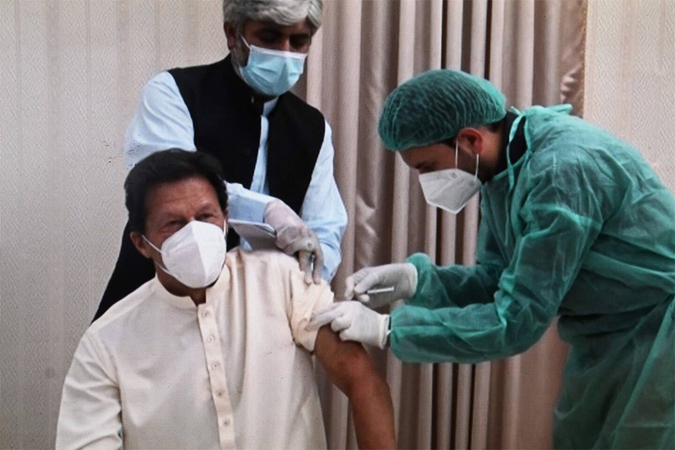
ISLAMABAD, Pakistan – Pakistan’s prime minister, Imran Khan, tested positive for the coronavirus Saturday, two days after receiving his first dose of a vaccine, raising fears among health professionals that the news could heighten vaccine skepticism in a country already deeply wary of inoculation.
Khan was injected with China’s Sinopharm vaccine on Thursday and was probably infected before then, according to Pakistan’s Health Ministry. The Sinopharm vaccine requires two doses about a month apart and can take up to 21 days after the second injection to become fully effective.
Minutes after the news broke of Khan testing positive, debate about the vaccine’s effectiveness heated up on social media in Pakistan and Sinopharm began trending here on Twitter.
The Health Ministry quickly responded that the prime minister was not fully vaccinated when he contracted the virus.
“He only got the first dose merely two days ago which is too soon for any vaccine to become effective. Antibodies develop two to three weeks after the second dose of two-dose covid vaccine,” it said in a tweet.
But doctors and experts fear such statements will not be enough.
“In Pakistan, we already have skepticism, conspiracy theories and negative propaganda about vaccines,” said Javed Akram, one of the country’s top doctors and the vice chancellor of the University of Health Sciences, Lahore.
“Look at what people think of the vaccine for polio, a disease which has been eliminated across the world, nearly,” he said. Many Pakistanis refuse to allow their children to get a polio vaccination because of allegations spread by hard-line religious leaders that it will render them infertile. Pakistan remains one of just two countries in the world where polio is endemic.
“Imran Khan tested positive even after receiving the vaccine, this shows that vaccines imported into Pakistan are of no use,” read one tweet by a Pakistani user from Peshawar who identified himself as Lawangeen Khan.
Another user agreed that the prime minister’s infection proves the vaccine fails to protect against the virus.
Khan from Peshawar added, “May God recover him [from his illness] soon.”
Some trials have shown China’s Sinopharm to be less effective than its Western counterparts, but others have shown that its efficacy is on par with that of vaccines manufactured by Pfizer-BioNTech and Moderna. However, little clinical data on Sinopharm has been released publicly.
China was the first country to provide Pakistan with coronavirus vaccines, a sign of growing ties between the two. The country also completed trials for the drug that drew thousands of participants, despite fears and skepticism.
Pakistan is experiencing a third wave of coronavirus infections and imposed new lockdown measures Saturday after recording nearly 4,000 new cases, the highest in a single day in eight months.
The number of daily hospital admissions and people receiving critical care is rising fast, Asad Umar, the minister leading the government’s response to the coronavirus, warned in a tweet. He said if Pakistanis do not comply with the current restrictions, a tighter lockdown will be imposed.
“Please be very very careful. The new strain spreads faster and is more deadly,” he said, referring to the variant of the coronavirus first detected in the United Kingdom.
Khan’s positive test was announced by Faisal Sultan, his aide, who said in a tweet that the Pakistani leader is self-isolating at home but did not elaborate on his condition.
By The Washington Post, Annie Linskey, Griff Witte, Elyse Samuels, Timothy Bella
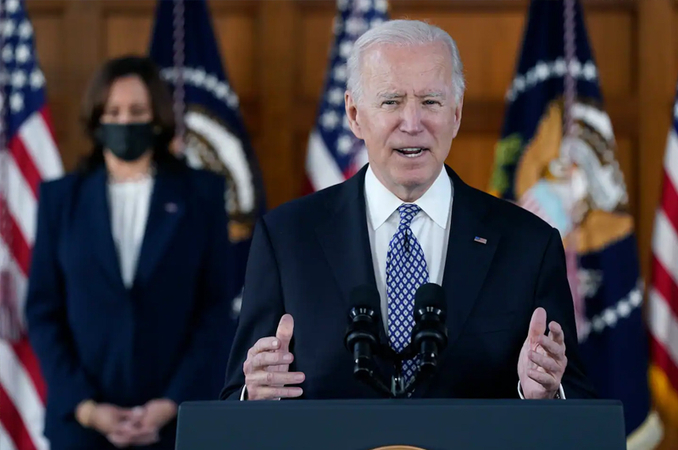
ATLANTA – In their first joint trip, President Joe Biden and Vice President Kamala Harris urged the country to stand against racism and xenophobia, with the president becoming emotional at times as he addressed a region rocked by the deaths of eight people in a mass shooting targeting Asian spas.
“There are simply some core values of belief that should bring us together as Americans, one of them should be standing together against hate, against racism,” Biden said at Emory University.
“Hate and violence often hide in plain sight and are so often met with silence,” Biden said. “But that has to change because our silence is complicity. We cannot be complicit. We have to speak out. We have to act.”
Biden’s visit did little to soothe the grief and anger many Atlanta residents are still grappling with three days after suspect Robert Aaron Long’s alleged rampage. On Friday, officials named four more victims, and local leaders gathered to decry the rise in violence against Asian Americans.
New surveillance video obtained by The Washington Post on Friday offered fresh details about the suspect’s actions immediately before the shooting. According to the footage, Long entered Young’s Asian Massage an hour before reports of gunfire. It is unclear what he did while inside.
The video footage also showed him sitting in his vehicle outside the establishment for about an hour before he entered. Authorities declined to comment on the new details about the timeline of his actions.
The footage shows the driver pulling into a parking spot, nose forward, with the windshield wipers on. He parks directly in front of the spa. An hour later, a slight figure emerges from the car, wearing an orange long-sleeved shirt, dark pants and dark shoes. It takes him less than a dozen steps to move from his car to the door of the business. About an hour later, when he leaves, his head is tilted down. He gets in the car, turns on the windshield wipers and backs out of the spot.
The mass shooting is the highest-profile gun massacre since the country locked down for the covid-19 pandemic a year ago. It has galvanized Asian American leaders who’ve grown increasingly alarmed about hate crimes directed toward their community.
They’ve said that the increase in slurs and other attacks have come as they’ve been unfairly blamed for the pandemic by former president Donald Trump and his allies, who regularly referred to covid-19 as the “China virus,” or “Kung flu.”
Biden and Harris also met for over an hour with advocates from Georgia’s Asian American and Pacific Island community and local lawmakers.
“Racism is real in America, and it has always been. Xenophobia is real in America and always has been,” Harris said. “The last year we’ve had people in positions of incredible power scapegoating Asian Americans. People with the biggest pulpits spreading this kind of hate.”
Harris is the first vice president with Asian heritage; her parents immigrated to America from India and Jamaica.
The presidential trip was initially supposed to focus the benefits of the $1.9 trillion stimulus package that Biden signed into law last week, which the president touched on in his remarks.
Outrage over the killings extended far beyond Atlanta, with donations to GoFundMe campaigns set up to support the victims’ families pouring in from across the nation – and beyond.
One, set up by the son of one of the Atlanta spa victims on Thursday, had raised more than $1.6 million by Friday evening.
Hyun Jung Grant, 51, was among four Asian women killed during the gunman’s rampage in Atlanta, according to the Fulton County medical examiner, which released the names of the women Friday. The mother of two was shot in the head.
“This is something that should never happen to anyone,” wrote Randy Park, one of her sons. “She was a single mother who dedicated her whole life to providing for my brother and I.”
Park called his mother “one of my best friends and the strongest influence on who we are today. Losing her has put a new lens on my eyes on the amount of hate that exists in our world.”
Park said he had had no time to grieve. He has a younger brother to care for and a funeral to plan. He said he is still waiting for his mother’s body to be released by authorities. In an update to the fundraising page posted Friday morning, he said he was overwhelmed by the generosity of strangers.
“I don’t know how any word I write here will ever convey how grateful and blessed I am to receive this much support.” To those who donated money, Park wrote, “To put it bluntly, I can’t believe you guys exist.”
Campaigns for other victims confirmed as legitimate by GoFundMe include those set up for Delaina Yaun, Paul Andre Michels and Elcias Hernandez-Ortiz, who remains in the hospital in critical condition.
The Fulton County Medical Examiner’s office on Friday released the names of three other victims who were killed at Gold Spa and Aromatherapy Spa: Soon C. Park, 74; Suncha Kim, 69; and Yong Ae Yue, 63. Park, Grant and Yue each died of a gunshot wound to the head, according to the examiner’s report. Kim died of gunshot wounds to the chest.
Investigators said this week they waited to identify the four victims because they had been unable to notify all their family members.
Shortly after the shootings, police in Cherokee County had identified the four other victims killed: Xiaojie Tan, 49; Daoyou Feng, 44; Yaun, 33; and Michels, 54.
The identification of the last of the victims came as the suspect’s longtime church condemned him in a lengthy statement on Friday morning, saying 21-year-old Long had committed an “extreme and wicked act.”
Long was charged on Wednesday with eight counts of murder, and police say he has confessed to the crime. Long waived his right to an initial hearing on Thursday, and his attorney has not commented on the charges beyond expressing sympathy to the victims’ families.
“These unthinkable and egregious murders directly contradict his own confession of faith in Jesus and the gospel,” the statement from Crabapple First Baptist Church read. “Aaron’s actions are antithetical to everything that we believe and teach as a church.”
Earlier in the day, Biden and Harris also stopped by the Centers for Disease Control and Prevention, praising an agency that was sidelined during the Trump administration and endured false accusations and political interference as it produced critical guidance.
In Atlanta, standing in an emergency operations center, Biden and Harris listened to a briefing by top CDC officials who noted that the country is still seeing significant community transmission of the virus in many areas. The officials also detailed trends about various variants circulating – and particularly one that is resistant to some treatments.
“Science is back,” Biden declared during brief remarks. “I hope this is beginning of the end of not paying attention to what’s going to come again and again and again and again,” he said, stressing that even once the coronavirus threat recedes other contagions could emerge.
“We cannot stop these viruses,” Biden said, adding that the country’s only defense is to pay attention to the threat and “move quickly when we find them.”
Harris, speaking briefly, focused her remarks on thanking the staff. “You do this work on behalf of people you’ll never meet,” Harris said. “On behalf of people who will never know your names.”
The visit had a far different tone than one by Biden’s predecessor a year ago, where Trump downplayed the seriousness of the virus, saying it was similar to the seasonal flu and inaccurately claimed that the country had a robust capacity to test people for the virus.
“Anybody that wants a test can get a test. That’s what the bottom line is,” Trump said during his visit.
Some staff at the CDC said they appreciated the new tone.
“It was validating and reassuring to hear President Biden and VP Harris affirm the role of science in public health, particularly while standing on the CDC campus,” said a CDC epidemiologist who has been part of the covid response and spoke on the condition of anonymity because they were not authorized to speak publicly. “Typically I would take that message for granted. But, after the past year, I don’t. I hope that in the future I will never need that assurance again.”
Before leaving for his trip, Biden stumbled several times as he climbed the stairs to Air Force One – climbing about a dozen stairs before briefly losing his footing.
The president appeared to regain his balance and took a few more steps on the red-carpeted staircase, then stumbled again. He had more difficulty recovering the second time, stabilizing himself with his hand on a railing at first and starting to rise.
He initially appeared unsteady, but then supported himself and continued up the stairs without apparent difficulty, saluting at the top.
Biden, who at 78 is the oldest president in history, has not released medical records since December 2019. The White House said the incident was not serious.
By The Washington Post, David A. Fahrenthold, Josh Dawsey, Lori Rozsa
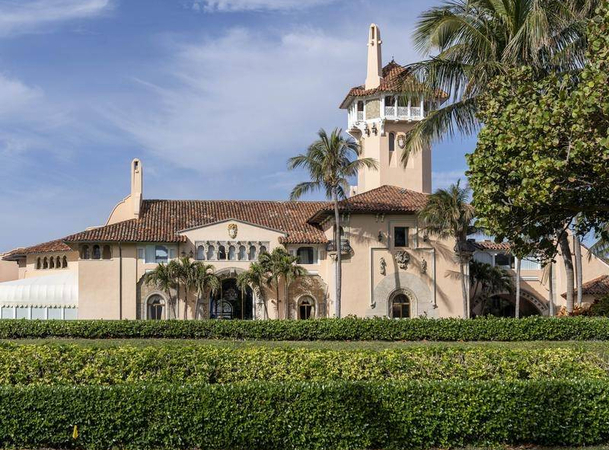
Donald Trump’s Mar-a-Lago Club in Florida has been partially closed after some of its employees were infected with the coronavirus, according to an email sent to club members Friday afternoon.
“As some of our staff have recently tested positive for COVID-19, we will be temporarily suspending service at the Beach Club and à la carte Dining Room,” club management said, according to an email obtained by The Washington Post.
“Banquet and Event services remain open,” the email said.
The Trump Organization declined to say how many workers were affected. The Palm Beach club – which includes the former president’s home as well as restaurants and banquet facilities – has dozens of employees during the winter season.
“Out of an abundance of caution we have quarantined some of the workers and partially closed a section of the club for a short period of time,” a spokeswoman for the Trump Organization said in a statement to The Post.
Lee Lipton, a member at the club, said he received a phone call Friday saying his dinner reservations were canceled for Friday and Saturday nights. “But they said the car show was going on Sunday, and the hotel rooms are fine,” he said.
The partial closure of the club was first reported by the Associated Press.
Palm Beach County, which includes the club, still requires that all guests wear masks, except while “actively consuming food and beverage.”
Last weekend, Mar-a-Lago hosted two large fundraisers for a charity called Big Dog Ranch Rescue, including one event at which Trump appeared, praising the group.
Photos from those events show that few attendees were wearing masks. Trump, who had covid-19 in the fall and was vaccinated earlier this year, also did not wear a mask.
Two people familiar with the club said that Mar-a-Lago waiters wore masks during the events. A spokesperson for the charity declined to comment about the event.
The club has not forced members to adhere to a mask policy, though they have suggested masks be worn and provided them to guests, according to people who have visited.
In January, a Florida state representative asked the county to shut down Mar-a-Lago after photos from a New Year’s Eve event showed that many guests were not wearing masks. In response, Palm Beach County sent the club a formal warning letter, saying that Mar-a-Lago had violated county code and could faces fines up to $15,000 if there was another violation.
Patrick Rutter, assistant Palm Beach County administrator, who oversees the county’s covid enforcement efforts, said he hadn’t heard of Mar-a-Lago partially closing, but that it would be up to the club’s leadership to decide whether to close in case of an outbreak.
“Businesses would make their own decisions of that was the case,” Rutter said.
Omari Hardy, the state representative who had asked for Mar-a-Lago to be closed down, said workers were paying the price of the club’s lax mask policy.
“No one around the president wears a mask. The guests at Mar-a-Lago have photographed themselves partying and carousing not wearing masks,” said Hardy, whose district includes a town just a few miles from Mar-a-Lago that is home to many essential workers who staff the clubs and restaurants on Palm Beach. “Now the workers, who can least afford to get sick, are paying for it with their health.”
A few months ago, Amber Smith was texting her friends about something utterly unimportant – the latest “Real Housewives” episode, she said, or some other small drama. It was the kind of interaction that had been getting her through the pandemic: quick banter, a lot of laughter.
Then her friends stopped responding.
The minutes ticked by: no new messages. Smith, 41, lives alone in New York City. Since the pandemic hit, she has only seen a handful of friends in person.
Staring at her phone, she said, she started to wonder, “Did I do something?'”
From there, her mind jumped to an even more distressing thought: “Maybe all my friends hate me.”
For many women, “friendship doubt” has proliferated in the pandemic, especially during the colder months, when it may have gotten harder to see friends in person. Alone in our apartments, we’re spending more time in our own heads, replaying whatever limited social interactions we’re able to have, experts say. This isolation can make us doubt our friendships, leading us to wonder: Do my friends like me as much as they used to?
There is an ambiguity in friendships that doesn’t exist in other kinds of relationships, said Marisa Franco, a psychologist who specializes in friendship. Relationships with family members and romantic partners come with a societally recognized commitment: When you say you’re somebody’s wife, or somebody’s sister, there are certain expectations.
Friendships operate without these kinds of official promises, Franco said. A friend could be in your life forever, or “just for a season.”
That ambiguity can lead to insecurity, she said.
Mahzad Hojjat, a professor of psychology at the University of Massachusetts at Dartmouth who studies friendship, put it this way: “You agree to be friends, but at any moment one person might decide, ‘I don’t like this person, I don’t want to be her friend.’ ” No breakup is necessary, Hojjat said – you can usually slide off the grid. Especially during the pandemic, she said, “that fear is always there.”
These friendship doubts could be driven by loneliness. Studies show that lonely people are more self-critical and less trusting, Franco said, and are inclined to believe that others like them less than they actually do. Stripped of normal interactions with friends, she added, our social anxiety increases.
Humans have evolved to protect ourselves from strangers when we’re on our own, Franco said – an adaptation that does not serve many well in the pandemic. “When you were separated from your tribe, your goal was to mitigate threat,” she said. And the best way to do that was to be skeptical of others.
In the early days of the pandemic, there was a rush to socialize in novel ways. People were connecting on Zoom, playing virtual board games with high school friends and college roommates they hadn’t talked to in years. But for Smith, sometime in early summer, friends seemed to grow tired of video calls, opting instead for the occasional park hangout or stroll around New York. But once summer ended and her friends went back inside, the social Zooms never resumed.
“Everyone is just mentally over it,” Smith said.
When social activities dropped off, Smith started spending more time in her own head, she said, wondering why no one was reaching out. “I conjured up all the ways that people were mad at me,” she said.
Smith knows she could reach out to people herself, she said, proposing a call or outdoor activity – but a year into the pandemic, the prospect is daunting. These days, she is too emotionally exhausted to do much of anything outside of work.
Kris Nova, a 33-year-old living in San Francisco, said she has also been overthinking friendships in the pandemic. After she spends time with friends, online or in person, she analyzes every little interaction, dwelling on anything she said that might have come off the wrong way.
“I’ll think, ‘Oh god, I’m a horrible person,’ ” Nova said. “I’m going to focus on this little thing that happened and beat myself up for it.”
As Hojjat put it, in self-quarantine, “you’re stuck in your own little cave.” While some people have been busier than usual in the pandemic – like parents at home with their kids – many young or single people have more time to kill. If you’re socially anxious, Hojjat said, that extra time can fuel destructive thoughts.
“Unfortunately, sometimes these ideas just continue to exist in your mind and there’s nothing to interrupt them,” Hojjat said.
Franco said the pandemic hasn’t just left us alone to dwell on the negative – it’s also deprived us of many of the things that typically make us feel good about ourselves. In more normal times, she said, in-person interactions with friends provide an enormous amount of “identity affirmation.” Friends tend to affirm the version of ourselves we would most like to embody, Franco added, which is good for our self-esteem: If you spend a day with a friend, and you leave each other upbeat and laughing, you’ll probably feel better about yourself, knowing you made the other person happy.
“We don’t have access to that now because we’re not seeing each other,” Franco said.
While Zoom has been a critical social tool in the pandemic, it’s a poor substitute for in-person interaction, Franco added. Without normal social cues, like body language, it’s harder to tell how the other person is responding to you, she said.
When Rachael Yeomans, who works in musical theater, talks to her colleagues on Zoom, she worries about how they are perceiving her. Many of them are her friends. But because they’ve all muted themselves, she said, she is left to imagine what they’re thinking. This leads to a “spiral,” she said, where she convinces herself that they don’t like her very much after all.
“I’m a big body-language person. I pay attention to the energy a person is bringing into the room,” said Yeomans, a 25-year-old based in Los Angeles. In person, she said, it’s easy to tell when a colleague is just having a bad day. But if someone isn’t overly enthusiastic on Zoom, she said, she’ll often process their bad day as frustration toward her.
If you and your friend aren’t together in-person, assumptions can abound, Hojjat said: Any hint of conflict could get blown out of proportion. Maybe a friend and colleague misses a Zoom happy hour. Pre-pandemic, when you saw each other every day in the office, you might have swung by your friend’s desk to ask where he was the night before, she said. Because there’s no opportunity for that kind of casual interaction, Hojjat said, people “make judgments about their friends’ behavior,” jumping to conclusions that aren’t necessarily correct.
In these cases, it’s important to give your friends the benefit of the doubt, Hojjat said – especially right now. Everyone is dealing with their own unique struggles in the pandemic. If your friend isn’t responding, she said, they might be busy with a child at home, or pandemic-related stress at work.
If you have the time and energy to reach out yourself, Franco recommended doing so: “Be the security you wish someone would be for you.” With close friends, she said, you could even be honest about your friendship doubt. When you open up, she said, you give your friend the opportunity to say, “Me too.”
Yeomans has her own strategy for dealing with her pandemic insecurity. Whenever she catches herself doubting her friendships – convinced she’s a bad friend, too annoying or “too much” – she’ll look in the mirror and repeat one particular phrase: “My friends love me.”
“I will literally sit there and say it out loud to myself as many times as I need to.”
After a while, Yeomans said, she starts to believe it.

 Visitors line up for free covid-19 tests at a ‘Test-To-Go-Station’ in Berlin, on March 8. MUST CREDIT: Bloomberg photo by Liesa Johannssen-Koppitz
 A closed AMC movie theater in Tucson, Ariz., in June 2020. MUST CREDIT: Bloomberg photo by Cheney Orr.
 A makeshift pharmacy at Kano state’s Infectious Diseases Hospital in 2000 is adorned with stickers promoting American drug companies. MUST CREDIT: Washington Post photo by Michael S. Williamson

 SootinClaimon.Com