ECB downplays yield concerns, signaling no drastic action needed
InternationalMar 04. 2021Flags of the European Union (EU) fly outside the European Central Bank (ECB) headquarters in Frankfurt, Germany, on July 16, 2020. MUST CREDIT: Bloomberg photo by Alex Kraus.
By Syndication Washington Post, Bloomberg · Carolynn Look, Alexander Weber, Jana Randow
European Central Bank policymakers are downplaying concerns over rising bond yields, suggesting they can manage the risk to the euro-area economy with verbal interventions including a pledge to accelerate bond-buying if needed.
ECB Governing Council members, who meet next week to set policy, see no need for drastic action such as expanding the overall size of their 1.85 trillion-euro ($2.24 trillion) emergency asset-purchase program, according to officials familiar with internal discussions.
The officials didn’t say whether the pace of purchases has been stepped up in recent days, for which data isn’t yet available. One person noted that yields fell on Monday after some policy makers said the institution would react against unwarranted increases. An ECB spokesman declined to comment.
The relatively sanguine mood was backed up on Wednesday by Governing Council members including ECB Vice President Luis De Guindos and Bundesbank President Jens Weidmann, who said in public remarks that they’re not too worried.
European yields rose, led by the longest-dated debt. The rate on German 10-year bonds climbed as much as seven basis points to minus 0.28%. The euro was down 0.2% at $1.2073 at 5:20 p.m. Frankfurt time.
The global sell-off of government bonds originates from the U.S., where prospects of massive fiscal stimulus are bolstering the economy and lifting inflation expectations.
In Europe, Greek and Italian 10-year yields led the charge, climbing about 20 basis points in the past two weeks. Benchmark German yields touched levels last seen in March 2020, and those for their French equivalents briefly turned positive for the first time since June.
That’s a problem for the euro area because sovereign yields are used by banks as a reference point for lending. The region’s recovery is already expected to be slower than that of many other advanced economies, in part due to its slow vaccine roll-out, and higher borrowing costs could further damp momentum.
Policymakers have been rolling out public appearances before their weeklong quiet period starts this Thursday. Guindos said yields have risen from very low levels and “the situation is very calm” when looking at spreads between different nations. Weidmann told Bloomberg Television that “the size of the movements is not such that this is a particularly worrisome development.”
The Bundesbank head added that the ECB is ready to adjust the pace of asset purchases if needed though, saying that “we want to preserve favorable financing conditions for the non-financial sector — that’s not just looking at financing costs for governments, it’s a much broader picture.”
Bank of Spain Governor Pablo Hernandez de Cos said at a separate event that rising yields may reflect market expectations of an earlier start to unwinding monetary stimulus, and that “avoiding premature increases in nominal interest rates” is essential.
Earlier in the week, Executive Board member Fabio Panetta said the jump in yields “is unwelcome and must be resisted.” He also said it is “not too late” to act. French Governing Council member Francois Villeroy de Galhau said the ECB “can and must react” to any unwarranted moves.
The latest purchasing data surprised investors though by showing that the central bank actually slowed buying last week, despite President Christine Lagarde saying policy makers are “closely monitoring” the rise in nominal bond yields.
Those figures don’t reflect orders made Thursday and Friday, as transactions take a couple of days to settle and show up in the central bank’s accounts. This week’s purchasing data will be published next Monday and Tuesday.
Investors have been closely watching for any signs of market intervention by the ECB. Vincent Juvyns, a strategist at JPMorgan Asset Management, said on Bloomberg radio that in contrast to the U.S., where the economy is being boosted by massive stimulus, “it is probably too early to allow rates to rise in Europe.”
“I would hope and expect that the ECB would be a bit fire-fighting with additional buying in the coming weeks and months,” he said.
OPEC+ is poised to cool oil market with extra production
InternationalMar 04. 2021Oil pumping jacks operate in an oilfield near Almetyevsk, Tatarstan, Russia, on March 11, 2020. MUST CREDIT: Bloomberg photo by Andrey Rudakov.
By Syndication Washington Post, Bloomberg · Javier Blas, Grant Smith, Salma El Wardany
OPEC+ is poised to agree a production increase this week as it seeks to cool a rapid rally in crude prices.
There is a widespread view within the group that the market can absorb additional barrels, according to people familiar with the deliberations. While the usual differences are present — with Saudi Arabia cautious and Russia keen to open the taps — all sides are ready to increase production, they said, asking not to be named because the information was private.
That could put the group on track to implement the majority of the 1.5 million barrel-a-day output increase that’s up for debate on Thursday.
An agreement to hike OPEC+ supply would be the latest sign that the global economy is recovering from the damage wrought by the coronavirus pandemic. The cartel has endured a year of pain, dominated by the deepest output cuts in its history. But the sacrifice has paid off, reviving oil prices back to pre-crisis levels above $60 a barrel.
Brent crude rose 0.3% to $62.89 a barrel as of 7:54 a.m. in London. The international benchmark has surged more than 20% this year.
“Both the global economic outlook and oil market prospects show signs of continued improvement,” OPEC Secretary-General Mohammad Barkindo said at the opening of a meeting of the group’s technical experts on Tuesday. “The headwinds of uncertainty that shocked and disrupted the market last year continue to abate.”
There are two distinct elements to the production increase that the Organization of Petroleum Exporting Countries and it allies will debate this week.
First, will the cartel proceed with a 500,000 barrel-a-day collective output hike in April? Second, how will Saudi Arabia phase out the extra supply reduction of 1 million barrels a day it’s been making voluntarily in February and March?
Russia has been the most consistent advocate for the 500,000 barrel-a-day increase, and other members now largely agree that it should go ahead, according to people familiar with the matter.
The top oil executive from the United Arab Emirates, which has also supported output hikes at recent OPEC+ meetings, gave a bullish assessment of the market on Tuesday.
“Oil demand is robust,” Sultan Al Jaber, the chief executive officer of Abu Dhabi National Oil Co., said at the IHS Markit Ltd. CERAWeek virtual conference. “Demand will rise to above pre-covid levels by the end of this year.”
Adnoc has already signaled it’s preparing to open the taps, allocating customers greater volumes of Murban, Das and Upper Zakum crudes for April compared with March.
Saudi Arabia always said that its voluntary supply reduction would only last for two months, but seasoned OPEC-watchers have suggested that Riyadh could phase it out gradually.
The kingdom will start to roll back its extra cut as planned in April, but is still discussing internally whether to return all of the barrels in a single month, or over a longer period, said people familiar with the deliberations. The decision will take into account the commissioning of the new 400,000 barrel-a-day Jizan refinery, which could affect both domestic crude consumption and exports, they said.
At CERAWeek, Saudi Aramco CEO Amin Nasser struck a more cautious tone than his counterpart from the UAE, predicting strong demand in the second half of 2021, and a return to pre-Covid consumption next year.
Whatever the Saudis decide, the global oil market is poised to receive its biggest supply boost since August, when OPEC+ first began the process of tapering the 9.7 million barrel-a-day cut agreed in April last year as the pandemic crushed demand.
The group appears to think the market is ready for it. Even if OPEC+ boosts production by 2.4 million barrels a day between February and June — the maximum amount allowed under the current deal — it will still be able to clear the remnants of the 2020 supply glut by August, the secretariat’s analysts predicted on Tuesday.
Achieving that would be a remarkable comeback from one of the biggest crises in the cartel’s history. It’s almost exactly a year since a disagreement between Russia and Saudi Arabia over how to respond to the early stages of the pandemic triggered a monthlong price war. The group flooded the market just as demand plunged, a disastrous decision that pushed crude prices below zero for the first time in history.
Twelve months later, fuel stockpiles in industrialized countries aren’t far off target levels and crude prices are close to break-even for some members, presenting “the perfect opportunity for OPEC+ to raise production,” analysts at Australia & New Zealand Banking Group Ltd. said in a note.
Amazon, Google vie for piece of India’s digital payments market
InternationalMar 04. 2021A customer pays Indian Rupee banknotes to a vendor at a sim card store in Mumbai on April 21, 2018. MUST CREDIT: Bloomberg photo by Dhiraj Singh.
By Syndication Washington Post, Bloomberg · Saritha Rai
Technology giants Facebook, Amazon.com and Google and credit-card providers Visa and Mastercard are among those vying for unprecedented access to India’s burgeoning digital retail payments market.
The companies are part of four consortia preparing to apply for licenses to operate retail payments and settlement systems in the country, people familiar with the matter said. More companies could band together before a March 31 application deadline.
In a market where cash is still king, digital payments are quickly gaining ground as India’s 1.3 billion people are starting to embrace online shopping and services such as online gaming and streaming. With Credit Suisse Group predicting $1 trillion in online payments in India in 2023, the companies chosen to enable such transactions stand to reap lucrative commissions.
“India’s mobile digital payments is seeing huge growth in a post-pandemic world,” said Vijay Shekhar Sharma, founder and chief executive officer of New Delhi-based payment provider Paytm. “It’s a good time to open up more diverse payments solutions and keep the momentum going.”
One of the consortia consists of Amazon, Visa, Indian retail banks ICICI Bank and Axis Bank as well as fintech startups Pine Labs and BillDesk. Another group is led by billionaire Mukesh Ambani’s Reliance Industries and its partners Facebook and Google, which together agreed to invest more than $10 billion in Reliance’s digital services unit last year.
Sharma’s Paytm heads a group that includes ride-hailing startup Ola and at least five other companies. The fourth consortium consists of Tata Group, Mastercard, telecom operator Bharti Airtel and retail banks Kotak Mahindra Bank and HDFC Bank.
Sharma, a spokeswoman for Tata Group and a spokesman for Google declined to comment on the potential bidders. Amazon and Facebook didn’t respond to emailed questions.
The contest is fierce as regulator Reserve Bank of India is expected to give just one or two licenses, as implied in its notification inviting bids. The process to decide the winners could take at least six months and it could be a further year or more before the systems and solutions come into use.
The winners will take on National Payments Corporation of India, the sole pioneering umbrella organization backed by more than 50 retail banks. Its Unified Payments Interface, or UPI, protocol debuted in 2016 and set the digital payments arena afire by allowing users to link their phone numbers to their bank accounts. That made transferring and receiving money via apps as easy as sending a text message, allowing large scale and high volumes of transactions to happen at minimal cost.
“The regulator probably doesn’t want concentration risk as the UPI backbone has become critical to the economy,” said Nandan Nilekani, who conceived and built a biometric identity database the system uses to identify users. “With more licensees and these systems presumably being able to operate seamlessly with each other, the aim seems to be to reinvigorate innovation and push digital payments even deeper into the country,” said Nilekani, co-founder and chairman of IT services company Infosys Ltd.
Though commissions on digital payments are thin, the volume is potentially huge as India tries to reduce its reliance on cash. Card and mobile payments represented only 21% of $781 billion in retail purchases at brick-and-mortar stores in 2019, according to an estimate by S&P Global Market Intelligence.
The new licensees could make money by charging businesses transaction fees. They can also break new territory by setting up and operating ATMs, point-of-sale systems, remittance services and new innovative payment solutions.
“There seems to be a prime mix of regulatory support and innovation attracting investors to the space right now,” said Anis Uzzaman, general partner and chief executive officer of Silicon Valley-based Pegasus Tech Ventures, an investor in Robinhood and other fintech startups. “A new generation of entrepreneurs is grabbing the opportunity.”
Sunak to hike U.K. business tax to pay for covid’s economic bill
InternationalMar 04. 2021Chancellor of the Exchequer Rishi Sunak on March 3, 2020, in London. MUST CREDIT: Bloomberg photo by Hollie Adams.
By Syndication Washington Post, Bloomberg · Alex Morales, Andrew Atkinson
U.K. finance minister Rishi Sunak announced he will carry on spending to help the economy through the pandemic emergency but outlined a plan for businesses and individuals to start paying the huge bill in the years ahead.
With the country mired in a third national lockdown, the chancellor of the exchequer delivered his annual budget and made clear that saving jobs is his immediate priority.
He added 65 billion pounds ($90.7 billion) of aid to help companies and citizens make it through the rest of this year and next, taking the government’s total fiscal support to 407 billion pounds.
In a dramatic statement to Parliament, Sunak then sketched out a blueprint to start restoring the U.K.’s battered public finances over the coming years. At the center of his plan is a politically risky freeze of income tax thresholds, pulling more people into paying higher bills as earnings rise in future, and an increase in corporation tax to 25% in 2023, from 19% now.
Given how much the government is spending to help businesses through the crisis, it is “fair and necessary” to ask them to contribute, Sunak said.
“It’s going to take this country – and the whole world – a long time to recover from this extraordinary economic situation,” the chancellor told members of Parliament. “Once we are on the way to recovery, we will need to begin fixing the public finances – and I want to be honest today about our plans to do that.”
The U.K. economy has already suffered its deepest recession in more than 300 years, alongside the worst pandemic death toll in Europe. Official forecasts Wednesday confirmed the economy will suffer long-term damage from the crisis, lasting years.
Key budget developments include:
– Income tax thresholds will be frozen for the basic 20% rate and higher 40% rates after next year, potentially dragging more people into paying more tax as their earnings increase in future years. Sunak said he wasn’t “hiding” this policy, and argued it will be “progressive and fair.”
– The 5% reduced rate of VAT will be extended for six months to Sept. 30.
– The stamp duty holiday, which pauses taxing home sales, will be extended until June 30.
– The furlough wage support program will be extended through September. As businesses reopen, from July, they will be asked for a contribution of 10%, rising to 20% in August and September.
– The 20 pound a-week uplift to Universal Credit welfare payments will be extended for six months.
– Planned rises in alcohol and fuel duty will be canceled.
– The Bank of England is being ordered to drive the U.K.’s goals toward eliminating greenhouse gas pollution.
– The U.K. economy, which shrank almost 10% last year, is forecast to expand by 4% this year, according to the Office for Budget Responsibility.
– The economy will grow 7.3% next year, stronger than forecast, but after five years it will remain 3% smaller than it would have been without the pandemic.
– Gilts fell across the curve on Wednesday after the Debt Management Office announced that it will sell 295.9 billion pounds ($413 billion) of bonds in 2021-22.
“When Chancellor of the Exchequer Rishi Sunak looks back at his March 2021 budget, he’ll probably be able to say he got the balance right. He extended significant near-term support to help drive the recovery from the pandemic while deferring most tax increases until the economy has healed,” said Dan Hanson, senior economist with Bloomberg Economics.
The extended aid for workers and businesses will help prevent a surge in unemployment. But it will also add to the 300 billion pounds the U.K. has spent fighting the pandemic amid the sharpest contraction since the Great Frost of 1709.
Sunak is aiming to strike a balance between providing short term emergency help for a country still battling to emerge from lockdown, while seeking to reassure markets that he will get a grip on the deficit before too long.
Politically, Sunak is in danger of infuriating his Conservative colleagues who do not want taxes on business to rise and may worry that increased bills for citizens ahead of the 2024 election will cost the party votes.
The economic risk is that planned tax increases and the withdrawal of state support could deter investment and potentially stifle the longer-term recovery.
With that in mind, Sunak also announced measures to encourage investment and incentives for businesses to hire more apprentices. A new “super deduction” policy will be introduced, which will mean that for the next two years when companies invest, they can reduce their taxable income by 130% of the cost of that investment.
“We’ve never tried this before in our country,” Sunak said. Forecasters say the plan will boost business investment by 10%, he added.
The main opposition Labour Party said the chancellor was desperate to slash government aid for those who need it.
“Behind the spin, the videos and the photo ops, we all know the chancellor doesn’t believe in an active and enterprising government,” Labour Leader Keir Starmer said. “We know he’s itching to get back to his free market principles and to pull away support as quickly as he can.”
While the national debt has risen past a record 2 trillion pounds, historically low interest rates means the cost of servicing it is low. That gives the chancellor breathing space, although he’ll also have an eye on the next general election due in 2024.
Myanmar’s military has asked security forces responsible for deadly attacks on anti-coup protesters over the weekend not to use live ammunition as international condemnation grows.
The announcement was made in a broadcast on state-run MRTV after the Southeast Asian nation on Sunday saw its deadliest day since the Feb. 1 coup, with the United Nations saying at least 18 protesters were killed and 30 others wounded. The military also said Monday that more than 1,300 protesters were arrested during nationwide demonstrations.
“When it comes to crowd dispersal methods, security forces have been instructed not to use live bullets,” the broadcast stated, accusing protesters of instigating violence by using slingshots and petrol bombs. “Security forces are allowed to protect themselves when protesters harm their lives by firing shots at the protesters below the waist.”
It wasn’t immediately clear that troops would use only rubbers bullets in their defense.
A new wave of rallies began Tuesday morning after a Myanmar court brought additional charges against detained civilian leader Aung San Suu Kyi that could keep her behind bars for an even longer period of time. The rising death toll may increase pressure on governments around the world to take more action against Myanmar’s generals, who refused to recognize a landslide election victory by Suu Kyi’s political party in November.
The call to refrain from using live rounds comes as foreign ministers in the 10-member Association of Southeast Asian Nations are set to hold an informal meeting Tuesday to discuss the situation in Myanmar for the first time since the coup. ASEAN has long followed a policy of nonintervention in the domestic affairs of its members, which include Myanmar, also known as Burma. It has thus far refrained from condemning the military for its actions or referring to the coup.
Thai Prime Minister Prayuth Chan-Ocha reportedly referred to it as a “political issue” that is “their country’s matter.” Indonesia, on the other hand, issued a statement Sunday calling on security forces to “refrain from the use of force and exercise utmost restraint to avoid further casualties.”
“Instability in Myanmar ultimately creates danger for the rest of us in Southeast Asia, so it’s not a purely Myanmar situation alone,” Singapore Minister of Foreign Affairs Vivian Balakrishnan said during an interview on Monday with local television outlet Channel 5. “Although, as I said, the responsibility for resolving this lies with the authorities in Myanmar.”
By The Washington Post · Anne Gearan, Ellen Nakashima
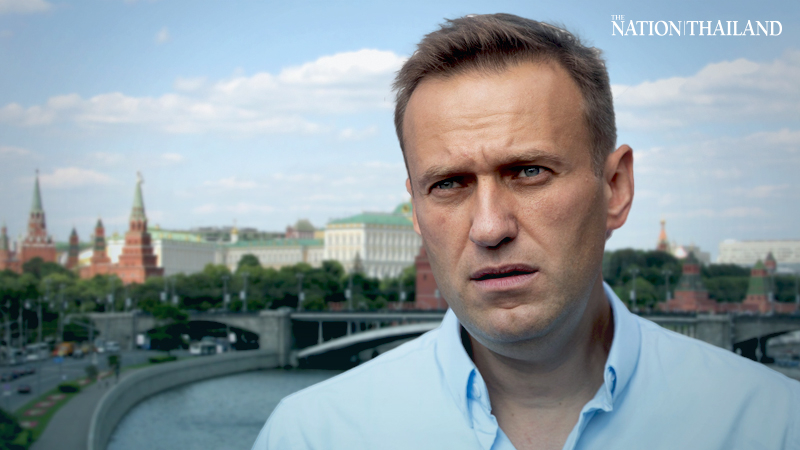
WASHINGTON – The Biden administration on Tuesday announced punitive sanctions against senior Russian government figures for the poisoning of opposition leader Alexei Navalny, the first of what is likely to be a series of actions designed to signal a tougher approach to Moscow than that taken by President Donald Trump.
The sanctions block access to financial and other assets in the United States for seven top figures around Russian President Vladimir Putin, though not Putin himself. The United States also reiterated its demand that Navalny be released from detention.
The largely symbolic penalties represent the first Biden administration action against Russia, and U.S. officials said it is a signal that Biden will treat Russia differently than his predecessor did.
“The U.S. government has exercised its authorities to send a clear signal that Russia’s use of chemical weapons and abuse of human rights have severe consequences,” Secretary of State Antony Blinken said in a statement. “Any use of chemical weapons is unacceptable and contravenes international norms.”
He called Navalny’s prosecution and imprisonment “politically motivated” and said the Russian government must release Navalny immediately.
Putin’s Russia poses one of the thorniest foreign relations problems facing Biden, complicated by Trump’s tendency to dismiss or defend some of Putin’s most belligerent actions.
Biden has said he will confront Putin over actions that harm the United States or its allies, while seeking cooperation with Moscow on arms control, climate change and other issues. The United States blames Russia for undermining U.S. and European elections, promoting disinformation and cyberattacks, and threatening its neighbors, including Ukraine.
Biden’s administration shares a widening European concern that Russia is becoming more authoritarian and isolated from Europe, giving the West less leverage and dulling the effect of sanctions like those imposed Tuesday.
“It was not meant to be a silver bullet or an ending to what has been a difficult relationship with Russia,” said White House press secretary Jen Psaki. “We expect the relationship to continue to be a challenge. We’re prepared for that, and we’re neither seeking to reset our relations with Russia nor are we seeking to escalate.”
That comment was intended to suggest that Biden will not follow previous administrations – including that of Barack Obama – that pledged to “reset” the U.S. relationship with Russia, only to see those efforts fail.
Russia denies poisoning Navalny, and Foreign Ministry spokeswoman Maria Zakharova on Tuesday called the U.S. sanctions “a hostile anti-Russian attack,” suggesting that Moscow would retaliate. In the past, Russia has responded in tit-for-tat fashion to sanctions and punitive actions such as the expulsion of diplomats.
“All this is just a pretext for continuing open interference in our internal affairs,” Zakharova said. “We do not intend to put up with this.”
Psaki said the new penalties stem from a U.S. intelligence assessment that found “with high confidence” that Navalny was poisoned by officers of Russia’s Federal Security Service in August 2020.
The administration also announced new export restrictions on items that could be used to manufacture chemical weapons, as well as a widening of existing sanctions under a law controlling use of such weapons.
Navalny nearly died from the poisoning last year, but he traveled to Germany for treatment and ultimately recovered. Returning to Moscow in January, he was promptly jailed and sentenced to more than two years behind bars on what human rights advocates call manufactured charges.
Two days after his arrest, a bombshell video starring Navalny was released through supporters. It accuses Putin of colossal corruption and mocks the Russian leader as a power-mad king. Navalny’s arrest sparked mass protests in Russian cities, a movement that continues to pose a rare threat to Putin’s authority.
The U.S. sanctions largely mirror actions taken by the European Union and Britain. The EU announced additional actions in concert with Washington on Tuesday.
The Trump administration had declined to join the EU’s initial actions last fall, and Trump himself was reluctant to assign blame for the attack on Navalny.
While Putin is not among those targeted – sanctioning a head of state carries additional diplomatic and logistical challenges – the list does include another top official, the director of the Federal Security Service, Aleksandr Bortnikov.
Two of the entities named were already under U.S. sanctions imposed during the Trump and Obama administrations. The FSB, a successor agency to the KGB, had been sanctioned in 2016 and 2018 for election interference and other malign cyberactivities. The GRU, Moscow’s military intelligence agency, was likewise sanctioned in 2016 and 2018 for election interference.
A December investigation by Bellingcat, an independent investigative group, linked members of what it called a secretive toxins unit within the FSB to long-term surveillance on Navalny, placing agents in the Siberian city of Tomsk, several hundred yards from Navalny’s hotel before his poisoning.
A later Bellingcat investigation linked the unit with surveillance of three other journalists and politicians who died suddenly under mysterious circumstances.
The new sanctions are the first of several steps the administration is planning to hold Russia to account for destabilizing actions in four areas, senior administration officials said Tuesday, speaking on the condition of anonymity to describe sensitive matters.
Coming “sooner rather than later,” one official said, will be U.S. responses to Moscow’s SolarWinds hacks of federal agencies and private-sector entities, Russian efforts to meddle in the 2020 election, and reports of Russian bounties on the lives of U.S. troops in Afghanistan.
All these areas were the subject of intelligence reviews ordered by Biden on his first full day in office.
The response to the SolarWinds hack will probably include not only sanctions but also at least one executive order aimed at shoring up federal cybersecurity, as well as a stronger statement linking Moscow to the hacks than the Trump administration issued in January.
The hacks penetrated nine federal agencies and at least 100 private entities. A senior administration official told The Washington Post that it represented a “broad, indiscriminate compromise” that “crosses a line of concern to us because it can be turned to be disruptive so quickly.”
Psaki said the responses to Russia’s hostile activities will be “seen and unseen,” an allusion to possible covert operations.
In addition to Bortnikov, the officials targeted Tuesday include the head of Putin’s domestic policy office, Andrei Yarin, and a leader of the president’s executive office, Sergei Kiriyenko.
Kiriyenko and Yarin have both played important roles in the Kremlin’s full-scale effort to pursue and neutralize Navalny, which has been underway since 2013. The campaign includes propaganda efforts designed to discredit Navalny, such as recent state-sponsored campaign to portray him as a Nazi.
According to the Russian investigative outlet Proyekt, the presidential office orchestrated a plan to smear Navalny after he criticized supporters of constitutional amendments allowing Putin to rule until 2036. Navalny tweeted that they were traitors, leading to a libel case that saw him convicted of insulting a World War II veteran.
Navalny’s Anti-Corruption Foundation last month called on the United States and the EU to sanction top oligarchs who support and benefit from Putin’s regime, arguing that they play a key role in propping up his power.
Maria Pevchikh, a senior investigator with Navalny’s foundation, said Tuesday that the sanctions against officials in Putin’s regime were important, but she expressed disappointment that they fell short of punishing oligarchs close to Putin.
“The most painful sanctions – which, unfortunately, neither Europe nor the United States have yet reached – are the sanctions against the oligarchs,” Pevchikh said, adding that “it is difficult for an official from these countries to fully comprehend how strongly the Putin regime is tied to the money of these oligarchs.”
Alexander Gabuev, a senior fellow at the Carnegie Moscow Center, said the administration’s coordinated response with Europe is more effective than Trump’s go-it-alone approach. But, he said, it is “very unlikely to change the fate of Mr. Navalny. It will impose costs on Russia, but the costs are totally bearable.”
Gabuev said that those sanctioned are close to Putin and are prepared to “go down with him,” and that they have assets that are protected in Russia and are willing to refrain from travel outside the country. “Another round of sanctions gives them a badge of honor internally – and more clout in the system,” he said.
In the United States, however, Biden’s action drew bipartisan support, even as some urged further actions.
“I have called on the administration to hold Vladimir Putin accountable for his unconscionable attempts to silence his opponents, and I support their actions today to implement these sanctions,” said Rep. Michael McCaul, R-Texas, the senior Republican on the House Foreign Affairs Committee.
Sen. Ben Sasse, R-Neb., a member of the Senate Intelligence Committee, said the sanctions “send a clear message to Moscow” but are not enough. “We need to kneecap all financial support to Putin’s corrupt regime,” Sasse said.
Senate Foreign Relations Committee Chairman Robert Menendez, D-N.J., also said the sanctions should be followed by other actions to keep “dirty Russian money” out of the U.S. financial system.
“After four years of Donald Trump’s kowtowing to Putin, getting our sanctions regime back on track will demonstrate our rejection of Russia’s lawless behavior and resolve to change it,” Menendez said.
For investors fretting about an end to the era of cheap and plentiful debt, China just provided another reason to worry.
The nation’s top banking regulator jolted markets on Tuesday with a warning about the need to reduce leverage amid the rising risk of bubbles globally and in the local property sector. The impact on Chinese stocks was swift: the CSI 300 index fell as much as 2.1% to lead declines in Asia, while Kweichow Moutai, the biggest contributor to gains during 2020’s stimulus cycle, tumbled almost 5%. China’s largest stock has lost more than $100 billion in nine days.
Central banks around the world are facing the challenge of when and how to pare back stimulus as economies recover from the pandemic. Global bond markets plunged last week as traders pulled forward bets on interest rate increases, with the 10-year Treasury yield reaching the highest in a year.
Deleveraging has particular resonance in China, where it is a key priority of President Xi Jinping due to the size of the nation’s debt mountain. A crackdown on leverage in 2017 sent corporate and government bond yields to multiyear highs before officials halted the drive a year later amid the intensifying trade war with the United States.
Guo Shuqing, chairman of the China Banking and Insurance Regulatory Commission and Party secretary of the central bank, did not mince his words. “From a banking and insurance industry’s perspective, the first step is to reduce the high leverage within the financial system,” Guo said at a briefing in Beijing. Speculation in the property market is “very dangerous” and bubbles in U.S. and European financial markets may soon burst, he said.
“His talk shows a willingness to tolerate higher rates,” said Zhiwei Zhang, chief economist at Pinpoint Asset Management in Hong Kong. “This is a confirmation of monetary-policy stance tightening. That’s important.”
A stronger economy and signs of excess have provoked stronger rhetoric from Beijing in recent weeks. The People’s Bank of China said in its latest monetary policy report that it will balance the need to support growth and prevent risk. A front-page report in state media last week said the economy is strong enough to withstand policy normalization. In January, the central bank engineered the biggest cash squeeze since 2015, after an adviser suggested a shift away from stimulus.
Debt was about 280% of China’s gross domestic product in November, the highest ratio since Bloomberg started compiling the data in 2014.
Beijing is set to unveil its major economic goals on Friday, when the National People’s Congress, China’s rubber-stamp parliament, convenes for its yearly meeting. While officials have stressed that changes in policy would be gradual, China’s monetary policy conditions “will visibly tighten this year,” Li-Gang Liu, managing director and chief China economist at Citigroup wrote in a report this week.
The prospect that China will tighten funding conditions is derailing gains in the country’s most popular stocks. Liquor makers such as Moutai are hardest hit because they are widely owned and command some of the highest valuations. The CSI 300 index – which in February briefly topped its record close from 2007 – has lost 7.9% since mainland markets reopened after the new Lunar New Year.
Authorities are juggling curbing leverage while maintaining economic growth before the Communist Party’s 100-year anniversary this year. The central bank has calmed interbank funding markets since January, when short-term rates spiked to the highest since 2015.
“Deleveraging and financial risk mitigation will both stay in policy focus in 2021,” said Tianhe Ji, a strategist at BNP Paribas in Beijing.
Chip machinery makers emerge as biggest winners in supply crunch
InternationalMar 03. 2021A 300-millimeter silicon wafer at the Globalfoundries semiconductor fabrication plant in Dresden, Germany, on Feb. 11, 2021. MUST CREDIT: Bloomberg photo by Liesa Johannssen-Koppitz
By Syndication Washington Post, Bloomberg · Jeran Wittenstein
The sudden shortage of semiconductors disrupting auto production and limiting revenue growth for Apple Inc. has created a stock market boon for the makers of chip production equipment.
Those companies have emerged as the biggest winners from the supply crunch as chipmakers rush to add more factory capacity. Applied Materials Inc., the world’s biggest equipment maker, has seen its shares advance about 40% this year, making it the best performer in a semiconductor index. Brooks Automation Inc., Lam Research Corp. and KLA Corp. are each up more than 23% over that span, nearly twice the gain in the Philadelphia semiconductor index. The stocks edged lower on Tuesday during early trading in New York.
Expanding equipment budgets by major chipmakers and governments concerned about foreign dominance of production facilities are giving Wall Street increasing confidence that the rally has staying power.
“Over the next three to five years, this is definitely very bullish for semicap equipment in terms of overall tightness and focus on domestic supply,” said Krish Sankar, an analyst with Cowen & Co.
The shortfall is a problem that seemed unthinkable a year ago when a rapidly spreading Covid-19 virus sent economic activity plummeting as companies began efforts to reduce production in anticipation of ebbing sales. Instead, after an initial shock, sales in many industries surged and companies scrambled to boost inventories. Many chipmakers are now producing at maximum capacity and governments are suddenly looking at a dearth of homegrown plants as a national security risk.
President Joe Biden signed an executive order last week to review the country’s supply chains for semiconductors and other products. While there aren’t expected to be any quick fixes, industry watchers say the long-term trend is clear: more equipment will be needed.
“The semiconductor industry is running on all cylinders, and you’re seeing companies that might in the past have been reluctant to commit to capex (capital expenditures) now all of a sudden trying to ramp up as quickly as they can,” said Daniel Morgan, a senior portfolio manager with Synovus Trust Co., which owns shares of Applied Materials.
Taiwan Semiconductor Manufacturing Co., which produces chips for Apple and Broadcom Inc., plans to spend $12 billion to construct a plant in Arizona. Some of the costs for that facility were included in the company’s capital spending plans for 2021 that sparked a rally in chip related stocks around the world in January. Broadcom’s capital outlays could total as much as $28 billion, up from $17 billion in 2020.
Huge manufacturers like Taiwan Semi building smaller plants in new regions creates particularly attractive opportunities for Applied Materials, Chief Executive Officer Gary Dickerson said on the Santa Clara, California-based company’s earnings call last month.
“You have to look at the scale of the factories they’re building and at least what’s been announced is smaller scale,” he said. “That somewhat less efficient factory size is a positive for Applied.”
In addition to Applied Materials, top picks for Cowen’s Sankar include Lam Research and MKS Instruments Inc.
“You have an environment where demand is very strong, supply is constrained and then you add to it domestic supply build out,” the analyst said in an interview. “At some point these things will normalize, but it won’t be anytime soon.”
For U.S. politicians, China’s potential to dominate sensitive cutting-edge technologies poses one of the biggest geopolitical threats of the next few decades. President Xi Jinping is similarly worried the U.S. will block China’s rise, and this week will unveil plans for greater self-sufficiency.
At an annual session of China’s legislature, top Communist Party leaders will approve a five-year policy blueprint to cut dependence on the West for crucial components like computer chips while also making big bets on emerging technologies from hydrogen vehicles to biotech. The push to mobilize trillions of dollars could help China surpass the U.S. as the world’s biggest economy this decade and cement Xi’s goal of turning the nation into a superpower.
“The most important thing is the magnitude of the ambition — this is bigger than anything Japan, South Korea or the U.S. ever did,” said Barry Naughton, a professor at the University of California, San Diego, and one of the world’s top researchers on China’s economy. “The ambition is to push the economy through the gateway of a technological revolution.”
The race to develop the most advanced technology is stoking U.S.-China tensions following decades of integration that raised living standards around the globe. Now both countries are aiming for self-sufficiency in strategic areas, each fueled by fear the other wants to upend their political system: One that sees free speech and democracy as essential to prosperity, and another that puts one-party rule above individual liberty to deliver economic growth.
At stake for Xi is more than just improving the lives of China’s 1.4 billion people, which is key to the Communist Party’s justification for effectively banning political opposition. He also wants to show the party can play a successful role in guiding the economy, particularly after former President Donald Trump’s administration sought to undermine its legitimacy to rule and destroy national champions such as Huawei Technologies and Semiconductor Manufacturing International, China’s largest microchip manufacturer.
Beijing’s confidence in its political system has grown after it quickly contained Covid-19 following delays by local officials in sharing information that allowed it to spread around the globe. Economists predict China’s economy will expand 8.3% this year, compared with 4.1% in the U.S. “The pandemic once again proves the superiority of the socialist system with Chinese characteristics,” Xi said last year. On Monday, he called the party’s “glorious traditions” a “precious spiritual treasure.”
But the U.S. is now looking for allies to help thwart Xi’s aspirations, both through denying Beijing access to key technology and shoring up its own supplies of strategic goods. Last week, President Joe Biden announced a wide-ranging supply-chain review of semiconductors, pharmaceuticals, rare-earth metals and high-capacity batteries, part of a broader plan to out-compete China that includes $2 trillion in infrastructure spending.
“If we don’t get moving, they’re going to eat our lunch,” Biden told reporters in February after holding his first call with Xi. EU Trade Commissioner Valdis Dombrovskis separately highlighted concerns that Beijing was giving unfair advantages to Chinese companies, telling Bloomberg Television last month that the bloc would cooperate with the U.S. on challenges stemming “from the socio-economic model of China.”
Global investors are closely watching the National People’s Congress session, which starts Friday and runs for about a week. While the Communist Party has shown it can quickly channel billions of dollars to control the supply chains of emerging sectors like solar power and electric vehicles, it has also swiftly reined in the private sector if risks escalate — seen most recently by the 11th-hour halt of an initial public offering by billionaire Jack Ma’s Ant Group.
Premier Li Keqiang will outline plans Friday to keep the economy humming over the next 12 months, which may include fresh measures to boost consumption even as he stops short of giving an official growth target for a second straight year. Perhaps more importantly, the legislative session will also reveal details of longer-term plans to develop more than 30 “choke-hold” technologies China currently can’t produce, from chipmaking equipment to mobile-phone operating systems to aircraft design software.
The focus on technology is more urgent due to the waning efficiency of China’s economic model, which has relied on channeling credit into property investment and infrastructure to shore up growth. Yet with housing sales peaking as urbanization slows and local governments struggling to find viable infrastructure projects, Beijing must leverage technology to boost productivity in order to meet a 2035 target of doubling the size of its economy from 2020 levels.
One key number to watch is spending on research and development: Authorities are expected to reveal a target that will match or exceed U.S. annual spending of around 3% of gross domestic product. More will be allocated to state-funded research, with China’s Science and Technology Ministry announcing priority areas such as hydrogen energy, electric vehicles and supercomputing.
From 2014 to 2019, China’s government raised at least 6.7 trillion yuan ($1 trillion) in a series of venture-capital funds to take stakes in hi-tech companies, according to estimates from Naughton. China has already announced plans to invest $1.4 trillion from 2020 to 2025 in high-tech infrastructure, from artificial intelligence to 5G base stations to high-speed rail.
“If that does end up paying off and Xi Jinping is able to engineer a more centrally steered growth model, then China will overcome the long list of challenges that it’s facing domestically,” said Jude Blanchette, a researcher at the Center for Strategic and International Studies in Washington. “If the state-led model is as unproductive as many think it is, then China will have wasted a generation’s capital pursuing a dream of centrally planned technological innovation.”
China’s record of success is mixed. An example of what Beijing has in mind is biotech, which barely existed in China a decade ago and was earmarked as a “strategic industry” in the most recent five-year plan. From 2016 to 2020, the market capitalization of publicly listed Chinese companies developing innovative drugs rose from $1 billion to $217 billion, according to McKinsey. In 2019, the first China-developed cancer treatment was approved in the U.S.
The main area in which China has struggled is chipmaking, with its top companies still at least five years behind global rivals. China’s five-year plan will include measures to boost financing for semiconductors, treating the sector with the same kind of priority it once accorded to building its atomic capability, Bloomberg News reported in September.
But there’s no guarantee it will work — and the avalanche of state-directed investment risks spawning bad debt that destabilizes China’s economy. A taste of such a possibility came last year, when state-owned Tsinghua Unigroup, whose investments in chip production failed to pay off, roiled financial markets by defaulting on $2.5 billion of debt.
To reduce waste, Beijing has signaled that it would continue to rely predominately on private companies to meet its technology goals through tax breaks, direct investment in startups and minority stakes in promising but financially troubled companies. Beijing also wants more investment from foreign companies such as Tesla, as long as they help meet the goal of upgrading China’s technology.
While the West sees Xi’s ambitions as a threat, Beijing’s push to achieve self-sufficiency is mainly a defensive move by the Chinese Communist Party, according to Meg Rithmire, an associate professor at Harvard Business School.
“If the CCP thought there were no dark storm clouds on the horizon,” she said, “I don’t think they would be taking such a heavy hand. It’s a risk-management mindset.”
Historic roundup of Hong Kong opposition draws defiant protest
InternationalMar 02. 2021Pro-democracy activist Benny Tai arrives at Ma On Shan police station in Hong Kong on Feb. 28, 2021. MUST CREDIT: Bloomberg photo by Lam Yik
By Syndication Washington Post, Bloomberg · Chloe Lo, Kari Lindberg, Natalie Lung
Defiant Hong Kong protesters risked arrest outside a local court in the biggest demonstration in months, as dozens of the city’s most prominent pro-democracy activists were jailed on subversion charges and authorities in Beijing moved to limit the opposition’s role in future elections.
The arrests of 47 opposition figures including key protest organizers Joshua Wong, Benny Tai and Jimmy Sham over their roles in an informal election primary last year represented the most sweeping use of the national security law imposed by China last year. The assembled activists appeared in a mass hearing Monday before Chief Magistrate Victor So.
The proceedings drew hundreds of supporters outside the courthouse in the West Kowloon area. Not only did participants risk arrest by attending an unauthorized rally, some chanted “Liberate Hong Kong! Revolution of our time!” — a slogan banned by authorities since the security law’s enactment.
“I’m here to support our comrades,” said Kwan Chun-sang, a district councilor. “As long as this breath lasts, I’ll fight until the end.”
Pro-democracy demonstrators make the gesture for the “Five demands, not one less” motto outside the West Kowloon Magistrates Courts in Hong Kong on March 1, 2021. MUST CREDIT: Bloomberg photo by Paul Yeung
In another court in the same complex, a handful of other prominent activists — including Martin Lee, Hong Kong’s so-called Father of Democracy, and media tycoon Jimmy Lai — were being tried on separate charges over their roles in an unauthorized rally.
The latest charges were condemned by the U.S. and the European Union, with Secretary of State Antony Blinken calling for the “immediate release” of the activists. The security law case was just one of several moves by authorities to clamp down on the opposition ahead of a legislative election planned for later this year, after being delayed in September.
The move comes ahead of China’s annual legislative session, with senior Chinese officials calling for an overhaul of Hong Kong’s election system that could further reduce the already-limited influence of pro-democracy politicians. Xia Baolong, the head of the Chinese agency responsible for the city, is meeting Hong Kong officials over the mainland border in Shenzhen to discuss electoral changes.
“The decision to charge these people also suggests that the government wants to do real and lasting damage to the political opposition in Hong Kong, above and beyond the 2021 election cycle,” said Thomas Kellogg, executive director of the Georgetown Center for Asian Law. “It may be that we’re seeing the end of formal opposition politics in the SAR, which would be a real shame,” he said referring to Hong Kong’s status as a special administrative region.
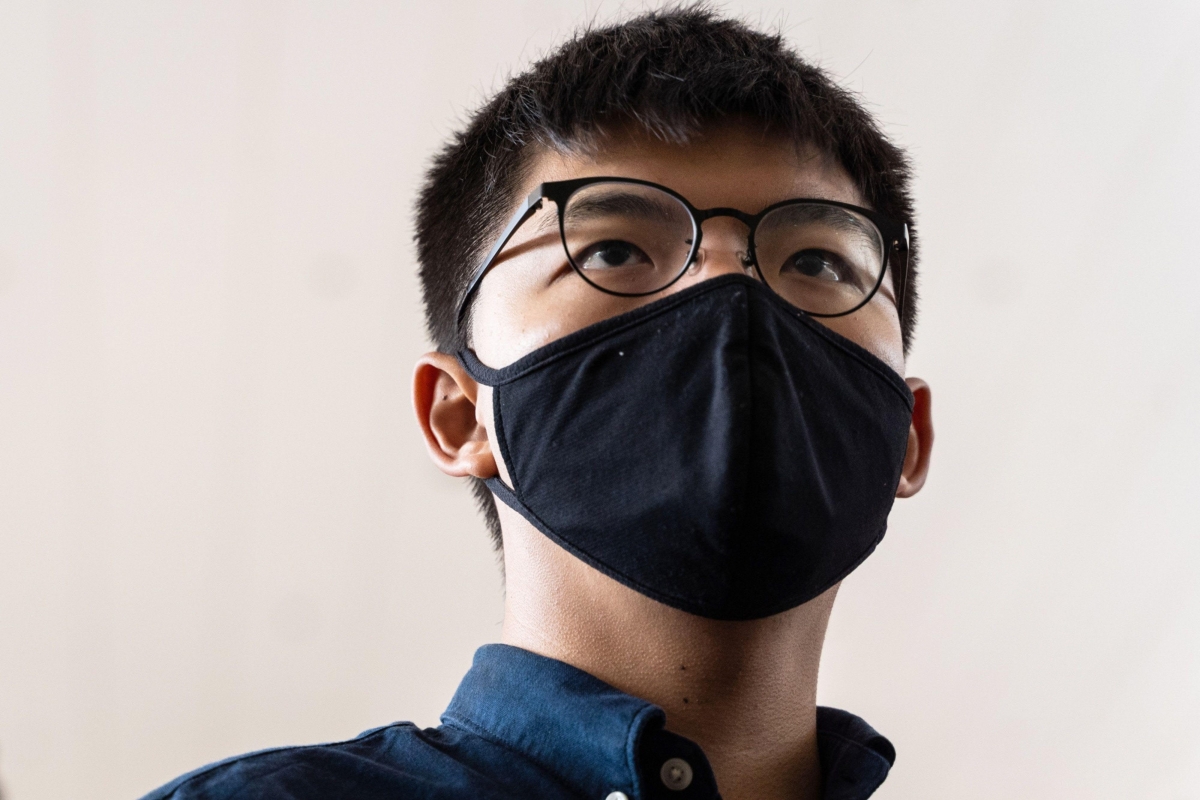
Pro-democracy activist Joshua Wong in Hong Kong. MUST CREDIT: Bloomberg photo by Chan Long Hei
Beijing is tightening control over the Asian financial center after a wave of historically large and sometimes violent democracy protests in 2019. The national security law carries sentences as long as life in prison depending on the severity of the offense, and has been criticized by lawyers, rights groups and international governments as a violation of Beijing’s promise to respect Hong Kong’s freedoms and “high degree of autonomy.”
The opposition figures detained Sunday are being prosecuted over their roles in helping organize a primary that drew more than 600,000 voters in July to choose candidates for Legislative Council elections. Authorities say the primary, as well as plans to force the resignation of Hong Kong Chief Executive Carrie Lam using a provision of the mini-constitution, were part of an illegal attempt to paralyze the city’s government.
The election was eventually postponed by a full year, with the government citing the coronavirus. Critics said the pro-China local administration hoped to avoid a repeat of an election defeat in local district council polls in late 2019.
The charge facing Wong, who testified before the U.S. Congress during the protests, was the first for him under the national security law. He is already serving a sentence of more than a year in prison handed down in December for a separate charge related to a protest in 2019.
Authorities didn’t charge American lawyer John Clancey, who was involved in the primary and was among those arrested in January. He told reporters after having his bail extended Sunday that he was asked to report to the police again in early May.
Former Legislative Council President Rita Fan told officials at the Shenzhen meeting that district councilors should be barred from the 1,200-person committee that selects the chief executive, according to the Standard newspaper. The 2019 victory for democracy advocates in 17 of 18 local district councils gave the opposition around 117 seats on that committee, giving them a better chance of blocking Beijing’s choice to lead the city.
“The central government is really worried about the elections,” said Dongshu Liu, a City University of Hong Kong assistant professor of Chinese politics, adding that the plan to force Lam’s resignation alarmed Beijing. “The central government was really shocked that they seemed to be likely to succeed.”
While almost 100 people have been arrested under the new law, prosecutors had previously only brought charges against 10 of them. The most prominent is media mogul Lai, who has been denied bail and is awaiting trial on charges that he colluded with foreign powers to impose sanctions or engage in hostile activities against Hong Kong or China.
“People just want to express their wish on how the pro-democracy camp can get more seats in the Legislative Council, but they’re being accused of ‘subversion,'” District Councilor Angus Wong said outside the court. “The future of Hong Kong is very gloomy.”

 Flags of the European Union (EU) fly outside the European Central Bank (ECB) headquarters in Frankfurt, Germany, on July 16, 2020. MUST CREDIT: Bloomberg photo by Alex Kraus.
 Oil pumping jacks operate in an oilfield near Almetyevsk, Tatarstan, Russia, on March 11, 2020. MUST CREDIT: Bloomberg photo by Andrey Rudakov.
 A customer pays Indian Rupee banknotes to a vendor at a sim card store in Mumbai on April 21, 2018. MUST CREDIT: Bloomberg photo by Dhiraj Singh.
 Chancellor of the Exchequer Rishi Sunak on March 3, 2020, in London. MUST CREDIT: Bloomberg photo by Hollie Adams.
 A 300-millimeter silicon wafer at the Globalfoundries semiconductor fabrication plant in Dresden, Germany, on Feb. 11, 2021. MUST CREDIT: Bloomberg photo by Liesa Johannssen-Koppitz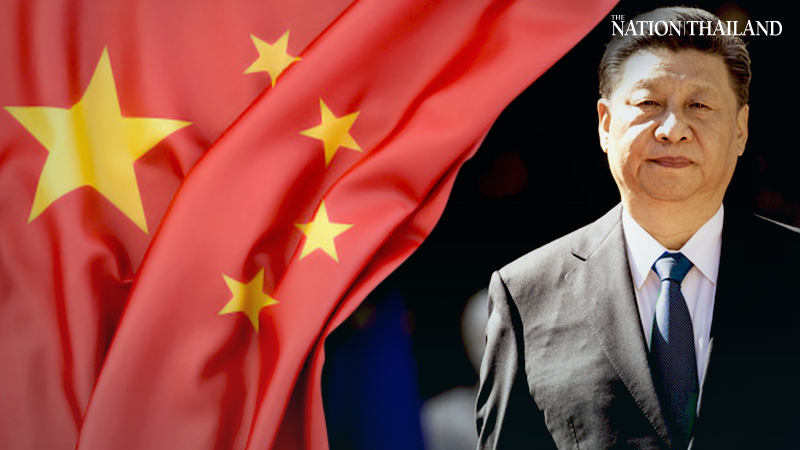
 Pro-democracy activist Benny Tai arrives at Ma On Shan police station in Hong Kong on Feb. 28, 2021. MUST CREDIT: Bloomberg photo by Lam Yik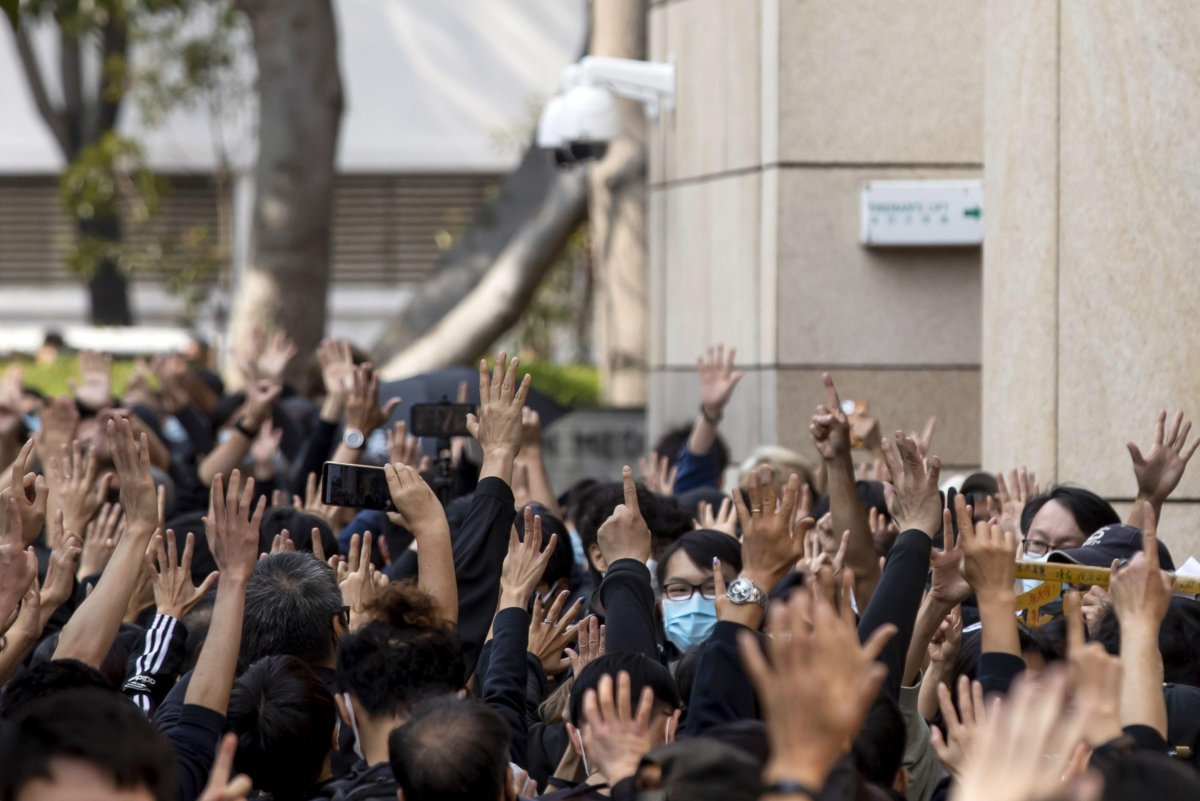
 SootinClaimon.Com