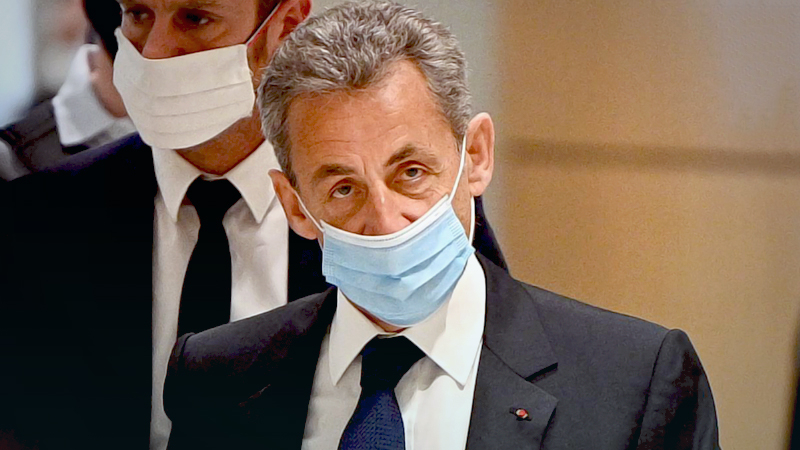
Former French president Nicolas Sarkozy was found guilty of corruption and influence peddling on Monday and sentenced to one year in prison, marking a historic defeat for the 66-year-old, who has remained popular among conservative voters even as his legal woes mount.
The verdict included a two-year suspended sentence, but Sarkozy’s attorney said her client would appeal, delaying the sentence from taking effect. Given that short prison sentences in France can typically be waived, it is unclear whether Sarkozy would have to spend any time in prison even if the appeal were to fail. He could also request to serve the sentence at home, subject to electronic monitoring.
The ruling followed years of parallel investigations against the former president, and some others are ongoing. Sarkozy, who was president from 2007 to 2012, will face another trial later this month over accusations that his party falsified accounts during his unsuccessful reelection bid in 2012.
The charges over which Sarkozy was sentenced Monday were centered on whether he was behind a deal with a magistrate to illegally receive information on an inquiry linked to him, using false names and unofficial phone lines.
According to the prosecution, Sarkozy and his then-attorney and longtime friend Thierry Herzog attempted to bribe the magistrate, Gilbert Azibert, by offering him a high-profile position in return for information. The incident occurred after Sarkozy had left office.
The inquiry related to claims that Sarkozy and others had accepted illegal contributions from business executive Liliane Bettencourt, the late heiress of French cosmetics giant L’Oréal, ahead of the 2007 presidential campaign. Sarkozy was later cleared of those illegal-funding charges.
Sarkozy’s attorneys also denied the accusations of corruption and influence peddling last year, arguing that as the magistrate did not receive the allegedly promised position, it proved the former president’s innocence.
Sarkozy said he “never committed the slightest act of corruption.”
The prosecution argued, however, that there were no doubts that the magistrate had conveyed details illegally. Their evidence was largely based on wiretapped conversations.
Azibert and Herzog also were found guilty on Monday and were given sentences similar to Sarkozy’s. Both have appealed, France’s public broadcaster reported.
Prosecutors had originally demanded a four-year sentence for Sarkozy, with a requirement that he serve at least two years. In justifying their request, they cited what they characterized as the damage Sarkozy inflicted on the French presidency.
In its ruling, the court agreed that Sarkozy had “used his status as former French president,” rendering his offenses more egregious.
Sarkozy attempted to run in the 2017 presidential election, but he did not succeed, partially because of his mounting legal woes.
He subsequently suggested that his career in politics had come to an end. But Sarkozy has maintained high approval ratings among French conservatives, prompting hope among some of his supporters that he might run in the presidential election next year. In a sign of Sarkozy’s continued influence in conservative French politics, he received some prominent backing on Monday.
“The severity of the sentence is absolutely disproportionate and reveals judicial harassment,” wrote Christian Jacob, president of the center-right Republican Party, which Sarkozy used to lead. Supporters also questioned why Sarkozy was subjected to wiretapping after he left office.
Investigators deemed those surveillance measures necessary amid mounting questions at the time over how Sarkozy funded his 2007 campaign. Sarkozy continues to face accusations that he received illegal payments from the regime of then-Libyan dictator Moammar Gadhafi ahead of the 2007 election.
Sarkozy is the second former French president in a decade to be sentenced. Jacques Chirac, Sarkozy’s predecessor and initial patron, was given a two-year suspended sentence in 2011 for handing nonexistent jobs to political allies during his time as Paris mayor.
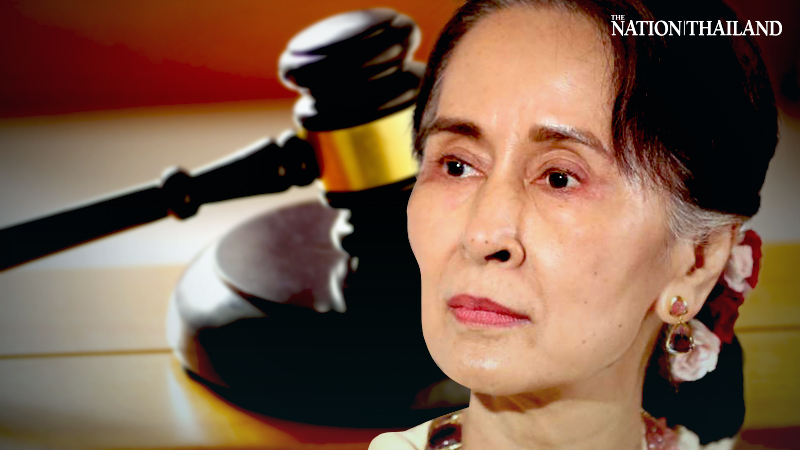
A Myanmar court on Monday brought additional charges against detained civilian leader Aung San Suu Kyi that could keep her behind bars for even longer, according to lawyers for her and her party.
The new charges came as Myanmar on Sunday saw its deadliest day of protests since the Feb. 1 coup. The United Nations said at least 18 protesters were killed in a stark escalation of violence to quell persistent demonstrations against military rule.
Suu Kyi, who is among more than 1,000 people detained since Feb. 1, already faces six years in prison on charges of illegally importing walkie-talkies and breaching the Natural Disaster Management Law. The charges added Monday include incitement under section 505(b) of the country’s penal code used by the authorities to criminalize speech “likely to cause fear or alarm in the public,” her lawyer Khin Maung Zaw said.
The court added another charge under the telecommunications law for owning equipment without the requisite licenses, Myanmar Now reported, citing lawyer Min Min Soe, who is defending Suu Kyi and other leaders of her National League for Democracy party. That charge could add a year to the ousted leader’s likely punishment.
Appearing via video link before a court in Naypyidaw, Suu Kyi appeared to be in good health, Khin Maung Zaw said, adding the new incitement charge was also applied to ousted President Win Myint and former Naypyidaw Council Chairman Myo Aung.
More than 30 others were wounded Sunday when soldiers and police fired live ammunition into crowds in six cities across Myanmar, UN Human Rights Office spokesperson Ravina Shamdasani said in a statement. Myanmar’s government said 12 people died.
The U.S., which has announced sanctions targeting Myanmar’s military leaders and called for a return to democracy, signaled that it plans to respond with further measures.
“We are preparing additional actions to impose further costs on those responsible for this latest outbreak of violence and the recent coup,” Jake Sullivan, President Joe Biden’s national security adviser, said in a statement. “We will have more to share in the coming days.”
The rising death toll may increase pressure on governments around the world to take more action against Myanmar’s generals, who refused to recognize November’s landslide election victory by Suu Kyi’s political party. A court in Myanmar’s capital, Naypyidaw, is set to hear cases against Suu Kyi and former President Win Myint later on Monday, Mizzima News reported.
“In shooting against unarmed citizens, the security forces have shown a blatant disregard for international law, and must be held to account,” said Josep Borrell, the EU’s high representative for foreign affairs. “Violence will not give legitimacy to the illegal overthrowing of the democratically elected government.”
Before last weekend, only three protesters had died among hundreds of thousands that have protested almost daily across the country, also known as Burma. Yet the country has become increasingly ungovernable as more people join the protest movement, leaving hospitals understaffed, containers stacking up at ports and bank ATMs running out of cash.
The Myanmar Police Force said that 571 protesters had been detained Sunday in 11 provinces after the UN Human Rights Office said more than 1,000 people had been “arbitrarily arrested” since the coup.
On Sunday night, Myanmar’s Foreign Ministry repeated that the military takeover was constitutional and said some foreign countries were “wrongly misinterpreting it as a coup and anti-dictatorship protests.” It added that the government was “ensuring minimal use of force by avoiding a violent crackdown.”
With the mass civil disobedience movement disrupting normal banking operations, the Central Bank of Myanmar began limiting cash withdrawals on Monday. Individuals will not be allowed to withdraw more than $1,406 (2 million kyat) from their bank accounts while businesses will be allowed to withdraw up to $14,186 (20 million kyat) a week, according to a directive signed by central bank Deputy Governor Than Than Swe.
The protests and work stoppages also took a toll on industrial activity, with the purchasing managers’ index for manufacturers plunging more than 20 points to a record low of 27.7 in February, IHS Markit said Monday. That’s well below the 50 level that divides between expansion and contraction territory.
The junta fired Myanmar’s UN envoy Kyaw Moe Tun on Saturday after he urged the international community a day earlier not to accept the military regime and instead recognize the results of the November general election.
Suu Kyi’s National League for Democracy plans to put together a parallel government that could engage with the international community, the Financial Times reported, citing a party official who is on the run.
Southeast Asian foreign ministers are arranging to meet this week to discuss the situation, Japan’s Kyodo news agency reported Saturday. It said most members of the 10-nation ASEAN group have expressed a willingness to join, and Myanmar has been asked to participate.
Five journalists were arrested on Saturday for reporting on anti-coup protests, according to Myanmar Journalists Network. One is reported to be a photojournalist with the Associated Press, the news agency said.
Myanmar’s violent crackdown is “outrageous and unacceptable, and must be immediately halted,” said Phil Robertson, deputy Asia director of New York-based Human Rights Watch. “Live ammunition should not be used to control or disperse protests and lethal force can only be used to protect life or prevent serious injury.”
By Syndication Washington Post, Bloomberg · Nick Wadhams
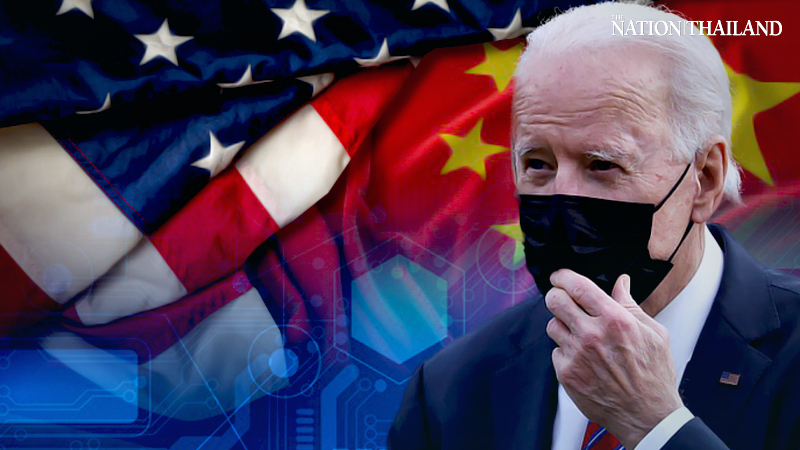
The Biden administration is moving to put semiconductors, artificial intelligence and next-generation networks at the heart of U.S. strategy toward Asia, attempting to rally what officials are calling “techno-democracies” to stand up to China and other “techno-autocracies.”
The new framing for the U.S. rivalry with China has been given added urgency by the sudden global shortage of microchips needed in products such as cars, mobile phones and refrigerators. The strategy would seek to rally an alliance of nations fighting for an edge in semiconductor fabrication and quantum computing, upending traditional arenas of competition such as missile stockpiles and troop numbers.
Current and former government officials, along with outside experts, say the administration’s plans in the technology sphere are a microcosm of its broader plans to take up a more alliance-oriented but still hostile approach to China after a more chaotic approach under President Donald Trump.
“There’s a newfound realization about the importance that semiconductors are playing in this geopolitical struggle because chips underlie every tech in the modern era,” said Lindsay Gorman, a fellow for emerging technologies at the German Marshall Fund of the U.S. “It’s an effort to double down on the technological comparative advantage that the U.S. and its democratic partners.”
It’s an approach partly based partly on denying China access to certain technology for as long as possible, looking to quash Chinese juggernauts like Huawei Technologies Co. and even taking a page from the Communist Party’s playbook by boosting government involvement in key industries when needed.
It comes as Chinese Communist Party leaders including President Xi Jinping are expected to lay out how they intend to make technology a centerpiece of future development at the National People’s Congress beginning later this week.
Several people familiar with the administration’s planning, and especially that of Kurt Campbell, the National Security Council’s Asia coordinator, say he foresees a broad approach that puts greater emphasis on a few key partners such as South Korea, Japan and Taiwan, while offering incentives to bring chip fabrication back to the U.S.
Chips figure in plans to bolster the Quad — a once-sputtering alliance of the U.S., Japan, Australia and India that got a boost of support during the Trump era — including by eventually bringing more technology production to South Asia.
The battle over microchips — and the focus they’re being given in the early days of the Biden administration — is being forced upon the new White House by necessity. A global shortage of chips, due in part to stockpiling by China and a surge in demand during the pandemic, has forced some American automakers to shutter plants and exposed weaknesses in U.S. supply chains, with their heavy dependence on a few manufacturers in Asia.
On Wednesday, President Joe Biden ordered a global supply chain review for microchips as well as large-capacity batteries, pharmaceuticals and critical minerals and strategic materials such as rare earths. Most U.S. chips come from Taiwan, which China still claims as its territory, and the U.S. gets almost all its rare earths from China. China quickly dismissed the pledge to find alternative supply sources as unrealistic.
Officials say it’s too early to detail what the U.S. strategy will look like. The idea of techno-democracies challenging techno-autocracies appeared in a Foreign Affairs magazine report late last year that called for “an overarching forum in which like-minded countries can come together to hammer out joint responses” to the challenge from China.
“We have to confront this challenge together — China’s abuse, China’s predatory practices, China’s export of tools it uses to further its brand of techno-authoritarianism,” State Department spokesman Ned Price said in a Feb. 22 briefing.
The approach is already getting a positive response from Congress, where lawmakers are proposing a number of bills aimed at bolstering U.S. technology, such as the Chips Act, which would offer incentives to bring chip manufacturing back home, and the Endless Frontier Act to invest more broadly in technological advancement.
“The president was very receptive, as was the vice president,” Sen. John Cornyn, R-Texas, said Wednesday after meeting with Biden at the White House. “We all understand this is important, not only to our economy, but to our national security, because these cutting-edge, high-end semiconductors — they operate on everything from the F-35 fifth-generation stealth fighter to our cellphones.”
Although many of the ideas in the emerging plan carry over from the Trump administration, its proponents say one of the differences is the effort to align disparate elements into a unified strategy. Under Trump, getting tough on China often clashed with his focus on securing a trade deal with Beijing, muddling the message.
Biden’s supporters say his strategy will include working more closely with other countries. And it’s looking to strengthen existing partnerships that were rarely utilized. Chief among them is the Quad and the belief that India may be newly willing to set itself against China given recent tensions between the world’s two most populous nations.
It’s also based on a sense that China has essentially forced the U.S. to start breaking off elements of business and technology relations in a pattern known as decoupling. China has essentially erected its own Internet infrastructure, barring many U.S. media outlets and social networks such as Twitter and Facebook, and has shown a willingness to use the size of its market and its economic might as a weapon to make other nations fall into line.
One irony of the state of U.S.-China relations is that for all the traditional hand-wringing in the U.S. about capitalism versus Communism, there’s increasing bipartisan support in Washington for a bigger government role in providing incentives and investments in companies.
“To compete, we’re going to have to change the way we play the game,” said Elizabeth Economy, a senior fellow at Stanford University’s Hoover Institution. “China’s not going to adapt to the rules of the road as we structured them so we have to adapt.”
Sorry, steak lovers: Australia’s running out of cows
InternationalMar 02. 2021A farmer corrals cattle at a farm in Gunnedah, New South Wales, Australia, on May 29, 2020. MUST CREDIT: Bloomberg photo by David Gray
By Syndication Washington Post, Bloomberg · Sybilla Gross
In what would be a blow to steak lovers the world over, Australian beef may slip off global menus if cattle producers Down Under can’t hasten the pace of a nationwide herd rebuild.
With herd sizes near the lowest since the early 1990s, the nation’s beef producers may lose their No. 2 exporter position behind Brazil simply because they don’t have the stock available to service a global market as demand picks up steam post-Covid-19.
The risks of that are growing as some farmers continue to send female cattle to the slaughterhouse instead of keeping them to expand herds. The latest official data show the ratio of female cattle processed as a proportion of total slaughter — an indicator for whether a herd is in restocking phase — at 48.2%, not enough to qualify for a technical rebuild, classified at 47% and under.
While there’s still time to get that ratio down, it needs to happen now as restocking is a years-long process from calf to slaughter and the industry faces a range of head winds, said Matt Dalgleish, manager of commodity market insights at Thomas Elder Markets. “We’ve got to get those numbers back up so that we don’t lose market share into the export markets,” he added.
Australia’s beef industry has seen some turbulent times after years of drought forced farmers, who were unable to support herds on parched pastures, to cull hoards of cattle. The resultant oversupply on the market caused Australian cattle prices to plummet in 2019 to half the levels seen today.
Ranchers are also facing a less certain future with the rise of alternative-protein demand as environmental and health concerns drive consumers to products like faux meat burgers or nuggets.
After rains replenished pastures last year and with the herd rebuild season underway, farmers held onto livestock, squeezing supplies and sending prices soaring to records. Those prices will probably remain at “exceptionally high levels” according to Rural Bank’s 2021 outlook.
Farmers have to contend between keeping their cattle for the rebuild, or sending them for slaughter to “cash in” now — a tempting offer for some looking to pay off large debts incurred during drought years for outsized feed grain purchases to keep the animals alive, Dalgleish said.
Prices for Australian cattle used to track South American countries, but drought conditions during 2014-15 tightened supply Down Under, which saw prices spike and never properly recover. Weaker Brazilian real and Argentine peso in recent years also gave those producers extra leverage.
With the Australian dollar gaining to almost 80 U.S. cents, the Aussie product is becoming out of reach for many importers. Prices have even overtaken the U.S., which traditionally holds the title for the world’s most expensive beef.
The high prices have also elicited a response from Indonesia, where strikes by local meat sellers over Australian beef costs prompted the government to warn that it will look to other suppliers, according to Australian media reports. Indonesia is Australia’s largest export market for cattle and beef offal.
Though Australia accounts for only 4% of global beef production, the country is one of the world’s largest shippers, with major markets in China, Japan and South Korea. Export volumes fell 15% last year as record prices hurt demand.
Australia’s position in those markets is increasingly at risk, compounded by free trade agreements that see higher tariffs on the nation’s shipments versus American beef, according to Dalgleish. “The trade situation is such that the U.S. product is being more favored,” he said.
For Australia’s cows that, unlike cattle in the U.S., mainly feed on grass instead of grains, climate change could add pressure to rebuild stock fast. With drought never far around the corner, coupled with higher frequency of extreme weather events, it’s crucial to bulk up herd sizes while pastures are green.
“Australia’s likely to be back in drought in a couple of years,” Dalgleish said. “It kind of doesn’t leave us a great deal of time to build up to those high twenties in millions of head numbers — 28, 29 million head. And then you’re kind of stuck again, depending on how prolonged the drought scenarios are looking. We could be back down at record herd levels, and low supply again.”
Erika Rose was shocked this month when she sat down to do her taxes and realized she owed $600 to the federal government. She’s been unemployment since April and has spent much of the winter stretching every penny to pay rent and to keep the lights on. On a recent trip to the grocery store, she only had $20 in her bank account.
“I was so upset. How do I owe over $600 in taxes?” said Rose, 31, who lives in Los Angeles. “I have never been so fearful in my life of how I’m going to pay my bills.”
Rose is among millions of unemployed workers facing surprise tax bills, ranging from several hundred to several thousand dollars, and many say they just can’t pay. For tax purposes, weekly unemployment payments count as income just like wages from a job. But few people realize the money they get from the government is actually taxable. Fewer than 40% of the 40 million unemployed workers in 2020 had taxes withheld from their payments, according to The Century Foundation, a left-leaning think tank.
For people who have been without a job for nearly a year, finding money to pay their tax bills is yet another financial burden coming at a fraught time. Advocates for the poor as well as some Democratic lawmakers are trying to get these tax bills waived entirely – or at least reduced.
“I don’t think we should be taxing unemployment insurance benefits, generally, but we really should not be taxing them during a terrible recession,” said Brian Galle, a professor at Georgetown Law.”The right thing to do is just zero out unemployment insurance income from last year.”
Among the unemployed, there was hope that Congress would eliminate taxes on unemployment income, but that provision did not make it into the latest $1.9 trillion bill Democrats are aiming to have on President Joe Biden’s desk by mid-March.
Unemployment insurance was created in 1935 during the Great Depression era as a safety net to help people out of work. For decades,it was not taxed, but in the late 1970s and early 1980s there was a push to make all forms of income taxable. All unemployment payments were subject to federal income tax by 1986. The thinking was that if a rich person lost their job and collected unemployment, they should still be taxed. Others argued that not taxing unemployment aid might discourage people from looking for work where their wages would be taxed.
“The basic theory is everyone should pay tax on it as income. Just because they are unemployed doesn’t change that,” said Pete Davis, who worked on tax reform in the 1970s and 80s in Congress.
Outside of a recession, Americans usuallyremain on unemployment for a few months, so the tax bills are modest. But during recessions, or large-scale natural disasters, it’s more common for people to be unemployed for a year or more, causing a much heftier tax bill. That’s why Congress has typically eliminated at least some of the tax bill for the unemployed during past downturns as a way to lessen the financial pain.
States handle taxation of unemployment benefits in very different ways. Nine states don’t have income taxes, so they don’t tax unemployment benefits. Another six states – Alabama, California, Montana, New Jersey, Pennsylvania, and Virginia – opted not to tax unemployment at the state level. And during the pandemic, Maryland and Delaware decided to temporarily not tax unemployment, according to Lucy Dadayan, a senior research associate at the Tax Policy Center.
Some argue that the unemployed should have done a better job saving up for their tax bill. When people fill out the application for unemployment aid, there is a box they can check to have taxes withheld, similar to what most people do with paychecks at a job.
But several jobless Americans told The Washington Post that they ended up with hefty tax bills even though they did check the box. Rose is one of them. When she lost her job in April at a company that processes debit and credit card transactions, she made sure to check the box to have taxes withheld. But she still ended up owing the federal government taxes.
It was the same for Taryn Johnston. Since being laid off from her medical aesthetician job at a plastic surgery practice when the pandemic escalated, she had the maximum withheld every week from her unemployment checks for taxes. Despite trying to do the right thing, she still ended up with owing $1,500 when she sat down recently to fill out her federal and state tax forms for 2020.
“This whole situation is crazy,” said Johnston, 41, who lives in Brooklyn. “My savings is gone. Most of my 401k is gone. I’m $6,000 in credit card debt and behind on my rent and now I owe the government $1,500 in taxes on my unemployment.”
Johnston says she’s trying to save up money to pay the tax bill by the April 15 deadline. The plastic surgery practice where she works has started giving her more hours, but she’s living on half the money she made pre-pandemic. Her best hope is for Congress to pass the $1,400 stimulus checks – money that she would receive and then turn right around and send to the Internal Revenue Service.
“When I get this stimulus check that’s coming, it’s going to end up going to my taxes,” Johnston said.
Among other ideas in Congress,Sen. Dick Durbin, D-Ill., and Rep. Cindy Axne, D-Iowa, have introduced separate legislation that would eliminate taxes on the first $10,200 of unemployment benefits received in 2020. This proposal is similar to what Congress did during the Great Recession when a portion of unemployment income was not taxed. Sofar, the bill has not advanced.
Opponents of the Durbin bill argue that it is a costly provision – estimates are around $30 billion – and the money is better spent elsewhere. They say it would be wiser to extend unemployment insurance benefits longer to continue helping those deeply in need. Lowering taxes now on 2020 unemployment aid would help a lot of people who have already returned to work, critics say.
“The important policy question is: Who is falling through the cracks?” said Jared Walczak, a vice president at the right-leaning Tax Foundation. “The priority should be making sure there’s uninterrupted benefits for those in need.”
Time is running out for Congress to make tax changes to help with the tax filling season underway since Feb. 12.
Another option discussed in economic policy circles and advocated by the law professorGalle and Elizabeth Pancotti of Employ America, would be for Biden’s Treasury Department to simply waive taxes on most of the unemployment payments in 2020. Galle and Pancotti argue Treasury has done this before during natural disasters, and the pandemic is a large-scale disaster. However, two senior Treasury officials who were not authorized to speak publicly said that idea is not on the table.
Elaine Maag, a researcher at the Tax Policy Center, says a more practical solution at this point is probably for the IRS to grant people who were on unemployment last year more time to pay their taxes.
“I’m very sympathetic to someone showing up having a large tax bill they weren’t expecting,” said Maag. “I think they should get a generous payment plan and not have anything due for many months or until they are back at work.”
Longer term, Maag said the ideal solution would be for the unemployed to fill out W-4 withholding tax forms, the same as most workers hand into their employers whenthey start a new job. Most states withhold a flat 10 percent for federal taxes on unemployment compensation, which doesn’t take into account the complexity of many people’s tax situations. This is the reason so many owe more now, even if they did check the box for withholding.
Proponents of forgiving taxes on unemployment point out that the pandemic recession was the most unequal in modern U.S. history, decimating low-wage workers. These Americans are the least likely to have any savings or be able to handle a surprise bill. Nearly half of adults receiving unemployment between March and November lived in households with incomes below $50,000, according to a Century Foundation analysis of U.S. Census data.
They also point out that the pandemic was an especially chaotic situation, with such a flood of peopleapplying for unemployment last spring that many state offices were overwhelmed and unable to give people guidance on withholding.
Take what happened to Kate Shine in Brooklyn. The state of New York told her there was a problem with her unemployment record in the state’s computer system so the only way she couldget unemployment was to call each week to file her claim. Shine, 34, did that, but she says there wasn’t an option on the phone system to withhold taxes.
Now Shine owes several thousand dollars in taxes, a huge bill she’s struggling to figure out how to pay, as she has still not been able to find another copywriter job.
“Lots of us feel surprised we owe thousands of dollars,” Shine said. “It just sucks. And it feels so unfair giving everything that’s been happening in this pandemic.”
‘Saturday Night Live’ dreams up a Fauci-hosted game show where contestants vie for the vaccine
InternationalMar 01. 2021Kate McKinnon portrays Dr. Anthony Fauci on “Saturday Night Live.” MUST CREDIT: NBC
By The Washington Post · Travis M. Andrews
When “Saturday Night Live” announced it would return in 2021 with five new episodes in a row, it was difficult not to wonder if the show would struggle to find material. For the past four years, after all, nearly every episode opened with a sketch centered on Donald Trump and included a plethora of celebrity guests (including the ever-present Alec Baldwin, who portrayed the former president).
How would it pivot?
Not, it seems, by taking aim at the current administration. Despite debuting Alex Moffat as the newest in a long string of Joe Biden impersonators in December 2020, he’s spent 2021 primarily portraying other characters. (The politics of “SNL” are no secret, but this omission is pretty glaring.)
Instead, “SNL” has used the cold open – often a good indicator of the show’s priorities – to get creative again, each week mining new subjects for comedy, from Rep. Marjorie Taylor-Greene, R.-Ga., to Britney Spears to the Super Bowl.
(Well, mostly new subjects. Sen. Ted Cruz, R-Texas, keeps coming up. Over and over and over.)
On Saturday, the cold open assumed one of the “SNL’s” more reliable formats: the fake talk show. In this instance, Dr. Anthony Fauci (Kate McKinnon) hosts a show titled “So You Think You Can Get the Vaccine,” in which contestants present arguments for why they should get the coronavirus vaccine. A trio of Democratic governors – California’s Gavin Newsom (Moffat), New York’s Andrew Cuomo (Pete Davidson) and Michigan’s Gretchen Whitmer (Cecily Strong) – serve as the judges.
“Getting the vaccine shouldn’t be a competition, but Americans will only want to get it if someone else can’t,” says McKinnon’s Fauci, who refers to himself as “America’s voice of reason and celebrity hall pass, for some reason.”
Of course, not everyone can win a vaccine. Those who don’t, “SNL’s” Fauci says, will go home with a Pfizer Visor, “a visor with the world Pfizer on it.”
The architecture of the sketch allows for a series of brief appearances from wacky characters.
There’s the Michigan-based Only Fans IT worker Jane F. (Heidi Gardner), who has “a really bad attitude,” is “allergic to dust,” has herpes and is immediately mortified that she announced all this on television after learning those don’t count as pre-existing conditions. The pretend granny (Ego Nwodim) who wants the vaccine so she can spend some quality time with the recently single man she’s been talking up for a decade. The pregnant woman (Melissa Villaseñor) who wants the vaccine, only to be told by the governors that they don’t know if it’s safe for her. And the fake smoker (Bowen Yang) who acts like he loves cigarettes because New Jersey gives early priority to smokers.
Oh, yeah, and Ted Cruz (Aidy Bryant), yet again, making jokes about his arms being tired after flying in from Cancún. “Can you really blame a brother for wanting to get some sun?” Bryant’s Cruz asks, before screaming “FREEEEEEDOM!” and dropping the mic.
The winner of “So You Think You Can Get the Vaccine” is Seymour Foreman (Mikey Day), an 85-year-old retired Army doctor who is “now just the world’s proudest granddad.” He’s not likely to actually receive the vaccine, though, as he only uses his computer for Spider Solitaire and doesn’t know how to book an appointment.
Anyway, as luck would have it, “SNL’s” Fauci announces, a nearby CVS has lost power and its store of vaccines are going bad – so it’s first come, first served.
Aside from the tired Cruz bit, Saturday’s cold open was arguably the strongest of 2021. If nothing else, it offered an inventive skewering of a real issue Americans are currently facing – particularly the joke about Day’s Foreman not knowing how to book an appointment and needing to ask someone in the younger generation for help. (He wonders if the mailman might help, before Davidson’s Cuomo asks if the man has “three straight days to help you click ‘refresh.'” If he doesn’t, Cuomo says, and “you do feel sick, make sure your leave the nursing home and get to the hospital. Wink.”)
After four years fixating on the Trump administration, which pleased the former president’s critics but didn’t make for interesting comedy, it’s refreshing to see the show’s writers getting creative – even if there is a curious lack of Biden jokes.
TORONTO – Lawyers for Huawei executive Meng Wanzhou will return to court Monday to argue against her extradition to the United States on fraud charges. But the focus will be on former president Donald Trump.
The lawyers are expected to argue that Trump has so “poisoned” the hearings that they can “no longer be reasonably regarded as fair” and should be halted.
The claim is one of four pillars of the abuse-of-process argument that Meng will mount in hearings before British Columbia Supreme Court Associate Chief Justice Heather Holmes. The hearings are expected to stretch into May and be closely watched in Beijing, Washington and Ottawa.
Canada arrested Meng in Vancouver in 2018 at the behest of U.S. officials. The U.S. Department of Justice says she misled banks about Huawei’s relationship with a subsidiary, Skycom, effectively tricking them into violating U.S. sanctions against Iran.
Meng, 49, the daughter of Huawei founder Ren Zhengfei, denies wrongdoing. Her arrest has landed Canada squarely in the middle of a geopolitical standoff between China and the United States.
Days after Meng’s arrest, China detained two Canadians, former diplomat Michael Kovrig and businessman Michael Spavor, apparently in retaliation. It later banned imports of some Canadian crops and put several Canadians on death row.
Meng’s arguments center on what her legal team describes in court filings as “shocking and corrosive” statements made by Trump and other officials, which attorneys say reduced her to “an economic asset” and “risk undermining the integrity . . . and fairness” of the proceedings.
Among them are comments Trump made to Reuters the week after Meng’s arrest in which he said he would “certainly intervene” in her case if he thought it could serve national security interests or help broker a trade deal with China.
“The President, as chief executive of the requesting state, has made repeated threats to intervene in the applicant’s case in order to leverage her prosecution for political purposes,” Meng’s lawyers wrote. “This conduct is deeply offensive to the rule of law and the integrity of the judicial process.”
They say it was “all the more intimidating” because Trump had “intervened in, or actively ‘weighed in’ on, criminal cases for personal or political reasons,” and once declared himself – incorrectly – to be the country’s “chief law enforcement officer.”
They point to Trump’s commutation of the sentence of confidant Roger Stone, whom a jury found guilty of witness tampering, lying to Congress and obstructing justice, and his pardon of his former national security adviser Michael Flynn, who pleaded guilty to lying to the FBI.
Meng’s lawyers also cite comments by former secretary of state Mike Pompeo. Asked by Fox News about Trump’s statement to Reuters, Pompeo said “any time there is a law enforcement engagement, we need to make sure we take foreign policy considerations into effect.”
And they note the words of Canadian Prime Minister Justin Trudeau, who in December 2019 said he’d asked the United States not to “sign a final and complete [trade] agreement with China that does not settle the question of Meng Wanzhou and the two Canadians.”
“The clear implication of these comments is that the Prime Minister has communicated to the requesting state that he supports its use of the applicant’s case as a bargaining chip in trade negotiations,” the lawyers wrote.
Lawyers for Canada’s attorney general, who represent U.S. interests in the case, have dismissed those arguments as moot.
“The facts on which it is based – statements by a President no longer in office, about a possible intervention in a case that never occurred, purportedly to achieve a trade deal that has long since been successfully negotiated – have no past, present or prospective impact on these proceedings,” they wrote in legal filings.
They say Trump’s statements were inconsistent with those of other U.S. officials, and accuse the defense of seeking to “compensate for its weakness through hyperbolic characterization of the supposed impact of these statements.”
Meng’s other arguments include claims her rights were breached during her questioning and arrest, that the U.S. Justice Department misled Canada about the record of the case against her and that the case contravenes customary international law.
Last year, Meng’s lawyers questioned some of the border agents and law enforcement officials involved in her arrest. One border agent said he inappropriately shared the codes to her devices with the Royal Canadian Mounted Police. He said it was a “heart-wrenching” mistake, and unintentional.
Meng’s arrest has strained ties between Canada and China.
Beijing indicted Kovrig and Spavor last year on vague espionage charges for which it has provided no evidence. Known here as the Two Michaels, they have been barred from seeing their families; Canada considers their detentions “arbitrary.”
Meng is out on $8 million bail under partial house arrest at the larger of her two Vancouver mansions, where she receives private massages and art lessons.
China has cast Meng’s arrest as a U.S.-backed plot to stunt the country’s rise. It has denied a link between her arrest and the detention of Kovrig and Spavor, but a Foreign Ministry spokesman said last year that her release could “open up space for resolution of the situation of the two Canadians.”
Trudeau has taken heat from all sides. Several prominent Canadians, including former foreign ministers, have urged him to release Meng in the hope that it might spur China to free the Canadians. Opposition lawmakers, meanwhile, have pressed him to take a harder stand against Beijing.
Canada this month rallied 58 other countries, including the United States, to sign a nonbinding declaration against the arbitrary detention of foreign nationals in state-to-state relations. The declaration did not single out China.The minister “would need to decide if it remains in Canada’s national interest to order the surrender of Meng, notwithstanding the court’s order of committal,” Bolton said. “In this case, so fraught with political overtones and undertones, one doesn’t know what the end result would be.”
The Washington Post reported last year that the U.S. Department of Justice was in talks with Meng to resolve her case. Alykhan Velshi, vice president of corporate affairs for Huawei Canada, declined to comment.
“We have confidence in the courts here to reach the same conclusion we have, which is that the legal process was repeatedly abused by those seeking to extradite Meng Wanzhou to the U.S.,” Velshi said. “The charges are without merit, the allegations are baseless and the arrest itself was a master class in how to violate a person’s rights.”
Most extradition requests from the United States are granted, but any decision probably will be appealed. Michael Bolton, a Vancouver-based criminal lawyer, said the test for proving an abuse of process is “pretty strict.”
If Holmes rules that there’s enough evidence to commit Meng for extradition, the ultimate decision on “surrender” would fall to Canada’s minister of justice.
WASHINGTON – As prominent economists, Republican lawmakers and some market analysts raise alarm bells about the risks of overspending and overstimulating the economy, the Biden administration has found a surprising ally: the Federal Reserve.
The House passed President Joe Biden’s $1.9 trillion coronavirus relief bill early Saturday morning, and the Senate is expected to follow suit shortly. The legislation would pump money into an economy that could blast off as the pandemic settles down.
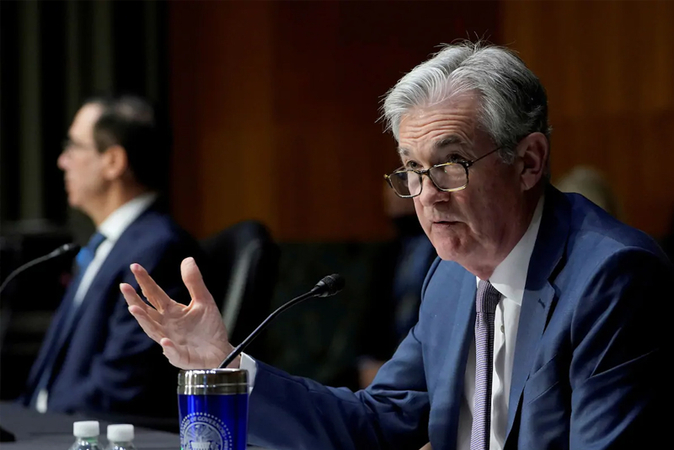
Federal Reserve Chair Jerome Powell is waving off concerns about an over-torqued economy producing long-feared inflation, saying the job market has a long way to heal before such fears are justified. In recent weeks, the position has been repeatedly embraced and cited by top Biden officials who make a similar argument when they say Congress needs to “go big” to ensure an economic revival.
As a result, the Fed and the White House appear closely aligned on policy – which can be a risky place for the central bank. With Powell at the Fed, and his predecessor Janet Yellen serving as treasury secretary, neither power center regards the potential dangers of overspending as a top concern.
If this view is right, the economy could be in for Goldilocks period of strong growth, low unemployment and rising wages. But critics argue that if the Fed and the White House turn out to be wrong, it could lead to a cycle of rising prices, higher interest rates and a national debt that is harder to manage.
Indeed,bond yields and interest rates jumped last week as markets assessed that it is likelier that the economy will be far stronger in coming months.
“They all think alike,” said Douglas Holtz-Eakin, former head of the Congressional Budget Office and now the president of the American Action Forum, a center-right think tank, of the Fed and the White House. “They’re just working off the same playbook.”
The situation is tricky ground for the Fed, which has spent decades professing its independence from politics and as a guardian against inflation. Former Fed chair Paul Volcker famously acted to stem spiraling inflation in the late 1970s and early 1980s, causing a recession but making clear that the central bank would always act to keep prices from rising too fast. That has stood as a bedrock of economic policy for nearly 40 years.
In 2019, Powell stood firm against meddling by President Donald Trump, who attacked him routinely for not doing more to stimulate the economy, labeling him an “enemy.” No one is accusing the current White House of exerting similar pressure. But Powell appears cognizant that he must tread carefully in what he says about stimulus, given Democrats’ willingness to cite his arguments.
Powell, for example, has staunchly refused to weigh in on the particulars of Biden’s stimulus package and has been quieter about the need for stimulus more generally.That’s a notable shift from 2020, when he pushed hard for more fiscal aid and it was unclear whether a Republican Congress or Trump White House would pass another bill.
Still, in recent remarks, Powell has repeatedly laid the economic groundwork for more spending, making clear he doesn’t see big risks to additional action. It’s possible that there could be”some upward pressure on prices,” Powell said this month, but his “expectation is that will be neither large nor sustained.”
“Inflation dynamics do change over time, but they don’t change on a dime, and so we don’t really see how a burst of fiscal support or spending, that doesn’t last for many years would actually change those inflation dynamics,” Powell said last week before the Senate Banking Committee.
Over two days of hearings on Capitol Hill last week, Powell turned down questions from Republican and Democrats about whether the federal minimum wage should be raised to $15 an hour, or what the central bank thinks about affordable housing, broadband access, unemployment insurance or the total price tag of Biden’s package.
“Let me say, as I must, that this is a classic issue the Fed never takes a position on. And I’m not going to take a position on here today,” Powell said in response to a question from Sen. Tim Scott, R-S.C., on whether Democrats’ push to raise the minimum wage would hurt the economy.
Powell’s remarks about the room for additional stimulus has been fodder for Democrats.
For example, after Powell told lawmakers last week that there is a long way to go on the recovery, Biden economic adviser Jared Bernstein tweeted Powell’s remarks and added: “The Rescue Plan gets us there.” Bernstein noted the bill’s proposed funding for vaccinations, state and local governments, business relief, a $15 minimum wage and schools.
In another instance, Powell said a more accurate measure of the unemployment rate is close to 10 percent, not the official rate of 6.3 percent. White House Chief of Staff Ron Klain pointed to the comments and tweeted: “The danger is not in doing too much. The danger is in doing too little.”
At a news conference this month, House Speaker Nancy Pelosi, D-Calif., said Biden’s “legislation is necessary, but don’t take my word for it.” She then mentioned Powell’s 10 percent figure, his lack of concern about inflation and his reminders that monetary policy can’t finish the recovery alone.
When asked recently about the risk of inflation, Yellen said the Fed could step in, if need be.
“Inflation has been very low for over a decade. And, you know, it’s a risk, but it’s a risk that the Federal Reserve and others have tools to address,” she told CNBC this month.
“(Powell) knows as well as anybody that his former college Janet Yellen is pushing for this massive 1.9 trillion spending plan,” said Tim Duy, an economist at SGH Macro Advisors and the University of Oregon. “So I find it hard to see this as anything but a concerted effort between the two agencies, between monetary and fiscal policy, to send the economy into the stratosphere.”
At the same time, the Fed and Treasury Department have a long history of close collaboration, particularly in a crisis. Powell worked well with Trump’s treasury secretary, Steven Mnuchin, despite a public clash late last year over emergency lending programs propped up through the Cares Act.
If anything, many economists say Yellen would be the last person to cross boundaries on Fed independence after her lengthy career at the Fed.
“Janet Yellen and Jay Powell will have a relationship of deep mutual respect and will fundamentally agree about the objectives their two organizations are charged with pursuing,” David Wilcox, former director of Division of Research and Statistics at the Fed, said. “But respect for one another and agreement about objectives will not preclude their having vigorous conversations about all the complex questions involved in any important policy decision.”
The stimulus debate is just one example of a broader tug-of-war between Republicans and Democrats over what they want the Fed to be. As part of December stimulus negotiations, Sen. Patrick Toomey, R-Pa., led a charge to limit the Fed’s emergency lending authority, fearful of political influence.
“My concern was there would be tremendous political pressure to misuse these,” Toomey said at the time. Toomey has also expressed concerns about the Fed’s more public engagement on tackling issues like racial equity and climate change.
Now the inflation question has added new fraught dimension to stimulus talks.
A number of economists and lawmakers say Biden’s bill goes overboard and could actually overwhelm the economy. Harvard professor Larry Summers, who was President Bill Clinton’s treasury secretary and nearly picked by President Barack Obama to lead the Fed, raised alarms this month when he wrote that a big stimulus package could “set off inflationary pressures of a kind we have not seen in a generation.”
His concerns have been echoed by Olivier Blanchard, a former top economist at the International Monetary Fund, who has written that the “increase in inflation could be much stronger” than many economists expect.
Some Republicans agree. In a hearing this month, Toomey told Powell that there is “a real danger that we have overheating in places that lead to unwanted inflation, and I think the data is increasingly pointing in that direction.”
“The last thing we need is a massive multitrillion-dollar universal spending bill, and we should recognize that all of this spending comes at a cost,” Toomey said.
Skeptics such as Summers cite recent research that suggests $1.9 trillion in new federal spending this year would more that close the gap between where the economy is running and what its potential could be. Going far above that could lead to inflation, a problem the country hasn’t seriously experienced since the 1980s.
Heavy inflation, in turn, could force the Fed to raise interest rates, which would crimp economic growth and also raise the cost of servicing the growing national debt.
But the concern is far from universal among economists, including Yellen and Powell, whose shared view is shaped at least in part by changing perspectives at the central bank.
In the years that followed the Great Recession, the unemployment rate continued to fall without triggering a rise in inflation. That challenged the Fed’s traditional understanding of the trade-off between inflation and maximum employment.
In August, the Fed unveiled a new framework that essentially said it wouldn’t raise interest rates to respond to low unemployment. In turn, the Fed will let the economy run hotter for longer and even tolerate temporary inflation above its 2 percent annual target.
“This change may appear subtle, but it reflects our view that a robust job market can be sustained without causing an outbreak of inflation,” Powell said at the time.
The White House and Powell are banking on the idea that any rise in prices this year would be limited to certain pockets of the economy and wouldn’t translate into persistent, widespread inflation or asset bubbles. They also emphasized the 10 million Americans whose jobs have still not returned, as well as the pressing need to get the pandemic under control.
“I have spent many years studying inflation and worrying about inflation,” Yellen told CNN this month. “But we face a huge economic challenge here and tremendous suffering in the country. We have got to address that. That’s the biggest risk.”
Adam Posen, president of the Peterson Institute for International Economics, said much of the inflation debate depends on how much economists are “carrying the scars of the 1970s and 1980s with you when you think about monetary policy.” The Fed’s thinking, Posen said, has been shaped by years of looking closely at changes in the actual economy that did little to set off inflation.
“In policy, there’s always a thousand reasons why there’s a policy shift,” Posen said. “This from Powell and the Fed should not be seen as some political caving or some momentary whim. This is the cumulation of a lot of evidence, and evidence not just in the academic sense, but of what we’ve lived through for the last 25 years, here and in a number of countries.”
Still, the Fed’s model could soon be tested to an extraordinary degree.
If Powell is wrong, “the Fed could quickly wake up one day and come to feel they’re behind the curve,” said Michael Strain of the American Enterprise Institute, a right-leaning think tank. Strain says the likelier scenario is that inflation grows to levels the Fed is comfortable with, but then spikes every few months until the upward creep is cause for concern.
Strain said there isn’t an inherent problem with the Biden administration and Fed agreeing on policy. The risk Strain sees is if they are agreeing – “and not appropriately balancing all the risks in this situation. And so that’s what I think we have there.”
“Then the Fed has a huge communications problem because they’ve signaled so much comfort with inflation and with the economy’s capacity to absorb the fiscal stimulus,” he added.
Still, Joe Brusuelas, chief economist at RSM, shot down arguments around “group think.” Brusuelas said the Fed and Treasury is full of economists with a range of opinions and rigorous research. He noted that Powell is a Republican made chair under Trump, while Yellen is a Democrat in Biden’s White House.
“Anybody who has read Powell’s speeches, or Yellen’s speeches, or Yellen’s academic work will tell you they do not share the same thoughts on all topics,” Brusuelas said, “even if right now they have the same broad analytical framework about the way policy should proceed.”
By The Washington Post · Shibani Mahtani, Timothy McLaughlin, Theodora Yu
HONG KONG – Some sat down for one last long meal with their partners. Another went to a tattoo artist to ink a Buddhist mantra on his forearm. One purchased new pink-rimmed glasses to replace her contact lenses, dropped off her two cats to a friend, and swapped sneakers for wool slip-on shoes.
Then, on Sunday afternoon, the Hong Kong pro-democracy activists fanned out to police stations across the territory, where more than 40 of them were officially charged with “conspiracy to commit subversion” under the national security law, according to police. They were detained immediately, will be held overnight for a court session on Monday, and face life in prison if found guilty.
The charging of such a large group represents the harshest and widest use of Beijing’s national security law in Hong Kong to date, dramatically increasing the number of people taken under the draconian legislation. Friends and family fear they will be denied bail and instead remain in detention before trial, like the five previously detained under the law – a significant departure from Hong Kong’s common law system.
The charges now mean that every prominent, and even moderate, opposition voice in Hong Kong is either now in jail or in exile, crushing the city’s democratic aspirations as Beijing tightens its grips around the city’s core institutions.
“None of us knew the situation would become like this today,” said Tiffany Yuen in an interview before stepping into the police station in the district she represents as an elected local official. Holding back tears behind her new pink glasses, the 27 year-old said that she had no regrets.
“We cannot judge whether our choices were right or wrong based on the consequences now,” Yuen said. “This was our responsibility, which as a Hong Konger, you want to bear in that moment.”
Those charged on Sunday were among more than 50 Hong Kong residents arrested in January under the security law, accused of subversion for holding a primary vote last July ahead of legislative elections. Those legislative elections were ultimately postponed, and some of them were barred from running in them anyway, demonstrating how Beijing is using the full force of laws available to eliminate dissent and political opposition in the city.
Last week, the Hong Kong government, following a pronouncement from Beijing, further tightened laws to ensure only “patriots” run for office – defined as those loyal to the Communist Party.
At the time, those arrested were detained, questioned and made to turn over their phones and passports, but were released. The charges on Sunday intensifies the persecution of the Hong Kong’s activists, who Beijing see as responsible for whipping up anti-government sentiment that led to mass protests in 2019, though the movement was largely leaderless.
The detentions also demonstrate that the law is not just a deterrent but an active tool to be used against any opposition. The national security law, drafted entirely by Beijing and passed without any consultation in Hong Kong, criminalizes broadly worded crimes like “secession,” “subversion,” “terrorism” and “collusion with foreign forces.” The law has transformed Hong Kong and its institutions, including schools, the media, the legislature and the courts, chipping away at the territory’s promised autonomy that was meant to be preserved until 2047.
Those charged include Benny Tai, who helped organize the unofficial primary. Tai, a legal scholar and activist who launched protests in 2014 that spiraled into a 79-day occupation of city streets, said that the primary represented a new form of civil disobedience, and hoped the democratic camp would be able to win a majority in the legislature.
The primary, which was held just days after Beijing enacted the new security law, has emerged as an early test of how far the law would go to not only curtail protests – which had fizzled out in the course of the pandemic – but also neutralize any political opposition. Far exceeding expectations, over 600,000 people participated, choosing candidates who were more radical and against any cooperation with Beijing over the more moderate stalwarts of the pro-democracy camp. Those who emerged as winners, including Yuen, Lester Shum, Owen Chow and former legislator Eddie Chu, were among those charged on Sunday.
Others charged include a former journalist, former lawmakers and a nurse who led a medical workers strike in the early days of the pandemic here, pushing for a full border closure with China. Prominent activist Joshua Wong, now serving a jail sentence for a more minor infraction, was also charged. John Clancey, an American priest-turned-lawyer who was arrested as part of the group in January, was not charged, along with a few others.
Chow, who just turned 24, born during the year of Hong Kong’s handover, had a Buddhist mantra tattooed on his arm after learning he would be summoned to the police station on Sunday. He hoped, he said, that it would give him strength in detention.
“Whether we are in the streets, in prison or overseas, hope will always be needed for us to keep fighting this endless battle,” Chow said in brief comments outside the police station. “Good luck to all of you out there.”
Around half a dozen supporters, some crying, hugged the former nursing student before he stepped through the station’s sliding glass doors. There, like the 46 others, officers read out his charge to him, before taking him into detention.
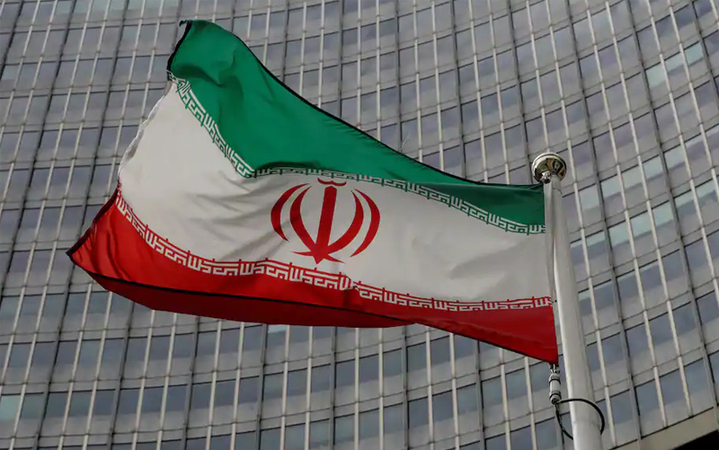
WASHINGTON – Iran has rejected a preliminary meeting with the United States and the other signatories to the Iran nuclear deal, according to Iranian and Western officials.
Because of “recent positions and actions of the U.S. and three European countries,” Iran “does not deem the time suitable for holding” the proposed meeting, Iranian Foreign Ministry spokesman Saeed Khatibzadeh said in a statement Sunday.
Western officials, however, said that Iran’s private response late last week to the invitation, extended through the European Union, was more “nuanced” than an outright refusal, and that it sought assurances that the talks would be limited to the nuclear deal called the Joint Comprehensive Plan of Action, or JCPOA, it signed in 2015 with the United States, Britain, France, Germany, Russia and China.
“The subtext of the answer is, ‘We’re going to talk if it’s really about the JCPOA, but if you’re going to make it a bigger issue, then we’ll have to negotiate’ ” the terms, said an official, one of several from the countries involved who spoke on the condition of anonymity to discuss the sensitive diplomacy.
This official and others also emphasized that the Iranian response comes in the context of a meeting Monday of the International Atomic Energy Agency, whose board of governors will receive and make public statements about a quarterly report on Iran’s lack of compliance with the nuclear deal.
Iran’s response to the E.U. invitation, first reported by The Wall Street Journal, is “all part of the drama for this particular event,” the official said.
The Biden administration said 10 days ago that it would accept the E.U. invitation “to discuss a diplomatic way forward on Iran’s nuclear program.” The talks would mark the first direct meeting between U.S. and Iranian officials since the Trump administration withdrew from the deal in 2018.
President Joe Biden has said he wants to rejoin the agreement, but that Iran must first return to compliance with its terms, and also agree to negotiations over its ballistic missile program and regional aggression.
Iran has insisted that it would only discuss the nuclear agreement, and that it would return to compliance after the United States takes the first step of lifting Trump-imposed sanctions that have hampered its economy. Administration officials have been holding discussions internally and with allies about partial steps that could be taken to ease U.S. sanctions in return for measures by Iran.
The E.U.-hosted talks were meant to provide a way for both sides to get to the table without first acquiescing to the other’s conditions.
Iran’s Foreign Ministry statement, reported by the official IRNA news agency, said “there is still no change in the position and actions of the United States, and Biden has not only not abandoned the defeated [Trump] policy of maximum pressure, but has not even announced his commitment to executing his duties in JCPOA” and its associated United Nations resolution.
Implementation of the original deal, which lifted all nuclear-related sanctions, “is not a matter of give and take,” Khatibzadeh said. “This act neither needs negotiations nor a resolution in the [IAEA] Board of Governors.”
Biden’s determination to reenter the nuclear deal has faced a number of challenges. After President Donald Trump’s withdrawal and imposition of severe sanctions against Iran’s oil exports, Iran eventually began breaching the terms of the agreement. In addition to increasing the quantity and quality of uranium enrichment it allows, Iran in February reportedly started producing metallic uranium that analysts say could be used in the production of a nuclear warhead. Iran has said repeatedly that it has no weapons program and is only interested in nuclear power production.
The administration has said that Iran’s breakout time – the time it would take for it to assemble enough fissile material to produce a weapon – has shrunk from about one year under the deal to three or four months.
Threats to shut down the agreement’s extensive verification and monitoring by the IAEA culminated in Iranian legislation setting a late February deadline for turning off the atomic agency’s cameras and restricting on-site visits.
The deadline was at least temporarily averted when Tehran reached an agreement early last week, extending it for three months. Although it still limited some IAEA access, the compromise was seen as an effort on all sides to create additional space for diplomacy.
A detailed accounting of Iran’s overall noncompliance is due to be reported Monday to the IAEA board. The timing of Iran’s response to the E.U. invitation to talks, Western officials said, was in part designed to draw attention away from what probably will be critical topics coming from the meeting. The United States and its partners have threatened a resolution condemning Iran’s actions.
Domestic Iranian politics also may have required a sharp response to Friday’s U.S. military strike against allegedly Iranian-allied targets in Syria. The strike, ordered by Biden, was a response to attacks on U.S. and allied forces by Iranian-backed militias in Iraq.

 A farmer corrals cattle at a farm in Gunnedah, New South Wales, Australia, on May 29, 2020. MUST CREDIT: Bloomberg photo by David Gray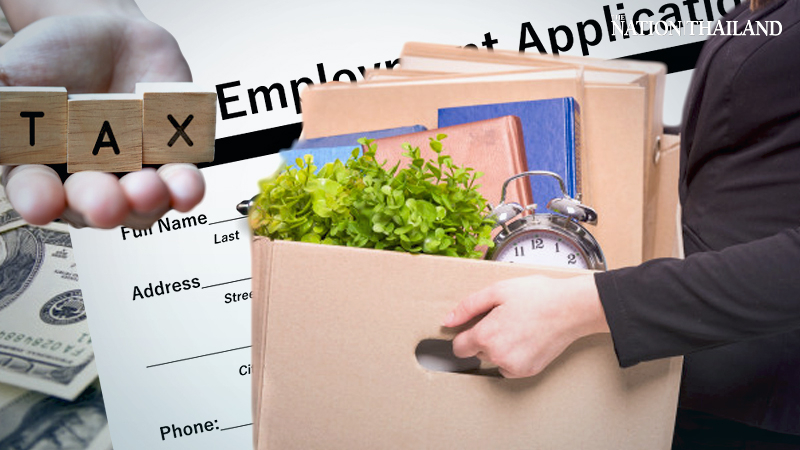
 Kate McKinnon portrays Dr. Anthony Fauci on “Saturday Night Live.” MUST CREDIT: NBC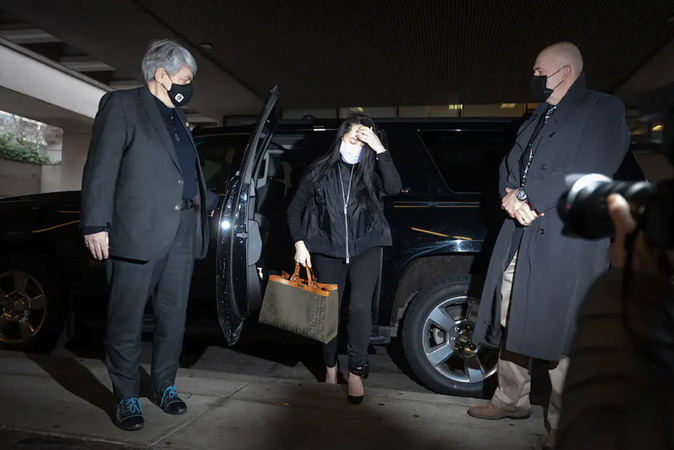

 SootinClaimon.Com