By Syndication Washington Post, Bloomberg · Andres Guerra Luz
Oil extended its longest winning streak in two years in New York as a decline in U.S. crude inventories further showcased how global supplies are shrinking.
Futures rose almost 1% after a U.S. government report showed domestic oil stockpiles fell by 6.6 million barrels to the lowest since March 2020. Still, the data showed gasoline supplies are at the highest since June, while crude exports fell to the lowest level in weeks.
“It was good to see the crude draw wasn’t just from one area, but constructive that it was throughout the whole U.S.,” said Brian Kessens, a portfolio manager at Tortoise, a firm that manages roughly $8 billion in energy-related assets. “If there was one thing to be concerned about, it was that gasoline inventories built.”
Oil has climbed more than 9% so far this month as the OPEC+ alliance’s supply curbs, led by Saudi Arabia, continue to deplete global oil inventories. Iraq said OPEC+ is unlikely to change its production policy at next month’s meeting, providing a signal to the market that oversupply concerns will be kept at bay.
The spread between Brent’s nearest contracts surged this week — a key sign of market tightness — while swaps tied to the physical North Sea market have also increased amid frenzied trading of derivatives late Tuesday. The so-called prompt spread for U.S. benchmark crude futures is also strengthening as declines at the nation’s largest storage hub in Cushing, Okla., brings oil stockpiles there to the lowest levels since July.
West Texas Intermediate for March delivery rose 32 cents to $58.68 a barrel as of 11:00 a.m. in New York. Brent for April settlement gained 45 cents to $61.54 a barrel.
There are still concerns that the rally may be overdone, with technical indicators showing crude in overbought territory. Rising prices may also spur American oil explorers to boost drilling and production later this year, the Energy Information Administration said in a monthly report Tuesday.
Meanwhile, the combined refining margin for gasoline and diesel fell toward $12 a barrel on Wednesday as the EIA report showed a nearly 4.3 million-barrel increase in gasoline supplies. At the same time, a rolling gauge for gasoline demand remains at its lowest seasonally in decades.
‘Super Mario 3D World + Bowser’s Fury’ is a must-buy. But it’s not because of Bowser’s Fury.
InternationalFeb 11. 2021“Super Mario 3D World + Bowser’s Fury” MUST CREDIT: Nintendo
By The Washington Post · Jhaan Elker
“Super Mario 3D World + Bowser’s Fury” – a Wii U port of a mainline, flagpole-and-course-based Mario game – pairs a revamped version of the original “Super Mario 3D World” with an all new expansion (“Bowser’s Fury”) sectioned off from the main game. Here’s the thing: Despite the heavy marketing on the new content, what makes “Super Mario 3D World + Bowser’s Fury” worth buying for owners of “Super Mario 3D World” isn’t the new stuff found “Bowser’s Fury,” because it’s really not that new. Instead, the best stuff is actually found in the “3D World” redux.
Let me explain.
“Super Mario 3D World + Bowser’s Fury’s” first screen that loads up emphasizes the paired games right away, splitting the screen in half and giving a choice, play the “Super Mario 3D World” game or play the “Bowser’s Fury” game. Nintendo’s advertising heavily emphasized the “Bowser’s Fury” content, which makes a sort of sense. After all, the new stuff is supposed to be the incentive for returning players to repurchase the game. But the reality is this: while Kaiju God-Slaying Bowser vs. Super Saiyan Cat Mario was littering the Internet, Nintendo should’ve pumped up the two key changes made to “Super Mario 3D World” that greatly enhance it overall.
– – –
The “Super Mario 3D World” portion of the package takes the classic Mario games formula and applies it to 3D, meaning in this game, you use 3D Mario game controls like long jumps and butt stomps to navigate courses toward the end goal, the iconic flagpole. Throughout the courses are hidden collectibles like stamps and green stars that unlock special courses and minigames on an overview world map. Toward the end of each section is a castle level with a big boss and a Sprixie to rescue. You do this all while collecting power-ups like the new cat suit to change Mario’s abilities (in the cat suit’s case, you can claw enemies, climb up walls and do diagonal dive attacks).
But the key ingredient to it all? Multiplayer. Adding 1-3 more players to the screen complicates things quickly. Players are supposed to cooperatively work together to reach the flagpole, but power-ups and coins are limited.
The player ahead of the others will move the camera’s focus ahead, leaving lagging teammates behind (who can hit a button to bubble up and catch up). Each player’s individual points are tallied at the end of levels, and the player with the most points gets a nifty crown to wear in the next stage to showcase their dominance. And funniest of all: The run button also grabs other players. Add the fact that each playable character, Mario, Luigi, Peach and Blue Toad, all have different stats and abilities, and it all adds up to a hilarious balance of cooperation and competition while running through challenging obstacles as quickly as possible.
This is where the two critical changes to the Switch version come into play. These changes radically alter the experience and, in my opinion, make the entire purchase worth it. To start, the gameplay is faster in every aspect compared to its Wii U counterpart. Apart from the obvious faster load-times, characters move noticeably faster, as do enemies and obstacles. It just adds to the hilarious chaos multiplayer offers, as players have to hone their reflexes even more to survive courses.
Secondly and more importantly, you can now play the game online with friends. How this wasn’t mentioned more in any of the advertising is baffling, considering how much that radically opens up the multiplayer experience to everyone, especially during these pandemic times.
When I played online in a demo Nintendo hosted for journalists and influencers, I noticed a tiny bit of input delay, but the gameplay never stuttered or lagged, meaning once I got used to the delay, I was able to compete with the others effectively. It was also relatively easy to join the online session. While only the host player is able to save any progress made in an online play session, this downside is outweighed by what I found to be one of the better online experiences Nintendo’s had to offer.
The multiplayer allows for so many unique, creative experiences. Just try playing with your own custom rulesets, like a game where one person’s job is to constantly sabotage the others, or a game where one person has to carry Luigi at all times, and you restart a level if Luigi dies once.
The Wii U was not the success Nintendo was hoping it’d be, so it’s satisfying to see one of the best multiplayer entries of the system find a second life on the much more popular Switch, even if not much of the actual content of the game has changed.
– – –
If you think that the additional content Bowser’s Fury provides is what makes “Super Mario 3D World + Bowser’s Fury” valuable, I encourage you to reset your expectations. Bowser’s Fury feels more like a testing ground for the next “3D World” entry than a fully developed game by itself.
I went into the experience wanting to like Bowser’s Fury. The setup seemed pretty good – Bowser’s been corrupted by this black ink that looks straight out of “Super Mario Sunshine” and, coincidentally, Bowser Jr. is there hoping Mario can help change his father back. The two tackle a brand new “open world,” where the course-world structure is gone and replaced with a world map where the camera is set free on a 360 degree axis.
Bowser’s Fury lets two players control Mario and Bowser Jr. as they set about collecting Cat Shines, this game’s equivalent of power stars. Collecting these Cat Shines powers up lighthouses that further clean up the inky mess and reveal more of the world map. Eventually, you’ll hit a Cat Shine threshold where you can activate the Giga Bell, which allows Mario to go into Super Saiyan Giant Cat form to battle the massively sized Bowser. You need to fight Bowser multiple times until he’s finally completely restored, meaning this game is about continually searching the world for more Cat Shines.
The last wrinkle to the gameplay is a new mechanic that draws inspiration from “Breath of the Wild’s” Blood Moon segments. Every so often, Bowser’s shell, which is at the center of the world map, will rise higher and higher until it summons rain and the goliath himself. During these segments, the sky goes dark and Bowser himself causes mayhem on the map, dropping stone pillars and breathing fireballs. After a short while, or if you collect a Cat Shine during this segment, Bowser will disappear and normal gameplay will resume. It’s a chaotic interlude to break up the otherwise samey-feeling gameplay.
Mario controls exactly as he does in “Super Mario 3D World,” while Bowser Jr. has those controls plus a paintbrush swipe attack and the ability to reveal hidden objects using point and click motion controls. You can also have the computer control Bowser Jr. and select the amount of help it actually gives you.
Here’s where the experience begins to fall apart. To start, the overall map feels like an oversized approximation of one of “Super Mario Odyssey’s” Kingdoms. Because of this, you’ll want every movement option that Odyssey offered in its gameplay and more. But Bowser’s Fury is using “Super Mario 3D World’s” controls engine, which feels dated for this game’s open-world ambition. You can’t do things every other 3D World Mario game offers, like the triple jump, and you don’t have things Odyssey offered that gave you incredible movement flexibility, like infinite rolling or Cappy-hopping.
The “open world” is sort of a facade too. Yes, there are no loading screens between any section of the game, but the world doesn’t offer the same interconnectivity or explorative wonder that, say, Odyssey’s Kingdoms offer, where discoveries really are exciting and unexpected. Instead, this map feels more like five separate “Super Mario 3D World” levels stitched together in different mountain-like zones, with large expanses of water between. I would go through each “mountain zone” similarly to how I’d progress through a regular “Super Mario 3D World” level, from top to bottom, with very short branches off the main path offering a challenge for an extra cat shine.
Finally, facing off against the Giant Bowser quickly loses its luster when you see it for what it is. The game really tries to play up Kaiju Bowser’s menace. Heck, there is even a part in his theme song that perfectly copies Sephiroth’s theme from “Final Fantasy 7.” But facing Bowser just looks grandiose simply because it’s bigger. The actual fight takes the same Mario boss formula that’s been here this entire franchise: recognize the pattern, wait for the opening, then jump on 2-3 times.
In short, the experience falters because it doesn’t offer any truly new ideas, and it just doesn’t compare to the brilliance of Mario’s last game of this variety, “Super Mario Odyssey.” Bowser’s Fury gets beat by Odyssey in every category: aesthetics, sound design, controls and gimmick wow-factor. And while the game does provide a potential blueprint for how to take the 3D World series going forward – it wouldn’t surprise me if the next game applied this open-world format to four players – Bowser’s Fury is certainly not enough to merit a purchase on its own.
The graphics aren’t a noticeably substantial upgrade, and handheld mode for both games had pretty steady framerates throughout (it’s worth noting that “Super Mario 3D World” was closer to 60 FPS and “Bowser’s Fury” is closer to 30).
Even with the Bowser’s Fury miss, the content is worth it. If you want one of the best and most versatile multiplayer experiences to date for the Nintendo Switch, online or offline, go with “Super Mario 3D World + Bowser’s Fury.”
But if you’re looking in particular for the “Bowser’s Fury” part to surprise you with new Mario gameplay concepts, look elsewhere. Bowser’s increase in size and inky gloss may distract you at first, but trust me, it’s simply covering up more of the same.
Senate votes to pursue Trump impeachment trial after declaring the proceedings constitutional
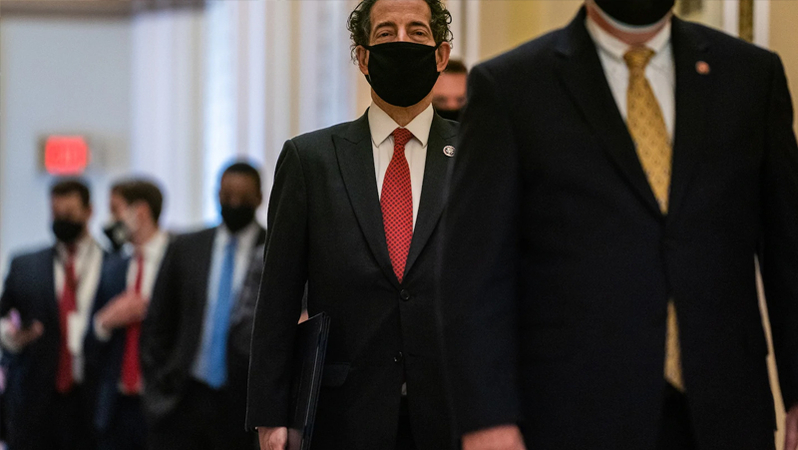
InternationalFeb 10. 2021Rep. Jamie Raskin, D-Md., center, and other House impeachment managers walk through the Capitol Rotunda, where pro-Trump rioters violently threatened lawmakers during last month’s siege, on their way to deliver arguments in the Senate on Tuesday, Feb. 9, 2021. MUST CREDIT: Washington Post photo by Salwan Georges
By The Washington Post · Seung Min Kim, Mike DeBonis, Karoun Demirjian, Tom Hamburger
WASHINGTON – The Senate voted along mostly partisan lines Tuesday to pursue Donald Trump’s second impeachment trial, after hours of arguments and the airing of a gripping documentary of the deadly Capitol riot that followed Trump’s inflammatory rally on Jan. 6.
Aided by the graphic 13-minute video that spliced violent images of the Capitol siege with Trump’s rhetoric, Rep. Jamie Raskin, D-Md., and other impeachment managers delivered an impassioned account of the physical and emotional trauma to lawmakers, police, staffers and local residents. They said there was no “January exception” in the Constitution – meaning that a president couldn’t escape accountability through impeachment just because he had left office before the trial.
“If that’s not an impeachable offense, then there is no such thing,” Raskin said of Trump’s behavior.
Trump’s lawyers countered that the trial – the first proceeding of its kind for an ex-president – would be unconstitutional because Trump was no longer in office, even if he was impeached by the House before leaving. One of the attorneys acknowledged that the former president lost the election, undercutting one baseless claim that Trump has spread since Nov. 3.
The Senate swiftly voted 56 to 44 against Trump. The proceedings will resume at noon Wednesday.
The historic trial opens just one month after the senators gathered in the same chamber to certify the results of the electoral college that gave President Joe Biden his win, only to be interrupted as a frightening mob overtook the Capitol in an unprecedented siege after Trump implored his supporters at a rally to fight on his behalf.
The insurrectionists broke through metal barricades, smashed windows and assaulted police officers to gain access to the citadel of U.S. democracy – prompting Vice President Mike Pence to be quickly ushered into safety and hundreds of lawmakers and staffers to take cover from rampaging rioters. At least five people died, including Capitol Police officer Brian Sicknick, who was memorialized under the Rotunda last week.
Reminders of the riot persist, with tall steel fencing and barbed wire encircling the once-open Capitol grounds, now patrolled by National Guard troops.
The House impeachment managers leaned on legal rulings, images and emotion, particularly Raskin’s recounting of his return to the chamber on Jan. 6 for the first time after burying his son. The former president’s defense lawyers addressed the crux of Tuesday’s debate – the constitutionality of the proceedings – only late in their presentation.
In a distinct appeal to a Republican Party that has long prided itself on its support of law enforcement, Raskin detailed the injuries sustained by 140 Capitol Police officers that day, such as brain damage, gouged eyes, heart attacks and mental trauma. At least two have died by suicide.
“Senators, this cannot be our future. This cannot be the future of America,” Raskin said. “We cannot have presidents inciting and mobilizing mob violence against our government and our institutions because they refuse to accept the will of the people under the Constitution of the United States.”
This photo from Monday, Feb. 8, 2021 shows Rep. Jamie Raskin, D-Md., making edits to his speech during a practice session regarding for the House managers overseeing the second impeachment of President Donald Trump. MUST CREDIT: Washington Post photo by Demetrius Freeman
The argument failed to sway 44 of the chamber’s 50 Republicans, with most favoring dismissing the case against Trump outright – a tally demonstrating the unlikelihood that 17 GOP senators will choose to join Democrats to convict the former president.
That vote was similar to one taken by the Senate last month, in which only five Republicans – Susan Collins of Maine, Lisa Murkowski of Alaska, Mitt Romney of Utah, Patrick Toomey of Pennsylvania and Ben Sasse of Nebraska – voted that an impeachment trial of a former president was constitutional. Sen. Bill Cassidy, R-La., joined them Tuesday in breaking with their party to allow the trial to proceed.
Some GOP senators on Tuesday were compelled by legal arguments from the Democratic impeachment managers, as they invoked conservative legal luminaries such as former 10th Circuit Judge Michael McConnell and attorney Charles Cooper, who have argued in favor of the trial’s constitutionality.
“Anyone that listened to those arguments would recognize that the House managers are focused, organized, they relied both upon precedent, the Constitution and legal scholars. They made a compelling argument,” said Cassidy, who took diligent notes throughout the day.
In contrast, Cassidy said, Trump’s team was “disorganized.”
“They did everything they could but to talk about the question at hand. And when they talked about it, they kind of glided over it, almost as if they were embarrassed of their arguments,” he said.
Raskin said Congress’s impeachment powers were precisely structured to hold accountable leaders such as Trump, who Raskin said “may not know a lot about the framers, but they certainly knew a lot about him.”
In an extraordinarily raw accounting of what he experienced, Raskin also shared that his daughter and son-in-law had come with him to Capitol Hill that day, wanting to remain close in their grief following the death by suicide of Raskin’s son, Tommy, days earlier. The lawmaker’s voice broke after he relayed to senators that his daughter, Tabitha, told him following the insurrection that she never wanted to come to the Capitol again.
“It was very powerful and heart-wrenching testimony,” said Sen. Chris Van Hollen, D-Md. “And I think he posed the question that’s going to hang over this trial at the end, which is whether the verdict will show our children that our democracy is safe and the Capitol is secure.”
Rep. Joe Neguse, D-Colo., another House impeachment manager, leaned heavily on historical precedents, walking senators through the impeachments of Sen. William Blount in 1797 and Secretary of War William Belknap in 1876, both of which occurred after the men were no longer in office.
That was ample evidence that Trump can be convicted even after leaving office, Neguse said.
“Honestly, it’s hard to imagine a clearer example of how a president could abuse his office: inciting violence against a coequal branch while seeking to remain in power after losing an election,” Neguse said. “Presidents can’t inflame insurrection in their final weeks and then walk away like nothing happened. And yet that is the rule that President Trump asks you to adopt.”
Rep. Jamie Raskin, D-Md., goes through his speech with Reps. David Cicilline, D-R.I., Joe Neguse, D-Colo., and chief impeachment counsel Barry Berke during preparations on Tuesday, Feb. 9, 2021. MUST CREDIT: Washington Post photo by Demetrius Freeman
Rep. David Cicilline, D-R.I., a third impeachment manager, directly cited a tweet Trump sent hours after the mob stormed the Capitol, saying the social media missive demonstrated precisely “how President Trump himself felt” even while the nation was in horror. In it, Trump had lamented that his “sacred landslide election victory” had been “stripped away” and embraced his followers as “great patriots.”
“The president of the United States sided with the insurrectionists. He celebrated their cause. He validated their attack,” Cicilline said
When Trump’s defense took over, attorney Bruce Castor spoke first, delivering a 48-minute address in which he repeatedly flattered senators, calling them “extraordinary.” He admitted that Trump lost the 2020 presidential election by noting that “he was removed by the voters,” suggesting he had been punished enough.
Castor argued that Trump’s remarks Jan. 6 were simply a matter of “free and robust political speech” rather than incitement of insurrection, “and if people go and commit lawless acts as a result of their beliefs and they cross the line, they should be locked up.”
A person familiar with the Trump legal strategy who spoke on the condition of anonymity because they were not cleared to speak publicly said Castor’s speech was part of the defense team’s efforts to neutralize the emotional arguments made by the House impeachment managers, although it was unclear whether he succeeded.
“I thought I knew where it was going, and I really didn’t know where it was going,” said Sen. Lindsey Graham, R-S.C., one of Trump’s closest allies.
The second Trump lawyer, David Schoen, immediately took a confrontational and fiery tone at the rostrum, accusing Democrats of instigating a politically motivated impeachment proceeding. He also warned that Democrats were trying to disenfranchise the millions of voters who supported Trump.
He accused House Speaker Nancy Pelosi, D-Calif., of intentionally holding on to the impeachment article so a trial couldn’t occur until Trump was out of office – although it was Republican Mitch McConnell, then the Senate majority leader, who decided against a prompt trial.
The former president’s team also played video clips of Democratic lawmakers – including Raskin, Rep. Maxine Waters, D-Calif., and Rep. Joaquin Castro, D-Texas – calling for Trump’s impeachment for various perceived sins since the start of his presidency in 2017.
“This is about our Constitution and abusing the impeachment power for political gain,” Schoen said. “They don’t want unity, and they know this so-called trial will tear this country in half.”
Trump’s second impeachment trial has undergone adjustments compared to his first because of the coronavirus pandemic that has upended the daily operations of the Senate.
Aides familiar with the preparations said senators are allowed to watch the proceedings from the public galleries above the floor or in the Marble Room, a senators-only space behind the chamber, to allow for social distancing. Tables set up in the well of the Senate for the managers and Trump lawyers held bottles of hand sanitizer and at least one bottle of Clorox wipes.
Still, senators – nearly all masked, an exception being Sen. Rand Paul, R-Ky. – stayed at their desks to listen to the four hours of arguments from the impeachment managers and Trump’s defense attorneys.
As the Democratic video played, nearly every senator was glued to the screens in the Senate chamber – although Paul doodled on a paper pad in his lap and Sen. Tom Cotton, R-Ark., also focused most of his attention on papers in front of him.
Some focused intently, others stared blankly, and some frowned. Sen. Dan Sullivan, R-Alaska, appeared to redden at one point.
The impeachment trial could continue every day through the Presidents’ Day weekend under the terms of a resolution adopted shortly after the Senate convened Tuesday afternoon.
How long the trial runs will depend on several factors, including whether House impeachment managers decide to call witnesses to testify about Trump’s behavior. Senior aides to the managers’ team declined to comment Tuesday on the possibility of witnesses, although there was a palpable lack of appetite among even the most ardent Democratic proponents of impeachment to do so.
“We don’t want to rush justice,” said Rep. Al Green, D-Texas, who watched the Senate proceedings from the chamber on Tuesday. “But by the same token, we don’t want to unnecessarily delay.”
Raskin, as he left the Senate on Tuesday evening, said he was heartened to win over even one more Republican. “We were told that it would be completely partisan and locked from the last vote, and it wasn’t, so people’s minds are open,” he said.
Biden, meantime, remained intentionally disengaged from the proceedings and instead focused on his agenda, including coronavirus relief.
Asked Tuesday whether he was going to watch the trial, Biden replied: “I am not.”
“Look, I told you before: I have a job. . . . The Senate has their job; they’re about to begin it,” he said. “I’m sure they’re going to conduct themselves well. And that’s all I’m going to have to say about impeachment.”
The second impeachment trial of former president Donald Trump is underway.
While Trump is no longer in office – which led to an initial debate about the jurisdiction of the proceedings – he could still be sanctioned and prevented from holding high office again.
Below are some takeaways from the first day of the trial.
– – –
1. Democrats’ appeal to emotion
Democrats have decided to move things on a fast track, including likely not calling any witnesses. The best evidence, they maintain, is what has already been established – on video and otherwise – showing what happened before and during the Jan. 6 storming of the Capitol.
Their early argument was heavy on that. To begin the debate over the proceedings, lead impeachment manager Rep. Jamie B. Raskin (D-Md.) played a 13-minute video recapping the ugly scenes of Jan. 6. The video, which cable news and broadcast networks played in full, featured violent conduct and rhetoric, extensive vulgarity and even video of a Capitol rioter, Ashli Babbitt, being shot to death.
Raskin later closed by recounting his own experience during the Capitol siege, citing “a sound I will never forget: the sound of pounding on the door like a battering ram, the most haunting sound I ever heard.” He mentioned the deaths and many injuries that occurred that day, and officers who took their own lives in the days afterward. He cited an officer who was “tortured” with an American flagpole. Raskin, who buried his son around the time of the Capitol siege, broke down repeatedly while recounting these things.
It was unquestionably moving.
The question before the Senate, though, isn’t about whether what happened on Jan. 6 was bad. It’s whether Trump incited it, as the impeachment article alleges. The 13-minute video showed some of Trump’s comments, including clips of his speech from a rally just beforehand, and his mealy-mouthed comments in the hours after it began. But it didn’t dwell too much on how Trump might actually have fomented the scenes.
Trump’s team countered that such emotion shouldn’t obscure the culpability question. Trump lawyer Bruce L. Castor Jr. began his remarks by commending Raskin for his presentation and personal reflection, but arguing that emotion shouldn’t define the response.
“It’s natural to recoil. It’s an immediate thing that comes over you without your ability to stop it – the desire for retribution,” Castor said. ” ‘Who caused this awful thing? How do we make them pay?’ We recognize in the law . . . [that] we have a specific body of law that deals with passion and rage, blinding logic and reason. That’s the difference between manslaughter and murder.”
There is little doubt that whatever Democrats put forward won’t be compelling to enough Republican senators, or at least the 17 who would be needed to convict Trump. All but 13 have already signaled they support Trump’s acquittal. But there is a real question about just how compelling it is to the broader American public. Polls show Americans favor his conviction, but only marginally.
And there is indeed a difference between saying “this thing involving Trump and his supporters was bad” and “Trump incited this thing.” The onus will be on Democrats to prove the latter.
– – –
2. Trump lawyer Bruce Castor’s head-scratching opening
I wrote earlier Tuesday about how Trump’s team probably didn’t need to do much to actually succeed in this case. I also wrote about how their brief filed Monday didn’t exactly suggest a coherent and well-considered case.
The first comments from his legal team didn’t do anything to correct that impression.
After initially dealing directly with Democrats’ arguments, Castor was all over the place. He tried to work the refs by sympathizing with senators who might have competing motivations in their upcoming votes. The comparison between manslaughter and murder for Trump’s conduct was perhaps ill-advised, given both involve culpability.
But more than anything, it seemed to be an exceedingly off-the-cuff commentary on the issues at hand. And Castor often struggled for specifics. One of the most notable examples came when he recounted a politician – he wasn’t sure who it was, where they served or when it happened – but he was sure that their apology for their comments was unwarranted:
I saw a headline: Representative So-and-so seeks to walk back comments about – I forget what was, something that bothered her. I was devastated when I saw that she thought it was necessary to go on television yesterday or the day before and say she needs to walk back her comments. She should be able to comment as much as she wants, and she should be able to say exactly how she feels. . . .
I don’t expect and I don’t believe that the former president expects anybody to walk back any of the language. If that’s how they feel about the way things transpired over the last couple of years in this country, they should be allowed to say that. And I will go to court and defend them if anything happens to them as a result, if the government takes action against that state representative or that U.S. representative who wants to walk back her comments …
I have no problem going into court and defending those things, even though I don’t agree with them.
Got that? Me neither. Castor had notes, which makes it perplexing that he didn’t offer any specifics. But even so: What? He seemed to be arguing that a politician can say whatever they want regardless of the impact, even as there are well-established limits on speech, including incitement and defamation. (Trump’s lawyers have taken care not to delve into that meddling issue.)
While Castor also tried to empathize with senators facing a tough choice, including his home-state Sen. Robert P. Casey Jr. (D-Pa.), he also took time to target a GOP senator who seems inclined toward convicting Trump: Sen. Ben Sasse (R-Neb.).
“But Nebraska, you’re going to hear, is quite a judicial thinking place. And just maybe Sen. Sasse is on to something,” Castor said. “You’ll hear about what it is that the Nebraska courts have to say about the issue that you all are deciding this week. They seem to be some pretty smart jurists in Nebraska, and I can’t believe a United States senator doesn’t know that.”
Castor added, apparently referring to Sasse’s censure by the state GOP: “He faces the whirlwind, even though he knows what the judiciary in his state thinks.”
Maybe Sasse wasn’t a winnable vote, but again, it was certainly a novel strategy.
And Trump allies acknowledged it as such.
“I’ve seen a lot of lawyers and a lot of arguments and that was – that was not one of the finest I’ve seen,” Sen. John Cornyn (R-Tex.) said.
Trump ally Alan Dershowitz also added on Newsmax: “Maybe he’ll bring it home, but right now, it does not appear to me to be effective advocacy. … It’s not the kind of argument I would have made, I have to tell you that.”
A Trump ally familiar with the legal strategy told The Washington Post that Castor’s presentation was meant to lower the temperature in the room after Raskin’s presentation “before dropping the hammer.”
David I. Schoen, Trump’s other lawyer, offered a more detailed legal case about the issue at hand, repeatedly calling it a “snap impeachment.” He was also much harsher about Democrats’ motives, concluding by suggesting this was somehow an effort to negate the votes of Trump’s supporters (even as those votes objectively counted in the election).
“The singular goal of the House managers and House leadership in pursuing the impeachment conviction of Donald Trump is to use these proceedings to disenfranchise at least 74 million Americans with whom they viscerally disagree and to ensure that neither they nor any other American ever again can cast a vote for Donald Trump,” Schoen said.
– – –
3. The key vote
The day concluded with a significant vote on whether the Senate had jurisdiction to hold this trial. The result indicated Trump’s conviction is no more likely today than it was yesterday.
Previously, 45 of 50 GOP senators voted that the trial was unconstitutional. That was somewhat surprising given some voting that it was unconstitutional had previously expressed reservations about Trump’s conduct, such as Senate Minority Leader Mitch McConnell (R-Ky.).
The vote Tuesday, though, was pretty much the same. Only one Republican voted that the Senate had jurisdiction after previously voting the trial was unconstitutional: Sen. Bill Cassidy (R-La.). McConnell voted that it didn’t. In the end, 44 GOP senators voted not to move forward.
Cassidy had previewed such a vote this weekend, indicating he was still open to hearing the evidence. He also suggested the previous vote was a hasty one in which senators didn’t have a chance to fully digest the arguments. And the Trump team’s performance didn’t do much for him.
That apparently only applies to Cassidy. And while his vote is significant as a senator from a very conservative state, it still leaves Democrats needing the votes of 11 Republicans who voted that the Senate didn’t even have jurisdiction to try a former president in the first place.
– – –
4. Democrats cite conservative scholars
One of the most compelling arguments about the issue at hand on day one – the constitutionality of proceeding with the trial – came from Rep. Joe Neguse (D-Colo.)
Neguse cited the opinions of several conservative legal scholars and a past Trump impeachment witness assuring that impeaching – or at least trying, as the Senate is now doing – a former president is constitutional.
Neguse delved deep into the opinions of Reagan administration solicitor general Charles Fried, former federal judge Michael McConnell, Federalist Society co-founder Steven Calabresi, renowned conservative lawyer Chuck Cooper and Jonathan Turley, whom Republicans called as a witness during Trump’s first impeachment.
Most interestingly, Neguse seemed to allow that there could be debate about impeachment itself occurring for a former official, but cited Michael McConnell’s analysis that the House impeached Trump when he was still in office, and thus that the Senate is tasked with holding a trial.
“We laid it out step by step so that you could consider it, and so that opposing counsel could consider it as well,” Neguse said of the impeachment managers’ brief last week. “We received President Trump’s response yesterday, and the trial brief offers no rebuttal to this point – none. And in fairness, I can’t think of any convincing response. The Constitution is just exceptionally clear on this point.”
The Constitution might not be as clear as Neguse argues – even some of the men he cited acknowledge this situation isn’t directly addressed, nor have courts ruled conclusively on it – but he’s right that Trump’s team hasn’t dealt with this head-on. Instead, its brief Monday cited people who don’t actually agree with their conclusions.
The United Arab Emirates became the first Arab country to send a spacecraft to Mars on Tuesday when its Hope probe reached the red planet, fired its thrusters and slowed down enough to enter orbit.
The mission represents a victory for the country as it seeks to grow its space program. And it opens an unusually active period of deep space exploration. In addition to the UAE, China and the United States have spacecraft that are also expected to reach Mars this month.
China’s Tiawen-1 is scheduled to reach Mars orbit Wednesday before a landing sometime in May. NASA’s Perseverance rover is expected to touch down on Mars Feb. 18 and then explore for signs of past life.
The UAE’s Hope spacecraft fired its thruster for approximately 27 minutes, slowing the spacecraft from some 75,000 mph to 11,000 mph. In mission control, members of the UAE space agency celebrated the mission, and the agency tweeted, “Success! Contact with #HopeProbe has been established again. The Mars Orbit Insertion is now complete.”
Thomas Zurbuchen, the associate administrator for NASA’s science mission directorate, congratulated the UAE on Twitter, writing, “Your bold endeavor to explore the Red Planet will inspire many others to reach for the stars. We hope to join you at Mars soon with @NASAPersevere.”
The Hope probe will not land on Mars but rather stay in orbit, studying the Martian atmosphere. It launched from Japan last July, flying 306 million miles to reach Mars. Given there was an 11-minute radio transmission delay to Earth, the probe had to be autonomous, relying on its own systems to insert itself into the correct orbit.
Reaching Mars orbit “was the most critical and dangerous part of our journey to Mars, exposing the Hope probe to stresses and pressures it has never before faced,” said Omran Sharaf, the director of the Mohammed bin Rashid Space Center. “With this enormous milestone achieved, we are now preparing to transition to our science orbit and commence science data gathering.”
It is a big step for the country’s space agency, which is partnering on the mission with scientists from the University of Colorado at Boulder’s Laboratory for Atmospheric and Space Physics.
“We entered into this wild experiment,” Sarah bint Yousef Al Amiri, the chair of the UAE Space Agency and the Minister of State for Advanced Technology, said last week. “It was something completely new for us.”
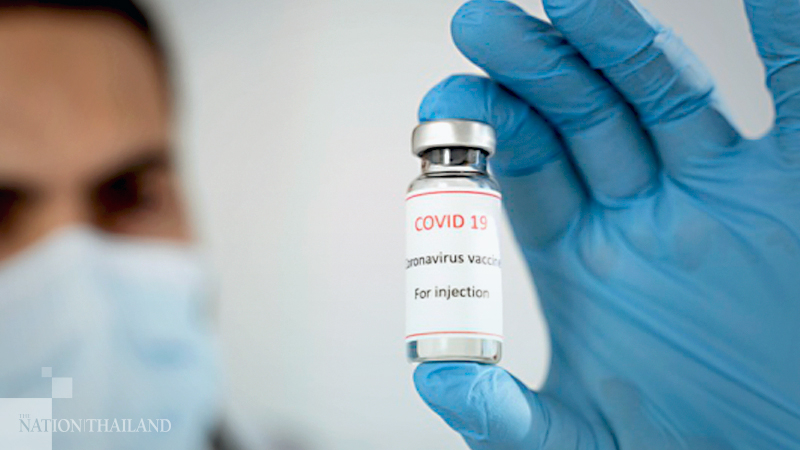
CanSino Biologics’s experimental coronavirus vaccine has an efficacy rate of 65.7% at preventing symptomatic cases based on an analysis from late-stage trials, adding a one-shot candidate to the world’s growing arsenal against covid-19.
The inoculation co-developed by the Chinese military and the Tianjin-based biotech company proved effective against symptomatic covid-19, based on a multicountry analysis first posted on Twitter by Faisal Sultan, Pakistan’s health adviser, on Monday. CanSino later forwarded Sultan’s announcement in a statement. The final stage trial included 30,000 participants and was also 90.98% effective in preventing severe disease, Sultan said.
A vaccine needs to afford at least a 50% protection rate to be considered effective, as mandated by the world’s leading drug regulators and the World Health Organization. While CanSino’s data seems at first glance lower than the 95% protection rate provided by shots from Pfizer and Moderna, it requires just one shot, not two.
That means it’s more accurately compared to Johnson & Johnson’s vaccine, the only other single shot that has released final stage testing data. That vaccine was found to be 66% effective in a global trial.
While their efficacy numbers are lower, single-shot vaccines offer some advantages over the cutting-edge mRNA inoculations from Pfizer and Moderna. The mRNA two-dose shots require deep-freeze storage and risk spoiling if thawed too quickly, creating distribution hurdles. CanSino and J&J’s candidates are easier to store and don’t require people to return at a set time for the second jab — something that’s hard to guarantee especially in developing countries.
“One vaccine, single visit and cheaper logistics, it has all those advantages,” Sultan said in a phone interview Tuesday. “The single-shot is an important factor. Certainly, when you ask people to show up for a second shot three weeks later, people will not show up, forget or not care.”
Among two-dose regimens, China’s vaccines have fallen behind western and Russian peers. The shot developed by the state-owned China National Biotec Group Co., a unit of Sinopharm, was shown to be 78% effective, while one from Sinovac Biotech had a 50.38% rate in a trial involving high-risk medical workers. Russia’s Sputnik V showed efficacy of 91.6%, matching the stellar efficacy of the mRNA shots.
Trials for AstraZeneca Plc’s vaccine resulted in an average of 70% from two different dosing regimes.
The parade of efficacy reports has resulted in a steadily growing arsenal of inoculations as drugmakers and governments have sped up the vaccine development process to fight the pandemic. CanSino adds another successful candidate from Chinese developers, who have played catch-up with Western rivals in finishing Phase III trials after an early lead in the process.
As richer nations secure the first supplies and the WHO-backed Covax initiative that many developing countries were relying on for vaccines has not yet started, China is filling the void by donating its vaccines to poorer places.
CanSino has agreed to supply 35 million doses to Mexico while Malaysia is in talks to get 3.5 million shots. Pakistan, where one of CanSino’s biggest trials is being conducted, will get 20 million shots. Pakistan’s efficacy at preventing symptomatic cases is 74.8%, Sultan said Monday, adding that a tranche of vaccines had been sent by China’s army to his country’s military.
The doses have “been dedicated in its entirety for use in our national vaccine drive to protect health workers in the front line,” he said.
The company is also working to get approval from the WHO so that its vaccine can be procured and distributed through the Covax program.
The company is said to have reached an agreement to run another trial in Russia to see whether swapping the second dose of Russia’s Sputnik V vaccine with that from CanSino would produce the same or better protection against covid-19. Russia has faced production challenges for Sputnik’s second shot, which uses the same adenovirus vector to deliver the coronavirus antigen that CanSino does.
CanSino’s so-called viral vector vaccine, which loads an antigen from the coronavirus on a harmless cold-causing pathogen called adenovirus, was the first in the world to start human clinical trials back in March as China mobilized its drug regulators, research institutes and pharmaceutical companies in an all-out effort to develop tools against the coronavirus.
CanSino got off to a strong start, outpacing western rivals including Pfizer and AstraZeneca in pushing its shot through early human testing. Yet it got caught in growing tensions between China and Canada, with a planned trial in the North American country indefinitely delayed.
Meanwhile, the near elimination of the virus in China forced CanSino and other Chinese vaccine frontrunners to embark on a time-consuming search for testing sites for Phase III trials in other parts of the world.
The company eventually started those tests in Pakistan, Russia, Argentine, Mexico and Chile, when Western frontrunners were already close to reporting interim results.
Chinese vaccines have faced some skepticism because of confusion over efficacy rates and a lack of transparency, as the developers have disclosed less safety and testing information than western front-runners. The issues have threatened to undermine trust in shots that President Xi Jinping has promised to share with the rest of the world as a global public good.
They are nonetheless being rolled out across Asia, the Middle East and South America, with endorsements from heads of state. Mexico President Andrés Manuel López Obrador has pledged to get the CanSino shot, while Indonesian President Joko Widodo received Sinovac’s vaccine in a televised ceremony.
Jamie Dimon, other CEOs meet with President Biden at White House as relief plan advances
InternationalFeb 10. 2021Jamie Dimon, Chair and CEO of JP Morgan Chase, testifies before the House Financial Services Commitee in Washington on April 10, 2019. MUST CREDIT: photo for The Washington Post by J. Lawler Duggan.
By The Washington Post · Tom Hamburger, Jeff Stein, Erica Werner
WASHINGTON – President Joe Biden met at the White House on Tuesday with JPMorgan Chase Chief Executive Officer Jamie Dimon and other leading business executives to discuss the administration’s $1.9 trillion economic relief package, as Democrats work to speed the plan through Congress.
The meeting also included Doug McMillon, CEO of Walmart; Sonia Syngal from GAP; Marvin Ellison, CEO of Lowe’s; and Tom Donohue, of the U.S. Chamber of Commerce. Vice President Kamala Harris and Treasury Secretary Janet Yellen also took part.
The meeting with the business executives comes as the White House accelerates its push for Biden’s $1.9 trillion relief proposal amid increasing opposition from congressional Republicans. House Democrats have unveiled key portions of the legislation and on Tuesday began holding what will be a lengthy series of committee meetings this week to vote on various portions of the package, leading up to final House passage later this month.
The developments coincided with the start of the Senate’s impeachment trial of former president Donald Trump, but Biden told reporters he wasn’t watching the trial.
“I have a job. My job is to help people. We have already lost over 450,000 people and we could lose a whole lot more if we don’t act and act decisively,” Biden said as his meeting with the business leaders got underway. “A lot of people, as I have said before, children are going to bed hungry. A lot of families are food insecure. They are in trouble. That’s my job.”
The meeting of the business executives also comes amid an intensifying fight over Democrats’ proposal to hike the minimum wage to $15 per hour. McMillon, who is also the chairman of the influential Business Roundtable, said last month that he supports a boost to the minimum wage. Dimon has also previously backed a minimum wage hike.
But the U.S. Chamber of Commerce has urged lawmakers not to use the “current crisis . . . as an opportunity to enact long-sought permanent policy changes, like raising the minimum wage.” The Chamber also called existing $1 trillion annual deficits a “real cause for concern.”
The business leaders are expected to bring up the minimum wage proposal at the White House, two people familiar with the matter said, speaking on condition of anonymity to discuss the private meeting.
Biden’s plan to raise the federal minimum wage has become a particularly contentious element of his relief package, which also includes hundreds of billions of dollars for cities, states and schools; rental assistance and eviction relief; and $160 billion for a national vaccine program, increased testing and other assistance for the health care system.
Additionally, Biden’s proposal includes a new round of $1,400 stimulus checks to individuals. Democrats have been debating who should be eligible to receive those checks, and considered lowering the income threshold for individuals to $50,000 from the $75,000 Biden initially proposed, which had applied to previous stimulus payments — including $600 checks Congress agreed to in December.
However, the Ways and Means Committee on Monday released legislation keeping the $75,000 income limit for individuals and $150,000 for couples, but adding a faster phaseout period so that no money goes to individuals with incomes over $100,000 or couples with incomes over $200,000.
Asked Tuesday whether he supported the structure of the checks as proposed by House Democrats, Biden responded: “Yes.”
Many lawmakers are concerned that the minimum wage increase will not be accepted by the Senate parliamentarian under the special budget rules Democrats are using to push the relief bill through Congress without GOP votes.
Asked about that issue Tuesday, Senate Majority Leader Chuck Schumer, D-N.Y., said: “We’re trying to work as well as we can with the parliamentarian to get minimum wage to happen. That’s all I’m going to say.”
House Democrats debated internally whether to incorporate the minimum wage increase in their bill but the proposal is strongly supported by members of the Congressional Progressive Caucus and was ultimately included.
The U.S. Chamber of Commerce has also said it opposes Biden’s proposal to raise federal unemployment benefits from $300 per week to $400, saying the measure “distorts the labor market and deters individuals from returning to work.”
This is not the first time Biden has met with officials who have criticized elements of his relief plan. Earlier this month, Biden hosted 10 Senate Republicans to discuss the next relief package – although he has appeared to reject their pleas to seek a bipartisan bill.
“As you know I met a long time with my Republican colleagues, have been exchanging correspondence and telephone calls as well to see if there’s any way we can follow-up beyond where we are,” Biden said. “I think we’re in a position to think big and move big and move in a direction that cannot only get the economy back on its feet, but we have to get people well.”
Biden also said he was anxious to hear how the business executives felt about the relief package and expressed optimism they could find “common ground,” just as he had sought with Senate Republicans.
JPMorgan Chase has previously called for another round of pandemic relief for poorer families as well as the renewal of support for unemployed Americans, among other measures.
Russian big business steps in to speed coronavirus vaccine roll out
InternationalFeb 10. 2021Workers arrive for their shifts at the main office at the Dneprovsky Iron & Steel Works, operated by Evraz Group, in Dnipro, Ukraine, on Jan. 25, 2017. MUST CREDIT: Bloomberg photo by Vincent Mundy
By Syndication Washington Post, Bloomberg · Yuliya Fedorinova
Russia is turning to its industrial giants, many of which operate in far-flung locations spread across the world’s biggest country, to help ramp up its covid-19 vaccination campaign after a slow start.
Companies from the biggest gold miner Polyus PJSC to the largest iron ore producer Metalloinvest Holding are trying to procure the shots and offer logistical support to get supplies of the domestically produced Sputnik V vaccine to the often remote areas where they work.
Russia is dominated by big business, with small and medium enterprises making up just a fifth of the economy compared with as much as 40% in other emerging economies, according to the World Bank. Getting the country’s factories and natural resources companies to pitch in could be key to stemming the pandemic as authorities seek to vaccinate 60% of adults in the first half of the year.
Polyus aims to make the vaccine available to all employees and contractors, according to a statement Tuesday. The company, whose main assets are in the Siberian wilderness far from cities or airports, started offering on-site inoculations this month and has shipped 1,100 doses to its Olimpiada and Blagodatnoye mines to date, it said.
Metalloinvest is helping local health officials track its employees who want to receive the vaccine and has made the shots available at some work sites, a spokesman said.
Steelmaker Evraz Plc seeks to vaccinate 50% to 70% of employees, with billionaire Chief Executive Officer Alexander Frolov among the first to get inoculated, according to a spokesman. Magnitogorsk Iron and Steel PJSC lets workers apply for a vaccine appointment via a corporate mobile app, it said in a statement Monday.
The corporate push comes after covid-19 disrupted operations throughout Russia, one of the hardest hit countries worldwide. Russia had the third-highest number of covid-19 deaths last year, after the U.S. and Brazil.
Even so, the public remains wary of Sputnik V, which was authorized for use before large-scale testing had begun. Only 38% of Russians said they would take it, according to a December poll.
Interim research published last week in The Lancet medical journal indicates Sputnik V is highly effective against covid-19, spurring hopes that more people will seek the shot. Alternatives are also becoming available, and on Monday President Vladimir Putin boasted Russia is the only country with three domestically developed coronavirus vaccines.
“covid-19 is still a risk for industrial companies, while vaccines are available mostly in big cities,” Kirill Chuyko, head of research at BCS Global Markets, said by phone. “There’s a deficit in the regions, so it makes perfect scene for companies to facilitate their employees getting the shots.”
After Wuhan mission on pandemic origins, WHO team dismisses lab leak theory
InternationalFeb 10. 2021Peter Ben Embarek, the Danish food safety expert leading the WHO team
By The Washington Post · Gerry Shih, Emily Rauhala
TAIPEI, Taiwan – After a 12-day visit, a World Health Organization mission to Wuhan appeared no closer Tuesday to solving the mystery of the pandemic’s origins, reiterating that the coronavirus likely spread to humans from an animal and casting doubt on theories it leaked from a lab.
The group’s findings – more than a year after the initial outbreak and after months wrangling between China and the U.N. health agency – could be a small step toward understanding the roots of a global crisis.
But the update is unlikely to satisfy U.S. officials and others around the world calling for greater transparency from China – or to silence questions about whether the Geneva-based WHO is equipped to investigate at all.
At a news conference, the team of Chinese and international researchers said they found that the virus was spreading in Wuhan during December 2019 both inside and outside the Huanan Seafood Market. That suggested the market was not necessarily the original source of the outbreak, the scientists said.
The team also left open the possibility that the virus may have been transmitted to humans through frozen food – a once fringe theory that Chinese officials have been touting as part of broader push to claim that covid-19, the disease caused by the coronavirus, did not come from China.
Notably, the WHO team dismissed as “extremely unlikely” another theory that the virus leaked from laboratories at the local Wuhan Institute of Virology (WIV). Peter Ben Embarek, the Danish food safety expert leading the WHO team, said his group was satisfied with answers about safety at the WIV and will not recommend further investigation into the possible links to the lab.
“Just saying that they have really good safety protocols is not an answer in my view,” said Marc Lipsitch, a professor of epidemiology at Harvard’s T.H. Chan School of Public Health, who was not among the scientists on the trip. “That alone does not put my mind at rest.”
It was never likely that the team would reach a definitive conclusion after two weeks in quarantine and less than two weeks of on-site investigation. But the dismissal of the lab theory, in particular, is likely to draw scrutiny.
Most researchers believe the virus passed through an intermediary animal host – such as pangolins – and evolved into a form that is easily transmissible among humans.
A smaller circle of experts says the possibility cannot be ruled out that the virus slipped out of the WIV, an institution that conducts work on coronaviruses sampled from bats.
The mission was composed of Chinese and international researchers. The lead Chinese scientist, Liang Wannian, told reporters that none of the labs in Wuhan had worked with SARS-Cov-2 strain, as the coronavirus is officially called, but on the virus’s distant relatives.
Instead, Liang pointed to the possibility that the virus jumped across species in nature through intermediary hosts such as pangolins, cats or minks. Ben Embarek agreed that it was “most likely” the virus evolved in nature and spread to humans through an intermediary host.
Ben Embarek told reporters that the judgment was based on “long, frank, open discussions with researchers and management” at institutions including the WIV. The institute provided “detailed descriptions of the center’s research both present and past on all projects involving bats and coronaviruses and more advanced projects,” he said.
He added that he questioned WIV officials extensively about what they thought of the lab leak hypothesis. “They’re the best ones to dismiss the claims and provide answers to all the questions,” the WHO team leader said.
But that line of reasoning that drew skepticism from outside experts.
“If the only information you’re allowing to be weighed is provided by the very people who have everything to lose by revealing such evidence, that just doesn’t come close to passing the sniff test,” said David Relman, a microbiologist at Stanford University.
Relman suggested that the WHO team should have sought complete, detailed records from the laboratories about their experiments and the raw genomic sequence data of their research going back a decade.
Raina MacIntyre, professor of biosecurity at the University of New South Wales in Australia, was also surprised to see the idea of a lab accident ruled out so quickly.
Without exploring all leads, she suggested, “We may never know the origins of this virus.”
The search for answers about the source of the pandemic had been fraught from the start.
It is clear now that China withheld critical information about the outbreak in Wuhan in the early days. The WHO, for its part, has faced criticism for failing to call them out.
In February 2020, WHO researchers traveled to China to study the novel coronavirus. The team’s enthusiastic praise for Chinese officials led many to wonder whether the agency was up to the task of holding Beijing to account.
As the crisis in the U.S. worsened, the Trump administration seized on the critique and used it to shift blame, with top U.S. officials floating unproven claims about the origin of the virus – and Chinese officials firing back with unproven claims of their own.
In the months since, the U.N. health agency has been caught in the middle. China, however, is already trying to move on.
On Tuesday, Liang and an official from China’s National Health Commission declared the China leg of the WHO probe complete and called for its scope to be expanded globally to answer the origin question.
In recent days, Chinese state media have preempted Tuesday’s news conference with reports declaring Wuhan has been “cleared of guilt” as the suspected origin of the pandemic, with some echoing the Chinese Foreign Ministry in calling for an investigation into U.S. labs.
A key question going forward will be whether the WHO team is allowed to return to China. In a pre-trip interview with The Washington Post, Ben Embarek said he believed the search would require trips to different places in China.
It remains to be seen, however, whether China will grant the WHO access, said Yanzhong Huang, a senior fellow for global health at the Council on Foreign Relations.
“There will be more pressure to do more work in China,” Huang said. “I hope this going to be the starting point of a more in-depth, more comprehensive investigation.”
President Xi Jinping said China stands ready to provide Eastern Europe with coronavirus vaccines, part of efforts to reboot relations harmed by the failure of the government in Beijing to deliver on investment promises.
The comments come amid tensions within the European Union over the bloc’s procurement of shots to combat covid-19, with member states unable to match the pace of other Western nations in inoculating their citizens. Chinese companies have already provided 1 million vaccine doses to Serbia, an EU aspirant that’s also using Russia’s Sputnik injection.
Addressing leaders and other high-level representatives at an online summit on Tuesday, Xi revealed that China plans to import more than $170 billion of goods from the continent’s former communist east in the next five years, during which time it will also double agricultural imports. Other initiatives include deepening ties on the green economy, e-commerce and health care.
Tuesday’s meeting of the China and Central and Eastern European Countries forum — more commonly referred to as the CEE, or 17+1 — comes shortly after Beijing concluded a landmark investment deal with the EU following seven years of negotiation. There’s been a lack of regular dialogue of late because of the pandemic.
“We maintain mutual respect,” Xi said, according to the official readout from the state news agency Xinhua. “Cooperation doesn’t have political strings attached.”
China is working to rebuild diplomatic ties in Europe as it faces growing criticism from mainly Western countries over issues ranging from its handling of information on covid-19 to its crackdown on Muslim Uighurs in Xinjiang and a controversial national-security law for Hong Kong that could spark an exodus to the U.K.
It also wants to reset its relationship with the U.S. under Joe Biden after the Trump administration fueled global skepticism over China’s intentions.
The CEE format took shape in 2012 as a way for China to forge ties with 16 eastern European countries, many EU members that felt overlooked by Brussels. Greece joined the group in 2019. Trade between China and these countries reached $103 billion last year, up 8.4% year on year, China’s Commerce Ministry Spokesman Gao Feng said Feb. 4.
While supplying Serbia — and Hungary, which will get its first doses next week — with coronavirus vaccines developed by China’s Sinopharm is seen as a success, a lack of investment has disappointed the region. Enthusiasm for the 17+1 is waning as some countries bristle at widening trade balances with China, despite the Asian country pointing to growing volumes with Eastern Europe, according to a European diplomat in Beijing who asked not to be identified.
“Beijing is eager to portray the summit as a victory for China and a signal that ties between China and the region are supposedly close and could remain so also under the Biden presidency,” said Grzegorz Stec, an analyst with Berlin-based think tank Merics.
But the summit “can’t avert the economic disillusionment of CEE countries, which are also increasingly mindful of security and geostrategic implications of cooperating with China,” Stec said.
The cancellation of an in-person summit planned for April 2020 further weakened ties, and — in an apparent snub — Lithuania and Estonia said neither their president nor prime minister would attend Tuesday’s event, sending lower-level officials in their stead, Politico reported.
China is hoping to carry out cooperation with Eastern Europe in areas in line with the European Union’s interests, said Wang Yiwei, director of the Institute of International Affairs at Renmin University in Beijing and a former Chinese diplomat.
“The 17 countries are rather marginalized in the EU, yet they’re at the center of the Eurasian continent,” said Wang. “They therefore have geographical significance for China’s aspirations to boost interconnectivity.”


 “Super Mario 3D World + Bowser’s Fury” MUST CREDIT: Nintendo
 Rep. Jamie Raskin, D-Md., center, and other House impeachment managers walk through the Capitol Rotunda, where pro-Trump rioters violently threatened lawmakers during last month’s siege, on their way to deliver arguments in the Senate on Tuesday, Feb. 9, 2021. MUST CREDIT: Washington Post photo by Salwan Georges


 Jamie Dimon, Chair and CEO of JP Morgan Chase, testifies before the House Financial Services Commitee in Washington on April 10, 2019. MUST CREDIT: photo for The Washington Post by J. Lawler Duggan.
 Workers arrive for their shifts at the main office at the Dneprovsky Iron & Steel Works, operated by Evraz Group, in Dnipro, Ukraine, on Jan. 25, 2017. MUST CREDIT: Bloomberg photo by Vincent Mundy
 Peter Ben Embarek, the Danish food safety expert leading the WHO team
 President Xi Jinping
 SootinClaimon.Com