4 takeaways from Day 2 of Trump’s impeachment trial #SootinClaimon.Com

#SootinClaimon.Com : ขอบคุณแหล่งข้อมูล : หนังสือพิมพ์ The Nation.

4 takeaways from Day 2 of Trump’s impeachment trial

InternationalFeb 11. 2021
By The Washington Post · Aaron Blake

Democratic House impeachment managers on Wednesday began formally laying out their case that President Donald Trump incited the rioters who stormed the U.S. Capitol on Jan. 6. They are allowed 16 hours, spread over two days, to make their arguments.
Below are some early takeaways from Day 2 of the Senate impeachment trial.

1. Raskin’s extended fire-in-a-theater metaphor

While Tuesday’s presentation was mostly about emotion – Democratic impeachment managers sought to emphasize the importance of the trial to pass a procedural hurdle – Wednesday was more about actually connecting things to Trump.

It’s one thing to remind viewers that bad stuff happened, after all. But to prove incitement, you need to argue that Trump actually caused it to happen.

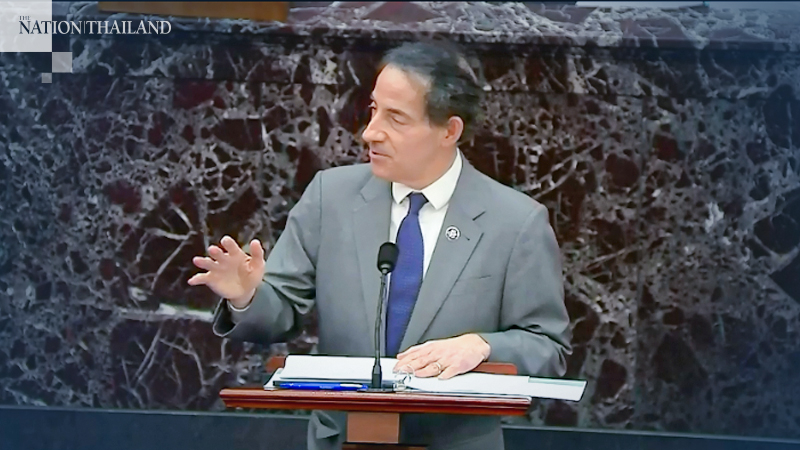
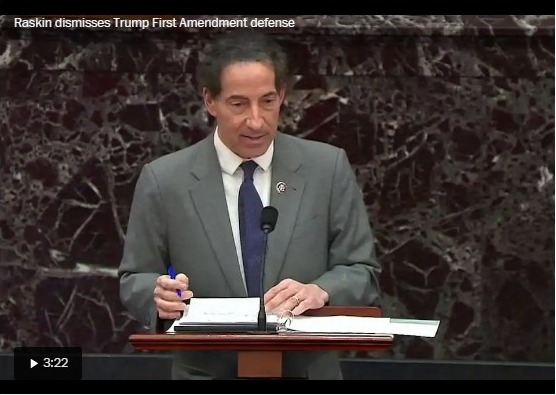
Rep. Jamie Raskin, D-Md., the lead impeachment manager, sought to do that early in his presentation. Trump’s team has broadly referred to Trump’s claims of free speech while ignoring the established limits on such speech, which include incitement and defamation. The generic example is shouting fire in a crowded theater. Yes, you have free speech, but no, you can’t just say whatever you want, because your words have consequences for other people.

Raskin rode that metaphor:

“This case is much worse than someone who falsely shouts ‘Fire!’ in a crowded theater. It’s more like a case where the town fire chief who’s paid to put out fires sends a mob not to yell ‘Fire!’ in a crowded theater but to actually set the theater on fire, and who then when the fire alarms go off and the calls start flooding into the fire department asking for help, does nothing but sit back, encourage the mob to continue its rampage and watch the fire spread on TV with glee and delight.

“So then we say this fire chief should never be allowed to hold this public job again, and you’re fired and you’re permanently disqualified.”

There are limits to the metaphor. Trump’s response was delayed, even by the accounts of GOP senators and some former White House aides. He also offered words of praise for the rioters, expressing “love” for them even as it was occurring and later saying it would be a day for them to remember. But he did, in the same “love” video, tell them to go home peacefully.

Trump often mixes his messages like this, giving himself plausible deniability while seeming to send a message. His team will focus on the “go home” stuff rather than the “We love you” stuff. It’s up to Democrats to argue that his encouragement and negligence outweighed these messages.

Expect that argument to rely heavily upon the statements of rioters who say they were encouraged by Trump to act – along with accounts that Trump was happy about the scenes he was seeing on TV.

2. Connecting the dots on subversion

Democrats’ impeachment article focused mostly on one event: Trump’s Jan. 6 speech on the Ellipse. It also mentioned Trump’s call to Georgia Secretary of State Brad Raffensperger, a Republican, in which he asked the official to “find” enough votes to flip the state, as well as a broad reference to Trump’s “prior efforts to subvert and obstruct the certification of” election results.

Given that, there was a real question about how far back in history they would go and what they would use to prove incitement – including whether and how much they would lump in Trump’s past references to violence by his supporters.

Early on, they did go through some of that history, while focusing more on Trump’s subversion of the election.

Rep. Joaquin Castro, D-Texas,) laid out a timeline of events dating to the summer, noting Trump laid a predicate for claiming the election was stolen as far back as June. Trump made these claims long before even mail ballots were sent out. The argument: He was whipping up his supporters for a moment like Jan. 6 for a very long time.

“This attack did not come from one speech, and it didn’t happen by accident,” Castro said. “The evidence shows clearly that this mob was provoked over many months by Donald J. Trump. And if you look at the evidence, his purposeful conduct, you’ll see that the attack was foreseeable and preventable.”

Castro pointed to Trump’s tweets and comments as early as May saying that the only way he would lose the election was if it was rigged – despite polls at the time repeatedly showing his loss was the likeliest outcome. He played clips of Trump supporters who internalized this message and took it at face value. He also played clips of people, even as the votes were being counted, rising up in protest – scenes that bore a less violent resemblance to what transpired Jan. 6.

Rep. Eric Swalwell, D-Calif., said Trump sought to “prime” his supporters for Jan. 6 for months.

“That took time,” Swalwell said, revisiting the fire metaphor. “Just like to build a fire, it doesn’t just start with the flames. Donald Trump for months and months assembled the tinder, the kindling, threw on logs for fuel to have his supporters believe that the only way their victory would be lost was if it was stolen – so that way President Trump was ready, if he lost the election, to light the match.”

There is no question that Trump’s claims about the election have been routinely wrong; the courts have ruled as such. Claiming an election will be stolen months before it’s held also speaks to the idea that he was planning for a specific eventuality.

The challenge for Democrats, from there, is to argue that this wasn’t just an effort to save face – to pretend he never lost. Playing with fire is different from deliberately lighting it. On that front, you would think they’ll soon talk about the many ways in which he seemed to offer a specific course of action in the situation he spent so many months preparing his supporters for.

3. References to Trump and violence

Democrats did get around to highlighting Trump’s past rhetoric encouraging and suggesting violence by his supporters, while keeping it focused on events surrounding the election.

Del. Stacey Plaskett of the Virgin Islands was given an unusually large platform for a non-voting member of Congress. She used it to lay out Trump’s past comments about such violence.

She noted that Trump endorsed his supporters surrounding a Biden campaign bus on a Texas highway just before the election and, according to some accounts, attempting to drive it off the road. Trump tweeted a video with fight music behind it and said at the time, “These patriots did nothing wrong.” Sen. Marco Rubio, R-Fla., also approved of the scene.

An organizer of that event was later involved in encouraging people to storm the Capitol, having cited flimsy fencing around the Capitol and using a bullhorn to urge people to enter the building.

The second major event she spotlighted was Trump being asked at a September presidential debate to repudiate more extreme elements of the conservative movement, during which he told the Proud Boys to “stand back and stand by.” The comment, like many of Trump’s which will be at issue in the trial, was criticized for promoting potential violence which eventually became a reality. The Proud Boys also used it as a mantra, suggesting they viewed it as encouragement. And they figured prominently in the storming of the Capitol.

“This was not just one reference or a message to supporters by a politician to fight for a cause,” Plaskett said. “He’d assembled thousands of violent people, people he knew were capable of violence, people he had seen be violent. They were standing now in front of him. And then he pointed to us (in Congress), lit the fuse and sent an angry mob.”

Thus far, Democrats haven’t delved more deeply into Trump’s past suggestions or endorsements of violence, outside the context of the election. Plaskett’s presentation was focused upon those specific ones, which could be more directly attached to those who literally stormed the Capitol.

But there is plenty of grist for that mill beyond what she referenced, which could come later in the Democrats’ presentation.

4. The deliberate-negligence argument

One way to drive home the above point is to note that Trump didn’t just light the fire – he declined to snuff it once it started burning. That shows that, at the very least, this was an outcome he was OK with, even if he didn’t outright desire it.

Democrats set about making such an argument – call it deliberate negligence – on Tuesday.

Beyond Raskin’s allusion to Trump deciding to “sit back” and let it happen, Castro and Swalwell noted that some officials had warned about the possibility of such scenes weeks beforehand, but Trump did little. Swalwell contrasted this with Trump’s other calls to action.

“‘Stop the count.’ ‘Stop the steal,'” Swalwell said, referring to Trump’s post-election tweets alleging fraud. “President Trump was never shy about using his platforms to try and stop something. He could have very easily told his supporters: Stop threatening officials. Stop going to their homes. Stop it with the threats. But each time he didn’t. Instead, in the face of escalating violence, he incited them further.”

Democrats signaled this will be a focal point of the case against Trump, including Trump’s tweet attacking Vice President Mike Pence, even shortly after Pence had been removed from the chamber for his safety.

“You will see his relentless attack on Vice President Pence, who was, at that very moment, hiding with his family as armed extremists were chanting, ‘Hang Mike Pence!,’ calling him a traitor,” said Rep. Joe Neguse, D-Colo., another impeachment manager. He added: “If as soon as this had started, President Trump had simply gone on to TV, just logged on to Twitter and said, ‘Stop the attack,’ if he had done so with even half as much force as he said, ‘Stop the steal,’ how many lives would we have saved? Sadly, he didn’t do that.”

A majority of the people arrested for Capitol riot had a history of financial trouble #SootinClaimon.Com

#SootinClaimon.Com : ขอบคุณแหล่งข้อมูล : หนังสือพิมพ์ The Nation.

A majority of the people arrested for Capitol riot had a history of financial trouble

InternationalFeb 11. 2021Thousands of Trump supporters violently storm the U.S. Capitol on Jan. 6, 2021, to support President Trump's baseless claims that he won the election. MUST CREDIT: Washington Post photo by Michael Robinson ChavezThousands of Trump supporters violently storm the U.S. Capitol on Jan. 6, 2021, to support President Trump’s baseless claims that he won the election. MUST CREDIT: Washington Post photo by Michael Robinson Chavez

By The Washington Post · Todd C. Frankel

WASHINGTON – Jenna Ryan seemed like an unlikely participant in the mob that stormed the U.S. Capitol on Jan. 6. She was a real estate agent from Texas. She flew into Washington on a private jet. And she was dressed that day in clothes better suited for a winter tailgate than a war.

Yet Ryan, 50, is accused of rushing into the Capitol past broken glass and blaring security alarms and, according to federal prosecutors, shouting: “Fight for freedom! Fight for freedom!”

But in a different way, she fit right in.

Despite her outward signs of success, Ryan had struggled financially for years. She was still paying off a $37,000 lien for unpaid federal taxes when she was arrested. She’d nearly lost her home to foreclosure before that. She filed for bankruptcy in 2012 and faced another IRS tax lien in 2010.

Nearly 60% of the people facing charges related to the Capitol riot showed signs of prior money troubles, including bankruptcies, notices of eviction or foreclosure, bad debts, or unpaid taxes over the past two decades, according to a Washington Post analysis of public records for 125 defendants with sufficient information to detail their financial histories.

The group’s bankruptcy rate – 18% – was nearly twice as high as that of the American public, The Post found. A quarter of them had been sued for money owed to a creditor. And 1 in 5 of them faced losing their home at one point, according to court filings.

The financial problems are revealing because they offer potential clues for understanding why so many Trump supporters – many with professional careers and few with violent criminal histories – were willing to participate in an attack egged on by the president’s rhetoric painting him and his supporters as undeserving victims.

While no single factor explains why someone decided to join in, experts say, Donald Trump and his brand of grievance politics tapped into something that resonated with the hundreds of people who descended on the Capitol in a historic burst of violence.

“I think what you’re finding is more than just economic insecurity but a deep-seated feeling of precarity about their personal situation,” said Cynthia Miller-Idriss, a political science professor who helps run the Polarization and Extremism Research Innovation Lab at American University, reacting to The Post’s findings. “And that precarity – combined with a sense of betrayal or anger that someone is taking something way – mobilized a lot of people that day.”

The financial missteps by defendants in the attempted insurrection ranged from small debts of a few thousand dollars more than a decade ago to unpaid tax bills of $400,000 and homes facing foreclosure in recent years. Some of these people seemed to have regained their financial footing. But many of them once stood close to the edge.

Ryan had nearly lost everything. And the stakes seemed similarly high to her when she came to Washington in early January. She fully believed Trump’s false claims that the election was stolen and that he was going to save the country, she said in an interview with The Post.

But now – facing federal charges and abandoned by people she considered “fellow patriots” – she said she feels betrayed.

“I bought into a lie, and the lie is the lie, and it’s embarrassing,” she said. “I regret everything.”

The FBI has said it found evidence of organized plots by extremist groups. But many of the people who came to the Capitol on Jan. 6 – including Ryan – appeared to have adopted their radical outlooks more informally, consuming conspiracy theories about the election on television, social media and right-wing websites.

The poor and uneducated are not more likely to join extremist movements, according to experts. Two professors a couple of years ago found the opposite in one example: an unexpectedly high number of engineers who became Islamist radicals.

In the Capitol attack, business owners and white-collar workers made up 40% of the people accused of taking part, according to a study by the Chicago Project on Security and Threats at the University of Chicago. Only 9 percent appeared to be unemployed.

The participation of people with middle- and upper-middle-class positions fits with research suggesting that the rise of right-wing extremist groups in the 1950s was fueled by people in the middle of society who felt they were losing status and power, said Pippa Norris, a political science professor at Harvard University who has studied radical political movements.

Miller-Idriss said she was struck by a 2011 study that found household income was not a factor in whether a young person supported the extreme far right in Germany. But a highly significant predictor was whether they had lived through a parent’s unemployment.

“These are people who feel like they’ve lost something,” Miller-Idriss said.

Going through a bankruptcy or falling behind on taxes, even years earlier, could provoke a similar response.

“They know it can be lost. They have that history – and then someone comes along and tells you this election has been stolen,” Miller-Idriss said. “It taps into the same thing.”

Trump’s false claims about election fraud – refuted by elections officials and rejected by judges – seemed tailored to exploit feelings about this precarious status, said Don Haider-Markel, a political science professor at the University of Kansas who studies political extremism.

“It’s hard to ignore with a Trump presidency that message that ‘the America you knew and loved is going away, and I’m going to protect it,'” Haider-Markel said. “They feel, at a minimum, that they’re under threat.”

While some of the financial problems were old, the pandemic’s economic toll appeared to inflict fresh pain for some of the people accused of participating in the attempted insurrection.

A California man filed for bankruptcy one week before allegedly joining the attack, according to public records. A Texas man was charged with entering the Capitol one month after his company was slapped with a nearly $2,000 state tax lien.

Several young people charged in the attack came from families with histories of financial duress.

The parents of Riley June Williams – a 22-year-old who allegedly helped to steal a laptop from House Speaker Nancy Pelosi’s Capitol office – filed for bankruptcy when she was a child, according to public records. A house owned by her mother faced foreclosure when she was a teenager, records show. Recently, a federal judge placed Williams on home confinement with her mother in Harrisburg, Pa. Her federal public defender did not respond to a request for comment.

People with professional careers such as respiratory therapist, nurse and lawyer were also accused of joining in.

One of them was William McCall Calhoun, 57, a well-known lawyer in Americus, Ga., 130 miles south of Atlanta, who was hit with a $26,000 federal tax lien in 2019, according to public records. A woman who knows Calhoun, who spoke on the condition of anonymity to talk candidly, said he started to show strong support for Trump only in the past year. An attorney for Calhoun declined to comment.

Ashli Babbitt, who was shot and killed by police when she tried to leap through a door’s broken window inside the Capitol, had struggled to run a pool-service company outside San Diego and was saddled with a $23,000 judgment from a lender in 2017, according to court records.

Financial problems were also apparent among people federal authorities said were connected to far-right nationalist groups, such as the Proud Boys.

Dominic Pezzola, who federal authorities said is a member of the Proud Boys, is accused of being among the first to lead the surge inside the Capitol and helping to overwhelm police. Up to 140 officers were injured in the storming of the Capitol and one officer, Brian Sicknick, was killed.

Pezzola, of Rochester, N.Y., also has been named in state tax warrants totaling more than $40,000 over the past five years, according to public records. His attorney declined to comment.

The roots of extremism are complex, said Haider-Markel.

“Somehow they’ve been wronged, they’ve developed a grievance, and they tend to connect that to some broader ideology,” he said.

Ryan, who lives in Frisco, Texas, a Dallas suburb, said she was slow to become a big Trump supporter.

She’s been described as a conservative radio talk show host. But she wasn’t a budding Rush Limbaugh. Her AM radio show each Sunday focused on real estate, and she paid for the airtime. She stopped doing the show in March, when the pandemic hit.

But she continued to run a service that offers advice for people struggling with childhood trauma and bad relationships. Ryan said the work was based on the steps she took to overcome her own rough upbringing.

Twice divorced and struggling with financial problems, Ryan developed an outlook that she described as politically conservative, leaning toward libertarian.

But politics was not her focal point until recently. She recalled being upset when President Barack Obama won reelection in 2012. And she preferred Trump over Hillary Clinton four years later. But she said she wasn’t strident in her support for Trump.

That changed as the 2020 election approached.

She said she started reading far-right websites such as Epoch Times and Gateway Pundit. She began streaming shows such as Alex Jones’s “Infowars” and former Trump campaign manager Steve Bannon’s “War Room: Pandemic.” She began following conspiracy theories related to QAnon, a sprawling set of false claims that have coalesced into an extremist ideology. She said she didn’t know if the posts were true, but she was enthralled.

“It was all like a football game. I was sucked into it. Consumed by it,” Ryan said.

She attended the first protest in her life in April, going to Austin to vent about the state’s pandemic lockdown orders. That was followed by a rally for Shelley Luther, who gained national attention for reopening her beauty salon in Dallas in defiance of the lockdown.

Ryan said she traveled to Trump’s “Save America” rally on a whim. A Facebook friend offered to fly her and three others on a private plane.

They arrived in Washington a day early and got rooms at a Westin hotel downtown, Ryan said.

It was her first trip to the nation’s capital.

The next morning, Jan. 6, the group of friends left the hotel at 6 a.m., Ryan said. She was cold, so she bought a $35 knit snow hat with a “45” emblem from a souvenir shop. They then followed the crowd streaming toward the National Mall.

“My main concern was there were no bathrooms. I kept asking, ‘Where are the bathrooms?'” she said. “I was just having fun.”

They listened to some of the speakers. But mostly they walked around and took photos. She felt like a tourist. They grabbed sandwiches at a Wawa convenience store for lunch. They hired a pedicab to take them back to the hotel.

She drank white wine while the group watched on television as Congress prepared to certify the electoral college votes. They listened to clips of Trump telling rallygoers to walk to the Capitol and saying, “We fight like hell, and if you don’t fight like hell you’re not going to have a country anymore.”

They decided to leave the hotel and go to the Capitol.

Ryan said she was reluctant.

But she also posted a video to her Facebook account that showed her looking into a bathroom mirror and saying, according to an FBI account of her charges: “We’re gonna go down and storm the capitol. They’re down there right now and that’s why we came and so that’s what we are going to do. So wish me luck.”

She live-streamed on Facebook. She posted photos to Twitter. She got closer to the Capitol with each post. She stood on the Capitol’s steps. She flashed a peace symbol next to a smashed Capitol window. The FBI also found video of her walking through doors on the west side of the Capitol in the middle of a packed crowd, where she said into a camera, according to the bureau: “Y’all know who to hire for your realtor. Jenna Ryan for your realtor.”

The FBI document does not state how long Ryan spent inside the building. She said it was just a few minutes. She and her new friends eventually walked back to the hotel, she said.

“We just stormed the Capital,” Ryan tweeted that afternoon. “It was one of the best days of my life.”

She said she realized she was in trouble only after returning to Texas. Her phone was blowing up with messages. Her social media posts briefly made her the infamous face of the riots: the smiling real estate agent who flew in a private jet to an insurrection.

Nine days later, she turned herself in to the FBI. She was charged with two federal misdemeanors related to entering the Capitol building and disorderly conduct. Last week, federal authorities filed similar charges against two others on her flight: Jason L. Hyland, 37, of Frisco, who federal authorities said organized the trip, and Katherine S. Schwab, 32, of Colleyville, Texas.

Ryan remained defiant at first. She clashed with people who criticized her online. She told a Dallas TV station she deserved a presidential pardon.

Then Trump left for Florida. President Joe Biden took office. And Ryan, at home in Texas, was left to wonder what to do with her two mini-goldendoodle dogs if she goes to prison.

“Not one patriot is standing up for me,” Ryan said recently. “I’m a complete villain. I was down there based on what my president said. ‘Stop the steal.’ Now I see that it was all over nothing. He was just having us down there for an ego boost. I was there for him.”

‘I’m not a cat’: Lawyer’s struggle with Zoom filters makes for instant Internet catnip #SootinClaimon.Com

#SootinClaimon.Com : ขอบคุณแหล่งข้อมูล : หนังสือพิมพ์ The Nation.

‘I’m not a cat’: Lawyer’s struggle with Zoom filters makes for instant Internet catnip

InternationalFeb 11. 2021

By The Washington Post · Meryl Kornfield, Kim Bellware, Hannah Knowles

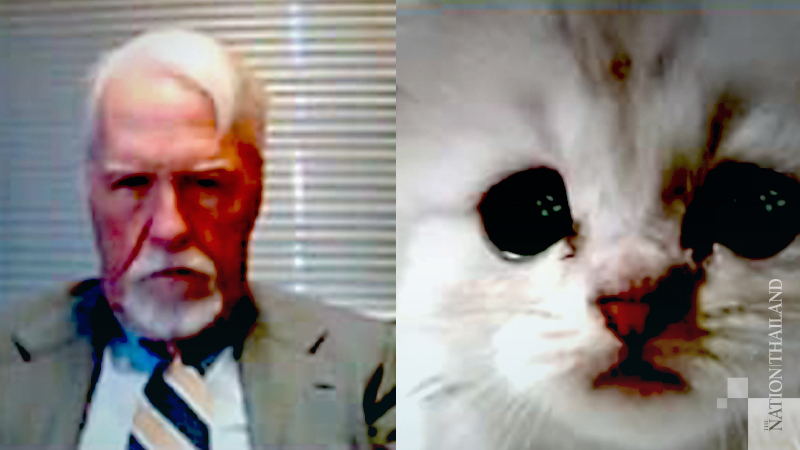
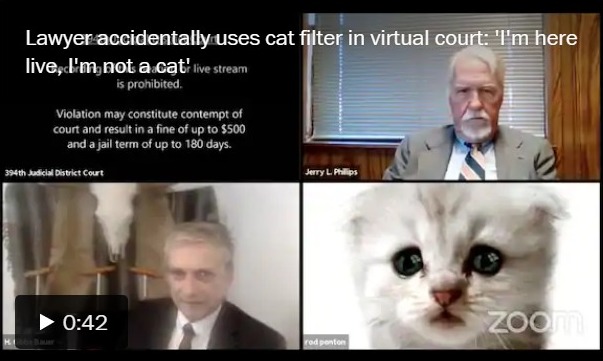
As far as courtroom disclosures, this one was unique: “I’m not a cat,” a Texas attorney claimed as his Zoom square displayed a fluffy, white feline.

https://www.washingtonpost.com/video/c/embed/ff5ef92a-8a68-407e-8c16-932ca6e78122

At a routine civil forfeiture case hearing in Texas’ 394th Judicial District Court, Rod Ponton, Presidio County attorney, accidentally signed on with the cat filter, making the flummoxed attorney look like an adorable kitten. The 34-second clip of Ponton’s brief appearance as a cat immediately amusing many and becoming a viral hit among the likes of Vermont Sen. Bernie Sander’s mittens and runaway llamas at a time when court events are frequently held virtually.

The prevalence of video chat platforms for court appearances has led to other unusual moments: A defendant in Sacramento appeared from a barber’s chair, a Florida burglary suspect tried to shoot his shot with a judge and a lawyer in Peru was caught on camera naked after he stripped to have sex. But Tuesday’s video was the cat’s pajamas to many.

Even Ponton, once he recovered from cat face and mortification, found humor in his proverbial 15 minutes of fame.

“At first I was worried about it,” Ponton, 69, told The Washington Post on Tuesday, “but then I realized as it was going viral if the country could take a moment to laugh at my cat moment at my expense, I’ll take it. We’ve had a stressful year.”

Judge Roy Ferguson, who was presiding over the hearing, was the first to mention the cat filter.

For the first few seconds, it seemed a cat had Ponton’s tongue as he silently tried to revert the effect, giving an illusion that the virtual kitten’s delightfully wide eyes were darting back and forth.

“Mr. Ponton I believe you have a filter turned on in the video settings,” Ferguson said.

Ponton interrupted the judge with an exacerbated guttural noise.

“Auughh,” he exclaimed. “we’re trying to – can you hear me judge?”

The video’s sound was fine.

“I can hear you,” Ferguson told the cat lawyer. “I think it’s a filter.”

“It is,” Ponton said, the kitten’s head bobbing up and down to signal Ponton was nodding.

“I don’t know how to remove it. I got my assistant here trying to…” Ponton added, trailing off.

“I’m prepared to go forward with it,” Ponton said, not wanting to pussyfoot around. “I’m here live.”

“I’m not a cat,” Ponton promised as the cat mouthed what he was saying.

“I can see that,” Ferguson said after a pause.

Eventually, Ponton figured out how to remove the filter and the rest of the hearing proceeded as normal. He said he was using his legal assistant’s computer in his office and believes her daughter may have swapped in the filter before he logged on.

Seeing the moment as an educational opportunity, Ferguson posted the video and it was shared by Texas attorney Kendyl Hanks and Reuters U.S. Supreme Court reporter Lawrence Hurley. By Tuesday evening, one version on Twitter had been viewed more than 18 million times.

“It’s something that’s given the world a smile – and it’s an innocent smile at no one’s expense,” Ferguson told The Post.

Reaction to the video was immediate: People jokingly compared the cat lawyer’s hearing to the ongoing Impeachment hearing, photoshopping a cat head over the face of Trump lawyer Bruce Castor Jr. Many joked the viral moment could end badly, alluding to Milkshake Duck, a meme that describes people who initially are perceived as good but later revealed to be flawed.

Ponton, a well-regarded lawyer, is a former city attorney for Alpine, the small Texas city where he currently practices law, the Dallas Morning News reported. In 2019, Ponton appeared in a Netflix documentary series, The Confession Killer, about one of his former clients, convicted serial killer Henry Lee Lucas, according to the newspaper.

Now, Ponton has joined the ranks of others who gained fame during the pandemic for Zoom antics, including a boss who accidentally showed up to a Monday virtual meeting as a potato.

Since the start of the pandemic, Texas courts have held more than 1 million virtual hearings, leaving Ferguson often in charge of guiding others through technical difficulties, he said.

“That’s part of my job now in the pandemic – to fix everything that can go wrong,” he said.

The 394th Judicial District has no IT department, Ferguson said, and covers a roughly 25,000-mile rural area of western Texas nestled between Mexico and New Mexico. Ferguson, who has presided over cases via Zoom since last March, said he’s seen “everything possible that could go wrong” with a virtual hearing.

His best tip for those appearing virtually before a judge: You’re still in the courtroom – and audible to the judge – after he adjourns the virtual hearing. “There are some very colorful things from lawyers being heard,” Ferguson said. “Watch what you say, because YouTube hears all and never forgets.”

Ferguson also said that while he was genuinely happy to see people enjoy a laugh – one he hopes is with the lawyers and not at them – he views the video as a testament to the professionalism of Texas lawyers, as the other attorney present was notably straight-faced in the video.

“Every one of those people in that room kept their composure,” Ferguson said. “The lawyer who was, I guess you would say the butt of the joke, has handled it with absolute grace.”

Ponton, who says he prefers dogs to cats if you ask (and we did), has another tip to take from the tale: “It happened to me today, it can happen to you tomorrow.”

Hong Kong to reopen venues, relax distancing rules as cases drop #SootinClaimon.Com

#SootinClaimon.Com : ขอบคุณแหล่งข้อมูล : หนังสือพิมพ์ The Nation.

Hong Kong to reopen venues, relax distancing rules as cases drop

InternationalFeb 11. 2021

By Syndication Washington Post, Bloomberg · Jinshan Hong

Hong Kong will allow restaurant dining-in services until 10 p.m. and relax other social-distancing rules after the Chinese New Year, as the city tries to move past a winter wave that’s throttled the economy.

The city will permit four people per dining table, doubling from the current limit of two, starting from Feb. 18, if the virus remains contained over the Lunar New Year, officials said at a briefing on Wednesday. Venues ranging from indoor and outdoor sports centers, beauty parlors, theme parks and cinemas will also be allowed to reopen.

“We are cautiously positive on the epidemic,” Food and Health Secretary Sophia Chan said. “If Hong Kong residents continue to observe social-distancing rules, following this trend, we hope we can resume normal life after Lunar New Year.”

Hong Kong will require staff virus tests if businesses want to reopen. The government is also discussing relaxing the public gathering rule to four people as well, from the current limit of two, according to Chan.

The Asian financial hub has seen cases fading to a few dozens in the past week, after Hong Kong deployed compulsory testing and neighborhood lockdowns in an attempt to achieve zero cases in the community. The closure of schools and some businesses has been in place for over two months, and has been extended into the New Year holidays.

A panel of experts on Wednesday postponed a decision on recommending a second vaccine for the city. It announced they will seek more data from Sinovac Biotech Ltd. on its vaccine before it meets again in two weeks to review its emergency use application.

The vaccine developed by BioNTech SE and Pfizer Inc. already received a greenlight last month. The city is expected to start its inoculation program as early as the end of February.

Myanmar faces wider business fallout after Kirin retreat #SootinClaimon.Com

#SootinClaimon.Com : ขอบคุณแหล่งข้อมูล : หนังสือพิมพ์ The Nation.

Myanmar faces wider business fallout after Kirin retreat

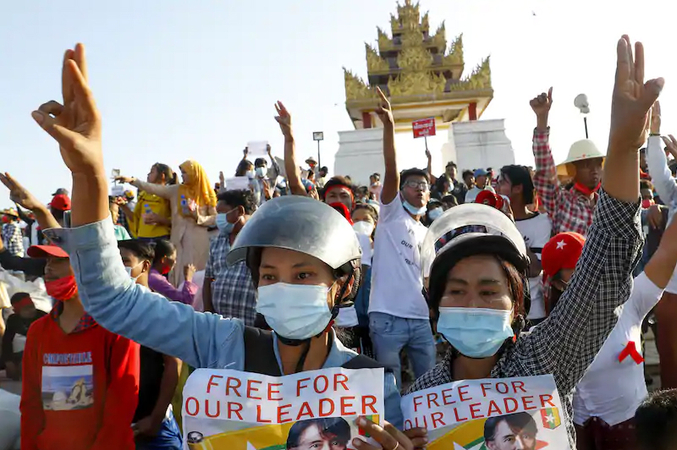
InternationalFeb 11. 2021A demonstrator holds up a National League for Democracy (NLD) flag during a protest outside the Embassy of Myanmar in Bangkok, Thailand, on Feb. 1 2021. MUST CREDIT: Bloomberg photo by Andre Malerba.A demonstrator holds up a National League for Democracy (NLD) flag during a protest outside the Embassy of Myanmar in Bangkok, Thailand, on Feb. 1 2021. MUST CREDIT: Bloomberg photo by Andre Malerba.

By Syndication Washington Post, Bloomberg · Faris Mokhtar, Philip J. Heijmans, Chanyaporn Chanjaroen

Myanmar’s political upheaval is prompting global companies from Japan to Thailand to dial back operations in the country, spurring concern about a widening business fallout.

From beer maker Kirin Holdings Co. to an early backer of gaming firm Razer Inc., companies and investors are weighing the impact of a military coup that’s thrust the once- thriving nation into a state of emergency. The turmoil is prompting multinationals like Thailand’s biggest industrial developer to delay investment plans, a harbinger of things to come should the chaos deepen.

Western nations are applying pressure on the newly installed military government of the Southeast Asian country, once regarded as greenfield territory for everything from oil and gas to leisure resorts. With the U.S. reiterating plans to renew sanctions, it could cause a rippling effect among businesses, threatening $5.5 billion in foreign investment in a country that just a few years ago was on the path to democracy.

“It will definitely get bigger as these corporations get on board the leave-first-and-ask-questions-later bandwagon,” Justin Tang, head of Asian research at United First Partners in Singapore.

Myanmar has been attracting more outside investment in recent years after posting double-digit economic growth in the early part of the last decade. Bordering the massive markets of India and China, Myanmar has abundant natural resources, including oil and gas, gold, silver and precious stones. The population of about 57 million people is greater than South Korea’s, and not far off Italy’s.

Among recent foreign deals, CVC Capital Partners reached an agreement in December to buy Myanmar’s biggest telecommunications tower company for close to $700 million. The deal for Irrawaddy Green Towers was the second-biggest in the country, trailing only the acquisition of Myanmar Distillery group by a unit of Thai Beverage. Singapore’s sovereign wealth firm GIC and Norway’s Norfund bought a 30% stake in Yoma Bank for 131 billion kyat ($92.1 million) last April.

Nations with the most at stake from the instability include Singapore, Myanmar’s largest foreign investor, accounting for almost 34% of approved investment by dollar value, according to a World Bank report in December. Yoma Strategic Holdings, a Singapore-listed conglomerate that gets almost all its revenue from Myanmar, has plunged by a third this year.

Singapore is monitoring the situation closely, said a spokesperson for Enterprise Singapore, a government agency that helps companies grow overseas.

The turmoil is creating a rippling effect across industries. Kirin ended its joint-venture partnership with the nation’s largest brewer Myanma Economic Holdings Public Co., which has ties to the military. The company isn’t planning to entirely exit the country, where its operations accounted for just 1.7% of revenue in 2019.

Lim Kaling, the founding investor of Singapore-based gaming firm Razer, is disposing of his one-third stake in a joint venture that owns RMH Singapore Pte Ltd. RMH owns 49% of Virginia Tobacco Co. in Myanmar, while Myanma Economic Holdings Ltd. — owned by the military — holds the balance. “I hope for a time when I can be an investor in the country and its people once more,” Kaling said in a statement on Monday.

Amata Corp., one of Thailand’s biggest industrial land developers, delayed some investment plans after it won approval from the government to proceed on several projects.

“The investment outlook of Myanmar doesn’t look good,” Viboon Kromadit, the company’s chief marketing officer, said last week. “Possible sanctions by the international community will definitely affect foreign companies’ confidence.”

Singapore-listed energy company Interra Resources Ltd. may face labor disruptions at the Chauk and Yenangyaung plants due to the protests, the company said in a filing to the Singapore Exchange.

Rights groups have called on a boycott of companies believed to be owned by the country’s military. There are 134 companies owned by two of Myanmar’s military-run holding firms — Myanma Economic Holdings and Myanmar Economic Corp. — according to data compiled by Bloomberg.

The unrest will lower the country’s economic growth this fiscal year to 3%, from a previous estimate of 4.5%, according to estimates from Malaysia’s Malayan Banking Bhd.

“A military coup has dealt a severe blow to Myanmar’s economic recovery and political stability,” economists Linda Liu and Chua Hak Bin said in a note. Investment “will likely fall given heightened uncertainty and freeze on fresh investments from Western countries.”

Companies adopting a wait-and-see approach include:

– Thailand’s energy company, PTT Exploration & Production, is closely monitoring the political situation but doesn’t expect the internal strife to affect its operations or plans, senior vice president for finance Orachon Ouiyamapun said at an investor presentation on Tuesday.

– Australian & New Zealand Banking Group Ltd. said it has a small presence in the Southeast Asian country and is monitoring the situation closely, a spokesperson said.

– Singapore’s Oversea-Chinese Banking Corp.’s branch continues to operate in the country, said Patrick Chew, head of operational risk management.

Chinese investors, on the other hand, could benefit from the upheaval. They tend to have a higher risk tolerance compared with those from other regions, according to an analysis by Fitch Solutions Country Risk & Industry Research. That means there’s a “chance they may take the opportunity to expand their reach in the country as other investors stay cautious.”

Biden says he will impose new sanctions on Myanmar leaders over coup #SootinClaimon.Com

#SootinClaimon.Com : ขอบคุณแหล่งข้อมูล : หนังสือพิมพ์ The Nation.

Biden says he will impose new sanctions on Myanmar leaders over coup

InternationalFeb 11. 2021

By The Washington Post · Anne Gearan, John Hudson

WASHINGTON – President Joe Biden announced Wednesday that the United States would impose economic sanctions on the leaders who carried out a military coup in Myanmar and voiced support for crowds risking arrest to protest the ouster of elected officials in the Southeast Asian nation.

The move marks Biden’s first implementation of new sanctions, a punitive tool with varying effectiveness. The White House did not announce names of current and former military leaders who will be targeted or other details.

Biden said he had approved an executive order “enabling us to immediately sanction the military leaders who directed the coup, their business interests, as well as close family members.”

Biden said his order will block the generals’ access to some $1 billion in assets in the United States.

It is not yet clear whether the United States is going after the country’s longtime military chief, Min Aung Hlaing, who is now the nation’s de facto leader, or how onerous the new penalties will be on military figures thought to control assets in other countries. Many senior military leaders in Myanmar are already under sanctions imposed in protest of military action against the Muslim Rohingya minority.

“The military must relinquish power it seized and demonstrate respect for the will of the people of Burma,” the president said at the White House, using another name for the country.

Biden also renewed the U.S. call for the elected leadership to be released, including deposed de facto leader Aung San Suu Kyi.

The military took power by force on Feb. 1, claiming that the victory by Suu Kyi’s pro-democracy political party had been fraudulent. Military leaders promised a new election in one year and placed Suu Kyi and others in detention.

“The people of Burma are making their voices heard, and the world is watching,” Biden said. “We’ll be ready to impose additional measures and we’ll continue to work with our international partners to urge other nations to join us in these efforts.”

Demonstrators have filled city streets in Myanmar, demanding that the military restore civilian leadership and release more than 150 political detainees. The protests have continued despite the threat that authorities might use military force to clear the crowds.

On Sunday, demonstrators in Yangon massed near the iconic Sule Pagoda, the site of major pro-democracy uprisings in previous decades, defied the military by holding up three fingers in a gesture of resistance popularized by the “Hunger Games” series.

In response to the protests, the military has banned gatherings of more than five people and implemented a curfew from 8 p.m. to 4 a.m. in Yangon and Mandalay, the country’s two biggest cities. The military also banned the use of Facebook, Twitter and Instagram for citizens “until further notice.”

The events appeared to end a march toward democratic rule in Myanmar over the past decade. The military, long the most important nonreligious institution in the country, had gradually relinquished direct control over the government, released Suu Kyi from house arrest and invited foreign investment, including from the United States.

The Obama administration had encouraged these efforts, dropping some sanctions and broadening its diplomatic and economic outreach. As vice president, Biden had supported those moves.

On Wednesday, Biden noted that U.S. efforts to encourage democracy in Myanmar have been bipartisan and said his administration had consulted with Senate Minority Leader Mitch McConnell, R-Ky.

National security adviser Jake Sullivan spoke to McConnell on Wednesday morning about the latest U.S. efforts related to Myanmar, a McConnell aide said.

“I appreciate the President’s ongoing engagement with Congress on prompt and practical steps to restore democracy in Burma,” McConnell said in a statement. “I hope all nations that respect democracy and the rule of law will join the U.S. in imposing meaningful costs and accountability on the junta.”

Across a range of global issues, the Biden administration has stressed its emphasis on coordinating with U.S. allies to address the biggest challenges the country faces. When asked why Biden’s sanctions announcement did not coincide with measures from U.S. allies, State Department spokesman Ned Price suggested that such moves would be imminent.

“As you hear more from our partners, it’ll be very clear that what we are collectively rolling out will impose steep and profound costs on those responsible for this coup,” Price told reporters Wednesday.

In recent days, Secretary of State Antony Blinken has raised the Biden administration’s “deep concern over the coup in Burma” during his discussions with Asian partners in the region, including in calls with the foreign minister of Singapore on Tuesday and with Vietnam’s foreign minister and deputy prime minister last Thursday.

China claims propaganda win as WHO coronavirus mission leaves empty-handed #SootinClaimon.Com

#SootinClaimon.Com : ขอบคุณแหล่งข้อมูล : หนังสือพิมพ์ The Nation.

China claims propaganda win as WHO coronavirus mission leaves empty-handed

InternationalFeb 11. 2021

By The Washington Post · Gerry Shih

TAIPEI, Taiwan – For the World Health Organization, its fact-finding mission to China left many questions on the possible origins of the pandemic. In Beijing, however, the outcome was framed Wednesday as something solid: vindication and triumph.

The WHO’s headline announcement – that it would rule out the possibility the virus accidentally leaked from a Wuhan lab – was hailed by Chinese officials and in state media as effectively silencing claims that China was hiding secrets and trying to deflect blame.

But some prominent public health experts in the West questioned whether China offered enough freedom for the WHO team to investigate fully Wuhan’s piece of the global pandemic puzzle.

Tuesday’s WHO statement “put an American conspiracy theory to rest,” China’s Global Times newspaper said. The official Reference News called the visit by the U.N. health agency a showcase of China’s “positive, scientific, cooperative attitude.”

Zeng Guang, chief epidemiologist at the Chinese Center for Disease Control, even tried to turn the tables. Other locations in the world, particularly U.S. labs, must be investigated next, said Zeng, because “historically the United States … launched biological and chemical warfare.”

“China was the big winner,” said Yanzhong Huang, a senior fellow for global health at the Council on Foreign Relations. “We understand that they are doing their work within the parameters of the government. But you don’t want to jump to a conclusion based on several hours of conversation with Chinese scientists.”

As the WHO mission departs China this week, it has yielded scant new public information about the pandemic’s roots. The joint Chinese-WHO team mirrored the generally accepted scientific view that the coronavirus most likely jumped from bats to an intermediary species before infecting humans.

It also echoed China’s official position on several contested theories without offering meaningful new evidence.

The WHO team reiterated the Chinese view that it is possible the virus was carried by frozen food, a hypothesis that is hotly debated among researchers and could imply the virus was brought into China from another country.

The officials concurred with Chinese counterparts that the virus could have been spreading around the world before erupting in December 2019 in Wuhan. And they emphatically ruled out a lab mishap after asking Wuhan lab officials if they thought it were possible.

The comments have revived skepticism among the international agency’s critics, as well as the Biden administration, about the value of the politically fraught trip coordinated by Chinese officials, and cast a cloud over a WHO team that is now expected to move on to other regions, possibly Southeast Asia, in the quest to learn more about the virus.

At the State Department, a spokesman said the United States would continue to collect its own information “rather than rush to conclusions that may be motivated by anything other than science,” while White House spokeswoman Jen Psaki called for putting separate, U.S. experts in China.

Jesse Bloom, a virologist at the Fred Hutchinson Cancer Research Center, was “surprised to see some members of the team dismiss the accidental lab leak theory while seeming to suggest, without any specific evidence, the possibility that frozen food might have played a role.”

“I remain agnostic about the origins of SARS-CoV-2,” said Bloom, referring to the virus’ official name. “But it’s important to have a careful independent accounting of the research into SARS-related coronaviruses that was being done in labs in Wuhan before the emergence of this pandemic, and it doesn’t appear that this team accomplished that.”

In early 2020, China staunchly resisted an international inquiry and decried it as a politicized effort by the Trump administration to demonize China. Beijing punished Australia with bruising trade tariffs after Australia proposed the probe, and the idea of an inquiry into the virus origins grew highly charged after Republican officials claimed that the virus was a Chinese bioweapon.

Although the claim was widely debunked, a small minority of researchers maintain it’s possible that a Wuhan lab accidentally leaked the virus during benign research. Other experts argue the genetic makeup of SARS-CoV-2 more likely points to natural evolution in an intermediate species.

Tuesday’s news conference, led by Chinese health officials, highlighted questions reaching back months about the WHO’s ability to conduct an independent probe in China.

The terms of the visit, forged after lengthy negotiations with the Chinese government and made public in November, did not propose any inquiry into labs such as those at the Wuhan Institute of Virology (WIV), a leading center that conducts bat coronavirus research with U.S. government funding and U.S. collaborators.

After the WHO team left quarantine on Jan. 28, its itinerary included interviews with Wuhan doctors, former patients, and a stop at an exhibition hall dedicated to the sacrifice of Chinese medics and soldiers who fought the outbreak.

On Feb. 3, security guards lined the streets outside the WIV and shooed away journalists. Peter Daszak, a WHO delegation member whose nonprofit, EcoHealth Alliance, has formerly collaborated and coordinated U.S. grant funding to the WIV, assured reporters from a car that the WHO team was “asking all the questions that need to be asked.”

Jamie Metzl, an adviser to the WHO and a former Senate aide to Joe Biden, said that “a two-week investigation where they’re being driven around by the Chinese government and given access to cherry-pick people and data doesn’t clear the bar of credibility.”

Metzl said the Biden administration needs to continue supporting the WHO after the Trump administration cut ties.

“We must support their investigations, but they can’t be stage-managed by the country being investigated,” he said.

Richard Ebright, a microbiologist at Rutgers University who has accused the WHO of bending to Chinese pressure, said asking questions wasn’t enough.

“Any institution and nation seeking to clear its name would’ve moved quickly to make available all its databases of genetic sequences and strains, provided lab notes, records and private interviews with research, waste removal and janitorial staff,” Ebright said. “None of that happened or was even requested” as part of the agreement to send experts to China.

Skeptical experts argue that records from the WIV should be analyzed closely because the institute collected nearly 300 bat coronaviruses from southwest China in the past decade, including two of the closest genetic relatives to the SARS-CoV-2 virus. These experts do not suggest that the virus was engineered to be a bioweapon.

At Tuesday’s news conference in Wuhan, WHO and Chinese officials said it was unclear what animal was the intermediary source but offered possibilities, including pangolins. But no animals at the Huanan Seafood Market tested positive for the virus, they said.

Daszak told reporters afterward that the probe should press on to Southeast Asia, which shop records showed could be the source of imported wild animals that arrived at the Huanan market.

After the WHO event ended Tuesday, Yan Yuxin, an anchor on the state broadcaster’s evening newscast, said the pandemic was a “global challenge” that required “global traceability.”

Shortly before midnight, the Reference News, a newspaper for government officials, posted an online commentary directed at Chinese critics: “We advise those Western politicians and media who just open their mouth to be less disruptive and not to be a stumbling block while humanity cooperates to fight the virus.”

U.K. coronavirus restrictions to include hotel quarantines, threats of fines and prison #SootinClaimon.Com

#SootinClaimon.Com : ขอบคุณแหล่งข้อมูล : หนังสือพิมพ์ The Nation.

U.K. coronavirus restrictions to include hotel quarantines, threats of fines and prison

InternationalFeb 11. 2021

By The Washington Post · William Booth, Karla Adam

LONDON – Britain, besieged by a more contagious coronavirus strain and alarmed by the potential of new and imported variants, is about to launch the toughest travel restrictions in Europe, including mandatory hotel quarantines and 1o-year prison terms for those who lie on entry forms.

The government has already shut down almost all travel by international visitors from 33 countries seen as viral hotspots, including Brazil and South Africa.

Beginning Monday, British citizens returning from those “red list” countries must quarantine for 10 days in designated hotels, under police guard, costing travelers £1,750 or about $2,400. Travelers must submit to multiple coronavirus tests before release. Those who try to elude quarantine face $14,000 fines.

The threat of prison time is for anyone found guilty of misleading authorities over having recently been in a red list country.

Only essential travel is allowed from countries not on the list, including the United States. And all international arrivals must show proof of a recent negative coronavirus test and self-quarantine for 10 days, getting tested on days 2 and 8, Health Secretary Matt Hancock announced on Tuesday evening.

The raft of measures marks a profound escalation in Britain’s pandemic response, showing how worried the government and its scientific advisers are about the dizzying rise of various coronavirus “variants of concern,” some of which have evolved to be much more infectious, possibly more deadly or potentially less responsive to vaccines.

Already, Britain on many days posts the highest per capita death toll from the virus in the world.

Forcing arrivals into government-run quarantine sites near airports has been policy in Australia, China and South Korea. But it is new for Europe. And it is especially out-of-character for this Conservative Party British government.

Prime Minister Boris Johnson has been criticized for being too slow in declaring each of three national lockdowns. His government reopened pubs before fully reopening schools and paid people to go out and eat in restaurants last summer.

Throughout the pandemic, Johnson and his Tory backbenchers have been resistant to sweeping travel bans, seeing Britain, and London especially, as a vital crossroads of global travel, trade and finance.

That the “sovereign free-trading island nation,” as Johnson like to describe his country, is essentially retreating into its castle keep, pulling up the drawbridges, appears especially hard for Johnson, as the measures come just as the prime minister hoped to launch his vision for a post-Brexit “Global Britain.”

The red flags denote countries with exploding outbreaks or those that have produced concerning mutations of the virus. Fourteen are in Central and South America, alongside a dozen African nations. Portugal is the only country in Europe to make the list.

Tim Bale, a professor of politics at Queen Mary University of London, said the Johnson government tends to view coronavirus restrictions as “something that will harm the economy, rather than seeing the case for how restrictions early on would actually be better for the economy in the long-term.”

Bale said he imagined the government’s threat of prison for travelers caught lying was designed to be “eye-catching” and show that “to breach regulations would be a serious thing to do.”

But he said it could also be “an attempt by the government to get everyone talking about that, rather than failures going back to March to protect the borders.”

The government has been lax in law enforcement of previous coronavirus travel restrictions, with border force police issuing few fines, leaving it to public health tracers to follow up with travelers to see if they are abiding by quarantine rules.

The newly announced, more actively enforced quarantines have stirred deep feelings of lost liberties.

Jonathan Sumption, a former supreme court judge and medieval historian, asked the health minister in a guest column in the Telegraph, “Does Mr. Hancock really think that non-disclosure of a visit to Portugal is worse than the large number of violent firearms offences or sexual offences involving minors, for which the maximum is seven years?”

Sumption continued, “The hotel quarantine rules are a form of imprisonment in solitary confinement. They are brutal, inhumane and disproportionate. They are economically extremely destructive. They are also of limited value because the virus is already endemic in the UK and spontaneously mutates all the time.”

Lindsey Scott, 36, a supervisor on an offshore oil rig in the Black Sea, off the Turkish coast, told The Washington Post he was reevaluating a planned visit home to see his family in Scotland.

“I’m sure there are a lot of people worse off than me right now,” he said. “Just seems a bit extreme. Would be happy to isolate at home and get the two tests so I could at least be with my family.”

Linda Bauld, a professor of public health at the University of Edinburgh, said that once Britain’s new measures come into effect on Monday, it will have some of the strictest border controls in Europe. She noted that Norway and Iceland also have some managed quarantine.

She said that in addition to risks from new variants, there’s a recognition from some research that Britain “should have had a quarantine system in place some time ago” and that international travel contributed to the second wave of the pandemic here.

In Scotland, Bauld said, “we got infection levels down to 2-3 cases a day in July, and then people were allowed to go off on holiday. And the genomic sequencing shows that lineages of the virus were reseeding into the country by people coming back from elsewhere.”

Johnson’s government and the National Health Service have been running one of the most efficient vaccine campaigns in the world, and they’ve held out hope that if everyone lines up and gets their jabs, restrictions could be lifted in the spring – and summer might feel more normal.

But on Wednesday, Transport Secretary Grant Shapps warned on BBC radio: “Please don’t go ahead and book holidays for something which, at this stage, is illegal to actually go and do, whether it’s here or abroad.”

Earlier this week, England’s deputy chief medical officer, Jonathan Van-Tam, said, “The more elaborate your plans are for summer holidays – in terms of crossing borders, in terms of household mixing – given where we are now, I think we just have to say, the more you are stepping into making guesses about the unknown at this point.”

Fed Chair: Unemployment rate was closer to 10%, not 6.3%, in January #SootinClaimon.Com

#SootinClaimon.Com : ขอบคุณแหล่งข้อมูล : หนังสือพิมพ์ The Nation.

Fed Chair: Unemployment rate was closer to 10%, not 6.3%, in January

InternationalFeb 11. 2021

By The Washington Post · Rachel Siegel

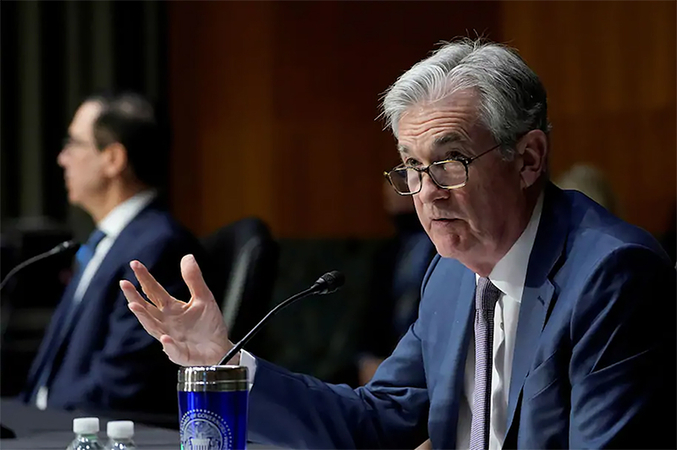
Federal Reserve Chair Jerome Powell said Wednesday that the real unemployment rate in January was “close to 10 percent,” significantly higher than the 6.3% rate reported by the Department of Labor last week.

The discrepancy is due to the “misclassification” of some jobless Americans, Powell said during a virtual speech at the Economic Club of New York. After accounting for people who have left the labor force since February 2020, the unemployment rate is much higher than the official figure, he said.

“Correcting this misclassification and counting those who have left the labor force since last February as unemployed would boost the unemployment rate to close to 10 percent in January,” Powell said Wednesday.

The higher figure is another reflection of how the pandemic continues to constrain the labor market. The U.S. gained back a paltry 49,000 jobs in January. In December, the country lost 227,000 jobs.

The latest figures come as Congress debates President Joe Biden’s $1.9 trillion coronavirus package, which would extend unemployment benefits, issue $1,400 in direct checks and set aside hundreds of billions of dollars to fight the pandemic.

Powell has repeatedly said that the economy’s future depends on controlling the virus. As the number of cases rose through the holiday season, the labor market’s recovery slowed. And for many service-sectors workers, jobs that depend on person-to-person contact have yet to return.

Following Powell’s speech, Senate Finance Committee Chair Ron Wyden, D-Ore. said that the 10% unemployment rate cited by Powell reinforces “the need for the strongest possible benefits package in our COVID relief bill.”

“Federal Reserve Chair Powell’s assessment of joblessness in America is bleak,” Wyden said in a statement.

Powell noted that nearly 5 million people said the pandemic prevented them from looking for work in January. Some parents are providing full-time child care or been forced to stay home with children during virtual schooling. Others have been deterred by fear of the virus, especially in jobs that at restaurants, hotels and entertainment venues.

“We are still very far from a strong labor market whose benefits are broadly shared,” Powell said.

The Bureau of Labor Statistics has flagged undercounts in the official unemployment rate before. In May – when the unemployment rate was a reported 13.3% – the Bureau of Labor Statistics noted a “misclassification error” that lowered the overall rate by about 3 percentage points, meaning the May unemployment rate would have been about 16.3%.

Powell has also spoken about the discrepancy before. After the official unemployment rate fell to 7.9% in September, Powell said that a broader, more accurate measure that adjusts for “mistaken characterizations of job status, and for the decline in labor force participation since February” would put that month’s rate at around 11%.

Powell has repeatedly urged lawmakers to keep relief flowing, especially for the 10 million Americans whose jobs have not returned since the pandemic began. The Fed, in turn, has no plans to raise interest rates until the labor market heals substantially.

As congressional Democrats rush to pass Biden’s coronavirus package, some economists worry the full thrust of the bill could be too much for the economy to handle. Some economists have questioned whether the $1.9 trillion stimulus, combined with pent-up savings that Americans are expected to unleash once the pandemic ends could suddenly overheat the economy, triggering a rise in inflation and forcing the Fed to respond by raising interest rates.

Powell dismissed those concerns. Inflation has been low or stable for decades, and the Fed is prepared to tolerate a temporary rise inflation over its’ 2% target, he said.

It’s possible, Powell said, that aid from Congress plus a spike in consumer spending could cause “some upward pressure on prices.”

But “my expectation is that will be neither large nor sustained,” he said.

Stocks turn lower; Treasurys gain on subdued CPI #SootinClaimon.Com

#SootinClaimon.Com : ขอบคุณแหล่งข้อมูล : หนังสือพิมพ์ The Nation.

Stocks turn lower; Treasurys gain on subdued CPI

InternationalFeb 11. 2021

By Syndication Washington Post, Bloomberg · Claire Ballentine, Olivia Raimonde

U.S. stocks notched a second straight small decline after reaching a record, as investors assessed what the latest inflation reading means for aid prospects.

The S&P 500 Index ended and up-and-down session lower by less than 0.1%. The Dow Jones industrial average posted a gain, while the Nasdaq 100 retreated. The 10-year Treasury yield fell back below 1.15% after the core consumer price index was unchanged last month.

The CPI data are part of an intensifying debate in financial markets over the course of inflation. Despite the muted January figure, investors continue to worry that price pressures are set to increase in the months ahead as Congress passes an aid bill and more vaccinations spur consumer spending.Twitter Inc. climbed after reporting a jump in revenue. Lyft Inc. rallied as the co-founder said the ride-hailing company will “absolutely” turn a quarterly profit this year.

Surging Inflation May Force Fed to Resort to Yield Curve-Control

These are the main moves in markets:

Stocks

– The S&P 500 Index lost less than 0.1% 4 p.m.EST.

– The Stoxx Europe 600 Index fell 0.2%.

– The MSCI Asia Pacific Index rose 0.8%.

– The MSCI Emerging Market Index gained 1.1%.

Currencies

– The Bloomberg Dollar Spot Index fell 0.1%.

– The euro added 0.1% to $1.2125.

– The British pound rose 0.2% to $1.3841.

– The Japanese yen slipped 0.1% to 104.67 per dollar.

Bonds

– The yield on 10-year Treasurys fell two basis points to 1.13%.

– The yield on two-year Treasurys was unchanged at 0.11%.

– Germany’s 10-year yield rose one basis point to -0.44%.

– Britain’s 10-year yield climbed two basis points to 0.48%.

Commodities

– West Texas Intermediate crude gained 0.5% to $58.65 a barrel.

– Gold futures added 0.4% to $1,844.20 an ounce.