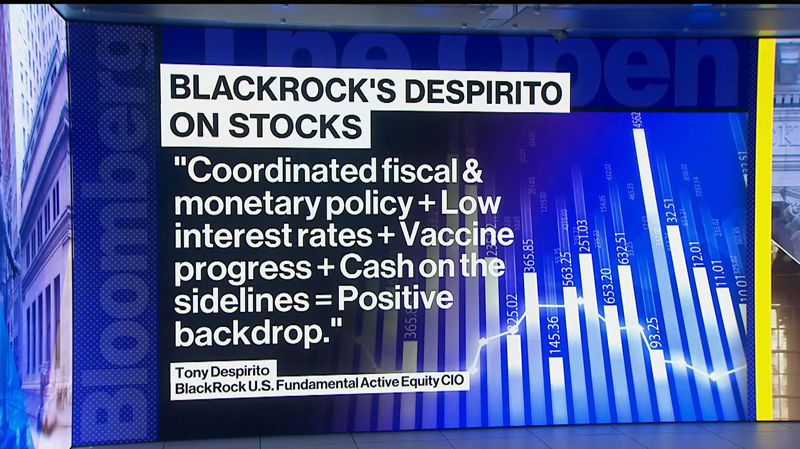
U.S. stocks rose to a record with a late-session advance, while Treasuries slipped as a decline in jobless claims signaled a modest firming of the labor market.
The S&P 500 Index halted a two-day decline. Gains for tech shares lifted the Nasdaq 100 to a bigger advance. Ten-year Treasury yields rose to about 1.15%. In Europe, the Stoxx 600 Index was buoyed by strong results from Royal Mail Plc and Credit Agricole SA.
Applications for U.S. state unemployment benefits fell slightly last week in a sign that the labor market is still gradually improving as the vaccine rollout continues and business restrictions ease. After a sharp run-up in equities at the start of February, U.S. stocks have taken a pause as investors weighed the implications of the latest inflation data.
In the background, there’s still a debate over whether more U.S. stimulus, the vaccine distribution and the government’s determination to kick-start growth will cause the American economy to overheat.
“While inflation is not showing up in the data right now, inflation is on its way thanks to fiscal and monetary stimulus and pent-up consumer demand that should intensify as the economy reopens,” Nancy Davis, founder of Quadratic Capital Management, said in a note.
In a speech Wednesday, Federal Reserve Chair Jerome Powell said the U.S. job market remains a long way from a full recovery and called on both lawmakers and the private sector to support workers. He also said it will require more than supportive monetary policy to achieve and sustain maximum employment.
Elsewhere in markets, oil slumped after capping the longest run of gains in two years. The dollar held steady and Bitcoin climbed above $47,000. In Asia, several markets in the region were closed ahead of the Lunar New Year holiday.
These are the main moves in markets:
Stocks
– The S&P 500 Index rose 0.2% as of 4 p.m.EST.
– The Stoxx Europe 600 Index advanced 0.5%.
– The MSCI Asia Pacific Index increased 0.2%.
– The MSCI Emerging Market Index advanced 0.4%.
Currencies
– The Bloomberg Dollar Spot Index was little changed.
– The euro advanced 0.1% to $1.2125.
– The British pound fell 0.2% to $1.3806.
– The Japanese yen weakened 0.2% to 104.79 per dollar.
Bonds
– The yield on 10-year Treasurys advanced one basis point to 1.15%.
– The yield on two-year Treasurys was unchanged at 0.11%.
– Germany’s 10-year yield decreased two basis points to -0.46%.
– Britain’s 10-year yield decreased two basis points to 0.47%.
Commodities
– West Texas Intermediate crude fell 0.8% to $58.22 a barrel.
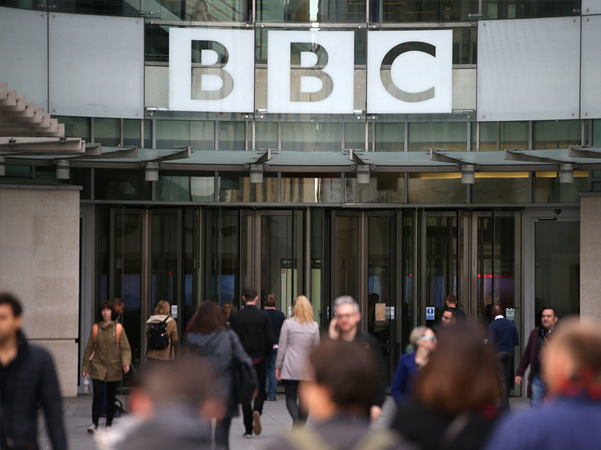
China’s broadcasting regulator has moved to pull BBC News off the air in the country over a “serious content violation,” the Chinese state news agency Xinhua reported Thursday.
China’s National Radio and Television Administration (NRTA) said in an announcement on its website that the broadcaster, which is partly funded by the British state but editorially independent, had “undermined China’s national interests and ethnic solidarity.”
Chinese state media greeted the news with a sense of triumph, while U.S. and British officials have criticized the decision. British Foreign Minister Dominic Raab called the move an “unacceptable curtailing of media freedom.”
The BBC is “disappointed that the Chinese authorities have decided to take this course of action,” a spokeswoman for the broadcaster said in an email to reporters. “The BBC is the world’s most trusted international news broadcaster and reports on stories from around the world fairly, impartially and without fear or favor.”
The announcement, which arrived with the Lunar New Year holiday in China, followed recent disputes between Chinese officials and BBC News.
It also came just a week after Britain’s media regulator pulled the Chinese state-run television channel CGTN off British airwaves because of alleged errors in an application to transfer its license to another company.
In December, BBC News produced a report that alleged the forced labor of ethnic minority Uighurs in China’s cotton industry in Xinjiang. Chinese state media bristled at the work, calling it “fake news” and accusing the BBC of political bias.
“Far from being fake news, our evidence, along with the post-publication propaganda designed to undermine it, is proof of a coordinated effort to control the narrative, extending from the shadowy minders in unmarked cars, all the way up to the national government,” John Sudworth, one of the team who reported the story, later wrote.
BBC News also produced a lengthy report detailing allegations of systematic rape in Xinjiang camps where Uighurs and other minorities are held.
China’s NRTA did not detail precisely why BBC News was being pulled off air or how the move might affect the organization’s staff in the country, but it said any new applications for a license would not be considered.
The Global Times, a newspaper run by the Chinese Communist Party, said the BBC would no longer be available anywhere on the Chinese mainland. Some Chinese academics who spoke to the Global Times, known for its nationalistic stance, said the next step may be to expel journalists.
Even before the ban, BBC News was not available widely in China, mostly limited to hotels that cater to foreigners. Even so, it comes amid a wave of restrictions on foreign journalists in recent years that has seen a number of reporters be arrested or have their credentials pulled.
In a tweet shortly after the announcement, Raab said the Chinese decision was an “unacceptable curtailing of media freedom” and noted that China already had some of the “most severe restrictions” on media and Internet freedoms in the world.
“This latest step will only damage China’s reputation in the eyes of the world,” he added.
State Department spokesman Ned Price said at a briefing Thursday that the U.S. government condemned the decision to ban BBC News, adding that China maintained “one of the most controlled and most oppressive, least-free information spaces in the world.”
The Office of Communications (OFCOM), Britain’s broadcast regulator, did not cite the content of the English-language CGTN in revoking its license. The regulator conducted an investigation that concluded the license was wrongfully held by a company called Star China Media.
OFCOM stated that its investigation had found the company did not control CGTN’s content, as required by British law, and that editorial decisions were made by China Central Television, a company that is controlled by the Chinese Communist Party and that is not eligible to hold a license due to its state links.
A last-minute attempt to register the license to another company was also rejected due to missing information on the application, OFCOM said.
In a response to the OFCOM decision, reported by the Guardian newspaper, CGTN drew comparisons between the BBC and other state-funded broadcasters, such as Japan’s NHK. The BBC has long maintained that there is a distinction between state-controlled broadcasters and those that receive public funding but are editorially independent.
My son sat alone in the classroom this week, surrounded by empty desks in a silent formation. Even the teacher’s desk up front was forlorn.
“this is stupid,” he texted me. “i’m here all dressed up. everyone else is at home. in sweats.”
A camera on a tripod focused on him as the rest of the class and the teacher logged in from their homes. A bored proctor sat in the corner, scrolling through her phone.
Welcome back to school – hurrah?
The mid-pandemic return to the classroom is totally weird, and there are no easy answers.
As the coronavirus continues to infect millions and kill hundreds of thousands in the United States, returning kids to their scholastic normalcy is proving to be a halting, difficult process.
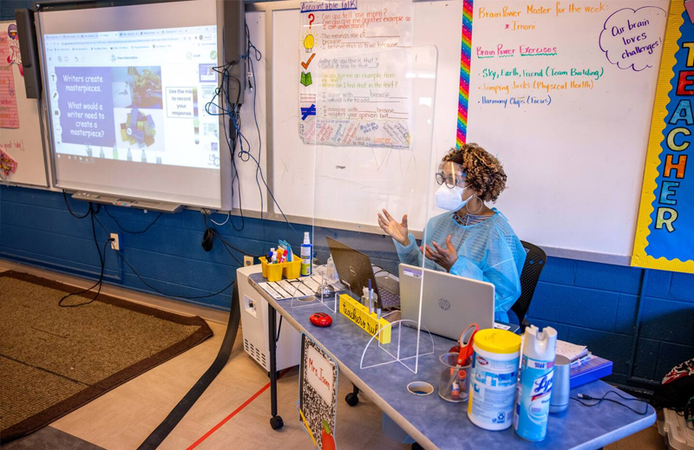
There are teachers in Chicago who are holding class outside as parents bring them hot coffee and build fire pits, and teachers in Washington, D.C., wearing masks, visors and clothes they sanitize after a full day inside buildings they fear aren’t properly ventilated.
There are kindergartners who have never met a teacher in real life and, on the other end of the scale, high-schoolers who’ve been back in classrooms for weeks.
Even when schools opt for hybrid learning the way my son’s school did, a largely unvaccinated nation – only about 10% of our population has received at least one dose, according to the Centers for Disease Control and Prevention – is confused and conflicted about whether kids should show up.
In D.C., as schools open in phases this month, the return-to-school rate is different based on ZIP code. The wealthier wards had kids returning to class at twice the rate as the poorest ward in the city, according to city data.
Maybe it’s because the wealthier wards have higher vaccination rates than the lower-income wards, whose residents are primarily people of color.
And because coronavirus infection and death rates have hit American Black and Brown communities and lower-income neighborhoods harder, it would make sense that those families aren’t comfortable sending their kids back to school yet.
“The reality is that as African Americans – and I can speak clearly to this – our health outcomes have not been the same as our peers, and a lot of that is related to systemic racism,” Chancellor Lewis Ferebee, who is Black, told The Washington Post’s Perry Stein. “Every child is different, and every circumstance is different.”
But it doesn’t have to be about income, race or ZIP code to divide a school on the return.
Even though my son’s private Jesuit school spent a fortune on tech and logistics creating a hybrid schedule rotating three cohorts into the classroom, my son kept finding himself alone or among just a few to go to class in person.
There are many reasons for this. Some students have parents or siblings with health issues who can’t risk exposure to the virus. Some families have grown used to a pandemic schedule – Mom and Dad aren’t going into the office – so they decide that everyone should just stay home. And some kids prefer learning from home, sleeping in and wearing sweatpants to virtual class.
It’s the same story I heard from a friend in New Jersey. Her kid, like mine, was suffering under the isolation and flatness of distance learning and couldn’t wait to go back in.
But when their public school district opened up for hybrid learning, most of her daughter’s peers decided to stay online and at home. On top of that, schools opened and then closed again at whiplash speed. Closed because of a positive case. Now open. Wait, closed.
The 17-year-old “asked to go all remote,” my friend said. “She was tired of the back-and-forth.”
But even when the response is tepid, schools have to provide the option. In too many cases, kids continue to be shut out of online learning because they don’t have reliable WiFi. Or they have other circumstances that make remote learning tough. In D.C., 60% of elementary kids who are returning to the classroom are learning English as a second language, receiving special education services, are homeless or are otherwise at risk.
Or there are the younger kids who thrive the most when they’re in social settings.
“It was great. It was amazing,” said Wesley Hanks, 13, who finally got to meet his new teacher in person for the first time last week, when Eliot-Hine Middle School in D.C. opened up.
“I got to see Miss Maxwell,” he said of a beloved teacher whom he hasn’t seen since March (except once, “around Christmas when she was picking out Christmas trees”).
“I also got to see my classmates,” he said, whom he also hadn’t seen for almost a year. He said he hopes D.C. opens up all the classrooms to all the kids.
But, alas, that’s not easy to do.
Schools, we keep forgetting in so many other cases, are part of a community. And until that community is fully vaccinated and everyone feels safe, neither can thrive.
Some kids will return, some will stay at home, some will bounce back and forth for the rest of the year, the way my son plans to. That’s okay.
The most important thing we can do for the kids, besides push for every possible way to speed up the nationwide vaccination effort, is to keep in mind that whatever they end up doing in these crazy times, they are not losing a year of learning. They’re gaining a year of firsthand experience in resilience, flexibility and grit that’s rarely part of a lesson plan.
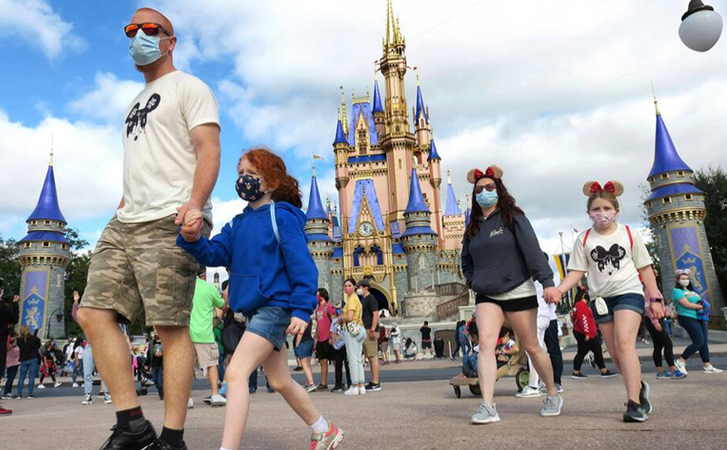
The coronavirus continued to hammer Disney in the final months of 2020, with the company’s revenue dropping 22% over the holiday period while it eked out a much smaller profit than usual.
For the entertainment giant’s first quarter, which runs from October through December, Disney saw revenue go from $20.9 billion in 2019 to $16.3 billion in the same period in 2020, as coronavirus shutdowns and consumer caution cut attendance at movie theaters and Disney theme parks, the company said Thursday.
The revenue – which comes heavily from advertising, merchandise, TV and digital subscriptions – is slightly better than the $15.9 billion many analysts expected. The company did make money, but by a much reduced margin: its operating income plunged from $4 billion in 2019 to just $1.3 billion in 2020, a drop of 67%. Once taxes are factored in, the company’s profit stood at just $29 million, after topping $2.1 billion in the same quarter a year earlier.
The Disney Plus streaming service was a bright spot, however. The company said that as 2021 began the service had reached 95 million subscribers, up from the 86.8 million it cited at an investor day in mid-December.
The unit is not expected to be profitable for several years. But investors are watching the subscriber number closely as Disney looks to tighten its hold on the streaming market as a solid No. 2 behind Netflix, which has about 200 million global subscribers. (Disney also has an additional 40 million Hulu subscribers and 12 million ESPN Plus subscribers.)
In fact, Wall Street does not seem much concerned with the impact of the virus, preferring instead to focus on the streaming growth. Buoyed by ongoing enthusiasm for those services, Disney’s stock closed Thursday at a record high of $191, up 58% since the beginning of November. The share price rose an additional 2% in afterhours trading after the new figures were released.
The news for the rest of the company, however, was bleaker. The earnings followed a familiar trend for 2020: Disney posted an 82% drop in operating income in the previous quarter ending in September,
The firm has been hit hard by the closure of most of its theme-park attractions in Southern California and reduced capacity and attendance in Florida. During the most recent quarter, revenue at Disney theme parks dropped 53%, from $7.6 billion a year ago to $3.6 billion in 2020, while the company lost $120 million at the division after posting a gain exceeding $2 billion the year previous.
Executives noted an “estimated detriment of approximately $2.6 billion at the Disney parks” due to the virus – that is, operating income would have been that much higher without the lockdowns and capacity restrictions. Theme park losses are slowing somewhat, going from $2 billion in the spring to $1 billion in the summer to the $120 million this quarter, thanks both to reopenings and, of course, cost-cutting. The company also hopes the re-opening of California Adventure in April could provide a boost.
Asked on an investor call about the forecast for theme parks, Disney chief executive Bob Chapek said it will be “determined by the rate of vaccinations…We have ample demand despite everything that’s happening with the pandemic.”
Due to an internal reorganization, the company did not break out results for its studio division. But that, too, has been hit hard as movie theaters remain largely closed and most big releases stay on shelves or are moved to streaming, as Pixar release “Soul” was at Christmas. In 2019, Disney posted revenue of nearly $4 billion at its studio, driven by hits such as “Frozen II” and “Star Wars: The Rise of Skywalker.”
It remains uncertain when Disney will bring its movies back to theaters. One of the next major releases, the Marvel film “Black Widow,” is scheduled for May after being postponed a year by the pandemic. Chapek said the company is “still intending it to be theatrical but we’re going to be watching very carefully” to determine whether it might move to a streaming platform. He did not suggest a further postponement was likely.
Disney canceled its dividend in the second half of 2020 as its finances remained under pressure. Executive chair Bob Iger saw his annual compensation package go from $47 million to $21 million last year, while Chapek took in $14.2 million for the year.
The results come exactly a year after Chapek took over from Iger after the latter surprisingly stepped down. The waters quickly turned choppy after that as the virus spread around the world.
U.S. federal debt to exceed size of economy even before Biden stimulus is approved, CBO says
InternationalFeb 12. 2021The U.S. Treasury Department building in 2012 in Washington, D.C. Washington Post photo by Robert Miller
By The Washington Post Jeff Stein
WASHINGTON – America’s federal debt is set to exceed the size of the entire U.S. economy this year for only the second time since the end of World War II, a reflection of the extraordinary emergency measures approved by Congress in response to the coronavirus pandemic, the nonpartisan Congressional Budget Office said Thursday.
The remarkable surge in federal borrowing is due largely to the more than $4 trillion in spending approved by the federal government to fight the pandemic since last March. As a result, the federal government’s debt burden will in 2021 be larger than the size of total U.S. gross domestic product – a measure of all the goods and services in the economy, according to CBO. It’s the second time it’s happened, in two years.
Democratic lawmakers and many economists say another spending blitz is necessary to stabilize an economy that has stalled out and a job market that faces the prospect of permanent scarring. Federal Reserve Chair Jerome Powell said the unemployment rate for January should be considered closer to 10%, rather than the official number of 6.3%, due to misclassification errors and workers permanently leaving the labor force.
But Republican lawmakers and deficit hawks warn that such unprecedented levels of peacetime spending threatens a risk to the economy. A sudden surge in inflation — although not currently considered likely or imminent — could force the Federal Reserve to raise interest rates, which would in turn dramatically increase the costs of U.S. borrowing. The central bank has vowed to keep interest rates low.
The CBO’s debt estimates are based on current policy and do not account for the $1.9 trillion stimulus package Democrats are expected to pass in a matter of weeks.
“It’s pretty horrific. The trouble is it’s high and escalating, and on an unsustainable trajectory,” said Douglas Holtz-Eakin, who served as director of the CBO and as chief economist to Sen. John McCain, R-Ariz., of the debt figures. “World financial markets will at some point lose their faith in the ability of the U.S. to make the numbers add up, and they will either cut us off entirely or charge prohibitively high rates.”
Democrats are expected to press forward with their relief package despite the federal debt. America’s economic recovery from the coronavirus has sputtered as the pandemic rages across the country this winter. Alarmingly, job growth in the United States has all but stalled out, even as about half of the 22 million jobs lost during the crisis have returned.
President Joe Biden’s relief package would devote hundreds of billions of dollars to the U.S. response to the public health crisis, including vaccine distribution; another round of stimulus payments for millions of American households; extended unemployment benefits through August as well as spending for schools and local governments. Biden has frequently downplayed the potential danger of spending too much, and White House officials have pointed to a range of Wall Street analysts who have said more spending is necessary.
Additionally, inflation has remained firmly in check, and the central bank has signaled it would not hike rates even with modest price increases. Powell noted on Wednesday that inflation “has been much lower and more stable over the past three decades” than it had before.
“The biggest risk is not going too big, if we go – it’s if we go too small,” Biden said last week at the White House.
Some economists say more deficit spending could be the help the economy needs. Joseph E. Stiglitz, a Nobel Prize-winning economist at Columbia University, said a significant gap remains between the nation’s actual economic output and its potential economic output. Lawmakers should be focused on closing that gap to reduce unemployment and expand the economy, he said.
“Deficit spending expands output and employment, which can generate more tax revenue,” Stiglitz said. “If as the result of a little more deficit spending we get more growth and higher employment, that should not be too big a worry.”
Yet, just last week, former Obama administration economic adviser Larry Summers penned a column in The Washington Post warning that another big stimulus package did bring some risk of setting off inflation.
“There is a chance that macroeconomic stimulus on a scale closer to World War II levels than normal recession levels will set off inflationary pressures of a kind we have not seen in a generation, with consequences for the value of the dollar and financial stability,” he wrote.
When asked about Summers’ column, White House senior economist Jared Bernstein denied that the administration was dismissing inflationary risks but said: “This is risk management. This is balancing risks. And in our view, the risks of doing too little are far greater than the risks of doing too much.”
To be sure, even the CBO has warned about the challenges in their projections. Its debt and deficit projections could worsen significantly if the pandemic or new coronavirus variants continue to wreak havoc on the American economy. The CBO projects that higher levels of vaccinations will dramatically reduce the number of coronavirus cases, with economic growth quickly returning to pre-pandemic level by as soon as the middle of 2021.
Even under this relatively rosy scenario, the CBO projects the national debt is now on pace to grow to 107% of gross domestic product by 2031 – which would be an all-time high in American history.
But the rollout of vaccines has proven uneven at times, and fears have mounted about new variants of the virus and their effect on the nation’s pandemic response and economic recovery more generally. That could lead to a worse debt scenario than CBO has projected. The CBO said in July that its projections reflect an “average of possible outcomes,” noting the unusually high uncertainty surrounding the pandemic.
“There are so many uncertainties: about the vaccine; about when people come back to work; about what this looks like on the other side – and the standard way of CBO presenting their thinking does not have a framework for quantifying those risks,” said Claudia Sahm, an economist who worked at the Federal Reserve. “And that’s a big problem right now because people are basing their policy advice on these numbers.”
Other budget experts point out that tackling the federal deficit requires more structural reforms to the nation’s economy, such as its low federal tax rates and projected increases in spending on Medicare and Social Security.
The U.S. is projected to hold about $21 trillion in debt in 2021, and that number is expected to increase to $32 trillion by 2030. A $1.9 trillion stimulus bill represents a fraction of that increase, although White House officials have also discussed trying to approve a multi-trillion-dollar infrastructure package later this year. The CBO projections also assume the expiration of numerous provisions of the 2017 GOP tax law aimed at the lower and middle class by the middle of this decade.
Marc Goldwein, senior vice president at the Committee for a Responsible Federal Budget, which pushes for deficit reduction, said lawmakers face a long-term challenge in getting spending and deficit levels to balance. That is not something that hinges on the precise size of Biden’s stimulus package, Goldwein said.
“Even without the $1.9 trillion, we will be at record-high debt levels” in a few years, he said. “Realistically, it’s going to come much sooner than that.”
– – –
The Washington Post’s Erica Werner contributed to this report.
By The Washington Post Isaac Stanley-Becker, Lena H. Sun, Laurie McGinley
WASHINGTON – President Joe Biden said Thursday his administration had finalized deals for another 200 million doses of the two coronavirus vaccines authorized in the United States, securing sufficient shots to cover everyone currently eligible for inoculation by the end of July.
In remarks capping an afternoon tour of the National Institutes of Health, Biden said the federal government had purchased 100 million more doses from Pfizer and German company BioNTech, as well as 100 million more from Moderna, using options built into existing contracts with those companies.
The announcement was the centerpiece of an emotional address from Biden, who made a point of speaking through his mask as he called it a “patriotic responsibility” to wear one.
“We remain in the teeth of this pandemic,” he said, observing that January was the deadliest month of the pandemic, in which “we lost over 100,000 of our fellow citizens.” Mutations of the virus posenew challenges, he said, even as infections and hospitalizations begin to decline.
Recalling a conversation with a nurse staffing an Arizona vaccination site, Biden said she described inoculating people against covid-19 as “like administering a dose of hope.”
“We’re going to get those doses of hope out,” Biden promised.
The new deals don’t immediately expand access to shots, which remain in short supply throughout much of the country. They primarily serve to prevent a shortfall later in the year by increasing supply by 50%, bringing the total to 600 million doses.
Because both products are two-dose regimens, that will be enough to fully vaccinate 300 million people. An estimated 260 million people in the United States are currently considered eligible to receive a coronavirus vaccine, though trials involving children as young as 12 could widen the pool.
Together, Pfizer and Moderna had already agreed to provide 400 million doses to the United States. Biden said some of those doses would be delivered sooner than anticipated, guaranteeing enough supply by the end of May to vaccinate 200 million people under the two-dose protocols. Pfizer had already expedited its delivery schedule for those doses, and a Moderna spokesman confirmed Thursday the Cambridge-based company could do the same.
Moderna issued a statement confirming the purchase and saying it was “working with its domestic manufacturing partners,” as well as federal regulators, to “explore ways to accelerate delivery, with the goal of providing this new order of 100 million doses before the end of July 2021.” Pfizer spokeswoman Amy Rose confirmed the purchase as well as the timeline Biden outlined.
In securing the additional doses, the government used options built into contracts negotiated last year by the Trump administration. Biden said last month he would seek the additional doses, part of a strategy to double down on the two vaccines that have already won federal clearance and not count on candidates from other companies becoming available.
With his vow that the additional doses would be available by the end of July, the president noted the delivery would be “faster than we expected.” His advisers had previously indicated that a summer delivery was anticipated, and Trump administration officials said they were operating under the assumption of a quarterly schedule, with an additional tranche possible by August or September.
Biden administration officials have been telling partners that their recent move to expand Pfizer’s priority rating under the Defense Production Act would help the pharmaceutical giant obtain needed equipment to produce the additional doses sooner than anticipated, according to people with knowledge of the discussions.
Asked last week about the action under the Korean War-era law, Rose did not address it directly but said, “Our teams continue to work closely on our production as our commercial ramp-up progresses.” A Pfizer executive said in a recent interview with USA Today that the company expects to halve its production time as it gains familiarity with the process, expediting the availability of its product globally.
As the country seeks to stay ahead of the spread of the more transmissible and possibly more lethal variants, top health officials have expressed confidence that widespread inoculation would soon be possible because of a steady ramp-up in manufacturing.
“By the time we get to April, that will be what I would call, for better wording, ‘open season,’ namely, virtually everybody and anybody in any category could start to get vaccinated,” Anthony Fauci, the nation’s leading infectious-disease expert, said Thursday on NBC’s “Today” show.
The Biden administration has already increased weekly state allocations by nearly 30%, though shortages remain pronounced in many areas. Los Angeles Mayor Eric Garcetti said Wednesday the city would temporarily close a mass vaccination site at Dodger Stadium, along with several other locations, because there weren’t enough doses.
Additional doses are also expected to come from Johnson & Johnson, which submitted its application for a single-shot coronavirus vaccine to U.S. regulators earlier this month. If approved, the easy-to-store vaccine would further augment supply, though production setbacks are expected to limit availability until the spring. It’s also possible that vaccine experts may only recommend the vaccine for people in certain age groups.
Johnson & Johnson’s vaccine showed strong protection against severe disease from the variant first discovered in South Africa, but offered less-robust protection against moderate illness. Evidence from laboratory tests suggests the Pfizer and Moderna vaccines work against variants, but the ability of the immune response to block the South African variant is diminished.
As more vaccine becomes available, new challenges, including staffing, will arise. But health officials say they’re preparing themselves.
“We’re strategizing around that now and the good thing is we’ve had a couple of months of experience doing this that we can learn from,” said Kevin Litten, a spokesman for the Louisiana Department of Health.
– – –
The Washington Post’s Carolyn Y. Johnson and Amy Goldstein contributed to this report.
Day three of former president Donald Trump’s impeachment trial featured the remainder of Democratic House impeachment managers’ case against Trump. Below, some takeaways.
1. A novel appeal to GOP senators about the consequences of acquittal
If there is one quote that summed up the Democrats’ argument for conviction of Trump, it came Thursday from Rep. Ted Lieu, D-Calif.
The fact that Trump is no longer in office renders the biggest punishment of the impeachment process – removal from office – moot. Beyond that, it’s about sanctioning him and preventing Trump from being able to hold high office again.
But Lieu suggested that this wasn’t just about preventing Trump from running (and potentially winning) again; he said it was instead about avoiding another situation such as this.
“You know, I’m not afraid of Donald Trump running again in four years,” Lieu said. “I’m afraid he’s going to run again and lose, because he can do this again.”
The comment was clearly intended for Republican senators who might be on the fence. The party establishment has flirted with a break from Trump in an attempt to phase him out, but that’s no easy process. And of late, Republicans appear to have rallied behind the former president.
It’s also logical that Democrats wouldn’t be terribly concerned about Trump running again, given that he just lost and was one of the most unpopular presidents in history (despite actually coming closer than most recognize to winning reelection). Lieu tried to drive home that this was bigger than just an attempted political disqualification.
Another impeachment manager, Rep. Diana DeGette (D-Colo.), also got at this idea.
“All of these people who have been arrested and charged, they’re being accountable, held accountable for their actions,” she said. “Their leader, the man who incited them, must be held accountable as well.”
DeGette added later: “Impeachment is not to punish, but to prevent. We are not here to punish Donald Trump. We are here to prevent the seeds of hatred that he planted from bearing any more fruit.”
The concerted message on the final day of the Democrats’ arguments was to warn Republicans about what they might have to account for if they let Trump slide.
But it didn’t sway at least one key Republican who has suggested Trump carries blame, Sen. Mike Rounds, R-S.D.
“I think that was a very powerful statement on his part,” Rounds said of Lieu’s quote. “And I know I wrote that down. I know a number of my colleagues did. But once again, the issue for most of us is are you asking us to do something that we simply don’t have the capability of doing because the Constitution does not give us that tool with regard to a private citizen.”
– – –
2. Driving home Trump’s history of violent rhetoric
A big question going into the trial was how much Democrats would keep focused on Jan. 6 and Trump’s effort to overturn the election, and how much they would address his past rhetoric encouraging or excusing political violence.
Rep. Jamie Raskin, D-Md., the lead impeachment manager, briefly made his team’s offering on the latter Thursday.
This is hardly the first time people have tied Trump’s comments to real or potential violence. It happened throughout his presidency. It happened to the point where even many Republicans now allied with Trump – who are playing down the need for his impeachment – warned about a situation similar to this, including former South Carolina governor Nikki Haley and Sen. Ted Cruz of Texas.
Raskin referred to many of these instances, including Trump jokingly praising a Montana politician for assaulting a reporter, suggesting that there were good people on “both sides” of the racist rally in Charlottesville in 2017, and his repeated suggestions both at his 2016 rallies and since that his supporters might get violent. Trump also endorsed a clip from a supporter saying “the only good Democrat is a dead Democrat” – before that supporter was arrested for his part in the Capitol riot.
Perhaps most compellingly, Raskin noted Trump’s tweet to “LIBERATE MICHIGAN” in April. It came two weeks before armed protesters flooded the state Capitol there. Trump suggested approval for their show of force and, in response, urged Gov. Gretchen Whitmer, a Democrat, to negotiate with them on the coronavirus restrictions Trump had criticized. Two weeks later, protesters returned with more violent rhetoric. Then an alleged plot to kidnap Whitmer surfaced – a plot in which the alleged perpetrators echoed Trump’s rhetoric.
“This Trump-inspired mob may indeed look familiar to you,” Raskin said of the initial scenes at the state Capitol. “Confederate battle flags, MAGA hats, weapons, camo Army gear – just like the insurrectionists who showed up and invaded this chamber on Jan. 6. The siege of the Michigan Capitol was effectively a state-level dress rehearsal for the siege of the U.S. Capitol that Trump incited on January 6th.”
Trump’s defenders have focused narrowly on his speech Jan. 6, which they argue was unremarkable, and which they note included one line that those marching to the Capitol should “peacefully” protest. They have even argued that revelations about planning by some Capitol rioters suggest that they couldn’t have been incited.
That ignores everything that preceded Jan. 6, and Trump’s efforts to overturn the election. The fact is that there had been all kinds of suggestions that Trump’s rhetoric could lead to what we saw. Trump often did far less than his critics said he should to prevent or condemn such scenes.
That might be the most significant evidence Democrats have – even if Raskin’s presentation gave it short shrift, in the grand scheme of things.
– – –
3. A prebuttal to Trump’s free-speech defense
Democrats offered a prebuttal to an argument the Trump legal team’s is expected to make Friday, that this is a matter of free speech.
Trump’s team, in its briefs, hasn’t actually delved into the well-established limits on free speech, which include things like incitement and defamation.
Democrats argued that even those limits are beside the point. They said Trump, as president and commander in chief, is held to a higher standard.
Rep. Joe Neguse, D-Colo., cited a letter from legal experts on free speech, including many conservatives, who rebuked the idea that such a defense applies in this case.
“That [defense] has no basis in the evidence,” Neguse said. “To hear his lawyers tell it, he was just some guy at a rally, expressing unpopular opinions. They would have you believe that this whole impeachment is because he said things that one may disagree with.”
Raskin said that a president’s speech carries inordinate weight when it comes to things like incitement, by virtue of his oath of office.
“Nobody made Donald Trump run for president and swear an oath to preserve, protect and defend the Constitution on Jan. 20, 2017,” Raskin said. “But when he did, by virtue of swearing that oath and entering this high office, he took upon himself a duty to affirmatively take care that our laws would be faithfully executed under his leadership.”
Raskin also went further, noting that constitutional experts generally agree that impeachment doesn’t require a statutory crime. “High crimes and misdemeanors,” despite the claims of Trump’s legal team both this week and in his first impeachment, doesn’t actually mean felonies or what the legal code today calls misdemeanors.
“Incitement to violent insurrection is not protected by free speech,” Raskin said. “There is no First Amendment defense to impeachment for high crimes and misdemeanors. The idea itself is absurd. And the whole First Amendment smokescreen is a completely irrelevant distraction from the standard of high crimes and misdemeanors governing a president who has violated his oath of office.”
4. The participants who cited Trump
The early focus Thursday was on driving home the incitement argument by pointing to rioters who said they had been incited.
Multiple rioters who have been charged with crimes have cited perceived invitations from Trump as part of their defense. That could be convenient for them, legally speaking. But DeGette focused more on people who said these things in real time.
Among them:
One man who wrote on the day of the siege, “Trump just needs to fire the bat signal . . . deputize patriots . . . and then the pain comes.”
Another man said on a live stream from inside the Capitol: “Our president wants us here. We wait and take orders from our president.”
One man told a police officer who stood in his way: “There’s a f—— million of us out there, and we’re listening to Trump – your boss.”
Another woman responded to now-President Biden’s calls for peace by saying, “Does he not realize President Trump called us to siege the place?”
Another talked about calling Trump from inside the Capitol and said, “He’ll be happy. . . . We’re fighting for Trump.”
“Have you noticed throughout this presentation the uncanny similarity, over and over and over again, of what all these people are saying?” DeGette said. “They said what Donald Trump said and they echoed each other. ‘Stand back and stand by.’ ‘Stop the steal.’ ‘Fight like hell.’ ‘Trump sent us.’ ‘We are listening to Trump.’ “
It’s possible to cherry-pick anecdotes in a prosecution. It’s also possible that people perceived a message that Trump didn’t technically send. The combination of these comments and those citing Trump’s invitation as part of their legal defense, though, suggests that this is something many truly believed was done at Trump’s behest – or at least that it would meet with his approval.
Donald Trump has rarely said so little for so long.
Through his attorneys, the former president refused to testify in the Senate’s impeachment trial. His post-White House website, built by his former campaign manager, consists of a single page with an official-looking seal. He has not spoken into a microphone since the short speech he delivered before skipping President Joe Biden’s inauguration. His Save America PAC, which raised at least $31 million before his eponymous Jan. 6 rally, has spent money on fundraising fees – and so far, nothing else.
But Trump’s disappearance from public life has not removed him from the center of the Republican Party’s universe. Republican-run states are debating ways to roll back the voting laws that Trump attacked before and after his loss. The 10 House Republicans who voted to impeach Trump last month have been condemned by their local parties. Republicans declaring for open seats are touting not just their support for Trump, but often, the theory that he didn’t really lose.
“This is about 74 million Americans who likely voted for the winner, in Donald Trump,” Eddy Aragon, a New Mexico radio host running for Congress, said on the Tuesday edition of his radio show. It was “hard to believe” that Trump lost, he said, “given the mathematicians, the Dominion machines, the Smartmatic voting machines, the voter fraud that will never be investigated.”
Aragon, one of the candidates anticipating a special election when Rep. Deb Haaland becomes secretary of the Interior Department, is not running a Trump-focused campaign. In an interview, he emphasized his past as a Democrat, his focus on free speech and affordable energy, and a “lost decade” of economic growth in Albuquerque as his key issues.
But Trump’s falsehoods about voting machines, even in places he won, are still being shared by Republican activists across the country. This week, Georgia’s Republican Party urged the state to scrap its Dominion machines, which were approved in July 2019 by the Republican-run state government, and Aragon had questions of his own about the technology that recorded Trump’s defeat.
“You lose an election before it’s even run because you didn’t pay attention to the machines that were purchased,” Aragon said. “We have nobody to blame but ourselves.”
As they prepare for this year’s elections and next year’s midterms, Republicans are operating two message machines at once – one a response to President Biden’s actions, and one aimed at voters still angry about 2020.
The Congressional Leadership Fund, the House GOP’s independent campaign arm, has begun buying ads that accuse Democrats of keeping schools closed to mollify teachers’ unions; the Republican Main Street Partnership, which intends to spend at least $25 million to help flip the House, argued in a post-election autopsy that “it is time to move beyond Trump and embrace the Republican governance that gave us the best economy in our lifetime.” A three-page National Republican Congressional Committee memo first reported by Politico ran through its 2022 targets with no mention of Trump whatsoever.
But Republican voters don’t just want the party back in power. They want to fight for Trump. Blast fundraising appeals from the National Republican Senatorial Committee this week offered donors a T-shirt that portrayed Trump hugging an American flag; fundraising texts from the Republican National Committee, which avoided mentioning Trump for 22 days after the Capitol riots, has fundraised against “the impeachment trial scam” in nearly every message since.
Sarah Chamberlain, the RMSP’s president, was optimistic that Republicans could run campaigns this year and next without Trump getting in their way. Most of the Republicans who voted for impeachment, she pointed out, were RMSP members; after a wave of criticism, she said, the calls for them to go for betraying the former president were dying down.
“Right now, Trump is not on Twitter,” Chamberlain said. “He would tweet, and it would fire up his base, but now it’s pretty quiet. So they’re doing some healing back home.”
But more Republicans are linking their ambitions to Trump and echoing his views, shared by most of the party’s voters, that the election was stolen. Former Ohio treasurer Josh Mandel, who began his 2018 Senate bid by echoing Trump’s criticism of a “rigged” system, launched a new campaign this week by attacking the “unconstitutional” impeachment trial. In an interview with Cleveland’s 3 News, Mandel went further, saying that “we’re going to see studies come out that evidence widespread fraud,” and that Trump had likely won the 2020 election.
“With any type of fraud, it usually takes time to investigate it and to dig it out,” Mandel said. “It might be months, it might be years, it might be decades. But I think when we look back on this election, we’ll see in large part that it was stolen from President Trump.”
In several states, the debate over the 2020 election’s rules has consumed Republican legislators. In Kentucky, a GOP supermajority removed the power of the secretary of state – a Republican – to change election laws without consent from the legislature. Although the state saw turnout surge in both a primary and general election conducted under generous absentee ballot rules, and while Republicans grew their majorities, their effort to prevent a repeat was backed by Sen. Rand Paul.
“It shouldn’t be that contentious of an idea to pass a new law that says you can’t pass any law without the state legislature voting on it,” Paul told the Lexington Herald-Leader.
In Pennsylvania, Republicans are working to break up the state Supreme Court, which repeatedly ruled against Trump’s post-election challenges; instead of statewide elections, voters would pick judges in districts drawn to create a GOP majority. While Gov. Tom Wolf, a Democrat, will veto attempts to reverse the state’s absentee ballot changes, a ballot measure to break up the courts can proceed without his signature.
“They’re counting on low-information voters and a low turnout, thinking that everyone got their anger out in November,” said Lt. Gov John Fetterman, a Democrat who launched a Senate bid this month. “I’m going to be talking about this nonstop and Democrats will have to put millions of dollars behind it in messaging.”
The 2020 hangover has affected Democrats, too. Amanda Litman, the founder of the campaign training and recruiting group Run for Something, said that 3,000 people had signed up for information about running between the 2020 election and the new year. Since Jan. 5, the sign-up number had doubled – a surprise she credited both to the Democrats’ Georgia runoff wins, and to anger at Republicans continuing to defend Trump and echo his false election conspiracy theories.
“They are mentioning Trump, in the context of “it’s Trump’s party, it’s rotten all the way down,” Litman said. “It’s grounded in reality. People are seeing that he’s not the exception; he’s the rule. People who didn’t know about the Michigan Board of Canvassers four months ago watched them parrot his rhetoric.”
Democrats who had thought some Republicans would move on from the election, or from Trump, continue to be surprised. Last week, Michigan Senate Majority Leader Mike Shirkey was filmed agreeing with conservative activists that some elements of the Jan. 6 riots were “staged” and that it “wasn’t Trump people” entirely behind the violence. On Wednesday, after Shirkey had apologized, a live mic recorded him telling Lt. Gov. Garlin Gilchrist that he didn’t “take back” what he said, but wished he was clearer: An investigation would determine “who exactly was behind” the riots, the subject that activists were pushing him on.
“I don’t back off very easily,” Shirkey told the Democrat. “Sometimes, I should.”
– – –
House watch
The 2020 election isn’t over, but we’re getting closer every week. The last truly unresolved House race ended this week as former Rep. Claudia Tenney, a Republican, prevailed in a months-long election contest with Rep. Anthony Brindisi, who’d narrowly beaten her in 2018.
This race was even closer, decided in the end by 109 votes, after legal warfare over hundreds of uncounted ballots. In most years that would have been the tightest race in the country; this year, the title still belongs to Iowa’s 2nd Congressional District, where Democrat Rita Hart is still contesting Rep. Mariannette Miller-Meeks’s six-vote win. Hart, who appealed to the House to investigate the election, continues to ask for 22 uncounted ballots, with errors such as unstuck envelopes, to be counted, saying they’ve identified enough disenfranchised voters to narrowly overturn the result.
Democrats seated Miller-Meeks while the contest continued, and Hart’s operation chided the Republican’s team – which has characterized the challenge as frivolous and anti-democratic – for conducting its own search for uncounted ballots. “With her true motivations now clear, Miller-Meeks must drop her wholly unsupported and hypocritical motion to dismiss and join Rita in her contest to ensure all votes are counted in Iowa’s 2nd Congressional District,” Hart’s campaign said in a statement. The House investigation is ongoing.
Given the vacancies in Louisiana and Texas – more about that below – and expected vacancies in at least two more states, the House is unlikely to be fully seated until sometime this autumn, if ever. The current makeup of the lower chamber is 221 Democrats, 211 Republicans, and three vacancies; the expected departure of two more Democrats could, for a short time, drive the Democratic majority down to 219 seats, the lowest for any governing party in decades.
The risks of that to House Speaker Nancy Pelosi’s party were on display yesterday, when one Democrat’s absence in the House Agriculture Committee allowed a Republican amendment to pass. Holding on to the Iowa seat, filling their vacancies and flipping five Democratic seats would put Republicans into the majority; that’s possible in the long run, but unlikely given the heavy Democratic lean of the Democrats’ open seats.
But Democrats, who urged the president not to pull more of their colleagues into the Cabinet, are hoping that nobody else gets restless. On Feb. 1, a coalition of civil rights groups urged California Gov. Gavin Newsom not to pick Rep. Adam Schiff to replace state Attorney General Xavier Becerra, now the president’s nominee to run the Department of Health and Human Services. Schiff’s Los Angeles-area district backed Biden by 44 points last year, but a vacancy would take months to fill.
– – –
Ad watch
– Julia Letlow, “Introduction.”Republican Hill staffer Luke Letlow died last year, shortly after his victory in Louisiana’s 5th Congressional District and before taking office. Julia, his widow, organized her own campaign to replace him, and her full-length biographical video portrays her as a conservative who literally wrote her “doctoral dissertation on grief.” (She did so after her brother died.) “We all have to walk through seasons of darkness,” Letlow says. “I look at Washington and see the division, the ugliness, and the darkness. But I know there is hope.” Not until the final 40 seconds does she lay out a conservative agenda: “protecting the unborn” and other “Christian values” motivating voters in the solidly red district.
– – –
Poll watch
“Do you approve of the way Joe Biden is handling his job as president?” (Gallup, 906 adults)
Approve: 57%
Disapprove: 37%
The new president’s first approval rating is higher than his predecessor’s ever was, but lower than Barack Obama during his first months in office. The gap between Biden’s support from Democrats and his support from Republicans is the highest ever found by Gallup at this point in a presidency – an 87-point difference. Just 11% of Republicans approve of Biden’s administration so far, compared to 98% of Democrats.
While Trump frequently touted his sky-high approval ratings with Republicans, Biden’s support from his own party is higher than any other president, per Gallup, besides George W. Bush’s “in the days and weeks after the Sept. 11, 2001, terror attacks.” Biden’s 61% approval rating with independents is just one point lower than Obama’s 12 years ago, and Biden starts out with slightly lower White support than his former running mate: 47% approve, while 48% disapprove. Biden’s promise of “unity,” loosely defined since the election, has been focused on policies that Democrats and independents support, with little buy-in from Republicans, and here are the results and the reasons.
“Is democracy in the United States is alive and well, or under threat?” (Quinnipiac, 1075 adults)
Alive and well: 22%
Under threat: 71%
This isn’t even the first poll since Jan. 6 to study whether voters think our 234-year-old republic is in trouble; a CBS poll last month also found that 71% of adults considered American democracy “under threat.” Even though congressional Democrats are the ones arguing that Trump put our system of government of risk, it’s Republicans, distraught at Trump’s defeat, who are more likely to fear the future: Just 11% say democracy is “alive and well,” compared to 26% of Democrats. No group of voters say that democracy’s in good shape, but voters under 35 years old (32%) and non-White voters (29%) are most likely to say so.
“Is the covid-19 relief package being discussed by Congress too much, or not enough?” (CBS News, 2,508 adults)
Not enough: 40%
About the right amount: 39%
Too much: 20%
The collapse of traditional fiscal conservatism is a defining trend of the post-Trump era, with the former president adding trillions to the debt over four years and ending his term with a call for $2,000 coronavirus relief checks. CBS’s polling, which finds higher levels of support for Biden than most other polls, puts the opposition to a $1.9 trillion relief bill in the deep minority. A majority of Trump voters say the proposal is either the “right amount” or “not enough,” while 46% say it’s too expensive. No other subgroup of voters is so resistant to the legislation, which isn’t laid out in detail by the pollster. Yet a strong majority of all voters say it’s “important” that the legislation, which Democrats have said they will pass even if it lacks Republican votes, get bipartisan support.
– – –
Special elections
Rep. Ron Wright of Texas died on Feb. 8, shortly after contracting covid-19. The two-term Republican, a cancer survivor, had just won reelection in the fast-changing 6th Congressional District, and an election to fill the vacancy will be held once Gov. Greg Abbott, a fellow Republican, orders it.
This is the third House vacancy of 2021, and it could be filled quickly. Texas law requires Abbott to schedule the election between 36 and 50 days after he declares it. Candidates who file at least 5,000 petition signatures compete in one election, regardless of party; if no candidate wins more than 50% of the vote, the top two finishers head to a runoff.
That might not be necessary, depending on which candidates run. Texas’s last House vacancy, created by the retirement of disgraced ex-Rep. Blake Farenthold, was filled in a single election: Rep. Michael Cloud, a Republican, cleared 50% in the first round to represent the 27th Congressional District. That seat has gone easily for the GOP since its lines were drawn 10 years ago; the 6th, which covers the suburbs just south of the Dallas-Fort Worth metroplex, has grown more Democratic. Its Republican margin in presidential races shrank from 17 points in 2012 to 12 points in 2016 to just three points last year.
Like the special election in Louisiana’s 5th Congressional District, which was called after Rep.-elect Luke Letlow died, early speculation has focus on the late politician’s widow, Susan. “Ron and Susan Wright shared a deep and abiding relationship with their Lord and Savior,” the congressman’s office said in announcing his death. Nobody has officially filed yet, and Democrats, whose effort to flip more seats in Texas last year failed disastrously, are looking to make it competitive.
In Louisiana’s 2nd Congressional District, which includes the city of New Orleans and is safely Democratic, the leading candidates released their first fundraising totals. From announcing their campaigns to Dec. 31, state Sen. Troy Carter pulled in around $405,000; state Sen. Karen Carter Peterson, a former party chair, raised around $301,000; Gary Chambers, a liberal activist who hasn’t held office, raised around $107,000. Some context: Former congressman Cedric Richmond, who left the seat to join the Biden administration, raised $1.1 million for the 2010 campaign that sent him to Congress.
Two other Democrats, nominated for Cabinet roles, have yet to leave their seats: Rep. Marcia Fudge of Ohio and Rep. Deb Haaland of New Mexico. Candidates in Ohio’s 11th Congressional District and New Mexico’s 1st Congressional District have been mobilizing for two months; in Ohio, former state senator Nina Turner blew away the competition, raising nearly $647,000 before Dec. 1, with her campaign telling Cleveland’s News 5 that she has since cleared $1 million. Cuyahoga County councilor Shontel Brown, who has collected plenty of local endorsements, raised just $40,000 by the end of last year.
In the Ohio seat, gerrymandered 10 years ago by the GOP, winning the Democratic primary is tantamount to winning election. There won’t be a primary at all in New Mexico unless Democratic state legislators change special election statutes; at present, candidates will be picked by party committees.
By The Washington Post Simon Denyer, Julia Mio Inuma
TOKYO – The head of the Tokyo Olympics organizing committee is set to resign, Japanese media reported on Thursday, after an uproar over sexist remarks he had made about women at a meeting last week.
Mori, an 83-year-old former prime minister with a record of insensitive and sexist pronouncements, had tried to justify the lack of women at a senior level in the Japanese Olympic Committee by saying women talk too much at meetings and make them run on too long. The following day he apologized but showed no apparent remorse and said he had no intention of resigning.
The comments provoked an unprecedented reaction in Japan, with more than 146,000 people signing an online petition calling on him to step down. Nearly 500 Olympic volunteers withdrew, and one poll found less than 7% of respondents thought Mori was qualified to continue in his role.
Mori’s intention to resign was reported by public broadcaster NHK and the Kyodo news agency, among other outlets, citing unnamed sources.
The initial reaction to Mori’s outburst among Japan’s elderly, conservative male elite was to brush off the outrage. Prime Minister Yoshihide Suga, 72, initially told parliament he was “not familiar with the remarks,” to boos from the opposition, before saying they were “unfavorable to the national interest” but claiming it was not up to him whether Mori resigned.
Toshihiro Nikai, the 81-year-old secretary general of the ruling Liberal Democratic Party, tried to play down the withdrawal of the volunteers, predicting they would return “when things calm down.” The International Olympic Committee (IOC) also closed ranks, saying last week the issue was “closed” after Mori’s “apology.”
But the issue was not closed as far as the Japanese public was concerned, and the attempts to brush off the comments provoked more anger.
Female legislators from the opposition parties wore white in parliament to protest Mori’s comments, while the president of Toyota, a leading Olympic sponsor, called the remarks “disappointing.”
Tokyo Gov. Yuriko Koike said Mori had “disgusted many people,” and said she would not take part in a high-level planning meeting for the Games next week.
As the outcry grew, the IOC said Mori’s comments “were absolutely inappropriate” but still declined to press for his resignation on Tuesday.
The World Economic Forum ranks Japan 121st out of 153 countries in terms of gender parity, with the largest gender gap among advanced economies.
Kazuko Fukuda, one of the women who started the petition, said she had wanted a way to get the message across to politicians in their “boys’ club” who had closed ranks around Mori and cling to old attitudes.
“These people have so much power, but for the person who was the chief of the Olympic Games to say something like this – that’s too much,” she said. “Enough is enough. Because of the #MeToo movement, we created an atmosphere where we had to say something.”
Ironically, it is elderly men in senior positions who often have a reputation for talking endlessly during meetings and resenting any challenge to their authority, especially from women.
“Actually I think that many people have faced these kinds of attitudes or words in their workplace or school,” Fukuda said. “It’s not like there’s only one person who is sexist and it doesn’t have any effect.”
Yayo Okano, a professor of feminist theory at Doshisha University, said the remarks had come at a time when women were suffering disproportionately from the coronavirus pandemic, with more having lost their jobs than men, with many facing a greater burden as parents or caregivers, with nurses overwhelmed and suicide rates among women surging.
“And yet, these women’s voices are not covered in the media, and society is being run in the majority by men, with large corporations and government focusing only on profit, continuing to ignore the struggles and efforts being made by women,” she said. “And that’s why this has resonated with so many people.”
The scandal has come as polls show Japan’s people are increasingly opposed to holding the Olympics this summer because of the pandemic. While officials argued that Mori’s presence at the helm of the organizing committee was needed to ensure the Games went ahead, it became apparent that his continued presence risked sinking the ship.
The Kyodo news agency reported that former soccer Japan Football Association President Saburo Kawabuchi was front-runner to take over from Mori. The 84-year-old Kawabuchi is currently head of the athletes’ village for the Games.
Coronavirus is airborne. Here’s how to know if you’re breathing other people’s breath.
InternationalFeb 11. 2021Bri Yeager, a server at Railroad Pub and Pizza in Burlington, Wash., prepares a table for diners. MUST CREDIT: Photo for The Washington Post by Jovelle Tamayo
By The Washington Post · Chris Mooney
With its five wall-length windows, Nick Crandall’s restaurant, Railroad Pub & Pizza, can bring in a lot of outside air. In late December, though, Washington state regulators said the restaurant could not qualify as “outdoor” dining, and would have to close because of heightened coronavirus restrictions.
So Crandall went to Facebook to protest, giving a video tour of the Burlington, Wash., pub and its vast, garage-door-style windows. “I’m just kind of curious on what the science is for outdoor dining, how much airflow you need to do,” he said. He took aim at the state’s Democratic governor, Jay Inslee, suggesting he use “common sense.” The video was viewed over 73,000 times.
It may sound like yet another politicized, Trump-era battle over coronavirus restrictions – yet this one ended in something that looks less like polarization and more like compromise.After Crandall and others complained and took to the media, state regulators introduced a new policy, which appears to be one of the first of its kind, allowing certain restaurants to count as “open air” dining even if they have four walls. In a new pandemic trend, these establishments can open up large windows or doors and actively measure levels of carbon dioxide, the gas we all exhale when breathing, as a key indicator of how much fresh air is circulating.
Now Crandall’s restaurant is open again – with a CO2 monitor whose reading he tries to keep under 450 parts per million, only slightly higher than levels in the outside air, per state policy. Thanks to the human burning of fossil fuels, outdoor levels currently average around 415 parts per million, and are steadily rising.
It’s part of a new wave as scientists, citizens and businesses including gyms, restaurants and bars try to quantify the airborne coronavirus risk in hopes of staying open. Sales of handheld carbon dioxide monitors have boomed, so much that one popular model, the $250 Aranet4, sold out rapidly, requiring its Latvia-based manufacturer, SAF Tehnika, to dramatically ramp up production.
“We did not expect to, you know, have this increase so exponential,” said Toms Rekšņa, marketing director for the Aranet, speaking from the country’s capital, Riga.
The trend is also catching on fast with a number of coronavirus activists – or citizen scientists – who tweet out their readings in different locations and use the hashtag #covidco2. In Australia, a group of “CO2Guerillas” have been documenting measurements in grocery stores, doctor’s offices, and businesses, often displaying very high levels of carbon dioxide. In Japan, the use of monitors is also catching on, including on a massive screen recently at a concert venue.
The impetus for measuring carbon dioxide is simple: An increasingly powerful body of evidence suggests the coronavirus is airborne, capable of traveling distances well beyond six feet in tiny aerosols released when infected people talk, shout, sing or just breathe. But there’s currently no sensor that can monitor, in real time, whether these infectious aerosols are floating around us when we’re indoors.
But carbon dioxide can, in some ways, act as a proxy. People exhale it when they breathe, and the gas builds up in indoor spaces that aren’t well ventilated, reaching concentrations far above the baseline level of outside air.
“It gives you some insight into ventilation, which is really hard to figure out otherwise,” explains Linsey Marr, an aerosol expert at Virginia Tech. “Even building owners and managers often don’t know much about the ventilation. The person who knows is the person who installed it, and they are usually long gone.”
Marr is a medical adviser to the network of CrossFit gyms – installing indoor monitors is now part of their coronavirus guidelines, at her urging.
Longtime experts on indoor air say the heightened attention to ventilation is very valuable, and that carbon dioxide measurements can definitely be useful. Yet amid the grass-roots frenzy to find the next gadget that can confer a safety edge during the pandemic, some worry about misunderstandings.
“It is a piece of information, not a smoking gun,” said indoor air expert Jeffrey Siegel of the University of Toronto. “If you have a long period of measurement in a space with a sensor that you know how to interpret, then it means something different than if you bring a sensor inside, read a few minutes of data, and say, ‘Oh, my God, the ventilation doesn’t work.'”
In Washington state, the new regulation calls for restaurants to bring in so much outside air that concentrations stay below 450 parts of carbon dioxide per million. MUST CREDIT: Photo for The Washington Post by Jovelle Tamayo
When scientists want to measure carbon dioxide to a very high level of accuracy, they use sophisticated lab equipment. It can cost thousands of dollars. That is not what citizen activists are generally using during the pandemic.
Rather, a variety of handheld or mountable sensors, costing around $100 and up, have become popular. Experts recommend devices that use a technology called non-dispersive infrared sensing (NDIR), a well-known technique based on the same basic physical principles that drive the so-called greenhouse effect. Whether in the atmosphere or a small chamber within your sensor, carbon dioxide absorbs a type of radiation with a wavelength longer than that of visible light, often dubbed infrared or heat radiation.
At the scale of the Earth, greenhouse gases like carbon dioxide not only absorb this type of radiation but also re-emit it, keeping some of the heat within the planet’s system, rather than letting it escape to space. Within the far smaller sensor, infrared gets beamed from one side of a chamber to the other, and carbon dioxide concentrations are calculated based on how much radiation arrives at the other end without being absorbed by the gas.
In theory, at least, such measurements can give a good sense of how many humans have been exhaling into a space, and how much their breath is lingering.
“The reason CO2 measurements are important is that they can give an indication of how much air you are breathing that is coming out of other people’s respiratory systems,” says Richard Corsi, an indoor air quality expert at Portland State University who has been taking carbon dioxide measurements for years with many different instruments.
A critical figure, Corsi says, is the “rebreathe fraction,” which refers to the percentage of the air you breathe in that others in the same indoor space recently breathed out. For instance, he has calculated that when the indoor concentration of carbon dioxide reaches 800 parts per million, then each time you breathe in, one percent of the air you inhale has come from the exhalations of others. During a pandemic, that’s an alarming thought.
But carbon dioxide concentrations of 1,000, 2,000, or even 4,000 can be found in poorly ventilated indoor spaces, where people simply aren’t aware how much of the gas has built up.
“Many teachers are reporting, they say they have 2,000, 5,000, and then curves of it going up in classes,” said Jose-Luis Jimenez, an aerosol science expert at the University of Colorado at Boulder who has promoted the use of the sensors and has been involved in testing a number of them for accuracy.
It is very good news that the pandemic has raised our consciousness about the quality of air within buildings, a subject that has been neglected for decades, say longtime experts such as Corsi and the University of Toronto’s Siegel. And in their field, carbon dioxide has long been used as a proxy for how well ventilated a space is by outside air.
But at the same time, these scientists worry that carbon dioxide measurements can be misinterpreted or even, in some cases, give a false sense of security.
Siegel warns, for instance, that handheld devices can require calibration, can sometimes be confounded by other greenhouse gases (such as water vapor), and can drift in their measurements as time passes. That doesn’t make measurements useless, he said – but it does mean that you have to have some experience with your instrument, and should be measuring consistently over time.
“The more engagement with indoor air, the better everything is,” he said. “But the problem is, good indoor air or bad indoor air is not defined by a spot measurement of CO2 with a low-cost sensor, without appropriate interpretation.”
Corsi, meanwhile, cautions that even if very low or very high carbon dioxide concentrations may appear easy to interpret, many readings will fall into more of a gray area, somewhere between around 700 to 1000 parts per million.
Are you safe in such a space? The answer is, it depends. For instance, Corsi notes, a space with 25 people in it and a CO2 measurement of 700 parts per million is far better ventilated than one with three people in it and the same measurement.
Moreover, he adds, if a room has a portable HEPA air filter, or a good HVAC system with similarly strong filters (properly installed), then your risk will be lower even though carbon dioxide levels may seem a tad high. Carbon dioxide, a tiny molecule, passes right through these filters, even though the larger aerosols containing viruses can be caught by them.
“I think a single point measurement of CO2 can tell you something in the extremes, but when you get into this middle, typical area, there’s a lot of nuance,” Corsi said. Ideally, he thinks, there should be an app that would help people interpret CO2 levels by inputting other information, such as the number of people in a space and how much time they plan on spending there.
Rekšņa, marketing director for the Aranet, says the device’s start-up guide tells users how to calibrate it, and after that it is accurate to within about 50 parts per million (which would certainly be enough to distinguish low concentrations from high ones).
“We have dedicated technical support for the whole business ecosystem where we try to explain these things,” he said. “We have recently launched an Aranet forum as well. So we do try to inform the consumers as much as possible.”
One more thing to keep in mind: Just as has happened with outdoor air all across the Earth, humans can fill the air indoors with carbon dioxide by burning wood or fossil fuels, such as in fireplaces and gas stoves. In these cases, concentrations can spike for reasons that have nothing to do with our breathing.
In other words, CO2 measurements can be useful and informative, but have to be understood in context.
– – –
Still, the baseline principle is hard to dispute: If carbon dioxide levels are very low in a business, or office, or grocery store, or wherever – then your coronavirus transmission risk is probably also low, at least from people who aren’t very close to you. (The risk will be lower still if people are also masked and wearing their masks properly.)
What’s unfolding in Washington state right now may be a case study of how well – or how poorly – the technique can be employed through a concerted policy effort involving state regulators and individual businesses.
“There’s been a number of studies that have used CO2 levels as kind of a risk proxy for covid,” said Sheri Sawyer, a policy adviser to the state’s governor, Inslee, who was centrally involved in issuing the new guidance on “open air” dining. The document is a joint product of the state’s health department and its Department of Labor and Industries.
“And we thought that made great sense for businesses to use that as a tool for what their risk is for covid transmission.”
“It’s kind of uncharted territory,” Sawyer continued. “But certainly, given what businesses are going through, we think it’s a worthy endeavor to try to figure these answers out.”
The new Washington state policy is one factor that is driving “a tremendous spike in demand for these products,” said Travis Lenander, the CEO of CO2Meter.com, which manufactures the devices used in Crandall’s restaurant.
Indeed, Sawyer says the state is now receiving a large number of questions from businesses about how to use carbon dioxide monitors, and suggests that this is probably the beginning of a lengthy dialogue between the state and its restaurants and other venues. The state has just added an FAQ document to further help restaurants learn to use their monitors, adjust them when needed and set up spaces with good airflow.
The large response so far is “a sign businesses are seeing this as a way they can open up,” she said.
That’s certainly how Crandall, in Burlington, feels. “Everybody is trying to figure out how to open their doors, and spending all this money on heaters, and trying to figure out these CO2 detectors,” said Crandall, who has also installed one at his other business, the Train Wreck Bar & Grill.
“You’ve got all these employees that you want to get hired back, and get your system up rolling again, and hopefully you can start paying your bills and get ahead again.”

 The U.S. Treasury Department building in 2012 in Washington, D.C. Washington Post photo by Robert Miller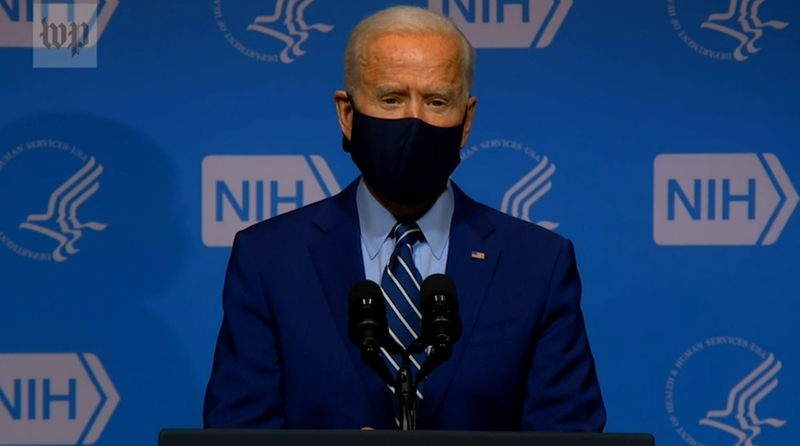

 Bri Yeager, a server at Railroad Pub and Pizza in Burlington, Wash., prepares a table for diners. MUST CREDIT: Photo for The Washington Post by Jovelle Tamayo
 SootinClaimon.Com