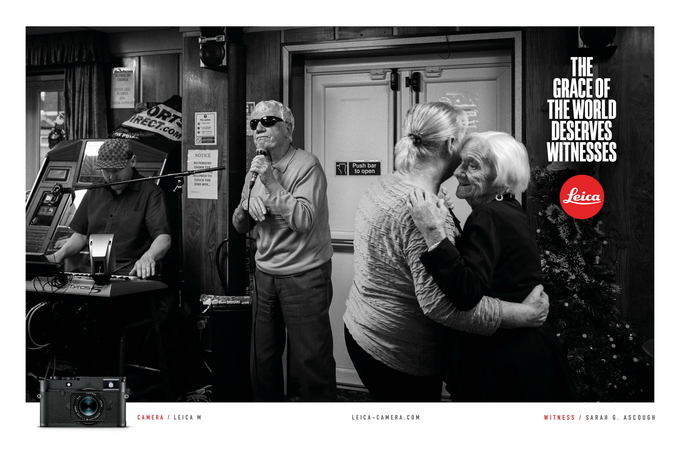
For the first time in more than a decade, German camera maker Leica has launched a global brand campaign that pays homage to professional photography under the theme “world needs witnesses”.
Created by advertising company TBWA/Paris, the ad shows how the camera can capture the world’s beauty, pivotal moments of history or mankind’s fragility.
None of the images in this campaign had been made, staged, retouched or changed – they are all pure expression of a personal way of seeing.
The vision, being aired online, was captured by more than 30 photographers from all walks of lie.
Internationally recognised American lensman Joel Meyerowitz says: “I had goose bumps when I first saw the video. It was astonishing! It was more human and inspiring than anything any camera company has ever done! No doubt about it.”
“I think the new campaign – and we at Leica do this only every 10 years or so – reflects our photographic, artistic, and humanistic approach beautifully. All I can say: Let us all together be witnesses for all the facets of our common world!” said Dr Andreas Kaufmann, chairman of the supervisory board and major shareholder of Leica Camera.
House Democrats reject plan to sharply curtail $1,400 stimulus payments in new stimulus proposal
InternationalFeb 09. 2021U.S. Sen. Bernie Sanders, I-Vt., and Sen. Ron Wyden, D-Ore., make their way to the Senate floor on the U.S. Capitol Hill on Tuesday, January 26, 2021 in Washington, D.C. MUST CREDIT: Washington Post photo by Salwan Georges
By The Washington Post · Jeff Stein, Erica Werner
WASHINGTON – Senior House Democrats on Monday night proposed sending full $1,400 stimulus payments to Americans with up to $75,000 in annual income, rejecting an early plan to sharply curtail the benefits.
House Ways and Means Chairman Richard Neal, D-Mass., released legislation that would send the full benefit to singles earning $75,000 pear year and couples earning $150,000 per year. Congressional Democrats had explored curtailing that benefit to $50,000 for individuals and $100,000 for married couples, a position embraced by Sen. Joe Manchin, D-W.Va., the most conservative Democrat.
Compared to prior plans, Democrats are accelerating the rate at which the benefit declines for higher-earners, a move intended to prevent wealthy Americans from receiving stimulus payments. The phase-out diminishes at the point at which singles earning $100,000 and couples earning $200,000 would receive no stimulus payments.
The proposal comes amid days of internal disagreements among Democrats over how to structure the next round of stimulus payments, a core component of President Biden’s $1.9 trillion stimulus plan currently moving through Congress. The legislation still must be passed through the House and Senate, and it is unclear whether Manchin or other conservative Senate Democrats will object to the proposal.
“There’s a discussion right now about what that threshold will look like,” White House press secretary Jen Psaki said Monday. “It’s still being negotiated at this point.”
Centrist lawmakers such as Manchin have called for targeting the payments to prevent them from going to high-earning Americans, arguing that those who have not lost their jobs do not need help. That idea has been met with increasing resistance from other members of the party, including Senate Finance Chairman Ron Wyden, D-Ore., and Senate Budget Chairman Bernie Sanders, I-Vt., as well as House lawmakers in the Congressional Progressive Caucus.
Wyden and Sanders have publicly criticized the proposals to lower the income thresholds to $50,000, saying middle-class families have suffered pay cuts and other economic shocks and need relief, too. Sen. Jon Ossoff, D-Ga., whose election victory in January helped seal Democrats’ Senate majority, also opposes lowering the threshold on the checks, according to a spokeswoman.
The White House has said it is willing to compromise on the thresholds, with Psaki repeatedly saying the administration is open to negotiations with Congress on the matter. On Sunday, Treasury Secretary Janet Yellen suggested that the administration was not on board with Democrats’ plans for lower income thresholds.
“The exact details of how it should be targeted are to be determined, but struggling middle-class families need help, too,” Yellen said on CNN. Asked whether she supports a phaseout higher than $50,000 per person, but not necessarily as high as $75,000, Yellen responded: “Yes, I – I think the details can be worked out. And the president is certainly willing to work with Congress to find a good structure for these payments.”
Biden gave similar remarks in an interview with CBS Evening News, saying he was “wide open” on the precise levels of the income threshold.
The dispute comes as House committees prepare to take up the legislation this week. It is uncertain how the matter will get resolved.
White House senior economist Jared Bernstein floated a compromise during a news briefing Friday, suggesting that lawmakers could design the benefit to diminish faster for higher earners. Under prior proposals, the size of the stimulus check diminished by 5% as incomes rose. Bernstein suggested that the phaseout of checks for those at upper incomes could be sped up, meaning that those at higher income levels would receive less.
“If you look at the distribution of who gets the checks . . . virtually none of it goes to the very top of the scale, and the vast majority goes to the middle and the bottom,” Bernstein said, citing research by the Institute for Taxation and Economic Policy, a left-leaning think tank. “What’s important to the president is that we don’t lose sight of people in the middle of the income scale who continue to struggle.”
The debate about the check thresholds represents one of many disputes Democrats may face as they try to pass Biden’s $1.9 trillion stimulus package through Congress. There is a wide ideological gulf between the party’s moderate and liberal wings, which is likely to produce numerous policy fights – over the $15-an-hour minimum wage; the scale of unemployment assistance; and the overall cost of the bill, among other things – on the way to passing their first major piece of legislation under Biden.
The split within the party appeared to intensify over the weekend. Manchin told WV News last week that he supported the next round of payments not going to individuals earning more than $50,000 or couples earning more than $100,00.
“An individual of $40,000 income or $50,000 income would receive it. . . . And a family who is making $80,000 or $100,000, not to exceed $100,000, would receive it,” Manchin said. “Anything over that would not be eligible, because they are the people who really are hurting right now and need the help the most.”
Manchin has great influence over the issue because the Senate is split 50-50 between Republicans and Democrats, so Democrats need his vote as they aim to push the legislation forward without GOP support.
But on Twitter and on CNN this weekend, Sanders slammed Democrats for embracing a plan that would cut out individuals earning $52,000. He also pointed out the potential political downside for the new Democratic administration of sending fewer payments than Trump had. Wyden has also said in a statement that families that had received the first two payments would expect a third.
“Unbelievable . . . working class people who got checks from Trump would not get them from Biden. Brilliant!,” Sanders said on Twitter.
The push among senior Democrats to lower the threshold to $50,000 was designed to appease Manchin, which elicited pushback from other lawmakers. Rep. Pramila Jayapal, D-Wash., chair of the Congressional Progressive Caucus, said Monday she is in “nonstop” conversations with White House officials about “why this makes no sense, politically or policy-wise.”
“The idea we should cave to one Democrat in the Senate does not make any sense to me,” Jayapal said.
While passing a budget resolution through Congress earlier this month that set the stage for approval of the broader relief bill, Sens. Susan Collins, R-Maine, and Manchin co-sponsored an amendment to exclude affluent families from the stimulus checks. The plan did not define an income amount, leaving that open to interpretation. Sanders and all Democrats voted for the proposal.
Under the lower threshold, about 71% of Americans would receive the full benefits and an additional 17% would get the partial benefit, said Kyle Pomerleau, a fellow at the American Enterprise Institute who specializes in tax policy. That compares with about 85% of families under the initial plan.
Psaki on Friday said that a family earning $300,000 a year may not need a stimulus payment. She also noted the payments would phase out, meaning a nurse earning $60,000 could still get a partial benefit if not the full check.
Protest art covered shuttered businesses for months at Washington’s Black Lives Matter Plaza. Now it has a new home.
InternationalFeb 09. 2021A prized panel is wheeled into the former Aveda Institute. MUST CREDIT: Washington Post photo by Bill O’Leary
By The Washington Post · Marissa J. Lang
WASHINGTON – Months spent in the sun and rain has warped the wooden works of art. They’ve been tagged and scrawled on, disassembled and pulled down from the windows that sat boarded up for months.
But as the painted pieces appeared last week, rolled on dollies into the empty showroom where they will soon be displayed, it felt to the artists who created them as if virtually no time had passed.
“Oh man, look at that,” artist Dez Zambrano said, his voice hushed in wonder. “I can almost hear the chanting.”
All at once, he said, memories came flooding back. Of the summer heat on his face as he painted the plywood canvas. Of the chanting crowds, marching through the square with their fists raised, signs lifted, their hands held up in surrender.
After more than six months of acting as shields over windows in and around Black Lives Matter Plaza, the plywood pieces were transported Thursday to a vacant storefront – formerly the site of an Aveda Institute training facility near a downtown Metro station. The works will serve as a centerpiece for an unfolding gallery space created by a unique partnership between a real estate giant and community nonprofit that officials hope will revitalize a commercial district decimated by the still-raging coronavirus pandemic.
Oxford Properties, a multinational corporation that manages more than 100 million square feet of property space across four continents, has rented out 16,000 feet of space to the PAINTS Institute, a community nonprofit that seeks to provide education, training and job opportunities to at-risk youths and seniors in the District of Columbia.
The price tag? Zero dollars.
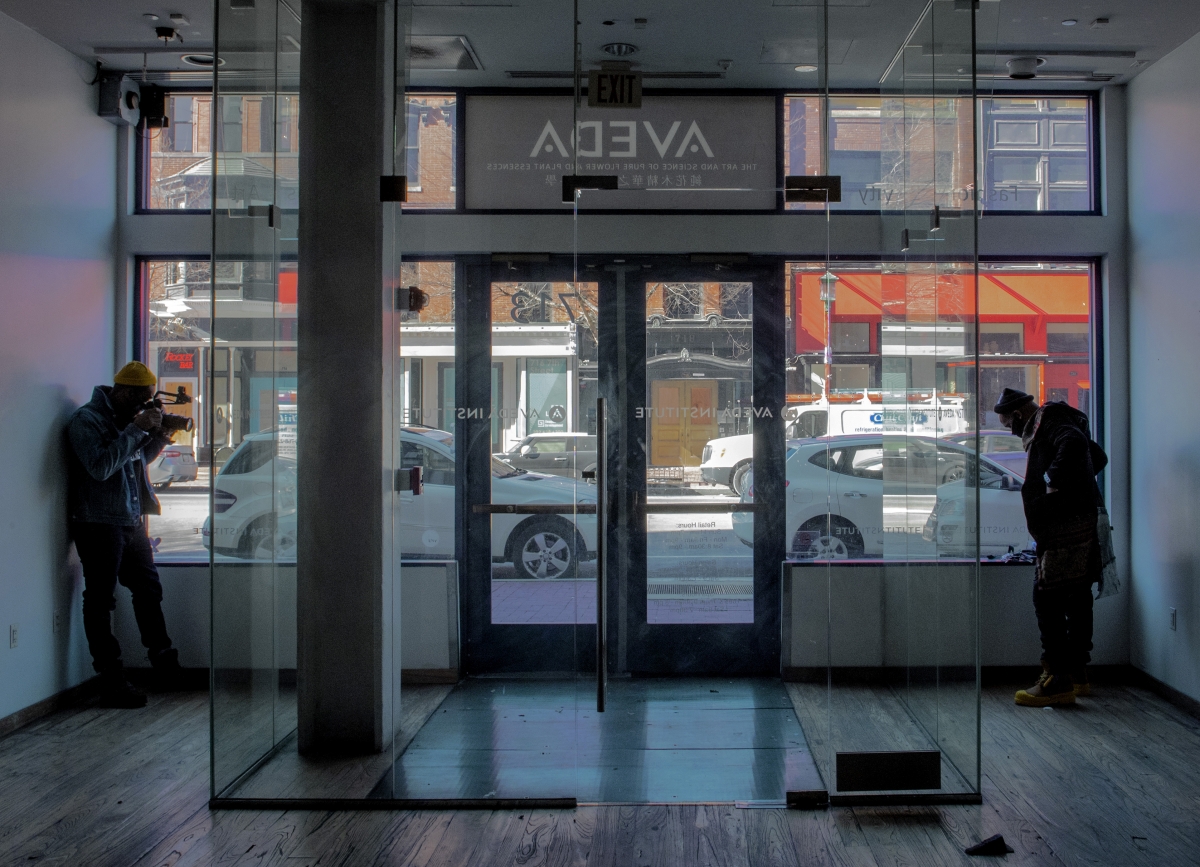
Art removed from BLM Plaza will find a new home in in the former Aveda studio in Washington, D.C. MUST CREDIT: Washington Post photo by Bill O’Leary
Outside the floor-to-ceiling windows, for-lease signs and papered-over and vacant storefronts line the street. Big brand names, like Chipotle, have been shuttered, the block letters that once hung from the building’s facade plucked from their place.
The movie theater is closed. The Clyde’s restaurant is bringing in a fraction of its normal business. Capital One Arena has largely been shut down for months with no end in sight. Foot traffic along the once-bustling corridor has slowed to a trickle.
“It’s difficult. Many of these restaurants are closing, and they won’t reopen,” said Oxford Properties General Manager Josh Turnbull. “Realistically, we don’t know how long the recovery will take. If this can help us get some foot traffic and channel business into some of the places, restaurants that are really hurting, that’s worth it to me.”
As he spoke, the occasional passerby paused to peer inside the empty building at its bare white walls and stripped wood floor.
To some, like Turnbull, the vacant space initially didn’t look like much. He imagined having to tear down walls to make the space marketable to a new tenant, he said. But to John Chisholm, executive director of the PAINTS Institute, the space is filled with potential.
“I want this to be an emotional space for people,” Chisholm said. “This is about community stewardship, about doing good while trying to support local art and local artists.”
What once were classrooms could be transformed into studio space for up-and-coming artists, Chisholm said. The tall streetside windows and glass-paneled walls would allow onlookers to catch a glimpse of artists and their work while maintaining safe pandemic protocols. Large looming portraits of cosmetic models could be transformed into larger-than-life displays, visible from great distances.
There could be pop-ups and retail on the horizon – ways to provide on-the-job training to at-risk youths, Chisholm said – or virtual residency programs and apprenticeship opportunities for artists.
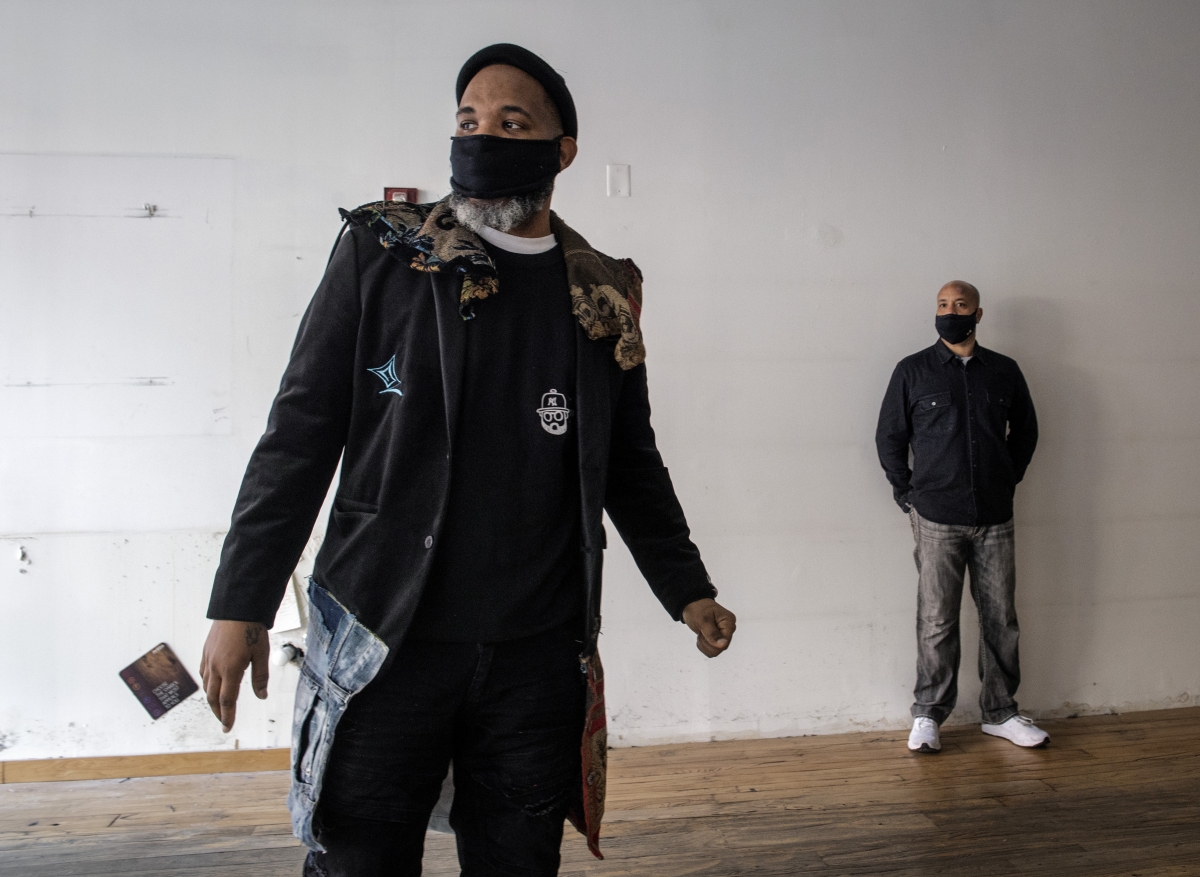
The gallery’s first display will be created by Demont Pinder, an artist known for his portraits of the famous – Prince, Aretha Franklin, John Lewis – as well as his work memorializing Black people killed by law enforcement and youths who died in senseless violence.
He’s painted live onstage during hip-hop concerts and produced a portrait of Washington Mayor Muriel Bowser. He’s painted those whose name recognition came only after their deaths: Trayvon Martin, Eric Garner, Philando Castile, Stephon Clark.
He’s also painted people whose names are not nationally recognized, such as young D.C. residents killed by gun violence. There was Steve Slaughter, a 14-year-old killed by a would-be robber as he returned from buying snacks with his friends; Makiyah Wilson, a 10-year-old gunned down as she walked toward an ice cream truck; and Maurice Scott, a 15-year-old killed blocks from his school.
Artist Demont Pinder, left, and PAINTS Institute Executive Director John Chisholm examine the space inside the former Aveda Institute. MUST CREDIT: Washington Post photo by Bill O’Leary
This month, Pinder said, he will transform the downstairs of the studio into a baseball stadium to showcase Black history past and present – an art piece that draws a line from Jackie Robinson’s history-making debut in the major leagues in 1947 to the Washington Nationals of today.
“This is how we celebrate art and Black history in a covid-safe environment until we can open up the doors again,” Pinder said. “I hope we can create something that gets everyone to leave inspired and forces them to look at blank, empty spaces differently – because we have so much of that in the times we’re living in right now.”
Upstairs, Pinder’s portrait of Martin Luther King Jr. that hung for months outside the National Building Museum will be displayed alongside artists’ renderings of street medics and countless demonstrators who marched for months in the nation’s capital demanding criminal justice reform and racial equality.
The murals came down last month, as D.C. officials and members of the media gathered around Black Lives Matter Plaza to watch the rebirth of a street that has been paralyzed by months of protests, civil unrest, a public health crisis, a suffering economy and, most recently, a heavily patrolled downtown militarized zone that followed a siege at the U.S. Capitol.
Removing the plywood boards – and the paintings on them that have come to define the area around the plaza – was a step in the right direction for businesses there, officials said, but they worried about losing pieces of history, artifacts that for months overlooked the heart of D.C.’s protest scene.
The first floor of the former Aveda Institute in Washington, D.C. MUST CREDIT: Washington Post photo by Bill O’Leary
Turnbull had space to offer. The Aveda Institute announced that it was vacating the downtown D.C. studio space before the pandemic hit, he said, and with retail stores struggling to keep the lights on, he doubted he could fill the space with a new tenant.
The arrangement, he said, is technically month-to-month. But, he added, he expects the art will be able to remain in the space for most of 2021 – if not longer.
Already, Chisholm has plans for the summer.
Near the first anniversary of the racial justice uprisings that followed the police killing of George Floyd on May 25, Chisholm said, he envisions re-creating the experience through art, sound, multimedia displays and the murals plucked from door frames and windows in Black Lives Matter Plaza.
Maybe by then, he said, people will be able to walk through the space safely, to fully immerse themselves in the not-so-distant past.
Maybe by then, Zambrano said, he’ll really be able to relive the chanting. Maybe through art, he said, everyone will.
Myanmar imposed martial law in its biggest cities following a third day of massive street protests, banning all gatherings of more than five people in an effort to stem widespread opposition to its Feb. 1 coup.
Tens of thousands of demonstrators swarmed streets across the Southeast Asian nation on Monday, using social media to quickly mobilize supporters with three clear demands: the release of civilian leaders including Aung San Suu Kyi, a recognition of the 2020 election results won by her party and a withdrawal of the military from the country’s politics. Aung Kyaw Soe, chair of Taikkyi Township Administration Council, confirmed the order of martial law in Yangon.
Ahead of the announcement, the military regime showed signs of cracking down on the protesters, using a water cannon on crowds in Naypyidaw before later issuing the threat of using live ammunition. The army also posted a statement on state-owned Myanmar Radio and Television saying “democracy and human rights” were being exploited by certain groups and any act that hurts the stability of the country would be prosecuted.
“We urge all people who want justice, freedom, equality and peace not only to reject the perpetrators but also to work together for the good of the nation and the people,” the statement said.
The youths flooding Myanmar’s streets are the latest members of Asia’s so-called Milk Tea Alliance fighting for democracy in places like Hong Kong and Thailand. The question is whether they’ll have any more success in pressuring authoritarians to back down.
Myanmar’s biggest protests in more than a decade began with an online call for “civil disobedience” in Yangon and quickly spread to other cities, prompting the military regime to shut off the internet and block platforms like Facebook, Twitter and Instagram. Activists in the traditionally conservative country have held up expletive-laden placards taunting a military that has violently suppressed dissent during similar protests in 1988 and 2007.
Many of the protesters were too young or not around to remember those deadly crackdowns: A United Nations report found 31 people were killed in 2007, while hundreds or possibly thousands were killed in 1988. The demonstrators now on the streets say they aren’t scared of the military, and hope to convince soldiers to join their fight against coup leader Min Aung Hlaing — even as authorities in Naypyidaw, the capital, warned protesters they would be shot with real bullets if they breached police lines.
“We respect those who lost their lives for the fight against democracy in Myanmar — they are our heroes too, so we are not afraid of potential military crackdowns,” Aung Ko Min, a 20-year-old student at Dagon University in Yangon, said as he marched in the protests on Monday. “We expect some police and soldiers to join our peaceful protests in the end.”
Myanmar’s peaceful protests are similar to those in Thailand seeking to reform the monarchy, and many protesters in Yangon have adopted the three-finger salute made popular by their neighbors in Bangkok. Both of those movements have used social media in a similar way to demonstrators in Hong Kong, where protests turned more violent. In Hong Kong and Thailand, authorities haven’t yielded to demands and stacked legal charges on key protest leaders.
Since the 2007 protests, Myanmar has opened the economy, allowing foreign participation in industries such as energy exploration and banking while liberalizing the telecom sector to allow millions of people to access mobile phones and internet for the first time. It also lifted tight censorship rules and accepted a landslide victory by Suu Kyi’s National League for Democracy party in 2015 elections.
Now young people know they have a better option and want the generals out of politics for good by demanding the repeal of the 2008 constitution that cements the military’s role in governing the country, said Sebastian Strangio, author of “In the Dragon’s Shadow: Southeast Asia in the Chinese Century.”
“It’s hard to see the military backing down,” he said. “All this puts the two sides on a collision course.”
A confidential U.K. foreign office assessment seen by Bloomberg suggested army chief Min Aung Hlaing will seek to crush Suu Kyi’s pro-democracy party and install himself as president. While Myanmar’s history indicates the military will use force, the generals might exercise caution this time around given the protests are being widely broadcast on social media despite the internet curbs, according to Hunter Marston, a Canberra-based political analyst.
“The absence of bloodshed — a hallmark of military reactions to past protests — would represent a noteworthy success,” said Marston, who added that the demonstrations may also prompt the military to negotiate a political settlement with Suu Kyi.
Suu Kyi, who is now being held along with other senior leaders of her NLD party and the civilian-led government, has called on supporters to resist the generals. With demonstrations growing throughout the country, citizens appear determined to fulfill her wishes.
“We want to be the last generation that lived under the military rule in Myanmar,” said shopkeeper Zaw Phyo Wai, 45. “This is not the fight between the NLD and the military. This is the fight between democracy and dictatorship.”
U.S. rejoins U.N. Human Rights Council, reversing Trump-era policy
InternationalFeb 09. 2021U.S. Secretary of State Antony Blinken speaks at the State Department on Thursday. (Tom Brenner/ Reuters)
By The Washington Post · John Hudson
WASHINGTON – President Joe Biden instructed the State Department on Monday to reengage with the United Nations Human Rights Council, reversing a decision by the Trump administration to withdraw from it nearly three years ago due to frustrations that the council repeatedly criticized Israel.
In explaining the decision, Secretary of State Antony Blinken said Trump’s withdrawal from the U.N. body in June of 2018 “did nothing to encourage meaningful change, but instead created a vacuum of U.S. leadership, which countries with authoritarian agendas have used to their advantage.”
“When it works well, the Human Rights Council shines a spotlight on countries with the worst human rights records and can serve as an important forum for those fighting injustice and tyranny,” Blinken said in a statement Monday.
The decision fulfills a promise Biden made during his presidential campaign to rejoin the council and return U.S. influence to important international institutions that the Trump administration ceded to other major powers.
The move is expected to face criticism from Republican lawmakers and pro-Israel activists who have long complained that the council disproportionately criticizes the Jewish state’s occupation of Palestinian territory in comparison to human rights issues in other countries.
“If Biden rejoins the council whose membership includes dictatorial regimes & some of the world’s worst human rights violators, it will fly in the face of our fight for human rights,” former Trump administration ambassador to the U.N. Nikki Haley tweeted last month.
Haley and other critics hoped that withdrawing from the body would delegitimize its criticisms of Israel.
Human rights organizations and liberal groups have argued that by pulling out, the United States relinquished its influence over a host of global issues at the expense of just one issue seized on by politically influential pressure groups.
“The Human Rights Council gets a lot of flak, but it plays an important if sometimes tragic role tracking abuses in countries like Syria and Venezuela,” said Richard Gowan, U.N. director at the International Crisis Group. “At a time when big power politics is snarling up the Security Council, the Human Rights Council offers the U.S. another platform to spotlight how nasty regimes are mistreating their citizens. Its immediate impact can be limited, but it is an important accountability mechanism.”
The Trump move also left the United States more exposed to criticism of its own internal actions. Following the May killing of George Floyd, a 46-year-old black man in Minneapolis, a number of African states came close to forcing through an unprecedented Human Rights Council resolution that demanded an investigation of racism in the United States. The countries ended up settling for a broader study of systemic racism after strenuous U.S. pushback, but the affair suggested a weakened U.S. hand after it left the council, the first time any country had left the body voluntarily.
Members of the council are elected for three year terms and can’t serve consecutively for more than two terms. Trump withdrew from the body when the United States was halfway through its term. The U.N. General Assembly is set to elect new members later this year.
It is unclear if the United States will run for full membership this year – an effort that may face resistance from China, which won a seat despite a campaign by the United States to stop it last year.
In a preview of the Biden administration’s priorities for the council, Blinken said the body can ” help to promote fundamental freedoms around the globe, including freedoms of expression, association and assembly, and religion or belief as well as the fundamental rights of women, girls, LGBTQI+ persons, and other marginalized communities.”
Blinken said the council was in need of reform, “including its disproportionate focus on Israel,” but said that “to address the Council’s deficiencies and ensure it lives up to its mandate, the United States must be at the table using the full weight of our diplomatic leadership.”
Chinese ditch travel despite upcoming Lunar New Year
InternationalFeb 09. 2021A traveler at the Beijing Capital International Airport ahead of Lunar New Year on Feb. 2. Airlines are offering dirt-cheap fares to stoke some demand, despite the general aversion to travel. Photographer: Yan Cong/Bloomberg
By Syndication Washington Post, Bloomberg
Lunar New Year is usually a bonanza for Chinese airlines crisscrossing the country fully loaded with passengers. Not this year though, after the government took the rare step of encouraging people to stay at home as it tries to stamp out the coronavirus.
Chunyun, as the Lunar New Year travel season in China is known, is regarded as the world’s biggest annual human migration and can account for as much as a quarter of airlines’ annual profits, according to BloombergNEF analyst Luxi Hong.
The holiday this year falls on Feb. 11-17, but the travel period in China started in late January and runs to March. On Jan. 28, passenger traffic was 71% lower than the first official travel day in 2020, according to the Civil Aviation Authority of China. Ticket bookings for trains, normally packed, are almost 60% lower than usual, the railway authority said.
Like so many others in the country of 1.4 billion people, Beijing resident Jack Zhang, 27, isn’t going anywhere. It’s a big decision for those who typically return home to see friends and family at this time of year, though there is one positive.
“It is difficult to adjust to the change of plan, but luckily the bright side is that I don’t need to go for any blind dates my parents tend to put me on during the holiday,” he said. “I don’t see any better and safer option than staying put.”
This will be the first time he has spent the holiday away from his parents, who live in the southern province of Guangxi. The accountant was put off by the testing and tracing requirements and subsequent limits on activities for people coming into Beijing.
About 10% of flights have been canceled over the coming two weeks, according to a BNEF report dated Feb. 3, which said China Southern Airlines Co. appears most affected with almost one-third of flights scrapped.
Jefferies expects China’s domestic travel market to rebound if infections remain below 100 per day. New daily cases numbered around 30 last week. The recovery should initially feature a reintroduction of capacity, followed by improving load factors and then higher ticket prices, analyst Andrew Lee wrote in a note last month.
For now, airlines are offering dirt-cheap fares to stoke some demand, despite the general aversion to travel. Tickets for a two-hour Hainan Airlines flight from Beijing to Hangzhou on Feb. 12 have been available on travel website Ctrip.com for as little as $15 (100 yuan). That’s a third of the cost of a roast duck at popular restaurant chain Da Dong. A second-class fare on the high-speed train between the two cities is six times more expensive.
By Syndication Washington Post, Bloomberg · Jake Rudnitsky, Anya Andrianova
Russia’s death toll from covid-19 in 2020 was nearly three times the level previously reported by the government, and accounted for half of all excess deaths last year, according to official data.
The Federal Statistics Service reported 44,435 deaths linked to covid-19 in December in a statement Monday, lifting the full-year total to 162,429. The number of deaths in 2020 reported by the government’s virus response center was 57,555.
In total, 2,124,479 Russians died in 2020, nearly 324,000 higher than the previous year, according to the statistics service data. There were 94,000 additional deaths in December compared to 2019, a 63% increase.
December was the deadliest month for Russia in the pandemic, Deputy Prime Minister Tatyana Golikova said in a televised briefing Monday.
Russia’s population shrank overall by nearly 700,000 people last year, more than twice the decline reported in 2019 and the worst shrinkage since 2005.
The figures demonstrate that the fallout from the novel coronavirus has been far worse than officials initially reported, even as President Vladimir Putin resisted locking down the country during the second, more severe wave of infections that started in the fall. Only the U.S., Brazil and Mexico have reported higher death totals in the pandemic so far.
The figures are a blow to Putin’s long-held goal of reversing Russia’s demographic decline. He has promoted a series of benefits aimed at increasing the birthrate and has overseen dramatic gains in life expectancy.
Russia has pinned its hopes for taming the pandemic on domestically developed vaccines, with Putin ordering universal access to the inoculation earlier this month.
February or March could be the turning point after which the pandemic could begin to ease, Health Minister Mikhail Murashko said Friday in northwestern Russia, according to Tass news service. The authorities aim to vaccinate about 60% of the adult population in the first half of the year, he said.
Even before the vaccine is widely distributed, the infection rate has been falling. New daily cases are down by about a third from their December highs, and some regions have begun to ease restrictions intended to limit the spread of the virus.
In Moscow, Mayor Sergei Sobyanin has allowed restaurants and bars to stay open all night long and dropped a requirement that employers keep at least 30% of their workers home.
By Syndication Washington Post, Bloomberg · Rajesh Kumar Singh, Sudhi Ranjan Sen
Rescue workers continue to battle mountains of slush and debris at a hydropower construction site in north India that was damaged by flash floods that have killed at least 11 people.
The rescue team of Indo-Tibetan Border Police is working to clear out a tunnel passage, where it expects more than 30 workers trapped, said Vivek Pandey, the spokesman for the police force. The Tapovan tunnel is the only easy entry point to NTPC’s Tapovan Vishnugad project in the Himalayan state of Uttarakhand.
The flood has also damaged other parts and entry points to the 520-megawatt electricity project. The rescue team has recovered 11 bodies, the state’s Chief Minister Trivendra Singh Rawat said in a tweet earlier today.
Images of the devastation brought back memories of 2013 floods in the same state that left thousands dead or missing and reignited debates on the environmental sustainability of hydropower, a source of electricity India considers important to balance the increasing addition of intermittent renewable power into the grid.
NTPC said it is still assessing the damage, adding it has insurance protection for the loss. The state-run generator, predominantly dependent on coal, is making a clean energy push and seeks to expand use of non-fossil fuels for making power.
The incident was caused by a sudden surge in river levels, sending floodwaters gushing downstream and leaving behind a trail of devastation. Besides the NTPC’s Tapovan Vishnugad project, the Rishi Ganga hydropower project was also damaged.
Jaiprakash Power Ventures said it halted operations at its Vishnuprayag project after slush brought along with floodwaters choked the tail race tunnel of the 400-megawatt project. The company expects to resume operations in a few days.
Shares of Jaiprakash Power slumped 5.5% in Mumbai on Monday, its steepest dropped in seven weeks. NTPC fell as much as 3.5% in early trade before recovering to close 0.8% higher, although still underperforming the benchmark S&P BSE Sensex.
Climate change may be a contributing factor, as the heating planet speeds up glacier melts, according to Anjal Prakash, a lead author at the United Nations Intergovernmental Panel on Climate Change.
Temperatures in the region are rising faster than the global average because of the high altitude, he said. The government should increase research and monitoring to avoid future disasters and improve climate adaptation, he said.
“Temperatures are rising in the Hindu-Kush Himalayan region and the rise in global temperature will have more impact in the Himalayan region due to elevation-dependent warming,” he said.
By The Washington Post · Douglas MacMillan, Yeganeh Torbati
Last month’s GameStop trading mania was sparked by members of a popular Reddit investing community who said they hoped to strike back at the Wall Street elites who had long dismissed them as dumb money. But growing evidence casts doubt on the idea that the episode mostly benefited small-time investors.
Giant mutual funds that own the largest stakes in GameStop saw the biggest gains in value. Hedge funds – some that have started using algorithms to track retail investors on social media sites – appear to have bought and sold millions of shares during the stock’s most volatile period of trading, industry experts said.
And in at least some cases, novice investors lost their shirts.
Instead of heralding a new wave of investor populism, the rise and fall of GameStop’s stock may end up reinforcing what professional investors have known for a long time: Wall Street is very good at making money, and more often than not, smaller investors lose out to wealthy traders and giant institutions.
The four largest asset managers in the world together own 39% of GameStop shares, according to regulatory filings. Those stakes, which are mostly held for years in passive index funds, have collectively gained roughly $1 billion in value since the beginning of this year. One hedge fund, Senvest Management, recently boasted to clients that it made more than $700 million from a bet it placed on GameStop in September, the Wall Street Journal reported last week.
Steve Bruce, a spokesman for Senvest, declined to comment on the GameStop trades.
The sheer number of shares that changed hands during the stock’s most manic trading period in late January suggests the episode was driven by more than just small, retail investors. Some hedge funds bought shares because they were forced to “cover” their short positions – a financial cost imposed on investors who bet a stock will go down before it goes up. Meanwhile, other hedge fund managers were likely taking calculated, short-term risks buying and selling as the stock price traded up, said Robert J. Shapiro, a policy fellow at Georgetown University and former economic advisor to Bill Clinton.
“You have hundreds of millions of shares being traded at prices of $200 to $300 a share,” Shapiro said. “The Reddit crew cannot afford to play in this game in any significant way.”
The question of who profited from the stock bonanza is important to regulators, who are investigating whether the market was manipulated for profit. Individual investors can freely share their opinions about a stock on social media, but it’s illegal for a group of investors to coordinate an effort to pump up a stock price, said Jacob S. Frenkel, a former senior counsel at the Securities and Exchange Commission.
Professional investors who are licensed by the Financial Industry Regulatory Authority to give investment advice face stricter limits around how they can discuss their stock positions, Frenkel said. Legal experts believe financial regulators will likely be combing through social media posts to determine whether sophisticated investors used online anonymity to stoke demand for stocks.
– – –
The category of individual traders known as retail investors has ballooned with the rise of commission-free online trading apps including Robinhood. There’s no doubt these traders showed up in record numbers to help drive up GameStop and other stocks last month, creating a temporary liquidity crisis for Robinhood, which had to raise $3.4 billion to help cover the cost of guaranteeing all of its customer deposits.
But the rise in retail investors has also led some Wall Street firms to pay more attention to the mom-and-pop investors they used to ridicule. Quietly, hedge funds have started to build algorithms or hire outside firms that specialize in scanning conversations on Reddit and Twitter for clues about what retail traders are thinking. Several of these services, with names like Swaggy Stocks, Robintrack and Quiver Quantitative, popped up in the past two years.
“The most innovative investment firms realized that tracking Reddit was important to portfolio management,” said Justin Zhen, co-founder of Thinknum Alternative Data, a New York software firm with more than 300 clients who pay for data scraped from various sources across the web.
Aside from Senvest, the New York hedge fund that manages $2.4 billion in assets, Wall Street firms have kept mum about any GameStop gains. Most investors, with the exception of top corporate executives and shareholders who own at least 5% of a company, aren’t required to disclose their trading activity.
But industry experts say the soaring stock price was almost certainly given a boost by the hidden hand of larger investors.
Benn Eifert, chief investment officer of San Francisco-based investment fund QVR Advisors, said the largest hedge funds likely knew about the GameStop buzz early because they are actively monitoring conversations on social media forums.
“You better believe the large sophisticated firms in the space have technology to tell them about what’s happening in the world in real time,” Eifert said. He declined to comment on whether QVR took a position in GameStop or specify what technology his firm uses to monitor social media.
Last year, prominent hedge funds including Point72, D.E. Shaw, Two Sigma and Capital Fund Management were all found to be quietly siphoning trading data from a popular app called Robintrack, which collected information on which stocks users of Robinhood bought and sold. Casey Primozic, the programmer who created the now-defunct app, tweeted his finding in May of last year that he had traced large volumes of traffic back to servers that appeared to belong to those firms.
“It was mostly a vindication of the fact that the data does have value to these bigger players,” Primozic said in an interview.
Spokespeople for Point72, Two Sigma and Capital Fund Management all declined to comment on that incident or whether they participated in trading of GameStop. D.E. Shaw did not respond to a request for comment.
GameStop has only 47 million shares available to trade in the stock market. And yet, on its rollercoaster ride from a share price of $17 to $483 in the span of three weeks, investors bought and sold those shares hundreds of millions of times. Over three of the stock’s most volatile trading days, GameStop shares changed hands 554 million times – more than 11 times the number of total shares available.
This pattern suggests there is more to the story than retail investors buying shares and holding them through the stock surge, said Shapiro, the Georgetown policy fellow.
“The same shares are being bought and sold four or five or six times a day,” Shapiro said, a pattern he believes points to the involvement of hedge funds with large amounts of capital to bet on highly volatile stocks. “Hedge funds make money off of volatility and price change. If prices are going to change very rapidly that gives you a lot of opportunity to make profit.”
If social media scraping has been a secret weapon for Wall Street, the secret is out.
Quiver Quantitative, a firm that compiles data sources including social media, regulatory filings, and lobbying records, saw a surge of interest in its product from hedge funds and other institutional investors in the past two weeks, said Christopher Kardatzke, who launched the company with his twin brother last year. The company also offers a web dashboard of data for ordinary investors.
“A lot of people want to know what retail investors are talking about,” he said. “It’s a force which is going to be influencing the markets for awhile now.”
– – –
Another possibility regulators are examining is whether employees of large Wall Street firms were actively using the Reddit forum to boost their portfolios. Though posters are anonymous, r/WallStreetBets has long been populated by users who grasped complex trading concepts, shared screenshots of their Bloomberg terminals and discussed six-figure bets on single stocks, said Jaime Rogozinski, who founded the forum in 2012.
“Since it was started, it’s always attracted professionals,” said Rogozinski, who is 39 and lives in Mexico City. “It’s easy to miss them or assume they are not there because of the crude language.”
The sophistication of some forum members was evident, Rogozinski says, during an incident in late 2019 when they discovered a glitch in the Robinhood app. Redditors shared a “free money cheat code” which they said let them borrow an infinite amount of money to perform trades. One user named MoonYachts claimed to have placed a $1 million bet with only $4,000 of his own cash before Robinhood fixed the bug.
“It’s evident that these guys knew exactly what they were doing,” said Rogozinski, who said he stopped moderating the subreddit he founded last year.
Joey Brookhart, an analyst at a hedge fund in Denver, has monitored the subreddit for years as a form of entertainment. He said a typical post on the site is a “pump” – a message designed to get other users to drive up the price of a stock. Brookhart said he thinks most of these posts are shared by active traders, but not necessarily professionals.
“They kind of realize the power of a network that’s ripe for manipulation,” he said. “There’s a pretty easy formula if you want to go pump something.”
It’s clear that Redditors helped spark the initial surge that sent shares of GameStop trading at levels far above what any rational investor would have paid for a failing brick-and-mortar retail chain. One veteran of r/WallStreetBets who goes by the username DeepF***ckingValue has evangelized GameStop since last year, when he bought about $50,000 of the stock.
Last month, as his position soared above $47 million, the user was unmasked as Keith Gill, a 34-year old certified financial adviser in Massachusetts. Gill, who did not respond to a request for comment, has told interviewers he is not trying to pump up the price of the stock and always intended to hold his shares for the long term.
Debra O’Malley, a spokeswoman for the the Massachusetts Secretary of the Commonwealth said the state is currently examining Gill’s social media activity as it relates to his role as a registered broker and employee of MassMutual. She said the state has asked MassMutual for details about his employment, his disclosures and the terms of his departure from the company on Jan. 28.
“It’s our understanding they were unaware of his [social media posts] and likely would not have approved them,” O’Malley said in an interview.
Paula Tremblay, a spokeswoman for MassMutual, confirmed Gill no longer works at the company. She said MassMutual is reviewing the matter but declined to comment further.
Andrew Hong, an analyst for a financial software company in Toronto who bought stock options in GameStop last August, said he thinks investors on Reddit actually have a lot in common with the Wall Street investors they claim to despise: At the end of the day, they’re all trying to make money.
“There are some really smart people on [WallStreetBets], but for the most part all this is just poor habitual gambling addicts versus rich habitual gambling addicts,” Hong said. “No one is a good guy here.”
By Syndication Washington Post, Bloomberg · Lynn Thomasson, Olivia Raimonde
Bitcoin surged to an all-time high after Tesla Inc. said it’s invested $1.5 billion, becoming the biggest company yet to back the controversial cryptocurrency.
Bitcoin jumped as much as 15% after Tesla made the disclosure in a regulatory filing, with prices exceeding $44,000 for the first time. Tesla also said it would begin accepting the digital token as a form of payment for its electric cars.
That Tesla, one of the world’s most influential companies, and billionaire Elon Musk have thrown their weight behind Bitcoin is a massive sign of support for the cryptocurrency, which policymakers have criticized for facilitating money laundering and fraud.
“The world’s richest man allocating $1.5 billion of his company’s treasury to Bitcoin speaks volumes about the magnitude at which crypto gains institutional adoption,” said Antoni Trenchev, managing partner and co-founder of Nexo in London. “Tesla has now paved the way.”
Trenchev said he expects that at least 10% of S&P 500 companies will be invested in Bitcoin by the end of 2022.
Other companies have made similar investments in Bitcoin. MicroStrategy Inc. has spent some $1.1 billion on the token. In October, Square Inc., headed by longtime crypto advocate Jack Dorsey, announced that it converted about $50 million of its total assets as of the second quarter of 2020 into the token. Proselytizers like Bill Miller of Miller Value Partners have said this was just the start of what was sure to be a trend across Main Street.
Bitcoin’s journey to a record has been marked with big swings that continue to stoke uncertainty about its outlook. Some see speculators at work and an inevitable bubble bursting. Others cite high-profile backers and interest from long-term investors as evidence of a more durable rally.
Predictions for Bitcoin’s possible long-term price range from $400,000 and more to zero. The token is designed to have a fixed supply of 21 million coins, underpinned by a digital ledger distributed across computer networks.



 U.S. Sen. Bernie Sanders, I-Vt., and Sen. Ron Wyden, D-Ore., make their way to the Senate floor on the U.S. Capitol Hill on Tuesday, January 26, 2021 in Washington, D.C. MUST CREDIT: Washington Post photo by Salwan Georges
 A prized panel is wheeled into the former Aveda Institute. MUST CREDIT: Washington Post photo by Bill O’Leary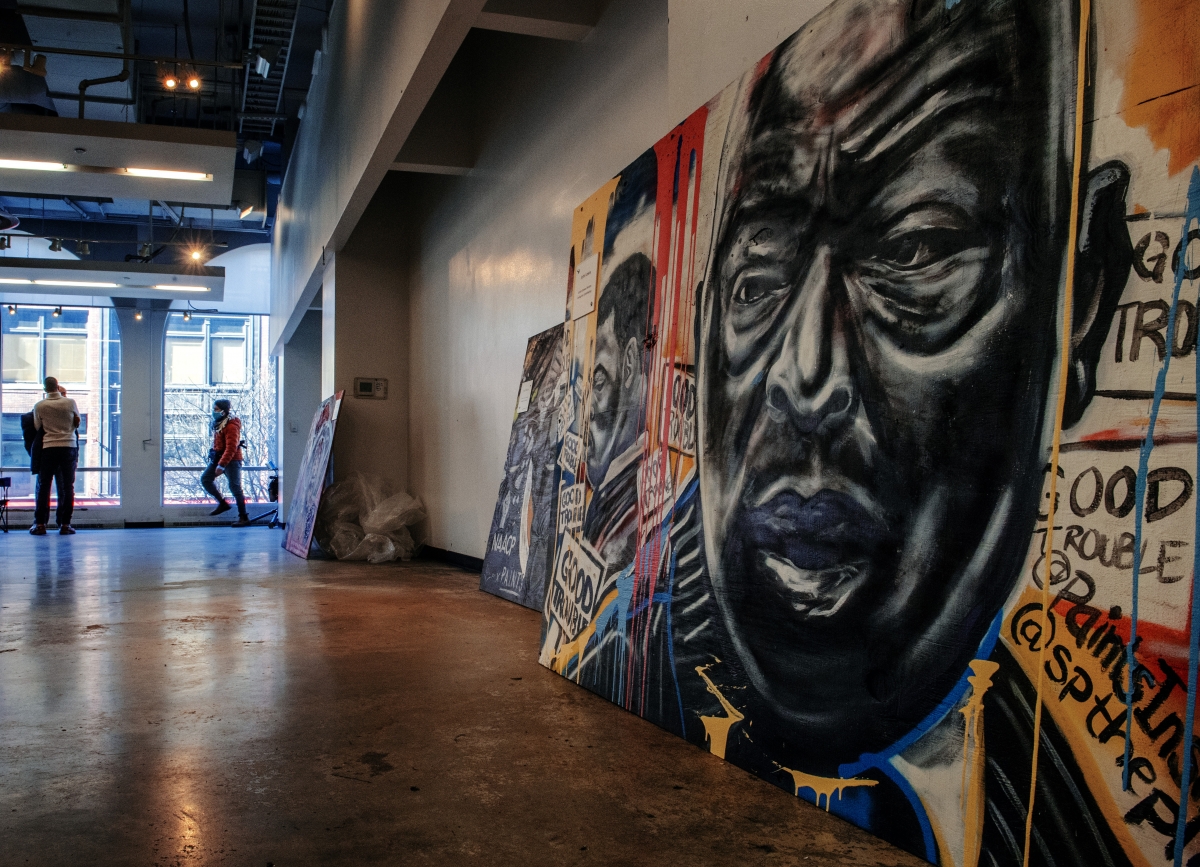

 U.S. Secretary of State Antony Blinken speaks at the State Department on Thursday. (Tom Brenner/ Reuters)
 A traveler at the Beijing Capital International Airport ahead of Lunar New Year on Feb. 2. Airlines are offering dirt-cheap fares to stoke some demand, despite the general aversion to travel. Photographer: Yan Cong/Bloomberg
 Tatyana Golikova


 SootinClaimon.Com