
Biden wants to squeeze an extra shot of vaccine out of every Pfizer vial. It won’t be easy. #SootinClaimon.Com

#SootinClaimon.Com : ขอบคุณแหล่งข้อมูล : หนังสือพิมพ์ The Nation.

Biden wants to squeeze an extra shot of vaccine out of every Pfizer vial. It won’t be easy.

InternationalJan 23. 2021President Joe BidenPresident Joe Biden

By The Washington Post, Christopher Rowland

Soon after the government authorized the Pfizer-BioNTech coronavirus vaccine in December, pharmacists discovered that a small amount of extra vaccine in every five-dose vial shipped by Pfizer amounted to a full additional dose.

For a nation desperate to get back to normal, the development was seemingly good news: Here was a path to expedite additional shots. On Jan. 6, Pfizer won an amendment to its Food and Drug Administration authorization reflecting that each vial in its shipments contained six shots – an instant 20 percent increase.

But as with many aspects of the vaccine rollout, complications arose, dampening enthusiasm.

Squeezing all six doses out of the Pfizer vials requires the use of special syringes that are in short supply. As a result, the sixth dose is often discarded, trapped in the small dead space in regular syringes, where the syringe’s stopper cannot reach it to plunge into a human arm.

President Joe Biden highlighted the urgent need to produce more of the specialty syringes – called low dead space syringes, because they are more efficient – in his pandemic response plan unveiled this week. His administration said it plans to use the Defense Production Act to procure more of the specialty syringes.

The Biden administration and Pfizer finalized a deal Friday that will allow the government to track which shipments are accompanied by low dead space syringes and which are not, according to an individual close to the negotiations who spoke on the condition of anonymity to discuss the details.

Vials accompanied by regular syringes will be counted as five doses against Pfizer’s contract for 200 million shots, and those accompanied by special syringes will count as six shots toward contract fulfillment.

The arrangement will allow Pfizer to avoid a controversy in the United States that flared in Europe last week, when press reports said Pfizer would be paid for six vaccine doses per vial even though medical providers lacked the equipment required to use all six.

But the agreement permits Pfizer to accelerate fulfillment of its U.S. contract.

“For Pfizer, the FDA approval of the overfill dose means it can fulfill its contract, which calls for doses, and receive full payment from the U.S. with almost seven million fewer vials. But many of those sixth doses might ultimately be discarded because distribution centers lack the proper tools,” said Sam Buffone a partner with the whistleblower law firm Black & Buffone and former senior trial counsel in the civil frauds division of the Justice Department.

The Department of Health and Human Services said in response to questions from The Washington Post that it advised the FDA that the move authorizing six doses of the Pfizer vaccine per vial posed hurdles.

“The FDA’s decisions on vaccine authorizations and approvals are made independently to preserve the integrity of their process,” HHS said. “HHS did, however, notify the FDA of potential long-term shortages” of low dead space syringes.

FDA said in a statement that it did take into consideration the availability of appropriate injectors, citing what it called their “ready availability.”

But BD, the largest manufacturer of syringes in the world, said the low dead space syringes are not as plentiful as regular syringes and predicted a considerable ramp-up to produce more.

“Low dead space syringes are niche products, and there has been minimal market demand based on health-care provider needs,” BD spokesman Troy Kirkpatrick said.

BD has been working for months to refit a manufacturing facility in Nebraska that will be churning out regular syringes. It has contracts to provide 286 million needles and syringes to the U.S. government by March and said it has already delivered 150 million of those. Of the 286 million, 40 million will be low dead space syringes, the company said.

Those were provided because they were what BD had available, not because it was anticipated that overfill in vials would need to be maximized for additional doses.

“It wasn’t planned that low dead space syringes were going to be needed for the vaccination efforts,” Kirkpatrick said. “When you have to plan months and months in advance, and without sacrificing routine care, it’s hard to sort of stop on a dime and just say, ‘Here’s 100 million of these things.'”

Drug companies typically add a small amount of drug or vaccines in vials of injectable pharmaceuticals to ensure that medical staff will have enough for the full dose. Doses may bubble up when they are shaken, and small amounts are typically trapped in needles and syringes.

Jessica Daley, a pharmacist and vice president of strategic supplier engagement at Premier, a health-care company that brings together 4,100 hospitals and health systems for group purchasing and health-care improvement, said members have reported difficulty in procuring needles and syringes to take advantage of the extra sixth dose in the Pfizer vials.

Operation Warp Speed provides ancillary vaccine supplies, including syringes and needles, in kits shipped by McKesson. But Daley said those kits only have enough for the original number of doses.

“We found early in the process there is Pfizer vaccine overfill in the vial, so we can get more doses out of those vials,” Daley said. “But to do that, you need more needles and syringes than are included in the Operation Warp Speed ancillary kit. We’ve heard from our members they struggle to secure those additional needles and syringes to use the full number available.”

Lindsey Amerine, director of pharmacy at UNC Health, a system of 12 hospitals affiliated with the University of North Carolina Medical Center, said she was working at a vaccine clinic last week and was able to draw six doses from the Pfizer vaccine vials using low dead space syringes. But other staff members at the same clinic were using regular syringes.

“They were not able to get the full six doses out,” she said. “It just depends on what syringes you are using.”

Other ongoing complications involve billing and tracking doses allocated to states.

South Carolina lawyer hired to defend Trump at Senate impeachment trial #SootinClaimon.Com

#SootinClaimon.Com : ขอบคุณแหล่งข้อมูล : หนังสือพิมพ์ The Nation.

South Carolina lawyer hired to defend Trump at Senate impeachment trial

InternationalJan 23. 2021Karl Bowers Jr.Karl Bowers Jr.

By The Washington Post, Michael Kranish and Josh Dawsey

WASHINGTON – When Republican politicians in South Carolina have faced possible impeachment, ethics charges or other serious accusations, they have often turned to Karl Bowers Jr., a lawyer with a military background, taciturn demeanor and a small office near the State House in Columbia.

Now Bowers is taking on his biggest case yet: defending former president Donald Trump in his second impeachment trial, this time against a charge that he incited a mob to attack the U.S. Capitol.

The longtime GOP attorney is little known outside of South Carolina and has no powerhouse law firm behind him. Colleagues say he is better known for behind-the-scenes negotiations than courtroom oratory.

In Bowers, Trump is getting a seasoned lawyer at a time when prominent Washington litigators have little interest in working for the former president – and a measured figure who offers a sharp contrast to attorneys Rudy Giuliani and Sidney Powell, who spent the past several months unspooling wild conspiracy theories that the election was rigged.

“When I was threatened with the specter of impeachment, he was able and professional,” said former South Carolina governor Mark Sanford, recalling how Bowers successfully fought off efforts to remove him from office. “From his vantage point, it is a good business decision. It substantially raises your profile on a national and international basis.”

In addition to his work for Sanford, Bowers defended then-South Carolina Gov. Nikki Haley during an ethics investigation, and he played a key role in the campaigns of some of the state’s most prominent Republican politicians. His law office is in a small white building that also houses the firm of current Gov. Henry McMaster.

“He is the first call that every Republican campaign makes for a legal team,” said South Carolina political consultant Tim Pearson, who has worked alongside Bowers on gubernatorial campaigns and shares office space with him. “It doesn’t surprise me he is willing to do the work. He is a lawyer’s lawyer in the sense that I think he believes that everybody deserves representation.”

Bowers did not respond to a request for comment.

Bowers, 55, a graduate of Tulane Law School, was recommended to Trump by Sen. Lindsey Graham, the South Carolina Republican, who said that he expects that Trump might bring on other lawyers.

“He can handle Trump well,” Graham said of Bowers in an interview. “He’ll give the president good advice and won’t sugarcoat it. He can talk to him.”

But Democrats in the state who know Bowers and his politics were surprised that he was willing to take on the case.

“He is not a crazy Trump supporter,” said Dick Harpootlian, a prominent lawyer in Columbia and a major donor to President Biden, who said he had argued about six cases against Bowers, who is also his neighbor.

Harpootlian said Bowers probably was persuaded to come aboard because of his relationship with Graham.

“I was surprised because you would have thought there would be a national superstar, with Trump and all his money,” he added. “I’m not saying Butch is not a good lawyer – he is. But there are folks who have participated in these kinds of proceedings before or have big law firms where they can put their people on it.”

Bowers, by contrast, runs a small firm called Bowers Law Office, and he is the only lawyer listed on the firm’s website. He often answers his own door, and he is regularly seen jogging through the city streets. He has a sober manner, associates said.

“Unlike his client, he won’t be bombastic,” Harpootlian said. “You won’t see him flapping his arms around and yelling at anybody.”

Matt Moore, a former chairman of the state GOP party, said Bowers drove a four-wheel-drive truck and preferred suits from Macy’s over Brioni.

“He’s known for his discretion. He doesn’t partake in the usual Columbia shenanigans, of inside gossip and that kind of thing,” he said, adding that “he knows how to get his clients out of tough spots.”

Amanda Loveday, the former director of the South Carolina Democratic Party, said she and Bowers addressed a River Bluff High School class together outside Columbia a few years ago.

“I can’t remember if he specifically said, ‘I’m not a Trump Republican,’ or if he said, ‘I’m not one of those Republicans,’ but he made some allusion to the class that he wasn’t ‘one of those,’ ” Loveday said. “The second the story came out he was working for Trump, that came rushing to my mind. It’s literally all I’ve been thinking since this whole thing came out.”

Graham, who served as an officer in the Judge Advocate General’s Corps in the Air Force, said that Bowers served with him and then “he took over my job.”

Bowers has been a member of the South Carolina Air National Guard since 1983 and has a rank of colonel, according to the biography on his law firm’s website.

He has spent much of his career working on election law, advising campaigns, and defending politicians accused of ethics violations.

After serving as chairman of the South Carolina State Election Commission from 2004 to 2007 and as special counsel on voting matters for the Justice Department, Bowers was counsel for the 2008 presidential campaign of Sen. John McCain, R-Ariz.

In the Sanford case, Bowers defended the governor against a move to oust him from office after revelations of the governor’s affair with an Argentine woman and questions about use of state travel funds. The impeachment effort was dropped.

In 2012, Bowers defended Haley, who faced a hearing by the State Ethics Commission into allegations that she had failed to disclose addresses and occupations for campaign donors. Bowers said at the time that the missing information was minor and that the matter should be handled administratively.

The State, a Columbia newspaper, reported that Bowers was involved in 14 months of “secret negotiations” to try to get the charges dropped, and the commission eventually fined Haley $3,500, according to the newspaper.

The commission also examined whether Haley illegally lobbied while she was a House member in the state legislature, and Bowers once again represented her. She was cleared in the case.

“Butch is a good friend and a fine lawyer,” Haley said in a statement Friday. “President Trump is fortunate to have him on his team.”

In 2016, Bowers was among the lawyers who defended a Republican-backed effort in North Carolina to require transgender residents to use restrooms in certain public facilities that match their sex as recorded on birth certificates.

The Winston-Salem Journal reported that Bowers said the law was needed to prevent men dressed as women entering a women’s bathroom. The law prompted boycotts and a settlement was later reached that enabled individuals to use bathrooms that matched their gender identity.

Graham said that Bowers is expected to meet with Trump in the coming days. The lawyer has already spoken to the former president on the phone, according to people familiar with their interactions, as well as with Trump allies such as spokesman Jason Miller, who first tweeted the news of his hiring.

“Excited to announce that Columbia, SC-based Butch Bowers has joined President Trump’s legal team,” Miller tweeted. “Butch is well respected by both Republicans and Democrats and will do an excellent job defending President Trump.”

Miller did not respond to a request for comment.

Trump aides have not disclosed how much Bowers will be paid or whether the funds would come from the former president’s new leadership PAC, Save America, which Trump set up after the election. The PAC has more than $70 million on hand, according to one person familiar with the finances.

The Senate trial is set to begin the week of Feb. 8. Seventeen Republicans would have to join all 50 Democrats to convict Trump.

Graham said there were only a handful of Republican senators who were inclined to convict. He said the defense will argue that Congress has “never impeached a president after they left office for a reason.”

In first full day in office, Biden tackles multiple crises #SootinClaimon.Com

#SootinClaimon.Com : ขอบคุณแหล่งข้อมูล : หนังสือพิมพ์ The Nation.

In first full day in office, Biden tackles multiple crises

InternationalJan 22. 2021The concurrent nature of the crises that President Biden is facing - a health crisis that snowballed into an economic one before colliding with a social one - has few parallels in modern history. Above, the Bidens attend an inaugural prayer service at the White House. MUST CREDIT: Washington Post photo by Jabin BotsfordThe concurrent nature of the crises that President Biden is facing – a health crisis that snowballed into an economic one before colliding with a social one – has few parallels in modern history. Above, the Bidens attend an inaugural prayer service at the White House. MUST CREDIT: Washington Post photo by Jabin Botsford

By The Washington Post · Ashley Parker, Matt Viser ·

WASHINGTON – President Joe Biden raced Thursday to show he was addressing the array of crises awaiting him on his first day in office, issuing executive orders aimed at combating the coronavirus and preparing measures to take on the struggling economy and other problems.

Biden and his team found themselves immediately on what the president called a “wartime” footing, describing fighting the coronavirus as “a national emergency.” Against an already calamitous backdrop of a pandemic that has left more than 408,000 Americans dead, an additional 900,000 people filed new unemployment claims last week, underlining a devastated job market.

In remarks in the White House State Dining Room, Biden outlined a new national strategy for combating the virus, signing 10 executive orders and other documents to streamline the federal government response, move toward reopening schools and businesses, ensure safer travel and increase vaccinations, among other goals.

He called on Americans to “mask up” for the next 100 days, saying that doing so could save more than 50,000 lives. Biden’s tone was notably sober, contrasting not only with former president Donald Trump’s rhetoric, which was often full of superlatives and grand promises, but also with the tone of other presidents on many occasions.

“Let me be very clear: Things are going to continue to get worse before they get better,” Biden said, adding that the death toll would likely top 500,000 next month. “And let me be equally clear: We will get through this. We will defeat this pandemic.”

Biden criticized Trump’s vaccine rollout as “a dismal failure” and called his own goal of administering 100 million vaccine doses within 100 days “one of the greatest operational challenges our nation has ever undertaken.”

But averaging 1 million doses a day appears to be a goal that is already being surpassed. The average number of vaccines administered over the past week was about 936,000, according to a Washington Post tally using data from state reports and the Centers for Disease Control and Prevention. On Thursday, the number was 1,057,369.

Biden bristled on Thursday when asked whether his goal was ambitious enough. “When I announced it, you all said it’s not possible,” he said. “Come on, give me a break, man.”

At the same time, Dr. Anthony Fauci, who is spearheading Biden’s covid-19 response, said he felt far freer than he had under Trump to provide accurate, science-based information. “The idea that you can get up here and talk about what you know, what the science is, and know that’s it – let the science speak – it is somewhat of a liberating feeling,” Fauci said.

Biden plans to move quickly on other fronts beyond coronavirus as well. On Friday, he will sign executive orders tackling the economy, which continues to struggle, with nearly 16 million people claiming benefits as of Jan. 2, the last week the information was available.

And he plans to continue apace in the coming days, outlining a “Buy American” action Monday, followed by a focus on racial equity Tuesday, climate change Wednesday, health care Thursday, and immigration Friday.

But the pandemic is arguably the country’s starkest problem, given the daily death toll. For nearly a year Biden has criticized Trump for not making full use of his executive powers to ramp up production of coronavirus tests and personal protective equipment.

In his actions and remarks on Thursday, he authorized the use of the Defense Production Act to increase efforts to combat the pandemic and increase vaccine distribution. “This is a wartime undertaking,” Biden said, noting that more Americans have died of covid-19 than in all of World War II.

The president’s early moves are the culmination of months of planning. His team began laying the groundwork last April, hiring staff and drafting proposals with an eye toward the opening days of a Biden presidency.

“We’re going into war – but it wasn’t a surprise attack. This isn’t Pearl Harbor. It’s more like D-Day,” said Ted Kaufman, a close Biden adviser who led the transition. “This is the first days of the battle, and if you have really, really good people you can fight on all the fronts.”

Adam Jentleson, a former aide to then-Senate Majority Leader Harry Reid, D-Nev., said the Biden team is still grappling with the enormity of its challenges.

“You’re always having to figure things out on the fly, but the ground is shifting under them faster than any other new administration in recent history,” said Jentleson, the author of “Kill Switch,” a book about the Senate. “So they’re having not just to play three-dimensional chess, but they’re playing three-dimensional chess in an antigravity chamber with the pieces flying off the board.”

Biden’s schedule Thursday was itself designed to suggest focus and normalcy. He held a single public event, followed by a public briefing from Fauci and White House press secretary Jen Psaki.

That contrasted with many of Trump’s days as president, which often included early-morning or late-night tweets on various subjects, as well as comments from Trump that might deliver insults, veer sharply from aides’ expectations or complain of persecution.

Even on Biden’s first full day as president, there were signs that a tighter organization would only go so far in overcoming challenges.

The White House has been reluctant to stake out a firm position on the timing of Trump’s impeachment proceedings, which could bog down the Senate’s ability to move forward on Biden’s $1.9 trillion relief package and his Cabinet nominations.

Psaki on Thursday declined to say whether Biden had an opinion on eliminating the Senate filibuster, which could make his priorities easier to pass but would significantly alter the chamber where Biden served for 36 years.

Despite Biden’s appeals for unity, Republicans are already citing objections to many of his initial plans – including an ambitious overhaul of the nation’s immigration system – and are widely expected to object to portions of his covid relief bill.

While Trump’s administration yielded the expedited production of a coronavirus vaccine, Biden’s clearly has some catching up to do. Trump initially downplayed the virus, diminished his administration’s health experts, mocked actions like mask-wearing and left much of the pandemic response to the states.

Trump in many ways also undermined efforts to combat climate change and racial inequity – Biden’s two other top priorities – leaving the new president to begin reversing actions from the previous four years before beginning to implement his own agenda.

And in baselessly claiming the election was stolen and encouraging his angry supporters to assault the Capitol, Trump left Biden a nation riven by partisan politics, with a portion of the population refusing to accept Biden as the legitimately elected leader.

Former Barack Obama chief of staff Rahm Emanuel – who famously quipped about the Great Recession’s financial collapse that “you never want a serious crisis to go to waste” – said that while the individual crises facing Biden faces are not unprecedented, the combination is unlike anything in modern history.

“Lincoln had the Civil War, Wilson had the pandemic, Roosevelt had the depression, Kennedy had the height of the Cold War, and Johnson had unprecedented civil and social strife,” Emanuel said. “Biden has D, all of the above.”

“It brings a different set of urgency,” Emanuel added. “The normal boundaries of procedures and expectations, that weight gets lifted and you . . . can do things you once thought were impossible.”

In the opening day of his administration, Biden signaled a split from Trump in both style and substance.

“We talked constantly in the campaign about hitting the ground running, but we hit the ground sprinting on day one,” said deputy White House press secretary T.J. Ducklo.

Emanuel said the Biden team’s actions – both implicit and explicit, both substantive and ceremonial – were designed to convey propulsion. “No stalling. No stopping. No wasting time. With a sense of urgency, it’s forward movement,” he said. “Suit up, get ready, let’s go. It’s all of one piece: Momentum.”

Biden has made a flurry of moves – signing 15 executive actions, as well as two agency directives – inking some while still in the Capitol, moments after being sworn in. Some of those actions, like the ones on Thursday, focused on the coronavirus, while others addressed the economy, climate change and racial equality.

It’s an effort to show he is responding to a cluster of problems – a health crisis that snowballed into an economic one before colliding with a social one – with few parallels in modern history. The closest, perhaps, has been the devastation confronting Franklin D. Roosevelt, the president about whom Biden increasingly spoke during his campaign and whose large portrait he installed in the Oval Office.

Roosevelt, like Biden ended up facing a crisis in his first days in office – in his case, a banking collapse – that was different from what he expected when he began his campaign.

“When Biden started running for the presidency, he articulated all the things he thought he and the Democratic Party and the country should be doing,” said Eric Rauchway, a historian and author of “Winter War: Hoover, Roosevelt, and the First Clash Over the New Deal.” “He’s not going to do any of those. He’s dealing with the bad vaccine rollout. . . . It’s obviously become a priority and been forced upon him in a way he wouldn’t have chosen.”

In some ways, Rauchway added, Biden’s early days and weeks may be guided as much by the landscape that Trump left him than his own affirmative plans.

“A crisis and misconduct by the outgoing president,” Rauchway said, “can set the agenda for the incoming president.”

Biden to increase federal food benefits among executive actions aimed at stabilizing U.S. economy #SootinClaimon.Com

#SootinClaimon.Com : ขอบคุณแหล่งข้อมูล : หนังสือพิมพ์ The Nation.

Biden to increase federal food benefits among executive actions aimed at stabilizing U.S. economy

InternationalJan 22. 2021President Biden speaks about the coronavirus pandemic before signing executive orders at the White House on Jan. 21. MUST CREDIT: Washington Post photo by Jabin Botsford.President Biden speaks about the coronavirus pandemic before signing executive orders at the White House on Jan. 21. MUST CREDIT: Washington Post photo by Jabin Botsford.
By The Washington Post · Jeff Stein, Laura Reiley

WASHINGTON – President Joe Biden is expected on Friday to significantly increase federal food assistance for millions of hungry families among executive actions intended to stabilize the deterioration of the economy weighed down by the raging coronavirus pandemic.

Biden is asking the Department of Agriculture to allow states to increase Supplemental Nutrition Assistance Program (SNAP) benefits – commonly known as food stamps – and to increase by 15% benefits awarded through a school meals programs for low-income studentsstarted during the pandemic, according to Biden administration officials. That could give a family of three children more than $100 in extra benefits every two months, officials said.

A separate unilateral move aims to help get previously approved stimulus checks into the hands of Americans who haven’t received them yet. And another would ask the Labor Department to make clear that workers who refuse to return to working conditions that could expose them to the coronavirus should be eligible for unemployment insurance.

Brian Deese, director of the White House National Economic Council, told reporters on a call Thursday night that the measures are meant as only partial solutions, as the administration kicks off negotiations with Congress on its $1.9 trillion relief economic proposal.

The U.S. economy has shown new signs of damage, particularly in the labor market. Last month, the economy lost jobs for the first time since the recovery began, and weekly jobless claims in January have remained at historic highs amid growing fears of long-term damage to the economy. Biden has inherited the worst jobs market of any president in modern history.

“These actions are not a substitute for comprehensive legislative relief,” Deese said, “but they will provide a critical lifeline to millions of American families.”

Biden’s order attempts in several ways to address the surge in hunger in America during the pandemic, with approximately 50 million people, including 17 million children, considered food insecure.

Previous coronavirus relief bills did not expand SNAP for the 40 percent of recipients who were already at the maximum benefit. Biden’s new order would allow states to increase SNAP emergency allotments for those who need it most, allowing an additional 12 million people to receive enhanced benefits.

Under Biden’s order, an electronic debit card benefit for students will increase by approximately 15%. The program is called Pandemic EBT and goes to students who would have qualified for free or reduced-priced school meals were school in session.

Perhaps the most significant change in this executive order is a reassessment of the USDA’s Thrifty Food Plan, the basis for determining SNAP benefits. Lisa Davis, senior vice president of Share Our Strength’s No Kid Hungry campaign, said the metrics are out of date with the economic realities most struggling households face. The president will ask the USDA to consider beginning the process of revising the Thrifty Food Plan to better reflect the modern cost of a healthy basic diet.

“Any one of these in itself would be terrific, but if you bundle them together, these are indeed quite significant in terms of helping Americans get through one of the most terrible times in our lives,” said Catherine D’Amato, chief executive of Greater Boston Food Bank.

Biden will also restore collective bargaining power to federal workers and direct agencies to develop recommendations “directing his administration to start the work” of an executive order requiring federal contractors to pay a $15 per hour minimum wage and provide emergency paid leave. Biden endorsed similar commitments during the presidential campaign.

In terms of stimulus payments, the White House says it will ask the Treasury Department to consider improving its disbursal, in part by “working to make sure those who have not yet accessed their funds get the relief they deserve.” It is not clear exactly what measures Treasury could take to ensure as many as 8 million people who have not received their stimulus payments from last spring get them.

Biden’s executive actions will also aim to buttress unemployment benefits as about 10 million remain out of work. Democrats in Congress had for months asked the Trump administration to make clear to states that workers who felt unsafe returning to work due to the coronavirus should not be denied jobless benefits. States had wildly different interpretations of the rules, leading thousands to be deprived of unemployment aid, said Andrew Stettner, an unemployment expert and senior fellow at the Century Foundation, a think tank.

“The federal government has a role to tell the states what they should do on this,” Stettner said. “This is significant.”

The executive actions also include a number of measures related to U.S. federal employees. President Donald Trump had issued an executive order in October that would have stripped civil service protections from federal employees whose work involves policymaking, allowing them to be dismissed with little cause or recourse, much like the political appointees who come and go with each administration.

Civil service experts and union leaders estimated that from tens of thousands to hundreds of thousands of federal employees in a workforce of 2.1 million would have been swept into the new class of employees, called Schedule F. Biden will reverse that decision.

Obama, Bush and Clinton release video praising peaceful transfers of power, as Trump skips inauguration #SootinClaimon.Com

#SootinClaimon.Com : ขอบคุณแหล่งข้อมูล : หนังสือพิมพ์ The Nation.

Obama, Bush and Clinton release video praising peaceful transfers of power, as Trump skips inauguration

InternationalJan 22. 2021

By The Washington Post · Tim Elfrink

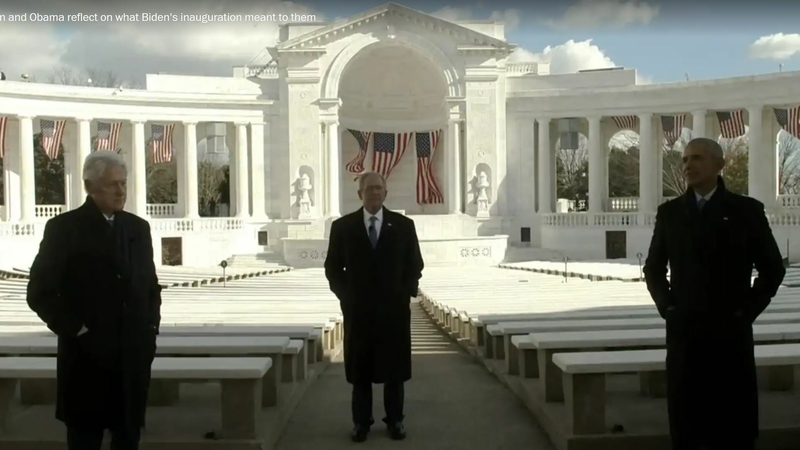
Standing in the Memorial Amphitheater at Arlington National Cemetery alongside his two predecessors in the White House, former president Barack Obama noted that inaugurations are central to American democracy.

“Inaugurations signal a tradition of a peaceful transfer of power that is over two centuries old,” Obama said in a joint video released late Wednesday with former presidents George W. Bush and Bill Clinton.

Although former president Donald Trump’s name was never uttered in the nearly three-minute clip, it served as an unsubtle rebuke to the latest member of the ex-presidents club, who has spent months torpedoing the norms surrounding the peaceful transfer of power.

Obama recalled that one of his “fondest memories” of his inauguration was Bush and former first lady Laura Bush welcoming him and former first lady Michelle Obama to the White House – a courtesy that Trump and former first lady Melania Trump didn’t afford the Bidens on Wednesday.

“It was a reminder that we can have fierce disagreements and yet recognize each other’s common humanity, and that as Americans we have more in common than what separates us,” Obama said.

Trump became the first commander in chief in more than 150 years to skip his successor’s inauguration, which was heavily guarded by the military after a mob provoked by Trump stormed the Capitol earlier this month in an attempted insurrection.

In his farewell speech on Wednesday morning, Trump never mentioned Biden’s name, although he did wish the “new administration great luck and great success.” Biden said he still hasn’t spoken to Trump, but told reporters that his predecessor did leave him a “very generous” letter, following one tradition after ignoring many others.

In the video, the former presidents presented a starkly different vision of bipartisan cooperation – one that echoed Biden’s calls for unity in his inaugural address. Bush, the sole Republican standing between the two Democrats, noted that their mere presence together sends a vivid message.

“The fact that the three of us are here talking about a peaceful transfer of power speaks to the institutional integrity of our country,” he said.

Clinton suggestedBiden’s win opened opportunities for America to change for the better.

“This is an unusual thing. We are both trying to come back to normalcy, deal with totally abnormal challenges, and do what we do best, which is try to make a more perfect union,” he said. “It’s an exciting time.”

All three ex-presidents urged Americans to find ways to talk in a moment when the nation is politically fractured.

“We’ve got to not just listen to folks we agree with, but listen to folks we don’t,” Obama said.

Bush added that “if Americans would love their neighbors like they would like to be loved themselves, a lot of the division in our society would end.”

These three former presidents, Obama stressed, stood ready to help Biden however they could.

“You’ve got all of us here rooting for your success,” he said. “We will be available in any ways that we can as citizens to help you guide our country forward.”

Biden signs order Thursday requiring masks on planes, buses, trains and at airports #SootinClaimon.Com

#SootinClaimon.Com : ขอบคุณแหล่งข้อมูล : หนังสือพิมพ์ The Nation.

Biden signs order Thursday requiring masks on planes, buses, trains and at airports

InternationalJan 22. 2021Joe Biden and Kamala Harris don masks during an August event in Wilmington, Del. MUST CREDIT: Washington Post photo by Toni L. SandysJoe Biden and Kamala Harris don masks during an August event in Wilmington, Del. MUST CREDIT: Washington Post photo by Toni L. Sandys
By The Washington Post · Michael Laris

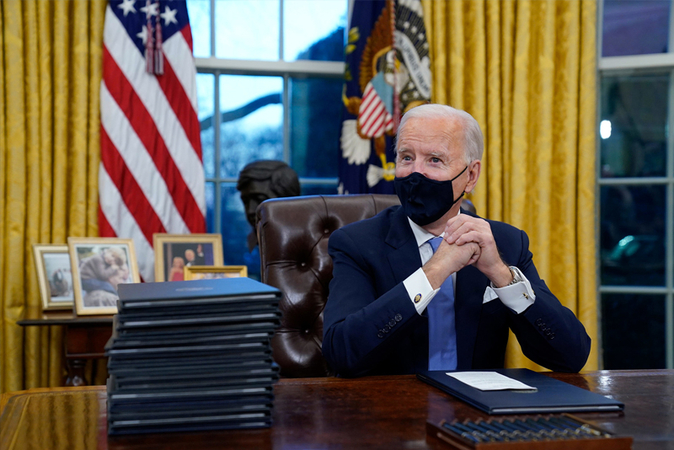
WASHINGTON – President Joe Biden signed an order Thursday mandating mask usage in airports and on many planes, trains, ships and intercity buses, the White House said.

The moves are part of a new strategy released Thursday to confront the coronavirus pandemic that has killed more than 406,000 people in the United States.

Airline workers have described the dangerous results of passengers refusing to follow mask requirements issued by airlines. Safety reports filed with the federal government show flight attendants being repeatedly taunted and verbally abused by passengers, including some who called the virus a “political hoax.”

Biden’s action comes on the heels of earlier order Wednesday – the first he issued as president – requiring masks on federal property. Together, the orders come as close to a national mask mandate as his federal powers allow, because only states and municipalities can require residents to wear masks at a local level.

The Trump administration rejected calls from Congress, unions representing transportation workers and public health experts within the Centers for Disease Control and Prevention to require masks.

Biden’s move marks a clear break from Trump’s handling of masks, although some specifics, including how it might be enforced, remain unclear pending the release of the order. It will require masks “on certain public modes of transportation and at ports of entry to the United States,” according to a White House strategy document released Thursday.

Biden had said before his inauguration he would require masks for “interstate travel on planes, trains and buses,” and CDC officials previously indicated that interstate travel is where their existing authority lies. The precise role of the Department of Transportation was immediately clear.

Biden’s pick for transportation secretary, Pete Buttigieg, appeared Thursday before the Senate Commerce Committee for a hearing on his nomination. In prepared remarks, he pointed to the need to face the broad dangers stemming from the coronavirus pandemic.

“Safety is the foundation of the department’s mission, and it takes on new meaning amid this pandemic,” according to his remarks. “We must ensure all of our transportation systems – from aviation to public transit, to our railways, roads, ports, waterways, and pipelines – are managed safely during this critical period, as we work to defeat the virus.”

The White House said Thursday the pending order “directs applicable agencies to take immediate action to require mask-wearing on many airplanes, trains,” maritime vessels and intercity buses.

The strategy also seeks more aggressive action by the Occupational Safety and Health Administration, including considering emergency standards on mask-wearing and other matters. “Biden is taking steps to cover workers not typically covered by OSHA . . . by directing agencies like the Department of Transportation to keep workers safe,” according to the strategy document.

Biden’s pending order, “Promoting COVID-19 Safety in Domestic and International Travel,” also will instruct agencies “to develop options for expanding public health measures for domestic travel and cross-border land and sea travel and calls for incentives to support and encourage compliance with CDC guidelines on public transportation.”

The CDC previously outlined the reasoning behind its “strong recommendation” to wear masks during travel.

“Traveling on public conveyances increases a person’s risk of getting and spreading COVID-19 by bringing people in close contact with others, often for prolonged periods,” the CDC said.

“People should wear masks when traveling into, within, or out of the United States on conveyances,” the agency said in the earlier guidance. “Local transmission can grow quickly into interstate and international transmission when infected people travel on public conveyances without wearing a mask and with others who are not wearing masks.”

Experts in psychology and decision-making said resistance to mask usage, including on planes, has been driven by politization at the highest levels of the U.S. government and beyond, and is also fueled by the inconsistent messaging and the insidious nature of a virus that can be spread so easily by those who don’t even know they are infected. Experts said one shortcoming has been a lack of careful testing of public health messages to make sure they are convincing.

Biden White House officials said their strategy will include “world-class public education campaigns” on mask-wearing, testing and vaccinations, which will be coordinated on the federal, state and local levels and include the private sector.

“They will be anchored by science and fact-based public health guidance. The Administration will work to counter misinformation and disinformation by ensuring that Americans are obtaining science-based information,” the according to the strategy.

Biden will work with WHO on coronavirus, support global vaccine effort, Fauci says #SootinClaimon.Com

#SootinClaimon.Com : ขอบคุณแหล่งข้อมูล : หนังสือพิมพ์ The Nation.

Biden will work with WHO on coronavirus, support global vaccine effort, Fauci says

InternationalJan 22. 2021

By The Washington Post · Paul Schemm, Emily Rauhala

Going forward, the United States will work with – not against – the World Health Organization. That was the message delivered Thursday by President Joe Biden’s chief medical adviser.

In remarks to the U.N. health agency’s executive board, Anthony S. Fauci confirmed that the United States will halt its withdrawal from the WHO and work cooperatively to fight the coronavirus pandemic.

That will mean opting into Covax, a multilateral plan to distribute coronavirus vaccines that has drawn support from more than 170 nations but was spurned by President Donald Trump during his feud with the WHO.

Fauci’s remarks, delivered on Biden’s first full day in office, signaled the new administration’s desire to restore the United States’ relationship with an organization it helped found and shape after months of WHO-bashing and threats.

“The United States stands ready to work in partnership and solidarity to support the international covid-19 response, mitigate its impact on the world, strengthen our institutions, advance epidemic preparedness for the future, and improve the health and well-being of all people throughout the world,” Fauci said.

Mending ties with the WHO is part of a broader push to restore U.S. leadership in global public health and reengage with traditional allies after four years of Trump’s “America First” foreign policy.

The Biden administration’s national covid-19 strategy, for instance, promises that the country will “rebuild health security alliances, elevate U.S. efforts to support the Global Health Security Agenda, and revitalize U.S. leadership.”

Fauci’s address represented a striking reversal of tone.

“I join my fellow representatives in thanking the World Health Organization for its role in leading the global response to this pandemic,” he said. “Under trying circumstances, this organization has rallied the scientific and research community to accelerate vaccines, therapies and diagnostics.”

The agency’s director general, Tedros Adhanom Ghebreyesus, thanked Fauci for his remarks and for recommitting to the covid-19 fight, calling it “a good day for the WHO and a good day for global health.”

“We have a lot of work to do, and lessons to learn, to end the pandemic and meet the long list of global health challenges we face – the world will be better able to meet them with you,” Tedros said.

The last year has been anything but easy for the WHO, which has been at the heart of a complex global health crisis as well as an acrimonious political conflict.

Trump was highly critical of the organization and its director general, accusing them of mishandling the initial outbreak and being too subservient to China.

In July, after months of threats, Trump issued a letter announcing the U.S. withdrawal from the WHO after a year. In September, the Trump administration announced it would not participate in Covax because of its link to the WHO.

Some elements of Trump’s critique have resonated beyond the White House. The WHO’s actions in the early days of the pandemic have also been criticized by an independent panel, for instance, and reform measures are under discussion.

But few supported the Trump administration’s undermining of the agency mid-pandemic, and Biden promised as a presidential candidate to reverse course. Hours after taking office, the new president signed directives to reengage with the WHO.

Questions about China are likely to remain front and center in the days ahead. Fauci on Thursday expressed support for WHO-led efforts to determine the origins of the pandemic with a mission sent to China, amid fears that Beijing will obstruct the agency’s efforts.

“The international investigation must be robust and clear,” he said, “And we look forward to evaluating it.”

India is giving away millions of vaccine doses as a tool of diplomacy #SootinClaimon.Com

#SootinClaimon.Com : ขอบคุณแหล่งข้อมูล : หนังสือพิมพ์ The Nation.

India is giving away millions of vaccine doses as a tool of diplomacy

InternationalJan 22. 2021

By The Washington Post · Joanna Slater

NEW DELHI – India only started vaccinating its own population against the coronavirus a few days ago, but it is already using its manufacturing heft to generate goodwill with its neighbors.

India’s government has made the calculation that it has enough vaccines to share. The result is a form of vaccine diplomacy that appears to be unlike any other in the world.

Since Wednesday, the Indian government has sent free vaccines to Bangladesh, Nepal, Bhutan and Maldives – more than 3.2 million doses in total. Donations to Mauritius, Myanmar and Seychelles are set to follow. Sri Lanka and Afghanistan are next on the list.

The shipments reflect one of India’s unique strengths: It is home to a robust vaccine industry, including Serum Institute of India, one of the world’s largest vaccine makers.

Early in the pandemic, Serum Institute formed a partnership to produce the Oxford-AstraZeneca vaccine. By this year, the company had already stockpiled 80 million doses. Some of that production will be delivered this month to the Covax initiative backed by the World Health Organization to distribute vaccines to poorer countries.

On Thursday, a fire broke out at a building under construction at Serum Institute’s headquarters in which five people died, reported New Delhi Television. The company said the blaze would not impact its production of the AstraZeneca vaccine.

In the race to combat the pandemic, several countries are using vaccine production as a route to enhance their global influence. But the Indian government seems to be the first to deliver multiple gifts to neighboring countries.

China has made a concerted push to sell its vaccines to countries around the globe for months but only recently announced donations to Myanmar, Cambodia and the Philippines. It is not clear if the free vaccines have been shipped.

On Thursday, Pakistan’s foreign minister had a call with his Chinese counterpart and announced that China would donate 500,000 vaccine doses by Jan. 31.

India’s diplomatic initiative has its own hashtag – #VaccineMaitri, or vaccine friendship – and received a high-profile plug from Prime Minister Narendra Modi. India is “deeply honoured to be a long-trusted partner in meeting the healthcare needs of the global community,” he wrote on Twitter.

The push comes at a time when the virus is in retreat in India. The country is a distant second to the United States in terms of coronavirus cases, with about 10.6 million in total. Daily cases have dropped significantly since last fall.

India launched its nationwide vaccination drive, one of the world’s largest, on Jan. 16. The country is aiming to vaccinate 300 million people by the summer, starting with 10 million health-care personnel. Regulators fast-tracked the approval of two vaccines – the AstraZeneca vaccine and, more controversially, a vaccine called Covaxin developed in India that does not yet have efficacy data.

So far India is providing the AstraZeneca vaccine to its neighbors. Some analysts questioned whether the donations would have a lasting impact on existing sources of tension, such as a boundary dispute with Nepal.

“You have neighbors who resent India’s overweening ways as it is,” said Manoj Joshi, a foreign-policy analyst and senior fellow at the Observer Research Foundation in New Delhi. “I don’t think they’re going to be so terribly grateful that they forget all that.”

Conspicuously absent from the list of countries receiving free vaccines is Pakistan, India’s rival and neighbor to the west. The relationship between the two countries hit a recent nadir in 2019 when they engaged in their first aerial dogfight in nearly 50 years following a terrorist attack in Kashmir.

Pakistan recently approved the AstraZeneca vaccine. It has not approached India about a potential shipment, said two Indian officials who spoke on the condition of anonymity because they were not authorized to discuss the matter. “We’ll cross that bridge when we come to it,” one of the officials said.

A spokesman for Pakistan’s foreign ministry referred queries to the health ministry, which did not respond.

India is monitoring the supply of vaccines on a weekly basis to make sure it can meet both domestic needs and demands from other countries, one of Indian officials said. Commercial exports of the AstraZeneca vaccine – including to Brazil and Morocco – will begin within days.

Countries that received the free vaccines this week expressed their thanks. On Wednesday, an Indian military transport plane landed at the only international airport in Bhutan, a tiny Himalayan nation wedged between India and China. It carried 150,000 doses of the AstraZeneca vaccine, enough to vaccinate more than one-tenth of the total population targeted for immunization.

Lotay Tshering, Bhutan’s prime minister, said in a statement that the Bhutanese people were “immensely grateful” for the vaccines. “It is of unimaginable value when precious commodities are shared even before meeting your own needs.”

China fires parting sanctions at Trump officials; seeks ‘better angels’ in Biden team #SootinClaimon.Com

#SootinClaimon.Com : ขอบคุณแหล่งข้อมูล : หนังสือพิมพ์ The Nation.

China fires parting sanctions at Trump officials; seeks ‘better angels’ in Biden team

InternationalJan 22. 2021

By The Washington Post · Gerry Shih

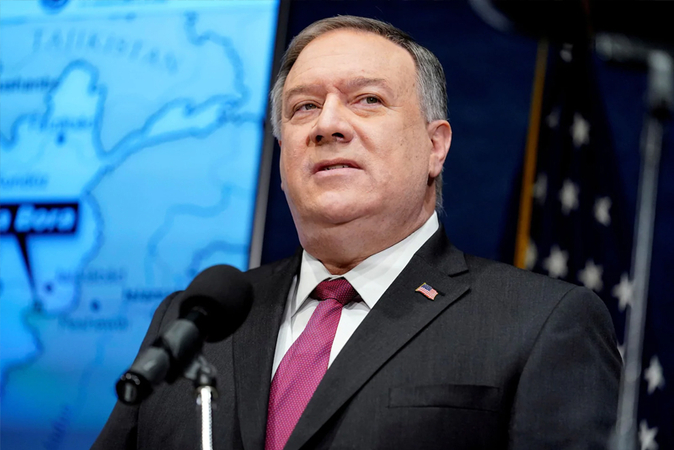
TAIPEI, Taiwan – China on Thursday fired a parting shot at the Trump administration by announcing unprecedented sanctions against outgoing Cabinet officials and advisers, including former secretary of state Mike Pompeo, as it extended a rhetorical olive branch to newly installed President Joe Biden.

But whether – or how – Biden would respond and seek to repair relations between the world’s two leading powers remains a key unknown in Beijing, where commentators and state media greeted the new U.S. presidency with tepid optimism and some concern.

Referring to Biden’s inauguration as a “new day” for America, Hua Chunying, a Foreign Ministry spokeswoman, called on the Democratic administration to turn a page from the “particularly difficult” past four years and renounce the all-fronts pressure campaign that defined Trump’s China policy.

“The Trump government, particularly Pompeo, buried too many mines that need to be removed, burned too many bridges that need to be rebuilt,” Hua said in lengthy remarks on Thursday as she appealed for a reset. “With joint hard work from both sides, the better angels of U.S.-China relations can defeat evil forces.”

But China’s first act of the Biden era, announcing sanctions against Republicans while Biden’s inauguration ceremony was in full swing at the U.S. Capitol, immediately fell flat. Minutes after Biden became president, the Foreign Ministry announced sanctions against Pompeo, former national security aides Robert O’Brien and Matthew Pottinger and 25 other Americans and their families who would be prohibited from traveling to China – including Hong Kong and Macao – or conducting business with the country.

The Biden White House criticized the sanctions and called for American unity to compete against China.

“Imposing these sanctions on Inauguration Day is seemingly an attempt to play to partisan divides,” Emily Horne, Biden’s National Security Council spokeswoman, said in a statement Wednesday. “Americans of both parties should criticize this unproductive and cynical move. President Biden looks forward to working with leaders in both parties to position America to out-compete China.”

The tough response follows high-level appointments and statements in recent days that have raised concerns in Beijing about whether the Biden team would in fact reverse course on China policy, as some have hoped.

At his Senate confirmation hearing this week, Antony Blinken, Biden’s nominee for secretary of state, said he agreed with Pompeo’s assessment that Chinese government abuses in the Xinjiang region amounted to “genocide” and added that he believed China poses the greatest threat of any foreign nation to the United States. Avril Haines, Biden’s director of national intelligence, said she supported a “more aggressive stance” toward Beijing compared with the period under President Barack Obama.

The Communist Party-controlled Global Times newspaper noted after the inauguration that Biden did not mention China in his speech, nor did he offer signals about whether and how he would seek a thaw with Beijing. In a commentary, the paper expressed concerns about Blinken’s remarks in his confirmation hearing and pointed out that the Biden team invited Taiwan’s envoy to Washington to attend a presidential inauguration for the first time. China claims Taiwan as its territory and objects strenuously to diplomatic interactions between Washington and Taipei.

“American society’s favorable views toward China have indeed declined in the past four years,” the commentary noted as it asked Biden to not succumb to growing anti-China popular sentiment.

Wang Huiyao, president of the Center for China and Globalization and an adviser to China’s State Council, said “structural challenges” between Beijing and Washington will continue, and Chinese officials were still reeling from Pompeo’s pressure campaign.

“The contradictions will continue to exist, and they will not disappear, but the Biden administration will not be as crazy and irrationally play cards like Trump,” he said. Wang added that it would take time for the distrust to melt away. “If the Biden administration sends more goodwill, then China would also respond more actively.”

Before departing office this month, Pompeo announced a range of measures against China, including the Xinjiang genocide designation and sanctions against Chinese and Hong Kong officials involved in Hong Kong’s national security crackdown. He also lifted State Department restrictions that prevented meetings between U.S. and Taiwanese diplomats.

In its parting shot, China said Thursday its sanctions would also target Peter Navarro, the economic adviser who advocated for Trump’s trade war, as well as three former senior officials who expressed support for Taiwan over the past eight months: Health and Human Services Secretary Alex Azar; Keith Krach, an undersecretary of state; and the ambassador to the United Nations, Kelly Craft. Azar and Krach flew to Taiwan on official visits; Craft was scheduled to visit but her flight turned around in midair and she conducted meetings by videoconference instead.

Former president Donald Trump and his family members were not named in the ministry’s statement, but it did name former national security adviser John Bolton, who left the White House amid acrimony in 2019, and former White House strategist Stephen Bannon, who was pardoned by Trump this week after being charged with defrauding political donors. The Chinese government declined to disclose most of the 28 names.

Chinese banks are not as central to the global financial system as U.S. banks, so the effects of the Chinese sanctions are probably not as far-reaching as those levied by Washington against Chinese or Beijing-backed officials over Hong Kong and Xinjiang. But Beijing’s announcement could impose real costs on former officials who return to the business world, and they present travel hurdles if any returned to government service.

Bull Piano, an online column associated with the official Xinhua News Agency, said the sanctions were meant to send a signal to future U.S. politicians who might have business dealings in China.

“Don’t think about playing the China card while in power if you want to eat Chinese food after you step down,” the columnist wrote. “If you mess around, there will be payback.”

Rare twin suicide bombings rock Baghdad market, killing dozens #SootinClaimon.Com

#SootinClaimon.Com : ขอบคุณแหล่งข้อมูล : หนังสือพิมพ์ The Nation.

Rare twin suicide bombings rock Baghdad market, killing dozens

InternationalJan 22. 2021

By The Washington Post · Louisa Loveluck, Mustafa Salim

BAGHDAD – Rare twin suicide bombings struck a market Thursday in central Baghdad, killing at least 32 people and injuring 110 more, according to Iraq’s Health Ministry.

The blasts came midmorning as people were shopping for secondhand clothes at a market in Tayaran Square. Video footage showed the second explosion ripping through the air as sirens blared and casualties were raced away in motorized rickshaws. Other images from the scene showed bodies strewn on the ground amid upturned tables and piles of unsold jackets.

There was no immediate claim of responsibility for the attack. Although security forces continue to fight ragtag bands of Islamic State militants in Iraq’s peripheral regions, major security incidents in the capital are rare. Thursday’s attack was the deadliest to strike the capital in years. The last mass-casualty attack, striking the same square, took place in January 2018 and killed 27 people.

Khalid al-Mahna, a spokesman for the Interior Ministry, said the suicide bomber detonated his explosives after attracting a crowd by feigning sickness in the middle of the market.

When shoppers came to help those injured by the first blast, he said, someone else detonated a second bomb.

Thursday’s attack shattered a sense of relative security in the capital, raising questions about the Iraqi security forces’ preparedness in the face of a militant threat that has been diminished but by no means erased. Army units and special forces continue to arrest alleged Islamic State members at their homes in urban centers and say that sleeper cells remain prepared to mount strikes.

In a statement, an Iraqi military spokesman, Yahya Rasool, said the bombers detonated their explosives as they were pursued by security forces. Rasool said his unit had received information suggesting that an attack was coming. No uniformed security forces appeared to be visible in the surveillance video footage that showed the first blast.

Although a security breach in the heart of Baghdad is rare, experts cautioned that Thursday’s attack underscored the challenge of ending militant violence without far-reaching changes to how the country is governed.

“This is not to say that this is the beginning of extreme conflict in Iraq, or violence, but it is a reminder that there is yet to be a sustainable solution to govern the socio-economy and politics of Iraq,” said Renad Mansour, a senior research fellow at Chatham House’s Middle East and North Africa Program. “As long as there’s that incoherence, I think we expect, sadly, for these attacks to continue and increase in time because we’re just looking back as to what happened before under a similar context.”

The attack occurred at a time when life for ordinary Iraqis is becoming harder. The coronavirus pandemic has tanked global energy prices, plunging Iraq’s oil-dependent economy into crisis and forcing a devaluation of the currency. Unemployment has increased. The price of basic goods is rising, too.

While street cleaners swept blood from scene, families combed the site for relatives last seen there. Ahmed Qassim, 32, showed street vendors a photograph of his 20-year-old cousin, Abdullah, who was last seen peddling T-shirts. They said he had been taken away in an ambulance.

An elderly man with gray hair and spectacles wandered confused and distraught along a street leading to the marketplace. “Where is my son?” he shouted. “He’s just a kid who sells sunglasses and wants to live. Where is he?”

As he walked, young men were sifting through piles of clothes for body parts. For a moment, a teenager crouched to lay out candles for the dead. “We’re still looking for bodies, man,” a friend chided him. The teenager was stone-faced. “We got used to death,” he replied, as he lit the wicks one by one.

Compounding Iraq’s multiple crises, the country has also emerged again as a stage for geopolitical tensions, with Iran-backed Shiite militias launching rockets at U.S. diplomatic and military-linked targets and U.S. forces responding with airstrikes.

Three Americans and one Briton have been killed in those attacks. But for the most part, the dead and injured have been Iraqis caught in the crossfire.

After the Islamic State’s battlefield defeat here in 2017, the United States is reducing its troop presence to 2,500, with most of those performing advisory functions as the Iraqi military takes the lead in what remains of the fight.

“ISIS will be trying to make this part of a campaign to disrupt daily life and show it is still relevant and able to carry out extreme violence despite its territorial defeat,” said Sajad Jiyad, an Iraq-based fellow at the Century Foundation.

“Attacks hark back to painful memories when attacks on civilians were common. The government needs to restore confidence quickly and show it will not allow ISIS bombings to become a regular occurrence again.”

As the winter sun set Thursday, the funerals began. In a narrow alleyway by Tayaran Square, shock and anger were palpable. Young men held coffins aloft. Among the dead was a 32-year-old named Maher al-Swerawi, who died in the first explosion. His friend Hani Sabri ran out to reach his body, friends said. Sabri, who was 30, was killed in the second blast.

As the crowd moved along, one voice rang out above the din. It was Sabri’s mother.

“Hani, I told you not to go. Why did you go there?” she cried, her voice breaking.

“Why did you go?”