Tesla delivers 499,550 vehicles in 2020, just shy of target
InternationalJan 03. 2021Tesla Inc. vehicles at the assembly plant in Fremont, Calif., on Aug. 13, 2020. MUST CREDIT: Bloomberg photo by David Paul Morris.
By Syndication Washington Post, Bloomberg · Dana Hull
Tesla delivered a record number of cars worldwide in the fourth quarter of 2020, but fell just shy of a goal for 500,000 units for the full year.
The electric-car maker delivered 180,570 vehicles in the last three months of the year, eclipsing its prior all-time high of 139,300 in the third quarter of 2020 while increasing 36% from 367,500 deliveries in 2019. The company has been ramping up output of its mass market models to meet rising global demand for battery-powered cars.
The Palo Alto, California-based company said in a statement on Saturday its delivery count should be viewed as slightly conservative and final numbers could vary by up to 0.5% or more.
The quarterly delivery figure is widely seen as a barometer of demand for both Tesla’s vehicles and consumer interest in electric vehicles worldwide. The result capped a remarkable year for Chief Executive Officer Elon Musk and his company, which joined the Standard & Poor’s 500 Index on Dec. 21 after posting five consecutive quarters of profit.
The company’s shares rallied 743% last year.
Tesla had predicted in January 2020 — before the onset of the coronavirus pandemic — it would “comfortably exceed” sales of half a million cars. The company said in October that it still expected to meet that target despite a temporary shutdown of its factories in the spring, and Musk signaled it was well within reach in a internal email sent to employees in December and viewed by Bloomberg.
Analysts also predicted Tesla would meet its sales goal for the year, which further buoyed the company’s shares in the waning days of 2020. The surge, coming despite multiple share offerings, has vaulted Tesla’s valuation to an auto industry-leading $669 billion.
The company undershot the 181,000-vehicle threshold it needed to clear in the most recent quarter, a 30% jump over the July-September period. The push largely depended on increased output from its Chinese plant and higher output in the U.S. of the newest car in its lineup: the Model Y.
On Saturday, Tesla said Model Y production in Shanghai has begun, with deliveries expected to begin soon.
While Tesla is the clear global market leader, its vehicle deliveries are tiny compared to the millions of gasoline-powered cars and trucks sold by established automakers such as General Motors and Volkswagen. Those two carmakers and others are preparing to flood the nascent EV market with dozens of battery-powered models over the next five years.
To capitalize on its head start, Tesla is building two new vehicle assembly operations — one in Berlin that could eventually assemble as many as 500,000 cars annually, and another in Austin, Texas, that will make the brand’s first pickup. Both are expected to start production later this year, joining its existing vehicle-assembly facilities in Fremont, California, and Shanghai.
Once known for niche luxury models such as its S sedan and X sport utility vehicle, Tesla has broadened its appeal with the 3 and Y models priced to start below $50,000. Musk said in September that he plans to start sales of a cheaper $25,000 Tesla by 2023.
As usual, Tesla delivered many cars during the quarter’s final days. Musk added an incentive to buyers in the final three days of the year, saying in a tweet that they would get three months of an optional driver-assistance tool Tesla calls Full Self-Driving.
Danielle Watson, a 31-year-old pharmacist, tweeted on Dec. 28 that she had just taken delivery of a Model Y. In a private message, the Greenville, South Carolina, resident said she took delivery in Charlotte, North Carolina — a sign the lure of Tesla’s brand power in the U.S. is growing well beyond its home state of California.
Over 30 countries have reported cases of the highly-transmissible U.K. variant of the novel coronavirus, raising fears of increased global spread of the virus, even as countries begin to unroll vaccination programs in the new year.
Vietnam on Saturday was the latest nation to report a case, which authorities detected in a woman quarantined after recent travel from the United Kingdom. Vietnam has banned nearly all international travel, but it is providing repatriation flights for citizens stranded in the U.K.
Turkey reported Friday its first 15 cases of the U.K. variant, found in recent travelers from the U.K., leading Turkish authorities to issue a temporary ban on entries from the there. Turkey, along with many other countries, suspended flights between the United Kingdom in late December.
At least three U.S. states have identified cases of the variant. Public health officials, however, say it is likely already spreading undetected due to limited genetic sequencing of the coronavirus in the United States.
The United States leads the world in coronavirus cases and deaths, though widespread transmission of the fast-spreading form of the virus would likely lead to even larger outbreaks, putting further strain on the country’s already overwhelmed health-care system.
In recent weeks British authorities have imposed strict lockdowns on millions of people as the variant, first documented in late September, has led to surges in infections. So far, scientists do not think that the fast-spreading form of the virus is more deadly or vaccine resistant.
As global infections continue to rapidly rise, Ireland has recently gone from having the European Union’s lowest per capita rate of cases to the fastest growing, the Guardian reported.
“The virus is absolutely rampant now in the community,” the CEO of Ireland’s health services Paul Reid said Friday. “Everybody is at extreme risk of contracting the virus.”
But Philip Nolan, the head of Ireland’s covid-19 modeling group, told national news broadcaster RTE on Saturday that the U.K. variant represented between 5% and 17% of current cases, according to the latest available genetic analysis.
While Nolan’s predicted new infections would continue to increase as the variant spreads, he attributed the current surge to socializing over the Christmas holiday.
“Right now we believe the UK variant is here at a relatively low level, even with that small sample,” he said. “We saw an even more intense level of socialization and viral transmission over Christmas than we might have expected and that’s what’s leading us to the really precarious position we’re in now.”
The bleak return to lockdowns in many communities across the globe comes in sharp contrast to the hopeful rollout of vaccines programs in some countries.
Israel has provided the first of two coronavirus vaccine shots to more than a million of its citizens, the highest rate in the world since beginning its efforts in late December. The United States, in contrast, vaccinated some 2.8 million people by Dec. 30, falling far short of President Trump’s pledge to inoculate 20 million people by the years end.
Despite widespread expectations that vaccines will turn the tide of the pandemic, it will still take weeks for the initial shots to kick in and months before vaccines will likely become available for a majority of the world’s communities and countries, in particular poorer ones. Adding to concerns, significant percentages of many populations have reported hesitations around injecting the fast-tracked vaccines, while health experts worry about the impact of disinformation campaigns dissuading publics from taking it.
As the United Kingdom tries to contain the U.K. variant, health authorities have also deviated some from initial inoculation plans.
On Wednesday, British health officials said they would prioritize giving more people the first shot to ensure wider, partial protection from the virus, and in turn delay providing the second injection, only after which is the vaccine is most effective.
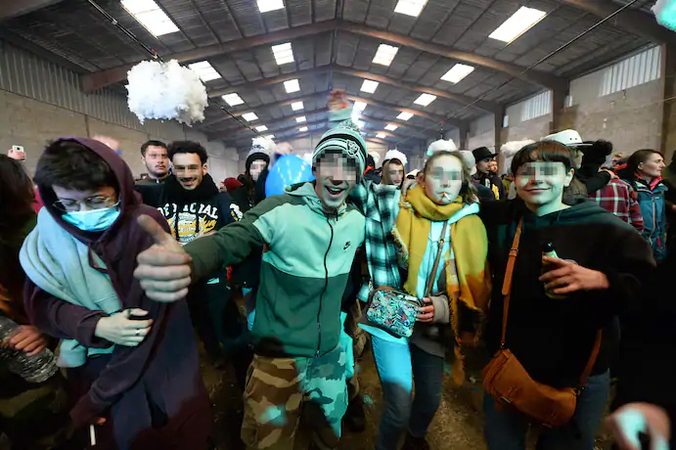
PARIS – An illegal New Year’s Eve party that drew around 2,500 people to a small French village came to an end Saturday morning, more than 24 hours after authorities had to abort an initial attempt to shut the rave down.
“Sound equipment and generators were seized,” France’s Interior Minister Gérald Darmanin said Saturday morning, adding that the organizers would be “severely punished.”
Around 1,200 penalty notices have been issued, local officials said, with most of them being linked to violations of coronavirus restrictions.
Regional authorities set up a coronavirus testing site near the rave’s location and urged all participants to quarantine for seven days, amid concerns that the event could worsen an anticipated rise in novel coronavirus infections in the coming weeks.
“We must consider that all the participants in this rave party were exposed,” regional health official Stéphane Mulliez told radio network France Bleu.
The party in Lieuron, a village in France’s northwestern region of Brittany, had gone ahead despite a nationwide 8 p.m. curfew and other restrictions on large gatherings.
When officers tried to move into the warehouses where the party was taking place on Thursday night, several officers suffered minor injuries in clashes with revelers. A police car was torched.
After the officers retreated, first-aid workers were sent in to distribute masks and hand sanitizer among the partygoers.
Partying continued Friday, even as French officials pleaded with the participants to leave and as inquietude mounted within the French government. Photos from inside the warehouses showed that only a few participants, who included foreigners, wore masks and that social distancing was virtually impossible.
“This gathering,” wrote local official Florian Bachelier on Twitter, “shames our country and our caregivers.”
Police officers had begun cordoning the site shortly after the party began, in an effort to prevent more people from joining it and to fine those who left.
Despite concerns that officers moving in may cause a mass panic, pressure to end the event – which was originally set to continue until Tuesday – mounted Friday, and France’s interior minister called a meeting. France’s BFM television channel reported that one scenario involved the deployment of the French military to the party site.
But by Saturday morning, the partygoers had begun to disperse, with some reportedly managing to leave the site without being intercepted by officers stationed around the area.
French officials fear that year-end parties, including the rave in Lieuron, will trigger a surge in new infections in the coming weeks.
France lifted some coronavirus restrictions – including its nighttime curfew – for Christmas Eve, despite a warning from the government-advising Scientific Council that family reunions and parties may spark an “uncontrolled resumption of the epidemic” this month.
France reported over 19,000 new coronavirus infections on Friday, fewer than during the peak of the second wave in November but almost four times more than the target of 5,000 that the government had set.
As a result, France has called off the easing of existing restrictions. Some parts of the country face additional measures, with an extended nighttime curfew beginning at 6 p.m. instead of 8 p.m. set to take effect Saturday.
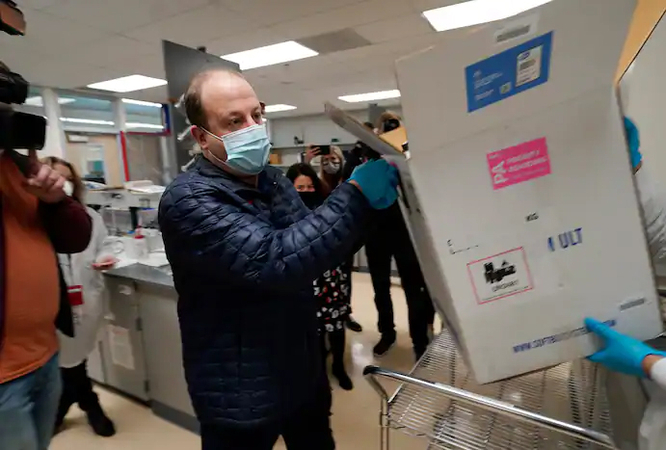
Colorado Gov. Jared Polis (D) helps put the state’s first shipment of a coronavirus vaccine in a Denver freezer on Dec. 14. (David Zalubowski/AP)
By The Washington Post · Isaac Stanley-Becker
First came the outcry in a Denver newspaper op-ed, arguing that Colorado’s coronavirus vaccination plan would bring relief to a man who fatally shot four people before it protected the author’s law-abiding, 78-year-old father.
Then came the backlash on social media. The accusation that state leaders were coddling convicts like Nathan Dunlap, who is being held for life in the Colorado State Penitentiary for the 1993 slayings at a Chuck E. Cheese restaurant, caught fire in pro-Trump Facebook groups with titles such as “ALL ABOARD THE TRUMP TRAIN.” Within days, the person behind the broadside, a Republican district attorney, was making his case on Fox News, labeling the state’s vaccination plan “crazy.”
The plan, which put incarcerated people in line for coronavirus immunization ahead of the elderly and those with chronic conditions, had been released by the state health department. It was the product of months of deliberation by members of the state’s medical advisory group – physicians, public health officials and experts in bioethics. But their framework, when subject to the machinery of online outrage, quickly unraveled.
Asked by a Fox News reporter about the prioritization, and the criticism touched off by the op-ed, Colorado Gov. Jared Polis, a Democrat, said at a December news briefing there was “no way” the limited supply of shots would “go to prisoners before it goes to people who haven’t committed any crime.” He let out a short laugh as he pronounced the word “prisoners.”
As promised, a revised version of the state’s plan, released a week later without input from the advisory panel, put incarcerated people in no particular phase. It similarly demoted people living in homeless shelters and other congregate settings, while guaranteeing access to front-line workers and adults 70 and older as part of the priority group following medical workers and residents and staff of long-term care facilities.
The shift in Colorado offers an early sign that prisons and jails, which hold a disproportionate share of people of color and have reported some of the most virulent coronavirus outbreaks, are creating daunting dilemmas for state leaders apportioning finite shares of the vaccine. The episode illustrates how a system of preferences geared to stop the virus where it is most destructive may clash with other values in a nation that incarcerates more people than does any other.
More broadly, the makeup of the second tier is exposing sharply different priorities across the country, with some governors bucking expert advice to focus on vulnerable workers and high-risk living settings and instead rushing shots to the elderly.
Experts advising Polis said they could not be sure why he discarded their recommendations to prioritize congregate living settings – he has not expounded on his thinking – but said they were troubled that he seemed to yield to criticism from political adversaries.
Polis spokesman Conor Cahill declined to make the governor available for an interview but issued a statement defending the state’s plan, stressing the “moral obligation” to prioritize elderly people most at risk of dying from the virus and “front-line health-care heroes” caring for the sick.
“Inmate status will not make a difference in terms of timing of receipt of the vaccine,” Cahill said. “Someone who falls into a category for early priority of the vaccine and is in custody will receive the vaccine at the same time as someone in the same category who is outside our correctional facilities.”
About a dozen states take a similar approach, according to a review of draft plans by the Prison Policy Initiative, a Massachusetts think tank. Several states, including New Jersey and Washington, have already begun vaccinating inmates. And another seven – Connecticut, Delaware, Maryland, Massachusetts, Nebraska, New Mexico and Pennsylvania – put incarcerated people after health-care workers and the residents and staff of long-term care facilities, according to the think tank.
Plans in about half the states suggest inmates will gain access at some point ahead of the general population. But details are preliminary and subject to political winds.
“It’s a very stigmatized population, and there are people who say, ‘They’re in prison, they must have done something terrible, and they don’t deserve a place in line,’ ” said Matthew Wynia, director of the Center for Bioethics and Humanities at the University of Colorado and a member of the state’s medical advisory group. But viewing the priorities in terms of who deserves to be inoculated, he said, “might end up prolonging the pandemic and killing more people.”
Anyone making a “moralistic argument,” Wynia said, should focus more on the math – 14 of Colorado’s 15 largest outbreaks have occurred in prisons, jails or college dorms. Nationally, more than 40 of the 50 largest clustered outbreaks have occurred in jails and prisons, according to a “call for urgent action” published in the Lancet medical journal in October. Inmates live in crowded conditions and have high rates of hypertension, heart disease and other conditions linked to serious risk from covid-19, the illness caused by the coronavirus. They are disproportionately Black and Hispanic, part of communities stricken by the pandemic.
More than 7,000 people in the care of the Colorado Department of Corrections have tested positive for the virus, and the state says 14 have died. Anuj Mehta, a Denver pulmonologist who chaired the advisory group addressing vaccine prioritization, said he thought Polis was operating on a principle of “trying to save the most lives,” though he disagrees with the governor’s approach. Viral spread hardly stays within prison walls, he noted, mainly because corrections officers return to their families, often in minority and low-income communities.
For these reasons, immunization experts tapped by the Centers for Disease Control and Prevention to develop federal recommendations to guide state planning have highlighted the needs of incarcerated populations and people living in homeless shelters. Guidance approved recently by the CDC’s Advisory Committee on Immunization Practices put corrections officers in what is known as Phase 1b, along with other front-line workers and people aged 75 and older, recommending states immunize inmates at the same time or, depending on vaccine supply, in the next phase. Colorado’s plan essentially strips them from that tier.
“All these groups, in various facilities, are very vulnerable,” said Sharon Frey, a committee member and clinical director of St. Louis University’s Center for Vaccine Development.
The point was brought home in public testimony, when Joseph Bick, director of health-care services for the California Department of Corrections and Rehabilitation, told the CDC advisory group that, “Prisons are essentially long-term care facilities with bars.” California, where more than 40,000 inmates have been infected and about 130 have died, has already begun vaccinating some high-risk inmates. Officials have not yet decided how to prioritize the broader inmate population, said Ali Bay, a spokeswoman for the state health department.
A number of states place prison and jail staff ahead of inmates. Asked about the rationale for that approach, Gavin Lesnick, spokesman for the Arkansas Department of Health, said staff “come and go from the facility and into the community and may have a higher risk.” Shannon Litz, a state health department spokeswoman in Nevada, said the state considered “chance of exposure to covid-19 and the guidance provided by federal partners.”
Peter Wagner, executive director of the Prison Policy Initiative, said it was difficult to spot trends among the states putting incarcerated people near the front of the line. Connecticut, Wagner said, is a “big reformer,” but some other states pursuing significant criminal justice reform have not publicly committed to early vaccination of inmates.
In Massachusetts, the priority given to incarcerated people stems from the broader focus on congregate settings, said Paul Biddinger, medical director for emergency preparedness at Mass General Brigham and chairman of the state’s vaccine advisory group.
“Congregate settings are congregate settings, and they are high density and at risk whether they’re long-term nursing facilities or prisons,” said another committee member, Massachusetts state Sen. Cindy Friedman, a Democrat. That inmates are in such dire need of inoculation, she said, shows the failures of criminal justice in America, revealing the “extent of the breakdown and the gaps and the poor access to behavioral health care.”
But the pandemic has put vows of reform to the test.
In remarks last year before the coronavirus began spreading out of control, Polis said he would “like to see Colorado lead the nation in criminal justice reform.” He issued an executive order in March allowing the Department of Corrections to reduce the state prison population, but the rule expired in May, and he faces litigation by the American Civil Liberties Union of Colorado accusing him and his corrections director of failing to protect vulnerable inmates.
Mark Silverstein, legal director of the state branch of the ACLU, said he initially thought Polis had made an error and misstated his own health department’s plan when, responding to an interview question in Spanish, he said, “Free people must receive it before incarcerated people.”
The following week, the governor reiterated his position in even stronger terms, “seemingly in response,” Silverstein noted, to the position staked out by the Republican district attorney, George Brauchler.
Brauchler said the Democratic governor had demoted inmates even more drastically than Brauchler had suggested in his Denver Post op-ed. Even though he was outraged that his elderly father might be put in line after inmates, Brauchler, 51, said he thinks people locked behind bars should gain access before he does.
InternationalJan 03. 2021Before being treated to sake, Namahage have their hands disinfected at a home in the Masugawa district of Oga, Japan, on Thursday. MUST CREDIT: Japan News-Yomiuri photo.
By Syndication Washington Post, The Japan News-Yomiuri
OGA, Japan – While not in full force, the masked ogres came out on New Year’s Eve to dispel evil and bring good auspices – after spritzing their hands with germ-killing sanitizer and donning surgical masks beneath their disguises.
The Namahage, maintaining a tradition listed as a UNESCO intangible cultural heritage, were seen making the rounds of Oga, Akita Prefecture, while taking countermeasures to prevent the spread of the coronavirus.
In the custom held on Dec. 31, the Namahage admonish the lazy and guard against plague, are said to bring good harvests and good health.
According to the Oga government, of the 93 districts that normally perform the ritual, at least 48 canceled it this year because they felt they could not fully negate the risk of infection.
In the Masugawa district, a trio of Namahage were seen sanitizing their hands as they entered a house. In place of the usual sharing of complimentary sake, they drank out of paper cups they brought with them. Their calls of “Are there any crying children here?” were done in low voices.
“Even amid the pandemic, we managed to do this by taking some measures,” said a 29-year-old man who filled the role of a Namahage. “I want to keep this going next year so that the tradition is not disrupted.”
In the Okura district, the role-players put on surgical masks before putting on the Namahage masks. While they would usually be invited into houses, this time they remained in the entrance, where they performed their evil-dispelling ritual to bring a good harvest and safety to the home.
WASHINGTON – Usually, it is highly scripted pomp and circumstance. Mahogany boxes containing sealed envelopes with each state’s electoral college vote are marched into a joint session of Congress. The presiding officer opens the envelopes in alphabetical order, and House and Senate “tellers” read the results aloud. It is generally so boring that few lawmakers show up.
This year, they’ll be watching with bated breath. Will the presiding officer, Vice President Mike Pence, resist pressure from President Donald Trump and his supporters to write a new script for the proceedings?
U.S. vice presidents, in their constitutional role as president of the Senate, have long presided over the ceremonial certification of the electoral college vote count, even when it has meant turning the reins over to the opposition (see: Dick Cheney, Jan. 6, 2009; Joe Biden, Jan. 6, 2017).
In fact, two modern vice presidents have overseen the most humbling of certifications – their own election losses.
On Jan. 6, 1961, then-Vice President Richard M. Nixon became the first in a century. Massachusetts Sen. John F. Kennedy had beaten him narrowly; plus, many Republicans suspected voter fraud in 11 states, even filing lawsuits in two. (Judges threw both out.) So even though the result of the certification was supposed to be a foregone conclusion, some wondered whether Nixon would really go through with it.
He did, and according to The Washington Post’s coverage at the time, he did so jovially.
“Nixon seemed to enjoy doing it,” The Post wrote. “Time and again he pumped humor, life and even a little political sense into the nearly two-centuries-old ceremonial.”
During the joint session, he asked to make a statement, promising to follow House custom of a one-minute speech, instead of the Senate’s unlimited-time rule.
“I do not think we could have a more striking and eloquent example of the stability of our Constitutional system and of the proud tradition of the American people of developing, respecting and honoring institutions of self-government,” he said. “In our campaigns, no matter how hard-fought they may be, no matter how close the election may turn out to be, those who lose accept the verdict, and support those who win.”
He declared Kennedy the winner and received a standing ovation.
The awkward moment was handled well, but Post correspondent Robert C. Albright’s description of the electoral college system that created the situation was unsparing. Perhaps expecting it might be reformed soon, Albright called it “creaky,” “archaic,” “tired,” “no longer dependable” and “America’s outworn way of electing its presidents.”
The Senate majority leader, he reported, “was confident that one day the electoral college will retire as gracefully as Mr. Nixon did.”
Thirteen years later, Nixon retired again – this time, in disgrace. And the “creaky” old electoral system remains.
Four decades later, the country found itself in an even bigger electoral drama, when then-Vice President Al Gore had to certify Tex. Gov. George W. Bush’s win, despite Gore’s having won the popular vote. The month before, Gore had conceded to Bush after a court battle over the Florida count that went all the way to the Supreme Court.
Like Nixon in 1960, Gore tried to bring “grace and humor” to the proceedings, according to The Post’s coverage at the time. As scripted, the roll of states was called in alphabetical order, and when it reached California, which Gore won, he jokingly pumped a fist in the air.
He had “achieved celebrity status,” according to The Post’s coverage, signing autographs for the assembled lawmakers, congressional staffers and pages. Even then-Speaker J. Dennis Hastert asked Gore to autograph the wooden gavel he used that day. Like Nixon, when he declared Bush the winner – asking God to bless his opponent – Gore drew a standing ovation.
There was an extra awkward cherry on top of the day, though, when the roll reached the state of Florida and a handful of House Democrats raised objections. Most of them, including Rep. Maxine Waters, D-Calif., were members of the Congressional Black Caucus “who share the feeling among black leaders that votes in the largely African American precincts overwhelmingly carried by Gore were not counted because of faulty voting machines, illicit challenges to black voters and other factors,” The Post said.
Because no senators signed on to the objections with the House members, Gore was bound by law to refuse to hear the objections, putting him in the position of squelching a last-ditch effort to make him president.
This Jan. 6, things are expected to proceed differently, and not just because Trump has thus far declined the take the “grace and humor” route. Sen. Josh Hawley, R-Mo., has signed on to House Republican objections, meaning that even if Pence acts according to the script, the objections will be heard.
Colorful heroes serve their communities in anonymity
InternationalJan 03. 2021Clean Panther, right, picks up litter with other members of her group at the Osu shopping district in Naka Ward, Nagoya. MUST CREDIT: Japan News-Yomiuri.
By Syndication Washington Post, The Japan News-Yomiuri
Faced with a new nemesis in the novel coronavirus, “real-life heroes” dressed in superhero costumes and masks are confronting the battle head-on by performing community service such as picking up litter in towns nationwide.
In the Osu shopping district in Naka Ward, Nagoya, which is often crowded with visitors to eateries, a group of seven in animal masks and costumes was seen early one weekend afternoon picking up cigarette butts and empty plastic bottles. Face masks discarded on the street were picked up and placed in plastic bags, with the tops tied tightly to prevent spread of the virus.
While taking an occasional moment to respond to a request for a photo, the heroes filled up three 45-liter garbage bags in about 1½ hours.
The seven, men and women from their 20s to their 40s, started such activities around the spring of 2018.
“Wearing a costume mask lifts me up, and makes even picking up litter fun,” said a 27-year-old female company employee from Minokamo, Gifu Prefecture, who was wearing a yellow panther mask and calls herself “Clean Panther.”
“By making picking up litter look cool, I want to create something that will prompt others to want to do something themselves,” said “Skullrouser,” a 24-year-old male company employee who has been performing his deeds around JR Shibuya Station in Tokyo for the past three years. Photos of him have flooded social media, making him aware of the power of the costume.
The activities of these real-life heroes are not limited to street cleaning.
At Honancho Station on the Tokyo Metro Marunouchi Line in Suginami Ward, Tokyo, “Baby Buggy Orosun-ger,” who wears a Power Ranger costume, helps people carry bags or other items up and down the stairs. A rice shop operator by trade, the 35-year-old said he decided to wear the costume because “it was embarrassing to address people with my real face.” At first, some looked at him suspiciously, but now he is popular, even among children.
One hero switched his modus operandi because of the pandemic.
A 25-year-old man living in Nagano and calling himself “Last Cannon” switched from picking up litter to crime-prevention patrol. Twice a week he stands in front of JR Nagano station, and has become such a familiar sight that children now wave to him or greet him.
“The activities of these real-life heroes may have something in common with the ‘Tiger Mask campaign,’ in which a person acting under the name of a comic-book hero or a professional wrestler donates stationery and school backpacks,” said Takeshi Okamoto, a 37-year-old associate professor at Kindai University who specializes in subculture.
“It shows a Japanese-like modesty, how they want to do something useful for society, but are embarrassed to show their face while doing it.”
By Syndication Washington Post, Deirdre Hipwell, Craig Trudell and Dara Doyle
British businesses probably didn’t expect to start 2021 worrying about wooden pallets after a year of grappling with the coronavirus and a meltdown in the economy.
Yet as they start a new relationship with the European Union, securing a supply of heat-treated platforms – baked to 56 degrees Celsius (133 degrees Fahrenheit) for at least 30 minutes – is now one of the myriad issues they face.
The 1,200-page trade deal struck by Prime Minister Boris Johnson on Christmas Eve after a little over nine months of negotiations ended the uncertainty that the U.K. would crash out of the bloc in chaos. While the zero-tariff, zero-quota accord is a relief for British companies, it only marks the next stage in the evolution of the Brexit process – and potentially the most difficult one.
Be it wooden pallets for shipping goods, customs paperwork, new fish quotas or the recognition of professional qualifications, the next few months will be a case of figuring out the consequences of not just what’s in the historical agreement, but also what’s not.
“It’s going to be a marathon, a very long marathon,” said Mark Price, former deputy chairman of retailer John Lewis Partnership and a former U.K. trade minister. “This is why trade deals normally on average take about seven years to agree as they are hugely complex.”
Johnson hailed the agreement with the EU four and a half years after Britain voted to leave and said it will “drive jobs and prosperity across the whole continent.” But it will take time to divine whether that prediction ultimately will come true.
Bloomberg Economics estimates that U.K. growth will be half a percentage point lower per year for the next decade compared with if the country had stayed in the now 27-member single market. It forecast the economy will expand 6% this year, though that was before the latest tightening of England’s covid-19 restrictions.
In the meantime, businesses have to contend with paperwork before more complex issues can be resolved, such as the financial services industry’s future in the EU. There are also regulations around rules of origin determining what goods can be exported to the EU that need to be navigated. Mutual recognition of standards, which would allow firms to make products in the U.K. and market them in the EU without any extra certification, isn’t part of the deal.
“There are likely to be a thousand separate unintended consequences from a trade deal of such scale,” said Will Hayllar, a partner in the consumer goods practice at OC&C Strategy Consultants Ltd. While “many things will get flushed out in time,” there will be uncertainty for businesses “in the intervening period when they have to decide if they will comply with everything or not.”
Take wooden pallets. With Britain now having “third country” status with the EU, exporters and importers must comply with rules on preventing the spread of pests and diseases. It may take some disruption to trade for the EU to agree on a solution, said Dominic Goudie, head of international trade at the Food and Drink Federation.
“Heat-treated wooden pallets are not needed for safety reasons and just add extra costs and this is something that should and could have been resolved before now,” said Goudie. Britain’s food and drink industry alone could face an additional 3 billion pounds ($4 billion) of extra costs a year from increased bureaucracy, the group estimates.
Indeed, when disruption comes, it comes quickly. Dover, Britain’s busiest port, has only just cleared a backlog of thousands of trucks after France shut its border for two days in December because of the new strain of the coronavirus that’s forced much of Britain into another lockdown.
Companies have sought other routes. Deutsche Lufthansa AG flew another Boeing Co. 777F with fruit, vegetables, clothing, medical equipment and jet-engine parts from Frankfurt to Doncaster-Sheffield Airport in England on Thursday. A load bound for supermarkets is scheduled for Jan. 2.
Irish officials also warned of potential delays from early next week. Around 410,000 trucks or vans come through Dublin port each year from the U.K. and before Brexit virtually all would have passed unencumbered. More than a quarter of these vehicles will contain food or animals that now have to be checked.
For one, the auto industry has maintained a consistently dim view as to just how smoothly trade between the U.K. and EU will be, even though the Brexit accord spared manufacturers 10% tariffs on cars and 4% levies on components.
“Immediate costs and friction are inevitable,” said Mike Hawes, the chief executive officer of the Society of Motor Manufacturers and Traders. “Brexit has always been about damage limitation.”
Bracing for the end of the Brexit transition period was already a costly endeavor, with the trade group estimating in November that the industry had spent at least 735 million pounds on preparing for new customs declarations, stockpiling parts and other measures.
It remains to be seen whether investments in the U.K. delayed by Vauxhall maker PSA Group and BMW AG pending an outcome to trade talks will now materialize.
The same can be said for Nissan Motor Co., which hasn’t yet confirmed whether all models built at its plant in Sunderland, northeast England, contain enough local content to avoid tariffs. The Japanese carmaker opened the plant in the mid-1980s specifically to access the European single market.
The government has attempted to ease the transition by delaying the introduction of full border controls. Companies moving goods into Britain won’t have to file customs declarations for six months.
U.K. businesses exporting goods into the EU won’t have to produce rules-of-origin paperwork proving their goods were sourced domestically – and therefore exempt from tariffs – until the end of 2021, according to a Dec. 29 guidance note from Her Majesty’s Revenue and Customs. Firms could still be asked to provide the documents retroactively.
Then there’s the financial industry. Banks have now lost their “passporting rights” allowing them to trade freely in the EU. Future access to the market will rely on the bloc confirming Britain’s financial frameworks are broadly aligned or “equivalent” with its own rules. Both sides had previously vowed to deal with that by mid-2020.
“The deal is done but the reality that businesses have to face has not arrived yet,” said Ian Cheshire, the outgoing chairman of Barclays U.K. He predicted three to six months of “minor chaos from paperwork” though ultimately “people will work that out.”
Among those people will be workers in Britain’s services industry, which makes up 80% of the economy. They face the hurdle of having their professional qualifications recognized in the EU, something that’s no longer automatic.
And while the Brexit deal was heralded by Johnson as a new era for the fishing industry, that too has been cast into doubt. A last-minute compromise on how and when to reduce EU access to British waters finally got the deal over the line. A study published on Dec. 29 by the Scottish government, which opposes Brexit, said new quotas reduce the catch for key species of cod and haddock.
“It’s quite remarkable that for all the headlines about fishing, there was little on financial services when it is so blindingly obviously more important for our future,” said Cheshire. “I genuinely worry that people have not understood quite how difficult the path ahead could be.”
InternationalJan 02. 2021Attendees watch a short video about the importance of voting at a free “Turn Up and Turn Out the Vote” concert Dec. 30 in Atlanta. Photo for The Washington Post by Elijah Nouvelage
By The Washington Post, Cleve R. Wootson Jr. and Vanessa Williams
ATLANTA – In the final days before twin runoff elections Tuesday that will determine the trajectory of Congress for the next two years, more than a dozen civic engagement groups scattered across the state are making an aggressive push to mobilize Black voters, whose strong turnout in November helped Joe Biden win the state in the presidential race.
They are up against historical winds, as Georgia runoffs typically draw out a whiter pool of voters than regularly scheduled elections and have traditionally favored Republicans. Though most of the groups are officially nonpartisan, Black voters overwhelmingly support Democrats.
But the groups – ranging from well-known outfits such as Black Voters Matter to more informal clubs – are nevertheless trying to match or even improve upon Black voter turnout in a set of contests that will determine which party controls the Senate. Their sprint comes after years of grass-roots organizing on voting in Black communities, and is buoyed by an infusion of cash from Democratic donors inside and outside of Georgia.
Nsé Ufot, the chief executive of the New Georgia Project, one of the leading statewide groups focused on voter registration and engagement, estimates that by Saturday, her canvassers will have knocked on a million doors and sent 3 million text messages.
“There was so much hand-wringing in the immediate days after the November general election,” Ufot said. “People were saying, ‘Well, you know Republicans have a structural advantage. You know turnout is historically lower and only a fraction of what you see in the general. You know that turnout in runoff elections is whiter and older than the general election.’ Georgians have smashed through all of that.”
Democrats appear to be in a slightly better position than they were at this point before the November election, thanks to Black voters making up a larger portion of early runoff votes. But the early vote is just a snapshot, and the trends may not hold up after all votes are counted, especially in an unprecedented election with nationwide interest and investment.
Republicans have acknowledged that both contests are close and that they are working harder than in past runoffs to re-elect Sen. David Perdue and get Sen. Kelly Loeffler, who was appointed to replace a retiring senator, elected to a full term.
If Democrats Jon Ossoff and Raphael Warnock win, their party would control the upper chamber with Vice President-elect Kamala Harris holding the tie-breaking vote once she is inaugurated. A pair of wins in Georgia would allow President-elect Joe Biden to enact a more aggressive agenda in his first two years. But if even one of the Republicans wins, the GOP would have a bulwark to Democratic control.
To court Black voters, who make up a third of Georgia’s electorate and are one of the Democratic Party’s most loyal voting groups, more than a dozen groups are going beyond convention. They’re hosting pop-up concerts and asking DJs at hip-hop clubs to encourage clubgoers to talk to “voting ambassadors” in VIP booths. Organizers are popping into Zoom birthday and graduation parties to talk about the importance of the election. And they have targeted immigrant communities and public housing projects alike – people characterized as low-propensity voters who may have been overlooked in previous elections.
Some groups are combining political activity with charity, tucking vote-by-mail and early-voting instructions – even a number to call for rides to the polls – into bags of groceries being given away at Thanksgiving and Christmas. Former gubernatorial candidate Stacey Abrams crashed an online Verzuz battle between rappers Jeezy and Gucci Mane. “For right now, we can at least make sure that everyone shows up to vote so we have two senators to make sure we have covid response and we’ve got stimulus money coming back to Georgia,” she told the virtual audience.
On Wednesday afternoon, Kay Street sat on the roof of her red Audi, legs dangling through the sunroof, mouthing lyrics as one of her favorite artists, Mulatto, performed at a free drive-in concert in the shadow of Atlanta’s football stadium.
But between the rapper’s songs was a message aimed at Street and the more than 100 young Black people who bopped and swayed to the music: Vote.
The concert featuring a half dozen Atlanta artists was organized by the Black Male Voter Project. After the music ended, some attendees marched to the nearby stadium to cast ballots on the final day of early voting.
“I’m not somebody that wouldn’t vote, but really, I’m here for the music,” said Street, 20, who said she had cast an early ballot in the pair of Georgia runoffs before coming to the concert. “Most of the stuff I pay attention to, I see on social media. The rest just washes past me.”
Other groups have seen donations stream in and volunteers sign up for canvassing and phone banking shifts to help with the monumental persuasion effort.
That has meant a concerted – and often repeated – effort to inform and activate voters preoccupied with the coronavirus pandemic, an uneven economic recovery and even the bustle of the holidays. Even though millions have already cast ballots, organizers are going after people with little political inclination.
Their focus is on mobilizing Black voters in the Atlanta metro area, as well as pockets around the state with sizable Black populations, including Augusta, Savannah, Macon, Albany and Columbus.
“Where regular campaigns talk to voters two to five times a cycle, we try to talk to (Black men) at least 12 or 13 times,” said W. Mondale Robinson, the founder of the Black Male Voter Project. “When I talk to them, I’m not having a traditional political conversation. I’m having a conversation about giving them a tool to address some of the things plaguing them, and that tool is their vote. It’s not like I’m forcing politics on them in a political space. I’m talking to them in their space about politics, so it’s more comfortable, it’s more authentic to their life.”
Repeated contacts come at a cost – an investment of money and time that cash-strapped groups have to usually carefully ration. But some groups have found that, at least in the runoff, there is enough cash for deeper engagement with voters.
Abrams said that historically, Republicans have outspent Democrats in Georgia, but “investment has dramatically shifted in this race. We have seen support going to our candidates at unprecedented amounts.”
A group Abrams founded, Fair Fight Action, raised $22 million between Nov. 24 and Dec. 16, and gave most of the money away to grass-roots groups working to turn out voters of color, a spokesman said.
Helen Butler, the executive director of the nonpartisan Georgia Coalition for the People’s Agenda, which also has offices around the state, said her group has been getting “a tremendous amount of resources, both financial and people wanting to give their time.”
“Everybody understands the country is at stake, not just Georgia. We’re getting a lot of support we don’t ordinarily get … We’ve been doing this for 20 years. We’ve always had to do stuff with a lot of volunteers. This time we’re able to give people little stipends.”
The coalition’s beefed up activity is supplementing a larger effort that has already turned out more than 2.5 million early voters, according to the secretary of state’s office, with both sides pushing to get more voters to the polls Tuesday with social media ads, texts, phone calls, outdoor rallies and covid-safe car rallies.
Biden and President Donald Trump will appear within hours of each other Monday, the eve of the election. Vice President Mike Pence has stumped for Loeffler and Perdue half a dozen times during the runoff, and Harris will make her second Georgia runoff appearance in Savannah on Sunday. With the spending by candidates, interest groups and super PACs, a total of a half-billion dollars is anticipated to flow into the state.
Even conventional efforts to activate Black and other minority voters have seen an increase.
Bethelehem Kebede, who was laid off from her job as a waitress at a Washington, D.C., restaurant, has been camped out in Georgia since Nov. 28 as part of a canvassing operation by the labor union UNITE HERE. The union is focused on Georgia’s growing population of African immigrants, about 40,000 of whom are registered voters. Kebede, a naturalized citizen who is originally from Ethiopia, goes door to door every day from about 10 a.m. to 6 p.m. appealing to other African immigrants to vote for Ossoff and Warnock.
She misses her husband and three children back in Alexandria, Va., but she says it’s important for her to help the Democrats win the runoffs.
“Some people don’t know about this election; they think they’ve already voted,” she said of her encounters. “We tell them this a different kind of election, a U.S. Senate election. They’re surprised, like ‘Wow! This is the first time people have come knocking on our door to tell us to vote.’ “
Felicia Davis, convener of the Clayton County Black Women’s Roundtable, also a nonpartisan group, said the additional support has enabled her to hire more canvassers and give them a bigger stipend; she said she had 30 canvassers doing four hours a week at $15 per hour in the general; now she has 50 canvassers at 30 hours per week and $20 per hour. And although she has more people and money, she wishes she had more time.
Last week, she wondered: “What else can I do to get these people out to vote? I’ve been knocking on doors, I’ve been to the barbershops, what else can I do?”
Black voters made up 70 percent of the county’s 194,000 voters during the general election, when turnout was less than 60 percent. She has been trying to improve on those figures for the runoff.
“If I meet or exceed the general, even though Clayton came out under 60 percent, but still if I meet or exceed the general that’s a win.
“The challenge,” Davis added, “is we don’t have enough time. That’s my anxiety. If I had the same amount of time I’d feel great, but … I have two major holidays and less time.”
On a recent Saturday morning in Montezuma, a small city 130 miles south of Atlanta, Macon County Commissioner Bob Melvin met a dozen or so volunteers in the parking lot of a Piggly Wiggly grocery store. The group doesn’t have outside funding or a connection to other groups but felt motivated to canvass their neighbors on their own.
After a brief huddle, and a conversation about talking points and literature, they went out to several nearby public housing complexes.
“We’re going out and pushing the message that even though we’ve elected a Democratic president, he still needs the help of a Democratic Senate to get things done,” Melvin said. “And that’s the message I’m taking out there today.”
Like most Georgians, the people they encounter have been inundated with TV and radio commercials, as well as mailings and social media ads. But the dozen or so volunteers said they feel they are best positioned to persuade their neighbors.
“Once you sit them down and say, this is going to affect you in the long term, this will affect your child at school or it may affect your health care, because you know we don’t have a hospital here or a clinic or anything here, then it begins to hit home,” said Nicole Hall, a volunteer from Macon County who knocked on doors. “Until we educate everybody, and they understand the importance of the power of the vote, then all they’re seeing is a bunch of names on TV. But what does this person represent? What is this person going to do for me?”
As the man returned from the lavatory with a mask dangling from one ear, a flight attendant asked him to put it on properly.
“Why? Is something going on that I should know about?” the passenger asked, before grabbing the mask and ripping the string. “Damn it, I guess I can’t wear it now.”
Other passengers have verbally abused and taunted flight attendants trying to enforce airline mask requirements, treating the potentially lifesaving act as a pandemic game of cat-and-mouse. A loophole allowing the removal of masks while consuming food and beverages is a favorite dodge.
Asked to mask up, one passenger pulled out a large bag of popcorn and nibbled her way through it, kernel by kernel, stymieing the cabin crew for the length of the flight. Others blew off requests by chomping leisurely on apple slices, between occasional coughs, or lifting an empty plastic cup and declaring: “I am drinking!”
The displays of rule-bucking intransigence are described in more than 150 aviation safety reports filed with the federal government since the start of the pandemic and reviewed by The Washington Post. The reports provide an unguarded accounting of bad behavior by airline customers, something executives hit by a steep drop in travel and billions in pandemic-related losses are loath to share themselves.
Some reports raise safety concerns beyond the risk of coronavirus infection. A flight attendant reported being so busy seeking mask compliance that the employee couldn’t safely reach a seat in time for landing.
One airline captain, distracted by mask concerns, descended to the wrong altitude. The repeated talk of problem passengers in Row 12 led the captain to mistakenly head toward 12,000 feet, not a higher altitude given by air traffic control to keep planes safely apart. The error was caught, and “there was no conflicting traffic,” the captain wrote.
Some passengers are portrayed as oblivious, obstinate, foul-mouthed and, at times, dangerous. One called a flight attendant a “Nazi.” Another “started to rant how the virus is a political hoax and that she doesn’t wear a mask,” a flight attendant reported.
With millions of passengers ignoring warnings from the Centers for Disease Control and Prevention to refrain from holiday travel, the reports offer an X-ray into the country’s deeper failures against the coronavirus – and insights into the pitfalls and possibilities facing a new presidential administration.
While the White House under President Donald Trump has, at times, been dismissive or hostile toward masks, President-elect Joe Biden is making a patriotic appeal to “mask up for 100 days,” whatever people’s politics. Biden has said he will sign an order on his first day requiring masks for “interstate travel on planes, trains and buses.” How well those efforts will work remains to be seen.
Experts in psychology and decision-making say hostility toward wearing masks, even within the shared confines of a passenger jet, has been fueled by politicization – but also by skewed incentives and inconsistent messaging.
“The reinforcement principles are backward,” said Paul Slovic, who studies the psychology of risk at the University of Oregon.
The usual signs of danger, and rewards for following potentially bothersome rules, are thrown off by a virus that is spread easily by people who don’t know they have it, Slovic said.
“You get an immediate benefit for not following the guidelines because you get to do what you want to do,” Slovic said. “And you don’t get punished for doing the wrong thing” because it’s not immediately clear who is being harmed.
The “squishiness of the requirement” to wear masks on planes also undermines the message that they are critical for public health, Slovic said. In contrast, he cites the rigid clarity of the ban on flying with a firearm. “It’s not, ‘You can carry it as long as you don’t use it,’ ” Slovic said.
But passengers are allowed to drop their masks to snack and sip beverages. “When you start opening it up to eating, the whole thing kind of weakens,” Slovic said.
Applying mask rules also worsens the already strained position of flight attendants, who are front-line enforcers even as they keep their usual safety responsibilities, experts said.
“Flight attendants are dealing with mask compliance issues on every single flight they work right now,” said Taylor Garland, spokeswoman for the Association of Flight Attendants-CWA, noting that those efforts range from friendly reminders to facing passengers “actively challenging the flight attendants’ authority.”
The Department of Transportation in October rejected a petition to require masks on airplanes, subways and other forms of transportation, with Secretary Elaine Chao’s general counsel saying the department “embraces the notion that there should be no more regulations than necessary.”
The nation’s aviation regulator has deferred to airlines on masks, with Federal Aviation Administration chief Stephen Dickson telling senators at a June hearing “we do not plan to provide an enforcement specifically on that issue.”
Such matters are more appropriately left to federal health authorities, Dickson argued. “As Secretary Chao has said, we believe that our space is in aviation safety, and their space is in public health,” Dickson said, referring to the CDC and other health officials.
Airline representatives say they take mask usage seriously and the overwhelming majority of customers comply. Some airlines have banned passengers for the length of the pandemic for refusing to mask up. Many have eliminated medical exemptions in their mask requirements.
“Of the hundreds of thousands of passengers who have flown with us, we have only needed to ban about 370 customers for not complying,” United Airlines spokeswoman Leslie Scott said. Delta said its mask-related no-fly list includes about 600 people, despite carrying about 1 million people each week.
Resistance by some passengers prompted Alaska Airlines to begin issuing yellow cards, akin to the warnings in soccer, to problem passengers.
The initial yellow card said employees would file a report that could result in a passenger being suspended. A later version was more aggressive, saying continued defiance would lead to a flight ban “immediately upon landing,” even if the customer had a connecting flight.
Alaska Airlines has barred 237 passengers since August, and “in more than half of these incidents we also canceled onward or returning travel,” spokeswoman Cailee Olson said.
American Airlines declined to release numbers of banned customers, as did Southwest, which said in a statement it appreciates “the ongoing spirit of cooperation among customers and employees as we collectively take care of each other while striving to prevent the spread of COVID-19.”
Yet a small, uncooperative minority can wreak outsize havoc, safety reports show.
The anonymous reports are collected in a National Aeronautics and Space Administration database, part of a program meant to increase aviation safety by encouraging employees to provide candid descriptions of emerging problems without fear of reprisal. Names of people filing the reports, and their airlines, are removed by NASA before they are made available to regulators at the FAA and the public.
NASA analysts screen the reports to weed out irrelevant filings and may call back filers to clarify safety points. But its analysts do not try to verify people’s identities or the accuracy of the reports.
The database shows some fliers treat airline mask requirements as a seemingly asinine rule to evade, akin to sneaking a late look at text messages after phones are supposed to be in airplane mode. Passengers berate fight attendants about their noncompliant cabin mates. Some reports read like cries for help.
“It all has to stop,” pleaded one flight attendant.
“In the future I would like to feel safe while doing my job,” said another.
Among the incidents:
– A woman refused to wear her mask as the plane rolled away from the terminal, saying it made her ill, and the pilot pulled over temporarily to try to avoid returning to the gate. She continued to resist but finally agreed.
“As soon as we took off, she took it off again and kept it off the entire flight,” the flight attendant reported.
– A man started down the aisle, pausing about 18 inches from a flight attendant.
“He sneezed directly in my face, making no attempt to cover his mouth, pull up his mask or turn towards the row 1 window,” the employee wrote. The flight attendant, who was wearing a face covering, judged the act unintentional and tried to blot away the remnants.
– A woman propped her foot up and painted her toenails with her mask below her chin, despite several requests to wear it properly. After another passenger appealed for more to be done, the woman acquiesced, then loudly instructed the flight attendant to “go away!”
After landing, she cut in line to rush off the plane. “Although we understand the importance of wanting to retain customer loyalty, this kind of behavior should not be tolerated for the sake of one over an entire cabin of guests and employees,” the flight attendant wrote.
– An immunocompromised passenger was furious at the lack of enforcement as another customer snacked incessantly on chocolate. The concerned passenger then removed his mask to complain to the flight attendant.
– A passenger claimed discrimination, arguing he was singled out for enforcement because of his tattoos. “He said ‘I am complying, #%$^!’ His nostrils were clearly visible,” the flight attendant wrote.
– A pilot flouted the mask requirement with what appeared to be a passive-aggressive display, donning a flimsy, see-through veil described as useless for containing airborne particles.
– Flight attendants made an exception and allowed a distraught mother, whose daughter may have had a disability and screamed about the mask requirement, to remain on the plane. They tried cookies, which didn’t help, then moved the family to seats three rows from other passengers, who were supportive.
– A customer, after earlier warnings, stuck his mask-free head in the aisle during the safety demonstration, “making a total mockery out of me,” a flight attendant wrote. He repeated his taunt when the plane was fourth in line for takeoff. The captain turned around, and the man was taken off the plane.
The obstinacy cuts against basic health precautions. Experts in cabin air say masks are critical tools for safety. Cabin air is run through powerful filters, mixed with outside air and recirculated. But it takes several minutes for all air to be vented out of the cabin, giving the coronavirus and other viruses the opportunity to spread.
A Harvard study funded by the aviation industry said flying can be done with a relatively low risk of coronavirus infection if precautions are followed. It said masks are “perhaps the most essential layer” among measures to reduce transmission.
The study said removing masks to eat should be kept to an “absolute minimum,” and straws should be used when feasible. “When one passenger briefly removes a mask to eat or drink, other passengers in close proximity should keep their masks on,” researchers said.
Trump and some of his advisers, meanwhile, have stoked divisions over masks.
The president mocked Biden’s frequent mask use, presided over White House events that flouted mask guidelines and relied on a former pandemic adviser who wrongly argued masks were ineffective. The White House also blocked a nationwide order, drafted by the CDC, that would have required masks on all forms of public transportation.
“Masks have been made a political issue from the start of the pandemic, and people don’t believe they need to wear them,” said Garland, whose union represents about 50,000 flight attendants.
“We do not have a president who tells people to wear a mask, and the federal government, not just in aviation but across the board, has declined to mandate it in any way, shape or form,” she added, saying her members are eager to see a Biden administration set a different tone.
An FAA spokesman declined to answer questions about the risks involved with passengers refusing to wear masks.
After inquiries from The Post about enforcement, the agency distributed a news release touting its role in pursuing civil penalties in two assault cases but reiterated that “the failure to wear a face covering is not itself a federal violation.”
The cases show how mask disputes can escalate.
On an Allegiant Air flight in August, a passenger hit a flight attendant, yelled obscenities at him and grabbed his phone as he described a mask-related dispute to the captain, according to the FAA. The agency said it is pursuing a $15,000 civil penalty for assault and interfering with a flight attendant.
Allegiant declined to say whether anyone was arrested or charged.
On a SkyWest Airlines flight to Chicago in August, a passenger took off a mask, “continually bothered” fellow customers and “at one point, grabbed a flight attendant’s buttock as she walked by the passenger’s row of seats,” according to the FAA, which is seeking a $7,500 penalty.
Beyond addressing such extreme cases, some outside experts say federal and corporate leaders have fallen short.
“Both industry and government have failed the people on the front line who need to administer these rules,” said Baruch Fischhoff, a psychologist and professor at Carnegie Mellon University who researches decision-making.
Politics often has driven responses to the pandemic, while critical public health communication on things like masks has not been tested to make sure it hits the right notes or is convincing, Fischhoff said. “Neither have fulfilled that responsibility for clear, consistent, tested communications,” he said.
Fischhoff said that with 330 million people in the United States, it’s not surprising the safety reports received by NASA reveal examples of poor behavior.
“Part of the reason they stand out is, I think, the vast majority of people are polite and civil to one another,” Fischhoff said. Still, the reports probably represent a dramatic undercount because it takes time and initiative for busy employees to file them.
“If you see 100, there are probably 1,000 or 10,000. This is a widespread enough phenomenon that it needs to be taken seriously,” he said. “You have to give credit to people who lodge just complaints and recognize they’re just a fraction of the people who are observing things that threaten our health and our economy.”

 Tesla Inc. vehicles at the assembly plant in Fremont, Calif., on Aug. 13, 2020. MUST CREDIT: Bloomberg photo by David Paul Morris.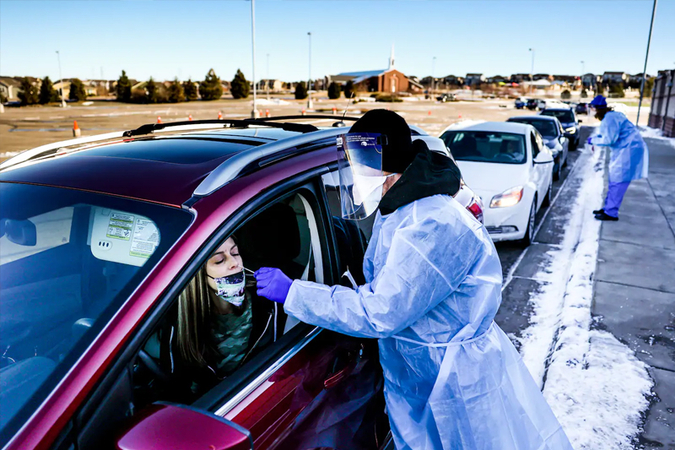
 Before being treated to sake, Namahage have their hands disinfected at a home in the Masugawa district of Oga, Japan, on Thursday. MUST CREDIT: Japan News-Yomiuri photo.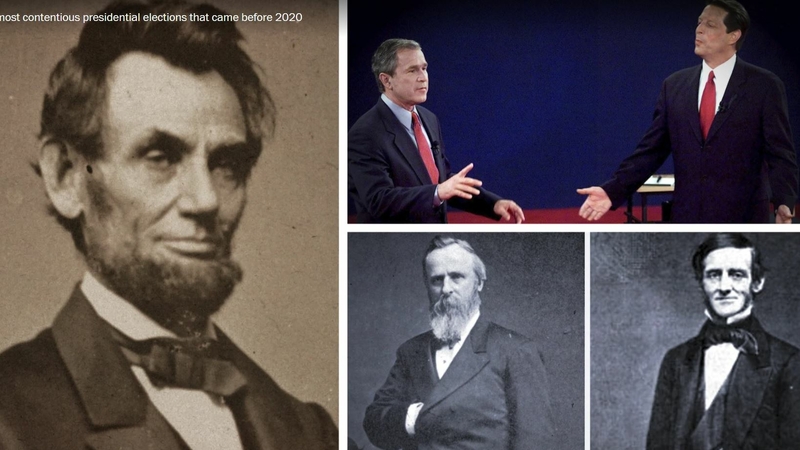
 Clean Panther, right, picks up litter with other members of her group at the Osu shopping district in Naka Ward, Nagoya. MUST CREDIT: Japan News-Yomiuri.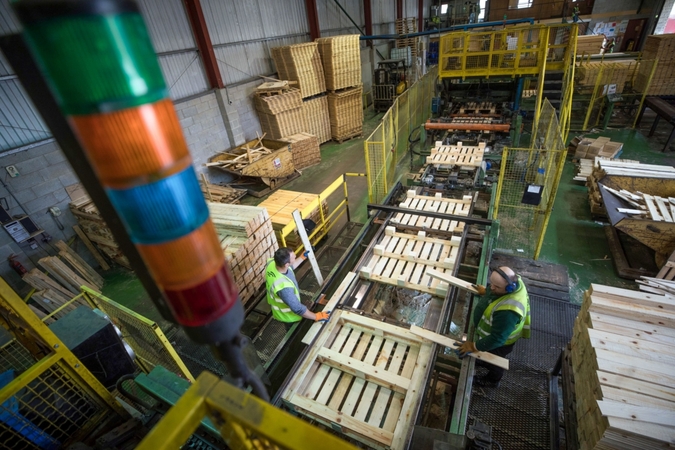
 Attendees watch a short video about the importance of voting at a free “Turn Up and Turn Out the Vote” concert Dec. 30 in Atlanta. Photo for The Washington Post by Elijah Nouvelage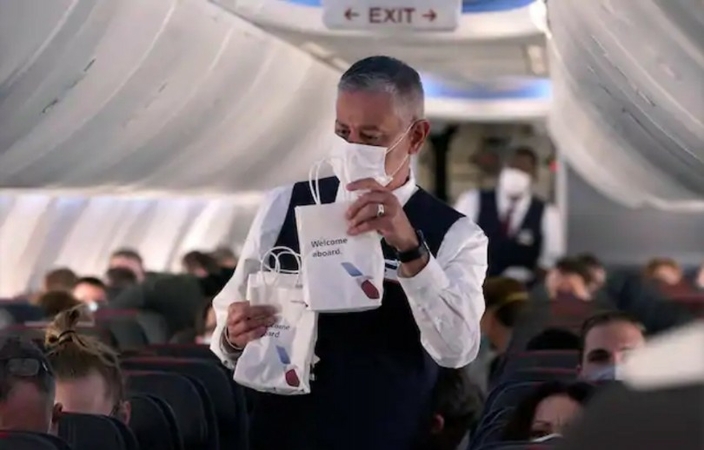
 SootinClaimon.Com