Pregnant women agonize over unknowns of taking the coronavirus vaccine #SootinClaimon.Com

#SootinClaimon.Com : ขอบคุณแหล่งข้อมูล : หนังสือพิมพ์ The Nation.

Pregnant women agonize over unknowns of taking the coronavirus vaccine

InternationalJan 02. 2021
By The Washington Post, Frances Stead Sellers

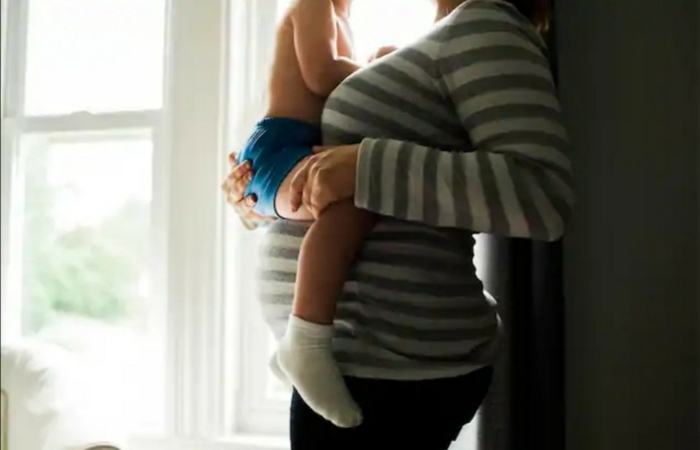
For the first eight months of her pregnancy, Yadira Rivas, a nurse coordinator at Neighborhood Health of Virginia, relied on masks and gloves to protect her from the coronavirus that is rampant among her patients.

Recently, she’s been considering another option – getting vaccinated. But after consulting with her obstetrician, Rivas decided to wait to get a shot until after her baby is born.

“One thing that the provider did mention is that it is worse to have the covid than to have the vaccine,” she said. But with no safety data available for pregnant women, Rivas thinks she would have chosen to wait even if she were far earlier in her pregnancy. “Just to stay safe,” she said.

The same conundrum faces millions of women across the country, among them many health-care workers like Rivas who are being offered vaccines not yet tested on pregnant or lactating women.

“There’s a lot of confusion,” said Jane Frederick, a fertility specialist in Newport Beach, Calif. “I have questions from people who are pregnant and questions from people anticipating getting pregnant: ‘Doctor, what do I do?’ “

With the exception of the smallpox vaccine, which can cause a rare but serious infection of the fetus, vaccines have been safe and enormously beneficial for pregnant women and their babies. Experts say the safety of the new mRNA vaccines, which do not contain live virus, would probably be similar in pregnant and nonpregnant people. What’s more, pregnant women face the potential of severe illness from covid-19, which may also increase the risk of preterm birth and other serious outcomes for both mother and infant. Experts also warn against lumping the two distinct biological phases of pregnancy and lactation together.

The Centers for Disease Control and Prevention has concluded that “people who are pregnant and part of a group recommended to receive the coronavirus vaccine, such as health-care personnel, may choose to be vaccinated.” The CDC also says that “mRNA vaccines are not thought to be a risk to the breastfeeding infant.”

The American College of Obstetricians and Gynecologists similarly says that “covid-19 vaccines should not be withheld from pregnant individuals who meet criteria for vaccination.” It also recommends the vaccines be offered to lactating women. But ACOG adds that because of the lack of data, “the potential risks to a pregnant individual and the fetus are unknown.”

All of which leaves the process of weighing the pros and cons up to the individual in consultation with her doctor.

“The medical community has done a good job of saying, ‘We don’t know,’ ” said Daryl Stoner, an obstetrician with Einstein Physicians Women’s Associates for HealthCare outside Philadelphia. “That drives people crazy. They want to be told it’s safe.”

Doubts erupted in online pregnancy forums such as What to Expect, with views ranging from women saying they “would not risk putting my baby in danger” and counseling others to wait for more data or wait out the pandemic, to health-care workers declaring they were “absolutely getting it.” In some Facebook groups, where anti-vaccine advocates have fanned false worries about many vaccines, the fears are heightened. Many linked to Britain’s policy, advising against immunizing pregnant women until more is known about mRNA vaccines.

The differing messages concern many American vaccine experts like Ruth Karron, director of the Center for Immunization Research at the Johns Hopkins Bloomberg School of Public Health, who praised the way U.S. regulatory agencies and professional groups have handled the situation, while emphasizing the need for more research.

From the outset, “we and many others were beating the drum for thinking about pregnant women,” said Karron, who is a leader of the PREVENT project, which pushes for including pregnant women’s interests in the development of vaccines against emerging pathogens such as Zika, Ebola and now covid-19.

Karron would have liked to see toxicology studies known as DART studies, which focus on developmental and reproductive risks, completed earlier. The resulting information along with initial safety data from nonpregnant individuals in clinical trials could then have been reviewed by experts to determine how and when the vaccines should be formally evaluated in pregnant women.

As it is, there is a little data from a handful of women who became pregnant during clinical trials. Observational data will also emerge as pregnant women who get vaccinated sign up for V-safe, a CDC app that uses texts and web surveys to check in with coronavirus vaccine recipients.

Clinical trials on pregnant women and young children could begin early this year. Stephanie Gaw, an assistant professor in maternal-fetal medicine at the University of California, San Francisco Medical Center who has been studying the impact of covid-19 on pregnancy, said her team is planning to launch a study on the vaccine in pregnant and lactating women in the coming weeks.

“There has been so much interest from health-care workers,” Gaw said. ” ‘Do you want my breast milk? Blood? To evaluate my immune response?’ “

Mary Prahl, an assistant professor of pediatric infectious diseases at UCSF who works with Gaw, said she would have liked to see a parallel clinical trial of the vaccines for pregnant women.

Prahl, who is 14 weeks pregnant and plans to get the vaccine soon, said that having studied covid-19 for most of this year, she was relieved to learn a vaccine would be available to her.

“I don’t have any hesitation for myself,” said Prahl, while acknowledging that if she were advising a patient, she would run through potential risks and benefits.

“Everyone brings something different to the table,” she said.

The biomedical establishment long excluded pregnant women from research. The National Institutes of Health didn’t open an Office of Research on Women’s Health until 1990, when manifestation of gynecological symptoms of AIDS helped confirm the need to focus on women.

In clinical trials, a combination of ethical concerns and legal liability continues to handicap progress, according to Ruth Faden, founder of the Johns Hopkins Berman Institute of Bioethics and a colleague of Karron’s on the PREVENT project.

“It’s a profound injustice that pregnant women and offspring are late to the table and late to receive benefits,” Faden said.

The upshot is that obstetricians have to rely on observational data with many medical treatments, according to David Jaspan, chair of the department of obstetrics and gynecology at Einstein Healthcare Network in Pennsylvania, where pregnant women are asked to get a note from their providers before getting the new shots.

“We can’t comment on the safety of vaccine; we can comment on the impact of covid on pregnancy,” Jaspan said, describing a conversation he had recently with a pregnant health-care worker who did not want to be among the first recipients.

Such shared decision-making is made more complicated by vast variability in the circumstances of pregnant women. A woman working from home is at less risk of exposure to the virus than, say, a food service worker in a hospital or someone whose partner travels on public transportation every day. Some pregnant women suffer from conditions such as obesity or hypertension that increase the chance of complications should they contract covid-19.

And pregnancy is a dynamic state, not only in terms of fetal development but because it has a beginning and an end: A woman with just a few weeks left before delivery may decide to delay vaccination and instead avoid exposure to the virus until her baby is born.

Add to that the fact that women’s childbearing years are limited and some may feel under pressure to get pregnant.

Frederick, the fertility specialist, said uncertainty about whether to get the vaccine has added to the anxiety many of her patients already feel.

“It’s a time-sensitive condition they have,” she said. “They need to be continuing treatment and not delaying it, hoping the pandemic will go away.”

Frederick closed her clinic during the early months of the pandemic, advising her patients to delay treatment until more was known about the coronavirus. Now, though, she sees the vaccine as a positive step and in general counsels them that the benefits outweigh any risk.

“I think it’s a good protection,” Frederick said.

Jaspan said providers and their patients should expect knowledge to evolve as well as their own circumstances.

“If they decide no today, they can decide yes tomorrow,” he said. “And that’s OK.”

D.C. is becoming a protest battleground. In a polarized nation, experts say that’s unlikely to change. #SootinClaimon.Com

#SootinClaimon.Com : ขอบคุณแหล่งข้อมูล : หนังสือพิมพ์ The Nation.

D.C. is becoming a protest battleground. In a polarized nation, experts say that’s unlikely to change.

InternationalJan 02. 2021 Members of the Proud Boys protest during a rally for President Trump on Dec. 12, 2020, in Washington, D.C. Photo by Evelyn Hockstein for The Washington Post Members of the Proud Boys protest during a rally for President Trump on Dec. 12, 2020, in Washington, D.C. Photo by Evelyn Hockstein for The Washington Post

By The Washington Post, Marissa J. Lang

WASHINGTON – For years, West Coast cities have borne the brunt of violent confrontations between far-right extremists and counterprotesters who come to meet them.

Brawls broke out in Berkeley, Calif. White-supremacist rallies in Sacramento ended in bloodshed. Violent clashes have become common in Portland, Ore., where gunfire broke out at demonstrations over the summer. Demonstrators in Olympia, Wash., recently fired weapons into a crowd, wounding at least one person.

Up and down the western United States, protests have devolved into violent clashes replete with thrown rocks, exploding fireworks and streams of caustic chemicals.

But the nation’s capital – with its strict gun laws and history of orderly, peaceful protest – has largely avoided these violent conflicts.

Until now.

Extremism experts who study the far-right warn that the District of Columbia is on a path to become the next battleground in increasingly violent confrontations with left-leaning counterdemonstrators.

In the weeks since the 2020 presidential election, a coalition of loyalists of President Donald Trump, conspiracy theory adherents, white nationalists,self-proclaimed militia members and other fringe figures have flocked to the nation’s capital to support the president’s baseless claims of election fraud. As Trump’s hopes of reversing the election results have faltered, those who falsely believe the election was stolen or fraudulent have grown increasingly angry and desperate.

Extremist groups intent on sowing chaos and division have capitalized on these feelings to recruit members and spread disinformation, experts say. In online chat groups and forums, political rage and disbelief metastasizes into calls for violence.

 Police break up a scuffle between anti-Trump and pro-Trump demonstrators at Black Lives Matter Plaza on Nov. 13, 2020, in Washington, D.C. Washington Post photo by Ricky Carioti

Police break up a scuffle between anti-Trump and pro-Trump demonstrators at Black Lives Matter Plaza on Nov. 13, 2020, in Washington, D.C. Washington Post photo by Ricky Carioti

“They feel Trump won the election and that the country is being stolen from them, so this is their last chance to save America,” said Heidi Beirich, co-founder of the Global Project Against Hate and Extremism and the former director of intelligence at the Southern Poverty Law Center. “They’re a lot angrier now, and that worries me. It worries me that now they’re deciding if they’re going to bring guns to the street fight.”

During two weekends of pro-Trump demonstrations in November and December, violent melees spilled into the streets of downtown Washington.

Longtime District protesters, many of whom have been demonstrating since the May police killing of George Floyd in Minneapolis, have called for District residents and supporters to join them to stand against groups they see as an existential threat. Both times, they have been outnumbered.

“D.C. is not exactly a Proud Boy-friendly city,” said Eric Feinberg, who monitors online activity from extremist groups as vice president of content moderation at Coalition for a Safer Web. “Activists are in a more defensive position here. They see it as protecting their turf. But what happens is then you get these other groups like the Proud Boys that want to cause violence, and they know that if they come to D.C. they’ll be confronted by these left-wing activists – that’s where it gets dangerous.”

On Wednesday, Trump’s supporters and a litany of far-right groups who believe the president’s baseless claims of voter fraud will again converge in the District to demand that Congress overturn the results of the election. That same day, Congress is set to convene to certify electoral college votes, declaring President-elect Joe Biden the winner.

Trump continued on Friday to publicize the right-wing demonstrations on Twitter. “The BIG Protest Rally in Washington, D.C., will take place at 11.00 A.M. on January 6th,” Trump tweeted, although none of the organizers requesting permits gave that start time. “Locational details to follow. StopTheSteal!”

The District is no stranger to protests. The city has averaged more than 800 permitted demonstrations annually in recent years and many more that gather without permits. While arrests have increased as protesters have sought to use civil disobedience to make a point, the arrests often are planned and choreographed.

When violence has erupted, it has largely targeted property – not people.

But security experts who study extremist movements and terrorism threats say street brawls are part of the ethos of far-right agitators. Experts said these groups will continue to return to Washington well after Biden is sworn into office.

Trump’s far-right supporters have announced plans to return to the District on Jan. 17 and in the days around Biden’s Jan. 20 inauguration, during which some militantsare touting a “Million Militia March.”

“This is where people come to march. Historically, this is where hate groups have come to march, as well,” Beirich said. “Washington is a far better target for them than [the West Coast]. You get better press coverage, there’s a lively anti-fascist movement in D.C. so you’re almost guaranteeing you’ll get some clashes in the streets. That’s what they thrive on.”

On Wednesday, four simultaneous rallies are expected to draw pro-Trump demonstrators to areas around the Washington Monument, Freedom Plaza and the Capitol to hear speeches from prominent conservatives, including Trump ally Roger Stone and incoming Rep. Marjorie Taylor Greene, who has endorsed the baseless QAnon conspiracy.

Permit applications estimate thousands of attendees will spread throughout various sites downtown, chanting and waving flags. But in encrypted chat apps and online message boards, a different kind of day appears to be taking shape.

For weeks, anonymous users have posted tips and strategies for smuggling firearms into the District, where carrying without a permit is prohibited and guns are banned at protests. Organizers on the left and right have warned their followers to prepare for violence.

Neo-Nazis took to Telegram, an encrypted chat app that allows users to broadcast to a channel of subscribers, to encourage followers to attend, saying they need “boots on the ground” to intimidate lawmakers and push for a nationalist agenda.

Comments on a YouTube video announcing the Hotel Harrington’s decision to close during the days leading up to Wednesday’s protest – after a Washington Post report on how the District’s oldest continuously running hotel became a Proud Boys rallying spot – devolved into calls for violence and an armed takeover along the Mall.

“At what point do armed Americans seize DC and start hanging politicians? It’s an honest question that is not without merit or precedence,” wrote a user in a post that was up-voted by other contributors more than 1,100 times.

A number of commenters indicated they believed – or hoped – a civil war may soon begin against a perceived band of enemies that includes communists, socialists and anyone deemed a member of “antifa.”

Members of the Proud Boys, an all-male far-right extremist group with ties to white nationalism, boasted about their plans to break off into smaller groups to roam the streets looking for counterprotesters to confront.

Enrique Tarrio, the leader of the Proud Boys, who did not respond to a request for comment for this article, wrote in a post that was widely shared on Parler and Telegram that the group will turn out “in record numbers on Jan. 6,” promising “1,000 boots on the ground.”

Tarrio and other Proud Boys leaders also told followers to ditch their signature black and gold dress in favor of all-black clothing – an apparent attempt to make far-right agitators harder to pick out in a crowd of black-clad anti-fascist and anti-Trump demonstrators.

“We will be incognito and we will spread across downtown D.C. in smaller teams,” Tarrio posted on Parler.

Other likely attendees include members of various armed groups, such as anti-government groups like the Three Percenters and Oath Keepers. Members of the youth-led Groypers, a white-supremacist group, are also likely to return. On Dec. 12, they cheered as bands of Proud Boys carried a Black Lives Matter sign torn from outside a historically Black church, then set it on fire.

Experts say far-right groups have used Telegram channels and other social media to exchange taunts and threats with left-leaning activist organizations. Supporters of the Proud Boys gleefully reposted and highlighted videos in recent days of black-clad demonstrators being punched and pushed to the ground at previous rallies.

“They’re putting this stuff online to taunt each other, to try and get the other side riled up,” Feinberg said. “It’s memetic warfare.”

Online fundraisers have cropped up to solicit donations for travel, communications equipment – such as earpieces, microphones and radios – and help covering the medical bills of Proud Boys who were hospitalized after Dec. 12 stabbings in a chaotic altercation across from Harry’s Bar, the in-house pub at the Hotel Harrington.

Street medics, who volunteer to treat those wounded at protests, and members of left-leaning groups have launched similar fundraising campaigns. Some money goes to purchase radios to track real-time movements of the opposition and to send warnings, or marching orders, to their allies.

During the Dec. 12 rally, men dressed in Proud Boys colors pressed radio receivers into their ears as they awaited instructions.

“They found antifa – we have to get to E Street,” a man said to a small crowd gathered around him.

These small, roving gangs often did not unearth antifa – a loose collective of activists who identify as anti-fascist – but instead were involved in violent attacks on passersby.

One man caught in the fray was 25-year-old Christopher Langley, a U.S. Army specialist who said he had stopped in the District for sushi after spending the warm December day at Six Flags America with his siblings and a friend.

As he walked through crowds downtown, Langley said, he was attacked by men wearing vests marked with the yellow letters “PB.” He was punched in the head, knocked to the ground and surrounded by at least four Proud Boys, he said.

Langley said he received four stitches at George Washington University Hospital to close a cut on his lip.

“It was surprising in that I didn’t do anything to provoke them,” he said. “I wasn’t wearing anything they disagreed with.”

Experts say this escalation – marking anyone who is not with them as the enemy – indicates that far-right groups are growing more volatile and less concerned about appealing to mainstream Americans.

Rita Katz, executive director of SITE Intelligence Group, which tracks extremism and terrorism threats, said the posture of many far-right groups changed after Trump’s election loss.

“Before that, they were trying to create an image that they were the victims, that antifa was attacking them, that antifa was the real threat,” Katz said. “They still hold this victim mentality, but their message has evolved to suggest that it’s now their turn – if not their ‘duty’ – to spark confrontation. Essentially, ‘this is it; be prepared and bring whatever you need to fight.’ “

Incoming District police chief Robert Contee III, who will oversee the police response on Wednesday, said “violence will not be tolerated” at protests. He said he was “on the ground” during the last visit from the Proud Boys and saw the kind of violence that night wrought.

He said violent protests “are not an anomaly” in the District and compared the last two far-right demonstrations to racial justice protests in late May after George Floyd’s death. At that time, swells of angry and grieving demonstrators converged downtown for weeks. At times, confrontations with police escalated as protesters threw rocks and water bottles or shot fireworks at the police line. Federal police officers fired tear gas and rubber bullets into crowds of protesters.

On Dec. 12, tight lines of District police officers denied roaming clusters of Proud Boys – some wearing helmets and body armor, or carrying clubs and shields – entry to Black Lives Matter Plaza for much of the night as clashes exploded nearby. Frustrated, members of the group yelled at officers, telling them to “do your job.”

In online discussion groups this week, posts from far-right demonstrators showed a growing disillusionment with police officers. Some called for police to stand back, while others called for violence to be exacted against “corrupt” police.

“The optics aren’t pretty any time you have 200 to 300 people brawling in the street and you’re trying to arrest those involved in violent behavior,” Contee said. “It’s totally unacceptable. When we see and we are safely able to take people into custody, we will do so.”

Hong Kong’s top court sends tycoon Jimmy Lai back to jail #SootinClaimon.Com

#SootinClaimon.Com : ขอบคุณแหล่งข้อมูล : หนังสือพิมพ์ The Nation.

Hong Kong’s top court sends tycoon Jimmy Lai back to jail

InternationalDec 31. 2020Jimmy Lai leaves the Court of Final Appeal following a bail hearing in Hong Kong, on Dec. 31. MUST CREDIT: Bloomberg photo by Chan Long Hei.
Photo by: Chan Long Hei — Bloomberg
Location: Hong KongHong KongJimmy Lai leaves the Court of Final Appeal following a bail hearing in Hong Kong, on Dec. 31. MUST CREDIT: Bloomberg photo by Chan Long Hei. Photo by: Chan Long Hei — Bloomberg Location: Hong KongHong Kong

By Syndication The Washington Post, Bloomberg · Kari Lindberg, Natalie Lung

Hong Kong’s highest court sent tycoon Jimmy Lai back to jail as he fights national security charges, in a decision that also signaled plans to interpret provisions the Beijing-drafted law used to charge him.

The Court of Final Appeal ruled Thursday that Lai must be returned to custody while judges consider the government’s appeal against his bail due to the seriousness of the charges. The court led by outgoing Chief Justice Geoffrey Ma, however, said the court planned to weigh in on a controversial provision of the national security law imposed by Beijing on the former British colony.

A Feb. 1 hearing was scheduled to discuss the case, which could affirm the judiciary’s right to interpret the legislation drafted by the National People’s Congress and approved by President Xi Jinping. A lower court had released the Next Digital Ltd. founder from jail last week on HK$10 million ($1.3 million) bail and placed him under house arrest pending a trial next year.

The People’s Daily newspaper — the official mouthpiece of Xi’s Communist Party — blasted the bail decision as “unbelievable” in a commentary Saturday, warning that the case could be transferred to mainland courts under the security law. While the Court of Final Appeal put off an immediate showdown with Beijing, the decision to return Lai to jail could fuel concern about pre-trial imprisonment under the legislation, which criminalizes secession, subversion, terrorism and collusion with foreign powers.

“It will be really interesting to see how the CFA looks at the provision of the NSL, and in particular the protections of human rights that was set out in the NSL and in other Hong Kong laws,” said Antony Dapiran, a Hong Kong-based lawyer and author of “City on Fire: The Fight for Hong Kong.” “How will they reconcile the bail provision of the NSL with other essential human rights? How will they construe them together? And what will that say about how they interpret the NSL as a whole?”

Dapiran also speculated that that the National People’s Congress could preempt the court with its own interpretation of the security law, overruling the local judicial process.

The security legislation has led the U.S., U.K. and others to accuse Beijing of breaking its agreements to maintain Hong Kong’s liberal institutions including its “independent judicial power” until 2047. The U.S. has placed financial sanctions on several top Chinese officials over their roles in enacting the law without public debate, including Chief Executive Carrie Lam.

At least 29 people have been arrested under the security law since its enactment on June 30 and Lai was among the first to be formally charged. He has been accused of calling on a foreign entity to impose sanctions or engage in hostile activities against Hong Kong or China between July 1 and Dec. 1 this year and faces a separate charge of fraud.

Lai denies the charges and said he’s being targeted for fighting for freedom of speech in the city. He also faces several cases related to his participation in last year’s protest movement. On Tuesday, Lai resigned as chairman of Next Digital, the media group he founded more than three decades ago.

The security law contains several provisions that lawyers say undercut Hong Kong’s English Common Law traditions, giving the government power to select judges and transfer cases to the mainland for trial. The article at issue in Lai’s case says that defendants shouldn’t receive bail “unless the judge has sufficient grounds for believing that the criminal suspect or defendant will not continue to commit acts endangering national security.”

In his Dec. 23 decision to release Lai, Justice Alex Lee had argued it was possible to grant bail for those charged under the new law. Lai was required to surrender any travel documents, remain at home and refrain from meeting with foreign politicians or making any public statements.

Lee said the bail decision to grant Lai bail would’ve been “relatively straightforward,” if not for the national security charge against him.

During proceedings Thursday, prosecutor Anthony Chau argued that the threshold for bail should be higher for defendants in national security cases. Those who require special conditions to prevent them committing future offenses shouldn’t be eligible for release, said Chau, the senior assistant director of public prosecutions.

Lai’s lawyer, Peter Duncan, disputed the claim that Lai should face a higher standard for bail than a defendant in a normal criminal case. He called the government’s argument that bail couldn’t be granted if special conditions were required “a radical departure from the traditional approach.”

The decision appears set to be among the last rulings by Ma, who is set to retire as chief justice on Jan. 11. Andrew Cheung, another member of the Court of Final Appeal that heard Lai’s case Thursday, has been appointed to replace him.

Fewer people than usual will pop bottles of bubbly at midnight. Pour one out for France’s Champagne region. #SootinClaimon.Com

#SootinClaimon.Com : ขอบคุณแหล่งข้อมูล : หนังสือพิมพ์ The Nation.

Fewer people than usual will pop bottles of bubbly at midnight. Pour one out for France’s Champagne region.

InternationalDec 31. 2020John Charles Ricciuti at one of his vineyards in Avenay-Val-d'Or, eastern France, on Dec 29, 2020. MUST CREDIT: Washington Post photo by Rick Noack
Photo by: Rick Noack — The Washington PostJohn Charles Ricciuti at one of his vineyards in Avenay-Val-d’Or, eastern France, on Dec 29, 2020. MUST CREDIT: Washington Post photo by Rick Noack Photo by: Rick Noack — The Washington Post

By The Washington Post · Rick Noack 

AVENAY-VAL-D’OR, France – Champagne means celebration. But for France’s Champagne region, 2020 brought little to celebrate.

In ordinary times, the region in France’s east, a global center of sparkling wine production and home to the only winemakers allowed to claim the Champagne name in some jurisdictions, would usher in the new year with lavish banquets in centuries-old castles or palaces, its sparkling treasure flowing freely. But after a year of dismal sales and drastic restrictions amid the coronavirus pandemic, that seems like a distant memory.

The town of Épernay’s stately Champagne Avenue – an Embassy Row of sorts for the world of champagne – was almost entirely empty this week. Champagne-themed key chains, basketball hats and lighters sat unsold in dark shop fronts.

Americans usually consume millions of glasses of champagne on New Year’s Eve. This year, however, the more than 15,000 producers here are set for disappointment. They have already seen sales plummet by more than 20 percent, the worst decline since World War II.

“It’s a crisis unlike anything the Champagne region has ever seen,” said Maxime Toubart, head of the Champagne winegrowers’ association.

Sales of some alcoholic beverages have gone up during the pandemic. But champagne, a favorite at events, nightclubs and fancy dinners, did not necessarily hold the same appeal as other wines for those in shutdown.

The first months of shutdowns were the most challenging for champagne sellers. After the virus began to paralyze Europe in spring, John Charles Ricciuti, 56, who runs a family champagne business, sold 18 bottles in the first two weeks of lockdown in March – only a tiny fraction of the usual 2,500 bottles per month, he said in a conversation this week at his home in the village of Avenay-Val-d’Or.

More than many other drinks, sales of champagne, distinct from other drinks in its identity as a marker of occasions, have long been linked to prevailing socioeconomic currents. When the global economy rallied or the world recovered from wars, sales tended to skyrocket. “Champagne is often a wine of conviviality; it’s a wine of celebrations,” said historian Kolleen Marie Guy.

During crises, champagne sales tend to suffer – with minor exceptions. As a flu pandemic killed millions between 1918 and 1920, some people initially hoped that dry champagne could fend off the virus. A century later, the coronavirus pandemic sparked similar false claims, this time circulating on social media, but no attendant bump in purchases.

By the summer, the abrupt plummet in sales had triggered what French newspapers labeled the “Champagne wars” – a dispute between the owners of local vineyards and big champagne businesses that turn the grapes into wine.

To avoid overproduction and preserve the value of the tens of millions of bottles stored in their underground cellars, major champagne makers pressed for production curbs, forcing vineyard owners to destroy their own grapes.

“It was painful,” Ricciuti said. “When nature gives you something, you must take it.”

The coronavirus champagne wars were not the first of their kind. “There’s a long history of battle between the growers and the producers,” said Guy, citing an escalation in 1911, when wine growers “burned down some of the wine houses.”

This year, government aid helped the most affected companies through the crisis, preventing bankruptcies, but the coming months could be crucial for the industry’s future. The French watch champagne very closely and have been doing so since the early 20th century, Guy said. “It’s a bellwether.”

Some of the cultural significance of champagne dates back to World War II, when the Nazis plundered large amounts of it after occupying the area. In France’s collective memory, Guy said, it amounted to the theft of a “national treasure.”

For the Ricciuti family, World War II proved a window of entry into the tightknit champagne world. Ricciuti’s father, Albert, arrived in France as a U.S. serviceman in 1944. He helped to liberate Avenay-Val-d’Or, where he met his future wife, Paulette Révolte, and where the family now lives. Paulette and her family had risked their lives to hide two U.S. parachutists from the Nazis in the final weeks of occupation.

Albert went on to help liberate the Nazi concentration camps farther to the east, before returning to the United States. When he decided to marry Paulette and return to France, the Baltimore-born veteran became the first American winegrower in the region.

Visitors to the Ricciutis’ mansion in Avenay-Val-d’Or are still greeted by U.S. flags in the hallway, alongside a letter of “gratitude and appreciation” from the U.S. government for hiding the two parachutists.

While some champagne producers could see the pandemic sales dip as a moment to pivot toward Asian markets, where much of the growth in the coming decades is expected, the Ricciuti family wants to remain focused on expanding its sales in the United States – the second-biggest export market for champagne behind Britain in terms of volume.

The company already sells champagne bottles imprinted with U.S. flags and is working on other marketing campaigns, as it prepares for the post-pandemic business.

“It’s going to be a tougher job,” Ricciuti said.

Some experts say an eventual wind-down of the pandemic could prove an opportunity.

“People want to catch up on pleasure,” said Olivier Gergaud, a food and wine researcher at France’s Kedge Business School.

What’s good for champagne isn’t always good for society. Rising interest in luxury products may also signal growing inequality, as poorer Americans struggle to afford basics while others look for new ways to spend on quality products.

Gergaud said he recently compared Google search interest in champagne across countries and found a spike in Australia. After the country emerged from months of lockdowns and restrictions in recent weeks, interest not only rebounded but exceeded pre-New Year’s Eve levels in 2019.

A post-crisis champagne revival would not be unprecedented. One century ago, WWI and the 1918 flu pandemic (despite the false medicinal champagne rumor) appeared to threaten champagne’s survival.

“But it was followed by this burst of partying,” Guy said.

Leaders in Washington region pledge to increase speed of coronavirus vaccine rollout #SootinClaimon.Com

#SootinClaimon.Com : ขอบคุณแหล่งข้อมูล : หนังสือพิมพ์ The Nation.

Leaders in Washington region pledge to increase speed of coronavirus vaccine rollout

InternationalDec 31. 2020Annapolis designated areas in the city as Annapolis designated areas in the city as “recovery zones” for local retail, restaurant and hotel businesses to reopen and recover after shutting down due to the coronavirus. MUST CREDIT: Washington Post photo by Jonathan Newton Photo by: Jonathan Newton — The Washington Post

By The Washington Post · Meagan Flynn, Rachel Chason, Rebecca Tan 

Vaccine rollout has moved slowly in the Washington region and nationwide as the year comes to a close, though officials stressed Wednesday that they were moving to pick up the pace.

Virginia has distributed more than 285,000 doses of the vaccine to hospitals and long-term care facilities across the state, but as of Wednesday, only 54,295 people had received the shot.

Maryland has administered 36,669 doses of vaccine to health-care workers, first responders and those in long-term care facilities, but that represents less than 15% of the roughly 273,875 vaccine doses Maryland has been allotted.

The pace is similar across the nation: Although Operation Warp Speed, the federal vaccine rollout initiative, expected 20 million people to be inoculated by the end of the year, just 2.1 million people had been vaccinated as of Monday, according to Centers for Disease Control and Prevention figures. Federal officials said Wednesday that 14 million doses have been distributed to states.

President Donald Trump on Wednesday sought to blame states for the lagging rollout, telling them to “get moving!” in a Twitter message. His critics said the administration’s lack of planning was the problem.

“When you don’t make a plan and dismiss states’ need for coordination and strategy, this is what you get: a fouled-up vaccine distribution that’s going so slow it would take years,” Rep. Don Beyer, D-Va., wrote on Twitter.

Health officials in the Washington region addressed questions about the pace of vaccinations Wednesday as they braced for a possible uptick in coronavirus infections after holiday gatherings, even as a mid-December spike in cases has subsided slightly.

Maryland Gov. Larry Hogan, a Republican, said in a Wednesday interview on “CBS This Morning” that the state delivered initial batches of vaccines to every hospital, local health department and nursing home but that “they’re having a little bit of a time getting ramped up.”

He, too, cited a lack of financial support and planning from the federal government. Hogan said that while the state delivered shipments of the vaccines directly to hospitals and nursing homes, the staff at those facilities are developing their own distribution plans.

“It’s a massive undertaking, and they have to organize it in such a way that they can make sure to get the second dose in the couple-week period that is required,” Hogan said, referring to the vaccines’ two-dose regimen. “So it’s not just sticking needles in arms. There’s a lot of moving parts. And I think nobody is quite performing at the top capacity, and we’ve all got to work together to ramp it up.”

Planning has been complicated, in part, by the fact that federal estimates for vaccine allocation provided to states have not been set in stone, said Christy Gray, director of the Virginia Department of Health’s Division of Immunization.

“The actual amount of vaccine received in Virginia is a moving target and is dependent on when and how quickly vaccination doses are manufactured,” Gray said.

The state is expecting to receive an additional shipment of vaccine by Friday to bring its total allocation to 370,000 doses since the rollout began in mid-December. That’s lower than the 480,000 the state was planning to receive, which Gray said was because of a calculation error by Operation Warp Speed. Hogan also said Wednesday that Maryland received fewer vaccine doses than expected.

Erin Beard, a spokeswoman for the Virginia health department, said Operation Warp Speed included some vaccines in its initial estimate that weren’t immediately available for distribution.

Still, she said that despite some kinks to iron out, “54,295 vaccinations in two weeks is no small feat.”

“It is expected to be slower in the beginning, but it will get much quicker as we progress,” Beard said in an email. “The main challenges include delays in reporting data and dealing with new systems and operations, which are to be expected in the beginning of any operation at this scale.”

Residents of long-term care facilities in Virginia began receiving the vaccine Monday, with Walgreens and CVS assisting in the administration. Gov. Ralph Northam, a Democrat, on Wednesday visited Westport Rehabilitation and Nursing Center in Richmond, where nearly 300 residents and staff members were vaccinated.

Northam spokeswoman Alena Yarmosky said the governor is “proud of our progress but certainly knows we have a long way to go.” She added: “He understands this is a complex logistical challenge and he’s looking forward to the [pace] picking up.”

Virginia reported 4,048 new infections and 64 deaths Wednesday – topping Tuesday’s death toll to become the second-highest daily total of the pandemic – with hospitalizations up slightly since last week. Hospitalizations are down slightly in Maryland, which reported 2,628 new infections and 45 deaths Wednesday, while its seven-day average has fallen to 38 cases per 100,000 residents, compared with the Dec. 12 peak of 47 cases.

The District reported 223 new cases and five deaths Wednesday. The city does not have a publicly accessible vaccine dashboard but had administered at least 11,000 doses as of Tuesday, according to The Washington Post’s tracker. It is expected to receive 44,000 doses by next week.

A District Health Department spokeswoman said officials were not available Wednesday to answer questions about vaccine distribution but would have updates Monday.

In Maryland, Anne Arundel County Executive Steuart Pittman, a Democrat, on Wednesday cited stabilizing hospitalizations and case rates as his reason for allowing indoor dining at 25% capacity, reversing a Dec. 10 order that suspended such dining. Restaurants had sued over the order but remained open while a judge considered the case.

Pittman said he was pleased that metrics had slightly improved, crediting residents for responsible social behavior.

“We still expect a challenging surge in covid hospitalizations and a post-holiday case rate increase, but the improved forecast allows us to maintain our current level of restrictions,” he said.

Pittman’s new order requires restaurants to collect information from diners for contact tracing. He described closing indoor dining as “a last resort” but said he would not rule out the possibility of bringing back a ban if metrics show it is necessary.

The restaurants that had sued Pittman agreed to drop their case Wednesday.

Indoor dining is not allowed in Montgomery or Prince George’s counties, or in the city of Baltimore. Judges in those jurisdictions have upheld bans following challenges from the Restaurant Association of Maryland.

Montgomery County held its first vaccination clinic Wednesday for health-care workers and first responders. More than 1,300 people who live or work in the county made appointments to receive doses of the Moderna vaccine, health department spokeswoman Mary Anderson said. She emphasized that the county’s vaccination team is focused on those in the highest-priority groups and urged others to be patient.

Susan Dodge, 65, was among the first to be vaccinated at the White Oak Community Recreation Center. A midwife, she lives in Anne Arundel County and conducts home births in Montgomery, Prince George’s and elsewhere. After a year of worrying about whether she might expose her clients – or their babies – to the virus, getting vaccinated was an overwhelming experience, she said.

“This virus has taken over our lives for nearly a year,” Dodge said as tears welled in her eyes after receiving the shot. “This is a drip of hope.”

The clinic was set up with 15 stations staffed by members of the county’s vaccination team, which includes public health employees, school health nurses and EMTs. As people filed in, many expressed relief.

A volunteer paramedic said his wife would finally have peace of mind when he headed out to answer calls. A hospital worker snapped a selfie for her family.

Isa Brebbia, 22, said some people at the fire department where he works as a paramedic are doubtful of the vaccine. “There’s a lot of skepticism going around,” he said, but he decided it was better to get it, especially because both his parents are doctors.

“For all of our sake,” he said, “this seemed like the safer thing to do.”

– – –

The Washington Post’s Patricia Sullivan contributed to this report.

A Trump-touted covid therapy awaits proof to back up his boasts #SootinClaimon.Com

#SootinClaimon.Com : ขอบคุณแหล่งข้อมูล : หนังสือพิมพ์ The Nation.

A Trump-touted covid therapy awaits proof to back up his boasts

InternationalDec 31. 2020Stephen Hahn, commissioner of food and drugs at the U.S. Food and Drug Administration (FDA), center, speaks during a news conference in the James S. Brady Press Briefing Room at the White House in Washington on Aug. 23, 2020. MUST CREDIT: Bloomberg photo by Stefani Reynolds.Stephen Hahn, commissioner of food and drugs at the U.S. Food and Drug Administration (FDA), center, speaks during a news conference in the James S. Brady Press Briefing Room at the White House in Washington on Aug. 23, 2020. MUST CREDIT: Bloomberg photo by Stefani Reynolds.

By Syndication Washington Post, Bloomberg · Anna Edney

One day before the Republican National Convention kicked off, President Donald Donald Trump and top drug regulator Stephen Hahn held a White House press conference to tout emergency authorization of a promising covid-19 treatment.

Convalescent plasma, a soup of immune factors derived from the blood of recovered covid-19 patients, had shown “an incredible rate of success” and would “save countless lives,” Trump said Aug 23. Yet more than four months later and with more than 330,000 U.S. coronavirus deaths reported since the pandemic began, the jury is still out how much the treatment benefits patients, if at all.

It wasn’t the first or last time that Trump was to promote a therapy for covid-19 based on skimpy data. His faith in since-discredited hydroxychloroquine is well known, and he proclaimed Regeneron Pharmaceuticals Inc.’s antibody cocktail a wonder drug after receiving it to treat his infection in October. Now, as vaccines developed to slow the pandemic begin their roll-out, the saga of convalescent plasma highlights the lack of effective treatments for the killer virus.

As the pandemic consumed thousands of lives around the world, the FDA authorized the use of promising drugs with only early evidence to go on. From Gilead Sciences’s remdesivir to antibody treatments like Regeneron’s, drugs for covid-19 that were cleared to great fanfare have failed to gain backing from top scientists and infectious disease groups.

Convalescent plasma is supported by one of the fuzzier datasets, and just days after Trump’s August victory lap, Food and Drug Administration Commissioner Hahn began walking back remarks that exaggerated its effectiveness. National Institutes of Health advisers who compile covid-19 treatment guidelines said in September that there wasn’t enough evidence convalescent plasma works to recommend its use against the virus.

Data continues to support the FDA’s emergency authorization, Stephanie Caccomo, a spokeswoman, said in an email. The agency in September posted evidence that it said backs the use of convalescent plasma.

While one trial cited by the agency indicated a significant help to patients, others “tended to indicate a modest benefit.” The FDA acknowledged that the studies were less rigorous scientifically than it normally requires to prove efficacy.

The White House didn’t respond to a request for comment.

More than 100,000 people in the U.S. have already been treated with convalescent plasma. That includes a nationwide Mayo Clinic program that infused more than 90,000 people before the FDA’s emergency authorization.

Clinical trials that were supposed to clear up any doubts about the treatment were expected to read out in September or October, just a month or two after the FDA cleared it for emergency use. Those data have yet to appear, but the raging U.S. outbreak should soon serve to enroll more patients in those studies.

Still, the effect is likely to be much more modest than Trump or Hahn originally claimed, experts said.

“It became evident in most people, even when it works, it’s not a Lazarus thing,” said Christopher Austin, director of the NIH’s National Center on Advancing Translational Sciences. “The effect was going to be smaller.”

The center is leading or involved in key clinical trials that will finally offer insight into convalescent plasma’s efficacy more than 100 years after it began being deployed during pandemics. The rationale behind the treatment is that the antibodies people develop after enduring a disease will help newly diagnosed patients recover.

“We do not know whether it works” against covid-19, Austin said. “We all want to know the answer. I want to know the answer more than anybody. We have an obligation to future patients.”

Trials could produce critical data in January or February, Austin said, at least for a potential subset of people who respond to the therapy. Patients who receive convalescent plasma with a high level of antibodies early in their disease course appear to fare better. But whether certain age, race or gender groups are more likely to respond is still unknown.

Andrea Troxel, director of the Division of Biostatistics at New York University School of Medicine, is hoping to soon have answers as well. Troxel is the principal investigator of an effort to combine data from eight trials of convalescent plasma around the world. Among them is an NIH-sponsored trial at NYU Langone Health as well as studies in India, Spain, Belgium, and other countries.

Austin and Troxel are keeping in close touch with the FDA, which could possibly narrow its emergency authorization for the therapy based on what the studies reveal.

When the FDA cleared convalescent plasma over the summer, some researchers were concerned wider use would stymie enrollment in clinical trials. Troxel said this hasn’t been the case for the most part because the Infectious Diseases Society of America advised doctors against using convalescent plasma outside of clinical trials until a benefit was seen.

It’s part of a familiar pattern for covid-19 drugs touted by Trump. For example, the government has distributed hundreds of thousands of antibody therapies from Regeneron and Eli Lilly & Co. to hospitals around the country, but uptake has been minimal. Only 5% to 20% of the antibody treatments were being used, Moncef Slaoui, chief scientific adviser to the Operation Warp Speed drug and vaccine accelerator, said earlier this month.

Like convalescent plasma, antibody therapies are hoped to work best when used early to prevent high-risk patients from worsening. They must be infused typically in a hospital setting, which can be a tough sell for people who don’t feel very ill.

The antibody therapies are basically synthetic versions of convalescent plasma that are more complex and expensive to make. If convalescent plasma does work for some people, Austin said, the relative ease of getting it to patients could make it valuable.

“If you’re a rural hospital in Africa, you can give convalescent plasma,” he said. “You don’t need a supply chain, storage or a pharmacy. Heaven knows we need things like that, and we have areas like that in this country too.”

And drugs with even a potentially modest benefit can be helpful against the virus “both in terms of hospitalization and what we’re learning about its long-term effects,” said Megan Ranney, an emergency physician and associate professor at Brown University. The danger lies in over-promising, she said.

“There is no magic pill that you can take and suddenly avoid all the horrible effects of covid,” Ranney said. Implying otherwise is “dangerous because it gives people a false sense of assurance.”

Was 2020 the worst year ever? Historians weigh in. #SootinClaimon.Com

#SootinClaimon.Com : ขอบคุณแหล่งข้อมูล : หนังสือพิมพ์ The Nation.

Was 2020 the worst year ever? Historians weigh in.

InternationalDec 31. 2020Twenty thousand chairs, each representing 10 deaths from the coronavirus pandemic in the United States, are lined up on the Ellipse south of the White House. MUST CREDIT: Washington Post photo by Katherine Frey.Twenty thousand chairs, each representing 10 deaths from the coronavirus pandemic in the United States, are lined up on the Ellipse south of the White House. MUST CREDIT: Washington Post photo by Katherine Frey.

By The Washington Post · Michael S. Rosenwald

So, just to recap, the following events occurred in 2020:

– The coronavirus pandemic swept the globe, killing more than 1.7 million people (so far), including more than 337,000 (so far) in the United States.

– The president of the United States was tried and acquitted, after being impeached at the end of 2019.

– Protests stemming from several police killings of unarmed Black Americans erupted throughout the country, including just outside the White House, where federal law enforcement officers used tear gas on U.S. citizens.

– Wildfires devastated the U.S. West Coast and Australia.

– The president of the United States contracted the coronavirus and then dismissed it.

– Kobe Bryant and his 13-year-old daughter died in a helicopter crash.

The president of the United States disputed the valid results of a peaceful election. (He lost.)

– Alex Trebek died.

– Prince Harry and Meghan, Duchess of Sussex, broke up with the royal family.

– Murder hornets arrived.

As the year finally, mercifully, comes to a close, the above events – and more – have inspired the Internet’s meme machine to declare that 2020 is the worst year ever.

But it’s not just the Internet meme machine that thinks 2020 was the worst year ever.

Earlier this month, Time magazine ran an extraordinary cover image with a big red X drawn over the number 2020. “THE WORST YEAR EVER,” the cover line read. Time certainly wasn’t alone. A recent headline from the Hill: “Why 2020 really was the worst year ever.” Even the York Daily Record of Pennsylvania wondered: “Was 2020 the worst year ever? With pandemic, social unrest, election chaos, it’s in the running.”

Historians demur.

In a clever bit of marketing, the self-therapy app Bloom recently asked 28 historians from Yale, Oxford, Stanford and other major universities to choose the worst year in history – or, as they put it, the most stressful. British historian Philip Parker led the effort. Following a depressing dive down the rabbit hole of historical misery, Parker compiled a list of the top worst/most stressful years in world, British and U.S. history. Then the historians made their picks.

The worst year in world history wasn’t even a close contest.

It was 1348, the height of the Black Death, during which as many as 200 million people died. That would be like wiping out about 65% of the U.S. population. The Holocaust in 1944 ranked second, followed by 1816, when a volcano eruption in Indonesia blocked out the sun, starving millions. 2020 ranked sixth.

In U.S. history, 2020 was well down the list at No. 8, just behind the 2001 terrorist attacks on Sept. 11, the Cuban missile crisis of 1962, the tumult of 1968’s riots and assassinations, the 1918 flu pandemic, the Trail of Tears of 1838, the 1929 stock market crash marking the beginning of the Great Depression, and at the very, very top, 1862.

That was, most historians say, the grimmest year of the Civil War, when the country’s total collapse seemed imminent.

“It’s a symbol of a time when the nation almost broke apart,” Parker said in an interview, “and that, really, goes to the essence of what it is to be a country and a society. It’s almost like a dagger to the heart of the country.”

In many ways, Parker said, we’re still too close to 2020 to understand what its real ranking will be, seen through the lens of time passed.

“As Chairman Mao is reputed to have said about the French Revolution,” Parker said, “it’s a little too early to say.”

Samsung heir faces nine years in jail as bribery trial wraps #SootinClaimon.Com

#SootinClaimon.Com : ขอบคุณแหล่งข้อมูล : หนังสือพิมพ์ The Nation.

Samsung heir faces nine years in jail as bribery trial wraps

InternationalDec 31. 2020Jay Y. Lee, center, arrives at the Seoul Central District Court in Seoul, South Korea, on Dec. 30, 2020. MUST CREDIT: Bloomberg photo by SeongJoo Cho.Jay Y. Lee, center, arrives at the Seoul Central District Court in Seoul, South Korea, on Dec. 30, 2020. MUST CREDIT: Bloomberg photo by SeongJoo Cho.

By Syndication Washington Post, Bloomberg · Sohee Kim, Heesu Lee, Shinhye Kang

South Korean prosecutors requested a nine-year prison term for Samsung Electronics Co.’s Jay Y. Lee, seeking to put the heir apparent back in jail in a bribery case that rocked the nation and ignited a backlash against its most powerful conglomerates.

Special prosecutors proposed the sentence during a Wednesday hearing at the Seoul High Court, which will make its ruling on the billionaire’s fate Jan. 18. “There’s no denying that it has made a lot of positive impact on our society,” according to a transcript of closing arguments from prosecutors, referring to Samsung. “But just because there’s been an economic contribution, there should be no hesitation in legal enforcement based on the rule of law.”

The 52-year-old billionaire is fighting allegations of graft in a retrial of a case that started four years ago and led to his imprisonment and the ouster of former President Park Geun-hye. The outcome of the case could snarl succession at Samsung, just as Lee is expected to formally take the helm of the mobile and electronics giant after the death of his father in October.

The executive stands accused of making gifts to cement his control over the world’s largest smartphone maker and smooth his ascension. Lee served a year in jail before his release in 2018 after an initial five-year prison term was halved and suspended by an appeals court. But in August, the Supreme Court voided that decision, thrusting the executive back before a judge. Lee faced a tougher sentence this time — a minimum of five years — because the amount of alleged bribery acknowledged by the top court increased.

Yet experts viewed a decreasing chance of imprisonment as the trial drew to a close. Judges at the high court asked Samsung and Lee to impose measures to prevent illegal activity and improve credibility among the group. Lee responded by setting up an independent compliance committee and issuing a personal apology in May over past wrongdoings related to the succession process. He also pledged publicly not to hand down leadership of the Korea’s largest conglomerate to his children. The compliance committee’s activities will be factored into Lee’s eventual sentencing.

“Even though it’s tough and difficult, I’ll walk on the right path,” the billionaire said Wednesday in prepared remarks before the court. “I promise that I’ll create a company with the highest level of transparency and morality.”

“I will make sure, again, my children will not be mentioned in relation to the succession of the company. Samsung will never get into controversy over these related matters,” he added.

The bribery allegations stem from a controversial merger in 2015 between two Samsung units, which helped Lee gain control over the group. Prosecutors argued that Samsung offered horses and financial contributions, via an intermediary, to a confidante of former president Park to try and win the government’s support for the deal.

Lee, who stepped down from an internal director post, remains the tech company’s vice chairman and de facto leader. Although his father and chairman Lee Kun-hee died in October, the Samsung scion has not been immediately crowned his successor. Samsung is likely to hold off on naming Lee to that role at least until the trial is completed.

Separately, Lee is embroiled in another case related to the controversial 2015 merger, with allegations ranging from violation of capital market laws to breach of duty. Prosecutors indicted Lee in September and hearings are set to resume on Jan. 14.

Swedish PM slammed for shopping tour amid latest covid surge #SootinClaimon.Com

#SootinClaimon.Com : ขอบคุณแหล่งข้อมูล : หนังสือพิมพ์ The Nation.

Swedish PM slammed for shopping tour amid latest covid surge

InternationalDec 31. 2020Stefan Lofven, Sweden's prime minister, at a European Union leaders summit in Brussels on Dec. 10, 2020. MUST CREDIT: Bloomberg photo by Geert Vanden Wijngaert.Stefan Lofven, Sweden’s prime minister, at a European Union leaders summit in Brussels on Dec. 10, 2020. MUST CREDIT: Bloomberg photo by Geert Vanden Wijngaert.
By Syndication Washington Post, Bloomberg · Rafaela Lindeberg

A number of the most senior members of Sweden’s government, including the prime minister, have been caught apparently ignoring their own covid guidelines.

Prime Minister Stefan Lofven and Justice Minister Morgan Johansson were among those named in Swedish media this week for seeming to flout restrictions they insist must be followed if the country is to rein in the coronavirus.

Lofven went Christmas shopping in a mall without a face mask after explicitly appealing to Swedes to avoid such excursions ahead of the festive season. His spokesman has acknowledged the trip took place, which he says was “carefully planned” to avoid unnecessary risks.

The development adds a layer of potential embarrassment to Sweden’s handling of the covid crisis. The country initially defended its no-lockdown strategy, before backtracking in recent weeks amid a resurgence of cases that threatens to overwhelm its health-care system. Lofven is now trying to persuade parliament to give him the power to impose a full lockdown.

The government has already seen confidence in its covid strategy sink, with even King Carl XVI Gustaf delivering a rare rebuke for Sweden’s failure to contain the death toll. About 8,500 Swedes have died of covid-19, roughly seven times as many as in neighboring Denmark.

Lofven’s shopping trip lit up Twitter, with several of Sweden’s best known political commentators warning that the incident risks denting his credibility among voters.

“Who should follow the rules if not even the Prime Minister and the Minister of Justice do so?” Dagens Nyheter, Sweden’s biggest morning newspaper, wrote in an editorial published Tuesday evening.

Other government members have also reportedly engaged in conduct that breached covid guidelines, including Sweden’s Finance Minister Magdalena Andersson, Aftonbladet reported on Wednesday. According to the newspaper, she was seen in a ski rental shop in the popular Swedish winter resort of Salen, which is on the list of destinations the National Health Authority has warned against visiting.

With infection rates spreading since the fall, Lofven has had to step up his rhetoric entreating his countrymen to “refrain from staying in indoor environments such as shops, shopping centers.” Last month, he reminded Swedes “how dangerous” such conduct is.

At a briefing this month, Lofven said, “I hope and I think that everyone in Sweden understands the seriousness” of the situation.

A spokesman for Lofven said his Christmas shopping tours included purchases of alcohol and a present for his wife. He also visited a shop that fixes watches and looked for spare parts for his razor. His most recent known shopping trip was on Dec. 23.

Germany’s new virus deaths surpass 1,000 for the first time #SootinClaimon.Com

#SootinClaimon.Com : ขอบคุณแหล่งข้อมูล : หนังสือพิมพ์ The Nation.

Germany’s new virus deaths surpass 1,000 for the first time

InternationalDec 31. 2020

By Syndication Washington Post, Bloomberg · Daniel Schaefer, Raymond Colitt

Germany’s daily coronavirus deaths surpassed 1,000 for the first time since the beginning of the pandemic, underscoring the urgency facing Europe’s leaders to slow the spread and roll out vaccines.

There were 1,122 fatalities in the 24 hours through Wednesday morning, according to data from Johns Hopkins University. Along with the mounting death toll, the number of Covid-19 patients in German intensive care units has risen steadily, prompting warnings that the health-care system could become overburdened.

Germany joined its European Union partners in rolling out vaccinations last weekend, but officials have said it will take months for the program to have a tangible impact on contagion rates. Europe’s largest economy has so far inoculated almost 42,000 people, according to data from the RKI public health institute.

On Tuesday, the EU agreed to trigger an option to buy an extra 100 million doses of the shot developed by Pfizer Inc. and BioNTech SE. Vaccines from other producers will follow once they’ve been approved, European Commission President Ursula von der Leyen said on Twitter.

Europe has become an epicenter of the pandemic, with more than 400,000 coronavirus-related deaths and 16.2 million infections.

The rise in Germany’s fatalities comes as Chancellor Angela Merkel’s government considers extending a hard shutdown that was imposed in December. Schools and non-essential stores remain shuttered until Jan. 10, but senior politicians have urged prolonging at least some of the measures.

Karl Lauterbach, a health expert for the ruling Social Democrats, on Wednesday warned that if the virus numbers aren’t slashed to around 25 per 100,000 people over 7 days, the risks will multiply. The current figure is 141.

If the situation doesn’t improve, “we’ll go from one lockdown to the next and then we have the risk of mutations against which vaccines may not work perfectly,” Lauterbach said on ZDF television.

While some countries in the region are gradually relaxing measures to contain the virus, others are still tightening curbs. Ireland’s government is set to announce new restrictions on Wednesday. Among the measures under consideration are the closure of non-essential retail and the reintroduction of a five-kilometer (three-mile) limit on travel from home. Bars and restaurants have already been shuttered.

Authorities are also grappling with ways to ensure widespread uptake of the Covid-19 vaccine. In Italy, where restrictions were severely tightened for most of the Christmas period, cases and deaths have declined sharply from the highs recorded in November. However, concerns are growing over delays and mishaps in the vaccination campaign.

Around 8,000 people have received the first dose of the Pfizer-BioNTech vaccine so far, and the country is behind schedule in hiring personnel and preparing the logistics for mass inoculation.

France is having even less success in the face of strong anti-vaccination sentiment across the country. Less than 100 people have been given a shot, according to the government. It’s target is to administer 1 million doses by the end of February, Health Minister Olivier Veran said late Tuesday.

On Monday, Spain became the fourth European country to record more than 50,000 coronavirus deaths. An initiative to track people who refuse to get inoculated could help the hard-hit country regain trust in its tourism sector, which was linked to the spread of the coronavirus after rules were relaxed in the summer.

For its part, Germany has recorded just over 32,000 deaths since the start of the pandemic. In the 24 hours through Wednesday morning, the number of infections rose by another 19,466, bringing the total to more than 1.69 million.