Hong Kong leader says she has ‘piles of cash at home,’ no bank account, due to U.S. sanctions #SootinClaimon.Com

#SootinClaimon.Com : ขอบคุณแหล่งข้อมูล : หนังสือพิมพ์ The Nation.

Hong Kong leader says she has ‘piles of cash at home,’ no bank account, due to U.S. sanctions (nationthailand.com)

Hong Kong leader says she has ‘piles of cash at home,’ no bank account, due to U.S. sanctions

InternationalNov 29. 2020

Hong Kong Chief Executive Carrie Lam says she “has no banking services made available to her.” (Tyrone Siu/Reuters)​

Hong Kong Chief Executive Carrie Lam says she “has no banking services made available to her.” (Tyrone Siu/Reuters)​

By The Washington Post · Adam Taylor · WORLD, ASIA-PACIFIC 
Hong Kong Chief Executive Carrie Lam keeps “piles of cash” at home and is unable to open a bank account after being targeted by U.S. sanctions, according to an interview the top official gave on Friday evening.

“Sitting in front of you is a chief executive of the Hong Kong SAR [Special Administrative Region] who has no banking services made available to her. I’m using cash for all the things,” Lam told HKIBC, an English language news channel based in Hong Kong.

“I have piles of cash at home, the government is paying me cash for my salary because I don’t have a bank account,” Lam added.

The highest ranking official in the semiautonomous territory, Lam said she did not want to deter people from entering Hong Kong’s public service because of the sanctions. “To be so unjustifiably sanctioned by the U.S. government is an honor,” she said.

Lam is paid around 5.21 million Hong Kong dollars, roughly $672,000, a year, making her among the highest paid public officials in the world.

Despite her bravado, Lam’s remarks were widely welcomed by her critics. Some activists noted that it appeared to suggest that even Chinese banks were complying with American financial restrictions.

“Lam says that no banks are willing to provide financial services to her. Not even Chinese state banks,” Nathan Law, a prominent Hong Kong activist who fled the country this summer, wrote on Twitter. “Her salary is paid in cash and she can only spend in cash. What does it imply?”

Lam was among 11 top Hong Kong officials who were targeted with targeted U.S. sanctions in August. The Treasury Department said the sanctions were a response to “draconian” national security legislation China has imposed on Hong Kong, which lays the groundwork to jail protesters and censor critics.

As chief executive of Hong Kong, Lam was “directly responsible for implementing Beijing’s policies of suppression of freedom and democratic processes,” the Treasury said in a statement announcing the sanctions.

The sanctions meant that Lam and the other Hong Kong individuals were added to the Specially Designated Nationals and Blocked Persons List (SDN list) maintained by Treasury’s Office of Foreign Assets Control.

Inclusion on the list essentially bars any businesses with significant U.S. links from working with the individual and blocks access to all property or other assets that the individuals have within U.S. jurisdiction.

Lam initially suggested that the sanctions on her were only a minor inconvenience. In August, shortly after the sanctions were announced, she posted on Facebook that the address on her designation was wrong and that she would cancel a U.S. visa she applied for in 2016.

Later in the month, the Hong Kong chief executive told an interviewer from Chinese state media that her “use of credit cards is sort of hampered” but added that the restrictions were “really meaningless as far as I’m concerned.”

But there had been some signs that the sanctions designation had caused more serious complications for Lam’s family.

Hong Kong media reported in August that her 26-year-old Joshua Lam had returned to Hong Kong from the United States, where he had been completing a doctorate in mathematics at Harvard University, around the time the sanctions were announced.

Pennsylvania Supreme Court dismisses lawsuit against mail ballots with prejudice in another defeat for Trump #SootinClaimon.Com

#SootinClaimon.Com : ขอบคุณแหล่งข้อมูล : หนังสือพิมพ์ The Nation.

Pennsylvania Supreme Court dismisses lawsuit against mail ballots with prejudice in another defeat for Trump (nationthailand.com)

Pennsylvania Supreme Court dismisses lawsuit against mail ballots with prejudice in another defeat for Trump

InternationalNov 29. 2020The sun sets on the White House on Tuesday Nov. 17, 2020, in Washington, D.C. MUST CREDIT: Washington Post photo by Jabin BotsfordThe sun sets on the White House on Tuesday Nov. 17, 2020, in Washington, D.C. MUST CREDIT: Washington Post photo by Jabin Botsford 

By The Washington Post · Elise Viebeck · NATIONAL, POLITICS, COURTSLAW 

The Pennsylvania Supreme Court dismissed with prejudice a Republican lawsuit seeking to invalidate more than 2.5 million votes cast by mail in the general election, the latest in a string of legal defeats for the GOP as President Donald Trump fails to undo his losses in key battleground states. 

Justices on the state high court ruled unanimously late Saturday that Republican petitioners waited too long to file their suit challenging Act 77, the 2019 law that established universal mail voting in Pennsylvania. Trump allies had asked the court to invalidate all votes cast by mail in the most recent election or direct the majority-Republican legislature to choose a slate of presidential electors.

The court’s written order called the latter option “extraordinary,” noting that it would disenfranchise 6.9 million voters. 

“The want of due diligence demonstrated in this matter is unmistakable,” the justices wrote, noting that the lawsuit was filed “more than one year” after no-excuse mail voting was enacted in Pennsylvania. The order blamed petitioners for a “complete failure to act with due diligence in commencing their facial constitutional challenge, which was ascertainable upon Act 77’s enactment.” 

Concurring, Justice David Wecht noted that the GOP petitioners “failed to allege that even a single mail-in ballot was fraudulently cast or counted.”

Legal experts had predicted little chance of success for the suit, which also sought to block certification of election results. Trump and his allies have gained no substantive traction across more than two dozen cases trying to undermine President-elect Joe Biden’s win since Election Day. 

The ruling followed a procedural setback for the petitioners on Wednesday, when a temporary order blocking further certification of election results was stayed on appeal from state officials who had already formalized Biden’s win the previous day. The state asked the Pennsylvania Supreme Court to exercise extraordinary jurisdiction in the case, a request it granted as part of Saturday night’s order. 

“BREAKING: We just notched another win for democracy,” Pennsylvania Attorney General Josh Stein, a Democrat, tweeted Saturday evening. 

In a separate blow to Trump, the U.S. Court of Appeals for the 3rd Circuit on Friday rejected his request for an emergency injunction to overturn the certification of Pennsylvania’s election results. The lawsuit claimed Republicans were illegally disadvantaged because some Democratic-leaning counties in the state allowed voters to correct administrative errors on their mail ballots. 

The 3rd Circuit said the case had “no merit” in a scathing opinion written by Judge Stephanos Bibas, who was appointed to the court by Trump.

Trump attorney Jenna Ellis said in an interview with OAN on Saturday that the team is still weighing its options for bringing a Pennsylvania case to the U.S. Supreme Court.

“There are multiple vehicles and ways to get to the Supreme Court. That may be through the 3rd Circuit, it may be through other means,” she said.

“This has become a ridiculous political game,” she wrote, adding that the post-election litigation represents a “fight for the very integrity of our entire system.”

For Trump, 20 days of fantasy and failure #SootinClaimon.Com

#SootinClaimon.Com : ขอบคุณแหล่งข้อมูล : หนังสือพิมพ์ The Nation.

For Trump, 20 days of fantasy and failure (nationthailand.com)

For Trump, 20 days of fantasy and failure

InternationalNov 29. 2020President Trump has repeatedly - and falsely - claimed that the 2020 election was rigged. President Trump has repeatedly – and falsely – claimed that the 2020 election was rigged. “The most determined effort by a president to overturn the people’s verdict in American history really didn’t get anywhere,” said William Galston of the Brookings Institution. “It’s not that it fell short. It didn’t get anywhere. This, to me, is remarkable.” Trump is pictured above at the White House on Friday, Nov 20, 2020. MUST CREDIT: Washington Post photo by Jabin Botsford 

By The Washington Post · Philip Rucker, Ashley Parker, Josh Dawsey, Amy Gardner · NATIONAL, POLITICS, COURTSLAW, WHITEHOUSE 
WASHINGTON – The facts were indisputable: President Donald Trump had lost. 

But Trump refused to see it that way. Sequestered in the White House and brooding out of public view after his election defeat, rageful and at times delirious in a torrent of private conversations, Trump was, in the telling of one close adviser, like “Mad King George, muttering, ‘I won. I won. I won.’ “

However cleareyed that Trump’s aides may have been about his loss to President-elect Joe Biden, many of them nonetheless indulged their boss and encouraged him to keep fighting with legal appeals. They were “happy to scratch his itch,” this adviser said. “If he thinks he won, it’s like, ‘Shh . . . we won’t tell him.’ “

Trump campaign pollster John McLaughlin, for instance, discussed with Trump a poll he had conducted after the election that showed Trump with a positive approval rating, a plurality of the country who thought the media had been “unfair and biased against him” and a majority of voters who believed their lives were better than four years earlier, according to two people familiar with the conversation, who spoke on the condition of anonymity to discuss private conversations. As expected, Trump lapped it up.

The result was an election aftermath without precedent in U.S. history. With his denial of the outcome, despite a string of courtroom defeats, Trump endangered America’s democracy, threatened to undermine national security and public health, and duped millions of his supporters into believing, perhaps permanently, that Biden was elected illegitimately.

Trump’s allegations and the hostility of his rhetoric – and his singular power to persuade and galvanize his followers – generated extraordinary pressure on state and local election officials to embrace his fraud allegations and take steps to block certification of the results. When some of them refused, they accepted security details for protection from the threats they were receiving. 

“It was like a rumor Whac-A-Mole,” said Georgia Secretary of State Brad Raffensperger. Despite being a Republican who voted for Trump, Raffensperger said he refused repeated attempts by Trump allies to get him to cross ethical lines. “I don’t think I had a choice. My job is to follow the law. We’re not going to get pushed off the needle on doing that. Integrity still matters.”

All the while, Trump largely abdicated the responsibilities of the job he was fighting so hard to keep, chief among them managing the coronavirus pandemic as the numbers of infections and deaths soared across the country. In an ironic twist, the Trump adviser tapped to coordinate the post-election legal and communications campaign, David Bossie, tested positive for the virus a few days into his assignment and was sidelined. 

Only on Nov. 23 did Trump reluctantly agree to initiate a peaceful transfer of power by permitting the federal government to officially begin Biden’s transition – yet still he protested that he was the true victor.

The 20 days between the election on Nov. 3 and the greenlighting of Biden’s transition exemplified some of the hallmarks of life in Trump’s White House: a government paralyzed by the president’s fragile emotional state; advisers nourishing his fables; expletive-laden feuds between factions of aides and advisers; and a pernicious blurring of truth and fantasy.

Though Trump ultimately failed in his quest to steal the election, his weeks-long jeremiad succeeded in undermining faith in elections and the legitimacy of Biden’s victory. 

This account of one of the final chapters in Trump’s presidency is based on interviews with 32 senior administration officials, campaign aides and other advisers to the president, as well as other key figures in his legal fight, many of whom spoke on the condition of anonymity to share details about private discussions and to candidly assess the situation.

In the days after the election, as Trump scrambled for an escape hatch from reality, the president largely ignored his campaign staff and the professional lawyers who had guided him through the Russia investigation and the impeachment trial, as well as the army of attorneys who stood ready to file legitimate court challenges.

Instead, Trump empowered loyalists who were willing to tell him what he wanted to hear – that he would have won in a landslide had the election not been rigged and stolen – and then to sacrifice their reputations by waging a campaign in courtrooms and in the media to convince the public of this delusion.

The effort culminated on Nov. 19, when lawyers Rudolph W. Giuliani, Jenna Ellis and Sidney Powell spoke on the president’s behalf at the headquarters of the Republican National Committee to allege a far-reaching and coordinated plot to steal the election for Biden. They argued that Democratic leaders rigged the vote in a number of majority-Black cities, and that voting machines were tampered with by communist forces in Venezuela at the direction of Hugo Chávez, the Venezuelan leader who died seven years ago.

There was no evidence to support any of these claims. 

The Venezuelan tale was too fantastical even for Trump, a man predisposed to conspiracy theories who for years has feverishly spread fiction. Advisers described the president as unsure about the latest gambit – made worse by the fact that what looked like black hair dye mixed with sweat had formed a trail dripping down both sides of Giuliani’s face during the news conference. Trump thought the presentation made him “look like a joke,” according to one campaign official who discussed it with him. 

“I, like everyone else, have yet to see any evidence of it, but it’s a thriller – you’ve got Chávez, seven years after his death, orchestrating this international conspiracy that politicians in both parties are funding,” a Republican official said facetiously. “It’s an insane story.”

Aides said the president was especially disappointed in Powell when Tucker Carlson, host of Fox News’s most-watched program, assailed her credibility on the air after she declined to provide any evidence to support her fraud claims. 

Trump pushed Powell out. And, after days of prodding by advisers, he agreed to permit the General Services Administration to formally initiate the Biden transition – a procedural step that amounted to a surrender. Aides said this was the closest Trump would probably come to conceding the election.

Yet even that incomplete surrender was short-lived. Trump went on to falsely claim that he “won,” that the election was “a total scam” and that his legal challenges would continue “full speed ahead.” He spent part of Thanksgiving calling advisers to ask if they believed he really had lost the election, according to a person familiar with the calls. “Do you think it was stolen?” the person said Trump asked on the holiday. 

But, his advisers acknowledged, that was largely noise from a president still coming to terms with losing. As November was coming to a close, Biden rolled out his Cabinet picks, states certified his wins, electors planned to make it official when the electoral college meets Dec. 14 and federal judges spoke out.

A simple and clear refutation of the president came Friday from a Trump appointee, when Judge Stephanos Bibas of the U.S. Court of Appeals for the 3rd Circuit wrote a unanimous opinion rejecting the president’s request for an emergency injunction to overturn the certification of Pennsylvania’s election results.

“Free, fair elections are the lifeblood of our democracy,” Bibas wrote. “Charges of unfairness are serious. But calling an election unfair does not make it so. Charges require specific allegations and then proof. We have neither here.”

For Trump, it was over.

“Not only did our institutions hold, but the most determined effort by a president to overturn the people’s verdict in American history really didn’t get anywhere,” said William Galston, chair of the governance studies program at the Brookings Institution. “It’s not that it fell short. It didn’t get anywhere. This, to me, is remarkable.”

– – –

Trump’s devolution into disbelief of the results began on election night in the White House, where he joined campaign manager Bill Stepien, senior advisers Jared Kushner and Jason Miller, and other top aides in a makeshift war room to monitor returns. 

In the run-up to the election, Trump was aware of the fact – or likelihood, according to polls – that he could lose. He commented a number of times to aides, “Oh, wouldn’t it be embarrassing to lose to this guy?”

But in the final stretch of the campaign, nearly everyone – including the president – believed he was going to win. And early on election night, Trump and his team thought they were witnessing a repeat of 2016, when he defied polls and expectations to build an insurmountable lead in the electoral college.

Then Fox News called Arizona for Biden.

“He was yelling at everyone,” a senior administration official recalled of Trump’s reaction. “He was like, ‘What the hell? We were supposed to be winning Arizona. What’s going on?’ He told Jared to call [News Corp. Executive Chairman Rupert] Murdoch.”

Efforts by Kushner and others on the Trump team to convince Fox to take back its Arizona call failed. 

Trump and his advisers were furious, in part because calling Arizona for Biden undermined Trump’s scattershot plan to declare victory on election night if it looked like he had sizable leads in enough states.

With Biden now just one state away from clinching a majority 270 votes in the electoral college and the media narrative turned sharply against him, Trump decided to claim fraud. And his team set out to try to prove it.

Throughout the summer and fall, Trump had laid the groundwork for claiming a “rigged” election, as he often termed it, warning of widespread fraud. Former chief of staff John Kelly told others that Trump was “getting his excuse ready for when he loses the election,” according to a person who heard his comments. 

In June, during an Oval Office meeting with political advisers and outside consultants, Trump raised the prospect of suing state governments for how they administer elections and said he could not believe they were allowed to change the rules. All the states, he said, should follow the same rules. Advisers told him that he did not want the federal government in charge of elections.

Trump also was given several presentations by his campaign advisers about the likely surge in mail-in ballots – in part because many Americans felt safer during the pandemic voting by mail than in person – and was told they would overwhelmingly go against him, according to a former campaign official.

Advisers and allies, including Senate Majority Leader Mitch McConnell, R-Ky., encouraged Trump to try to close the gap in mail-in voting, arguing that he would need some of his voters, primarily seniors, to vote early by mail. But Trump instead exhorted his supporters not to vote by mail, claiming they could not trust that their ballots would be counted. 

“It was sort of insane,” the former campaign official said.

Ultimately, it was the late count of mail-in ballots that erased Trump’s early leads in Georgia, Pennsylvania, Wisconsin and other battleground states and propelled Biden to victory. As Trump watched his margins shrink and then reverse, he became enraged, and he saw a conspiracy theory at play.

“You really have to understand Trump’s psychology,” said Anthony Scaramucci, a longtime Trump associate and former White House communications director who is now estranged from the president. “The classic symptoms of an outsider is, there has to be a conspiracy. It’s not my shortcomings, but there’s a cabal against me. That’s why he’s prone to these conspiracy theories.”

This fall, deputy campaign manager Justin Clark, Republican National Committee counsel Justin Riemer and others laid plans for post-election litigation, lining up law firms across the country for possible recounts and ballot challenges, people familiar with the work said. This was the kind of preparatory work presidential campaigns typically do before elections. Giuliani, Ellis and Powell were not involved. 

This team had some wins in court against Democrats in a flurry of lawsuits in the months leading up to the election, on issues ranging from absentee ballot deadlines to signature-matching rules.

But Trump’s success rate in court would change considerably after Nov. 3. The arguments that began pouring in from Giuliani and others on Trump’s post-election legal team left federal judges befuddled. In one Pennsylvania case, some lawyers left the Trump team before Giuliani argued the case to a judge. Giuliani had met with the lawyers and wanted to make arguments they were uncomfortable making, campaign advisers said.

For example, the Trump campaign argued in federal court in Philadelphia two days after the election to stop the count because Republican observers had been barred. Under sharp questioning from Judge Paul Diamond, however, campaign lawyers conceded that Trump in fact had “a nonzero number of people in the room,” leaving Diamond audibly exasperated.

“I’m sorry, then what’s your problem?” Diamond asked. 

– – –

In the days following the election, few states drew Trump’s attention like Georgia, a once-reliable bastion of Republican votes that he carried in 2016 but appeared likely to lose narrowly to Biden as late-remaining votes were tallied. 

And few people attracted Trump’s anger like Gov. Brian Kemp, the state’s Republican governor who rode the president’s coattails to his own narrow victory in 2018. 

A number of Trump allies tried to pressure Raffensperger, the Republican secretary of state, into putting his thumb on the scale. Republican Sens. David Perdue and Kelly Loeffler – both forced into runoff elections on Jan. 5 – demanded Raffensperger’s resignation. Sen. Lindsey Graham, R-S.C., a Trump friend who chairs the powerful Senate Judiciary Committee, called Raffensperger to seemingly encourage him to find a way to toss legal ballots. 

But Kemp, who preceded Raffensperger as secretary of state, would not do Trump’s bidding. “He wouldn’t be governor if it wasn’t for me,” Trump fumed to advisers earlier this month as he plotted out a call to scream at Kemp. 

In the call, Trump urged Kemp to do more to fight for him in Georgia, publicly echo his claims of fraud and appear more regularly on television. Kemp was noncommittal, a person familiar with the call said.

Raffensperger said he knew Georgia was going to be thrust into the national spotlight on Election Day, when dramatically fewer people turned out to vote in person than the Trump campaign needed for a clear win following a surge of mail voting dominated by Democratic voters. 

But he said it had never occurred to him to go along with Trump’s unproven allegations because of his duty to administer elections. Raffensperger said his strategy was to keep his head down and follow the law. 

“People made wild accusations about the voting systems that we have in Georgia,” Raffensperger said. “They were asking, ‘How do we get to 270? How do you get it to Congress so they can make a determination?’ ” But, he added, “I’m not supposed to put my thumb on the Republican side.”

Trump fixated on a false conspiracy theory that the machines manufactured by Dominion Voting Systems and used in Georgia and other states had been programmed to count Trump votes as Biden votes. In myriad private conversations, the president would find a way to come back to Dominion. He was obsessed.

“Do you think there’s really something here? I’m hearing . . . ” Trump would say, according to one senior official who discussed it with him. 

Raffensperger said Republicans were only harming themselves by questioning the integrity of the Dominion machines. He warned that these kinds of baseless allegations could discourage Republicans from voting in the Senate runoffs. “People need to get a grip on reality,” he said. 

More troubling to Raffensperger were the many threats he and his wife, Tricia, have received over the past few weeks – and a break-in at another family member’s home. All of it has prompted him to accept a state security detail. 

“If Republicans don’t start condemning this stuff, then I think they’re really complicit in it,” he said. “It’s time to stand up and be counted. Are you going to stand for righteousness? Are you going to stand for integrity? Or are you going to stand for the wild mob? You wanted to condemn the wild mob when it’s on the left side. What are you going to do when it’s on our side?” 

On Nov. 20, after Raffensperger certified the state’s results, Kemp announced that he would make a televised statement, stoking fears that the president might have finally gotten to the governor.

“This can’t be good,” Jordan Fuchs, a Raffensperger deputy, wrote in a text message.

But Kemp held firm and formalized the certification. 

“As governor, I have a solemn responsibility to follow the law, and that is what I will continue to do,” Kemp said. “We must all work together to ensure citizens have confidence in future elections in our state.”

– – –

On Nov. 7, four days after the election, every major news organization projected that Biden would win the presidency. At the same time, Giuliani stood before news cameras in the parking lot of Four Seasons Total Landscaping in Philadelphia, near an adult-video shop and a crematorium, to detail alleged examples of voter fraud. 

The contrast that day between Giuliani’s humble, eccentric surroundings and Biden’s and Vice President-elect Kamala Harris’s victory speeches on a grand, blue-lit stage in Wilmington, Del., underscored the virtual impossibility of Trump’s quest to overturn the results.

Also that day, Stepien, Clark, Miller and Bossie briefed Trump on a potential legal strategy for the president’s approval. They explained that prevailing would be difficult and involve complicated plays in every state that could stretch into December. They estimated a “5 to 10 percent chance of winning,” one person involved in the meeting said.

Trump signaled that he understood and agreed to the strategy. 

Around this time, some lawyers around Trump began to suddenly disappear from the effort in what some aides characterized as an attempt to protect their reputations. Former Florida attorney general Pam Bondi, who had appeared at a news conference with Giuliani right after the election, ceased her involvement after the first week.

“Literally only the fringy of the fringe are willing to do pressers, and that’s when it became clear there was no ‘there’ there,” a senior administration official said. 

A turning point for the Trump campaign’s legal efforts came on Nov. 13, when its core team of professional lawyers saw the writing on the wall. The U.S. Court of Appeals for the 3rd Circuit in Philadelphia delivered a stinging defeat to Trump allies in a lawsuit trying to invalidate all Pennsylvania ballots received after Election Day.

The decision didn’t just reject the claim; it denied the plaintiffs standing in any federal challenge under the Constitution’s electors clause – an outcome that Trump’s legal team recognized as a potentially fatal blow to many of the campaign’s challenges in the state.

This is when a gulf emerged between the outlooks of most lawyers on the team and of Giuliani, whom many of the other lawyers thought seemed “deranged” and ill-prepared to litigate, according to a person familiar with the campaign’s legal team. Some of the Trump campaign and Republican party lawyers sought to even avoid meetings with Giuliani and his team. When asked for evidence internally for their most explosive claims, Giuliani and Powell could not provide it, the other advisers said.

Giuliani and his protegee, Ellis, both striving to please the president, insisted that Trump’s fight was not over. Someone familiar with their strategy said they were “performing for an audience of one,” and that Trump held Giuliani in high regard as “a fighter” and as “his peer.”

Tensions within Trump’s team came to a head that weekend, when Giuliani and Ellis staged what the senior administration official called “a hostile takeover” of what remained of the Trump campaign.

On the afternoon of Nov. 13, a Friday, Trump called Giuliani from the Oval Office while other advisers were present, including Vice President Mike Pence; White House counsel Pat Cipollone; Johnny McEntee, the director of presidential personnel; and Clark.

Giuliani, who was on speakerphone, told the president that he could win and that his other advisers were lying to him about his chances. Clark called Giuliani an expletive and said he was feeding the president bad information. The meeting ended without a clear path, according to people familiar with the discussion.

The next day, a Saturday, Trump tweeted out that Giuliani, Ellis, Powell and others were now in charge of his legal strategy. Ellis startled aides by entering the campaign’s Arlington, Va., headquarters and instructing staffers that they must now listen to her and Giuliani.

“They came in one day and were like, ‘We have the president’s direct order. Don’t take an order if it doesn’t come from us,’ ” a senior administration official recalled.

Clark and Miller pushed back, the official said. Ellis threatened to call Trump, to which Miller replied, “Sure, let’s do this,” said a campaign adviser.

It was a fiery altercation, not unlike the many that had played out over the past four years in the corridors of the West Wing. The outcome was that Giuliani and Ellis, as well as Powell – the “elite strike force,” as they dubbed themselves – became the faces of the president’s increasingly unrealistic attempts to subvert democracy.

The strategy, according to a second senior administration official, was, “Anyone who is willing to go out and say, ‘They stole it,’ roll them out. Rudy Giuliani, Jenna Ellis, Sidney Powell. Send [former acting director of national intelligence] Ric Grenell out West. Send [American Conservative Union Chairman] Matt Schlapp somewhere. Just roll everybody up who is willing to do it into a clown car, and when it’s time for a press conference, roll them out.”

Trump and his allies made a series of brazen legal challenges, including in Nevada, where conservative activist Sharron Angle asked a court to block certification of the results in Clark County, by far the state’s most populous county, and order a wholesale do-over of the election.

Clark County Judge Gloria Sturman was incredulous. 

“How do you get to that’s sufficient to throw out an entire election?” she said. She noted the practical implications of failing to certify the election, including that every official elected on Nov. 3 would be unable to take office in the new year, including herself.

Sturman denied the request. Not only was there no evidence to support the claims of widespread voter fraud, she said, but “as a matter of public policy, this is just a bad idea.”

– – –

As Trump’s legal challenges failed in court, he employed another tactic to try to reverse the result: a public pressure campaign on state and local Republican officials to manipulate the electoral system on his behalf.

“As was the case throughout his business career, he viewed the rules as instruments to be manipulated to achieve his chosen ends,” said Galston of the Brookings Institution.

Trump’s highest-profile play came in Michigan, where Biden was the projected winner and led by more than 150,000 votes. On Nov. 17, Trump called a Republican member of the board of canvassers in Wayne County, which is where Detroit is located and is the state’s most populous county. After speaking with the president, the board member, Monica Palmer, attempted to rescind her vote to certify Biden’s win in Wayne.

Then Trump invited the leaders of Michigan’s Republican-controlled state Senate and House to meet him at the White House, apparently hoping to coax them to block certification of the results or perhaps even to ignore Biden’s popular-vote win and seat Trump electors if the state’s canvassing board deadlocked. Such a move was on shaky legal ground, but that didn’t stop the president from trying.

Republican and Democratic leaders, including current and former governors and members of Congress, immediately launched a full-court press to urge the legislative leaders to resist Trump’s entreaties. The nonpartisan Voter Protection Program was so worried that it commissioned a poll to find out how Michiganders felt about his intervention. The survey found that a bipartisan majority did not like Trump intervening and believed that Biden won the state.

House Speaker Lee Chatfield and Senate Majority Leader Mike Shirkey said they accepted the invitation as a courtesy and issued a joint statement immediately after the meeting: “We have not yet been made aware of any information that would change the outcome of the election in Michigan.”

A person familiar with their thinking said they felt they could not decline the president’s invitation – plus they saw an opportunity to deliver to Trump “a flavor of the truth and what he wasn’t hearing in his own echo chamber,” as well as to make a pitch for coronavirus relief for their state.

There was never a moment when the lawmakers contemplated stepping in on Trump’s behalf, because Michigan law does not allow it, this person said. Before the trip, lawyers for the lawmakers told their colleagues in the legislature that there was nothing feasible in what Trump was trying to do, and that it was “absolute crazy talk” for the Michigan officials to contemplate defying the will of the voters, this person added.

Trump was scattered in the meeting, interrupting to talk about the coronavirus when the lawmakers were talking about the election, and then talking about the election when they were talking about the coronavirus, this person said. The lawmakers left with the impression that the president understood little about Michigan law, but also that his blinders had fallen off about his prospects for reversing the outcome, this person added.

No representatives from Trump’s campaign attended the meeting, and advisers talked Trump out of scheduling a similar one with Pennsylvania officials. 

The weekend of Nov. 21 and on Monday, Nov. 23, Trump faced mounting pressure from Republican senators and former national security officials – as well as from some of his most trusted advisers – to end his stalemate with Biden and authorize the General Services Administration to initiate the transition. The bureaucratic step would allow Biden and his administration-in-waiting to tap public funds to run their transition, receive security briefings and gain access to federal agencies to prepare for the Jan. 20 takeover.

Trump was reluctant, believing that by authorizing the transition, he would in effect be conceding the election. Over multiple days, White House Chief of Staff Mark Meadows, Cipollone and Jay Sekulow, one of the president’s personal attorneys, explained to Trump that the transition had nothing to do with conceding, and that legitimate challenges could continue, according to someone familiar with the conversations. 

Late on Nov. 23, Trump announced that he had allowed the transition to move forward because it was “in the best interest of our Country,” but he kept up his fight over the election results. 

The next day, after a conversation with Giuliani, Trump decided to visit Gettysburg, Pa., on Nov. 25, the day before Thanksgiving, for a news conference at a Wyndham Hotel to highlight alleged voter fraud. The plan caught many close to the president by surprise, including RNC Chairwoman Ronna McDaniel, three officials said. Some tried to talk Trump out of the trip, but he thought it was a good idea to appear with Giuliani. 

A few hours before he was scheduled to depart, the trip was scuttled. “Bullet dodged,” said one campaign adviser. “It would have been a total humiliation.” 

That afternoon, Trump called in to the meeting of GOP state senators at the Wyndham, where Giuliani and Ellis were addressing attendees. He spoke via a scratchy connection to Ellis’s cellphone, which she played on speaker. At one point, the line beeped to signal another caller. 

“If you were a Republican poll watcher, you were treated like a dog,” Trump complained, using one of his favorite put-downs, even though many people treat dogs well, like members of their own families.

“This election was lost by the Democrats,” he said, falsely. “They cheated.” 

Trump demanded that state officials overturn the results – but the count had already been certified. Pennsylvania’s 20 electoral votes will be awarded to Biden.


With urgent problems facing him, Biden cannot afford early missteps #SootinClaimon.Com

#SootinClaimon.Com : ขอบคุณแหล่งข้อมูล : หนังสือพิมพ์ The Nation.

With urgent problems facing him, Biden cannot afford early missteps (nationthailand.com)

With urgent problems facing him, Biden cannot afford early missteps

InternationalNov 29. 2020President-elect Joe Biden is pictured delivering a Thanksgiving speech on Thursday, Nov. 25, 2020. Before the Biden team can produce the results they have promised, they still have to persuade the public - and likely at least a few Senate Republicans, who could still be in the majority come January. MUST CREDIT: Washington Post photo by Demetrius FreemanPresident-elect Joe Biden is pictured delivering a Thanksgiving speech on Thursday, Nov. 25, 2020. Before the Biden team can produce the results they have promised, they still have to persuade the public – and likely at least a few Senate Republicans, who could still be in the majority come January. MUST CREDIT: Washington Post photo by Demetrius Freeman 

By The Washington Post · Dan Balz · NATIONAL, POLITICS 
BIDEN-ANALYSIS: One of the most important priorities ahead for President-elect Joe Biden will be the ability to hit the ground running. After four years of the chaos of the Trump presidency and with enormous problems awaiting him, Biden can ill afford missteps that sometimes plague new administrations.

President Donald Trump’s administration went off the rails when he blew up his transition days after his election in 2016. The executive branch has suffered ever since. Bill Clinton ran into personnel problems at the outset of his administration and then ceded too much power over his legislative priorities to congressional Democrats. He paid a big price in the 1994 midterms. Jimmy Carter got crosswise with Congress early in his presidency and never fully recovered.

Biden does not have the luxury for those kinds of mistakes. He has promised a national pandemic strategy. He has pledged to make distribution of a vaccine more efficient than the existing, haphazard system of coronavirus testing. The weakened and inequitable economy needs immediate attention. Meanwhile, Biden wants to fix a broken immigration system, launch an ambitious climate initiative and address racial injustice. There’s no time for trial and error.

The initial rounds of appointments to his administration point to how Biden is thinking. For his White House inner core and the principal members of his national security team, he is turning to trusted advisers, along with a smattering (so far at least) of newcomers. They are well experienced, perhaps as much as any new team in memory. His advisers say the administration ultimately will reflect the diversity of the country in all ways.

They also have been described as having the makings of a third Obama administration, a critique those around Biden are eager to challenge. “There’s been some critical reporting that this is just Obama 2.0,” said Sen. Christopher Coons, D-Del. “I don’t think that’s accurate. We’re in a different time. . . . There is a different configuration of people and Joe is a different principal [than Obama].”

Added Ted Kaufman, who earlier helped shape the updated legislation that governs presidential transitions and is now co-chair of the Biden-Harris transition team: “This is not going to turn into a reprise of the Obama administration.”

While there could be considerable overlap with the Obama administration in terms of personnel, Biden is building his own administration, populated with people he has known and worked with over his long career in the Senate and as vice president. In the area of foreign policy and national security and in the team he will bring with him to the White House, Biden can look to people he knows and, just as important, who know one another.

Ron Klain, his White House chief of staff, goes back decades with Biden when he served as chief counsel to the Senate Judiciary Committee. Mike Donilon, who will become as senior adviser, has been a political adviser for decades. Cathy Russell, who will be White House personnel director, was staff director for the Judiciary Committee when Biden was chair, and she was chief of staff to Jill Biden. 

Steve Richetti, who will be counselor to the president, is a more recent Biden aide. He was his vice-presidential chief of staff during the second Obama term and chair of Biden’s presidential campaign. 

One newcomer will be Jen O’Malley Dillon, who had no deep ties to Biden when she took over as campaign manager as the 2020 primaries were drawing to a close and the campaign went into shutdown. She directed Biden’s November victory from her home in Chevy Chase, Md. She will apply those skills to White House operations. Another will be Rep. Cedric Richmond, D-La., who will leave Capitol Hill to oversee the office of public engagement.

Biden’s foreign policy team will also include people with whom he has worked closely over many years, starting with Antony Blinken, tapped to be the new secretary of state. Blinken worked for Biden in the Senate and then when Biden was vice president. He later moved to the State Department as deputy secretary. 

Jake Sullivan, who at 43 would be the youngest national security adviser in decades, is a veteran of Hillary Clinton’s State Department and then served as Biden’s vice-presidential national security adviser. Avril Haines, who is designated as the next director of national intelligence, worked with Biden when he chaired the Senate Foreign Relations Committee and later served in the Obama White House.

The potential value of these relationship will be put to the test quickly when Biden takes the oath of office and expectations for a dramatic shift from the Trump years come into focus. 

“The last four years have left America in a different place,” Coons said. “You can’t go back to 2016. . . . So Joe Biden and Kamala Harris face a steeper and more challenging road ahead . . . and this team is going to need every ounce of connection and coordination to help them pull together to get America out of this mess.”

Trump’s presidency has shown the consequences of inexperience in senior positions and the lack of relationships among top advisers throughout the government. If part of Trump’s goal was to decimate the executive branch, he has succeeded. But the country has paid a high price for the current president’s erratic and impulsive management style. 

Trump disdained Washington’s political elite and Biden’s new team has been described in not-always-complimentary terms as members in good standing of that establishment. Kaufman called that misguided. “To have somebody come in and be secretary of state or national security adviser, to pick people in those positions who don’t know the positions, is like hiring car mechanic who’s never worked on a car,” he said. “Clearly you need people who know what the positions are.”

Those who know Biden say he has long had an eye for talent, particularly precocious younger people, and after nearly half a century in Washington, has stocked and restocked his staffs. He will be surrounded by trusted people in the White House, could operate as chief of foreign policy in a close partnership with Blinken and, from his years on the Senate Judiciary Committee, will have definite instincts about staffing a Justice Department that has been rocked repeatedly by Trump. 

Still, in other areas that have not been the focus of long-term attention, he may end up relying on people with whom he is less familiar. The economy is one such critical area, though his work on the Obama administration’s recovery program gives him some experience there. His selection of Janet Yellen, a former Federal Reserve chair, as secretary of the treasury, has drawn widespread praise across the spectrum of the Democratic Party and beyond. The rest of an economic team has yet to be announced.

If there is obvious value in the kind of experience and relationships among those Biden is selecting, there are potential pitfalls as well. People can be too comfortable in those relationships and too confident in their experience at a time when the magnitude of the problems demands fresh thinking and even fresher ideas. Will that come from the people with the longest ties to Biden? If not, how difficult will it be for newer, younger advisers to break into those existing inner circles?

Biden has pledged a return to normalcy and a willingness to work across partisan lines. He has said he will put the United States once again at the head of the table internationally as a leader in the world in collaboration with allies. He has made clear what his domestic agenda will be. Kaufman said that, from past campaigns, Biden learned that a new president should not come into office and spring policy surprises on the public. 

“Our policy is everything Joe Biden said during the campaign,” Kaufman said, emphasizing that the new administration’s agenda will be based on Biden being a realist, rather than a particular ideology. “He’s someone who speaks about things he knows he can do if he gets elected.”

Before the Biden team can produce the results they have promised, they still have to persuade the public – and likely at least a few Senate Republicans, who could still be in the majority come January – that the campaign agenda is worthy. The campaign did not settle that debate.

“The results in the House and Senate elections make it clear that while a majority of Americans are sick of Trump and Trumpism in the White House and voted for more normalcy and measured leadership with Joe Biden, they are not yet fully sold on the agenda that the Democratic Party is presenting,” Coons said. “We need to find ways to demonstrate . . . that we will actually deliver results that will make people’s lives better.”

That is the campaign that Biden and the team he will bring with him to the White House will begin to run on Jan. 20.

Tapping populist shift, GOP labels Biden elitist #SootinClaimon.Com

#SootinClaimon.Com : ขอบคุณแหล่งข้อมูล : หนังสือพิมพ์ The Nation.

Tapping populist shift, GOP labels Biden elitist (nationthailand.com)

Tapping populist shift, GOP labels Biden elitist

InternationalNov 28. 2020John Kerry enters a campaign event for then-presidential nominee Joe Biden at the South Slope Community Center in North Liberty, Iowa, on Feb. 1, 2020. MUST CREDIT: Washington Post photo by Carolyn Van HoutenJohn Kerry enters a campaign event for then-presidential nominee Joe Biden at the South Slope Community Center in North Liberty, Iowa, on Feb. 1, 2020. MUST CREDIT: Washington Post photo by Carolyn Van Houten 

By The Washington Post · Toluse Olorunnipa · NATIONAL, POLITICS

WASHINGTON – President-elect Joe Biden, a state-college graduate who was once the poorest man in the U.S. Senate, is facing accusations of elitism from Republicans after defeating a billionaire incumbent with an Ivy League degree – a sign of how the politics of populism have been upended and redefined by President Donald Trump.

In recent days, Republican lawmakers have sought to describe Biden’s early Cabinet selections as well-heeled and well-pedigreed but out of touch with the kinds of problems facing everyday Americans.

After Biden won the presidency in part by claiming a larger share of college-educated suburban voters, some of his GOP foes see his early moves as an opportunity to brand him as an elitist president catering to the nation’s coastal professionals at the expense of its heartland laborers. The burgeoning dynamic underscores how the battle over populism is likely to animate the nation’s politics even after Trump leaves the White House and is replaced by a man who has called himself “Middle Class Joe.”

While Trump’s populism often manifested in style rather than substance, he was able to appeal to a unique coalition of voters that politicians from both parties are now aiming to capture in a post-Trump era, said Amy Walter, national editor of the nonpartisan Cook Political Report.

“It’s this us-versus-them mentality – a belief system that there’s a real America, and we’re the only party fighting for it,” Walter said. “I think that’s where Trump was the most successful, and I don’t know how well anyone else is going to be able to do that.”

Biden’s initial Cabinet selections are giving some Republicans with national ambitions a first shot at trying.

His decision to nominate Harvard-educated Antony Blinken for secretary of state, Yale-educated Jake Sullivan for national security adviser and Yale-educated former secretary of state John Kerry as the special presidential envoy for climate sparked immediate backlash among Republicans aiming to take up the populist mantle.

“Biden’s cabinet picks went to Ivy League schools, have strong resumes, attend all the right conferences & will be polite & orderly caretakers of America’s decline,” Sen. Marco Rubio, R-Fla., wrote on Twitter. “I support American greatness. And I have no interest in returning to the ‘normal’ that left us dependent on China.”

Rubio’s missive was echoed by a handful of other GOP senators, including some who also have been floated as potential presidential candidates in 2024. Each tried to make an anti-elitist case against Biden’s team of educated, experienced officials with backgrounds in government and international diplomacy.

The attacks highlight the delicate balance Biden may have to strike to stand up a government capable of carrying out his policies without ceding ground to GOP contenders hoping to re-create Trump’s success with White working-class voters in 2016 and his modest improvements with working-class minorities in 2020.

Biden made direct appeals to those voters during his campaign, often using populist language of his own to describe his policies and approach to governing.

Branding himself a son of middle-class Scranton, Pa., Biden campaigned against Trump’s tax cuts for the wealthy and corporations and tried to cast the presidential race as “Scranton versus Park Avenue.”

He repeatedly highlighted his University of Delaware education, noting that it would differentiate him from previous presidents who attended Ivy League schools.

“We’re used to guys who look down their nose at us, or people who look at us and think that we’re suckers, look at us and they think that we don’t, that we’re not equivalent to that,” Biden said during a CNN town hall in September.

He attacked “guys like Trump” for thinking “you must be stupid, if in fact you didn’t get to go to an Ivy school.”

In contrast, Trump has boasted about his Ivy League degree from the University of Pennsylvania while mocking Biden for his educational credentials.

“Don’t ever use the word smart with me,” Trump told Biden during the first presidential debate. “Don’t ever use that word. Because you know what? There’s nothing smart about you, Joe.”

Trump’s Cabinet was the wealthiest in modern history, filled with well-educated secretaries with resumes bearing such names as Goldman Sachs, ExxonMobil and OneWest Bank Group. While the president touted their pedigrees, calling some of them “killers,” he also embraced a nationalist governing philosophy that resonated with working-class voters who welcomed his brash attacks on Washington’s elites and the ills of globalism.

Republican officials are hoping to build on that playbook by attacking Biden and his incoming team with a similar theme.

Sen. Josh Hawley, R-Mo., took to Twitter to attack Biden’s preferred Cabinet as “a group of corporatists and war enthusiasts.”

“Take Tony Blinken. He’s backed every endless war since the Iraq invasion,” Hawley, who attended Yale Law School, wrote earlier this week. “Now he works for #BigTech and helps companies break into #China. He has no sense of what working Americans want or need.”

Sen. Tom Cotton, R-Ark., tweeted that Biden was “surrounding himself with panda huggers who will only reinforce his instincts to go soft on China.” Cotton, a Harvard Law graduate, accused another Biden nominee of “selling Green Cards to Chinese nationals on behalf of rich, democratic donors.”

The decision by Rubio, Hawley and Cotton to focus on China indicate one way Republicans may attempt to constrict Biden after he takes office in January. Their strategy has been to draw a sharp line between global forces and American workers, then accuse Biden and his team of being too globally minded to make the right decision about where to stand.

“President-elect Biden and Vice President-elect Harris just won an historic, landslide victory running on ‘Scranton versus Park Avenue,’ with a platform shaped by many of the very same advisers that puts the American middle class at the heart of this administration’s agenda,” Biden spokesman Andrew Bates said in a statement. “These are nominees who have lived the American Dream and earned their credentials through hard work and determination, including a Black woman who was educated in segregated schools and a Cuban American who came to this country as a refugee.”

Bates added, “The Biden-Harris ticket was also the first elected in decades on which neither candidate ever attended an Ivy League school. At the same time, as Senators Cotton and Hawley can attest, there’s nothing wrong with having an Ivy League degree. We look forward to working with these members in good faith.”

Biden has said he would take a tough stance against China, and he has attacked Trump for praising Chinese President Xi Jinping during the early weeks of the pandemic when Beijing was not cooperating with American scientists to stop the spread of the coronavirus.

The president-elect has also sought to cast himself as a champion of populist policies while rejecting some of the more liberal ideas within his party that Republicans have branded as socialism.

Still, the coordinated attacks on Biden’s incoming administration threaten to complicate the early days of his presidency.

Biden has already faced calls to forgive billions of dollars in student loan debt through executive action. Republicans have lashed out against such a move, pointing out that its benefits skew toward those wealthy enough to attend college and graduate school.

Democratic leaders have also sought to use pandemic-response legislation to eliminate a cap on state and local tax deductions put in place by Trump’s 2017 tax bill. But the benefits of such a move would largely help wealthy homeowners in high-tax states, opening Democrats to charges of prioritizing the rich over the middle class.

The pandemic, which Biden has said would be his first priority when he takes office, also presents class-based challenges on both a public health and economic front. Poor Americans have been disproportionately harmed by the deadly virus, and the country is experiencing a K-shaped recovery in which wealthy people are prospering while jobless claims, layoffs and food lines grow.

In the middle of a pandemic in which Democrats have been more willing to push stay-at-home orders and other mitigation measures, Republicans have accused them of seeing the world through the eyes of a privileged class of workers able to conduct their work from home. Some Democrats including New York Gov. Andrew Cuomo and California Gov. Gavin Newsom have come under attack for not following their own virus guidelines.

After Trump campaigned by saying Biden wanted to shut down the nation’s economy – something that would disproportionately harm low-income workers – Biden has repeatedly had to declare that he would not favor such a move.

“I am not going to shut down the economy, period,” Biden told reporters last week at a news conference. “I’m going to shut down the virus.”

For emphasis, he repeated: “No national shutdown.”

For his part, Trump has never worried about being seen as too elitist – instead leaning into his businessman background and taste for the high life. He spent much of the Thanksgiving holiday playing golf at his private club in Virginia, which he has frequented throughout his presidency.

While flouting his wealth, Trump has often tried to bring his supporters along for the ride – casting himself as their champion against those traditionally seen as society’s elite.

During rallies, Trump has boasted about how he has “nicer houses,” “nicer apartments” and “nicer everything” than his foes.

“You know the way they talk about the elite?” Trump told a crowd of supporters at a September rally in Michigan. “I see them, they’re not elite, you’re the elite. . . . You’re the super-elite.”

Federal appeals court rejects Trump request for emergency injunction to overturn certification of Pennsylvania vote #SootinClaimon.Com

#SootinClaimon.Com : ขอบคุณแหล่งข้อมูล : หนังสือพิมพ์ The Nation.

Federal appeals court rejects Trump request for emergency injunction to overturn certification of Pennsylvania vote (nationthailand.com)

Federal appeals court rejects Trump request for emergency injunction to overturn certification of Pennsylvania vote

InternationalNov 28. 2020President Donald Trump discusses his administration's response to the coronavirus pandemic during a Nov. 13 briefing in the White House Rose Garden. MUST CREDIT: Washington Post photo by Jabin BotsfordPresident Donald Trump discusses his administration’s response to the coronavirus pandemic during a Nov. 13 briefing in the White House Rose Garden. MUST CREDIT: Washington Post photo by Jabin Botsford 

By The Washington Post · Jon Swaine, Michelle Ye Hee Lee, Robert Barnes · NATIONAL, POLITICS, COURTSLAW

A federal appeals court on Friday rejected President Donald Trump’s request for an emergency injunction to overturn the certification of Pennsylvania’s election results, delivering another defeat to the president’s attempts to overturn the outcome in a state that has already formalized President-elect Joe Biden’s victory there.

The Trump campaign, which has gained no substantial traction in its effort to undo the results in multiple states since Election Day, said it would take the case to the Supreme Court.

Trump’s campaign had filed with the U.S. Court of Appeals for the 3rd Circuit after a U.S. District Court last weekend dismissed its federal lawsuit against Pennsylvania election authorities and rejected the campaign’s request to be allowed to revise the suit to include more allegations.

The lawsuit sought to halt certification of Pennsylvania’s results on the grounds that Republicans were illegally disadvantaged because some Democratic-leaning areas allowed voters to correct administrative errors on their mail ballots.

In a scathing 21-page opinion, the 3rd Circuit Court said that the Trump campaign’s challenge of the district court’s decision had “no merit.” The opinion was written by Judge Stephanos Bibas, who was appointed to the court by Trump. Bibas was joined by two other Republican-appointed judges in a unanimous vote by the three-member panel.

“Charges of unfairness are serious. But calling an election unfair does not make it so. Charges require specific allegations and then proof. We have neither here,” Bibas wrote. “Voters, not lawyers, choose the President. Ballots, not briefs, decide elections.”

Jenna Ellis, a legal adviser to Trump’s campaign, said after the decision that the case would be taken to the Supreme Court. “On to SCOTUS!” Ellis said on Twitter, using an acronym for the Supreme Court of the United States. President Trump had no immediate response.

It is unclear when the campaign plans to file with the Supreme Court or exactly what relief it might seek, as the 3rd Circuit’s decision addressed a technical matter about whether the Trump campaign could amend its lawsuit in federal court in Pennsylvania.

Legal experts have said the case has little chance of success at the Supreme Court, much like the numerous other GOP election lawsuits pending in battleground states. More than two dozen cases have been filed across six such states since Election Day, but nearly every judgment rendered has gone against the president’s team.

Any emergency request on the Pennsylvania case would go to Justice Samuel Alito Jr., who is the justice designated to handle such matters from the 3rd Circuit. On Nov. 5, Alito on his own ordered county officials in Pennsylvania to separate mail-in ballots received after Election Day. That is the subject of a separate lawsuit already at the high court, which challenges the authority of the Pennsylvania Supreme Court to extend the period for receiving ballots.

But the number of such ballots are not enough to influence the outcome of Pennsylvania’s vote. And since Alito’s order Nov. 5, when he said he was turning the matter over to the entire court, there has been no action. It has even given the state’s Democrats additional time – until Monday – to file a brief in the case.

Trump’s declaration after the death of Justice Ruth Bader Ginsburg that a replacement had to be approved hurriedly in case the Supreme Court was deadlocked in post-election litigation has put the justices in a delicate political position. Ginsburg’s replacement, Justice Amy Coney Barrett, was pushed by Democrats in her confirmation hearings to recuse herself from hearing any lawsuits generated by the election, and she declined to make a declaration either way.

The sharply worded decision by the panel of 3rd Circuit judges appointed by Republican presidents – and written by a Trump appointee – did not bode well for the Trump campaign’s chances at the Supreme Court, some legal observers said.

Edward Whelan, a conservative legal commentator at the National Review who is sympathetic to the Trump administration, repeated a tweet from after the campaign’s first loss in federal court in Pennsylvania: “It’s over.” He added: “Ditto for any filing in the Supreme Court.”

Justin Levitt, a professor at Loyola Law School in Los Angeles who tracks voting rights litigation, said there is little chance the case would be taken up by the Supreme Court.

“At this point, this is zombie litigation – but it’s not one of those zombies anybody is afraid of. It’s just slowly rotting in the corner,” Levitt said in an interview. “It’s not that the Supreme Court doesn’t take strange cases. But they only take cases where the facts or the law – and usually both – present some sort of credible legal question, and that’s not even close to true here.”

Pennsylvania Secretary of State Kathy Boockvar certified the state’s results on Tuesday, making official Trump’s loss to Biden in the state. Biden beat Trump by more than 81,000 votes.

Since then, the president and his allies have asserted, without evidence, that fraud cost Trump a second term in office. But Bibas noted in the 3rd Circuit decision Friday that in its suit, Trump’s campaign “never claims fraud or that any votes were cast by illegal voters.” Bibas pointed to a remark made during a hearing on the lawsuit by Rudy Giuliani, a personal attorney for Trump, that it was “not a fraud case.”

The court ruled that granting Trump’s “grossly disproportionate” request to throw out the results would be “drastic and unprecedented, disenfranchising a huge swath of the electorate and upsetting all down-ballot races too.”

Friday’s decision by the appeals court technically dealt with the Trump campaign’s challenge of the lower court’s refusal to allow it to amend its lawsuit. Giuliani wanted to refile the suit, adding allegations that official Republican observers were not allowed to watch the counting of votes. (Trump’s lawyers had previously said in court that some were allowed to observe.)

But the appeals court’s opinion went further, stating in stark terms that Trump’s legal effort had no chance of succeeding. “The campaign cannot win this lawsuit,” it said.

“No federal law requires poll watchers or specifies where they must live or how close they may stand when votes are counted. Nor does federal law govern whether to count ballots with minor state-law defects or let voters cure those defects,” Bibas wrote.

The court’s decision came on a day that Trump began by repeatedly tweeting falsehoods about the election results and insisting anew that he had won. Official results show Biden defeating Trump by more than 6.1 million votes nationally – more than 80 million to just under 74 million – and leading in the electoral college, 306 to 232.

“Biden can only enter the White House as President if he can prove that his ridiculous “80,000,000 votes” were not fraudulently or illegally obtained. When you see what happened in Detroit, Atlanta, Philadelphia & Milwaukee, massive voter fraud, he’s got a big unsolvable problem!” Trump falsely asserted Friday.

On Thanksgiving, Trump had vowed to keep fighting to overturn the election he lost, despite repeated defeats in the courts.

“It’s going to be a very hard thing to concede,” he told reporters. Aides have privately said Trump will never concede that he lost.

Asked whether he would attend Biden’s inauguration, he demurred. “I know the answer,” he said, though he declined to reveal it.

Even as most of his lawyers have quit and many campaign officials say the effort to overturn the election is going nowhere, Trump said it was going “very well.”

Trump continued Thursday to claim that there had been widespread voter fraud, without offering proof. And he again falsely said Republican poll watchers were not allowed to observe the counting of votes in Pennsylvania.

“I don’t think it’s right he’s trying to pick a Cabinet,” Trump said of Biden. Trump had blocked a presidential transition for several weeks but relented this week and allowed federal officials to cooperate with Biden’s team.

On Friday, Trump played golf at his club in Virginia before traveling via Marine One to Camp David. Biden, who is spending the weekend at his home in Rehoboth Beach, Del., made no public appearances.

With Christmas coming, Cathedral grows online #SootinClaimon.Com

#SootinClaimon.Com : ขอบคุณแหล่งข้อมูล : หนังสือพิมพ์ The Nation.

With Christmas coming, Cathedral grows online (nationthailand.com)

With Christmas coming, Cathedral grows online

InternationalNov 28. 2020Maria Mercedes Bejarano, 73, walks on her knees in prayer up the aisle of Washington National Cathedral during a special four-hour vigil on the day after Election Day. The District of Columbia cathedral has otherwise been closed to the public since the spring due to the pandemic. MUST CREDIT: Washington Post photo by Michelle BoorsteinMaria Mercedes Bejarano, 73, walks on her knees in prayer up the aisle of Washington National Cathedral during a special four-hour vigil on the day after Election Day. The District of Columbia cathedral has otherwise been closed to the public since the spring due to the pandemic. MUST CREDIT: Washington Post photo by Michelle Boorstein 
By The Washington Post · Sarah Pulliam Bailey · NATIONAL, RELIGION

WASHINGTON – During the month before Christmas, Washington National Cathedral typically transforms into a sparkling, bustling destination with choral performances and a live Nativity. But since coronavirus shut its regular services to the public earlier this year, its staff has been transforming its massive sanctuary into a digitally attractive space, and they’re having some success.

Like many houses of worship, the cathedral has seen a surge in online viewers, giving it even more national and global reach. On an average week, it has at least 6,000 people watch its Sunday service, sometimes twice the number that would fit in person. On any given Sunday morning, it will see people join from Ireland and Barbados. Its Easter service had 50,000 live views.

The burgeoning digital audience has also translated into an increase in online donations, which are up 260 percent this year. All that has eased somewhat the otherwise gaping loss – both spiritual and practical – created by the absence of in-person worshipers and visitors. Because the cathedral relies on outside groups to rent the space to support its staff and upkeep, it has taken a significant financial hit, facing a net $5 million shortfall in revenue and laying off 15 percent of its staff.

Christmas usually brings Washington National Cathedral its biggest foot traffic of the year, with families packing the nave for Messiah services and light shows with fake snow falling from 100-foot ceilings. This year, the only times its nave has been used for public use was for election prayer services, a handful of small weddings, school chapel services and funerals, as well as several American Red Cross blood drives. On Dec. 20, the cathedral will hold a virtual concert, and on Christmas Eve, it will hold an online nativity-themed service that will broadcast its animals from the Bishop’s Garden on its grounds.

“It’ll be more solitary and somber for many folks,” said cathedral Dean Randolph Hollerith. “Online worship is no substitute for being in person, but there is power in gathering together in a virtual community.”

The cathedral is the seat of the presiding bishop of the national Episcopal denomination, Michael Curry. Curry, who lives in North Carolina, typically visits the cathedral during the month leading up to Christmas, but he won’t be traveling this year.

Curry said he has been stalling before finalizing his Christmas cards this year because he has been wrestling with how the holiday season is typically joyful. This time, he wants people to remember a Bible verse from John in the Gospels where he writes, “The light shines in the darkness, and the darkness has not overcome it.”

“We don’t pretend the darkness isn’t real. People are dead, people are sick, we are fragmented and polarized. But the lightness shines in the darkness,” he said. “That is a message of Christmas.”

Many churches won’t be adorned with poinsettias the same way this year, Curry said, but perhaps it’s a chance for people to reflect on the core meaning of the holiday.

“The truth of Christmas may be more profoundly true for us because everything else has been stripped away,” he said. “We are not helpless. We are not alone. There’s a God that cares enough to come into this world.”

Like many churches, the pandemic forced cathedral staff to make improvements in order to provide better online worship services, Hollerith said. Before the pandemic, the cathedral’s sound system was so dated that it relied on a VHS player, a recording system requiring tape instead of digital formats. But the pandemic has forced the 127-year-old cathedral to rethink its future as a local, national and international institution beyond its flying buttresses.

Now they offer coffee hour Zoom calls for people joining nationally or internationally. Hollerith said that on Sundays when he watches from home, he is delighted to see the people commenting on YouTube or Facebook, saying hello to each other from around the world.

“Now we’re going to need to pay as much attention and time and energy into the digital experience as we do the experience in person,” he said.

Last year for Thanksgiving, cathedral staff collected an estimated 20 tons of food to provide Thanksgiving dinners to local families. This year, it raised money to provide 1,400 families with gift cards to purchase Thanksgiving dinner. In December, it plans to provide Christmas gifts to 400 kids.

Historically, the country’s second-largest cathedral has played a central role in national ceremonies, including presidential inaugurations. Church officials plan to work with the incoming Biden administration, which is planning a scaled-back version.

Johnson warns England not to relax after virus lockdown ends #SootinClaimon.Com

#SootinClaimon.Com : ขอบคุณแหล่งข้อมูล : หนังสือพิมพ์ The Nation.

Johnson warns England not to relax after virus lockdown ends (nationthailand.com)

Johnson warns England not to relax after virus lockdown ends

InternationalNov 28. 2020

By Syndication Washington Post, Bloomberg · Alex Morales, Emily Ashton · WORLD, EUROPE

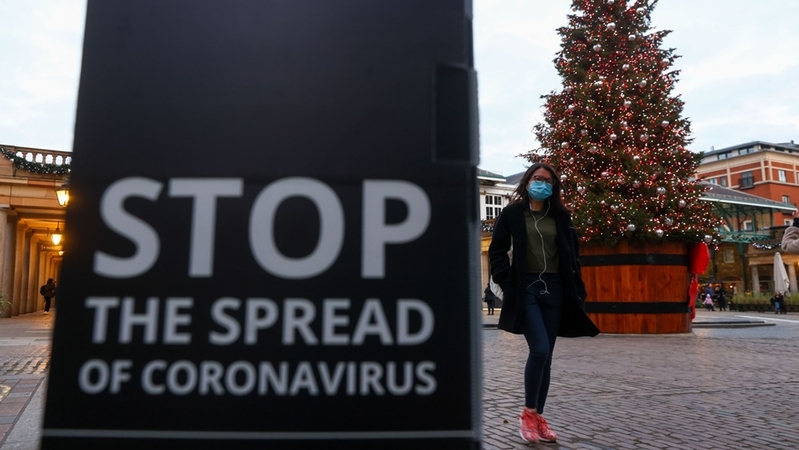
Prime Minister Boris Johnson warned of “long months ahead” in the fight against coronavirus, as his government put most of England into the highest two tiers of new restrictions when a lockdown lifts next week.

London will be placed in tier 2, avoiding the toughest rules from Dec. 2 and allowing pubs, restaurants and bars to open — but restricting alcohol to being served as part of a meal. Cities including Birmingham and Manchester were placed in the toughest tier 3, in which pubs and restaurants must close except for takeaway. Households will not be allowed to mix indoors in either tier.

“What we want to avoid is relaxing now too much, you know, taking our foot off the throat of the beast now,” Johnson said in a televised news conference Thursday. “There is a substantial relaxation across all tiers but we’re not abandoning the fight yet, of course not, because we still, as I say, have long months ahead.”

The regional three-tier system is tougher than before England entered a four-week partial lockdown this month. Ministers want to make sure they have some control of the virus’s spread before people are allowed a further five-day relaxation of the rules during the Christmas holidays.

Communities Secretary Robert Jenrick said Friday there’s a chance regions could move up or down the tiers on Dec. 16, when the categorizations will be reviewed based on the latest data. Speaking on BBC radio, he urged people to “abide by the rules and work hard at it” if they want fewer restrictions.

Johnson’s scientific advisers warned people not to take risks and to avoid endangering their elderly relatives over Christmas.

“Would I encourage someone to hug and kiss their elderly relatives? No, I would not,” England’s Chief Medical Officer Chris Whitty said at the news conference. Don’t hug a relative “if you want them to survive to be hugged again.”

Johnson’s government is trying to balance the risks of the virus again getting out of control with the need to support an economy going through its worst slump in 300 years. Virus cases have surged across the U.K. in the fall, and the prime minister’s scientific advisers are trying to chart a course that prevents the state-run National Health Service from being overwhelmed.

But the premier also faces a rebellion from members of his Conservative Party angry about the restrictions imposed on their districts. Influential Tory MP Graham Brady said he will oppose the new measures when they are put to a vote in Parliament next week.

“The policies have been far too authoritarian,” he told the BBC on Thursday. “There has got to be a real danger that if these restrictions aren’t lifted very, very soon there will be a lot of businesses that simply won’t reopen.”

Some 41% of England — or 23 million people — will be in tier 3, including large swaths of the northeast, northwest, and the Midlands. Bristol, in the southwest, and the southeast county of Kent are also included.

Another 57% of England, or 32 million people, will be in tier 2, including much of southern England and the northwest region of Liverpool which has pioneered mass testing. Only Cornwall, the Isle of Wight and the Isles of Scilly are in the lowest tier 1.

Johnson said he wants other parts of the country to “replicate” Liverpool’s success with testing, pledging to roll out the system to all tier 3 areas as fast as possible. He also suggested the goal is a system that allows people more freedom if they can show they don’t have coronavirus.

“Testing on this scale is untried, but in due course if it works, where people test negative it also may be possible for families and communities to be released from certain restrictions,” he said.

Business Minister Nadhim Zahawi later told the BBC that Johnson was referring to people who had been advised to self-quarantine because they’d been in close contact with a covid-19 case.

But the Telegraph newspaper reported this month ministers have asked companies that make passports to provide certificates showing travelers aren’t carrying the coronavirus. Bank note and passport-maker De La Rue Plc said Wednesday it’s in “early discussion” with governments “regarding COVID-19 immunity certification schemes.”

De La Rue Chef Executive Officer Clive Vacher told Bloomberg governments and companies are yet to make a final decision, declining to say if the U.K. is one of the countries.

Under the new three-tier system, the general requirement for people to stay home will end, and shops, gyms and hairdressers will reopen. But in all areas, people will be urged to continue to work from home if they can.

The announcement triggered an immediate push back from the hospitality industry, 98% of which is covered by the top two tiers in England, according to trade body UKHospitality. That will wipe out an estimated £7.8 billion of trading compared to last year if the restrictions last all of December, it said.

“We still have not seen any evidence that hospitality venues — which have invested great time effort and money to making their spaces Covid-secure — are a problem,” UKHospitality Chief Executive Kate Nicholls said in a statement. The new system is a “huge blow” and “it seems unfair and arbitrary that hospitality is being dealt such a harsh hand,” she said.

The threat to business angered Tory MPs who had lobbied ministers to keep their areas out of the highest tiers.

The coronavirus restrictions are “destroying lives and livelihoods,” Conservative MP Richard Drax said in a statement. “We need a new strategy based on common sense, not fear and more fear.”

Health Secretary Matt Hancock said the government will review which region is in each tier on Dec. 16, based on infection rates and pressure on the National Health Service, and then every week after that.

Johnson said he’s “convinced” that with a vaccine on the way, “by April things genuinely will be much, much better.”

But Chief Scientific Officer Patrick Vallance injected a note of caution, warning that while three different vaccines have recently revealed positive trial results, they still need regulatory approval.

“This is going to take months into spring, before we start to get significant degrees of vaccination to create protection,” he said.

Hong Kong integration with China is a ‘great thing,’ Lam aide says #SootinClaimon.Com

#SootinClaimon.Com : ขอบคุณแหล่งข้อมูล : หนังสือพิมพ์ The Nation.

Hong Kong integration with China is a ‘great thing,’ Lam aide says (nationthailand.com)

Hong Kong integration with China is a ‘great thing,’ Lam aide says

InternationalNov 28. 2020Bernard Chan. MUST CREDIT: Bloomberg photo by Justin ChinBernard Chan. MUST CREDIT: Bloomberg photo by Justin Chin 

By Syndication Washington Post, Bloomberg · Karen Leigh, Kari Lindberg · WORLD, ASIA-PACIFIC

A top adviser to Hong Kong’s leader said integration with mainland China was a “great thing” for many people in the city, days after Chief Executive Carrie Lam spoke of a future tied to Beijing in her annual policy address.

“As a whole, Hong Kong needs China to retain our current status and Hong Kong can’t survive on our own,” said Bernard Chan, the convener of Lam’s advisory Executive Council, told Bloomberg TV on Friday. “We need China.”

“Economically Hong Kong is very much a part of China now,” Chan said. “We need China to help us under this very difficult time.”

His comments came after China earlier this month enabled the Hong Kong government to expel lawmakers deemed insufficiently loyal. That allowed Lam to immediately eject four pro-democracy politicians, a move that triggered the mass resignation of the entire opposition and led to criticism from foreign governments including the U.S.

Lam on Wednesday delivered a two-hour address to a legislative chamber in which she defended the central government’s moves to exert greater political control over the Asian financial hub in the wake of mass protests last year, including Beijing’s imposition of sweeping national security legislation that has all but stamped out what remained of the demonstrations.

“China has been repeatedly focused on those couple of red lines, so long as Hong Kong doesn’t pass these red lines they are more than happy and they are willing to leave Hong Kong alone,” Chan said. “And those red lines are clear — you don’t ask for Hong Kong independence and you don’t try to destabilize China, these are the red lines.”

Christmas, covid imperil food supply in Brexit Britain #SootinClaimon.Com

#SootinClaimon.Com : ขอบคุณแหล่งข้อมูล : หนังสือพิมพ์ The Nation.

Christmas, covid imperil food supply in Brexit Britain (nationthailand.com)

Christmas, covid imperil food supply in Brexit Britain

InternationalNov 28. 2020A truck on the dockside at the major British port of Felixstowe, England. MUST CREDIT: Bloomberg photo by Chris RatcliffeA truck on the dockside at the major British port of Felixstowe, England. MUST CREDIT: Bloomberg photo by Chris Ratcliffe 

By Syndication Washington Post, Bloomberg · Deirdre Hipwell, Megan Durisin · BUSINESS, WORLD, EUROPE

A scarcity of warehouse space because of Christmas demand and the pandemic is putting Britain at risk of shortages of some food products as it prepares to leave the European Union’s single market.

Shelves stand almost empty in the pasta and sauces section of a Morrisons supermarket in on March 18, 2020.MUST CREDIT: Bloomberg photo by Simon Dawson

Shelves stand almost empty in the pasta and sauces section of a Morrisons supermarket in on March 18, 2020.MUST CREDIT: Bloomberg photo by Simon Dawson

With five weeks to go before the end of the Brexit transition period, large manufacturers and industry groups are warning that the capacity of the food supply chain is at its peak and can’t withstand any further shocks.

Unilever, the maker of Ben & Jerry’s ice cream and Hellmann’s Mayonnaise, said it is building up stock of key lines but “warehouses are absolutely full.” Like rival Nestle, the maker of Kit Kats and Nescafe coffee, maintaining supply of finished products and ingredients is now the priority as talks between Britain and the E.U. on a trade deal remain deadlocked. Yet that’s “with stock building more difficult at this busy time of year,” Nestle said.

“The flexibility we had in March to respond to Covid-19 demands to move stock around doesn’t exist at this time of year,” Unilever said by email. “We need governments on both sides to do whatever is needed to keep the ports and roads open for smooth and consistent supply routes.”

There have been numerous warnings about potential Brexit disruption from companies and even U.K. ministers, such as lines of trucks on the highway regardless of whether there’s a trade deal or not. The trouble is that the latest contingency planning couldn’t come at a worse time as Christmas goods take up storage space.

People in the food industry say it’s likely there could be some shortages of key brands and ingredients made in the E.U., which supplies Britain with everything from tinned tomatoes and olives to wine and baby food in foil pouches. Even with an accord, some food prices are also likely to rise.

More companies are trying to recruit extra logistics workers to ensure ports can cope with increased demand for unloading and storing supplies. Others, including Unilever, have been beefing up U.K.-based manufacturing.

The Food and Drink Federation is concerned about the ability of businesses to stockpile at a time when “we don’t have an abundant amount of food safe warehouses,” said Dominic Goudie, head of international trade at the organization. Britain “won’t run out of food,” but there could be sporadic shortages of certain products and brands, he said.

More than four years after the U.K. voted to leave the borderless market it joined in 1973, the country has yet to agree the terms of its future relationship with its biggest trading partner. The delays have left companies struggling to address the uncertainty.

For example, it’s hard to know how to stock supplies of the right packaging when labeling requirements post-Brexit are still not clear, Goudie said. That will particularly hit goods supplied to Northern Ireland, which will still be bound by the single market rules when the transition period ends, he said.

“Stockpiling of food packaging is a critical component of any supply chain,” Goudie said. “But we still have technical questions that need to be answered about what exactly you must put on the packaging.”

Business groups say failing to reach a new deal would be disastrous for the economy, whose parlous state because of the virus was laid bare by Chancellor of the Exchequer Rishi Sunak this week.

Goudie pointed to the current congestion of containers at the English port of Felixstowe as a worrying snapshot of what could lie ahead for food deliveries post Brexit. Some of his federation’s members have had goods rerouted to other ports in the U.K. and on the continent.

“They are now struggling to find road haulers to transport the products they need and are facing huge added costs to do this,” Goudie said. “Felixstowe is now directly impeding their ability to be ready for Jan. 1.”

Food and drink manufacturers, though, have shown their ability to adapt as consumer demand patterns changed with the coronavirus pandemic. The U.K. also produces 55% of the food it consumes, according to government figures, and ministers are working with the industry to ensure people have the supplies they need.

“The UK has a highly resilient food supply chain,” a government spokesperson said in a statement. “As a responsible government we continue to make extensive preparations to ensure we are ready for a range of scenarios at the end of the year, including mitigating the impact on border flows.”

Spanish foods importer Brindisa has placed orders for an extra $467,000 (350,000 pounds) of its best-selling items, including canned tuna and olive oil, said Heath Blackford, managing director of its wholesale division. The shipments will arrive in mid-December and should guard against potential disruptions in January.

Recruitment company Manpower Group Inc., meanwhile, is fielding inquiries from companies looking for staff to work in every part of their supply chains.

Demand for stock analysts, warehouse pickers and packers, and forklift truck and crane drivers to take containers off ships in ports is “through the roof,” said Jason Greaves, Manpower’s brand leader and operations director. “In every area there are skills shortages,” he said. “Who would have ever thought that Brexit, the pandemic and Christmas would hit us all at once?”