As U.S. coronavirus cases soar toward 200,000 a day, holiday travel is surging #SootinClaimon.Com

#SootinClaimon.Com : ขอบคุณแหล่งข้อมูล : หนังสือพิมพ์ The Nation.

As U.S. coronavirus cases soar toward 200,000 a day, holiday travel is surging (nationthailand.com)

As U.S. coronavirus cases soar toward 200,000 a day, holiday travel is surging

InternationalNov 22. 2020

By The Washington Post · Derek Hawkins, Hannah Knowles · NATIONAL, HEALTH, SCIENCE-ENVIRONMENT, HEALTH-NEWS 

Total coronavirus infections in the United States have topped 12 million, and cases are approaching 200,000 in a day, as health experts warn of an alarming new stage in the pandemic’s spread while Americans embark on holiday travel that could seed more outbreaks.

 A fall wave of the virus ushered in by colder weather is only worsening, outpacing expansions in testing and making new nationwide records routine. The country passed 11 million cases just a week ago, and daily infections are on track to double since Nov. 4, when they exceeded 100,000 for the first time.

As Anthony Fauci, the country’s top infectious-disease expert, put it recently on MSNBC: “It’s almost exponential when you compare the curves in the spring and the curves in the summer with the inflection of the curve where we are right now.” 

The Centers for Disease Control and Prevention recommended Thursday against traveling and congregating for Thanksgiving, using its first news briefing in months to sound alarms over the massive case rise reported in the past week. The same day, the United States surpassed a quarter-million deaths related to covid-19.

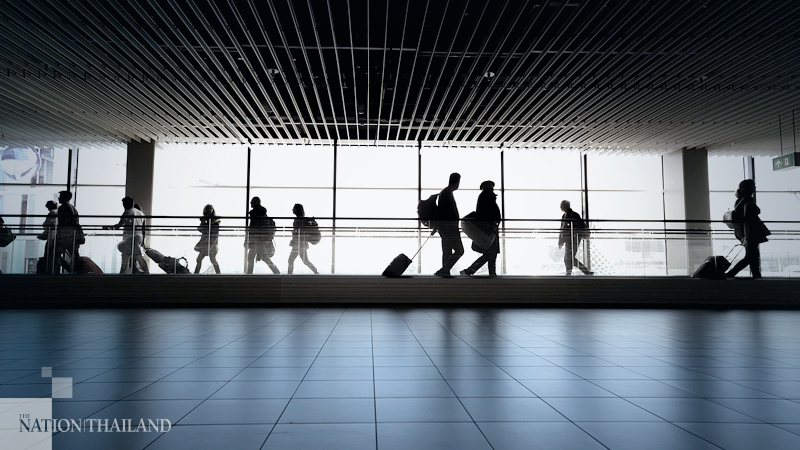
But more than 1 million people still passed through the country’s airports Friday in the second-highest single-day rush of travelers since the start of the coronavirus pandemic, even as air travel has dropped dramatically over this time last year. On the same date in 2019, more than 2.5 million people traveled through U.S. airports.

The data on Transportation Security Administration screenings shows that many Americans are heeding calls for caution. But the fallout from this week is expected to amp up pressure on hospitals and health care workers at a critical time in the pandemic. Hospitalizations have soared to all-time highs, pushing state after state to enact new restrictions such as mask mandates, curfews and renewed business shutdowns.

“The scary news is that this week will probably have the highest amount of travel we have seen since the pandemic began,” said Christopher Worsham, a critical care physician and research fellow at Harvard Medical School.

He said he is more worried about what will happen when travelers get to their destinations – and as people from different households gather indoors, where the virus can spread more easily, often with more vulnerable older family members. Worsham said he has been hearing about people being treated as “the bad guy” for trying to keep their relatives and communities safe.

“We have to remember that the virus does not care that it is the holidays, that you are family, and that you have already gone a long time without seeing one another – if given opportunities to spread, the virus will spread,” he said.

Some passengers are facing crowded terminals as they wait to board flights. Video of busy seating areas at Phoenix Sky Harbor International Airport made the rounds on social media Friday, as travelers said that the CDC’s guidance a day earlier had either not registered or not made a difference in their decision-making.

“I have a life to live and things to do, so we take necessary precautions,” Curt Vurpillat, who was heading to Chicago, told news outlet AZFamily.

Brandi McRae, an IT asset and capacity manager from South Florida, told The Washington Post she was alarmed to see long security lines and tightly packed clusters of people in the corridors of Fort Lauderdale-Hollywood International Airport on Saturday morning.

“It was a bit overwhelming,” said McRae, 31. “It was less crowded as I walked to my gate, but all I could think was that there would be very little way for so many people to remain distanced.” 

McRae said she wasn’t originally planning to fly during the holiday week, but that the stress of the presidential election made her eager to spend time with family in Lumberton, N.C. She booked a last-minute flight – her first since March, she said.” 

McRae’s family plans to limit their Thanksgiving celebration to a small group, she said, and she intends to wear a mask when she’s around them.

“It seems extreme,” she said, “but it seems like the best measure against spreading anything I could possibly have picked up during travel.” 

Among the surge of people flying: college students, many of whom will finish out the fall semester from home. Very few schools are mandating coronavirus testing for students leaving campus pre-Thanksgiving, said Chris Marsicano, an education studies professor at Davidson College who leads an initiative examining how colleges are grappling with the pandemic.

Airports are all but certain to get more crowded in the coming days. The TSA usually offers estimates on how many passengers they expect to screen during Thanksgiving week – last year the agency reported record numbers – but declined to do so this year “due to the many complex factors that could affect those numbers during this pandemic,” an agency spokesperson told The Post.

Fauci, a member of the White House coronavirus task force, has been urging families to weigh the costs and benefits of their plans to gather together.

“When you think of the holiday season, and the congregating indoors at what are innocent, lovely functions like meals with family and friends, you’ve got to at least think in terms of evaluating,” he said on MSNBC.

“Do you have people in your family that are elderly that might have underlying conditions, like someone on chemotherapy or other things that weaken their immune system?” he said. “Do you really want to get a crowd of 10, 15, 20 people, many of whom are coming in from places where they’ve gone through crowded airports to planes, getting into the house?” 

Those set to travel anyway are taking precautions – and worrying.

Tiana Camacho, a 29-year-old voice actor in Burbank, Calif., is preparing to fly Sunday to Boise for a medical procedure. She’s donating urgently-needed stem cells to a leukemia patient, she said, and found that facilities in California were all booked up.

She will head out wearing both an N95 mask and a face shield, she said – “doubling up on protection because I really think that I need it because of how insane everything is,” she said. She was thinking Saturday about the videos she had seen on Twitter of airports packed with Thanksgiving week crowds.

She wishes people wouldn’t travel, “putting everyone at risk,” unless they absolutely have to. “If this wasn’t a life or death situation, I wouldn’t be flying out,” she said. “I’d be staying home.” 

Racial, ethnic minorities continue to die from covid-19 at much higher rates, Post analysis shows #SootinClaimon.Com

#SootinClaimon.Com : ขอบคุณแหล่งข้อมูล : หนังสือพิมพ์ The Nation.

Racial, ethnic minorities continue to die from covid-19 at much higher rates, Post analysis shows (nationthailand.com)

Racial, ethnic minorities continue to die from covid-19 at much higher rates, Post analysis shows

InternationalNov 22. 2020Raquel Chavez lost her father, Ángel Chavez, and a brother, Juan Francisco Chavez, to the coronavirus. Other relatives have fallen ill, too. MUST CREDIT: Photo by Brenda Bazán for The Washington PostRaquel Chavez lost her father, Ángel Chavez, and a brother, Juan Francisco Chavez, to the coronavirus. Other relatives have fallen ill, too. MUST CREDIT: Photo by Brenda Bazán for The Washington Post 

By The Washington Post · Dan Keating, Ariana Eunjung Cha, Gabriel Florit, Chris Alcantara · NATIONAL, HEALTH, SCIENCE-ENVIRONMENT, RACE, HEALTH-NEWS 
Dennis Bannister’s daughter, Demi, was the first to die.

She was only 28, a beloved third-grade teacher who likely caught the virus during a training at her Columbia, S.C., school district. Doctors diagnosed her with a bladder infection, and by the time they realized their mistake, it was too late. Not long after, the family’s matriarch, Shirley, 57, complained of difficulty breathing. She was twice sent home from the emergency room before returning by ambulance and being put on a ventilator. She died soon after.

Which left Dennis Bannister, childless and a widower, sitting on his porch last month, staring at the last of the green leaves and mourning. Why, he pondered, had the virus hit his family so hard, and not just them, but so many African Americans? Was there something that made them particularly vulnerable? Had they gotten the right care?

“Folks think maybe they saw an African American coming in, and they didn’t take them seriously,” reflected Bannister, who was also infected but asymptomatic. “I don’t know. I just pray God will help me find a way to deal with the situation.”

It’s not just grieving relatives who are demanding answers. Nearly nine months after the virus exploded in the United States, and amid big treatment strides, the disease continues to ravage African American and other minority communities with a particular vengeance. Black, Asian, Native American and Hispanic patients still die far more frequently than White patients, even as death rates have plummeted for all races and age groups, according to a Washington Post analysis of records from 5.8 million people who tested positive for the virus from early March through mid-October.

Death rates overall have fallen more than 80% from the pandemic’s peak in the spring, when refrigerator trucks were parked outside New York City hospitals and ice rinks were converted into morgues, according to an analysis of anonymized data collected by the Centers for Disease Control and Prevention.

But as another wave of infections sweeps across the country this fall, losses among racial and ethnic minorities remain disproportionately large. Black Americans were 37% more likely to die than Whites, after controlling for age, sex and mortality rates over time. Asians were 53% more likely to die; Native Americans and Alaskan Natives, 26% more likely to die; Hispanics, 16% more likely to die. Those higher case fatality rates for diagnosed people of color are on top of the increased infection rates for those unable to isolate at home because they are essential workers.

These patterns have devastated communities of color across the country: multigenerational Latino households in Texas, Pacific Islander families in Washington state, African American families in South Carolina.

Advocacy groups, researchers and other experts say many of these deaths are preventable, and they blame federal, state and local leaders for failing to take the disparities seriously and take steps to address them.

The shortage of testing in communities of color, which made headlines in the beginning, persists to this day. Despite their symptoms, for instance, neither Demi Bannister, nor her mother, Shirley, were tested for the virus until they were close to death in late August and September.

Critics also point to spotty race data, which has made disparities harder to identify and solve; weak enforcement of protocols like mask-wearing and social distancing at essential workplaces; delays in translating critical health alerts into other languages; conflicting guidance from health agencies that deepened distrust in some communities; economic and cultural factors that lead more families to live in multigenerational homes; and immigration policies that exacerbate crowded housing and discourage people from seeking medical care.

“It is a perfect storm that has been created that led to the deaths of groups of people,” said Elena Rios, head of the National Hispanic Medical Association.

– – – 

Juliet Choi, chief executive of the Asian & Pacific Islander American Health Forum, said many of the measures sought by minority groups to mitigate the effects of the virus on their communities are easy to implement and inexpensive, but they have been mostly ignored.

“It comes down to political will and commitment,” Choi said. “We’re not asking that decades of systemic barriers get eliminated overnight, but there are many simple things we should be doing that we are not doing.”

There is growing evidence that such changes do make a difference. Faced with extreme disparities in covid-19 deaths, Michigan officials undertook a series of steps, from boosting testing to connecting people of color with primary care doctors. The state’s rapid progress proves the issues are neither intractable, nor rooted somehow in biology.

Garlin Gilchrist II, a Detroit native as well as the state’s lieutenant governor, formed one of the nation’s first state racial disparities task forces on covid-19 back in April. Made up of 23 community organizers, doctors and other experts, the group focused not only on boosting testing and contact tracing, but also tailoring messages on mask-wearing and other public health precautions to African American communities. It also addressed broader systemic issues, such as access to primary care, and helping those in rural areas access telemedicine.

When state epidemiologists ran the numbers again in September, they found a huge change: Black residents who in April accounted for 29.4% of cases and 40.7% of deaths now made up only 8% of cases and 10% of deaths – very similar to theirpercentage in the population.

Gilchrist emphasized the state’s efforts have not been complicated. “I think the reason we have been able to make progress is we chose to focus on it,” he said.

When epidemiologist Peter J. Fos first saw the coronavirus case data from his own state of Louisiana in the spring, he recalls being baffled. Respiratory diseases, like the flu, tend to move randomly through a population. “Rich, poor, male, female,” he said. “Usually, everyone is at risk together.”

Coronavirus cases, however, he noticed, seemed to be clustered in mostly poor Black neighborhoods. He called up friends in Mississippi for that state’s data and found similar patterns. The same thing was true in Michigan.

“We don’t think of infectious diseases as being a health disparity,” he recalled, “but here it was in front of me.”

Comparable data for many other states simply did not exist. Then and now, testing and data collection came under the aegis of the White House – which congressional Democrats, public health experts and civil rights leaders have criticized as being slow to respond to the disparities.

Public health experts say that good data is the cornerstone of an effective pandemic response. Without it, health officials and others fly blind. But U.S. data on the pandemic, especially about race and ethnicity, has been incomplete, or lacking altogether, in part because of the different ways state and local jurisdictions report it, and the federal government’s delay in mandating it.

Native American advocacy groups, for instance, have expressed concern about the exclusion of some of their communities from analyses, and inconsistencies in data from tribes, as compared with what states and local jurisdictions are collecting. 

The CDC said in a statement that it is “working hard to address the threat of covid-19 among racial and ethnic minority groups” by expanding testing for at-risk groups, increasing engagement with “trusted racial and ethnic minority servicing organizations” including Black colleges and universities and churches, and working to get better data.

Yet some early efforts to address inequities were quashed: The CDC had internal discussions for example, about ways to increase testing in African American and other hard-hit communities. On May 3, a document posted on its website recommended that people from “racial and ethnic minority groups disproportionately affected by adverse covid-19 outcomes” get priority for testing. Three days later, the language was removed.

In response to questions from The Post, the CDC’s press office said the document was “a draft posted without proper vetting through all CDC channels.” An official speaking on the condition of anonymity because they were not authorized to discuss the issue said it was actually higher-ups at the Department of Health and Human Services and the White House who had asked for its removal. No follow-up guidance was ever issued.

Leon McDougle, a family medicine specialist at Ohio State University who heads the National Medical Association, the country’s oldest Black physicians group, said he had been optimistic the Trump administration would take steps to address the disparities. But after that document disappeared without any public explanation, he began to have doubts.

“I have real concerns about the . . . political influence that appears to play a factor in decisions,” he said.

In early June, CDC Director Robert Redfield apologized to lawmakers for “the inadequacy of our response” in documenting the nation’s high rates of infection and deaths among Black and Hispanic Americans. That same day, Adm. Brett Giroir, an HHS assistant secretary running the government’s coronavirus testing response, said that as of Aug. 1, the federal government would begin requiring laboratories to report racial and ethnic information for people who were tested for the virus.

The national coronavirus database available today is much more robust, but holes remain. Some records are missing race, gender or age, while others lack information on the patient’s other medical conditions, or even whether the person lived or died. Information is more likely to be blank for non-Whites. Among hospitalized patients, for instance, there was no information on whether the patient survived for 36% of Hispanics, 29% of Blacks, 26% of Asians and 24% of Whites.

– – – 

The Post analyzed the data in numerous ways: with and without the missing information, with all infected patients, and with only patients who had been hospitalized. No matter which model it used, the results showed significantly higher death rates for Blacks, Hispanics, Native Americans and Asians than for Whites.

While minorities tend to get infected at higher rates, some studies have suggested that delays in diagnosis and their experiences in hospitals appear to contribute to poorer outcomes. A Boston-based data firm said African Americans with symptoms such as coughing may be less likely to get access to scarce coronavirus tests. An academic analysis of testing in New York City found that more testing existed in White neighborhoods although the highest positivity rates were in communities with a higher share of Black and Hispanic residents.

In the spring, scholars puzzling over such disparities overlaid maps of covid-19 deaths with maps of communities where heart disease, diabetes, obesity and other conditions were highest in the United States. They found that the hot zones matched up.

Numerous studies have since borne out the relationship between these health conditions and high covid-19 death rates. When looking at the role of race, smaller studies – based on data from single hospital systems or regions – found that differences in mortality narrowed when controlling for ailments such as high blood pressure, diabetes, lung conditions and obesity.

In the CDC data, however, the difference in death rates grows even larger when controlled for those other health conditions – although information is missing for many patients.

Fos, a member of Louisiana’s task force on race and covid-19, argues the initial observation that high covid-19 death rates coincided with hot spots for other health problems led some public health officials to conclude the unequal burden was somehow inevitable. A few went so far as to suggest that those most affected were somehow to blame for their illnesses.

Rep. Maxine Waters, D-Calif., called out U.S. Surgeon General Jerome Adams in April, for instance, for singling out African Americans with advice to avoid alcohol, tobacco, and drugs to lower their risk for severe disease from the virus. Although Adams had noted his own health struggles as part of “that legacy of growing up poor and Black in America,” Waters described the comments as “a backhanded attack on African Americans and communities of color.” Adams subsequently apologized, saying he “used the language that is used in my family” and that the comments were not meant to be offensive.

Fos and other experts argue the clustering of covid-19 cases is more of a social and economic phenomenon.

He noted the high proportion of people in such communities who interact daily with the public as essential workers, who often live in more densely packed neighborhoods and multigenerational households, and who might not have regular doctors because they lack health insurance.

In addition, minorities face a long history of unequal access to medical care – which may have impacted treatment decisions and outcomes. A study using data from the Society for Critical Care Medicine, posted this month before peer review, found that African American patients were more likely than Whites to receive an older, less-expensive and riskier blood thinner linked to higher mortality from covid-19. Blood thinners have become a critical weapon in the arsenal used by doctors against the disease because many patients with severe disease develop clots.

It was not clear whether the administration of that medicine related to insurance coverage, physician preference, or something else. One of the study’s authors, Venky Soundararajan, chief science officer of data firm Nference, wondered whether some doctors chose the older, more established product for minority patients because the newer drugs were overwhelmingly tested on Whites.

“If you distill it down to the root causes,” Fos said, “they are ones we have known in our country for years and we’ve just done a very bad job of addressing it. It’s some of the same reasons people are protesting in the streets – police brutality, job discrimination, environmental justice. The coronavirus shows how much racism there is in health as well.”

– – – 

If New York City was the epicenter of the first wave of the pandemic, the stretch of Texas along the Rio Grande Valley near the U.S.-Mexico border is the epicenter of the second.

As of this week, four counties in this region had tallied a combined total of 70,000 cases and more than 3,300 deaths. Norma Ramirez, the Democratic chair for Hidalgo County, has said there is not one person in her region “who hasn’t been affected by this horrible virus.” 

Vanessa Alvarado, outreach coordinator for LUPE, a community group in Texas founded by labor activists César Chávez and Dolores Huerta, said immigration policy and economic challenges have exacerbated the Latino communities’ vulnerability. A Trump administration rule that took effect Feb. 24 makes it more difficult for people to get green cards if they seek government help such as food stamps and some types of health and housing assistance.

That has left many fearful to seek care even if they are very sick, she said. And as layoffs have accelerated and people have sought cheap living arrangements, it has left families and friends crammed into small homes with no space for a “sick room” to isolate patients. About 27% of Hispanic households span three or more generations, according to a Pew Research report. That compares with 16% of White households.

In addition, Alvarado said, so many are struggling to make enough money for basic needs like food and shelter that the coronavirus has sometimes seemed a secondary concern. Even the most vulnerable in her community – men and women over the age of 60 with known health issues – have to go to work to make ends meet. In addition to everyday expenses, some families are now being hit with huge bills for funerals.

“‘Whatever God wants. We leave it in God’s hands,'” Alvarado said. “That’s the general attitude because that’s all you have left.”

Alvarado and other community activists said it’s common to see the virus strike whole households in the Latino community.

Raquel Chavez, who is originally from Mexico, lost her father and a brother to the virus in September. It had started with her mother’s stomachache. After her mother arrived at the hospital and they took her vital signs, she was wheeled into intensive care and put on a ventilator. She tested positive for the coronavirus. Then her father came down with flu-like symptoms. His doctor sent him home with some cold medicine, and as a precaution, tested him for the coronavirus.

“They couldn’t give him extra attention because his test hadn’t come back,” she recalled. “But he didn’t last very long.”

Ángel Chavez, 69, died a few days later of a heart attack. At the funeral, his youngest son had such a bad coughing fit, he was unable to deliver the eulogy. Rushed to the hospital and put on oxygen, Juan Francisco Chavez died soon after at the age of 42.

Her father’s positive coronavirus test did not come back until after his body had been cremated, Raquel Chavez said. Numerous other relatives also were infected by then – her older brother, a nephew, two cousins – though everyone had worn masks at the funeral. She said she has been struck by how the virus can spread faster than test results can be processed.

“My mother cannot overcome what happened,” she said. “It was so quick.”

– – – 

In Spokane, Wash., Jeffrey Yoshikawa said much of the information he has about the coronavirus comes from a Facebook group where younger, bilingual people translate critical guidelines and alerts into his native language, Marshallese, for their families. One of roughly 3,000 Pacific Islanders in his county – most from the Marshall Islands in the vast expanse of ocean between Hawaii and Southeast Asia – Yoshikawa said this online group has been critical to his community’s struggle against the virus.

While the Marshallese, who are allowed to live and work in the U.S. but who are not citizens, make up less than 1% of the county’s population, they represent an eye-popping 30% of covid-19 cases. The community has been vulnerable, he said, not only because of language barriers, but because many work outside the home in essential jobs and are not eligible for most federal health programs. The Marshallese also have startlingly high rates of cancer, likely linked to the 67 nuclear tests the United States conducted on or over the volcanic island chain between 1946 and 1958.

Despite a Federal Emergency Management Agency playbook that emphasizes the importance of communications during a national emergency – it recommends alerts and other key guidance be translated into 17 languages to reach as much of the United States population as possible – the Marshallese and many immigrant communities still rely on their young to tell them what they need to know.

When the CDC began posting information on the coronavirus in January and February, it was in English only. It wasn’t until March 11 that sites in Spanish, Chinese, Korean and Vietnamese appeared. Translations of the covid-19 content into other languages, such as Marshallese, are still unavailable.

Frustrated members of minority groups said many communities created their own communication channels – through cultural organizations, church networks, and other forums – to share health information. Nationally, the Asian & Pacific Islander American Health Forum set up a website to collect translations but access to timely information is hit or miss.

In the Marshallese community, Yoshikawa explained, “we have a few who work in the hospital and schools.”

“They are not doctors, but they can talk to the doctors and they can translate and get the information to the households so they can understand,” he said.

While it has been impossible to get a comprehensive picture of Asian Americans and the coronavirus because of the lack of detailed data, reports from Hawaii, San Francisco and Washington state suggest Pacific Islanders, especially the Marshallese, are being impacted disproportionately among the different Asian subgroups.

Yoshikawa, who works in customer service at Walmart, and his mother-in-law had such serious covid cases they were hospitalized.

“It was the worst experience of my life,” he said, describing how he struggled to breathe as doctors pumped experimental medicines into him to try to save his life. “I had to fight it and get myself strong every day.”

At least three in his community have died, he said; more Marshallese have passed away in other states, including Arkansas and Hawaii.

– – – 

The struggle to combat the virus has focused on different issues in Black communities.

Reynold Verret, president of Xavier University of Louisiana, and Walter M. Kimbrough, president of Dillard University, set off waves of surprise and indignation in September when they announced they had volunteered as test subjects for an experimental vaccine for the coronavirus. They also appealed to students, faculty, staff and alumni of the historically Black schools to consider the same.

The blowback was immediate and loud.

“You are putting our children at risk with these fast-track vaccines. They are not lab rats!!!” one parent fired back on social media. Another commented, “How dare you suggest they use our community to experiment on.”

But Verret, a scientist with a background in immunology, said in an interview that it is important for him to participate precisely because he is a 66-year-old African American man. Diverse participation, he said, is critical to ensuring that vaccine testing is rigorous and fair so that all populations can benefit.

“The communities we serve look to us as examples,” Verret said.

The men’s decision to share their participation in the trials is part of an effort among African American leaders to address the mistrust they worry puts communities of color in greater danger. That mistrust is grounded in historical abuses such as the Tuskegee syphilis trials but has been exacerbated by missteps in the pandemic response.

As part of that endeavor, Gilchrist, Michigan’s lieutenant governor, tweeted about his recent flu shot. And the Rev. Jesse Jackson said at a public celebration of his 79th birthday last month in Chicago that his wish was that people of color protect themselves from the virus by following public health protocols.

On Sept. 21, the NMA, the Black physicians group, announced it would convene its own panel of experts outside of federal health agencies, to vet data on clinical trials related to vaccines — essentially a parallel effort to address what it says are gaps in the government’s response and to counter doubts in African American communities about whether the vaccines will be safe and effective.

“Trust remains a huge problem,” said Terri Laws, an assistant professor at the University of Michigan at Dearborn whose research focuses on health and African American studies. “But we’re not where we were 100 years ago. Black professionals are stepping up to fill the gap.”

– – – 

Dennis Bannister, his wife Shirley and their daughter Demetria – Demi – had been extremely cautious about the coronavirus. Shirley, chair of the nursing department at Midlands Technical College, had tried to work from home most days. Demi diligently sprayed the doorknobs with disinfectant whenever they came back from an outing and was constantly reminding everyone to be careful.

Halfway through a master’s program in education, Demi had been trying to save money for her own place while living with her parents. Dennis, who had retired from his job as an electrical engineer at a local factory, was delighted to have her.

She was their only child, and the three of them were close. Demi had been a math and science whiz with a penchant for the performing arts and had talked about becoming a doctor or actor. Her father was surprised when she told him she wanted to be a teacher. But when he volunteered to teach her third-grade students chess, he saw how much she loved it.

“When it was Black History Month, she put this choir together and it seemed like every child wanted to be in the choir,” he recalled. “It gave her joy, and she gave joy.”

Demi came down with a fever shortly after an in-person meeting before Labor Day with other teachers and staff. At her family medical practice, they guessed she had a bladder infection and gave her some medication. They did not test her for the coronavirus, Dennis said. A few days later, she was admitted to the hospital, and her infection with the coronavirus was confirmed. She died Sept. 7 without ever seeing her parents again.

Shirley, who had a history of diabetes and asthma, became ill shortly after her daughter’s death. Dennis said she had been despondent and told him, “All I worked for is nothing. My baby’s gone.”

“She was a fighter, a strong woman, my wife,” Dennis, who turned 65 this month, recalled. “I don’t know if she gave up hope or what.”

Shirley went to the emergency room twice because she was having trouble breathing. The first time, he said, doctors declined to admit her.

The second time, a few days later, Shirley insisted on an X-ray, which found pneumonia in her lungs. To his surprise, Dennis Bannister said, they sent her home again without performing a coronavirus test. “All that delay time. She was getting sicker,” he recalled. A few days later, he had to call 911 when her breathing deteriorated further. Bannister was able to see her in the hospital briefly before she was intubated.

She died Sept. 27.

– – – 

The Washington Post’s Lena H. Sun, Chris Alcantara and Magda Jean-Louis contributed to this report.

– – – 

The Post used a multivariate logistic regression model to test for survival or death of diagnosed covid-19 patients. Factors in the model were date, patient age group, gender, combined race and ethnicity, and presence of relevant preexisting conditions (co-morbidities). Each of those factors was found to contribute to the model beyond the 95% confidence limit. Odds ratios were also calculated comparing change over time, older age groups to the youngest age group, men to women, and other race-ethnicity groups to White non-Hispanics.

The limitation of the study was missing data on some of the 5.8 million covid-19 patients collected by local health departments and assembled by the Centers for Disease Control and Prevention. To address that, models were tested including and omitting co-morbidities, the factor that was most often missing. Because information tended to be more complete on the sickest patients, models were also tested that assumed missing information on patient survival meant that the patient had not died, that is, a missing value was treated as “alive” in the classification of “dead” or “alive.” Because limits on testing impacted the denominator of how many patients were confirmed to have covid-19, models were also used for hospitalized patients rather than all patients.

For combined race ethnicity, all White, Black and Asian patients are non-Hispanic. Hispanic patients can be of any race. Patients are placed exclusively in one group or the other. There is no double-counting.
Republican leaders ask Michigan election board to delay certification of results #SootinClaimon.Com

#SootinClaimon.Com : ขอบคุณแหล่งข้อมูล : หนังสือพิมพ์ The Nation.

Republican leaders ask Michigan election board to delay certification of results (nationthailand.com)

Republican leaders ask Michigan election board to delay certification of results

InternationalNov 22. 2020

Left : GOP Chair Laura Cox,  Right : RNC Chairwoman Ronna McDaniel

Left : GOP Chair Laura Cox, Right : RNC Chairwoman Ronna McDaniel

By The Washington Post · Kayla Ruble, Tom Hamburger, David A. Fahrenthold · NATIONAL, POLITICS 
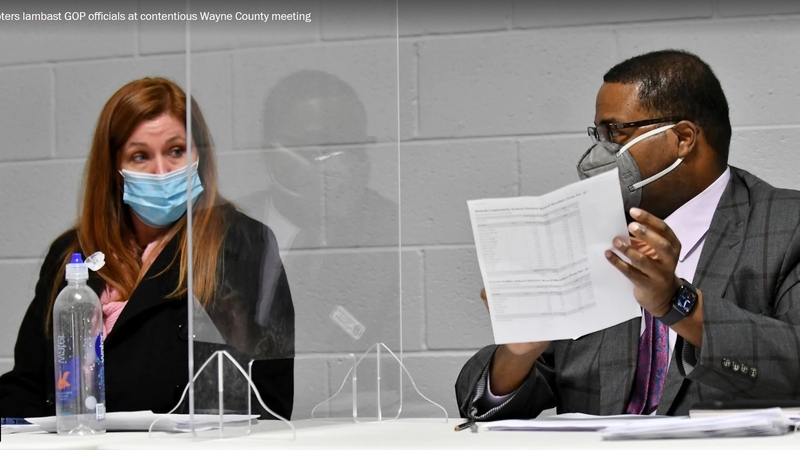
The heads of the Republican National Committee and Michigan Republican Party issued a joint statement Saturday calling for Michigan’s state canvassing board to delay certification of President-elect Joe Biden’s victory in the state, marking the latest attempt by GOP leaders to intervene in the state’s electoral process. 

In the letter – signed by RNC Chairwoman Ronna McDaniel, who is from Michigan, and state GOP Chair Laura Cox – the officials ask the canvassing board to adjourn for 14 days and allow for a “full audit and investigation” before they convene to certify the state’s election results, a procedural step that is set to take place Monday afternoon. 

“This board faces a stark choice,” the letter reads, citing claims of “numerical anomalies” and “procedural irregularities” that they say would leave “the distrust and sense of procedural disenfranchisement felt by many Michigan voters to fester for years” if ignored by the board.

The letter has increased worries among state Democratic leaders that Republicans may block certification Monday. They have begun drafting legal documents and detailed contingency plans in the event the board fails to certify. Among the options being considered is for Gov. Gretchen Whitmer, a Democrat, to replace the GOP members using her executive authority, or to ask a judge to compel the board to certify the results, said a current and former Democratic official, speaking on the condition of anonymity because they were not authorized to speak publicly on this matter.

“There is absolutely no legal basis for the Republican canvassers to abandon their responsibility to certify the general election result – that was a fair, free and secure election – as required by statute,” Christine Greig, Michigan’s House Democratic leader, said in a statement Friday. She said the delays in declaring the results official – particularly those related to vote counting in Detroit – are rooted in racism and could be a “stunt” to influence selection of the state’s presidential electors.

McDaniel and Cox’s demand for scrutiny is entirely focused on the election results in Wayne County, Michigan’s largest and most Democratic county, which includes Detroit. 

Detroit election officials and Democratic lawyers dispute the accounts of widespread irregularities. 

Wayne County officials have noted discrepancies in the vote count in a number of precincts. But they said the size of the errors was small – a difference of one or two votes per precinct, affecting a total of about 450 votes. Biden leads the state by about 150,000 votes. 

In a tweet Friday, Michigan’s Democratic secretary of state suggested an audit such as the one requested by McDaniel and Cox would not be allowed under state law, which does not allow for the necessary records to be released until after the state certifies the results.

“Not sure who needs to hear this, but under state law (MCL 168.31a) audits can only be conducted after the State Canvassers certify the election,” Secretary of State Jocelyn Benson wrote. “This is [because] election officials do not have legal access to the documents needed to complete audits until the certification.”

Still, the demand by the two GOP leaders increases the pressure on the two Republican members of the four-member Board of Canvassers, whose actions Monday could slow down the process of finalizing election results in the battleground state and empower others to echo President Donald Trump’s unfounded allegation that he was robbed of victory because of widespread fraud.

In an interview Thursday, Norman Shinkle, one of the Republicans on the state canvassing board, said that although he expected Biden to win the election, he may suggest a delay to allow for an audit of the state’s ballots.

Republican members of the state legislature, including state Sen. Mike Shirkey and House Speaker Lee Chatfield, declared Friday after a White House meeting that they had learned nothing to warrant reversing the outcome in their state.

On Saturday morning, Detroit News reporter Melissa Nann Burke wrote on Twitter that she had seen four of the Republicans – state Sens. Shirkey, Dan Lauwers, Aric Nesbitt and Tom Barrett – leaving Trump’s downtown Washington hotel. Burke also posted a photo, which she said was provided by another individual, showing Chatfield having drinks in the hotel’s lobby.

The lawmakers used their own personal funds for the gathering, said Gideon D’Assandro, spokesman for Chatfield.

The Trump hotel – a popular Republican hangout – is expensive, even during the pandemic: On Saturday, the hotel’s website said the lowest available rate for that night was $476.

“Senator Shirkey supports a deliberate process free from intimidation and threats,” Amber McCann, Shirkey’s spokeswoman, said in a statement Saturday. “The Board of State Canvassers should feel comfortable taking the full time allowed by law if they feel it’s necessary to perform their duties, or certify on Monday if they’re satisfied it’s appropriate to do so.”

The GOP leaders said they “echo” the concerns voiced by failed Republican U.S. Senate candidate John James, citing a letter filed by his campaign that made claims of irregularities in Wayne County’s elections. Cox and McDaniel called the accusations made by the James campaign “deeply concerning.”

“In light of the already unprecedented nature of this election – conducted largely by mail in the midst of an ongoing pandemic,” they wrote, “it would be a grievous dereliction of this Board’s duty to the people of Michigan not to ensure that the irregularities identified by the James Campaign are thoroughly investigated by a full audit before certifying Wayne County’s results.”

Attempting to offer reassurance that this was not an attempt to indefinitely block the state’s process of selecting electors for Biden, they wrote that “neither that adjournment nor the audit of Wayne County’s results would impermissibly delay certification of the election results beyond the statutory deadline of December 7, 2020.”

Last week, Benson reminded Michigan that her office had already intended to conduct an audit of the election and has been preparing to do so for the past two years, noting that this would be a typical post-election procedure and was not being done in response to disproved or unfounded claims of election fraud.

“Throughout my tenure as Michigan Secretary of State, and indeed long before, I have spoken repeatedly on the importance of post-election audits to ensure Michiganders can trust the outcome of our elections as an accurate reflection of the will of the people,” she said in the statement. “Notably, audits are neither designed to address nor performed in response to false or mythical allegations of ‘irregularities’ that have no basis in fact.”

According to Michigan election law, the secretary of state “authorize the release of all ballots, ballot boxes, voting machines, and equipment after 30 days following certification of an election by the board of state canvassers” in the event that a recount petition has been filed or a court has issued an order “restraining interference” with these materials.

Judge dismisses Trump campaign lawsuit in Pennsylvania #SootinClaimon.Com

#SootinClaimon.Com : ขอบคุณแหล่งข้อมูล : หนังสือพิมพ์ The Nation.

Judge dismisses Trump campaign lawsuit in Pennsylvania (nationthailand.com)

Judge dismisses Trump campaign lawsuit in Pennsylvania

InternationalNov 22. 2020

By The Washington Post · Jon Swaine · NATIONAL, POLITICS, COURTSLAW 
A lawsuit brought by President Donald Trump’s campaign that sought to block the certification of Pennsylvania’s election results was dismissed by a federal judge on Saturday evening.

U.S. District Judge Matthew Brann granted a request from Pennsylvania Secretary of State Kathy Boockvar to dismiss the suit, which alleged that Republicans had been illegally disadvantaged because some counties allowed voters to fix errors on their mail ballots.

The judge’s decision, which he explained in a scathing 37-page opinion, was a thorough rebuke of the president’s sole attempt to challenge the statewide result in Pennsylvania.

Rudy Giuliani, Trump’s attorney, personally took charge of the case and appeared at a hearing in Williamsport, Pa., Tuesday in an attempt to justify it. Five other attorneys who represented the president withdrew from the case.

In his order, Brann wrote that Trump’s campaign had used “strained legal arguments without merit and speculative accusations” in its effort to throw out millions of votes. 

“In the United States of America, this cannot justify the disenfranchisement of a single voter, let alone all the voters of its sixth most populated state,” Brann wrote.

Trump was beaten in Pennsylvania by President-elect Joe Biden, who currently holds a lead over the president of more than 81,000 votes. Counties are due to file their official results on Monday to Boockvar, who will then certify the statewide tallies. 

Trump’s campaign sued Boockvar and a group of counties won by Biden, alleging that they had violated the campaign’s constitutional rights by allowing voters to “cure” administrative errors on their mail ballots. 

Brann wrote on Saturday that Trump’s attorneys had haphazardly stitched this allegation together “like Frankenstein’s Monster” in an attempt to avoid unfavorable legal precedent.

In trying to depict “ballot curing” as illegal, Trump’s attorneys misstated a decision by Pennsylvania’s Supreme Court. Brann noted in his order on Saturday that the court had in fact “declined to explicitly answer whether such a policy is necessarily forbidden.”

The president’s campaign sued together with two voters from counties that Trump won, both of whom had their mail ballots rejected because of administrative errors.

Brann wrote on Saturday that throwing out the election result would not reinstate the pair’s right to vote. “It would simply deny more than 6.8 million people their right to vote,” the judge wrote.

Trump’s lawsuit initially included formal allegations that the defendants had also violated the campaign’s rights by preventing Republican observers from watching votes being counted, which the defendants denied.

Those claims were scrapped in a revised version of the suit filed on Sunday. Giuliani and other Trump advisers initially denied that the claims had been dropped, then said they had “strategically decided to restructure” the suit, before finally saying in court filings that the claims were removed by mistake.

Giuliani asked the judge for permission to restore the deleted claims about count observers in a proposed third version of the lawsuit, but his request was dismissed by Brann along with the rest of the campaign’s legal effort. 

Police tell motorists to avoid Ratchaprasong intersection #SootinClaimon.Com

#SootinClaimon.Com : ขอบคุณแหล่งข้อมูล : หนังสือพิมพ์ The Nation.

Police tell motorists to avoid Ratchaprasong intersection (nationthailand.com)

Police tell motorists to avoid Ratchaprasong intersection

InternationalNov 21. 2020

By The Nation

The Metropolitan Police Bureau has advised commuters to avoid routes around the Ratchaprasong intersection in Bangkok on Saturday from 1pm to 9pm as the Bad Student group plans to hold an anti-government protest.

The group announced on Facebook that its protest on Saturday will be themed “Meteor strikes dinosaur”.

To avoid being caught in jams, police advised people to avoid Rajdamri Road (Rajdamri-Pratunam intersections), Rama I Road (Chaloem Phao-Ratchaprasong intersections) and Ploenchit Road (Ratchaprasong-Chidlom intersections).

Police have recommended using Ratchaprarop Road, Phetchaburi Road, Phya Thai Road, Rama IV Road, Henri Dunant Road, Sarasin Road, Silom Road, Sathon Road, Witthayu Road, Sukhumvit Road, Soi Tonson and Lang Suan Road.

Earlier on Thursday, the Bad Student group said the aim of the rally was to remind lawmakers that if they don’t change their dinosaur-like outdated mindsets, they would be hit by meteors.

Georgia certifies election results, solidifying Biden win #SootinClaimon.Com

#SootinClaimon.Com : ขอบคุณแหล่งข้อมูล : หนังสือพิมพ์ The Nation.

Georgia certifies election results, solidifying Biden win (nationthailand.com)

Georgia certifies election results, solidifying Biden win

InternationalNov 21. 2020A Clayton County election worker holds up a sign signaling she needs help with determining a vote during a hand recount for the presidential election in Georgia last week. The state is the first of those where President Trump has mounted legal challenges to certify its results, confirming a 12,284-vote lead for former vice president Joe Biden. MUST CREDIT: Photo by Kevin D. Liles for The Washington PostA Clayton County election worker holds up a sign signaling she needs help with determining a vote during a hand recount for the presidential election in Georgia last week. The state is the first of those where President Trump has mounted legal challenges to certify its results, confirming a 12,284-vote lead for former vice president Joe Biden. MUST CREDIT: Photo by Kevin D. Liles for The Washington Post 

By The Washington Post · Michelle Ye Hee Lee · NATIONAL, POLITICS, WHITEHOUSE

Georgia’s top Republicans on Friday publicly affirmed the state’s election results, including the victory of President-elect Joe Biden, whose lead in the historically red state prompted a barrage of attacks from President Donald Trump and other Georgia Republicans on the integrity of the election in the state.

Georgia’s Republican Secretary of State Brad Raffensperger, who has forcefully rejected criticisms of the election process by fellow Republicans, on Friday officially certified the results of the general election. The result included Biden’s 12,284-vote lead that was confirmed through a hand recount of 5 million presidential ballots.

After largely staying on the sidelines in the GOP feud, Republican Gov. Brian Kemp said on Friday that he would follow state law, which requires him to accept the secretary of state’s certified results by 5 p.m. Saturday. On Friday, his office confirmed that he had formally certified the results.

“As secretary of state, I believe that the numbers that we have presented today are correct,” Raffensperger said in a statement Friday. “The numbers reflect the verdict of the people, not a decision by the secretary of state’s office or of courts or of either campaign.”

Among the handful of states in which Trump is mounting a legal challenge, Georgia is the first state to certify – or formalize – its election results. But the controversy over the outcome in the state is not yet over.

Trump’s lawyer, Rudy Giuliani, has said the campaign is preparing to file a lawsuit in Georgia challenging its election administration. And the Trump campaign has until Tuesday evening to request another recount of the results, which would launch a process to re-scan the presidential ballots that have already been hand-recounted and audited.

The certification of election results is typically an administrative measure done with little fanfare once election officials have verified the accuracy of the outcome – long after the public has moved on from the election.

But the process has come under the national spotlight this year in Georgia and other battleground states where Trump is fighting election results because it is one of the only remaining avenues through which the finalization of election results could be delayed.

In a reflection of the heightened interest in this arcane process, the secretary of state’s office Friday caught national attention when it prematurely sent out a news release touting the completion of the certification process. Within 40 minutes, the office issued a correction, clarifying that the certification process was still underway.

But in the end, the secretary of state issued its final announcements by 4 p.m., an hour before the deadline.

“In certifying the results, the Secretary of State affirmed that all 159 counties have provided to the state the total votes tabulated for each state and federal candidate,” the final announcement read. “Further, the Secretary of State affirms that the statewide consolidated returns for state and federal offices are a true and correct tabulation of the certified returns received by this office from each county.”

The announcement came just one week after counties began the laborious and costly task of hand-recounting each of the 5 million votes cast for president in Georgia. Election officials from different states traveled to Georgia to help, and employees in other county departments were temporarily reassigned to help with the recount.

Raffensperger had ordered the hand recount as a part of the statewide risk-limiting audit process, because Biden’s margin of victory was so thin. He has since come under pressure from fellow Republicans, including Sen. Lindsey Graham of South Carolina, who he said questioned the validity of legally cast absentee ballots, in an effort to reverse President Trump’s narrow loss in the state.

Election officials found discrepancies in a handful of counties that made a slight difference in the final presidential margin, but not nearly enough to reverse the outcome. In the end, there was no evidence of widespread irregularity, state election officials said: There was just a 0.0099% variation in the overall presidential margin.

Still, there were enough troubling findings in the audit that Raffensperger on Friday made three recommendations for state legislators to improve the state’s election administration.

Raffensperger requested state legislation that allows the state to intervene in counties that have systemic problems with election administration, including in counties that did not count all the votes that were cast.

He called for an overhaul of Georgia’s absentee ballot laws, recommending additional security measures for mail voting in an effort to increase public trust in how the state verifies its mail-in ballots. He also recommended stricter state requirements that would allow officials to investigate suspected cases of voters who may be on the state’s voter rolls but are no longer eligible to vote in Georgia.

On Friday, Kemp said he believed “the vast majority of local election workers did their job well under unprecedented circumstances.” But he said the mistakes uncovered in four counties through the statewide audit process were “simply unacceptable,” including an instance where about 2,600 ballots in one county were not scanned in the original tally.

In a brief statement Friday afternoon, Kemp said he planned to follow the state’s requirement for him to certify the results.

“State law now requires the governor’s office to formalize the certification, which paves the way for the Trump campaign to pursue other legal options and a separate legal option if they choose,” he said in a statement.

“As governor, I have a solemn responsibility to follow the law, and that is what I will continue to do.”

Trump to appear at virtual G-20 as coronavirus ravages the globe #SootinClaimon.Com

#SootinClaimon.Com : ขอบคุณแหล่งข้อมูล : หนังสือพิมพ์ The Nation.

Trump to appear at virtual G-20 as coronavirus ravages the globe (nationthailand.com)

Trump to appear at virtual G-20 as coronavirus ravages the globe

InternationalNov 21. 2020President Trump golfs at Trump National Golf Club on Nov. 15, 2020, in Sterling, Va. MUST CREDIT: photo for The Washington Post by Al Drago.President Trump golfs at Trump National Golf Club on Nov. 15, 2020, in Sterling, Va. MUST CREDIT: photo for The Washington Post by Al Drago. 

By The Washington Post · David J. Lynch · NATIONAL, BUSINESS, WORLD, WHITEHOUSE, US-GLOBAL-MARKETS

Gathered in an elegant 19th-century museum building in Washington, the world’s most powerful leaders came together for the first time amid the worst economic crisis since the Great Depression.

The unprecedented November 2008 gathering of the Group of 20 nations marked the first of what would be three such summits in fewer than 12 months. Each showcased an American president – one Republican, one Democrat – helping to remake a damaged global economy. With leaders from Europe, Japan, China and elsewhere, Presidents George W. Bush and Barack Obama crafted a $5 trillion stimulus, overhauled financial regulations and quashed beggar-thy-neighbor protectionism.

This year, the American president is a reluctant attendee. After days of noncommittal silence, the White House finally confirmed only late Friday afternoon — less than 24 hours before the global summit’s scheduled start — that President Donald Trump would participate.

It’s just the latest reminder that during this once-in-a-century health and economic emergency, world leaders have struggled to develop a common response. Trump initially wanted to hold this year’s annual Group of Seven summit at Trump National Doral, his Miami hotel, then backtracked amid criticism and rescheduled it for the presidential retreat at Camp David before eventually canceling altogether. Trump also skipped a pair of summits with Asian leaders that were held last weekend via videoconference.

The G-20 now moves into the spotlight with expectations remarkably low, given the stakes. On Saturday and Sunday, the G-20′s annual conclave is expected to finalize a framework for granting poor nations debt relief and little else.

“I don’t imagine there will be a huge amount of progress made,” said Douglas Rediker, chairman of International Capital Strategies, a financial advisory firm.

With signs that the global economic recovery is stalling, some influential voices are calling for intensified cross-border collaboration.

The head of the International Monetary Fund, Kristalina Georgieva, warned the G-20 that uncoordinated crisis spending would cost two-thirds more than a joint approach. And she urged its members to prepare an ambitious roster of synchronized infrastructure investments to help complete the recovery, once the pandemic is tamed.

Business leaders and prominent Democrats, meanwhile, want President-elect Joe Biden to call together world leaders early in his administration to craft a joint response to the pandemic’s intertwined health and economic dangers. Failure to coordinate global distribution of a coronavirus vaccine, some say, could hobble any global rebound as richer nations power ahead of poorer ones.

“A sustainable economic recovery cannot be achieved anywhere unless we defeat the pandemic everywhere,” Georgieva wrote Thursday on the IMF blog, adding: “We can build the impetus for growth, jobs, and address climate change, far more effectively if we work together.”

The G-20 was launched in 1999 to bring together finance and central bank officials from traditional and emerging powers. But in late 2008, as the global economy unraveled, Bush called an emergency leaders summit.

The first-time forum quickly emerged as the crisis management cockpit for presidents and prime ministers. After the second summit in April 2009, Obama gushed that the leaders had achieved “a level of tangible, global economic cooperation that we’ve never seen before.”

Today, that heads-of-state harmony is just a memory. And Trump’s well-known distaste for multilateral negotiations is only part of the reason. Even before Trump took office, the G-20 in recent years had earned a reputation as an ineffectual talking shop, rather than an organization that wielded genuine heft.

The souring between the United States and China, the world’s two largest economies, has further complicated global cooperation, while the pandemic has prevented the personal contact that symbolized the leaders’ activism in the last crisis.

“The G-20 lost its way years ago. But it’s definitely been worse in the Trump era,” said Matthew Goodman, of the Center for Strategic and International Studies, who helped coordinate Obama’s summit appearances. “There’s no sense now of the common purpose that was there in 2008-2009.”

Indeed, Trump – whose official schedule has been almost empty since he lost the Nov. 3 election – skipped two virtual summits of Asian leaders last weekend. (Early Friday morning, he made a brief video appearance at another Asia-Pacific gathering.)

The group’s eclipse could end once Biden is inaugurated in January. Already, prominent Democrats such as former treasury secretary Larry Summers have called for the president-elect to convene an early G-20 leaders summit.

Biden, who promised during the presidential campaign to “rally the world” to combat shared challenges, is likely to do so, several analysts said.

“I would expect that to happen,” said Tim Adams, president of the Institute of International Finance, an industry group. “This is the first time in the modern era we did not have a strong visible coordinating heads-of-state response.”

A spokesman for the Biden transition did not respond to a request for comment.

Elements of the business community are eager for the United States to reengage with a host of international bodies, such as the World Trade Organization, and would welcome a more active crisis-fighting stance.

“There’s an important role for the U.S. in leading the world on a coordinated economic response, as the U.S. did in 2008-09. All indications are that President-elect Biden and his team understand that well,” said Josh Bolten, president of the Business Roundtable, which represents the CEOs of the nation’s biggest companies.

Talk of a stepped-up U.S. effort comes as the outlook for the global economy remains troubled. The IMF said last month that it expects global output to shrink by 4.4 percent this year and make only “a partial and uneven recovery next year.”

In a matter of months, the pandemic could drive as many as 150 million people into extreme poverty, reversing two decades of steady progress in alleviating the suffering of the world’s poorest people, according to the World Bank.

While global coordination has lagged, individual countries this year have spent freely to compensate for the damage the pandemic has caused. The United States moved within weeks of the shutdown in March of nonessential businesses to approve approximately $3 trillion in aid for individuals and businesses.

European nations, both separately and through their shared union, have spent a comparable sum. The Japanese government plans more spending on top of the more than $2 trillion it already has committed.

Officials from the Treasury Department and Federal Reserve this year also have worked in tandem with their counterparts in Europe, Japan and elsewhere to ensure that financial markets work smoothly. In March, the Fed reprised a tool it had used to great effect in 2008, agreeing to provide central banks in countries such as Australia, Brazil and Mexico with as much as $60 billion in dollars apiece in return for foreign currency.

“Finance and central bank officials, including from the United States, have done a great job trying to mitigate the economic fallout from the pandemic and ensuring that the financial system moderated rather than amplified shocks,” said Dan Price, managing director of Rock Creek Global Advisors.

What has been missing is consistent coordination by heads of state. The $11.5 trillion that G-20 nations have allocated – even more than during the 2008-09 crisis – is not part of a single road map. As individual governments have charted their own course, the resulting imbalances threaten to inflame political sensitivities. A sharp increase in U.S. government spending fueled an economic rebound that sucked in imported goods, while some U.S. trading partners spent less. Every month since April, the United States has incurred a larger trade deficit than in the same month in 2019.

An enfeebled G-20 has left hopes for replenishing the IMF’s financial war chest, long-term debt relief and global vaccine distribution plans uncertain, said Josh Lipsky, director of programs and policy for the Atlantic Council’s GeoEconomics Center.

The United States this year blocked the creation of $1 trillion in new crisis financing capacity for the IMF, fearing that some of the money would flow to countries such as China or Iran. And a World Bank initiative to suspend debt service payments for the poorest countries initially failed to include China or private-sector lenders. So far, the Debt Service Suspension Initiative has saved 43 poor nations $5 billion, which Summers has derided as using a “squirt gun” to extinguish a raging fire.

“The G-20 unfortunately has been much more of a bystander in this crisis,” said Lipsky, a former IMF official. “This is it for the G-20. If it’s not going to act now, what’s the point?”

This weekend’s summit is expected to approve a new framework for debt relief, which would for the first time include both China and the world’s banks.

But, as was the case 12 years ago, the summit will occur as leaders anticipate the arrival of a new U.S. president.

The departure of Trump – the most protectionist U.S. president since the 1930s – could facilitate intensified cooperation, including a renewed G-20 pledge to avoid new trade barriers.

But there will remain points of friction. Biden’s plan to limit government contracts to goods “Made in the USA,” for example, already has sparked objections from U.S. trading partners.

“There is some tension between domestic industrial policies and working cooperatively with allies,” said Kelly Ann Shaw, a former Trump White House official who is now a partner at Hogan Lovells. “But we are facing so many challenges, international coordination is going to be key.”

Trump supporters plan to hold December rally #SootinClaimon.Com

#SootinClaimon.Com : ขอบคุณแหล่งข้อมูล : หนังสือพิมพ์ The Nation.

Trump supporters plan to hold December rally (nationthailand.com)

Trump supporters plan to hold December rally

InternationalNov 21. 2020

By The Washington Post · Marissa J. Lang · NATIONAL, POLITICS

WASHINGTON – Two days after thousands of President Donald Trump’s supporters descended on the nation’s capital, waving Make America Great Again flags and chanting “four more years” in a demonstration to support his refusal to concede an election that he lost, organizers were planning another District of Columbia rally – this time just before electoral college votes are cast.

Women for America First, a group of conservative women at the center of organizing last week’s “Stop the Steal” rally in Washington, has filed for another protest permit from the National Park Service.

On Dec. 12, according to the permit application, organizers again expect thousands of Trump faithful to gather in the District. The Proud Boys, a far-right extremist group known for their black-and-yellow garb and endorsement of violence, seemed to confirm on social media they would also be attending.

The Park Service has not yet granted the group’s request, although permits are not typically issued until the week of an event.

The Saturday rally, scheduled for 10 a.m. to 3 p.m., would bring a crowd of the president’s most ardent supporters to Washington two days before electors from each state and the District meet and vote for their designated candidates.

President-elect Joe Biden is expected to walk away with 306 electoral votes – surpassing the 270 needed to win the White House – with Trump getting 232.

Women for America First organizers, who were not available Friday to comment, have been promoting the December event on social media and encouraging Trump supporters to attend.

Last weekend, hundreds of counterprotesters showed up to meet the roaring crowd of mostly maskless Trump supporters – two opposing groups that were kept separated by barricades and police lines for much of the day.

But skirmishes and flashes of violence broke out as night fell, with roving groups roaming through downtown. Demonstrators on both sides were bloodied and attacked. District police said nearly two dozen people were arrested, including several on gun charges. One person was stabbed and four police officers were injured, officials said.

Anti-Trump activists snatched red MAGA hats off the heads of Trump supporters and set them ablaze, feeding Trump 2020 flags into the fire as the night wore on.

Trump supporters ripped down signs declaring “Black Lives Matter” and defaced artwork and memorials for Black people killed by police that line the long black fence that encircles Lafayette Square – a site that for months has been at the center of racial justice protests.

Members of the Proud Boys and a handful of self-styled militia groups chanted “whose streets? Our streets,” discussing plans to draw counterprotesters into confrontations.

Chris Ballard, a spokesman for Women for America First, last week had said the group would “welcome all peaceful protesters in support of President Trump” and that the group did not condone violence.

In the application filed with the Park Service this week, the group appeared to acknowledge the likelihood it would again draw counterprotests from D.C. activists and anti-fascist protesters.

“After this weekend we will make sure to have a plan to ensure the safety of attendees,” organizer Cindy Chafian wrote. It wasn’t clear what that plan would entail.

Counterprotests already have been announced by a number of anti-Trump organizations, although details remain sparse.

The Women for America First group requested the same venue as its last demonstration, Freedom Plaza, but a spokesman for the Park Service said that location had already been requested by another organization.

It’s likely the pro-Trump rally will instead be held at the Lincoln Memorial, according to the Park Service.

Mayor Muriel Bowser, a Democrat, who was attacked in a letter by congressional Republicans this week for not better protecting pro-Trump demonstrators during last weekend’s demonstrations, did not respond to a request for comment.

On the day Women for America First submitted its application for a second rally, D.C. protesters and supporters were gathered outside the White House to rebuild.

They repainted signs and posters. They affixed new slogans and photos to the fence with zip ties, and reassembled a memorial displaying the faces of Black men and women who have been killed by law enforcement.

The rebuild went on for two days.

After Saturday’s rally, District protest groups admonished those who did not come out to stand against Trump supporters – particularly after thousands had packed downtown streets to celebrate Biden’s victory one week earlier.

Romney blasts ‘undemocratic’ Trump for pressuring Republicans to overturn election #SootinClaimon.Com

#SootinClaimon.Com : ขอบคุณแหล่งข้อมูล : หนังสือพิมพ์ The Nation.

Romney blasts ‘undemocratic’ Trump for pressuring Republicans to overturn election (nationthailand.com)

Romney blasts ‘undemocratic’ Trump for pressuring Republicans to overturn election

InternationalNov 21. 2020

By The Washington Post · Timothy Bella · NATIONAL, POLITICS

ภาพนี้ไม่ได้ระบุแอตทริบิวต์ alt, ชื่อไฟล์ของไฟล์นี้คือ 800_3f262b52d8a6f9a.jpg

https://www.washingtonpost.com/video/c/embed/ac7146ec-b078-4897-a828-32d1b735e294?ptvads=block&playthrough=false

Republican Sen. Mitt Romney late on Thursday denounced President Donald Trump’s attempt to pressure Republican officials to reverse the results of the election, describing it as among the most “undemocratic” actions ever taken by a sitting president.

“Having failed to make even a plausible case of widespread fraud or conspiracy before any court of law, the President has now resorted to overt pressure on state and local officials to subvert the will of the people and overturn the election,” the Utah senator and frequent Trump critic said in a statement posted to Twitter. “It is difficult to imagine a worse, more undemocratic action by a sitting American President.”

Romney joined Sen. Ben Sasse, R-Neb., as the only two GOP senators on Thursday to publicly oppose the president’s actions as Trump and his campaign continue lobbing baseless allegations of widespread voter fraud in Michigan and other states in hope of remaining in power.

Their rebukes came at the end of an extraordinary day in which the president’s attorneys claimed without evidence that voter fraud took place in cities run by Democratic leaders – areas that largely favored President-elect Joe Biden – due to a centralized conspiracy linked to Venezuela meant to rig the election.

In addition to the baseless claims, the president has also invited the leaders of Michigan’s Republican-controlled state Senate and House to meet him Friday at the White House. Ahead of Monday’s state canvassing board meeting to certify results in Michigan, Biden is the projected winner and leads Trump by about 157,000 votes.

At a time when nearly all Congressional Republicans have either supported the president or declined to call out his unfounded allegations of voter fraud, Romney’s 57-word statement was the strongest GOP reprimand to date of Trump’s post-election efforts to stay in power.

A longtime critic and target of the president who was the only Republican senator to vote to convict Trump during his impeachment trial, Romney also has a personal tie to Michigan, where his father, George, was governor from 1963 to 1969.

Boris Epshteyn, a strategic adviser to the Trump campaign, lashed out at Romney’s remarks in a Friday morning text message to The Washington Post.

“While Senator Romney continues to buy into, and echo, liberal media spin, President Trump and his campaign will continue to work to ensure that the will of the American people is honored by counting every legal vote,” Epshteyn said.

In a statement Thursday, Sasse warned how “wild” news conferences like Thursday’s “erode public trust” before criticizing Trump’s personal lawyer, Rudy Giuliani, for trying to “pressure electors to ignore their certification obligations” in Michigan.

“Based on what I’ve read in their filings, when Trump campaign lawyers have stood before courts under oath, they have repeatedly refused to actually allege grand fraud – because there are legal consequences for lying to judges,” Sasse said. “President Trump lost Michigan by more than 100,000 votes, and the campaign and its allies have lost in or withdrawn from all five lawsuits in Michigan for being unable to produce any evidence.”

Other Republicans offered more measured criticism, including Sen. Joni Ernst, R-Iowa, who lashed out at claims by Trump campaign attorney Sidney Powell that down-ballot candidates “paid to have the system rigged to work for them.” Ernst called Powell’s comments “offensive” and “outrageous.” In an interview with Fox News Radio, Ernst said she believed Trump had the right to use the courts for any legal challenges, but added “there does have to be proof.”

“I haven’t seen proof yet. There are a lot of allegations out there and that’s exactly why we have the court system,” she said. “I have not seen it personally. I’m sure they’ll be able to present it to a judge.”

G-20 nearing deal to boost IMF arsenal, Saudi minister says #SootinClaimon.Com

#SootinClaimon.Com : ขอบคุณแหล่งข้อมูล : หนังสือพิมพ์ The Nation.

G-20 nearing deal to boost IMF arsenal, Saudi minister says (nationthailand.com)

G-20 nearing deal to boost IMF arsenal, Saudi minister says

InternationalNov 21. 2020Mohammed Al-Jadaan, Saudi Arabia's finance minister, at the World Economic Forum in Davos, Switzerland, on Jan. 23, 2020. MUST CREDIT: Bloomberg photo by Jason Alden.Mohammed Al-Jadaan, Saudi Arabia’s finance minister, at the World Economic Forum in Davos, Switzerland, on Jan. 23, 2020. MUST CREDIT: Bloomberg photo by Jason Alden. 

By Syndication Washington Post, Bloomberg · Alonso Soto, Yousef Gamal El-Din · BUSINESS, WORLD, US-GLOBAL-MARKETS

The world’s richest economies could reach a consensus soon to increase International Monetary Fund resources in what could be a landmark agreement to help developing countries that has faced opposition from the U.S.

Saudi Finance Minister Mohammed Al-Jadaan said on Friday the kingdom is pushing for consensus within the Group of 20 leading economies to back fresh resources to the global lender. Saudi Arabia will host the G-20 leaders in a virtual summit this weekend.

“I am optimistic that we will reach an agreement in the near future,” Jadaan said in an interview with Bloomberg Television.

The Trump administration earlier this year blocked a proposed $500 billion issuance to increase the IMF’s reserve assets, known as special drawing rights, criticizing the plan for not targeting poor countries. The U.S. is the largest shareholder of the fund and has veto power over any increase.

The election of Democrat Joe Biden to succeed President Donald Trump has raised hopes that the world’s largest economy will back a new issuance like it did during the 2009 global financial crisis when he was vice president. Biden is expected to take office on Jan. 20 despite Trump’s efforts to challenge the election results.

“It has been a key objective for us to obtain fresh money either through a reallocation of existing SDRs, or — even better — the issuance of new SDRs,” said Tidjane Thiam, the former chief executive officer of Credit Suisse Group AG who is a special envoy for the African Union. “That is the only way to provide low-income countries with the quantum of net inflows that is needed. I believe that the Biden administration will take a constructive approach to these issues.”

The Trump administration hasn’t eased its stance and continues to resist calls to bolster reserves.

“We don’t think it’s the best way to get aid out in a timely and targeted fashion,” Brent McIntosh, the U.S. Treasury’s Undersecretary for International Affairs, said at an online event Friday.

The economic devastation wrought by the pandemic has raised pressure on global institutions and wealthy economies to rescue developing nations facing a slew of debt defaults that could bring millions back into poverty.

Under the stewardship of Saudi Arabia, the G-20 has offered to delay debt payments from 73 countries struggling with dwindling revenues and foreign investment. So far, just more than 40 countries have asked for the suspension, with the rest worried a waiver could hurt their reputation in debt markets.

Last week, the G-20 backed a novel plan to restructure the debt of countries hardest hit by the economic shock. The so-called common framework aims to increase the participation of China and private creditors, which are now the two biggest creditors of developing countries.

Responding to criticism that Beijing has not done enough, Chinese Finance Minister Liu Kun said on Friday that the nation’s lenders have delayed more than $2.1 billion in debt payments from 23 countries. He urged the World Bank — whose president, David Malpass, has criticized Beijing’s debt-relief response — to offer more help to the poor and set up a multilateral debt-relief facility that China could contribute to.

Earlier this month, Zambia become the first African country to default on its external debt since the onset of the pandemic as holders of its bonds rejected a payment holiday, accusing authorities of not seeking a similar deal with Chinese banks. The outcome of the dispute between Beijing and bondholders could define how other developing nations address the debt crises from now on.