Vietnam looks for Biden partnership after rocky Trump era #SootinClaimon.Com

#SootinClaimon.Com : ขอบคุณแหล่งข้อมูล : หนังสือพิมพ์ The Nation.

Vietnam looks for Biden partnership after rocky Trump era (nationthailand.com)

Vietnam looks for Biden partnership after rocky Trump era

InternationalNov 21. 2020Motorcyclists pass customers shopping at a makeshift market set up near the Foxconn factory in Viet Yen district, Bac Giang province, Vietnam, on Oct. 10, 2020. MUST CREDIT: Bloomberg photo by Linh Pham.Motorcyclists pass customers shopping at a makeshift market set up near the Foxconn factory in Viet Yen district, Bac Giang province, Vietnam, on Oct. 10, 2020. MUST CREDIT: Bloomberg photo by Linh Pham. 

By Syndication Washington Post, Bloomberg · Michelle Jamrisko, Nguyen Dieu Tu Uyen, Jenny Leonard · WORLD, ASIA-PACIFIC

Vietnam is looking to reset its volatile relationship with the U.S. after finding itself caught in the middle of President Donald Trump’s economic confrontation with China.

The Southeast Asian nation was among the biggest beneficiaries of the U.S.-China trade war as global companies added investments to diversify their supply chains. But its own swelling surpluses with the U.S. saw it slapped with tariffs and accused of currency manipulation.

Prime Minister Nguyen Xuan Phuc said Sunday “no matter who wins, the U.S. is still a friend.” But behind the scenes, officials are calculating whether and how Vietnam can restore stability in economic relations with President-elect Joe Biden.

Hanoi anticipates the Biden administration will accelerate the U.S.’s broader engagement with Vietnam and won’t be as focused on currency and trade issues as Trump officials, said Le Dang Doanh, a Hanoi-based economist and former government adviser.

“The United States is the biggest export market for Vietnam,” Doanh said. In order to keep employment steady, “Vietnam needs to keep exports growing.”

There’s heightened concern among some U.S. businesses that Trump officials could slap additional tariffs on Vietnam after the U.S. Department of Commerce this month imposed a preliminary anti-subsidy duty on Vietnamese car and truck tires, citing the nation’s “undervalued currency” among the reasons.

The department will make a final determination on the tariff around March 16, near when the U.S. International Trade Commission is scheduled to rule on the case. U.S. imports of passenger tires from Vietnam were valued near $470 million in 2019, it said. Vietnam’s trade surplus with the U.S. is on pace to break last year’s record $56 billion.

“For a country like Vietnam, where inflation rates have been higher than most of its trading partners, a weakening dong is understandable,” said Truong Van Phuoc, a senior member of the prime minister’s economic advisory board. The government kept inflation at about 4% while the dong’s decline was only around 1%-2% annually in the last few years, he said.

The U.S. has criticized Vietnam for its current-account surplus and for allegedly buying the greenback to weaken its own currency. Yet the current-account surplus is mainly due to remittances, not exports, according to Phuoc, who’s also a former chairman of the National Financial Supervisory Commission and former head of the central bank’s foreign-exchange department. Remittances are money sent to Vietnam from abroad and often used for businesses, not just family support.

“When investors bring dollars in, they need to convert them into dong to invest,” he said, noting that it’s not the central bank snapping up dollars.

Additional tariffs put in place by outgoing officials could handcuff the Biden administration, which would have to expend political capital to undo them. Congressional Democrats are also expected to push for a stronger focus on human rights issues in Vietnam, said Ernie Bower, Washington-based president and chief executive officer of BowerGroupAsia.

Prime Minister Phuc, in a meeting last month with Adam Boehler, head of the U.S. International Development Finance Corporation, reiterated that Vietnam doesn’t use its currency for a competitive trade advantage. Doing so would “seriously hurt macroeconomic stability, people’s and investors’ confidence,” while damaging the nation’s economy, he said.

Vietnam will have a chance to make another high-profile pitch to the outgoing U.S. administration when National Security Advisor Robert O’Brien visits Vietnam and the Philippines this week.

Meanwhile, the views of one official on Biden’s transition team offer some clues to the new administration’s thinking on Vietnam.

Brad Setser, a former Treasury deputy assistant secretary in the Obama administration who’s taking leave from the Council on Foreign Relations, is listed on the Biden review team for the Office of the U.S. Trade Representative.

Setser noted in a March blog post for CFR that Vietnam was not a “clean” case for a U.S. designation as a currency manipulator, and that “this is clearly a time for comity and cooperation not currency wars.”

Foreign investors and multinationals are increasingly drawn to Vietnam, which is set to be a rare economy to eke out growth in 2020. Its Communist leaders have doubled down on free trade, inking a deal last year with the European Union and hosting the signing Sunday of the world’s biggest trade deal, known as the Regional Comprehensive Economic Partnership.

New U.S. tariffs could hurt the export-dependent economy, particularly manufacturers, which are struggling amid the global pandemic, said Doanh in Hanoi. Economic growth is forecast to slow to 2%-3% in 2020 from last year’s 7.02%.

“The Vietnamese have a reasonable hope that the Biden approach will be less ideological and sharp” while maintaining pressure on China, Washington-based Bower said.

Meanwhile, thanks to aligned interests on regional politics, trade and investment, “there’s a view among the Biden foreign policy team that Vietnam has become a very strategic-thinking country in Asia.”

After Trump embrace, Saudi Arabia may find Biden not so bad #SootinClaimon.Com

#SootinClaimon.Com : ขอบคุณแหล่งข้อมูล : หนังสือพิมพ์ The Nation.

After Trump embrace, Saudi Arabia may find Biden not so bad (nationthailand.com)

After Trump embrace, Saudi Arabia may find Biden not so bad

InternationalNov 21. 2020Joe Biden, 2020 Democratic presidential nominee, gestures while arriving during an election night party in Wilmington, Del., on Nov. 4, 2020. MUST CREDIT: Bloomberg photo by Stefani Reynolds.Joe Biden, 2020 Democratic presidential nominee, gestures while arriving during an election night party in Wilmington, Del., on Nov. 4, 2020. MUST CREDIT: Bloomberg photo by Stefani Reynolds. 

By Syndication Washington Post, Bloomberg · Nick Wadhams, Vivian Nereim · NATIONAL, WORLD, NATIONAL-SECURITY, WHITEHOUSE, MIDDLE-EAST

Under President Donald Trump, Saudi Arabia got all the attention it could have wanted from the U.S. — and more. While a Biden presidency looks certain to end the love-fest, the kingdom’s leaders may not mind as much as one might think.

King Salman bin Abdulaziz and his son, Crown Prince Mohammed, are set to lose much of what they gained during Trump’s four years in office, including hastily approved weapons sales, the easing of pressure over human rights abuses, and not least a back-channel via the president’s son-in-law, Jared Kushner.

But even with an unabashed fan of fossil fuels in the White House, the good times came with something less beneficial: an erratic, sometimes unpredictable U.S. foreign policy in which Washington inflamed tensions with Iran and talked tough but never responded forcefully to cruise-missile strikes on Saudi oil facilities.

A Biden administration might seem at first glance like it’s all bad for the world’s largest crude exporter, and for the crown prince who largely runs the country and assumed his role less than a year after Trump took office. Yet while there will certainly be greater scrutiny, especially over human rights, the country may have an opportunity in a U.S. president who isn’t all that different from Trump in regarding Saudi Arabia as a crucial ally in a volatile region.

“What Saudi Arabia has wanted is to be seen as a state like any other, to be a leader in the G-20, to have legitimacy,” said Karen Young, a resident scholar at the American Enterprise Institute. “What the Biden administration can offer is to say, ‘OK fine, you want to be treated like any other partner in the Middle East, no more special relationship, let’s lay it all out.'”

Saudi Arabia will get a fresh chance to burnish its bona fides this weekend when it hosts a virtual summit of the Group of 20 nations. It’s still unclear whether Trump will make a video appearance: The White House has refused to say whether he’ll attend, as the president pushes claims of voter fraud in the Nov. 3 election that he lost to Biden. Trump did join a video conference on Friday for the leaders of Asia-Pacific Economic Cooperation forum member states.

In yet one more sign of the Trump administration’s long support for the regime, Secretary of State Michael Pompeo will visit the country’s leaders briefly on Sunday in the futuristic planned city of Neom.

Oil has been a key element of the U.S.-Saudi relationship since Franklin Roosevelt met King Abdulaziz Ibn Saud on a warship in the Suez canal in 1945 and the American economy has relied on steady stream of Saudi barrels for decades.

The reliance has waned as the shale boom brought America close to energy independence, but Trump still made two major interventions on Saudi oil policy during his presidency. In 2018, when oil was trading near $80 a barrel, Trump asked Riyadh and other OPEC producers to increase production to bring down prices. Then this year, when a price war between Saudi Arabia and Russia crashed prices, Trump intervened to broker a peace deal between President Vladimir Putin and Mohammed bin Salman because he feared tens of thousands of job losses in Texas and other oil-producing states.

Where Trump made no attempt to hide his support for fossil fuels, Biden has said he will rejoin the Paris climate accords as soon as he takes office. His embrace of a climate change agenda is indicative of growing global momentum for an energy transition away from oil and other fossil fuels that is perhaps the greatest challenge for Saudi Arabia’s long-term future.

Yet for now, Biden has made clear that Saudi Arabia is a “critical” partner in preserving stability in energy markets and the Middle East. Oil is poised for a third weekly gain, with prices pushing toward the top of a range they’ve held for months.

Saudi Arabia already seems to be adjusting to the new political reality. After initially holding off, its leaders sent cables congratulating Biden and seeking warmer ties with the U.S., according to the Saudi Press Agency. King Salman “praised the historical deep-rooted relations between the two friendly countries, adding that both countries are keen to develop and enhance these relations in all fields,” it said.

Meanwhile Finance Minister Mohammed Al-Jadaan said in an interview with Bloomberg TV on Friday that Saudi Arabia was a key U.S. ally regardless of “different parties coming into government.””I am very confident that will continue,” he said.

The Biden transition team declined to comment when asked to discuss the president-elect’s approach to Saudi Arabia. But while on the campaign trail, Biden referred to the country as a “pariah” and said he would end support for the war in Yemen, where a Saudi-led coalition has been fighting the Iran-aligned Houthis for more than five years in an effort to restore the internationally recognized government, contributing to one of the world’s worst humanitarian crises.

At the same time, Biden has made clear Saudi Arabia’s strategic importance.

“We should recognize the value of cooperation on counter-terrorism and deterring Iran,” Biden told the Council on Foreign Relations in July 2019. “But America needs to insist on responsible Saudi actions and impose consequences for reckless ones.”

Such pledges to cooperate have helped keep calm in Saudi Arabia. Officials recognize that it is a less harsh tone than President Barack Obama took, as when he once vented about the “so-called ally” and said Saudi Arabia must “share” the region with Iran.

Saudi Arabia’s leadership is also assuaged by Biden’s past comments that while he wants to rejoin the Iran nuclear deal that Trump abandoned, he also wants follow-on negotiations to strengthen the deal. Saudi Arabia regards Iran as its chief regional foe, and opposed the 2015 nuclear accord between Iran and world powers.

The kingdom’s economic and political importance to the Muslim world rules out any major change in relations, according to Mohammed Alsulami, head of Rasanah, an Iran-focused think tank based in Riyadh.

“You cannot ignore that,” he said. “Maybe you will talk more about human rights issues – maybe Yemen more – but not more than that.”

For the Saudis, there is also the matter of the Trump administration’s dependability. Saudi Arabia’s trust in the Trump team was shaken last year after the president responded with harsh words but no action when missiles and drones launched from Iran hit a Saudi oil field and the world’s biggest crude-processing facility in Abqaiq.

The kingdom is also aware that a Biden administration might be tougher on Turkey, a Saudi rival, whereas Trump largely held off criticism of President Recep Tayyip Erdogan.

“Given the fact that we’re weaning ourselves off Arab hydrocarbon, Biden can pursue a different approach,” said Aaron David Miller, a senior fellow at the Carnegie Endowment for International Peace and former Mideast official at the State Department. At the same time, he said, the Biden administration will want to make sure Saudi Arabia sees a smooth transition of its own should King Salman, who is now 84, formally transfer power to the crown prince.

“The real equity with Saudi is making sure the place remains stable and survives,” he said.

Most Republicans greet Trump’s push to overturn the election with a customary response: Silence #SootinClaimon.Com

#SootinClaimon.Com : ขอบคุณแหล่งข้อมูล : หนังสือพิมพ์ The Nation.

Most Republicans greet Trump’s push to overturn the election with a customary response: Silence (nationthailand.com)

Most Republicans greet Trump’s push to overturn the election with a customary response: Silence

InternationalNov 21. 2020Sen. Mitt Romney speaks to reporters in the Capitol in September. MUST CREDIT: Washington Post photo by Demetrius FreemanSen. Mitt Romney speaks to reporters in the Capitol in September. MUST CREDIT: Washington Post photo by Demetrius Freeman 

By The Washington Post · Paul Kane, Mike DeBonis, Paulina Firozi, Rachael Bade · NATIONAL, POLITICS, CONGRESS, WHITEHOUSE

WASHINGTON – Three Senate Republicans have publicly criticized President Donald Trump’s effort to overturn election results in states that he lost. A couple more have acknowledged that President-elect Joe Biden is likely to be sworn in as the 46th president on Jan. 20, without addressing Trump’s actions.

The rest did what many Republicans have done for four years when faced with Trump’s brazen, sometimes outlandish actions: They said nothing, or tried to avoid the issue.

Their response, or lack of it, served to harden one of the party’s legacies of the Trump years: its complicit silence, which has not only made GOP lawmakers appear subservient to the president, but has contributed to a notable shift in the party toward conspiracy and away from facts. Only this time, their collective refusal to speak up comes at an unusually perilous moment for American democracy – as a president takes the unprecedented step of wielding the powers of his office to try to subvert the will of the voters.

The Washington Post contacted all 53 Republican U.S. senators for comments on the president’s efforts to overturn the election results, including his invitation to Michigan’s GOP legislative leaders to a meeting Friday as he tries to block the state from certifying Biden’s victory of about 150,000 votes there.

Fewer than 10 senators’ offices responded at all. Of those, most declined to comment or referred to previous remarks – in some cases remarks that predated Trump’s actions this week, including his call to a county canvassing board member in Michigan.

Sens. Susan Collins of Maine, Mitt Romney of Utah and Ben Sasse of Nebraska, each of whom has been critical of Trump in the past, were the only Republicans to tackle the president’s actions head-on.

“There is a right way and a wrong way for the incumbent President to pursue his rights to contest what he perceives as election irregularities,” Collins said in a statement. “The right way is to compile the evidence and mount legal challenges in our courts. The wrong way is to attempt to pressure state election officials.”

She added, “The states should proceed to certify their election results as scheduled.”

Romney, in comments late Thursday, was harsher.

“Having failed to make even a plausible case of widespread fraud or conspiracy before any court of law, the President has now resorted to overt pressure on state and local officials to subvert the will of the people and overturn the election,” he said. “It is difficult to imagine a worse, more undemocratic action by a sitting American President.”

Trump, perhaps illustrating why Republicans fear his wrath, fired back in a tweet that Romney is a “RINO” – a Republican in name only – who got “slaughter[ed]” by Barack Obama.

Sasse said in a detailed statement that whenever Trump’s lawyers have had a chance to allege voter fraud in court, they have backed down “because there are legal consequences for lying to judges.” The senator singled out a Thursday news conference by Trump lawyer Rudolph W. Giuliani, calling it a farce that provided no evidence of electoral malfeasance.

“Wild news conferences erode public trust,” Sasse said. “So no, obviously Rudy and his buddies should not pressure electors to ignore their certification obligations under the statute. We are a nation of laws, not tweets.”

The Republicans’ silence underlines the extent to which Trump’s loyal supporters form a large and active part of the GOP base, making any criticism politically risky, especially given Trump’s willingness to lash out at detractors.

That has created a pattern throughout Trump’s presidency in which top Republicans stay quiet when he makes offensive statements or takes actions widely seen as objectionable. That ranges from telling lawmakers of color to “go back” to their ostensible countries to a policy of separating children at the border to a conversation with the president of Ukraine in which Trump asked for a political “favor,” leading to his impeachment.

Republicans became so used to refusing to comment on Trump’s startling tweets that then-House Speaker Paul Ryan (Wis.) joked, at an Alfred E. Smith dinner in 2017, that “every morning, I wake up in my office and scroll Twitter to see which tweets I will have to pretend that I didn’t see later.”

That pattern of willful unresponsiveness is continuing as Trump attempts to influence Republican officials in Michigan. House Republicans, like their Senate counterparts, have said little, though Rep. Fred Upton (Mich.) offered Biden congratulations and was the first House Republican to call him president-elect.

“I’ve not seen any evidence of fraud that would overturn 150,000 and some votes,” Upton said in an interview. He added, “I don’t see judges overturning the results of the certified elections. . . . No one has shown any evidence” of fraud.

In the Senate, some Republicans engaged on the matter only when asked about it during previously scheduled media appearances on other topics or happenstance run-ins with reporters in the Capitol.

Sen. Patrick Toomey (Pa.), whose aides initially pointed The Post to comments from Nov. 11, appeared on Bloomberg News on Friday to discuss the Treasury Department’s actions on an emergency loan program, but faced 30 seconds of discussion about Trump’s effort to contest the election.

Toomey reiterated his belief that Biden won his state and said administration officials should stop delaying the transition, though he stopped short of criticizing Trump.

“It’s not what I think should be happening – I think there should be a full, conventional transition underway,” Toomey said. Since it is “very likely” Biden will be the next president, he added, “why wouldn’t we go ahead and prepare for what certainly looks like the high-probability event?”

Sen. Josh Hawley (Mo.) received the inglorious task of overseeing a open-and-shut Senate session Friday, which placed him near reporters after the pro forma session concluded. He suggested he was unaware of the president’s actions, which have dominated the news.

“I haven’t followed it super closely. For instance, I know that Mayor Giuliani had a news conference yesterday. I’ve not seen it – I’ve heard about it,” Hawley told reporters, laughing a little.

Reporters described how Trump had summoned Michigan legislative leaders to a meeting and was trying to block the state from the normally perfunctory role of certifying its election results.

“I don’t have any concerns. I’m obviously not privy to the conversation, but I don’t really have concerns with him talking about the situation with elected officials,” Hawley said.

Hawley, who may run for president in 2024 as a Trump disciple, left open the idea there might be voter fraud as Trump claims, despite the lack of evidence. He even suggested Trump might end up getting a second term.

“Anything’s possible,” Hawley said.

Sen. Dan Sullivan (Alaska) also bumped into reporters Friday and suggested that if Trump’s legal team was asserting fraud it needed to present actual examples.

“The president has every right to see that every ballot’s counted, but they have a high bar to make,” Sullivan said. “And they’ve got to prove it in court.”

Asked whether the lawyers had cleared that high bar, Sullivan did not answer, joining the other four dozen Senate Republicans in silence.

Nuclear power pushed to back burner in U.K. #SootinClaimon.Com

#SootinClaimon.Com : ขอบคุณแหล่งข้อมูล : หนังสือพิมพ์ The Nation.

Nuclear power pushed to back burner in U.K. (nationthailand.com)

Nuclear power pushed to back burner in U.K.

InternationalNov 21. 2020Electricite de France's (EDF) Hinkley Point B nuclear power station near Bridgwater, England, in 2013. MUST CREDIT: Bloomberg photo by Simon Dawson.Electricite de France’s (EDF) Hinkley Point B nuclear power station near Bridgwater, England, in 2013. MUST CREDIT: Bloomberg photo by Simon Dawson. 
By Syndication Washington Post, Bloomberg · Rachel Morison · BUSINESS, WORLD, US-GLOBAL-MARKETS, EUROPE

Britain’s ambition to renew its aging fleet of nuclear power plants is losing momentum after the government offered few new details on how it will support additional projects.

Prime Minister Boris Johnson’s administration set aside 500 million pounds ($661 million) for small modular reactor projects but was silent on support for traditional large-scale plants. The issue gained urgency on Thursday as Electricite de France’s announced the closure of its Hinkley Point B reactors two years early.

The government’s latest thinking on how to replace its aging fleet of nuclear plants marks a dramatic shift from 2013, when David Cameron agreed to funding for new reactors at the Hinkley Point site with support from China. Since then, relations with China have deteriorated, electricity demand slumped and renewables such as wind and solar farms became much cheaper than new atomic plants.

“Large scale reactors are running into problems with delays, and developers pulling out,” said Rob Gross, director of the U.K. Energy Research Center. “By contrast, small modular reactors are new and exciting, with a leading role for British firms.”

That left an uncertain outlook for 20 billion pound Sizewell C nuclear project in eastern England that EDF is hoping to develop. That would replace units set to retire in 2035, when the last of the existing fleet of atomic plants in the U.K. will close. Including the Hinkley Point B that EDF said will close in 2022, four major plants will close in the next four years. The only project set to come online is Hinkley Point C in 2025.

For more than a year, the government has been promising an energy white paper that may set out a future funding model for nuclear power plants. That document is now due next month, delayed as ministers debate how to balance the energy industry’s needs with strains on the budget from covid-19 and the worst economic recession in decades.

The problem for nuclear power is its cost and time scale. Each project can cost 20 billion pounds or more and take a decade to deliver. Wind farms need a fraction of that money and can come together in less than five years. And while the cost of renewables is falling, nuclear power is becoming more expensive, with EDF reporting cost overruns and delays both at its Hinkley Point C project and one in France.

EDF is the only remaining nuclear developer with a major project underway. The French utility wants to build additional units in eastern England in a project dubbed Sizewell C. But it has made it clear it can’t shoulder alone the risks and investment needed. The government has suggested it may take an equity stake in Sizewell. The white paper may deliver a verdict on whether it might adopt the Regulated Asset Base model that has been used to with other major infrastructure projects.

For Hinkley Point C now under construction in western England, China General Nuclear Power Corp. took a one-third stake in the project. The government agreeing to pay a subsidy of 92.50 pounds for every megawatt-hour of electricity the plant produces for 35 years. The price would drop to 89.50 pounds if a station using the same technology goes ahead at Sizewell C.

That deal left EDF and its partners with all the risks involved with building the plant and taxpayers owing nothing until the facility begins generating electricity. However, the deal is looking like a bad value for consumers, since the wholesale price of electricity at the moment is about half of what EDF will earn.

The two key uncertainties that remain are “whether refinancing on a RAB model can bring down costs and unblock development of conventional reactors, and how long it will take before SMRs are market ready,” Gross said.

Up to now, the thinking had been that the U.K. would build one more large scale nuclear plant. That was the advice to government of a National Infrastructure Commission paper in 2018. All other projects on the drawing board have fallen by the wayside since then.

Hitachi exited a long-planned U.K. nuclear power project in September after turning down the most generous support package the government had ever offered.

Nuclear power supporters note reactors feed a constant stream of electricity without climate-damaging fossil fuel pollution. It’s part of the government’s roadmap on how it will meet targets for reaching net-zero emissions by 2050.

“Only with robust financial commitments — potentially including public equity stakes — can the government overcome the challenges which have undermined U.K. nuclear capacity development over the past decade,” said Andrew Leming, researcher at the research group Bright Blue.

Trump pushes last-minute drug pricing rules likely to face big legal challenges #SootinClaimon.Com

#SootinClaimon.Com : ขอบคุณแหล่งข้อมูล : หนังสือพิมพ์ The Nation.

Trump pushes last-minute drug pricing rules likely to face big legal challenges (nationthailand.com)

Trump pushes last-minute drug pricing rules likely to face big legal challenges

InternationalNov 21. 2020

By The Washington Post · Yasmeen Abutaleb · NATIONAL, BUSINESS, HEALTH, POLITICS, SCIENCE-ENVIRONMENT

WASHINGTON – President Donald Trump announced two sweeping drug pricing rules Friday that his administration is rushing to finalize before Inauguration Day to make good on his long-standing 2016 campaign promise to reduce what Americans pay for their medicines.

But experts said the rules are unlikely to survive legal challenges after the administration shortcut critical parts of the rulemaking process to get them done before President-elect Joe Biden assumes office. Some industry lobbyists also noted that it was unusual to implement controversial policy changes solely through executive authority just before leaving office.

“I was very proud to have gotten this done,” Trump said at an afternoon news briefing, at which he took no questions. “We’re pushing it very hard, as we did with the vaccines and other things.”

One of the rules – known as the “most favored nations” rule and adamantly opposed by the pharmaceutical industry, which has vowed to sue to stop it – would tie the prices of drugs in Medicare Part B to the lower prices paid in other developed countries, many of which negotiate those prices directly with drugmakers.

The other, the “rebate” rule, would end a widespread practice in which drugmakers give rebates to insurance middlemen in government programs such as Medicare to include those drugs in their plans. The idea is to channel that money to consumers instead. However, the administration scuttled earlier plans for such a rule more than a year ago because its own analyses showed it would raise, rather than lower, seniors’ premiums and increase government spending.

Although the administration had discussed both ideas for several years, Trump health officials still found themselves rushing to get the rules finalized because of significant internal feuding over the proposals. Trump introduced both rules again in July as executive orders, but legal experts questioned whether they went through proper rulemaking processes and said those questions left them particularly vulnerable to legal challenges.

Friday was the last day the administration could release a rule to be finalized in the 60 days before Inauguration Day on Jan. 20.

It is unclear whether the Biden administration would implement and uphold the rules or overturn them after being sworn in. The Biden transition team did not respond to a request for comment Friday.

As vice president, Biden, along with President Barack Obama, tried to get Congress to change a law prohibiting Medicare officials from negotiating drug prices directly with manufacturers – but the proposal was repeatedly blocked by congressional Republicans.

In meandering remarks Friday, Trump touted the rules while also falsely claiming that he won the presidential race and lambasting Pfizer for the timing of its announcement – several days after the election – that its coronavirus vaccine candidate is more than 90% effective. Trump has baselessly accused both Pfizer and the Food and Drug Administration of intentionally withholding the news until after the vote, even though Pfizer did not have access to the data until the Sunday after the election.

“Pfizer and others decided to not assess the results of their vaccine . . . until just after the election. That’s because of what I did on ‘favored nations,'” Trump said, without offering any evidence. “We are doing something that nobody thought anybody would do. The savings are going to be incredible.”

Democrats and Republicans alike praised some of the proposals announced Friday. Sen. Mark Warner, D-Va., called an anti-kickback rule enabling increased coordination between physicians and other health-care entities “a significant step in the right direction for improving patient care.”

But some lawmakers raised concerns about Trump’s effort to push through such sweeping rules at the end of his term.

“By delaying until the end of his presidency taking action he could have undertaken at the beginning, Trump offers an invitation to legal challenges – not a guarantee of relief from price gouging,” said Rep. Lloyd Doggett, D-Texas

The pharmaceutical industry, which has already killed at least one significant Trump administration drug pricing rule in the courts, signaled that it would challenge the administration over the “most favored nations” rule. The industry argues that the rule – affecting drugs in Medicare Part B that are often administered by a health-care provider or through medical equipment at home – would result in fewer new medicines being developed. The proposal is also anathema to most congressional Republicans, who say it is akin to price controls.

And the Pharmaceutical Care Management Association, a trade group representing pharmacy benefits managers – the middlemen targeted by the rebate rule – said it would “explore all possible litigation options to stop the rule from taking effect and destabilizing the Medicare Part D program.”

The Department of Health and Human Services “had time to put these through the normal processes and issue them in accordance with relevant law,” said Rachel Sachs, a law professor at Washington University in St. Louis. “The fact that they’ve chosen not to do so puts any gains in jeopardy. . . . On these drug pricing rules, there will be strong legal challenges to both of them, not only on the basis of their substance but the procedural way in which they are being pushed.”

Trump’s decision to finalize the rebate rule marks a significant win for Health and Human Services Secretary Alex Azar, a former Eli Lilly official, who began pushing the proposal almost immediately after being sworn in to his post in early 2018. The rule caused significant infighting last year with key White House staffers, who persuaded Trump in the summer of 2019 to withdraw the rule after government analyses showed it could raise premiums in Medicare.

Experts said that since the administration withdrew the rule, the process should have restarted with another notice and comment period. But administration officials maintain that both rules went through all the necessary steps.

“With the final rebate rule, we are taking on a broken system and delivering big discounts directly to American patients,” Azar said in a statement. “Our action on rebates has the potential to be the most sweeping change to how Americans’ drugs are priced at the pharmacy counter, ever.”

The pharmaceutical industry supports the rebate rule because drug rebates are essentially discounts off the list prices of medications that drugmakers have to pay to pharmacy benefit managers, or directly to insurers, in exchange for a drug being covered by a given health plan.

Biden team slams Treasury decision to curtail Fed lending powers, calls move ‘deeply irresponsible’ #SootinClaimon.Com

#SootinClaimon.Com : ขอบคุณแหล่งข้อมูล : หนังสือพิมพ์ The Nation.

Biden team slams Treasury decision to curtail Fed lending powers, calls move ‘deeply irresponsible’ (nationthailand.com)

Biden team slams Treasury decision to curtail Fed lending powers, calls move ‘deeply irresponsible’

InternationalNov 21. 2020

By The Washington Post · Jeff Stein, Rachel Siegel · NATIONAL, BUSINESS, POLITICS, US-GLOBAL-MARKETS

WASHINGTON – President-elect Joe Biden’s transition team condemned the Trump administration’s decision to end several emergency lending programs, blasting the move on Friday as “deeply irresponsible” given the ongoing economic threats posed by the pandemic.

Biden’s team has not been in communication with the Treasury Department and had no advance notice or consultation that Treasury Secretary Steven Mnuchin would pull the plug on several emergency lending programs run jointly by the Treasury and Federal Reserve, according to Biden policy advisers.

Aides to the president-elect have looked at the unspent aid as one of many potential tools to boost the flagging economy Biden is set to inherit on Jan. 20, 2021, the advisers said. Some of the lending facilities, such as the troubled Main Street lending program, have issued few loans and could be revamped to offer more generous assistance to small businesses. In a letter released Thursday, Mnuchin requested that unspent money be reallocated, a decision that would require cooperation from the Fed.

“The Treasury Department’s attempt to prematurely end support that could be used for small businesses across the country when they are facing the prospect of new shutdowns is deeply irresponsible,” said Kate Bedingfield, a Biden spokeswoman, in a statement. “At this fragile moment, as the COVID and economic crises are re-accelerating, we should be reinforcing the government’s ability to respond and support the economy.”

Bedingfield’s comments come amid growing complaints that the Trump administration is impeding the incoming Biden administration’s transition to power early next year. During the financial crisis in 2008, the outgoing Bush administration worked closely with the incoming Obama administration on economic plans so as to give them maximum flexibility on policy making decisions.

On Thursday, the Fed responded to Mnuchin’s decision with an extraordinary rebuke, saying that the central bank “would prefer that the full suite of emergency facilities established during the coronavirus pandemic continue to serve their important role as a backstop.” The rare public statement revealed a rift between Mnuchin and Federal Reserve Chair Jerome Powell, who have worked closely together to stabilize the economy since the pandemic began.

While the Treasury Department has the ability to end the programs, it does not have the sole authority to reallocate the funding for those programs and needed to secure Fed agreement.

Late Friday afternoon, Powell struck a more collaborative tone in a letter to Mnuchin pointing to the programs’ success in calming the financial system and saying the unused funds would be returned.

“We will work out arrangements with you for returning the unused portions of the funds allocated to the Cares Act facilities in connection with their year-end termination,” Powell wrote.

Still, Powell noted that there are still ample resources in a non-Cares Act Treasury fund that could be tapped for the Fed’s lending facilities if the economy falls under further strain.

Mnuchin has defended his decision to end the programs, including the Main Street lending program and the municipal liquidity facility, arguing the funding should be redirected toward more distressed parts of the U.S. economy. A spokeswoman to the treasury secretary did not have any immediate response to Bedingfield’s comment.

Mnuchin said Friday that Congress intended the programs to expire at the end of the year and that the central bank’s interpretation was mistaken. Asked about the Federal Reserve’s criticism by CNBC, Mnuchin fired back: “They weren’t in the room. That’s not their job.”

Mnuchin also said that the programs were no longer necessary given the recovery in U.S. credit markets and relative stabilization of the American economy. Biden’s policy advisers strongly disputed that view of the economic outlook, citing extreme risks posed by the rising number of coronavirus cases and the expiration of federal protections, such as a moratorium on evictions, at the end of the year.

The split between the outgoing and incoming administration on a key economic policy matter comes at a perilous moment for the country, with coronavirus cases surging and fears mounting of economic head winds to businesses.

Mnuchin has emphasized that most of the aid in the expiring programs has not been used and could be better spent to help unemployed Americans and small businesses hard hit by the pandemic. Biden officials have looked at revamping the existing lending facilities so they are more attractive to struggling small businesses and municipalities seeking avenues for economic relief, the advisers said. Congress could approve more aid for small businesses to supplement the existing Fed facilities, the Biden advisers said.

“The people who really need this support right now are not the rich corporations – it’s the small businesses; the people that are unemployed. Those are the people we need to help the next few months,” Mnuchin said, calling on Congress to reappropriate the funding. “Let’s go use this money in parts of the economy that need it.”

While the Treasury Department has the ability to end the programs, it does not have the sole authority to reallocate the funding for those programs and would need to secure Fed agreement. As of Friday afternoon, it was unclear if the Fed would follow Mnuchin’s directive.

“The emperor has no clothes, so to speak,” said Joe Brusuelas, chief economist at RSM.

Critics of the move say that Mnuchin could have asked the Fed for some of its untapped money from the Cares Act while leaving the emergency lending programs intact. For example, of the $454 billion pot allotted from the Treasury Department under the Cares Act, only $195 billion has been specifically committed to cover the Fed’s programs, leaving $259 billion that had not.

Mnuchin said he and White House Chief of Staff Mark Meadows would meet with Senate Majority Leader Mitch McConnell, R-Ky., and House Minority Leader Kevin McCarthy, R-Calif., on Friday to design a plan to negotiate a stimulus deal with congressional Democrats.

On Friday afternoon, McConnell issued a statement saying Congress should repurpose the money and that there “is an obvious right use for these hundreds of billions of dollars of already-allocated but unused funds.”

“American workers should not lose their jobs needlessly when a second round of the job-saving Paycheck Protection Program for the hardest-hit small businesses would make a huge difference,” McConnell said.

Yet the decision continued to receive broad pushback on Friday. Charles Evans, Chicago Fed president, called the decision “disappointing” on CNBC. Maryland Gov. Larry Hogan, R, also condemned the move.

“They need flexibility to do lending on an emergency basis,” Hogan said Friday on CNBC. “I don’t really understand the motivation behind it; I think it’s a mistake.”

The central bank and Trump administration appear to be offering different views of the ongoing risks to the U.S. economy. The statement from the Federal Reserve on Thursday, which called for maintaining the “full suite” of emergency facilities, emphasized the need to backstop “our still-strained and vulnerable economy.”

On Friday, Mnuchin struck a different tone, saying: “The medical emergency may not be over, but I think we’d agree the financial conditions . . . are in great shape. Corporate bonds have come in; mortgages have come in; the stock market has rebounded.”

Mnuchin also said he and Powell had discussed the issue “extensively” and strongly rejected criticisms that the decision was designed to handicap Biden. He added of Powell: “I’ll let him speak for himself and clarify his remarks. . . . We’re trying to follow the law as we’re supposed to.”

Japan’s record covid cases stoke economic double-dip concern #SootinClaimon.Com

#SootinClaimon.Com : ขอบคุณแหล่งข้อมูล : หนังสือพิมพ์ The Nation.

Japan’s record covid cases stoke economic double-dip concern (nationthailand.com)

Japan’s record covid cases stoke economic double-dip concern

InternationalNov 21. 2020Pedestrians wait to cross a road in Tokyo on Nov. 19, 2020. MUST CREDIT: Bloomberg photo by Soichiro Koriyama.
/Photo by: Soichiro Koriyama — Bloomberg
Location: Tokyo, JapanPedestrians wait to cross a road in Tokyo on Nov. 19, 2020. MUST CREDIT: Bloomberg photo by Soichiro Koriyama. /Photo by: Soichiro Koriyama — Bloomberg Location: Tokyo, Japan 

By The Nation

Syndication The Washington Post, Bloomberg · Yoshiaki Nohara

Record covid-19 cases in Japan and overseas are increasing the risk of the economy losing recovery momentum and even shrinking again as the spread of infections complicates the government’s plans to support growth.

Lockdowns overseas and renewed concerns over the virus at home already appear to be impacting activity in Japan’s economy, according to PMI data released Friday. The figures showed a faster rate of contraction in both the manufacturing and service sectors.

While the likelihood of a double-dip contraction in Japan still isn’t the main scenario for economists, the outside risk of one is growing as the near-term outlook continues to look far from clear even after encouraging vaccine test results.

The surge in infection cases makes Shinichiro Kobayashi, chief economist at Mitsubishi UFJ Research & Consulting Co., wonder if he needs to cut his current forecast for zero growth in the first quarter of 2021.

“Just a little push will be enough to bring Japan into a double dip,” Kobayashi said Friday, a day after Tokyo raised its virus alert to the highest level and nationwide cases hit another daily record. “It’s becoming acutely clear that the government isn’t able to contain virus cases while boosting economic activity.”

On Friday, the capital reported 522 new cases, topping 500 for a second straight day. Local media reported daily cases remained high in other areas, including a fresh record in Hokkaido.

Just as growing infections in Japan present a double-dip tail risk for Japan, soaring case numbers overseas could also bode ill for the world economy.

“A second wave of infections is slowing down the recovery; it is losing momentum,” Kristalina Georgieva, managing director of the International Monetary Fund, said of the global economy at Bloomberg New Economy Forum.

Most economists still expect Japan’s growth to continue, but at a much slower pace. The economy surged an annualized 21.4% in the previous quarter after a record slump during a nationwide state of emergency in April and May.

Prime Minister Yoshihide Suga’s government and the Tokyo metropolitan authorities have so far held back from any major tightening of voluntary restrictions, despite the uptick in infections. While there seems to be very little appetite for calling another state of emergency, the possibility is growing that some measures will need to be taken.

Suga has called for a third extra budget to keep the economy on a growth path, but the spread of infections makes it difficult for him to simply rely on his Go-To-Travel campaign.

The domestic travel subsidies have been one of the government’s most successful stimulus tools, but they could end up contributing to the spread of the virus if they are extended or expanded or if guidelines aren’t observed.

The program is also weighing on inflation. Figures out Friday showed key consumer prices falling at the fastest pace in more than nine years, driven down partly by the travel discounts.

Mitsumaru Kumagai, chief economist at Daiwa Institute of Research Ltd. and an adviser to Suga, estimates the impact of the campaign at 3.6 times the initial cost, resulting in a 4.9 trillion yen boost to the economy over time. That growth prop could have less impact if the program needs to be downsized or withdrawn.

About 40 million people used the Go-To-Travel program between July 22 to Oct. 31 to the tune of about 209 billion yen ($2 billion), according to Japan Tourism Agency.

Kumagai warns that another nationwide emergency lasting a month would shave 3.3 trillion yen off gross domestic product and push up unemployment by 1.2 percentage points.

Day-care operator tells parents covid is a ‘hoax’ #SootinClaimon.Com

#SootinClaimon.Com : ขอบคุณแหล่งข้อมูล : หนังสือพิมพ์ The Nation.

Day-care operator tells parents covid is a ‘hoax’ (nationthailand.com)

Day-care operator tells parents covid is a ‘hoax’

InternationalNov 20. 2020

By The Washington Post
Meagan Flynn, Sarah Pulliam Bailey, Michelle Boorstein

The complaints started to mount after a teacher who tested positive for the coronavirus had been at work maskless – working with toddlers and infants.

In fact, no one was wearing masks at Little Lambs Christian Dayschool, the day care at Fairlawn Christian Academy in Radford, according to Virginia Department of Health records.

But on Monday, Pastor Stephen Phillips sent a memo to parents, telling them that there was nothing to be worried about – and that they shouldn’t trust federal health authorities.

“Don’t allow yourself to be controlled and manipulated by media hype and government propaganda,” the pastor wrote, according to a copy obtained by The Washington Post and which is also referenced in state records. “Please do your own research!”

Now, after parents and even one employee’s boyfriend complained to the state health department, Phillips’s apparent refusal to comply with virus restrictions has led to swift consequences.

Following an immediate investigation, the state suspended Little Lambs Christian Dayschool’s food-service permit, which Noelle Bissell, director of the New River Health District, said is the only regulatory authority health officials have over establishments that flout coronavirus restrictions.

The state took this step only after Phillips told investigators he would refuse to follow public health guidelines. The investigation unfolded this week as Virginia and much of the nation are seeing record surges in coronavirus cases, while hospitals are preparing for influxes of patients.

All Phillips has to do is agree to follow the rules to get his permit back, the state said – but in another letter to parents he made clear he does not intend to do so. Instead, he said that the state shut down his entire business, including Fairlawn Christian Academy, and that parents should “convey their indignation to the Montgomery County Health Department and Governor Ralph Northam.”

“Because we have refused to adopt state mandated Covid guidelines, we have had our license to do business rescinded,” Phillips wrote in a letter provided to The Post by a parent. He added: “If you are not already aware, the entire Covid pandemic has been a hoax to establish an the anti-Christ Kingdom on earth.”

Phillips and other staff members at Fairlawn Christian Academy did not respond to multiple requests for comment Thursday.

Bobby Parker, a spokesman for the state health department, said Phillips’s claim that the state shuttered the school and day care is a misrepresentation of the department’s actions. Only the day care’s food permit is temporarily suspended – but will be restored if Phillips complies with restrictions.

The food permit “is not permanently cast aside,” he said. “There is an opportunity for it to be restored if there’s a demonstration of compliance” with Northam’s executive orders requiring masks and social distancing within businesses.

Parker said he was not aware of any other legal actions the state was taking against the business that could lead to it being shut down. The Virginia Department of Social Services, which oversees child-care facilities, could not be reached for comment Thursday evening. Online DSS records show Little Lambs day care is exempt from licensing because it is a religious facility. It has a capacity of 95 kids, ages 1 month old to under 13.

The decision by Phillips and his wife, Patrice Phillips, to close both the day care and Christian school has left parents scrambling to find new schooling and child-care options.

As a single mom, Chelsea Sewell, 28, was devastated to learn that the school was closing. Her 6-year-old daughter Marlee had been part of the day care since she was 2 and started attending the Christian school this year to avoid virtual learning in the public school system.

Sewell said she didn’t think it was a health risk to put her daughter in school, but she does believe covid-19 is “100 percent real.”

“This letter is just out of hand,” she said. “I do understand that Pastor Steve is upset about the school closing, but he didn’t need to go that extreme.”

According to health department records, at least three people complained to the state after Phillips sent a memo explaining a teacher tested positive while also telling them not to trust federal health authorities. One said his girlfriend, an employee, was specifically told not to wear a mask.

“Since the management believe COVID-19 to be some sort of government conspiracy, they failed to take this seriously,” another person wrote to the health department in an email, attaching Phillips’s initial letter.

Phillips and his wife refused to cooperate with investigators who visited the school two days later, even denying that an unmasked teacher tested positive after investigators already confirmed that with the teacher herself.

Another woman who complained, who spoke on the condition of anonymity for fear of retribution against her family, told The Post her sister’s children attended the school, and after her sister showed her the school’s initial letter to parents, she was “mortified.” Her niece has asthma, she said. She felt like she had to do something.

“I’m a health-care worker,” she said. “I am having to protect myself on a daily basis. . . . It’s not only that they’re not taking precautions, but you know someone tested positive and you’re just going on business as usual? You’re notifying the parents and telling them, don’t worry about this, it’s a hoax?”

Her sister, who also spoke on the condition of anonymity for fear of reprisal, told The Post that she believed her kids were safe because classroom capacity at Fairlawn Christian Academy was limited to fewer than 10 kids.

She and Sewell said that two months ago, the school shut down for seven days after a student tested positive for the coronavirus, leading them to believe the school was taking precautions.

Sewell said the pastor telling everyone that coronavirus is a “LIE straight from hell” was especially offensive. She knows people, like her best friend’s grandfather, who died of covid-19.

“How do you explain to your best friend that the pastor of this school thought this whole coronavirus was a hoax?” she said. “It’s just sad.”

Confident his victory will stand, Biden tries to stay above the fray #SootinClaimon.Com

#SootinClaimon.Com : ขอบคุณแหล่งข้อมูล : หนังสือพิมพ์ The Nation.

Confident his victory will stand, Biden tries to stay above the fray (nationthailand.com)

Confident his victory will stand, Biden tries to stay above the fray

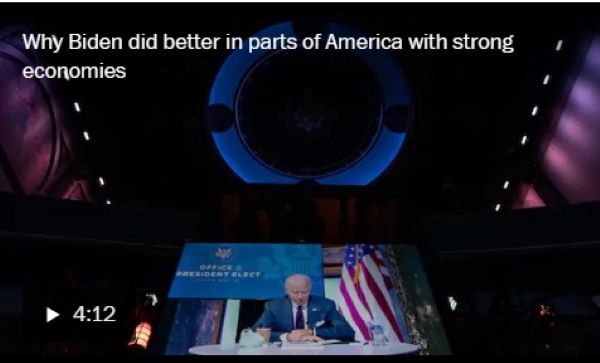
InternationalNov 20. 2020President-elect Joe Biden speaks Thursday at the Queen theater in Wilmington, Del., after meeting virtually with 10 U.S. governors. Biden has brushed aside President Trump's efforts to reverse the election results, saying, President-elect Joe Biden speaks Thursday at the Queen theater in Wilmington, Del., after meeting virtually with 10 U.S. governors. Biden has brushed aside President Trump’s efforts to reverse the election results, saying, “It’s hard to fathom how this man thinks.” Washington Post photo by Salwan Georges 
By The Washington Post
Michael Scherer, Matt Viser

President-elect Joe Biden tried Thursday to minimize as an irresponsible distraction the ever-escalating attempts by President Donald Trump and his allies to undermine or overturn the presidential election results.

The decision reflected confidence among Biden’s advisers that Trump’s maneuverings – from pushing Michigan Republicans to block certification of the results to unfounded claims that U.S. voting machine software had been tampered with by allies of the late Venezuelan leader Hugo Chávez – were little more than public spectacle aimed at satisfying Trump’s sense of grievance with no chance of overturning the vote.

“It’s hard to fathom how this man thinks. It’s hard to fathom,” Biden told reporters in Wilmington, Del. “I am confident he knows he hasn’t won and he’s not going to be able to win, and we’re going to be sworn in on Jan. 20.”

Biden said he did not plan any new legal moves in response to Trump’s latest efforts, but also did not rule out taking action against the General Services Administration at a future date to force a belated recognition of his presidential transition. The GSA, following Trump’s dictate, has refused to allow the traditional exchange of information with the incoming administration, even blocking intelligence and pandemic briefings.

“Hang on. I’m on my way,” Biden said, after being asked what he would tell people concerned by Trump’s efforts to question the results. “That’s what I say to them. Not a joke.”

Democratic strategists and elected officials have largely closed ranks behind Biden’s strategy to avoid engaging directly with Trump’s efforts to spread false conspiracies about voter fraud or pressure political officials to award him the election in states where Biden earned more votes.

“The president-elect has taken the right tack, frankly, to stay above it, to keep focused on preparing himself for the work ahead, to be meeting with people who can help prepare him, even if the president continues to stonewall the transition – and let other actors push back,” Rep. Adam Schiff, D-Calif., said. “It’s in Donald Trump’s interest to continue to make this a partisan food fight. So I think it’s wise for the president-elect to keep some distance from that.”

While largely dismissing Trump’s machinations, Democrats also recoiled at the targets of his baseless allegations of fraud – voters in mostly African American cities like Detroit.

“This is just pure racism, unvarnished,” said Rep. Andy Levin, D-Mich., whose district is just outside the city. “He’s gone outside the bounds of democracy here. Anybody who’s involved in this scheme has left democracy behind and they’re in the land of maintaining power by whatever means necessary.”

Biden has approached Trump’s latest attempts to foment a sense of national crises in the same way his team handled the president’s most disruptive tactics during the campaign, though with arguably less public urgency. Biden previously downplayed the importance of Trump’s efforts to pressure Ukraine to hurt Biden’s campaign in 2019, and was dismissive of Trump’s constant focus on the past business dealings of his son, Hunter Biden.

At the same time, Biden’s campaign has also aggressively reached out to and promoted outside validators who are calling on Trump to accept the results of the election

Tom Donohue, CEO of the Republican-friendly U.S. Chamber of Commerce, said in a statement to Axios on Thursday that Trump “should not delay the transition a moment longer” and he notably referred to Biden as “president-elect.”

“We call on the Trump administration to work cooperatively with President-elect Biden and his team,” the National Association of Manufacturers said in a separate statement from the organization’s leadership.

Yet while Biden was merely a candidate when he dealt with Trump’s previous efforts to sow chaos, he now operates from a relative position of power, as a president-elect projected to win 306 electoral votes after flipping five states in the direction of Democrats, according to current vote counts. Biden’s legal team continues to express confidence that the election result will stick despite Trump’s latest efforts.

Those included directly contacting a Republican on the board of canvassers in Wayne County, Mich., on Tuesday. On Thursday, he invited to the White House Republican legislators from Michigan, who the Trump team hopes can be persuaded to overturn Biden’s 157,000-vote victory in the state.

The Biden campaign believes that suggests a political strategy that is as doomed as Trump’s legal strategy, which has broadly been rejected by state and federal courts. Biden’s advisers predict that any attempt to delay the certification of a state’s vote count so lawmakers could appoint their own electors would be rejected by federal courts as an unconstitutional violation of due process and the right to vote.

“The legislature has no authority to appoint electors where a state has held an election and by law the voters determine who those electors will be,” Biden campaign senior adviser Bob Bauer said. “Michigan held an election and the voters chose Joe Biden. Game, set, match. It’s all over.”

Biden’s communications team has also concluded there is no upside to engaging more directly with Trump’s false claims about the election, including broadly discredited conspiracies of massive voter fraud. They are aware that such accusations may weaken voters’ confidence in the election and Biden’s ability to govern across party lines, but think elevating the issue with Biden at the fore would not help.

“The Biden campaign built the largest and most aggressive voter protection operation in history, and they are still out there making sure every vote is counted and all the votes are certified,” said Ben LaBolt, who served as press secretary for Barack Obama’s 2012 reelection campaign. “The president-elect is focused right where he should be, which is staffing his administration and outlining his plan to govern.”

Inside Biden’s operations, the effort of fighting back against Trump has been relegated to a dwindling number of staff who are still working for the campaign and not on the transition effort. Mike Gwin, a spokesman for Biden’s campaign, released a statement Thursday denouncing a news conference at the Republican National Committee headquarters in Washington by Trump’s legal team, including former New York mayor Rudy Giuliani.

“Yet another Rudy Giuliani spectacle exposes, as his appearances always do, the absurdity of Donald Trump’s thoroughly discredited claims of voter fraud,” Gwin said. “Numerous courts, election officials from both parties, and even officials within Trump’s own administration, have all reaffirmed that claims of widespread voter fraud are categorically false. In fact, lawyers for Trump have admitted that in papers filed in court and under direct questioning from judges.”

The news conference included claims that had already been rejected by courts of widespread voter and vote counting fraud, while adding in new claims, like the unfounded accusation that “communist money” from China and Venezuela had influenced the election result.

“President Trump won by a landslide,” Trump campaign attorney Sidney Powell said falsely of results that have Biden leading by nearly 6 million votes and a comfortable electoral college lead.

While multiple Trump suits have been dismissed already, Biden’s campaign has legal teams monitoring all of the continuing challenges, including a recount in Wisconsin, where the state’s Elections Commission on Thursday ordered a review of more than 800,000 ballots in two liberal counties that Biden carried overwhelmingly. That recount was required by law after Trump’s campaign agreed to pay the $3 million cost.

Biden’s campaign has been confident that the recount won’t dramatically shift the state, where Biden won by nearly 21,000 votes.

“The claims are totally laughable and it’s political theater,” said one Biden adviser, speaking on the condition of anonymity because they were not authorized to speak publicly. “We’re focused on the issue that we think the American people care about: health care, covid, the economy. And that’s the split screen: Trump is relegated to a smaller and smaller audience while we’re focused on doing the business of the transition.”

Earlier this month, three days after he had been declared president-elect, Biden said it didn’t matter whether Trump conceded or not.

“I’m confident that the fact that they’re not willing to acknowledge we won at this point is not of much consequence in our planning and what we’re able to do between now and January 20,” he said.

He reiterated the comment Monday, when asked again about Trump’s claims that he instead was the winner. “I interpret that as Trumpianism,” Biden said. “No change in his modus operandi, and I think the pressure will continue to build.”

Biden instead has pushed forward to reframe the political debate around bipartisan efforts to tackle covid-19 and the economic impacts of the pandemic.

On Thursday, he held a virtual meeting with 10 governors – five Democrats and five Republicans – to talk about the coronavirus and their state-level responses amid another surge in cases.

“You need help, and I want you to know that I will be your partner in the White House,” Biden said. “I don’t see this as a red state issue or a blue state issue. I see this – we are all in this together.”

At his news conference later in the day, Biden underscored his belief that the best way forward for the country and his own presidency was in trying to work closely with Republicans in the Senate, who will control the body next year unless Democrats win two runoff elections in Georgia after the new year.

Biden said he had already selected a treasury secretary, who would be announced around Thanksgiving and, he said, was likely to be cheered across the ideological spectrum in his party.

Ultimately, while reserving the right to take legal action to force the Trump administration to recognize his presidential transition, he said that could take more time than building a consensus within the country and among Republican lawmakers that he should be recognized as president-elect.

“I am making a judgment based on many years of experience about how to get things done with the opposition,” Biden said. “My judgment is that we will get further along by actually working with our Republican colleagues now.”

– – –

The Washington Post’s Annie Linskey contributed to this report.

Pro-Trump media show different view of election #SootinClaimon.Com

#SootinClaimon.Com : ขอบคุณแหล่งข้อมูล : หนังสือพิมพ์ The Nation.

Pro-Trump media show different view of election (nationthailand.com)

Pro-Trump media show different view of election

InternationalNov 20. 2020

By The Washington Post
David Weigel

Joe Biden won the 2020 presidential election, carrying 306 electoral votes. Dozens of lawsuits, brought by President Donald Trump’s campaign and by conservative activists, have been knocked down, failing to find irregularities that had any effect on the vote.

Yet for three hours on Tuesday night, Newsmax prepared conservative viewers for something big. In Wayne County, Mich., two Republican officials had declined to certify the results of the Nov. 3 election. Host Greg Kelly claimed that the election could be “reversed,” then brought on Trump campaign attorney Sidney Powell to explain what the events in Michigan had meant.

“That’s an excellent development,” Powell said. “I would expect the entire Michigan board to reject the counts from the ballots. The election could not have been more rigged than it was.”

Moments later, the Wayne County Republicans reversed their decision, certifying the election. Twenty-four hours later they’d reverse themselves, again, attempting to retract the certification, which election rules do not allow them to do. This was surprising, but far less so for people watching pro-Trump media. Those outlets are offering his base an addictive alternate theory of the election. In this theory, one with no basis in fact or evidence but that threatens to undermine how American democracy works, the president claims to have won the election and the rest of the media is trying to steal it from him.

On Newsmax, on One America News, at websites such as the Epoch Times and Gateway Pundit, the election’s drama is not over, and the plan to keep Trump in power sounds straightforward: Stop key states from certifying the election, and snatch at least 37 electoral votes from Joe Biden

“All your corruption’s going to come out in Wisconsin,” former White House adviser Steve Bannon told listeners of his podcast, “The War Room,” on Wednesday morning, predicting that a recount in the state would turn up enough fraud to void the election. That’s fanciful, and it’s not the Trump campaign’s argument, that it can disqualify 100,000 absentee ballots or more in two liberal counties if they were requested online. “Not going to be able to certify Wisconsin. Sorry. Not going to be able to certify Michigan. Sorry. Not going to be able to certify Georgia. Sorry. Not to mention Pennsylvania, you obviously can’t certify that.” (Biden leads in the count in Wisconsin by about 20,600 votes, in Michigan by about 157,000, in Georgia by about 13,600 and Pennsylvania by about 82,000.)

Republicans and administration officials, usually cloaked in anonymity, have said for days that the election challenges are harmless gifts for a president who hates to lose. Fox News cut into afternoon programming on Thursday to air a bizarre, lengthy news conference at the Republican National Committee, with logic-defying claims that had been circulating on pro-Trump media. But Biden’s campaign has taken the same approach to the transition that it took to last-minute allegations of corruption against the president-elect’s son: Ignore, refute, and wait for the facts to prove them right.

“I just think it’s an embarrassment, quite frankly,” Biden said last week. “The fact that they’re not willing to acknowledge that we won, at this point, is not of much consequence in our planning.”

Conservative election challenges have also divided the Republican Party and failed to generate any energy outside the already supercharged Trump base. A “Million MAGA March” in Washington last week fell around 990,000 attendees short of its eponymous goal; the “campaign-style” rallies that the president was reportedly considering 11 days ago, dramatizing his claims of fraud, have not taken place.

Instead, the president has tweeted links to stories that allege fraud and asserted that he won states that he did not. He has not directly addressed the results, on camera, in two weeks.

“Donald Trump won, I believe, clearly, a 70%-plus landslide election in the nation,” Lin Wood, an Atlanta-area attorney, said on Fox News host Mark Levin’s radio show this week. “He probably won over 400 electoral votes.”

Wood has sued to overturn Georgia’s election; the president’s tweets about Georgia, which finished its audit of the vote Thursday, have embraced Wood’s theory that changes to signature-matching rules, agreed to by a Republican election official, should nullify the results.

In the media that is most friendly to the president – a lot of it being consumed by Trump himself right now – this is one of many baseless theories getting airtime. Texts and emails to donors insist that “the Radical Left’s plan to steal the Election is starting to crumble.” While Republicans critical of the strategy decline to go on the record, his allies and his campaign are heading to microphones, saying Trump probably won the election, possibly by a landslide, and there’s time to prove it or, at least, to prevent Biden from being sworn in.

Fox News, which for decades has been at the center of the conservative media ecosystem, has a wobbly role in this story. The network blew away the ratings competition on Nov. 3, and its call of Arizona for Biden held up despite Trump campaign claims that it would win there. But it has lagged behind competitors in post-election coverage and clearly lost some market share to Newsmax and OAN, networks that are less available on cable packages but easy to devour online. And after cutting away from an RNC news conference last week, citing misinformation, it split the difference Thursday: It aired more than 90 minutes of accusations, before a reporter summed them up by saying they were not true.

According to Nielsen numbers, first collected by The Associated Press, Newsmax’s viewership has increased tenfold since the election, with more than half a million people watching its prime-time streams. OAN, which the president has promoted for years as a Fox News alternative, has gotten boosts from presidential retweets and a stream of interviews with Trump officials who do not get friendly treatment on other networks.

“Our Constitution does provide mechanisms for if an election is irredeemably compromised, there’s corruption, or there’s foreign influence,” Trump legal adviser Jenna Ellis said in an OAN interview this week. The mechanism, she explained, was to “not certify false results.”

Ellis said as much on Twitter, incorrectly insisting that “Republican state legislator” (sic) would get to assign the state’s electoral votes if lower-level officials didn’t certify the Nov. 3 results. (Under Michigan law, which cannot be changed without the agreement of Democratic Gov. Gretchen Whitmer, the legislatures cannot supersede the certified popular vote.) But Twitter, like other social media giants, has been appending warnings to false election information. Pro-Trump media does not do that, instead treating the results as called by The Associated Press and others as an irresponsible display of electoral interference. Neither Newsmax nor OAN has called the election; neither has the Epoch Times, whose map displaying six Biden-won states as “contested” – leaving Trump ahead in the electoral vote count – has been featured in Trump donor appeals.

There’s no single theory of how the results can be overturned. Instead, pro-Trump sites embrace every theory. Mainstream coverage of the challenges has sifted out the fakery and reported on damaging developments such as Trump campaign attorneys admitting that they have no proof of fraud.

But as consumers of pro-Trump media knew for days, there was no one-shot lawsuit that could overturn the election. Only a cloud of uncertainty could do that. Signal-boosted by the president, rumors about the election could get to local officials, or to the right judge, convincing them that the election’s outcome in their state or county was unknowable. In their Nevada and Pennsylvania suits, Trump attorneys have asked for the states’ electoral votes to either be given to the president or not awarded at all, so long as the number of ballots being questioned are greater than the margin between Biden and Trump.

In court, that argument relies on data that could, theoretically, be collected, like more than 1.5 million envelopes that Pennsylvania absentee ballots arrived in. In pro-Trump media, anything else can fly, from questions about how few mail ballots were disqualified, to a conspiracy theory that the voting software company Dominion allowed results to be altered. While it’s easy for reporters to witness recounts in person – a Washington Post reporter did so last week – pro-Trump media have avoided that in favor of coverage of rallies against certifying the counts or speculation about anything that could nullify them.

False allegations that foreign actors altered vote counts ping-ponged across that universe. One theory involving Venezuela was advanced on OAN by a former Department of Homeland Security official; another was flogged by a retired Air Force officer and former Obama birther; and by Turning Point USA founder Charlie Kirk, an influential Trumpworld figure who spoke at the Republican National Convention. And on Thursday, Sidney Powell closed the loop, using the news conference with Giuliani to inaccurately bring in George Soros and the Clinton Foundation.

Wild claims like these have not shown up in any Trump campaign lawsuits. But they’re cycling through pro-Trump media, influencing the thinking of the president and the sort of people who become partisan elections officers. A rumor that repeatedly has been debunked, or relies on allegations so wild that they risk defamation, may not get oxygen in mainstream media outlets or in courts. It would not need to, in the preferred Trump campaign scenario, which is shared every day on channels such as OAN – that is, find enough officials in enough states who refuse to certify the election. For conservatives just outside the loop, it’s hard to follow. But they are not ruling anything out.

“Do you think Lin Wood and Sidney Powell want to do a replay of Geraldo [Rivera]’s vault?” Rush Limbaugh asked his listeners Tuesday, referring to a moment that humiliated man who would become a Fox News correspondent. “I mean, there is no way.”

That was before Thursday’s news conference, during which Powell, with no evidence, suggested that the results from Nov. 3 were fraudulent and could be nullified because of the machines being used. On Friday, 13 days after the election result was declared, the president is set to welcome Michigan’s Republican legislative leadership to the White House.