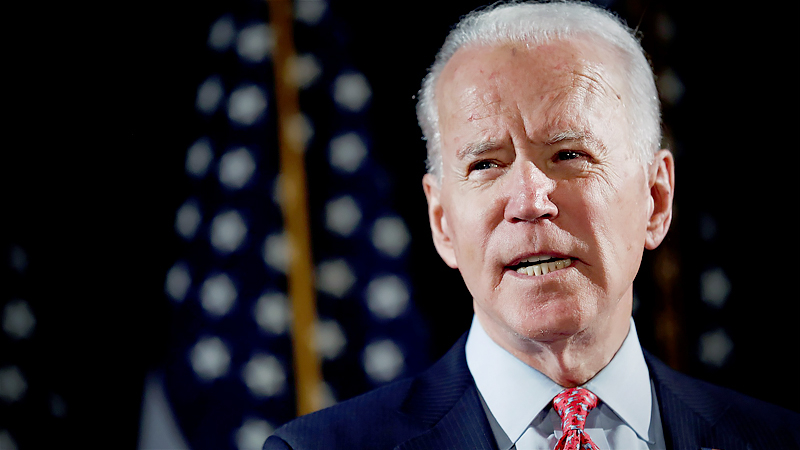
Trump applies levers in bid to reverse vote #SootinClaimon.Com

#SootinClaimon.Com : ขอบคุณแหล่งข้อมูล : หนังสือพิมพ์ The Nation.

Trump applies levers in bid to reverse vote (nationthailand.com)

Trump applies levers in bid to reverse vote

InternationalNov 20. 2020President Trump's attorney, Rudy Giuliani, is pictured alongside a map showing four key states in red during a news conference Thursday at the Republican National Committee headquarters in Washington, D.C. Photo by Sarah Silbiger for The Washington PostPresident Trump’s attorney, Rudy Giuliani, is pictured alongside a map showing four key states in red during a news conference Thursday at the Republican National Committee headquarters in Washington, D.C. Photo by Sarah Silbiger for The Washington Post 

By The Washington Post
Philip Rucker, Amy Gardner, Josh Dawsey

WASHINGTON – President Donald Trump is using the power of his office to try to reverse the results of the election, orchestrating a far-reaching pressure campaign to persuade Republican officials in Michigan, Georgia and elsewhere to overturn the will of voters in what critics decried Thursday as an unprecedented subversion of democracy.

After courts rejected the Trump campaign’s baseless allegations of widespread voter fraud, the president is now trying to remain in power with a wholesale assault on the integrity of the vote by spreading misinformation and trying to persuade loyal Republicans to manipulate the electoral system on his behalf.

In an extraordinary news conference Thursday at the Republican National Committee headquarters, Trump’s attorneys claimed without evidence there was a centralized conspiracy with roots in Venezuela to rig the U.S. presidential election. They alleged voter fraud in Atlanta, Detroit, Milwaukee, Philadelphia and other cities whose municipal governments are controlled by Democrats and where President-elect Joe Biden won by large margins.

“We cannot allow these crooks – ’cause that’s what they are – to steal an election from the American people,” said one of the attorneys, Rudy Giuliani. “They elected Donald Trump; they didn’t elect Joe Biden. Joe Biden is in the lead because of the fraudulent ballots, the illegal ballots that were produced and that were allowed to be used after the election was over. Give us an opportunity to prove it in court and we will.”

Neither Giuliani nor other Trump attorneys have furnished evidence to support that or any other claim of widespread fraud.

Thursday’s show by Trump’s lawyers disquieted many, including Christopher Krebs, the Trump-appointed director of the Cybersecurity and Infrastructure Security Agency whom the president fired Tuesday after he stated publicly that the election had been secure.

“That press conference was the most dangerous 1hr 45 minutes of television in American history. And possibly the craziest,” Krebs wrote on Twitter.

On Capitol Hill, senior Democrats ratcheted up their rhetoric. “I think this borders on treason,” said House Majority Leader Steny Hoyer, D-Md. “He is undermining the very essence of democracy, which is: You go to the poll, you vote and the people decide. There’s no doubt that the people decided.”

Ben. Ben Sasse of Nebraska was one of the few Republicans to offer criticism Thursday. “Wild press conferences erode public trust,” Sasse said in a statement. “. . . Rudy and his buddies should not pressure electors to ignore their certification obligations under the statute. We are a nation of laws, not tweets.”

In defiance of the vote, Trump and his lawyers are scrambling to stop key states from certifying their results and to enlist Republican state officials to overturn Biden’s wins by seating Trump electors to the electoral college.

Biden’s team expressed confidence Thursday that Trump’s intensifying effort to keep power would fail.

“None of it is legally significant,” said Bob Bauer, a senior adviser to the Biden campaign, who runs the election protection legal efforts. “They are pivoting from this completely failed litigation strategy to a strategy of misleading people into believing that he now has a political option. It is a response to failure. It is the last card that he thinks he can pull from his deck here, but his hand remains a completely losing hand.”

But other Democrats voiced more concern about the threat of Trump’s moves.

“Other people looked at me like I was insane, but I have fully anticipated that Donald Trump would try every trick in the book,” said Rep. Debbie Dingell, D-Mich. “The kind of stuff that’s being done now is undermining people’s confidence in the election process and the integrity of the election and it is fundamentally attacking the roots of our democracy, and it is unacceptable.”

Trump’s focus for the moment is centered on Michigan, where Biden is the projected winner and leads by about 157,000 votes. The president earlier this week called a Republican member of Wayne County’s Board of Canvassers, after which she attempted to rescind her vote to certify Biden’s win in Wayne, which is where Detroit is located and is the state’s most populous county.

Trump then invited the leaders of Michigan’s Republican-controlled state Senate and House to meet him Friday at the White House ahead of next Monday’s state canvassing board meeting to certify results.

The president’s allies have said that if the board deadlocks, the legislature could choose to ignore Biden’s popular-vote win and seat Trump electors. But experts say such a move would be on shaky legal ground. And multiple election lawyers have said that scenario is unlikely for several reasons. Gov. Gretchen Whitmer, a Democrat, has the power to fire members of the canvassing board and appoint interim replacements without legislative approval. And Democrats are highly likely to file suit in the event the board deadlocks, because state law directs the board to follow the popular vote in its decision to certify.

“I can’t tell you all the different actions [Republicans] are contemplating, but I implore people to put country over party and do the will of the people – respect the law, and see through that the will of the people is reflected in our electors and not play games with this fundamental part of our democracy,” Whitmer said at a news conference Thursday.

In Georgia and Pennsylvania, where Republicans also control the state legislatures, officials said Trump’s ploy stood little chance of success.

A top adviser to Georgia Secretary of State Brad Raffensperger, a Republican, said there is “zero” chance the secretary would take a phone call from the president or his advisers. Raffensperger is expected to certify the statewide result Friday, as required by law. The certification then goes to Gov. Brian Kemp, another Republican, for his signature.

Kemp told reporters last week that he was glad Raffensperger ordered the hand-counted audit of the presidential vote. “Let’s let that happen and let the chips fall where they may,” he said.

Yet Trump has for the past several days been publicly badgering Kemp to intervene in the recount to reject ballots and “flip” the result, which currently has Biden winning by 12,284 votes. “Republicans must get tough!” Trump tweeted at Kemp on Thursday morning. Privately, Trump has told advisers he is furious with the governor for not doing more to overturn the outcome.

Trump also is consulting with advisers about how he might get Wisconsin ballots discarded, and his lawyers say they believe he has a relatively strong case in Dane and Milwaukee counties because of how officials there conducted absentee balloting. They have offered no evidence to bolster their case.

These are the words and actions of an attempted coup, according to historians and other experts.

“We have never seen anything like this before,” historian and author Michael Beschloss said. “This is a president abusing his very great powers to try to stay in office, even though it is obvious to everyone that he has been defeated in the polls. That is a prospect that terrified most of the founders.”

Beschloss added, “I don’t want to be alarmist, but I do think it’s our job as citizens to keep watch on every one of these things with an eye to that ultimate dread of the founders, which is that a president rejected by the voters would use his powers to try to stay in office anyway.”

The latest evolution in the Trump strategy came into view Thursday at RNC headquarters, where Giuliani and campaign attorneys Jenna Ellis and Sidney Powell presented their argument for widespread fraud but provided no evidence.

Powell argued that the voting systems used in many states, including those manufactured by Dominion Voting Systems, use software “created in Venezuela at the direction of Hugo Chávez to make sure he never lost an election.”

The conspiracy theory that machines by Dominion, a Colorado-based manufacturer, were programmed to rig the election has spread widely on right-wing websites and social media and has become an obsession of Trump’s in recent days. A Republican who has spoken with the president said he has been telling his team that votes should be thrown out in any state, such as Georgia, where Dominion machines were used.

There is no evidence to support this theory, however.

The Trump campaign did not raise objections to Dominion equipment or software before the Nov. 3 election. And the company’s products are certified for use in states that Trump won, including Utah and Florida.

In addition, Giuliani and Powell’s claims have been disproved in Georgia, where the state’s hand recount of nearly 5 million paper ballots affirmed that the Dominion scanners accurately counted the vote, state officials said.

Ellis swatted away questions from reporters asking for evidence of the massive fraud that she, Powell and Giuliani claimed, saying they would produce it later.

Trump was said to be enthused about the news conference and asked allies to watch it, a White House official said. The event seemed at times farcical, with streaks of what appeared to be black hair dye mixed with sweat dripping down the sides of Giuliani’s face as he spoke.

Giuliani has assumed control of the president’s strategy, which is in part to build a public-relations case on television that amps up political pressure on Republican officials in key states to make decisions more amenable to Trump, according to two campaign officials.

At first, officials said, Trump seemed rather deflated with the election results and only going through the motions of a legal fight. But his attitude changed in recent days. Although Trump has long vacillated on Giuliani, he has been buoyed by the former New York mayor’s energy – and, after so many other advisers told him he was unlikely to win a second term, by Giuliani’s proclamations that he just might, two campaign advisers said. They, like others, spoke on the condition of anonymity to discuss internal deliberations.

But not everyone in the president’s orbit shares his enthusiasm. One senior White House official, asked for comment about Giuliani, let out a long laugh. Some advisers think Giuliani sees this ongoing effort as a way to make money and remain relevant.

Some of Trump’s most valued lawyers – including White House counsel Pat Cipollone and private attorneys Jay Sekulow and Jane and Marty Raskin – have not played large roles in this post-election fight, while former Florida attorney general Pam Bondi, a public face for the effort in the early days, has all but disappeared.

Trump campaign lawyers Justin Clark and Matt Morgan were not at Thursday’s news conference and were not part of the Giuliani discussions. “They’ve been totally cut out,” a senior campaign official said.

Clark and campaign manager Bill Stepien were said to be at headquarters Thursday and aides were winding down the operation, dealing with contracts and offboarding hundreds of employees.

Also not present was RNC Chairwoman Ronna McDaniel, who was in Michigan. The RNC granted Giuliani’s request to use its building after officials there were informed by the president that Giuliani was in charge of all efforts, an official said.

Giuliani did not respond to multiple requests seeking comment.

Election law experts said the clock is ticking on Trump, as states will soon certify their results.

“Every day that the process continues as normal solidifies Biden’s position,” said Rick Hasan, a law professor at the University of California at Irvine. “Anything he has a chance to win is not enough to change the outcome in any state. The legal path is dead.”

– – –

The Washington Post’s Mike DeBonis, Michael Scherer and Matt Viser contributed to this report.

In Georgia, efforts to get out the vote haven’t stopped #SootinClaimon.Com

#SootinClaimon.Com : ขอบคุณแหล่งข้อมูล : หนังสือพิมพ์ The Nation.

In Georgia, efforts to get out the vote haven’t stopped (nationthailand.com)

In Georgia, efforts to get out the vote haven’t stopped

InternationalNov 20. 2020Deborah Scott, executive director of Georgia Stand-Up, is focused on registering more voters ahead of the state's Senate runoffs. Washington Post photo by Melina MaraDeborah Scott, executive director of Georgia Stand-Up, is focused on registering more voters ahead of the state’s Senate runoffs. Washington Post photo by Melina Mara 

By The Washington Post
Vanessa Williams, Reis Thebault

ATLANTA – For Deborah Scott, executive director of Georgia Stand-Up, it’s as if Election Day never ended.

The get-out-the-vote efforts of civic engagement groups like hers, which helped Joe Biden become the first Democratic presidential candidate to win the state in nearly three decades, have been ongoing since Nov. 3. The group is still knocking on doors, calling voters and signing up new registrants, with a big push involving 100 volunteers planned for this weekend. Another group that works to mobilize voters of color set up tables at a recent high school graduation to register newly eligible young voters. A third group is reaching voters at transit stations.

The efforts are a continuation of the groups’ relentless push to register, engage and turn out voters ahead of a pair of high-stakes Senate runoffs on Jan. 5, which will determine which party controls the Senate and potentially whether a President Biden will be able to enact an ambitious agenda or be blocked by a restive upper chamber.

“At this point, it’s a turnout game,” said Scott, whose group focuses on Atlanta. As excited and proud Black voters are about their role in the outcome of the general election, Scott said the challenge is to remind them “we’re not done yet. We have to get them to go back. We have to show them why this race is so important because a lot of people will not be as engaged.”

Republicans have historically outperformed Democrats in Georgia’s runoff elections, which is one reason some political strategists suggest the Democratic Party and these groups have a steep climb ahead of the runoffs, which pit challenger Jon Ossoff, a Democrat, against incumbent Sen. David Perdue, a Republican, and the Rev. Raphael Warnock, a Democrat, against Sen. Kelly Loeffler, a Republican. The runoffs were triggered when none of the candidates got more than 50% of the vote in the Nov. 3 election.

But President Donald Trump’s aggressive attempts at overturning the results of the presidential race could prompt a backlash from Democratic voters, particularly Black voters, whose support was critical to Biden’s success in the election. Many view Trump’s false accusations of voter fraud – targeting heavily Black cities including Philadelphia, Atlanta and Detroit – as racist attempts to invalidate African American votes.

“I’ve definitely met people in rural parts of the state who say, ‘Oh they’re trying to take away our vote? We’re not going to have that,’ ” said Wanda Mosley, senior coordinator for Black Voters Matter in Georgia. “It absolutely motivates Black voters across the state when they see our voting rights under attack.”

Wanda Mosley with Black Voters Matter knocks on doors in rural Blakely, Ga., on Nov. 2.

She said voters are paying close attention to what is unfolding in Michigan, where Republican election officials are seeking to block certification of votes in Wayne County, home to majority-Black Detroit. Georgia has also been the site of fierce fights over allegations of voter suppression of people of color.

“We brace ourselves,” Mosley said. “We’re looking and watching and seeing what they’re doing in Michigan, but we’re also keeping an eye on what’s happening in Georgia. We’re watching now so that were ready on January 5th and 6th and 7th.”

Lauren Groh-Wargo, chief executive of Fair Fight, predicted this runoff would be different from past cycles anyway, after Democrats pulled off a victory for President-elect Biden.

“We absolutely are going to be competitive. We have the wind in our sails on the Democratic side and two great candidates,” she said. “The big question is what is turnout going to be, and we feel like turnout is going to be relatively high.”

Since 2000, Georgia’s White population has declined from 65% to 52%, according to the most recent census estimates.

Democrats have slowly improved their statewide electoral game during the past several years, thanks to rapid demographic changes and grass-roots organizing. One of the best-known architects of the coalition of liberal voters is Stacey Abrams, whose 2018 campaign for governor was the best statewide performance for a Democrat in Georgia until Biden’s upset. Abrams, a former Democratic leader of the state House, had worked for years to register more people of color and young voters. Her campaign, which she lost by 1.4 percentage points, inspired her followers and independent groups to continue to register voters and educate them about the importance of participating in the political process.

Charles Bullock, a veteran political scientist at the University of Georgia, said demographic changes and the stakes both parties have in the outcome of the runoff could make for a slightly better playing field for Democrats this year.

That the two Georgia seats could determine the balance of power in the Senate has drawn more attention to the runoff than in past election cycles, Bullock said.

Warnock, the African American pastor of Atlanta’s Ebenezer Baptist Church, where slain civil rights icon the Rev. Martin Luther King Jr. preached, could bring out more Black voters, whose numbers have tended to decline more steeply than White voters in runoff contests. Bullock said Democrats could be more competitive “if Reverend Warnock can help punch up Black participation,” Bullock said.

Black voters are the Democratic Party’s largest and most loyal supporters in Georgia and turning them out, along with Latinos, Asian Americans, LGBTQ individuals and young people, will be the focus of grass-roots organizations.

Although many of those organizations are nonpartisan, their focus on voters more likely to support Democratic candidates – as they did overwhelmingly for Biden in the general election – will help the party in the upcoming runoff.

The groups plan to apply lessons they learned in the 2020 general election to try to punch up turnout among traditionally Democratic groups.

For instance, Felicia Davis, convener of the Clayton County Black Women’s Roundtable, estimates that turnout there was about 10% lower than usual in the presidential election. The pandemic severely curbed the amount of door-to-door canvassing that she and other grass-roots activists usually do, she said, and she thinks they will have to increase their activity for the runoff.

“We have to put on face masks and shields because we have to canvass. People do have to have that personal touch,” Davis said, adding that infrequent voters especially need to be personally persuaded.

Democrats are also putting more focus on persuading the state’s Latinos, who currently account for 5% of eligible voters, to show up for the runoffs.

“With the strength of the Latino electorate being at 250,000 strong, that is a sizable enough chunk in a tight, competitive race to make a difference,” said Jerry Gonzalez, CEO of Galeo, a nonprofit civic engagement organization that works in Georgia’s Latino communities.

Latino voters in Georgia, who favored Biden by 25 points in exit polls, have historically turned out at higher rates than in other states.

Whit Ayres, a Republican strategist who has worked on many campaigns in Georgia, expressed skepticism that Democrats could improve their performance over the general election, which drew historic turnout because of the strong feelings about Trump.

“If they didn’t participate in one of the most intense elections in our lifetime, it strikes me as a tall order to get someone who didn’t care enough to vote in this election to come back to vote in a runoff in January,” Ayres said.

Republicans will be hyper-focused on convincing the voters that cast ballots for Loeffler and Perdue the first time around to return to the polls, Ayres said. But some of those voters may be turned off by the two Republican senators’ support for allegations of fraud in the 2020 election in Georgia, he added.

The campaigns expect both races to be tight, which means turnout – and perhaps first-time voters – will be key.

New Georgia Project, which was founded by Abrams in 2013, has focused on registering young voters of color across the state. Nse Ufot, the organization’s chief executive, said her staff has identified 100,000 people they’ll try to register before the Dec. 7 deadline and expects to sign up as many as 20,000 of them.

That group, mostly 18- to 34-year-olds, is spread around the state and concentrated in places with historically low participation rates and where the gap between registered White voters and registered voters of color is the largest.

Last week, in Atlanta, New Georgia Project set up tables outside a joint graduation for city high schools whose spring ceremonies were canceled. As the graduates streamed out of a football stadium on the city’s south side, staffers handed out voting material.

“It was beautiful, we were rushed by kids in caps and gowns in different colors from different schools,” Ufot said. “We told them their community welcomes them to adulthood – and here’s a voter registration form.”

But the group has also ramped up online organizing efforts. On Election Day, they convened “Twitch the Vote,” an all-day event live-streamed on the gamer-focused platform that drew half a million visitors and encouraged them to head to the polls. New Georgia Project estimates there are up to 30,000 17-year-olds who will turn 18 between Election Day and the Jan. 5 runoffs – another pool of voters the group will target.

Ahead of the runoffs, Ufot and her team will focus on the state’s rural areas, which the state’s political establishment often writes off as homogenous and solidly Republican.

“When we would talk about rural voters, people would have a confused look on their face,” Ufot said. “We realized when people hear rural voters, they think of White conservatives and that is just not the case in Georgia.”

On the eve of the election, Mosley and her group were crisscrossing the state in their self-appointed “Blackest bus in America.” The nonpartisan group made several stops in the southwestern corner of the state, reminding residents to turn out the next day – but also registering new voters, even though the deadline to be eligible for the Nov. 3 contest had long passed.

“Voter registration is a 365-day-a-year proposition for us,” Mosley said.

They plan to keep focusing on places like Georgia’s rural southwest – cities like Blakely, for example, one of the last Mosley visited before the general election. And while questions swirl in Washington and elsewhere about the presidential election, most voters are focused on issues closer to home.

In Blakely – the seat of Early County, which was devastated by a coronavirus outbreak in April – there are few issues more important to voters than health care, Mosley said.

“Georgia is one of only 12 states that does not have Obamacare, so we have struggled with access to health care prior to covid,” Mosley said. “Now not having health care, coupled with hospital closings, it is glaring and it is top of mind for a lot folks, especially Black folks.”

Mosley said get-out-the-vote efforts in rural areas are vital not just for the Senate contest, but also for the lesser-known race for public service commission, which regulates the state’s utilities and has a direct, immediate impact on residents’ lives.

“Their lives are on the ballot in many ways,” Mosley said.

Treasury Secretary Mnuchin cuts off Federal Reserve’s emergency aid programs, sparking unusual rebuke from Fed #SootinClaimon.Com

#SootinClaimon.Com : ขอบคุณแหล่งข้อมูล : หนังสือพิมพ์ The Nation.

Treasury Secretary Mnuchin cuts off Federal Reserve’s emergency aid programs, sparking unusual rebuke from Fed (nationthailand.com)

Treasury Secretary Mnuchin cuts off Federal Reserve’s emergency aid programs, sparking unusual rebuke from Fed

InternationalNov 20. 2020Treasury Secretary Steven MnuchinTreasury Secretary Steven Mnuchin 

By The Washington Post · Rachel Siegel, Jeff Stein · NATIONAL, BUSINESS, POLITICS

WASHINGTON – Treasury Secretary Steven Mnuchin on Thursday said he would not extend most of the emergency lending programs run in tandem with the Federal Reserve, a move the central bank immediately criticized, citing the fragile recovery.

The Fed’s exceedingly rare public rebuke reflected a government divided on how to respond, as the pandemic surges across the nation, threatening a new wave of shutdowns and marking an inflection point of the recession.

In a letter to Fed Chair Jerome Powell, Mnuchin requested not only that several of the programs wind down at the end of the year, but also that unspent money allocated to the Fed under the first stimulus effort, the Cares Act, be reallocated by Congress. The move would end most of the Fed’s emergency lending facilities, including the Main Street lending program and the municipal liquidity facility, which issue loans to struggling businesses and local governments. Mnuchin also requested a 90-day extension of a few of the programs that operate through the markets.

However, the Treasury Department does not have the sole authority to reallocate the funds, but instead would have to secure Fed agreement.

The letter triggered a rare public statement from the Fed Thursday evening.

“The Federal Reserve would prefer that the full suite of emergency facilities established during the coronavirus pandemic continue to serve their important role as a backstop for our still-strained and vulnerable economy,” the central bank said in a rare statement following Mnuchin’s letter.

The decision to curb the Fed’s lending powers comes as new economic data is signaling the U.S. economy is being newly battered by a spike in coronavirus cases that are already triggering a new wave of government-ordered closures, restrictions and shutdowns.

Democrats denounced the move as handicapping the economy President-Elect Joe Biden is set to inherit in January.

“This is a reckless mistake to take away the ability the Federal Reserve has to respond to what is still a very dangerous and uncertain time in the economy,” said Jason Furman, who served as a senior economist for the Obama administration. “I cannot think of any economic motivation for canceling programs … This is tying the hands of the United States in responding to this crisis.”

Earlier this week, Powell said the Fed was committed to using all of its tools “for as long as it takes until the job is well and truly done,” and that “when the right time comes, and I don’t think that time is yet or very soon, we will put those tools away. Then on Thursday, the Fed issued a statement pushing back against Mnuchin’s letter.

Although the Main Street lending facility and municipal liquidity facility have been widely criticized for their onerous loan terms and meager uptake, Fed officials have argued for months that it would be premature to cut off that support until the recovery is sustained and the economy survives the dark winter ahead.

In March, Congress allotted $454 billion to the Treasury Department to support the central bank’s emergency lending programs, including those for struggling businesses and local governments. Those lending programs have recently become a kind of political football.

Republican lawmakers, including Senator Patrick Toomey, R-Penn., who could soon take the helm of the Senate Banking Committee, said those programs have served their purpose. Democrats have been less willing to shut down the facilities altogether, instead pointing to the lingering holes it the recovery and saying there are plenty of ways the facilities could be expanded and given wider reach.

In a statement Thursday evening, Toomey said Congress’s intent with the Cares Act made clear the facilities were meant to be temporary.

“These facilities, which were established in response to the unprecedented market turmoil caused by the covid-19 pandemic earlier this year, have successfully achieved their intended purpose: stabilizing credit markets so private credit could once again flow to businesses, states, and municipalities,” Toomey said. “These temporary facilities helped to both normalize markets and produce record levels of liquidity.”

Even so, much of the money entrusted to the Fed has hardly been touched, and it’s unclear how much money could get out the door given specific rules about how the money should be spent. Of the $454 billion pot allotted from Treasury under the Cares Act, only $195 billion has been specifically committed to cover any losses the Fed might take through its programs, including through loans that companies fail to repay. As of last month, the remaining $259 billion still has not been committed to any of the Fed’s specific programs or for any other purpose.

U.S. initial jobless claims rise for first time in five weeks #SootinClaimon.Com

#SootinClaimon.Com : ขอบคุณแหล่งข้อมูล : หนังสือพิมพ์ The Nation.

U.S. initial jobless claims rise for first time in five weeks (nationthailand.com)

U.S. initial jobless claims rise for first time in five weeks

InternationalNov 20. 2020A worker pours molten metal from a furnace at a castings facility in Salem, Ohio, on Aug. 24, 2016. MUST CREDIT: Bloomberg photo by Ty Wright.A worker pours molten metal from a furnace at a castings facility in Salem, Ohio, on Aug. 24, 2016. MUST CREDIT: Bloomberg photo by Ty Wright. 

By Syndication Washington Post, Bloomberg · Jarrell Dillard · BUSINESS, US-GLOBAL-MARKETS

Applications for U.S. state unemployment benefits rose for the first time in five weeks and remained well above pre-virus levels, suggesting the labor-market recovery is slowing amid a surging pandemic and fresh business restrictions.

Initial jobless claims in regular state programs totaled 742,000 in the week ended Nov. 14, up 31,000 from the prior week and compared with expectations for a decline, Labor Department data showed Thursday. On an unadjusted basis, the figure increased by about 18,000. The week included Veterans Day, and claims data tend to be more volatile around holidays.

Continuing claims — the total pool of Americans on ongoing state unemployment benefits –fell 429,000 to 6.37 million in the week ended Nov. 7. The number of Americans claiming extended assistance continued to rise as many unemployed exhausted regular state benefits.

The main figures compared with economists’ projections for 700,000 initial claims and 6.4 million continuing claims, based on the median estimates in Bloomberg surveys.

The U.S. labor market is already suffering anew from the record pace of covid-19 infections, which has spurred a new wave of government restrictions on businesses across the country. Restaurants are likely to be hit particularly hard by the loss of indoor dining in colder weather, and a lack of fresh stimulus will also weigh on the recovery during the wait for widespread vaccine distribution.

“The road to recovery is likely to be quite rocky, unfortunately,” Nathan Sheets, PGIM Fixed Income’s chief economist and a former Federal Reserve official, said on Bloomberg Television. “The virus and the restrictions being put in place to fight the virus are likely to take a bite out of economic activity over the next, say, three or four months.”

U.S. stocks fell, while 10-year Treasury yields were lower and the dollar rose.

Separate data on Thursday were more upbeat: sales of previously owned U.S. homes rose in October to a 15-year high, extending a housing market boom, while a gauge of factory employment in the Philadelphia region showed a fifth straight month of expansion.

But other recent reports suggest the labor-market rebound is losing steam. Census Bureau surveys conducted from mid-October to early November showed that the number of employed Americans declined by about 4.5 million, according to data released Wednesday.

The increase in initial jobless claims was driven by a surge in Louisiana, where filings more than quadrupled from the prior week to 42,724, a six-month high, on an unadjusted basis. Claims also rose in Massachusetts, Texas and Virginia, while Illinois, Florida and New Jersey saw declines.

Initial claims for Pandemic Unemployment Assistance, which provides benefits to self-employed and gig workers, also quadrupled in Louisiana to almost 40,000 last week, the highest since April.

Continuing claims for PUA decreased nationally by 751,000 to 8.68 million in the week ended Oct. 31.

More people have been rolling onto extended programs like Pandemic Emergency Unemployment Compensation, but these programs will expire by year-end and leave many without government aid. PEUC claims increased about 233,000 to 4.38 million.

U.S. existing-home sales unexpectedly rise to highest since 2005 #SootinClaimon.Com

#SootinClaimon.Com : ขอบคุณแหล่งข้อมูล : หนังสือพิมพ์ The Nation.

U.S. existing-home sales unexpectedly rise to highest since 2005 (nationthailand.com)

U.S. existing-home sales unexpectedly rise to highest since 2005

InternationalNov 20. 2020Homes in McCullough Hills neighborhood are seen in this aerial photograph taken over Henderson, Nev., on Sept. 18, 2020. MUST CREDIT: Bloomberg photo by Roger Kisby.Homes in McCullough Hills neighborhood are seen in this aerial photograph taken over Henderson, Nev., on Sept. 18, 2020. MUST CREDIT: Bloomberg photo by Roger Kisby. 

By Syndication Washington Post, Bloomberg · Henry Ren · BUSINESS, PERSONAL-FINANCE

Sales of previously owned U.S. homes unexpectedly rose in October to the highest level in almost 15 years, extending a housing market boom fueled by record-low mortgage rates and buyers’ desire for properties in the suburbs.

Contract closings increased 4.3% from the prior month to an annualized 6.85 million, the strongest pace since November 2005, according to National Association of Realtors data released Thursday. The October rate exceeded all economists’ forecasts in a Bloomberg survey, which had a median estimate of 6.47 million.

The median selling price jumped 15.5% from a year earlier on an unadjusted basis to a record-high of $313,000, reflecting more sales of upper-end properties.

The report offers offers more evidence that the housing sector is providing a bigger push for an economic recovery at risk of a bigger slowdown as coronavirus cases surge and lawmakers remain at a stalemate over additional fiscal stimulus. However, housing momentum, driven in part by preferences for larger homes that double as office space during the pandemic, has led to a lack of available properties and higher prices.

“It’s quite amazing, and certainly surprising,” Lawrence Yun, NAR’s chief economist, said on a call with reporters. “It’s quite remarkable given that we’re still in the midst of the pandemic and the high unemployment rate.”

The association anticipates that the housing boom will be sustained next year. Yun forecasts existing-home sales to climb 10% to 6 million in 2021.

Combined with lean new-housing inventory, selling prices of existing homes grew in the third quarter at the fastest pace in seven years, restraining affordability, a separate report by the NAR showed last week.

Available inventory declined 19.8% in October from a year earlier to 1.42 million units. The inventory of houses would last a record-low 2.5 months at the current sales pace. Realtors see anything below five months of supply as a sign of a tight market.

Properties remained on the market for an average of 21 days in October, compared with 36 days a year ago, the NAR said. Some 72% of homes sold were on the market for less than a month.

Sales of previously owned one-family homes climbed 4.1% to a 6.12 million pace, while purchases of condominiums increased 5.8%.

The NAR’s report showed purchases of existing homes increased in all four U.S. regions. Sales in the South, the biggest region, and the Midwest increased to their strongest paces on record, while purchases in the West were the firmest since 2006.

For their part, builders are stepping up construction amid elevated backlogs. Starts of one-family homes in October hit the fastest pace since April 2007, and a measure of homebuilder sentiment is at a record high.

Previously owned home sales account for roughly 90% of U.S. transactions and are calculated when a contract closes.

UAE tries to lower temperature in dispute with OPEC+ allies #SootinClaimon.Com

#SootinClaimon.Com : ขอบคุณแหล่งข้อมูล : หนังสือพิมพ์ The Nation.

UAE tries to lower temperature in dispute with OPEC+ allies (nationthailand.com)

UAE tries to lower temperature in dispute with OPEC+ allies

InternationalNov 20. 2020Suhail Al Mazrouei, United Arab Emirates' energy minister, center, pauses as he speaks to reporters ahead of the 176th Organization Of Petroleum Exporting Countries (OPEC) meeting in Vienna on July 1, 2019. MUST CREDIT: Bloomberg photo by Stefan Wermuth.Suhail Al Mazrouei, United Arab Emirates’ energy minister, center, pauses as he speaks to reporters ahead of the 176th Organization Of Petroleum Exporting Countries (OPEC) meeting in Vienna on July 1, 2019. MUST CREDIT: Bloomberg photo by Stefan Wermuth. 

By Syndication Washington Post, Bloomberg · Salma El Wardany, Javier Blas, Anthony Di Paola · BUSINESS, WORLD, US-GLOBAL-MARKETS, MIDDLE-EAST

The United Arab Emirates tried to lower the temperature in a dispute with OPEC+ allies, after the country’s officials privately questioned the benefit of its membership in the oil alliance.

After a day of public silence following press reports the nation was considering its position in OPEC, Energy Minister Suhail Al-Mazrouei said Thursday the UAE “has always been a committed member.” But he did not address whether the government was assessing its future in the group.

“We have demonstrated this commitment through our compliance to the current OPEC+ agreement,” Al-Mazrouei said in a short statement, much of it written in the past tense. “As a reliable and long-standing member of OPEC, we have always been open and transparent in all our decisions and strategies in support of OPEC.”

The UAE — the biggest producer in the Organization of Petroleum Exporting Countries after Saudi Arabia and Iraq — has not said publicly it’s debating its membership, let alone planning to exit. And officials briefed the media on Wednesday under condition they would not be named, allowing room for maneuver if they want to distance themselves from such comments.

Tension between Riyadh and Abu Dhabi has grown since late summer, when the UAE breached its OPEC+ output quota and got a stern warning from its larger neighbor. Emirati policy makers seem increasingly frustrated by what they see as an unfair allocation of production caps and as the UAE economy reels from shriveling oil revenue and the coronavirus pandemic.

It comes at a delicate moment for OPEC+, a partnership between OPEC and other exporters such as Russia. It propped up oil prices with an historic agreement in April to cut supply and offset the pandemic’s impact on demand. Any cracks in the alliance — let alone push-back from a producer as big as the UAE — would undermine an already fragile market.

Brent crude fell 0.2% to $44.27 a barrel as of 1:30 p.m. in London. The benchmark has more than doubled since OPEC+ struck its deal, but is still down 33% this year.

The dissent is unusual. The UAE has long avoided public clashes, preferring to solve disputes quietly behind closed doors. It’s unclear whether the private comments were designed to force a negotiation over output levels with OPEC+’s leaders Saudi Arabia and Russia, or if they represent a genuine policy debate. Any decision to leave OPEC would need the approval of Mohammed bin Zayed, the UAE’s de factor ruler and Abu Dhabi’s crown prince.

OPEC+ is meant to decide at its next meeting on Nov. 30-Dec. 1 whether to go ahead with a January production increase as set out in the April agreement, or delay it. So far, Riyadh and Moscow have signaled they are prepared to delay the hike as the virus continues to sap demand for energy.

This week, a panel of OPEC+ ministers said the group needed to be cautious despite a rally in oil prices. “All participating countries need to be vigilant, proactive and be prepared to act, when necessary, to the requirements of the market,” the panel said in a statement.

Al-Mazrouei, the UAE’s energy minister, sounded more circumspect and took a line unusually distant from that of Saudi Arabia. He said everyone must first be convinced of the need to delay the production increase.

Oil rose to its highest since early September on Wednesday on further signs of stronger demand in China, India and other Asian nations, and with pharmaceutical companies making progress on Covid-19 vaccines.

“I think there will be a livelier discussion and more uncertainty about whether ministers will agree” to an extension of current output levels, said Bob McNally, president of consultant Rapidan Energy Group and a former White House official.

Al-Mazrouei also insisted that straggling producers should implement unfinished supply cuts — possibly a barb related to the public rebuke he received from the kingdom in the summer, after the UAE flouted its own commitments. Saudi Arabia has also said that all members, collectively, need to keep to their pledges.

The UAE’s daily crude output is capped at 2.59 million barrels until the end of the year, after which it’ll rise to 2.74 million if OPEC+ opts against a delay. The country pumped 3.4 million barrels daily in March, a monthly record, and has the capacity to produce around 4 million each day.

The lead-ups to OPEC meetings often feature last-minute dramas, and this tussle may dissipate, as others have before. But cracks emerging in a key partnership would be an alarming development for the cartel.

Brexit talks suspended after aide tests positive for covid #SootinClaimon.Com

#SootinClaimon.Com : ขอบคุณแหล่งข้อมูล : หนังสือพิมพ์ The Nation.

Brexit talks suspended after aide tests positive for covid (nationthailand.com)

Brexit talks suspended after aide tests positive for covid

InternationalNov 20. 2020Michel Barnier, center, outside the Westminster Conference Center in London on Sept. 9, 2020. MUST CREDIT: Bloomberg photo by Simon Dawson.Michel Barnier, center, outside the Westminster Conference Center in London on Sept. 9, 2020. MUST CREDIT: Bloomberg photo by Simon Dawson. 

By Syndication Washington Post, Bloomberg · Nikos Chrysoloras · WORLD, EUROPE

Crunch talks over a post-Brexit trade agreement were disrupted on Thursday when a European Union official involved in the negotiations tested positive for the coronavirus.

Michel Barnier, the EU’s chief Brexit negotiator, will suspend talks with his U.K. counterpart David Frost “for a short period,” he said in a tweet on Thursday. He will also go into a period of quarantine, according to a person familiar with the negotiations.

The two teams will continue their work “in full respect of guidelines,” Barnier said.

Negotiators who haven’t been in contact with the official who tested positive will continue with face-to-face talks in Brussels, while others will carry on discussions virtually, said the person, who asked not to be identified because they weren’t authorized to speak publicly.

“The health of our teams comes first,” Frost said in a tweet, adding that he is in close contact with Barnier about the situation.

The pound was was little changed on the news, trading 0.4% lower against the dollar at 4:50 p.m. in Brussels.

Negotiations have been going on in Brussels since Sunday. Officials have said they are in the final stretch, with an agreement possible next week. The two sides are trying to strike an accord in time for it to be ratified before the U.K. leaves the EU’s single market and customs union at the end of the year.

Although the two sides had yet to bridge their differences on the three most difficult topics of fishing, the level playing field for businesses, and the governance of a potential trade agreement, officials had recently been relatively upbeat. Barnier was scheduled to brief EU government envoys in Brussels about the state of the talks on Friday morning. That will now be done by one of his deputies.

This isn’t the first time the coronavirus has disrupted the negotiations. In March, Barnier, Frost and several members of their teams were forced into isolation after either testing positive for, or showing symptoms of, Covid. The two sides were also forced to suspend face-to-face discussions as Europe went into a continent-wide lockdown.

Tokyo raises virus alert to highest level amid record cases #SootinClaimon.Com

#SootinClaimon.Com : ขอบคุณแหล่งข้อมูล : หนังสือพิมพ์ The Nation.

Tokyo raises virus alert to highest level amid record cases (nationthailand.com)

Tokyo raises virus alert to highest level amid record cases

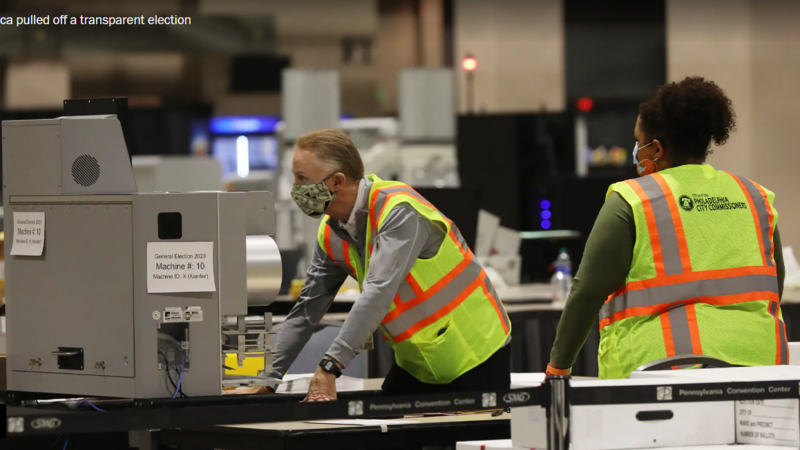
InternationalNov 20. 2020Pedestrians wearing protective masks cross a road in Tokyo on Nov. 19, 2020. MUST CREDIT: Bloomberg photo by Soichiro Koriyama.Pedestrians wearing protective masks cross a road in Tokyo on Nov. 19, 2020. MUST CREDIT: Bloomberg photo by Soichiro Koriyama. 
By Syndication Washington Post, Bloomberg · Isabel Reynolds, Keiko Ujikane · WORLD, ASIA-PACIFIC

Tokyo raised its covid-19 alert to the highest of four levels, as daily infections in the Japanese capital increased by more than 500 for the first time amid a resurgence of the pathogen across the country.

The Tokyo government didn’t introduce any restrictions in a press conference Thursday, but urged individuals to be more cautious. Governor Yuriko Koike said residents should focus on things such as wearing masks and using disinfectant, and should gather only in small groups for short periods of time.

The government lacks the legal means for a harsh lockdown, but has shown it can keep the virus under control without one. In addition, officials want to avoid heavy restrictions as they try to get the country’s recessionary economy back on track.

“Even without the virus spread, we were expecting the economy to struggle after a rebound, so this is shaping up to be a double blow,” said Yuichi Kodama, an economist at Meiji Yasuda Research Institute. He added that more than 20 trillion yen ($192 billion) may be needed for a third extra budget, depending on how the situation develops.

The city on Thursday reported 534 cases, a new high after the previous day’s tally of 493 overtook a record set in August. The nationwide total also set a daily record — 2,259, according to TBS — as prefectures including Osaka, Aichi and Hokkaido posted their highest number of infections.

The increase comes as the virus is surging globally with the onset of colder weather in the northern parts of the world. While Japan’s numbers are low compared with other countries, the increase is a reminder that, in the absence of an effective vaccine, even the most successful countries at containing the virus are vulnerable to resurgences.

Japanese officials have stressed that hospital capacity isn’t under any strain. Koike said Thursday that avoiding serious cases is the biggest priority.

Tokyo had lowered the alert from its highest level in September, prompting the city to end voluntary restrictions on operating hours for bars and restaurants.

With cases climbing again, a debate has emerged over generous government subsidies for travel and eating out as part of a Go To campaign to support businesses, which some have blamed for fueling the latest wave. Chief Cabinet Secretary Katsunobu Kato said Wednesday that the central government had received no request from Tokyo to be removed from areas eligible for subsidies. He added there was no need to refrain from travel between prefectures across the board.

“The Go To campaign was meant to be one of the main pillars, but if this becomes difficult they may have to add different measures to support the economy and people’s livelihoods,” Kodama said.

The higher alert level was implemented days after International Olympic Committee chief Thomas Bach told reporters in Tokyo he was confident that next year’s Olympics could safely be held with spectators present.

Trump invites Michigan Republican leaders to meet him at White House as he attempts to overturn election results #SootinClaimon.Com

#SootinClaimon.Com : ขอบคุณแหล่งข้อมูล : หนังสือพิมพ์ The Nation.

Trump invites Michigan Republican leaders to meet him at White House as he attempts to overturn election results (nationthailand.com)

Trump invites Michigan Republican leaders to meet him at White House as he attempts to overturn election results

InternationalNov 20. 2020

By The Washington Post · Tom Hamburger, Kayla Ruble, David A. Fahrenthold, Josh Dawsey · NATIONAL, POLITICS

DETROIT – President Donald Trump has invited the leaders of Michigan’s Republican-controlled state legislature to meet him in Washington on Friday, according to a person familiar with those plans, as the president and his allies continue an extraordinary campaign to overturn the results of an election he lost.

ภาพนี้ไม่ได้ระบุแอตทริบิวต์ alt, ชื่อไฟล์ของไฟล์นี้คือ 800_0151ed49f53c976.png

https://www.washingtonpost.com/video/c/embed/10bdd3fb-07a3-4894-aec7-f845902bc90c?ptvads=block&playthrough=false

Trump’s campaign has suffered defeats in courtrooms across the country in its efforts to allege irregularities with the ballot-counting process, and has failed to muster any evidence of the widespread fraud that the president continues to claim tainted the 2020 election.

Trump lost Michigan by a wide margin: At present, he trails President-Elect Joe Biden in the state by 157,000 votes. Earlier this week, the state’s Republican Senate majority leader said an effort to have legislators throw out election results was “not going to happen.”

But the president now appears to be using the full weight of his office to challenge the election results as he and his allies reach out personally to state and local officials in an intensifying effort to halt the certification of the vote in key battleground states.

In an incendiary news conference in Washington, Rudy Giuliani, the former New York mayor who is now serving as Trump’s lead attorney, made baseless claims that Biden had orchestrated a national conspiracy to rig the vote.

Trump’s team appear to be increasingly focused on Michigan as a place where Republican officials – on the state’s Board of Canvassers and in the legislature – might be persuaded to overturn the results.

Earlier this week, Trump called a member of Wayne County’s Board of Canvassers after a contentious meeting in which she first refused, and then agreed, to certify election results from the state’s largest county. She subsequently released an affidavit seeking to “rescind” her vote for certification – a move that the secretary of state’s office said was impossible.

Legal experts condemned the president’s actions, saying he was trying to use the power of his office to alter the vote.

“To bring the weight of the White House and the presidency onto an individual county canvassing board commissioner about what to do with certification is an incredible assault on the democratic process,” said Richard Pildes, a constitutional law professor at New York University. “No question about that.”

Joanna Lydgate, the national director of the Voter Protection Program, said “there is no basis in fact or law for failing to certify the election.”

“The president’s unpatriotic behavior is reaching new heights with summoning state legislative officials to the White House,” she said. “But the legislature has no role in certification, as its leaders have already publicly admitted. This raises serious legal and ethical concerns about the president’s conduct – but it will not alter the outcome of the election.”

Trump and his allies have spent the last week making baseless allegations of fraud in lawsuits, news conferences and tweets – seemingly probing to find a judge or an elected official who would accept them.

At the news conference in Washington on Thursday, Giuliani claimed without evidence that the campaign could roll back Biden’s wins in multiple states, including Michigan.

“It changes the result of the election in Michigan if you take out Wayne County,” he said. The county includes Detroit, the state’s heavily Democratic, majority-Black largest city.

Also on Thursday, Trump’s efforts seemed to have gained some traction, with the news that Michigan’s GOP leaders appear willing to meet with him.

The Detroit News reported that the state GOP legislative leaders who plan to visit the White House on Friday are Senate Majority Leader Mike Shirkey and House Speaker Lee Chatfield.

Earlier this week, Shirkey said that Biden is the president-elect, and that an effort to award Michigan’s electoral votes to Trump was “not going to happen,” according to the news outlet Bridge Michigan.

Shirkey’s office did not respond to requests for comment from The Washington Post. Gideon D’Assandro, communications director for the Michigan House speaker, declined to comment Thursday.

In Michigan, the high-water mark for Trump’s efforts came Tuesday night, during an hours-long meeting of the Wayne County board of canvassers. The board’s two GOP members voted against certifying the county’s results, which favored Biden by a large margin. But then, after three hours of angry comments from the public, the two GOP members changed their minds and voted to certify the results.

After the meeting, Trump called one of the two GOP members, Monica Palmer, who said Trump did not pressure her to change her vote.

“His concern was about my safety, and that was really touching. He is a really busy guy, and to have his concern about my safety was appreciated,” she told The Post.

“It was not pressure. It was genuine concern for my safety,” Palmer said.

Afterward, Palmer and the board’s other GOP member changed their minds again: On Wednesday, they signed affidavits saying they wanted to “rescind” their votes. The two said they were improperly pressured into certifying the election and accused Democrats of reneging on a promise to audit votes in Detroit.

William Hartmann, the other Republican on the board, has signed a similar affidavit, according to a person familiar with the document. Hartmann did not respond to a message from The Post.

Jonathan Kinloch, a Democratic member of the board, lamented the late attempt by Republicans to change their vote.

“They’re playing with the vote and the will of the people,” Kinloch said.

The Michigan secretary of state’s office, which oversees elections, said Thursday that there is no legal mechanism for Palmer and Hartmann to rescind their votes now. “Their job is done, and the next step in the process is for the Board of State Canvassers to meet and certify,” said Tracy Wimmer, a spokeswoman for Secretary of State Jocelyn Benson, a Democrat.

Palmer and Hartmann said they had agreed to certify Wayne County’s results on the condition that they be audited by state authorities, to resolve small errors in the counts of voters at some Detroit precincts. The number of votes affected is believed to be in the hundreds, far less than Biden’s margin of victory in Michigan.

On Thursday, Benson’s office said it would be conducting an audit of votes statewide and in Wayne County and other jurisdictions “where the data shows notable clerical errors” – but only after the election results are certified.

Palmer did not respond to questions asking whether that audit assuaged her concerns. She has said she does not doubt that Biden won Michigan but wants to be sure that clerical errors are fixed.

Also on Thursday, the Trump campaign dropped a lawsuit it had filed in federal court to block Michigan from certifying its election results. In explaining the move, Trump’s lawyers said – incorrectly – that the Wayne County board had voted not to certify the county’s results.

Meanwhile, in Arizona, there were signs of a potential delay in vote certification in one pro-Trump county.

Supervisors in rural Mohave County, a Republican stronghold bisected by the Grand Canyon, were set to canvass their county vote at a public meeting on Monday. Instead, they decided to delay their vote and take it up again Monday – the deadline for certification.

The supervisors agreed that they did not question whether the results in their own county were accurate. Instead, one GOP supervisor said, they wanted to show solidarity with the president’s challenges elsewhere.

“It has nothing to do with our results,” Supervisor Hildy Angius said in explaining her vote. “It’s more of a big-picture sort of thing.”

Chairwoman Jean Bishop initially voted to certify the vote on Nov. 16 but changed her mind, siding with those who wanted a delay.

“To not canvass our vote makes no sense unless you’re saying we’re trying to make a statement to support the state party. Which makes it sort of political – but I guess it is political,” she said.

The move to delay the vote was introduced by Supervisor Ron Gould, a former state senator who said he fear that canvassing the vote would foreclose Republicans’ options to challenge the statewide election results. “If we go ahead and canvass the election, then we’re saying we’re done, and that puts a different legal level on it,” Gould said at Monday’s meeting.

Trump trails Biden by more than 10,000 votes in Arizona. Secretary of State Katie Hobbs, a Democrat, has repeatedly defended the integrity of the election and said she will certify the statewide results.

Biden vowed to ban new drilling on public lands. It won’t be easy. #SootinClaimon.Com

#SootinClaimon.Com : ขอบคุณแหล่งข้อมูล : หนังสือพิมพ์ The Nation.

Biden vowed to ban new drilling on public lands. It won’t be easy. (nationthailand.com)

Biden vowed to ban new drilling on public lands. It won’t be easy.

InternationalNov 19. 2020

By The Washington Post · Juliet Eilperin, Dino Grandoni · NATIONAL, POLITICS, SCIENCE-ENVIRONMENT 
One of Joe Biden’s boldest campaign pledges was to ban “new oil and gas permitting on public lands and waters,” part of a sweeping agenda aimed at curbing greenhouse gases that are warming the planet and threatening life on Earth.

Transforming that promise into reality, however, will be tough.

The incoming administration will face several legal and political hurdles if it seeks to halt new oil and gas permits on federal land and waters, given existing laws and the enormous sums that drilling royalties generate for the federal and state governments – including Democratic-leaning states such as New Mexico and Colorado. But failure to do so is sure to become a flash point with environmental and youth activists within the Democratic Party, who helped elect him and have made climate a priority.

Meanwhile, the Trump administration, in a bid to help its allies in the oil and gas business before it leaves office, has embarked on an 11th-hour leasing spree to help those companies lock in rights to drill. It offered up 79 million acres of leases in the Gulf of Mexico on Wednesday, selling nearly 518,000 acres. And it is rushing to auction off rights to drill in the Arctic National Wildlife Refuge by Jan. 20, Inauguration Day.

In a recent interview, Interior Secretary David Bernhardt said that Biden would not be able to halt new drilling on public lands and waters until his first term ends. “If their intention is to end all leasing and permitting, they will find that that’s rife with conflicts, opposed by Democratic governors, and not perpetually legally sustainable.”

But Michael Brune, head of the Sierra Club, one of the nation’s oldest and most influential environmental groups, said his members expect nothing less than a ban from the candidate they helped elect.

“The Biden campaign made a clear and unequivocal campaign promise to end fossil fuel leasing on public land.” Brune said. “That’s a big reason why we had Sierra Club members write more than a million letters to undecided voters, make more than 5 million phone calls to undecided voters and send 20 million text messages.”

There is little question that energy development on public lands and waters represents a significant share of America’s global warming pollution. The fossil fuels that are extracted there and eventually burned to run cars, heat homes, operate factories and generate electricity account for nearly a quarter of U.S. carbon dioxide emissions, according to a 2018 U.S. Geological Survey study.

Still, lawmakers from both parties have welcomed drilling as a source of jobs and revenue for decades. President Barack Obama worked to curtail U.S. coal production on public land, but he praised natural gas production as an important bridge to clean energy. The Trump administration has moved aggressively to expand oil and gas drilling across the country, scaling back protected areas, offering more leases and accelerating federal approval for pipelines and other drilling-related projects.

Fossil fuel gas activity on federal and tribal land and offshore last year generated $11.7 billion in tax revenue, according to the Interior Department’s Office of Natural Resources Revenue. Of that total, the U.S. Treasury kept $4.9 billion, more than $2.4 billion went to state and local governments and the rest funded tribes, restoration, conservation and other projects.

But as climate projections have become dire, Democrats have embraced a “keep it in the ground” strategy aimed at ending this activity altogether without the help of a sharply divided Congress. According to a Washington Post survey, every 2020 Democratic presidential candidate pledged to ban fossil fuel leasing with the exception of Montana Gov. Steve Bullock and Sen. Michael Bennet of Colorado, both of whom hail from energy-producing states.

Biden repeatedly brought up the issue on the campaign trail, saying that he would shift the nation away from fossil fuels while allowing fracking to continue on private land in places like Pennsylvania, which happened to be a swing state pivotal to his victory.

At a town hall in New Hampshire in February, he said he opposed drilling in the Arctic National Wildlife Refuge, given the impacts of climate change on Alaska, before adding, “And by the way, no more drilling on federal lands, period. Period, period, period.” The crowd clapped enthusiastically.

Frank Macchiarola, the American Petroleum Institute’s senior vice president for policy, economics and regulatory affairs, said in an interview that his group is well aware of Biden’s pledge. “But we also recognize that that was a campaign proposal, and campaigning is often different from governing,” he said.

“Our first order of business is to tell the story of the value of oil and gas production in the United States,” Macchiarola said. He added that if Biden sought to impose a leasing ban, “we think there are a significant number of impediments to that, and we would challenge it vigorously.” 

Legal experts from across the political spectrum said it will be easier to stop issuing new leases than to halt drilling permits linked to existing leases. Two primary laws govern leasing – the Mineral Leasing Act (MLA) and the Outer Continental Shelf Lands Act (OSCLA) – and both call for auctions at regular intervals. But the Obama administration suspended leasing both onshore and off at times, and the president has the right to remove offshore areas from leasing altogether.

It is much harder to deny a company the right to drill on a tract that is already leased. And it can take decades to cancel leases outright: Lawyers have been fighting for nearly 40 years over whether the U.S. government has the right to cancel oil leases that the Ronald Reagan administration awarded on land sacred to Montana’s Blackfeet Nation.

The Trump administration has offered more than 100 million acres in onshore and offshore leases since taking office. More than 4 million acres have been sold in the Lower 48, and another 1 million on Alaska’s North Slope.

“They’re trying to lock in as many leases and as much climate pollution as they can before the Biden administration takes control,” said Taylor McKinnon, a public lands campaigner for the Center for Biological Diversity, an advocacy group.

Some experts have begun to outline how the Biden administration could achieve “net-zero emissions” even if it continued to allow some oil and gas drilling.

Nada Culver, senior policy counsel at the National Audubon Society, recently co-authored a law review article that noted that Interior’s Bureau of Land Management is required by law to protect “atmospheric values,” and the agency could use that to impose new requirements on leases and permits.

Alex Daue, assistant director for energy and climate at The Wilderness Society Action Fund, said these requirements could include plugging up abandoned wells that are leaking greenhouse gases and financing restoration projects that could absorb carbon from the atmosphere and store it. “Public lands represent one of the Biden administration’s best opportunities to tackle climate change,” he said.

When it comes to curbing new leasing, New Mexico may pose the biggest challenge for the new administration. The Democratic-leaning state accounts for 57% of oil production on federal land and nearly a third of onshore gas extraction, according to a recent industry analysis, which projected New Mexico could lose $1 billion a year in federal revenue if all drilling activity ceased. Pumpjacks bobbing across the desert landscape funnel money to local governments and school districts through royalty payments and other drilling fees, even as politicians cite heat waves and prolonged drought as reasons to tackle climate change.

Democratic Gov. Michelle Lujan Grisham, a Biden ally, said this summer she would ask for an exemption from any leasing ban. Three New Mexico Democrats – Rep. Deb Haaland and Sens. Tom Udall and Martin Heinrich – are all in the running to be Biden’s interior secretary, and they have differing views on whether to prohibit new drilling on public lands and waters.

Both Udall and Heinrich have expressed reservations about a total ban. In a recent interview, Udall called for setting a goal of “carbon-neutral” public lands, where the emissions from fossil fuel extraction could be offset by reforestation and other activities that remove carbon from the atmosphere. “That’s where we should be headed,” he said.

“Go into the departments that have the expertise and have the scientists and tell them this is your goal,” Udall added. “How do we get there? What do we need to do? And then you can reapproach this in a concrete way and get it done.”

But Haaland, who would be the first Native American to run the department that oversees federal and tribal lands, is more open to a straightforward ban. In September, she told reporters, “We don’t need drilling everywhere.”

Methane, a greenhouse gas that can be more than 80 times more potent than carbon dioxide, frequently escapes from oil patches in New Mexico and elsewhere. Haaland was referring to methane leaks when she added: “If I had my way, it’d be great to stop all gas and oil leasing on federal and public lands, because those lands belong to all of us; they don’t just belong to one sector.”

Regardless of who Biden selects to chart the nation’s policies on fossil fuels, the intraparty fissures are already on display. The Biden team faced swift reprisal from environmental activists this week after naming Rep. Cedric Richmond, D-La., his campaign co-chair, as a senior White House adviser.

The oil and gas industry has viewed Richmond as one its chief advocates within Biden’s inner circle.

Mike Sommers, head of the American Petroleum Institute, said before the election that the Biden campaign had been “pretty closed off to outside organizations” but that Richmond had “helped communicate messages” from the petroleum industry.

But Varshini Prakash, head of the youth-led Sunrise Movement that campaigned for Biden, said in a statement that hiring the Gulf Coast congressman who has raised money from oil and gas interests for a White House job “feels like a betrayal.”

“Biden assured our movement he understands the urgency of this crisis; now, it’s time for him to act like it.”