In rare rebuke of Trump, NATO chief warns against troop cuts in Afghanistan #SootinClaimon.Com

#SootinClaimon.Com : ขอบคุณแหล่งข้อมูล : หนังสือพิมพ์ The Nation.

In rare rebuke of Trump, NATO chief warns against troop cuts in Afghanistan

InternationalNov 18. 2020

NATO Secretary General Jens Stoltenberg

NATO Secretary General Jens Stoltenberg

By The Washington Post · Adam Taylor, Michael Birnbaum · NATIONAL, WORLD, NATIONAL-SECURITY, WHITEHOUSE, ASIA-PACIFIC, EUROPE

Afghanistan could once again become a haven for international terrorist organizations that seek to harm Western countries if foreign forces leave too abruptly, the head of NATO said Tuesday in a rare rebuke of U.S. policy, following reports that the Trump administration would withdraw thousands of troops from the country.

“We now face a difficult decision. We have been in Afghanistan for almost 20 years, and no NATO ally wants to stay any longer than necessary,” NATO Secretary General Jens Stoltenberg said in a statement. “But at the same time, the price for leaving too soon or in an uncoordinated way could be very high.”

“Afghanistan risks becoming once again a platform for international terrorists to plan and organize attacks on our homelands,” he said. “And ISIS could rebuild in Afghanistan the terror caliphate it lost in Syria and Iraq,” Stoltenberg added, referring to the Islamic State militant group.

The warning, though couched in diplomatic language, marked the sharpest tone that Stoltenberg has taken toward President Donald Trump. The United States is by far the most powerful member of NATO, and Trump has repeatedly clashed with the other partners and privately threatened to quit the military alliance altogether.

U.S. officials said the White House is planning to roughly halve the number of U.S. troops in Afghanistan, from around 5,000 to 2,500, by the time President-elect Joe Biden assumes office on Jan. 20. The officials have said that the announcement could be made as early as this week.

A U.S. drawdown in Afghanistan would gut NATO operations in the country. Although the military alliance has roughly 12,000 troops from 38 countries in Afghanistan, it is reliant on U.S. personnel and infrastructure. The expectation at NATO is that if the United States pulls out, everyone else will also, given the importance of U.S. logistical capabilities in Afghanistan.

Under the leadership of the fundamentalist Taliban group, Afghanistan became a safe haven for Islamist extremists in the 1990s. After the al-Qaida terrorist attacks on Sept. 11, 2001, U.S. airstrikes and Afghan resistance forces ousted the Taliban from power for hosting Osama bin Laden.

NATO forces poured in after the Taliban fell, and in 2003 a U.S.-led NATO mission took control of international security efforts in the country. In his statement Tuesday, Stoltenberg emphasized the high cost that NATO allies have paid. “Hundreds of thousands of troops from Europe and beyond have stood shoulder to shoulder with American troops in Afghanistan, and over one thousand of them have paid the ultimate price,” he said.

The U.S. election results were greeted with relief inside NATO’s glassy new headquarters in Brussels this month. Many diplomats feared that Trump, given a second term, would make good on private threats to pull the United States out of the alliance.

Stoltenberg – a former Norwegian prime minister who is light-years away from Trump in temperament – has made it his mission to be a Trump whisperer since 2017. Keep Trump happy, Stoltenberg’s advisers sometimes said, and keep NATO going.

Even in private conversation, Stoltenberg has refused to criticize the man who shoved aside Montenegro’s prime minister at a summit, routinely misrepresents the NATO’s spending pledges and has appeared more eager to befriend the alliance’s main foe, Russian President Vladimir Putin, than his fellow democratically elected leaders.

Days before the 2016 election, Stoltenberg told a reporter with exasperation that Trump had exerted no influence on European defense spending, which was already rising following Russia’s 2014 annexation of Crimea.

After the election, however, NATO started boasting about increased defense spending since 2016, which was a way to write Obama out of the history and give Trump an easy public relations victory. When Stoltenberg was asked about the tactic, he would simply smile.

Tuesday’s statement appeared to be the sharpest attempt yet to push back at Trump’s go-it-alone impulses on defense issues that affect many NATO militaries. It also reflects concerns that despite Trump’s push for a peace deal with the Taliban, Afghanistan is still a risk to international security.

Trump has repeatedly threatened to pull troops out of Afghanistan, part of a broader promise to roll back open-ended U.S. involvement in foreign conflicts. His proposals have won cautious praise from critics on the left who accuse the U.S. military of ongoing overreach abroad. But foreign policy elites generally oppose rapid withdrawal from Afghanistan, fearing for the future of the country the departing troops would leave behind.

Edmund Fitton-Brown, coordinator of the United Nations’ Islamic State, al-Qaeda and Taliban Monitoring Team, told the BBC in October that al-Qaeda and the Islamic State could seek to exploit a weak Afghan state. “Both of those groups have an avowed aspiration to pose an international threat,” he said.

In a report submitted to the U.N. Security Council in May, he warned that al-Qaeda maintains a presence in the country and a relationship with the Taliban, and that peace would rely on commitments by the Taliban to oppose international terrorism.

“The challenge will be to secure the counterterrorism gains to which the Taliban have committed, which will require them to suppress any international threat emanating from al-Qaida in Afghanistan,” he wrote.

How a Biden presidency could advance transgender rights – and lead to backlash #SootinClaimon.Com

#SootinClaimon.Com : ขอบคุณแหล่งข้อมูล : หนังสือพิมพ์ The Nation.

How a Biden presidency could advance transgender rights – and lead to backlash

InternationalNov 18. 2020With her win in 2017 for a Virginia House of Delegates seat, Danica Roem, D-Prince William, became the first transgender legislator elected in the United States. MUST CREDIT: Washington Post photo by Jahi Chikwendiu.With her win in 2017 for a Virginia House of Delegates seat, Danica Roem, D-Prince William, became the first transgender legislator elected in the United States. MUST CREDIT: Washington Post photo by Jahi Chikwendiu. 
By The Washington Post · Samantha Schmidt, Emily Wax-Thibodeaux · NATIONAL, POLITICSIn the weeks leading up to the election, the calls to Julian Harris’s office kept coming in, and the waitlist kept growing.

https://www.washingtonpost.com/video/c/embed/091c5e77-29c4-4678-bedd-48f120b43458?ptvads=block&playthrough=false

There was an urgency to the phone calls. Harris, a licensed independent clinical social worker in Silver Spring, Md., who caters to the LGBTQ community, said many of the callers were transgender people seeking counseling services, fearing another four years of a Trump administration that has repeatedly attacked the rights of their community. Other clients were rushing to get legal name changes or surgeries scheduled before the election, worrying it could become more difficult in a second Trump term. At Whitman-Walker, an LGBTQ-focused community health center in D.C., the director of gender-affirming services estimated a 75% increase in the number of requests from transgender people seeking referrals for surgery in the weeks before the election.

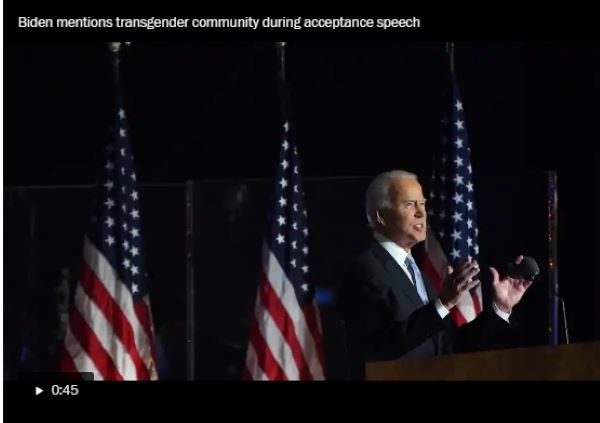
But on Nov. 7, when major news outlets called the election for Joe Biden, the transgender community watched as the president-elect specifically mentioned them in his victory speech, the first U.S. president-elect in history to do so.

“All of a sudden, they slept well that night,” Harris, who is a transgender man, said his clients told him. “A weight had been lifted that they didn’t even realize was so heavy.”

It was only one word, but the mention of the transgender community in Biden’s acceptance speech was a symbolic shift from a presidential administration that has spent the past four years repeatedly erasing protections for transgender people – in health care, federal employment, federal prisons, homeless shelters and other housing services receiving federal funds.

The Trump administration has banned transgender members of the military and rescinded Obama-era guidance that offered protections for transgender students. It has declared that the federal Title IX rules require schools to ban transgender students from participating in school sports corresponding to their gender identity.

“Over the course of these four years I think a lot of trans people have looked on in horror,” said Gillian Branstetter, a transgender advocate and media manager at the National Women’s Law Center. “It looked to many that we were a bigger priority to our enemies than we were for our friends.”

The incoming Biden administration has already committed to reversing all of those actions and has released a lengthy platform touching on issues that were until recently rarely mentioned by national politicians. Biden has pledged to work to end what he calls an “epidemic” of violence against transgender people, particularly transgender women of color. He has committed to expanding access to health care for the LGBTQ community and ensuring their fair treatment in the criminal justice system. He plans to prioritize enacting the Equality Act, guaranteeing LGBTQ protections under civil rights laws, and to collect data on a community that advocates say has long existed in a vacuum of information.

“I think Joe Biden knows the trans community in a way that maybe previous presidents have not,” said Ruben Gonzales, vice president of the LGBTQ Victory Institute, which works to advance LGBTQ public leaders.

Beyond his policy plans, Biden has touted his relationships with the transgender community. Years ago, he wrote the foreword to a memoir by Sarah McBride, who this month was elected the country’s first transgender state senator, in Delaware. In 2017, the former vice president called Virginia Del. Danica Roem to congratulate her on the night that she became the first openly transgender elected official.

But not all transgender advocates are convinced by Biden’s symbolic gestures and campaign promises. Many feel his policies won’t go far enough to address the systemic problems facing transgender people – especially transgender women of color – in housing, employment and the criminal justice system.

Others fear the conservative resistance to the transgender community will continue long after President Donald Trump leaves office, in state houses and in the courts.

“As far as political problems go, they are far bigger than Trump,” Branstetter said. “Trump’s exit won’t erode them for us.”

– – –

While the Trump administration froze or reversed many of the rights and protections the transgender community gained under President Barack Obama, it also galvanized a swell of transgender activism, including transgender young people and their parents testifying in legislatures across the country, and a growth in transgender visibility and acceptance.

More than 6 in 10 Americans said they have become more supportive toward transgender rights compared with five years ago, according to one 2019 survey from the Public Religion Research Institute. More than 8 in 10 Americans favor protections for LGBTQ people in jobs, public accommodations and housing, and more than two-thirds of Americans favor allowing transgender people to serve in the U.S. military, support that has slightly increased since 2017, according to the PRRI.

In June, the Supreme Court ruled that the federal law barring employment discrimination on the basis of sex also applies to gay and transgender people, a landmark victory that could ripple across many realms of American life. That same month, an estimated 15,000 people marched in a striking show of support for Black transgender lives in New York City. And in this year’s election, a record number of LGBTQ candidates ran for office, including several transgender people elected to state legislatures.

Now, advocates are calling on Biden to appoint LGBTQ people – including transgender people – to positions in the White House.

Raffi Freedman-Gurspan, the first openly transgender appointee in the Obama White House, served as the primary liaison to the LGBTQ community and as an outreach and recruitment director in the Presidential Personnel Office. She said the Obama administration appointed six transgender people to roles in the White House over the years, and she hopes Biden will go further. “I’m not going to be surprised when we hear about our first nonbinary appointee,” she said. “I would expect it.”

Biden has named to his transition team Shawn Skelly​, former special assistant to the undersecretary of defense for acquisition, technology and logistics, and coordinator of the Defense Department Warfighter Senior Integration Group. Skelly was the first transgender veteran to be appointed by a U.S. president. The Victory Institute plans to provide the Biden transition team with a list of suggested LGBTQ leaders, in the hopes of seeing the first LGBTQ person in a Cabinet-level position. Among them is Pennsylvania Health Secretary Rachel Levine, a transgender woman who has been leading the state’s response to the coronavirus pandemic.

Transgender advocates in the nation’s capital, long a leading hub of LGBTQ resources, say they hope the Biden administration helps support local centers that cater to homeless and vulnerable transgender people. “We appreciate the solidarity, we appreciate all those things, but at the end of the day the only thing that makes a difference is the resources we need to survive every day,” said Ruby Corado, founder of Casa Ruby, a center in D.C. for LGBT youth.

Tamika Spellman, a longtime advocate for transgender sex workers in the District, said she sees Biden as a “cop lover” who supports more policing, instead of less. “If they think that’s what is going to be the answer to the issue, that is not it,” Spellman said. “The answer to the issue is housing, resources, job opportunities.”

– – –

Beyond Washington, advocates are already seeing echoes of the Trump administration in Republican-led state houses and in conservative courts. Sarah Warbelow, head of the Human Rights Campaign’s team of lawyers and fellows focused on federal, state and municipal policy, said anti-LGBTQ bills are already being filed for the coming year. “What we have seen historically is that when a conservative state house does not like a federal policy,” she said, “they will then try at the state level to discriminate.”

She’s also keeping a close eye on judges confirmed under the Trump administration who “have extreme views that are outside the mainstream and the understanding of constitutional law.”

In Texas, state Rep. Steve Toth, R-Spring, has filed a draft of a bill to classify gender-affirming hormones and surgeries as child abuse when performed on minors. It follows a wave of similar proposals in state legislatures across the country earlier this year.

“A doctor’s first covenant is do no harm,” Toth said in an interview. “These children are too young to be taking hormones when the vast majority are confused and end up going back. These are 7-year-old and 11-year-old kids, picking up ideas from social media and being confused.”

The House Bill (HB) 68 would amend the definition of child abuse in the Texas Family Code to include the removal of healthy tissue, the prescription of puberty-blocking hormones and sterilization surgeries if the procedures aim to “change or affirm a child’s perception of the child’s sex.” The act also targets mental health professionals “attempting to change or affirm a child’s sex, if that perception is inconsistent with the child’s biological sex.”

Susan Williams, an activist in South Dakota and parent of a transgender child, said she hopes state lawmakers do not direct anger over election results against the community. “Transgender South Dakotans have been under attack in our state house since 2014, if not earlier,” Williams said. “This deeply harmful trend has continued regardless of the national political landscape or which party the president belongs to.”

Legislation at the state level can also have unanticipated effects, experts say. Public opinion research shows those debates can actually lead to greater acceptance, said Andrew Flores, an assistant professor of government at American University whose research focuses in part on attitudes of the LGBTQ community. He cited research showing that in states where people were asked to vote in ballot measures banning same-sex marriage, attitudes shifted in favor of same-sex marriage at a stronger pace over time. Even anti-LGBTQ backlash can ultimately be “a source of potential change,” he said.

From LGBTQ issues to immigration to racial justice, the Trump administration galvanized liberal activism across the country, in marches and protests and get-out-the-vote efforts. The question for some transgender advocates is whether that level of energy will continue after Trump leaves the White House.

“When there’s not this big personality attracting attention, when there’s not this chaotic circus at the top,” Branstetter said, “are people going to be paying as much attention?”

Shelton’s Fed nomination blocked in Senate #SootinClaimon.Com

#SootinClaimon.Com : ขอบคุณแหล่งข้อมูล : หนังสือพิมพ์ The Nation.

Shelton’s Fed nomination blocked in Senate

InternationalNov 18. 2020Judy Shelton, President Donald Trump's nominee for governor of the Federal Reserve, speaks during a Senate Banking Committee confirmation hearing in Washington, D.C., on Feb. 13, 2020. MUST CREDIT: Bloomberg photo by Andrew HarrerJudy Shelton, President Donald Trump’s nominee for governor of the Federal Reserve, speaks during a Senate Banking Committee confirmation hearing in Washington, D.C., on Feb. 13, 2020. MUST CREDIT: Bloomberg photo by Andrew Harrer 

By Syndication Washington Post, Bloomberg · Laura Litvan, Erik Wasson · NATIONAL, BUSINESS, POLITICS, CONGRESS

Judy Shelton’s nomination to the Federal Reserve Board was blocked in the Senate Tuesday, a stunning defeat for Senate Majority Leader Mitch McConnell, R-Ky., and a blow to President Donald Trump’s drive to reshape the U.S. central bank before he leaves office.

After covid-19 exposure forced two Republican senators into quarantine, the GOP was left short of enough votes needed to overcome united Democratic opposition.

Republican Sens. Mitt Romney of Utah and Susan Collins of Maine joined with 47 Democrats and two independents in a 50-47 vote against advancing Shelton’s nomination. Once the outcome was clear, McConnell switched his vote to no, a tactical move that would allow him to bring the nomination up for reconsideration later.

McConnell’s plans to confirm Shelton were blown up Tuesday morning when Sen. Chuck Grassley, R-Iowa, announced he would be in quarantine after exposure to someone who tested positive for the coronavirus. Sen. Rick Scott, R-Fla., also is in quarantine. Both were expected to back Shelton.

Shelton, 66, a former informal adviser to Trump, was long known for her advocacy of a return to the gold standard, ultra-hawkish views on inflation and opposition to federal deposit insurance. She provoked further controversy and opposition by abandoning those views and calling for interest-rate cuts to align herself with Trump as she emerged as a candidate for a Fed post.

Category 4 Hurricane Iota slams into Nicaragua #SootinClaimon.Com

#SootinClaimon.Com : ขอบคุณแหล่งข้อมูล : หนังสือพิมพ์ The Nation.

Category 4 Hurricane Iota slams into Nicaragua

InternationalNov 17. 2020

By The Washington Post · Anna-Catherine Brigida, Anthony Faiola · WORLD, SCIENCE-ENVIRONMENT, THE-AMERICAS

MANAGUA – Hurricane Iota, the strongest storm ever recorded in the Atlantic this late in the year, slammed into the Nicaraguan coast late Monday, bringing catastrophic winds and pounding rains to a swath of Central America still reeling from the destructive force of Hurricane Eta nearly two weeks earlier.

Also the most powerful storm of the extraordinarily active 2020 hurricane season, Iota made landfall at 10:40 p.m. EDT in the town of Haulover, before plowing into fishing and farming towns in northeastern Nicaragua. The storm slightly weakened from a Category 5 to an extremely intense Category 4 as it came ashore, with sustained winds of 155 mph.

Iota came ashore only 15 miles south of where Eta made landfall earlier this month, on Nov. 3.

In Puerto Cabezas, about 30 miles north from center of the storm, eyewitnesses said strong winds were bending coconut palms and lower lying areas had started to flood by late Monday afternoon, leading more residents to scramble toward overcrowded and undersupplied shelters in a poverty-stricken corner of the country. Parts of the port town of 50,000 had already lost power.

“The winds, the rain, are very strong, I can hear the sound of the sea surrounding us,” said Shira Downs, Puerto Cabezas resident and director of a woman’s rights organization, “This is going to be worse that Eta, and this is just the beginning. I just hope God has mercy on us.”

Jose Coleman, an indigenous activist in Puerto Cabezas, said winds had blown the wood siding off a neighborhood house, leaving it partially collapsed. His brother, Presly Coleman, said by Monday morning it was already too dangerous to leave the house.

“It’s very strong,” Presly Coleman said. “The winds are whipping.”

Thousands of people in the storm’s path had already evacuated from Eta, and were still sheltering inland when Iota hit. But thousands of others, many of them impoverished Indigenous and Afro-Nicaraguans, remained on the ground and in Iota’s path, with hardest-hit areas forecast to receive up to 30 inches of rain.

The hurricanes hit the region at the time when it is already roiling not only from the aftermath of Eta, but from the socioeconomic consequences of the coronavirus pandemic, which is spiking poverty and food insecurity in the region.

Nicaraguan authorities estimated 80,000 families will be affected by Iota, both in coastal communities where the hurricane will hit directly and in other parts of the country that could experience flooding and deadly landslides.

The government has prepared nearly 1,300 shelters, according Nicaragua’s National System for the Prevention, Mitigation and Attention of Disasters (SINAPRED).

Some residents in areas previously hit by Eta told Nicaraguan media they didn’t want to evacuate their homes now because they feared looting if they abandoned them.

Vittoria Peñalba, director of sustainability for the aid group World Vision in Nicaragua, said 50,000 coastal dwellers had been evacuated over the weekend and on Monday, a process hampered by roads left washed out and bridges pulverized in Eta’s wake.

In Nicaragua, a troubled Central American nation of 6.5 million where the authoritarian government of Daniel Ortega has come under fire for poor handling of the coronavirus pandemic, concern centered heavily on the destructive force of Iota in northeastern towns of Puerto Cabezas, Waspam, and, further south, Prinzapolka. There was overcrowding in shelters lacking in food, mattresses and personal protective equipment.

“The houses on the coast are mostly made from wood, they are of very fragile construction, so people are going to schools, shelters, anywhere they can be protected from the wind and rain,” Peñalba said. “But there are too many people in each shelter. The government is trying its best, but there’s too many people.”

Before making landfall, Iota pummeled the small Colombian islands of San Andrés and Providencia, located east of the Nicaraguan coast. Early Monday, communications went down on Providencia, a tropical island between Jamaica and Costa Rica with a population just over 5,000, according to Colombian news outlets. Colombian President Iván Duque said later Monday that regular communications had also been lost with San Andrés, population 80,000, leaving the government to rely on links via satellite phone.

The Colombian outlet Semana TV showed video footage of San Andres, with power lines downed on flooded roads and corrugated iron roofs blown off homes.

“This is a big challenge our country is facing,” said Duque said in televised comments. “As soon as the circumstances allows us to get there, we will do that with all our capacity.”

On the Colombian islands, Twitter became the main source of communication with media outlets and government institutions posting videos of the most affected areas. The Colombian Navy tweeted footage of a 67-year-old Italian sailor found adrift off the coast of San Andres.

“Thank you to the Colombian Navy,” says the man in the video, whose name was not disclosed.

The National Hurricane Center in Miami showed Iota losing strength into Tuesday while tracking toward more densely population centers in Honduras, where devastating mudslides from Eta have already left more than 100 dead.

Maite Matheu, Honduras director for the charity Care, said storm conditions had already begun hitting parts of that country. Concern centered on an estimated 100,000 people who were fleeing their homes, including in forced evacuations imposed on Monday by the government.

“The problem is the shelters are already full because of the Eta.

Matheu said groups were particularly fearful about the impact in the capital of Tegucigalpa, with high concentrations of people living in areas prone to flooding, and in the northern city of San Pedro Sula, where storm refugees from Eta were already living precariously on the streets.

“There have not really been preparations for everyone to go to shelters,” she said. “An emergency is coming.”

Trump administration to cut troop levels in Afghanistan despite Pentagon warnings #SootinClaimon.Com

#SootinClaimon.Com : ขอบคุณแหล่งข้อมูล : หนังสือพิมพ์ The Nation.

Trump administration to cut troop levels in Afghanistan despite Pentagon warnings

InternationalNov 17. 2020

By The Washington Post · Missy Ryan, Ellen Nakashima, Dan Lamothe, John Hudson, Karen DeYoung · NATIONAL, WORLD, NATIONAL-SECURITY, MIDDLE-EAST

WASHINGTON – The Trump administration is planning to move ahead with a significant reduction of U.S. forces in Afghanistan before President Donald Trump leaves office in January, taking steps toward delivering on his long-delayed campaign promise to bring home troops from insurgent wars.

According to officials familiar with the discussions, the White House is preparing to announce as soon as this week plans to roughly halve the number of U.S. troops, from around 5,000 to 2,500, by the time President-elect Joe Biden assumes office on Jan. 20.

The administration is also expected to announce a more modest troop reduction in Iraq, bringing the military force there from about 3,000 to 2,500 troops, another step that would advance the goal Trump has espoused since before he was elected to wind down the wars launched in the wake of the Sept. 11 attacks and refocus resources at home.

But the reductions may not bring an end to America’s long-running wars, as militant groups continue to evolve and fracture. The proposed cuts also have an uncertain meaning less than 70 days before Biden takes office and launches a process to scrutinize his predecessor’s decisions.

The Trump administration’s decision to make a major reduction in Afghanistan, where violence has surged as Afghan negotiators engage in halting peace talks, in particular could bring to a head tensions that have intensified between some at the Pentagon and White House during a chaotic transition period.

Officials cautioned that the plans from the White House, where foreign policy zigzags have been common, could change. Some aides are proposing a Trump speech later in the week to announce the planned cut from Afghanistan, which was first reported by CNN.

The discussions come as the president continues to falsely assert victory in the Nov. 3 election. Trump, who fired his defense secretary and elevated loyalists at the Pentagon last week, has also blocked agencies from working with Biden’s transition team.

Days before being dismissed, Pentagon chief Mark Esper sent Trump a classified memo that cautioned that conditions were not adequate to make additional troop cuts in Afghanistan, citing the possibility of undermining peace talks and a variety of other factors. His assessment was based on input from senior military leaders.

As part of a deal struck between U.S. and Taliban negotiators in February, the United States promised to withdraw all troops from Afghanistan by May 2021 if the militants meet certain terms of the agreement, including a break with al-Qaida and progress toward a peace deal.

But military leaders have repeatedly said that timeline is predicated on the Taliban fulfilling its commitments and the security situation, which has deteriorated sharply in recent months, and indicated their support for forgoing further troop reductions until conditions allow.

The expected withdrawal announcement is in keeping with an earlier statement by national security adviser Robert O’Brien, who last month got into a public spat with Gen. Mark Milley, chairman of the Joint Chiefs of Staff, about the course ahead in Afghanistan. At the time, Milley said that O’Brien’s assertion that the troop level would be cut to 2,500 by January was “speculation.”

The apparent divide over a possible eleventh-hour cut, which officials have said was among the reasons Esper was fired, raises the possibility of greater Pentagon-White House friction in the final weeks of Trump’s presidency. O’Brien has told other officials that Milley isn’t listening to the president on Afghanistan.

Spokesmen for Milley and for Christopher Miller, the former Green Beret and counterterrorism expert who Trump tapped to replace Esper, did not immediately provide a comment.

In a message to Defense Department employees on Monday, Miller cited as among his top priorities to “bring the current war to an end in a responsible manner that guarantees the security of our citizens.”

A senior defense official said the reduction to 2,500, if finalized, was in line with earlier plans to incrementally bring the troop level down ahead of the May 2021 withdrawal deadline, but would simply accelerate the interim move to 2,500 by a month.

In a podcast recorded on Thursday, before news about the White House plans emerged, U.S. Central Command head Gen. Kenneth “Frank” McKenzie Jr. said the United States would take a conditions-based approach to further troop reductions. He appeared to suggest the Taliban had not made good on denying al-Qaida a safe haven in Afghanistan. “We need to see action here,” he said.

“The sheer volume of Taliban-initiated attacks against the people of Afghanistan are not indicative of an organization that is serious about peace,” McKenzie added.

A significant withdrawal would inject an element of unpredictability into ongoing peace negotiations between the Afghan government and Taliban negotiators.

If Taliban leaders “can see they can win on the battlefield, then they don’t need to make concessions at the negotiating table,” said Carter Malkasian, a former Pentagon official who took part in some of the talks U.S. officials have conducted with Taliban leaders in recent years.

The planned move in Iraq would make a modest reduction to a force installed in 2014 after Islamic State forces took over most of the country. Since then, U.S. forces have helped train and support local troops as they battled extremists. In recent years, they have focused on seeking to prevent a militant comeback.

Reports about an imminent announcement prompted warnings from senior Republicans on Capitol Hill. In an impassioned speech Monday, Senate Majority Leader Mitch McConnell, R-Ky., implored the president not to end U.S. military operations in Afghanistan, saying it would be an embarrassment “reminiscent of the humiliating American departure from Saigon in 1975.”

McConnell, avoiding direct criticism of Trump, encouraged the president to preserve the “limited, but important role” of those who remain. “Leaving the field in Afghanistan to the Taliban and ISIS would be broadcast around the world as a symbol of U.S. defeat and humiliation,” he said.

For months, Republicans who have long defended maintaining the presence of U.S. forces in conflicts have struggled to reconcile that with their political instinct to defer to Trump.

Sen. Lindsey Graham, R-S.C., once the GOP’s most ardent advocate for keeping forces stationed in Afghanistan, told reporters Monday that he had been “for the idea of coming down” and simply appreciated that the number left in place would not be “zero.”

“2,500 may be the residential force that protects us from a collapse,” he said, adding that he wanted “to hear more about it” from Trump.

Some Pentagon officials, however, expressed confidence that the United States would be able to maintain an effective counterterrorism operation with a force of 2,500.

One senior defense official, who spoke on the condition of anonymity to discuss internal deliberations, said the move would not “put any undue risk on U.S. forces or on our ability to support Afghan national security forces in their efforts against the Taliban. . . . Most importantly, it does not degrade our ability to conduct counterterrorism operations.”

A lean American force would be focused on extremist groups and, possibly, continue air support for Afghan troops, who remain heavily reliant on foreign air power. Army Gen. Austin “Scott” Miller, the top U.S. commander in Afghanistan, has been preparing his units for deeper cuts for more than a year.

A model for the future mission might be found in Syria, where a modest U.S. force consisting mainly of Special Operations troops has provided intelligence, reconnaissance and airstrikes for local forces on the ground. Support and air cover is provided from nearby countries.

A big U.S. cut could also impact the 38 NATO and partner countries that have fielded troops alongside the United States for more than a decade. They are reliant on U.S. air, medical and logistical support and would likely draw down as well.

In telephone calls last week to NATO Secretary General Jens Stoltenberg and defense ministers of those with the largest number of troops, the new acting defense secretary assured them there would be no change in policy and “no surprises.” But senior officials in several governments said they had come to understand that no Trump administration policy was finalized until the president announced it, and sometimes even not then.

Trump’s plans have been only marginally coordinated, if at all, with his negotiating envoy to the Afghans, Zalmay Khalilzad, and with the Afghan government.

While Trump has battled many of his top aides in his pursuit of a withdrawal, Secretary of State Mike Pompeo has come to accept the president’s wishes to end the costly conflict, said senior U.S. officials familiar with his actions.

Pompeo fought to increase the U.S. military footprint in the country at the outset of the Trump administration, but as the president has grown weary of the conflict, Pompeo shifted his position to supporting a “conditions-based” withdrawal. As Trump appears poised to accelerate the withdrawal despite missing key benchmarks, he is not expected to face significant resistance from Pompeo, officials said.

“At the end of the day, Pompeo appreciates that this is the commander-in-chief’s prerogative and it’s an issue that the president campaigned on,” a senior U.S. official said.

Biden has not commented directly on the U.S.-Taliban agreement or the intra-Afghan negotiations. His policy, stated throughout the campaign, is somewhat similar to Trump’s – ending U.S. “forever wars,” and leaving a residual counterterrorism force in Afghanistan to fight al-Qaida and a growing Islamic State movement.

Biden pressures Trump to cooperate, citing risk of additional coronavirus deaths if handoff is delayed #SootinClaimon.Com

#SootinClaimon.Com : ขอบคุณแหล่งข้อมูล : หนังสือพิมพ์ The Nation.

Biden pressures Trump to cooperate, citing risk of additional coronavirus deaths if handoff is delayed

InternationalNov 17. 2020President-elect Joe Biden makes an appearance in Delaware on Monday. Biden said he is focusing on staffing the White House and forming his Cabinet. MUST CREDIT: Washington Post photo by Salwan GeorgesPresident-elect Joe Biden makes an appearance in Delaware on Monday. Biden said he is focusing on staffing the White House and forming his Cabinet. MUST CREDIT: Washington Post photo by Salwan Georges 

By The Washington Post · Matt Viser · NATIONAL, HEALTH, POLITICS

President-elect Joe Biden on Monday ratcheted up pressure on the Trump administration to engage in a transition of power, mincing no words on the dire consequences if his incoming team faces further delays in working with federal agencies.

“More people may die if we don’t coordinate,” Biden said during a news conference in Wilmington, Del., following remarks on the economic impact of the coronavirus in which he warned of a “very dark winter” where “things are going to get much tougher before they get easier.”

He also pointed out the absurdity that Sen. Kamala Harris, D-Calif., the vice president-elect, still has access to classified intelligence briefings because she is a member of the Senate Intelligence Committee. But Biden himself is not able to get those briefings because Trump’s administration has yet to acknowledge that Biden won the election.

Biden generally refrained, however, from threatening Trump – “I am hopeful that the president will be mildly more enlightened before we get to Jan. 20,” he said at one point – and he said that the lack of cooperation so far was not yet significantly affecting his ability to build a team and chart a path.

“I find this more embarrassing for the country than debilitating for my ability to get started,” he said.

Biden’s attempt to increase pressure on Trump to behave like previous presidents came on a day the man in the White House began with a declarative, if false, tweet: “I won the Election.”

Trump went on to criticize the Georgia recount being conducted by Republican officials; praise OAN, a competitor to Fox News, which angered him with a correct projection of Biden’s win in Arizona; suggest a challenge to Ohio’s Republican governor, Mike DeWine, after he referred to Biden as the “president-elect”; and vent about Democrats and the news media.

Trump’s White House, meanwhile, has instructed senior government leaders to block any cooperation with Biden’s transition team.

Without entree into the workings and plans of the current administration, Biden said he would focus on meeting with business and labor leaders, staffing the White House and forming his Cabinet.

Two sources on Monday confirmed that Rep. Cedric Richmond, D-La., one of Biden’s earliest backers, plans to join the administration. Richmond, a national co-chair for Biden’s campaign, was one of Biden’s most prominent African American supporters, frequently defending him and campaigning for him dating back to the early days of the Democratic primary.

It was not immediately clear what role Richmond would play, although some Biden allies saw him as a potential senior adviser in the White House.

Richmond did not immediately respond to a request for comment. His plans were first reported by Bloomberg News and confirmed by two sources who spoke on the condition of anonymity to address internal conversations.

Biden also said Monday that Trump’s lack of cooperation had not stopped foreign leaders from calling to congratulate him.

“They’re calling with some degree of enthusiasm – everyone from the Holy Father to prime ministers across the globe,” Biden said. “So we’re moving along knowing what the outcome will be.”

Biden officials see their most crucial disadvantage as being unable to plan for the distribution of a coronavirus vaccine, which would need to be closely coordinated with current Trump administration officials and civil servants who work in important government departments such as Health and Human Services and Defense.

“A vaccine is important. It’s of little use until you’re vaccinated. So how do we get over 300 million Americans vaccinated?” Biden said. “What’s the game plan? It’s a huge, huge, huge undertaking to get it done.”

Ideally, while some work may be underway within the Trump administration to plan for the distribution of a vaccine, Biden officials would be clued in so that their transition to running the program would be seamless. Similar coordinated handoffs have marked previous changes of power.

“If we have to wait until Jan. 20 to start that planning, it puts us behind – over a month, month and a half,” Biden said. “And so it’s important that it be done, that there is cooperation. Now. Now, or as rapidly as we can get that done.”

Top Biden advisers this week are hoping to meet with drug companies, including Pfizer and Moderna, which are developing some of the vaccines, but those meetings would take place outside of government channels and may not include details on government-run distribution. Ron Klain, Biden’s newly named chief of staff, said Sunday on NBC’s “Meet the Press” that the conversations would begin this week.

“But I think in some ways the bigger issue – I’ve been saying this since April – the bigger issue will be the mechanics of manufacture and distribution, getting this vaccine out,” said Klain, who coordinated the Obama administration’s response to the Ebola virus in 2014 and 2015. “And that really lies with folks at the Health and Human Services Department. We need to be talking to them as quickly as possible. . . . It’s a giant logistical project.”

In the 10 days since Biden was declared the winner of the election – and the two weeks since voting ceased – Trump has created a standoff in place of a transition. The transition is unable to fully proceed until the head of the General Services Administration, the low-profile agency the normally handles real estate issues for the sprawling federal government, makes an official ruling. In past elections, that decision has been noncontroversial and typically decided in the hours after the results are clear and called by news networks.

In this case, the administrator – Emily Murphy, a Trump political appointee who has been in the post for nearly four years – is refusing to sign the paperwork while her boss continues to falsely claim that he won the election.

Without it, Biden officials are unable to formally meet with Trump administration officials. They also cannot gain access to thick briefing books prepared for them that detail the inner workings of various agencies.

Biden’s advisers had laid the groundwork for a lawsuit, thinking that they would have standing to argue that Murphy lacked the authority to ascertain the results and make an independent judgment when she is taking instructions from someone who has a stake in the election results.

Biden’s transition team had prepared for the possibility of a lawsuit even before the election, based on Trump’s earlier refusals to commit to a peaceful transition of power.

But over the past week, they have attempted to publicly avoid a drawn-out court fight, with Biden himself last week saying, “I don’t see the need for legal action, quite frankly.” Privately, however, some top Biden advisers say it is still an option they could pursue, while holding out hope that pressure will force a Trump reversal.

Asked Monday what his message was to those who discount the election results, Biden responded: “My message is – I will work with you. I understand a lot of your reluctance because of the way the president operates.”

Biden said he has been communicating with some Republicans and will be contacting others.

“If it has to wait until Jan. 20 to actually become operational, that’s a shame,” he said. “But maybe that’s the only way to get it done.”

Several Senate Republicans – almost all of whom are still unwilling to declare Biden the winner of the election – late last week began calling for Biden to gain access to classified briefings.

Those briefings have not happened, but Biden’s advisers saw the Republican calls as a promising sign.

“The good news here is my colleague is still on the Intelligence Committee,” Biden said, referring to Harris, who joined him on Monday. “So she gets the intelligence briefings. I don’t anymore.”

White House national security adviser Robert O’Brien on Monday seemed to break with other top Trump administration officials in saying that Biden appeared to have won the election and that he planned to help in a transition.

“If the Biden-Harris ticket is determined to be the winner, and obviously things look that way now, we’ll have a very professional transition from the National Security Council. There’s no question about it,” O’Brien said at the Global Security Forum, an annual forum that was held virtually because of the pandemic.

Former first lady Michelle Obama on Monday wrote a lengthy post on Instagram, recalling the personally painful process of transitioning to Trump’s White House, but saying that doing so reflected respect for the election results.

“This isn’t a game,” Obama wrote in a post accompanied by a photo of her and President Obama leaving Washington after Trump was sworn in. “So I want to urge all Americans, especially our nation’s leaders, regardless of party, to honor the electoral process and do your part to encourage a smooth transition of power, just as sitting presidents have done throughout our history.”

Pressure has increased on Murphy, meantime, with MoveOn delivering a petition to the GSA on Monday with more than 268,000 signatures calling on her to declare Biden the winner and authorizing the transition.

Murphy recently sent a message inquiring about possible employment opportunities next year, according to an ABC News report, in an apparent acknowledgment that she will be working elsewhere in 2021.

A spokeswoman for Murphy did not respond to requests for comment on Monday.

Rep. Don Beyer, D-Va., who led the Obama administration’s transition at the Commerce Department in 2008, called the job search “an act of gross political hypocrisy” and at “the worst possible time to refuse to honor one of our country’s most sacred democratic norms.”

“Administrator Murphy knows who won the election, and her job search confirms it,” Beyer said. “While she is prioritizing her own future and helping Donald Trump weaken our democracy, Americans are dying by the thousands in a pandemic that is raging out of control. Murphy must put the country first and allow the transition to move forward.”

WHO tempers prospect of a coronavirus vaccine with warning of a long fight to come #SootinClaimon.Com

#SootinClaimon.Com : ขอบคุณแหล่งข้อมูล : หนังสือพิมพ์ The Nation.

WHO tempers prospect of a coronavirus vaccine with warning of a long fight to come

InternationalNov 17. 2020

By The Washington Post · Adam Taylor · NATIONAL, WORLD, HEALTH, HEALTH-NEWS

The world welcomed with relief biotechnology firm Moderna’s Monday announcement that initial results suggested its coronavirus vaccine candidate was nearly 95% effective at preventing the illness. Markets soared on the promising news.

But experts at the World Health Organization in Geneva weighed the hopes against a long slog they still see ahead.

“Last week we had 60,000 deaths,” said Edward Kelly, director of WHO’s work on service delivery and safety, during a news briefing. “We had 4 million new cases. We will have more of those weeks before the vaccine is out there.”

Public health officials have long warned that the development of an effective vaccine would be the beginning of a struggle just as steep: an effort to vaccinate the world.

“It’s not vaccines that save people, it’s vaccinations that will actually save people,” Kelly said.

Katherine O’Brien, director of the WHO’s immunization department, said the discovery of a highly-effective vaccine was like building a base camp on Mount Everest. “The climb to the peak is really about delivering the vaccines,” she said.

The caution at the world’s top public health body was not directed toward the achievements of Moderna and other vaccine developers, but at creating a realistic understanding of the enormous task of immunization. Supply and delivery will pose high hurdles, among others, even if a vaccine is highly effective, according to public health experts.

At least one vaccine could be available to the public within months: Moderna’s announcement came a week after U.S. pharmaceutical giant Pfizer and its German partner BioNTech announced that their own experimental coronavirus vaccine was more than 90 percent effective. But the WHO warned the world to expect a steep climb toward recovery nonetheless.

“A vaccine on its own will not end the pandemic,” WHO director general Tedros Adhanom Ghebreyesus said at a meeting of the organizations ‘s executive board on Monday. Experts said that measures including social distancing and testing will need to continue for quite some time.

Soumya Swaminathan, the WHO’s chief scientist, said the Moderna announcement was “quite encouraging,” but that only additional months of testing could ensure that the vaccine was safe in the longer term for all communities.

O’Brien said that both Pfizer and Moderna’s candidates are likely to require two doses to be effective, which could complicate delivery in many parts of the world. She noted that the two most promising vaccine candidates so far required cold storage, though Moderna could be kept at warmer temperatures for longer.

The WHO is particularly concerned about vaccines that could prove hard for poorer countries to administer or store. It is spearheading a plan called Covid-19 Vaccines Global Access Facility, or Covax, which aims to develop and equitably distribute $2 billion in doses of a vaccine by the end of next year. But researchers warn that wealth countries have already bought up many potential doses, and could force poor countries to the back of the line.

Some experts who study vaccine supply chains saw reason for optimism after Moderna’s announcement on Monday. Pfizer’s experimental vaccine requires ultracold storage conditions of around negative 70 degrees Celsius to ensure it remains effective.

Moderna’s vaccine can be kept refrigerator temperatures for a month and frozen for up to six months, the company said on Monday. Michael Head, senior research fellow in global health at the University of Southampton, said that meant Moderna’s candidate likely be better suited for poorer nations.

Johnson, in self-quarantine, says he’s ‘bursting with antibodies’ #SootinClaimon.Com

#SootinClaimon.Com : ขอบคุณแหล่งข้อมูล : หนังสือพิมพ์ The Nation.

Johnson, in self-quarantine, says he’s ‘bursting with antibodies’

InternationalNov 17. 2020British Prime Minister Boris JohnsonBritish Prime Minister Boris Johnson 

By The Washington Post · Karla Adam, William Booth · WORLD, HEALTH, EUROPE, HEALTH-NEWS

LONDON – British Prime Minister Boris Johnson boasted that he was “fit as a butcher’s dog” and “bursting with antibodies” as he began two weeks of self-quarantine after having close contact with a lawmaker who contracted the coronavirus.

Johnson was infected with the virus in March and struggled to breathe in an intensive care unit for three days.

His staff did not say on Monday whether he had been tested this time, but cases of coronavirus reinfection have been incredibly rare. His quarantine appears to be more about modeling to the nation that it’s important to abide by public health directives, which apply even to those who have had the virus.

In a video posted on social media, Johnson urged others to “follow the rules,” as he was doing after being contacted by the National Health Service’s test-and-trace system Sunday afternoon.

More than 80% of Britons are not obeying self-isolation requirements after learning they have been infected or had contact with someone who tested positive, according to a study by King’s College London.

Perhaps, too, Johnson was making a show of rule-following because he can’t afford to lose more public trust. Faith in his government declined precipitously when it came out that his adviser, Dominic Cummings, had flouted restrictions on nonessential travel in March and drove to his family’s country home after he and his wife were infected with the virus.

The prime minister’s exposure to the virus this time came during a breakfast meeting with six Conservative lawmakers at 10 Downing Street on Thursday. One of attendees, Lee Anderson, lost his sense of smell on Friday and tested positive over the weekend.

Anderson posted a picture on Facebook of himself and Johnson standing slightly apart – but certainly not the advised six feet – and without face masks.

All of the people at the breakfast, including two staff members, are reported to be quarantining.

Johnson will quarantine with his household – his fiancee and their baby son – in their flat at 11 Downing Street, and the prime minister will travel to his office in 10 Downing Street via the back garden, so he will not have to be in contact with any staff members.

Johnson on Monday said that he felt great, and that since he previously had the disease he was “bursting with antibodies,” but that he would self-quarantine for two weeks as “we got to interrupt the spread of the disease.”

He added that he would continue to govern by video conference.

“Plenty more to say via Zoom, of course, and other means of electronic communication,” he said.

It is unclear how much of his schedule will change.

His official spokesman, who is not named because of traditional protocol, said Johnson may address the House of Commons on Wednesday for the weekly session known as Prime Minister’s Questions. But he could also easily send a substitute.

Johnson’s quarantine comes at a rugged moment. Two weeks into a national lockdown – which has shuttered businesses but not schools – the virus is still roaring throughout Britain, with nearly 25,000 daily infections, 168 deaths and 1,922 patients newly hospitalized on Sunday. The country’s death toll since the start of the pandemic is at 52,026, the highest in Europe.

It’s also crunchtime for Brexit negotiations. Britain has yet to secure a post-Brexit trade deal with the European Union, even though its transition period will expire at the end of the year.

Simon Coveney, Ireland’s foreign affairs minister, told RTE on Monday that the talks are “not in a good place.” He said a “very, very wide gap” remains between the two sides’ positions on fishing rights and government subsidies.

Meanwhile, Johnson’s government has been consumed by infighting. Last week, power struggles led to the dramatic departure of Cummings, Johnson’s pugnacious chief aide and mastermind behind the successful Brexit campaign.

Two weeks of self-quarantine, political commentators suggested, might get in the way of Johnson’s effort to “reset” his agenda.

Matt Hancock, Britain’s health minister, told Sky News on Monday that the prime minister was “well” and “absolutely full of beans.”

Commentators took the reports with a pinch of salt, noting that when Johnson was ill in the spring, his office continually said he was in “good spirits,” even as he was being rushed to the hospital and then ICU.

Johnson has previously said that he thinks his weight made him more susceptible to the virus. He has since dropped pounds, going for early morning jogs with his dog, Dilyn.

Mass tourism will be roaring back by summer, Expedia CEO says #SootinClaimon.Com

#SootinClaimon.Com : ขอบคุณแหล่งข้อมูล : หนังสือพิมพ์ The Nation.

Mass tourism will be roaring back by summer, Expedia CEO says

InternationalNov 17. 2020A visitor poses for a selfie photograph at the Badaling section of the Great Wall in Beijing on Oct. 1, 2020. MUST CREDIT: Bloomberg photo by Yan CongA visitor poses for a selfie photograph at the Badaling section of the Great Wall in Beijing on Oct. 1, 2020. MUST CREDIT: Bloomberg photo by Yan Cong 

By Syndication Washington Post, Bloomberg · Nikki Ekstein · BUSINESS

Things are looking good for Expedia Group-well, relatively, anyway.

People sit at tables at the Coronet Peak ski field near Queenstown, New Zealand, on Sept. 10, 2020. MUST CREDIT: Bloomberg photo by Mark Coote

People sit at tables at the Coronet Peak ski field near Queenstown, New Zealand, on Sept. 10, 2020. MUST CREDIT: Bloomberg photo by Mark Coote

Its third-quarter earnings report shows a company that’s still pulling in $1.5 billion in quarterly revenue, exceeding mid-pandemic expectations, even if that it represents $221 million in losses. Parts of the business, such as airfare sales, may have tanked, but others, like rental home platform VRBO, are compensating.

Instead of looking back at the last few months of bumpy business, though, Chief Executive Office Peter Kern-who assumed leadership of the company in April-would rather look forward. Even in comparison to other bullish industry leaders, Kern is steadfast in his conviction that travel’s recovery isn’t just on the horizon but around the corner. And it won’t be just on forested hiking trails and scenic byways but in big, dense, boarded-up cities, too.

“Rome has been through a plague or two,” he says, repeating an idea he’s expressed during many engagements through the pandemic. “And it’s still there. New York has been through all kinds of things. It’s not the first time we’ve had civil unrest,” he explains. “It was a much different place, in terms of safety, when I was growing up in the ’70s, yet we still went there.”

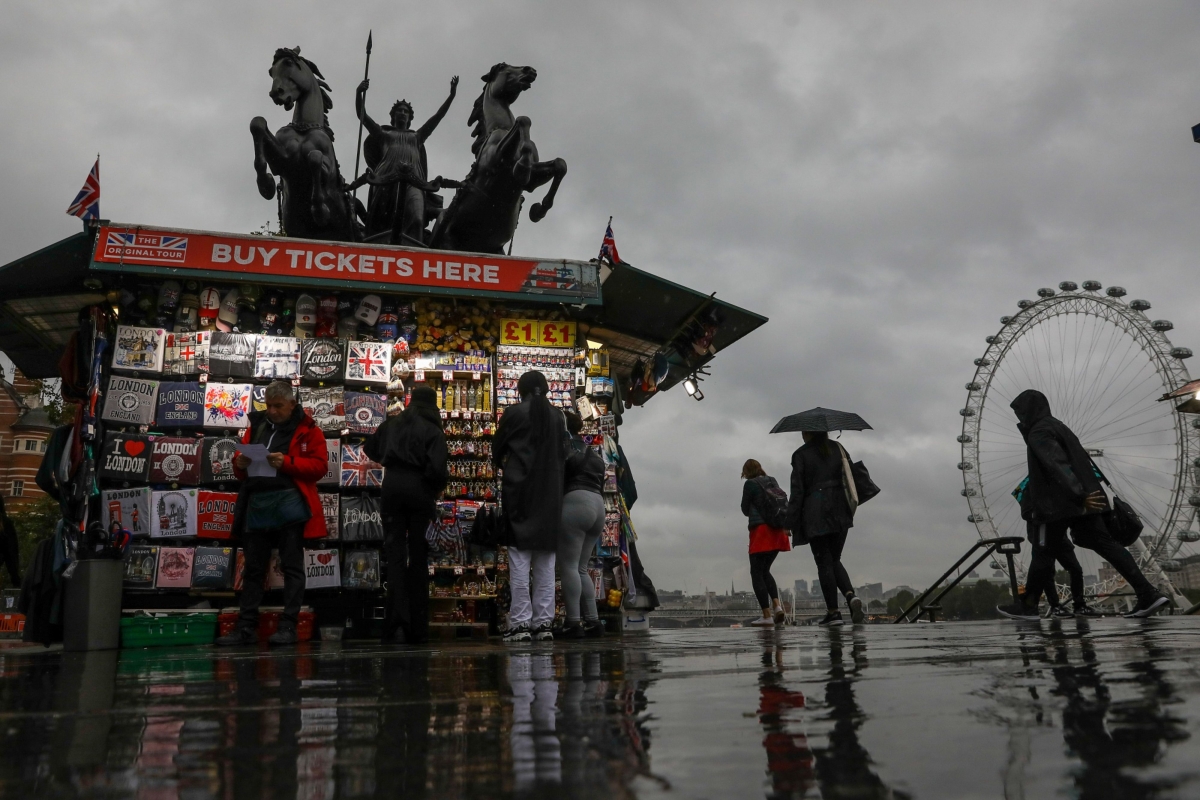
Pedestrians pass a tourist souvenir stall on Westminster Bridge in London on Aug. 27, 2020. MUST CREDIT: Bloomberg photo by Simon Dawson

Pedestrians pass a tourist souvenir stall on Westminster Bridge in London on Aug. 27, 2020. MUST CREDIT: Bloomberg photo by Simon Dawson

And while it’s true that a quieter New York still holds the vibrancy of many small towns combined, Kern feels that this arc of history will bend sharper and faster toward full recovery than any before. “This is a time with more science, more technology. We’re not going to give up.

“This is just one man’s opinion,” he continues. “This [process] will be less than the three to five years others are predicting. If you said tomorrow that there was a vaccine with 100% efficacy, and everyone gets it, do people want to live on a cul-de-sac or in a city? They’d rush back and realize there was a reason they weren’t living in a cul-de-sac before.”

Dim prospects for the suburbs aside, here are Kern’s broader (and rosier) predictions for the short-term future of travel, from a due-any-minute spike in bookings to a “re-upping” of investment into urban restaurants and culture.

Kern firmly holds that news of an impending vaccine-rather than the vaccine itself-is what will jump-start travel again. “People will think, ‘Well, by the summer Europe might be open, or I might have the vaccine, so let’s book it,’ ” he explains.

Pfizer’s announcement last week that its vaccine candidate was 90% effective has not yet shown a quantifiable impact on Expedia’s sales, but it did send the company’s stock price up 22.5% that morning-along with similar spikes for such travel companies as Marriott International and Park Hotels & Resorts.

A shift in consumer confidence doesn’t happen overnight, but it’s been steadily rising, Kern says.

“Barring the vaccine, my sense is that people were getting increasingly comfortable with how safe air travel and hotels are-the precautions that the industry has been taking-and the numbers [of bookings] have been creeping up,” he says. “Of course, it helps if everybody does their part” to keep the virus in check.

The latter half of that thought is crucial: Trusting in airline and hotel protocols matters only when people are physically able to travel. With a second wave forcing lockdowns in much of Europe (and possibly the U.S., soon), consumer confidence may well be a moot point.

Like others in the industry, though, Kern sees his decent-enough summer sales as proof that there is pent-up demand and reason to be hopeful that business can swell quickly again. “It’s all terrible-but it’s way less terrible than one might have imagined,” he concedes.

As travelers decide to take a gamble on 2021 bookings, they’ll take comfort in Kern’s predictions for their favorite urban destinations-regardless of where they may be. That’s because entrepreneurialism is inherently resilient, as Kern puts it.

“Some people will lose money, restaurants, hotels, but I’m not really a believer that a hotel disappears so much as that someone with capital comes in and rescues it,” Kern explains.

That doesn’t mean that small businesses are being swallowed by conglomerates, he claims. He’d prefer to see them serve more as amicable partners. “Local color is what makes places great. But in New York City, many, many restaurants are financed not by the chef or the person with the idea, but by people with capital.” (Don’t tell that to any of the 2.6 million people who live in Brooklyn, where neighborhood pride and indie loyalty go hand in hand.)

Money, he says, is not a scarce resource-even if strapped mom-and-pop operators might disagree right now-nor does it have to fund necessarily upscale businesses, which so far have proven to be a bit more resilient to the pandemic’s pinch. “There is still plenty of capital in the world. There will always be people to finance theater and restaurants and all those things,” Kern asserts.

Many cities may be happy for a lull in visitation: See Amsterdam, Venice, and Barcelona, which have all grappled with overly intense tourism in recent years. So how does that square with Kern, whose company bears weight for much of the mass tourism industry?

“Travel is a force for good, and we want to help people go where they want to go, how they want to go,” he says. “We also want to see the impact of tourism negatively on the planet be reduced, and there are lots of ways that will happen. But the impact has to be driven by mass tourism [as opposed to luxury]; otherwise, it’s modest in relation to the issue.”

Efforts from airlines to push for biofuels and by hotels to be more judicious laundering linens represent large, industry-wide changes that have either taken root or are cresting. And while Kern says that neither Expedia or the travel industry as a whole are “doing enough” to push for sustainability, his plan is to make existing efforts more visible to consumers “so that the consumer can vote with their wallet, and the industry can follow demand.”

These consumers might not know how to evaluate what might be the most efficient or innovative practices. But demand for at least some environmental awareness, he predicts, is likely to grow exponentially-just like our bucket lists in quarantine.

Biden urges a new economic relief package and warns again of a ‘dark winter’ ahead #SootinClaimon.Com

#SootinClaimon.Com : ขอบคุณแหล่งข้อมูล : หนังสือพิมพ์ The Nation.

Biden urges a new economic relief package and warns again of a ‘dark winter’ ahead

InternationalNov 17. 2020Joe BidenJoe Biden 

By The Washington Post · Anne Gearan, Jeff Stein · NATIONAL, BUSINESS, POLITICS, CONGRESS, WHITEHOUSE

WILMINGTON, Del. – President-elect Joe Biden urged Congress to immediately pass an economic relief package Monday as he warned that the coronavirus pandemic will worsen in the coming months.

The incoming Democratic president also criticized President Donald Trump for his refusal to concede his election loss and begin handing over power. Biden called Trump’s unprecedented actions “embarrassing for the country” and irresponsible.

The delay in cooperation is setting back plans for a coordinated rollout of a coronavirus vaccine, Biden said. Most of that rollout would fall to the Biden administration next year, but the Trump White House is not sharing details of its distribution plan.

Trump falsely claims that he won the Nov. 3 election and is holding up the normal transition process for a new president.

“I interpret that as Trumpianism,” Biden said. “No change in his modus operandi.”

Federal help can ease the pain for workers and employers as the virus surges across the country, Biden said as he and Vice President-elect Kamala Harris expressed optimism that businesses and labor unions are ready to work together to reboot the economy.

The holdup is Congress, Biden said, as he criticized Democrats along with Republicans for inaction this fall.

Biden called on Congress to pass a large package approved by House Democrats earlier this year and said they cannot wait any longer to act.

“Refusal of Democrats, Republicans to cooperate with one another is not due to some mysterious force beyond our control. It’s a conscious decision. It’s a choice that we make. If we can decide not to cooperate, we could decide to cooperate.”

As he has before, Biden warned of a “dark winter” ahead as the pandemic continues to spread.

“Things are going to get much tougher before they get easier,” Biden said. He suggested that the economic relief needs to be approved during the lame duck session of Congress while Trump is still in the White House.

“Now,” he said. “Not tomorrow. Now.”

Separately, Biden said he and his family, like many Americans, are rethinking their Thanksgiving plans because of the pandemic. He endorsed public health advice to limit gatherings to 10 people or fewer.

The speech followed one last week on Biden’s approach to tackling the virus, which has killed more than 245,000 Americans. The pandemic that took hold in March continues to widen, and its toll on Americans’ lives and livelihoods hangs over Biden as he plans to assume the presidency in January.

Repairing the economy is entwined with an effective response to the pandemic, Harris said in brief remarks ahead of Biden’s address.

“Now is when the real work begins,” Harris said. “The necessary work, the good work, of getting this virus under control, saving lives and beating this pandemic and opening the economy responsibly while rebuilding it,” she said.

Biden and Harris spoke following a virtual meeting with business and labor leaders that included AFL-CIO President Richard Trumka, General Motors CEO Mary Barra, Microsoft CEO Satya Nadella and others.

“To state the obvious, we seem to be turning a pretty dark corner now,” Biden told the gathering while reporters were present.

As a candidate, Biden claimed that his economic plan would restore the jobs lost this year as businesses shut down or scaled back because of the pandemic and then create 5 million new jobs.

Biden’s speech comes amid deepening worries about the national economy suffering from a nationwide surge in coronavirus illnesses and new restrictions on dining and other economic activities.

When America was first hit with a wave of coronavirus cases, Congress quickly acted on a bipartisan basis to approve more than $2 trillion in emergency aid for laid off workers, distressed businesses, and other sectors of the economy.

With most of that aid expired, the U.S. may be facing a new wave of lockdowns – but this time without federal assistance.

Lawmakers had expressed hope that at least a partial coronavirus relief package could be coupled with an extension in funding for the federal government, which is necessary to avoid a Dec. 11 shutdown. But senior congressional officials have grown increasingly pessimistic that can be achieved in the lame-duck period, according to multiple congressional aides and outside economic advisers.

House Speaker Nancy Pelosi, D-Calif., and Senate Majority Leader Mitch McConnell, R-Ky., have not talked recently about covid negotiations, according to a spokesman for Pelosi.

“President-elect Biden has been emphatic about the urgency of enacting a relief package as soon as possible, including in the lame-duck, to meet the needs of working families, small businesses, state and local governments, and virus control,” said Jared Bernstein, an outside economic adviser to Biden.

Biden spoke to Pelosi and Senate Minority Leader Charles Schumer, D-N.Y., on Friday about the need for a stimulus package, said Ron Klain, the incoming chief of staff for the president-elect. Biden has not spoken to McConnell, Klain said.

“We need action during the lame duck. There are a lot of things that are going to have to wait until Joe Biden is president,” Klain said Sunday on “Meet the Press.” “This is not one of them.”

Trump had pushed aggressively for a deal before the election, but the White House is now expected to take a back seat in negotiations and not offer new stimulus proposals, according to one person granted anonymity to discuss internal administration planning.

The president campaigned on a promise to rebuild what he frequently calls the best economy the country had ever experienced, while blaming the “China virus” for ruining it earlier this year. He has pushed for an end to restrictions on businesses and travel and the reopening of schools, despite the surge, while promising that a vaccine and better treatment are imminent.

“STOCK MARKET GETTING VERY CLOSE TO 30,000 ON NEW VACCINE NEWS. 95% EFFECTIVE!” Trump tweeted Monday.

Biden has not yet pushed Pelosi to take the $500 billion spending plan put forth by McConnell, although Federal Reserve Chairman Jerome Powell has warned that failure to approve more aid could threaten the economic recovery. Powell has not endorsed a specific congressional plan.

“Congressional staff seems to be very gloomy. As of today, spirits are dampened,” said Bill Hoagland, senior vice president at the Bipartisan Policy Center and former Republican staff director for the Senate Budget Committee. “There does not appear to be any movement on either side.”

Congress will face a series of deadlines that could deepen Americans’ economic pain if unaddressed. Unemployment benefits for millions are set to expire, as are protections for renters and student borrowers amid mounting signs Americans are struggling to pay their utility bills and rent.

“It’s a mess,” said Doug Holtz-Eakin, former director of the Congressional Budget Office who served as an adviser to Sen. John McCain, R-Ariz. “People will be evicted; people will not eat; people will have problems. Even if you don’t get a double-dip recession, you have to worry about the 11 million people out of work since April.”

In July, Biden had unveiled a proposal to spend $700 billion on American products and research. The U.S.-focused plan partly mirrors President Trump’s “America First” agenda for prioritizing American jobs, manufacturing and intellectual capital.

Biden’s plan would include $400 billion in federal spending over four years on materials and services made in the United States, as well as $300 billion on U.S.-based research and development involving electric cars, artificial intelligence and similar technologies.

He also advocated a 100-day “supply chain review” that could require federal agencies to buy only medical supplies and other goods manufactured in the United States. And he urged an end to loopholes that let procurement officers and federal contractors get around existing “Buy American” clauses.