Trump campaign mounts legal barrage in 3 states as narrow margins raise stakes for battles over which ballots will count #SootinClaimon.Com

#SootinClaimon.Com : ขอบคุณแหล่งข้อมูล : หนังสือพิมพ์ The Nation.

Trump campaign mounts legal barrage in 3 states as narrow margins raise stakes for battles over which ballots will count

InternationalNov 05. 2020Philadelphia city workers process mail-in ballots in a secure room at the Pennsylvania Convention Center on Tuesday. MUST CREDIT: Washington Post photo by Bonnie Jo Mount
Philadelphia city workers process mail-in ballots in a secure room at the Pennsylvania Convention Center on Tuesday. MUST CREDIT: Washington Post photo by Bonnie Jo Mount 

By The Washington Post · Elise Viebeck, Robert Barnes, Tom Hamburger, Rosalind S. Helderman, Jon Swaine ·NATIONAL, POLITICS, COURTSLAW 
WASHINGTON – Razor-thin vote margins in a half-dozen presidential battleground states are raising the stakes for legal fights over which ballots will count, a strategy that President Donald Trump’s campaign vowed Wednesday to aggressively pursue.

Trump’s reelection campaign said Wednesday it would launch a legal blitz to try to halt vote-counting in Pennsylvania and Michigan and would seek a recount in Wisconsin, threatening to draw out the final results of the razor-thin White House contest.

The campaign’s aggressive legal posture while the presidential race remains unresolved underscored how the close margins in key states have raised the stakes for litigation over which ballots will count. It comes after Trump, who repeatedly has made unsubstantiated claims of fraud in the election, vowed to get the courts to determine the outcome of the race.

Democrats said they were unfazed by what they said was legal posturing by the president’s campaign, noting that former Vice President Joe Biden had narrow lead in all three states. They said they were well prepared to fend off any legal actions.

“We’re winning the election, we’ve won the election, and we’re going to defend that election,” Bob Bauer, a top attorney for the Biden campaign, said Wednesday morning in a call with reporters. “So we don’t have to do anything but protect the rights of voters and to stand up for the democratic process.”

In rapid-fire announcements throughout the day, Trump campaign officials said they planned to file suits to halt vote-counting until more access is granted for Republican observers in Michigan and Pennsylvania; seek to initiate a recount in Wisconsin; and intervene in litigation pending before the Supreme Court over Pennsylvania’s extended deadline for mail ballots.

The campaign also said it would challenge guidance related to voter identification rules for some voters in Pennsylvania, one of a half dozen legal efforts announced by Republicans in the state.

“With these key actions, President Trump is telling all Americans he will do whatever it takes to ensure the integrity of this election for the good of the nation,” deputy campaign manager Justin Clark said in a statement.

Trump said early Wednesday that he wants the Supreme Court to determine which votes should count, falsely claiming victory while millions of votes remained outstanding.

“Frankly, we did win this election,” the president said at the White House. “We did win this election. So our goal now is to ensure the integrity for the good of this nation. This is a very big moment. This is a major fraud in our nation. We want the law to be used in a proper manner. So we’ll be going to the U.S. Supreme Court.”

Legal experts noted that Trump cannot simply seek the Supreme Court’s intervention in the election and stop the counting of ballots.

There is no routine review of election results at the Supreme Court, and the court’s most consequential election case – Bush v. Gore, which effectively determined the outcome of the 2000 presidential race – did not arrive there for about a month.

The court’s power is constrained, and justices can entertain only specific constitutional questions that have risen from lower courts. A direct appeal from the president to intervene in an election does not count under these rules.

“You can’t bring a case directly to the Supreme Court in an election dispute … And there’s no legal cause of action that says, ‘Stop the count and declare me the winner,’ ” said Joshua Douglas, law professor at the University of Kentucky’s Rosenberg College of Law.

Bauer said that if Trump at some point sought to go before the court to try to stop the counting of ballots that were lawfully cast, “he will be in for one of the most embarrassing defeats the president ever suffered before the highest court of the land.”

In Pennsylvania, Gov. Tom Wolf, D, called the effort to stop ballot counting in the state an attempt “to subvert the democratic process.”

“Pennsylvania will fight every attempt to undermine the election,” he said. “We will count every vote.”

In Wisconsin, Elections Commission Administrator Meagan Wolfe rejected the idea that there have been irregularities in the state’s count, telling reporters that the election “proceeded in a very normal fashion.”

Her comments to reporters came after Trump campaign manager Bill Stepien said in a statement that the campaign would request an immediate recount of the vote in Wisconsin, citing “reports of irregularities in several Wisconsin counties which raise serious doubts about the validity of the results.”

Wolfe said that the counting for the 2020 election had gone exceptionally smoothly and to suggest otherwise was an “insult” to election workers who had prepared carefully for the day.

She noted that the counting process was open to the public from start to finish. Some localities even live-streamed images of their absentee ballot counting. “There are no dark corners or locked doors in elections,” she said. “Anyone was free to watch.”

In Michigan, which Edison Research projected Biden would win, Democrats said that the lawsuit the Trump campaign filed seeking to halt vote-counting was preposterous – calling it a stunt designed to promote a false White House narrative of fraud in the counting of mail ballots.

“My understanding is counting of ballots across the state is nearly complete,” said Christopher Trebilcock, an election law specialist representing Democratics in the state. “The case is moot. If they want to challenge the results of the election after all legal votes are cast, Michigan law has a process for that after the canvass is complete.”

Whether any case ends up before the Supreme Court remains to be seen. The most obvious path for a review by the high court would be specific challenge to ballots in a closely divided state that could tip the results of the election.

The Supreme Court’s work typically comes after a ruling in a case by a local judge that has gone through the appellate process. In Bush v. Gore, the court was reviewing decisions of the Florida Supreme Court, for instance, and issued its opinion Dec. 12, with the deadline for naming members of the electoral college looming.

Extended deadlines for returning mail ballots in many states were already hotly contested in courts before Election Day. But some key cases were not heard by the Supreme Court, which could agree to accept appeals of those suits – now with a new conservative justice, Amy Coney Barrett, on the bench.

In Pennsylvania, the state Supreme Court allowed mail ballots postmarked by Election Day to count if they arrive by the end of the day on Nov. 6, delivering a win for voting rights advocates and Democrats who argued voters deserved more time because of the pandemic and delays in the mail.

Republicans twice sought help from the U.S. Supreme Court and were rebuffed, but Justices Clarence Thomas, Samuel Alito and Neil Gorsuch suggested they are open to revisiting the case after the election.

“There is a strong likelihood that the State Supreme Court decision violates the Federal Constitution,” Alito wrote.

“The provisions of the Federal Constitution conferring on state legislatures, not state courts, the authority to make rules governing federal elections would be meaningless if a state court could override the rules adopted by the legislature simply by claiming that a state constitutional provision gave the courts the authority to make whatever rules it thought appropriate for the conduct of a fair election,” Alito added.

The three justices said the commonwealth should segregate those ballots that are delivered after Election Day in case of further legal action, and state officials agreed.

The Trump campaign on Wednesday afternoon filed a brief seeking to intervene in that case.

A Democratic lawyer who spoke on the condition of anonymity to discuss the Biden team’s legal strategy in Pennsylvania said the campaign believes the best thing it can do is stay out of the way of election officials as they work through the count.

The Biden team believes it has a strong argument under a legal principle known as the reliance interest, which protects voters relying on instructions they received on how to vote legally, the lawyer said.

“The Supreme Court really cares about the reliance interest,” the lawyer said. “You could see them saying, ‘Yes, we believe that the state courts overstepped their bounds here, but we are not going to throw out ballots that voters believed at the time were lawfully cast.’ “

Whether the Supreme Court plays a role in post-election legal fights could depend on how close the results are.

Douglas said that the question of who has authority to extend a state’s mail ballot deadline is “certainly a live legal issue” but that he does not expect the issue to rise to the Supreme Court during the 2020 presidential election unless the vote margins are extremely narrow.

Even then, four justices would have to agree to take a case that risks further politicizing the court. Alito, Thomas and Gorsuch might agree, Douglas said, but it’s unclear whether Chief Justice John Roberts Jr. or Justice Brett Kavanaugh would want to – “and we have no idea about Barrett.”

“I don’t think resolving Trump v. Biden is something the justices want to do,” he said. “I think certainly Chief Justice Roberts is very concerned about the institutional legitimacy of the court. I don’t think it’s the sort of things he wants the court to resolve.”

Aziz Huq, a constitution law professor at the University of Chicago, said he thinks that it is “unlikely that there will be a dispute about ballot-counting that will reach the Supreme Court.”

He pointed out that if Wisconsin turns out to be a tipping point state, Republicans have already brought litigation about the ballot deadline in that state to the Supreme Court and won.

Meanwhile, Republicans filed a slew of new suits after polls opened Tuesday.

In Pennsylvania, a GOP congressional candidate filed a federal lawsuit against authorities in Montgomery County seeking to toss out mail ballots with errors that were fixed by voters before Election Day. A second Republican lawsuit in state court claimed that Pennsylvania Secretary of State Kathy Boockvar, D, broke the law by advising county officials Monday to help voters resolve errors discovered on their ballots.

The Democratic National Committee has intervened in both cases, arguing the Republican candidate lacked standing to bring her lawsuit and did not demonstrate “future irreparable harm,” and that Democratic candidates could be harmed by the statewide case.

In another lawsuit filed Tuesday, the Trump campaign accused Bucks County election officials of inappropriately disclosing the identities of voters with defective ballots to party observers seeking to help them correct the errors. A judge rejected the petition; the campaign did not respond to a question about whether it plans to appeal.

In yet another case, the Trump campaign appealed against a court’s rejection of its request to be able to observe ballot counting in Philadelphia more closely.

A presiding Election Day judge ruled on Tuesday that Trump’s observers were given enough access and that county officials were not required to allow them to “observe the writing on the outside of the ballots.”

The Trump campaign filed a notice on Wednesday that it would challenge the decision in Commonwealth Court. It did not immediately set out its arguments.

Nevada, where Biden clung to a tiny margin Wednesday morning, has already seen a slew of last-minute GOP suits challenging the counting process.

The state Supreme Court on Tuesday night unanimously rejected a request from the Nevada Republican Party and the Trump campaign to halt the counting of some mail ballots in Clark County, a Democratic stronghold where votes for Biden would be key to his potential victory.

As a result, Clark County will be able to continue counting most mail ballots under its current protocol. County officials must count any mail ballots postmarked by Election Day that arrive by Nov. 10, and they must complete their canvass by Nov. 16.

As of Wednesday afternoon, Biden held a narrow lead of fewer than 8,000 votes in Nevada, but there many mail and provisional ballots left to count, including mail ballots received up to a week after Election Day.

In an interview Tuesday, Gov. Steve Sisolak, D, said that the legal tactics were an effort by Republicans to undercut the Democratic advantage.

“They’re knocking on courthouse doors, and we’re knocking on Nevada doors,” Sisolak said. “I have confidence that the court system is going to see these for what they are.”

Analysis: Here’s where the election stands and what’s next #SootinClaimon.Com

#SootinClaimon.Com : ขอบคุณแหล่งข้อมูล : หนังสือพิมพ์ The Nation.

Analysis: Here’s where the election stands and what’s next

InternationalNov 05. 2020Mail ballots are scanned in a secure room at the Pennsylvania Convention Center in Philadelphia on Tuesday. MUST CREDIT: Washington Post photo by Bonnie Jo Mount
Mail ballots are scanned in a secure room at the Pennsylvania Convention Center in Philadelphia on Tuesday. MUST CREDIT: Washington Post photo by Bonnie Jo Mount 

By The Washington Post · David Weigel · NATIONAL, POLITICS 

The morning after the 2020 election, there are millions of votes left to count, as expected. More than 2 million of them, as of Wednesday morning, are coming from the pivotal states of Michigan, Pennsylvania and Wisconsin – as expected. The president used his election night megaphone to declare victory, urge a halt to the vote count and encourage lawsuits to challenge ballots expected to break against him. That was expected, too.

But anyone who tells you they expected the race to end this way, from congressional candidates to party strategists to newsletter editors, is not telling you the truth. There are Republicans across the country who woke up Tuesday girding for defeat and woke up Wednesday getting ready for their Capitol Hill orientations; there are Democrats who assumed that Joe Biden could never run behind Hillary Clinton’s numbers with working-class White voters and are confounded by the places where he did.

The Trump and Biden campaigns spent the morning laying out their paths to victory, with Democrats emphasizing the gains they expected to make in the mail ballots that were counted last in Michigan and Pennsylvania and Republicans suggesting two things: that Democrats’ estimate of the mail ballots was off and that they’d win enough of the outstanding vote in Nevada and Arizona to take those states back out of Joe Biden’s column.

Republicans working down-ballot races had more to celebrate: They clearly broke through in some places that had remained Democratic as recently as 2018, holding on to the Senate, reducing Democrats’ numbers in the House and denying Democrats majorities in state legislatures that looked to be trending that way a week ago.

“The president ran a heck of a race,” said Senate Majority Leader Mitch McConnell, R-Ky. “Everyone said he had no shot, [but he] turned it into a cliffhanger against everybody’s expectations. I think it helped us in our Senate races.”

Here are the immediate questions.

– – –

Who’ll win the presidential election? 

That depends on outstanding ballots in the states that have yet to be called, which fit into two categories. In Arizona, Georgia and Nevada, ballots that did not arrive by Election Day will not be counted. In North Carolina and Pennsylvania, there’s a grace period: Ballots that were postmarked by Nov. 3 can be counted if they show up by Nov. 12 and Nov. 6, respectively.

The president, and many pro-Trump voices in conservative media, are attempting to spread confusion, portraying any ballots counted now as mysteriously pro-Biden. “They are finding Biden votes all over the place,” Trump tweeted Wednesday afternoon. But as we knew going into today, there’s a reason that so many absentee ballots, cast days before the election was over, were not counted quickly: Republican legislators in Michigan and Pennsylvania, in particular, rejected Democrats’ proposal to allow ballots to be processed before Nov. 3. States that did so, such as Ohio, rocketed through their first vote count; states that did not are working through them now.

The Trump and Biden campaigns are describing paths to victory, in different terms. On Wednesday morning, Trump campaign manager Bill Stepien said the president would win after every “legal” ballot got counted; Biden campaign manager Jennifer O’Malley Dillon noted that “if Donald Trump got his wish, and we stopped counting ballots right now, Vice President Joe Biden would be the next president of the United States.”

– – –

How is that possible? 

Because the unfinished count Wednesday afternoon had the president trailing in Arizona, Nevada and Wisconsin. The Trump campaign’s hope last week was for the president to be clearly ahead on the first counts, which did not include most mail ballots. That did not happen, denying the president the situation that boosted George W. Bush in the contested 2000 election: an early, erroneous call by networks that left many voters thinking he’d won the election and Democrats were trying to “steal” it.

That’s hard to do in this context. When Republican activists showed up to a Detroit ballot count Wednesday, shortly after the Trump campaign announced that it would sue to stop the count until its observers could watch it, Biden held a lead in the Michigan count about 40 times bigger than the one Bush held at the start of the Florida recount.

– – –

What happens next? 

Lots of counting, and lots of lawsuits. The unrest that leaders worried about in big cities did not pan out; a violent clash in the District of Columbia and some flag-burning in Portland, Ore., was about as bad as it got. But as ballots are tallied in the closest states, watch for dueling rallies outside the counting centers, as we saw after Florida’s close 2018 election and, more famously and dramatically, after the 2000 election.

The state to watch: Pennsylvania, where the gap between absentee ballots and in-person Election Day votes has been as massive as expected. And that is what Democrats feared. Republicans had focused on Philadelphia, where they have long baselessly accused Democrats of holding back votes until they know what they need to win the state, in their pre-election poll-watching; the Trump campaign shared videos that it claimed to show a voter putting mail ballots in a drop box, and a poll watcher being denied entry to a voting site he was later allowed into.

States will not officially certify results for weeks, and the Trump campaign has announced that it will request a recount in Wisconsin, which processed ballots quickly and found Biden leading by a bit more than Trump’s 2016 margin there. A recount that year, requested by Green Party nominee Jill Stein, found a net 131-vote gain for Trump; several Trump allies in Wisconsin, such as former governor Scott Walker, have already said Biden’s 20,000-odd vote margin is larger than any recount, historically, has overturned. (Biden’s margin is bigger than the 0.25 percentage points that trigger a state-funded recount; a campaign can request a recount if the margin is below 1% and it’s willing to pay for it.)

By seeking a recount at all, the Trump campaign is working the refs a bit, urging media outlets to avoid another call like the one, by The Associated Press and Fox News, that put Arizona on Biden’s map. So long as the election is close, rumors ranging from Sharpies canceling Republican ballots in Arizona (they are not) to a mysterious six-figure addition of Biden votes in Michigan (it was a technical error undone later Wednesday morning) to unspecified allegations in Philadelphia will persist.

“We’re winning the election, we’ve won the election, and we’re going to defend that election,” Biden campaign attorney Bob Bauer said Wednesday.

– – –

What else is up in the air? 

Dozens of House races, Senate races in Alaska, Michigan and North Carolina, and two more Senate races that could go to runoffs in Georgia. And it’s too early to assess how votes and demographics shifted until more votes are counted. 

Americans try to act and feel normal on day of uncertainty, inner turmoil #SootinClaimon.Com

#SootinClaimon.Com : ขอบคุณแหล่งข้อมูล : หนังสือพิมพ์ The Nation.

Americans try to act and feel normal on day of uncertainty, inner turmoil

InternationalNov 05. 2020Election officials from the Allegheny County Elections Division look for a particular bin of ballots on Nov. 4, 2020, at the elections warehouse in Pittsburgh, Penn. The bin was thought to have been left at a polling place but the search revealed it was indeed in this warehouse. MUST CREDIT: Washington Post photo by Michael S. Williamson
Election officials from the Allegheny County Elections Division look for a particular bin of ballots on Nov. 4, 2020, at the elections warehouse in Pittsburgh, Penn. The bin was thought to have been left at a polling place but the search revealed it was indeed in this warehouse. MUST CREDIT: Washington Post photo by Michael S. Williamson 

By The Washington Post · Maura Judkis, Ellen McCarthy, Ashley Fetters · NATIONAL, FEATURES, POLITICS
Vanessa Council needed something to take her mind off the unbearable wait for election results, and she decided it would be the chickens that live inside her phone. The morning of the election, the 28-year-old graphic designer from Northampton County, N.C., downloaded a game called Egg, Inc., which allows users to immerse themselves in the life of a chicken farmer. 

“The more chickens you have, the more eggs you have, and the more eggs you have, the more trucks you need to ship the eggs,” says Council. 

By noon Wednesday, as incoming ballot tranches scrambled maps and minds, Council reached a level of the game called “Quantum egg.”

What does that mean? Doesn’t matter. Any math beats electoral math.

America went to bed on Tuesday night without knowing who the president would be, and woke up not knowing when they would find out the answer. And so people held their breath and tried to do normal things to get through a very abnormal day. 

Susie Shaffer, 69, of Silver Spring, Md., scrubbed her freezer. 

“Cleaning out a closet or scrubbing a floor, you know, the gratification is immediate, which is I think is what I need right now,” says Shaffer. The longer the count takes, the cleaner her house will get. With some results not expected until Thursday or beyond, she paced herself. “I’ve told my sons they can’t rake the leaves,” she says, “because I need to save that for later, if necessary.”

Shelley Laabs Weber, 41, of San Antonio, wrangled her kids into virtual school, while furtively checking her phone every few minutes. All day long, she had a song called “The Next Right Thing” stuck in her head. It’s from the movie “Frozen 2,” one of her kids’ favorites, but the lyrics are pretty grim.

Hello, darkness, I’m ready to succumb . . .

But first, the day. “Today, the next right step was feeding my children tacos and sending them to school like everything is normal and like the adults aren’t all freaking out,” she says. 

Wednesday was Lexi Goldwyn’s 24th birthday, not that anyone in the District of Columbia noticed. Her mom called her early in the morning to talk about the election. 

“And then she hung up, and then she called me right back and was like, ‘Oh, my God, I didn’t even wish you happy birthday,’ ” she says. 

Yes, we were warned. Experts talked for days about how, due to the large number of mailed-in ballots and states’ varying timelines for counting them, a long wait was probable.

Still, it was hard to prepare for the feeling of uncertainty. 

Jessica MacNair, 39, a therapist in Falls Church, Va., planned weeks ago to take Wednesday off, and advised several therapists in her practice to do the same as they attended to their own angst. 

“It’s not always best practice to work with people who are mirroring your issues,” MacNair said.

And yet her phone kept buzzing. Not with news alerts, but texts from clients asking if she had openings for that day, or anytime soon. 

“People just aren’t coping very well,” MacNair says. 

Others in politics weren’t faring much better. Marjorie Dannenfelser, president of the antiabortion group Susan B. Anthony List, spent election night at the White House, and characterized the time since then as “not relaxing.” 

“I’ve spent the last 16 hours making calls to our top donors, to our endorsed candidates, congratulating some very hard fought victories,” Dannenfelser said via email. But the uneasy wait would go down smoother with some fizzy, alcoholic refreshment. “Plan to have a White Claw soon,” she added.

Retired Air Force Gen. Michael Hayden, meanwhile, was feeling slightly more optimistic Wednesday than he was Tuesday night about a Biden victory. The former director of the National Security Agency and the Central Intelligence Agency was among the prominent Republicans who had endorsed Biden.

The Pennsylvania native kept a hopeful eye on election results in his home state, but he did not plan to turn any TV news coverage back on until later Wednesday evening. His wife, he says, wants to start Season 2 of “Schitt’s Creek.”

The outcome may come later, but nobody knows for sure when the uncertainty will be resolved. So Lisa Honan, 39, a project officer with the Environmental Protection Agency who lives in King of Prussia, Pa., spent much of Wednesday putting up Christmas decorations and trying not to think about the careers of her and her husband, who works for the National Park Service. 

“It’s a good thing I’m medicated for my anxiety normally,” Honan sighs. “That helps.”

Over in Queens in New York City, performance artist Christen Clifford, 49, had planned a whole list of activities to get through the wait: a walk in Forest Park, talks with friends, a yoga session, some plants to repot, donations to make to a local food pantry. 

A long, long list of stuff to keep her mind and body occupied. How was that working out for her? 

“Well,” she reported, approaching midday. “I’m still in bed.”

USPS data shows thousands of mailed ballots missed Election Day deadlines #SootinClaimon.Com

#SootinClaimon.Com : ขอบคุณแหล่งข้อมูล : หนังสือพิมพ์ The Nation.

USPS data shows thousands of mailed ballots missed Election Day deadlines

InternationalNov 05. 2020Photo by: The Washington Post — The Washington Post
Photo by: The Washington Post — The Washington Post 

By  The Washington Post · Jacob Bogage, Christopher Ingraham · NATIONAL, POLITICS, COURTSLAW 
WASHINGTON – Nearly 7% of ballots in U.S. Postal Service sorting facilities on Tuesday were not processed on time for submission to election officials, according to data the agency filed Wednesday in federal court, potentially leaving tens of thousands of ballots caught in the mail system during an especially tight presidential race.

The Postal Service reported the timely processing – which includes most mail-handling steps outside of pickup and delivery – of 93.3% of ballots on Election Day, its best processing score in several days, but still well below the 97% target that postal and voting experts say the agency should hit.

The Postal Service processed 115,630 ballots on Tuesday, a volume much lower than in recent days after weeks of warnings about chronic mail delays. Of that number, close to 8,000 ballots were not processed on time, a small proportion but one that could factor heavily in states such as Michigan and Wisconsin, which do not accept ballots after Election Day and could be decided by a few thousand votes.

Earlier Tuesday, U.S. District Judge Emmet Sullivan of the District of Columbia ordered the Postal Service to sweep 12 postal processing facilities that cover 15 states for ballots. The agency rebuffed that order and said it would stick to its own inspection schedule, which voting rights advocates worried was too late in the day for found ballots to make it to vote counters.

The directive came after the Postal Service disclosed that more than 300,000 ballots nationwide could not be traced. Those ballots received entry bar code scans at processing facilities, but not exit scans. The agency said the likelihood of that many ballots being misplaced was very low; mail clerks had been ordered to sort ballots by hand in many locations and items that were pulled out for expedited delivery were not given an exit scan.

“We know yesterday that if the sweeps were doing their job, mail that was identified as ballots and were in the system should have been pulled out and delivered, and it may be that affects what we see as the scores,” said Allison Zieve, an attorney representing the NAACP, which brought the lawsuit against the Postal Service with other civil and voting rights groups. “The problem is, in part because of the timing and in part because they haven’t given us all the information we asked for, it’s hard to know whether the numbers we saw today – the low scores for example in Atlanta and Central Pennsylvania – it’s hard to assess how big a problem that is.” 

About 101 million Americans cast their ballots before Election Day, according to an early vote tally maintained by Michael McDonald at the University of Florida, with roughly 60 million others voting in-person on Election Day. Given the widely publicized issues with mail delivery, experts last week began advising absentee voters to drop off their ballots in person rather than send them by mail. The high rates of early voting led to generally uncrowded conditions at polling places nationwide on Election Day, although long lines were reported in some areas.

Sullivan had given the mail agency until 3:30 p.m. Tuesday to conduct the “all clear” checks to ensure that any found ballots could be delivered before polls closed. But in a filing sent to the court just before 5 p.m., Justice Department attorneys representing the Postal Service said the agency would not abide by the order, to better accommodate inspectors’ schedules.

Attorney John Robinson, writing for the Justice Department, noted that the daily review was already scheduled to occur from 4 to 8 p.m. on election night. “Given the time constraints set by this Court’s order, and the fact that Postal Inspectors operate on a nationwide basis, Defendants were unable to accelerate the daily review process to run from 12:30 pm to 3:00 pm without significantly disrupting preexisting activities on the day of the Election, something which Defendants did not understand the Court to invite or require.”

“This is super frustrating,” Zieve said Tuesday. “If they get all the sweeps done today in time, it doesn’t matter if they flouted the judge’s order. They say here they will get the sweeps done between 4 p.m. and 8 p.m., but 8 p.m. is too late, and in some states 5 p.m. is too late.”

Sullivan was incensed during Wednesday’s hearing over the sweeps, accusing the Postal Service of attempting to run the clock out on his order to avoid conducting the sweeps.

“It just leaves a bad taste in everyone’s mouth for the clock to run out – game’s over – and then to find out there was no compliance with a very important court order,” he said.

He said that at some point, he would order Postmaster General Louis DeJoy to appear before the court or sit through a sworn deposition, and intimated that he’d consider contempt charges against postal leadership, saying “someone might have to pay a price,” for defying his order.

It was DeJoy’s aggressive cost-cutting regimen, according to postal experts, that created sustained slowdowns in the mail service that over one five-week span delayed more than 7% of the nation’s first-class mail.

The Postal Service began election mail “all clear” sweeps in January, agency spokesman David Partenheimer wrote in an emailed statement, to search for misplaced political mail (such as campaign ads) and election mail (ballots, ballot applications and voter registration information).

Since Thursday, he said, agents from the U.S. Postal Inspection Service, the agency’s law enforcement arm, conducted daily reviews at 220 ballot processing facilities. Inspectors walk the facility and observe mail conditions and check daily political- and election-mail logs.

In the past 14 months, Partenheimer said, the Postal Service has processed more than 4.5 billion pieces of political and election mail, up 114% from the 2016 general-election cycle.

“Ballots will continue to be accepted and processed as they are presented to us and we will deliver them to their intended destination,” Partenheimer said.

Timely ballot processing scores, which indicate the proportion of ballots sorted, postmarked and transported within the agency’s one-to-three-day service window, worsened in the run-up to Election Day, according to data the agency submitted to the court. In 28 states, election officials must receive ballots by the end of Election Day to be counted.

Voting and postal experts say the mail agency should be able to process 97% of incoming ballots – or completed ballots sent to election officials. But data shows the Postal Service missed that mark seven out of eight days. And in the five days ending Monday, processing scores dropped, from 97.1% to 89.6% on Monday. (The Postal Service did not report Sunday data.)

In 17 postal districts that cover 151 electoral votes, Monday’s on-time processing rate was even lower: 81.1%.

Sullivan on Tuesday ordered officials from the Postal Inspection Service, the agency’s law enforcement arm, or the Postal Service Office of Inspector General, its independent watchdog, to inspect all processing facilities in the districts of Central Pennsylvania, Philadelphia Metro, Detroit, Colorado/Wyoming, Atlanta, Houston, Alabama, Northern New England (Vermont, New Hampshire and Maine), Greater South Carolina, South Florida, Lakeland (Wisconsin) and Arizona (which includes New Mexico) by 3 p.m.

The Postal Service continued Tuesday to try to track down the more than 300,000 ballots it said had entered processing plants but could not be traced. In 17 postal districts in swing states that account for 151 electoral votes, more than 81,000 ballots were untraceable. In Los Angeles, 48,120 ballots were missing, the most of any district. San Diego was next, with 42,543 unaccounted.

“At this point,” said Zieve, “we don’t have any way of knowing if those ballots are of concern or if they aren’t.”

Sullivan has been more aggressive than judges in Pennsylvania, New York and Washington state to grant increased oversight of the mail system. He has ordered the Postal Service to report daily data on ballot performance scores and to provide written explanations each day for underperforming districts.

He has scheduled daily hearings – some of which have included sworn testimony from postal executives – on the agency’s struggles. On Monday, he lamented the nation’s crazy-quilt of mail-in-voting rules, saying the system should be overhauled.

“When I read about the astronaut voting seamlessly from outer space, there must be a better way for Congress to address all these issues,” he said.

Sullivan contrasted the chaotic mishmash of Election Day rules with the relative simplicity of the federal income-tax deadline: “Think about it. Every year everyone knows to file taxes by April 15th. It’s seamless. If you don’t file, there’s penalties. But everyone knows – that’s a given.”

By contrast, state vote-by-mail deadlines present a spaghetti-like tangle for the Postal Service and voters to navigate.

“Postmarks matter, postmarks don’t matter. … Delivery matters, delivery after a date doesn’t matter. Why can’t there be one set of rules?” Sullivan said, concluding, “Someone needs to be tinkering with the system to make sure it works seamlessly and better for the American voters.”

U.S. picks Taiwan for first armed drones sale under eased rules #SootinClaimon.Com

#SootinClaimon.Com : ขอบคุณแหล่งข้อมูล : หนังสือพิมพ์ The Nation.

U.S. picks Taiwan for first armed drones sale under eased rules

InternationalNov 05. 2020A U.S. Air Force MQ-9 Reaper unmanned aerial vehicle drone stands on display during the Singapore Airshow at the Changi Exhibition Centre in Singapore on Feb. 11, 2020. MUST CREDIT: Bloomberg photo by SeongJoon Cho.
/Photo by: SeongJoon Cho — Bloomberg
Location: Singapore, SingaporeA U.S. Air Force MQ-9 Reaper unmanned aerial vehicle drone stands on display during the Singapore Airshow at the Changi Exhibition Centre in Singapore on Feb. 11, 2020. MUST CREDIT: Bloomberg photo by SeongJoon Cho. /Photo by: SeongJoon Cho — Bloomberg Location: Singapore, Singapore 

By Syndication The Washington Post,  Bloomberg · Iain Marlow, Samson Ellis

The U.S. will sell Taiwan armed Reaper drones in a $600 million deal that will likely further anger China and help lock in a shift in American military support for Taipei during the next presidential administration.

The State Department on Tuesday approved the proposed sale of the four weapons-ready MQ-9B drones from General Atomics — capable of carrying laser and GPS-guided munitions — along with radar, sensors and ground control stations for flying the aircraft. It was the first time the U.S. has approved the sale of armed drones since the Trump administration eased export restrictions in July.

“This proposed sale will improve the recipient’s capability to meet current and future threats by providing timely Intelligence, Surveillance, and Reconnaissance, target acquisition, and counter-land, counter-sea, and anti-submarine strike capabilities for its security and defense,” the State Department said in a statement. “The capability is a deterrent to regional threats and will strengthen the recipient’s self-defense,” it said.

The move comes shortly after similar approval in recent weeks for two arms sales worth a total of $4.2 billion for the democratically controlled island, which Beijing considers part of its territory. The deals leading up to Tuesday’s election in the U.S. continue a notable shift away from the sale of more traditional, expensive weapons platforms — such as warplanes and tanks — toward a so-called “hedgehog” defensive strategy designed to make the costs of a Chinese invasion too high by deploying nimble weapons such as mobile missile systems, mines and drones.

China’s military has continued to pile pressure on Taiwan, with People’s Liberation Army aircraft breaching the island’s air defense identification zone on a near-daily basis. Tensions are also high between the world’s two biggest economies, with China featuring prominently in election rhetoric between President Donald Trump and Democratic nominee Joe Biden.

Chinese Foreign Ministry spokesman Wang Wenbin called the latest arms sale a “severe violation” of the one-China principle and urged the U.S. to “immediately cancel its arms sale plans to avoid further damaging China-U.S. relations.”

“It grossly interferes in China’s domestic affairs and gravely undermines China’s sovereignty and security interests,” Wang told a daily briefing in Beijing on Wednesday. He vowed China would “take legitimate and necessary responses in light of the changing developments,” without elaborating.

While the U.S. recently sold Taipei F-16 warplanes and Abrams tanks, military analysts have argued that these expensive acquisitions are particularly vulnerable should China launch a barrage of missiles to knock out the island’s defenses — including parked jets and vehicles, runways and military facilities — ahead of an invasion.

“The trend for U.S. security assistance to Taiwan is to shift away from large platforms and systems like the F-16V fighters and M1A2 Abrams tanks sold to Taiwan in 2019,” said Shirley Kan, an independent specialist in Asian security affairs and a member of the research organization Global Taiwan Institute’s advisory board.

Taiwan has also scrambled around 3,000 jets this year as Chinese military aircraft fly close to the island, and a crash of an aging F-5 fighter has fueled concerns about the age of its fleet.

“The main benefit of these drones will be to improve our surveillance and detection capabilities in the Taiwan Strait,” Shu Hsiao-huang, assistant research fellow at the Taipei-based Institute for National Defense and Security Research, said, citing their ability to stay in the air for long periods. “This will help us maintain stronger surveillance on the areas around Taiwan.”

Anxious electorate lifts turnout in key states #SootinClaimon.Com

#SootinClaimon.Com : ขอบคุณแหล่งข้อมูล : หนังสือพิมพ์ The Nation.

Anxious electorate lifts turnout in key states

InternationalNov 04. 2020Voters wait outside West Allis City Hall near Milwaukee, Wis., on Nov. 3, 2020. MUST CREDIT: Photo for The Washington Post by Sara StathasVoters wait outside West Allis City Hall near Milwaukee, Wis., on Nov. 3, 2020. MUST CREDIT: Photo for The Washington Post by Sara Stathas 
By The Washington Post · Jenna Johnson, Jose A. Del Real · NATIONAL, POLITICS

A record number of Americans are expected to have voted in this year’s presidential election, making their voices heard at a time when the country is tensely polarized and battling a deadly pandemic.

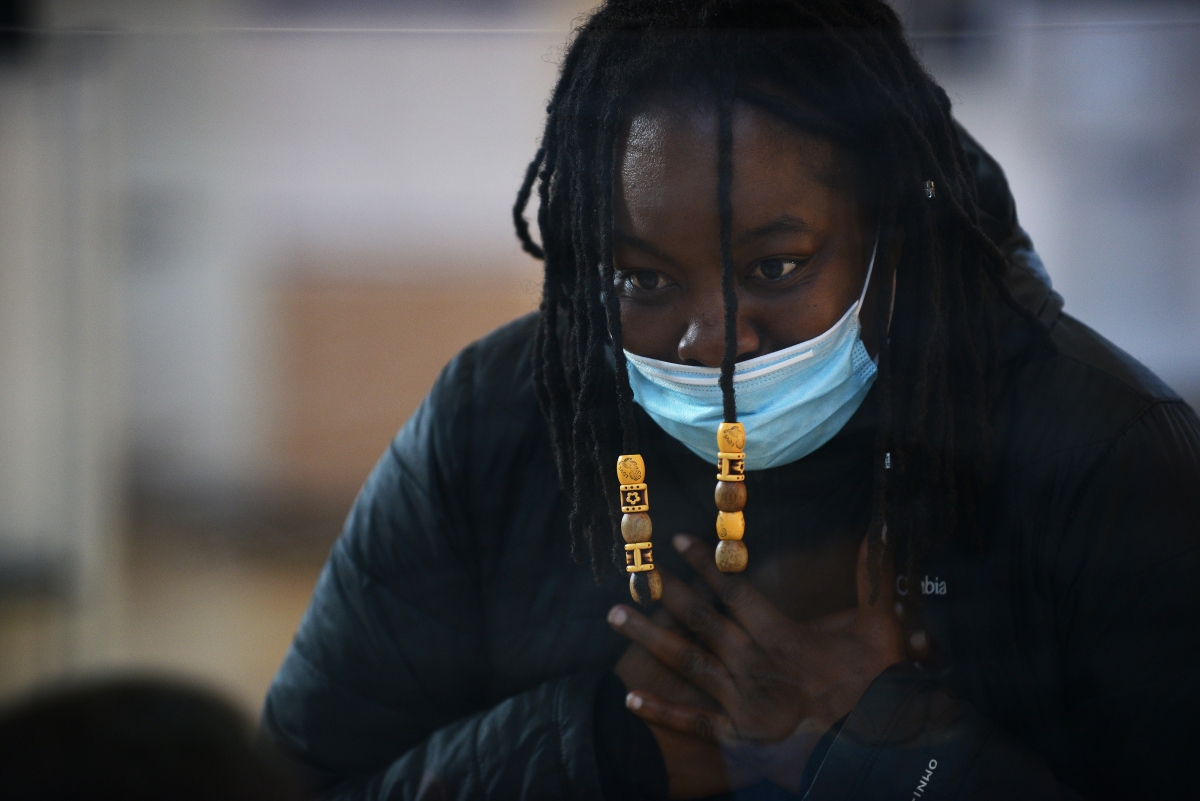
First-time voter Quanique Beasley, 33, is excited about voting for the first time on Nov. 3, 2020, in Washington, D.C. MUST CREDIT: Photo for The Washington Post by Astrid Riecken

First-time voter Quanique Beasley, 33, is excited about voting for the first time on Nov. 3, 2020, in Washington, D.C. MUST CREDIT: Photo for The Washington Post by Astrid Riecken

Even before Election Day, more than 100 million Americans had cast their ballots, nearly three-quarters of the total number in 2016. With the stakes high for supporters of both candidates, voters shattered records in several key states.

In six states, voters cast more ballots during early voting than they did during the entire election in 2016, and then grew those numbers on Election Day. Nine additional states came close to doing the same.

It was still unclear late Tuesday which candidate would benefit most from these increases in a race that was neck and neck.

President Donald Trump took Florida, a perennial battleground, where more than 11 million voted – an increase of nearly 1.6 million compared with 2016. In Florida’s Miami-Dade County, a Democratic stronghold that has a high concentration of Latino voters, Joe Biden led Trump by about 83,000 votes – a far smaller lead than the 290,000-vote margin Clinton had in 2016.

Democratic strategists in Florida had long worried that the national party was not investing enough resources between presidential election cycles to build sustained support among Latino voters. Meanwhile, the Trump campaign heavily focused on the state’s Latinos, particularly Cuban Americans, for years.

A different story played out in Arizona, a new battleground state, where Biden was leading with more than 76% of votes counted. Democrats hoped this would be a culmination of a decade of grass-roots political organizing among Latinos. Political activists have insisted that Arizona could have flipped in 2016 if national Democrats had invested more money earlier.

In both of these states, Latinos will probably play a deciding role. Early exit polls suggest that while Biden won the Latino vote 2 to 1 nationally, Trump improved his standing among Latino voters in at least two swing states since 2016: Florida and Georgia.

Some of the largest spikes in voter participation appeared in states that Trump easily won in 2016 but have since become battlegrounds because of rapid changes in their populations: Texas, Georgia, Arizona and North Carolina. All of these states have seen an influx of new arrivals, often Democrats relocating from places such as California, New York and Illinois, and large numbers of young people of color turning 18 each year. There has also been a number of Republicans and right-leaning independents repelled by Trump who were willing to vote for Democrats.

Swing states that have long been key to both campaigns saw different levels of early voting. Pennsylvania, which was decided by just over one percentage point in 2016, had about 2.5 million votes cast early, which was roughly 40% of the total number in 2016. Wisconsin was at about 65% of its 2016 number, and Michigan was at nearly 60%.

Over the past several months, both presidential campaigns targeted voters who didn’t participate in 2016 to try to persuade them to vote this year.

For Trump and Republicans, that meant finding those who liked the president but don’t usually vote, especially men. For Biden and Democrats, that meant connecting with voters who haven’t bothered to vote in many years and people newly eligible, including those who turned 18 since the last presidential election, naturalized citizens, and felons who regained their voting rights.

“Really why I decided to vote this time around was just how divisive the last four years have felt, and a lot of what’s gone on politically feels like tearing people apart and polarizing,” Jana Hainey, 32, an email marketing specialist from Kansas City, Mo., who cast her first-ever ballot this election and voted for Biden. “I kind of really wanted to make sure after the last four years to make sure my voice mattered.”

While much attention has been given to the bursts of new Democratic voters, especially in urban and suburban areas, Trump also inspired a number of first-time voters to get involved.

Brian Dalley, 60, who lives in Cascade, Mich., always thought the country ran just fine without his input. But following heart surgery in April, he more closely followed the news and was alarmed by protests that had turned violent in some cities and the widespread disrespect of the president.

“You’re supposed to get behind your president,” said Dalley, a plumber who was first in line at the polling place near his home Tuesday morning and voted for the first time by filling out a ballot for Trump.

In the final days of the 2020 election, the Biden campaign said it thought its voters would reflect the strength of the “Obama coalition” 12 years ago, which included historic numbers of young people and voters of color.

It was a bullish claim given that Democrat Hillary Clinton’s loss in 2016 was due, in part, to her difficulty motivating precisely those voters in certain key states. That and a surge of support for third-party candidates delivered, on the margins, an electoral college victory to Trump.

“To me, 2016 was not a story of what Trump did, it was a story of what Hillary Clinton and the Democrats failed to do. They failed to hold on tightly to that Obama coalition,” said Cornell Belcher, a Democratic pollster. “But it’s too simple to say it was a turnout issue. There is a reason people don’t turn out.”

After the 2016 election, Trump’s strength among White voters without college degrees became a topic of intense focus. But Clinton’s relative strength with White college graduates was also a factor.

“These white college graduates, they were more evenly divided before, and for a while they were Republican. But over time they have moved into the Democratic coalition in a powerful way, led by college-educated white women,” said Mark Mellman, a Democratic pollster, who said anti-Trump sentiment has accelerated the trend.

Belcher said he thinks White college graduates have become likelier to vote for Democrats in part because they have been disturbed by racial conflict during the Trump administration.

Since the 2016 election, the share of voters without college degrees has fallen by nearly 5% nationally, according to an analysis of census data by William Frey, a demographer at the Brookings Institution.

And some of the most dramatic demographic changes have transpired in battleground states. In Arizona, for example, the share of White voters without college degrees fell by more than five percentage points since the last election, while the share of Hispanic voters increased by more than 6%.

White men without college degrees fell as a percentage of eligible voters by about 3% in Georgia, Missouri, Montana, Nevada, Pennsylvania and, to a slightly smaller degree, in Florida, according to that data. White women without college degrees fell as a proportion of the electorate by about 3% in Arizona, Colorado, Florida, Missouri, Ohio, South Carolina and Texas.

Meanwhile, the share of Hispanic residents who are eligible to vote grew by 4% in Colorado, 3% in Florida and 3% in Texas – all states that saw a huge increase in voter participation this year.

The burst of first-time voters could be seen in the line that formed at a polling location at Wright State University in Dayton, Ohio, on Tuesday.

Renna Rebischke-Smith, 18, cast a provisional ballot for Biden because “there are a lot of issues on the table that affect me.” Fiontay Williams, 31, a health-care worker voted for Biden because of Trump’s handling of the pandemic. And Savannah New, 20, voted for Trump because of his support for gun rights.

Across the country, first-time voters for Trump also included Jairo Acedo, a 26-year-old truck driver in Phoenix who worried that a Biden presidency would negatively affect his life, and Ouedia “Exie” Nowling, a 67-year-old living in Pensacola, Fla., who wasn’t interested in politics until Trump was elected.

First-time presidential voters who picked Biden included Leila Ahmed, an 18-year-old college student in Idaho who came to the United States from Kenya in 2005 and who is alarmed by the racism she has seen in the country, and Dejah Wright, a 28-year-old in Atlanta who was not a fan of the former vice president but didn’t want Trump reelected.

In Chicago on Tuesday, there was a block party atmosphere at the United Center, the home of the Bulls and the Blackhawks that was transformed into a polling location. In line was Christian Torres, 19, who was voting for the first time – making him the first in his family to vote in a U.S. election.

His parents and older siblings are from Guadalajara, Mexico, and are undocumented. His younger siblings have yet to turn 18. He voted for Biden, who he hopes will reform the country’s immigration system.

“They don’t have a voice like I do,” he said of his family. “So I want to be their voice.”

Maryland voters turn out in force, say Trump ‘needs to go’ #SootinClaimon.Com

#SootinClaimon.Com : ขอบคุณแหล่งข้อมูล : หนังสือพิมพ์ The Nation.

Maryland voters turn out in force, say Trump ‘needs to go’

InternationalNov 04. 2020First-time voter Elijah Olsson, 18, waits in line at Tuscarora High School in Frederick, Md., on Tuesday, Nov. 3, 2020. MUST CREDIT: Washington Post photo by Katherine FreyFirst-time voter Elijah Olsson, 18, waits in line at Tuscarora High School in Frederick, Md., on Tuesday, Nov. 3, 2020. MUST CREDIT: Washington Post photo by Katherine Frey 

By The Washington Post · Rebecca Tan, Ovetta Wiggins, Rachel Chason · NATIONAL, POLITICS

Maryland looked set to vote overwhelmingly for Democratic presidential nominee Joe Biden and to approve a statewide measure to legalize sports betting as preliminary election results rolled in late Tuesday night.

Clad in masks and face shields, Marylanders oscillated between feelings of anxiety and determination as they headed to the polls earlier in the day, performing an Election Day ritual made fraught by the pandemic, the president’s allegations of voter fraud and rumblings of post-election unrest.

By the end of the night, more than 2.8 million Marylanders had voted, narrowly exceeding the total in 2016. Most – 2.3 million – had cast their ballots before Election Day through early voting or mail-in voting.

Preliminary results, which were delayed until 11 p.m. because of long lines in rural Calvert County, showed Biden with a 33-point lead over President Donald Trump. Maryland’s eight congressional incumbents were all ahead of their challengers, including Rep. Kweisi Mfume, a Democrat who led Trump-backed Republican Kimberly Klacik by nearly 50 points in the Baltimore-based 7th District.

Statewide measures to legalize sports betting and shift control of the state budget appeared popular, with a majority of tabulated votes indicating approval.

In Baltimore, Democrat Brandon Scott, 36, was poised to become the city’s youngest mayor, while in Montgomery County, voters leaned toward passing two county-backed ballot initiatives that would change property taxes and the council’s structure. There were also some local school board and municipal races.

Election officials had counted about 70% of votes cast by the end of the night, but it may take until Thursday to finish tabulating the deluge of mail-in ballots that were submitted.

Deep-blue Maryland, which has 10 electoral college votes, had been expected to vote for Biden and to return its incumbent representatives to Congress.

Results were initially less certain for down-ballot initiatives, such as the proposal to legalize sports betting. Gambling companies spent millions supporting the measure, which lawmakers say could generate up to $40 million in tax revenue for public education. But polling from February showed Marylanders deeply divided on the issue.

In the nine days of in-person voting, those who flocked to the polls in the heavily Democratic suburbs bordering Washington were mostly focused on one task: getting rid of the incumbent president.

“He needs to go,” said Gladis Richardson, 63, who waited in line for more than an hour with a broken ankle to vote for Biden in Prince George’s County. “I’m excited about Joe, and the man could not be worse than what we have now.”

In neighboring Montgomery County, Dijana Trajkovic, 42, said her plan to vote against Trump was four years in the making. Originally from Bosnia, Trajkovic applied for citizenship days after Trump was elected, with the aim of voting him out of office. She had moved to the United States 16 years ago but never felt urgency to become a citizen until 2016, she said.

Not all voters made up their minds about Trump four years ago. Some said they were apolitical or disenchanted during the last election, but became driven to participate this year because of Trump’s record. Biden supporters cited the president’s insults toward military veterans, his crackdown on immigrant communities and his handling of the coronavirus crisis; Trump supporters pointed to his foreign policy, which they see as effective.

“The guy gets stuff done,” said Tim Dull, a Republican in Howard County who said he voted for Trump this year but not in 2016. “Peace in the Middle East, nobody said he could do it,” said Dull, 64. “Nobody pushed back on the Chinese until he did.”

David Rucker, 51, said he was among the 1.4 million eligible voters in Maryland who sat out the 2016 election. He had “trust issues” with both candidates, he said, but has since grown increasingly alarmed by Trump’s proposals to change Social Security.

“Hopefully this makes a difference,” Rucker said before casting his vote for Biden.

Sandra Anaya O’Brien, 56, and her daughter Isabel O’Brien, 18, also held out hope that their votes would matter as they left a polling site in Silver Spring on Friday. As Trump supporters, they know they are a minority in liberal Montgomery County and try to avoid airing their political views in public. But amid such a divisive election, the older O’Brien said, they wanted their votes to show that Montgomery is not as monolithic as some might assume.

“It’s important that people know we live here,” she said. As an immigrant from El Salvador and a devout Catholic, O’Brien said, she balances her ambivalence toward Trump’s immigration policies with her support of his antiabortion views.

When it comes to the U.S. House, all eight incumbents in Maryland – seven Democrats and one Republican – were expected to pull off reelection smoothly.

The race in the 7th District, formerly represented by Rep. Elijah Cummings, garnered national attention after one of Klacik’s provocative campaign ads went viral, earning her a speaking slot at the Republican National Convention. But Mfume, a seasoned figure in Maryland politics, defeated her with nearly 75% of the vote during a special election in April and was expected to win again.

A 45-year-old woman who went by the name Queen said before voting in Baltimore on Monday that she was undecided on the presidential election but supported Mfume.

“I have only seen or heard from Kimberly Klacik for the past three months,” she said. “And while I have some issues with Mfume, he graduated from Morgan [State University] and knows this community.”

More than the presidential or congressional races, the statewide measure to approve sports betting drew divided perspectives from voters at the polls.

Potomac residents Shruti and Frank Abbato, 48 and 47, both voted for Biden but were split on sports betting.

Shruti Abbato approved of legalization because she had read that the generated tax revenue would help pay for an elaborate but expensive plan to improve the state’s public school system. Her husband disagreed: “Gambling distributes money from the poor to the rich,” he said. “I’m against that.”

After a 2018 Supreme Court ruling, dozens of jurisdictions across the country have legalized sports betting, including the District of Columbia, Virginia and West Virginia.

Voting in Rockville on Election Day, Nathan Barash, 31, said Maryland could lose business and tax revenue by keeping sports betting illegal.

“If people want to bet, then they’re going to,” said Barash, who voted “yes” on the measure. “Those dollars are going to be spent somewhere. Why not here?”

Jorge Perez, president of MGM National Harbor in Prince George’s County, said the corporation spent $500,000 to persuade voters to approve the measure. Recent surveys suggest the effort was effective.

“It’s not a guarantee,” Perez said Monday. “But things are looking optimistic.”

In Montgomery, voters were also deciding on four local ballot initiatives. Questions A and B were competing proposals on how to calculate property taxes. Questions C and D were competing measures on how to change the structure of the council.

Current and former politicians led a broad coalition of groups to rally support for the council-backed options – Questions A and C – which appeared to prevail when early voting data was released. At the polls, however, many voters seemed undecided or unaware of all the ballot initiatives. Some said after voting that they indicated “yes” on all four questions, even though they presented conflicting proposals.

Stephen Kim, of Rockville, said he voted against both measures to change the council structure because he worried that they would add more red tape to the legislative process. While advocates say increasing the council size would improve representation for a county that has grown in population, Kim, 40, said, “That’s just a political tool.”

Council member Evan Glass, D-At Large, who spearheaded Question C, said it was unfortunate that the presidential election drowned out attention for down-ballot initiatives that have the potential to more directly affect residents.

Nonetheless, he added, “I will always put my faith in the voters. . . . Ultimately, they’ll make the right decision.”

Key states too close to call as results may take days #SootinClaimon.Com

#SootinClaimon.Com : ขอบคุณแหล่งข้อมูล : หนังสือพิมพ์ The Nation.

Key states too close to call as results may take days

InternationalNov 04. 2020Voters lined up early in Cranberry, Pa., at the Cranberry Highlands Golf Course on Tuesday. MUST CREDIT: Washington Post photo by Michael S. WilliamsonVoters lined up early in Cranberry, Pa., at the Cranberry Highlands Golf Course on Tuesday. MUST CREDIT: Washington Post photo by Michael S. Williamson 
By The Washington Post · Philip Rucker, Toluse Olorunnipa, Annie Linskey · NATIONAL, POLITICS

WASHINGTON – The presidential election in a country convulsed by crisis was headed toward a potential legal showdown early Wednesday morning, with President Donald Trump prematurely declaring he had won even as Democratic nominee Joe Biden had paths to victory and key states continued to tally votes.

Democratic hopes for a resounding coast-to-coast repudiation of Trump over his management of the coronavirus pandemic, the economy and race relations did not immediately materialize.

Instead, Trump was buoyed by projected victories in Florida and Ohio, while also keeping his margins with Biden tight in Georgia, North Carolina and Texas – all of them too tight to declare a winner as of 1 a.m.

Still, Biden showed strength with an early lead in Arizona, a traditionally Republican state where Trump was especially vulnerable. And Biden’s clearest path to clinching a majority of electoral college votes remained in sight: A trio of Rust Belt states that both campaigns had prioritized.

Michigan, Pennsylvania and Wisconsin were slow to report returns Tuesday night, especially from cities and suburban areas populated with Democrats. Both campaigns were prepared for legal challenges over ballots, meaning the result may not be clear until Wednesday or later.

Addressing the nation from the White House about 2:30 a.m., Trump challenged the integrity of the vote to an unprecedented and breathtaking degree. The president said the ongoing vote count in Georgia, Pennsylvania and other key battleground states amounted to “a major fraud on our nation,” and he vowed to file lawsuits to stop it.

Claiming a conspiracy to keep from declaring him the victor, Trump said, “This is a fraud on the American public. This is an embarrassment to our country. We were getting ready to win this election. Frankly, we did win this election.”

The president claimed, “We’ll be going to the U.S. Supreme Court. We want all voting to stop.” He added, “We don’t want them to find any ballots at 4 o’clock in the morning and add them to the list.”

Each state has its own election laws, and challenges to their procedures and practices would be filed in lower level courts.

Earlier in the morning, Biden addressed supporters at an outdoor drive-in rally in his hometown of Wilmington, Del., where he urged Democrats to “keep the faith” and projected confidence that he ultimately would prevail.

“We knew this was going to go on, but who knew we were going to go into maybe tomorrow morning, maybe even longer?” Biden said at an outdoor drive-in rally in his hometown of Wilmington, Del. “But look, we feel good about where we are. We really do. I’m here to tell you tonight we believe we’re on track to win this election.”

“We’re going to have to be patient until the hard work of tallying votes is finished,” Biden added. “And it ain’t over till every vote is counted.”

With voter turnout on pace to break historic records, Biden wagered that legions of women and minority voters who have recoiled from Trump’s divisive conduct in office would bring an end to his tumultuous presidency. The former vice president offered himself as a healer with the compassion and empathy he said was needed to usher in an era of civility and restore the soul of America.

Biden also sought to make history with Sen. Kamala Harris of California as his running mate. A daughter of Jamaican and Indian immigrants, she was trying to become the country’s first female, first Black and first Asian American to hold the No. 2 job.

But as the electoral prize of Florida appeared to slip out of reach, Biden and his aides settled in for a long slog, with aides pointing to silver linings and bracing for an extended wait as results are slowly reported in Pennsylvania and Wisconsin.

Trump, meanwhile, sought to overcome his deficit in the polls all year with an energetic final burst of campaigning in which he demonized Biden, embellished his record and promised to end the pandemic and revitalize the economy.

In the run-up to Tuesday, Trump complained about a potentially drawn-out vote count that would not be completed on election night, repeatedly attacking the Supreme Court in recent days for its rulings allowing some states to continue accepting ballots if they arrive after Election Day. He has exhibited a special focus on Pennsylvania.

Trump told supporters such a scenario could be “physically dangerous” for the country, and he has threatened to challenge late-arriving ballots. “We’re going to go in night of, as soon as that election is over, we’re going in with our lawyers,” Trump told reporters Sunday, bemoaning the potential for the counting of late-arriving ballots to delay the election results.

With the pandemic still raging across the country, more than 100 million Americans voted early in person or by mail – by far a record – and overall turnout was expected to exceed the 136.7 million who voted in the 2016 presidential campaign.

In many key states, Biden led in early vote totals, a recognition of his campaign’s push for Democrats to vote early. But Election Day voters broke for Trump, in some places by wide margins, according to preliminary exit poll data.

Also at stake in Tuesday’s elections was the battle for control of both houses of Congress. Democrats were expected to maintain or even expand the House majority they secured in 2018, but Republican control of the Senate appeared in jeopardy.

Democrats would need three seats to gain control of the upper chamber if Biden wins and four if Trump prevails. In Colorado, Democrat John Hickenlooper, a former governor, was projected to defeat Sen. Cory Gardner, R, in a state that Biden also was projected to win.

In South Carolina, where Democrat Jaime Harrison’s fierce challenge to Sen. Lindsey Graham, R, drew national attention and record-breaking fundraising, Graham was projected to hold on to win another term.

And in Kentucky, home to another nationally watched race, Senate Majority Leader Mitch McConnell, R, was projected to win reelection and easily dispatch a challenge from well-financed Democrat Amy McGrath.

Early returns showed Sen. Martha McSally, R-Ariz., trailing Democrat Mark Kelly, while other Republican incumbents faced stiff challenges in Iowa, Maine, Montana and North Carolina.

Republicans picked up at least one Senate seat and had hopes of winning a second. Sen. Doug Jones, D-Ala., was projected to lose to Republican challenger Tommy Tuberville in a heavily Republican state. And in Michigan, Democratic incumbent Gary Peters was trying to fend off a spirited challenge from Republican John James.

At Biden’s election night event in Wilmington, where Democrats had prepared to possibly celebrate an early landslide victory, campaign aides played down the national ramifications of his disappointment in Florida, where he was projected to lose the state after significantly underperforming in the vote-rich Miami area.

“I always knew this was going to be a tough race,” said Sen. Christopher Coons, D-Del., a Biden supporter. “We can all hope for an immediate early answer. But I think we need to be patient and wait for every vote to be counted.” Coons added that Biden had “campaigned his heart out.”

Though Biden did not have to win Florida to secure the 270 electoral college votes required to win the presidency, he invested heavily in the state and dispatched the Democratic Party’s most popular figure, former president Barack Obama, to campaign in Miami on Monday night.

While Biden built up a large lead in early and absentee voting in Florida in October, Republicans gained ground as Election Day neared, with Trump winning about two-thirds of Election Day voters, according to preliminary exit polls. With almost 11 million votes counted – a significant jump from the 9.4 million total in 2016 – Trump led 51.3% to 47.8% late Tuesday.

Trump showed surprising strength in Miami-Dade County, the most populous in Florida and one that traditionally leans Democratic and is home to a large community of Cuban Americans and immigrants from Venezuela. Trump’s message to that community and to other Hispanic voters appeared to prove pivotal, as he relentlessly branded Biden as a “socialist.”

In 2016, Democrat Hillary Clinton won Miami-Dade County by a margin of almost 30 percentage points, but on Tuesday, Trump appeared to have narrowed Biden’s lead there to less than 10 points.

Meanwhile, in Central Florida, where Puerto Rican voters are a large and powerful voting bloc, Biden performed better than Clinton, but it was not enough to make up for Trump’s surge in the Miami area. Additionally, strong turnout among the state’s smaller, more rural counties also boosted Trump’s vote total, allowing him to overcome Democrats’ advantage in the state’s large cities.

Biden campaign officials said other signs from Florida could bode well. One official pointed to gains in suburban parts of the state, adding that similar movements were being seen elsewhere nationally. The official, speaking on the condition of anonymity, also said that Cuban Americans tend to vote differently from other Hispanic voters, making the Miami-Dade result less representative of national dynamics.

A quadrennial swing state that awards a whopping 29 electoral college votes, Florida drew hundreds of millions of dollars in campaign advertising this year, more than any other state.

Emotions were running high among Florida voters, according to preliminary exit poll data. About 2 in 3 Biden voters said they would be “scared” if Trump were to be reelected, while more than half of Trump voters said the same about the possibility of a Biden presidency.

The Biden campaign was seeing early signs it liked elsewhere, including outperforming Clinton’s 2016 margins in suburban counties in Ohio and in two Kentucky counties that surround Cincinnati, which they see as an indicator of how he might perform in Pennsylvania’s all-important suburban counties.

Before polls closed Tuesday, both candidates sounded notes of optimism, though they were anticipating a close finish – especially in Pennsylvania, a new bellwether that both campaigns considered key in their paths to 270 electoral votes.

“Philly’s the key! Philly is the key!” Biden said as he thanked volunteers in Philadelphia, the state’s largest city, where he was hoping to drive up turnout among Black voters and other Democrats to offset Trump’s rural strongholds.

Biden and his campaign advisers have said carrying Michigan, Pennsylvania and Wisconsin was their clearest path to victory. But with Trump on the defensive in the closing days of the campaign, the Biden campaign made a late push for a possible landslide that would include four states that traditionally lean Republican: Arizona, Georgia, North Carolina and Texas.

“Look, you can’t think of an election in the recent past where so many states are up for grabs,” Biden said. “The idea I’m in play in Texas, Georgia, North Carolina, Florida – I mean, come on.”

Trump, his voice raspy from long days of addressing back-to-back outdoor rallies, sounded confident of victory in a morning interview but later was wistful and even downbeat as he visited with campaign staffers at their headquarters in Arlington, Va.

“Winning is easy. Losing is never easy. Not for me, it’s not,” Trump said, making what for him is a rare public admission that he might not come out on top.

The election took place amid a once-in-a-century pandemic that has killed more than 232,000 people in the United States and upended the economy. The number of cases has surged across the country, including in many of the political battleground states, and public health experts have been warning that the spread could worsen heading into winter.

But Trump – whose handling of the crisis is a top reason he had trailed Biden in the polls for so many months – has been insisting on the campaign trail that the country is “rounding the curve” on the virus. The president also has been promising that a vaccine and various therapeutics will soon be widely available, which is more optimistic than the timelines provided by health officials.

Preliminary exit polls showed about a third of voters said the economy was the most important issue in their vote, while roughly 2 in 10 listed the coronavirus or racial inequality. Smaller shares named crime or health-care policy, according to the polls, conducted by Edison Research.

Among Trump supporters, the most important issue was the economy, which about 6 in 10 named. Among Biden supporters, meanwhile, roughly a third said racial inequality was the most important issue to their vote, while slightly fewer named the pandemic.

The preliminary data showed voters nationally are divided about the state of the economy. Roughly half rated it negatively, with about 2 in 10 voters calling the economy “poor” – the lowest rating available to survey takers. About half of voters rated the economy positively, with about 1 in 10 calling it “excellent.”

In 2016, by contrast, exit polling found 62% of voters rated the economy negatively, with 21% rating it “poor.”

The early exit poll data also showed that voters are divided over whether U.S. efforts to contain the coronavirus were going “well” or “badly.”

In the three “blue wall” Rust Belt states that Barack Obama carried in his 2008 and 2012 campaigns but Trump won in 2016 – Michigan, Pennsylvania and Wisconsin – the economy rated as the top issue, with roughly a third of voters citing it as the issue that mattered most, according to preliminary exit polls.

In all three states, Trump voters were far more likely to cite the economy than Biden voters, roughly a third of whom pointed instead to the pandemic as their top issue.

The outcome of the race carried especially high stakes for Trump, whose presidency has polarized the country on a wide range of fronts, including assaults on immigration and the rule of law.

With a string of unfulfilled promises and a number of national crises that have occurred on his watch, the president made a feverish effort to secure a second term and prevent his time in public office from ending in failure.

The president closed the campaign with a mad dash of boisterous rallies that defied public health guidelines and showcased the personal grievances he had amassed over the past four years.

While Trump sought to drive home a message that despite being the incumbent president, he was a political outsider with the tenacity to take on the establishment, he regularly drifted from his core pitch to court controversy. He accused doctors of profiteering from the coronavirus crisis by inflating the death count, declined multiple opportunities to disavow fringe right-wing groups, praised supporters for using pickup trucks to ambush a Biden campaign bus on a Texas highway, made baseless allegations of electoral fraud and threatened to fire the nation’s top infectious-disease expert, Anthony S. Fauci.

It was a distillation of a presidency that catered to a political base that represents a minority of the public and stoked battles with an ever-growing list of foes.

Throughout the campaign, Biden pitched himself to voters as a uniter who would usher in an era of civility, restore norms, repair foreign alliances and respect democratic institutions. His slogan, emblazoned on campaign buses, signs and T-shirts, was “restore the soul of the nation.”

Experts: Next US president should shift China policy #SootinClaimon.Com

#SootinClaimon.Com : ขอบคุณแหล่งข้อมูล : หนังสือพิมพ์ The Nation.

Experts: Next US president should shift China policy

InternationalNov 04. 2020

By ZHAO HUANXIN
China Daily/ANN

The next United States administration should recognize the “unstoppable expanding role” of the Chinese economy, avoid a policy of “decoupling”, and unilaterally remove commitment targets for purchases by China in the US-China phase one trade deal, according to researchers at a Washington-based think tank.

As US voters cast their ballots to choose between incumbent Republican President Donald Trump and Democratic challenger Joe Biden, US researchers are compiling “actionable” to-do lists to tell policymakers what needs to be repaired while the country is heading into a new presidential term.

“No matter who wins the US presidential election tomorrow, work needs to be done to repair the global economy, which was fracturing even before the pandemic,” Adam Posen, president of the Peterson Institute for International Economics, said on social media on Monday in introducing his institution’s policy proposals for the new presidency.

Nicholas Lardy, a leading US expert on the Chinese economy, said the incoming administration should assume that China’s economy and its influence on the overall world economy will continue to expand.

In a memo to the chair of the US delegation for bilateral economic talks with China, Lardy suggested the next administration “recognize China’s unstoppable expanding role” and “adopt and work toward obtainable goals”.

“These would not include slowing China’s economic rise or promoting regime change,” said Lardy, as “there is little the United States can do to significantly slow China’s economic rise and its increasing role in the global economy”.

For one thing, China is leading the global recovery from the COVID-19 pandemic, primarily because it was successful in controlling the pandemic within three months of the initial outbreak, according to Lardy.

“In contrast, the United States and several other advanced economies continue to struggle more than six months after their initial outbreaks,” he wrote.

The new US presidential term will coincide with the start of China’s 14th Five-Year Plan (2021-25). In explaining the proposals for the draft plan last week, President Xi Jinping said, “China has the world’s largest consumer market, which also possesses the greatest potential. The room for growth is huge.”

The International Monetary Fund said last month that China continues to be the only major economy to show positive growth in 2020, while the United States is forecast to see a 4.3 percent contraction in its gross domestic product during 2020.

“China accounted for 30 percent of global economic expansion in 2019, and its share in 2020 will almost certainly be larger. Thus, a US decoupling strategy would be a policy of economic self-isolation from a major source of global growth and trade,” Lardy said in the memo.

Little interest shown

Other countries have shown little interest in participating in a US-led decoupling strategy, given China’s growing global economic and financial role. They have even less of an appetite for joining a US-led effort to promote regime change in China, according to Lardy.

Even a narrower US decoupling in technology is likely to be a high-cost strategy for the United States. For example, shutting US semiconductor companies out of the China market will lead to the loss of 124,000 US jobs, he said.

Lardy proposed that the new president recognize that the “trade war” has failed and it should avoid weaponizing trade policy, such as through tariffs on Chinese imports, because the costs to the US will likely exceed anticipated benefits.

Chad P. Bown, another senior fellow with the Peterson institute, proposed that Washington “unilaterally drop the artificial targets of purchase commitments” in the US-China phase one agreement, “as these do not encourage trade liberalization or market reform”.

Bown, who runs a US-China phase one tracker, said he thinks that the incentives for China to fulfill its commitments relate to increased purchases by State-owned enterprises, not China’s private sector. He said the targets also encourage China to divert trade from US allies, undermining multilateral cooperation.

Other researchers, like Jason Furman, a nonresident senior fellow at the Peterson institute and a former White House top economic adviser, highlighted international cooperation on climate change as a priority for the next administration.

Last week, the Brookings Institution also said that whoever wins the election will be challenged by an ongoing pandemic and the ensuing economic and social devastation, but will face opportunities, too, including the chance to make “highly consequential and hopefully constructive” choices on China, international trade and post-COVID-19 recovery.

Is Facebook interfering in Myanmar’s politics? #SootinClaimon.Com

#SootinClaimon.Com : ขอบคุณแหล่งข้อมูล : หนังสือพิมพ์ The Nation.

Is Facebook interfering in Myanmar’s politics?

InternationalNov 04. 2020Facebook had removed Dr Yan Myo Thein's posts for breaching Community Standards.Facebook had removed Dr Yan Myo Thein’s posts for breaching Community Standards. 

By ZAW MIN NAING
Eleven Media/ANN

As the 2020 General Election nears, posts written by political observers and analysts are getting removed or blocked by Facebook.

Many such posts, with the absence of any swearing or defamatory language, are being removed through targeting by the social media platform.

“It is getting worse. People are asking me to complani to Facebook. I’m not going to do it,” said a Myanmar political analyst Dr Yan Myo Thein.

Dr Yan Myo Thein is a veteran analyst and an author who has written political articles since the reign of the military junta in platforms such as True News, Flower News, Myanmar Post and many news journals. His body work consisted of many perspectives into the political hemisphere, particularly that of the formation of the 2008 constitution and is still continuing to put out political articles in both local and international media.

Ever since 2016-2017, he started noticing that his politics-related posts were getting removed from Facebook.

“It didn’t used to happen. It became quite notable in 2016 and 2017. I have always been critical but no action like this. Lately, a lot of it gets taken down. Even if it is just an observation, it is getting blocked and punished,” said Dr Yan Myo Thein.

Facebook removed his post on October 20 regarding the incident in which candidates from the National League for Democracy (NLD) that were captured by the Arakan Army (AA).

In that post, he shared his thoughts regarding the photos and statements regarding Rakhine NLD candidates captured by the AA. It was removed despite the post stressing the need to release captured candidates and encouraging discourse.

On October 31, Dr Yan Myo Thein wrote two posts concerning the Myanmar election. It only took minutes before it was taken down.

Those posts can be said to be critical of the ruling NLD as it concerns things that can happen to the NLD in the election, particularly in ethnic areas.

In the first one, Dr Yan Myo Thein pointed out that any predictions that claim that the NLD will see a bigger victory than the 2015 election is shallow and lofty, leading to negative consequences. If NLD leadership believes that to be so fully then it is rather detached from the true facts of the situation. It should be expected that as ethnic parties get stronger, the danger of losing many seats to them in the regional parliaments is a danger. It has to be expected that Tanintharyi, Ayeyawady, northern Sagaing and townships outside of Yangon’s municipality will have to be carefully waged competition.

Facebook removed the above mentioned post for 11 times total.

The second post stated that the “insinuation that ethnic parties engaging in fierce rallying to win landslide victories in their areas, causing the Union Solidarity and Development Party (USDP) to gain more power, is one-sided. Ethnic parties fight to win their own region, their own homes. They are the locals. As far as I understand, the NLD was stubborn in negotiating politically with friendly and colleague ethnic parties and thus, the current risk of ethnic parties winning their local seats. They are fighting for the betterment of their own people and that is deserving. But apart from pointing out that ethnic parties winning will strengthen the USDP in a battle between the NLD and USDP by some political analysts, more priority should be given to discussing the NLD not establishing political alliances with ethnic parties. If this goes on, ethnic states will see higher chances of ethnic parties winning as well as the USDP winning. I believe that this is a result of political greed and pride darkening the truth. I wish for the ethcnic parties to win their areas in the 2020 General Election.”

It was also removed as it went against ‘Community Standards’. It was never able to go back up no matter when or how many times was tried.

But those that copy-pasted from his post never had their posts removed.

Facebook is putting restrictions on not only political analysts but also toward some political parties.

Ko Nay Yan Oo, a Pyithu Hluttaw candidate representing Kamaryut Township for the People’s Pioneer Party (PPP), claims that online panel discussions that the PPP does weekly via Facebook Live gets taken down if there ever involved words that criticised the government. 

Ko Nay Yan Oo was an IT professional and was also a regular writer regarding the Union government staff. His posts were also removed as it supposedly went against the rules.

“Initially, I just upload things that are part of my life and then, nothing was ever removed. Facebook started digging into me in 2019 when I criticized the union civil servants. I uncovered their mess. So then my post started getting targetted and removed,” said Ko Nay Yan Oo.

He also claims to have faced more restrictions campaigning online after he announced his decision to be a part of the PPP.

“It is worse now, especially more so as I am an opposition politician. It happened before the election period and also during it.”

“Number one is that I couldn’t upload anything on my Campaign Page on the very first day of the election period. No texts, no pictures, no videos, nothing. And it isn’t only the Campaign Page. There is another page that writes about the union government but Facebook had blocked it. So if it is the election campaign time and due to COVID-19, we cannot campaign on the ground so we have to do it online and the online option gets blocked then what do we do? The second thing is that we always hold a panel discussion online weekly every wednesday. We do it live with our voters. We faced this twice; everything was fine until we started criticizing the government. The alleged reason was that whatever we were talking about fringing copyright with BBC Burmese. So the excuse was that BBC reported us. In reality, the BBC did not report us. We have asked. And the other thing is we are talking live. We are not using any photos or texts or videos. We are speaking like we are speaking now on the phoe. There is no way that was getting copyrighted. It happened not the one time but twice. The last one, I think, many people have experienced. Things couldn’t be boosted. I tried boosting my picture with a western suit on (as I don’t have a lot of my photos in traditional clothing and it was COVID period so photo studios were closed) but I couldn’t boost it. Apparently my picture was too sexual. How is it possible that I have a suit on with a necktie that I am being sexually suggestive?” said Ko Nay Yan Oo.

Someone cleared to reply to The Daily Eleven had said that Facebook is working on blocking content that will use the political, religious and racial situation to incite hate.

The Daily Eleven had asked Facebook, in the middle of October, over the email regarding the removal of content from political analysts and how exactly were they qualified to be removed as those posts do not contain any words that may incite hate or utilized inflammatory language.

Facebook sent a reply that until November 22, they will be removing any content that can mislead and obstruct voters with misinformation or unverifiable rumors or anything that can harm the election process will all be removed. 

“We have a clear set of rules on action against inciting hate and violence. If those rules were broken in Myanmar or anywhere else, it will be removed. On top of removing any potentially dangerous content, Facebook had also introduced technological products to lower the amount of incidents of inciting violence and hatred before and after the election period,” replied Facebook.

It also said that attacks under the religious or racial guise are being removed such as calling groups like migrants or the Bengali that are without citizenship rights “trespassers” or “illegal immigrants” or any other word that comes close to its meaning.

Facebook had also announced the expansion of their bullying and harrasment policies to include journalists, activisists, humanitarians and other distinguished persons that always easily come under attack.

According to its announcement, Facebook removed around 300 thousand hate speech related content in the second quarter of 2020. It also cited utilizing AI that can recognize and remove content written in a total of 45 languages, including Burmese, with hate speech in them before anybody could see.

But lately, the removal of posts from political analysts and party candidates as well as campaigning by political parties are arguable in its capacity to be removed by Facebook due to infringing ‘Community Standards’.

Even when the usage of inflmmatory language was involved with breaching community standards, users that exercise their right to colourful speech that are supporters of the ruling NLD do not see any action from Facebook while those that go against them will surely be removed or made not visible by Facebook.

Incidents of posts that get removed despite not containing any explicit language amount to censorship of the freedom of speech.

The (6/2017) meeting of the Union Government approved the formation of the Social Media Monitoring Team (SMMT) in order to keep tabs on social media platforms including Facebook. The President’s Office formed the team on Februaruy 7, allowing them a budget of 6.462 billion Kyats from the special presidential reserve to purchase necessary technologies and equipment.

Thus the criticisms that the ruling party is sending to Facebook requests that will benefit the ruling party.

In a nation utilizing the democratic system, the rights of citizens in their freedom of thinking and speech is a basic commodity and Facebook’s restrictions, despite not utilizing language that are inflammatory racially, class or otherwise, it certainly begs the question whether a deal was made with the current government between it and Facebook.

While the act of preventing and removing misinformation, fake news and manipulations is welcome at any time, election period or otherwise, the Facebook Team must be responsible for acting upon the taboo of censoring the people’s freedom of speech.

Moreover, it harms the election ultimately as it restricts the mind of the voters from going through with enough mental exercises with thoughts and opinions derived from political parties campaigns as well as observations of the professionals.

“It makes sense if they were removing criticism based on fake news, hate speech or abusive language. But rethinking is necessary for acts of punishment because it was against their community standards, despite it being real news or me extrapolating and analyzing facts. If they are to go on this way, the reputation of a network that is working towards fariness and free from political bias can be damaged,” said Dr Yan Myo Thein.