White House sidestepped FDA to distribute hydroxychloroquine to pharmacies, documents show #SootinClaimon.Com

#SootinClaimon.Com : ขอบคุณแหล่งข้อมูล : หนังสือพิมพ์ The Nation.

White House sidestepped FDA to distribute hydroxychloroquine to pharmacies, documents show

InternationalOct 31. 2020White House trade adviser Peter Navarro listens as President Trump speaks during a coronavirus briefing Aug. 14 at the White House. MUST CREDIT: Washington Post photo by Jabin Botsford.White House trade adviser Peter Navarro listens as President Trump speaks during a coronavirus briefing Aug. 14 at the White House. MUST CREDIT: Washington Post photo by Jabin Botsford. 

By The Washington Post · Christopher Rowland, Debbie Cenziper, Lisa Rein · NATIONAL, HEALTH, WHITEHOUSE, HEALTH-NEWS

WASHINGTON – The phone call in March from President Donald Trump’s adviser carried an urgent message.

For days Trump had touted the off-label use of the anti-malarial drug hydroxychloroquine as a potential cure for covid-19, despite a lack of scientific evidence it worked and amid mounting concerns about the dangers to patients with underlying medical conditions.

Trump trade adviser Peter Navarro wanted to make sure the administration’s top vaccine expert would be on board with a White House plan to distribute the unproven drug to hard-hit cities.

“The first thing out of his mouth was, ‘I want to know what team you are on,’ ” recalled Rick Bright, who at the time was responsible for stockpiling drugs for medical emergencies as director of the federal Biomedical Advanced Research and Development Authority.

The immunologist, who later filed a whistleblower complaint against the administration, said in an interview with The Washington Post that he told Navarro he was on the side of medical evidence. Navarro, Bright said, replied, “I won’t hold it against you, but we need to move this forward.” Navarro declined to comment on Bright’s account.

The White House decision to set aside the mandatory safety controls put in place by the Food and Drug Administration fueled one of the most disputed initiatives in the administration’s response to the pandemic: the distribution of millions of ineffective, potentially dangerous pills from a federally controlled cache of drugs called the Strategic National Stockpile.

Over a span of four days in early April, the White House ordered the distribution of 23 million hydroxychloroquine tablets from the stockpile to a dozen states, enough pills for 1.4 million covid-19 patients, according to public records obtained by The Post in response to a Freedom of Information Act request.

The Post review found that the process was marked by haphazard planning, little or no communication to local authorities about the flow of pills into their communities, and a lack of public accounting about where they ended up.

The documents also demonstrate the steps the administration took to bypass the FDA’s March 28 authorization for emergency use of the tablets, which limited their use to hospitals and clinical drug trials. According to FDA guidance at the time, state authorities were supposed to request stockpile supplies before they were delivered. But interviews and documents show that procedure was not followed in many cases.

The White House ordered more than a third of the tablets sent to the three major drug distributors in the United States with instructions to deliver them not only to hospitals but also retail pharmacies in five U.S. cities, despite the FDA controls, according to public records.

“At the direction of the White House, SNS did a one-time shipment of hydroxychloroquine to several commercial distributors to support further distribution of hydroxychloroquine directly to hospitals and retail pharmacies in the hard hit areas of NYC, Detroit, Chicago, and New Orleans,” a senior analyst at HHS said in an internal email exchange.

One major wholesaler said it shipped to long-term care facilities, which also were not covered in the FDA’s emergency authorization. All three distributors told The Post they did not ship to retail pharmacies, despite the administration’s request.

The Department of Health and Human Services, which oversees the stockpile, confirmed in an email to The Post that the pills were supposed to go to retail pharmacies but that the agency does not know where the pills ultimately ended up. Through a spokeswoman, the agency said the drugs were supposed to be used for patients with lupus, who encountered shortages early in the pandemic.

The FDA withdrew its emergency authorization in June, after it found hundreds of adverse events linked to the drug’s use in covid-19 patients, including dozens of deaths. In June, two months after the White House’s urgent orders to ship the millions of doses of hydroxychloroquine, health officials told holders of the pills in a general notice they could destroy them.

– – –

The government’s Strategic National Stockpile is maintained for pandemics and biological attacks, with large caches of drugs and medical supplies warehoused around the country for rapid deployment. In his whistleblower complaint, Bright alleged that, from the early days of the pandemic, the White House sought to bypass regular emergency response channels and directly control distribution of hydroxychloroquine. Bright alleged in his complaint, which is still pending, that he was removed from his post in part because of his resistance to the Trump distribution plan.

“The whole thing reeked of political pressure to get that stuff” into state health systems, Bright said in an interview after he departed the federal government this month. “There was no scientific reason or rationale. It was completely political.”

Navarro declined to discuss his role in leading the Trump administration’s push to distribute hydroxychloroquine. Despite the FDA’s revocation of its emergency use order, Navarro continues to insist the drug benefits patients in early stages of infection, both in the hospital and at home as outpatients.

“It is one of the great tragedies of this pandemic that the anti-Trump mainstream media demonized a cheap and effective medicine that could have saved tens of thousands of American lives,” Navarro said in an email to The Post. “How that happened is the only story worth writing about. The rest is just political garbage, and I have no interest in participating further in another hit piece timed around the election cycle.”

Trump said in May he was taking the drug as a preventive measure, but when he contracted the novel coronavirus early this month it was not included in the publicly released list of medications he received.

Navarro was a relentless advocate for hydroxychloroquine in the administration, said Olivia Troye, a former official who served on the staff of Vice President Mike Pence and worked on Trump’s coronavirus task force.

Troye, a public critic of Trump’s pandemic response, said Navarro became visibly irritated at times when other officials would not share his enthusiasm for the drug. He would personally distribute articles and studies around the White House that supported use of hydroxychloroquine to treat covid-19, she said.

“He was really passionate about it,” Troye said. “He was like, ‘Send it out to everyone.’ He was the number one backer of it.”

The anti-malarial drugs in the stockpile were donated by Sandoz, the generic drug division of drug manufacturer Novartis, which dispatched more than 80 million tablets over several months; and Mylan, which is becoming part of Pfizer and donated 10 million.

But even as the manufacturers issued news releases calling attention to their large contributions, they made no claims of their effectiveness to treat covid-19. Medical associations and researchers strongly warned against widespread adoption of the untested pills. Hyroxychloroquine, particularly in combination with the antibiotic azythromycin, a cocktail for covid-19 treatment that a handful of doctors promoted, poses a risk of fatal heart arrhythmia in a small percentage of patients, numerous medical studies have found.

Those concerns were cited in the FDA’s March 28 emergency use authorization, which restricted the Strategic National Stockpile supplies of the drug to hospitalized patients and patients in clinical trials only. The agency wanted to be able to monitor outcomes and track adverse events, according to the EUA.

Despite the EUA’s controls, the administration made plans to ship hydroxychloroquine to pharmacies so patients at home could get the treatment on an outpatient basis. In an exchange of internal HHS emails during the weekend of April 4 and 5 discussing a first shipment of 620,000 pills, top officials outlined a plan to send 220,000 tablets to hospitals and 400,000 to pharmacies in the New York City area, Detroit, Chicago and New Orleans. (The April emails were first reported by Vanity Fair and became public in May when Bright included them in his whistleblower complaint.)

Two of the highest-ranking HHS officials – Adm. Brett Giroir, the assistant secretary of health, and Robert Kadlec, assistant secretary of preparedness and response – agreed that the EUA did not limit the intended distribution.

Under prescribing rules, doctors may prescribe approved drugs for additional “off-label” purposes, meaning for illness other than the approved indications. Hydroxychloroquine has been approved for lupus and rheumatoid arthritis patients for decades.

Giroir, responding to a Strategic National Stockpile official who raised the subject of the EUA limits, was emphatic in an April 5 email that “off-label” outpatient prescribing of hydroxychloroquine was appropriate in the case of covid-19. Giroir is a pediatrician, academic and former hospital administrator appointed by Trump to the rank of four-star admiral in the U.S. Public Health Service.

“NOPE,” Giroir wrote. “Needs to go to pharmacies as well. The EUA matters not – The drug is approved any [sic] therefore can be prescribed as per doctor’s orders That is a FINAL ANSWER.” Giroir added that pharmacies needed the drug for lupus and rheumatoid arthritis as well.

Kadlec answered in a one-word response: “Agree.” Through HHS, he declined to comment.

FDA Commissioner Stephen Hahn, the top drug safety official, also approved sending drugs to pharmacies, despite his agency’s EUA, according to an email in the same chain from Peter Gaynor, the head of the Federal Emergency Management Agency. Gaynor told the other officials on the email chain that he had spoken to Hahn about the issue by phone. FEMA referred questions to HHS.

The FDA referred a question about Hahn’s actions to a blog post published on the FDA website in May. In that post, Hahn explained that outpatient prescribing was justified despite the EUA limits because donation agreements with Sandoz and Mylan for hydroxychloroquine “allowed for it to be distributed for clinical trials and to the commercial market for use in the outpatient setting, if appropriate.”

Hahn also said in the blog that part of the need for outpatient supplies was to relieve shortages of the drugs for lupus and rheumatoid arthritis patients.

On the Monday after that weekend of emails, an order for more than 9 million pills went from the White House to the stockpile, according to a spreadsheet of hydroxychloroquine distributions provided to The Post in response to a Freedom of Information Act records request.

The April 6 order, relayed via email by a White House aide who worked with Navarro’s staff, resulted in 3 million pills sent to each of the three major wholesale distributors of prescription drugs, McKesson, Cardinal Health and AmerisourceBergen.

A former pharmaceutical executive with one of the three distributors, who is familiar with discussions around hydroxychloroquine distribution and spoke on the condition of anonymity to discuss internal deliberations, said Navarro had been in direct phone conversations with the executive’s company.

The message from Navarro was very clear, the former executive said: “You take it, you send it, you manage the distribution.”

In response to detailed written questions from The Post, each of the wholesalers declined to provide data on how many of the government-supplied free drugs they distributed, where they went, and how many they had left by the time the EUA was revoked in June.

A spokesman for Cardinal Health said the drug was sent to hospitals and long-term care facilities but would not provide numbers or elaborate. McKesson said it limited shipments to hospitals and one small order for a hospital-affiliated long-term care facility that it did not name. AmerisourceBergen said it limited shipments to hospitals.

Of the large retail pharmacy chains, CVS and Walgreens said they did not receive or distribute shipments of hydroxychloroquine from the national stockpile. Rite Aid did not response to requests for comment.

– – –

Next, the White House ordered another shipment of 10.1 million pills on April 8. In a spreadsheet supplied to The Post, the government redacted information about the destination of those drugs or who was responsible for distributing them, citing an exemption from public disclosure for stockpile supplies. The White House ordered another 4 million drugs shipped on April 9. Again, the government would not disclose where the drugs were sent.

FEMA told news outlets at the time that the drugs were being sent to cities across the country, starting with New York, Chicago, Detroit and New Orleans, followed by D.C., Baltimore, Miami, Philadelphia, Pittsburgh, Baton Rouge, St. Louis, Indianapolis, Milwaukee and Houston.

ASPR, the section of the Department of Health and Human Services that oversees the stockpile, does not have an accounting of where all the drugs were sent once they went to wholesalers, an HHS spokeswoman said in an email.

“The SNS does not maintain visibility on where product was distributed once it left federal custody and has not received such a list,” the spokeswoman said.

State and local officials contacted by The Post said they were unaware whether drugs went to retail pharmacies in their states.

Officials in Michigan, Illinois, New York and Louisiana said they either were not told by the Trump administration of its plans to distribute large quantities of hydroxychloroquine to hospitals and retail pharmacies in their states – or were aware of the plan but did not participate in decision-making.

“The State was not made aware of the SNS distribution to the health systems until after it was completed,” Lynn Sutfin, the spokeswoman for Michigan’s health and human services department, said in an email.

Garth Reynolds, executive director of the Illinois Pharmacists Association, said he and other officials were unaware of any delivery of hydroxychloroquine from the national stockpile.

“It kind of surprises me that it was given to any pharmacy outside of a health system,” Reynolds said in an interview, “because there would be no rationale for a community pharmacy to be giving it out.”

Sen. Tammy Baldwin, D-Wis., demanded an investigation last spring of a shipment of 335,000 pills that FEMA told her office it shipped to Milwaukee. A top state regulator, Philip Trapskin, chairman of the state Pharmacy Examining Board, told The Post he could find no evidence the drugs ever made it to the state’s hospitals.

“I have been asking around to health systems all over Wisconsin. I have not found anyone who received hydroxychloroquine from FEMA,” Trapskin said.

Hospitals were also sometimes surprised by shipments of hydroxychloroquine showing up at their doors without warning, according to the American Society of Health-System Pharmacists, which represents pharmacists in hospitals.

By late April, the dangers of the drug came into greater focus.

The FDA issued a special caution on April 24 noting hydroxychloroquine can lead to arrhythmia and sudden cardiac death in a small percentage of patients. With millions of doses being sent across the nation, health experts warned that the potential for hundreds of needless deaths was real.

But Trump and the White House continued to tout the drug. On May 18, Trump declared that he was taking hydroxychloroquine as a prophylactic to prevent contracting the virus and said he was receiving “so many letters” from constituents who said the drug was great.

“I want the people of this nation to feel good,” Trump said.

The very next day, inside the FDA, drug safety scientists completed a detailed analysis based on reporting by doctors and hospitals in the United States and abroad, that found nearly 400 adverse health events, including 87 deaths, linked to the use of hydroxychloroquine and a similar anti-malarial drug, chloroquine, in coronavirus patients. The report was not posted on the FDA website until July 1.

In the White House, the scientific data detailed in the memo set off conflict, said Troye, the former senior adviser on Trump’s coronavirus task force.

“I remember Dr. Hahn saying they were going to have the revoke the EUA because of it,” Troye told The Post. “It sent Navarro spinning.”

She said Navarro was particularly heated in a Situation Room meeting in May when Hahn said the evidence of harm was clear.

“He was really angry and saying, ‘You can’t do this, taking away a potential therapeutic.’ They had been acquiring this in large amounts,” she said.

Navarro declined to discuss what information the White House has gathered about where the drugs were shipped, and how much of the drugs shipped to states remains unused. Trump dispatched 2 million pills to Brazil as a gesture of goodwill.

Hospitals also had excess, unused supply. Out of 204 hospitals responding to a questionnaire by the American Society of Health-System Pharmacists, half said they wanted to return excess amounts of the drug to wholesalers.

“In this case, it wasn’t something that the wholesalers would accept back,” said Michael Gaino, the society’s director of pharmacy practice and quality. In June, federal officials said that “holders of the product may choose to destroy the product.”

Sandoz said in response to questions that it is prepared to take back nearly 50 million tablets that remain in the stockpile and were not distributed, but litigation has delayed the return. Sandoz did not identify the litigation.

Some physicians who are continuing to push its continued use have gone to federal court in Michigan against the HHS. A group of physicians called the Association of American Physicians and Surgeons sought a preliminary injunction demanding release of all of the stockpile’s hydroxychloroquine supplies. The group lost an initial request and is appealing.

Jane Orient, a Tucson physician and the group’s executive director, said patients are demanding the drug. She said she knows of one Arizona coronavirus patient who drove all the way to Dallas to find a doctor willing to prescribe a hydroxychloroquine prescription. She accused the government of “hoarding” millions of pills.

“It’s probably just sitting there waiting to expire in the government warehouses, instead of giving it to pharmacies,” she said.

In the meantime, normal commercial supplies of the drug – outside of the emergency stockpile – have bounced back after March and April shortages. Doctors who still believe in its benefits for treatment of covid-19 wrote about 100,000 more prescriptions per month in each of May, June, July and August compared to those months in 2019, according to monthly figures provided to The Post by IQVIA, which tracks drug industry data.

“If we want we want to use it off label, we can use it off label,” said Brian Tyson, a primary care doctor who runs an urgent care clinic in a small strip mall in El Centro, Calif. Tyson joined other activist doctors in demonstrating on the Supreme Court steps this monthto demand greater access to hydroxychloroquine. He said he has treated 1,700 patients with the drug and that no one has suffered an adverse event or been hospitalized with symptoms of the coronavirus.

He said he was warned by administrators of a Medicare-managed care plan that his hydroxychloroquine prescribing was above average but said he is not concerned about repercussions from bureaucrats or medical licensing boards.

“If something happens and they want to sue me, that’s fine,” Tyson said. “I’m not going to listen to nonmedical people tell me how to practice medicine.”

Death toll rises in powerful Aegean earthquake as Turkish rescuers race to find survivors #SootinClaimon.Com

#SootinClaimon.Com : ขอบคุณแหล่งข้อมูล : หนังสือพิมพ์ The Nation.

Death toll rises in powerful Aegean earthquake as Turkish rescuers race to find survivors

InternationalOct 31. 2020

By The Washington Post · Kareem Fahim, Zeynep Karatas · WORLD, EUROPE, MIDDLE-EAST

ISTANBUL – The death toll from a powerful earthquake in the Aegean Sea rose to 28 Saturday as rescue workers in the Turkish city of Izmir raced to save more dozens of people thought to be trapped under the rubble of at least eight collapsed buildings, Turkish officials said.

Related story:

Powerful Aegean earthquake kills at least 14 people in Turkey and Greece, injures hundreds

The earthquake, which struck Friday afternoon just north of the Greek island of Samos, caused deaths in both Turkey and Greece, flooded coastal areas and flattened residential buildings. Twenty-six people were killed in Turkey and more than 800 people were injured, Turkey’s health minister and the country’s disaster management agency said Saturday. Two teenagers were killed on Samos after they were crushed by a collapsing wall.

Nine boats sank and more than 20 ran aground, Turkish authorities said.

The earthquake was the second large tremor to strike Turkey this year and came as the government was struggling to contain multiple crises, including a rise in coronavirus cases and a sharp economic downturn. The U.S. Geological Survey said it was a 7.0 magnitude earthquake, while Turkey’s disaster management agency recorded its magnitude as 6.6.

Tremors were felt hundreds of miles from the epicenter, in Athens and Istanbul. More than 500 aftershocks followed, the disaster agency said.

Izmir Mayor Tunc Soyer told Fox News Saturday that rescue teams were still trying to reach 180 people trapped under the rubble. Turkish media showed footage of orange and red-clad rescue workers slowly removing debris from a completely collapsed structure in Bornova, in the northwest corner of Izmir and one of the city’s hardest hit neighborhoods.

More than five thousand rescue personnel and 20 sniffer dogs were deployed to find survivors, the disaster management agency said. The state run Anadolu news agency said 100 people had already been pulled alive from buildings, including an elderly woman who was freed from a pancaked structure on Saturday morning.

Zahide Kucukbozdol, 38, who was at home with her husband two children when the earthquake struck in Bayrakli, another badly-hit district in Izmir, described the panicked rush to find safety.

“First my husband felt it. I took my son in my arms. The earthquake was so strong, and it was very long,” she said in a telephone interview Saturday. When the shaking stopped, plumes of smoke were rising outside her window. “I grabbed my two children in my arms, one is one-and-a-half and the other is four. I felt so strong in that moment and without thinking of what I was wearing or doing, I went out the door. My husband took other essential things like phones, wallets and a baby carriage.”

Outside, “buildings were collapsing around us. It was like the movies. It is depressing and scary when you experience for yourself the things that happen in movies.”

In Greece, there was extensive damage as well to the aging, one-story houses on Samos, where many residents spent Friday night sleeping outdoors or in cars, local media reported. Nine people were injured, including a teenager who was airlifted to Athens in serious condition, the authorities said.

The earthquake provided a temporary respite from an acrimonious feud between the governments of Turkey and Greece over a large range of issues, including contested sovereignty in the Aegean. Greek Prime Minister Kyriakos Mitsotakis and Turkish President Recep Tayyip Erdogan – NATO allies who have engaged in a bitter war of words in recent months – spoke by telephone Friday and then posted conciliatory messages on Twitter.

“Turkey counts many victims and great damage. I have already contacted President Erdogan stressing that beyond difficulties in our relations in times like these the priority is the unity of our people,” Mitsotakis said in a televised address Saturday. “For us the importance of human life overcomes borders and differences. Ι thank him for his positive response to my phone call.”

The leaders’ gestures raised faint hopes that the tragedy might quiet their broader arguments. And indeed, there was a precedent for greater cooperation between Turkey and Greece following earthquakes: In 1999, when powerful tremors occurred within weeks of each other in both countries, one about 50 miles from Istanbul and the other in Athens. Each government sent rescue teams to aid the other, contributing to an outpouring of popular goodwill.

After Friday’s earthquake, Morgan Ortagus, the U.S. State Department spokeswoman, said the United States was “heartened by” and supported the cooperation between the two governments.

GOP senators race to retain the majority #SootinClaimon.Com

#SootinClaimon.Com : ขอบคุณแหล่งข้อมูล : หนังสือพิมพ์ The Nation.

GOP senators race to retain the majority

InternationalOct 31. 2020President Trump arrives at a rally in Waterford Township, Mich. MUST CREDIT: Washington Post photo by Salwan Georges.President Trump arrives at a rally in Waterford Township, Mich. MUST CREDIT: Washington Post photo by Salwan Georges. 

By The Washington Post · Paul Kane, Seung Min Kim · NATIONAL, POLITICS

From the deepest conservative states to more Democratic leaning terrain, Senate Republicans face a brutal political environment that has left the GOP needing to pull off a near-perfect run in a dozen highly competitive races to retain the majority.

That environment, with a pandemic killing nearly 230,000 Americans and leaving millions unemployed, wounded President Donald Trump’s standing even in his most reliable states, dragging Republican incumbents down with him and opening new avenues for Democrats to pursue the Senate majority, according to interviews with 10 strategists in both parties deeply involved in Senate races.

Neither side is certain of victory, and the quirks of each state’s vote-counting systems means it could be days, weeks or even a couple of months before senators know which party holds power over presidential appointments and sets the Senate agenda.

But the national landscape, represented through the president’s weakened standing across the ideological spectrum, sent shock waves through Senate Republicans in recent weeks.

“Well, the president’s losing Arizona. And, you know, we think that he and Martha are very intrinsically tied together,” Kevin McLaughlin, the executive director of the National Republican Senatorial Committee, explained during a 90-minute presentation on the state of the races Thursday. Trump won Arizona by 3.5 percentage points in 2016 and is now trailing Democrat Joe Biden, according to both public and private polling, which Republicans feel is why GOP Sen. Martha McSally is also trailing in her key race.

At one point, NRSC strategists believed Biden hit 50% in Georgia – a figure they found “terrifying” as they try to defend two seats in the state, which Trump won by five percentage points in 2016.

Trump won Kansas by more than 20 percentage points in 2016, but now his lead is in the low single digits, according to Republicans, after bleeding support in the Kansas City suburbs. A state that has voted Democratic just once since 1940 could now be considered a relatively competitive fight between Trump and Biden.

Even in Alaska, which Trump won by 28 percentage points four years ago, the president’s standing has cratered to a narrow lead, in public and private polling, forcing the Republicans’ official campaign arm to spend cash to shore up Republican Sen. Dan Sullivan.

“You should’ve seen those [polls] three weeks ago when we had the president down,” McLaughlin said, explaining Trump was actually losing in Alaska this month and how the Senate incumbent’s race sunk with the president. “I mean, it’s not because of Dan Sullivan. I’m just telling you.”

Democrats do not dispute that the environment has opened the door for them to seize the majority, but they contend that this group of GOP senators did little to prepare themselves for such competitive races.

They have known since 2014, when these Republicans won in part by campaigning against the Affordable Care Act, that they should put together their plan to replace it, something that never happened. Trump’s decision to join the legal challenge at the Supreme Court to scrap the entire law in the middle of the coronavirus pandemic made the situation even worse.

“These candidates exacerbated their own unique liabilities. They built their campaigns on a very weak foundation,” said Lauren Passalacqua, spokeswoman for the Democratic Senatorial Campaign Committee.

Beneath the surface is another crack in the GOP foundation, as House Republican candidates are floundering in key states like Pennsylvania, Ohio and Texas, according to consultants in both parties. In districts that Trump narrowly won or narrowly lost four years ago, Biden is now solidly ahead along with the Democratic candidate, while in some districts Trump won by significant margins, the president is now narrowly trailing.

That dynamic has left some Republicans privately bracing for a potential across-the-board collapse, but so far that has not happened in the Senate battlegrounds.

That’s in large part because of a massive rescue effort led by the NRSC and its super PAC cousin, the Senate Leadership Fund.

“We’re in, we are in it. And we have a very distinct path, and it’s a good path. I mean, it’s a violent path; it’ll take a toll on all of us,” McLaughlin said.

The NRSC raised and spent $275 million in this election cycle, dwarfing the $151 million raised for the 2018 campaign, and the GOP super PAC stunned Democrats by raising almost $150 million over a six-week period this fall, flooding the airwaves and leveling a playing field that had tilted toward Democrats who smashed records through online fundraising among liberal activists.

For the first time, McLaughlin’s committee has run an aggressive field program trying to drag voters to the polls. That program will be particularly important in states where the presidential contest was not expected to be close like Alaska, Kansas and Montana, because neither Trump’s campaign nor the Republican National Committee is engaged in those states.

Strategists in both parties concede that they will trade Colorado and Alabama as easy victories for the respective challenger, leaving Republicans with 53 seats.

Senate Majority Leader Mitch McConnell, R-Ky., can then only afford to lose two of 12 remaining GOP-held seats Democrats have targeted to hold the majority, if Biden defeats Trump. McConnell can afford three losses if Trump pulls off another upset as Vice President Pence would be the tie-breaking vote in a 50-50 Senate.

Despite Trump’s sagging popularity, Republicans have not broken ranks with him and instead have tried to rally his most loyal supporters, who remain suspicious of these more traditional, establishment-friendly senators.

McSally joined Trump at an Arizona rally Wednesday, even after the president rushed her onstage and limited her speaking time. “You got one minute! One minute, Martha! They don’t want to hear this, Martha. Come on. Let’s go. Quick, quick, quick, quick.”

Sen. Joni Ernst (R-Iowa) crossed into Nebraska on Tuesday to get a brief shout-out from Trump at a rally in Omaha, whose media market crosses into western Iowa.

And Sen. David Perdue, R-Ga., whose campaign has caused dramatic late concern among GOP strategists, canceled his final debate Sunday, against Democrat Jon Ossoff, so he can instead attend a rally in northwest Georgia with Trump.

Both sides view Mark Kelly, the former astronaut and gun-control activist, as the favorite over McSally and Sen. Thom Tillis, R-N.C., remains in a precarious position.

His opponent, Cal Cunningham, admitted to an extramarital transgression a month ago, but pollsters in both parties say Tillis remains more unpopular than the challenger.

That could leave the majority hinging on Sen. Susan Collins, R-Maine, a 24-year veteran who has built her own political brand that has kept her afloat even as Trump heads toward a significant defeat in Maine. In a recent debate, Collins declined to say whether Trump deserves to be reelected.

Democrats are frustrated that they still consider the race essentially tied after tens of millions of dollars in negative ads that began two years ago when Collins supported Justice Brett Kavanaugh’s confirmation and almost never let up.

Maine’s unique system of “ranked-choice voting” could delay the final outcome for at least a week after Tuesday’s election. Voters there will rank their preferences among Collins, Democrat Sara Gideon and two unaligned candidates, and if no candidate gets more than 50% on the initial vote, all ballots are sent to the state capital, where election officials will physically review them to count the second and third choices in a complicated formula until one candidate has cleared majority support.

The strongest unaffiliated candidate is running as a staunch liberal encouraging her supporters to choose Gideon second. Most strategists believe Collins will need a lead of several percentage points, near 50%, on the initial vote or else Gideon will overtake Collins when the ranked votes are counted.

Georgia state law says that if no one clears 50% in Perdue’s race and a special election, the top two advance to a runoff election Jan. 5. Republicans concede they expect both races to end up in runoffs and possibly leave the entire Senate majority hanging in the balance until early next year.

Senate GOP officials remain furious that Rep. Doug Collins, R-Ga., entered the special election against the appointed senator, Republican Kelly Loeffler, in the special election. Almost two dozen candidates appear on the ballot together, and the top two head to the runoff. Loeffler has raced to the right to fend off Collins in a way that could leave the middle open in the runoff for the leading Democrat, Raphael Warnock.

GOP officials believe that had Collins not run, a combination of Loeffler’s wealth and Perdue’s relative strength in the Georgia suburbs compared to Trump could’ve aided the president in the state.

Ernst’s race against Theresa Greenfield might be the closest in the nation. Republicans believe Trump is in better shape in Iowa, which he won by nine percentage points four years ago but where he has struggled throughout the summer and early fall.

“We needed the president to, kind of, right the ship here, and we feel like he has,” McLaughlin said.

Given Trump’s standing there in 2016, Democrats view Iowa as a linchpin – if Greenfield wins, their candidates will probably sweep four other states where Trump performed worse in his first race.

Republicans do not understand why Democrats remain so financially invested in Montana, where they believe GOP Sen. Steve Daines has a stable lead over Democratic Gov. Steve Bullock. Just as Democrats do not understand why GOP super PACs continue to spend heavily this weekend in Michigan, where they believe Democratic Sen. Gary Peters has a steady lead over Republican John James.

If either side pulls off the upset against those incumbents, it is probably going to be a very good night for that party’s chances at securing the Senate majority.

Finally, Democrats have used their online financial engine to boost candidates in four states the president won four years ago by nine percentage points to 28 – Alaska, Kansas, South Carolina and Texas.

In each state, Trump still leads, according to NRSC polling, but by a fraction of his margin from four years ago.

With such undefined GOP incumbents, Democrats believe they have a chance to score a major upset among those conservative states, all of which gives them more chances to reach the majority.

“We go into Election Day with a lot of different paths to the majority,” Passalacqua said, “and we have to see how it shakes out.”

City locked down for three months has bleak lessons for the world #SootinClaimon.Com

#SootinClaimon.Com : ขอบคุณแหล่งข้อมูล : หนังสือพิมพ์ The Nation.

City locked down for three months has bleak lessons for the world

InternationalOct 31. 2020A customer gets his hair cut in Melbourne, Australia, on Oct 28, 2020. MUST CREDIT: Bloomberg photo by Carla Gottgens.A customer gets his hair cut in Melbourne, Australia, on Oct 28, 2020. MUST CREDIT: Bloomberg photo by Carla Gottgens. 
By Syndication Washington Post, Bloomberg · Sybilla Gross, Jason Scott, Jason Gale · WORLD, ASIA-PACIFIC

As countries across the globe grapple with the prospect of renewed lockdowns, the Australian city of Melbourne offers a stark lesson on the costs of bringing the coronavirus under control.

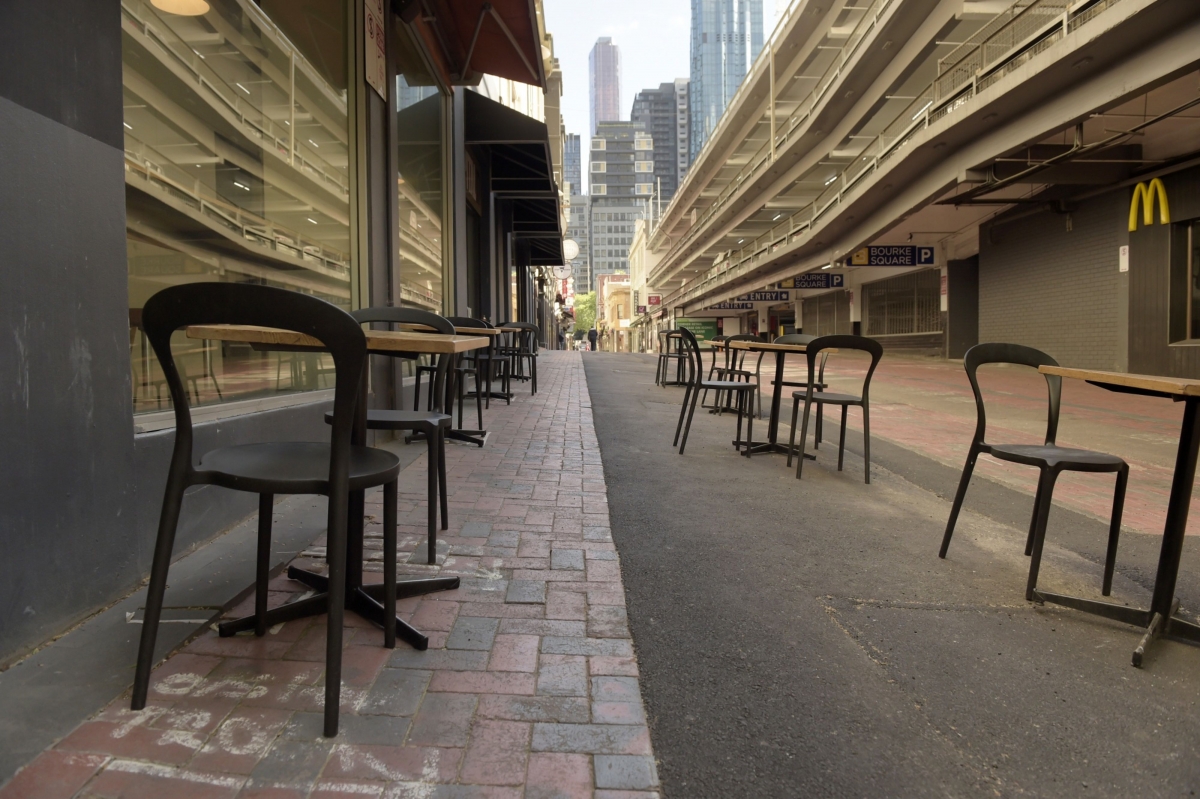
Cafe chairs and tables are set out on a lane in Melbourne, Australia, on Oct 28, 2020. MUST CREDIT: Bloomberg photo by Carla Gottgens.
Cafe chairs and tables are set out on a lane in Melbourne, Australia, on Oct 28, 2020. MUST CREDIT: Bloomberg photo by Carla Gottgens.

The city of 5 million people on Wednesday emerged from one of the world’s strictest and longest lockdowns that shuttered businesses and confined residents to their homes for more than three months.

While infections have dropped from a daily peak of about 700 in early August to just two new cases on Wednesday, the economic and social impact of Melbourne’s second lockdown since the crisis began has been enormous. Australia’s government estimates 1,200 jobs have been lost on average a day across Victoria state, while demand for mental health services has surged by more than 30%.

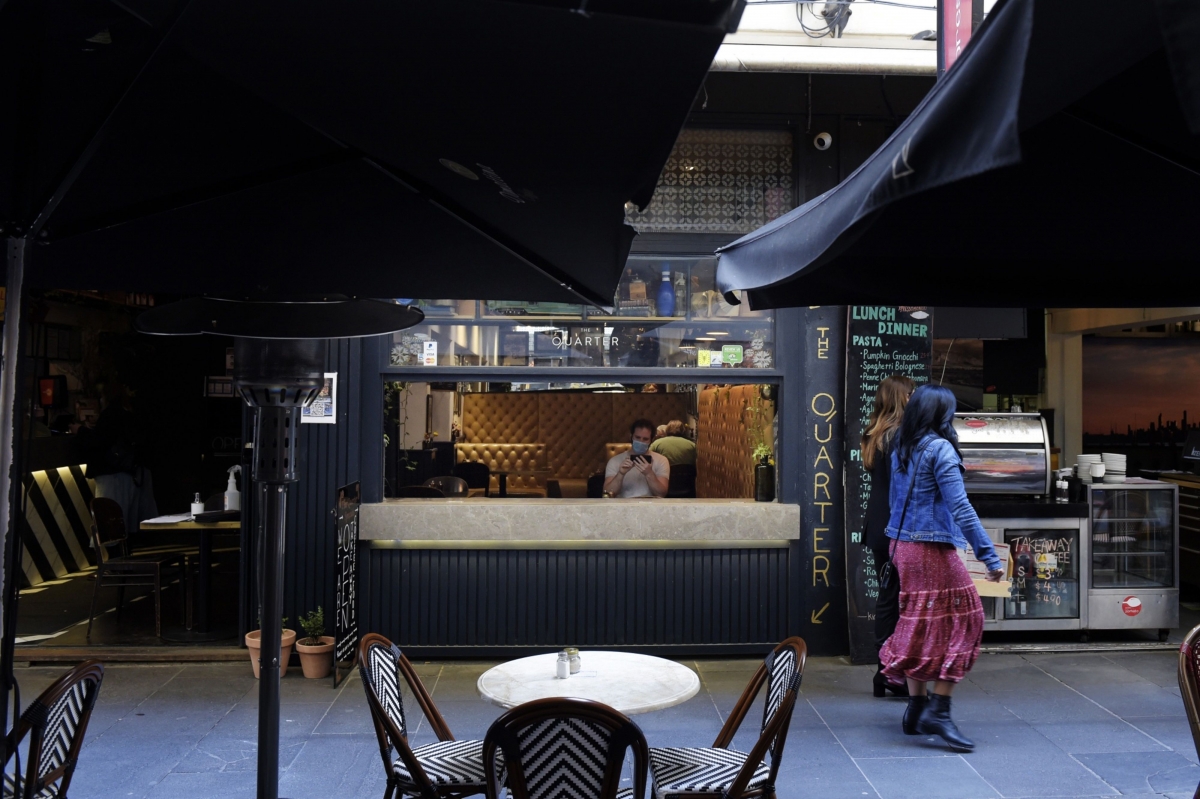
A diner wears a protective mask while sitting inside a restaurant in Melbourne, Australia, on Oct 28, 2020. MUST CREDIT: Bloomberg photo by Carla Gottgens.

A diner wears a protective mask while sitting inside a restaurant in Melbourne, Australia, on Oct 28, 2020. MUST CREDIT: Bloomberg photo by Carla Gottgens.

Despite key factors working in Melbourne’s favor, including closed borders, an infection count that was tiny by international standards, and a state government with strong public backing, it still took twice as long as anticipated to crush the curve.

It’s a bleak reality confronting political leaders, particularly in Europe, who have already experienced the damage wrought by full-blown lockdowns and are now weighing options to fight a resurgence of the pandemic.

Australia was in the vanguard of nations that had early success in controlling community transmission. Its first nationwide lockdown, which lasted roughly from March to May, reduced the number of cases to just a handful a day.

But security failures at quarantine hotels for returning overseas travelers, poor communication of critical information to migrant communities and inadequate contact tracing allowed the virus to roar back in Victoria.

On July 7, state Premier Daniel Andrews announced a six-week lockdown, ordering Melbourne residents to stay home except for essential work and services, medical treatment, school or an hour’s exercise a day. Less than a month later, as cases continued to rise, the restrictions were extended across the entire state, Melbourne was placed under a nighttime curfew, schools were closed and large parts of retail, manufacturing and hospitality were shut down.

With Victoria accounting for about a quarter of the nation’s gross domestic product, the restrictions have deepened Australia’s first recession in almost 30 years.

The lockdown has slashed A$100 million ($71 million) a day from economic activity and through August and September resulted in a daily average of 1,200 jobs being lost across the state, Luke Yeaman, a Treasury department official, told a parliamentary panel this week.

Business leaders say it may take years for Melbourne — ranked as the world’s second-most livable city last year — to recover. Melbourne chef Scott Pickett warned that ongoing capacity restrictions would continue to hit restaurants and cafes and that many would fold once government wage subsidies end early next year.

“Some may get to Christmas, January and say they can’t do this anymore,” said Pickett, who owns the bistro Estelle. “It’s going to be a bloodbath out there at some stage.”

“This is the beginning of a long road of recovery,” said Michael Madrusan, co-owner of Made in the Shade, which operates venues in the city including The Everleigh cocktail bar. “We are in no way out of the woods just because we can open the doors.”

The social costs are also mounting. The Royal Australian College of General Practitioners says demand for health services nationwide has risen 15% since early March, and by 31% between September and October in Victoria. Alcohol consumption has risen and domestic violence spiked.

“Only being allowed outside for an hour a day was awful,” said Tessa Patrao, 27, who is finally back at work as a primary school teacher after the 112-day stay-at-home order. The second lockdown was even harder than the first, particularly as much of the country had returned to normal, she said.

While governments in the U.K., Italy and Germany have faced protests against second lockdowns, Victorians have been largely compliant. That’s in part down to the popularity of the state’s Labor government, which won the 2018 election by a landslide, and the high approval ratings of Premier Andrews. The carrot-and-stick approach taken by authorities has also helped, with A$1,500 payments for people who couldn’t afford to self-isolate and court-imposed fines of as much as A$20,000 for repeat breaches of isolation orders.

“It would’ve been impossible to meaningfully police if there wasn’t community support,” said Terry Slevin, chief executive officer of the Public Health Association of Australia. “It’s an example where a compact between a government and a community that’s been driven by expert advice has achieved a valuable public health outcome.”

According to Catherine Bennett, chair in epidemiology at Deakin University in Melbourne, it’s likely too late for the U.K., U.S. and European countries to replicate Melbourne’s success in crushing new infections. Instead, authorities would likely opt for 2-3 week circuit breaker lockdowns to take the load off the public health system.

“A circuit-breaker just might help bring it back into line and allow it to be containable,” she said. “But unless you’ve gone very early” it’s very hard to bring new cases down to zero.

The lockdown may have quashed the virus for now, but it’s clear from outbreaks around the world that it can come back with a vengeance if not coupled with ongoing requirements such as mask-wearing, social distancing, temperature checks and a robust testing and contact-tracing regime. Such “living with the virus” elements are in place in countries such as Korea, Japan and China, which have been able to keep their cases under control.

“Australians need to have the conversation on what the new normal looks like so we can live alongside this virus without more lockdowns,” said Jennifer Westacott, CEO of the Business Council of Australia. “If mask-wearing and hand sanitizers are the new normal now, is everyone on board? The big question is whether individual Australians are ready to fully adjust their lives to the Covid era.”

East Europe fights for its life against virus it thought crushed #SootinClaimon.Com

#SootinClaimon.Com : ขอบคุณแหล่งข้อมูล : หนังสือพิมพ์ The Nation.

East Europe fights for its life against virus it thought crushed

InternationalOct 31. 2020Police checks at a border crossing between Hungary and Austria, on March 17, 2020. MUST CREDIT: Bloomberg photo by Akos Stiller.Police checks at a border crossing between Hungary and Austria, on March 17, 2020. MUST CREDIT: Bloomberg photo by Akos Stiller. 
By Syndication Washington Post, Bloomberg · Michael Winfrey, Lenka Ponikelska · WORLD, EUROPE

The leaders of seven eastern European countries who gathered in Bled, Slovenia, at the end of August were so certain they’d overcome the coronavirus that they staged a panel called “Europe after Brexit and Covid-19.”

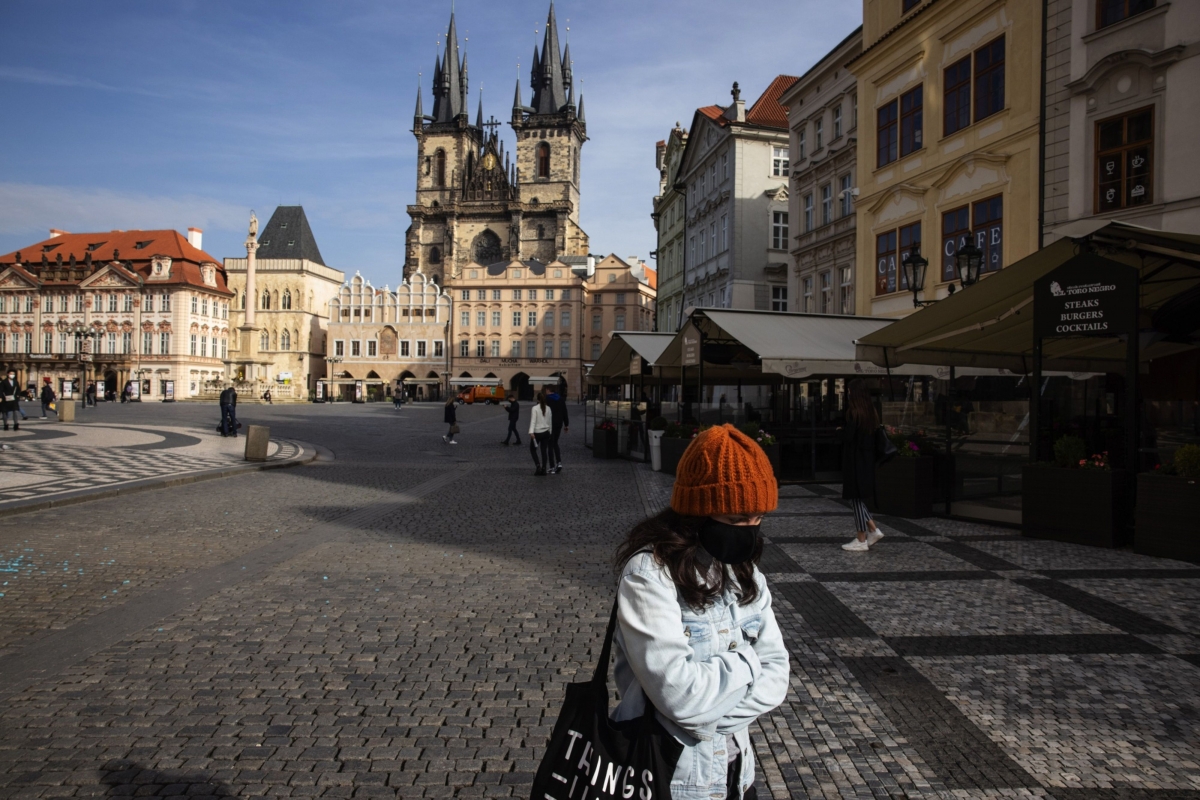
Pedestrians cross the Old Town Square in Prague, Czech Republic, on Oct. 22, 2020. MUST CREDIT: Bloomberg photo by Milan Jaros,

Pedestrians cross the Old Town Square in Prague, Czech Republic, on Oct. 22, 2020. MUST CREDIT: Bloomberg photo by Milan Jaros,

Less than two months later, that confidence has been shattered. Despite having beaten back the initial wave with some of Europe’s fastest and strictest lockdowns, countries from the Baltic to the Black Sea are suffering an explosion of new cases. Their early advantage squandered, governments across the region are struggling with the same issues as their western counterparts — or often worse.

Soaring death tolls and a spate of high-profile infections are eroding trust and feeding into a communist-era tradition of skirting rules, exacerbating the crisis. Field hospitals are popping up as the virus threatens to overwhelm health-care systems and measures that devastated economies this spring are returning.

“The coming months, quarters — I hope it isn’t years — will be the toughest Poland has faced in decades,” Polish Premier Mateusz Morawiecki told parliament last week.

Morawiecki was on stage at Bled along with leaders from the Czech Republic, Hungary, Bulgaria, Croatia, Serbia and Slovenia. Since then, coronavirus cases have more than tripled in Poland to exceed a quarter of a million on Monday. Deaths there more than doubled to 4,438, according to the World Health Organization.

And it’s not even the region’s worst-hit country. The Czechs now lead the European Union both in new cases and deaths per capita, followed by Hungary.

It didn’t start that way. When Slovakia reported just five cases of the virus on March 9, its capital Bratislava closed elementary schools. Within a week, the Czechs shut schools and banned public gatherings, Hungary declared a state of emergency and Serbia postponed elections. All of that happened before France closed its schools, even though it had recorded more than 3,000 cases and 79 fatalities.

It was a textbook plan to fight a pandemic: eastern European governments shut borders, shops and factories and imposed social-distancing restrictions. With the virus raging in Italy, the U.S. and the U.K., newspaper headlines in the continent’s former communist half declared sympathy while boasting of their countries’ resilience and wisdom in following rules.

That resolve melted in the summer and millions went on holiday abroad as soon as borders reopened. Those who stayed home thronged beer gardens, mountain huts and national parks.

Hoping to rebuild after the lockdowns decimated economies and to save key industries such as tourism, politicians urged people to get back out and spend. Having opened the state’s coffers to help businesses and furloughed workers, Czech Prime Minister Andrej Babis, Hungary’s Viktor Orban and other leaders vowed that even if the virus returned, they’d avoid strict lockdowns.

Leaders in Western Europe are experiencing a similar sense of dismay. Italy and Spain, had sworn off any second lockdowns. Looking at the situation getting exponentially worse with their eastern neighbors, they too are coming to terms with the idea of whether they also declared victory too soon.

By mid-September, the number of new daily cases in the Czech Republic exceeded those in Germany, a country with almost eight times as many people. They did in Poland too, where President Andrzej Duda won a second term after his allies in the government had to postpone elections. He’s now quarantining after testing positive for the disease.

Bulgarian Prime Minister Boyko Borissov — another Bled attendee — is also convalescing with covid-19, which is on track to kill as many people in his country in September and October as in the first six months of the pandemic combined.

Governments, however, are reluctant to return to the playbook that served them so well in the spring, or to tap into what the pandemic has taught the world in the past seven months.

Their mixed messaging, along with frequent rule-breaking by leaders, has spread public doubt about the effectiveness of restrictions. That’s especially dangerous in a region where people spent decades circumventing official decrees under communist governments, according to Jan Hartl, chairman of the Prague-based researcher the STEM Institute.

“People in former communist countries perceive authorities differently than citizens in the West,” he said. “They intuitively rebel against strict orders from the government since they intuitively consider them stupid. That’s a heritage of totalitarianism.”

Governments from Prague to Bucharest have tried to once again clamp down. Romanian Prime Minister Ludovic Orban resisted new measures before Sept. 27 local elections and a general ballot planned for Dec. 6 before finally giving in. Poland, the Czech Republic and Slovenia have closed schools and some non-essential businesses and vowed stricter measures if necessary.

But the message has yet to take hold. At the weekend, as Czech soldiers completed a 500-bed field hospital near a shopping mall in the Prague suburb of Letnany, images flooded media of throngs at a farmers’ market in the city center.

Babis, who imposed a 9 p.m.-5 a.m. curfew from, called the situation “insane.”

“I appealed, begged, asked you here repeatedly, to follow the measures and to take pandemic seriously,” he said. “Since no government can do it on its own, if we don’t manage to flatten the growth together, our medical system will simply collapse.”

Powerful Aegean earthquake kills at least 14 people in Turkey and Greece, injures hundreds #SootinClaimon.Com

#SootinClaimon.Com : ขอบคุณแหล่งข้อมูล : หนังสือพิมพ์ The Nation.

Powerful Aegean earthquake kills at least 14 people in Turkey and Greece, injures hundreds

InternationalOct 31. 2020

By The Washington Post · Kareem Fahim, Matthew Cappucci · WORLD, MIDDLE-EAST

ISTANBUL – A powerful earthquake in the Aegean Sea left at least 14 people dead Friday in Turkey and Greece, flattened at least 20 buildings in coastal Turkey and sent a surge of seawater flooding streets near the Turkish city of Izmir.

https://www.washingtonpost.com/video/c/embed/cbc3f442-7e5a-4f0e-9937-3486d19d3171?ptvads=block&playthrough=false

The magnitude 7 earthquake – felt as far away as Istanbul and Athens – occurred about 10 miles north of the Greek island of Samos, according to U.S. Geological Survey.

At least 12 people were dead and more than 400 injured in Turkey, according to Turkey’s disaster management agency, which said one of the victims had drowned. At least 20 structures, including some multistory apartment buildings in Izmir, collapsed, authorities said.

On Samos, two teenagers, a boy and a girl, were killed when a wall collapsed on them, said Greece’s General Secretariat for Civil Protection. Local media reported that the teens were walking home from school.

It was the second major earthquake to hit Turkey this year. In January, at least 41 people were killed in an earthquake that struck Elazig in central Turkey, where questions were raised about the whether the government was adequately enforcing building codes.

Some of the worst damage in Friday’s quake occurred in Izmir, a city of 4.4 million people on Turkey’s Aegean coast. Mayor Tunc Soyer told CNN Turk that search teams were at the scene of the collapsed buildings.

Local television stations showed residents and rescue workers searching for survivors through mounds of rubble. Plumes of white smoke rose from Izmir’s skyline. During one broadcast, cheers erupted as a woman, dazed and grimacing, was pulled from the ruins of a building.

Near Seferihisar, south of Izmir, coastal areas flooded with seawater from what appeared to be a “small tsunami,” said Ismail Yetiskin, a district mayor who was quoted by the NTV news channel.

The authorities had lost contact with several fisherman who were at sea when the earthquake struck, he said. Video posted on the Internet appeared to show flooding in Samos as well.

The quake was very shallow, with the main slip occurring just seven miles below the seabed. Most earthquakes in western Turkey occur within 40 miles below the surface.

Turkey sits atop the Anatolian Plate, a block of the earth’s crust that is slowly rotating counterclockwise and shifting west with time – about an inch of movement every year. But pent-up stress caused by collisions with the African plate and Eurasian plate result in frequent earthquakes.

Most of Turkey’s big quakes over the years have occurred along the North Anatolian Fault, which runs across northern Turkey along the Pontic Mountains.

Occasionally, quakes occur in the country’s western zones, the result of dense, oceanic crust sinking and forcing the ground farther east upward.

The quake was the strongest in nearly a decade to strike Turkey. In October 2011, a 7.1 earthquake struck eastern Turkey, killing more than 600 people.

On Samos, some residents were asked to evacuate their houses for the next 48 hours for precautionary reasons.

The earthquake struck at a moment when the governments of Turkey and Greece are locked in a bitter feud over competing claims to territory and resources in the seas that divide the two countries. After the quake, both nations issued offers of mutual humanitarian aid.

Writing on Twitter, Greek Prime Minister Kyriakos Mitsotakis said he had called Turkish President Recep Tayyip Erdogan to offer condolences.

“Whatever our differences, these are times when our people need to stand together,” Mitsotakis wrote.

US committed to support a strong, prosperous, and independent Vietnam: Pompeo #SootinClaimon.Com

#SootinClaimon.Com : ขอบคุณแหล่งข้อมูล : หนังสือพิมพ์ The Nation.

US committed to support a strong, prosperous, and independent Vietnam: Pompeo

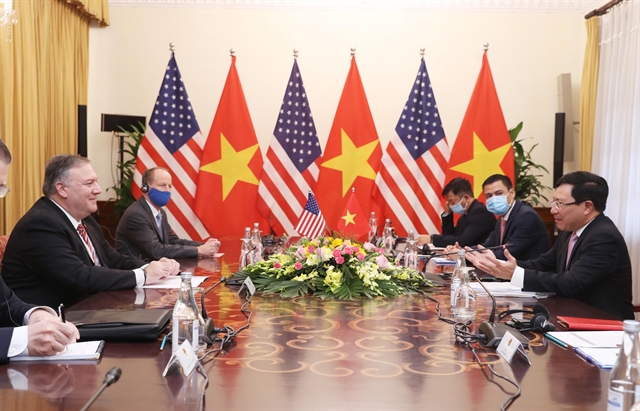
InternationalOct 31. 2020Việt Nam Deputy Prime Minister and Minister of Foreign Affairs Phạm Bình Minh and US Secretary of State Mike Pompeo, both wear masks, share an 'elbow greeting' as they met in Hà Nội on Friday. — VNA/VNS Photo Bùi Lâm KhánhViệt Nam Deputy Prime Minister and Minister of Foreign Affairs Phạm Bình Minh and US Secretary of State Mike Pompeo, both wear masks, share an ‘elbow greeting’ as they met in Hà Nội on Friday. — VNA/VNS Photo Bùi Lâm Khánh 
By Viet Nam News/ANN

HÀ NỘI — US Secretary of State Mike Pompeo on Friday reaffirmed the US support for a strong, prosperous, and independent Việt Nam with an increasingly expanded role in the region.

He was speaking during the talks with Vietnamese Deputy Prime Minister and Minister of Foreign Minister Phạm Bình Minh in Hà Nội, as part of his five-day Asia tour, as the two countries marked 25 years of diplomatic relations in 2020.

The US diplomat pledged to maintain stable cooperation with Việt Nam to elevate bilateral ties in practicality, confidence, effectiveness, and sustainability, making positive contributions to regional and global security, peace, cooperation, and development.

During the talks, Vietnamese foreign minister Minh praised the flexibility with which the two countries have conducted activities – including exchanges between the high-level leaders – to commemorate the 25th anniversary of diplomacy amid challenges caused by the COVID-19 pandemic.

Foreign minister Minh thanked the US Government for delivering timely and practical support for Việt Nam in the fight against COVID-19 and the recent floods in central Việt Nam, including the two million dollars in aid from the US Agency for International Development (USAID).

Minh affirmed that Việt Nam attached great importance to its comprehensive partnership with the US, expressed his pleasure at the positive and comprehensive development of the bilateral relationship in areas from politics and diplomacy, economy and trade, security and defence, to people-to-people exchanges.

The US Secretary of State highly valued the deepening of comprehensive partnerships on the basis of respect towards each other’s independence, sovereignty, territorial integrity, and political system.

Vietnamese and US foreign ministers hold talks in Hà Nội on Friday. — VNA/VNS Photo Bùi Lâm Khánh

Vietnamese and US foreign ministers hold talks in Hà Nội on Friday. — VNA/VNS Photo Bùi Lâm Khánh

The two sides also exchanged views on measures to further advance relations between the two countries in the future, with priority given to expediting the resumption of regular delegation exchanges, especially at high levels, strengthening humanitarian cooperation and addressing the consequences of the war, contributing to the building up of trust between the two countries and continuing to facilitate the bolstering of bilateral trade and investment relations in the spirit of mutual benefits.

Vietnamese foreign minister Minh welcomed the two sides’ effective work towards a “sustainable and harmonious” trade balance, stressing the potentials of the energy sector in the bilateral ties.

He reaffirmed the Vietnamese Government’s commitment to creating a conducive investment and business environment for US enterprises to operate “successfully and for long” in Việt Nam.

Pompeo expressed his pleasure at the measures that Việt Nam had carried out towards trade balance, the multiple important economic deals between the two countries, and pledged support for the two countries’ efforts at dialogues and consultation to build a sustainably growing commerce relationship.

Regarding regional issues of mutual concern, Deputy PM Minh requested support from the US for ASEAN centrality and solidarity, elevate the strategic partnership between the US and ASEAN.

Pompeo said Việt Nam had performed admirably as the chair of ASEAN this year as well as its non-permanent seat on the United Nations Security Council for the 2020-21 term and expressed the wish for the two sides to continue to boost coordination in handling common challenges, to contribute to the maintenance of the peace, stability, security and development on regional and global level.

Việt Nam is one of the US’ fastest growing markets and the US is one of Việt Nam’s largest economic partners, with bilateral trade reaching $81 billion. — VNS

S. Korea bans poultry imports from Netherlands after bird flu outbreak #SootinClaimon.Com

#SootinClaimon.Com : ขอบคุณแหล่งข้อมูล : หนังสือพิมพ์ The Nation.

S. Korea bans poultry imports from Netherlands after bird flu outbreak

InternationalOct 31. 2020Disinfection measurements in poultry farms located in Yongin, Gyeonggi Province on Thursday.(Yonhap)Disinfection measurements in poultry farms located in Yongin, Gyeonggi Province on Thursday.(Yonhap) 

By The Korea Herald/ANN

South Korea on Friday banned imports of poultry from the Netherlands after a highly pathogenic strain of bird flu was found in the country.

The Dutch government announced on Thursday that chickens on a farm in the central province of Gelderland were infected with a highly contagious variant of avian influenza (AI).

South Korea’s agriculture ministry said it imposed an import ban on all poultry and poultry products from the country.

The ministry added it would enhance monitoring of fowl at borders as AI outbreaks have been reported from China, Taiwan and some European countries.

South Korea also confirmed two infections of highly pathogenic H5N8 avian flu among wild birds in provincial towns this week. (Yonhap)

Sino-US decoupling called unrealistic, harmful for all #SootinClaimon.Com

#SootinClaimon.Com : ขอบคุณแหล่งข้อมูล : หนังสือพิมพ์ The Nation.

Sino-US decoupling called unrealistic, harmful for all

InternationalOct 31. 2020The Communist Party of China Central Committee holds a news conference to answer reporters' questions about the Fifth Plenary Session of the 19th CPC Central Committee on Friday. [Photo by Wang Zhuangfei/China Daily]The Communist Party of China Central Committee holds a news conference to answer reporters’ questions about the Fifth Plenary Session of the 19th CPC Central Committee on Friday. [Photo by Wang Zhuangfei/China Daily] 

By Cao Desheng
China Daily/ANN

‘Only a small minority of people’ want disengagement, economic official says

Complete decoupling between China and the United States is unrealistic, and also does no good to two nations or the rest of the world, a senior Communist Party of China official said on Friday.

Han Wenxiu, deputy head of the Office of the Central Commission for Financial and Economic Affairs, made the remark when talking about the guiding principles of the Fifth Plenary Session of the 19th CPC Central Committee at a news conference on Friday.

Economic links between China and the US, the world’s two largest economies, are determined by the highly complementary nature of their economic structures and the openness of the global economy, Han said.

He cited the trade volume between the two countries in the third quarter, which was up by 16 percent year-on-year amid the fallout of the COVID-19 pandemic, adding that “only a small minority of people want decoupling, while those who pursue cooperation represent the overwhelming majority.”

China will continue to uphold peace, development and win-win cooperation, unswervingly safeguarding multilateralism and standing firm on the right side of history, Han said.

He reaffirmed China’s commitment to higher-level opening-up while stepping up the building of the nation’s new development pattern of “dual circulation”, which allows the domestic and international markets to complement each other with the domestic market as the mainstay.

Fostering the new development pattern will by no means affect the country’s opening-up, Han said, adding that the scale of China’s foreign trade, foreign capital usage and outbound investment will continue to expand.

The tone-setting Party meeting, which concluded on Thursday, adopted the CPC Central Committee’s proposals for the formulation of the 14th Five-Year Plan (2021-25) for National Economic and Social Development and the Long-Range Objectives Through the Year 2035.

The session decided that in the next five years, starting in 2021, China will nurture a strong domestic market and speed up the formation of the new development pattern, according to a communique released after the Party meeting.

In the meanwhile, the country will pursue higher-level opening-up, promote international cooperation and explore new prospects for win-win results, the document said. It will also advance high-quality Belt and Road cooperation and actively participate in the reform of the global economic governance system.

China will widen market access for foreign enterprises and turn itself into a “gravitational field” that attracts the world’s high-quality production factors and resources and a fertile ground for foreign investment by building a market-oriented, rule-based and international business environment, Han said.

“No matter how the international situation changes, we will never waver in our basic national policy of opening-up,” he said. “China’s opening-up will provide countries around the world with larger markets and more opportunities.”

As a long-range objective, China will shape a new opening-up structure with substantial growth of the country’s strengths in international economic cooperation and competition by 2035, according to Thursday’s communique.

The communique mentioned the words of “reform” and “opening-up” more than 20 times, which sends a clear message to the world that China will stick to deepening reforms and expanding opening-up to enhance mutual benefits and win-win cooperation with other countries, Foreign Ministry spokesman Wang Wenbin said at a regular news conference on Friday.

John Ross, a former director of economic and business policy for the mayor of London and currently a senior fellow at the Chongyang Institute for Financial Studies at Renmin University of China, said China’s new five-year plan has landmark significance for both itself and the rest of the world.

Ross said he believes China will remain committed to economic globalization, which is the best road for global development. He spoke in a recent online dialogue organized by the institute.

Speaking at the same dialogue, William Jones, Washington bureau chief of Executive Intelligence Review magazine, said spurring domestic consumption could help China boost its economic growth, but expanding opening-up also would serve the same purpose.

Growing foreign direct investment in China amid the pandemic and increasing international participation expected in the upcoming China International Import Expo in Shanghai demonstrate that China’s new development pattern of “dual circulation” is the right move for development, Jones said.

Singapore’s mufti condemns recent attacks in French cities of Paris and Nice #SootinClaimon.Com

#SootinClaimon.Com : ขอบคุณแหล่งข้อมูล : หนังสือพิมพ์ The Nation.

Singapore’s mufti condemns recent attacks in French cities of Paris and Nice

InternationalOct 31. 2020Dr Nazirudin Mohd Nasir (above) said the attacks in Paris and Nice were also an assault on Islam. PHOTO: MUISDr Nazirudin Mohd Nasir (above) said the attacks in Paris and Nice were also an assault on Islam. PHOTO: MUIS 

By Dominic Low
The Straits Times/ANN

SINGAPORE – The highest authority on Islam in Singapore, mufti Nazirudin Mohd Nasir, has condemned the recent murders in the French cities of Paris and Nice.

“Once again, radical elements and extremists have committed heinous crimes on innocent individuals and in the most sacred of places,” he said in a letter to leaders of Singapore’s Christian community on Friday (Oct 30).

“Such attacks are not only an affront to the sacredness of the human soul, but also an assault on Islam, as they took place in the month where Muslims commemorate the birth of Prophet Muhammad by honouring him with good deeds and behaviour.

“These terrorists may have sought to exploit our love for the Prophet to gain sympathy but their actions are a clear desecration of his teachings and have no place whatsoever in Islam or in any religion,” said the mufti.

On Oct 16, 47-year-old history teacher Samuel Paty was beheaded by 18-year-old Abdullakh Anzorov near Paris. The attacker, who was later shot dead by the police, had said he wanted to punish Mr Paty for showing students cartoons of Prophet Muhammad in a civics lesson.

On Thursday, a knife-wielding Tunisian man, believed to be a Muslim, beheaded a woman and killed two others in a church in Nice before being shot and taken away by police.

Dr Nazirudin said it is important that Singapore society remains committed to shared values, and ensure that peace and harmony prevail.

He also said the Muslim community here will continue to work tirelessly with the Christian community to affirm their commitment to “the bonds of faith and friendship”.

“We are confident that by strengthening the trust and confidence in each other, we will be able to prevent such incidents from ever taking place here,” he said. “We offer our sincerest prayers and solidarity to those whose lives were taken unjustly, to those who were injured and to their loved ones.”

Minister of State for Home Affairs and National Development Muhammad Faishal Ibrahim also condemned the attacks in a Facebook post on Friday, saying they “have no place in Islam”.

He added that all Singaporeans must “stand united and firmly” against any form of extremist violence and hate speech. “This is how we can continue to maintain a strong and cohesive society.”