By ZAW MIN NAING, MIN THU WIN HTUT Eleven Media/ANN
Advance voting are being carried out for 2020 General Election and on the first day of advance voting, voters faced torn envelopes, instead of stamping party logo in the ballot papers, voters are asked to write down correction mark with bullpen and in some places, some parties logos are found according to MPs in some areas and voters.
For the convenience of senior citizens in casting votes, advance votes are beginning to be cast in Stay at Home townships from October 29 to November 5.
In accordance with the guidelines for controlling COVID-19 issued by the Ministry of Health and Sports, voters must follow social distancing rules, wear face shields and masks. Body temperature will be checked at the polling stations and hand gels, liquid soaps will be placed at the ward and village election commission offices according to the Union Election Commission (UEC).
Those who will cast their votes at their homes will be done so by the commission according to timetables.
On the first day of advance voting on October 29, envelopes that contained ballot papers were torn and some were unsealed according to voters who gave advance votes on that day.
In Kan Hla Kyaung Su, Zee Kyun villages in Magway Region, advance voting were done not by stampin the party logo but by writing right marks with ball pens. It was mentioned in the Magway Region Chief Minister Dr. Aung Moe Nyo’s social media page.
He wrote that advance votes for senior citizens are asked to write down by ball pens instead of stamping logo. Did it mean to ineligible votes and posted messages written to him. Concerning that case, secretary of Magway Region election commission was contacted and he confirmed that it was being investigated.
Some townships in Ayeyawaddy Region and Sagaing Region experienced unsealed enveloped with ballot papers and torn envelopers. In Ayeyawaddy Region, ballot papers were put without gluing the envelopes. Chair of Ayeyawaddy Region sub-election commission Aung Myint said that ballot papers must be put in sealed envelopes. Butm ballot papers put in unsealed envelopes will also be eligible votes and counted in the election.
When casting votes, wearing party shirts, hats and clothes were prohibited but wearing Karen national costumes are not prohibited.
In Sagaing Region, contact was made to Sagaing Region election commission on matter concerning unsealed envelopes with ballot papers inside. Freelance journalist Kyi Aung who cast advance vote said the unsealed envelopes with ballot papers inside will not be rejected.
“When I stamped party logo on the ballot paper and then to glue the envelope, there is no glue and they said no need to seal the envelope. Election commission officer helped me put my ballot papers in the big envelope and I put it into the box. The big envelope was not sealed, too. I asked the ward election commission to make sure whether it was true that we don’t need to seal the envelope. I didn’t want my vote be a waste. He confirmed that no seal is needed. I telephoned the township commission concerning the matter and the official also confirmed not to seal the envelope, said Kyi Aung.
In 2020 General Election, there are 38 million eligible voters and the actual number may less than the previous amount as some townships in Paletwa are excluded for voting.
U.S. consumer sentiment edged up in late October, remained low
InternationalOct 31. 2020A “Retail Space Available” sign is displayed outside a building on Madison Avenue in New York on Sept. 26, 2020. MUST CREDIT: Bloomberg photo by Nina Westervelt.
By Syndication Washington Post, Bloomberg · Henry Ren · BUSINESS, US-GLOBAL-MARKETS
The University of Michigan’s final sentiment index for October was 81.8, compared with a preliminary reading of 81.2 early in the month and September’s final reading of 80.4, according to data released Friday. The median estimate from economists surveyed by Bloomberg called for 81.2.
While the gauge is at a seven-month high, the level compares with 101 in February, which was close to the highest since 2004.
The gauge of current conditions dropped 1.9 points from the prior month to 85.9, compared with the preliminary reading of 84.9. A measure of expectations increased 3.6 points from September to 79.2 and compared with a preliminary 78.8.
While partisan divisions are still deep, optimism among Democrats surged over the past three months, boosting their expectations to the highest in more than a year. That coincides with polls showing Democratic challenger Joe Biden ahead of President Donald Trump, and the survey also shows consumers expect a Biden win.
At the same time, concerns about the pandemic continue to weigh heavily on consumers’ outlooks, as Americans judged it a “toss-up” whether the economy would experience another downturn over the next five years, according to Richard Curtin, director of the survey.
“Unlike the 2016 election, renewed optimism now requires progress against the coronavirus and mitigating its uneven impact on families, firms and local governments,” Curtin said in a statement.
Other measures of consumer sentiment have also been downbeat. The Conference Board’s gauge dropped slightly in October, while the weekly Bloomberg Consumer Comfort Index is at the lowest since August. Both are well below pre-crisis levels.
In a positive sign, a separate government report earlier Friday showed that Americans’ incomes increased in September by more than expected, boosted by employment gains and helping to propel consumer spending at the end of the third quarter.
The Michigan report also showed inflation expectations remained subdued. Consumers anticipated prices rising 2.6% in the year ahead, while longer-term inflation expectations fell to 2.4%.
The survey was conducted Sept. 30 to Oct. 26. The cutoff for the preliminary results was Oct. 14.
Fed cuts Main Street loan minimum by 60%, widening borrower pool
InternationalOct 31. 2020Jerome Powell, chairman of the Federal Reserve, speaks to the House Select Subcommittee on the Coronavirus Crisis in Washington on Sept. 23, 2020. MUST CREDIT: Bloomberg photo by Stefani Reynolds.
By Syndication Washington Post, Bloomberg · Catarina Saraiva · BUSINESS, US-GLOBAL-MARKETS
The Federal Reserve sharply reduced the minimum loan size in its Main Street Lending Program, potentially opening the emergency facilities to more U.S. businesses at a time when Congress remains deadlocked on additional aid.
By lowering the minimum loan size to $100,000 from $250,000, the Fed on Friday was responding to widespread calls to make Main Street easier to access for small businesses battling to survive the coronavirus pandemic.
It also changed the fee structure so that banks will get paid more for facilitating loans under $250,000. Businesses that received under $2 million in Paycheck Protection Program loans will now be eligible for the Fed’s program. All five members of the Board of Governors voted to approve these changes.
The Fed’s announcement comes at the end of a tumultuous week in markets and the global economy as virus cases surge in parts of the U.S. and Europe, darkening the outlook for the pace of the recovery. Congress and the White House have been unable to pass further stimulus measures ahead of next week’s U.S. presidential election, leaving businesses and unemployed Americans without added support as the country fights another wave of infections.
The adjustments to the Main Street program come after months of talks between Congress and the White House that ultimately failed to deliver more fiscal stimulus. Lawmakers, business owners and industry groups have called for changes such as reducing the minimum loan size and further incentive for banks to provide support for small businesses.
The Fed said it has bought almost 400 Main Street loans, or $3.7 billion, which represents just 0.6% of the potential $600 billion it could lend under the program. Chair Jerome Powell has argued that businesses may need grants, not loans, to get through the lengthy pandemic. But the PPP program, whose loans turned into grants if companies use a certain amount of the funds for payroll retention, expired in August. The Fed is legally only allowed to loan money.
In order to encourage banks to make loans under $250,000, the Fed got rid of the 100 basis-point transaction fee — which lenders will still pay to the central bank on larger loans — raised the loan-origination fee that lenders charge borrowers and increased the servicing expense that the Fed pays to the banks. Other program provisions, including banks’ retention of 5% of each loan that they sell to the Fed, remain unchanged.
Businesses can exclude PPP debt under $2 million, as long as it’s expected to be forgiven under the Small Business Administration’s payroll provisions, from calculations of their eligibility to apply for a Main Street loan.
The Main Street program, which has been changed several times and was only fully operational in July, is set to expire on Dec. 31. It’s backed by $75 billion of taxpayer money authorized by Congress in the CARES Act.
U.S. personal income, spending increase by more than forecast
InternationalOct 31. 2020An employee wearing a protective mask and gloves hands a purchase to a customer in a vehicle at a curbside pickup location outside a Gucci store on Rodeo Drive in Beverly Hills, Calif., on May 19, 2020. MUST CREDIT: Bloomberg photo by Patrick T. Fallon.
By Syndication Washington Post, Bloomberg · Reade Pickert · BUSINESS, PERSONAL-FINANCE, US-GLOBAL-MARKETS
Americans’ incomes increased in September by more than expected, boosted by employment gains and helping to propel consumer spending at the end of the third quarter.
Personal incomes rose 0.9% from the prior month following a 2.5% decline in August, a Commerce Department report showed Friday. That compared with estimates for a 0.4% gain. Household outlays advanced 1.4%, also exceeding forecasts.
The figures add color to Thursday’s report on gross domestic product, which showed personal spending rose by an annualized 40.7% in the quarter, by far the most on record. The economic recovery’s strength has consistently surprised over the past several months, thanks in part to a resilient consumer.
Hundreds of thousands more Americans headed back to work in September as the labor market continued to slowly recover, putting more cash in wallets. Though the extended stalemate between lawmakers on additional stimulus relief could restrain growth in incomes, further job gains and a still-elevated savings rate should support consumer finances into the fourth quarter.
The supplemental jobless payments President Donald Trump authorized in early August also lent an extra boost to incomes, the report showed. “Other” transfer receipts totaled an annualized $963.9 billion during the month, up from about $716 billion.
GDP rose by a record in the third quarter, and the better-than-expected September spending figures suggest the economy headed into the final three months of the year with solid positive momentum. At the same time, the pace of growth in outlays is seen moderating.
The personal saving rate fell for a fifth month but remained elevated at 14.3%. In February, when the unemployment rate was at a 50-year low, the savings rate was 8.3%.
The income and spending report showed wages and salaries rose 0.8% in September. Unemployment insurance payments made up 1.8% of annualized income in September, compared to 7% three months earlier.
“The strong midyear wave of Cares Act stimulus receded further in September income data, while wage income and emergency payments from President Trump’s executive orders picked up the slack. Accumulated household savings are nonetheless historically high, which can help to smooth the slowdown in aggregate consumer spending we see evolving into the fourth quarter, ” Bloomberg economists Andrew Husby, Yelena Shulyatyeva and Eliza Winger wrote in a report.
While the chances of a stimulus package by Election Day on Tuesday have evaporated, House Speaker Nancy Pelosi said Thursday it’s still possible to get a deal on fiscal stimulus with the Trump administration before the start of the new congressional and White House terms in January.
Adjusted for inflation, consumer spending increased 1.2% in September after rising 0.7% in August. Real outlays for durable goods, such as motor vehicles, rose 2.9% in September from a month earlier, while services spending climbed 0.8%.
While spending on services remains depressed, there has been steady improvement. Starbucks Chief Executive Officer Kevin Johnson said on the company’s earnings call Thursday that the coffee giant’s September business had largely rebounded from the depths of the crisis five months earlier. “I could not be more pleased with our U.S. sales recovery, which progressed faster than we anticipated in our final quarter of fiscal 2020,” he said.
The broader personal consumption expenditures price gauge, which the Federal Reserve officially targets, rose 0.2% from the prior month and was up 1.4% from a year earlier. The core PCE price index, which excludes food and energy, increased 1.5% in September from a year earlier, less than projected. Policy makers view the core gauge as a better indicator of underlying price trends.
The central bank doesn’t anticipate inflation will pose a threat to the economy any time soon, and policy makers have signaled they plan to hold rates near zero through 2023.
InternationalOct 31. 2020In Watersford Township, Mich., President Trump speaks during a rally Friday. MUST CREDIT: Washington Post photo by Salwan Georges
By The Washington Post · Anne Gearan, Annie Linskey, Matt Viser · NATIONAL, HEALTH, POLITICS
GREEN BAY, Wis. – The presidential race on Friday barreled into the upper Midwest, the candidates arriving at the epicenter of the nation’s latest coronavirus outbreak and showcasing dramatically different campaign approaches on one of the busiest days of the general election.
Former vice president and presidential nominee Joe Biden delivers remarks during a drive-in event at the Iowa State Fairgrounds in Des Moines on Friday. MUST CREDIT: Washington Post photo by Demetrius Freeman
Beginning a last frenzy just four days before Election Day, both candidates put forward their closing arguments in an area of the nation expected to be as critical to the winner as it was in 2016. But they argued their cases against a dour backdrop, with each of the states they visited seeing rapid rises in new coronavirus cases. For President Donald Trump, the day tested his ability to glide past his mishandling of the global pandemic even as Democrat Joe Biden emphatically denounced it.
“We’ve now hit 9 million cases nationwide, a tragic milestone,” Biden said at the start of a drive-in rally in Des Moines, Iowa. “And millions of people are out of work, on the edge, and they can’t see the light. It just looks dark right now for them.”
Friday marked a newly brisk pace for Biden, who traveled to three states, a record for him in a general-election campaign in which he has been far more conscious than Trump of following health protocols related to the coronavirus. It was also Biden’s first trip back to Iowa since his dismal fourth-place finish in the state’s caucuses last winter – only this time he returned as a nominee trying to expand the electoral map in a state Trump easily carried four years ago.
“Donald Trump has waved the white flag, he’s surrendered to this virus. But the American people don’t give up,” Biden said at the Iowa State Fairgrounds, as car horns honked throughout and, at one point, two eagles flew overhead. “We don’t panic. He panicked!”
Biden displayed a mask and urged people to put one on, saying: “This isn’t a political statement. It’s a patriotic duty, for God’s sake.”
At the same time, 600 miles away in Waterford Township, Mich., Trump looked out to a large, packed crowd, many in the audience not wearing masks, as is typical for his events. When the president spotted Fox News host Laura Ingraham, he was incredulous that she had a face covering.
“No way!” he said from the stage. “She’s wearing a mask? She’s being very politically incorrect!”
Trump mocked Biden for focusing so much on the coronavirus response, and he ridiculed the Democratic governors in the states he was visiting for past restrictions meant to prevent more cases, including attempting to limit the number of attendees at Trump’s rallies.
He repeated his baseless accusation that doctors are inflating the number of patients they diagnose with covid-19 to make more money, even as he campaigned in states where officials and local media blared with fears about overrun hospitals.
“You turn on the news: covid, covid, covid, covid, covid,” Trump said, then repeated a false claim that testing was responsible for the number of cases. “And you know, cases are up – why are cases up? Because we test more than anybody in history.”
He pointed to himself as an example of how Americans can recover – “Superman! Superman!” the crowd chanted in Green Bay, Wis. – and he tried to ridicule Biden for saying that as president he would consider new closures if scientists demand them in virus-ridden locations.
“You’ll have no school,” Trump said. “No graduations. No weddings, no Thanksgiving. No Christmas. No Fourth of July. There will be no nothing. No future.”
Biden countered such claims during his events, as the candidates engaged in a long-distance back and forth.
“I’m not going to shut down the economy,” Biden said in Des Moines. “I’m going to shut down the virus.”
On his next stop, in St. Paul, Minn., Biden expressed outrage at Trump’s suggestion that doctors are exaggerating the number of covid-19 deaths.
“Did you hear what he said today?” Biden shouted over honking horns from nearby Trump supporters. “The president of the United States is accusing the medical profession of making up covid-19 deaths! Doctors and nurses go to work every day to save lives. They do their jobs. Donald Trump should stop attacking them and do his job!”
All three upper Midwest states Trump visited Friday have Democratic governors who have imposed varying degrees of coronavirus restrictions, although none are closed down to the degree the president suggests. Cases are rising in every swing state, with Michigan’s up more than 90% in the past two weeks, Minnesota’s up nearly 55%and Wisconsin’s up about 40%.
The rising coronavirus caseloads have been especially alarming in Minnesota and Wisconsin, as well as in Michigan’s Upper Peninsula, all places that had managed to avoid the worst of the deadly surges this summer.
Polls have indicated that Biden has a wider pathway toward the nomination, but there is deep apprehension among Democrats in the final days of the race, as they worry they are captive to the same false optimism they felt four years ago.
While early-voting numbers have indicated Democratic enthusiasm, there are lingering questions about whether Biden can persuade those who did not vote for Hillary Clinton in 2016 to return to the polls. Trump’s campaign has expressed public optimism in recent days, but it is still banking on a large in-person turnout on Election Day.
Stoking some Democratic concerns, Biden on Friday campaigned in Minnesota, a state that no Republican presidential candidate has won since 1972. His appearance elevated fears that his campaign is worried about the state, where polls have given him a steady lead.
Although Clinton carried Minnesota by only about 1.5 percentage points four years ago and Trump has eyed it as a pickup, Democrats have largely felt that it was safe enough that Biden could turn to traditionally Republican states like Georgia, Arizona and Texas.
“No, I’m not concerned,” Biden told reporters at the start of the day. “We’re going to be in Iowa, we’re going to be in Wisconsin, so I thought I’d stop in Minnesota. I don’t take anything for granted. We’re going to work for every single vote up til the last minute.”
Biden leads Trump by 10 percentage points nationally, 53 percent to 43 percent, according to a Washington Post average of national polls since Oct. 12. Biden’s margin in Wisconsin and Michigan is nine points. It is seven points in Pennsylvania, five in Arizona and one in Florida.
Recent polls have shown that White voters without college degrees, the mainstay of Trump’s political support, have pulled away from him in Michigan. The state represented a surprise if exceedingly narrow victory for Trump in 2016 and is a key element of his reelection strategy.
Trump’s pitch throughout the day rarely mentioned the health impacts of the coronavirus, instead focusing on the foreign business ties of Biden’s son Hunter, the anti-police-brutality protests in cities that have at times turned violent and the economic risks of keeping businesses closed because of the pandemic.
In Waterford Township, an enthusiastic crowd huddled outside an airport hangar as Trump delivered an upbeat prediction of victory on Tuesday and attacked both Biden and Gov. Gretchen Whitmer, a Democrat.
“Biden will eradicate the economy. I will eradicate the virus and make the economy better than it ever was,” Trump said.
Recent polling has found that concerns about the coronavirus have weighed heavily on Trump’s candidacy.
When it comes to handling the pandemic, Biden is trusted more than Trump by double digits in both Wisconsin and Michigan, and large majorities support their state’s rules on masks and restrictions on businesses and public gatherings, according to polls.
On another front, Trump promised to return automotive jobs to Michigan and said Biden, as vice president, had overseen the exit of auto plants and jobs. When Trump complained about lockdowns and other restrictions imposed by some Democratic governors, including Whitmer, the crowd erupted in a chant of “Lock her up!”
Trump smiled but did not join in.
“I don’t think she likes me very much, and you know what? I’ve done a good job for her” in marshaling federal resources for Michigan, he added.
In Green Bay, Trump reveled in the chant “We love you!” and joked that it shouldn’t run on too long or he might start crying. And he drew laughs and cheers when he departed from his script to jokingly tell the crowd that he is the second-most-famous person in the world, after Jesus.
Trump also said that Biden is feebleminded and could be easily manipulated as president. “Let’s face it, he’s shot,” Trump, 74, said of Biden, 77.
Biden alluded to remarks Trump made last year claiming that American forces took over airports during the Revolutionary War, more than a century before airplanes were invented.
“And he talks about mental acuity?” Biden said. “The stable genius says wind power causes cancer.”
“It’s the same guy who said – by the way, you think I’m making this up – when he was advised about the increasing hurricanes coming across the Atlantic because of the warm water, he said maybe we should drop a nuclear weapon on them,” Biden added. “Holy mackerel.”
Biden on Saturday is slated to campaign in Michigan with former president Barack Obama, before focusing tightly on Pennsylvania, a state that is seen as a must-win for Trump.
Biden plans to deliver a speech in Philadelphia on Sunday before traveling across the state with his running mate, Sen. Kamala D. Harris (D-Calif.), and their spouses, Jill Biden and Doug Emhoff.
Pennsylvania is among three Rust Belt states – along with Wisconsin and Michigan – that Trump carried by less than one percentage point in 2016 in assembling his electoral college victory over Clinton. Trump is also heavily focused on the state.
Biden is likely to spend election night near his home in Wilmington, Del., while Trump said Friday that he is considering moving an election-night party planned at his Washington hotel to the White House, citing local restrictions on the size of gatherings because of the pandemic.
“We haven’t made a determination,” the president told reporters as he left the White House to campaign, falsely depicting D.C.’s rules. “You know Washington, D.C., is shut down. . . . I don’t know if you’re allowed to use it or not.”
Republicans shift from challenging rules to preparing to challenge individual ballots
InternationalOct 31. 2020Boxes of envelopes for ballots are pictured earlier this month at the election office in Erie, Pa. MUST CREDIT: Washington Post photo by Bonnie Jo Mount
By The Washington Post · Rosalind S. Helderman, Emma Brown, Beth Reinhard · NATIONAL, POLITICS, COURTSLAW, WHITEHOUSE
In Nevada, the Trump campaign filed a lawsuit this week seeking images of the signature of every registered voter in Democratic-leaning Clark County – a potential first step toward challenging individual votes on grounds that the signed ballots don’t match the signatures on file.
In Texas, Republican officeholders and candidates sued this week to have more than 100,000 votes invalidated in the Houston area because they were cast at drive-through voting centers the GOP has asked a judge to declare illegal.
And in Minnesota and Pennsylvania, election officials will set aside any mail-in ballots that arrive after Election Day – even if they were mailed before the polls closed – to facilitate potential court challenges.
For months, Republicans have pushed largely unsuccessfully to limit new avenues for voting in the midst of the pandemic. But with next week’s election rapidly approaching, they have shifted their legal strategy in recent days to focus on tactics aimed at challenging ballots one by one, in some cases seeking to discard votes already cast during a swell of early voting.
“It’s not just the rules anymore,” said Myrna Pérez, director of the Voting Rights and Elections Program at the nonpartisan Brennan Center for Justice. “It’s individual voters.”
Republicans said they are just trying to make sure the process runs smoothly and the rules are applied fairly, arguing that Democrats have loosened election rules in ways that could confuse voters and invite fraud.
“We have volunteers, attorneys and staff in place to ensure that election officials are following the law and counting every lawful ballot,” Justin Riemer, chief counsel for the Republican National Committee, said Friday. “If election officials aren’t providing transparency that the law demands or we are unable to resolve disputes over certain ballots or procedures, then we will litigate as necessary.”
But Democrats said there is no evidence that expanded mail balloting and other pandemic-related changes lead to fraud. They accused Republicans of targeting valid votes in Democratic strongholds in a blatant bid to gain an electoral advantage.
“The other side has given every indication that they will challenge every ballot they can, at every step of the process,” said Chad Dunn, general counsel for the Texas Democratic Party and co-founder of the UCLA Voting Rights Project.
“The mask is off. This isn’t about rooting out any mythical voter fraud. It never was,” Dunn said. “This is about raw power and obtaining power by any means necessary.”
The shift in strategy comes after Republicans largely failed to limit expanded access to absentee balloting aimed at ensuring people could vote safely during the pandemic. In late September, a Washington Post review of 90 state and federal voting lawsuits found that judges had been broadly skeptical of GOP claims that the possibility of voter fraud required limits on mail-balloting.
More than 85 million people have already voted, many using mail-in ballots. But President Donald Trump has spent months trying to undermine confidence in mail ballots, and polls have consistently shown that more Republicans plan to vote in person on Election Day while many Democrats have chosen to vote absentee.
That means Republicans stand to gain a significant advantage if they can successfully challenge absentee votes already cast. Trump has telegraphed for months that if the election is close and he is running ahead of former vice president Joe Biden on election night, he will urge states to stop counting absentee ballots, even if they have been correctly cast.
“It would be very, very proper and very nice if a winner were declared on Nov. 3, instead of counting ballots for two weeks, which is totally inappropriate and I don’t believe that that’s by our laws,” Trump told reporters at the White House earlier this week.
Trump also has bluntly stated that he believes the more people vote, the less likely Republicans will prevail – a perspective that appears to have emboldened the GOP to embrace invalidating votes as a political strategy.
Criticizing a proposal by congressional Democrats to encourage absentee voting, Trump said in March, “They had things, levels of voting that if you’d ever agreed to it, you’d never have a Republican elected in this country again.”
Speaking to donors at a closed-door fundraiser in Nashville last week, Trump said his campaign would have his own “team” and law enforcement watching polling places, and that the campaign would probably have to challenge individual ballots. “My biggest risk of losing is probably fraud,” he said, according to one person in the room, who spoke on the condition of anonymity to describe the private event.
A senior Trump campaign official said they are most closely watching Nevada’s Clark County, Philadelphia and Milwaukee – all Democratic strongholds in swing states – as well as the entire state of North Carolina. The campaign has 8,500 lawyers prepared to help, as well as local lawyers lined up around the country, he said, adding: “We are prepared to sue if we need to.”
RNC spokesman Mike Reed denied Democratic claims that the party is trying to discourage voters, noting that the GOP has run an expansive get-out-the-vote program. Though last-minute rules changes championed by Democrats invite “fraud and post-election confusion,” he said, “we want every vote that is legally eligible to be cast and counted safely and securely.”
In Texas, two Republican candidates and a member of the Texas House asked the state Supreme Court this week to invalidate more than 100,000 ballots that have already been cast at drive-through centers in Harris County, contending that the creation of the drive-through sites was illegal and thus ballots cast at them should be thrown out.
The court threw out a previous challenge to the drive-through centers. Polls show an unusually close race in the Republican-leaning state, where voters have flocked to vote early in record numbers.
In Pennsylvania and Minnesota, the Trump campaign this week cheered decisions that will result in election officials segregating absentee ballots received after Election Day, a process that would make them easier to challenge should the race prove to be close.
The directive in Pennsylvania came by order of the secretary of state, even though the Supreme Court this week affirmed that ballots can be counted if they arrive within three days after polls close.
In Minnesota, where Democrats and Republicans had agreed to a seven-day grace period for late ballots, a three-judge federal appeals court panel on Thursday ordered all ballots arriving after Election Day to be kept separate, suggesting that a challenge to their validity would be successful.
In a statement, Trump senior counsel Justin Clark called the situation in Pennsylvania a “big victory.” Trump spokeswoman Thea McDonald called the Minnesota opinion a “major victory for voting rights and the rule of law.”
One of the tactics that most concerns Democrats is an apparent campaign to have votes rejected on technical grounds, such as when voter signatures on ballots do not match signatures on file with elections officials.
More than 30 states and the District of Columbia require signature matching for absentee ballots, though voting rights advocates have long argued that it is an inexact science that leads to the rejection of valid ballots.
In some states, such as Pennsylvania and Michigan, election laws explicitly allow third parties to challenge individual mail-in ballots. Even where the law is less clear, there are signs that Republicans may ask courts to intervene to permit them to contest ballots.
In Florida, where concerns about the signature-matching process in 2018 led state lawmakers to require “formal signature training” for election officials, an attorney acting for the Trump campaign last month sought permission to observe the signature-matching process in Broward County, the state’s Democratic stronghold.
Broward County Democratic Party chairwoman Cynthia Busch said the request appeared to be aimed at laying the groundwork for potential litigation. “This is a way to try to scare people, make people mistrust the outcome and take potential legal action to get ballots thrown out,” she said.
The appointed Republican election supervisor denied the request, saying the review could slow the count. But earlier this month, both campaigns were given a one-time chance to watch the process play out for a handful of ballots.
Neither the lawyer nor a spokeswoman for the Trump campaign responded to requests for comment.
In Nevada, a lawsuit filed this week in Clark County, which includes Las Vegas, also appears aimed at laying the groundwork for challenging signatures. That suit asks a judge to force the county to release a massive trove of detailed information, including the names, party affiliations and work schedules of election workers responsible for counting ballots; a copy of every signature that appeared on mail ballots returned to elections officials; and a copy of every signature on file used to authenticate ballots. A hearing will be held Monday.
The suit was the second in a week by the Trump campaign targeting the county. The other case, filed Oct. 23, argues that the county has prevented poll watchers from adequately observing ballot-processing operations. Trump campaign lawyers argued in court that the limitations could allow fraud to go undetected – including by elections workers tempted to assist their favored candidate.
That lawsuit also seeks to prohibit Clark County from using a machine to automatically scan and authenticate ballot signatures, arguing that the law requires the work to be done by humans. A ruling is expected soon.
Nevada is one of several states with Democratic legislatures that dramatically expanded mail-in voting. The Trump campaign sued unsuccessfully to block the state’s decision to distribute ballots to every registered voter. Nearly 1.8 million were mailed out and, as of Thursday, more than 500,000 had been returned. A Washington Post average of polls shows Biden leading Trump by four percentage points in the state.
On Friday, an RNC official said on a call with reporters that the GOP has requested similar information in other places, but declined to say where. He noted that Democrats have made such requests in Arizona. (Democrats sued officials in Maricopa County for information about rejected ballots, hoping to find the voters and help get their ballots accepted. A judge denied the request.)
The official said Clark County was a particular concern for Republicans because the county has “lowered the standard for matching signatures,” making it easier for ballots to be accepted there than in more Republican parts of the state.
But Gregory Zunino, a lawyer with the Nevada attorney general’s office who represents the secretary of state, defended the county’s balloting process. He said at a hearing this week that he believes the lawsuit is an effort by the Trump campaign to reduce the number of votes counted in a blue part of the state.
“They quite frankly would like to exclude as many ballots or signatures as they can,” Zunino said. “They want a high rejection rate in Clark County. It’s all about crunching numbers.”
Republican divisions in Virginia House district animate Democrats’ hope for an upset
InternationalOct 31. 2020Republican Bob Good campaigns with Rep. Steve Scalise, R-La., background left, in Madison, Va., on Oct. 22. Good is in an unexpectedly tight House race against Democrat Cameron Webb. MUST CREDIT: Washington Post photo by John McDonnell.
By The Washington Post · Meagan Flynn · NATIONAL, POLITICS
MADISON, Va. – The bright red MAGA caps came off for the pledge and prayer, and back on as Republican Bob Good took the stage, facing a maskless group of two dozen and a man waving a banner of President Donald Trump atop a military tank. On the outskirts stood two women in their 80s, wearing masks and holding signs supporting Democrat Cameron Webb.
Trenton Green, 5, talks with Democrat Cameron Webb at an event in New Canton, Va., on Oct. 27. MUST CREDIT: Washington Post photo by John McDonnell.
“My opponent’s marched with, knelt with the radical Black Lives Matter movement,” Good said, the speakers echoing so loudly it seemed all of Main Street could hear. “My opponent is calling for defunding the police and wants to take away our rights to defend ourselves.”
In a district Trump won by 11 points in 2016, Good should be comfortably ahead of Webb, as he tethers himself to the president’s “America First” agenda and mirrors his rhetoric. And yet political observers on both sides of the aisle believe Webb – a lawyer and physician who would be the first Black doctor in Congress – has a reasonable chance to flip the seat.
Good ousted Republican Rep. Denver Riggleman in a convention this summer after attacking him as not conservative enough – splitting the 5th District GOP into factions that have not reconciled. Webb is wooing Riggleman supporters with messages of bipartisanship and unity, pledging to use his background and professional training to address the coronavirus pandemic and criminal justice disparities.
Since Good’s nomination, analysts have shifted their 5th District ratings from “likely Republican” to a “toss-up,” scrambling the focus of GOP leaders, who had prioritized trying to win back two of the House seats that Democrats captured in 2018.
Democrats have significant fundraising advantages in all three races, and analysts recently labeled the contests between first-term Reps. Abigail Spanberger and Elaine Luria and their Republican challengers as “lean Democratic.” A Washington Post-Schar School poll found the races are close, with 50% of voters favoring Democrats and 45% favoring Republicans, while Joe Biden leads Trump by 11 points statewide.
But the Democratic candidates – especially Webb – shouldn’t get too confident, said Quentin Kidd, director of Christopher Newport University’s Wason Center for Public Policy. When it comes down to it, all three House districts are historically Republican, with plenty of Trump signs lining the state highways. And none more so than the sprawling 5th District, which stretches from rural Southside Virginia and the North Carolina border all the way up to Warrenton. While Riggleman’s allies have largely opted out of the race, Good is getting help from hard line conservatives in Congress, including House Minority Whip Steve Scalise, R-La.
“The skeletons of that district are fundamentally Republican,” Kidd said. “And if the Republicans turn out and the energy is there . . . it could be the brass ring that’s just out of reach for Democrats.”
– – –
Webb says he knew it was a long shot when he decided to launch his campaign for Congress last year.
“Everybody’s saying it can’t be done, for a Democrat to win the 5th Congressional District,” he told a socially distanced crowd at a church in New Canton on Tuesday. “They’re saying, ‘Sure you’re a doctor, but what’s that really worth to us in politics?’ And then we face a global health crisis.”
The differences between the two candidates on this issue could not be starker. Good is a face-mask skeptic who said he would have voted against the Cares Act relief package in March, believing it incentivized unemployment and was not properly tailored to needs.
Webb is a University of Virginia health-equity professor who spends time every other week treating covid-19 patients on the overnight shift at the hospital.
He describes his work as “being a physician at the intersection of health and social justice,” attuned to how issues of food insecurity, housing instability and racial disparities can negatively affect health outcomes.
Webb supports a public health-insurance option and points to his experience as a White House health policy fellow under both the Obama and Trump administrations as evidence he’ll work with anyone.
At his outdoor rally, where everyone wore masks, Webb said his background is “called for in such a time as this” – and voters seem to have noticed.
“He’s reasonable, incredibly knowledgeable, civil and just what we need right now,” said Gail Hobbs-Page, 60, who voted in nearby Albemarle County on Tuesday.
Juanita Wilson, 66, said Webb’s “overall tone of integrity” in a time of hyper-partisanship and extreme negativity has been the most attractive.
At his campaign event, Webb did not criticize Republicans, including his opponent, until a man asked him to respond to Good’s ads that incorrectly say Webb supports defunding the police.
“He thinks if he can convince enough people that this doctor who cares passionately about public health and safety, whose father was in law enforcement, hates cops – if he can make people believe that lie – then he thinks he has a chance to win this race,” Webb said.
– – –
The biggest rift in the 5th District has stemmed less from Good’s differences with Webb than his attacks on other Republicans – namely libertarian-leaning conservatives like Denver Riggleman.
Good seized on Riggleman’s decision to officiate at the same-sex marriage of two of his campaign staffers as an opportunity to paint the congressman as out of touch with the district’s values.
He slammed Riggleman for serving on the bipartisan House Climate Solutions Caucus, which he called an “extreme environmental group dominated by Democrats”; for voting to condemn the Trump administration’s lawsuit to repeal the Affordable Care Act; and for supporting an increase in foreign guest worker visas.
Dave Wasserman, U.S. House editor for the Cook Political Report, said Good has “done nothing” to try to extend his appeal to centrists, independents or the Riggleman camp, leaving an opening for Webb, who stopped by Riggleman’s distillery in Afton, Va., the other day to thank the congressman for using his equipment to manufacture hand sanitizer.
Riggleman, who declined to say which House candidate he was backing, has not lifted a finger to help Good. He’s spent time in recent weeks denouncing Trump’s promotion of baseless QAnon conspiracy theories and openly flirting with the possibility of backing Biden.
“There aren’t very many races where Republicans have a civil war, but in this case, Good is a polarizing figure to plenty of Republicans,” Wasserman said.
John Fredericks, a conservative radio host and chairman of Trump’s Virginia convention delegation, said Riggleman needed to “get over” the convention loss. “Bob Good is at risk,” Fredericks said. “Why don’t you get on the phone and raise money for Bob so he can do a mailer?”
Wasserman predicted that the 7th and 2nd District races will largely track with national atmospherics, meaning Republicans Nick Freitas, a state delegate, and Scott Taylor, a former congressman, will probably have trouble overcoming Trump’s unpopularity in the suburban areas of Richmond and Virginia Beach. But the 5th is different, Wasserman said, in that it is “much more candidate-quality driven.”
Some Republican voters turned off by Good could either sit out the race or cross over to Webb, Wasserman and other analysts said. That means a Trump victory in the district may not equate to a Good victory.
Rich Anderson, chair of the Virginia GOP, said the division is “undeniable” – but said it is not insurmountable.
“I still feel like the district is conservative to a sufficient degree, and Bob Good is energetic to a great degree, that I believe he will carry the day in the end,” Anderson said.
One voter in Albemarle County on Tuesday had met Good at the rally in Madison days earlier, when Scalise came to stump for him. Tom Joyce, 55, said he especially appreciated Good’s enthusiastic support for Supreme Court Justice Amy Coney Barrett and for Trump’s policies on “energy independence.”
“That gives us strength across the whole world, so we don’t have to rely on anyone else,” Joyce said. “The fracking and the oil industries, we definitely want to wean off of them, but not at the rate they’re talking about. Wind and solar is not where it needs to be right now, so I believe [Good] will support the president on those issues.”
But Good has had trouble with some younger conservatives. The University of Virginia College Republicans, for example, went all out for Riggleman, but diverted their resources this fall to help defeat Spanberger.
– – –
Chris Tomlin, president of the campus group, said he hoped to mount an aggressive enough door-knocking and phone-banking campaign to give Freitas an edge.
Other Republicans are a little nervous about the 7th, given the strong blue tide in the western Richmond suburbs that is expected to significantly boost Spanberger – and the congresswoman’s success in positioning herself as a get-things-done centrist over the past two years.
“She is probably the best Democratic candidate that won in a Trump district” in 2018, said Fredericks, the radio host. “She’s a very smart candidate, very capable, very likable.”
He also said Trump is not as strong in Spanberger’s district as he is in the 5th or the 2nd, where Fredericks believes Taylor can wrest back the seat Luria took from him two years ago.
Luria has a slight lead districtwide, but Kidd said that race, like the others, remains very competitive, especially as a CNU poll shows the candidates in a dead heat in Virginia Beach.
The Congressional Leadership Fund, a super PAC, had been helping Taylor, but drastically shifted its resources to Good in mid-October, according to figures from the Virginia Public Access Project.
That’s money the group wouldn’t normally have to spend in the 5th District – but doing so this year could make the difference.
“I would say these elections are going to be closer than perhaps the narrative has suggested,” Kidd said. “I do think there’s a slight Democratic advantage [in the tight Virginia races]. But this is not going to be a walk in the park for them.”
President Trump rolled back more than 125 environmental safeguards. Here’s how.
InternationalOct 31. 2020Interior Secretary David Bernhardt in his office in May 2019. MUST CREDIT: Washington Post photo by Bonnie Jo Mount
By The Washington Post · Juliet Eilperin, Brady Dennis, John Muyskens · NATIONAL, POLITICS, SCIENCE-ENVIRONMENTWASHINGTON – President Donald Trump has spent the run-up to next week’s election touting himself as the finest steward of the nation’s air and water in generations. “Who would have thought,” he boasted during one stop in Florida, “Trump is the great environmentalist?”
But over the course of nearly four years, his administration has steadily loosened oversight of polluting industries, eroded protections for endangered wildlife and stymied Obama-era efforts to address the globe’s most daunting environmental threat: climate change.
A Washington Post analysis has found that as Trump’s first term winds to a close, he has weakened or wiped out more than 125 rules and policies aimed at protecting the nation’s air, water and land, with nearly 40 more rollbacks underway.
The administration has accelerated its push to deregulate in the weeks before the election, to ease requirements on power plants that leak waste into waterways, weaken efficiency standards for dishwashers, scale back oversight of mine safety and approve seismic drilling in an Alaska wildlife refuge.
On Thursday, the Trump administration opened up more than 9.3 million acres to logging in Alaska’s vast Tongass National Forest, one of the world’s largest intact temperate rainforests. It boasts the highest density of brown bears in North America, and its trees – some of which are 1,000 years old – absorb more carbon than any other forest in the United States.
Trump officials say they are focused not solely on diluting existing policies but on advancing a more practical environmental agenda. They say they have prioritized issues most relevant to Americans – a list that includes cleaning up Superfund sites, upgrading municipal water systems and addressing the maintenance backlog at national parks.
But Trump, who once vowed to reduce the Environmental Protection Agency to “little tidbits,” promised regulatory rollbacks when he arrived in Washington. And they will probably define his environmental legacy, touching every corner of the nation, from what comes out of car tailpipes to how companies extract oil on land and at sea.
More than half of the policies instituted by the Trump administration are being challenged in court by environmental groups, states and public health organizations. While the looming election and ongoing legal fights ultimately will determine whether many of them remain in place, their impact has already begun to reverberate.
Trump appointees at the EPA, the Interior Department and other agencies have followed a simple playbook: Speed up the administrative process, in an effort to suspend or overhaul environmental rules and replace them before January 2021. Even as the administration has suffered dozens of court losses, Trump has managed to win even when losing, by preventing some Obama-era rules from taking effect or by delaying compliance dates for industry.
By doing so, the Trump White House also has made it harder for the next Democratic administration to quickly restore previous efforts to drive down emissions linked to global warming, shift to cleaner forms of energy and prevent drilling on sensitive public lands. While Democratic presidential nominee Joe Biden has promised bold action on climate and a renewed focus on environmental justice, if he wins much of his first term could be spent trying to reestablish safeguards put in place during his years as vice president.
“We will have time lost,” said Gina McCarthy, who served as EPA administrator during President Barack Obama’s second term and now heads the Natural Resources Defense Council. “And if you’re following anything about what’s going on across the country, from wildfires to hurricanes to floods to droughts, we don’t have time available to rebuild this.”
When Trump and his deputies set out to scale back federal constraints on industry, they declared that the previous administration had repeatedly overstepped its legal authorities. They also argued they could cut burdensome rules while still keeping the nation’s air and water clean. EPA Administrator Andrew Wheeler maintained that a “heavy-handed approach to environmental regulation” had not served businesses or citizens well.
Early on, the Trump administration employed a tactic that Democrats and Republicans had used in the past: It temporarily froze regulations that had not yet gone into effect. But then it took it one step further, delaying the dates by which companies would have to comply with some rules that were already in effect.
“At the end of the day, the administration was able to buy enough time to make substantial progress” on its top priorities, said Jeffrey Wood, who led the Justice Department’s environment division for the first two years of Trump’s presidency before joining the law firm Baker Botts to represent corporate clients.
Federal judges have repeatedly ruled that the administration failed to follow the Administrative Procedure Act, which sets requirements for notice and public comment regarding proposed rules. That forced Trump officials to finalize at least a dozen Obama-era rules they opposed. Environmentalists have systematically challenged key rollbacks, winning 36 of 53 recent decisions, according to the Post analysis. Several of these cases remain under appeal.
In several instances, the Trump administration’s push to suspend Obama administration rules kept them from taking effect.
For example, the Obama administration in 2016 restricted the release of methane, a potent greenhouse gas, from oil and gas wells. Under Trump, the Bureau of Land Management told companies they did not need to meet those standards, a move that the U.S. District Court in the Northern District of California ruled was illegal. The BLM wrote a new methane rule, but the same court found it flawed and vacated it nearly 2½ years later. The U.S. District Court in Wyoming this month struck down the original Obama-era rule. All the while, oil and gas companies have been allowed to release methane, largely unencumbered.
The EPA used a similar strategy to keep chlorpyrifos, a pesticide linked to brain damage in children, on the market, despite protests by farmworker and environmental groups.
Many of the administration’s early moves to unwind regulations were hampered by legal missteps, as officials rushed to change them without sufficient justification for the reversals or without allowing enough time for public comment. Neither of Trump’s first two Cabinet members with the most responsibility for charting environmental policies, Interior Secretary Ryan Zinke and EPA Administrator Scott Pruitt, had extensive experience with the federal bureaucracy and its procedures.
But over time, the administration became smarter.
Pruitt and Zinke became enmeshed in scandal relatively early in their tenures. Pruitt came under scrutiny for his lavish, taxpayer-funded travel and unusual housing arrangement, in which he rented a Capitol Hill condo at a discounted rate from the wife of a lobbyist. The Interior Department’s Office of Inspector General investigated Zinke over a range of issues, including his real estate dealings and his decision to deny a petition by two tribes to operate a commercial casino in Connecticut.
Both left after less than two years, replaced by skilled technocrats with years of federal government experience who have methodically advanced a similar agenda, but with much less fanfare.
“I would say that the president was very, very clear from Day 1 on the policy changes that he wanted to see,” Interior Secretary David Bernhardt said in an interview, adding that he would give Trump “an A-plus-plus” for the number of rules he has managed to peel back in one term. “What you see is that you had a leader in the president who really maintained his policy vision.”
The Trump administration has taken action on most of its major environmental priorities, including new rules that loosen caps on carbon pollution from power plants and weaken the federal government’s authority to control the dumping of contaminants or dredging of wetlands and smaller streams.
It has blocked stricter federal gas-mileage standards from taking effect – undercutting Obama’s most significant climate policy – and revoked California’s right to set its own, tougher air-quality standards. It has sought to narrow the federal government’s authority to set pollution limits under the Clean Air Act, a move that could constrain future administrations for decades.
It has made fundamental changes to the National Environmental Policy Act, a bedrock law that has existed for five decades, in an effort to accelerate approvals for pipelines, highway construction and other major projects that pose environmental risks. Bernhardt called the recently completed overhaul “transformational,” adding that it will have “a dramatic consequence on the speed of decisions” throughout the government. Critics have countered that it will give local communities less say over potentially harmful projects in their backyards.
“Many of the rules that the administration is putting in are designed to limit the kinds of information agencies consider and the scope of things they can examine,” said Sam Sankar, senior vice president for programs at the environmental-law firm Earthjustice. “The narrower your scope of information, the less public input, the smaller the scale of science you’re looking at, you’re taking industry’s word for it.”
Current and former Trump officials such as Matt Leopold, who served as the EPA’s general counsel before joining the firm Hunton Andrews Kurth, argue that their narrower reading of the law is easier to defend in court than the Obama administration’s approach. They point to the fact that the Supreme Court blocked Obama’s Clean Power Plan, which would have required states to meet targets for cutting greenhouse-gas emissions from power plants.
The impacts of the Trump administration’s approach are already visible on the ground.
In Utah, a company is gearing up to begin drilling for helium in a remote patch atop the state’s Labyrinth Canyon with a lease awarded by the administration three weeks before Congress designated it a protected wilderness area. In Georgia, a controversial plan to mine titanium and zirconium near the Okefenokee Swamp – the largest national wildlife refuge east of the Mississippi River – is moving ahead without federal oversight. And the president has stripped federal protections from at least 29.6 million acres of public lands and waters, according to the Post analysis – an area slightly larger than Pennsylvania.
The BLM held off auctioning drilling rights in a 3 million-acre swath of southern and eastern Utah for six years under Obama as it crafted leasing plans to offer more protections. On Jan. 31, 2018, Zinke wiped out those plans across the country and started offering leases.
Twin Bridges, a Denver-based company, bought one of those leases to drill for helium above Labyrinth Canyon, overlooking Utah’s wild and scenic Green River. The deal was finalized just in time; Congress designated all of the lease site and 55,000 acres surrounding it as protected wilderness three weeks later. The drilling is moving ahead; last week, the BLM issued a draft environmental analysis that would allow a well pad with a 15-foot-high drill rig within the wilderness area or right by it.
“The state and federal leases, the development of which will benefit the Utah state educational system and provide the critical resource of helium to the country, were issued to the company prior to the designation of the wilderness,” Twin Bridges partner David Wallace wrote in an email, adding that the company has proposed confining its drilling, pipelines and other activities to areas outside the boundaries of the wilderness.
Landon Newell, staff attorney at the Southern Utah Wilderness Alliance, said in a phone interview that the operation could ruin the rugged landscape. “From a scenic perspective, it may very well be the worst possible spot of the lease to develop,” Newell said, noting that it would entail heavy truck traffic.
In Georgia, several hundred acres near the Okefenokee Swamp would have been off limits to mining under strict environmental protections dating to the Obama administration. But earlier this month, the Army Corps of Engineers determined that under revised Trump rules, the area is no longer federally protected and a titanium mining project can go forward.
“We have almost 400 acres of wetland that were protected on June 21st and were not protected on June 22nd,” said Geoff Gisler, senior attorney for the Southern Environmental Law Center. The project would still be subject to state permitting.
“Georgia doesn’t have a program that can step in and fill in for the federal program,” he said. “When you lose the federal permit, you lose the protection.”
Steve Ingle, head of Twin Pines, the Alabama-based company behind the project, said it plans to mine on nearly 600 acres near the Georgia-Florida line, arguing it can be done safely. In a statement, Ingle pointed out that no federal permits will be required, but he added that the company has extensive reclamation plans and agrees that the swamp “is a natural treasure, which we want to preserve as much as those who have opposed our proposal.”
Another major area where the administration has reshaped policy is with the Endangered Species Act, redefining what constitutes harm to a species and its “critical habitat.” The changes make it easier for the government to scale back protections for these plants and animals.
Jonathan Wood, a senior attorney at the conservative Pacific Legal Foundation, said the changes will force federal officials to consider whether designating an area as critical habitat “will likely contribute to the recovery of a species. Before, they just assumed, ‘We’re going to designate, and it’s going to help the species.'”
Noah Greenwald, endangered-species director for the Center of Biological Diversity, said the move takes away a critical tool for recovery of habitats. The rusty patched bumblebee, for instance, which pollinates apples, plums, alfalfa and other crops, was once common throughout the East and Midwest, but its numbers have plummeted 88% in the past two decades. The U.S. Fish and Wildlife Service recently declined to designate its habitat as critical, which could have limited the pesticide use that has helped drive the bees’ collapse, Greenwald said.
“You really can’t protect species without protecting the places where it lives,” Greenwald said.
A few of the administration’s top energy and environmental priorities have stalled, such as its plan to open up nearly all federal waters in the Atlantic, Pacific and Arctic oceans to oil and gas drilling. It has leased more than 2.5 million acres of previously protected sage grouse habitat, but federal judges have blocked plans to make tens of millions more eligible for drilling.
Trump promised he would revive the coal industry by weakening costly pollution controls. But demand for coal has plummeted in the face of cheaper natural gas and renewable energy such as solar. Roughly 15% of the nation’s coal-fired electricity plants have shuttered during Trump’s tenure. Last month, the Sierra Club’s Beyond Coal campaign announced that 60% of the 530 coal plants it has targeted have closed and that it expects the rest to be retired by 2030.
Coal’s collapse is one of the drivers behind the cleaner air and drop in U.S. carbon emissions that have come in recent years, something Trump boasts about on the campaign trail. But that shift has occurred despite – not because of – administration policies.
Democrats are already planning how they would revive environmental regulation if they win the White House. Biden has pledged to take executive action to block projects such as the Keystone XL oil pipeline and Alaska’s controversial Pebble Mine, and to rejoin the Paris climate accord to help combat global warming. But overhauling many of the rules altered under Trump would take years, and clawing back oil and gas leases would be nearly impossible.
If Trump wins reelection, however, he and his deputies will probably try to shrink the federal government’s environmental role further, cement policy changes into law and finalize dozens of rollbacks they are working on now, said Caitlin McCoy, a staff attorney at the Harvard Law School Environmental and Energy Law Program.
“Given the opportunity for a second term, they will initiate and detonate everything they’ve set up,” she said. “We will see even more dramatic action now that all the groundwork is set.”
Trump needs to win back some female voters. He’s closing his campaign by insulting them.
InternationalOct 31. 2020Supporters clap while listening to former vice president and Democratic presidential nominee Joe Biden as he delivers remarks during a drive-in event at the Iowa State Fairgrounds in Des Moines on Friday. MUST CREDIT: Washington Post photo by Demetrius Freeman
By The Washington Post · Amy B Wang · NATIONAL, POLITICS
President Donald Trump had a deal to offer the women at his rally in Lansing, Mich., this week. He loved women, he declared – “much more than the men” – and he needed their support. In exchange, he would help their husbands get back to work.
“They want to get back to work, right? They want to get back to work,” Trump said. “We’re getting your husbands back to work, and everybody wants it.”
The remark ignored a central reality of the fallout from the coronavirus pandemic: Women also work, and they have suffered greater professional and economic consequences during the crisis.
A yawning chasm has emerged between Trump’s support among women and their backing of Democratic nominee Joe Biden – but the president, in his public remarks, has seemed intent on exacerbating it.
Trump has spent the closing weeks of his campaign using outdated stereotypes to appeal to women in the suburbs, several times saying baselessly that a Biden win would result in the ruination of their communities. He has implied that suburban women are White, when those areas have steadily diversified over decades. He has gone out of his way to insult a growing number of prominent women, from journalists to Democratic politicians to members of his own party.
Just this month, Trump belittled CBS News correspondent Lesley Stahl as “a zippo” with a “negative attitude,” after abruptly walking out of an interview with her on CBS’s “60 Minutes” (“a total joke of a show”). Leading up to the second presidential debate, he attacked the moderator, NBC News correspondent Kristen Welker, as a “terrible & unfair,” though he had praised her in the past. After a town hall in which NBC’s Savannah Guthrie pressed Trump on several questions, he criticized her as “going totally crazy.”
At his Michigan rally, he suggested that a foiled plot to kidnap Democratic Gov. Gretchen Whitmer was “maybe . . . a problem, maybe it wasn’t.” The crowd responded with chants of “Lock her up!” Whitmer later said Trump’s rhetoric heightened the potential for violence.
“Every time he sets his sights on me, I get more death threats,” she told CBS News.
Trump has reserved some of his most intense ridicule for women of color. He has repeatedly questioned Rep. Alexandria Ocasio-Cortez’s, D-N.Y., intellect and whether she attended college, and raised doubts about Rep. Ilhan Omar’s, D-Minn., love of the United States. Both have long been targets of Trump’s disdain. He has called Biden’s running mate, Sen. Kamala Harris, D-Calif., a “monster” and tried to paint her as a socialistwho would swiftly take over for Biden, highlighting her gender as a reason to vote against Democrats.
“We’re not going to have a socialist president – especially a female socialist president,” he said at a rally last week. “We’re not gonna have it. We’re not gonna put up with it!”
On Wednesday, at a rally in Goodyear, Ariz., he played on gender and racial stereotypes about angry Black women to mock Harris’s laugh.
“Kamala. Kamala. You know, if you don’t pronounce her name exactly right, she gets very angry at you,” Trump said, mispronouncing her name. “And then she starts – you know what she does when she gets angry? She starts laughing. Like she did on ’60 Minutes.’ Uncontrollable laughs. That means she’s angry.”
Female voters are propelling Biden’s lead over Trump in pre-election polls. Among female likely voters, 59% say they support Biden, while 36% say they back Trump, according to a recent Washington Post-ABC News poll. The same poll found that 23-point gap extended further in the suburbs: Women there favored Biden over Trump by 62% to 34%.
Although much of Trump’s campaign has been aimed at shoring up support among men, who are far more inclined to back him, the president has made clear he is aware of his deficits among female voters.
“So can I ask you to do me a favor? Suburban women, will you please like me?” Trump asked his crowd at a rally earlier this month in Johnstown, Pa.
When asked about Trump’s recent remarks about and toward women, his campaign suggested that the media was insulting women by calling Trump’s language offensive.
“It’s belittling to women everywhere that the mainstream media sensationalizes common criticisms as sexist and tells us to be offended, rather than accepting women care more about facts,” Trump campaign spokeswoman Courtney Parella said. “President Trump has done more in 47 months than Joe Biden has in 47 years, and he will continue to deliver on an array of issues, like rebuilding our economy and restoring jobs, ensuring safe communities, prioritizing education and school choice, securing our borders and even brokering peace in the Middle East.”
Parella pointed to efforts by the “Women for Trump” coalition, which “empowers women to re-elect [Trump] by sharing their experiences and successes during the Trump administration.” The effort includes prominent Trump surrogates like Lara Trump, the president’s daughter-in-law; Kayleigh McEnany, the White House press secretary; and Ronna McDaniel, the chairwoman of the Republican National Committee.
It is unclear if any of Trump’s advisers have suggested that he change his behavior. Before the last debate, Trump’s aides privately urged him to tone it down after he was responsible for most of the interruptions in the first debate, a matchup so chaotic that it resulted in organizers implementing a mute button for the first time for the next faceoff. The strategy worked – at least for a little while.
“I’d like to respond if I may,” Trump asked early on, adding “thank you” when moderator Welker allowed him to do so. Toward the end of the night, however, Trump was increasingly talking over both Biden and Welker.
Not even Republican women have been spared from disrespectful treatment. At his rally Wednesday, Trump introduced Sen. Martha McSally, R-Ariz. – locked in a tough campaign to win a full term for the seat to which she was appointed, in what is shaping up to be a battleground state – by barking at her to hurry and limiting her speaking time to a minute.
“Martha, come up, just fast. Fast. Fast, come on, quick!” Trump said. “You got one minute! One minute, Martha! They don’t want to hear this, Martha. Come on. Let’s go. Quick, quick, quick, quick. Come on, let’s go.”
The Lincoln Project, a group founded by never-Trump Republicans that has been churning out dozens of videos in support of Biden, had early on sought to troll Trump’s insecurities and often went viral on social media for its blistering portrayals of the president. However, Trump’s lag in support among suburban women recently prompted a strategy shift.
“Polls were starting to tighten, and we’re thinking about the voters that matter,” said Sarah Lenti, the group’s executive director. “And it just struck us that, you know, the way that Trump speaks to women – I mean, we’ve felt this way for four years, but – it’s just totally unacceptable. And I think he got more and more brazen over the course of the last couple of months, especially with the female reporters and telling them they’re stupid, shut up and this, that, the other. He needs to be held accountable.”
In July, the group produced “Memories,” an ad that spoke not about Trump but about the shared experiences people were missing because of the administration’s failure to contain the pandemic. Lenti said it became one of the Lincoln Project’s best-performing ads among female viewers, as tracked through Facebook analytics.
That was followed by a string of ads deliberately targeted to exactly the demographic Trump needs to win back. One, “Girl in the Mirror,” which echoes a powerful Hillary Clinton ad from 2016, asks voters to imagine the messages their daughters are absorbing by watching Trump on television – and weaves in footage of Trump insulting various women.
“We knew that that kind of an ad was definitely speaking to people. We were motivated. Yes, we want to move suburban women,” Lenti said.
She added that the group has been monitoring Trump’s language at recent rallies and plans to cut more ads before Election Day.
“It’s too much,” Lenti said. “He’s over the top. He’s over the top. And he’s not going to change.”
In Florida, voters of color and young voters have had ballots flagged for possible rejection at higher rates than others
InternationalOct 31. 2020Ballots are counted Friday at the Miami-Dade County Elections Department in Doral, Fla. Twenty years ago, the presidential race hung in the balance amid a fight over ballot issues in South Florida. MUST CREDIT: Washington Post photo by Michael Robinson Chavez
By The Washington Post · Elise Viebeck, Beth Reinhard · NATIONAL, POLITICS, RACE
As Floridians rush to vote in the presidential election, mail ballots from Black, Hispanic and younger voters are being flagged for problems at a higher rate than they are for other voters, potentially jeopardizing their participation in the race for the country’s largest battleground state.
Supporters of local candidates hand out fliers in Doral. About 2,600 ballots had been rejected in Miami-Dade County as of Friday. MUST CREDIT: Washington Post photo by Michael Robinson Chavez
The deficient ballots – which have been tagged for issues such as a missing signature – could be rejected if voters do not remedy the problems by 5 p.m. Nov. 5.
As of Thursday, election officials had set aside twice as many ballots from Black and Hispanic voters as those from White voters, according to an analysis by University of Florida political science professor Daniel Smith. For people younger than 24, the rate was more than four times what it was for those 65 and older.
While the number of deficient mail ballots in Florida was relatively low one week before the election, at roughly 15,000 out of more than 4.3 million cast, that figure could rise sharply: Roughly 1.6 million Floridians still have outstanding mail ballots.
With President Donald Trump and former vice president Joe Biden locked in a tight race for the state’s 29 electoral votes, the number of rejected ballots could make a difference in who wins Florida – and potentially the White House.
“The margins in Florida could definitely come down to the vote-by-mail ballots,” Smith said. “It’s obviously an area where there will be litigation if there is a close election.”
Florida has a history of problematic ballots triggering high-stakes fights with tight electoral margins on the line. The 2000 presidential contest in the state, upended by the battle over “hanging chads” in the South Florida counties that used punch-card ballots, was decided by 537 votes.
In 2018, then-Sen. Bill Nelson, D-Fla., lost his reelection bid by just 10,033 votes after more than 32,000 mail ballots were rejected by election officials. That race led to a slew of lawsuits over the state’s signature-matching rules. In one case, a federal judge gave voters more time to fix mismatched signatures, but it did not provide Nelson with enough additional votes to beat Republican Rick Scott.
The massive shift to voting by mail this year in response to the coronavirus pandemic has increased the possibility that problems with mail ballots could be a factor in races across the country.
For the first time in recent history, voters in every major swing state are eligible to cast ballots by mail without a traditional excuse. Many who have never voted this way may not be familiar with the extra steps required, such as signing the envelope or placing the ballot inside a secrecy sleeve in some states.
More than 534,000 mail ballots were rejected during primaries across 23 states, including nearly a quarter in key presidential battlegrounds, according to a tally by The Washington Post. Notably, election officials tossed out more than 60,480 ballots during primaries in Michigan, Wisconsin and Pennsylvania – states Trump won by roughly 80,000 votes in 2016.
As of Tuesday, roughly 30,000 mail ballots had been flagged for possible rejection or cure in eight battleground states, accounting for a tiny fraction of the roughly 11.5 million mail ballots returned, an analysis by The Post found. Florida accounted for about half of the total number, which was compiled from data provided by Smith, secretaries of state and University of Florida political science professor Michael McDonald’s U.S. Elections Project.
The number of deficient ballots nationally is expected to rise quickly. Only a handful of battleground states publicly report the number of ballots that have been tagged for possible rejection, and some provide only partial data.
“The problem is, if you’ve got millions of ballots, you’re trying to notify a large number of voters that there’s a question about their signature, you have untrained staff looking at signatures, people may have a 30-year-old signature,” Trevor Potter, president of the Campaign Legal Center, a nonprofit group that has sued over signature-match rules, told reporters this week.
“This is going to be an issue if it’s a close election in a number of states because there will be battles over whether absentee ballots will be counted or not,” he added.
– – –
Studies have shown that ballots from voters of color and younger voters have been disproportionately rejected in past elections, a trend that appears to be continuing this year based on the figures available.
In Georgia, 1,385 ballots had been flagged for problems as of Friday, including 729 from Black voters and 416 from White voters, according to state data. The vast majority had missing or invalid signatures.
Atlanta resident Victoria Benedict, a 51-year-old small-business owner, said she has been voting by mail for years and was shocked when she was notified that her ballot was rejected for an “invalid signature.”
When she called the Fulton County elections office, she said a staffer told her to make an appointment to come into the office or bring the ballot to the polls on Election Day. She later learned from the state Democratic Party that she could successfully fix her ballot by emailing an affidavit to the elections office.
“It’s terrifying to me that the office is disseminating incorrect information that could have a chilling effect on voters curing their ballot,” said Benedict, who was reached through ProPublica’s Electionland voter tip line. “I’m worried that people won’t know what to do or have the time to research it like I did.”
Georgia Secretary of State Brad Raffensperger, a Republican, predicted this week that the state’s total ballot rejection rate will be consistent with the last election, in the range of 1%.
“Every eligible voter – their vote will count,” he said at a news conference.
In Florida, the most commonly flagged problem with mail ballots has been a missing voter signature on the back of the ballot envelope, Smith said.
The total rate of pending rejections was 0.35%, a rate he predicted will rise to the 2016 election-year level of about 1% after late-arriving ballots are factored in.
Deficient ballots were slightly more likely to come from Democratic mail voters, at 0.33%, than Republican voters, at 0.29% – and both were lower than unaffiliated voters, whose ballots were flagged at a rate of 0.47%.
Experience also matters in whether a voter’s ballot gets tossed, the data shows. Floridians who did not vote by mail in 2016 but did so this year had a rejection rate three times that of other voters, Smith found.
Election officials are required to notify voters “as soon as practicable” that their ballots are deficient and send affidavits to correct them. A Florida election law retooled last year gives voters extra time to fix their ballots, allowing them to return affidavits by mail, by email, by fax or in person by 5 p.m. on the second day after the election.
In Miami-Dade County, where about 2,600 ballots have been flagged, 52-year-old Democratic volunteer Andrea Askowitz recently spent two days driving around and knocking on the doors of voters whose ballots have been flagged for rejection.
Askowitz said assisting even a small number of Democratic voters felt more worthwhile than her previous efforts handing out Democratic slate cards at an early-voting site and holding a Biden sign on a street corner.
“I think helping people with their absentee ballots is the one thing I can do that’s meaningful,” she said. “It’s grueling, but I know those are three Biden votes for sure.”
Such efforts could make a difference. Seven statewide elections between 2010 and 2018 were decided by less than 1.2%, including three that were decided by 0.4% or less, according to Democratic consultant Steve Schale. Trump’s 2016 margin of victory in Florida was about 113,000 votes.
– – –
Mismatched signatures on mail ballots were central to legal disputes in Florida after the 2018 election, with multiple courts agreeing that state rules for validating and curing ballots were not fair or enforced consistently.
In a 2019 retuning of state election law, legislators required the secretary of state to offer signature-match training to election supervisors and other members of local canvassing boards.
More than 30 states this year are using signature matching to validate mail ballots, a process that involves comparing the voter’s signature on the ballot envelope to one on file with the government.
Voting rights advocates and Democrats have challenged this approach in some places, arguing that rules must be standardized to protect voters against false mismatches.
And in about 20 states, there is no guarantee that voters will be notified and offered a chance to fix, or “cure,” problems with their ballots this year, another source of concern.
Virginia Kase, chief executive of the League of Women Voters, said the problem of rejected ballots has been “amplified this year” by the shift toward mail voting in a hotly contested presidential cycle.
“We are constantly fighting and battling to ensure that there are notification and cure processes for rejected ballots,” she told reporters this week, noting that her group is prepared to file lawsuits if it observes problems with ballot processing or counting.
In addition to signature problems, late arrival tends to be one of the top reasons mail ballots are rejected, studies have found. More than 36 million requested mail ballots had not been returned throughout the country as of Friday morning, according to McDonald, leading election officials and activists to push voters to return them quickly in person or to change their plans and vote on Election Day.
“The most important issue is for voters to know as quickly as possible if there is an error, if there is a mistake, so they can correct it,” Democrat Stacey Abrams, the former Georgia gubernatorial candidate and founder of Fair Fight Action, said during an online panel discussion this week. “Fixing your ballot is just as important as sending it in, and the longer we take to send in those ballots, the less time we have to correct any mistakes.”
This year, more than 20 states plan to count ballots that are postmarked by Election Day and received within a certain period after that, some despite lawsuits from Republicans seeking to toss ballots that arrive after Nov. 3.
This week, the Supreme Court upheld extended ballot return deadlines in North Carolina and Pennsylvania while invalidating an extension in Wisconsin. On Thursday night, a three-judge panel of the U.S. Court of Appeals for the 8th Circuit rolled back an extended deadline in Minnesota; the state is considering an appeal to the Supreme Court.
Postal delays could further complicate voters’ efforts to return their ballots on time. The U.S. Postal Service has said it cannot guarantee delivery for ballots mailed past Oct. 27, and rates of on-time mail delivery are lagging in critical battleground states.
– – –
Signature-match and curing rules have dominated court fights related to voting ahead of the election, prompting at least nine states to make their systems more voter-friendly.
This month, a three-judge panel of the U.S. Court of Appeals for the 9th Circuit reversed a lower court’s decision allowing Arizona voters who forget to sign their mail ballots up to five days after the election to fix the problem. Voters with mismatched signatures already had that amount of time to prove their identities and have their ballots counted.
In Pennsylvania last week, the state Supreme Court said state law does not authorize election officials to reject mail ballots based on mismatched signatures.
In North Carolina, mail voters are required to include a witness signature as proof their ballot was voted properly. Litigation over how to address ballots missing those signatures left at least 6,800 votes – including more than 3,300 from people of color – in limbo at one point earlier this month.
Rosalee Rockafellow, a 76-year-old resident of Sunset Beach near the state’s southern border, sprang into action last month after she was notified her absentee ballot was deficient because of an error on her ballot envelope. She personally delivered an affidavit to the Brunswick County elections office. But online, her ballot was still marked as not accepted. A staffer told her that absentee ballots were the subject of a court case and that her ballot remained in limbo.
Rockafellow, who was reached through ProPublica’s Electionland voter tip line, said she finally confirmed last week that her ballot had been counted.
“I really feel that had I not called and called and called and been so tenacious that my vote would still be sitting in a pile of unaccepted ballots somewhere,” she said.


 A “Retail Space Available” sign is displayed outside a building on Madison Avenue in New York on Sept. 26, 2020. MUST CREDIT: Bloomberg photo by Nina Westervelt.
  Jerome Powell, chairman of the Federal Reserve, speaks to the House Select Subcommittee on the Coronavirus Crisis in Washington on Sept. 23, 2020. MUST CREDIT: Bloomberg photo by Stefani Reynolds.
  An employee wearing a protective mask and gloves hands a purchase to a customer in a vehicle at a curbside pickup location outside a Gucci store on Rodeo Drive in Beverly Hills, Calif., on May 19, 2020. MUST CREDIT: Bloomberg photo by Patrick T. Fallon.
  In Watersford Township, Mich., President Trump speaks during a rally Friday. MUST CREDIT: Washington Post photo by Salwan Georges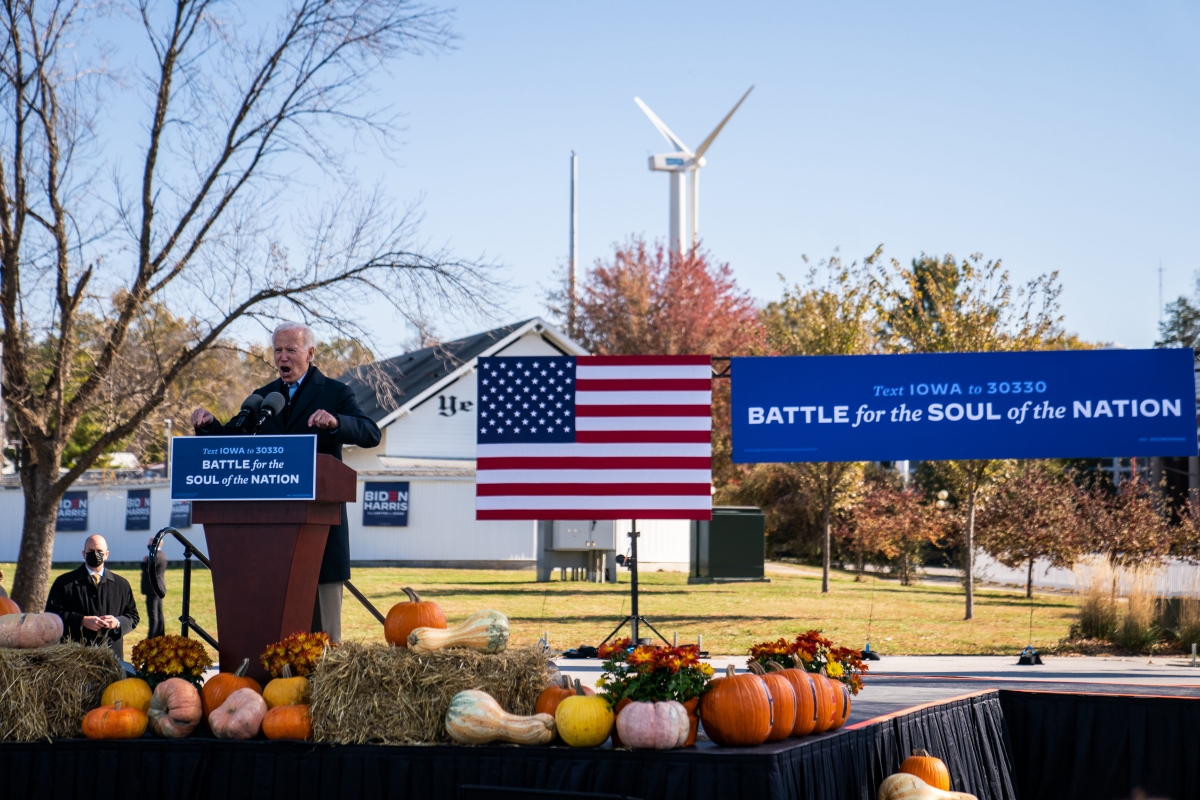
 Boxes of envelopes for ballots are pictured earlier this month at the election office in Erie, Pa. MUST CREDIT: Washington Post photo by Bonnie Jo Mount
  Republican Bob Good campaigns with Rep. Steve Scalise, R-La., background left, in Madison, Va., on Oct. 22. Good is in an unexpectedly tight House race against Democrat Cameron Webb. MUST CREDIT: Washington Post photo by John McDonnell.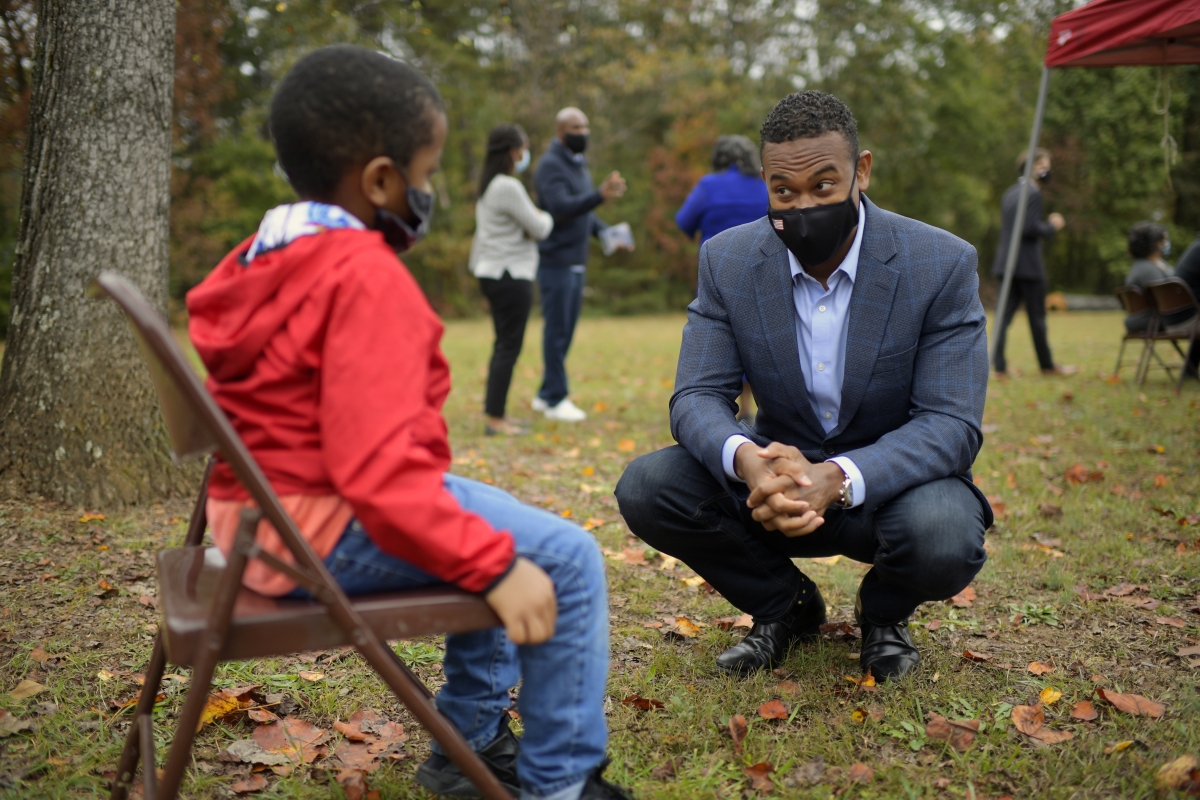
 Interior Secretary David Bernhardt in his office in May 2019. MUST CREDIT: Washington Post photo by Bonnie Jo Mount
  Supporters clap while listening to former vice president and Democratic presidential nominee Joe Biden as he delivers remarks during a drive-in event at the Iowa State Fairgrounds in Des Moines on Friday. MUST CREDIT: Washington Post photo by Demetrius Freeman
  Ballots are counted Friday at the Miami-Dade County Elections Department in Doral, Fla. Twenty years ago, the presidential race hung in the balance amid a fight over ballot issues in South Florida. MUST CREDIT: Washington Post photo by Michael Robinson Chavez
 SootinClaimon.Com