D.C. business owners prepare for unrest #SootinClaimon.Com

#SootinClaimon.Com : ขอบคุณแหล่งข้อมูล : หนังสือพิมพ์ The Nation.

D.C. business owners prepare for unrest

InternationalOct 30. 2020Ronald Nerio, front, and Omar Martinez, with BFC Contracting Services, use plywood to cover the glass windows of a building on 17th Street in downtown Washington on Monday in preparation of feared unrest on or after Election Day. MUST CREDIT: Washington Post photo by Toni L. Sandys.Ronald Nerio, front, and Omar Martinez, with BFC Contracting Services, use plywood to cover the glass windows of a building on 17th Street in downtown Washington on Monday in preparation of feared unrest on or after Election Day. MUST CREDIT: Washington Post photo by Toni L. Sandys. 

By The Washington Post · Peter Hermann, Emily Davies · NATIONAL, POLITICS, COURTSLAW 
WASHINGTON – Concerned about the possibility of unrest on Election Day, or in the days that follow, business owners in some areas of the District are being advised to sign up for crime alerts and to keep their insurance information handy. Some have boarded their windows and others have the materials ready.

D.C. police have canceled leave for officers starting this weekend to ensure adequate staffing, and the District spent $100,000 on less-than-lethal munitions and chemical irritants for riot control to replenish a stockpile depleted by clashes over the summer. 

As a turbulent election season draws to a close, authorities across the country worry frustration may spill onto the streets and officials are watching for disturbances at the polls or protests in their communities. That tension is heightened in the nation’s capital, where the White House and other symbols of government regularly draw demonstrators.

“It is widely believed that there will be civil unrest after the November election regardless of who wins,” D.C. Police Chief Peter Newsham told lawmakers this month. “It is also believed that there is a strong chance of unrest when Washington, D.C., hosts the inauguration in January.”

Democratic Mayor Muriel Bowser said the District’s public safety officials have been discussing plans for post-election unrest “for many weeks if not months.” The D.C. National Guard is already called up because of the coronavirus crisis and could be deployed, though Bowser expects to use them only for traffic control, if at all. 

On Thursday, D.C. police announced possible street closures and parking restrictions that are expected to cover much of downtown Washington on Nov. 3 and 4.

Christopher Rodriguez, the director of the D.C. Homeland Security and Emergency Management Agency, met with business leaders earlier this month.

Officials have not recommended that shop owners board up their buildings, according to a resource guide for business distributed by city leaders this week. Some small business owners are heeding their guidance, focused on bolstering sales as winter approaches. But others are boarding anyway, and concrete barriers were being installed outside the U.S. Chamber of Commerce building across from Lafayette Square.

Police say they know of no specific threats but are concerned that a politically polarized electorate coupled with divisive rhetoric and President Donald Trump questioning the integrity of the election could create flash points in the nation’s capital and elsewhere.

Newsham said several groups have applied for demonstration permits starting Nov. 1 and for days after the election. The National Park Service is considering permit applications from several organizations with various views on the election.

Shutdown DC is planning weeks’ worth of demonstrations around the White House and Black Lives Plaza starting Tuesday. “After you vote, hit the streets,” the group posted on its website.

Federal and local authorities in and around the District are also taking pains to reassure the public they are working for a secure and safe election. Maryland Republican Gov. Larry Hogan joined state and federal officials to say a “confident public is more likely to vote” and trust the outcome. D.C. Attorney General Karl Racine, a Democrat, reminded residents that destroying election signs is illegal. And Baltimore State’s Attorney Marilyn Mosby is telling prosecutors to pay close attention to crimes that “occur in the context of the election.”

And the acting U.S. attorney for the District, Michael Sherwin, announced that a federal prosecutor will oversee election-related complaints and allegations of election fraud in D.C. 

The District endured months of sustained demonstrations after the death of George Floyd in police custody in Minneapolis, targeting areas outside the White House but also impacting the downtown business district and neighborhoods such as Georgetown, Adams Morgan and Shaw.

The demonstrations were mostly peaceful, but outbreaks of violence, much of it attributed to agitators more intent on destruction than protest, resulted in hundreds of arrests after nights of set fires, looted stores and clashes with police. D.C. police said that on May 30 and May 31, the two most volatile days, 204 business were burglarized and 216 properties were damaged. 

In recent days, crowds gathered outside a police station in Northwest D.C. to protest the death of a young man who was killed in a moped crash after police attempted to stop him because he was not wearing a helmet. Those protests resulted in clashes with police, broken windows and damaged police cars.

There also were store windows smashed in Georgetown on Wednesday night, casting some doubt on the city’s recommendations for business owners to maintain a sense of calm in advance of the election. It was unclear if those causing the damage, which business leaders described as attempted looting, had any link to those demonstrating at the police station. 

A handful of Georgetown businesses requested plywood after Wednesday night’s events. One boarded up overnight. 

“It seems like we are sitting on a tinderbox, and there are so many different things that could potentially cause problems,” said Rachel Shank, executive director of Georgetown Main Street. “We saw some serious devastation back in May and June and we are trying to avoid that, but we are also trying to avoid Georgetown looking like a ghost town.” 

Business Improvement District leaders across the city are working with contractors to implement what they describe as standard protocol in advance of any anticipated large gathering in the area, which includes tying up loose ends at construction sites to remove material that could easily be used for destruction. 

Josh Turnbull, a general manager at Oxford Properties Group, oversees three buildings in downtown D.C., including one on the edge of Black Lives Matter Plaza. He never removed plywood from the property closest to the White House and said he planned to board up the other two this week in anticipation of unrest around the election.

“It’s really like an insurance policy,” he said. “The cost-benefit analysis here just makes sense.” 

On Monday, security contractors were hard at work down 17th Street, fastening plywood to open glass. By Friday, businesses could be seen boarded up along K and L streets downtown.

Still, other business owners are planning to avoid fortification, putting faith in D.C. leadership to guide them through the next few weeks and hoping that keeping their windows open may contribute to a more peaceful November.

“It has been such a difficult year, so financially challenging, that the attitude right now is we will wait until the last possible moment or until we hear something definitive from the government,” said Alexander Padro, executive director of Shaw Main Streets, where more than three dozen businesses were damaged in late May and June.

In May, rioters smashed windows at Dan Simons’s downtown restaurant, Founding Farmers. When a member of his team emailed him asking if he planned to reinstall plywood on his windows in advance of Election Day, he balked. 

“Sometimes, by preparing for war you create war,” he said recently, providing insight into his decision, at least for now, to avoid fortification. “And I am not that guy. Might that make me a fool? Yes. But that is probably a risk worth taking.”

A few blocks away, Michelle Brown stood in her downtown restaurant, Teaism, which was still charred and damaged from when rioters set it on fire one night in May. Four months later, on the last Monday in October, there was still no HVAC unit, no 20-year-old tea chest that greeted customers on the back wall and no stream of revenue to help her through the daily slog of pandemic-time entrepreneurship.

Brown supports the Black Lives Matter movement (a sentiment she shared in a series of viral tweets after the restaurant was damaged). Now, anticipating a month that could bring about even more unrest, she harbors the same steady focus on the importance of free expression.

“This is just part and parcel of being a neighbor to the White House,” she said, adding that, as of now, she has not planned to take any unusual action to brace for Election Day.

But Brown, like many of her neighbors near the White House, is listening carefully for guidance from city officials and “rumorville on the street” to determine if she should take additional precautions.

“It’s all just wait and see now,” Brown said, watching a truck full of red cones and plywood drive past her shuttered store.


Powerful Aegean earthquake kills at least 14 people in Turkey and Greece, injures hundreds #SootinClaimon.Com

#SootinClaimon.Com : ขอบคุณแหล่งข้อมูล : หนังสือพิมพ์ The Nation.

Powerful Aegean earthquake kills at least 14 people in Turkey and Greece, injures hundreds

InternationalOct 30. 2020

By The Washington Post · Kareem Fahim, Matthew Cappucci · WORLD, MIDDLE-EAST 

ISTANBUL – A powerful earthquake in the Aegean Sea left at least 14 people dead Friday in Turkey and Greece, flattened at least 20 buildings in coastal Turkey and sent a surge of seawater flooding streets near the Turkish city of Izmir.

The magnitude 7 earthquake – felt as far away as Istanbul and Athens – occurred about 10 miles north of the Greek island of Samos, according to U.S. Geological Survey.

At least 12 people were dead and more than 400 injured in Turkey, according to Turkey’s disaster management agency, which said one of the victims had drowned. At least 20 structures, including some multistory apartment buildings in Izmir, collapsed, authorities said.

On Samos, two teenagers, a boy and a girl, were killed when a wall collapsed on them, said Greece’s General Secretariat for Civil Protection. Local media reported that the teens were walking home from school.

It was the second major earthquake to hit Turkey this year. In January, at least 41 people were killed in an earthquake that struck Elazig in central Turkey, where questions were raised about the whether the government was adequately enforcing building codes.

Some of the worst damage in Friday’s quake occurred in Izmir, a city of 4.4 million people on Turkey’s Aegean coast. Mayor Tunc Soyer told CNN Turk that search teams were at the scene of the collapsed buildings.

Local television stations showed residents and rescue workers searching for survivors through mounds of rubble. Plumes of white smoke rose from Izmir’s skyline. During one broadcast, cheers erupted as a woman, dazed and grimacing, was pulled from the ruins of a building.

Near Seferihisar, south of Izmir, coastal areas flooded with seawater from what appeared to be a “small tsunami,” said Ismail Yetiskin, a district mayor who was quoted by the NTV news channel.

The authorities had lost contact with several fisherman who were at sea when the earthquake struck, he said. Video posted on the Internet appeared to show flooding in Samos as well.

The quake was very shallow, with the main slip occurring just seven miles below the seabed. Most earthquakes in western Turkey occur within 40 miles below the surface.

Turkey sits atop the Anatolian Plate, a block of the earth’s crust that is slowly rotating counterclockwise and shifting west with time – about an inch of movement every year. But pent-up stress caused by collisions with the African plate and Eurasian plate result in frequent earthquakes.

Most of Turkey’s big quakes over the years have occurred along the North Anatolian Fault, which runs across northern Turkey along the Pontic Mountains.

Occasionally, quakes occur in the country’s western zones, the result of dense, oceanic crust sinking and forcing the ground farther east upward.

The quake was the strongest in nearly a decade to strike Turkey. In October 2011, a 7.1 earthquake struck eastern Turkey, killing more than 600 people.

On Samos, some residents were asked to evacuate their houses for the next 48 hours for precautionary reasons.

The earthquake struck at a moment when the governments of Turkey and Greece are locked in a bitter feud over competing claims to territory and resources in the seas that divide the two countries. After the quake, both nations issued offers of mutual humanitarian aid.

Writing on Twitter, Greek Prime Minister Kyriakos Mitsotakis said he had called Turkish President Recep Tayyip Erdogan to offer condolences.

“Whatever our differences, these are times when our people need to stand together,” Mitsotakis wrote.

West Virginia’s surprising boom, and bust, tells the story of Trump’s promise to help the ‘forgotten man’ #SootinClaimon.Com

#SootinClaimon.Com : ขอบคุณแหล่งข้อมูล : หนังสือพิมพ์ The Nation.

West Virginia’s surprising boom, and bust, tells the story of Trump’s promise to help the ‘forgotten man’

InternationalOct 30. 2020Includes three other graphics.
Photo by: The Washington Post — The Washington PostIncludes three other graphics. Photo by: The Washington Post — The Washington Post 
By The Washington Post · Heather Long, Andrew Van Dam · NATIONAL, BUSINESS, POLITICS 
MOUNDSVILLE, W.Va. – Kathleen Trabert grew up in a town of diminished dreams as steel and coal jobs dried up. She spent more than a decade jumping among retail, fast food and home health aide jobs that paid so little that her family relied on food stamps and Medicaid to get by.

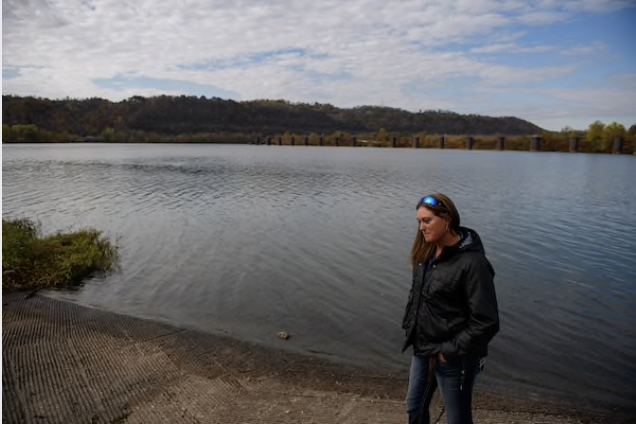
Kathleen Trabert, 31, beside the Ohio River, across from Dilles Bottom in Moundsville, W.Va. MUST CREDIT: photo for The Washington Post by Jeff Swensen.

Kathleen Trabert, 31, beside the Ohio River, across from Dilles Bottom in Moundsville, W.Va. MUST CREDIT: photo for The Washington Post by Jeff Swensen.

In 2018, Trabert landed a job that paid more than she had ever earned – $31 an hour operating machines to dig up West Virginia’s hills to lay pipelines for natural gas. The gas boom improved her life and her town’s. She booked her first big vacation in years for herself, husband and son, a Caribbean cruise. She also watched hotels spring up along the highways, and a new football field for the local high school.

“I never expected that kind of money in my life,” said Trabert, who graduated from high school but did not attend college.

Workers without a college education experienced some of the biggest job gains of Trump’s presidency ― until the pandemic hit. After years of sitting on the sidelines, these Americans began looking for work again, landing jobs in construction, warehouses, and oil and gas fields. The pace at which they found jobs even surprised some economists who had predicted that low-skill Americans would face strong head winds from automation and the opioid crisis. Yet, as unemployment fell to a half-century low and natural gas prices rebounded early in Trump’s term, companies cast a wider net in search of employees.

How much credit Trump deserves is an ongoing debate in the Ohio Valley, the part of Appalachia where West Virginia, Ohio and Pennsylvania meet. In West Virginia, many call Trump’s first three years in office a “gold mine.”

Indeed, between Trump’s inauguration in January 2017 and March of this year, West Virginia recorded the fastest labor-force growth among the states, adjusting for population. It was a dramatic turnaround. West Virginia added nearly 37,000 jobs in that period, and the state’s unemployment rate fell below 5%, a phenomenon that has occurred only twice since the late 1970s.

The job gains coincided with a boom in natural-gas pipeline construction. The natural gas frenzy began under President Barack Obama but accelerated under Trump.

Trump’s economic legacy will be written in places like the Ohio Valley, where many lifelong Democrats voted for him. Trump campaigned on helping the “forgotten man,” which to him appeared to mean White workers without college degrees. In February, many in the Ohio Valley said their lives had improved financially during Trump’s first term. But the coronavirus recession and plunging gas prices have thrown people out of work and once again made this region’s future uncertain. The question on many people’s minds: Will the good times return?

The Washington Post initially interviewed more than 30 workers and business owners in West Virginia and nearby Pennsylvania and Ohio in February, when many Americans rated the economy as the best since the 1990s. Then the coronavirus struck. When The Post spoke to these workers again in October, about a third said their fortunes had declined, and only one reported noticeable improvement. While many here in the Ohio Valley still plan to vote for Trump, people are on edge.

“Nobody’s drilling, nobody’s fracking, there’s no pipe being laid,” said Stacy Leonard, 43, a truck driver who lives in Bridgeport, Ohio, just across the river from West Virginia. “I don’t know if this area’s going to pick back up or not. I’m hoping.”

Many of the gains have been wiped away in the midst of the deadly pandemic and steep economic downturn. West Virginia lost all of its job gains under Trump and now has 30,000 fewer jobs than when the president took office. The state’s unemployment rate stood at 8.6% in September, just shy of where it was at the height of the Great Recession.

West Virginia’s backslide is a telling example of how devastating this recession has been on people who cannot work from home. Nationwide, labor force participation among Americans without college degrees has sunk to its lowest point on record during this recession. And that’s especially true in West Virginia, where nearly 80% of the workforce lacks four-year college degrees.

Throughout the Ohio Valley, most people can name friends or family members who are out of work. They report that hotel parking lots and RV parks that were full of pipeline workers a year ago have emptied out.

Trabert’s mother-in-law lost her secretarial job when the pandemic hit. Trabert has kept her job on a maintenance and repair crew, but new pipeline and drilling activity has almost stopped. Every day she goes to work, she thinks of the 950 other members of the International Union of Operating Engineers in West Virginia – nearly a quarter of the membership – who no longer have jobs.

“For some, the economy is doing great, but for others it’s not because there isn’t enough work for everybody,” Trabert said. “I’m very blessed to be working right now. It’s been very, very slow with covid and being an election year.”

– – – 

For decades West Virginia had been an economic punchline, ranking at or near the bottom in many economic indicators, including jobs and wages. The state’s fortunes were yoked to the coal industry, which has been locked in a long, sputtering decline. The “knowledge economies” that sprang up on the country’s coasts mostly missed West Virginia, which has the lowest percentage of college graduates among the states.

People began fleeing the state. West Virginia’s population peaked at around 2 million in 1950, when the state’s coal mines employed about eight times as many workers as they do today. Though West Virginia has had boom-and-bust cycles since, Census Bureau data shows it has lost population every year since 2012 and now has about 1.8 million residents.

And far too many who stayed ended up becoming casualties of opioids or alcohol, part of a growing number of “deaths of despair.” West Virginia’s other claim to fame has been the highest drug overdose death rates from 2014 to 2018, according to the Centers for Disease Control and Prevention.

In the Ohio Valley, many refer to the past three decades of coal-mine and steel-mill closures as an endless depression. The state had a particularly rough time during Obama’s second term as more than half of West Virginia’s underground coal mines closed, leaving just 68 mines by 2016, down from 160 in 2012. In those years, West Virginia almost always had the slowest job growth in the nation, according to Labor Department data.

As the jobs disappeared, so did hope.

Mike Lilley, 59, grew up West Virginia’s Northern Panhandle, the hilly sliver of state that juts up between Ohio and Pennsylvania. For most of his career, he drove a milk truck and felt lucky to have work.

“It seemed like we were still in the recession from the 1980s in this area,” Lilley said. “The economy was getting worse and worse. You were just seeing grown men battling for jobs against teenagers.”

As higher paying jobs in steel mills and coal mines vanished, the jobs that remained often were in restaurants, elder care, home health services and call centers – all of which paid well below the national average. As a result, before the pipeline boom, West Virginia typically ranked among the bottom five states for average weekly earnings, Labor Department data shows.

In 2016, West Virginia ranked as the only U.S. state where the majority of the population was White and had high school diplomas or less. Trump’s message to forgotten men and women resonated deeply. The state gave Trump his second biggest margin of victory behind Wyoming.

– – – 

West Virginians enjoyed one of their biggest-ever boom periods shortly after Trump took office. Jobs picked up, as did wages. By the end of 2018, the average worker in the state was making $894 a week, a fatter paycheck than those in a dozen other states.

Some credit the Trump administration’s relaxing of regulations on oil and gas development and expediting of pipeline approvals. Equally helpful was a jump in natural gas prices, which climbed above $3 per 1,000 cubic feet in 2017, spurring energy companies to expand throughout the area. Nearly 75% of the job growth in the state was related to energy, according to economist John Deskins of West Virginia University.

Drilling in West Virginia’s slice of the Marcellus Shale natural gas reserves began a decade ago. And the United States has led the world in natural gas production since 2009. Yet, a new boom in West Virginia occurred around 2018, when, for one record-breaking season, there were almost 16,000 pipeline-construction workers in the state. There were so many pipeline workers that, for a few months, they even outnumbered coal miners in the state.

“There was a big surge of work when Trump became president. The first three years was just booming. It was unreal,” said Scott Watson, a truck driver in the Teamsters Local 697 union. There was so much work that his wife, Jane, left her job in medical billing to become a trucker as well.

By early 2020, West Virginia’s workforce was growing so quickly that for the first time on record, it no longer had the worst labor force participation rate in the nation, a place it had occupied since at least 1950. It overtook Mississippi and flirted with passing several other states.

Wages climbed along with the job opportunities. Truck driver Stacy Leonard went from making $10.50 an hour to $20 to $24 an hour driving for the pipeline companies. It was the same for Lilley, who said his annual income more than doubled when he switched from driving for a milk company to working for pipelines, allowing him to buy a new F-150 truck and set up a new wood shop in his basement.

“It’s really been a blessing to this area,” Lilley said. “We needed it. We needed something. This area was growing stagnant.”

The influx of workers and money into the Ohio Valley helped local businesses like Pete Yochum’s dry cleaners and laundromats. Yochum quickly learned many pipeline welders wanted their uniforms starched so much that the workers would have to lie flat in bed and kick their legs to get their pants on. That much starch acts as a flame retardant – sparks bounce right off the uniforms.

“Those pipeline guys made us a lot of money,” Yochum said.

Beyond jobs, many in this rural area turned their properties into RV parks or apartments for pipeline workers. Some leased their land to natural gas companies. Rental homes that used to go for $400 a month suddenly were fetching $800 monthly from pipeline workers, several landlords told The Post.

Ricky Whitlach leased some of his 150 acres in the hills outside Moundsville to a gas company in 2017. He got a $12,000 check last month and a $103,000 check in August from the gas companies. By the end of the year, he’ll have paid off his home, his son’s home and all of their car loans.

“As long as they keep sending me a check, I’m happy,” said Whitlach, 60, a retired utility worker.

Whitlach starts most days driving his ATV around his property to check whether the bears have damaged his deer feeders. An avid outdoorsman, he hated the noise and disturbance, initially, when natural gas trucks roared by his house at all hours to construct a drilling site on top of one of his hills. They ultimately dug 10 holes and laid five small pipelines across his property.

Today, Whitlach says the hassle was worth it. Whitlach says he doesn’t like the way Trump acts but he credits the president with much of the Ohio Valley’s turnaround.

“I think Trump’s helped West Virginia a good bit,” Whitlach said. “I think Obama about killed West Virginia.”

– – – 

By early 2020, there were signs that the pipeline construction “gold mine” was declining. Employment in the industry in 2019, while still at its second-highest level on record, was half of its 2018 peak. Around town, restaurants, hotels and campsites still had customers, but waiting lists were dwindling and vacancies started to appear.

West Virginia has not mastered the trick of converting its natural resource wealth into sustained economic growth – a problem known in economic circles as the “resource curse.”

“We’re more than a coal state, but I think we still need to continue to prioritize diversification,” said Deskins, the West Virginia University economist. “We have to act as quickly and aggressively as possible because the potential isn’t going to be there forever.”

Pipelining in West Virginia’s treacherous hills and hollows is a seasonal business, with many workers laid off during the winter and rehired in the spring. In February, there had been signs that hiring for the spring would be slower in 2020. Initially, locals blamed it on a presidential election year. They say energy companies are reluctant to drill new wells and lay fresh pipe when prices are low and they don’t know whether the regulatory environment will change in the near future. Then the global pandemic hit.

Many here thought their rural lifestyle would keep them safe from the coronavirus, but the economic downturn still struck hard. In March, gas prices were crushed by a global petroleum price war, making it hard for Appalachian gas wells to break even.

The industry responded quickly with deep production cuts. Just five drilling rigs were active in West Virginia for much of the summer, down from more than 20 a year before, according to the energy firm Baker Hughes. That’s the lowest oil and gas activity recorded in West Virginia since February 2000.

The Ohio Valley felt the pain.

Unemployment in West Virginia skyrocketed to 15.9%, reflecting a national trend. West Virginia initially recovered faster than most states, as it reopened quickly, but progress has been stalling. By September, fewer than half of adults in West Virginia were working.

“We already were in a downturn, then we got hit with the pandemic, and now we have an election coming up, and that always lends a certain level of uncertainty to this industry here,” said Christian Turak, a Democrat running for the state legislature and a lawyer with Gold, Khourey & Turak who specializes in gas leasing contracts. His phone used to ring constantly. Now gas companies tell him to wait.

Amy and Mark Foster, who run Creekside Camping in Triadelphia, are barely breaking even and fear they might have to close. In 2012, they turned their backyard into a campground for 17 RVs. Last year all the spots were full, with a long waiting list of mostly pipeline workers. Now there are just seven campers, mostly vacationers seeking a refuge in the pandemic.

“This has been our worst year since we’ve been open,” said Mark, 54, a former steel mill worker who now works for a natural gas company. “It’s been a backslide.”

Some here pinned their hopes for a rebound on Trump’s winning a second term. The Fosters have suggested they might have to close their campground if Joe Biden wins, citing worries that a Democratic administration could further slow the pace of drilling and pipeline construction.

Dozens of workers told The Post they feared Biden would ban new natural gas development, although Biden has said, repeatedly, he wants to ban only new fracking on federal government lands.

In the midst of the natural gas downturn, another pillar of West Virginia’s economy, coal, continues its long slide. The United States is in a rapid transition from coal-burning power plants amid concerns about pollution and climate change. Even before the pandemic hit, the coal industry already had shed hundreds of jobs since Trump took office. And now, it’s down 6,400 jobs, a decline of nearly 13%.

One way West Virginia could diversify its economy somewhat is through a proposed factory that would strip ethane out of natural gas and turn it into plastic. A Thai company, PTTGC, wants to build a gas cracking plant in Dilles Bottom, Ohio, just across the Ohio River from Moundsville, W.Va. Thousands of workers would be needed to build and operate the plant, and local landlords are preparing for the influx.

After natural gas prices plunged this summer, a major foreign investor pulled out of the cracker plant project. PTTGC America said in a statement that it will make an announcement about the cracker plant’s future “by the end of this year or early next year.”

This week, natural gas prices topped $3 for the first time in nearly two years, renewing hopes in the Ohio Valley that gas energy activity will pick up again in 2021, lifting the livelihoods and spirits of those who have long felt forgotten.

Air Force takes steps to clear path for women’s advancement #SootinClaimon.Com

#SootinClaimon.Com : ขอบคุณแหล่งข้อมูล : หนังสือพิมพ์ The Nation.

Air Force takes steps to clear path for women’s advancement

InternationalOct 30. 2020Alexandra Jackson flies a C-17 plane in the Kentmorr Airpark in Maryland. MUST CREDIT: Handout photo.
Photo by: Handout — HandoutAlexandra Jackson flies a C-17 plane in the Kentmorr Airpark in Maryland. MUST CREDIT: Handout photo. Photo by: Handout — Handout 
By The Washington Post · Missy Ryan · NATIONAL, NATIONAL-SECURITY 

When Alexandra Jackson joined the West Virginia Air National Guard in 2018, she was looking forward to becoming a pilot with the 167th Airlift Wing, like her father. But at 5-foot-1, three inches shorter than the minimum standard, Jackson soon learned she would need a waiver to fly her unit’s C-17 transport plane and one of the two trainer aircraft before that. 

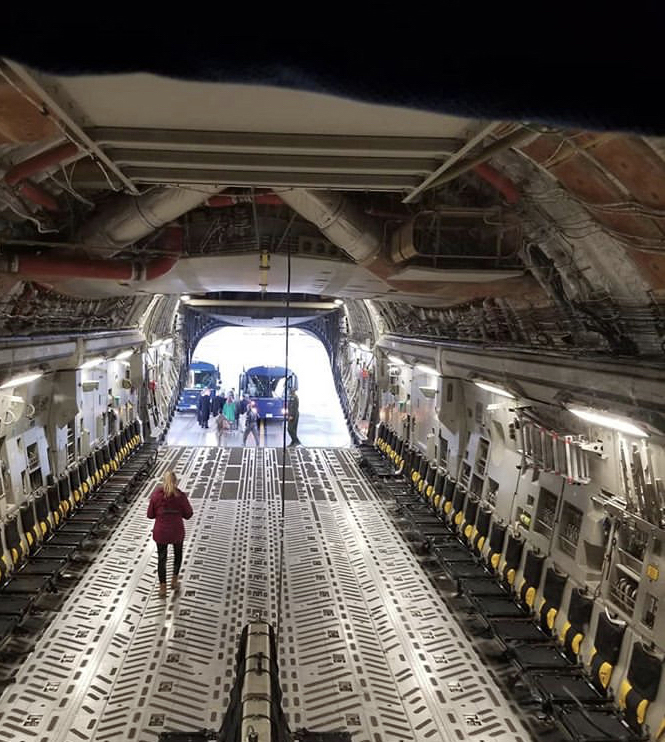
Alexandra Jackson, who joined the West Virginia Air National Guard in 2018, walks inside a C-17 transport plane. MUST CREDIT: Alexandra Jackson.

Alexandra Jackson, who joined the West Virginia Air National Guard in 2018, walks inside a C-17 transport plane. MUST CREDIT: Alexandra Jackson.

Jackson applied for the waivers but was denied. “It was heartbreaking, to say the least,” she said. 

She then sought a different exception that sometimes is granted if pilot candidates can pass a separate measurement exam conducted in the aircraft cockpit. Her superiors in the Air National Guard had never conducted such a test for the C-17 and had to work with Air Force officials to create one. She eventually passed and recently learned she can begin officer training school next year.

Jackson was elated but also frustrated by the delay. Had the cockpit been designed to accommodate a wider range of body sizes, she would be in the final stages of training, or perhaps already flying. “Hopefully I’m just paving the way for people to come,” she said. 

Now, the Air Force is discarding its decades-old height standards, which have disqualified nearly half of female candidates and had a particular impact on women of color. The new standards are part of an effort to eliminate often overlooked obstacles to the advancement of women in a service whose leadership and pilot corps are overwhelmingly male.

The plans, which are in development or beginning to take effect, also include the first-ever flight suit for pregnant aircrew and a design contest for devices that would allow female aircrew to more easily urinate in flight. 

Service leaders say there is new urgency to securing a larger pool of qualified pilots and aircrew – a challenge that will require more eligible women – so the United States can compete with China’s larger, quickly modernizing military. 

Even as Pentagon leaders call for an end of racial and gender discrimination in the military following the upheaval that gripped the nation this summer, other barriers for female advancement persist across the Air Force and other services.

Those include a problematic record on responding to sexual harassment and assault; pregnancy bias, which a new Pentagon policy listed as a prohibited form of discrimination for the first time; and a host of smaller challenges that can make it harder for female service members to advance or that lead women to view military and family life as incompatible. 

The military has taken significant steps toward eliminating the second-class status of female service members, such as opening ground combat positions to women, said Kayla Williams, an Army veteran who directs the Military, Veterans and Society Program at the Center for a New American Security. 

Still, “having to consistently navigate a cultural environment full of implications that you do not belong and are unwanted is exhausting,” she said. “Rooting out deeply entrenched cultural norms and stereotypes will be a longer-term effort, and one in which measuring success is challenging.”

Women today make up about 16% of U.S. military personnel but occupy few positions among the upper echelons of the Pentagon’s military and civilian workforce. 

In the Air Force, a similar pattern is visible in coveted flight positions: Women account for five percent of pilots and just two percent of fighter pilots. 

A recent government watchdog study found that women are more likely than men to leave the military early, with female service members saying their reasons include sexual aggression from other service members and the challenges of reconciling pregnancies and parenthood with career progression. 

Advocates of additional changes say the military system remains designed with a male service member with a stay-at-home spouse in mind in ways large and small, from a leadership track centered on combat jobs to mandatory morning physical training, or “PT,” which can be an issue for dual-military families with children.

Defense Secretary Mark Esper, who faced criticism for his role in the Trump administration’s response to nationwide racial unrest this summer, ordered officials at all levels to take rapid steps to counteract racism and discrimination.

In the Air Force, the focus on equality provided traction for a proposal that the service’s Women’s Initiative Team (WIT), an internal volunteer group, had been working on for several years. The team hoped to press Air Force leaders to modernize body size regulations that determine who is eligible to fly in different kinds of aircraft and mandate that manufactures design aircraft for a broader array of body sizes and heights.

The so-called anthropometric standards, which dated to a survey of male pilots from 1967, have excluded 44% of the current U.S. female population aged 20 to 29 unless they obtain a waiver. Even with waivers, some aircraft were out of reach for most women. Only 9% of women, for example, qualified to fly the F-15 fighter jet.

The regulations had an even more pronounced effect on women of color, excluding 74% of African American women, 72% of Latino women and 61% of Asian American women in the recruitable population, Air Force officials said. 

In a July 31 memo based on the WIT proposal, Will Roper, the service’s top official for acquisition and technology, instructed Air Force leaders to ensure that new aircraft and equipment are designed to be usable by 95% of the current recruitable population. The memo was first reported by Air Force Times.

As an interim step until the Air Force can conduct further studies, the decision will expand the accepted range for standing height from 64-77 inches to 59-77 inches, and from 34-40 inches to 31-41 inches for sitting height. The range of accepted aircrew weights is also being adjusted, providing new opportunities for women who were previously deemed too light.

Officials say the situation has been even more difficult for enlisted Air Force personnel, who are rarely granted waivers. That reality has had unintended consequences, making it harder to fill spots for enlisted linguists who sit in the back of reconnaissance aircraft like the RC-135. Because some linguists, highly trained in languages like Mandarin, have been turned away for height reasons, the Air Force has had to lower language aptitude scores required for those jobs, a WIT member said. 

Roper, who only recently became aware of the dated flight standards, said the Air Force grew complacent about the Pentagon’s process for selecting aircrew because of its technological edge over other countries. He said the WIT’s grass-roots drive to broaden the pilot candidate pool “just got stuck in the bureaucracy.” 

“I do think this was unintentional, but I think it’s a case of a blind spot,” Roper said in a recent interview. “It is the case of having an uphill slope for women to climb to the surface, because this is that silent bias in the background.”

The changes are intended to apply, for the time being at least, to new and altered aircraft and equipment, a step Roper said would be negligible in cost. Aircraft like the F-35 stealth fighter can already accommodate 95% of the female recruitment population. But Roper said changes to aircraft that will be put out of service soon – or that require retesting other aircraft – probably won’t make sense.

The Air Force is also developing a maternity flight suit, a year after it began allowing pregnant service members to fly non-fighter aircraft through their second trimester without a waiver. Before that change, women were grounded once they made their pregnancy known. Female airmen said the rule took some women out of flight duty for so long that they sometimes had to requalify on their aircraft, slowing their progression up the career ladder.

Air Force officials say they hope to deliver the maternity flight suit by 2023 and in the meantime are adjusting the service’s existing design for pregnant aviators.

Lt. Col. Jess Ruttenber, a former KC-135 and C-21 pilot who has spearheaded a number of these initiatives as part of the WIT, said she had to improvise while pregnant by getting bigger flight suits. But the baggy arms and legs would catch on the flight controls. 

She said many women hide their pregnancies for as long as possible because they think that it will negatively impact their careers. “Women often see having a flying career and having a family as incompatible,” she said. The maternity flight suit, she said, “is important both functionally and symbolically that you can have children and be a pilot. It’s essential to our sense of inclusion.”

The Air Force has also launched an open challenge to solicit designs for a new device that would help women urinate more easily in flight. Female pilots currently have a few options, including special plastic bags filled with polymer that both women and men use. 

But female pilots say their anatomy and the small zippers on many of their flight suits make it harder for them to use the bag to urinate. The process can take 10 minutes. 

Many women choose instead to “tactically dehydrate,” a practice that can erode pilot performance and increase the likelihood of developing bladder and urinary tract infections. 

Lt. Col. Cathyrine Armandie, who flew 450 combat hours as an F-15E fighter pilot, said the extra challenge female pilots face is “a really big deal.” On one flight mission, she went without relieving herself for 11 hours. Landing in the desert in over 100 degree heat, she almost passed out from dehydration. 

Armandie, who now serves ina senior Air Force position related to diversity, said another device in use for in-flight urination, a mechanized pad and pump, doesn’t always work as designed and can result in leaks. 

“That’s really nothing more humiliating than going out and fighting bad guys on combat sorties and protecting the guys on the ground – which is why I chose to fly that aircraft was to do ground support and make sure our troops on the ground had safety watch overhead – than to come back from a combat sortie and literally to have peed your pants,” she said. 

Winning designs in the competition, slated to conclude this fall, will receive up to $1.5 million from the Air Force. 

Qatar vows to punish officials responsible for strip-searches of female passengers at Doha airport #SootinClaimon.Com

#SootinClaimon.Com : ขอบคุณแหล่งข้อมูล : หนังสือพิมพ์ The Nation.

Qatar vows to punish officials responsible for strip-searches of female passengers at Doha airport

InternationalOct 30. 2020Surveillance camera footage from Oct. 2, obtained by the website Doha News, shows an abandoned baby at Hamad International Airport in Doha, Qatar.
(Doha News/AP) (AP)Surveillance camera footage from Oct. 2, obtained by the website Doha News, shows an abandoned baby at Hamad International Airport in Doha, Qatar. (Doha News/AP) (AP) 

By The Washington Post · Rick Noack · WORLD, MIDDLE-EAST 

Qatar’s prime minister has vowed legal action against officials responsible for strip-searches of numerous women at a Doha airport earlier this month that drew international criticism. The searches, which followed the discovery of an abandoned baby in a terminal bathroom, also triggered strike threats that would have imperiled state carrier Qatar Airways’ flights to and from Australia.

In a statement issued Friday, the Qatari government’s communications office said that “those responsible for these violations and illegal actions have been referred to the Public Prosecution Office.” In a separate statement on Twitter, Qatari Prime Minister Sheikh Khalid bin Khalifa al-Thani said the searches were “unacceptable” and vowed to “hold those responsible for these acts to account.”

Qatari officials had previously said they regret “any distress or infringement on the personal freedoms of any traveler caused by this action.” 

On Sunday, Australian broadcaster 7 News first reported that Qatari authorities had asked women on an Oct. 2 Sydney-bound Qatar Airways flight to disembark amid preparations for departure at Qatar’s main airport, Hamad International, and said they were then strip-searched in nearby ambulances.

Australian officials clarified Wednesday that women from nine other flights were also searched, including at least 18 Australians. Citizens of numerous countries were affected, and officials in Canberra said they are in contact with authorities in other nations on the issue.

Speaking to the Australian Broadcasting Corp., two Australian women said the procedure was involuntary and that the reasons for it were not made clear.

One of the women said a staff member told her that she “needed to examine my vagina,” according to the ABC.

The Oct. 2 searches sparked international outrage, including in Australia, where Prime Minister Scott Morrison called them “appalling,” and Foreign Minister Marise Payne said they constituted a “grossly disturbing, offensive, concerning set of events.”

“It is not something I have ever heard of occurring in my life, in any context,” Payne said on Monday.

Her ministry – which was informed about the incident earlier this month – issued a complaint to Qatar.

In its statement on Friday, the Qatari government said protocols at the airport are being reviewed, adding that “this incident is the first of its kind.”

“What took place is wholly inconsistent with Qatar’s culture and values,” the statement continued.

In its initial response, Hamad International Airport said the searches were carried out because of concern “about the health and welfare of a mother who had just given birth.” 

But in a follow-up statement on Wednesday, the Qatari government’s communications office said the baby was found in a plastic bag and that it “appeared to be a shocking and appalling attempt to kill her,” according to Reuters. 

The baby is under care in Qatar, officials said, and the mother’s identity remains unknown.

In Qatar, sex between unmarried people is illegal, according to a law that largely targets women and marginalized migrant workers, which sometimes leads to secret pregnancies, Deutsche Welle reported. Until saying it would abandon the practice five years ago in the face of criticism from international labor groups, Qatar Airways would fire women who became pregnant in their first five years of employment.

Japan ministry to promote next-generation EV battery development #SootinClaimon.Com

#SootinClaimon.Com : ขอบคุณแหล่งข้อมูล : หนังสือพิมพ์ The Nation.

Japan ministry to promote next-generation EV battery development

InternationalOct 30. 2020

By The Yomiuri Shimbun
The Japan News/ANN

The Economy, Trade and Industry Ministry, aiming to expand the use of electric vehicles (EV) that do not emit carbon dioxide (CO2), plans to place priority on facilitating the development of the high-performance batteries that are the key component of the vehicles.

The ministry intends to provide support through subsidies for the research and development on next-generation batteries and the establishment of domestic manufacturing bases, among other efforts. It also aims to build a structure to compete with Chinese manufacturers that have increased their presence in battery development.

The ministry will put together such a strategy in its execution plan to be compiled by the end of this year, in line with the government’s goal of reducing CO2 and other greenhouse gas emissions to net zero by 2050.

Batteries account for 30% of the production costs of EVs, and are considered to be the heart that affects the vehicle’s performance. As it will have an impact on Japan’s globally competitive automobile industry, the ministry will devise the policy as a high-priority issue. If the technology can be advanced to where battery capacity is enlarged, that could lead to the development of storage batteries for renewable energy sources such as solar and wind power which do not provide stable electricity.

The strategy is likely to focus on four points in regard to EV batteries: technological development, boosting competitiveness, international cooperation, and promotion of widespread use. Travel distance is a main challenge for EVs, and to exceed that of gasoline-powered vehicles, the ministry will aim for practical application of an all-solid-state battery, the next-generation battery of the current mainstream lithium-ion battery. It intends to provide a boost to start-up companies through subsidies to back technological development.

To increase competitiveness, the ministry plans to focus on developing a domestic supply chain for batteries, including raw materials. The nation’s auto industry has an annual shipment value of ¥60 trillion, accounting for about 20% of the domestic manufacturing. The industry encompasses a wide range, and the ministry wants to strike a balance between the environment and economic growth by supporting a system that enables the entire industry to smoothly shift to the next generation. For this purpose, the ministry also plans to support the enhancement of domestic battery-related factories through subsidies and other measures.

With regard to automobiles, Britain, the U.S. state of California and China have already announced plans to limit new automobile sales to EVs and other eco-friendly vehicles by 2035. Competition in the development of batteries, which are the heart of EVs, is expected to only intensify.

The global market for automotive batteries nearly quadrupled from 2016 to 2019, with Chinese companies, which have stepped up development and production, holding a global share of 40% in 2019. The Japanese share dropped from 35% in 2016 to 28% in 2019, yielding the top spot to China.

The Chinese government is also increasingly taking the lead in setting international rules for battery standards, safety criteria and other matters. If Japan falls behind in setting such standards, it could be forced to use technology that is disadvantageous to Japanese companies, and result in being left on its heels in production expertise. Regarding such systemic matters, the Japanese government plans to cooperate with Western countries to support the industry.

Also being considered is an expansion of subsidies to make it easier for consumers to purchase EVs.

[Vietnam] North-South high-speed railway to be core part of national transport system #SootinClaimon.Com

#SootinClaimon.Com : ขอบคุณแหล่งข้อมูล : หนังสือพิมพ์ The Nation.

[Vietnam] North-South high-speed railway to be core part of national transport system

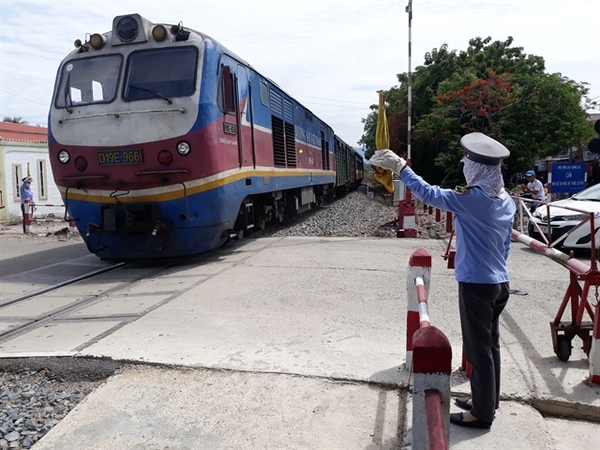
InternationalOct 30. 2020A train in Ninh Phước District, Ninh Thuận Province. —VNA/VNS Photo

A train in Ninh Phước District, Ninh Thuận Province. —VNA/VNS Photo 

By Viet Nam News/ANN

HÀ NỘI — Prime Minister Nguyễn Xuân Phúc asked the Ministry of Transport to propose a feasible plan for the North-South high-speed railway, considering this the backbone of the national strategy on railway development by 2050.

The high-speed line, inter-provincial, inter-regional and urban railway networks must also be added to the strategy, he said.

He was speaking at a Government meeting on Wednesday on the development strategy for Việt Nam’s railway towards 2050.

PM Phúc highlighted the need to upgrade and expand railway networks in Việt Nam while ordering careful preparations for investment and collecting feedbacks of scientists and people on the projects.

“It is necessary to develop Việt Nam’s railway system because the networks have been outdated and need upgrading or build new ones to develop the country,” he told the meeting.

He cited the Lào Cai-Hà Nội-Hải Phòng Railway as one that needs upgrading, adding that urban railway systems must continue to be constructed as planned including those in Hà Nội, HCM City, railway lines connecting the Central Highlands and central region and HCM City and the southwest region.

There is still a lot of space to expand the railway system. A country with a coastline stretching more than 3,000km must develop the railway system, he said, highlighting the importance of building the North-South high-speed railway.

According to the Ministry of Transport, the railway is one of the socio-economic infrastructure sectors that need to be prioritised for rapid development. By 2030, the ministry will continue to upgrade existing railway lines, giving priority to the North-South route, and accelerate construction progress of metro projects in Hà Nội and HCM City.

The ministry will conduct research and develop new routes connecting seaports, industrial parks and study a high-speed railway line connecting the northern and southern parts of the country, aiming to complete the high-speed train by 2050.

PM Phúc urged ministries and sectors to have new thinking in selecting technology to develop railway in Việt Nam, propose investment plans to make a comparison before making decisions and seek different investment sources to develop important infrastructure projects.

Railway projects can be invested by State budget or under the public-private partnership model, he said, asking sectors to make careful preparations for land.

He requested the Ministry of Transport take the lead in building the railway network strategy.

The ministry should propose solutions to develop Việt Nam’s railway networks, especially new technologies and capital mobilisation plans, he said. — VNS

S. Korea, Mongolia to lower tariffs starting 2021 under regional trade pact #SootinClaimon.Com

#SootinClaimon.Com : ขอบคุณแหล่งข้อมูล : หนังสือพิมพ์ The Nation.

S. Korea, Mongolia to lower tariffs starting 2021 under regional trade pact

InternationalOct 30. 2020(Yonhap)(Yonhap) 

By The Korea Herald/ANN

SEJONG — South Korea and Mongolia will lower tariffs on some products starting next year, as Ulaanbaatar joined a regional trade pact known as the Asia-Pacific Trade Agreement (APTA), Seoul’s finance ministry said Friday.

Under the deal, South Korea will reduce tariffs by an average 33.4 percent on 2,797 items, while Mongolia will cut tariffs by an average 24.2 percent on 366 items, the ministry said in a statement.

Mongolia’s accession to the APTA is expected to help the two nations expand trade ties, the ministry said.

Currently, Mongolia only has a bilateral free trade deal with Japan.

South Korea is part of the APTA, which also includes China, Laos, Bangladesh, Sri Lanka and India.

The APTA was established in 1975 and China joined the agreement in 2011. (Yonhap)

China’s GDP expected to exceed 100 trillion yuan in 2020 #SootinClaimon.Com

#SootinClaimon.Com : ขอบคุณแหล่งข้อมูล : หนังสือพิมพ์ The Nation.

China’s GDP expected to exceed 100 trillion yuan in 2020

InternationalOct 30. 2020Photo taken on May 22, 2020 shows flags on the Tian'anmen Square and atop the Great Hall of the People in Beijing, capital of China. The third session of the 13th National People's Congress (NPC) will hold its opening meeting at the Great Hall of the People on Friday morning. (XING GUANGLI / XINHUA)Photo taken on May 22, 2020 shows flags on the Tian’anmen Square and atop the Great Hall of the People in Beijing, capital of China. The third session of the 13th National People’s Congress (NPC) will hold its opening meeting at the Great Hall of the People on Friday morning. (XING GUANGLI / XINHUA) 

By China Daily/ANN

BEIJING – China’s gross domestic product (GDP) is expected to cross the 100-trillion-yuan mark in 2020, according to the communique of the fifth plenary session of the 19th Central Committee of the Communist Party of China, which was released on Thursday.

Over the past 12 months, China has seen its economic growth beat expectations, people’s living standards ensured, and the overall situation of society remained stable, it added.

The communique was passed at the session held in Beijing from Oct 26 to 29.

Xi Jinping, general secretary of the CPC Central Committee, made an important speech at the session, according to the communique.

The plenary session heard and discussed a work report that Xi delivered on behalf of the Political Bureau of the CPC Central Committee, it added.

The session also adopted the CPC Central Committee’s proposals for the formulation of the 14th Five-Year Plan (2021-2025) for National Economic and Social Development and the Long-Range Objectives Through the Year 2035. Xi explained the draft document to the plenary session.

The session was attended by 198 members of the CPC Central Committee and 166 alternate members of the CPC Central Committee.

Also present were members of the Standing Committee of the CPC Central Commission for Discipline Inspection and senior officials of relevant sectors, as well as a number of delegates to the 19th CPC National Congress who work at the grass-roots level, experts and scholars.

Sustained economic growth

According to the communique, China will strive to make new strides in economic development during the 2021-2025 period. The country aims to realize sustained and healthy economic development on the basis of a marked improvement in quality and efficiency, with growth potentials to be fully tapped.

The domestic market will become stronger, the economic structure will be further improved, and the innovation capacity will be significantly strengthened. The industrial base will be upgraded, and the industrial chain will be further modernized. 

China will see more solid foundation for agriculture, and more balanced development between urban and rural areas and between different regions. The country will also make great progress in developing a modernized economy, according to the communique.

With new steps to be taken in reform and opening up, China will further improve its socialist market economy and basically complete the building of a high-standard market system. Market entities will show more vitality, and significant progress will be made in the reforms of the property right system and the market-based allocation of factors of production, it added.

With the fair competition system to be further improved, China will basically form the new institutions of a higher-level open economy. China’s social etiquette and civility shall be further enhanced, while the core socialist values shall be embraced by the people. 

National defense modernization

According to the communique,China will accelerate the modernization of national defense and the military. It called for integrated efforts to build a prosperous country and a strong military while the country’s national defense capabilities and economic strength should be strengthened at the same time.

A significant improvement is expected to be made in people’s intellectual and moral integrity, cultural and scientific qualities, as well as physical and mental health. The systems of public cultural service and cultural industries will be further advanced, with rich cultural and intellectual activities organized for the public, according to the communique. 

The influence of the Chinese culture will be increased, and the Chinese nation’s cohesiveness will be further strengthened, it added.

Ecological civlization

China aims to make new progress in building an ecological civilization, optimize the development and protection of territorial space, and achieve notable results in green transformation of production and lifestyle.

The country will allocate energy and resources more appropriately and raise utilization efficiency. It will continue reducing emissions of major pollutants and improving ecological environment, make ecological security shields more solid, and greatly improve urban and rural living environment, according to the communique.

The well-being of the people will reach a new level. China will achieve fuller and higher-quality employment, with personal income growth basically in step with economic growth, and marked improvements in distribution structure, it added.

The country will also see much more equitable access to basic public services. The education level of the entire population will be continuously improved, while the multi-tiered social security system and health system will be further enhanced.

According to the communique, efforts will also be made to consolidate achievements scored in the fight against poverty and fully promote the strategy of rural vitalization.

Enhancing governance

China will further enhance governance capacity, improve socialist democracy and the rule of law, and demonstrate social fairness and justice. The national administrative system will be perfected, the role of the government will be better played, and the administrative efficiency and credibility will be significantly strengthened, it added.

The country will step up the level of social governance, especially at the community level, continuously improve the systems and mechanisms to forestall and defuse major risks, greatly enhance the capability to respond to public emergencies and prevent natural disasters, and strengthen security guarantee for development.

Achieving socialist modernization by 2035

The CPC also raised a set of long-range objectives for China to basically achieve socialist modernization by 2035. According to the communique:

– China’s economic and technological strength, and composite national strength will increase significantly. A new stride will be made in the growth of the economy and the per capita income of urban and rural residents. Making major breakthroughs in core technologies in key areas, China will become a global leader in innovation;

– New industrialization, IT application, urbanization, and agricultural modernization will be basically achieved. China will finish building a modernized economy;

– The modernization of China’s system and capacity for governance will be basically achieved. The people’s rights to participate and to develop as equals will be adequately protected. The rule of law for the country, the government, and society will be basically in place;

– China will become a strong country in culture, education, talent, sports and health. The well-rounded development of all people and social etiquette and civility will be significantly enhanced. China’s cultural soft power will grow much stronger;

– Eco-friendly ways of work and life will be advanced to cover all areas of society. Carbon emission will steadily decline after reaching a peak, and there will be a fundamental improvement in the environment with the goal of building a Beautiful China basically reached;

– The opening-up will reach a new stage with substantial growth of the country’s strengths for participating in international economic cooperation and competition;

– The per capita GDP will reach the level of moderately developed countries. The size of the middle-income group will be significantly expanded. Equitable access to basic public services will be ensured. Disparities in urban-rural development, in development between regions, and in living standards will be significantly reduced;

– The implementation of the Peaceful China initiative will be promoted to a higher level. The modernization of national defense and the military will be basically achieved;

– People will lead a better life, and more notable and substantial progress will be achieved in promoting well-rounded human development and achieving common prosperity for everyone.  

Singapore to allow travellers from China, Australia’s Victoria from Nov 6; no quarantine if Covid-19 test negative #SootinClaimon.Com

#SootinClaimon.Com : ขอบคุณแหล่งข้อมูล : หนังสือพิมพ์ The Nation.

Singapore to allow travellers from China, Australia’s Victoria from Nov 6; no quarantine if Covid-19 test negative

InternationalOct 30. 2020Applicants must have remained in China or Australia in the last 14 consecutive days before entry into Singapore. ST PHOTO: KEVIN LIMApplicants must have remained in China or Australia in the last 14 consecutive days before entry into Singapore. ST PHOTO: KEVIN LIM 

By Toh Ting Wei
The Straits Times/ANN

SINGAPORE –  All  travellers from China and the state of Victoria in Australia will be able to enter Singapore and not be quarantined from next Friday (Nov 6), if they pass a Covid-19 test on arrival.

Singapore’s move to unilaterally open its borders to these two places means tourists and travellers flying in can go about their business without serving a stay-home notice if their PCR (polymerase chain reaction) test is negative.

The same applies to Singapore citizens, permanent residents and long-term pass holders returning from these two areas.

Singapore had earlier announced similar unilateral measures for all forms of travel from Brunei, New Zealand, Vietnam and all other parts of Australia except Victoria, which until recently had been battling more cases than the rest of the country.

The Civil Aviation Authority of Singapore (CAAS) said on Thursday (Oct 29) that mainland China and Victoria had been added to the list as they have comprehensive public health surveillance systems and had successfully controlled the spread of the Covid-19 virus.

China has a virus local incidence rate of 0.00009 cases per 100,000 people, while Victoria has a rate of 0.099 cases per 100,000 people, it noted in a statement.

“The risk of importation from these places is low,” said CAAS.

Travellers from the two places will be able to apply for an air travel pass to enter Singapore from noon on Friday for entry from Nov 6.

Applicants must have remained in China or Australia in the last 14 consecutive days before entry into Singapore. Outbound travel is still restricted in both countries.

Aviation analyst Mr Shukor Yusof of Endau Analytics, said: “After the accord with Hong Kong, it makes sense to extend a similar one with China, especially seeing how the Chinese have been able to curb the disease.”

As at noon on Thursday, CAAS had approved 1,375 applications to travel into Singapore from Brunei, New Zealand, Vietnam and Australia, excluding Victoria.

None of the travellers who have come to Singapore has tested positive for Covid-19 upon arrival, CAAS said.

It added that it will update the local travel advisory to allow travel to China and all of Australia, although this is expected to have limited impact, with inbound travel restrictions still in place in both countries.

China has been one of Changi Airport’s major markets, with 7.3 million passenger movements last year attributed to it. This makes up 10.7 per cent of Changi’s total traffic last year.

Indonesia was Changi’s top market, with 8.3 million passenger movements attributed to the country.

There are currently only 10 flights weekly to seven cities in China. This is in contrast to December last year, when there were 373 weekly flights to 36 cities in China.