The Grande Centre Point Hotel in Pattaya has put up the Thai word for “fight” in bright lights to motivate people as they battle the new wave of Covid-19 infections.
The Police TV Facebook page said the message was lit from 7pm to 11pm to encourage all Thais, especially those in the tourism sector, to overcome this crisis together.
Chonburi, Samut Sakhon, Rayong, Chanthaburi and Trat are the five “maroon” provinces where new infections continue popping up due to risky behaviour and gambling dens.
The authorities have promised strict surveillance of people’s movement and hygiene practices in these provinces.
The Centre for Covid-19 Situation Administration (CCSA) announced 205 confirmed new cases on Friday.
CCSA spokesman Dr Taweesin Visanuyothin started his daily Covid-19 press briefing by apologising for public misunderstanding to do with the MorChana application. He made it clear that only those who concealed key information about their travel would face punishment and that people who do not possess a capable phone to install the app don’t have to worry about being charged, cooperating with health officers is enough.
The 205 new confirmed cases include seven Thais returning from Sweden, France, the United States and the Czech Republic, and two foreigners – from India and the United Kingdom – in state quarantine as well as seven illegal border crossers, all from Myanmar.
Of the new cases, 37 are in Samut Sakhon, four in Loei, four in Ang Thong, one in Lopburi, one Buriram, 11 in Chon Buri, four in Nakhon Pathom, one in Pathum Thani, one in Lamphun, one in Suphan Buri, one in Surat Thani, four in Chiang Mai, one in Samut Songkhram, 29 in Bangkok, one in Krabi and 22 in Samut Prakan.
Meanwhile, 58 cases were discovered via proactive testing in Samut Sakhon (five Thais and 16 migrant workers), Chon Buri (21), Rayong (7), and Chanthaburi (9)
In addition, the source of infection in eight cases is still being sought. They include three in Samut Prakan, three in Ang Thong and one in Bangkok.
As of Friday, 734 patients have recovered and been discharged.
The number of confirmed cases in Thailand has risen to 9,841 – 7,740 of which have been contracted domestically and include 2,742 migrant workers, and 2,101 returnees. So far, 5,255 have recovered and been discharged, while the death toll remains at 67.
According to Worldometer, as of midnight on Thursday, the number of confirmed cases globally had risen to 88.49 million (up by 820,357). Of these, 63.51 million have recovered, 22.98 million are active cases (108,296 in severe condition) and 1.9 million have died (up by 14,665).
Thailand ranks 130 in the global list of most cases. The US tops the list with 22.13 million, followed by India 10.41 million, Brazil 7.96 million, Russia 3.33 million and the United Kingdom 2.88 million.
The government’s order banning the drinking of alcoholic beverages at restaurants and other entertainment venues since January 4 in a bid to curb the spread of Covid-19 is estimated to affect more than 1 million entrepreneurs and employees and cost the industry Bt9 billion, said Thanakorn Kuptajit, secretary-general of the Thai Alcohol Beverage Business Association (TABBA).
“The peak season for selling alcoholic beverages is between December and April, and this ban could result in a revenue loss of 30 per cent, or Bt9 billion, across the whole industry, while the total market value could dip to Bt300 billion should the ban last until the end of 2021,” he said.
Thanakorn said the total market value of the alcoholic beverages industry by the end of 2018 was recorded at Bt370 billion. This number covered both domestic and imported beverages.
“The ban will affect not only business owners but also their employees and their families who rely on income from these venues. The association estimates that more than one million people could be affected,” he said.
“Furthermore, these businesses have already been suffering from the ban on selling alcohol via electronic channels, which came into effect on December 7,” he pointed out.
Fearing that many alcohol sellers will be forced out of business with their sales channels, both online and at restaurants, being banned, Thanakorn suggested that the government should postpone or relax either ban temporarily.
“If the ban on drinking at restaurants cannot be lifted, then at least the government should allow alcohol sales online,” Thanakorn said.
“Online selling also complies with the government’s Covid-19 measures of maintaining social distance and reducing travel to crowded areas,” he said.
Thanakorn also said that most alcoholic beverages sold online are craft beer, with 60-70 per cent of entrepreneurs selling via online channels and only 30-40 per cent doing so from restaurants.
“These entrepreneurs, who have a total market share of Bt3 billion to Bt4 billion, are mostly start-ups and have limited sales channels to begin with. They had been hit the hardest since the ban on online selling came into effect,” he added.
Illegal labour problem becoming more complicated, difficult to control: ACT
NationalJan 08. 2021ACT secretary-general Mana Nimitmongkol
By The Nation
After news that Covid-19 has spread because of gambling dens and illegal migrant workers with links to gray businesses and bribery, the Anti-Corruption Organisation of Thailand (ACT) pointed out nine issues, warning that the problem is getting out of control.
ACT secretary-general Mana Nimitmongkol emphasised that the illegal labour problem is like a drug war which cannot be solved due to bribes and benefits, and the problem is getting more complicated and difficult to control.
He said illegal workers who secretly entered Thailand by land and sea are Burmese, Cambodian, Lao, Chinese, Bangladeshis, Rohingya, Indonesian and Malaysian. Many of these people are linked to foreign human trafficking and illegal labour gangs who move them to different areas of Thailand.
Pointing to an ACT study, Mana highlighted nine interesting pieces of information:
1. One of the illegal migrant worker groups entering the country by sea are refugees. A clear example is the Rohingya human trafficking case in 2016. These refugees viewed Thailand as a destination or a transit area.
The other group is people who seek work, and they are often found in the fishing industry. They arrive at Ranong, all the way from Malaysia, since travelling by boat requires a large number of people at a time. Therefore, it is believed that there must be management agents in the country of origin as well as in Thailand.
2. As for workers coming into the country by land, , most crossed through immigration checkpoints and possessed legal documents. A minority of them illegally entered through forests or crossed canals. This group is divided into two.
The first group crossed the border with assistance from local networks through acquaintances or relatives and normally stayed in villages along the border for two days. They later took a bus to the bus station in a big city before migrating to their destinations.
The second group entered in a cluster under contract with trafficking agents. Their place of rest or destination of work is unclear.
3. According to Labour Department statistics, as of November 2020, some 2.08 million Burmese, Cambodians, Vietnamese and Laotians registered to work, while outsiders estimate there are as many as 2 million illegal workers in the country.
4. Illegal immigrant workers pay Bt8,000 to Bt15,000 per head to “recruiters” to transport them to their destinations.
5. Hundreds of Thais fleeing drug cases have lived in Myanmar’s Tachilek district. These people also run different networks. It is said some of them are involved in transporting illegal labourers into Thailand by linking up with local networks in the kingdom.
6. Bribery is still prevalent according to information on the Internet, news reports, complaints and studies.
However, dealing in lottery, gambling, brothels and the drug trade are clearly seen as sources of bribery. Human trafficking is another major source.
7. The United States TIP Report 2020 states that applications for a work permit in Thailand are highly procedural, costly and very restrictive. The relevant documents are burdensome and cumbersome.
Mana said this reflects bureaucratic deficiency and government policies against real labour requirements of businesses, industries and services, and has become a key factor in the problem of illegal labour and human trafficking.
8. The TIP Report 2020 also indicates that Thailand has made efforts to resolve human trafficking but is still not meeting international standards. The report stated that “corruption and involvement of government officials have made the problem persist and it is an obstacle to cooperation from public organisations”.
9. Foreign workers, whether legal or illegal, still continue to face small bribe demands from government agents when renewing their insurance or work permits, etc.
“Corruption is a matter of the giver and the recipient benefiting, but it’s the nation that loses,” Mana said.
He suggested long-term solutions, including that the government should revise laws that are obsolete or hasten laws out of necessity in accordance with the Regulatory Guillotine programme, while government services must be reorganised.
Four of the six latest Covid-19 cases in Ayutthaya are linked to a cockfighting stadium in Bang Pa-in district, Ayutthaya’s health office confirmed on Friday morning.
The latest patients bring the total of confirmed cases in the province to 23 amid the new wave of coronavirus.
The six patients are three women – aged 48, 56 and 59 – and three males – 39, 27 and 9. Of these, two were raisers of fighting cocks and two others worked at the stadium.
The provincial health office added that four patients out of the 23 have recovered and been allowed to return home.
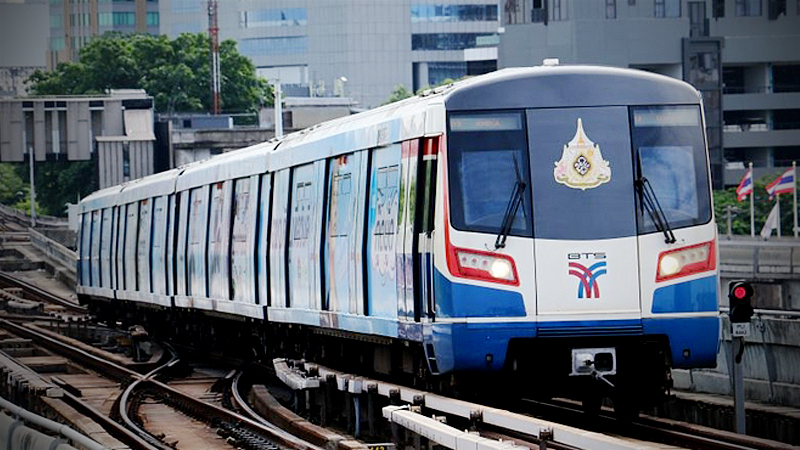
January 15 will be the last day the Bangkok Metropolitan Administration (BMA) allows commuters to use the Green Line Skytrain extension sections for free, after the sections that run from Mo Chit to Ku Kot stations on the northern route and from Bearing to Samut Prakan stations on the southern route were officially opened for public use on December 16.
Bangkok Governor Aswin Kwanmuang earlier said that the BMA had been negotiating with Skytrain operator Bangkok Mass Transit System Plc (BTS) about the fair for the BTS network, which consists of 59 stations covering a total distance of 68 kilometres.
Despite a preliminary study concluding that the suitable maximum train fare for all BTS routes should be Bt158, Aswin said: “We aim to set the starting fare at Bt15 and a maximum fare of Bt65 to avoid creating a financial burden for passengers.
“The BMA will also discuss with the BTS train operation fees of Bt8.6 billion that we still owe them, and we will ask the government to help solve the issue,” he said.
This has hindered BTS’s extension of the contract for operation of the Green Line extensions.
A BMA news source recently said the administration was considering three approaches to solve thorny issues with the BTS.
The first approach is for the BMA to look for a new contractor to operate the Skytrain after the existing contract expires in 2029. This will allow the BMA to maintain a low fare rate. However, the BMA will need enough cash to pay a loan interest of Bt1.3 billion per year, as well as other compensations to BTS, including compensation for a loss of extension section services at Bt1.5 billion per year, as well as the Bt20-billion fee for electrical and mechanical systems and another Bt20 billion as compensation to the BTS Rail Mass Transit Growth Infrastructure Fund (BTSGIF).
The second approach is for the BMA to hire the BTS to operate the Skytrain until 2042. This will likely end any dispute with the BTS while making fares flexible for adjustment. However, the BMA still needs enough cash to pay a loan interest of Bt1.3 billion per year and compensation of Bt1.5 billion to the BTS for the loss of services on extended routes.
The third approach is for the BMA to extend the existing contract with the BTS for another 30 years (2029-2059). This will be the best option in case the BMA cannot obtain any aid from the government. Under the terms of the contract extension, the BTS will help the BMA pay the loan interest of Bt1.3 billion per year until 2029, and will have to set fares within the Bt15-Bt65 range. The BTS will also have to share the fare it collects with the BMA at an estimated total of Bt200 billion throughout the contract period. This is subject to increase in case the BTS sees more than 9.6 per cent of turnover.
BTS chief executive officer Surapong Laoha-Unya said the company is awaiting BMA’s decision on the fare rate, but is prepared to operate the Skytrain on extended routes after the free-fare period ends on January 15.
“Normally it take 3-4 days for the system to issue new sets of tickets, but the BTS will inform passengers 30 days in advance as per the contract conditions,” he added.
The Thai currency is likely to move between 29.95 and 30.15 on Friday, said Jitipol Puksamatanan, the head of the “Easy Invest” team at SCB Securities.
On Thursday night, the financial market in the US rose, despite a political turbulence at the White House. The Nasdaq index recovered by 2.5 per cent to its new high, while S&P 500 by 1.48 per cent.
Jitipol explained that the rise in the market caused by investors’ hope toward US economy in the period of Joe Biden.
An initial jobless claim announced this week showed a decrease in positions at 787,000. Meanwhile, the US ISM Services Index of the last month recovered to 57.2 points from 55.9 points.
Moreover, the US Ten-Year Treasury yield increased by 4 basis points to 1.08 per cent, and the dollar strengthened by 0.5 per cent compared to other main currencies.
In Thailand, Jitipol explained that the baht weakened to over 30 per US dollar, since exporters and investors did not sell the dollar they held amid Covid-19 crisis in Thailand. At the same time, a purchasing power of importers has increased after thebaht weakened, he added.
Today, he predicted that Asian currencies, including the baht, will weaken again from the strengthening dollar.
Air pollution in Samut Sakhon hit unsafe levels on Friday morning, with PM2.5 readings coming in at 54 to 58 micrograms per cubic metre (μg/m3), the Pollution Control Department reported.
Thailand’s standard for safe levels of PM2.5 (particles less than 2.5 micrometres in diameter) is 50μg/m3.
The two areas are:
1. Omnoi subdistrict, Krathum Baen district, Samut Sakhon province (54μg/m3)
People in provinces where the PM2.5 pollution is bad have been advised to monitor their health and reduce time spent on outdoor activities, especially the elderly, children, and patients with respiratory diseases.
Four new Covid-19 cases were found on Thursday in Chiang Mai, raising the accumulated active cases in the province to 11, deputy governor Weerapan Dee-on told the press.
“The 54th patient in Chiang Mai is a Thai man aged 23 from Sansai district. He displayed no symptoms,” Weerapan said. “The 55th patient is another Thai man aged 28 from Muang district. He also showed no Covid-19 symptoms.
“The 56th patient is a Thai woman aged 28, who works in Bangkok but recently returned home to Sankamphaeng district. She had symptoms of coughing and a blocked nose.
“The 57th patient is another Thai woman aged 22 from Muang district. She displayed symptoms of coughing and tiredness.”
Weerapan added that all patients had visited the Warm Up Café on the night of December 31.
On Monday, the province’s 50th Covid-19 case was found after a 25-year-old woman visited entertainment venues, pubs and restaurants. The provincial authorities took proactive steps on Tuesday to find out who else she may have infected, and discovered a 28-year-old male employee at Warm Up Café who tested positive. The employee did the 3pm-to-1am shift at the pub on December 31.
Chiang Mai public health officials have traced and tested 283 persons who visited the pub on New Year’s Eve and are awaiting the results.
The province’s communicable disease committee has also ordered all pubs, bars and karaoke venues, as well as similar entertainment businesses to shut down for 14 days, and urged people who visited the Warm Up Café on December 31 to January 3 to go for a Covid-19 test immediately.
Skytrain operator Bangkok Mass Transit System announced on Thursday that one of its staff who worked at its headquarters in Bangkok’s Chatuchak district has tested positive for Covid-19.
“The staffer works on the 2nd floor of the headquarters and was not directly involved with train services,” BTS said. “After he tested positive on Thursday, the company immediately shut down the floor and nearby common areas to carry out cleaning and disinfection, following the measures laid out by the Public Health Ministry.”
BTS also said it ordered other staff who might have come into close contact with the patient to receive a swab test immediately and undertake self-quarantine at home for 14 days while closely monitoring their symptoms.
The company also listed the timeline and travel history of infected staffer:
December 29: He dined out with his friends at Tam Nua restaurant.
December 30: He came to work in a personal car and wore a face mask while working.
December 31-January 3: He stopped working during the New Year holidays.
January 4: He came to work in his car.
January 5: He came to work in his car and learnt that the owner of Memory Pub Sukhumvit 105, who also owns Tam Nua restaurant, tested positive for Covid-19. He then took leave to see a doctor, using his car. The doctor said he could have sinusitis and told him to come in again for a detailed test.
January 6: He took a Covid-19 test at Sikarin Hospital.
January 7: The test came back positive at 3pm. The company immediately shut down and cleaned its headquarters.


 ACT secretary-general Mana Nimitmongkol