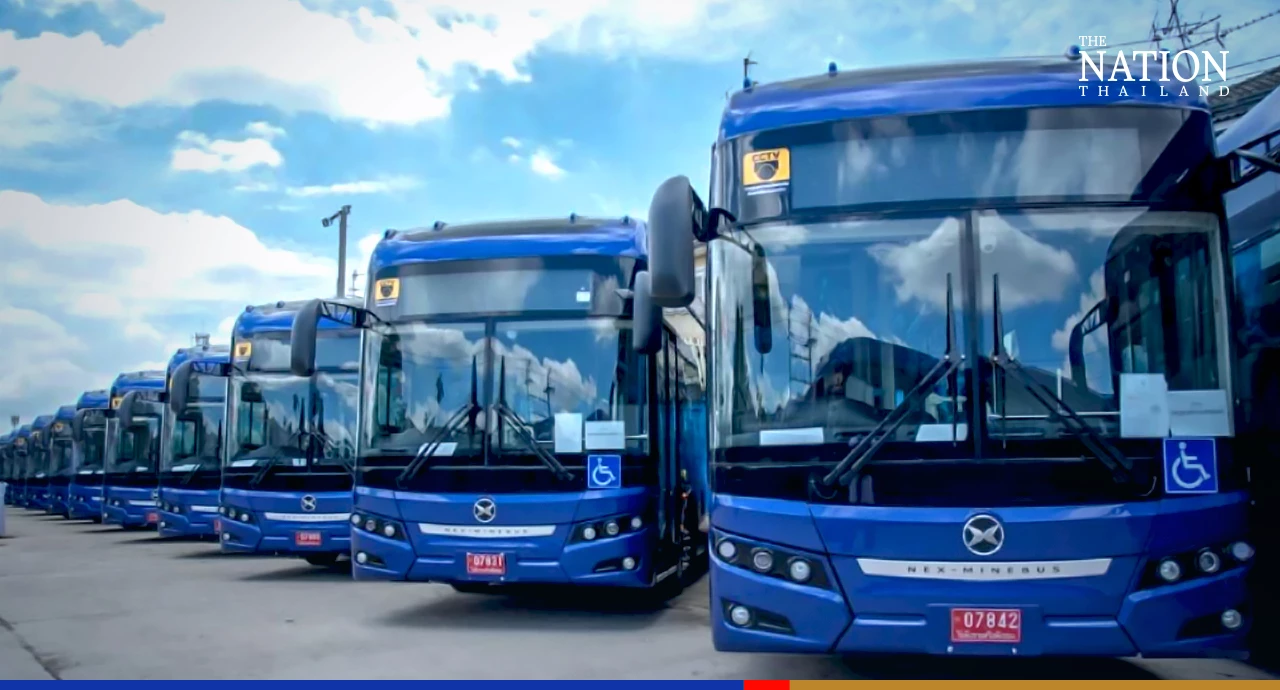
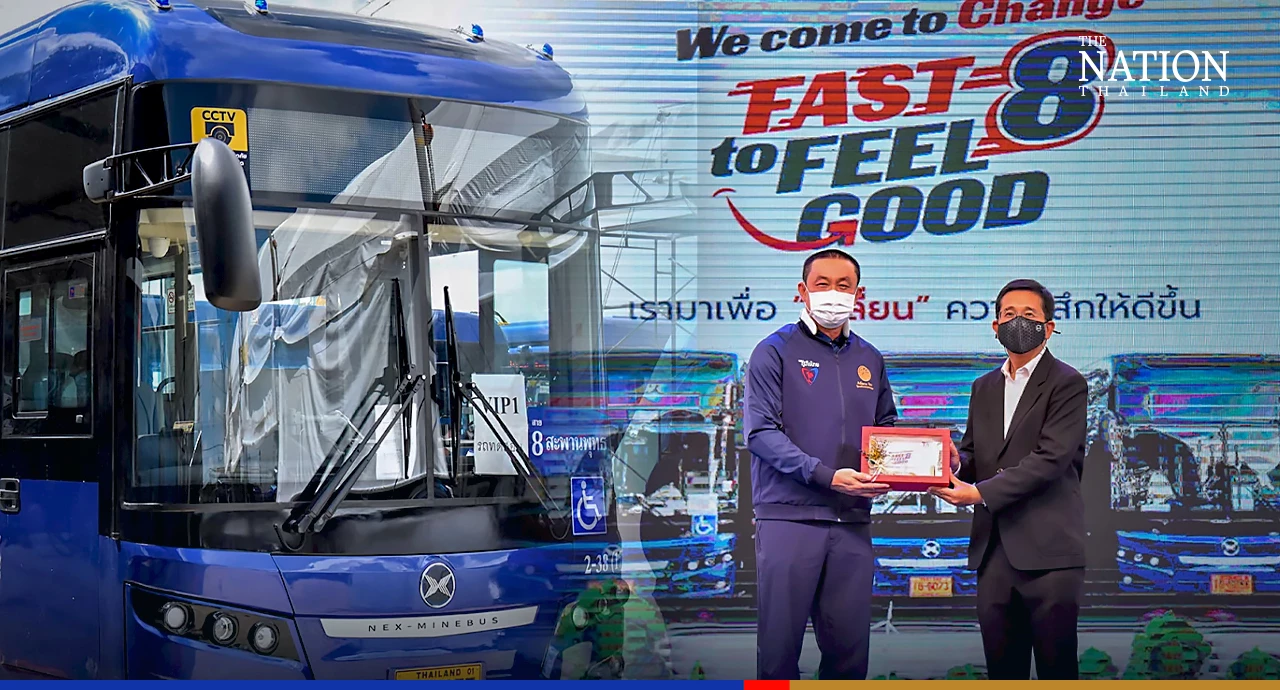
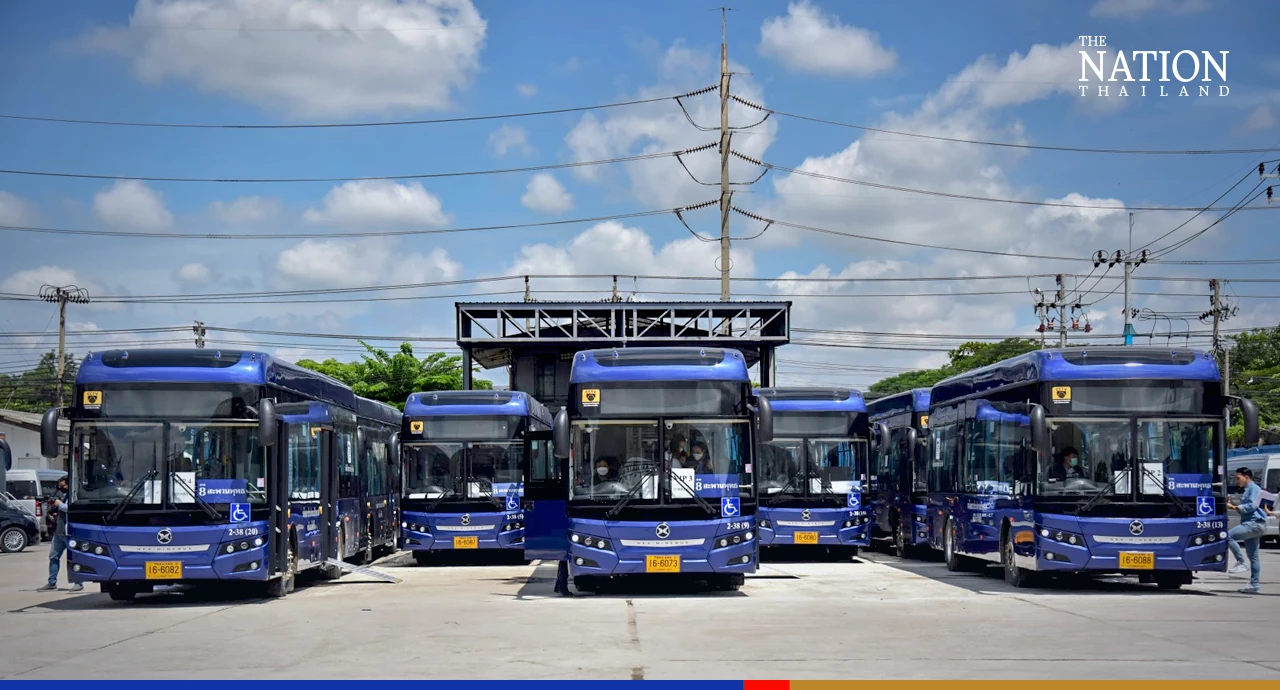
The brand-new electric bus No 2-38 replacing the notorious No 8 service crashed against a Euro II bus No 509 at Victory Monument on Saturday.
The incident took place just one day after the service was resurrected. The accident resulted in the bus’s left side mirror being bent. Nobody was injured.
The operator, Thai Smile Bus Co Ltd, said the driver was not speeding or being reckless when the accident took place. The driver also has no record of reckless driving, it said.
“The company has warned the driver and instructed him to undergo training on safe driving again,” the statement said.
The resurrection of the No 8 service – once notorious for reckless driving, road accidents and bad-tempered staff – is part of electrified restructuring conducted by the Land Transport Department.
Earlier, Transport Minister Saksayam Chidchob had said that electric buses for Line No 2-38 from Memorial Bridge to Happy Land were equipped with technology to detect speed and staff behaviour to ensure passengers’ safety.
He believes more than 1,300 electric buses will be deployed in Bangkok’s 122 routes this year.
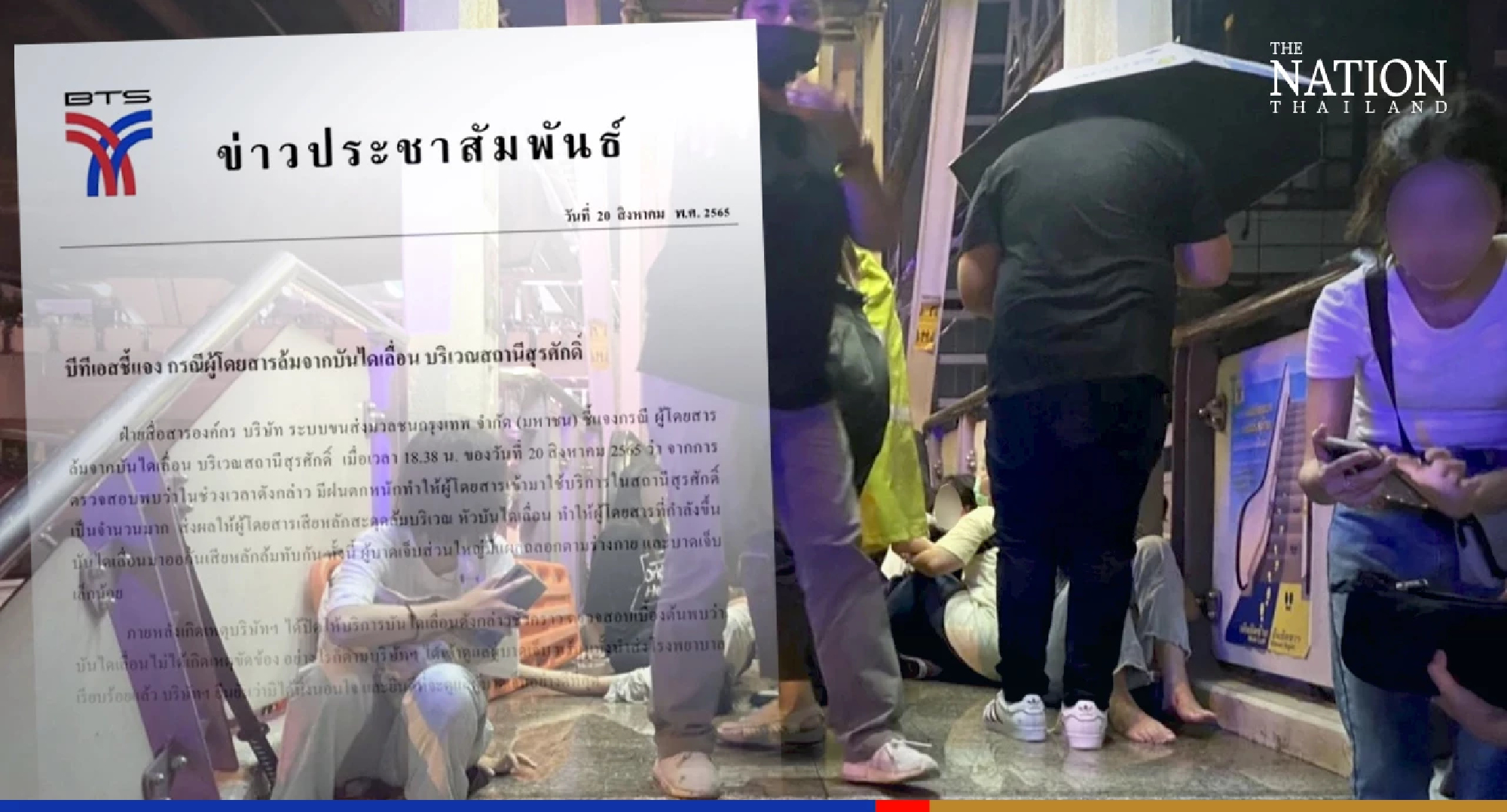
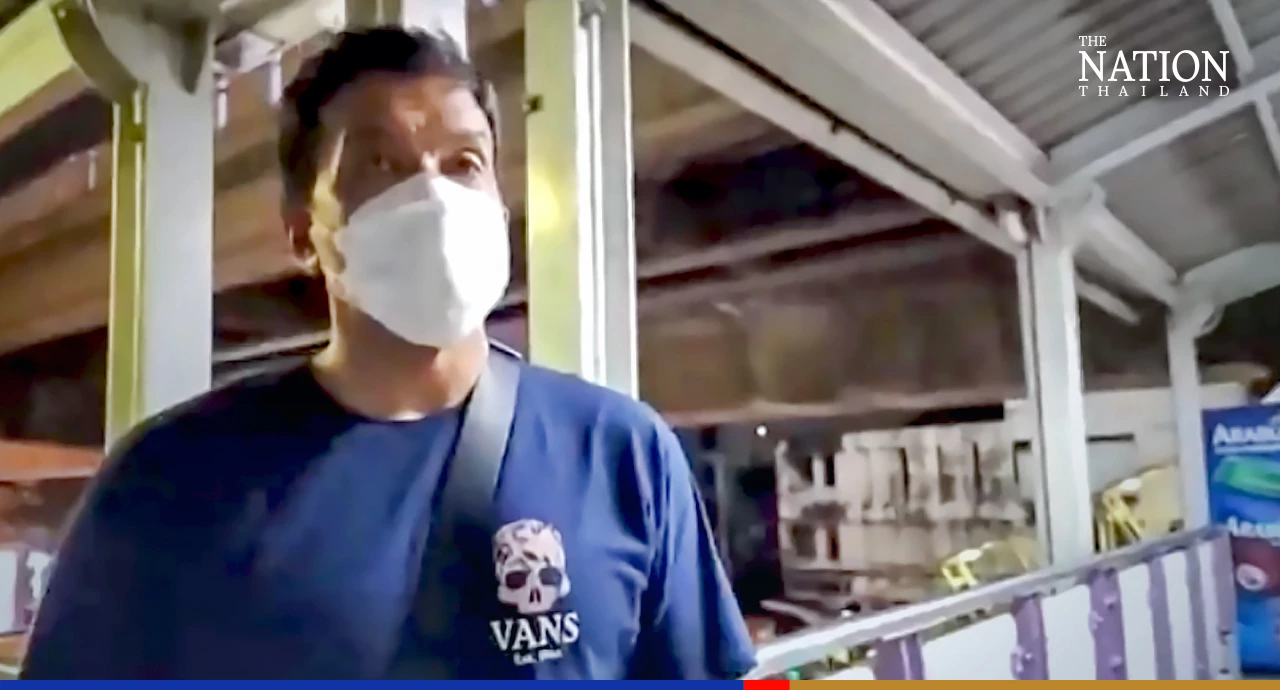
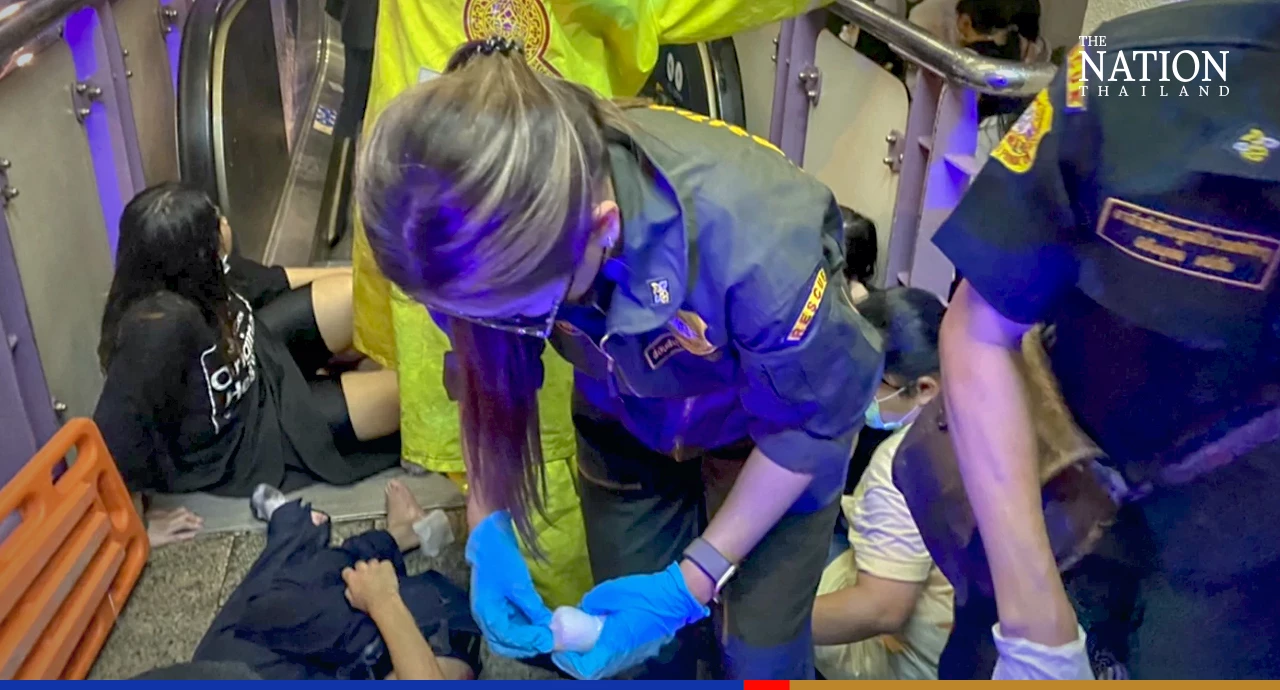
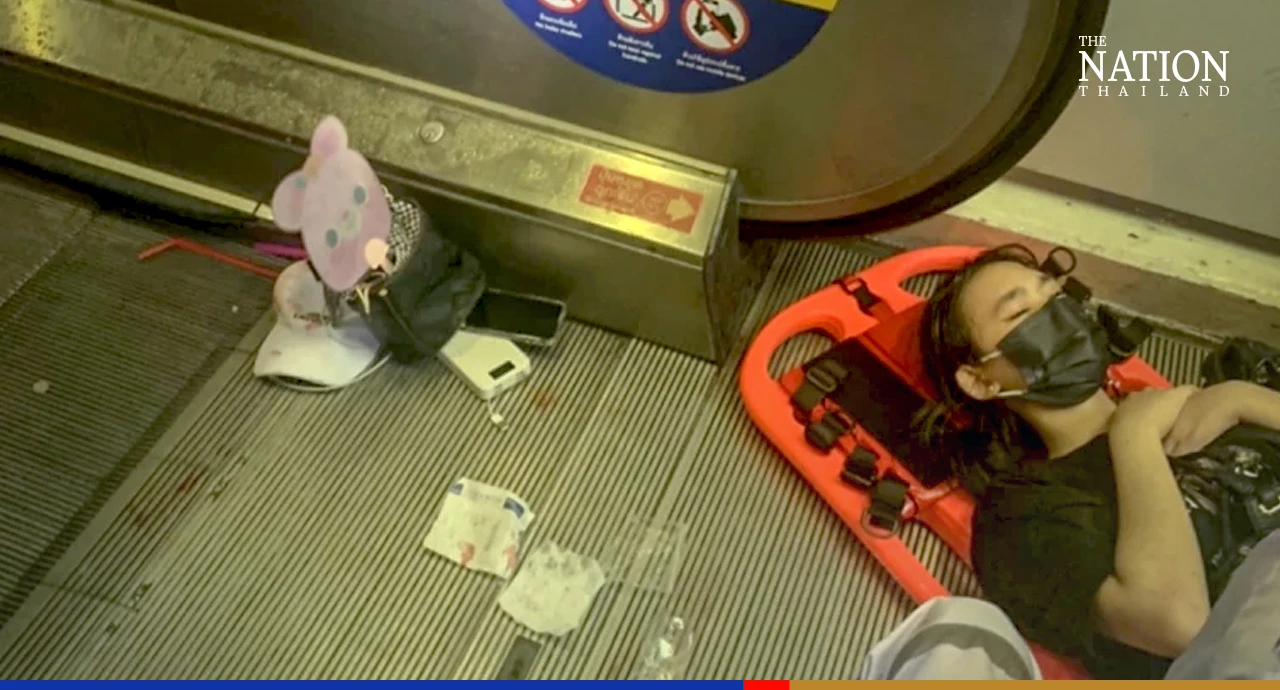
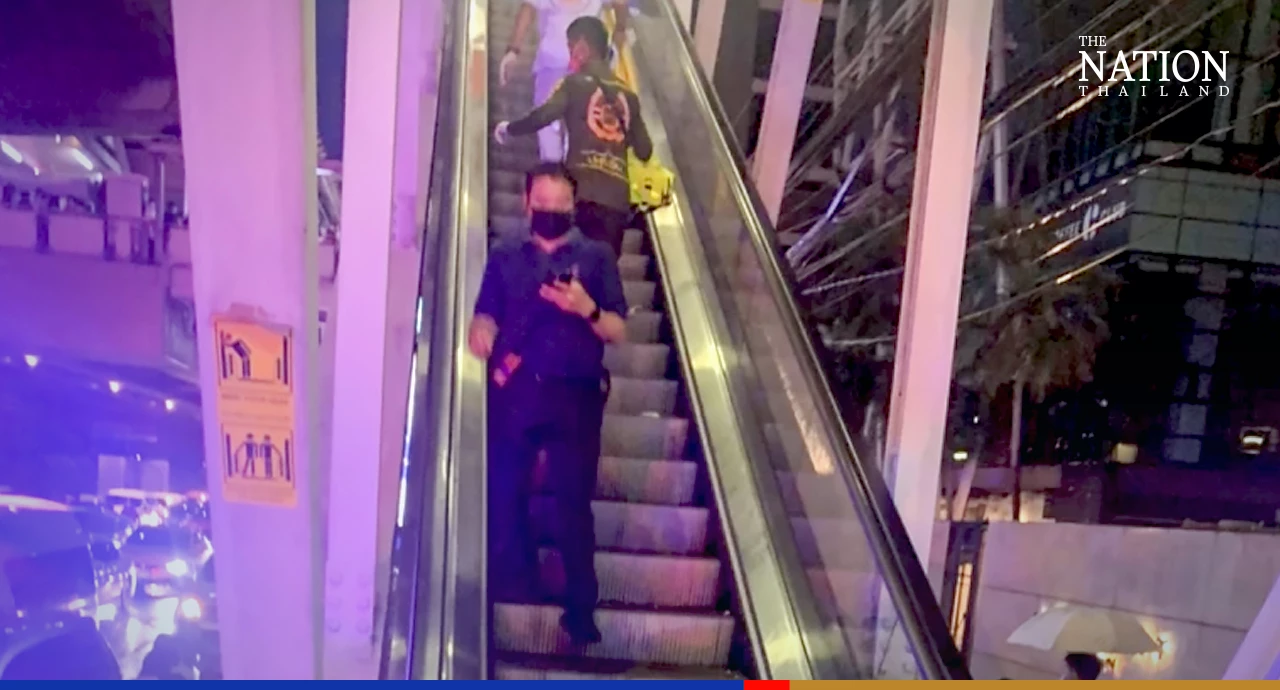
As many as 27 people sustained injuries from losing their balance and falling down an escalator at the Surasak BTS station in Bangkok on Saturday evening.
The incident took place at about 6pm as they scrambled up the escalator to get out of the rain. They were apparently returning from a concert at the Bangkok Christian College.
Rescue volunteers immediately took the injured – two men and 25 women – to nearby hospitals. Their belongings are being kept at the Yannawa Police Station to be picked up later.
Bangkok Governor Chadchart Sittipunt, who also rushed to the scene, urged people to be careful and not rush up escalators, especially if it is raining.
“Getting wet from rain is better than putting your life at risk,” he said.
BTS issued a statement on Sunday saying the escalator at the Surasak station was not malfunctioning and that the company will do its best to take care of all victims.
D.OASIS, an early leader in the metaverse market, is inviting businesses and individuals to connect with virtual global communities through The Sandbox, which aims to become Thailand’s largest metaverse.
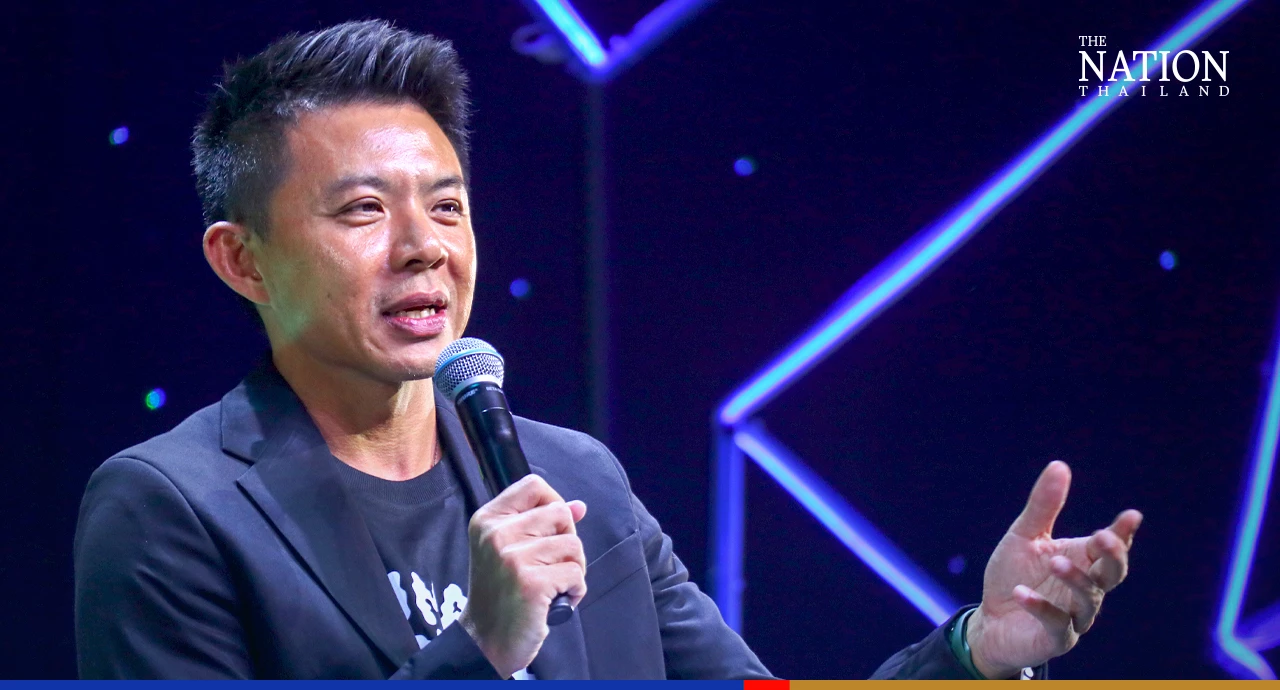
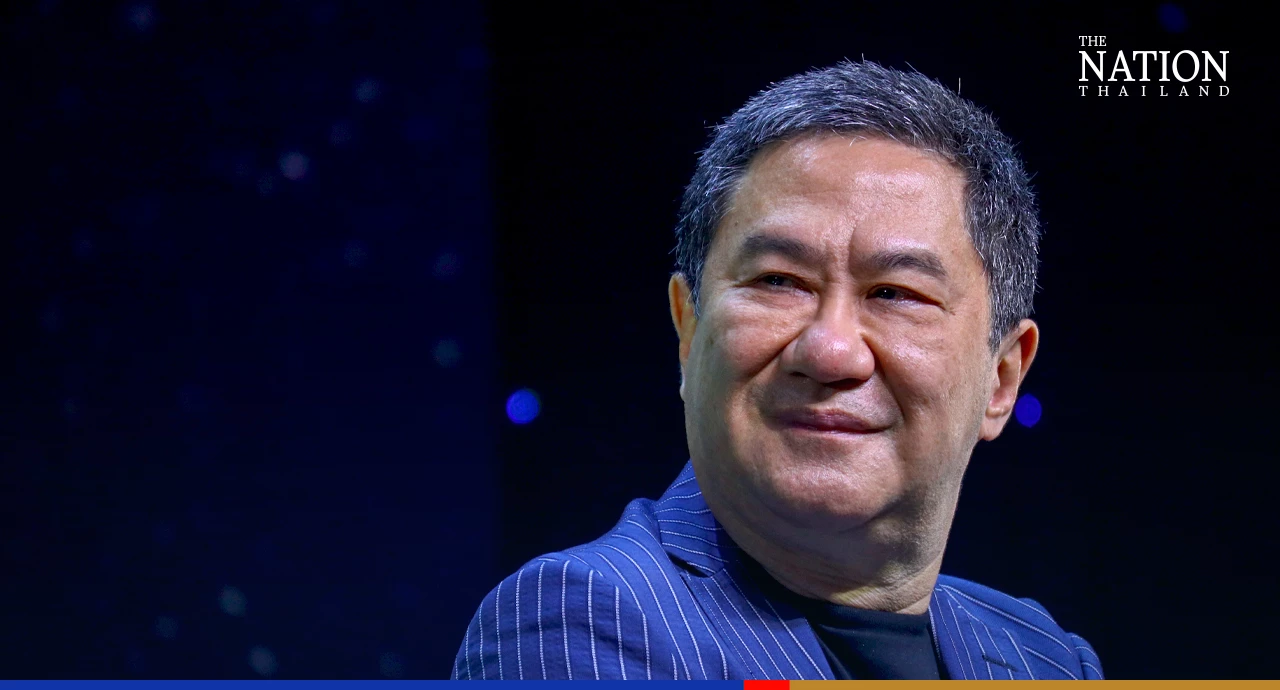
The metaverse was the new way of living and doing business, D.OASIS’ co-founders – CEO Sirikiat Bunworaset, Index Creative Village CEO Kreingkrai Kanjanapokin and Dhurakij Pundit University president Darika Lathapipat – told the “Thailand Metaverse Expo 2022” in Bangkok on Saturday.
Speaking on the topic “Connecting Thailand with the Sandbox Community”, they said that speed of adoption was the key to success in this digital economy era. Those who quickly learned and adapted to new technology would reap the opportunities at the forefront of their industries.
The goal of D.OASIS was to establish the country’s leading metaverse community, where Thais could learn, explore and experience the metaverse and its potential.
The Sandbox metaverse also aims to be Thailand’s access point to the global metaverse community.
D.OASIS CEO Sirikiat said the Sandbox allows Thailand, its businesses and people, to access the world while also allowing the world to access Thailand. This new type of interaction would open a fresh virtual landscape of opportunities for Thai businesses and users, he added. Already part of the Sandbox community are leading brands and celebrities including Gucci, Adidas, Snoop Dogg and Paris Hilton.
The Sandbox is the third-largest Ethereum blockchain metaverse. Users can create, share, and monetise assets (such as real estate) and gaming experiences. They can own assets, play, build, and own properties on the virtual platform. Sandbox users can also sell their virtual assets for real-world money.
Index Creative Village CEO Kreingkrai declared that the metaverse contains infinite possibilities. But Thailand required a virtual community for Thai users to join, so D.OASIS stepped into fulfil the need.
Recognising that they could not do it alone, they enlisted the help of numerous partners, each with their own area of expertise. There are currently over 50 international companies and celebrities on the platform, with more on the way.
Darika said that as an educator, she is convinced that knowledge of the metaverse will be a requirement in the 21st-century workforce. Hence, she hopes to create an online community that will serve as a virtual lab for students and entrepreneurs to learn about the metaverse and conduct trials of their business ideas.
Making a surprise appearance via live video, Sandbox chief operating officer Sebastien Borget congratulated D.OASIS on joining its metaverse. He insisted that Sandbox is not only for general users but also for creatives to create and be inspired by.
He said the company continues to educate people about the potential of the metaverse while developing new features to meet users’ demand and passions.
“There is more to discover in the metaverse, and this is an excellent time to do so. Simply begin your engagement and be inspired. I hope to attract more Thais to join as users and creators,” Borget added.
D.OASIS CEO Sirikiat concluded that its community would be open to new participants no matter how large it grew.
“Thailand Metaverse Expo 2022” is organized by Nation Group and runs at CentralWorld in Bangkok until Sunday (August 21).
Thais should be more open-minded about the metaverse, whose benefits go far beyond being a marketplace for buying and selling digital assets, one of the country’s metaverse pioneers said on Saturday.
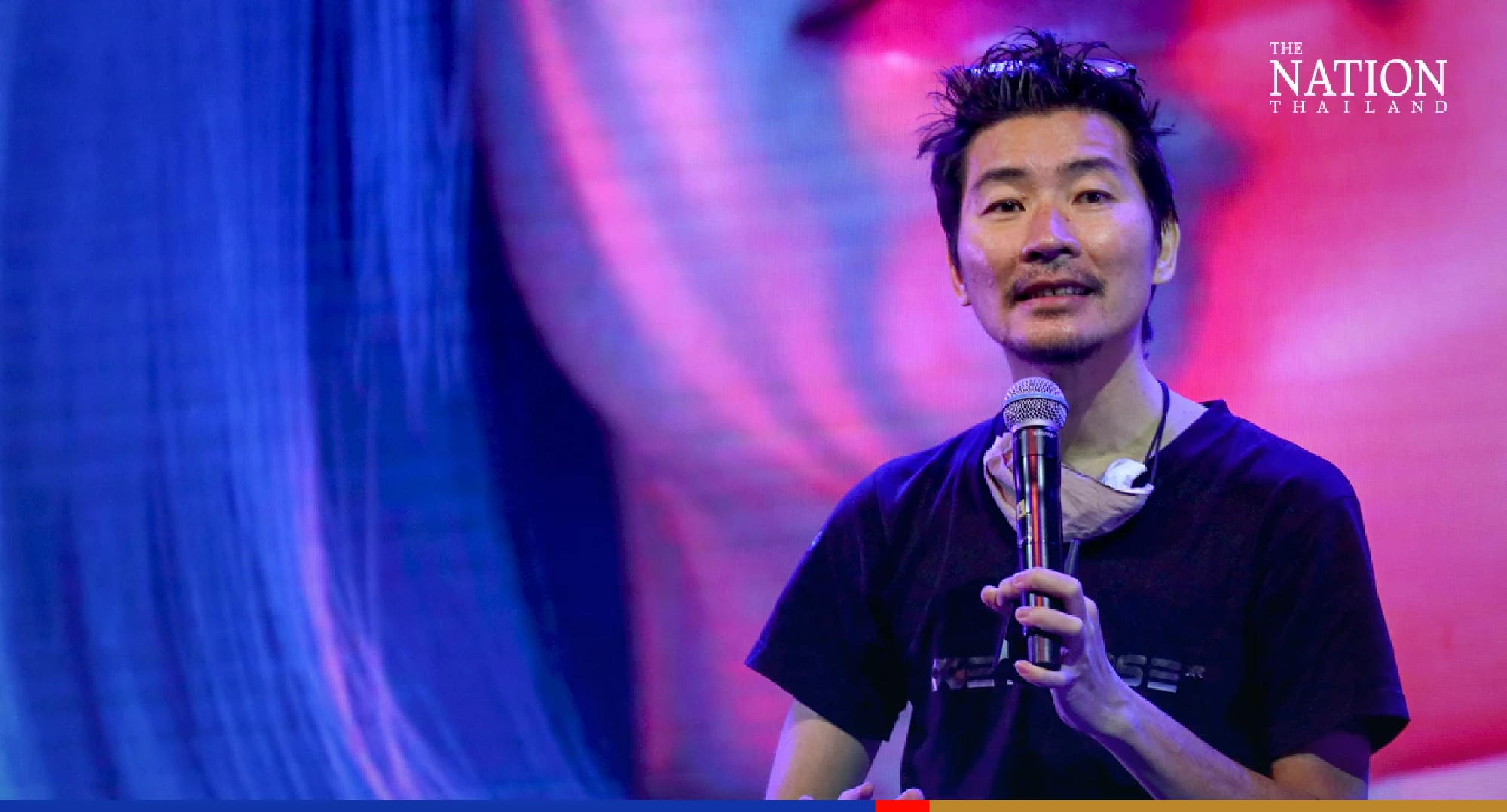
Speaking on the second day of Thailand Metaverse Expo 2022, Metaverse XR founder Sathian Boonmanan said those who viewed the internet’s new frontier as merely an online marketplace were missing out on huge opportunities.
The metaverse, he explained, is a social platform that enables three-dimensional use: real-time interaction, immersive experience and multi-user access from any device.
“This means that people from all over the world can meet, play and interact in the blink of an eye. Any device, such as smartphones and [virtual reality] glasses, will assist us in seeing where the real world intersects with the virtual world,” Sathian stated.
Speaking on the topic of “Adoption of the Metaverse in Business”, he demonstrated the various aspects of the metaverse – virtual reality (VR), augmented reality (AR) and extended reality (XR).
He added that Thailand should focus on XR, citing use cases that demonstrate it provides a superior internet experience.
The term “extended reality” refers to hybrid real-virtual environments and human-machine interactions enabled by computer technology and wearables.
“The world keeps changing but people’s demands and desires stay practically the same,” noted Sathian. “What we need to do is use the latest technology to improve people’s experience in what they demand.”
He concluded by saying that all of the technology he demonstrated can be developed entirely by Thais. Hence, the metaverse was a once-in-a-lifetime opportunity for Thailand to transform itself into one of the world’s leading technological nations, generating enormous revenue for the country.
PwC projects the global metaverse market will increase seven-fold between now and 2030, generating US$1.5 trillion (53.7 trillion baht), with AR, VR and XR leading the way.
China is seeking to increase the number of scheduled flights to Thailand by five times next month, according to the Civil Aviation Authority of Thailand (CAAT).
The number of flights between the two countries could rise to 15 per week next month, the agency reported on its website.
The CAAT said it received an email from the Civil Aviation Administration of China (CAAC) last Wednesday asking about the “potential of further increasing the passenger flights between China and Thailand”.
The CAAC proposed raising the number of flights from three per week at present to 15 per week.
China’s aviation authority asked for a list of Thai airlines wishing to fly to China so it could prepare Chinese airports for increased traffic, the CAAT said.
China has restricted flights to airports including Beijing, Shanghai and Guangzhou due to the country’s zero-Covid policy.
The CAAT on Friday called a meeting of Thai airlines to gauge interest in services to China.
“The flight plan is expected to be sent to the CAAC next week. We expect to receive a reply from the CAAC by the end of September,” the CAAT said.
It added that Thai airlines could start increasing their flights to China as early as next month.
However, the CAAT dampened any hopes that Chinese tourists would return to Thailand in force next month. Chinese visitors made up the largest contingent of foreign travellers to Thailand before the pandemic. In line with China’s continuing strict measures against Covid-19, the extra flights would only be for necessary journeys such as business trips, it said.
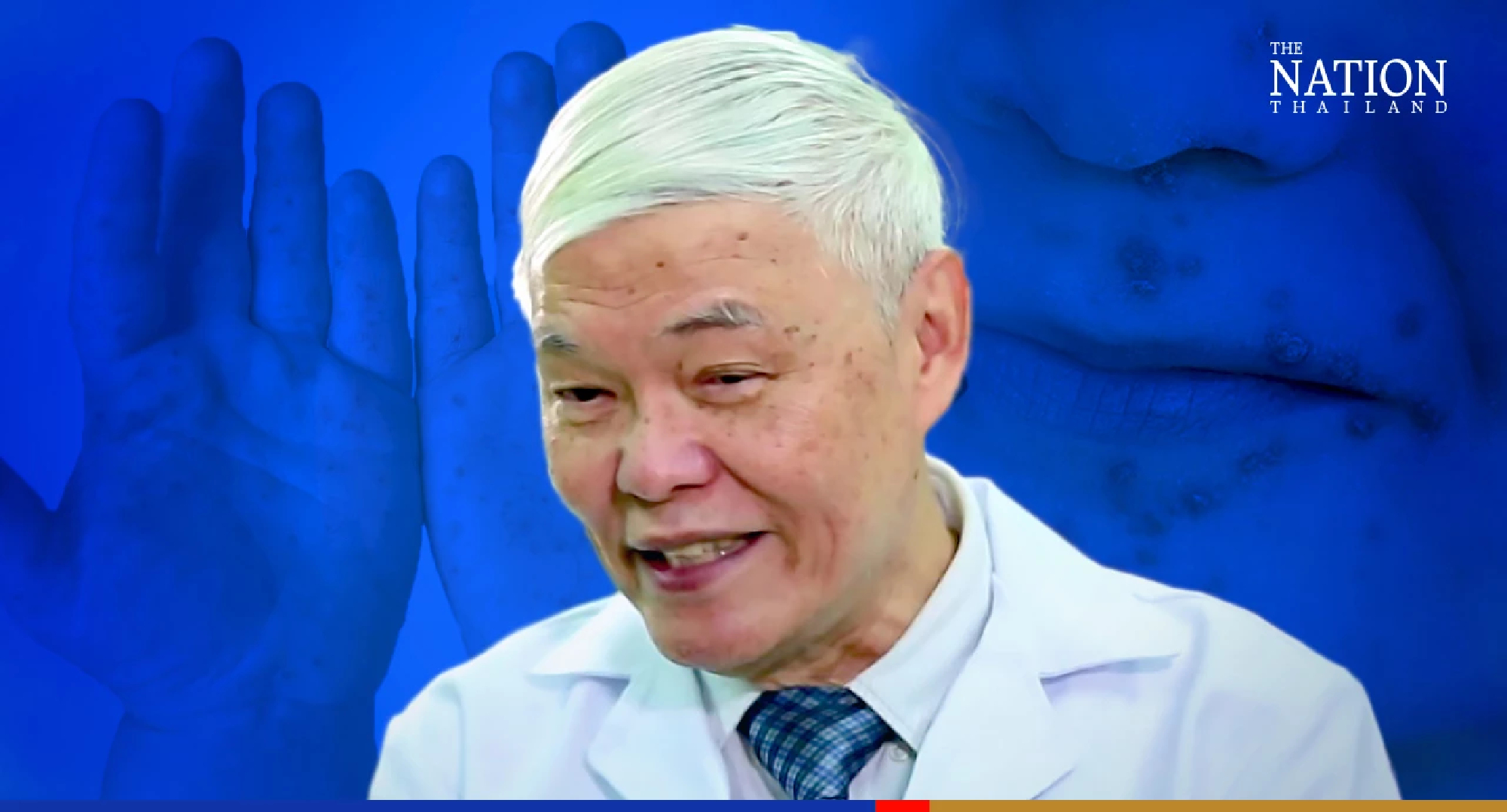
Enterovirus A71 (EV-A71), which causes hand, foot and mouth disease, can also cause severe neurological diseases like meningitis, a top virologist warned on Saturday.
In a Facebook post, Dr Yong Poovorawan said hand, foot and mouth disease (HFMD) can be caused by several types of viruses in the enterovirus family. The most common types are CA6, CA16 CB and Enterovirus A, while the most dangerous type is EV-A71, which can cause meningitis or inflammation of the protective membranes covering the brain.
This virus usually affects small children and infants but is rarely seen among adolescents and adults.
“The HFMD cases found this year were mostly caused by the CA6 virus, which often manifests in the form of blisters in the palate of the mouth, hands, feet, elbows and buttocks,” he said.
“The last time Thailand experienced an outbreak of the EV-A71 virus was five years ago. Our centre [Chulalongkorn University’s Centre of Excellence in Clinical Virology] has been monitoring the outbreak of HFMD over the past 10 years and has come up with charts comparing each virus variant found for the sake of treatment and prevention.”
Yong explained that the disease usually spreads after schools reopen as children come into closer contact with one another.
“Currently, the vaccine for the prevention of HFMD is specific to the virus that causes it,” he said. “This means this year we will give children a vaccine to counter the CA6 virus, not EV-A71 because it has not been reported in Thailand yet.”
Yong added that researchers are working on coming up with a vaccine that can prevent HFMD caused by enterovirus across different strains.
A 50-year-old businessman succumbed to septicemia on Friday while being treated for third-degree burns sustained in the Mountain B pub blaze in Chonburi.
He became the 20th person to die from the fire.
The nightclub in Sattahip district caught fire at about 1am on August 5, killing 13 people on the spot and injuring scores of others. Since then, seven victims have succumbed to injuries.
The deceased, Paphon Bavornsuwan, was rushed to Sattahip Hospital on the night of the fire but was transferred to Chonburi Hospital when his condition worsened. He succumbed to his injuries 14 days later.
Doctors declared the cause of death as septicemia (bacterial infection of the blood), which developed after a blood transfusion.
Paphon’s brother Thanarat said the pub owner had provided the family with compensation of 30,000 baht.
Funeral rites for Paphon will be held at Wat Rangsee Sunthorn in Chonburi.
Udon Thani International Airport in the Northeast is still No 1 among 28 provincial airports in terms of passenger numbers before and after the Covid-19 lockdown.
The Department of Airports (DOA) reported on Friday that Udon Thani welcomed 170,472 passengers and 1,157 flights in July alone, the highest among all airports under DOA’s jurisdiction.
Khon Kaen Airport came in second with 125,332 passengers and 900 flights, followed by Nakhon Si Thammarat (120,970 passengers, 894 flights), Ubon Ratchathani (117,910 passengers, 754 flights), and Krabi (112,764 passengers, 808 flights).
Airport director Kamhaeng Saiwiphu said Udon Thani Airport’s popularity returned as soon as restrictions were lifted.
“This shows a promising trend in domestic travel, especially in the Northeast and proves that we are getting closer to pre-pandemic levels,” he said.
Kamhaeng expects the number of passengers to drop slightly in October since Thais tend to travel less during the rainy season, though businesspeople will still have to travel. He also said that the drop in Thai passengers will be compensated by visitors from Laos, who use the airport as a connection to other parts of Thailand.
“The number of passengers will bounce back again around year-end until early next year, which is the high season. By then, the maintenance of the airport’s runway overlay will be completed, allowing us to land more than 40 planes daily and extend the airport’s closing time to 10pm,” he added.
DOA manages 28 provincial airports, while the Airports of Thailand oversees six airports in metropolitan areas and big cities, namely Suvarnabhumi and Don Mueang airports in Bangkok as well as those in Phuket, Chiang Mai, Hat Yai and Chiang Rai.
The “People’s Union Party” has been given permission to hold a rally in Bangkok’s Lan Khon Mueang Town Square from Sunday to Wednesday, provided protesters do not stay overnight.
The group, led by political activists Jatuporn Prompan and Nitithorn Lamlua, will hold a rally entitled “Countdown to 8 years of Prayut Administration”. The demonstration will run from 4pm to 9pm daily from Sunday to Wednesday, except on Tuesday, when it will disperse at around midnight.
Tuesday (August 23) is the day before some believe Prime Minister Prayut Chan-o-cha’s term should end.
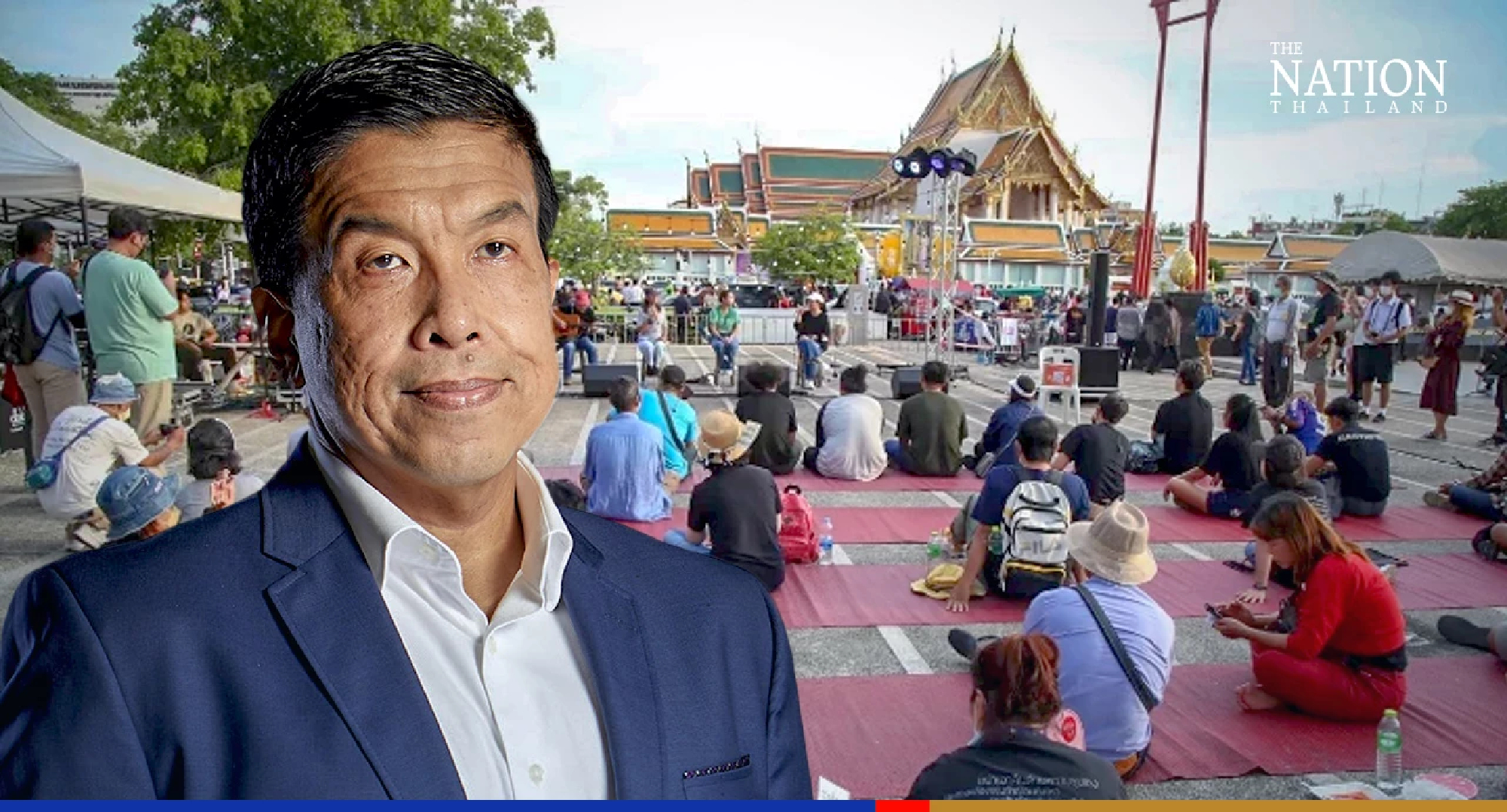
Bangkok Governor Chadchart Sittipunt, meanwhile, said on Friday that protesters are not allowed to spend the night in the town square in Phra Khanong district as it has to be cleaned every day.
Jatuporn, meanwhile, thanked the BMA for allowing the rally to be held, saying this is a positive sign in the current political atmosphere. He said the rally will focus on people’s democratic right to express their views and that the public discussion will be rational rather than emotional. The former red-shirt leader said he believes everyone shares the common goal of seeing Thailand move forward.
Whether or not Prayut should step down after completing eight years as prime minister on August 24 has become a hot issue in Thailand.
The current Constitution, which was enforced in April 2017, prohibits anyone from serving as prime minister for more than eight years. However, whether this stipulation can be applied retrospectively is still unclear as Prayut had taken office before the charter went into effect.