A centuries-old Chinese-style building in Bangkok collapsed in the early hours of Thursday, but there were no reports of human casualties.
The two-storey wood-and-concrete building is located in the Talat Noi community of the city’s Samphanthawong district, where many of its residents are Chinese descendants.
A building section of the rented house used as kitchen and bathroom caved in at about 2am, according to tenant Kiatchai Sahin. He said a loud noise of the collapse woke him up, but he later felt relieved after learning that everyone in the house was safe.
“The kitchen and bathroom were destroyed and some belongings were damaged. Luckily, all of us in the house are fine,” he said.
Local authorities, including police and district officials, inspected the site on Thursday and cordoned off the affected area.
The house owner, Duangduan Saetang, said the building was built about 260 years ago and that it was the first Chinese-style building to be built in Bangkok.
Its old age could have caused subsidence and the eventual collapse, the 78-year-old woman said, adding that the building was built with no supporting beams, unlike later ones.
After over four decades of operations, leading television production house JSL Global Media Co Ltd has announced “partial business termination” from Friday, in a move that shocked the industry.
The company, which is well-known among Thai TV viewers, blamed digital disruption and Covid-19, as well as the birth of several new television stations for the decision.
“Tremendous changes in the media industry over the past eight years have caused severe impacts on the company’s business,” JSL said in a statement issued on Thursday.
“Despite the company’s efforts to adapt and survive in the entertainment media industry, we could not achieve our goal. So, JSL Global Media resolved to end its operations partially from July 1 onwards,” the statement said, without elaborating.
The company has suffered accumulated operating losses of more than 100 million baht in recent years, according to data from the Ministry of Commerce’s Department of Business Development.
In 2019, JSL’s revenues totalled 444.4 million baht, against total expenditure of 456.9 million, a net loss of 24.8 million baht.
In the following year, when the Covid-19 pandemic struck, the company’s revenue totalled 354.7 million baht, and expenditure amounted to 361.1 million, a net loss of 22.3 million.
The company’s revenue shrank to 198.2 million baht last year, at the height of Covid-19, while its expenditure totalled 236.5 million, the net loss jumping to 57.1 million baht.
JSL was founded in November 1979 to produce programme content for Channel 5 before expanding to other TV stations, including Channel 7, PPTV and MCOT, and was also involved in the event organising business. Among its most popular programmes are “Joh Jai” variety talk show and “Tam Sanya” celebrity reality show.
In its statement, the company thanked its hosting TV stations, advertising agencies and customers, as well as other media outlets and its viewers for their “continued support”.
JSL also recognised its employees’ contributions over the years. “We hope to get an opportunity of returning to offer new forms of creative works for society and our viewers,” the statement said.
Bangkok Governor Chadchart Sittipunt on Thursday signed a memorandum of understanding (MoU) with the Court of Justice to develop a system that would allow the release of criminal suspects on bail without depositing assets as collateral.
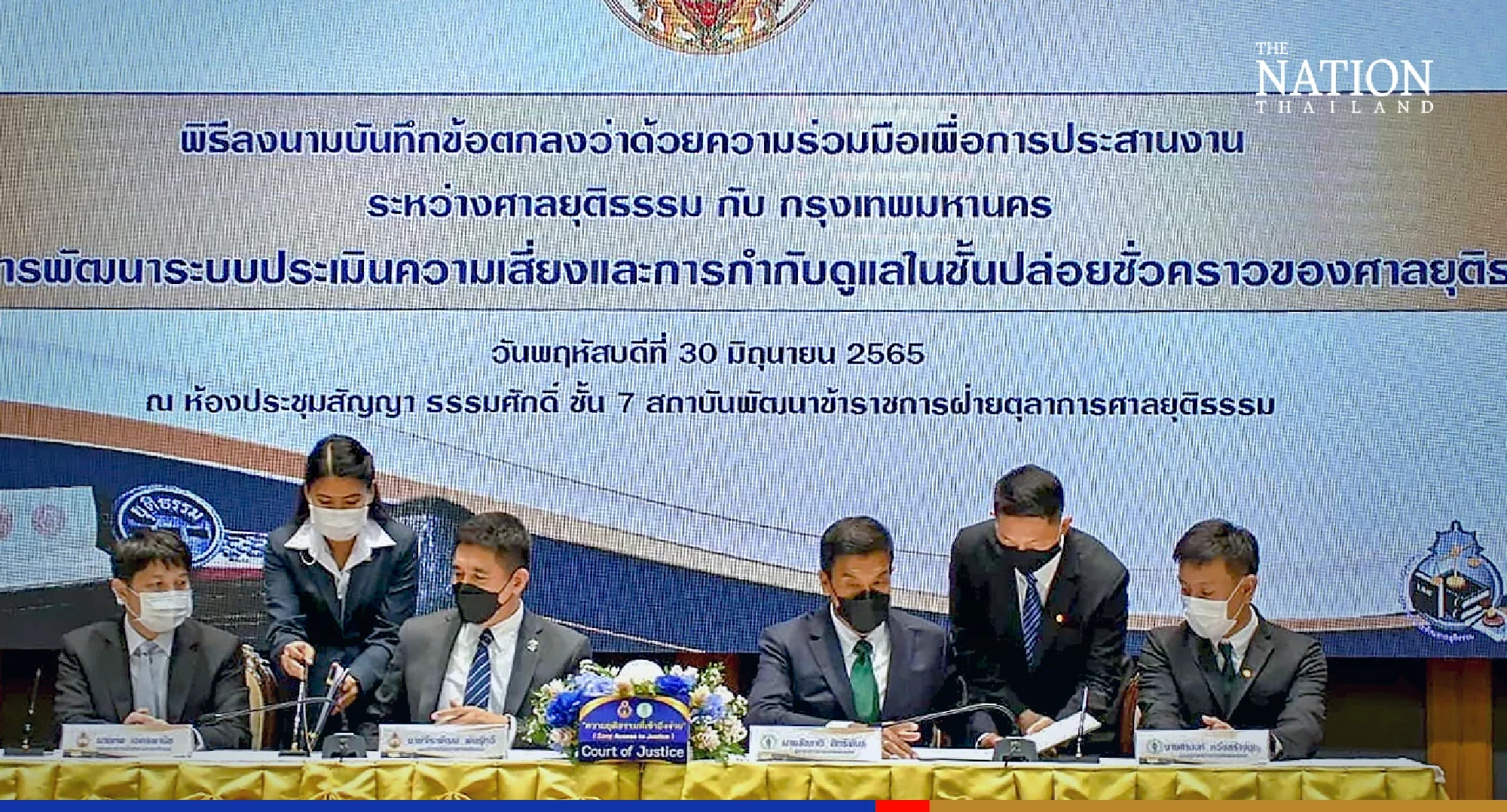
Chadchart and Court of Justice secretary-general Jirapat Phanthawee signed the MoU in a ceremony held at Sanya Thammasak Hall on the seventh floor of the Court of Justice Officials Development Institution in Chatuchak district.
The MoU will see the Bangkok Metropolitan Administration (BMA) join hands with the Court of Justice to reform the system and allow the court to temporarily release suspects in criminal cases without requiring them to deposit assets as collateral.
The system plans to use information to assess risks from the temporary release in line with criminology. The project will see the two agencies cooperate in appointing supervisors for the suspects during their temporary release.
The two sides said the release on bail under the new system would reduce unnecessary detentions and reduce the use of assets as collateral to make it fair for suspects from poor families.
During the signing ceremony, Chadchart thanked the Court of Justice for initiating the project.
“The BMA has a policy to affirm the basic human rights of the people to receive bail during court trials,” Chadchart said.
“This project will help reduce the social gap because several suspects do not have money to deposit for bail.”
Chadchart said Bangkok has about 2,000 communities with committees overseeing them. He said chairmen and committees of the communities have close ties with their residents so they could function as supervisors of suspects during their release on bail.
“This project will help us reduce the gap and it will distribute power to the communities to help take care of themselves,” Chadchart said.
He said chairs of the communities would be able to assure the judges whether the suspects can be released temporarily.
He said the BMA would soon comply and send to the court a list of community leaders who could function as supervisors.
Jirapat said during the ceremony that the project would allow judges to release more suspects during the trials.
He said cooperation from community committees to monitor the released suspects would ensure safety for the communities and Bangkok.
He said the communities’ committees could also provide advice to the released suspects to behave, and the project would ensure equality among Bangkok residents to receive the right to be released temporarily during court trials.
The chairman of a special House panel vetting a cannabis-regulation bill on Thursday urged vendors “not to make sales too obvious” during the transitional period before promulgation of a new law.
Bhumjaithai Party-list MP Supachai Jaisamut, chairman of the panel vetting the marijuana and hemp regulation bill, said once the new law is enacted, no one will be allowed to sell ganja for recreational use.
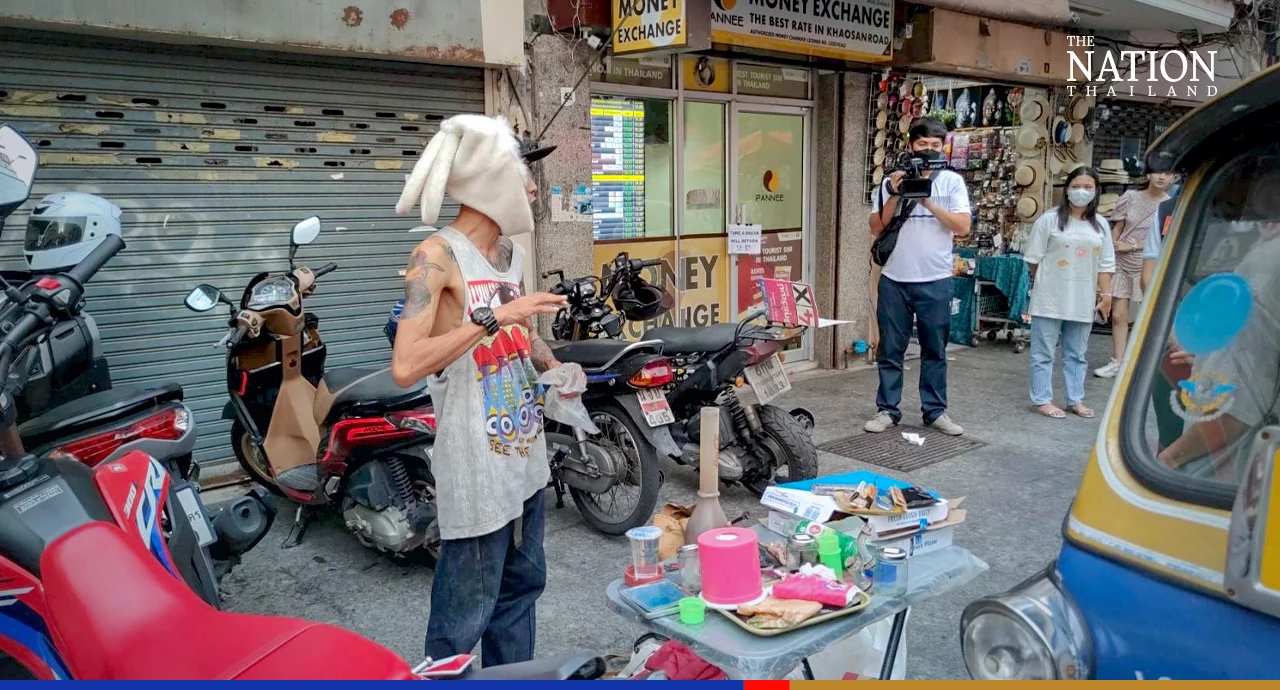
The MP was referring to reports that vendors have been seen openly selling marijuana wrapped in cigarette paper along Khaosan Road for tourists to buy and smoke.
Police have admitted there is no law for them to take legal action after marijuana was delisted from the Category 5 Narcotics List.
Supachai said he had learned that some vendors opened shops to sell marijuana in cigarette form, with buyers arriving at the shop from dawn to late at night.
“When the new law is enacted, this practice cannot go on because all marijuana-based goods must first be approved by the authorities. However, we are in a vacuum period right now and we cannot control it,” Supachai admitted.
He is requesting the Chana Songkram police to monitor Khaosan Road activities to prevent such trade.
“And I would like to call on those who are selling it to make it less obvious. Please move back to the appropriate places instead of making it too obvious,” Supachai reiterated.
“During this vacuum period, I would also like to ask society and families to join hands [to prevent the buying and sale of marijuana for recreation] as I don’t want to see the appropriate use of marijuana disrupted because of these practices.”
Supachai said he would try to have the vetting of the bill done within next month so that it can be sent back to the House for the second and third readings in early August.
The bill is aimed at allowing marijuana and hemp to be used for medical purposes and for making cash products, not for recreational use, he made it clear.
The bill has been drafted based on public opinions from all sectors so that the new law brings about benefits for the country, Supachai said.
“The issues that have been happening now, including the sale of marijuana in cigarette form, would be adapted under the new law so that society is protected as much as possible,” he said.
Regarding the concern that some food shops are mixing cannabis ingredients into meals without informing buyers, Supachai said the shops must comply with an earlier announcement by the Health Department that requires all shops to inform consumers beforehand that marijuana has been used in the dishes.
A Malaysian national wanted by the US Fish and Wildlife Service for allegedly trading in elephant tusks and rhinoceros horns was arrested at a hotel in Bangkok’s Wangthonglang district on Thursday by the so-called Green Cops.
Boon Ching Teo, 58, was dubbed by the US agency “the Godfather” due to his alleged global network of wildlife trading. He also faces an arrest warrant in Thailand issued by the Criminal Court on June 29, 2022 for trading in wildlife and money laundering.
Pol Maj-General Mana Kleebsattabut, commander of the Natural Resources and Environmental Crime Suppression Division, or the so-called “Green Cops”, said that the division has been coordinating with the US agency, which provided intelligence that the suspect is now hiding in Thailand after moving around in African countries.
Teo reportedly denied the charges, claiming that he had no involvement with wildlife trading, and that he had entered Thailand to negotiate a deal with partners regarding cannabis oil business.
He also said that he was in Africa on a vacation.
Police records show Teo was previously arrested in Thailand in 2015 for his alleged involvement in the smuggling of elephant trunks from Africa via Sadao district in Songkhla province.
Mana added that officials will transfer the suspect to the custody of the Office of the Attorney-General to process his extradition to the United States.
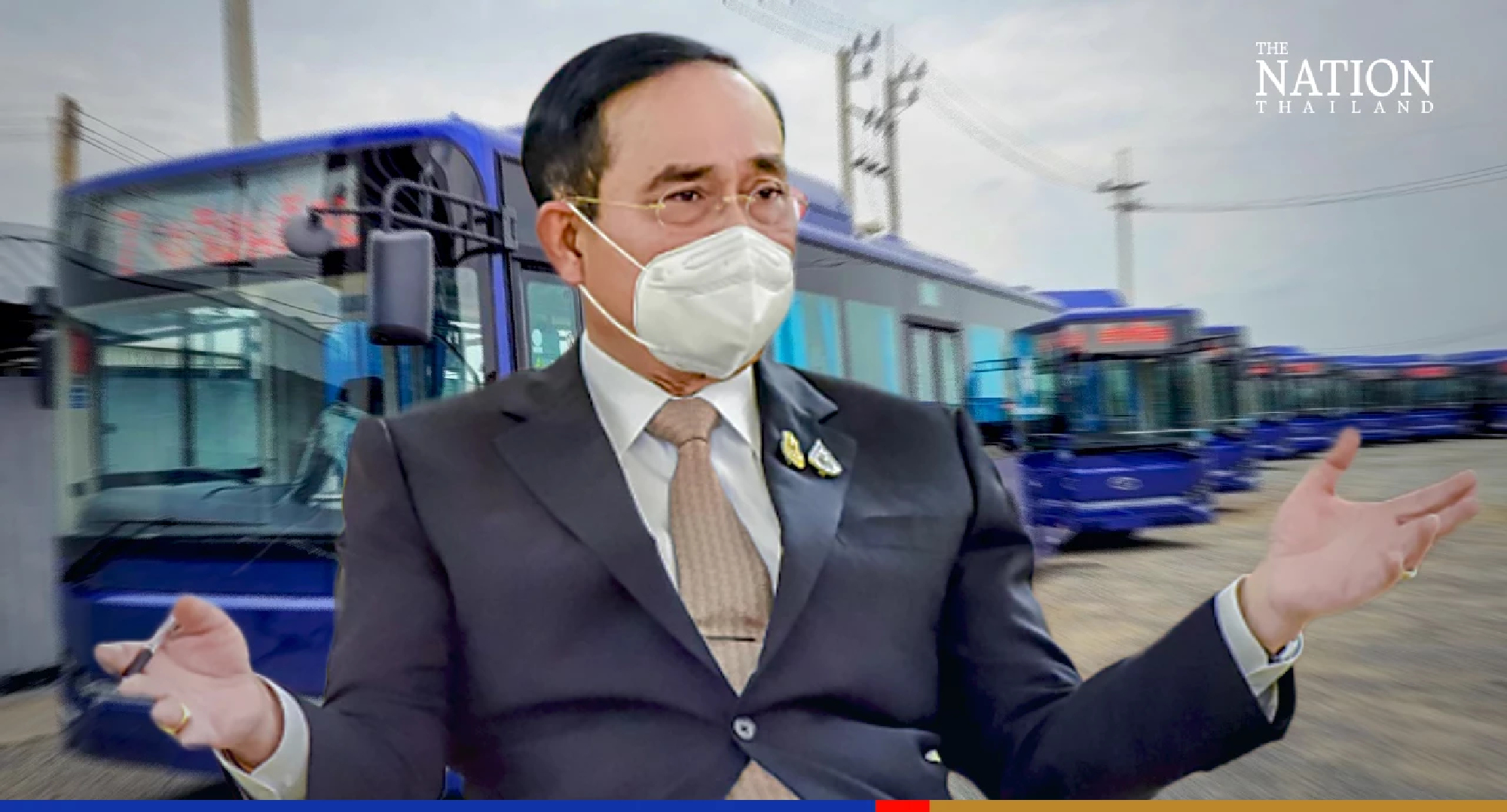
Prime Minister Prayut Chan-o-cha instructed the Bangkok Mass Transit Authority (BMTA) to first consult with a government economic advisory panel before going ahead with its plan to hire private firms to operate 224 electric buses, a source said.
The well-informed source said Prayut put the brakes on the project when he chaired a meeting of the State Enterprise Policy Committee on June 22 at Government House.
The committee took up the BMTA’s electric bus project for consideration and expressed concern that the state firm might trim the number of buses from the initial plan of 224 to sidestep a requirement for the project to be scrutinised by the National Economic and Social Development Council (NESDC), according to the source.
By law, a state enterprise must first seek NESDC endorsement if it wants to implement a project worth 1 billion baht.
The BMTA initially planned to hire private companies to operate 400 electric buses but trimmed the number to 224 and lowered the budget to 953 million baht, the source claimed.
As a result, the meeting felt the BMTA cut the project down to sidestep NESDC scrutiny, so the committee asked the BMTA to consult the advisory panel no matter what the value of the project is, the source said.
A BMTA representative defended the project, saying it had to bypass NESDC scrutiny for the sake of speedy implementation without any ulterior motives, according to the source.
The plan to open bidding for private firms to operate 224 of the buses is part of the BMTA’s ambitious restructuring master plan.
The organisation wants to hire private firms to operate a total 2,511 electric buses. Under the initial master plan, the number of buses would be divided into seven lots, with the first to the sixth seeing the hiring of 400 electric buses each, while the last lot would use 111 buses.
During the meeting, the committee also asked the Transport Ministry, which supervises the BMTA, to make sure the state firm complies with its decision.
The ministry and the BMTA were also asked to keep the committee updated on the progress of BMTA’s restructuring.
Bangkok Bank customers were furious after its mobile banking app could not be accessed since early Thursday, payday for many employees.
The outrage was reflected in messages and re-sent/shared posts on Twitter, prompting two hashtags related to the bank to become one of the top five trending tweets in Thailand on Friday.
As of 11.46am on Thursday, the hashtag in Thai #thanakarnkrungthep (Bangkok Bank) was ranked third with almost 10,000 tweets and #krungtheplom (Bangkok Bank app out of order) was ranked fourth.
Bangkok Bank (bangkokbank.com) took to its web page to make an announcement, which was still there as of 11.49am, that there has been a log-in issue with the mobile banking app.
“This caused inconvenience to some clients making transactions or some to be unable to use the app temporarily,” the announcement said. “The bank is rushing to solve the issue and expects operation of the app to return to normalcy soon.”
The announcement added that Bangkok Bank’s Bualuang i-Banking service, Bualuang ATMs and other services are still operational.
The Twitter outrage started with an indignant user posting a message saying:
“Bualuang mBanking of Bangkok Bank could not be used since 3.20am today [June 30], which is the month-end and payday for many people.”
Cannabis retailers on Bangkok’s Khaosan Road have been advised to register at the Phra Nakhon district office before selling the decriminalsed herb, district office director Wasan Boonmuenwai said on Wednesday.
He made the remark after a story that many retailers in the area were selling cannabis went viral on the internet.
Both cannabis and hemp were legalised for medical and commercial use on June 9.
During a survey on Wednesday, Wasan asked cannabis retailer Wattawee Taweewat, 36, to wrap up his stall for violating the Act on the Maintenance of the Cleanliness and Orderliness of the Country BE 2535 (1992).
Wasan explained that selling cannabis is not illegal, but this cannabis retailer had no right to set up his stall because he hadn’t registered as a street vendor in the area.
Cannabis retailers must register at the Phra Nakhon district office before selling the decriminalised herb, Wasan warned.
“So far, no cannabis retailers on Khaosan Road have registered,” he said.
Wasan added that he would report his survey results to Bangkok Governor Chadchart Sittipunt.
Cannabis retailer Wattawee said he had sold the herb in Pattaya after it was legalised, adding that many small retailers started selling cannabis on Khaosan Road after he relocated his stall there.
After being shut down, Wattawee promised to register at the Phra Nakhon district office.
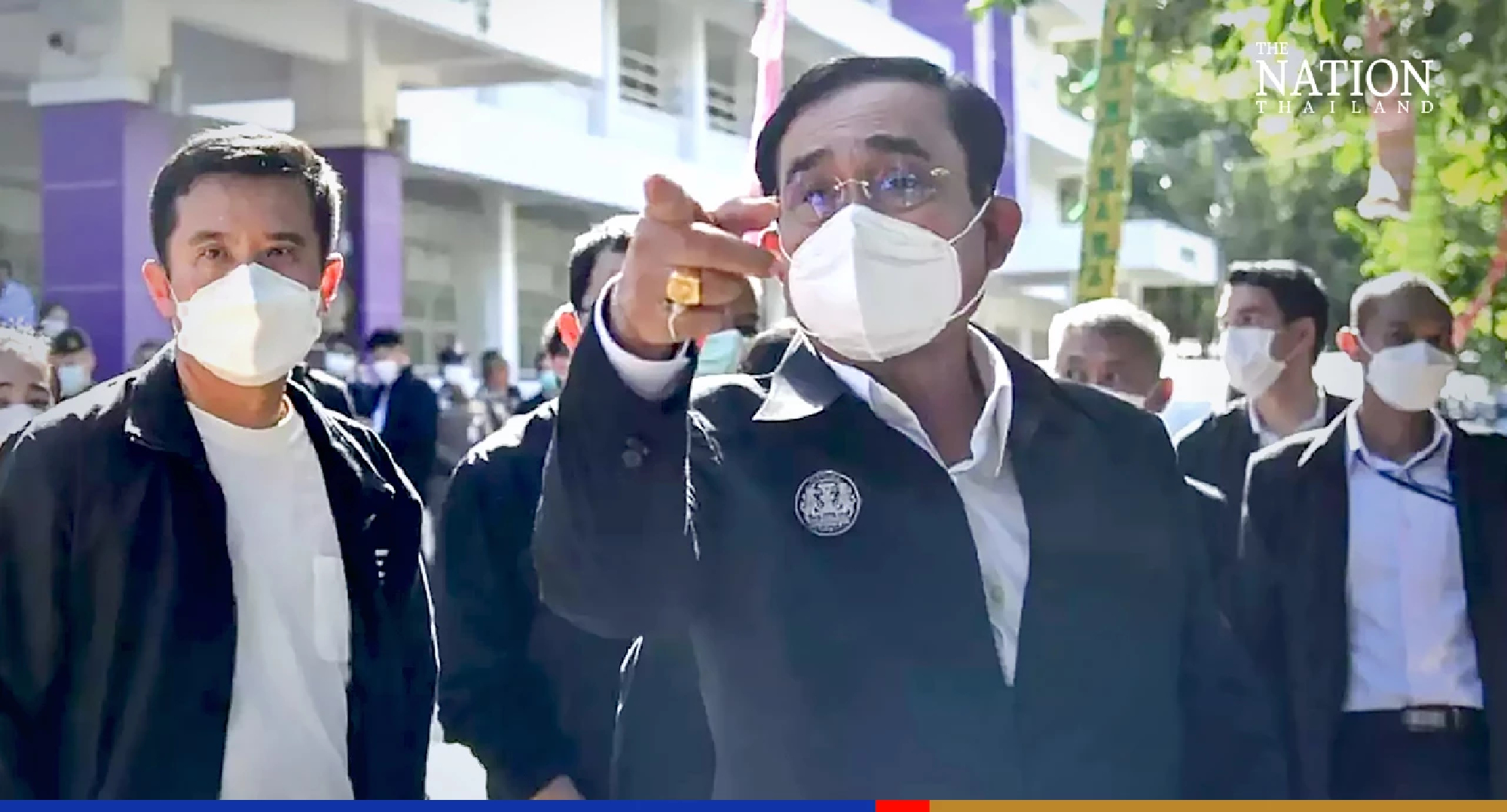
More than 2,000 police officers in Chiang Mai were deployed on Wednesday to protect Prime Minister Prayut Chan-o-cha and his team from protesters, who arrived to hold a demonstration against them.
Traffic, riot and explosive ordnance disposal officers were deployed to provide security for the PM and his entourage.
At Chiang Mai International Exhibition and Convention Centre in Muang district, where Prayut was scheduled to preside over the FTI Expo 2022, up to 30 protesters were present to hold a demonstration, but they later dispersed as a barrier of police officers prevented them from getting close to the prime minister and his team.
Separately, up to 20 protesters demonstrated on Chiang Mai-Lamphun Road when Prayut visited Watweruwan School in Saraphi district. The protest went off peacefully as police officers were deployed around the school.
Prayut paid respect to abbots and sacred objects at a host of temples, including Wat Pa Dara Phirom in Mae Rim district and Wat Pa Pang Kut Kitti Tham in Mae Taeng, before heading to the convention centre.
Bangkok Governor Chadchart Sittipunt held a meeting with the Tourism Authority of Thailand on Wednesday to discuss plans to promote tourism in Bangkok, now that several Covid restrictions have been lifted.
The governor informed the meeting that he planned to organise tourism festivals and activities every month throughout the year, with focus on promoting the unique characteristics of each of Bangkok’s 50 districts.
“For example, in October we will hold a traditional long-tail boat competition while inviting teams from neighbouring countries to add more variety and attract foreign visitors,” he said.
Others festivals and activities that will be brought back after years of Covid shutdowns include an open-air film festival, a floral festival, an arts and crafts fair, the Bangkok Marathon, and opening of tourist attractions along canals.
“As Bangkok has many canals and waterways, we are planning to promote the city as the Venice of Thailand to attract foreign tourists,” said Chadchart, adding that Bangkok will extend the popular Ong Ang Canal to connect with Bang Lamphu and Saen Saeb canals, creating the city’s longest canal-based tourism route.
Chadchart said Bangkok would need a rebranding to respond to the needs of modern tourists that have changed since the outbreak.
“We will also use different media to reach each segment of target groups, while promoting the image of Bangkok as a city of tourism, especially in terms of international standard infrastructure, safety and public transport,” he said.
Chadchart said that in the early phase the campaigns will largely focus on attracting domestic tourists and stimulate spending to help tourism entrepreneurs get back on their feet after the impact of Covid-19.
A later phase will place more emphasis on foreign tourists, especially from new markets such as India, he added.






 During the signing ceremony, Chadchart thanked the Court of Justice for initiating the project.
 He said chairs of the communities would be able to assure the judges whether the suspects can be released temporarily.
 He said the communities’ committees could also provide advice to the released suspects to behave, and the project would ensure equality among Bangkok residents to receive the right to be released temporarily during court trials.


 As a result, the meeting felt the BMTA cut the project down to sidestep NESDC scrutiny, so the committee asked the BMTA to consult the advisory panel no matter what the value of the project is, the source said.
 The organisation wants to hire private firms to operate a total 2,511 electric buses. Under the initial master plan, the number of buses would be divided into seven lots, with the first to the sixth seeing the hiring of 400 electric buses each, while the last lot would use 111 buses.