The State Railway of Thailand (SRT) has agreed to allow commuters who use contactless Europay Mastercard and Visa (EMV) cards to pay only one fare when switching between Bangkok’s Purple Line and Red Line.
Currently, commuters have to pay twice – once when they board and again when the train switches to another line.
“Waiving the entry fee at the connecting point of the Red and Purple lines will cost the SRT about 33 per cent of revenue from all entry fees collected for EMV cards users,” said SRT governor Nirut Maneephan on Thursday.
“However, the SRT board decided to waive the entry fee in line with Transport Ministry policy to reduce commuters’ cost of living. The waiver will also encourage more people to use Red Line urban trains.”
The SRT said it will check whether the move complies with the State Fiscal and Financial Disciplines Act before making an official announcement in June.
The link between the Red Line and Purple Line opened in March at Bang Son station in Bangkok’s Bang Sue district. A total of 2,770 commuters have used the link since its opening.
SRT predicts passenger numbers on the Red Line will rise in the following months as more Covid-19 restrictions are lifted.
The Red Line runs from Taling Chan to Rangsit station with a total of 11 stations in between, covering a distance of 41 kilometres. It connects with the Purple Line at Bang Son station and with the Blue Line at Bang Sue Grand Station, and will link with the under-construction Pink Line monorail at Lak Si station.
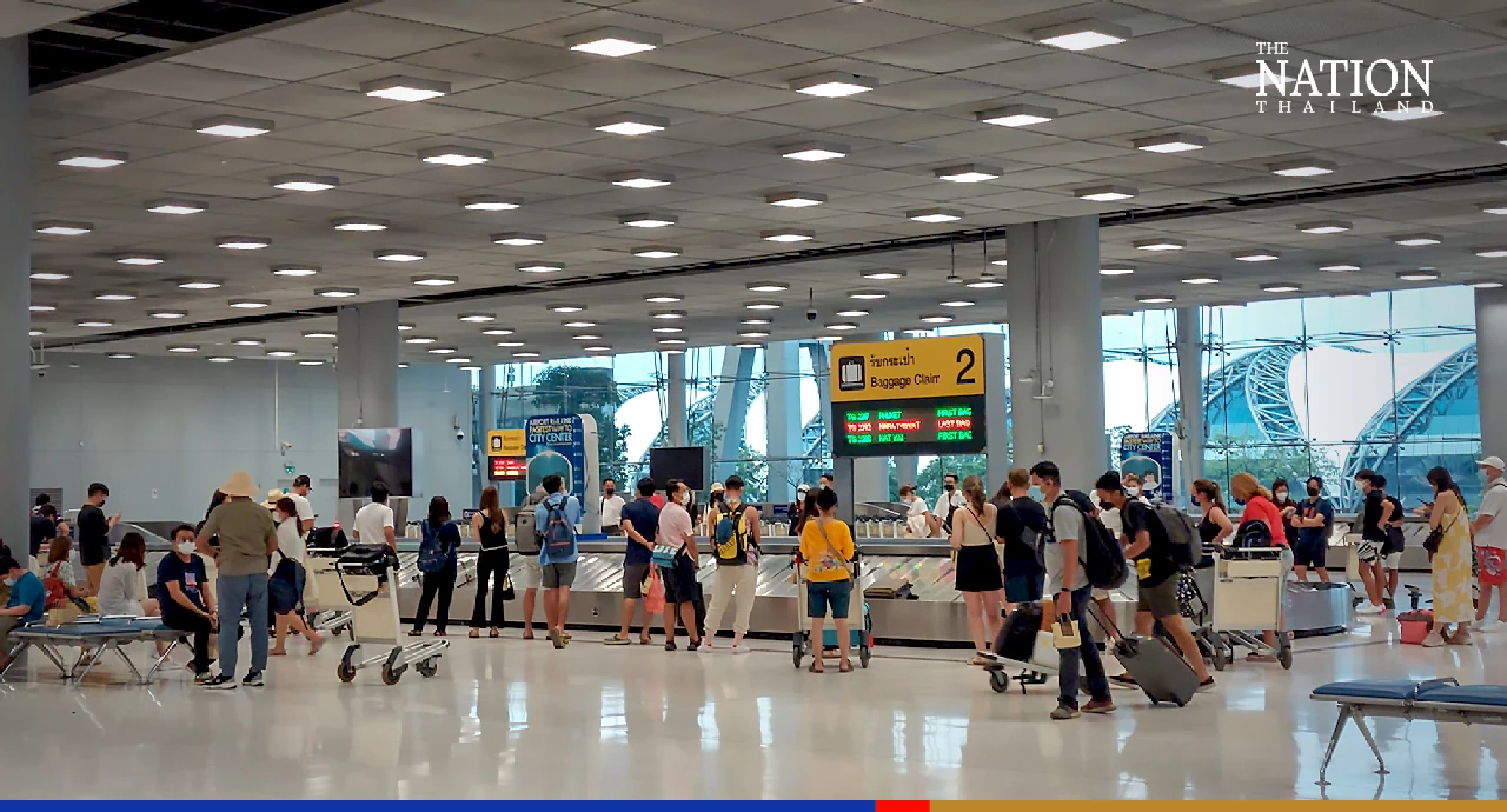
From next Wednesday (June 1), unvaccinated or partially vaccinated foreign travellers will no longer need to quarantine on arrival in Thailand, Foreign Ministry spokesman Tanee Sangrat said on Thursday.
The Tourism Authority of Thailand (TAT) forecasts arrivals will surge from 20,000 per month to 500,000 per month after quarantine is scrapped.
However, all foreign tourists will still have to register for the Thailand Pass before entry – a requirement that will be lifted for Thai nationals from June 1.
“Fully vaccinated travellers must prepare a vaccination certificate and health insurance coverage worth at least US$10,000,” said the spokesman. “Unvaccinated [or partially vaccinated] travellers must show a negative rapid antigen or RT-PCR test result taken within 72 hours of departure.”
He added that all border checkpoints will be opened from June 1 onwards as well.
The TAT reports that arrivals rose to about 20,000 per day from May 1-May 21 after the Test & Go scheme was scrapped.
The largest number of visitors came from Singapore (45,961), followed by India (34,582), Malaysia (16,410) Vietnam (14,003) and Cambodia (13,917).
TAT governor Yuthasak Supasorn expects about 500,000 foreign arrivals per month from now to September, mostly from India, the Middle East and Asean. That number should rise to 1 million per month in the October-December high season when arrivals from the US and Europe surge, he added.
TAT also hopes to see more Chinese tourists visit Thailand by the end of the year.
Yuthasak said Thailand should see 1.5 trillion baht in tourism revenue this year, up 50 per cent on pre-Covid revenue in 2019.
TAT also expects hotel and flight occupancy rates to increase to 50 per cent and 70 per cent, respectively, he added.
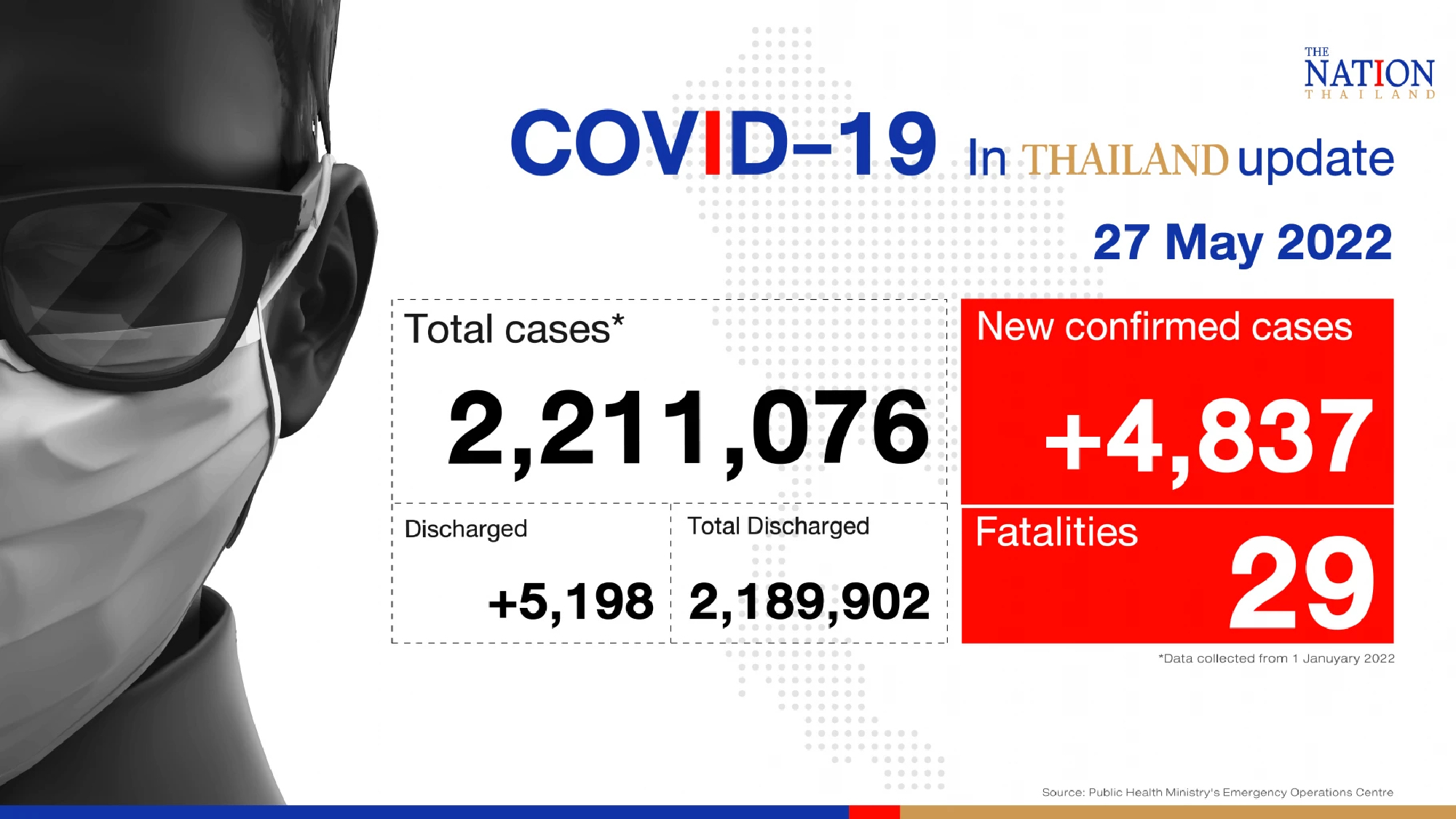
Ministry of Public Health reported on Friday (May 27) morning that in the past 24 hours there are 4,837 new patients who tested positive for Covid-19, 4 of whom have arrived in Thailand from abroad.
Death toll increased by 29, while 5,198 patients were cured and allowed to leave hospitals.
Cumulative cases in the country since January 1, 2022 are at 2,211,076.
Thailand has become a major importer of Norwegian seafood, with salmon and trout purchases totalling 8,385 tons, worth THB2.8 billion in the first four months of this year, according to a senior executive of a Norwegian seafood corporation.
From January to April 2022, Norway exported 8,385 tons of fresh salmon and fjord trout to Thailand valued at THB2.8 billion, said Asbjorn Warvik Rortveit, Southeast Asia regional director of the Norwegian Seafood Council (NSC).
The exports represented a 23 per cent increase from a year earlier while the value increased 81 per cent from the same period last year, he said.
“The numbers show promising market growth in Thailand,” he added.
Thailand is one of Norway’s top three markets after China and South Korea, said Rortveit, citing NSC’s 2021 consumer report.
According to the report, 21 per cent of Thai respondents said they bought salmon online through e-commerce websites or mobile apps “quite often” or “very often”. And 59 per cent of those surveyed said it was “very important” for stores to have quality fish and seafood brands.
“The overall seafood trend across the world today stems from younger consumers, including those in Thailand,” said Rortveit.
“Thai consumers remain very trendy and open to explore new options while quality is not to be compromised when it comes to food,” the executive said.
NSC, a public company owned by Norway’s Ministry of Trade, Industry and Fisheries, is taking part in the THAIFEX-Anuga Asia 2022 being held at Impact conference centre in Nonthaburi province until May 28.
The company is showcasing premium Norwegian seafood at the “Seafood from Norway” pavilion, featuring seminars on NSC’s seafood trend reports to highlight the importance of educating and inspiring consumers about the health benefits of eating seafood.
The Norwegian ambassador to Thailand, Kjersti Rodsmoen, and
Norway’s Deputy Minister of Fisheries and Ocean Policy, Vidar Ulriksen, recently visited the “Seafood from Norway” pavilion.
During a live interview session, NSC’s Rortveit shared his analysis on consumer insights relevant to Thailand and other Southeast Asian markets.
Also at the pavilion, chef Jimmy Chok, best known for his creation of innovative recipes that blend Asian ingredients with Western-style cooking, hosted cooking demonstrations using premium-quality seafood including salmon, fjord trout, and Norwegian saba.
The Norwegian seafood industry, as the world’s leader in seafood production, values transparency around sustainability and product management from catch or harvest, through processing and transport before arriving at the destination of a fish handler, the NSC said.
Norway is one of the world’s most sustainable seafood producers backed by craftsmanship, technology, data, insights, and their love for nature, the company said.
Entertainment venues in 46 yellow provinces, or high-surveillance zone, are still not allowed to reopen on June 1, the Centre for Covid-19 Situation Administration (CCSA) clarified on Thursday.
The move came after the CCSA on May 20 approved to allow venues, such as pubs, bars, karaoke outlets and massage parlours, to operate until midnight from June 1, said assistant spokesperson Dr Apisamai Srirangsan.
However, promotion activities will be banned, while serving staff will be required to wear face masks, she added.
“The CCSA would like to emphasise that only venues in blue (tourism pilot) and green (low-surveillance) provinces can be reopened,” she said.
As of Friday last week, yellow provinces included: Kalasin, Kamphaeng Phet, Khon Kaen, Chachoengsao, Chaiyaphum, Chumphon, Trang, Tak, Nakhon Nayok, Nakhon Pathom, Nakhon Si Thammarat, Nakhon Sawan, Bueng Kan, Prachinburi, Pattani, Ayutthaya, Phayao, Phatthalung, Phitsanulok, Phetchabun, Phrae, Mukdahan, Mae Hong Son, Yala, Roi Et Ranong, Ratchaburi, Lopburi, Loei, Lamphun, Sisaket, Sakon Nakhon, Satun, Samut Prakan, Samut Songkhram, Samut Sakhon, Sa Kaeo, Saraburi, Singburi, Sukhothai, Suphan Buri, Nong Khai, Nong Bua Lamphu, Uttaradit, Uthai Thani and Ubon Ratchathani.
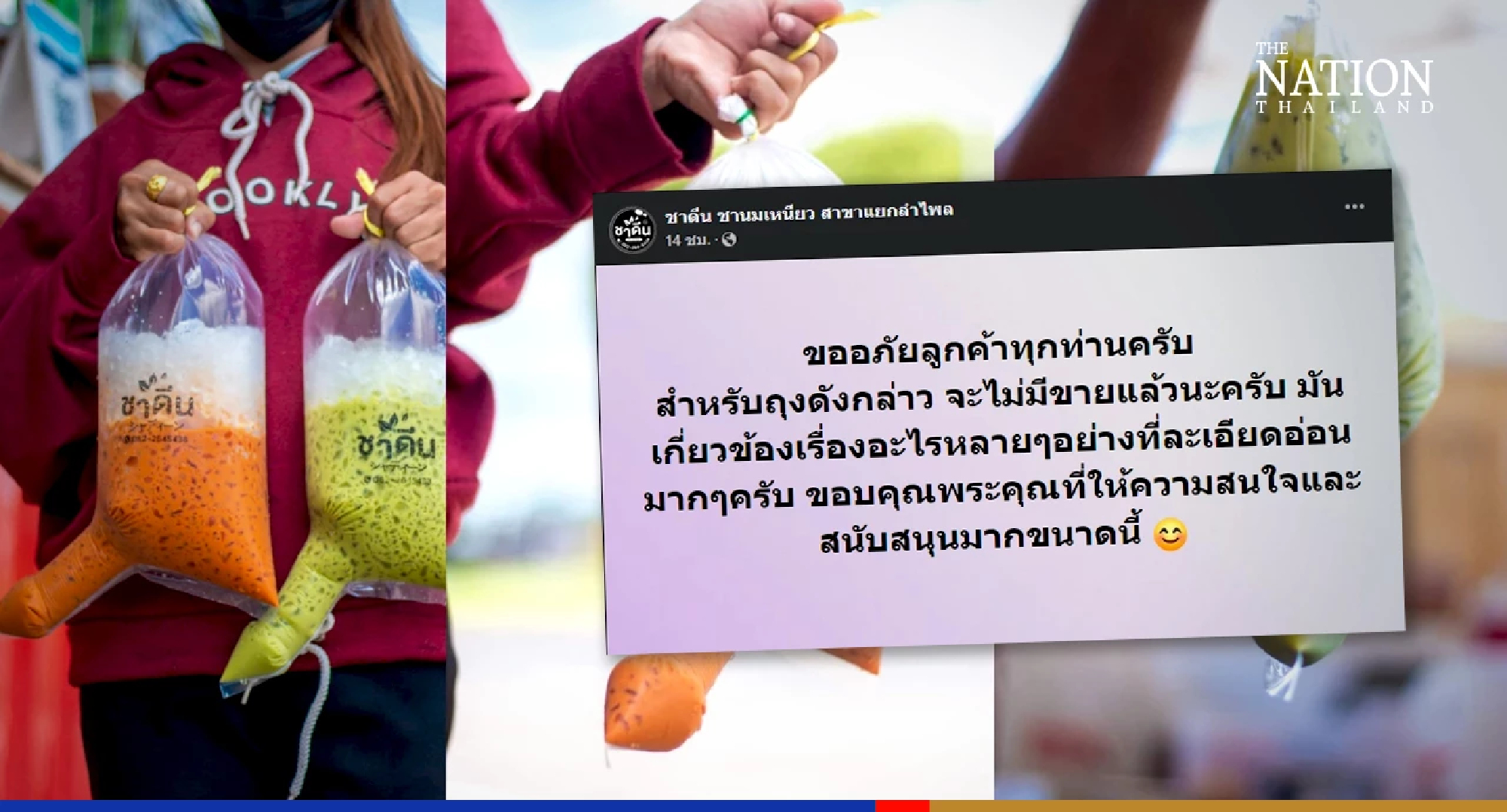
A roadside beverage stall in southern Songkhla province has dropped a plan to sell iced milk tea in a plastic bag with a long protruding part at the bottom.
The shop Cha Dean described the protruding part as “elephant trunk”, but many people said that it resembled the reproductive male organ.
On its Facebook page on Thursday, the shop said: “Our apology to all the customers. The bag in question will no longer be available. It involves many sensitive issues. Thank you for your hefty interest and support.”
Cha Dean’s recent Facebook post about the novel packaging went viral, drawing much support for its creativity while attracting criticism from more conservative and religious people.
“I can’t see it as anything else,” a netizen commented on the bag’s images.
The shop’s post said that the “extremely unconventional” bag needed no drinking straw, as the “elephant trunk” part could do the job. It also promised “attention wherever you go carrying this bag”.
The shop owner, Saranyu Madeng, said recently that he had got many more customers due to the viral post, which was shared about 30,000 times.
Saranyu said that he was inspired by a video clip teaching how to add a protruding part by pulling a plastic bag.
“I tried doing one and it could hold water. I showed it to my father, and he said it looked funny. We laughed together,” the shop owner said.
He added that when he posted the bag’s images for the first time on the shop’s Facebook page, he simply wanted to make people laugh, with no intention of using it for his milk tea.
A Chiang Mai food shop famous for its 3-baht noodle soup dishes promised to retain the low price despite a huge decline in profits due to the higher cost of raw materials.
The owner, Thawat Pirata, said on Thursday that his shop, located in the northern city’s Muang district, has never experienced this level of high costs since it was set up 34 years ago.
“Our shop has sold noodle soups at 3 baht each for over 34 years. We have never got the raw materials so expensive. The shop has lost more than 30 per cent of profits,” said the 64-year-old.
“But we will not raise the price, as we don’t want to make things worse for our customers, who are struggling to survive in this kind of economy,” he added.
Another food shop in Chiang Mai also promised not to hike prices.
Arun Sammasap, 72, owner of the Oh Rotdet rice and curry eatery in Muang district, said on Thursday that her food shop had lost almost 50 per cent of profits as raw material prices had increased by up to 20 per cent.
“But we still sell at the existing prices, THB20-30 per dish. Our customers have to save money as their cost of living is increasing,” she said.
The shop owner added, however, that if the prices of raw materials continue to rise, the amount of food might be “reduced slightly” so that the dishes could be sold at the existing prices.
Thailand’s Digital Economy Promotion Agency (Depa) in collaboration with Grab Thailand has launched a support programme to equip seniors with digital skills.
The “Grab Wai Kao” (Grab for senior) initiative aims to boost their self-esteem and provide income opportunities.
The programme allows senior citizens aged over 60 years to utilise the Grab app as driver-partners to provide transport or delivery services to earn extra income.
The programme aims to support 3,000 people through the agency’s network nationwide.
Depa president Nuttapon Nimmanphatcharin said the nation would soon become an ageing society. He cited the report of the Department of Older Persons, Interior Ministry which found that the number of the elderly in Thailand listed in house registration as of January 2022 has exceeded 12 million, or 18.3 per cent of the total population.
As an agency responsible for promoting the use of digital technology to enhance the quality of life of all, including elderly people, Nuttapon said the state agency places high importance on supporting the elderly to use digital technology to enhance their living.
The cooperation between Depa and Grab Thailand in introducing the “Grab Wai Kao” programme encourages senior citizens (aged over 60 years) to utilise the Grab app and their own vehicles to generate extra income.
“Not only can these seniors live independently, this will also help them elevate their self-esteem and make them feel proud of themselves”, said Nuttapon.
Worachat Luxkanalode, the executive director of Grab Thailand, said digital inclusion was an essential part of GrabForGood mission in supporting the future of work. Regardless of gender, age, education, or even physical limitations, such as hearing ability, Grab has provided everyone with an equal opportunity to utilise the Grab app as driver-or delivery-partners to provide transport and delivery services.
After the criminal background check is approved, elders only need to bring their own vehicles (motorbike or car), a service mindedness, courage to try new technology, and get out of their comfort zone, Worachat said.
“Currently, more than 3,700 driver-partners aged over 60 are on our platform. To others, they are seniors. To us, however, they are highly capable with vast experience, diligence and discretion. This group of people has more free time and does not want to be dependent,” said Worachat.
For the “Grab Wai Kao” programme, the company has set up a team to support seniors throughout the entire process, from application to onboarding, training, as well as, providing ongoing support .
The programme will be promoted through Depa’s online and offline networks, including the Social Welfare Services for Older Persons, nursing homes, Department of Employment, the Internet Foundation for the development of Thailand, and the Ready Senior page.
Apart from age over 60 years, the other criteria of the driver-partners to join the “Grab Wai Kao” project is they hould have no criminal record, have a driving licence and own personal vehicles. An educational background is not required.
Grab, founded in 2012, is Southeast Asia’s leading superapp based on GMV in 2021 in each of food deliveries, mobility, and the e-wallets segment of financial services, according to Euromonitor. Grab operates across the deliveries, mobility, and digital financial services sectors in 480 cities in eight countries in Southeast Asia – Cambodia, Indonesia, Malaysia, Myanmar, the Philippines, Singapore, Thailand, and Vietnam.
Five groups of medical professionals have allayed growing public fears about monkeypox, saying there is only a slim chance of an outbreak in Thailand, and mass vaccinations are unnecessary.
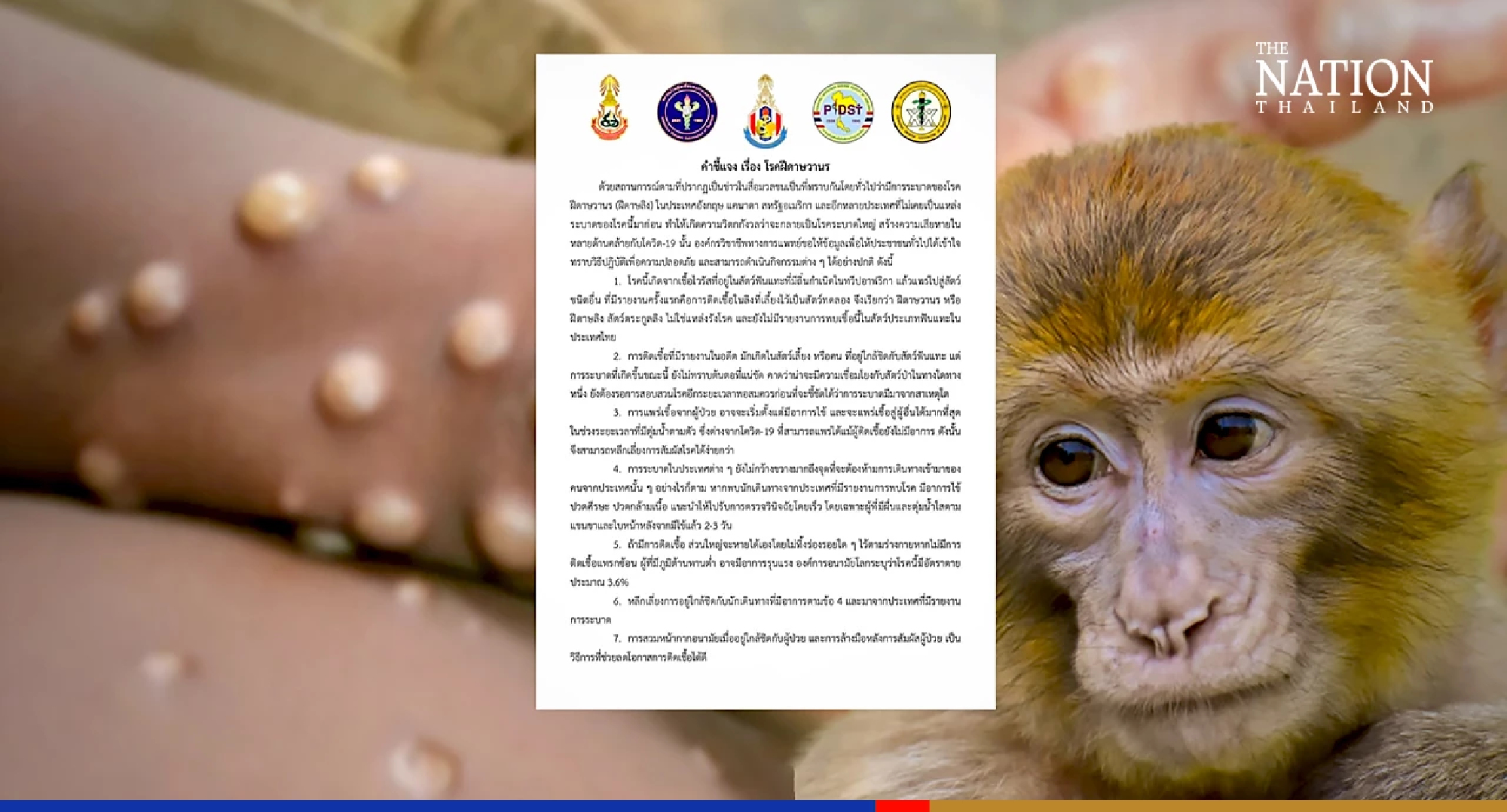
The Royal College of Physicians of Thailand, Royal College of Paediatricians of Thailand, Infectious Disease Association of Thailand, Paediatric Infectious Disease Society of Thailand, and Preventive Medicine Association of Thailand jointly issued a nine-point statement about monkeypox on Wednesday.
The joint statement, signed by the respective chiefs of the five medical groups, said that outbreaks of the communicable disease in many countries, including the United Kingdom, Canada and the United States, had led to fears of a pandemic similar to Covid-19.
However, the medical groups explained that outbreaks overseas are still limited and there is no need to ban travellers from the affected countries. The groups advised avoiding close contact with travellers from overseas, particularly those with symptoms of the disease.
“Wearing face masks when in close contact with the patients and washing hands after touching them can help reduce the chance of contracting the disease,” the statement said.
It explained that monkeypox is caused by a virus from rodents first found in Africa. The disease’s first infection was reported in monkeys used for experiment, which is the origin of the name “monkeypox”.
“Monkeys are not the disease’s reservoir. Also, there have been no reports of this disease being found in rodents in Thailand,” the statement said.
The groups also noted that smallpox vaccines can prevent monkeypox.
The statement said that Thailand had stopped smallpox vaccinations almost 50 years ago, so Thais aged over 50 should be immune to monkeypox because they have already received smallpox vaccines. But younger people have no immunity to either smallpox or monkeypox, it added.
“However, there is only a small chance of a monkeypox outbreak in Thailand, so there is no need for the public to get vaccinated soon,” the statement said.
People should wear face masks while in public and among gatherings even though the Centre for Covid-19 Situation Administration (CCSA) has eased prevention measures, Prime Minister Prayut Chan-o-cha said on Thursday.
According to government spokesman Thanakorn Wangboonkongchana, the premier is monitoring Thailand’s Covid-19 situation closely even though he is attending the 27th International Conference on the Future of Asia in Tokyo until Friday.
Prayut urged educational institutions to watch over students as Covid-19 cases have increased slightly a week after schools reopened, Thanakorn said.
He said Covid-19 clusters were found in some boarding schools, adding that these schools have prepared areas for treating patients.
The prime minister also asked people to strictly adhere to disease prevention measures along with creating awareness on the issue among children in order to contain the spread of Covid-19 and enable children to attend school safely, he added.
The Public Health Ministry aims to ask the CCSA to do away with the mandatory face mask requirement in public places, such as parks.
Dr Jakrat Phittayawong-anon, chief of the Department of Disease Control’s Epidemiology Bureau, said that in the early phase of the no-mask measure, only people in non-high-risk groups would be allowed to take off their masks in areas such as public parks, and the measure would be implemented first in green and blue provinces.
“People in high-risk groups, such as the elderly aged over 60, those with chronic health problems and unvaccinated people will still be required to wear face masks and avoid visiting crowded areas,” he said.
A CCSA meeting last Friday approved the new colour coding of provinces from next month based on the Covid-19 situation.
Fourteen provinces have been added to the green or low-surveillance zone, namely Chai Nat, Phichit, Ang Thong, Nan, Maha Sarakham, Yasothon, Nakhon Phanom, Lampang, Amnat Charoen, Buriram, Trat, Surat Thani, Surin and Udon Thani.
Seventeen provinces will be classified as pilot tourism areas or blue zones – Bangkok, Krabi, Kanchanaburi, Chanthaburi, Chonburi, Chiang Mai, Chiang Rai, Nakhon Ratchasima, Nonthaburi, Narathiwat, Pathum Thani, Prachuap Khiri Khan, Phang-nga, Phetchaburi, Phuket, Rayong and Songkhla.
The 46 other provinces will remain in the yellow or high-surveillance zone.