The Ministry of Labour has recently launched a programme to send Thai workers on a three-year vocational training course to Japan for technical skills.
The campaign is part of the Technical Intern Training Programme by Japan’s Public Interest Foundation International Manpower Development Organisation, also known as IM Japan. IM Japan aims to provide foreign nationals with Japanese technology, skills and knowledge, and thus gives them opportunities to play an active role either in Japan or in their home countries.
“Currently Japan is in need of about 2,000 Thai workers in technical positions, especially in the automotive and food manufacturing industry,” said Pratheep Songlamyong, director-general of the Department of Skill Development said on Monday.
“The department will provide necessary training and orientation to selected workers before they travel to Japan to complete the three-year course.”
The training in Thailand will take four months; the first three months will be at Pathum Thani Labour Skill Development Office and will cover the Japanese language and basic technical skills required for each job. The second part of the training, a month long, will take place at Chonburi Labour Skill Development Office, and cover topics such as Japan’s culture, tradition, and daily life to acclimatise the candidates with living and working in Japan both physically and mentally.
“Throughout the three years of training in Japan, selected candidates will be offered lodging and allowances,” said Pratheep. “Upon graduating from the programme, candidates will receive a certificate of skill training from IM Japan, as well as a fund of 600,000 yen (approx. THB160,000) to help them find a job either in Japan or other countries. Should the Japanese employer want to continue hiring the candidate after graduation, they can extend the contract for another two years.”
Workers who are interested in joining the programme should visit www.doe.go.th/overseas or contact call centre 1506 press 2.
Thailand’s financial system remains stable but living and production costs will rise if the Russia-Ukraine conflict is prolonged, according to the Bank of Thailand (BOT)’s Quarterly.
“Rising costs of living and production would affect the ability of households and the business sectors to repay debt and also affect investors’ confidence,” the bank said on Monday.
BOT highlighted risks for financial stability in the following eight sectors:
Household: Households are still vulnerable to high debt and have not recovered to pre-Covid levels of income. Households’ ability to repay debt must be monitored, especially as the cost of living is high due to inflation.
Business: Large businesses are recovering in line with the global economy and lockdown easing. Meanwhile, loans for small and medium enterprises have expanded slightly from rehabilitation loan measures. However, debt-repayment ability and economic recovery must be monitored closely, especially in the tourism-related service sector.
Property: The property market shows signs of recovery amid increasing supply and adjustment of loan criteria for borrowers with purchasing power. However, the continued slowdown in demand is cause for concern.
Commercial banks and nonbanks: Risk for commercial banks and nonbanks is at a moderate level, but the Covid-19 crisis and Russia-Ukraine conflict will affect loan quality. In addition, high competition will pressure banks’ potential in the next phase.
Cooperatives: Savings cooperatives with high liquidity are still expanding their investment in financial assets, but they will face impacts if financial market volatility rises due to the Russia-Ukraine conflict.
Financial market: The market mechanism is working smoothly, but it is necessary to monitor investors’ “search for yield” behaviour and volatility in the global financial market due to major economies’ move to raise interest rates and the Russia-Ukraine conflict.
Foreign investment: This sector is still strong and is likely to improve in line with a decline in the current-account deficit.
Digital assets: Low risk for Thailand’s financial stability but must be monitored as the digital asset market has high volatility and expands quickly.
Police have so far arrested seven suspects, including rapper Thanayuth Na Ayutthaya aka “Eleven Finger”, for allegedly hurling two ping pong bombs into the First Infantry Regiment compound where the PM’s residence is located.
The two bombs landed on the lawn in front of the security booth of the regiment. No one was injured from the small explosions.
Apart from Thanayuth, 20, the other suspects were his girlfriend Patima Fakthong, 20, Pornpoj Chaengkrachang, 49, and four teenagers whose names have not been released.
All suspects were charged with causing an explosion and carrying weapons without reasonable cause.
Thanayuth and Patima, who deny all charges, were under detention at Bang Sue Police Station as of press time. They have been denied bail due to flight risk.
The rapper has earned a name for himself as a vocal critic of the military-backed government and was arrested in 2020 at the peak of anti-government protests.
The owner of Bluedragon, an online lottery selling platform, said on Tuesday that he was confident his platform would not be shut down by the Criminal Court.
Pachara Messiyaporn was speaking to reporters before entering the court on Ratchadapisek Road to attend a hearing.
The Digital Economy and Society Ministry recently filed a criminal lawsuit against Bluedragon and Pachara for allegedly selling overpriced lottery tickets.
The platform owner said on Tuesday that he was glad the case has gone to court and was confident he would receive justice.
“I have faith in the judicial system. We have been doing our business straightforwardly and using our own know-how in building a good platform for the best interest of the people,” he said. “So, I’m 100 per cent confident the court will not close my platform.”
Pachara was arrested at a luxury estate in Nonthaburi last week before being released on bail. He faces four charges, namely uploading fake data into a computer system, operating a direct marketing platform without registration, releasing fake or exaggerated advertisements, and overpricing lottery tickets.
His lawyer Anantachai Chaiyadej said the defendant would explain to the court that Bluedragon is the only online platform for lottery vendors and that Pachara and the platform have nothing to do with the prices.
Anantachai said Pachara and a defence witness would testify, while three policemen would testify from the plaintiff’s side.
He said the defendant would also present a video clip of a former director of the Government Lottery Office telling a House committee that Bluedragon was a legal business that helped sellers find buyers.
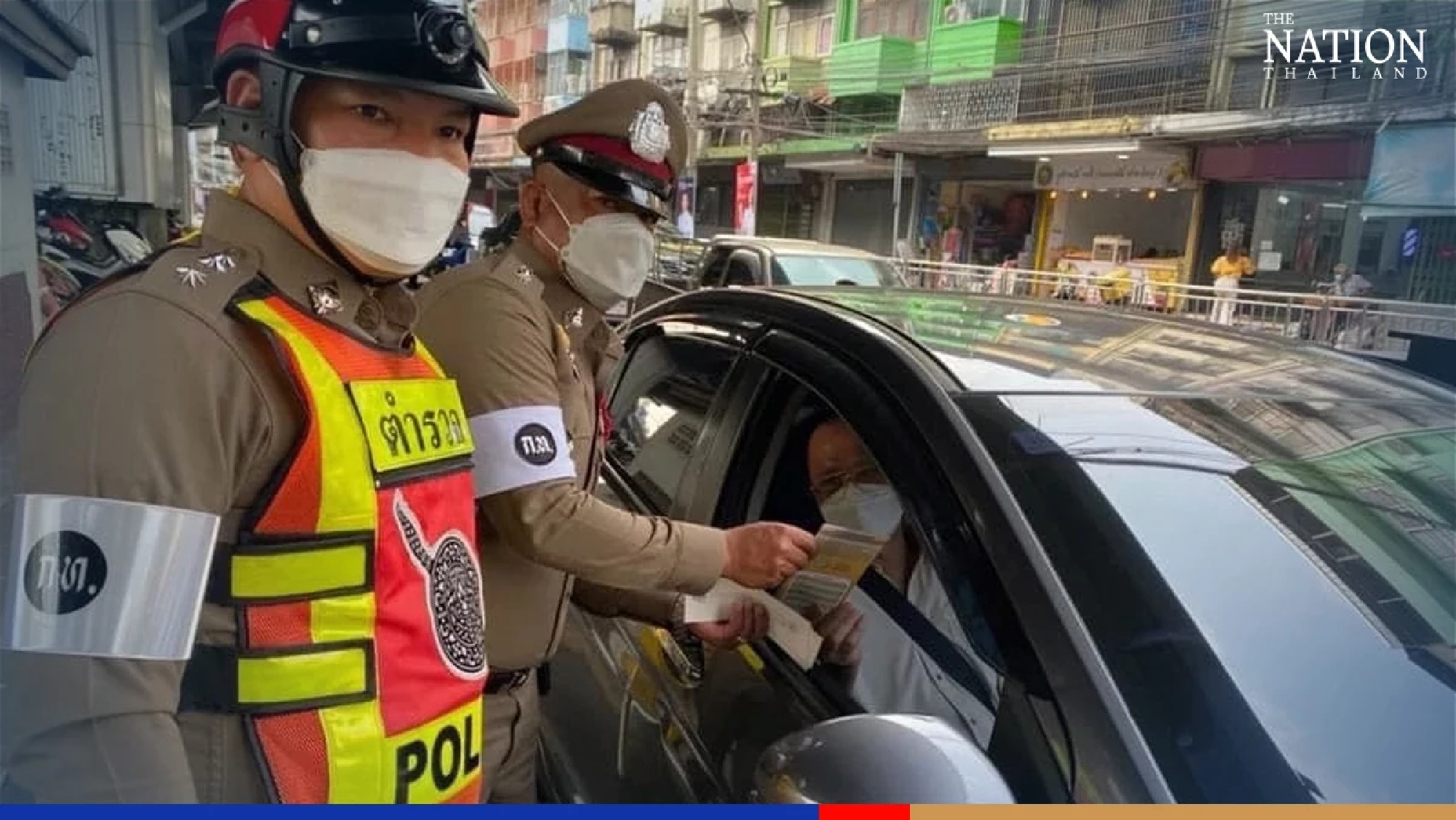
The Royal Thai Police (RTP) will have 80,000 police officers on standby during the Songkran Festival to help with traffic and safety during the holiday period.
The RTP held a press conference to reveal its measures during the “Seven Dangerous Days” to prevent road accidents. Police have set up a control centre to prevent and reduce road accidents during the Songkran Festival from April 10 to 18.
Deputy National Police chief Pol General Damrongsak Kittiprapas said that 18,731 police will set up traffic checkpoints, 12,139 of them will man sobriety checkpoints, and 9,670 of them will be fast deployment units to help with accidents.
The rest of them will work on normal duties such as investigation, patrol, and administration to prevent crime and give service to citizens during the festival.
In addition, there is a volunteer traffic project for drivers with videos from dashcams or mobile phones to record traffic violations or accidents as evidence to help police identify culprits.
The Don’t Drive Drunk Foundation will select 10 videos monthly with a total prize of 50,000 baht. The project began in November 2021 and people have sent more than 100 videos.
During Songkran, the RTP will select seven videos for a prize of THB10,000 each.
People could submit videos to RTP’s social media centre, Facebook page “JS100 radio”, Facebook page “FM91 Trafficpro”, or DDD’s Facebook page “Ar-sa Ta Charachorn” (volunteer traffic eye).
The Centre for Covid-19 Situation Administration (CCSA) has given the green light for organised Songkran events this week. However, all events must be held under Covid Free Setting standards and be approved by provincial public health officials.
The Nation Thailand has gathered information on which activities are permitted in popular tourist provinces so that you can enjoy Songkran safely.
Bangkok
Status: Blue zone (tourism pilot area)
– Songkran activities with over 1,000 people must be approved by district public health officials at least 5 days in advance and obey distancing restrictions of 4sqm per participant.
– Water splashing, face powder daubing, foam parties or similar activities are banned.
– No sale or consumption of alcohol in activity areas.
– Restaurants can serve alcohol until 11pm.
Nonthaburi
Status: Blue zone
– Travellers from other provinces must provide vaccine certificate and negative ATK test taken within 72 hours.
– Songkran activities must provide temperature and ThaiChana screening and limit participants to one per 4sqm.
– Processions and music performances banned.
– Water splashing, face powder daubing, foam parties or similar activities banned.
– No alcohol in activity areas.
– Restaurants can serve alcohol until 11pm.
Prachuap Khiri Khan
Status: Orange zone (controlled area)
– Songkran activity participants must provide vaccine certificate and negative ATK test taken within 72 hours.
– Water splashing, face powder daubing, foam parties or similar activities banned.
– No alcohol in activity areas.
Pattaya City, Chonburi
Status: Blue zone
– Only traditional activities permitted, including almsgiving, sprinkling water on hands of monks and elders; social distancing must be maintained.
– Water splashing, face powder daubing, foam parties, etc, are banned.
– No alcohol in activity areas.
– Restaurants can serve alcohol until 11pm.
Khon Kaen
Status: Yellow zone (highly monitored area)
– No water splashing and other Songkran activities in the province, including on the famed Khao Niew Road
– Face powder daubing, foam parties etc are banned.
– Restaurants can serve alcohol until 9pm.
Loei
Status: Yellow zone (highly monitored area)
– Travellers from other provinces must provide vaccine certificate and negative ATK test taken within 72 hours.
– Cultural activities, processions and music performance are permitted under Covid Free Setting standard.
– Water splashing, face powder daubing, foam parties are banned.
– No alcohol in activity areas.
– Restaurants can serve alcohol until 9pm.
Chiang Mai
Status: Blue zone
– Songkran activity participants must provide vaccine certificate (at least 3 jabs) or negative ATK test taken within 72 hours.
– Activities must meet Covid Free Setting standard and pass the Thai Stop Covid Plus evaluation.
– Songkran activities must have temperature and ThaiChana screening and limit participants at one per 4sqm.
– Water splashing, face powder daubing, foam parties etc banned.
– No alcohol in activity areas.
– Restaurants can serve alcohol until 11pm.
Songkhla
Status: Blue zone
– Travellers from other provinces must provide vaccine certificate and negative ATK test taken within 72 hours.
– Songkran activities must have temperature and ThaiChana screening and limit participants to one per 4sqm.
– Activities with more than 500 participants prohibited.
– Cultural and music performances and processions must adhere to Covid Free Setting standard.
– Water splashing, face powder daubing, foam parties etc banned.
– No alcohol in activity areas.
Phuket
Status: Blue zone (tourism pilot area)
– Songkran activity participants must provide vaccine certificate (3 jabs), or negative ATK test taken within 72 hours.
– Cultural and music performances and processions must follow Covid Free Setting standard and limit number of participants.
– Water splashing, face powder daubing, foam parties etc banned.
– No alcohol in activity areas.
– Restaurants can serve alcohol until 11pm.
Krabi
Status: Blue zone
– Songkran activity participants must provide vaccine certificate and negative ATK test taken within 72 hours.
– Songkran activities must have temperature and ThaiChana screening and limit participants to one to per 4sqm.
– Cultural and music performances and processions must meet Covid Free Setting standard.
– Water splashing, face powder daubing, foam parties etc banned.
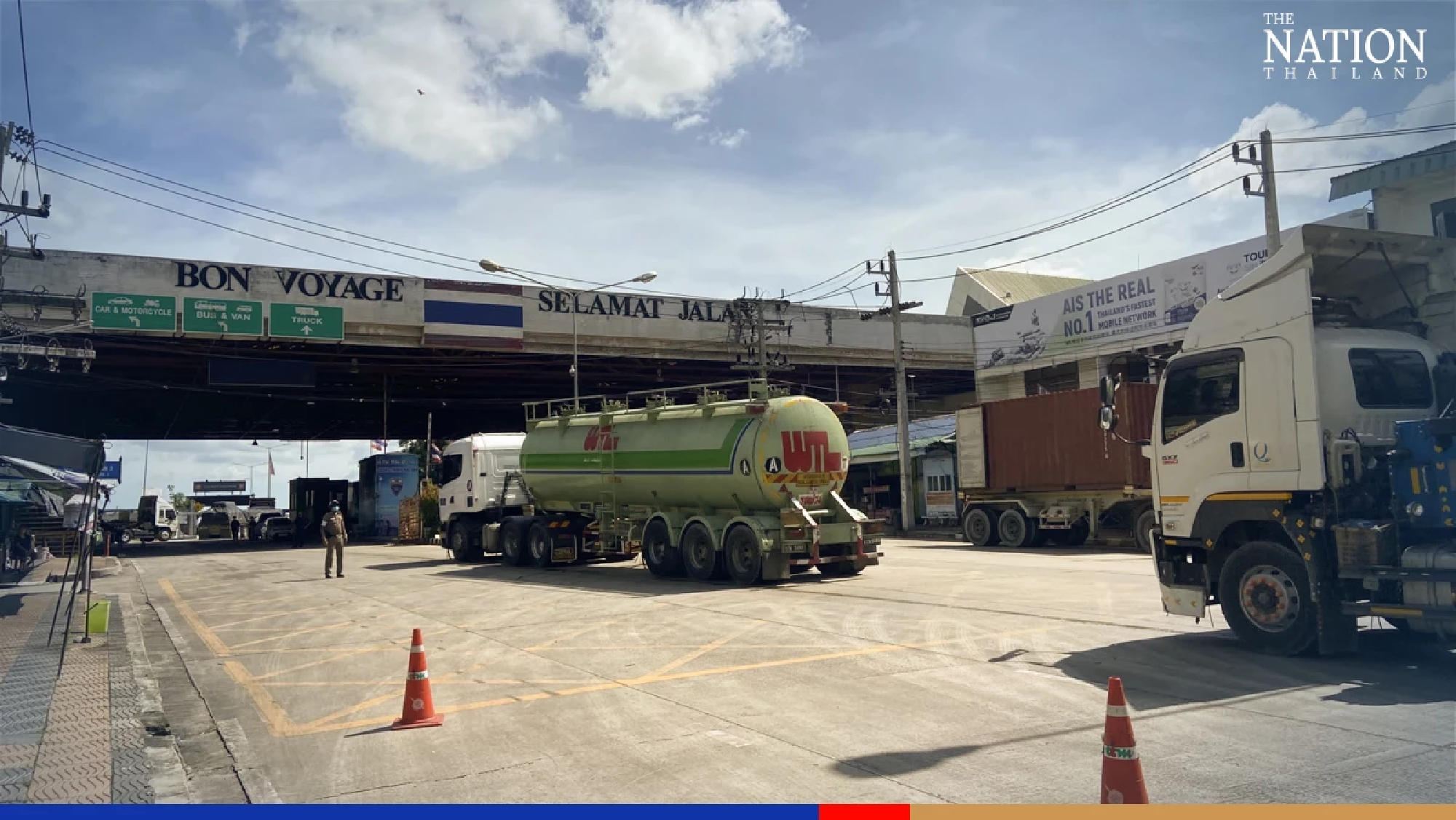
The low number of foreign travellers entering Thailand via the Sadao border checkpoint is due to the added expense of Covid-19 restrictions, not the planned tourist entry fee, the tourism minister says.
Songkhla tourism businesses have complained to the Tourism and Sports Ministry that tourist arrivals are far fewer than expected since the border with Malaysia reopened on April 1.
“Currently, a tourist from Malaysia must pay around 5,000-7,000 baht to enter Thailand via the Sadao checkpoint,” said Minister Phiphat Ratchakitprakarn on Monday.
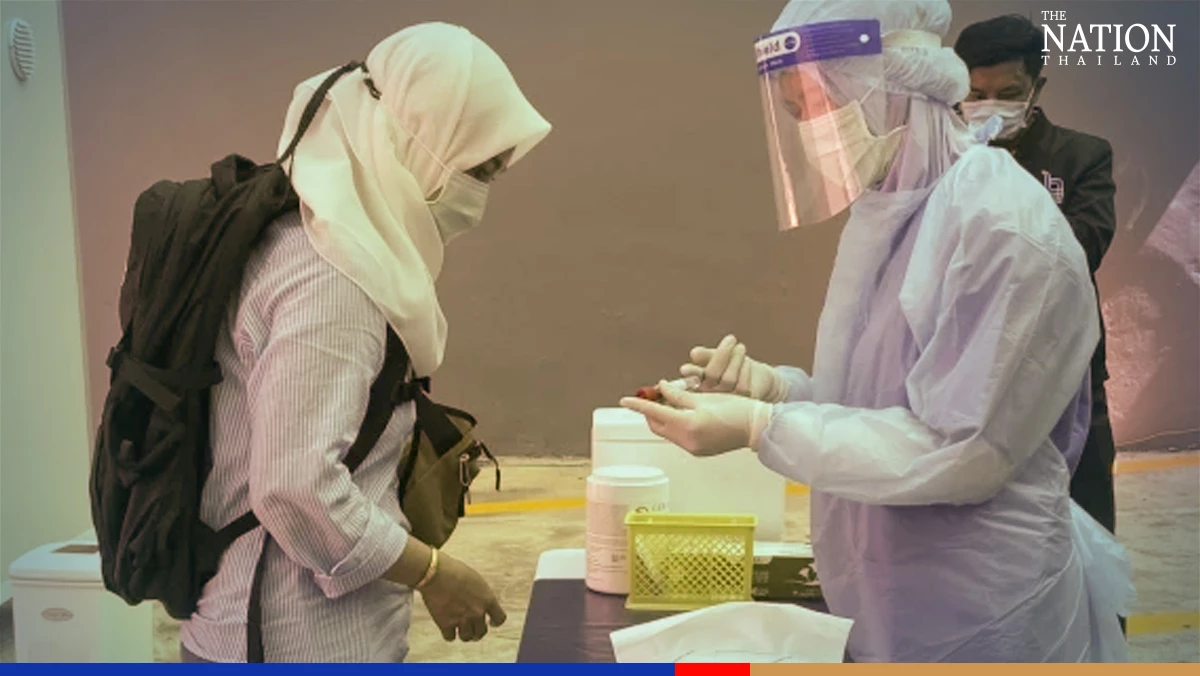
“This cost includes the one-time RT-PCR test in Thailand, the price for one night’s accommodation while waiting for the result, and Covid-19 insurance with minimum US$20,000 coverage.”
He added that many people mistakenly believed that travellers were avoiding Thailand because of the Bt300 tourist entry fee.
“This is not the case, as this fee has yet to be implemented,” said Phiphat.
Initially scheduled to kick in on April 1, the ministry has delayed the implementation of the “Kha Yeap Pan Din” or landing fee until June. Initially, the fee will only be applied to travellers arriving by air and be incorporated in the price of plane tickets. The ministry has yet to come up with a fee system for tourists arriving by land or water.
Twenty per cent of income from the fee will fund travel insurance for tourists, with 500,000-baht accident coverage and 1 million baht in case of death.
The remainder will fund development of tourist destinations plus a collection fee for airlines.
Phiphat said he will propose scrapping the Thailand Pass system to alleviate expenses that are deterring foreigners from visiting Songkhla and other places in Thailand.
Under the proposal, tourists would require only a vaccine certificate and ATK test.
“The ministry will propose the move after the Songkran holiday, possibly on April 22, provided that daily infections do not exceed 30,000 and the death rate is below 100 per day” said the minister.
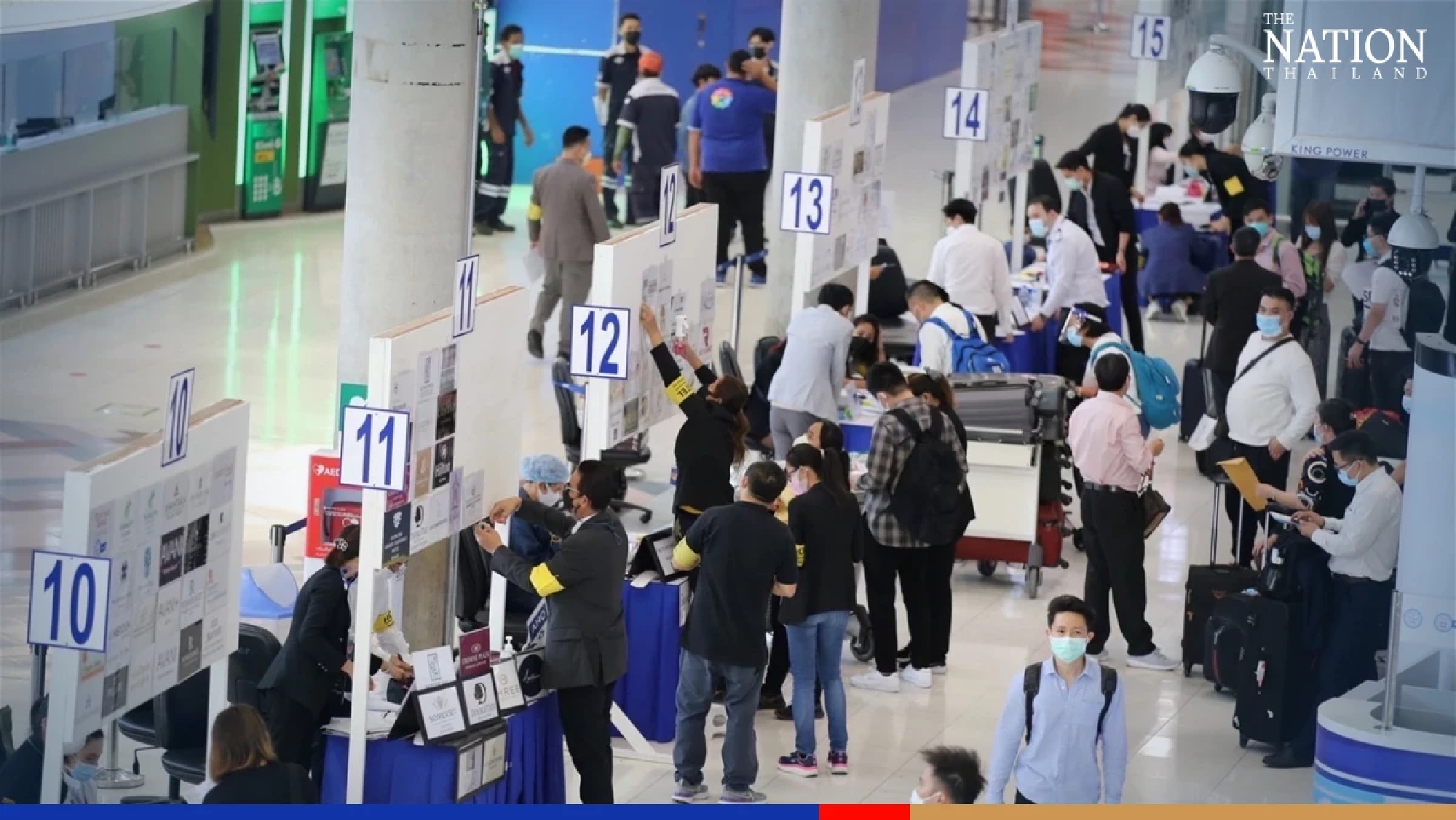
Suvarnabhumi Airport has responded to complaints over congestion at passenger terminals, blaming a surge in international arrivals following the cancellation of RT-PCR test screening under the Test & Go scheme.
Airport director Kittiphong Kittikhajorn said that after the requirement to show a negative RT-PCR test was scrapped on April 1, international arrivals had increased from 6,000-7,000 to 9,000-10,000 per day.
“The increased number of arrivals has resulted in congestion in the international terminal hall and hotel-agency rendezvous points at certain hours,” said Kittiphong.
He added that peak hours were 5am to 7am and noon to 3pm, when 1,500 to 2,000 passengers per hour move through the areas. However, this was still lower than airport’s capacity of 3,000 passengers per hour under disease control measures, he said.
Kittiphong was responding after Thai YouTuber Atichan Cherngchavano complained of chaos at the international arrivals hall as there were no signs directing tourists. He said most travellers just stood around looking completely lost, unable to find the hotel they had booked under the Test & Go scheme.
“This is how passengers under the Test & Go scheme are treated at Suvarnabhumi Airport,” said Atichan, also known as “Au Spin9”.
“Nobody could go anywhere, they just stood in long lines. Hotel staff shouted their hotels’ names until they lost their voices and were left shaking their heads in despair.
When passengers complained, hotel staff told them to direct complaints at airport authorities, he added.
“It became a game of hunting for the hotel’s logo. Everything is organised randomly instead of alphabetically. There is no directory guiding passengers. One counter handles as many hotel bookings as they want until the hotel logos are thrown down on the floor. When passengers find their counter, they have to join long queues because only one person is handling many hotels’ guests,” Atichan said.
The post was widely liked and shared by netizens, some of whom said they had suffered similar experiences at Suvarnabhumi.
Responding to the public outcry, Kittiphong said the airport would increase the number of service counters at the rendezvous point from 8 to 17. It would also open an extra baggage carousel for each flight to increase passenger flow.
“Furthermore, we will make hotel signs easier to find by arranging them alphabetically,” he said, adding that hotels had been asked to provide adequate staffing levels to meet the growing number of passengers.
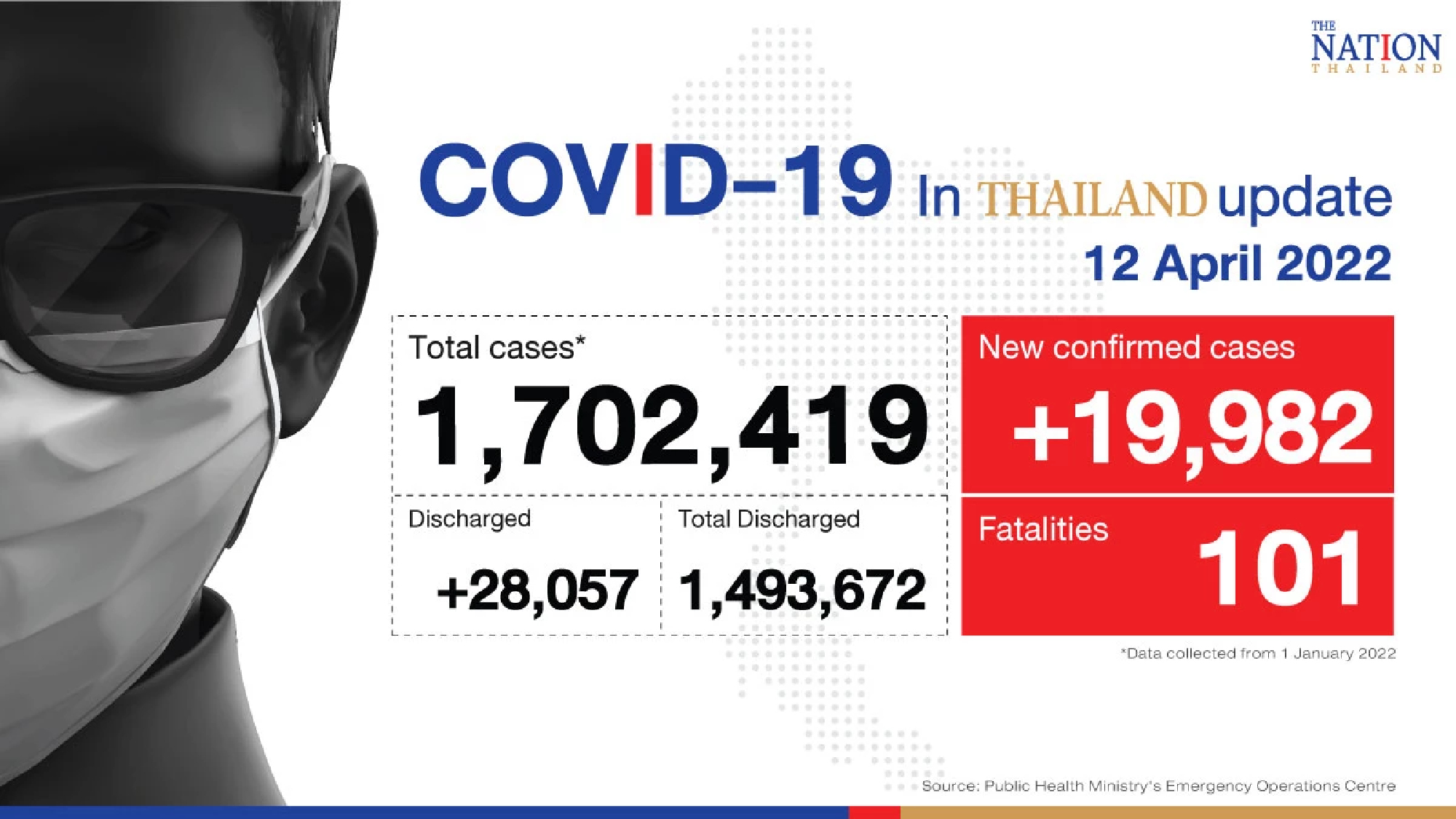
Ministry of Public Health reported on Tuesday (April 12) morning that in the past 24 hours there are 19,982 new patients who tested positive for Covid-19, 52 of whom have arrived in Thailand from abroad.
Death toll increased by 101, while 28,057 patients were cured and allowed to leave hospitals.
Cumulative cases in the country since January 1, 2022 are at 1,702,419.
With PM2.5 hitting unsafe levels in 49 provinces on Monday morning, The Nation offers 10 methods to protect yourself against the health impacts of air pollution.
The provinces where PM2.5 air pollution exceeded safe levels according to the Centre for Air Pollution Mitigation were: Bangkok, Pathum Thani, Nonthaburi, Nakhon Pathom, Samut Sakhon, Samut Prakan, Chiang Rai, Chiang Mai, Mae Hong Son, Phayao, Nan, Lampang, Phrae, Uttaradit, Sukhothai, Tak, Phitsanulok, Kamphaeng Phet, Phichit, Phetchabun, Nakhon Sawan, Uthai Thani, Sing Buri, Lopburi, Saraburi, Suphan Buri, Ayutthaya, Kanchanaburi, Ratchaburi, Phetchaburi, Nakhon Nayok, Prachin Buri, Sa Kaew, Chachoengsao, Chonburi, Rayong, Nong Khai, Loei, Udon Thani, Nakhon Phanom, Sakon Nakhon, Mukdahan, Kalasin, Roi Et, Chaiyaphum, Ubon Ratchathani, Sisaket, Nakhon Ratchasima and Buriram.
Ten ways to protect yourself from PM2.5 health hazards:
Check the air quality before going outdoors via Air4Thai.com or the Air4Thai smartphone app.
Wear a face mask, preferably of N95 grade.
Keep yourself healthy and well-rested; drink a lot of water.
Eat all five food groups, especially vegetables and fruits that are rich in antioxidants.
Repair gaps along the edges of doors and windows to shield against PM2.5.
Avoid outdoor activities when air pollution exceeds safe levels.
People with chronic conditions such as asthma, allergies and conjunctivitis should prepare medicines and appliances, and follow doctors’ advice.
Clean houses, especially spots where dust gathers, such as air-conditioners and fans.
Watch out for symptoms such as coughing, difficulty breathing, chest pain and dizziness.
Reduce PM2.5 by planting trees and not burning crops or using vehicles that emit black smoke.


 His lawyer Anantachai Chaiyadej said the defendant would explain to the court that Bluedragon is the only online platform for lottery vendors and that Pachara and the platform have nothing to do with the prices.