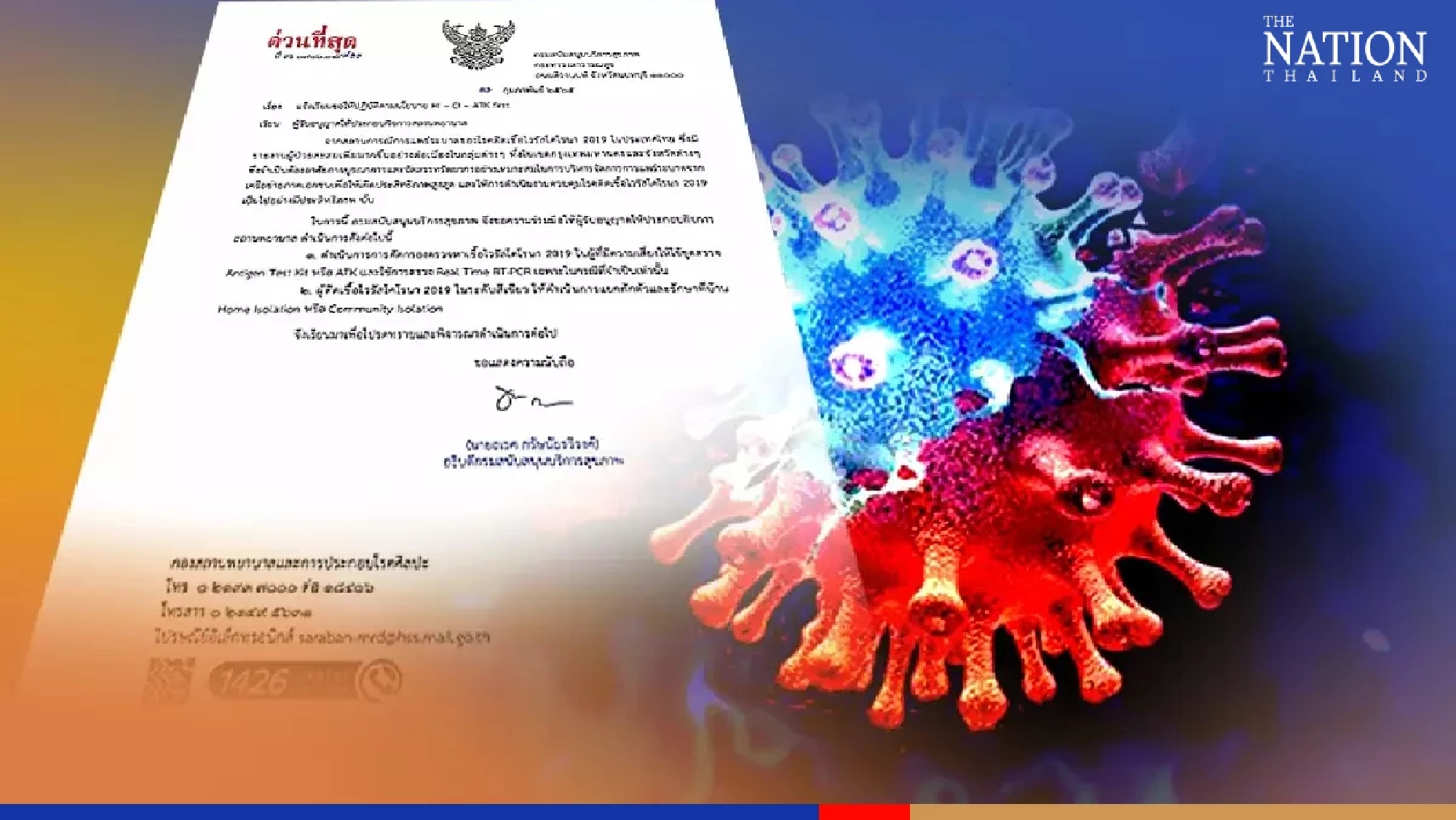
The Public Health Ministry’s Department of Health Service Support has written to medical institutions nationwide, asking them to be ready for rising Covid-19 cases.
The letter, which was sent on Sunday, also said hospitals and medical facilities should be ready to provide treatment to patients under home isolation and community isolation.
The letter was triggered by the number of Covid-19 cases in Thailand rising beyond the 10,000 mark daily.
The letter also called for integration between government and private sectors as well as resource management, which is necessary to effectively contain the spread of Covid-19.
“The department wants medical institutions to use antigen test kits [ATKs] on people at risk of infection and RT-PCR tests when necessary,” it said.
“Meanwhile, patients with mild symptoms should receive treatment under home or community isolation schemes,” the letter concluded.
Rising sea levels and saltwater intrusion is expected to affect communities along the Chao Phraya River for most of this week, the National Water Command warned on Sunday.
The Royal Thai Navy’s Hydrographic Department also warned that sea levels are expected to rise between February and April this year. Citing data collected by its Phra Chulachomklao Fort station, it said the river’s level will rise by 1.4 metres to mean sea level from Monday to Friday, by 1.5 metres from February 28 to March 4 and by 1.25 metres from March 16 to 18.
“The rising sea level will push up Chao Phraya’s water level and affect communities nearby, while saltwater intrusion will affect the quality of water for consumption and agriculture,” the National Water Command said.
It added that related agencies have been urged to monitor the situation, check the durability of buildings near the river, strengthen the water barrier, inform people living nearby and prepare machines and equipment to mitigate the impact.
“Related agencies have also been urged to check the quality of water and adjust their water management plans to ensure the water quality meets standards and saltwater can be pushed back to the sea as soon as possible,” it added.
The Stock Exchange of Thailand (SET) Index is expected to move between 1,690 and 1,695 points on Monday amid uncertainty over rising Russia-Ukraine tensions, Krungsri Securities said.
Uncertainty over the US Federal Reserve’s move to raise the interest rate to tackle inflation is also pressuring the index.
“However, the sharp rise in oil price and mass buy-ups of company shares that are expected to grow based on their business turnover last year would help boost the index,” Krungsri Securities said.
It recommends the purchase of the following as an investment strategy:
• PTTEP, TOP, PTTGC, IVL, SPRC and BCP will benefit from the rising price of oil and gross refining margin.
• BBL, KBANK, KTB, SCB, TTB, BLA and THREL will benefit from news of the US interest rate hike.
• IVL, TOP, SPRC, GULF, BANPU, TU, CPF, SPALI, ORI, WHA, AMATA, HMPRO, CPN, CRC, BLA, NER, ITEL, XO, ASK, UBE, FORTH, TH and SNNP are expected to grow based on their business turnover last year.
The SET Index closed at 1,699.20 on Friday, down 3.8 points or 0.22 per cent. Transactions totalled 95.43 billion baht with an index high of 1,703.95 and a low of 1,690.69.
Public Health Ministry reported on Monday (February 14) morning that in the past 24 hours there are 14,900 new patients who tested positive for Covid-19, 192 of whom are foreign travellers.
Death toll increased by 26, while 9,810 patients were cured and allowed to leave hospitals.
Cumulative cases in the country since January 1, 2022 are at 384,792.
Move Forward party leader Pita Limjaroenrat said he will seek changes via Parliament so that epileptics in Thailand don’t have to pay for expensive operations to get their lives back on track.
Posting on Facebook a day ahead of International Epilepsy Day on Monday (February 14), Pita revealed that he is among an estimated 700,000 epileptics in Thailand and more than 50 million worldwide.
While 70 per cent of people who suffer from epileptic seizures can be cured with drugs, a minority need expensive surgery costing between 200,000 and 700,000 baht per person, he said.
“Even though patients can use privileges under the gold card scheme and social security system, this is not enough [to cover surgery for epilepsy].”
He added that he would seek to change the law in Parliament so that epilepsy patients and their guardians benefit.
“As an epilepsy sufferer myself, I want to help create public awareness of the disease and encourage patients who are suffering,” said Pita.
Greater awareness of symptoms and how to get treatment was vital to easing burdens on epilepsy patients and their families, he explained. He added that anti-epilepsy drugs can cause side effects such as drowsiness but they enable sufferers to live a normal life.
He also revealed that he has lived with the disease since he was 14 years old.
On Monday, about 140 countries will spread the Valentine’s love to epilepsy, a disease long associated with greatness.
The list of famous people thought to have suffered from epileptic seizures runs from Alexander the Great and Napoleon Bonaparte to Leonardo da Vinci and Vincent Van Gogh.
Special marriage registration events are awaiting couples at Bangkok’s 50 district offices to mark Valentine’s Day on Monday.
Lovers tying the knot will be treated to special ceremonies and souvenirs at Thung Khru, Bang Bon, Chom Thong, Rat Burana, Ladprao, Bang Kho Laem, Chatuchak, Yannawa, Saimai and Bang Khun Thian offices. Marriages will be registered from 8am to 4pm under anti-Covid protocols including temperature checks, face masks and social distancing.
Those registering marriages at Bang Rak District Office will declare their love from the heights of the National Telecom tower. Meanwhile, 399 couples who registered before February 7 would be eligible to receive golden marriage certificates.
Elsewhere, couples at Pom Prap Sattru Phai’s office can seal the deal at “A love promise forever”, with a prize draw for luxury hotel stays and gift sets from famous outlets.
Thai health officials have launched a nationwide food inspection after people in several provinces fell sick after eating sausages produced at a bootleg factory in Chonburi.
Nitrite found in four types of sausage made at the factory was 35-48 times higher than safe levels, according to the Food and Drug Administration (FDA).
“The FDA is taking legal action against the factory owner,” confirmed FDA deputy secretary-general Weerachai Nolwachai.
The factory operator faces up to two years in prison, a fine of 20,000 baht or both.
FDA and provincial public health officials are now analysing 102 samples taken from sausage factories and outlets across 66 provinces, he added.
So far, the analysis has found contamination at two bootleg factories in Ayutthaya that manufacture 13 types of sausages. Operations at both factories had been suspended and 4.3 million baht worth of equipment seized, Weerachai said.
He added that health officials in provinces bordering Myanmar have been instructed to inspect local sausage outlets after the Myanmar Health Ministry warned people not to consume sausages from Thailand.
The FDA warned sausage manufacturers to stick strictly to Good Manufacturing Practice (GMP) standards to ensure consumers’ safety.
“Meanwhile, consumers should purchase sausages from reliable sources,” said Weerachai.
Anyone who finds unsafe food products can call the FDA hotline at 1556 or Public Health Offices nationwide.
Prime Minister Prayut Chan-o-cha on Sunday urged agencies to accelerate work on 218 human rights issues highlighted during the United Nations’ periodic review of Thailand last November.
The UN Human Rights Council (UNHCR) and UN members made 278 recommendations to Thailand at the latest Universal Periodic Review (UPR), which takes place every four and a half years.
The Cabinet has so far approved 218 of those recommendations, government spokesperson Rachada Dhnadirek said. As a result, Thailand pledged to work on issues such as human rights for stateless persons, labour issues and combating torture and cruel punishment.
The Foreign Ministry would inform the UNHRC of Thailand’s commitment soon, added the spokesperson.
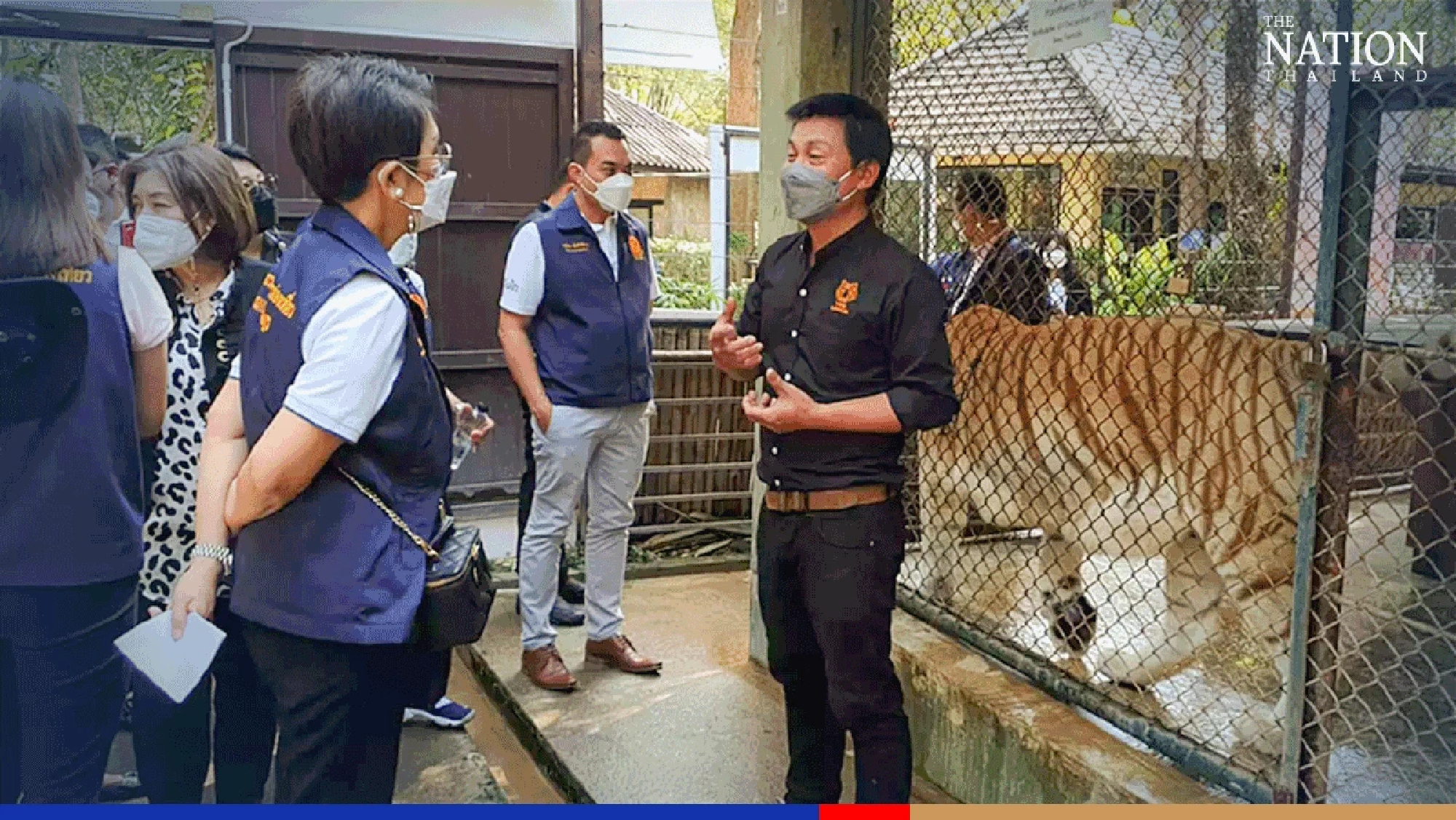
The Tourism Commission listens to complaints from elephant and tiger attraction operators affected by Covid-19 on Sunday.
Thailand’s elephant and tiger attractions have run out of money and options, says operators, who pleaded for government assistance on Sunday.
The message was delivered at Tiger Kingdom in Chiang Mai, where tourism commissioner Sirinthorn Ramsut and Pheu Thai MPs met with zoo operators to seek a path out of the business downturn caused by Covid-19.
Sirinthorn highlighted the government’s low-interest loan programme to revive businesses but said it was still insufficient and difficult to access.
Pacha Rattanaphan, president of Chiang Mai Tourism Business Association, said Thailand’s five tiger attractions had run out of cash after failing to secure financial credit from banks.
He added that elephant sanctuaries faced difficulty securing loans as their land was often undocumented. He called on the government to allow the sanctuaries to put up their elephants as collateral for loans to buy animal feed in the absence of income from tourists.
He also urged authorities to develop sustainable-crop projects to feed tigers and elephants.
The managing director of Khum Sue Trakarn, which operates two Tiger Kingdoms in Chiang Mai and one in Phuket, said their income had dropped from almost 1 million baht per day pre-Covid to zero over the past two years.
“The company still has to bear the burden of feeding and housing the existing 220 tigers,” Kochakorn Chaibutr said. “We used to have about 400 employees but now only 30 per cent of the workforce is left. The company still needs working capital for expenses of 4-5 million baht per month. Kochakorn called on the government to find a financial institution that would loan money to his company.
Wittaya Phongsiri, owner of the Lanna Kingdom Elephant Sanctuary in Chiang Mai’s Mae Taeng district, said elephant attractions in the northern province have suffered for the past two years of the pandemic.
He demanded three things from the government – suspension of all debt repayments for elephant businesses until the Covid situation improves, a financial institution that would provide low-interest business loans, and help with expenses for feeding the elephants, which he called a living heritage of the Thai people.
Soldiers nabbed 264 illegal Myanmar migrants trying to sneak across the Kanchanaburi border in eight instances over Friday and Saturday. These migrants apparently relied on four Thai men, who were also arrested.
Meanwhile, Prime Minister Prayut Chan-o-cha has ordered relevant agencies to monitor Thailand’s porous borders more closely and take stringent action against human traffickers.
“Tight patrols need to be put in place along Thailand’s borders and natural channels. Nobody should be allowed to get away, not even if they are government officials,” government spokesman Thanakorn Wangboonkongchana quoted the premier as saying.
Apart from tackling the human-trafficking problem, the prime minister has also called on authorities to crack down on call-centre scammers.
These scammers generally make intimidating phone calls to people and scare them into transferring money. Prayut advised people to not get talked into transferring money or investing in get-rich-quick schemes offered by strangers.
Instead, he said, people should consult with government officials or local police first.
They can also seek advice from cyber police by calling (081) 866 3000.