Chiang Mai’s “Strawberry Fields” district today launches its annual harvest festival, with farmers targeting a whopping Bt360 million in sales this year – much of it online.
Samoeng district produces more than 12,000 tons of fresh strawberries every year from over 4,000 rai of fields, district chief Natakorn Pattarawanon said on Friday.
“Visitors can buy strawberries at local farms or purchase them online,” he said as the February 11-15 festival opened under tight Covid-19 controls.
The online market for Samoeng strawberries has become “really busy this year”, confirmed Apirat Massarat.
Apirat, who heads the local Bo Kaew Community Enterprise of strawberry producers, said Covid-19 forced growers online last year but this meant they no longer had to pay for middlemen to distribute their produce.
Transport companies set up pick-up points in the district and increased sales have boosted the local economy.
“Samoeng district should be able to sell at least Bt360 million worth of strawberries this year,” Apirat said.
Despite rising cases of Covid-19, the Centre for Covid-19 Situation Administration on Friday made no changes to the classification of provinces based on the seriousness of the Covid situation and retained measures to fight the pandemic.
Prime Minister General Prayut Chan-o-cha chaired the CCSA meeting at Government House on Friday morning amid two opposing speculations. Initially, it was speculated that the CCSA would further ease restrictions but after new daily cases rose past the 10,000 mark, it was speculated the CCSA would tighten the measures and redraw the Covid-19 situation map.
But CCSA spokesman Dr Taweesilp Visanuyothin told a press conference after the meeting that the CCSA did not redraw the Covid-19 situation map of the country.
This means 44 provinces will remain under the Covid-19 classification as orange zone and 24 provinces as extremely-monitored, or yellow zone. Eight provinces remain classified as tourism-pilot provinces, or green zone.
The spokesman said the CCSA retained the current measures for prevention and controlling the spread of the virus with confidence that the measures would help prevent the virus from spreading.
The Public Health Ministry on Friday reported 15,242 new confirmed cases of Covid-19 over a 24-hour period.
Taweesilp said the CCSA was confident that the country has enough hospital beds and medicines for treating people with severe Covid-19 symptoms.
Currently, Covid-19 patients are using only 40 per cent of available hospital beds and those in intensive care units are using only 12 per cent of ICU beds.
“Hospitals still have the capability to treat Covid-19 patients with severe conditions, so the meeting resolved to retain the classification of the provinces and to retain the current disease control measures,” Taweesilp said.
He said the CCSA also supported the Public Health Ministry’s plan to speed up vaccination of students and administering of booster doses to elderly people and people with eight co-morbidities.
The CCSA said it believes that speeding-up vaccinations will ensure the current public health system will be able to care for people with severe symptoms, as their numbers may increase following higher rates of new infections.
The CCSA also approved the National Health Security Office’s proposal to reduce the cost of Covid-19 tests from March 1. The NHSO proposed to cut the price of antigen test kits from Bt80 to Bt55 per kit and to reduce the rapid antigen test cost by government agencies from Bt300 to Bt250. The NHSO also asked for the reduction of RT-PCR test costs by government agencies from Bt1,200 to Bt900.
Regarding tourism promotion, the CCSA approved the Air Travel Bubble deal between Thailand and India.
Under the deal, airlines of the two countries must make sure that their passengers are Covid-free before they issue them air tickets.
On the success of the Test & Go scheme, Taweesilp said the number of tourists had increase five times in the two months since the launch of the scheme. During the four months before Test & Go was adopted, 65,000 tourists entered the country but the number increased to 320,000 during the last two months.
He said that after the Test & Go scheme was resumed at the beginning of February, the number of tourist arrivals was 32,000 in less than 10 days.
Taweesilp said the CCSA was confident that the Test & Go scheme would be effective enough to prevent the spread of the virus.
Thailand will donate up to 3.5 million doses of AstraZeneca Covid-19 vaccine to six countries via the global COVAX initiative.
The Centre for Covid-19 Situation Administration (CCSA) on Friday approved the plan to send vaccine shipments for distribution in Myanmar, Laos, Vietnam, Nepal, Kenya and Ethiopia.
The World Health Organisation, which runs COVAX, endorsed the plan and asked Thailand to ship the vaccines directly to the countries, according to CCSA spokesman Taweesilp Visanuyothin.
Thailand will donate 500,000 to 1 million AstraZeneca doses to Myanmar, 300,000 doses to Laos, 300,000 to Vietnam, 400,000 to Nepal, 550,000 to Kenya and one million to Ethiopia.
Meanwhile, the CCSA was informed that France will donate 400,140 Pfizer vaccines to Thailand.
Bangkok will also return a loan of 122,400 doses of AstraZeneca to Singapore, Taweesilp added.
From March, Covid-19 patients in Thailand will be treated under the gold card, social security or government welfare schemes because funds for the emergency treatment system have run out, a senior health official said on Friday.
Centre for Covid-19 Situation Administration (CCSA) adviser Dr Udom Kachintorn said the government was no longer able to bear expense burdens of the Universal Coverage for Emergency Patients (UCEP) scheme.
He cited Sweden, saying its government had lifted most Covid-19 restrictions on Thursday due to insufficient budget to take care of Covid-19 patients.
Udom explained Thailand, too, should shift its focus towards the economy.
“Frankly, we should be boosting economic recovery to drive the country and prepare for the global transition,” he said.
However, he said the government will not remove UCEP Covid treatment immediately and instead give people 1-2 months to prepare themselves.
He added that the Covid-19 situation was still within expectations of the Public Health Ministry, which expects daily infections to rise from around 15,000 currently to 17,000-18,000 by the end of February.
He said daily cases were not expected to hit 20,000 – a level that would pressure the public health system.
The proportion of patients with severe symptoms had dropped by 10 times from last year, Udom said.
“However, people should get their booster jab as it is now clear that it can protect them from Covid-19.”
Highlighting the importance of halting the high infection rate among children, he said Sinovac and Sinopharm vaccines are still available for kids aged 5-11 if parents are concerned about Pfizer’s side effects.
He added that Public Health Ministry would permit cross-vaccination with different brands for children aged 12 and above.
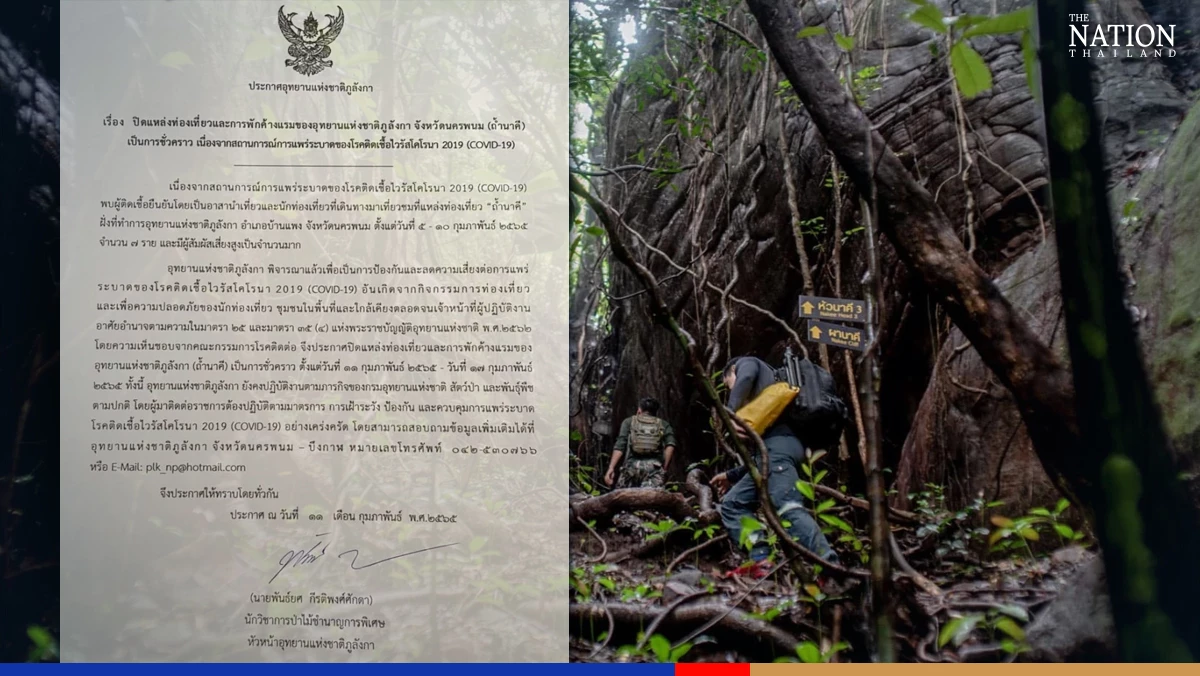
The Nakee Cave in Nakhon Phanom’s Phu Langka National Park was closed from Friday for seven days after seven guides and tourists tested positive for Covid-19.
The February 11-17 closure was announced on the park’s Facebook page, which also urged people who had visited the cave between February 5 and 10 to undergo RT-PCR tests.
The Nakee Cave, which like the Naga Cave on the border with Bueng Kan province is popular with tourists for its snake-like markings. This cave is in Nakhon Phanom’s Ban Phaeng district.
Deputy Transport Minister Atirat Ratanasate on Friday instructed the Marine Department to sue Star Petroleum Refining Plc (SPRC) for allegedly violating the order to suspend the use of single point mooring (SPM) since January 26.
The move follows Prime Minister Prayut Chan-o-cha expressing concern over a new leak from an undersea oil pipeline three miles off Rayong province on Thursday.
Atirat said the incident was initially due to the SPRC’s move to inspect the leakage point on SPM, as there was residual oil inside the pipeline.
After the incident, the Marine Department told navigators to be careful in the area and submitted a letter to the SPRC to proceed under the Tier 1 emergency plan.
He added that Marine Office 6 Rayong Branch has filed a complaint with investigation officers against the SPRC for allegedly violating the order to suspend the use of SPM, which had resulted in pollution.
“The SPRC has been urged to deal with the leakage immediately, such as using a boom to contain the spread of oil slicks and report the operation periodically,” he said.
“Meanwhile, the governor of Rayong has been asked to prepare a plan in case of emergency and the Marine Department has deployed boats to survey the scene.”
In addition, he has ordered the Marine Department to disperse oil slicks in a bid to mitigate the impact on the environment, and urged the SPRC to check leakage, whether there was still oil inside the pipeline, so the company could set up a plan to prevent a repeat of the incident.
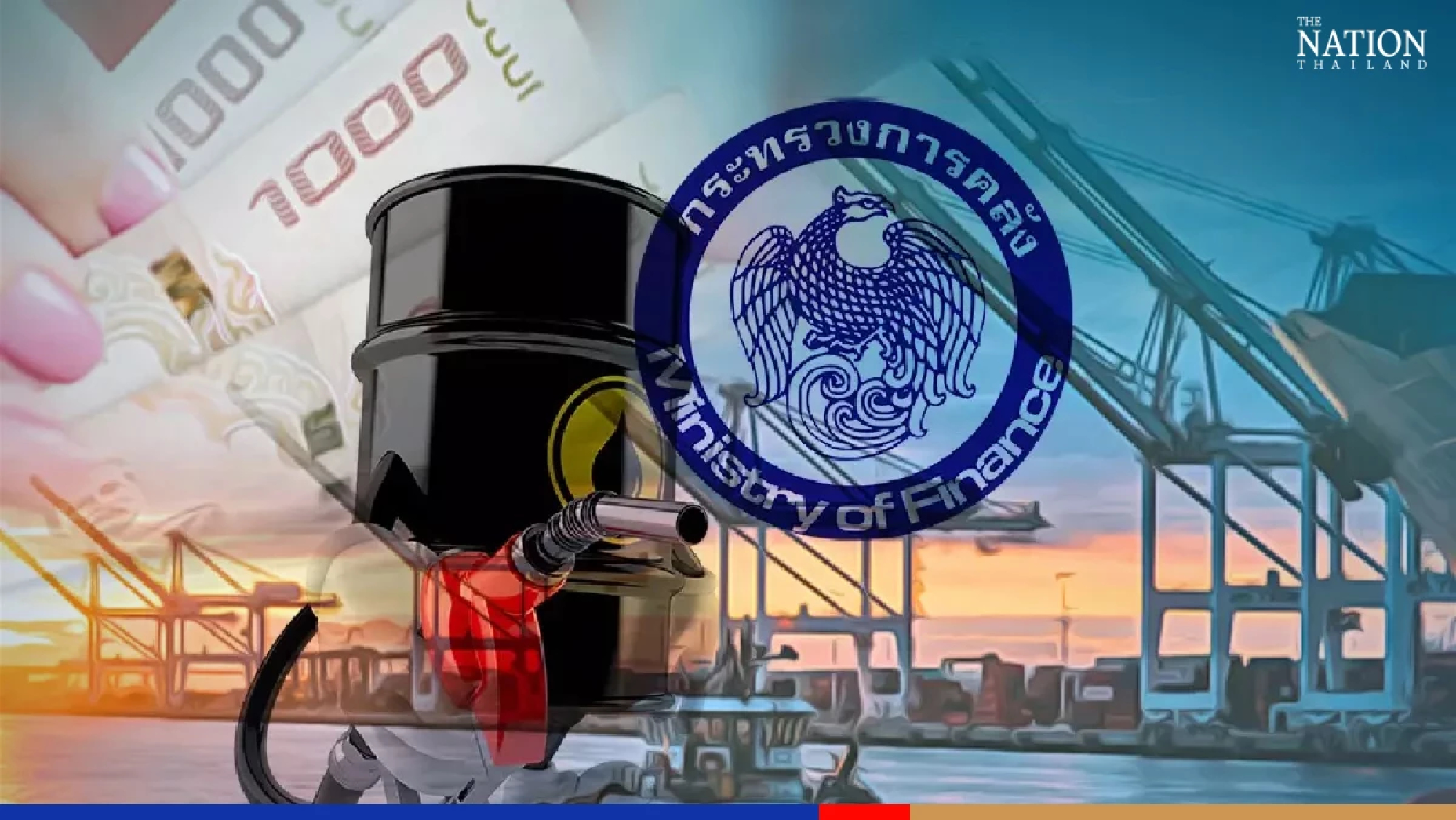
The Finance and Energy ministries will propose a raft of measures to combat the rising living costs driven by high fuel prices, Finance Minister Arkhom Termpittayapaisith said on Friday.
He announced the move after truckers threatened to escalate their protests blocking Bangkok roads this week.
Arkhom said the package proposed to Cabinet next week would include excise measures and be aimed at keeping the diesel price at no more than 30 baht per litre.
He said the Energy Ministry is monitoring the Oil Fund’s capacity to subsidise fuel prices and prevent further rises.
The extra 20 billion baht the fund had been allowed to borrow may or may not be enough, depending on global oil prices, Arkhom added.
He said if the 20 billion baht ceiling is reached, the Finance Ministry would consider shoring up the Oil Fund with loans from other sources.
Arkhom said the ministry could still utilise the Covid loan of 500 billion baht aimed at reducing cooking gas prices.
“But we have to consider whether the loan decree allows the money to be used by the Oil Fund, and we’ll also consider the national budget as well,” he added.
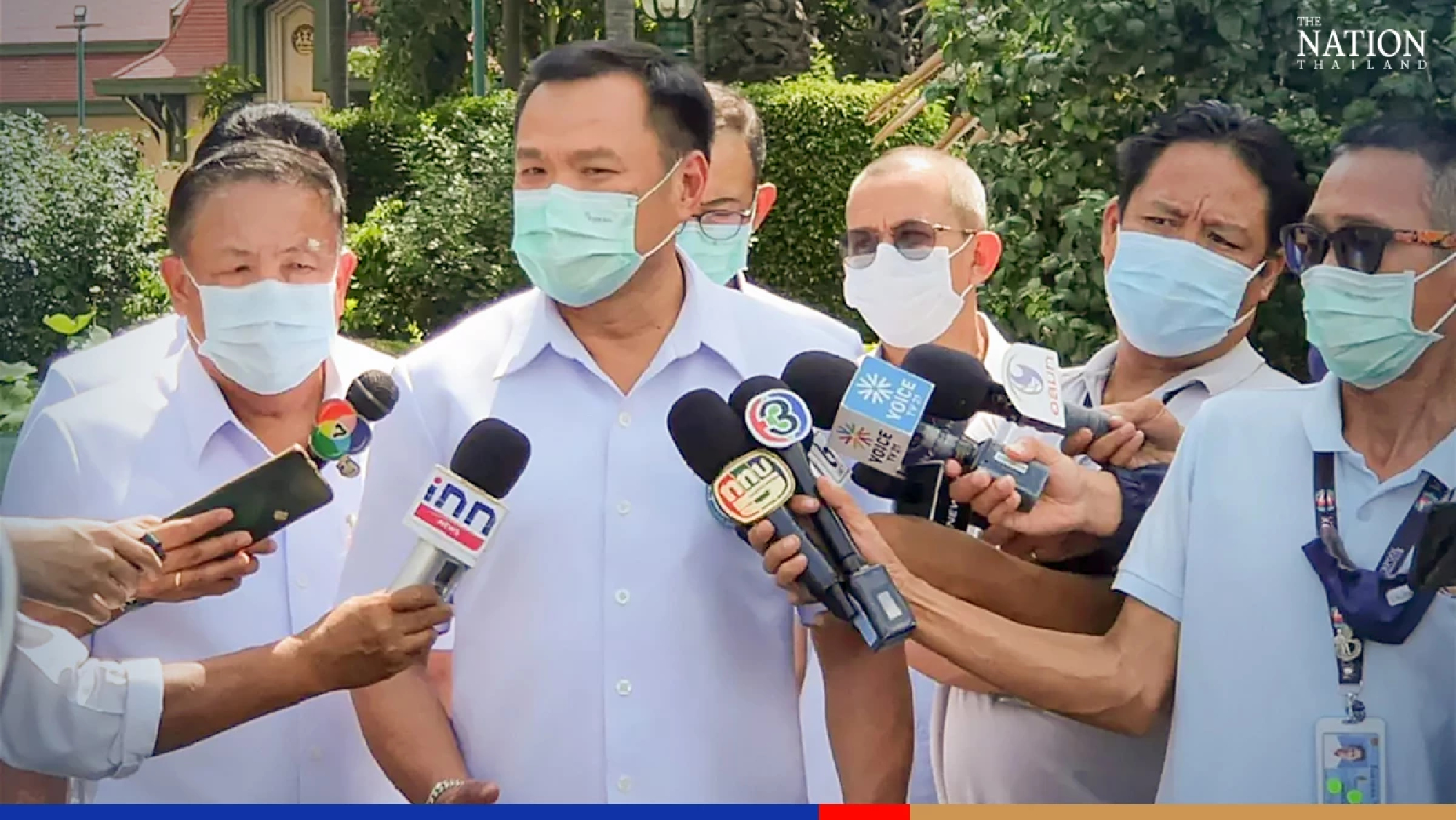
Public Health Minister Anutin Charnvirakul on Friday declined to commit on whether Omicron cases have peaked in the country, but assured the ministry will be able to take care of patients with severe symptoms.
The Public Health Ministry on Friday reported 15,242 new confirmed cases of Covid-19 over a 24-hour period.
Anutin said he could not say categorically that the wave had peaked because more new cases could arise due to the behaviour of people.
“We are not locking down the country or enforcing many restrictions. We are only prohibiting the reopening of pubs and bars and telling the owners to convert them to restaurants, because if pubs and bars are opened, it’s clear many more people will be infected,” Anutin said.
He said the Thai public health system could still handle the Covid situation. Although there were many new cases, the number of fatalities and patients with severe symptoms needing ventilation and hospital beds had not increased, the minister added.
He said the rise in the number of new cases was expected because the Omicron strain spreads quickly, but its symptoms are not severe and many people have already received either base vaccines or booster doses, so they would not develop severe symptoms.
He said future measures would depend on the situation based on the number of fatalities and severe symptoms.
The minister added that over 90 per cent of those who had died of Covid-19 belonged to risk groups and had not been vaccinated. He said in many cases, the patients died due their own co-morbidities, not due to the virus, but the World Health Organization required them to be listed as Covid-19 fatalities.
Deputy Public Health Minister Sathit Pitutecha said although the number of new cases had risen sharply in Bangkok, the ministry would have enough beds for patients in severe condition, categorised as yellow and red levels.
He said the ministry would continue to deploy health volunteers to find elderly people in the provinces, who had not yet been vaccinated, to get their first dose as soon as possible.
He said the ministry would also deploy health volunteers to check and help people get their third jabs as soon as possible.
The Department of Health on Friday warned that eating “squid shot” could put consumers at high risk of ingesting bacteria and parasites, and suggested that all seafood be thoroughly cooked before consumption.
Squid shot is a novelty food in which live squid are put in a shot glass filled at the bottom with seafood sauce. Consumers would let the squid suck in the sauce before eating it alive by biting into its head and then body, or swallowing it whole if the squid is small enough.
“Eating raw seafood would allow vibrio parahaemolyticus into the body. It is a kind of bacteria mostly found in sea mud. It could cause stomach ache, diarrhoea, and food poisoning. In a serious case it could cause ulcers in the stomach and intestines,” Department of Health director-general Dr Suwanchai Wattanayingjaroenchai said on Friday.
“Besides bacteria, raw seafood such as squid, shrimp and shellfish could have parasites, such as the Anisakis spp. and Diphyllobothrium,” he added. “In Thailand these two parasites have been found in more than 50 types of seafood. When consumed foods that still have these parasites, patients will suffer stomach ache, abdominal distension, nausea, and other symptoms that are similar to those of gastritis.”
To avoid these bacteria and parasites, the department strongly recommends that people thoroughly cook their seafood in heat over 70 degrees Celsius for more than two minutes. “When buying ready-to-eat seafood, make sure to look for the “Clean Food Good Taste” label that the department has given to food sellers who have passed health standards,” said Suwanchai. “Also, make sure to use serving spoons and wash your hands before every meal.”
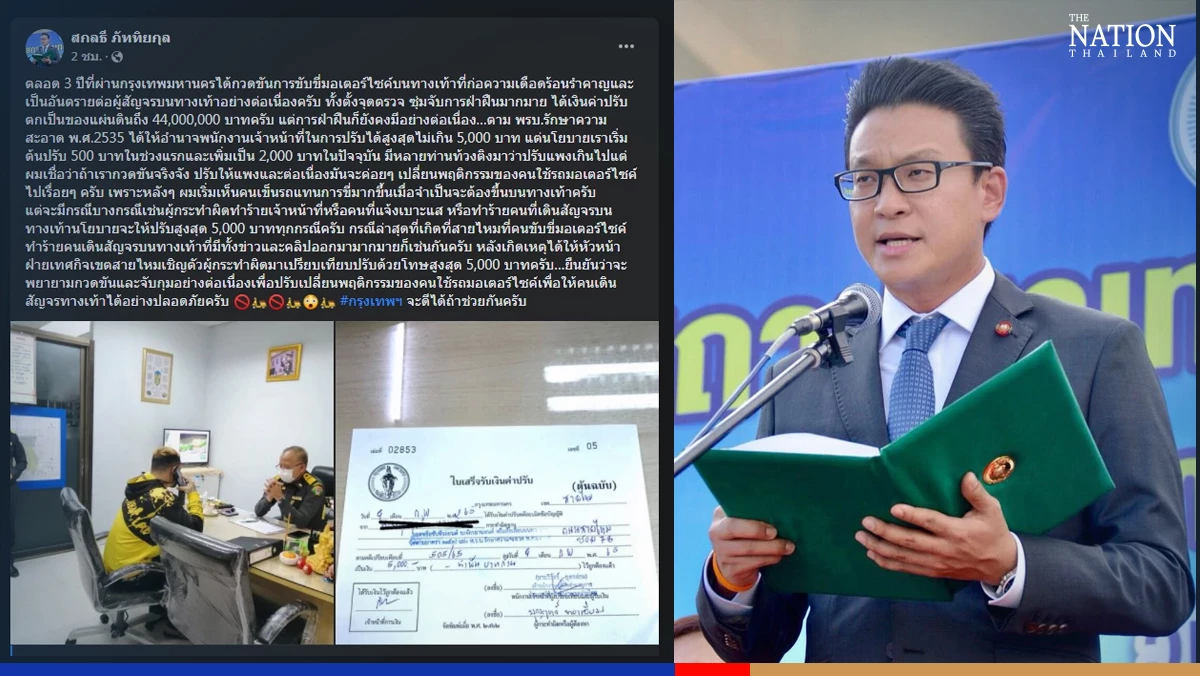
The Bangkok Metropolitan Administration (BMA) said that it has collected 44 million baht in fines in three years from motorcyclists riding on pavements.
Bangkok deputy governor Sakonthee Pattiyakul posted on his Facebook on Friday that BMA has been strictly cracking down on those riding on footpaths for the past three years because of the trouble, annoyance and danger to pedestrians.
He said BMA has set up checkpoints to catch violators and has collected 44 million baht. According to the law, the maximum penalty is up to a 5,000 baht fine. However, the fine started at only 500 baht at first and has increased to 2,000 baht currently.
Sakonthee said that “If the BMA is really strict and continues to impose hefty fines, the riders’ behaviour will gradually change. Recently, I found more people push their bikes instead of riding on sidewalks.”
He added that riders who harm officers, the people who report the crime, or pedestrians, will face a maximum fine of 5,000 baht.
He cited as example a rider who hit a pedestrian on the sidewalk in Bangkok’s Sai Mai district, and was fine 5,000 baht by the City Law Department.