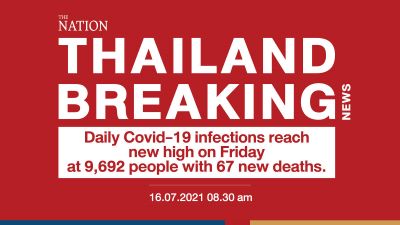
Daily Covid-19 infections reach new high on Friday at 9,692 people with 67 new deaths
Ministry of Public Health reported on Friday (July 16) morning that in the past 24 hours there are 9,692 new patients who tested positive for Covid-19, 615 of whom have been found in prisons.
Death toll increased by 67, while 5,730 patients were cured and allowed to leave hospitals.
Cumulative cases in the country are at 381,907 with 3,099 total deaths.
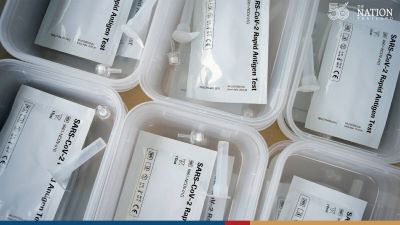
Covid self-testing kits go on sale in pharmacies, hospitals
Rapid antigen self-testing kits are available to buy at clinics, hospitals, nursing homes and pharmacies from today (Thursday), the Thai Food and Drug Administration (FDA) announced.
Five companies have registered their rapid test kits with the FDA, said its deputy secretary-general Surachoke Tangwiwat. He also warned that antigen kits being sold online are not registered and thus considered illegal.
The legal rapid test kits come with instructions on how to use, read, store and dispose of them, he added.
“If you have any doubts about how to use the tests or whether your result is positive or negative, you can consult medical staff or a pharmacist,” said Surachok.
The Public Health Ministry said 80 per cent of people who take the antigen self-test will have mild symptoms that can be treated at home. Those who test positive should call the 1330 hotline, it added.
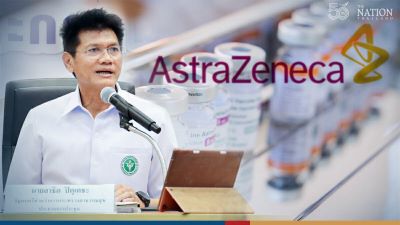
AstraZeneca admits it can supply only half of monthly target to Thailand
AstraZeneca has said it can only supply about half of its monthly target of vaccine doses to Thailand, according to the National Vaccine Institute.
The company said it currently has local capacity to produce only 15-16 million doses per month, 5-6 million of which are reserved for Thailand, said the institute’s director Dr Nakorn Premsri. The original target was 10 million doses per month.
AstraZeneca has therefore asked the Public Health Ministry to extend the timeline for delivery of 61 million doses to Thailand from the end of this year to May 2022.
The delay would be another blow to the country’s mass vaccination programme, which ran short of vaccine soon after launching last month. Barely 5 per cent of the Thai population has been vaccinated, while the daily Covid-19 caseload is soaring above 9,000 and placing severe pressure on the health system. AstraZeneca doses for Thailand and the region are being produced at Siam Bioscience plant in Nonthaburi, but deliveries have already been delayed.
Nakorn said the institute has approved a framework to speed up procurement of another 120 million doses next year, including second-generation vaccines to fight new variants like Delta. The target for delivery is the first quarter of 2022.
Negotiations were underway with producers of mRNA, viral vector, and subunit protein vaccines, said Nakorn.
Phase 3 trials of the Novavax subunit vaccine in Cuba showed it was 90 per cent effective against Covid-19 infection, he added.
The Vaccine Institute is also accelerating moves to cooperate with other countries for transfer of technology to produce inactivated and mRNA vaccines, said Nakorn.
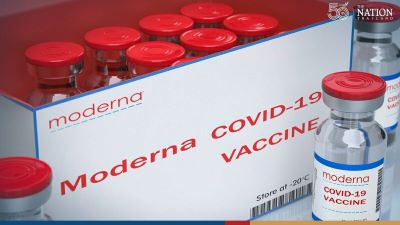
Thai Red Cross to offer 1 million free Moderna jabs
The Thai Red Cross will import one million doses of Moderna’s mRNA vaccine and offer it for free to the public.
The plan was revealed to a parliamentary panel by the secretary-general of the Thai Red Cross chief on Wednesday.
Dr Tej Bunnag told the Extraordinary Committee on Budget Expenditures that his organisation – one of five government agencies authorised to procure Covid-19 vaccine – had already negotiated the deal with US-based Moderna.
The Government Pharmaceutical Organisation (GPO) would take responsibility for importing the vaccine, he added.
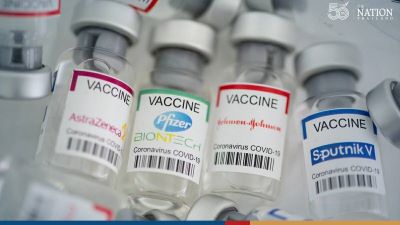
Moderna is the fourth Covid-19 vaccine registered with the Thai Food and Drug Administration (FDA), after Sinovac, AstraZeneca and Johnson & Johnson.
AstraZeneca extends delivery period for 61 million doses to May 2022
AstraZeneca has extended the delivery timeline for 61 million doses of vaccine from December this year to May 2022, Deputy Public Health Minister Satit Pitutecha said on Thursday.
The contract with AstraZeneca did not specify the delivery period, Satit revealed.
The government has now expanded its procurement target to 120 million doses of mRNA, viral vector and other types of vaccine.
“Therefore, we must combine the AstraZeneca received with other vaccine brands such as Sinovac,” said Satit.
Data showed that a Sinovac jab followed by an AstraZeneca jab offers 60 to 70 per cent protection against infection by the Delta variant, he said.
Delta is driving the current outbreak in Thailand, which logged 9,186 new infections and a record 98 deaths on Thursday.
The Vaccine Institute and the Department of Disease Control would negotiate with AstraZeneca before deciding whether to restrict exports of doses produced by the Siam Bioscience factory, said Satit. The factory is AstraZeneca’s regional production hub for Southeast Asia and Taiwan.
THG confirms deal for 20m BioNTech doses, 1st batch expected this month
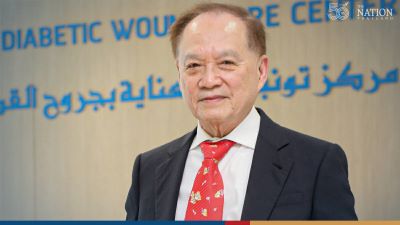
Thonburi Healthcare Group (THG) chairman Boon Vanasin on Thursday confirmed that THG will sign a deal with Germany BioNTech to import 20 million doses of Covid-19 vaccine to Thailand.
The move came after Reuters reported on Thursday that both BioNTech and Pfizer denied they were in talks with THG.
“We are not in negotiations with the company,” BioNTech said in an e-mail responding to a Reuters query about the deal. It also denied it was in negotiations with any Thai entity.
Meanwhile, Pfizer said it was only in talks with the Thai government.
“We are in ongoing discussions with Thailand’s Department of Disease Control, Ministry of Public Health only,” Pfizer said in a statement.
Boon said BioNTech may have issued the denial because the company could not disclose details about talks until the deal is signed.
He added he would take responsibility for the disclosure, but he didn’t mind because the deal was in the national interest.
If there are no problems, the deal will be signed and the first batch of vaccines will arrive this month, he said.
Workers who can benefit from govt’s latest cash handout
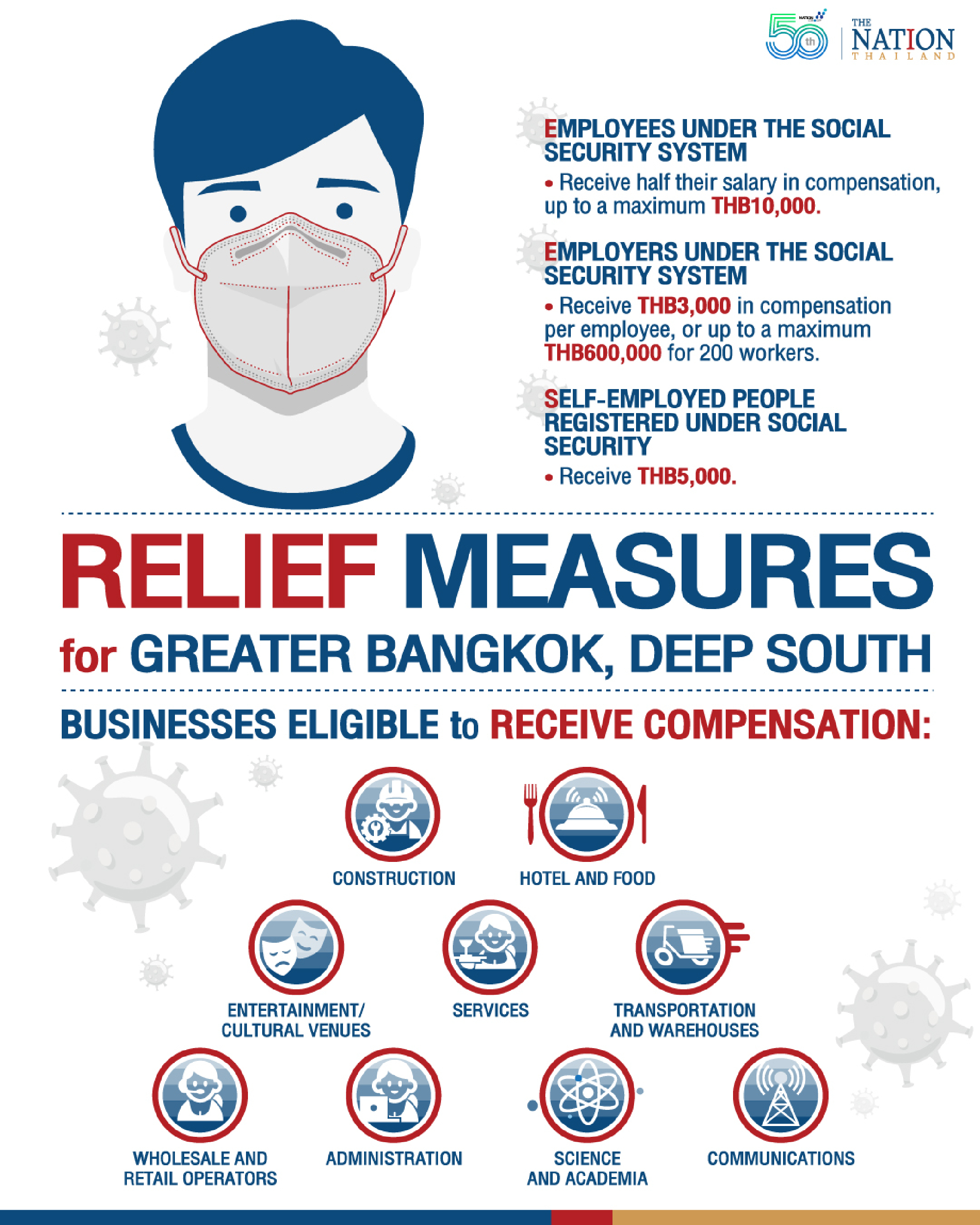
The Cabinet on Tuesday approved relief measures for those affected by the curfew and Covid-19 restrictions imposed in Greater Bangkok and the deep South.
The relief measures cover the dark red zone provinces of Bangkok, Nakhon Pathom, Nonthaburi, Pathum Thani, Samut Prakan, Samut Sakhon, Narathiwat, Pattani, Yala and Songkhla.
The measures include up to THB10,000 in compensation for employees and two months of discounted utility bills (for July and August).
To claim compensation, self-employed people and employers must also register with the social security system by the end of this month.
Workers who can benefit from govt’s latest cash handout
Koh Samui receives first foreign travellers in more than a year
The first batch of foreigner travellers under the Samui Plus model touched down at Koh Samui International Airport at 11.35am on Thursday.
However, all foreign nationals on board the flight from Bangkok were journalists rather than tourists, as the reopening of Surat Thani’s resort island got off to a slow start.
Tourism and Sports Minister Phiphat Ratchakitprakarn said Prime Minister Prayut Chan-o-cha will preside over the Samui Plus opening ceremony in a videoconference at 6pm. Also expected at the conference are Phiphat, Tourism Authority of Thailand (TAT) Governor Yuthasak Supasorn, Surat Thani Governor Witchawut Jinto and Koh Samui Tourism Promotion Association chairman Ratchaporn Poolsawas.
Samui is the second tourist island to reopen after Phuket invited back foreign travellers on July 1, kickstarting Thailand’s tourism industry after more than a year of Covid travel restrictions.
Bangkok Airways will operate three flights per day from Bangkok to Samui – though so far only 80 foreigners have booked seats up until October, say officials.
Under the Samui Plus model, foreigners will stay in an Alternative Local Quarantine (ALQ) hotel on the island for seven days, after which they can stay in ALQ or SHA+ hotels on Koh Samui, Koh Pha-ngan or Koh Tao.
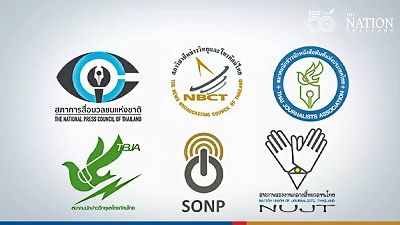
Joint statement of 6 media professional guilds on the Emergency Decree’s impact on the freedom of the press and the public
On July 10, 2021, the Thai government invoked Section 9 of the 2005 Emergency Decree on Public Administration in Emergency Situation, introducing a new set of measures concerning the media.
They include Article 11, which outlaws “the distortion of information and news that cause misunderstanding in the emergency situation, the presentation and dissemination of news in books, published material and other media that contain messages that incite fear to the public, or intentionally distort information to create misunderstanding in emergency situation that impacts state security, peace and morality of the public.” Any infraction will be considered a violation of the Emergency Decree.
In the light of the development, 6 media professional guilds, whose names are identified at the end of this statement, met to discuss concerns expressed by media professionals and members of the public. We reached the following conclusions:
1.The new measures issued under the Emergency Decree differ from the previous enactment of the same Decree, which specifically limited its scope to only (1) information related to the COVID-19 pandemic and (2) presentation of false news or information. The previous measures also required law enforcement officials to warn, suspend, or instruct the offenders to amend the information before taking any legal action. The omission of those crucial clauses amounts to empowering state officials to enforce the measures in accordance with their own discretion, which may affect the media’s duty to present news information and the public’s freedom of expression.
2.In practice, there are already many existing laws that allow state officials to suspend or take legal action against news or information that intentionally distorts facts to cause damages and dangers to the public, such as the Computer Crime Act and the Communicable Diseases Act. Therefore, the new measures enacted under the Emergency Decree provokes concerns that the government may intend to wield the power under the Emergency Decree to infringe on the freedom of the press and public’s freedom of expression, potentially abusing the law to silence news and information unrelated to the pandemic situation.
3.Throughout the past year and a half of the pandemic, there are many well documented cases in which state agencies were repeatedly responsible for miscommunication and causing confusion to the public and the media. The government should solve the problems of misleading news or information by turning to the many existing venues of cooperation with the media instead of resorting to legal mechanisms that would negatively impact the media’s work in keeping the public informed.
4.We’d like to encourage news organizations and media professionals to keep reporting on the COVID-19 pandemic while strictly adhering to journalist ethics and codes of conducts, in order to assure the public that news and information presented by the media is accurate and credible.
5.As the pandemic continues under the changing media landscape – which permits any individual to present news and information to an increasingly larger audience – we urge members of the public to be vigilant in exercising their discretion when receiving and sharing news and information. To achieve this end, news consumers can also rely on the efforts by many news agencies and civil society organizations who are working to fact check and verify the deluge of information on social media.
We urge the government to reconsider the new measures mentioned in this statement. The government must also clarify the enforcement of the new measures in a clear manner, to prevent them from being misused as an instrument to crack down on the freedom of the press and the public’s freedom of expression. The rights to information and expression cannot be infringed, especially during the ongoing crisis of the pandemic.
Medical deans back mixed-jab strategy against Delta contagion
Deans of Faculties of Medicine at 10 universities backed a mix-and-match vaccine strategy to combat the fast-spreading Delta variant on Wednesday.
The deans, who are also advisers to the Centre for Covid-19 Situation Administration (CCSA), issued a statement supporting the National Communicable Disease Committee’s proposal for a first jab of Sinovac followed by a second of AstraZeneca to increase immunity against fast-spreading variants of Covid-19.
The deans cited the rapid increase of Delta infections in Thailand, which logged 9,186 new Covid-19 cases on Thursday with 98 deaths.
“In Bangkok alone, up to 69 per cent of patients have the Delta variant, which has a higher mortality rate than other variants,” said their statement. “Also, the Delta variant tends to be less responsive to vaccines, which have been developed based on other variants.”
The statement added that one jab of AstraZeneca or two jabs of Sinovac produced a low level of neutralising antibodies – not enough to protect against Delta infection.
However, two studies show that mixing and matching doses boosts immunity, it said.
“A Chulalongkorn University study of 36 volunteers and a Department of Medical Sciences study of 18 volunteers showed that a Sinovac jab followed by an AstraZeneca jab boosted their immunity up to eight times more than people who received two jabs of Sinovac,” said the statement.
The volunteers’ immunity also rose at a faster rate than those who received two jabs of the same vaccine, it added. “People who receive two jabs of AstraZeneca will achieve the desired level of immunity against Delta variant eight weeks after the first jab is given, while those who receive Sinovac and then AstraZeneca jabs can achieve the same immunity level in only 5-6 weeks.”
The deans also said 1,102 people had received two different vaccine brands after shortages of Sinovac for their second dose meant they had to get an AstraZeneca jab instead.
“We have studied people in this group closely and found that none of them developed severe allergic reactions or died after getting the jabs. Most importantly, none were infected with Covid-19.”
The deans also supported giving booster shots (third jabs) to front-line medical staff as protection against Delta. “Medics given two jabs of Sinovac should get another jab of AstraZeneca or any mRNA type vaccine at least four weeks after the second jab to reduce the infection risk from treating patients,” the deans said.

 Workers who can benefit from govt’s latest cash handout