NationalMar 28. 2021Photo Credit: Department of National Parks, Wildlife and Plant Conservation
By The Nation
The Department of National Parks, Wildlife and Plant Conservation posted a picture of a herd of elephants waiting to cross a road in Khao Yai National Park in Nakhon Ratchasima province on Sunday.
The department’s message said the elephants would follow the traffic code by staying behind the white line before crossing the road.
The department also urged tourists to follow five disciplines: do not dispose of garbage, do not feed wild animals, do not drive fast, do not make a noise, and do not take pets into the national park.
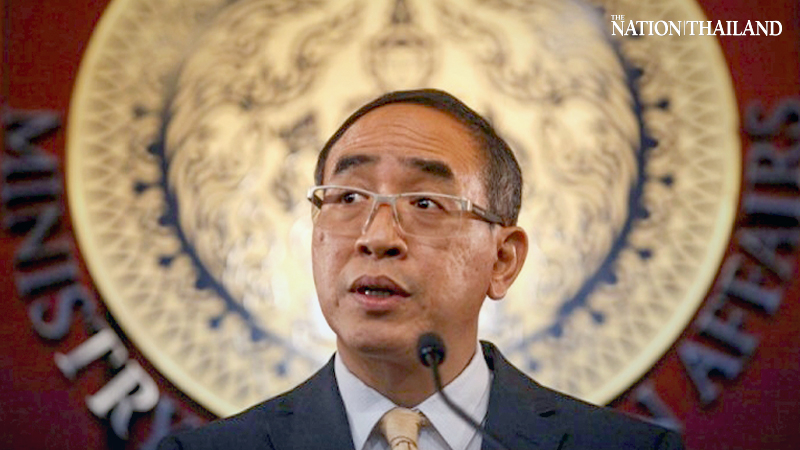
The turmoil in Myanmar has not yet reached a level as to require an immediate evacuation of Thai people, the Ministry of Foreign Affairs said.
Ministry spokesman Thani Saengrat said that the Ministry of Foreign Affairs and the Royal Thai Embassy in Yangon had already prepared a plan to evacuate Thai people, and the situation was assessed every day.
The Royal Thai Embassy, in collaboration with Team Thailand in Yangon, has held meetings to discuss the situation continuously, including improvements for evacuating Thai people in accordance with current events and with great care, Thani said.
“If the situation rises to another level, the Thai authority has already prepared every step. Myanmar has already recommended that those without major activities in Myanmar should consider returning to their country by commercial aircraft. However, no country has yet informed or asked to evacuate all of its nationals,” the foreign ministry spokesman said.
He said that no Thai had been harmed by the political turmoil in the neighbouring country after the recent coup.
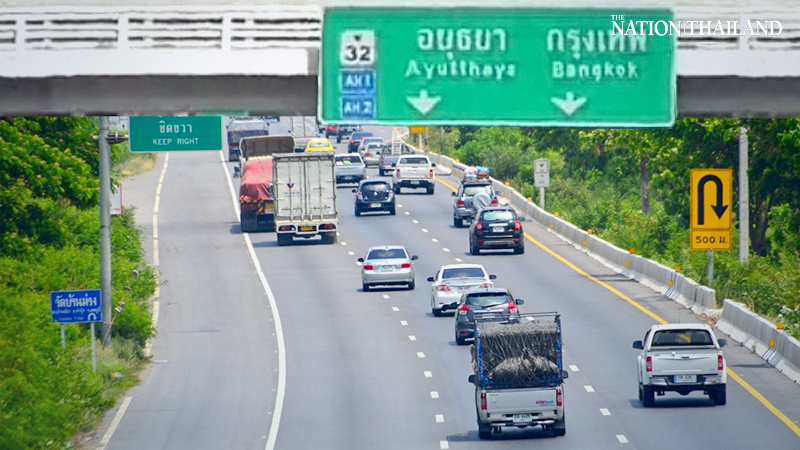
The Government Gazette website has published new speed limits for vehicles on national highways.
On National Highway No. 32 Bang Pa-in – Phayuha Khiri (Ayutthaya – Ang Thong), known as Asian Highway Route, between Km4 + 100 to Km50 + 000, both inbound and outbound — a total distance of 45.9 kilometres — the speed of the vehicle should be as prescribed in the ministerial regulations. This will come into effect from April 1.
Passenger cars can go up to 120 km/h and not less than 100 km/h when driving on the right lane; trucks and buses with more than 15 people cannot exceed 90 km/h; buses with 7-15 people cannot exceed 100 km/h, small four-wheel vehicles, three-wheel vehicles not above 65 km/h; motorcycles not over 80 km/h, 400cc motorcycles up to 110 km/h and school buses up to 80 km/h.
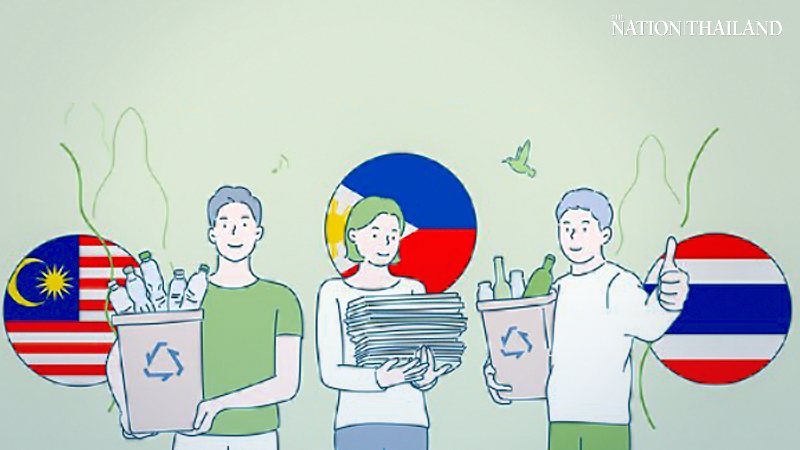
Less than a quarter of plastics available for recycling in Thailand, Malaysia and the Philippines are being recycled into valuable materials, a recent study found.
A series of World Bank Group studies examined the untapped economic opportunities to promote plastic circularity and address marine debris in the three Asean countries.
Using a plastic value chain approach, the studies evaluate the plastics recycling industry and its role in supporting a circular economy and scaling up recycling efforts via targeted public and private sector interventions.
The country studies found that more than 75 per cent of the material value of the plastics is lost — worth around US$6 billion per year across the three countries — when single-use plastics are discarded rather than recovered and recycled, representing a significant untapped business opportunity if key market barriers can be addressed.
“Mismanaged plastic waste across Malaysia, the Philippines, and Thailand is threatening key economic sectors such as tourism and fisheries, and impacting livelihoods and infrastructure, but there is strong government momentum in these countries to identify critical policies, and craft road maps to strengthen demand for all recycled plastic resins, level the playing field for global and domestic companies, and help drive a circular economy for plastics,” said Ndiamé Diop, World Bank country director for Brunei, Malaysia, Philippines and Thailand.
“These studies show that there is an untapped opportunity to reap environmental and economic benefits with clear and complementary interventions from the private and public sector.”
The studies present the size and scale of each country’s plastics production and recycling industry, focusing on four key recyclable resins.
The researchers consulted with resin manufacturers, brand owners, converters, aggregators, and recyclers across the plastic value chain to compile and develop baseline data for each targeted resin. They also undertook analyses to quantify the untapped market potential for each resin and identified the pressures that contribute to material value loss in each country.
While the studies found that barriers to plastic recycling are unique to each country, there are common actions that governments and industries could take to help Thailand, Malaysia and the Philippines unlock additional material value. Recommendations include:
▪︎Increase sorting efficiency of post-consumer collection of plastics.
▪︎Set recycled content targets across all major end-use applications.
▪︎Mandate “design for recycling” standards for plastics, especially for packaging.
▪︎Encourage increase in recycling capacities (mechanical and chemical).
Implement industry-specific requirements to increase waste collection rates.
▪︎Restrict disposal of waste plastics in landfills and phase-out non-essential plastic items.
“These studies serve a critical need for country-specific data on how plastics are produced, used and managed in Southeast Asia,” said Rana Karadsheh, Asia Pacific Regional Industry Director Manufacturing, Agribusiness and Services at the International Finance Corporation.
“They clearly highlight the importance of managing plastic waste as a valuable resource, and not solely as a waste management problem.”
Support for the Thailand and Malaysia studies was provided by PROBLUE, an umbrella multi-donor trust fund, housed at the World Bank, that supports the sustainable and integrated development of marine and coastal resources in healthy oceans. Funding for the Philippines study was provided by the Korea Green Growth Trust Fund, a partnership between the World Bank Group and South Korea, that supports the mainstreaming of green growth through the World Bank’s lending operations. The three studies were conducted by a team from GA Circular, a research and strategy firm specialising in waste management and recycling.
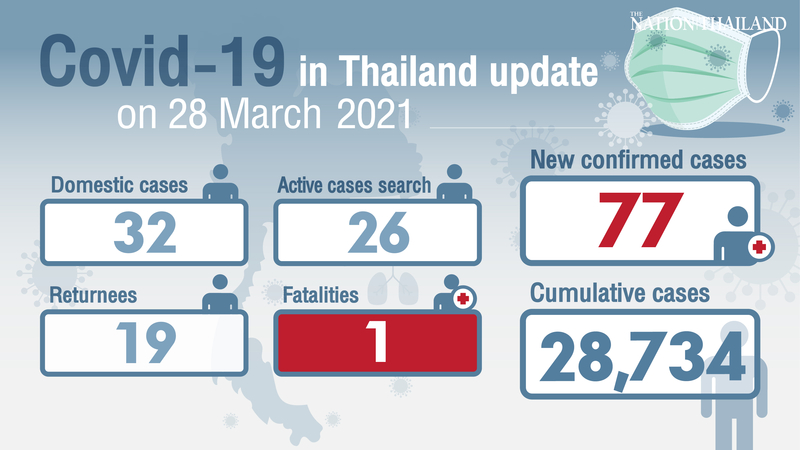
The Centre for Covid-19 Situation Administration (CCSA) on Sunday reported 77 new cases,19 of them overseas travellers in quarantine facilities.
Of the 32 patients exposed to the disease while visiting high-risk areas, 20 were in Bangkok, seven in Samut Sakhon, three in Samut Prakan and two in Pathum Thani.
Meanwhile, proactive testing led to the discovery of 26 cases –12 in Bangkok, nine in Samut Sakhon, two each in Samut Pakran and Nonthaburi, and one in Ratchaburi
Of the overseas travellers, nine were Thais, two each from India, the US and the United Arab Emirates, and one each from Russia, Bulgaria, Ethiopia, and Kuwait.
The 94th fatality was a female patient, aged 75, from Bangkok who had thyroid disease, high blood pressure, and pituitary tumour. She likely got the infection from her four family members who tested positive. She tested positive on March 23 and was admitted to a hospital after she had cough and phlegm. Her condition continued to decline and she died on March 27.
Meanwhile, 103 patients have recovered and been discharged.
As of Sunday, the number of confirmed cases in Thailand had risen to 28,734. Of these, 25,687 had been contracted locally, including 16,040 who were found via proactive testing, while 3,047 were returnees. So far, 27,239 have recovered and been discharged, 1,401 patients are still in hospitals, and 94 have died.
According to Worldometer, as of 10am on Sunday, the number of confirmed cases globally had risen to 127.28 million (up by 589,097), 102.56 million have recovered, 21.98 million are active cases (93,080 in severe condition) and 2.79 million have died (up by 9,760).
Thailand ranks 116th on the global list of most cases, which is topped by the US with 30.91 million, followed by Brazil 12.49 million, India 11.97 million, Russia 4.51 million and France 4.5 million.
Bangkok on Saturday joined the global Earth Hour campaign by turning off lights for an hour.
Sopon Pisuttiwong
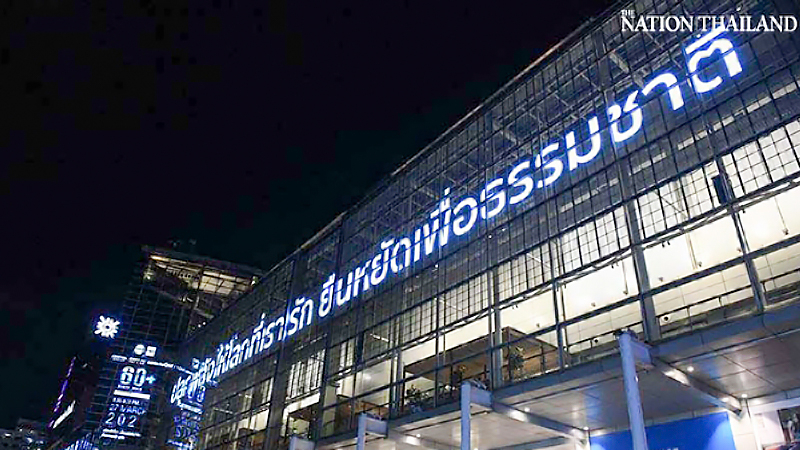
Bangkok deputy governor Sopon Pisuttiwong presided over the ceremony at CentralWorld in Pathumwan district to launch the campaign along with 7,000 cities in 190 countries worldwide as part of 60+ Earth Hour 2021.
Lights were turned off from 8.30pm for an hour at the Emerald Buddha Temple and Grand Palace; Wat Arun or the Temple of Dawn; Sao Ching Cha or the Giant Swing; Rama VIII Bridge; and the Golden Mount or Wat Saket.
Lights in Bangkok’s 121 buildings and 100 roads were also turned off under the campaign.
Sopon said Bangkok had cooperated with World Wide Fund for Nature (WWF) Thailand and several agencies to reduce carbon dioxide gas emission and electricity usage for 13 years.
“People can do their bit for the Earth by unplugging electric appliances and turning off lights that are not being used regularly,” Sopon said.
Earth Hour was organised for the first time in Sydney by WWF Australia in 2007 to create awareness on using electricity efficiently among people in order to tackle the greenhouse effect.
The heat low covering upper Thailand brings hot to very weather conditions and haze to parts of the North, Northeast and Central regions, the Thailand Meteorological Department said on Sunday.
Meanwhile, the southerly and the southeasterly winds bring humidity from the Gulf and the South China Sea to the Northeast, the Central and East regions, leading to isolated thundershowers over the areas.
At the same time, the westerly trough brings thundershowers, gusty winds and hail to some places as it moves past the North to the upper Northeast and Laos, the department said.
People in the North and the upper Northeast should beware of the severe conditions, the department added.
The easterly winds across the Gulf bring isolated thundershowers to the lower South.
The weather forecast for the next 24 hours:
North: Hot to very hot with haze; isolated thundershowers with gusty winds and hail mostly in Tak, Sukhothai, Kamphaeng Phet, Phrae, Nan, Uttaradit, Phitsanulok, Phetchabun and Phichit provinces; minimum temperature 20-27 degrees Celsius, maximum 37-41°C; southwesterly winds 10-20 km/hr.
Northeast: Hot to very hot with haze; isolated thundershowers with gusty winds and hail mostly in Loei, Chaiyaphum, Khon Kaen, Udon Thani, Nong Bua Lamphun, Nong Khai, Bung Kan, Sakon Nakhon and Nakhon Phanom provinces; minimum temperature 23-27°C, maximum 37-40°C; southeasterly winds 10-25 km/hr.
Central: Hot to very hot with haze; isolated thundershowers mostly in Kanchanaburi, Uthai Thani and Nakhon Sawan provinces; minimum temperature 24-27°C, maximum 36-40°C; southerly winds 10-20 km/hr.
East: Hot day with haze; isolated thundershowers mostly in Chanthaburi and Trad provinces; minimum temperature 25-27°C, maximum 32-38°C; southeasterly winds 15-30 km/hr; waves about a metre high and above a metre during thundershowers.
South (east coast): Cloudy with isolated thundershowers mostly in Phatthalung, Songkhla, Pattani, Yala and Narathiwat provinces; minimum temperature 23-25°C, maximum 32-35°C; easterly winds 15-30 km/hr; waves about a metre high and 1-2 metres in thundershowers.
South (west coast): Cloudy with isolated thundershowers mostly in Phuket, Krabi, Trang and Satun provinces; minimum temperature 22-26°C, maximum 34-37°C; easterly winds 10-30 km/hr; waves less than a metre high and about a metre in thundershowers.
Bangkok and its vicinity: Hot day with haze; minimum temperature 26-28°C, maximum 34-38°C; southerly winds 10-20 km/hr.
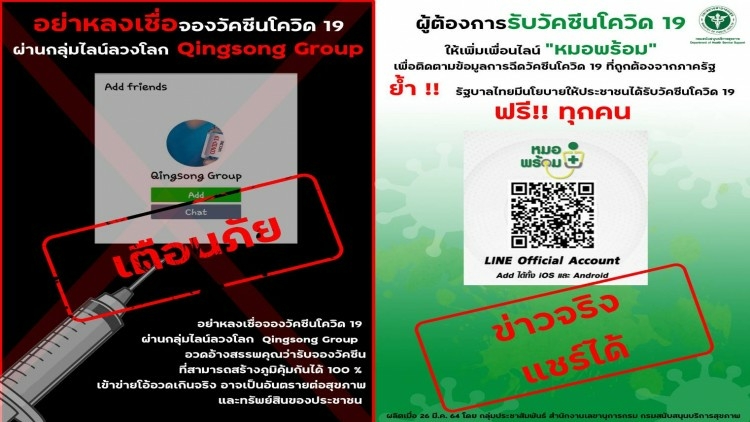
The Ministry of Public Health has warned people not to participate in any Line group claiming that it could reserve and provide Covid-19 vaccine in addition to the ministry’s official group “Mor Phrom” (doctors ready).
Dr Thares Karasnairaviwong, director-general of the Department of Health Services Support, said on Saturday that there had been a report of a Line group called “Qinsong Group”, which claimed that they could provide Covid-19 vaccine to those who registered with the group.
“Preliminary investigation revealed that the group did not originate in Thailand. We have filed a police complaint to track down the people behind this group,” he said.
“The Ministry of Public Health only accepts registration to receive the Covid-19 vaccine via the ministry’s Line official account “Mor Phrom” (doctors ready), with priority given to medical professionals and those who have chronic diseases,” he added.
“The ministry does not charge for registration and will provide the vaccine to qualified people for free at certified hospitals or mobile vaccine units.”
Those who do not have a smart phone can contact the local public health office to get registered.
Thares also warned private clinics and hospitals against advertising that they could reserve Covid-19 vaccine via traditional or social media.
“Posting unauthorised advertisement of medical service could be a violation of the Health Facility Act, punishable with a maximum one-year imprisonment or fine of Bt20,000 and an extra Bt10,000 per day until the advertisement is taken down,” he warned.
A man whose nationality is not known was arrested on Friday for illeged indecent behaviour in a public place.
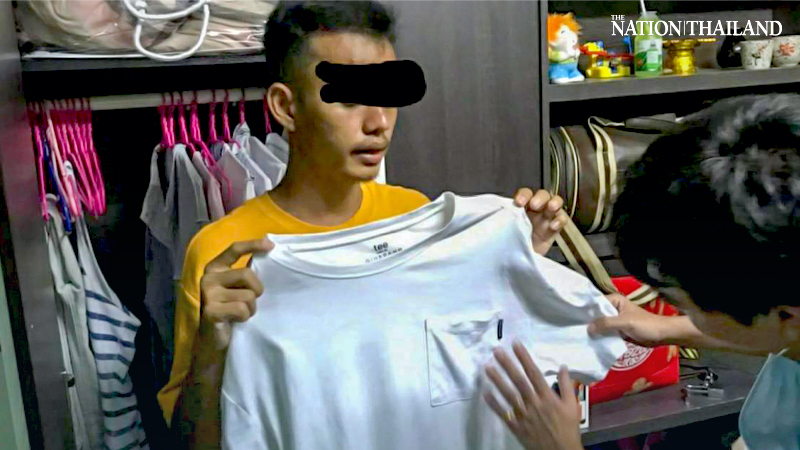
The man, identified as Sam Sa Mart, had climbed onto a container barricade during a demonstration in Bangkok on February 28 and pretended to urinate on the crowd control police,
The suspect was arrested in front of his apartment in Bangkok’s Don Muang area on Friday.
The suspect was later taken to Din Daeng Police Station where he reportedly confessed to being the person for whom an arrest warrant had been issued. He was reportedly encouraged by other demonstrators to engage in the indecent act.
Police arrested 23 demonstrators on the day and aimed to issue arrest warrants for 22 others
Sam Sa Mart was charged with taking part in an illegal gathering besides indecent behaviour in a public place.
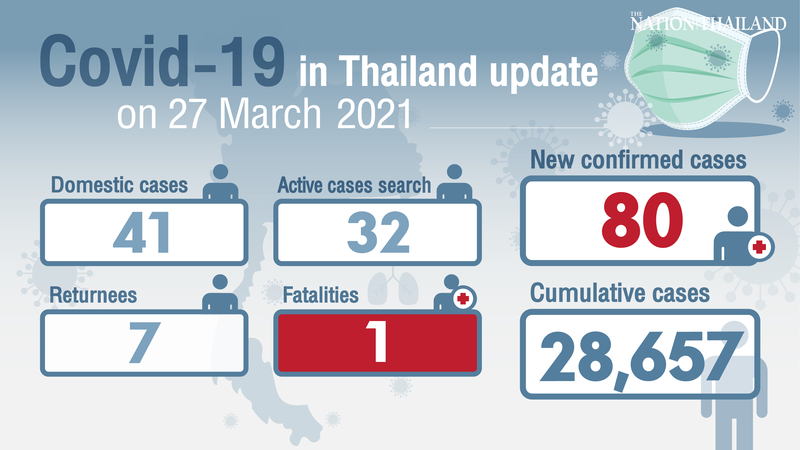
The Centre for Covid-19 Situation Administration (CCSA) on Saturday reported 80 new cases and one death.
A 45-year-old man in Nakhon Pathom province with diabetes became the 93rd fatality since the outbreak. He had visited the Covid-19 hotspot Bang Khae district in Bangkok and died on March 25.
Of the seven overseas travellers who tested positive in quarantine facilities, two were Thais and five foreigners.
The Thais had come from Bahrain and Germany. The foreigners were three Indians and two South Africans from their home countries.
Meanwhile, 86 patients have recovered and been discharged.
As of Saturday, the number of confirmed cases in Thailand had risen to 28,657. Of these, 25,629 had been contracted locally, including 16,014 who were found via proactive testing, while 3,028 were returnees.
So far, 27,136 have recovered and been discharged, 1,428 patients are still in hospitals, and 93 have died.
According to Worldometer, as of 10am on Saturday, the number of confirmed cases globally had risen to 126.7 million (up by 630,099), 102.16 million have recovered, 21.77 million are active cases (92,461 in severe condition) and 2.77 million have died (up by 11,558).
Thailand ranks 116th on the global list of most cases, which is topped by the US with 30.85 million, followed by, Brazil 12.4 million, India 11.9 million, Russia 4.5 million and France 4.46 million.

 Photo Credit: Department of National Parks, Wildlife and Plant Conservation