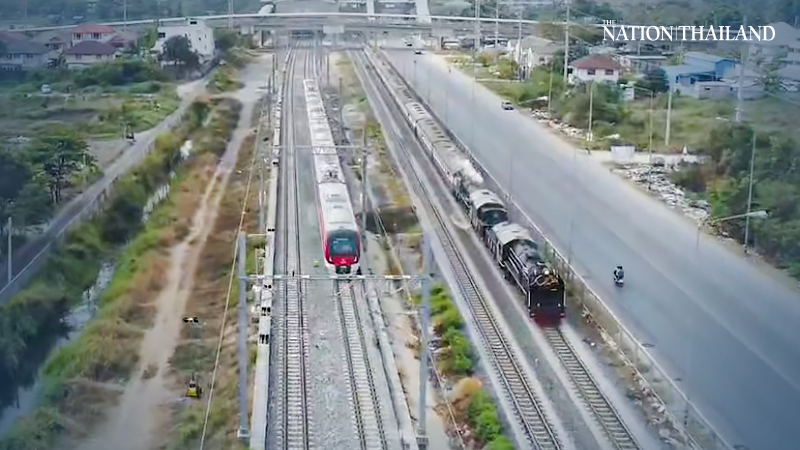
Passengers on the SRT Red Line will travel free of charge during the trial period from July to November this year, said Transport Minister Saksayam Chidchob.
On Friday, the minister took a trial run on the Red Line from Bang Sue Grand Station in Bangkok. He said the fare for the line had been set at B12-Bt42 from November.
The new line will run north from Bang Sue to Rangsit and west from Bang Sue to Taling Chan.
Saksayam noted that Bang Sue Grand Station will become the country’s railway hub, replacing Hua Lamphong station, when it opens on July 28. The station will connect long-distance trains with high-speed services, Bangkok’s Red Line and the Airport Link.
He added that the Grand Station will be convenient to reach by new bus and taxis routes.
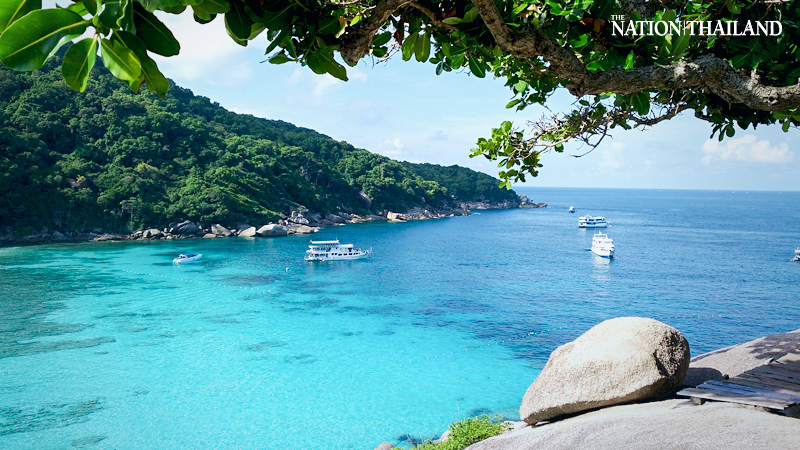
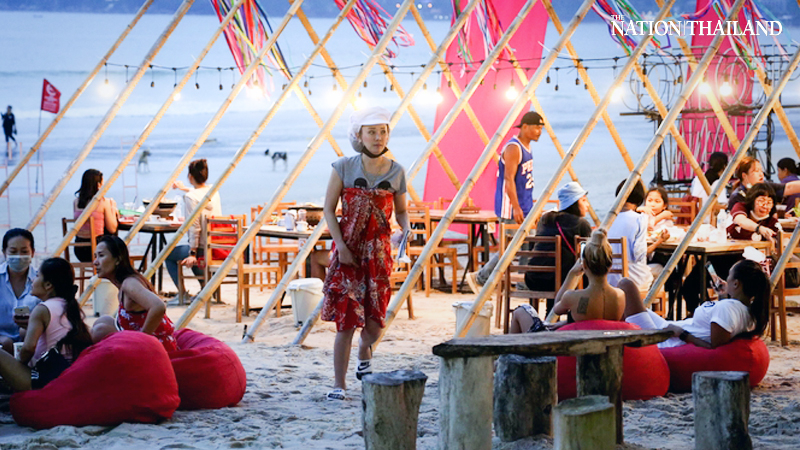
The Centre for Economic Situation Administration (CESA) on Friday approved opening the Phuket “tourism sandbox” to vaccinated tourists from July 1 as proposed by the Tourism Authority of Thailand (TAT).
Prime Minister Prayut Chan-o-cha, in his capacity as CESA chairman, however, has instructed TAT to discuss the plan with Phuket’s governor and the Centre for Covid-19 Situation Administration first before making it official.
Tourism and Sports Minister Phiphat Ratchakitprakarn said tourists who can verify they have been inoculated against Covid-19 and test negative can fly into Phuket and move around freely without having to quarantine.
Similar schemes will be applied to other destinations such as Pattaya, Chiang Mai, Krabi, Phang Nga and Surat Thani later, once more people have been vaccinated and preventive measures are put in place.
Phuket requires 925,000 doses of the vaccine to inoculate 70 per cent of its population before it can reopen.
Bangkok Bank (BBL) unveiled a cross-border QR payment service enabling customers to make transactions between Thailand and Vietnam on Friday.
Charamporn Jotikasthira, BBL executive director, said the service allows customers in Thailand and Vietnam to make QR payments via mobile banking application between the two countries.
“It also helps customers reduce foreign exchange costs as they are able to pay in their own currency, which is cheaper than payment via credit or debit cards,” he said.
He said consumers nowadays were familiar with electronic payments, thanks to the Covid-19 outbreak.
He added that BBL transactions via e-payment and QR code payment last year (2020) totalled 13.39 million, up 49.14 per cent compared to the previous year (2019).
“Cross-border QR payment helps meet demand from migrant workers and people who are purchasing goods online at this time, so we believe this service will play an important role in supporting economic activities once the Covid-19 outbreak resolves,” he added.
This cross-border QR payment service is the fruit of cooperation between BBL, the Bank of Thailand and State Bank of Vietnam.
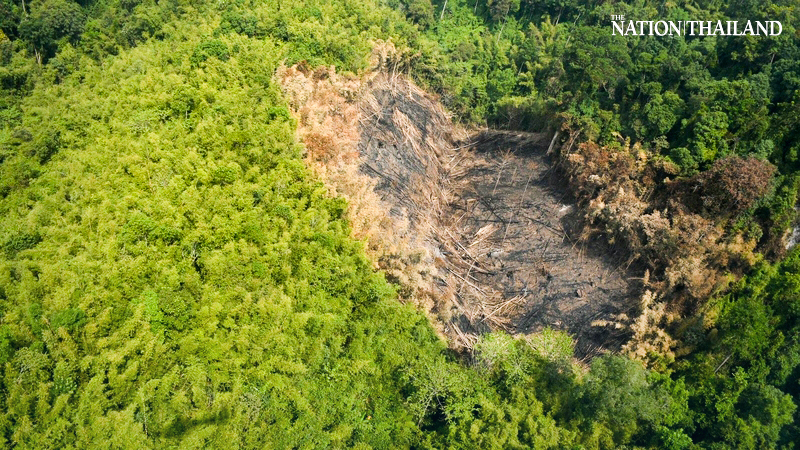
Aerial photographs of Kaeng Krachan National Park in Phetchaburi showed evidence of further encroachment near the Myanmar border on Friday. A helicopter team deployed by the Ministry of Natural Resources and Environment discovered four areas where park forest had been cleared.
“The four plots are located along the Sam Phraeng Creek toward the Myanmar border,” said park chief Itthiphol Thaikamol.
“Officials also took photos of a hut located near one of these plots, showing that it is equipped with a solar panel which indicates recent usage.”
Itthiphol speculated that the encroachers could be Karang people, an ethnic group of Karen nationals who reside along the Myanmar-Phetchaburi border.
Earlier this month, park officials escorted 87 Karang people out of the Jai Paendin area of the national park and relocated them to Bang Kloy village in Phetchaburi’s Tha Yang district.
“Most of the Karang people are willing to be relocated out of national park areas, and they will not face charges of forest encroachment,” said the park chief. “But some remain stubborn and retreat into deep forest, hiding from authorities,” he added. “Park officials have marked the coordinates [of the four scarred plots] and will later send rangers to reclaim the forest as well as try to bring offenders to justice.”
Earlier this month, the government invited United Nations officials to inspect Bang Kloy village to investigate allegations of human rights violations committed by Thai officials against local Karen people. The Karen at Bang Kloy claim Jai Paendin was their ancestral land long before Kaeng Krachan was declared a national park in 1981.
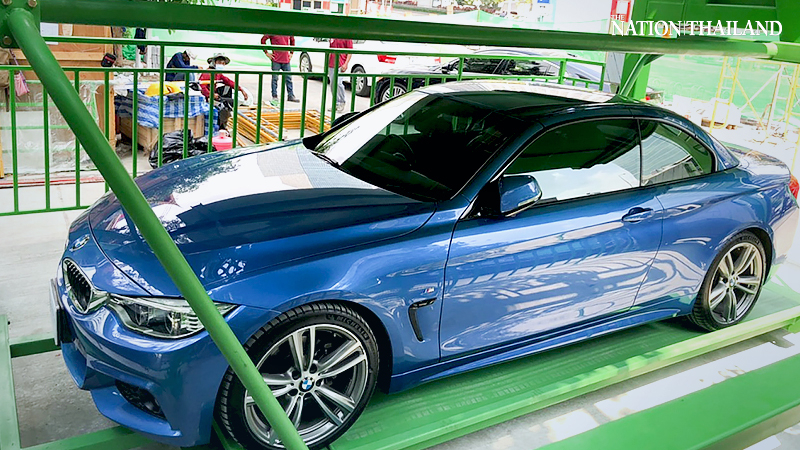
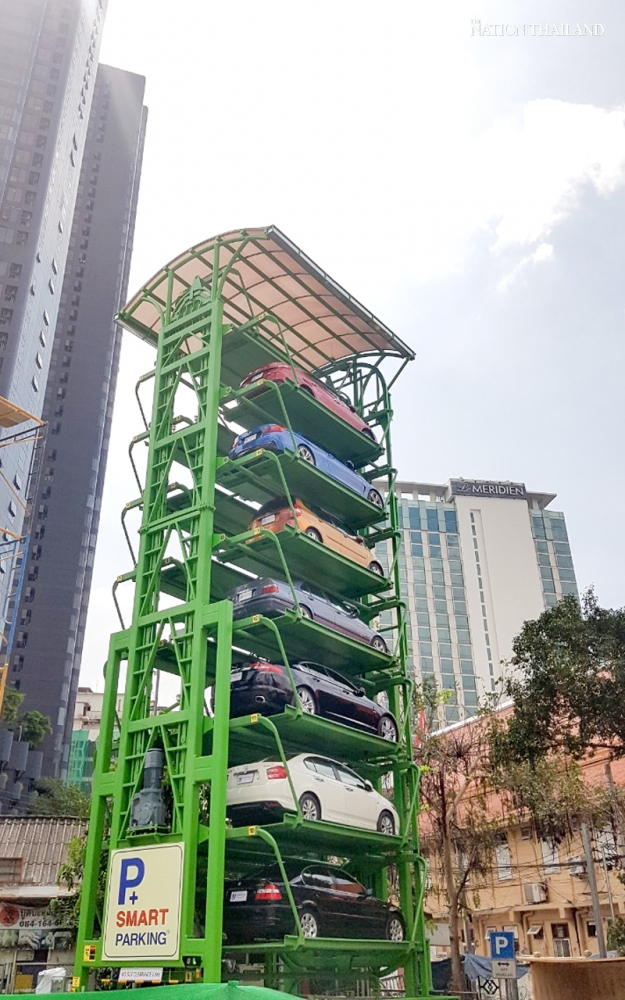
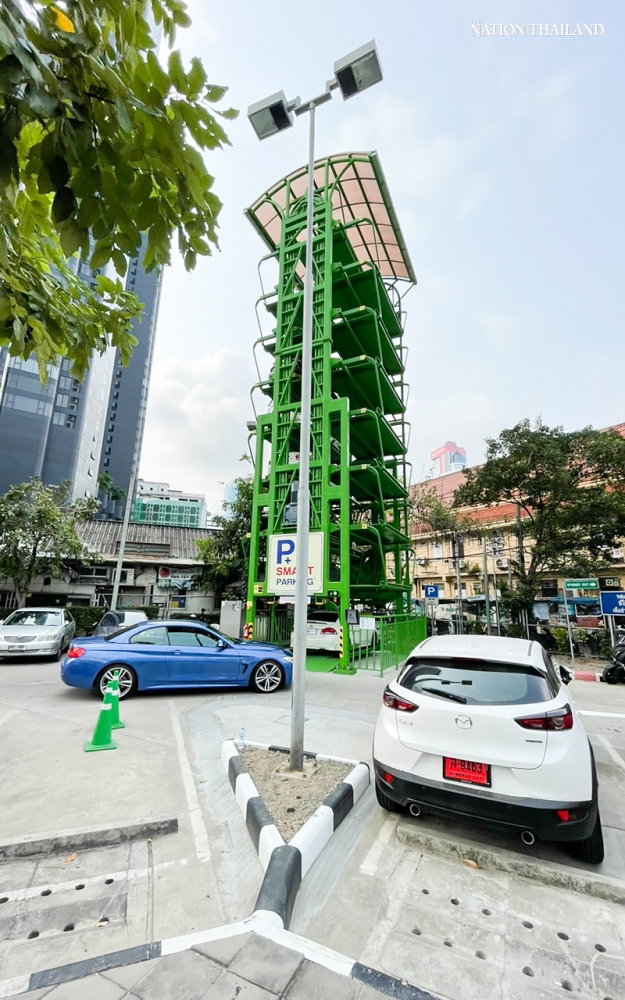
Bangkok’s first automated parking lot was unveiled at the MRT Sam Yan station on Friday in a bid to encourage motorists to opt for public transport.
The new parking system will be available from April 1 and will cost motorists using the metro only Bt15 for two hours. Those not using the subway system will be charged Bt50 per hour, though both train users and non-train users can get a deal of Bt2,000 per month.
The system allows cars to be parked vertically, and car owners will only have to wait three minutes for their vehicle to be brought down.
The Mass Rapid Transit Authority (MRTA) will set up a similar automated parking lot at the Huay Kwang station before expanding to other stations on the Blue Line.
“This move is in line with the government’s plan to get more people to use public transport and the Transport Ministry’s policy to tackle air pollution,” MRTA said.
For more information visit www.mrta.co.th, its Facebook page @MRTA.PR or its call centre (02) 716 4044.
Thailand’s B Grimm Power expects the consumption of electricity in the country this year to grow by 10 to 15 per cent.
Harald Link, the company’s chairman, said statistics show that 4 per cent more power has been used in January and February compared to the same period last year. This is because the economy is slowly reviving now that the Covid-19 situation is improving, he said.
B Grimm, which operates several power plants in Thailand and the region, has acquired new customers that are consuming more than 40-megawatts (MW) and hopes to increase that to 76MW.
The conglomerate’s investment target remains at Bt4 billion to Bt5 billion in a bid to drive projects, especially in SPP (small power producer) replacement schemes. The projects include the construction of five combined cycle power plants of 140MW capacity each in the Eastern Economic Corridor.
B Grimm is also acquiring power plants in Malaysia and negotiations should be clear in the third quarter of this year.
The death of a male patient 10 days after getting a Covid-19 jab was just a coincidence, Dr Sophon Mekthon, who oversees the government’s sub-committee on vaccine management, announced on Friday.
Later in the day, Dr Tawee Chotpitayasunondh from the National Communicable Disease Committee, who is also an adviser to the public health minister, said the patient had received the jab on March 3 after undergoing a health examination.
Dr Tawee Chotpitayasunondh
The patient had been declared healthy on the third and sixth day. On the seventh day, health officers could not reach him. He then got admitted to hospital on the ninth day, complaining of a tight chest, difficulty in breathing and fatigue. The patient died the following day on March 13.
As per the patient’s health records, he had undergone surgery in late January for an aortic aneurysm and had spent 40 days in hospital. The patient was aware that he faced the risk of being infected and had agreed to take the jab one week earlier. He had also been checked by a doctor and declared healthy enough to be inoculated, Dr Tawee said.
Autopsy results show the patient had died from an abdominal aneurysm, which was not related to the vaccine.
Tawee said an abdominal aneurysm, or distension caused by a weakened artery, is like a time bomb as the artery can erupt causing internal bleeding and can become fatal without any warning.
He said people should take care of themselves and avoid risky behaviour that can lead to high blood pressure, such as eating fried foods or smoking.
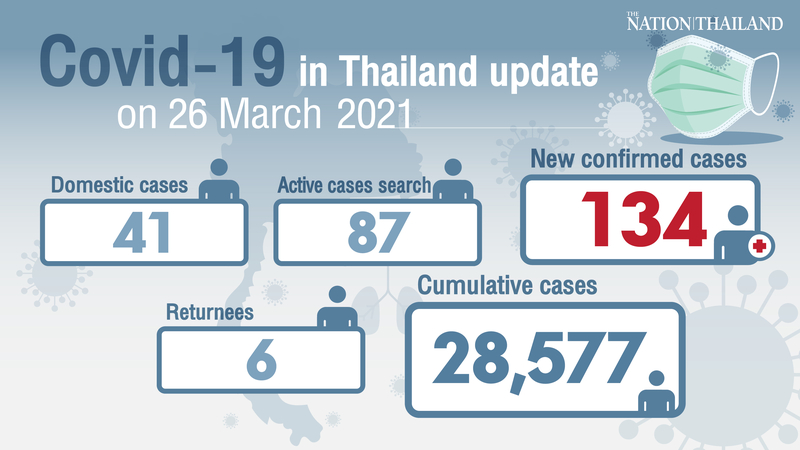
The Centre for Covid-19 Situation Administration (CCSA) on Friday reported 134 new cases, six of them overseas travellers in quarantine facilities, travelling from Malaysia, Zimbabwe, Sweden, South Korea and Turkey.
Of the 41 exposed to the disease while visiting high-risk areas, 16 were in Bangkok, 15 in Samut Sakhon, and five each in Tak and Samut Prakan provinces.
Meanwhile, proactive testing led to the discovery of 87 cases — 82 in Bangkok, two each in Samut Sakhon and Samut Songkhram, and one in Pathum Thani
Four Thais, a Swiss, and a Zimbabwean were found to be infected in quarantine facilities.
Meanwhile, 86 patients have recovered and been discharged.
As of Friday, the number of confirmed cases in Thailand had risen to 28,577. Of these, 25,556 had been contracted locally, including 15,982 who were found via proactive testing, while 3,021 were returnees. So far, 27,032 have recovered and been discharged, 1,453 patients are still in hospitals, and 92 have died.
According to Worldometer, as of 10am on Friday, the number of confirmed cases globally had risen to 126.07 million (up by 622,386), 101.72 million have recovered, 21.58 million are active cases (92,391 in severe condition) and 2.77 million have died (up by 10,474).
Thailand ranks 116th on the global list of most cases, which is topped by the US with 30.77 million, followed by, Brazil 12.32 million, India 11.84 million, Russia 4.49 million and France 4.42 million.
Thai tourism and airline businesses have urged the government to reopen the country from July 1.
The operators led by Marisa Sukosol Nunbhakdi, president of Thai Hotels Association, met Minister of Tourism and Sports Phiphat Ratchakitprakarn to discuss the government’s vaccination distribution plan and the schedule for reopening the country.
Global attention has now shifted to vaccinating national populations against Covid-19. Many countries, particularly in Europe, the Middle East, the United States and China began their vaccination programmes months ago. It is expected that up to 70 per cent of citizens in these countries will have been inoculated by the end of August. This trend bodes well for Thailand’s tourism sector, they said. According to a survey by travel agencies, many vaccinated tourists have expressed their interest to visit Thailand as soon as quarantine requirements are lifted. The survey results suggested that even if Thailand were to reduce mandatory quarantine to seven days, the shortened period would still dissuade potential visitors from travelling to Thailand, said Marisa.
She said the Thai tourism and airline sectors fully supported the minister’s “sandbox” policy of key tourism destinations to revive tourism and the economy. The group also submitted a plan for the ministry to consider, stating this is a pivotal first step to restoring the country’s economy.
▪︎Permit international travellers who have received Covid-19 vaccination to enter the country without mandatory quarantine, at least in the leading tourist destinations such as Phuket and Samui, starting from July 1.
▪︎Accelerate the vaccination of residents in leading tourist provinces such as Phuket and Samui to at least 70 per cent of total population between April 15 and June 30. Achieving herd immunity will enhance the safety of welcoming travellers from abroad. (Phuket Tourism Sandbox will be proposed to the Centre for Covid-19 Situation Administration on Friday, and at the Cabinet meeting on March 30.
▪︎Allow the private sector to cooperate with the government in Covid-19 vaccine procurement from other sources, in order to acquire adequate vaccine supplies and expedite distribution throughout the country.
▪︎Prioritise the vaccination of approximately 1 million people in the tourism and service sectors (for example hotel staff and airline crew) within June, to ensure safety and enhance the confidence of both workers and visiting tourists.
▪︎Declare a concrete timeline and conditions for reopening the country to international travellers. Leading tourist destinations should be reopened first, aiming for a July 1 reopening. Target to reopen Thailand at large to vaccinated travellers from traditional feeder markets (i.e. through “travel bubble”) in time for the upcoming high seasons. A concrete timeline is necessary so that tourism service providers can effectively ramp up their services.
▪︎Approve the use of IATA Travel Pass, the mobile application that is most convenient for travellers, facilitates verification of Covid-19 vaccination certificates, and enhance safety by screening travellers according to global standards.
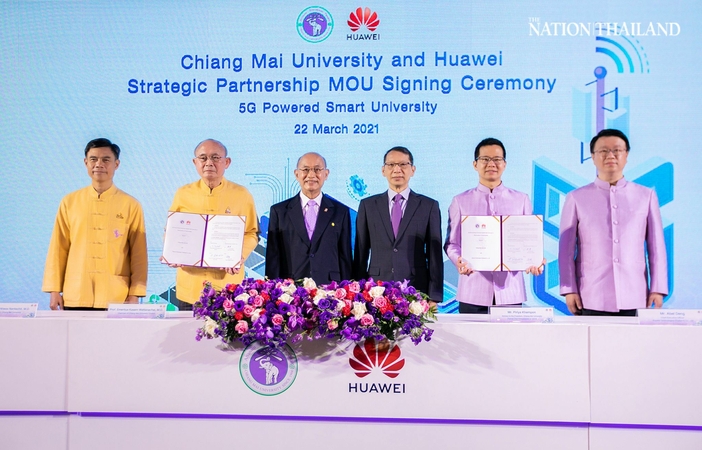
Huawei Technologies (Thailand) Co Ltd on Friday signed a memorandum of understanding (MoU) with Chiang Mai University (CMU), aiming to transform CMU into a smart university using innovative digital platforms.
The installation of state-of-the-art integrated infrastructure, and the adoption of 5G and other emerging technologies, such as Big Data and Cloud services, is expected to reinforce CMU’s position as the leader in Southeast Asia’s education sector, they said.
The two parties had signed an MoU last November to develop ICT professionals through the Huawei ICT Academy Program, offering practical courses and on-the-job training for CMU students to prepare them for successful careers in the digital era.
Representing a strategic alliance between industry and the education sector, the new MoU was signed by Clinical Prof Niwes Nantachit, president of Chiang Mai University, and Abel Deng, CEO of Huawei Technologies (Thailand), at a ceremony in Chiang Mai, in the presence of Prof Emeritus Kasem Wattanachai, chairman of Chiang Mai University Council, and other senior officials.
The five-year collaboration promotes cooperation for adopting 5G technology to have smart classrooms and solutions for enhanced teaching and learning experiences and a broader engagement in research. The alliance also aims to make CMU an intelligent university by implementing integrated digital technology to enhance learning. The collaboration will facilitate new technologies such as Big Data and Cloud services that will boost the efficiency and connectivity of other CMU departments such as the Faculties of Engineering, Medicine, Agriculture, Smart Campus Management Centre, and Information Technology Centre.
Through this MoU, CMU aims to become the leading 5G Smart University in Southeast Asia, and the frontrunner in technology-enhanced higher education and skills development.
“This collaboration [with Huawei] is another important step for CMU. Under this partnership, we will build a more inclusive education system using remote learning solutions. My sincere gratitude goes to Huawei Technologies for accompanying Thailand in its digital journey and for its commitment to drive Thailand’s competitiveness,” Kasem said.
“This new chapter in our ongoing partnership with Huawei will create even more opportunities to provide an even higher level of education. We look forward to nurturing a bigger number of top-tier students in all disciplines who we hope can excel in the future as leaders in different fields. Cutting-edge technologies have become crucial for the education sector, and I would like to thank Huawei Thailand for this excellent opportunity that will help CMU maintain its high ranking and preserve its reputation for producing the most employable graduates in the region,” Niwes said.
“Chiang Mai University is ready for digital transformation under its vision of being a ‘Leading University Committed to Social Responsibility and Sustainable Development’,” said Abel Deng, CEO Huawei Thailand. “We will enable CMU to be a role model for other universities that will perceive the benefits of faster, more reliable and more innovative solutions for the education industry.”
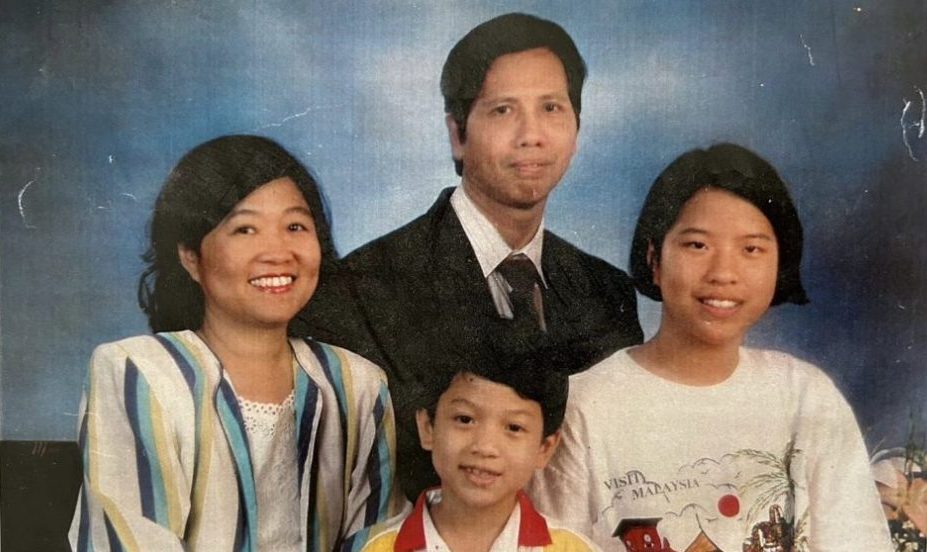


 Dr Sophon Mekthon