Yod Dome Wildlife Sanctuary on Thursday caught a peahen on camera while sitting on her eggs in Thod Ja Pong forest just 500 metres away from the sanctuary’s field office in Ubon Ratchathani province.
“Officials of the sanctuary were patrolling the area on Thursday morning and found a nest with five eggs, so they set up a camera to get pictures and video of the owner,” said Chaiwat Limlikhit-aksorn, head of Ubon Ratchathani Protected Area Regional Office 9.
Photo: Facebook @DNP1362
“Seeing a wild peahen brooding her eggs is a rare sight even for sanctuary officials. This will be a good opportunity for us to study the life and behaviours of wild peafowls.”
Chaiwat added that peacocks usually built a nest on flat ground covered with bushes or dried leaves.
Photo: Facebook @DNP1362
“Peahens lay 3-6 eggs per time which usually hatch in 26 days. Their newborns will be covered with soft small feathers and will follow their mother around for at least six months, before they leave their mum and look for food alone,” he added.
A temporary steel staircase has been installed at a damaged footbridge on Rama II Road in Bangkok’s Bang Khun Thien district, the Thonburi Highway District Office announced on Thursday via its Facebook page.
Photo: Facebook @ThonburiDOH
The bridge at Km 14+075 had been damaged since March 2 when an SUV reportedly smashed into the steps of the bridge, rendering the bridge unsafe for use and leaving pedestrians stranded on both sides of the eight-lane Rama II Road. The bridge is the only way for pedestrians to cross Rama II Road. The next bridge is about three kilometres away.
Officials added that repair work on the bridge would start on Friday, and expected the work to be finish within seven days. They advised pedestrians to use the temporary staircase carefully during the construction period.
For more information, contact the Department of Highways hotline at 1586.
The Thailand Meteorological Department said on Friday (March 5) that the southerly and southeasterly winds bring humidity from the South China Sea and the Gulf of Thailand to upper parts of the country.
Isolated thundershowers are possible in the lower North, Northeast, Central and East. People in upper Thailand should beware of the severe conditions, the department said.
Meanwhile, the easterly winds prevailing over the South and the Gulf bring isolated thundershowers to the areas.
The weather forecast for the next 24 hours:
North: Hot weather with haze during the day; isolated thundershowers in 10 per cent of the areas; temperature lows of 16-24 degrees Celsius, highs of 34-37°C.
Northeast: Isolated thundershowers in 20 per cent of the areas; temperature lows of 22-24°C, highs of 32-37°C.
Central: Hot weather with haze during the day, isolated thundershowers in 10 per cent of the areas; temperature lows of 23-25°C, highs of 35-37°C.
East: Hot weather with haze during the day, isolated thundershowers in 20 per cent of the areas; temperature lows of 23-25°C, highs of 32-36°C; waves a metre high and 1-2 metres offshore.
South (east coast): Isolated thundershowers in 10 per cent of the areas; temperature lows of 23-24°C, highs of 31-35°C; waves 1-2 metres high and two metres during thundershowers.
South (west coast): Isolated thundershowers in 10 per cent of the areas; temperature lows of 23-24°C, highs of 34-36°C; waves a metre high and over a metre offshore.
Bangkok and surrounding areas: Hot weather with haze during the day; temperature lows of 24-26°C, highs of 34-36°C.
At the beginning of 2021, Automated Peritoneal Dialysis (APD) was added to the Universal Coverage Scheme (UCS) to improve the quality of life for patients living with chronic kidney disease.
Manee Paintanphol, a patient at Ban Phaeo Hospital in Samut Sakhon, is the first UCS beneficiary to receive APD – a treatment for kidney failure, which uses an automated cycler to fill the patient’s abdomen with dialysate before draining it into a sterile bag. This process is called “exchange”.
For two years she had been undergoing the Continuous Ambulatory Peritoneal Dialysis (CAPD), which was a burden as she had to do the exchange four times a day, between 6am and 11pm. She also had to change five to six bags of dialysate during the process.
The treatment made her feel worried and restless.
“Sometimes I fell asleep before 11pm, as I’m old and my health is not so good. Sometimes I missed the exchange, which made my belly swell up,” she said.
Manee’s struggles were noticed by her doctor, who then suggested she register for APD with the UCS.
When she began using APD earlier this year, she was able to sleep through the night and only had to change two bags of dialysate per day.
“The doctor set the machine up for me. All I have to do is press the green button and change the dialysate bags,” she said. “Now I can sleep better and feel stronger.”
Dr Piyathida Jungsaman, a kidney specialist at Ban Phaeo Hospital, said APD suited patients who have used CAPD for a long time and their abdominal lining has weakened, requiring them to increase the amount of dialysate.
APD is also good for patients with kidney failure who cannot be treated via haemodialysis due to their health and financial condition.
Sakchai Kanjanawatana, secretary-general of the National Health Security Office (NHSO) which oversees the UCS, said CAPD has been provided to UCS beneficiaries for 14 years now, allowing patients with final-stage kidney disease to survive.
So far, more than 30,000 UCS beneficiaries receive CAPD.
APD has been available for beneficiaries of the Social Security Scheme and the Civil Servant Medical Benefits Scheme before it was added to the UCS benefits package early this year.
NHSO aims to provide APD to at least 100 patients this year. So far, 173 patients have registered for the system, and doctors from 20 healthcare units nationwide have expressed interest in obtaining APD for their patients.
The Office of Transport and Traffic Policy has hired Index International Group (IND) to draft a study for a land bridge connecting the Gulf of Thailand and Andaman Sea via the Southern Economic Corridor (SEC). The project is designed to link up the SEC with the Eastern Economic Corridor.
Launched on Tuesday (March 2), the Bt4.47-billion project study will run until September 1, 2023. The blueprint for the project will be finalised at the beginning of 2024, after which investment budgets and bidding will be set.
The project aims to expand the logistics network and connectivity with southern provinces. The Cabinet has approved a budget of Bt74.71 million for a study on how to improve capacity of businesses in the South.
The government on Thursday unveiled its “area quarantine” plan to open Thailand to foreign tourists from next month.
Area quarantine will be piloted in five provinces popular with foreign tourists – Chiang Mai, Phuket, Krabi, Surat Thani (Koh Samui, Koh Pha-ngan) and Chon Buri (Pattaya).
Tourism and Sports Minister Phiphat Ratchakitprakarn revealed details of the plan after meeting with the Public Health Ministry and 216 tourism operators.
Under the plan’s timeline, tourists will quarantine in their rooms for the first three days and then be swab-tested for Covid-19 at their hotel.
If they test negative, they will be granted access to the whole hotel or resort until their 14-day quarantine ends.
After 14 days they will be tested again. If no infection is found they will be allowed to travel freely through the quarantine area.
The plan will be operated via 29 travel agencies supervised by the Tourism Authority of Thailand (TAT).
Revenue from foreign tourists generated Bt2 trillion of Thailand’s total Bt3.01-trillion tourism trade in 2019. Tourism accounted for around 17 per cent of GDP in 2019.
The Department of Disease Control of Thailand (DDC) is advising people to be careful with what they eat this summer to avoid food poisoning and diarrhoea.The Meteorological Department said Thailand has officially entered the summer season since Saturday, with temperatures averaging at 35 degrees Celsius in most areas.DDC director-general Dr Opas Karnkawinpong said people should avoid certain foods to avoid food poisoning.According to DDC, 1.342 million, 1.189 million and 915,289 food poisoning and diarrhoea cases were reported during summer in 2018, 2019 and 2020 respectively.DDC has advised people to avoid the following dishes:
Opas said diners must ensure the food they are served is hot and clean, adding that ice cubes are also carriers of germs.
Thailand’s move to turn cannabis into a cash crop gets underway in earnest on Friday (March 5), with the “360° Cannabis & Hemp for the People” expo in Buriram.
The three-day expo at the Buriram International Circuit will be launched by Public Health Minister Anutin Charnvirakul, a government spokesperson said on Thursday.
It aims to provide a better understanding of how cannabis and hemp can bring huge medical and economic benefits for both Thai producers and consumers.
Visitors and entrepreneurs will be able to attend seminars, exhibitions and free workshops and also sample cannabis products. The focus will be on ways of creating added value from cannabis and also hemp. Certain parts of the cannabis plant were removed from Thailand’s narcotics list in December, opening the way for a medical cannabis business worth an estimated Bt8 billion by 2025. Meanwhile, stocks in large Thai food manufacturers have risen on news that oil from the plant can be used in their products.
The Buri Ram expo is being organised as part of Public Health Ministry efforts to promote the budding cannabis/hemp-related industry as a new economic engine for Thailand.
Thailand’s freedom status has dropped from Partly Free to Not Free among 210 countries and territories in the annual Freedom in the World report collated by Freedom House.
The US-based organisation rates people’s access to political rights and civil liberties, including freedom of expression and equality.
A country or territory’s freedom status is categorised as Free, Partly Free and Not Free, and according to the report, less than 20 per cent of people in the world live in free countries. This is the lowest since 1995.
Of the 210 countries and territories rated, 64 are ranked as Not Free – the highest since 2006.
Thailand only earned 5 out of 40 points for political rights, and 25 out of 60 on civil liberties, or a total of just 30 out of 100, which put it in the “not free” category.
“Thailand’s status dropped from Partly Free to Not Free after due to the dissolution of a popular opposition party that had performed well in the 2019 elections, and the military-dominated government’s crackdown on youth-led protests calling for democratic reforms,” Freedom House said.
Mae Sot Hospital in Tak province on the Myanmar border has banned visitors until Monday (March 8) after 19 of its staff came into contact with two Covid-19 patients.
The move was taken to enable disinfection of the hospital, its director Thawatchai Setsuppana said on Thursday.
He explained that two patients had tested positive for Covid-19 after being treated at the hospital. “Three doctors, 11 nurses and 5 patient assistants have been ordered to undergo 14-day quarantine,” he said.
Meanwhile, officials are questioning the two Covid-19 patients in a bid to trace other at-risk contacts.
Separately, Sukhothai Provincial Public Health Office has published the timeline of a Thai casino worker who tested positive after returning from Myanmar.
According to the report, she developed Covid-19 symptoms in Myanmar before entering Thailand via the Mae Sot border crossing on March 1.
She then travelled to her house in Sukhothai’s Ban Nong Ya Plong subdistrict to attend her grandfather’s funeral.
“On March 2, she took a Covid-19 test at Sukhothai Hospital and went shopping in Muang district before heading home. She was admitted to Ban Dan Lan Hoi Hospital on March 3 after her test came back positive,” the office said.
It added that 17 people came into contact with the patient and seven are at high risk of infection.

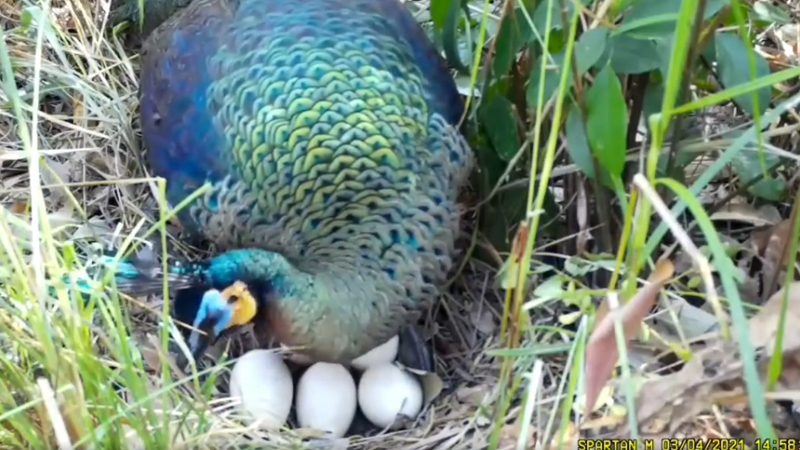 Photo: Facebook @DNP1362


