The Thai military’s Internal Security Operations Command (ISOC) has again been penalised by Facebook over social media accounts targeting the deep South.
Facebook announced on Wednesday it had removed 185 accounts and groups engaged in military propaganda in the insurgency-hit region. The network comprised 77 accounts, 72 pages and 18 Instagram accounts linked to ISOC. Facebook said the accounts had been deleted for “coordinated inauthentic behaviour (CIB)”.
PM General Prayut Chan-o-cha, who chairs ISOC, said he had ordered the Defence Ministry to investigate the case.
In February last year, an opposition MP accused ISOC of waging a cyberwar against critics of the government and deep South human rights activists. MP Viroj Lakkana-adisorn said ISOC-linked social media and websites were spreading fake news “to sow hatred” and division among people.
Facebook said it is now checking all new military-related accounts on Facebook or Instagram.
In October, Twitter banned 926 accounts it linked to the Royal Thai Army last October, accusing them of targeting prominent political opposition figures.
A month later in November, Twitter banned a Thai pro-royalist account for “violating our rules on spam and platform manipulation”. According to a Reuters investigation, the account was flooding the platform with spam via thousands of recently created followers that did nothing but post its hashtags promoting the monarchy and attacking anti-establishment protests.
At least 1 in 7 children and young people globally has lived under stay-at-home policies for most of the last year, putting mental health and well-being at risk – UNICEF
As we approach the one-year anniversary of the pandemic, UNICEF urges greater investment in mental health services.
NEW YORK/BANGKOK, 4 March 2021 – At least 1 in 7 children – or 332 million globally – has lived under required or recommended nationwide stay-at-home policies for at least nine months since the start of the COVID-19 pandemic, putting their mental health and well-being at risk, UNICEF warned today.
While almost all children worldwide have lived under some form of intermittent lockdowns for the last year, the new analysis by UNICEF, which uses data from the Oxford COVID-19 Government Response Tracker, identifies some of the most enduring lockdown conditions worldwide.
According to the analysis, 139 million children globally have lived under required nationwide stay-at-home orders for at least nine months since COVID-19 was characterized as a pandemic on 11 March 2020 – meaning they are required to stay at home with few exceptions – including children living in countries such as Paraguay, Peru and Nigeria. The rest of the 332 million – or 193 million – have lived under recommended nationwide stay-at-home policies for the same amount of time.
“With nationwide lockdowns and pandemic-related movement restrictions, it has been a long year for all of us, but especially for children,” said UNICEF Executive Director Henrietta Fore. “When – day after day – you are away from your friends and distant loved ones, and perhaps even stuck at home with an abuser, the impact is significant. Many children are left feeling afraid, lonely, anxious, and concerned for their future. We must emerge from this pandemic with a better approach to child and adolescent mental health, and that starts by giving the issue the attention it deserves.”
A survey conducted in Thailand in April 2020 by UNICEF and partners found that more than 7 in 10 children and young people reported that the pandemic was affecting their mental health, causing stress, worry and anxiety. The survey found that what worries them the most is the uncertainty of their family’s financial status.
As the pandemic enters its second year, the impact on children and young people’s mental health and psychosocial well-being is taking a toll. In Latin America and the Caribbean, a recent UNICEF U-Report poll of young people generated more than 8,000 responses and found that more than a quarter had experienced anxiety, and 15 per cent depression.
Even before the pandemic, children and young people carried the burden of mental health risks, with half of all mental disorders developing before age 15, and 75 per cent by early adulthood. The majority of the 800,000 people who die by suicide every year are young people, and self-harm is the third leading cause of death among 15–19-year-olds, with higher rates among adolescent girls. It is estimated that globally 1 in 4 children live with a parent who has a mental disorder.
For children experiencing violence, neglect or abuse at home, lockdowns have left many stranded with abusers and without the support of teachers, extended families and communities. Children in vulnerable population groups – such as those living and working on the streets, children with disabilities, and children living in conflict settings – risk having their mental health needs overlooked entirely.
According to WHO, the COVID-19 pandemic has disrupted or halted critical mental health services in 93 per cent of countries worldwide, while the demand for mental health support is increasing. A study from 194 cities in China found that 16 per cent of respondents reported moderate to severe depressive symptoms during the pandemic, and 28 per cent moderate to severe anxiety symptoms.
In response, UNICEF is supporting governments and partner organizations to prioritize and adapt services for children. For example, in Kazakhstan, UNICEF launched a platform for individual online counselling services for children, alongside distance training in schools for mental health specialists. In China, UNICEF and social media company Kuaishou launched an online challenge to help reduce anxiety in children.
In Thailand, UNICEF and Path2Health Foundation are providing free online counselling from 4 p.m. to midnight via http://www.lovecarestation.com to promote youth-friendly mental health services that are easy to access and specially designed for young people. Last year, UNICEF with Government and private sector partners in Thailand also launched The Sound of Happiness campaign, with 13 podcast episodes distributed through JOOX streaming app, featuring advice from mental health experts to help children and adolescents cope with issues affecting their mental health and well-being.
Later this year, UNICEF will dedicate its biennial flagship report, State of the World’s Children, to child and adolescent mental health, in an effort to increase awareness of the global challenge and provide solutions, and to encourage governments to place heightened focus on the issue.
“If we did not fully appreciate the urgency prior to the COVID-19 pandemic – surely we do now,” added Fore. “Countries must dramatically invest in expanded mental health services and support for young people and their caregivers in communities and schools. We also need scaled-up parenting programmes to ensure that children from vulnerable families get the support and protection they need at home.”
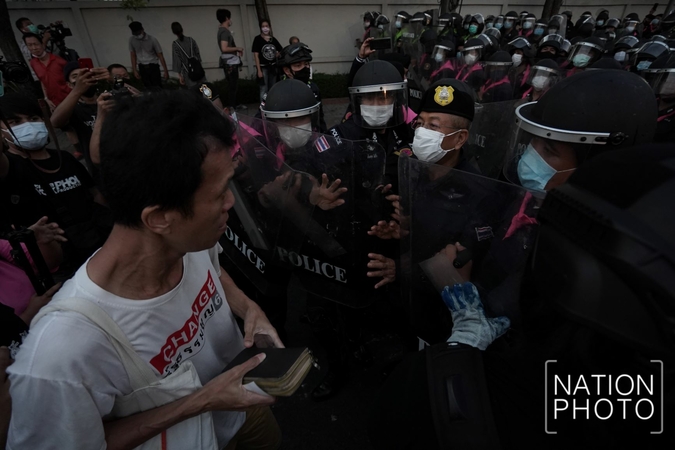
A member of the crowd-control police team from Bangkok’s Wang Thonglang Police Station has tested positive for Covid-19 and is now quarantined at home.
Police officer Somyot Naumcharoen visited his hometown in Samut Sakhon on February 18 and met friends in the neighbourhood. Samut Sakhon has been a hotspot for Covid-19 infections since mid-December last year.
On March 3, Somyot got tested after learning one of his friends was infected. Though he tested positive, Somyot is asymptomatic.
He then notified his commander and told him of the officers he had been in contact with. Everybody who was in close contact with him has been quarantined.
After returning from Samut Sakhon on February 18, Somyot’s timeline shows he mostly travelled between work and home, except on March 1, when he went to play football in a park near the Mass Rapid Transit Authority on Rama IX Road. He was also part of the crowd-control team that kept pro-democracy protesters out of the 1st Infantry Regiment on Vibhavadi Road on February 28.
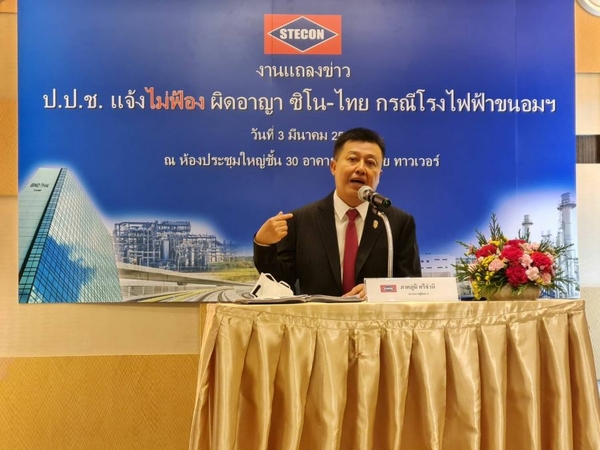
Sino-Thai Engineering and Construction (Stecon) will start designing U-Tapao Airport’s terminal building now that U-Tapao International Aviation (UTA) has earmarked Bt1.8 billion for the project, said Pakpoom Srichamni, Stecon’s president and executive director.
UTA was set up by the BBS Joint Venture Group as the central agency responsible for U-Tapao International Airport and Eastern Airport City projects after the group won the bid last year.
The joint venture comprises Bangkok Airways, with a 45 per cent stake, BTS Group Holdings (35 per cent) and Sino-Thai Engineering and Construction (20 per cent).
“We are ready to start the construction as soon as we receive the notice to proceed [NTP] from UTA, which we expect will be in early 2022,” Pakpoom said.
“We are working on a detailed design and levelling the ground for the terminal building with the help of foreign partners, so we can start construction immediately once the NTP comes through.”
Pakpoom added that Stecon could not wait until the NTP arrives to start the design process because the deadline for the project is tight at three years. The construction of terminal buildings for other airports normally takes five years.
“Even if the NTP is delayed until mid-2022, we are still confident that construction will be finished as planned, as we are working on what can be done right now,” he said.
He added that UTA is now reviewing the master plan, which will be submitted to the Eastern Economic Corridor Policy Committee for approval by June this year.
Amita Technologies, Inc has successfully developed state-of-the-art solid-state batteries called NAEPE, or Networked-Amide Epoxy Polymer Electrolyte, with the Industrial Technology Research Institute of Taiwan (ITRI), Energy Absolute Public Company Limited (EA) announced in a press release.
Amita, a subsidiary of EA Group, has already bagged the 2020 R&D 100 Technology Award, well recognised as “the Oscars of Innovation”.
Clean energy use and the reduction of carbon dioxide emissions are now ingrained in the consciousness of all countries. Therefore, the introduction of renewable energy storage systems and the promotion of electric vehicles are being unanimously implemented by governments, automakers and enterprises across the globe.
The most critical strategic component of this is the lithium-ion battery.
“Whoever has a higher energy density battery with lower costs and higher safety will control the development trend of the latest wave of safer lithium battery technology,” the company explained.
“All-solid-state batteries are a goal everyone is striving for. However, stable and large-scale production of solid-state electrolyte materials and all-solid-state batteries have many bottlenecks that need overcoming in the current manufacturing process, which can reduce the production cost of batteries and increase the yield rate,” it said.
Now, with the introduction of NAEPE electrolyte, the design of the battery cell structure of Amita’s future lithium batteries is based on higher safety, higher conductivity and higher stability and reliability, the company said, adding that the battery’s interior resistance as well as the risk of becoming flammable will be greatly reduced.
In addition, NAEPE provides unique advantages to support lower costs, a longer life cycle and achievable development in fast-charging batteries.
NAEPE’s self-protection also allows the battery to maintain the original characteristics of rapid charge and discharge and has significantly improved the battery’s resistance to overcharged voltage and performance in a high-temperature environment.
The newly designed batteries can be quickly charged to 80 per cent of their capacity in just 15 minutes.
“Most importantly, unlike other solid-state electrolytes developed by top R&D battery players, NAEPE in the first phase as a quasi-solid-state electrolyte can be easily introduced into existing battery production processes by fast implementation of adding a few pieces of equipment in Amita’s 1GWh battery plant in Thailand,” the company said.
EA and Amita are now considering even further development and adoption of NAEPE, which is likely to be next year.
Anutin-led panel to consider vaccine passport, travel bubble
NationalMar 04. 2021Cover of the book once used to certify the recipient of the yellow fever vaccine.
By The Nation
Public Health Minister Anutin Charnvirakul said on Wednesday that people who have been vaccinated against Covid-19 will be given a book, which can be used as evidence for travel and to boost public confidence.
“The Public Health Ministry is making preparations to bring life back to normal, restore businesses and revive the Thai economy,” Anutin said.
Details inside the vaccine passport.
The National Communicable Diseases Committee, which is chaired by Anutin, will on March 8 discuss the vaccine passport as well as the option of creating a travel bubble with countries where a large number of people have been vaccinated.
He also said people should continue wearing masks in public as recent statistics show that the Thais, in general, are dropping their guard. The mask-wearing rate is now below 80 per cent, lower than last month during which more than 90 per cent of people were seen wearing a mask.
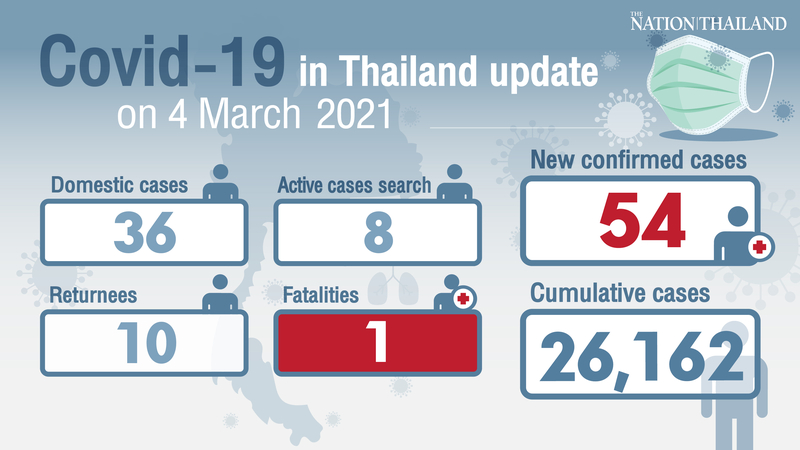
For the 13th day running, the number of new Covid-19 cases was under 100, with 54 confirmed on Thursday, 10 of whom are returnees.
The Centre for Covid-19 Situation Administration said 36 of the local cases had been exposed to the virus while visiting high-risk areas. Samut Sakhon leads the list with 28 cases, followed by three in Tak, two in Bangkok and one each in Nakhon Nayok, Pathum Thani and Chonburi.
Meanwhile, proactive testing led to the discovery of eight cases, all in Samut Sakhon.
Of the 10 travellers found infected, four are Thais returning from the United Arab Emirates, Egypt and Russia, as well as a Kenyan national from South Africa and a Kuwaiti from his own nation.
Also included in the list of returnees were three Myanmar women caught entering Thailand from the Malaysian border on February 24 and who tested positive on March 1, and one Thai sneaking across from Myanmar on March 1 who tested positive the next day.
Meanwhile, Thailand’s 85th fatality was a 63-year-old Thai man living in a high-risk area in Bangkok who had diabetes and high blood pressure. He began developing a cough, fatigue and difficulty in breathing on January 9 and tested positive on the same day. His symptoms worsened on January 12 and had to be put on a ventilator. However, he succumbed to the virus on February 28.
Meanwhile, 79 patients have recovered and been discharged.
As of Thursday, the number of confirmed cases in Thailand had risen to 26,162. Of these, 23,353 had been contracted locally, including 14,573 who were found via proactive testing, while 2,809 were returnees. So far, 25,562 have recovered and been discharged, 515 patients are still in hospitals, and the death toll has risen to 85.
According to Worldometer, as of 10am, the number of confirmed cases globally had risen to 115.77 million (up by 440,965), 91.47 million of whom have recovered, 21.73 million are active cases (90,049 in severe condition) and 2.57 million have died (up by 10,838).
Thailand ranks 115th on the global list of most cases, which is topped by the US with 29.47 million, followed by India 11.16 million, Brazil 10.72 million, Russia 4.28 million and the United Kingdom 4.19 million.
International flights carrying “transit/transfer” passengers are now allowed to arrive at Suvarnabhumi Airport, the Civil Aviation Authority of Thailand (CAAT) confirmed.
However, CAAT has issued a series of guidelines that such passengers and airlines should follow:
1. International flights carrying transit/transfer passengers will be permitted only at Suvarnabhumi Airport;
2. Each passenger should possess a complete set of relevant documents, which are:
(a) A fit-to-fly health certificate;
(b) Medical certificate with a laboratory result showing that Covid-19 is not detected (carried out by the RT-PCR technique and issued no more than 72 hours before travel);
(c) Travel health insurance (worldwide or including Thailand) that covers healthcare and treatment expenses for Covid-19, or any other guarantee throughout their stay in the kingdom, with a coverage of not less than US$100,000 (Bt3.08 million).
Before the issuance of a boarding pass, document verification will be carried out by an air operator. If any document is found incorrect or incomplete, the passenger will not be issued a boarding pass.
3. Passengers must not venture out of the specified area (Concourse E) and should proceed through a so-called “sealed route” as detailed below:
(a) Each passenger must disembark via Gate E10, go through security screening and board the transit aircraft via Gate E9, or head to a designated shuttle bus to board the aircraft at the remote parking stand;
(b) If demand exceeds existing capacity, there will be additional operations available at Gate E5, E7 and E8;
(c) Aircraft crew making a “technical” landing should also follow the above conditions.
In case Concourse E is under maintenance, Concourse F will be used under the following procedures:
(d) Each passenger must disembark via Gate F6, go through security screening and board their next aircraft via Gate F5, or get into a designated shuttle bus to board the aircraft at the remote parking stand;
(e) If demand exceeds the existing capacity, there will be additional operations available at Gate F1, F2, F3 and F4;
(f) Aircraft crew should follow the conditions stated in 3 (d) or (e).
4. Physical distancing must be followed in waiting areas for transit/transfer operations. Each passenger and personnel should wear a face mask at all times, except in necessary or emergency situations, and clean their fingers with available hand sanitisers, which contain at least 70 per cent alcohol;
5. Personnel working in waiting areas for transit/transfer operations must wear personal protective equipment.
6. There are food and beverage services in the waiting area. There will be “active oversight” to keep operations safe and effective.
7. Cleaning and disinfection of equipment and passenger areas will be carried out regularly, according to Public Health Ministry standards.
8. The time period of each transit/transfer operation must not exceed 12 hours. If the operation goes past 12 hours, airline staff are responsible for managing/transporting passengers by special bus to Gate D3 and or D4 to await flights.
9. There will be no Covid-19 screening or laboratory services in the transit/transfer areas of the airport.
10. If any passenger takes ill or is suspected to have contracted Covid-19, the airline has to bear full responsibility for the traveller.
11. Passengers are advised to avoid any port of embarkation with a high prevalence of Covid-19, according to the risk level categorised by the Public Health Ministry.
12. Airlines must submit transit/transfer flight plans with CAAT and the Airside Operations Control Centre at Suvarnabhumi Airport no later than 24 hours before the flight.
Yarisa (last name withheld), the girlfriend of Bottom Blues singer Chaiamorn “Ammy” Kaewwiboonpan, was arrested by police at Suvarnabhumi Airport on Wednesday night as she was set to board a flight to Japan.
Police held her for interrogation as they believed she was involved in an incident in which Chaiamorn allegedly set fire to a picture of the royal family in front of Khlong Prem Central Prison in Bangkok’s Chatuchak district on February 28.
CCTV footage outside the prison showed three suspects involved in the arson – two males and a female – before they fled the scene in a car.
Chaiamorn was arrested and charged on Tuesday with alleged arson and violation of Criminal Code Section 112 (lese majesty) and the Computer Crime Act. On Wednesday, the Criminal Court denied him bail that was proposed by his mother, fearing he would escape.
After his arrest, Chaiamorn reportedly claimed that he acted alone in burning of the picture, but the police continued to investigate people close to him as CCTV footage contradicted his statement.
Police are still searching for the other male suspect.
The baht opened at 30.35 to the US dollar on Thursday, weakening from Wednesday’s close of 30.32.
The Thai currency is likely to move between 30.30 and 30.45, Krungthai Bank market strategist Poon Panichpibool said on Wednesday.
He expected the baht to move in a wide range, fluctuating in line with the dollar as well as the sale of emerging market assets.
Poon again alerted investors to a possible fluctuation caused by the rising US bond yield and hope of an economic recovery in that country.
He said this would pressure financial markets, causing emerging market currencies and even the baht to weaken or fluctuate.
He added that exporters are not presently selling the US currency as the baht could move to 30.50 per dollar.
The baht has weakened lately compared to the dollar, despite foreign funds flowing into Thai stocks and bonds amid investors’ hopes that the economy will recover once lockdowns are lifted totally.


 A boy in KhonKhaen Province spends time on his mobile phone during the COVID-19 pandemic. © UNICEF/2020/Sukhum Preechapanich


 Cover of the book once used to certify the recipient of the yellow fever vaccine.