Myanmar workers in Thailand protest against coup in front of Bangkok’s UN office on Monday, appealing global community to not turn blind eye to what happen in their homeland.
There is a minute pray in silence to remember the victims who were reportedly gunned down by the officer over last few days during the various demonstrations against military coup in Myanmar.
The Public Health Ministry unveiled Thailand’s Medical Marijuana Institute on Monday. The institute’s focus will be to provide knowledge and correct information on marijuana and its medical uses to the public, Public Health Minister Anutin Charnvirakul said.
Now that cannabis has been removed from Thailand’s list of Category 5 narcotics, more than 50,000 patients have been prescribed medical marijuana.
Meanwhile, over 300 community groups are collaborating with the ministry to grow cannabis and produce cannabis oil and other traditional medicines to treat several diseases, including epilepsy, muscle spasms, cancer, insomnia, chronic pain, etc.
A system has also been set up to evaluate the effectiveness and safety of cannabis to create academic evidence supporting the use of marijuana for medical purposes.
Thailand’s Food and Drug Administration is also seeking to add cannabis to the national list of major drugs. This will not only create a sustainable demand, production system and research, but will also support the medicine, food, cosmetics, and herbal products industries, to name a few.
Restaurants and pubs will be allowed to serve alcohol until 11pm, under a relaxation of restrictions ordered at a Centre for Covid-19 Situation Administration (CCSA) meeting chaired by PM Prayut Chan-o-cha today.
NationalFeb 22. 2021Photo credit : Phuket X Treme@Facebook
By The Nation
Phuket got the wheels rolling again on its tourism industry at the weekend by launching a new attraction – the “Amazing Thailand Phuket Surfskate Series 2021”.
Local businesses have teamed up with the Tourist Authority of Thailand (TAT) to introduce surfskating as a trendy new way for visitors to experience the Andaman resort city.
Launching the series on Saturday evening was the event “Tai Nai Lad” or Surfing in the Market, where participants rode through Phuket’s old quarter accompanied by the thumping rhythms of a DJ. Many skaters took advantage of the quiet, traffic-free streets to ride three or four times around the circuit.
“Surfskate is trendy with the new generation,” Phuket’s TAT chief Nanthasiri Ronnasiri explained, adding that the series would continue throughout the year as the city welcomed back tourists.
The first group of foreign visitors this year landed in Phuket on Sunday and are completing 14-quarantine at Sri Panwa Hotel in a pilot scheme to reopen the city’s tourism business.
Phuket will host three more surfskating events this year – at Karon Beach on May 23, at Patong Beach on August 14, and at Surin Beach on November 13.
50 per cent of Covid-19 vaccines reserved by rich countries, ministry research shows
NationalFeb 22. 2021Graph shows vaccine reservation compared to the population. Canada leads the group with orders 9.2 times its population size.
By The Nation
Over 200 million doses of Covid-19 vaccines have been injected so far, with the United States having the most — 55.2 million doses — followed by China with 40.5 million doses, according to an analysis by the Ministry of Higher Education, Science, Research and Innovation (MHESI) on the global vaccination situation and the economic status of countries.
Sirirurg Songsivilai, permanent secretary for higher education, science, research and innovation, said that considering its small population size Israel had made the most progress with 80 per cent of the population vaccinated.
MHESI researcher summarised six key points on the global vaccine situation:
1. Rich countries got more vaccines than poor countries. There are inequalities in access to vaccines. The number of vaccine reservations for each country differs between high-income countries and low-income countries. More than 50 per cent of the Covid-19 vaccine is reserved by high-income countries, which account for only 16 per cent of the global population.
2. Many high-income countries are reserving more vaccines than their population because they are unsure of which vaccines would be most effective or safe. For example, Canada has reserved 9.2 times the vaccine requirement for its population, UK 6.1 times, Australia 4.9 times, New Zealand 4.4 times, and the United States 4.3 times, etc.
Graph shows vaccine reservation figure according to national income. Dark red represents high-income countries, red – the European Union, orange – middle-to-high income countries, yellow – low-to-middle income countries, blue – low-income countries, green – African Union, and grey – unspecified.
3. Low and middle-income countries have access to vaccines though the Covax programme, which aims to provide and distribute vaccines equally among high-income, middle-income and low-income countries. It aims to deliver more than two billion doses of the vaccine by 2021, with at least 1,800 million doses to be delivered to more than 92 low and middle-income countries, within the first half of 2021. Some 145 countries will be vaccinated, covering approximately 3.3 per cent of the population.
4. Many countries are adopting diplomatic policies on vaccines. Countries with large vaccine-producing capacities, such as China, the United Kingdom and Russia, have adopted donation and aid mechanisms to vaccinate countries in diplomatic, international relations and humanitarian terms, such as China has announced guidelines that provide assistance. This has helped donate vaccines made in China to 53 developing countries, including export to 22 countries, and Beijing has announced that it would donate 10 million doses to the Covax project.
5. In the last week, studies on the Covid-19 vaccine shows the efficacy of the vaccine to stimulate the immune system as well as reduce the severity. The number of patients and deaths was clearly reduced. The used vaccines have had relatively few side effects. The vaccine can boost immunity quite well after the first shot. It should also be able to increase the time between the first and second injections. This reduces the burden of accelerating the second injection. This makes it possible to distribute the existing vaccines to cover a larger population instead of speeding up a second dose. However, there is some concern about the protective effect against mutated strains. The vaccine has been found to have decreased effectiveness against some species of Covid-19, especially from South Africa.
6. Countries whose vaccine stocks exceed the need will distribute the reserved vaccine to other countries after seeing effective use of the vaccine. Many countries feel relieved that they may be able to hand out excess stocks. This will change the international inoculation situation by bringing vaccines that are not urgently needed or overbooked to other countries.
Southeast Asia now risks a delayed economic recovery that will steepen permanent economic losses, says a new report by S&P Global Ratings. Thailand and other major Asean markets are living with the effects of new Covid-19 waves that appear to have peaked only recently, according to the report, “Delay Risk on the Rise for Southeast Asia’s Recovery”.
“Our baseline estimates still assume emerging Southeast Asia will return to its pre-pandemic level of GDP around August of this year,” said S&P Global Ratings economist Vishrut Rana. “However, delay risks are rising, and a prolonged recovery would drag on the region’s growth rate and lead to higher permanent economic costs.”
As hospitals filled up with Covid-19 patients in recent months, governments again restricted mobility and households voluntarily stayed home more often. Since late 2020, mobility has stalled and then fallen across Southeast Asia. While this has not led to a return to the harsh lockdowns, it could drag on first-quarter economic performance, the ratings agency said.
The biggest threat to speedy economic recovery is individual consumer behaviour, as people stay home more and spend less, it added.
A two-month delay in the recovery could cut S&P Ratings’ 2021 growth forecasts by about 1 percentage point, to 5.2 per cent, said the agency. About two-thirds of this decline would likely come from weaker-than-expected activity in the first quarter, which would have carry-over effects into the second half. It would also mean higher growth rates in 2022, off a lower base.
The longer an economy is stuck with unemployed resources, the larger the damage to balance sheets and workers. More businesses would close, and more workers would lose jobs, skills, and motivation. Together, this would hold back the level of activity once the economy reaches its new normal. S&P Ratings calls the gap between its estimate of the achievable new normal and the pre-Covid trend “permanent damage”.
It currently estimates the permanent loss at about 7.4 per cent. This would rise to 8.1 per cent with a two-month delay in the recovery timeline. Thailand and the Philippines would likely see the largest permanent losses at about 10 per cent and 12 per cent, respectively. For Thailand, the issue is structural and related to the tourism sector which is expected to be among the last industries to recover from the pandemic.
However, external demand may boost growth more than expected this year, especially if the US adds more stimulus soon, said the agency. China’s recovery may also rebalance faster than expected, lifting consumer spending and imports, including from the rest of Asia.
Southeast Asia’s emerging economies have secured enough vaccine doses for 40-50 per cent of their populations on average, and the ratings agency assumes inoculation will be in place by the second half of 2021.
Mass Rapid Transit Authority of Thailand (MRTA) and Northern Bangkok Monorail Co Ltd (NBM) will sign the construction contract for the Bt4.23-billion MRTA Pink Line spur between Si Rat and Muang Thong Thani stations on Tuesday.
The 3-kilometre spur will take 37 months to build before operations launch in September 2024. The spur is expected to see 13,785 passengers per day. Its economic internal rate of return (EIRR) is 12.9 per cent, while its financial internal rate of return (FIRR) is 7.1 per cent.
Public Health Minister Anutin Charnvirakul, Transport Minister Saksayam Chidchob and MRTA Governor Pakapong Sirikantaramas will attend the signing ceremony for the Pink Line spur tomorrow.
Naval team continues hunting for missing fisherman
NationalFeb 22. 2021Photo credit: The 3rd Naval Area Command
By The Nation
The 3rd Naval Area Command has deployed vessels and aircraft to search for a fisherman who has been missing off the coast of Trang province since last Thursday (February 18).
Photo credit: The 3rd Naval Area Command
The fisherman has been identified as 52-year-old Cherdchai Hookeaw, who lived in a fishing community in Trang’s Hat Samran district, about two metres from the area where his boat sank.
The boat sank between Koh Champee Yai and Koh Sukon islands.
Photo credit: The 3rd Naval Area Command
“The 3rd Naval Area Command will continue hunting for the missing man,” an official said.
Five fishermen were rescued in Phetchaburi’s Cha-am district, while the bodies of four others were retrieved after their boat sank on Sunday.
The Naresuan Rescue Unit learned about the fishing boat sinking some 35 kilometres from the coast of Cha-am on Saturday. The boat had come from Samut Sakhon.
The deceased have been identified as Woradet Phakdeejaruphat, 65, who oversaw the boat’s mechanics, and three crew members – all Myanmar nationals – namely San Kyaw Thu, 32; Pe Po Aow, 33; and So How Tone, 28.
Woradet’s body was found 18km away from the boat in Prachuap Khiri Khan’s Hua Hin district, while the three crew members’ bodies were found stuck to the wreck.
The five crew members who were rescued have been rushed to Cha-am Hospital for a check-up, and so far, there is no indication of any serious injuries.
Meanwhile, relatives of the deceased have been contacted to pick up the bodies and make funeral arrangements.
Prayut to get first Sinovac shot despite claiming it is unsuitable for those above 60
NationalFeb 22. 2021(left) Prayut Chan-o-cha, Prime Minister, who took flu vaccine on June 5, 2018/ (right) Anutin Charnvirakul, Public Health Minister.
By The Nation
Prime Minister Prayut Chan-o-cha has offered himself up as the first person in Thailand to take the Sinovac vaccine in a bid to boost public confidence.
This is after he had previously announced that only people below 60 should take this inoculation.
Meanwhile, Public Health Minister Anutin Charnvirakul said on Monday that the Covid-19 vaccine is a sensitive issue and needs to be thoroughly explained to the public. He added that the vaccine management team is under a lot of pressure in relation to this issue.
“I haven’t hidden anything but need to find the right time to explain my decisions. There are concerns about untoward occurrences, like what happens if the plane carrying the vaccines crashes? If the vaccine does not arrive, it will not be the government’s fault, because we have completed our side of the job,” Anutin said.
Meanwhile, Dr Paisan Dankhum, secretary-general of the Food and Drug Administration, said the registration process for Sinovac is close to completion and should be ready once the first lot of 200,000 doses arrives on Wednesday.



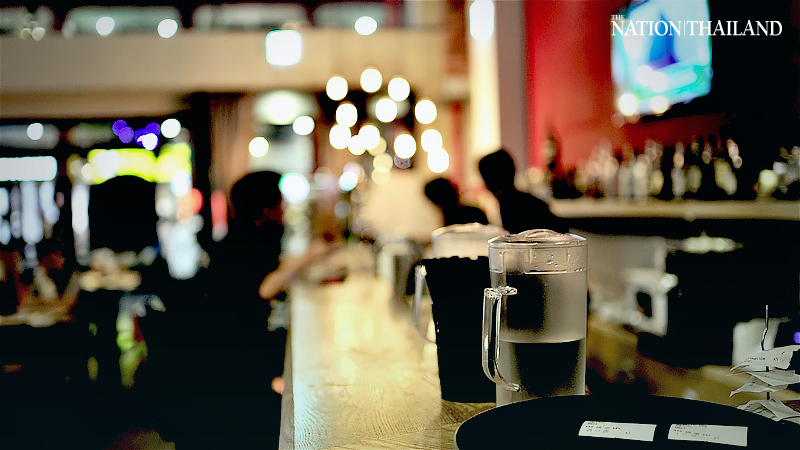
 Photo credit : Phuket X Treme@Facebook


 Graph shows vaccine reservation compared to the population. Canada leads the group with orders 9.2 times its population size.


 Photo credit: The 3rd Naval Area Command


 (left) Prayut Chan-o-cha, Prime Minister, who took flu vaccine on June 5, 2018/ (right) Anutin Charnvirakul, Public Health Minister.

