Thailand keeping a close eye on situation in Myanmar: Wissanu
PoliticsFeb 01. 2021File photo shows deposed Myanmar leader Aung San Suu Kyi with Thai Prime Minister Prayut Chan-o-cha.
By The Nation
Thailand is monitoring closely the situation in Myanmar, Deputy Prime Minister Wissanu Krea-ngam said on Monday.
He said the political situation there had confused countries worldwide.
Meanwhile, the hashtags #SaveMyanmar and #รัฐประหาร (coup d’etat) were trending on Twitter today.
The Royal Thai Embassy in Yangon posted a Facebook message on Monday, asking Thais stranded in Myanmar to closely follow information released by the embassy.
For more information, contact the embassy on: (+951) 222784, (+951) 226728 or (+959) 797002801.
According to a Washington Post report, Myanmar’s military said on Monday that it had taken control of the country and declared a state of emergency for a year, hours after detaining civilian leader Aung San Suu Kyi and other leaders of her ruling National League for Democracy in a pre-dawn coup against the democratically elected government.
Later, US White House spokesperson Jen Psaki issued a statement, urging the Myanmar military and all other parties to adhere to democratic norms and the rule of law, and to release those detained today.
“The United States opposes any attempt to alter the outcome of recent elections or impede Myanmar’s democratic transition, and will take action against those responsible if these steps are not reversed. We are monitoring the situation closely and stand with the people of Burma, who have already endured so much in their quest for democracy and peace,” the statement said.
The government’s vaccine deal and Covid relief packages are expected to be hot topics during the upcoming no-confidence debate in Parliament.
The coalition government’s MPs had tried hard to oppose the debate by demanding that the opposition MPs make changes to some words in the motion that accuses the government of exploiting the monarchy institution to cover up its failures in running the administration. The opposition has remained unyielding and insisted on going ahead with the original words of the censure motion. The no-confidence motion has been placed on the House agenda and the censure debate will take place in mid-February.
In the run-up to the parliamentary session, the government’s response to criticism of its vaccine deals has been disproportionately aggressive.
The Ministry of Digital Economy and Society filed a legal case against Thanathorn Juangroongreaukit, leader of the Progressive Movement, accusing him of insulting the monarchy after Thanathorn openly criticised the government’s vaccine deals, which also involved the royally-owned Siam Bioscience.
Palang Pracharath Party MP Sira Jenjaka threatened to seek prosecution under section 112 of the Criminal Code for defamation of the royals if any of the opposition MPs speaks about the monarchy during the debate. He also warned that government MPs would protest if the opposition makes any point related to the Palace during the debate.
Against this backdrop, the public may wonder how both the opposition and government MPs would handle sensitive issues related to the Palace after pro-democracy protesters raised the issue of monarchy reform since last year and as a consequence, many of them are facing charges of insulting His Majesty the King.
“If the issues related to the role of monarchy are raised in the upcoming parliamentary debate, it may lead to wider and normal discussion about the role of the Palace,” said Titipol Phakdeewanich, dean of the Faculty of Political Science at Ubon Ratchathani University.
“It is unfortunate that politicians on the government side represent the old mindset that rejects social change and sees the new generation as a threat to the establishment,” he lamented, objecting to the use of section 112 to target critics.
Titipol called on the government to be open to scrutiny.
Many observers are also interested in how Public Health Minister Anutin Charnvirakul will clarify the delay in securing vaccine supplies and whether he will disclose the vaccine contacts with AstraZeneca, the vaccine developer, and Siam Bioscience, a designated local vaccine manufacturer for AstraZeneca. Earlier Anutin had refused to disclose the contracts, arguing that it involved private companies, though many critics argued that the government was using tax money to support Siam Bioscience. And recently, the European Commission has made its contract with AstraZeneca available to the public, following a conflict over vaccine delay. The EU move might indirectly add pressure on the Thai government to disclose the vaccine contracts.
On the Covid-19 relief package, the government has faced criticism for extending the 90 per cent relief on land and building tax for another year. Many people see the landlords as having the ability to pay the tax. The land and building tax was expected to serve as a tool to narrow the widening inequality between the rich and the poor. The wealthy also have more choices to manage their assets compared with those who do not own large property. For example, KBank Private Banking offers financial asset investment services for the rich who hold large properties.
Finance Minister Arkhom Termpittayapaisith defended the tax break, saying the government’s tax breaks would leave people with more money to spend during the contraction of the economy.
Somjai Phagaphasvivat, adviser to Prime Minister Prayut Chan-o-cha, said that inequality was a long-term issue and the government may need to jump-start the economy first during a pandemic that had affected the whole economy. He agreed that economic inequality was a serious issue that the country had been facing for long. In the long run, the movement has to deal with market monopoly by a few giant firms, such as in the retail sector. Education reform is needed to up-skill Thai workers, said Somjai, who is also a political scientist.
He, however, said the opposition had a chance to discredit the government and could leverage it for the upcoming local government elections. But the debate was unlikely to make a big change as the coalition government’s unity remained strong, and there was no sign of any parties breaking away, he said.
Intensified pro-democracy protests last year have raised people’s awareness of their rights around the country and politicians are expected to touch on the subject during the debate.
Gothom Arya, adviser to Mahidol University’s Institute of Human Rights and Peace Studies, said he wanted to see MPs debate on the rights of marginalised groups, such as Karen minority, and whether they should be allowed to live in the forest as they did traditionally. Gothom was referring to the group of indigenous Karen villagers who left their resettlement and returned to their village deep in the forest in Kaeng Krachan National Park recently after they had been evicted from their village in 2011 by park officers.
Many experts believed that the impact of the no-confidence debate would largely depend on the evidence presented by the opposition.
Pipat Luengnaruemitchai, chief economist at Kiatnakin Phatra Securities, said he did not expect much impact from the censure debate, saying the government could have done much better in national administration while the opposition was missing in action. He pointed out that while people had been suffering from PM2.5 toxic dust, there had not been much debate among the government and opposition on this serious issue.
Thanawat Polvichai, president of the University of Thai Chamber of Commerce, said that the Thai government had implemented policies to combat the coronavirus and provided aid to businesses and people, similar to how other governments worldwide had done.
The impact of the censure debate would depend on evidence presented by the opposition to show how the government had failed in combating the virus and providing aid to the people, he added.
While many observers may foresee this no-confidence debate as not leading to an immediate change in the politics, it will provide the public more knowledge about good governance, transparency and accountability of the government.
“Government MPs may wrongly use Parliament as a platform to exercise their power, but a parliamentary session is actually a place to keep people informed,” Titipol said, warning against the possibility of disruption by government MPs during the debate and potential filing of charges under section 112 against opposition MPs.
The Criminal Court ruled on Sunday to block the Progressive Movement’s statement on Thailand’s Covid-19 vaccination plans under Section 14 (3) of the Computer Crime Act.
The Digital Economy and Society Ministry had filed a lese majeste case against Progressive Movement leader Thanathorn Juangroongruangkit for his statement on Thailand’s Covid-19 vaccination plans and linking it to a royally-owned pharmaceutical company. Thanathorn also faces charges of violating the Computer Crime Act.
The court ruled to block the Progressive Movement’s statement that was shared via its website, YouTube and Facebook page. The court said that it could affect the Kingdom’s security.
Regarding the lese majeste charge, Digital Economy and Society Minister Buddhipongse Punnakanta said it was currently being investigated by the Technology Crime Suppression Division.
The Constitutional Court ordered Democrat MP Thepthai Senpong to give up his seat in Parliament on Wednesday, after he was sentenced to two years in prison for fraud during the Nakhon Si Thammarat mayoral election in 2014.
The prison sentence was handed down by Nakhon Si Thammarat Provincial Court on August 28 last year. The Election Commission then asked the Constitutional Court to consider Thepthai’s parliamentary status.
Thepthai had been suspended from parliamentary duties since September 16 last year. The former MP has also been hit with a 10-year ban from politics.
The censure debate next month against 10 ministers will take 52 hours, the same as last year’s no-confidence motion, chief government whip and Palang Pracharath MP Wirach Ratanasate said on Wednesday.
The opposition will get 26 hours to present its argument, while the coalition will have 24 hours to defend itself.
He said the debate has initially been scheduled for February 16-19, with final voting on February 20, though the Cabinet has yet to confirm the dates.
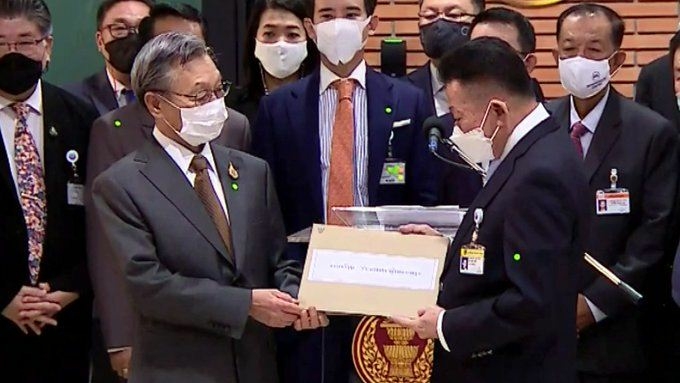
Opposition leader Sompong Amornvivat submitted a petition to House Speaker Chuan Leekpai on Monday to launch a censure debate against 10 ministers over the following issues:
Prime Minister Prayut Chan-o-cha
Failing in his duties amid the Covid-19 outbreak and procurement of vaccines, mismanagement related to the purchase of submarines, inability to wipe out gambling dens and misuse of Section 44 of the interim charter for the benefit of private businesses.
Deputy Prime Minister Prawit Wongsuwan
Misusing government budget for personal benefit, not declaring collection of luxury watches and transferring immigration chief Pol Lt-General Surachet Hakpal without due investigation.
Public Health Minister Anutin Charnvirakul
Failing to effectively deal with Covid-19 outbreak and procuring vaccines.
Commerce Minister Jurin Laksanawisit
Corruption related to stockpiling of rubber gloves in the Public Warehouse Organisation and appointing unqualified persons.
Labour Minister Suchart Chomklin
Failing to curb outbreak leading to new wave of infections and moves to take advantage of migrant workers.
Interior Minister Anupong Paochinda
Wrongfully postponing the contract for BTS Green Line despite it being ready, importing garbage and exploiting the system for personal benefit as well as for the benefit of his friends.
Education Minister Nataphol Teepsuwan
Failing to introduce reform in the education sector and unnecessary intervention in duties of civil servants for undue benefits.
Deputy Interior Minister Nipon Bunyamanee
Pushing for controversial Jana Industrial Estate in the South and blocking payment for road maintenance to private firms as president of Songkhla Provincial Administration Organisation.
Deputy Agriculture Minister Thammanat Prompao
Providing false information of assets and liabilities, involvement in a drug case overseas, misuse of state land under the Agricultural Land Reform Office and appointing common-law wife Thanaporn Sriviraj as member of the prime minister’s secretariat.
Transport Minister Saksayam Chidchob
Granting benefits to the private sector in duty-free business, changing MRT Orange Line’s terms of reference, objecting to the extension of BTS Green Line concession and going ahead with the controversial extension of Suvarnabhumi Airport.
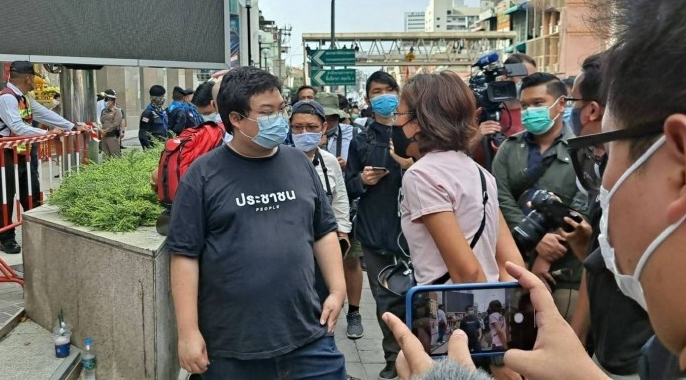
Ratsadon pro-democracy demonstrators led by Parit “Penguin” Chiwarak gathered outside Siam Bioscience’s Bangkok headquarters this afternoon to protest the company’s role in Thailand’s Covid-19 vaccine programme.
Last week, Progressive Movement leader Thanathorn Juangroongruangkit raised concerns over transparency in the government’s decision to hand the royally owned company responsibility for manufacturing the AstraZeneca vaccine.
Thanathorn stated Siam Bioscience had been tasked with manufacturing 200 million doses of the vaccine per year, 176 million of which will be sold to other countries in the region.
He said the deal had left Thailand with insufficient vaccine to cover its entire population. The government filed a charge of lese majeste against him over the comments.
On Monday, Parit echoed Thanathorn’s criticism in his speech to a small crowd outside the Srijulsup Building in Pathumwan, where Siam Bioscience is headquartered.
The activist said vaccines were now the country’s only hope since lockdowns were no longer an option and tourists would soon return. However, the government had not procured enough doses for all Thais, while its deals with vaccine manufacturers Sinovac and AstraZeneca had only benefited big pharma, he added.
The government had also continued with its deal to buy China’s Sinovac vaccine even after some countries suspended their purchases following news it was only 50.4 per cent effective, said Parit. He pointed to the fact that Sinovac was partially owned by Thai conglomerate Charoen Pokphand Group.
Siam Bioscience also lacked a track record in producing vaccines and had been in deficit for several years. Parit said the company was only handed the task because of the link between another royally owned corporation, Siam Cement Group, and Oxford University – AstraZeneca’s partner in Covid-19 vaccine development.
He said other pharmaceutical corporations have not been asked to produce the AstraZeneca vaccine, according to documents he has seen.
The government is using Bt6 billion of taxpayers’ money to procure the 26 million doses made by Siam Bioscience, said Parit.
Those doses would not be enough to inoculate the entire population, because the government had failed to open up manufacturing rights to other businesses, he added. This showed the government was “heartless” and not acting in the public interest, said Parit.
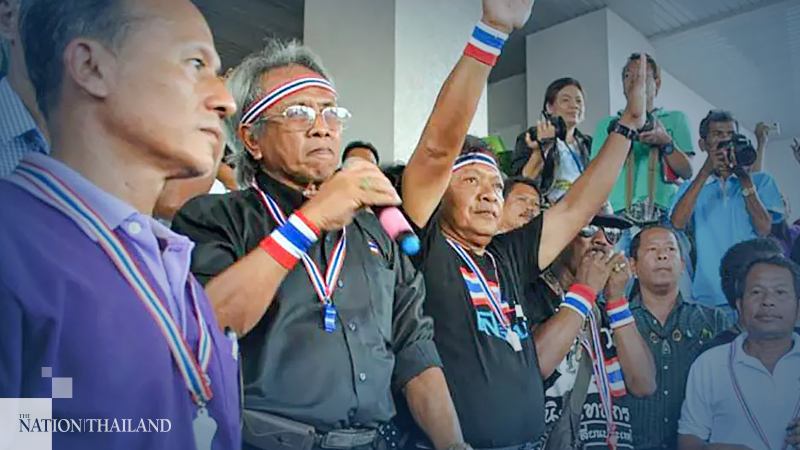
Phattalung Provincial Court on Monday sentenced Thawee Phumsingharat – a former member of the yellow-shirt People’s Democratic Reform Committee (PDRC) – to two years and 12 months in prison for hindering local elections in 2013.
Thawee allegedly joined other PDRC members to block the election of MPs in Phattalung from December 28-31, 2013.
Though he was elected as Phattalung senator the following year, he never reported to work because Yingluck Shinawatra’s elected government was ousted on May 22, 2014 by a military takeover led by General Prayut Chan-o-cha.
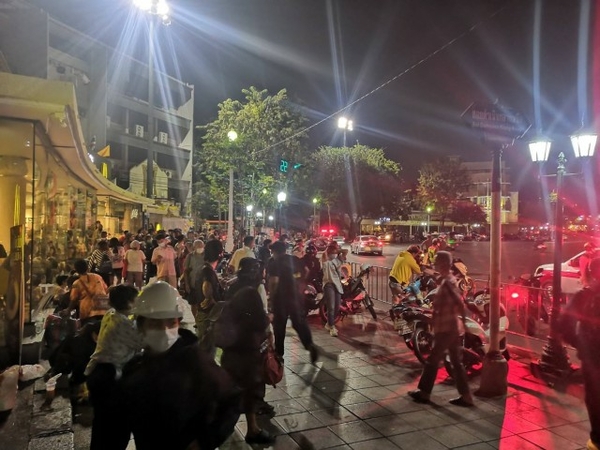
A group of anti-government protesters from Ratchaburi province showed up at Government House on Monday to demand the resignation of Prime Minister General Prayut Chan-o-cha and abolition of the lese majeste law.
The group, calling itself “Ban Pong Anti-Dictatorship” and a branch of pro-democracy movement Ratsadon, reportedly walked more than 100 kilometres from Ratchaburi’s Bang Pong district to Bangkok.
Their march began at 6am on Sunday and they arrived at the Chamai Maruchet Bridge in Bangkok’s Dusit district at dusk, where they set up camp for the night.
At 10.30am on Monday, group leader Anuchit Rerngpradit read a statement saying this government’s insincerity will no longer be tolerated, especially its tendency to use the lese majeste law to stay in power and gag those who disagree.
“Prayut does not know his duties and should not be called a prime minister,” he said. “Even calling him a security guard is not enough, as guards usually know their duties.”
When asked if the group will continue rallying at Government House, Anuchit said their mission was to walk from Ratchaburi to air their dissatisfaction, which has been fulfilled.
“After this, we will see if we can join the political activities of other groups,” he added.
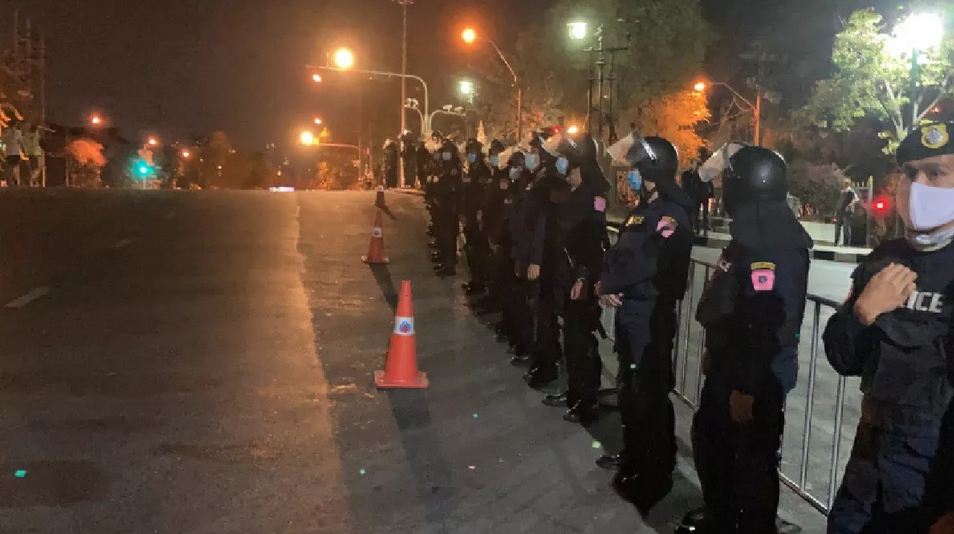
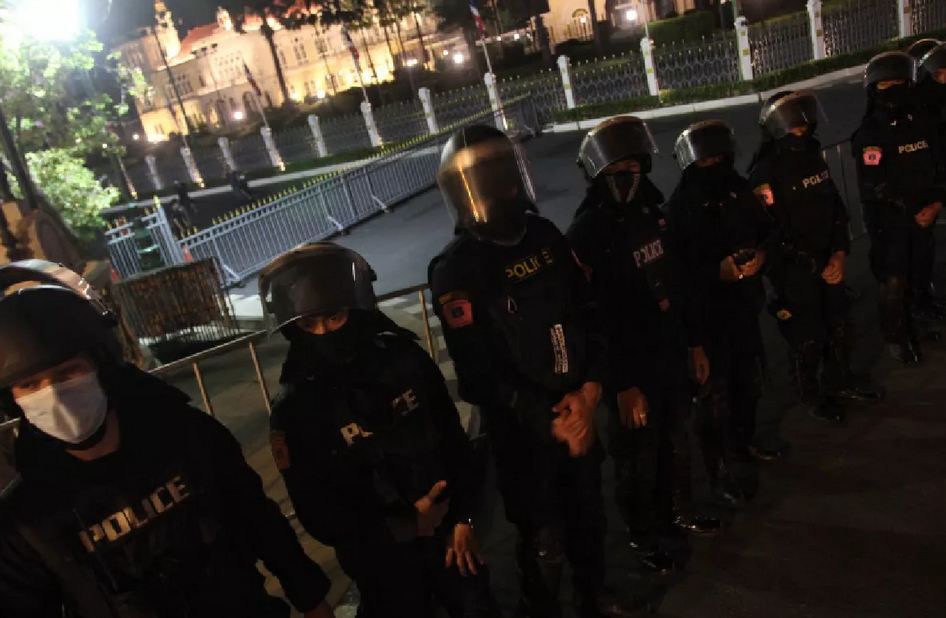
A company of some 176 police officers was deployed around Government House since 7pm on Sunday.
Opposition leader Sompong Amornvivat submitted a petition to House Speaker Chuan Leekpai on Monday to launch a censure debate against 10 ministers, Pheu Thai secretary-general Prasert Chanruangthong said.
The 10 ministers are:
1. Prime Minister Prayut Chan-o-cha
2. Deputy Prime Minister Prawit Wongsuwan
3. Public Health Minister Anutin Charnvirakul
4. Commerce Minister Jurin Laksanawisit
5. Labour Minister Suchart Chomklin
6. Interior Minister Anupong Paochinda
7. Education Minister Nataphol Teepsuwan
8. Deputy Interior Minister Nipon Bunyamanee
9. Deputy Agriculture Minister Thammanat Prompao
10. Transport Minister Saksayam Chidchob
Prasert said Prayut had failed to provide administration, neglected corruption for his and his comrades’ benefit amid people’s sufferings due to the Covid-19 outbreak and destroyed the bond between the monarchy and people.
“Prayut used the monarchy as a shield to hide his failure in government administration, resulting in severe damage to the country’s economy, society and judiciary system,” he said.
Meanwhile, opposition whip Sutin Klangsaeng said opposition parties have agreed to hold a censure debate on February 16.
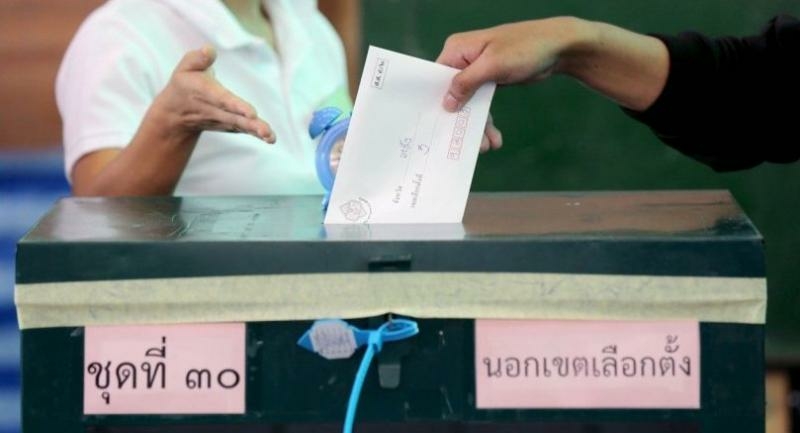
Re-election will be held for chief executives and/or members of the Provincial Administrative Organisation (PAO) in 18 provinces on February 7, the Election Commission announced on Friday.
The election of PAO chiefs and members were held nationwide on December 20 of last year.
The commission had cancelled the election of PAO members in 46 polling stations, the election of PAO chiefs in 15 polling stations, and the election of PAO chiefs and members in three polling stations, and therefore will hold the re-election in these 18 provinces.
Seven provinces — Nonthaburi, Narathiwat, Nakhon Si Thammarat, Nakhon Sawan, Nakhon Phanom, Udon Thani and Ubon Ratchathani — will hold elections for PAO members.
Six provinces — Kalasin, Yasothon, Samut Prakarn, Ang Thong, Phang Nga and Lopburi — will hold elections for PAO chiefs.
Five provinces — Suphan Buri, Chumphon, Sa Kaeo, Rayong and Uttaradit — will hold elections for PAO members and chiefs.
For more information, contact hotline 1444, visit http://www.ect.go.th/, or download the ‘Smart Vote’ mobile application.
 File photo shows deposed Myanmar leader Aung San Suu Kyi with Thai Prime Minister Prayut Chan-o-cha.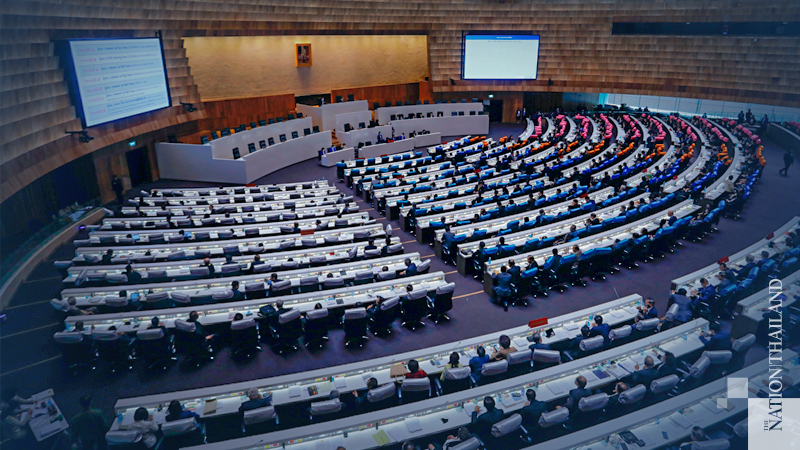
 Thanathorn Juangroongruangkit
 Thepthai Senpong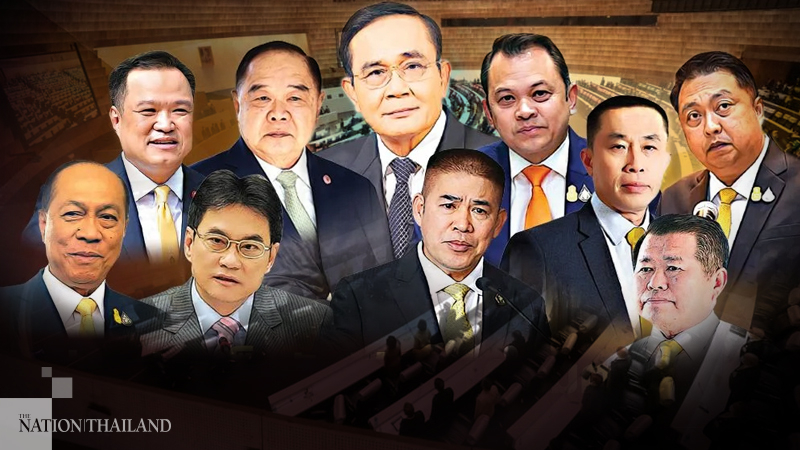
 SootinClaimon.Com