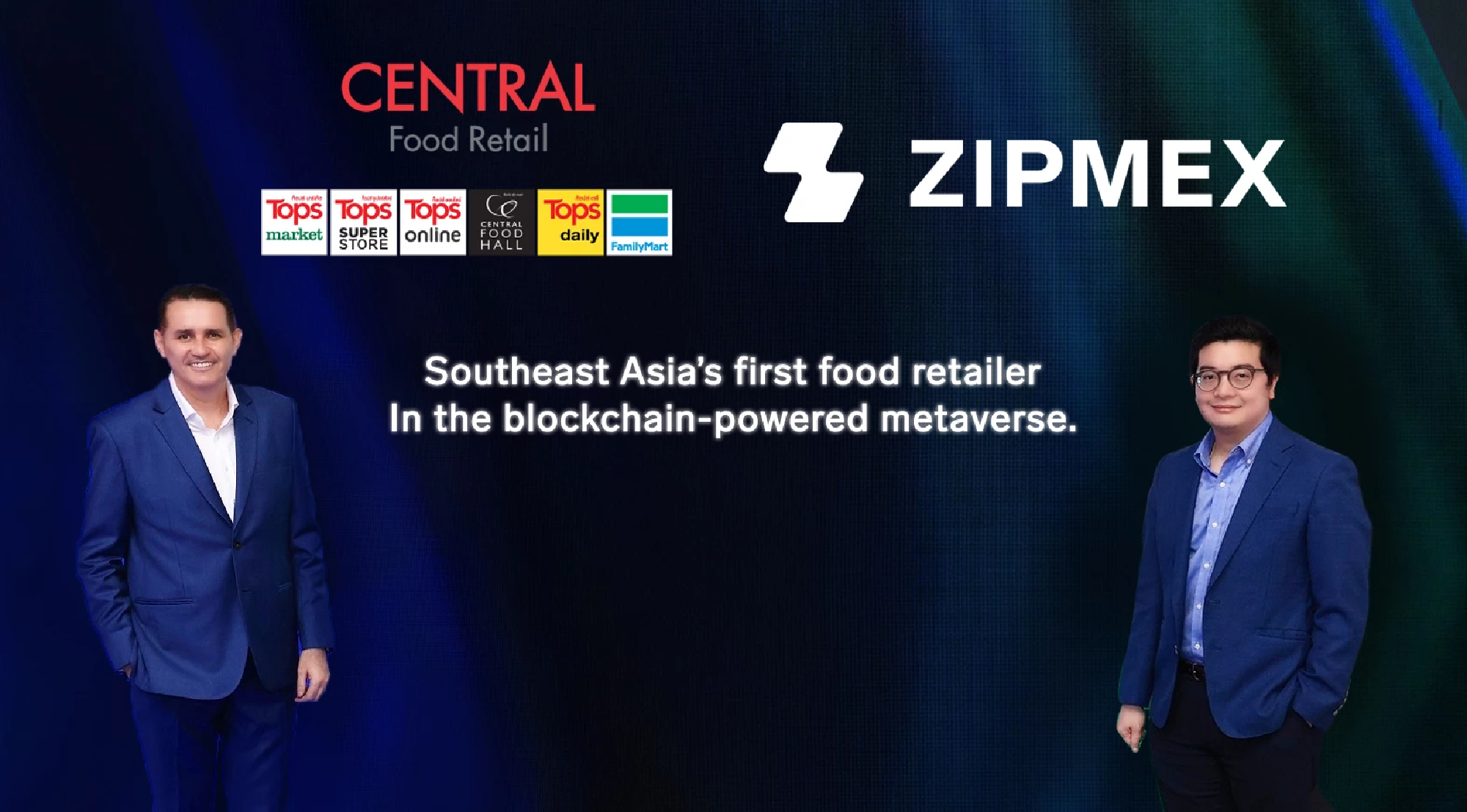
Central Food Retail moves ahead with its “CRC Retailligence” strategy by joining forces with leading cryptocurrency platform Zipmex to launch its very own blockchain-powered supermarket that will connect modern consumers to the metaverse.
CEO Stephane Coum said the company’s vision was to use new technology to become a 21st-century leader in innovative food retail.
The “CRC Retailligence” strategy aims to drive retail innovations of the future, creating seamless experiences and becoming “Central to Life” for all customers, he said.
“We plan to tap into the retail potential of the metaverse, a world that runs on digital asset infrastructures such as crypto and NFT. We see enormous potential to enhance shopping experience and lifestyle through convenient, seamless and interactive access to products and services. The Covid-19 epidemic is also a key driver in re-shaping shopping behaviour as more people shop online, accelerating the development and uptake of new technologies and innovations in the retail space,” Coum said.
Akalarp Yimwalai, CEO and co-founder of Zipmex Thailand, said this partnership would give customers seamless access to products and services in real-time.
“Zipmex’s innovation expertise and leadership make us the perfect gateway to the world of digital assets,” Akalarp said.
Zipmex has been offering support and knowledge resources to both retail customers and partners seeking to expand their businesses to the metaverse, taking advantage of such disruptive innovation occurring in the world today.
Partners of Zipmex benefit from the ability to tap new market opportunities, drive revenue and increase customer awareness and engagement.
“Our partnership with Central Food Retail is the perfect starting point for innovations in the food retail industry both in Thailand and Southeast Asia. We want to provide exciting new experiences for everyone and put Thai retail on the global stage,” he added.
Visit http://www.tops.co.th, Facebook page TopsThailand or the application @TopsThailand for more information.
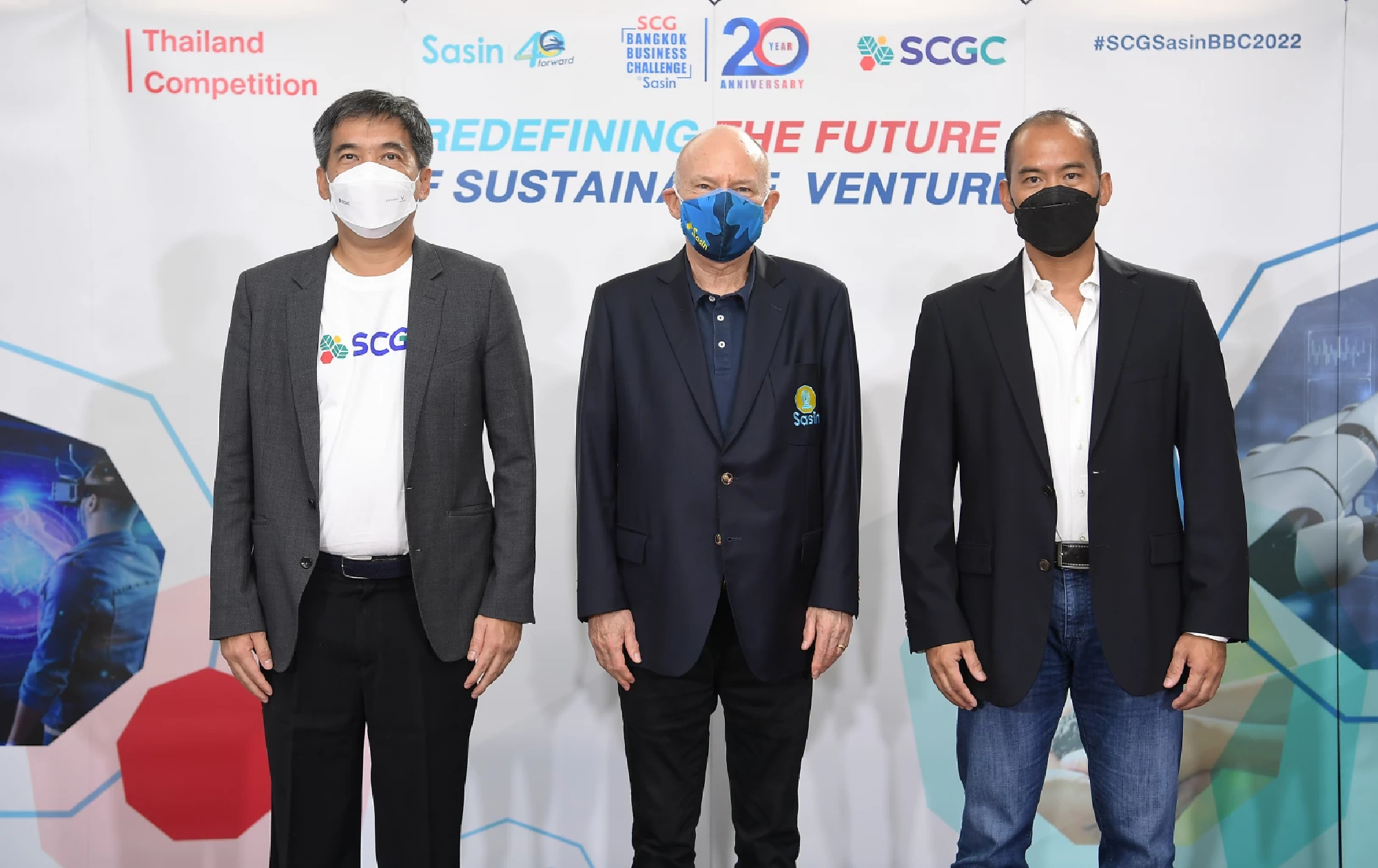
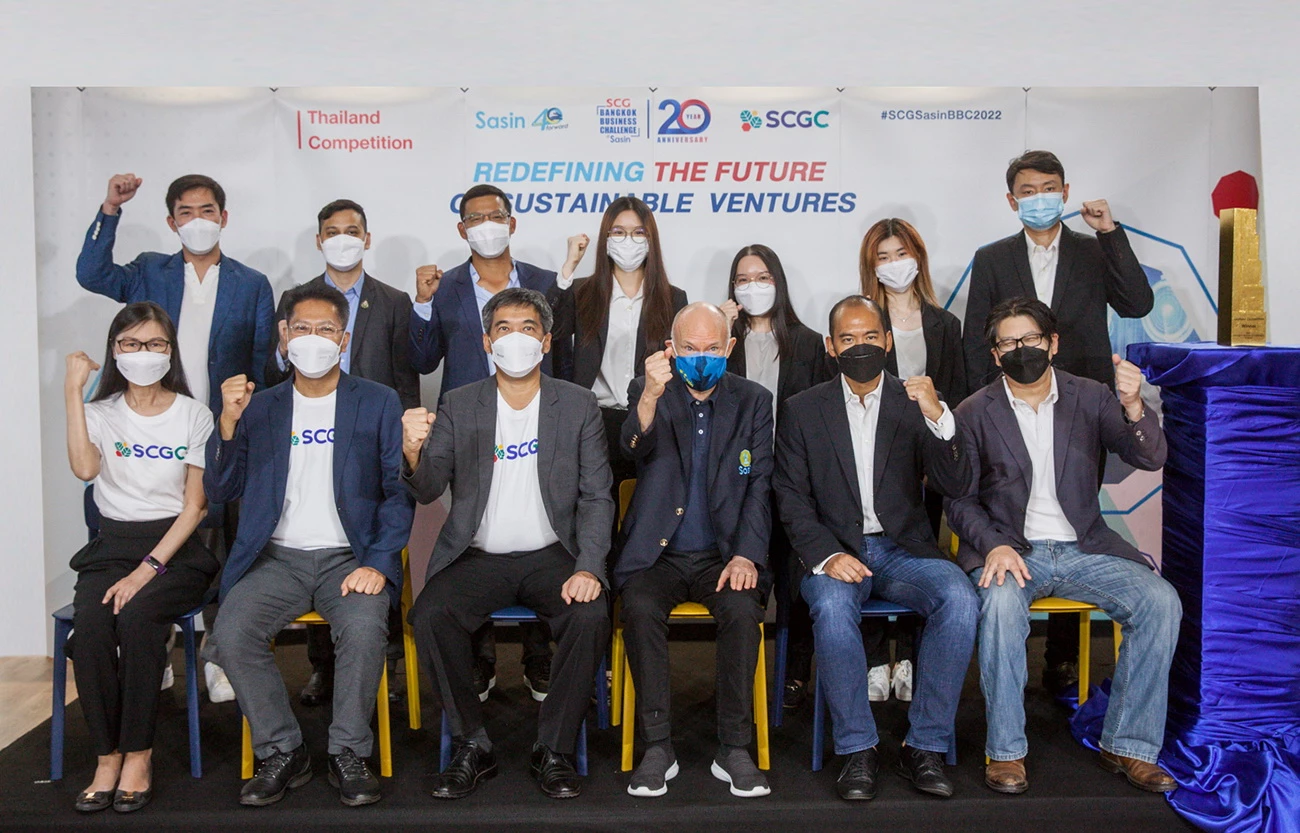
Top teams from leading universities in Thailand will showcase and develop their startups at the “SCG Bangkok Business Challenge @ Sasin 2022 – Thailand Competition”, under the theme, “Redefining the Future of Sustainable Ventures”.
Top teams from leading universities in Thailand will showcase and develop their startups at the “SCG Bangkok Business Challenge @ Sasin 2022 – Thailand Competition”, under the theme, “Redefining the Future of Sustainable Ventures”.
Sasin School of Management has partnered with SCG Chemicals (SCGC), a pioneer in the integrated chemicals business, to host the competition, which will be streamed live on Facebook on March 26-27.
The “SCG Bangkok Business Challenge @ Sasin” serves as an ideal, competitive platform for undergraduate and postgraduate students in Thailand to present their startup business plans in English and prepare for the future growth of their business. The competition was launched in 2002 and has been held for 20 consecutive years, making it the longest-running global student startup competition in Asia.
“Sasin is honoured to collaborate with our partner, SCG Chemicals, for the seventh straight year,” said Professor Ian Fenwick, Director of Sasin School of Management.
“This competition lies at the heart of what we do at Sasin – promote and emphasise sustainability through an entrepreneurial mindset. This is the second year that we have arranged the “Thailand Competition”. We all look forward to seeing this year’s innovative, sustainable startups from universities around Thailand.”
Dr Suracha Udomsak, Chief Innovation Officer, Executive Vice President – New Business, SCG Chemicals (SCGC), said, “SCG Chemicals focuses on developing the innovation ecosystem and human resources in Thailand. We believe that to encourage entrepreneurship and a sustainable mindset among Thai university students is vital. We are delighted to be able to continue to support ‘SCG Bangkok Business Challenge @ Sasin’. We are confident that this international competition will elevate the innovation ecosystem in Thailand and bring benefits to all relevant segments.”
The competition features global networking and seasoned experts in business, marketing, investment, and sustainability who will judge this year’s teams and determine the best startup in the competition.
The “SCG Bangkok Business Challenge @ Sasin” comprises the “Thailand Competition” and the “Global Competition”.
The winning team in the Thailand Competition will receive a cash prize of US$4,500 (approximately THB150,000) and will qualify for the Global Competition in July.
While still in the process of requesting the bestowment of this year’s awards, the winners of the Global Competition and its Sustainability Award Round have historically received Royal Trophies: HM The King’s Award, and HRH Princess Maha Chakri Sirindhorn’s Sustainability Award, respectively. In total, cash prizes in the Global Competition are worth over $60,000 (over THB2 million).
The 12 teams that will participate in the Thailand Competition, selected from a total of 113 teams, are:
• Uniclass team from Sasin School of Management
• IQMED team from Mahidol University
• Carity team from Chulalongkorn University
• Grycle team from Chulalongkorn University
• Perm team from Chulalongkorn University
• Come & Craft Company team from Thammasat University
SCG Solar Roof Solutions, a leading solar rooftop system for homes, is joining up with US energy service provider Enphase Energy, to power microinverter technology to become the first and only provider of solar systems in Thailand’s residential market.
SCG Solar Roof Solutions, a leading solar rooftop system for homes, is joining up with US energy service provider Enphase Energy, to power microinverter technology to become the first and only provider of solar systems in Thailand’s residential market.
“We are living in an era of ever-changing technology to make our lives easier, better and greener. Solar energy, known as renewable or clean energy, is a global trend that every sector is focusing on because it helps consumers by reducing electricity bills, and the world by lowering carbon dioxide emission and contributing to a greener environment,” a statement from SCG said.
Thongchai Sophon, SCG’s chief of housing products business, said the solar rooftop market has grown dramatically, especially in the industrial sector, where the technology has been focused on as an investment for cost reduction.
In the household sector, he said, solar projects have been encouraged and developed to become more accessible and affordable to reflect the energy consumption behaviour of consumers who have been working from home during the Covid-19 pandemic.
“SCG Solar Roof Solutions is cooperating with leading energy service provider in the US, Enphase Energy, to create solutions that power microinverter technology driven by intelligent software to elevate solar roof systems,” he said.
He added that SCG is ready to become a one-stop service of the residential solar market with its advanced yet clean technology solution of solar rooftops.
Meanwhile, Dave Ranhoff, chief commercial officer at Enphase Energy, said he was pleased that Enphase has joined forces with SCG, the largest and longest-standing building material company in Thailand and emerging champion for solar energy in the region.
In the partnership, Enphase microinverters provide great value with a complete AC solar solution that does not use high-voltage DC and with rapid shutdown as standard, he added.
“We look forward to working together to bring the most reliable solar technology to the Thailand market,” he said.
He added that the company’s microinverter technology, which is a single panel solar control system, is considered the most cost-effective system.
There is also a rapid shutdown system that quickly shuts down the system for maximum safety, he said.
“We also believe that moving forward with SCG will help raise the standard of the solar roof system to be more efficient and be ready to become a leader in the Thai market,” he added.
Why did SCG choose the microinverters system?
Microinverters convert solar energy from DC power to AC power and generate power efficiently yet safely throughout the house. With one microinverter per module, solar production keeps working even if the microinverter fails. This smart software system can guarantee the safety of all users.
High Performance
Even when there are shadows or clouds passing over the solar array, this technology can capture energy because each solar panel operates independently.
Safety
Microinverters are inherently safe because they operate at the same low voltage AC power as your home. With built-in “rapid shutdown”, utility workers and first responders are safe as your solar power is turned off instantly in case of emergency.
Real-Time Monitoring
Users can easily monitor and manage power-generating efficiency through the home in real-time from SCG Solar Roof Solutions Application.
“SCG Solar Roof Solutions targets solar rooftop to be the leading enterprise of the residential solar market in Thailand by aiming to secure our sale at 300 per cent from 2021 using customer database strategy together with cooperating with strategic partners like Enphase Energy,” Thongchai said.
“We provide an all-in-one system from checking the roof before installing solar panels to designing and submitting for government approval with a 25-year warranty to ensure that the installation is standardised and safe for users. We believe this cooperation will strengthen and enhance our performance to the maximum,” he added.
There is no denying that the era of clean energy is coming. The almost daily rise in the price of energy is expected to stimulate Thai society to use more clean energy.
There is no denying that the era of clean energy is coming. The almost daily rise in the price of energy is expected to stimulate Thai society to use more clean energy.
The Federation of Thai Industries (FTI) has addressed this trend for clean energy by joining with other organisations to launch a project that has been well-received worldwide. FTI, as the representative of private industry, joined hands with the Provincial Electricity Authority (PEA) to sign a memorandum of agreement on a pilot project to develop renewable energy and carbon credits on March 14.
The resulting renewable energy trading platform will run under the second phase of the Energy Regulatory Commission (ERC)’s sandbox programme. The ERC launched the programme to test various energy-related innovations.
The clean energy and carbon credit trading platform will be a key tool for making electricity trading contracts, to support the upcoming carbon credit market in the industrial sector. PEA will have a hand in delivering energy to purchasers, which will see more renewable energy sent to the manufacturing sector.
The initiative is in line with Thailand’s new energy policy and goal to reach carbon neutrality by 2050 and net-zero emissions by 2065.
This collaboration between the government and private sector to create the clean energy and carbon credit trading platform will help to encourage renewable energy development in the Thai industrial sector. If the plan is successful, the renewable energy platform will open to the whole country within two years, which will be a key step on the path to Thailand becoming a low carbon society.
AIA Thailand has now officially opened a sales gallery at AIA East Gateway, its new premium office building with retail space, located on Bangna-Trat Road Km4.5.
AIA Thailand has now officially opened a sales gallery at AIA East Gateway, its new premium office building with retail space, located on Bangna-Trat Road Km4.5.
Developed as a green building with ESG at the core concept, emphasising AIA’s brand promise “Healthier, Longer, Better Lives”, AIA East Gateway is the third real estate investment by AIA, following the tremendous success of its earlier projects – AIA Capital Centre and AIA Sathorn Tower.
The construction of AIA East Gateway is scheduled for completion by the fourth quarter of 2022.
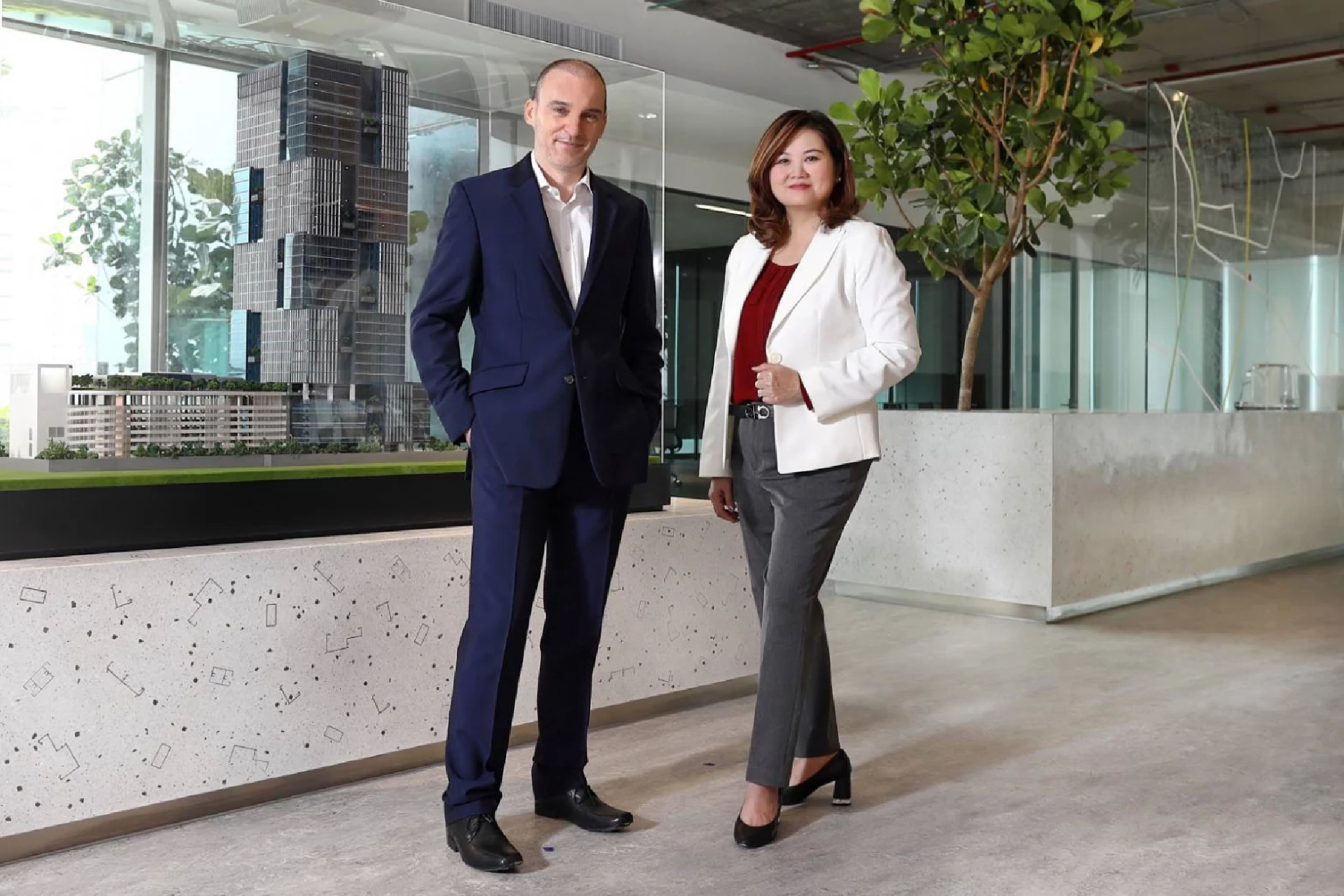
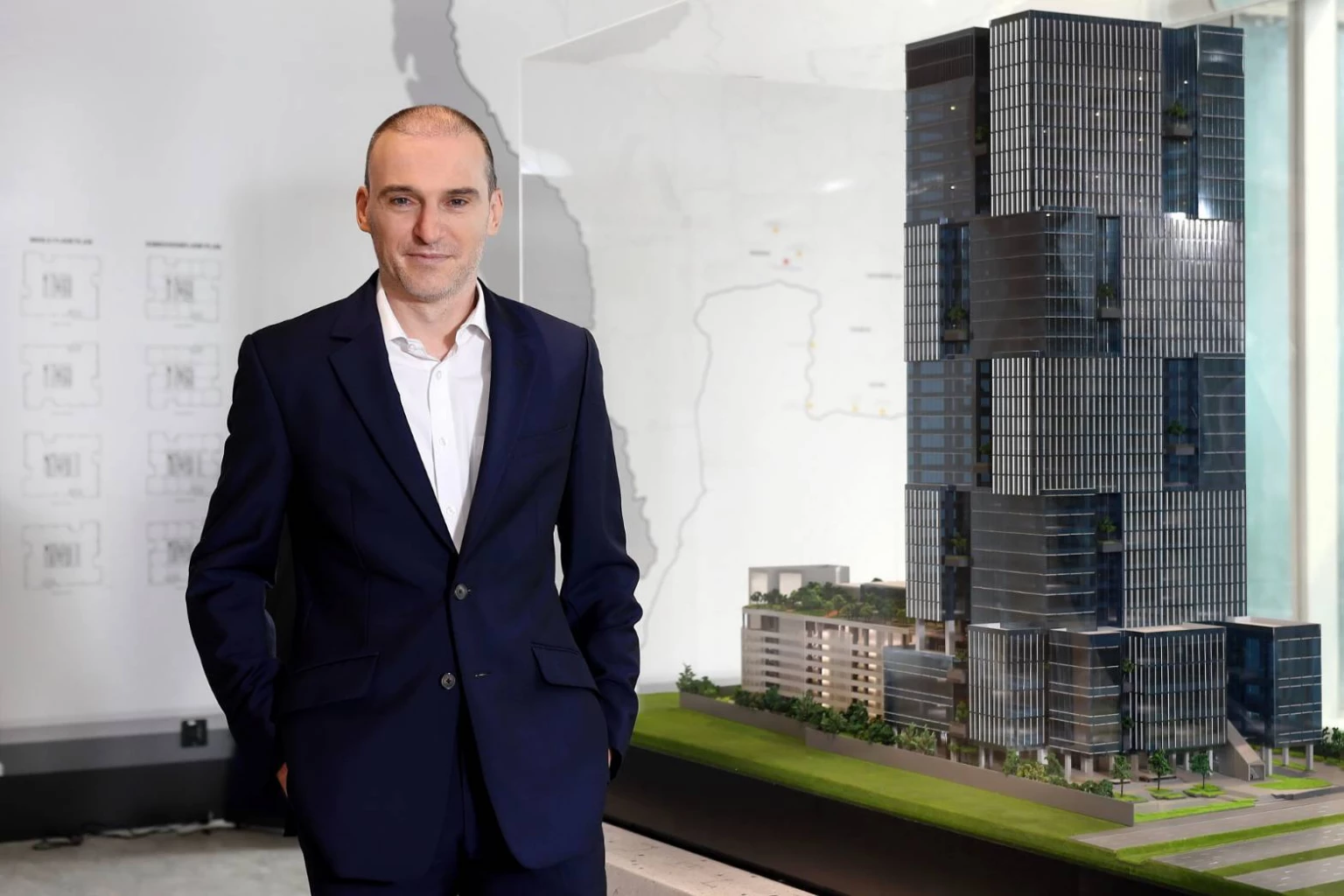
Johann Dutoit, Chief Investment Officer of AIA Thailand, said that AIA Thailand has continued to invest in real estate in line with AIA Group’s vision to diversify its investment portfolio.
AIA Thailand’s real estate investment will not only help drive the Thai economy, but AIA East Gateway will also offer premium offices and healthy lifestyles to office workers in Bangna, especially in the Next Normal era.
“AIA has been successful in developing two premium office buildings, namely AIA Capital Centre on Ratchadaphisek Road and AIA Sathorn Tower in Bangkok’s Sathorn area,” he explained.
“Currently, the occupancy rate of these two buildings is as high as 90 per cent, despite an economic slowdown amidst the Covid-19 outbreak that has dragged on for two years already.”
Spread over more than 10 rai (1.6 hectares) of land, AIA East Gateway will perfectly accommodate business expansions of Thai and foreign business groups and leading investors in this emerging CBD location of Bangna, he said.
AIA has recognised the potential of the Bangna–Trat area in both its outstanding development potential and strong economic growth. Its potential is solid for both the present and the future as Bangna-Trat is emerging as a new central business district (CBD) in Bangkok’s Eastern area.
This new CBD has convenient access to various transportation systems. It is easily accessible from both the Green Line and Yellow Line (Lat Phrao–Samrong), which will begin operating in the middle of 2022.
AIA East Gateway sits about 350 metres from the Yellow Line’s Si Iam station. The Yellow Line promises to enable easier and more convenient commute in and out of the inner-city area.
In the near future, the Yellow line will also be integrated with other mass transit routes such as the Blue, Grey, Orange, Pink and Green lines, and the Airport Rail Link.
AIA East Gateway is a 33-storey office building having an approximate area of 136,000 square metres with completion scheduled by the fourth quarter of 2022. The building will be built in accordance with the LEED Certification standard and the WELL Building Gold standard.
The LEED standard emphasises energy conservation and environmentally friendly construction, while the WELL standard focuses on the well-being of tenants.
This new building will be fully equipped with world-class health-themed facilities, encouraging dwellers to live “Healthier, Longer, Better Lives”. AIA Vitality Zone will provide health-promoting activities for building dwellers, allowing them to participate in the Urban Farming zone, which will also be a part of the building.
AIA East Gateway will boast a fully-equipped fitness centre with urban farming, rooftop running track and a saltwater swimming pool. Moreover, this building will include a co-working area and more than 1,500 parking lots.
Roongrat Veeraparkkaroon, managing director of CBRE (Thailand), said that judging by its potential, prominence, and location in the new CBD, right on Bangna–Trat Road Km4.5, AIA East Gateway is truly a new outstanding landmark.
Its ceiling is a remarkable three metres high. Its modern design is also complemented by world-class energy-efficient technologies and green solutions, she added.
“On top of that, AIA East Gateway will also feature retail space, various parks, urban farming, and an exercise space. It, therefore, promises to answer well to the lifestyles of tenants who look for a quality office building and practical facilities for building users,” she said.
AIA East Gateway is slated to offer over 70,000 square metres of lettable area; inclusive of 10,000 square metres of retail space that will span across the building’s five floors.
Each unit of retail space will start from 20 square metres in size. Retail space on the first to third floors is for shops, cafes, and convenience stores. The fitness centre and a swimming pool will sit on the fourth floor. Co-Working Space, meanwhile, will sprawl over both the fourth and fifth floors.
Total office space at AIA East Gateway is approximately 60,000 square metres. It is available from the sixth to 33rd floors. Each unit of office space starts from 85 square metres in size. The biggest unit covers the whole floor, with 2,270 square metres of space.
Tenants can design their office space with a great amount of flexibility. In addition, it is possible to instal internal stairways between floors for extra convenience.
With a ceiling height of three metres, the office space gives a sense of space and enhanced natural light. Each for-rent unit is column-free, rendering every square metre of the space fully usable.
AIA East Gateway’s asking rental rate is 700 baht per square metre per month.
People who are interested in visiting the project site or seeking additional information, can call 02-119-1500 from Monday to Friday between 8.30am and 5pm.
More than half – 63 per cent – of micro, small and medium-sized enterprises (MSMEs) in Thailand have been unable to secure sufficient, or any, funding on at least one or more occasions over the last five years, according to a survey by cloud banking platform Mambu.
More than half – 63 per cent – of micro, small and medium-sized enterprises (MSMEs) in Thailand have been unable to secure sufficient, or any, funding on at least one or more occasions over the last five years, according to a survey by cloud banking platform Mambu.
The “Small business, big growth” report surveyed more than 1,000 MSME owners globally, including in Thailand, who set up a company and applied for a business loan in the last five years.
More than a third – 35 per cent – of Thai MSMEs had to rely on friends and family for loans, followed by 34 per cent who secured funding from traditional banks or building societies, and 25 per cent from specialist SME and commercial lenders.
Of the MSMEs unable to secure sufficient funding, 34 per cent were unable to hire effectively, 32 per cent were unable to upgrade or improve technology and 31 per cent experienced cash-flow issues or were unable to launch new products or services.
Mambu’s findings come amid a rise in alternative lending, as Thai MSMEs turn to challenger banks and fintechs to overcome common barriers, such as rigid lending criteria (44%), too much paperwork and administration (30%) and slow lending speeds (29%). The opportunity for new entrants is clear as the vast majority (95%) of these organisations say they are open to changing lenders for a better experience.
Nearly half of Thai MSMEs cited better financial options (46%) and better digital services (46%) as the top reasons to change lenders. Meanwhile, 43 per cent said they would switch for better borrowing benefits and incentives and 41 per cent for better customer service support.
Myles Bertrand, managing director APAC at Mambu, said small and medium-sized enterprises are significant contributors to Thailand’s economic activity and employment. There are 3.1 million generating 12.7 million jobs (71% of the country’s workforce).
“However, the inability to access business financing will adversely hamstring Thai MSMEs eyeing commercial or operational opportunities crucial for their continued growth,” Bertrand warned.
“With the business lending sector not keeping pace with the technological innovations transforming other financial service areas, Thai lenders are not positioned to offer solutions that best serve their MSME customers when they’re really needed.”
Financial institutions must do more to tackle challenging application processes for loans, he advised.
The research found that the time it takes to apply for a loan is a major influence on small businesses when choosing a lender. While long-term repayment plans were a leading consideration for 89 per cent of MSMEs in this decision-making process, 88 per cent also wanted low interest rates and 87 per cent preferred cash-out options.
Mambu Thailand general manager Pham Quang Minh said Thai MSMEs largely comprise trading and service companies – many in the tourism industry – which have been hard-hit by the Covid-19 crisis.
“Sustaining their operations and growth is key for the country’s own economic rebound as banks can play a key role by breaking down barriers to effective borrowing through more innovative service models, flexible repayment terms, and relaxed collateral requirements,” he said.
“It is then imperative that they adopt better digital lending services to enable faster processing of loans to cater to these key business segments navigating this post-pandemic recovery period.”
When it comes to improving the application process, 88 per cent of Thai MSMEs want to see more flexible loan conditions, 86 per cent are interested in tailored offers and services, and 83 per cent want payroll management.
Retail Economics CEO Richard Lim said the pandemic had ushered in enormous changes in how we work, play and shop, accelerating the democratisation of digital and with its repercussions still reverberating across society. But access to capital is an area where digitisation has matured at a much slower place, he pointed out.
“All too often, businesses looking to scale quickly and seize opportunities are choked by exhausting application processes. Stifled by slow and inefficient practices, current lending practices are no longer fit-for-purpose in today’s fast-paced, digital world,” Lim said.
Globally, the most common barriers to securing funding among SMEs are not enough starting capital (30%), too much paperwork and admin in the lending process (28%) and cash flow not being considered strong enough (27%).
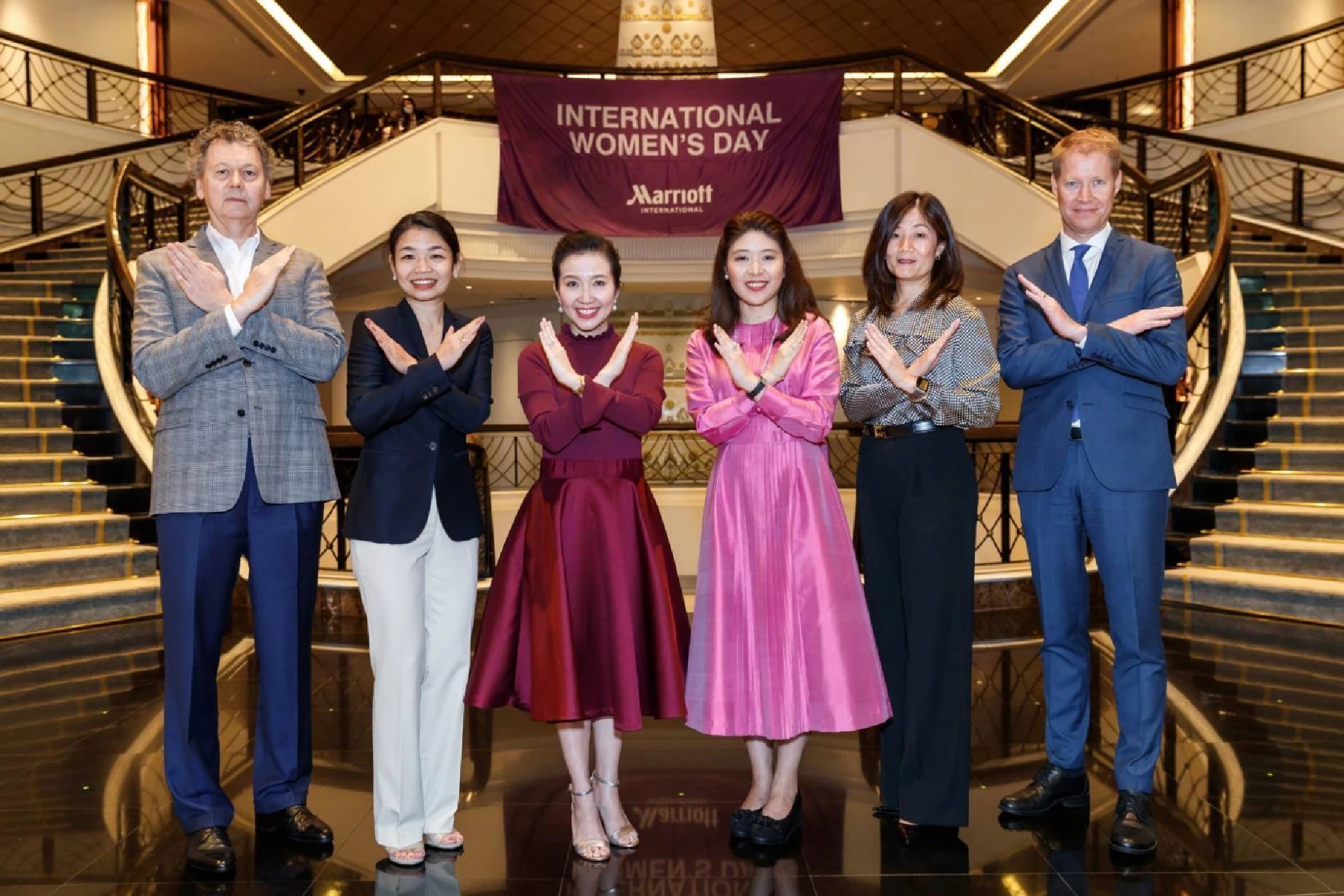
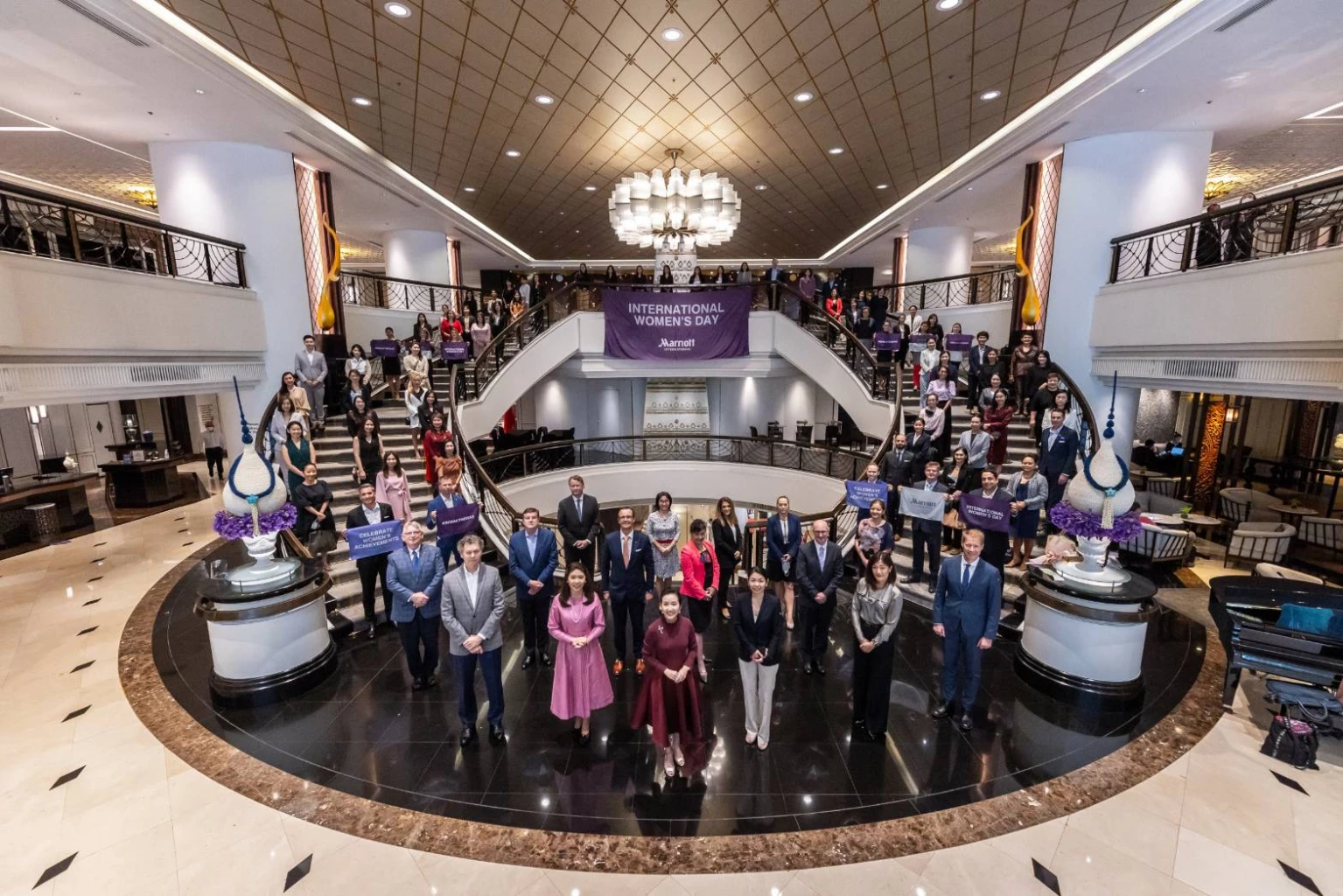
Marriott International marked International Women’s Day on March 8 with an event in Bangkok aimed at celebrating female leadership in the hospitality industry, promoting gender equality in the workplace and advancing the cause of women’s empowerment.
The event was organised by the Women’s Ambassador Network, part of the Marriott Thailand Business Council, which strives to strengthen women’s rights through its Women in Leadership programme.
An hour-long session gathered some of Thailand’s top hotel and real estate professionals for a networking reception and panel discussion on the topic of “Breaking the Bias” – the theme of this year’s International Women’s Day.
Hosted by Bangkok’s The Athenee Hotel, the event was led by Tina Liu, general manager of W Bangkok and the first female chairperson of the Marriott Thailand Business Council, along with Pamela Ong, hotel manager of Courtyard by Marriott Phuket Town, and Variya Lulitanond, Marriott International’s area director of Marketing for Thailand, Vietnam, Cambodia and Myanmar. The three executives are also key members of the Women’s Ambassador Network.
They were joined by Wallapa Traisorat, Asset World Corp CEO and president, Ploi Aranyakanond, assistant vice president of Hotel Asset Management at The Erawan Group, Monchanok Adhyanasakul, assistant director of Property Perfect, Board of Directors Royal Orchid Hotel Thailand and consultant for Grande Asset Hotels and Property, and Kevin Hall, managing director of Questus Hospitality.
The panel of experts, whose companies own or represent 20 Marriott-branded hotels in Thailand, took part in a one-hour roundtable debate on the critical issues impacting female empowerment and gender parity in the hospitality industry, moderated by Phenzasinn Limthananuntha, senior manager for the Learning & Development Delivery Team, Asia Pacific (excluding China), Marriott International.
The audience comprised a wide range of Marriott associates from all levels of the company, including general managers, Women in Leadership champions, mentors and mentees, along with a group of trainees. Associates who were unable to attend in person watched the discussion virtually.
“Marriott International has always strived to promote equal rights in the workplace, which is reflected by the fact that we have so many strong female leaders within our company,” said Liu.
“We are proud of this track record, but we understand that more work needs to be done. That’s why marking International Women’s Day remains so important. By hosting this event, we hope to highlight the biggest issues impacting women in travel and hospitality and identify the steps that need to be taken to achieve complete equality,” she added.
Marriott International is fully committed to diversity and inclusion, the hotel said in a press statement, adding that it is regularly recognised as one of the world’s most progressive employers and has featured on the “Fortune 100 Best Companies to Work For” list every year since it was first published in 1998.
Marked annually on March 8, International Women’s Day was created to celebrate the social, economic, cultural and political achievements of women, while also marking a call-to-action for accelerating gender parity.
BGrimm LNG Ltd signed an accord with PTT LNG on Tuesday to utilise the latter’s liquefied natural gas terminal in Rayong, the company said in a press release.
BGrimm LNG Ltd signed an accord with PTT LNG on Tuesday to utilise the latter’s liquefied natural gas terminal in Rayong, the company said in a press release.
The Terminal Use Agreement, concluded at the Centara Grand Hotel Central Plaza Ladprao, is part of BGrim’s foray into the LNG business and marks liberalisation of natural gas trading in Thailand.
BGrimm LNG, a wholly owned subsidiary of BGrim, earned Energy Regulatory Commission authorisation on May 27, 2020, to ship LNG to the country, the press statement said.
The company has since then taken steps to negotiate LNG purchase contracts with the world’s leading suppliers and on October 20, 2021, sought the service of PTT LNG terminal’s first facility, known as LMPT-1, to process 500,000 tonnes of LNG per year for seven years from 2023 to 2029.
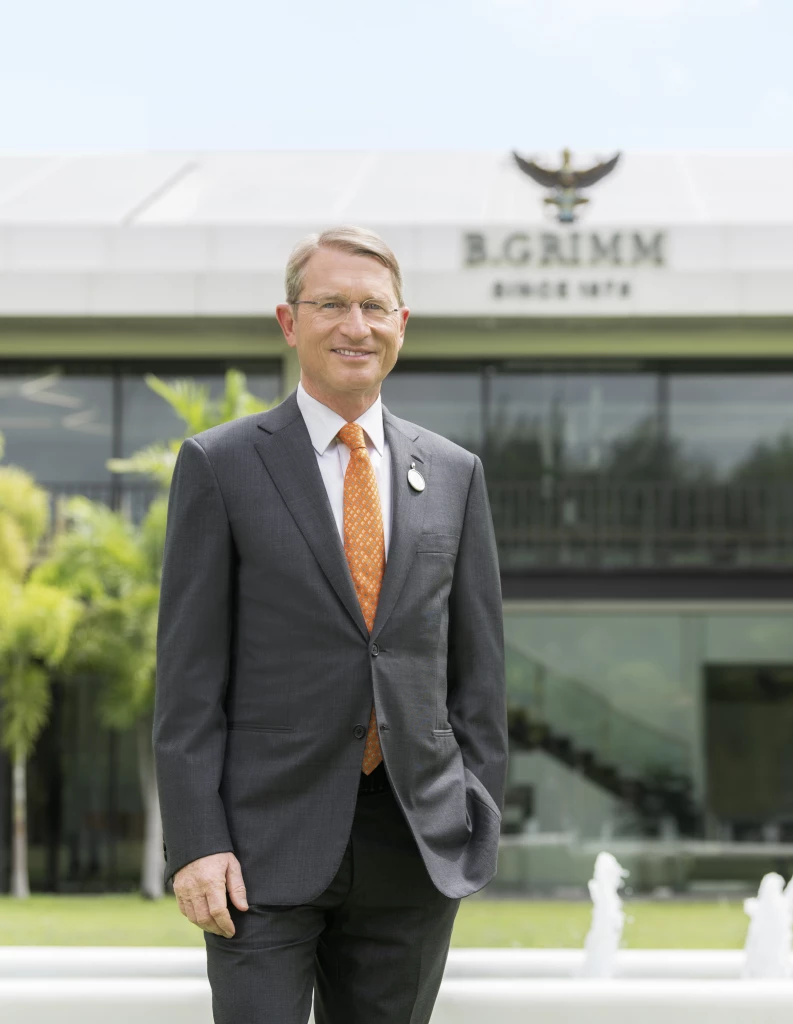
BGrim president Harald Link said the accord signifies BGrimm LNG’s readiness as the first private firm to procure liquefied natural gas for the country.
The move also marks an important step in liberalising Thailand’s natural gas business, he noted.
The first commercial shipment of LNG procured by BGrimm is expected to arrive at the LMPT-1 terminal by early 2023, in effect launching phase 2 of free competition in the natural gas business.
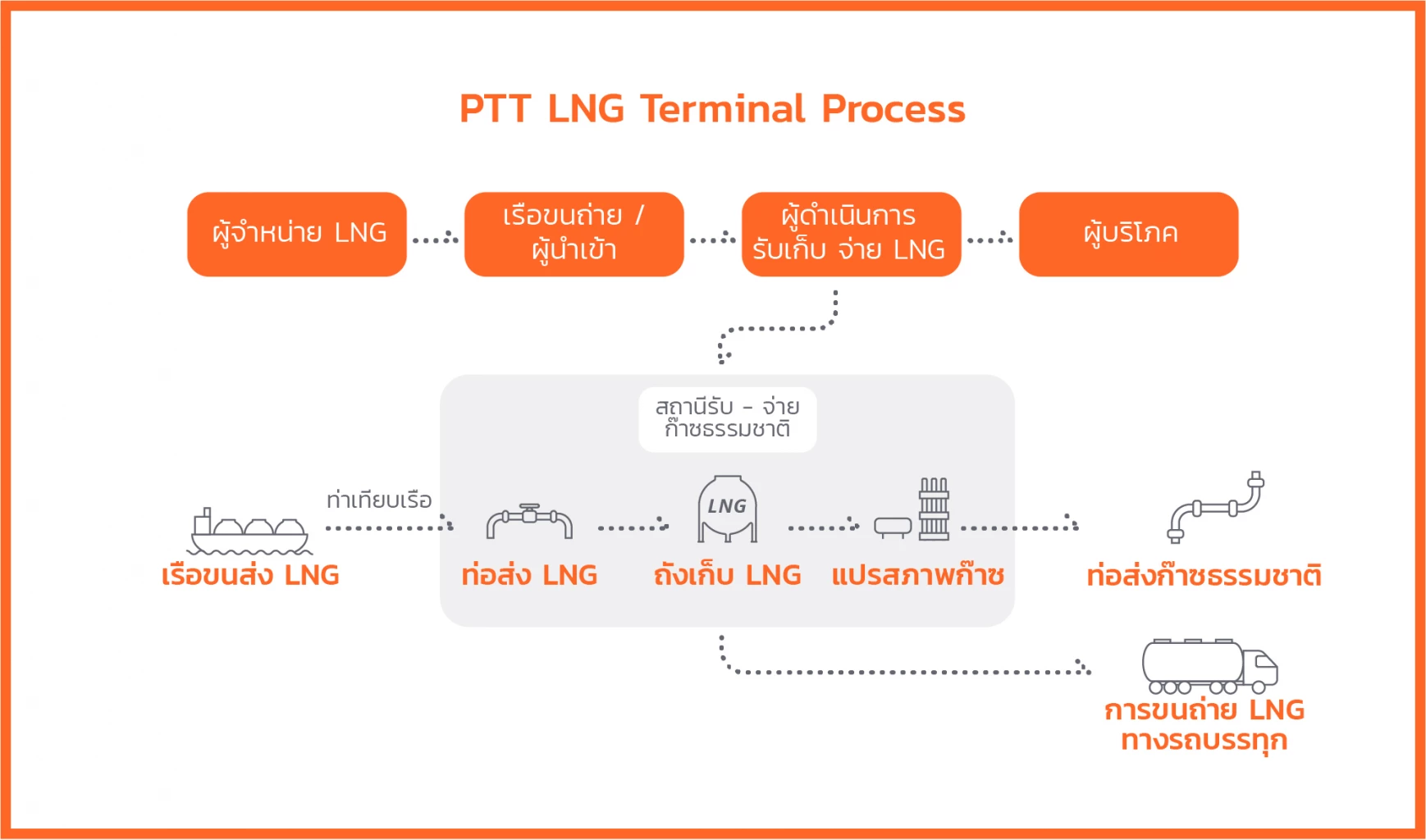
LNG procured by BGrimm will go through the regasification process at LMPT-1 to covert the liquid into a gaseous state before being fed into PTT’s natural gas pipeline system for delivery to power plants and various industries, the press release added.
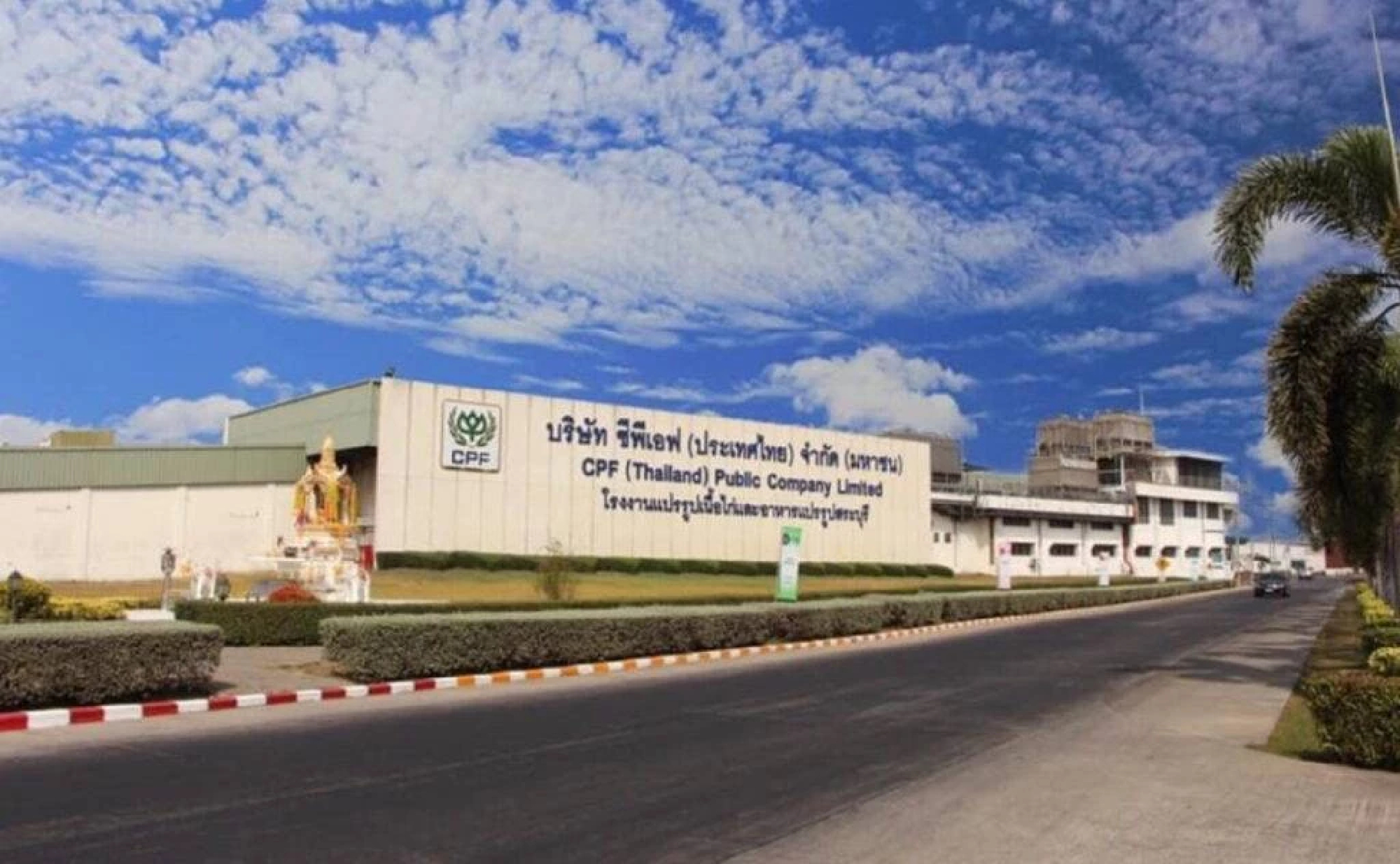
Charoen Pokphand Foods Plc (CP Foods) has expressed its thanks to Prime Minister Prayut Chan-o-cha, ministers and related agencies for their efforts in reviving relations with Saudi Arabia, which have paved the way for the opening up of a major export market for Thailand.
Charoen Pokphand Foods Plc (CP Foods) has expressed its thanks to Prime Minister Prayut Chan-o-cha, ministers and related agencies for their efforts in reviving relations with Saudi Arabia, which have paved the way for the opening up of a major export market for Thailand.
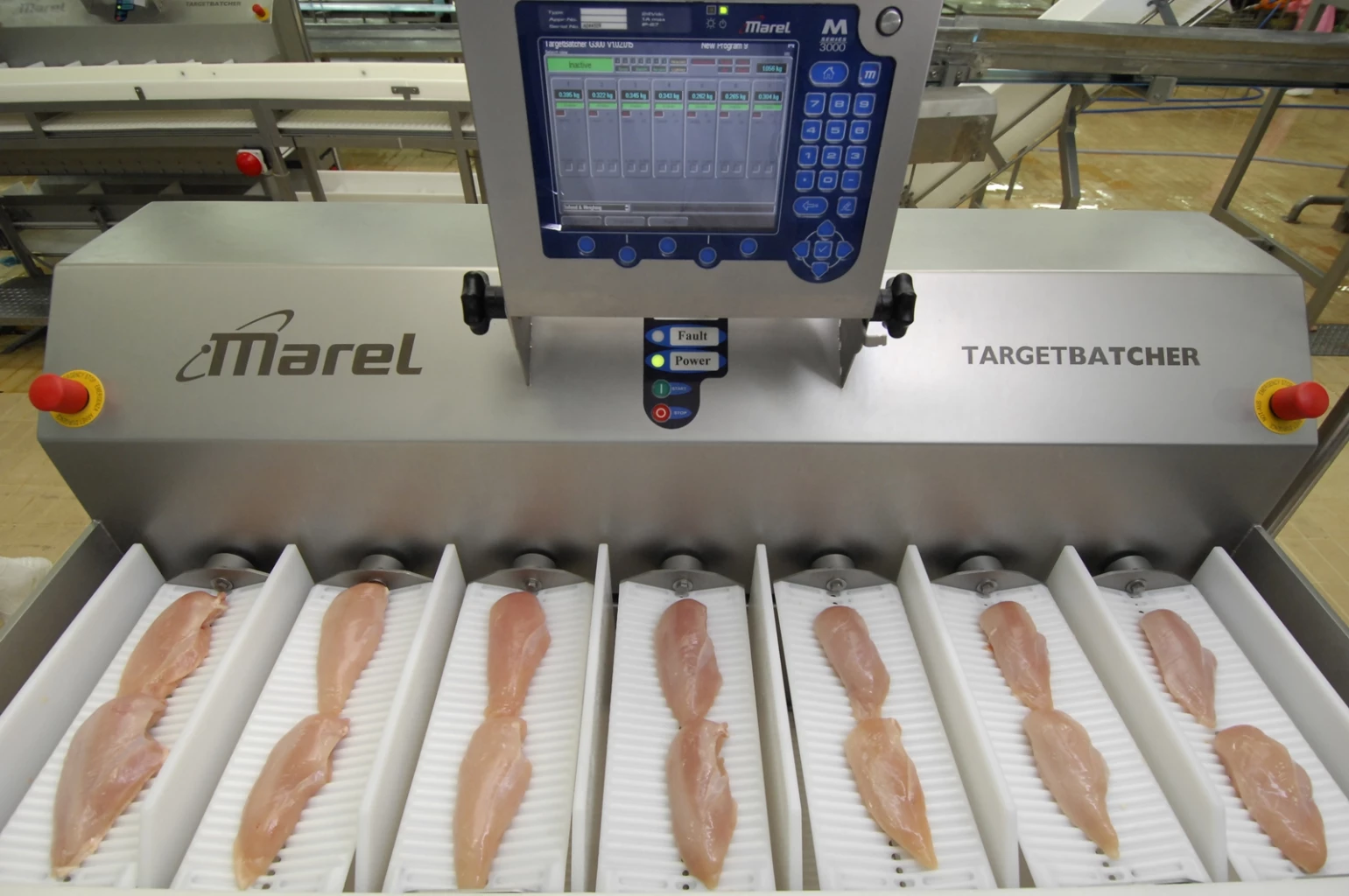
CP Foods received the good news that its five chicken processing plants are among 11 Thai factories that have been certified by the Saudi Food & Drug Authority (SFDA).
The SFDA recently announced on its website that it would allow import of poultry from 11 producers in Thailand after checking their chicken quality and whether they are manufactured strictly to international halal standards.
CP Foods Chief Executive Officer Prasit Boondoungprasert said that the Saudi Arabia government has lifted the import ban on Thai chicken, egg, as well as chilled and frozen fresh chicken products, which had been in force since 2004.
He said the SFDA certification helps convince Saudi people, as well as other importing countries that CP Foods’ quality meat and products are derived from international standard processing lines through halal restrictions and a quality control system that ensures traceability.
“We would like to give this special thanks to Prime Minister Prayut Chan-o-cha, Commerce Minister Jurin Laksanawisit, Agriculture Minister Chalermchai Sree-on and all government agencies for their efforts to work hard and negotiate with Saudi officials and closely monitor the outcome,” he said.
“This success has allowed Thailand to revive export of chicken to Saudi Arabia, which imports about 590,000 tons of chicken, offering a great opportunity to Thai exporters,” Prasit added.
CP Foods’ Minburi Slaughterhouse, Minburi Chicken Processing Plant I, Minburi Chicken Processing Plant II, Saraburi Slaughterhouse Plant and the Saraburi Chicken Processing Plant have been certified by the SFDA. The Saudi agency had inspected the company’s operations since 2019.
Saudi Arabia is a high potential market with a population of 35.6 million people and offers opportunities within the Gulf Cooperation Council of six Arab states. Also, Saudi Arabia is the country with the highest share of food imports at 52.7 per cent. Saudis on average consume 45 kg of chicken meat per person per year, for a total annual demand of 1.5 million tons.
Previously, CP Foods was the largest Thai chicken exporter to Saudi Arabia. The company’s first export batch will be shipped to Riyadh this month.
CP Foods is committed to quality chicken meat production that meets internationally recognised standards. All the company’s slaughterhouses and processing plants are certified standards such as GMP, HACCP, ISO 9001, etc, Prasit said.
More importantly, the company has a special production process that meets Islamic standards, such as using Muslim staff for slaughtering chicken, and all ingredients are halal.
CP Foods’ chicken products have been trusted by customers around the world. The company’s key export destinations are high-quality markets including Japan, the United Kingdom, and the European Union.
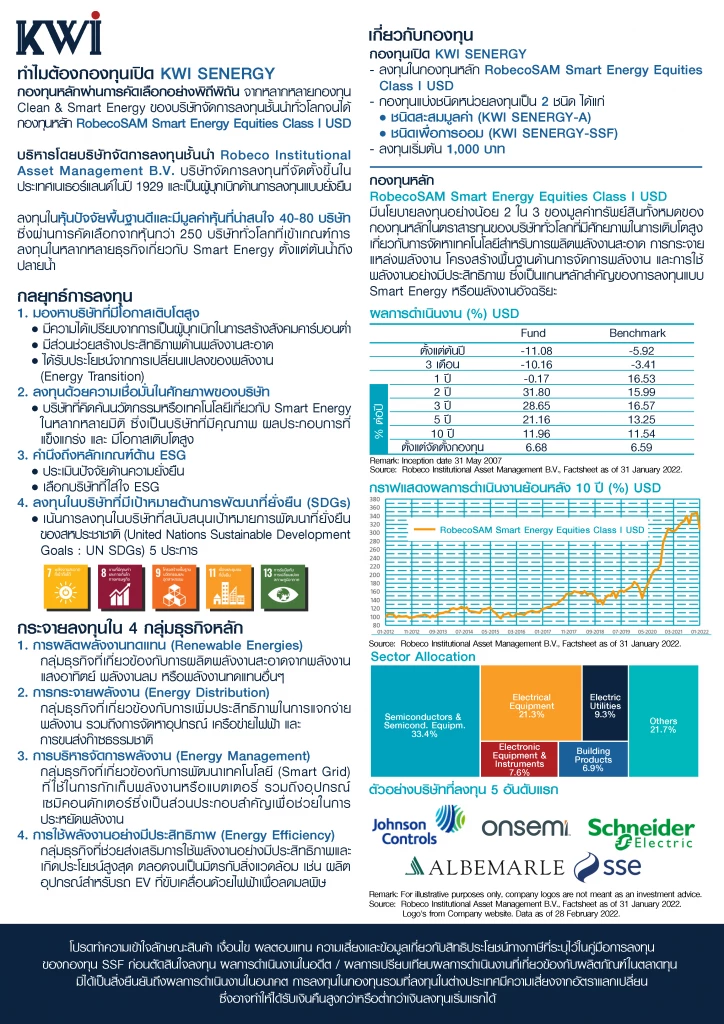
King Wai Asset Management (Asia) or KWI has announced the launch of the KWI Smart Energy Equities FIF (KWI SENERGY), which invests in selective Smart Energy stocks through RobecoSAM Smart Energy Equities.
King Wai Asset Management (Asia) or KWI has announced the launch of the KWI Smart Energy Equities FIF (KWI SENERGY), which invests in selective Smart Energy stocks through RobecoSAM Smart Energy Equities.
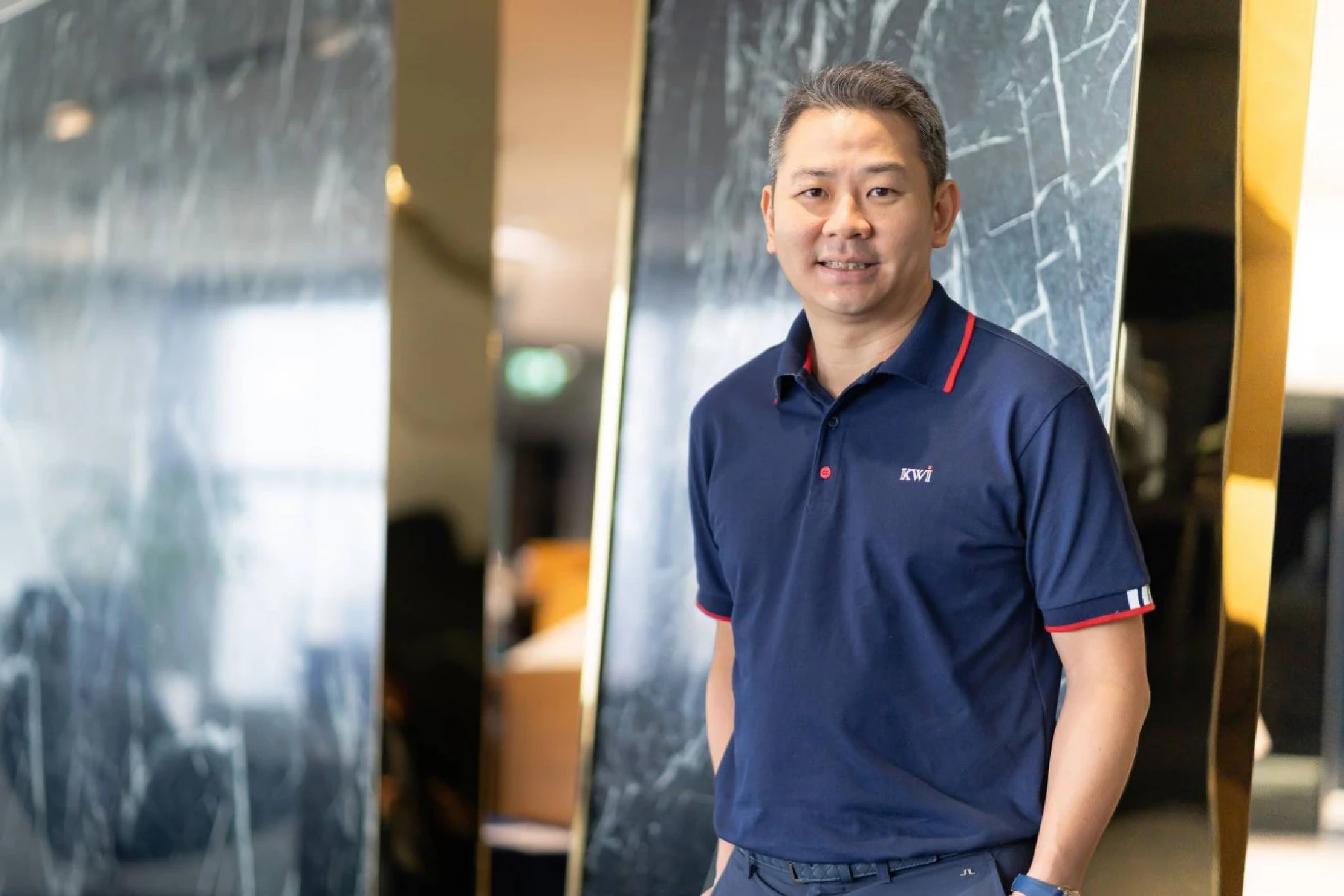
“KWI strives for strong and sustainable growth, and this principle is integrated into our clients’ investing solutions, allowing them to have a long-term continuous investment that meets their financial and sustainability goals. Among all thematic and sustainable investment strategies, we see the Smart Energy theme has enormous growth potential, driven by the need to transition to a net-zero carbon world,” said Sumetha Lewchalermwong, KWI’s managing director and chief investment officer.
“Globally, over US$4 trillion a year is being planned for investment in clean energy and smart technology to combat climate change. Also, the Russia-Ukraine tensions will likely lead to more investment towards clean and smart energy as Europe is looking to reduce its reliance on Russian energy sources and shift to alternatives. This future of energy transition will benefit Smart Energy related sectors such as renewable power generation, smart grids and energy efficiency solutions that offer investors a compelling investment opportunity and potential returns.
“With that, we are launching our first KWI Smart Energy Equities FIF [KWI SENERGY], a feeder fund that invests in Robeco Capital Growth Funds – RobecoSAM Smart Energy Equities Class I USD [the master fund]. We believe RobecoSAM Smart Energy is the best choice from a pool of clean and smart energy funds among the world’s leading investment managers based on its consistently outstanding performance and quality investment process with ESG integration,” Sumetha said.
RobecoSAM Smart Energy Equities is based in Luxembourg and has won a 5-star rating from Morningstar and is classified as an Article 9 product under EU’s Sustainable Finance Disclosure Regulation (SFDR) that signifies a fund with a sustainable investment objective. This fund invests in 40 to 80 quality stocks globally with strong fundamentals and compelling valuations that have good long-term growth prospects selected by the robust and disciplined process. It diversifies in four key investment scopes across the entire Smart Energy value chain in the transition to a low-carbon future world, including Renewable Energies, Energy Distribution, Energy Management and Energy Efficiency.
“This is the first time that RobecoSAM Smart Energy Equities will be offered in Thailand as a feeder fund for your investment in global Smart Energy stocks through our KWI SENERGY. Robeco is a leading Netherlands-based investment firm that has been at the forefront of quantitative and sustainable investing and routinely integrates environmental, social, and governance factors into the entire range of strategies as standard,” Sumetha added.
RobecoSAM Smart Energy Equities Class I USD has consistently outperformed its benchmark with a 3-year annualised return (2019-2021) of 39.05 per cent, compared with the benchmark’s return of 21.70 per cent per annum and a five-year annualised return (2017-2021) of 25.11 per cent, compared with the benchmark’s return of 15.03 per cent per year over the same period.
KWI SENERGY offers two share classes, A-class (capital appreciation) and SSF-class (Super Savings Fund) for tax deduction. The initial public offering (IPO) will run from March 21 to 29.
For more information, contact King Wai Asset Management (Asia) Company Limited (www.kwiam.com) at (02) 844 0123 or add LINE Official Account @KWIAM or its distributors (www.kwiam.com/th/our-distributors).








 The audience comprised a wide range of Marriott associates from all levels of the company, including general managers, Women in Leadership champions, mentors and mentees, along with a group of trainees. Associates who were unable to attend in person watched the discussion virtually.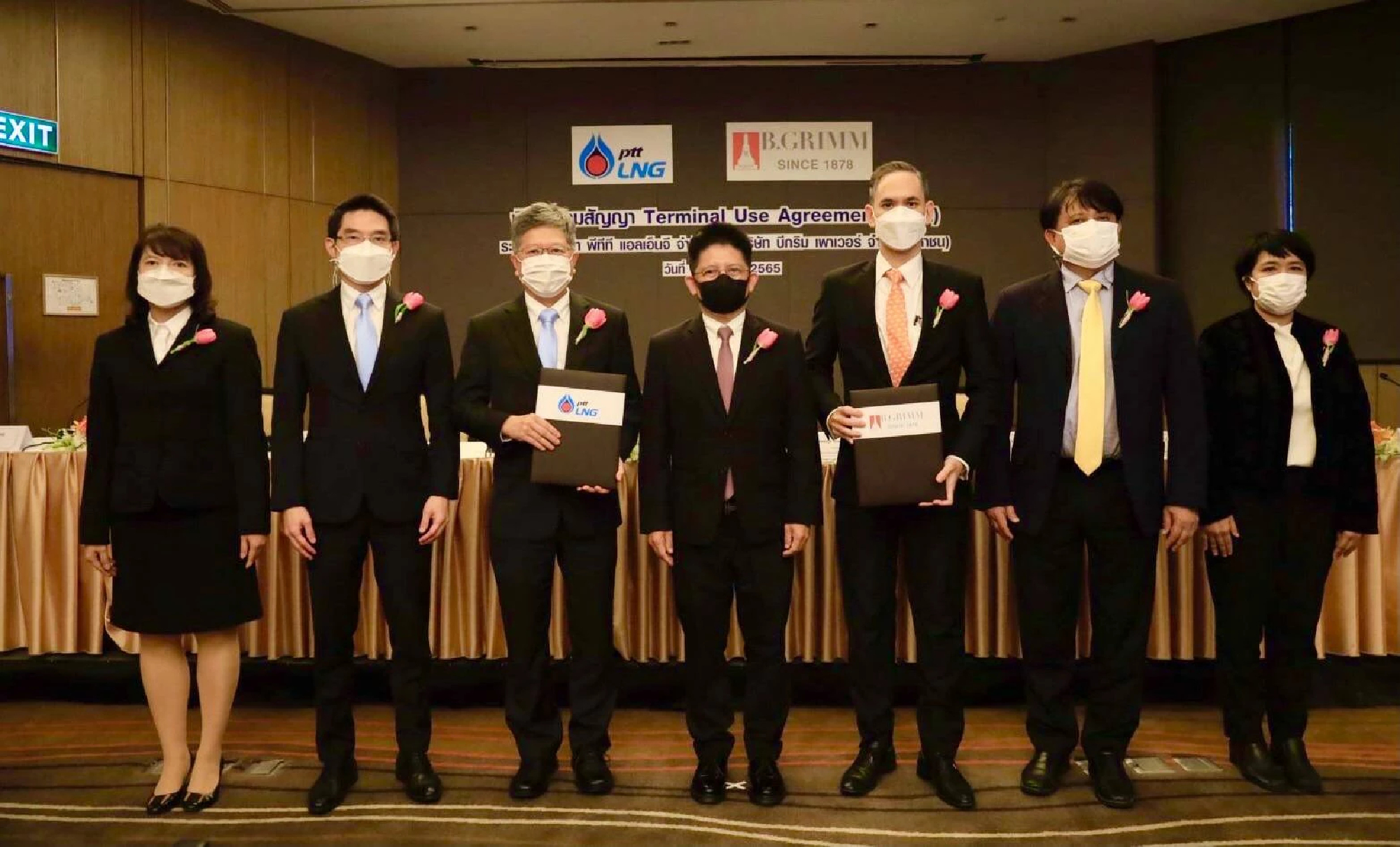


 “With that, we are launching our first KWI Smart Energy Equities FIF [KWI SENERGY], a feeder fund that invests in Robeco Capital Growth Funds – RobecoSAM Smart Energy Equities Class I USD [the master fund]. We believe RobecoSAM Smart Energy is the best choice from a pool of clean and smart energy funds among the world’s leading investment managers based on its consistently outstanding performance and quality investment process with ESG integration,” Sumetha said.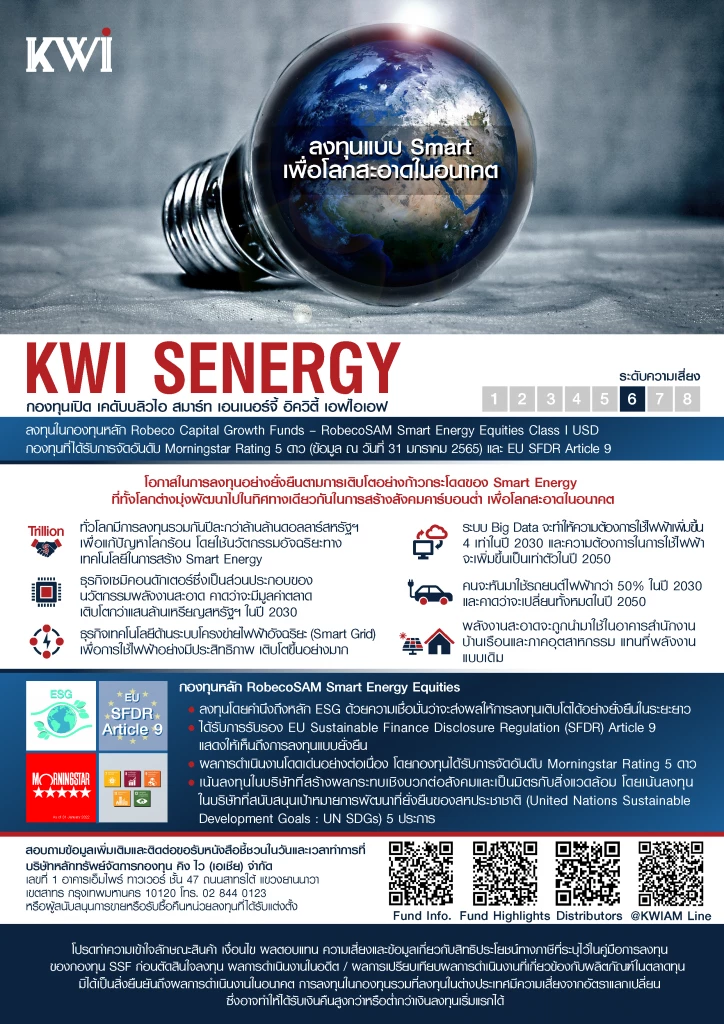
 For more information, contact King Wai Asset Management (Asia) Company Limited (
 SootinClaimon.Com