Twitter admits ‘unintentionally’ using personal data for targeted ads

ศาสตร์เกษตรดินปุ๋ย : ขอบคุณแหล่งข้อมูล : หนังสือพิมพ์ The Nation

https://www.nationthailand.com/edandtech/30377227

Twitter admits ‘unintentionally’ using personal data for targeted ads

Oct 09. 2019
By The Nation

366 Viewed

Twitter’s support team today tweeted and posted on their website that they had recently discovered that some email addresses and phone numbers provided for account security might have been used unintentionally for advertising purposes. They claim that the problem has been solved.

The messaging site explained that where users had provided an email address or phone number for safety or security purposes (for example, two-factor authentication), these data might have been inadvertently used for advertising purposes, specifically in Tailored Audiences, an industry-standard product that allows advertisers to target ads to customers based on the advertiser’s own marketing lists such as email addresses or phone numbers, as well as in the Partner Audiences advertising system, which allows advertisers to use the same Tailored Audiences features to target ads to audiences provided by third-party partners.

When an advertiser uploaded its marketing list, Twitter matched people on Twitter to that list based on the email or phone number of the Twitter account holder.

Twitter is now no longer using phone numbers or email addresses collected for safety or security purposes for advertising.

Malaysian analogue TV transmissions being cut in phases, to end Oct 31

ศาสตร์เกษตรดินปุ๋ย : ขอบคุณแหล่งข้อมูล : หนังสือพิมพ์ The Nation

https://www.nationthailand.com/edandtech/30377001

Malaysian analogue TV transmissions being cut in phases, to end Oct 31

Oct 02. 2019
MCMC encourages those transferring over to myFreeview digital TV to get a decoder and Ultra High Frequency (UHF) aerial to connect to existing TV sets. — myFreeview

MCMC encourages those transferring over to myFreeview digital TV to get a decoder and Ultra High Frequency (UHF) aerial to connect to existing TV sets. — myFreeview
By THE STAR

273 Viewed

Analogue TV is on the way out in Malaysia and is expected to be replaced entirely by digital TV by end of the month, announced the Malaysian Communications and Multimedia Commission (MCMC).

So far, analogue TV transmissions have been stopped in the Klang Valley and Southern states as of Sept 30.

The remaining states in the North and East coast will follow suit on Oct 14, and last will be Sabah dan Sarawak on Oct 31.

“The transition to myFreeview digital TV across the nation follows a successful pilot test in Langkawi by the MCMC and broadcasting partners since July 21,” said the Commission, in a press release.

It said myFreeview digital TV was an effort by the government to narrow the digital divide between those in urban, suburban and out of town areas. It was also in line with the vision of mutual prosperity by ensuring all Malaysians can watch digital TV without a subscription.

Currently there are 15 TV channels and six radio channels available on the platform.

These are supplied by Radio Televisyen Malaysia (RTM), Media Prima, TV AlHijrah, dan Bernama News Channel (BNC).

MCMC says more channels are expected to be added to the platform in the near future.

According to myFreeview, digital terrestrial transmission services are broadcast nationwide through over 44 transmission towers covering around 95% of the Malaysian population.

It encourages those transferring over to myFreeview digital TV to get a decoder and Ultra High Frequency (UHF) aerial, which connects to existing TV sets, or get an Integrated Digital TV (IDTV) which already comes with such equipment built in.

https://www.thestar.com.my/tech/tech-news/2019/10/02/malaysian-analogue-tv-transmissions-being-cut-in-phases-to-end-oct-31

Data-rich helmets are here for delivery motorbikes

ศาสตร์เกษตรดินปุ๋ย : ขอบคุณแหล่งข้อมูล : หนังสือพิมพ์ The Nation

https://www.nationthailand.com/edandtech/30376871

Data-rich helmets are here for delivery motorbikes

Sep 30. 2019
By Nophakhun Limsamarnphun
The Nation

1,205 Viewed

Food and other delivery motorbikes in Bangkok and other big cities can expect help from smart data-rich helmets soon as HERE Technologies, a provider of location data and services, gears up its business in the region.

These smart helmets, equipped with a built-in communication system and small video screen, will provide real-time traffic and location data to riders to make deliveries faster and more efficient, according to HERE’s executives.

They have been developed by one of HERE’s partners in Taiwan and will be available to logistic companies with large fleets of two-wheelers in Thailand and other Asean countries.

In addition, Stanimira Koleva, HERE’s senior vice president for Asia Pacific, said the firm will increase its efforts to tap the regional markets for other data and location-based services, especially those used in automotive navigation, infotainment, smart cities, agriculture, and advertising, among other sectors.

For example, Phuket, the world-renowned southern Thai resort island, can use location data and other services for a wide range of autonomous smart tourist services.

In agriculture, location data and related services will help create smart farming with features such as autonomous fertilizer application, soil-condition monitoring and weather forecasts consistent with the government’s Thailand 4.0 initiative.

According to Koleva, HERE’s Open Location Platform (OLP) promotes worldwide collaboration so that data can be shared among developers and participating organisations to unlock value for all stakeholders.

With access to the mapping infrastructure and related technology, partnerships can create new and differentiating location-centric products for their own use, with

AI-driven and machine-learning capability for predictive analytics such as those used in

healthcare devices, transportation drones,

targeted advertising, telecom, city planning and traffic management.

These features can also be used in supply-chain management for multi-mode transport or in food safety management using Internet of Things (IoT) sensors and other devices for product traceability.

The cloud-based location datasets are also used by Toyota, BMW and Volkswagen for auto navigation systems as well as in fleet-management solutions for better transport routing and more efficiency with predicted arrival time capability.

According to HERE’s executives, location data and related services are also crucial to assisted driving features in new models of cars and trucks, while auto insurance companies also use sensors and dashboard camera to monitor driving behaviour for insurance premium calculation.

In the booming e-commerce sector, HERE aims to tap the vast two-wheeler delivery fleets in Thailand, Vietnam, India and Indonesia with smart helmets equipped with built-in speakers and small video screens for both communication and navigation purposes.

With large fleets of motorbikes on congested streets of these markets’ big cities, delivery of food and other products purchased or ordered online will be faster with predicted arrival time capability.

For advertising, the location data and related services will improve marketing and customer relationship management such as with features of customer mobility tracking and consumption-pattern analytics to allow advertisers to target potential customers more precisely with e-vouchers and other promotional campaigns.

Worldwide, Here’s Open Location Platform has about 800,000 developers as the firm expands its database to include 3D mapping and live traffic from across the road and transport networks as well as data on millions of places. All these datapoints are updated regularly with AI and machine-learning capability to provide a comprehensive digital geospatial model for vehicles, drones, on-demand mobility services, and precise indoor and outdoor goods tracking, among others.

Why tech solutions are a must for safe and reliable public transport systems

ศาสตร์เกษตรดินปุ๋ย : ขอบคุณแหล่งข้อมูล : หนังสือพิมพ์ The Nation

https://www.nationthailand.com/edandtech/30376703

Why tech solutions are a must for safe and reliable public transport systems

Sep 25. 2019
By HELEN MASTERS
SPECIAL TO THE NATION

38 Viewed

Preparing and remained at the ready for a vast variety of contingencies is a top priority for those tasked with keeping public transportation systems running without delays or failures. However, budgets for maintaining assets and vehicles are often strained, forcing managers to make difficult repair-or-replace decisions concerning ailing fleets. Fortunately, smart technologies like the Internet of Things (IoT) and predictive analytics can help.

Many cities are exploring ways to adopt digitization and apply smart technologies to make systems more efficient, safe, sustainable, and responsive to the community’s needs. According to the 3-year Digitization Plan of the Office of Transport and Traffic Policy and Planning (2017-2019), the collaboration with various government sectors such as the Ministry of Digital Economy and Society and the Ministry of Transport aims to improve on the digital infrastructure to establish better transportation crisis management and to facilitate better services to support both the logistics and public transportation in Thailand. However, the issues are complex. The total volume of travel in Bangkok and its vicinity in 2017 had risen to 32.65 million trips per day, according to the Travel Demand Survey conducted by the Office. As such, managing public transportation in metro areas, especially in Bangkok with its constantly rising population, has become a juggling act to keep costs in line, while also accommodating the shifting needs of the community and complying with federal mandates for public transportation safety.

New housing developments, changes in population demographics, and evolving workplace travel patterns all contribute to the need for agility in planning. Transportation managers must also be aware of value-added factors that impact community satisfaction such as accessibility for the elderly.

According to the Department of Land Transport, the condition of assets, from bus fleets to ride-share bikes, must be tracked and monitored for performance issues, preventive maintenance and lifecycle projections. The parts and components included in each vehicle, like tyres or brake systems, also require their own maintenance and projected lifespan. For example, computerized components are likely to have short lifespans, needing frequent updates.

If reliability is diminished by frequent breakdowns, the public will become frustrated and seek alternatives, hurting revenue. With budgets compromised, maintaining fleets becomes even more challenging, further escalating into a downward spiral. It is essential to stop that progressive threat before it gains momentum.

Mandates from the State Audit Office to verify the proper use of federal funds have intensified the need for advanced reporting tools and system-wide visibility. The requirement to document the safety plans of the Department of Land Transport add to the pressures local transit authorities face. These include the planning of the Ministry of Transport’s regulation to enforce new time adjustment for trucks to travel only between midnight  and 4am, and not during the day and the controversial adjustment to increase the speed limit up to 120 km/hr.

Modern IT solutions can play a major role in monitoring fleet health and keeping assets performing as needed, as well as providing intelligence and insight about the evolving community demands. For example, a modern Enterprise Asset Management (EAM) solution will provide the ability to track and monitor assets, schedule preventive maintenance, and record as-serviced details. With a mature deployment model, managers can be proactive in responding to signs of diminished performance, intervening before a part or component fails. Progressive managers can take the system a step further and develop asset assessments which assign scores based on condition, value, and cost to replace. This supports strategic planning for investing capital and maintaining continuity of service.

Sensors embedded in vehicles can track a wide range of physical attributes, monitoring for early warning signs of potential issues. Data that falls outside of the set parameters trigger an automated response, such as scheduling a technician to inspect or replace a part. Sensors can also be installed in key locations, like bridges or highway on-ramps, to help monitor traffic patterns along with relevant context, such as weather or time of day. This data can provide insights about areas of congestion and when or where the transit schedule may need to be adjusted. Data generated from IoT can also be packaged into a consumable format and turned into a new revenue model.

Modern compliance and reporting tools make it easier to verify that federal funds are being used in accordance with State Audit Office mandates while supporting Land Traffic Act guidelines. With the ability to drill into expense details, evaluate risks, and maintain safety standards, modern IT tools can reduce the worry over possible federal audits.

Artificial Intelligence (AI) is used in modern business intelligence solutions to help automate processes, speed agile response to real-time issues, and help managers make well-informed decisions, using data, not hunches. AI uses data science algorithms and machine learning to derive insights from data. AI functionality is embedded in modern Business Intelligence (BI) and EAM solutions.

Predictive analytics uses AI, machine learning, and data science algorithms to project the next likely outcome in a series. This advanced IT tool lets transit managers see into the world of tomorrow and anticipate trends. Managers will be able to accurately project demand as well as revenue earned from tickets.

Timely maintenance and repairs of fleets require access to tools and parts. Replacement parts must be in inventory at the service center or a nearby warehouse. In addition to physically storing the parts inventory in a safe environment, the transit manager also needs reliable supply chain insights so that backup inventory can be ordered for just-in-time delivery. Foreseeing the type and volume of parts that will be needed is another benefit of predictive analytics.

In summary, upgrading the IT solutions now will help the Department of Land Transport prepare for its transit needs.

Helen Masters is Senior Vice President and General Manager, Infor Asia Pacific

Enhancing growth, competitiveness via an AI journey

ศาสตร์เกษตรดินปุ๋ย : ขอบคุณแหล่งข้อมูล : หนังสือพิมพ์ The Nation

https://www.nationthailand.com/edandtech/30376685

Enhancing growth, competitiveness via an AI journey

Sep 25. 2019
By The Nation

176 Viewed

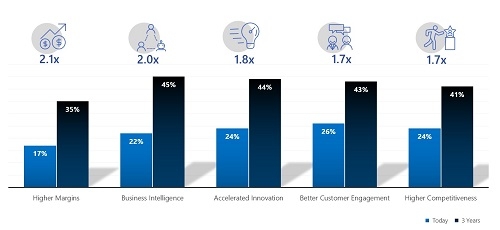
Microsoft Asia and IDC Asia/Pacific have released findings specific to the Financial Services Industry (FSI) from the study Future Ready Business: Assessing Asia-Pacific’s Growth with AI, which found that organisations with AI expect to see 41 per cent improvement in competitiveness in three years.

The study also found that more than half (52 per cent) of the region’s FSI organisations have already started on their AI journeys. This is higher than the Asia-Pacific average of 41 per cent, indicating that the sector is more advanced than others in the region.

“The digital economy has resulted in demands for organisations to reinvent themselves such that they remain relevant to their customers. To do so, FSI organisations need to address three key imperatives – how to leverage data and AI for their operations, how to build and maintain trust among their customers, and how to tap on partnerships to drive innovation to stay ahead of the game,” said Connie Leung, Senior Director of  Financial Services Business Lead, Microsoft Asia.

FSI organisations that have already started on their AI journeys saw improvements in areas such as better customer engagement, higher competitiveness, accelerated innovation, higher margins, and improved business intelligence, recorded in the range of 17 per cent to 26 per cent.

By 2021, organisations expect between 35 per cent to 45 per cent improvements in these areas, with the biggest jump in the rate of higher margins (estimated increase by 2.1x).

An example of a company that has started its AI journey is China Asset Management Company (AMC). AMC serves more than 46,000 institutional clients and 110 million retail investors, with US$153 billion in assets under management. When it comes to quantitative investment – a method of analysing data like price and volume to calculate which stocks to buy or sell and when – the tricky part is collecting the right data from the mountains of information available. Additionally, financial data is “noisy,” meaning there are many potentially misleading signals that need to be filtered out.

To overcome these challenges, the company turned to Microsoft Research Asia (MSRA) to build the “AI+Index Enhancement” machine learning model for fund managers and traders. The model helps them to make better informed buy-and-sell market decisions that bring in higher returns for their investor clients. Designed to sift through and analyse vast amounts of real-time financial data, the model is now undergoing testing, and is well ahead in performance when compared against the market or specific indexes.

“AI is a critical technology in driving financial transformation, and it is of great significance to tap into the convergence of AI and financial services,” said Li Yimei, General Manager of  AMC.

The study found that 9 in 10 business leaders from the FSI sector agree that AI is instrumental to an organisation’s competitiveness. However, the top adoption challenges faced by FSI organisations include lack of skills, resources and continuous learning programmes, lack of thought leadership and lack of advanced analytics and tools.

“Companies still face challenges in maximising AI’s ability to accelerate their transformation journeys. Often, they are hindered by various challenges that spread across infrastructure, skills and culture. Hence, we need to look at AI deployment and development from a more holistic perspective,” said Victor Lim, Vice President, Consulting Operations, IDC Asia/Pacific.

The study evaluated six dimensions contributing to the AI Readiness of the industry, including strategy, investments, culture, capabilities, infrastructure and data. While FSI organisations are ahead of the average Asia-Pacific organisation in all dimensions, they are lagging AI Leaders in areas like capabilities, infrastructure, strategy, and culture.

AI Leaders make up 6 per cent of organisations in Asia-Pacific. These Leaders have already incorporated AI into their core business strategy and nearly doubled their business benefits today as compared to other organisations.

Fig 2: AI Readiness Model (Asia-Pacific’s AI Leaders vs FSI organisations). Scores indicated are metrics for FSI organisations evaluated for the study and is based on a scale of 1.0 to 4.0

Compared to the rest of the organisations in Asia-Pacific, AI Leaders are more likely to:

Increase investments every year to support an organization-wide AI strategy

Have a centralised team of specialised roles to develop and validate AI models for the organisation

Have advanced AI analytics and tools such as Robotic Process Automation and Natural Language   Processing in their existing technology mix

Have in-house capabilities of developers, specialists and data engineers

Have ongoing enterprise data governance practices jointly performed by IT, business and compliance teams


One key example of an AI leader is Moula, an Australian founded organisation that uses AI to assess business loan applications made online. Recognising the importance of small and medium businesses to Australia’s economy – most of the country’s 2.3 million businesses are classed as SMB – the company established an Azure based real-time credit decisioning service and leveraged Azure AI and machine learning capabilities to predict the probability of the SME being able to pay back its loan. Successful applications can result in business loans of up to $500,000 being made available in 24 to 48 hours.

“Small business is the engine room of Australia’s economy. It’s where most people work, and without small business, big business simply cannot function. The vision of Moula in terms of liberating the value in small business data is impressive, and the partnership with BizData using Microsoft technology to bring that vision to life is a prime example of collaboration across our ecosystem to bring about not just business transformation, but sector transformation,” said Paul Pesavento, Chief Data Officer, Moula.

Another example of an AI leader is MoneySQ, a leading FinTech company in Hong Kong that has launched its K-Cash personal loan platform, leveraging AI to analyse the financial profiles of loan applicants to deliver faster loan experiences for its customers. The platform, built on Azure and coupled with homegrown AI algorithms from KBQuest’s AI-Knowie solution, assists employees by reducing the time taken to review and approve loan applications. And it does so with greater accuracy and precision. With this capability, borrowers can now walk up to a loan machine, apply for a loan, get approval and receive cash instantly, whereas previously, this would take days.

ICICI Lombard partnered with Microsoft to develop India’s first AI-enabled car inspection feature in its mobile app, “Insure.” The company saw AI as a solution to reduce the time needed to evaluate renewals or claims, which can take up to days and is also resource intensive as it requires an insurance personnel to be present for inspections. The app allows customers to buy or renew policies anytime, anywhere by uploading pictures of their car, without the need for physical inspection by insurance inspectors. AI and machine learning identify damage quickly from the uploaded pictures and provide an estimated repair cost in seconds. This ensures that insurance inspectors focus on addressing complex claims like head-on collisions that require a skilled evaluation.

With AI, the company is processing 150 to 200 renewals per day and is close to rolling out AI-enabled claim processes via the app. ICICI Lombard aims to process more than 80,000 simple claims every month with same-day turnaround when the module is live at the end of 2019.

“To drive transformation, AI needs to be driven at the highest levels within the organisation. Business leaders not only need to address data and infrastructure requirements but will also need to have a clear vision and encourage a continuous learning culture to empower staff across all levels to harness the potential of AI,” said Lim.

The study found that almost 50 per cent of FSI business leaders and more than half of the sector’s workers believe that the cultural traits and behaviour that contribute to organisation-wide AI adoption are not pervasive today. “Overall, workers are more skeptical than business leaders about cultural readiness within the organisation. There is clearly much more to be done at the top to encourage empowerment, innovation and greater collaboration for FSI organisations to unlock the potential of AI and deliver new revenue streams that will in turn improve bottom-line performance,” said Leung.

“Today, majority of FSI institutions have created a single customer view to drive greater operational efficiencies with the aim of delivering more personalised service. However, less than 20 per cent of FSI organisations have integrated their operational data[2], which means that data is still sitting in siloes and not used across functions and teams. Only business leaders who are able to bring the entire institution together to harness data and AI seamlessly stand a chance of unlocking new revenue sources in the long run,” added Lim.

“The industry needs workers who possess the right skills to support organisations in their AI journeys.” said Leung. “Beyond upskilling and reskilling employees, business leaders must possess a continuous learning mindset to counter rapid changes brought about by digital transformation. On that front, Microsoft has launched the AI Business School to help business leaders strategically implement AI within the organisation, especially in meeting the needs of shareholders, customers and regulators”.

168 business leaders and 94 workers from the FSI sector participated in this study, out of 1,605 business leaders and 1,585 workers in total.

Business leaders: Business and IT leaders from organisations with more than 250 staff were polled.    Respondents were decision-makers involved in shaping their organization’s business and digital strategy.

15 Asia-Pacific markets were involved: Australia, China, Hong Kong, Indonesia, India, Japan, Korea, Malaysia, New Zealand, Philippines, Singapore, Sri Lanka, Taiwan, Thailand and Vietnam.


Thai, Singapore platforms to co-host “Thailand Cloud & Datacentre Convention 2019”

ศาสตร์เกษตรดินปุ๋ย : ขอบคุณแหล่งข้อมูล : หนังสือพิมพ์ The Nation

https://www.nationthailand.com/edandtech/30376660

Thai, Singapore platforms to co-host “Thailand Cloud & Datacentre Convention 2019”

Sep 24. 2019
By THE NATION

420 Viewed

Following the signing of a Memorandum of Understanding (MoU) between OPEN-TEC and Singapore’s WMedia Pte Ltd in July to foster collaboration in Cross Country Tech Knowledge Base, a convention organised by the two platforms, titled “Thailand Cloud & Datacentre Convention 2019”, will be held on November 6, 2019 at Sofitel Bangkok Sukhumvit.

The objective of this event is to promote technology ecosystem collaboration among Asean members with four major mutual interests:  Cross-Border Activities, Cross-Ecosystem, Cross-Platform, and Cross-Media.

It aims to highlight Thailand as an emerging key market playing an important role in driving economic growth, and as an ideal digital hub in Asean. With its 17 sponsors and supportive strategic partners in Thailand and Asean, WMedia will gather key players and providers in the industries to share their insights on cloud, data centre, cybersecurity, and technology trends in the digital era, towards developing a solid foundation in  infrastructure, technology and workforce in line with the digital economy.

Vincent Liew, Founder and Director of WMedia, shared his vision for the technology demand in the future, saying:  “Infrastructure investments by data centre operators, OTT providers, cloud service providers, gaming, banking and finance and government sectors, for example, are being driven by ever-increasing demand for low latency connectivity, storage capacity and computing power via mission critical cloud-based applications”.

According to a study by Frost & Sullivan, global traffic between data centres will grow by 28 per cent annually between 2018 and 2021, a higher growth rate than the traffic between data centres and users, which is projected at 24 per cent. This trend has been driven by CDNs and the need to disseminate large volumes of static content closer to the users, such as images and video. The Asean data centre market is set to grow at a CAGR of 16.1 per cent over the next five years.

Emerging markets, such as Indonesia and Thailand, are expected to be key growth engines in Asean.

This resonates with Thailand’s push for Industry 4.0 across multiple industries including manufacturing, logistics, tourism and others. The route to digital transformation by corporations in Thailand aims to cope with changing customer behaviour and intense competition from global players. To support digitisation, corporations will need to focus on building a strong and agile IT infrastructure, leading to the need for cutting edge strategy and technologies in cloud, data centres, and connectivity.

“WMedia is a global marketing agency that specialises in the cloud and data centre industry. Its flagship series of Cloud & Datacenter Conventions (CDC) span across Asean and South Korea, and have witnessed strong growth in key markets including Singapore, Indonesia and Vietnam. The success of WMedia lies with its strong connections and understanding of the industry, which enable it to build market confidence of global business and infrastructure leaders in where CDCs are located ,” Liew said.

Speaking on behalf of OPEN-TEC (Tech Knowledge Sharing Platform), TCCtech Corporate Communications Director Waleeporn Sayasit said: “OPEN-TEC is honored to be part of THCDC 2019, which will  provide valuable knowledge to Thailand, and to welcome the regional networking community’s cooperation in  strengthening the business and technology workforce in Thailand. Nowadays, all countries seek partnerships to collaborate and co-create projects in order to amplify the positive effects on industries and  finally contributing to a sustainable society. I believe that this convention of international knowledge sharing and learning  is one of the most important tools in developing a well-rounded and sustainable business environment in our region.”

Thailand Cloud & Datacentre Convention (THCDC) will be the first  global vendor-neutral convention for the cloud and data centre professionals and businesses in Thailand.  700 professionals, business leaders and investors, with more than 30 per cent flying in from the region, will attend the event. THCDC will serve as a catalyst to increase trade through highlighting the opportunities in Thailand, and through the building of an ecosystem by gathering key stakeholders, including corporate and government representatives, leading telcos, cloud and data centre providers, and trade associations.

THCDC will also delve into the recent Cybersecurity Act, which is the latest in a wave of new laws in Asean that assert government control over the internet. Similar laws have been enacted in Indonesia and Vietnam which have contributed to a significant rise in local cloud and data center adoptions by both international and local corporations.

Educational institutions will benefit from AI: Microsoft-IDC study

ศาสตร์เกษตรดินปุ๋ย : ขอบคุณแหล่งข้อมูล : หนังสือพิมพ์ The Nation

https://www.nationthailand.com/edandtech/30376600

Educational institutions will benefit from AI: Microsoft-IDC study

Sep 23. 2019
By The Nation

343 Viewed

Artificial intelligence (AI) will help higher educational institutions accelerate innovation, increase competitiveness and witness better student engagement, according to a study titled “Future Ready Skills: Assessing APAC Education Sector’s Use of AI” by Microsoft Asia and IDC Asia/Pacific.

With student outcomes being a key performance metric for higher education institutes, many are turning to leverage data to glean insights and drive improved outcomes.

“For many institutions, student performance has a direct impact on rankings,” said Larry Nelson, regional general manager of Education at Microsoft Asia. “AI can be a tool to help better manage outcomes and ensure continued innovation to optimise operations and enhance student engagements, as it reduces resource-intensive work among faculty and administrative staff.

“In fact, we found that three out of four education leaders agree that AI will be able to drive competitiveness in the next three years. However, only 32 per cent of education institutions in the Asia Pacific have embarked on their AI journey,” added Nelson.

Based on the study, the top business drivers for education leaders to adopt AI include better student engagement, higher funding, and accelerated innovation. For institutions that have adopted AI, they are seeing improvements in the range of 11 per cent to 28 per cent today in areas such as higher funding, accelerated innovation, higher competitiveness, improved efficiency and better student engagement. By 2021, educational institutions with AI stand to experience the biggest jump in higher funding, which is expected to increase by 3.7 times, higher than most industry sectors in the Asia- Pacific region, the study said.

Developing globally engaged citizenry is of utmost importance for all countries and is one of Japan’s key priorities. However, many students ignore the opportunity, delaying them from taking the classes they need for graduation. As one of the top universities in Japan serving more than 17,000 students, Hokkaido University’s Faculty of Engineering has embarked on its AI journey as part of its mission to encourage students to study abroad.

In a bid to remove this obstacle and contribute to a better abroad experience, the university developed a Microsoft Azure-based e-learning system that enables students to keep up with coursework back home. Leveraging AI and automation capabilities, the system helps the university broaden student access, expand capacity, streamline course preparations from days to hours, and enhance security.

“Our Azure-based e-learning system far better meets the needs of our students, who can access courses on their PCs, Android, iOS or other devices,” said Professor Yukinori Kobayashi, doctor of engineering and director of the Graduate School of Engineering, Hokkaido University. “This gives them a more enjoyable and convenient educational experience.”

The study evaluated six areas contributing to the sector’s AI readiness. The educational sector is currently lagging in data, strategy and investment, as well as culture when compared to the Asia Pacific’s overall AI readiness. This signifies that more work needs to be done for these specific areas for educational institutions to remain competitive.

Data: Education institutions need to work on availability, quality and governance of existing data

Data readiness is a key issue for education institutions. Today, data within higher education institutes is “siloed”, with limited usage of a cloud platform for scalability. Institutes also face issues with data timeliness and quality from sources, and a lack of governance practices to ensure trust in data usage.

Strategy and investment: Education institutions need to evaluate investments to support their AI strategy

For education institutions to reap the benefits of AI, they must have a sound AI strategy in place to improve their AI readiness. With this, they need to also look at investment strategies that can be allocated to support organisation-wide AI efforts.

Culture: Traits required for AI adoption lacking in education institutions

More than half of the education staff, and nearly half of the education leaders polled believe that cultural traits and behaviours are not pervasive in their organisation today. For example, 67 per cent of staff and 46 per cent of education leaders do not agree that staff are empowered to take risks and act with speed and agility within the institution.

“For education institutions to fully harness the power of AI, they will need to work on developing an AI strategy which can help better integrate AI elements in various areas of the institution,” said Victor Lim, vice president, Consulting Operations, IDC Asia/Pacific. “To do so, they will first need to have better data ‘hygiene’ and work on improving data readiness. Culture is an important key to help nurture the AI mindset. Education leaders will need to develop an innovative culture and empower their staff to work in an agile manner.”

AI skills required for future of educational sector

Both education leaders and staff in the sector are equally positive about the impact of AI on jobs. A majority of education leaders (61 per cent) and staff (61 per cent) believe AI will either help to do their existing jobs better or reduce repetitive tasks. In addition, both are optimistic of the impact AI will bring to their jobs, with 21 per cent of education leaders believing that AI will create new jobs while 13 per cent of staff agree.

However, according to education leaders, the skills required for an AI future are in short supply.

The study also noted that there is a disconnect with education leaders’ perception of their staff’s willingness to reskill. Although these leaders realise there is an urgent need for reskilling in order to cultivate an AI-ready workforce, they are not fully convinced that their staff are committed to being reskilled. Based on the study, 26 per cent of education leaders felt that workers have no interest to reskill, but only 11 per cent of staff had no interest.

“Education managements need to better understand their staff and prioritise reskilling efforts to address a shortage of skills. Only then are they able to take their respective institutions forward into an AI future and achieve better student outcomes,” Microsoft’s Nelson said.

Naver, Kakao in battle over Korea’s mobile payment market

ศาสตร์เกษตรดินปุ๋ย : ขอบคุณแหล่งข้อมูล : หนังสือพิมพ์ The Nation

https://www.nationthailand.com/edandtech/30376588

Naver, Kakao in battle over Korea’s mobile payment market

Sep 23. 2019
The logos of Naver and Kakao. Naver and Kakao

The logos of Naver and Kakao. Naver and Kakao
By The Korea Herald

351 Viewed

South Korea’s biggest internet search company Naver has finalized its plan to launch a financial subsidiary by November, presenting a challenge to the country’s leading messenger app operator Kakao in the mobile payment market.

During a meeting with stockholders on Friday, Naver decided to change the status of its in-house venture company Naver Pay to a separate entity. Named “Naver Financial,” the new subsidiary is to be officially launched Nov. 1.

To expand its platform into various financial services, such as money lending and insurance marketing, the company vowed to secure an investment worth 500 billion won ($418 million) from local brokerage firm Mirae Asset Daewoo.

“Mirae Asset Daewoo’s investment will be implemented after going through relevant procedures,” Naver Financial’s chief Choi In-hyuk said during a conference call. “We are also planning to increase the workforce.”

The company, however, reiterated that it is not planning to enter the internet banking business despite the government’s eased regulations. Naver CEO Han Seong-sook told reporters that “it is time to focus on stabilizing the new subsidiary.”

Since announcing its plan to spin off Naver Pay in July, Naver has been seeking to enhance the platform’s mobile payment service functionality. With its massive number of online subscribers and offline retailers, Naver aims to attract users at home and overseas by introducing various services.

Naver has been running a trial of the Table Order service, through which Naver Pay users can order food and make payment simultaneously. Since June, Naver has enabled Naver Pay users to buy items at stores in Japan that subscribe to the mobile payment system of Naver’s Japanese subsidiary Line.

“Based on massive traffic accumulated by Naver Pay, we are going to emerge as an efficient and competitive financial platform,” Naver CEO Han said when she announced the company’s second-quarter earnings in July.

Naver’s expansion into the financial sector directly challenges Kakao, which has been spearheading the mobile payment market.

According to Kakao, the number of those using the mobile payment app Kakao Pay surpassed the 30-million threshold last month, with accumulated transactions of 22 trillion won during the first half of this year.

Beyond the mobile payment service, Kakao Pay is seeking to diversify its business portfolio and expand into various financial sectors. Using its popular messenger app Kakao Talk, the company will soon launch a service that can recommend the best insurance policy for Kakao Pay users.

The company is also expected to foray into the financial business by combining the payment system with Kakao’s internet-only bank. The move has gained momentum since the government approved Kakao’s plan to become Kakao Bank’s largest shareholder in July.

“The integration of Kakao Pay and Kakao Bank is a big deal, and the impact would be massive,” said an industry official. “Beyond the technology sector, Naver and Kakao would engage in fierce competition in the financial sector.”

Review: Go on, sing your heart out!

ศาสตร์เกษตรดินปุ๋ย : ขอบคุณแหล่งข้อมูล : หนังสือพิมพ์ The Nation

https://www.nationthailand.com/edandtech/30376572

Review: Go on, sing your heart out!

Sep 23. 2019
By Paisal Chuenprasaeng
The Nation

167 Viewed

If you like nothing more than an evening crooning your favourite songs, you might want to sign up for the new EZ-OK Smart Karaoke Application and cloud karaoke service from AJ Advance Technology, which lets you have fun singing more than 25,000 karaoke numbers from the comfort, not to mention privacy, of your own lounge.

AJ, which is well-known among Thais for its home electrical and home entertainment appliances, has invested more than Bt100 million to develop its cloud karaoke system. The service must be used with the EZ-OK app and users need to first apply for a monthly service with AJ. The app, which is available for both Android and iOS devices, serves as an interface for you to browse through selections of over 25,000 songs, mostly popular Thai tracks, and the app will fetch the songs of your choice.

Moreover, the app supports voice command, allowing you to say the songs’ titles for the app to search for you. And the songs can be compiled into a playlist or a list of favorite songs.

Since the songs are karaoke files, you can tap the microphone button on the display to turn the vocals off or on. Off gives you just the instrumental track and you take over as the vocalist. You can also adjust the melody key to suit your pitch and even record your singing for sharing on social networks.

The app can also give you points after the end of each song but you will need a stereo headset to connect to your smartphone or tablet. The app also requires a powerful microphone in the headset to feed your voice signals back to the server for rating your performance. The rating system so far does not support the Bluetooth headset but AJ says this will come soon.

The app has four sections– Popular Songs, New Songs, Music Genres and Favourites. The Favourites section is where you will find the songs you most want to sing and they’ll be downloaded for you to sing offline.

In the Genres section, you will find seven music genres to browse through, including dance songs, songs for life, luk thung and strings.

The app can be downloaded for free and you can try it at no cost for a full week. After that you pay a monthly or yearly service charge to access the cloud database.

During the promotion period, AJ charges Bt99 for the monthly service down from the normal price of Bt199 or Bt499 for the yearly service form the normal price of Bt1,999. The promotional prices will remain in place until further notice.

The app needs your mobile phone number to be registered for an account. Once you have purchased and filled the airtime code, your account can be used with three devices at the same time. You can also use it on your Android TV and there are also options of HD music videos for you to select and sing karaoke on your large-screen TV.

The app can also be used with the Portable Mic Karaoke PM-001 from AJ that has a built-in microphone and speakers. It also has sliders for adjusting levels of bass, treble, echo, microphone volume and music volume. It connects to your smartphone or tablet with Bluetooth connection. During the test, I found the PM-001 produced loud and clear sounds, making karaoke singing really fun inside my living room. The PM-001 retails for Bt1,990.

AJ also has several other portable karaoke speakers for sale, including the BoomBox Speaker Karaoke BB-001 and the Party Speaker Karaoke PS-001 priced at Bt3,990 and Bt4,990 respectively and coming with a free one year-subscription to the service.

Key facts:

Monthly fee: Bt199 (now available at promotional price of Bt99)

Yearly fee: Bt1,999 (now available at promotional price of Bt499)

Required: Android or iOS devices and small-talk headset for performance rating

Number of songs: 25,000+

Canon promotes high-end camera

ศาสตร์เกษตรดินปุ๋ย : ขอบคุณแหล่งข้อมูล : หนังสือพิมพ์ The Nation

https://www.nationthailand.com/edandtech/30376520

Canon promotes high-end camera

Sep 21. 2019
By The Nation

133 Viewed

Canon has unveiled the Canon EOS 90D, the latest addition to its suite of EOS DSLR cameras and a successor to the EOS 80D.

Featuring enhanced ergonomics and operability, an advanced viewfinder and high-speed, high-precision Dual Pixel CMOS Auto Focus technology, the new model comes with a 32.5-megapixel APS-C sensor that allows users to capture striking images and videos, particularly of fast-moving subjects. The EOS 90D is also equipped with superb video capabilities, empowering users looking to shoot dynamic footage in 4K 30p/25p (cropped or uncropped can be selected) format. This model is the ideal choice for photographers and videographers seeking to raise the bar in their craft.

The Canon EOS 90D is available at Canon Authorized Reseller Stores and Canon E-Store:https://goto.canon.co.th/estore/ from this month. The EOS 90D (Body) is priced at Bt41,900; the EOS 90D (18-55STM) at Bt46,900; and the EOS 90D (18-135USM) NANO at Bt56,900.