Living, breathing and seeing art

ศาสตร์เกษตรดินปุ๋ย : ขอบคุณแหล่งข้อมูล : หนังสือพิมพ์ The Nation

http://www.nationmultimedia.com/detail/world/30371775

Living, breathing and seeing art

World June 26, 2019 01:00

By THE NATION

2,181 Viewed

Imagine yourself going on an art-focused trip and staying in hotels designed to stimulate creativity. Agoda.com has put together a list of art museums and galleries around the world to explore, and nearby artistic hotels to immerse yourself after a full day exploring.

Living, breathing and seeing art

H Gallery, Bangkok

Established in 2002 by American Ernest H Lee, H Gallery specialises in contemporary art forms, painting, photography, and textiles, with a main focus on emerging Thai and Asian artists. Once you make your way past the entry that is lined with various tropical plants to a centuryold Anglo-Thai wooden building, you’ll find yourself surrounded by tranquillity. The gallery is currently hosting the “New and Recent Paintings” exhibition, which displays the works of Thai artist Mit Jai Inn, until July 30.

Living, breathing and seeing art

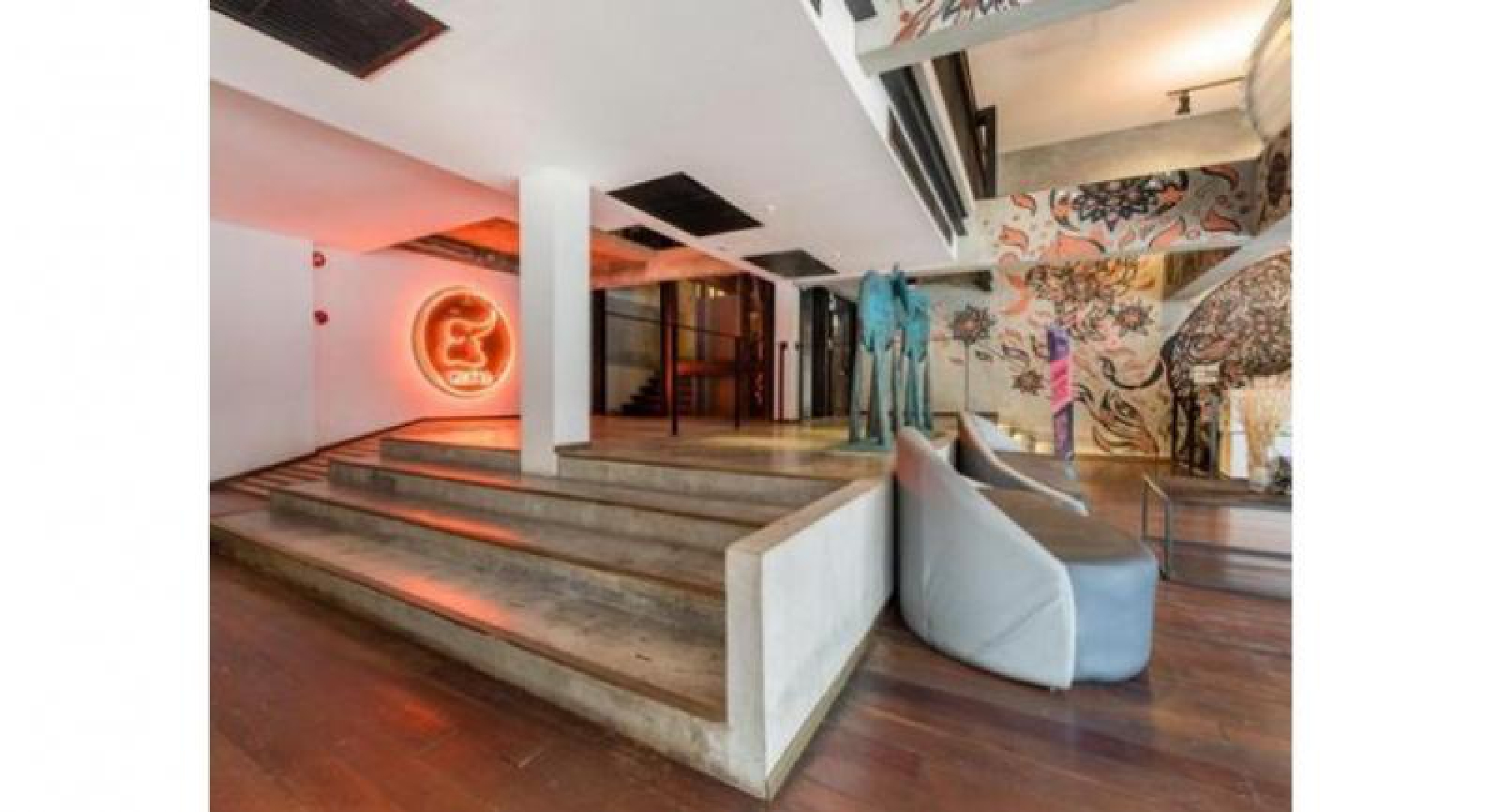
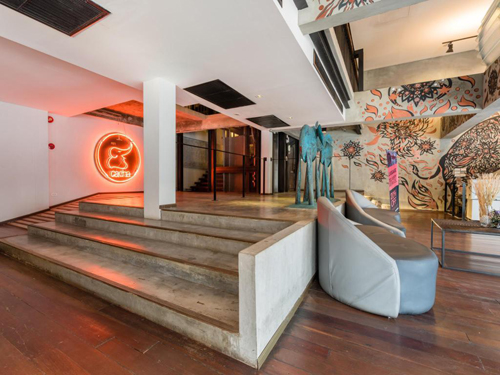
Where to stay: Cacha Hotel

After you have checked out the artscene, check into the hip Cacha Hotel. Artist Peap Tarr painted pictures of elephants with New Zealand and Khmerinspired motifs in the main lobby area. While P7, an iconic illustrator and street artist in Thailand whose works have been exhibited worldwide, created a painting of a mythical creature called “Singha” in the rooms using bright hues.

Te Uru Waitakere Contemporary Gallery, Auckland

The Te Uru Waitakere Contemporary Gallery, formerly known as the Waitemata City Arts and Cultural Centre, is located in the historic Lopdell House building. Apart from its West Auckland crafts and pottery that reflect cultural identities, the gallery also offers contemporary art and design programmes, as well as spectacular views of the surrounding area. It won the 2015 Auckland Architecture Award (Public Architecture) and was shortlisted for the 2015 World Architecture Festival.

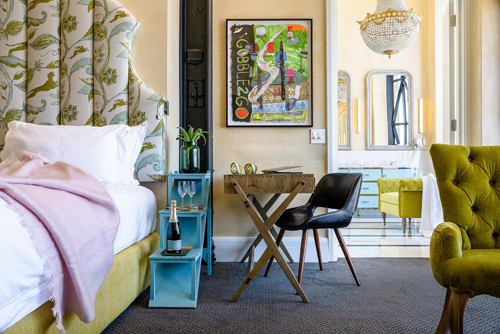
Where to stay: Hotel DeBrett

Located right in the centre of New Zealand’s largest city, Hotel Debrett is a boutique hotel with an eclectic blend of architectural arts, combining elements of neoclassic, art deco, and modernism. As for the rooms, a New Zealand flavour is retained in artefacts and artwork used for decoration, in addition to contemporary pieces, fifties styling, and art deco elements.

Zeitz Museum of Contemporary Art Africa, Cape Town

Zeitz Museum of Contemporary Art Africa is Africa’s largest contemporary art museum, showcasing several artists’ works from across the continent with themes ranging from tribal art to colonial structures deconstruction. Originally built in 1921 for industrial purposes, the enormous carved grain silos are a must-visit and give the museum its cathedral-like feeling. You’ll also find a bookshop, a restaurant, reading rooms, and an amazing rooftop sculpture garden.

Living, breathing and seeing art

Where to stay: The Silo Hotel

Occupying the six floors above the museum is The Silo Hotel whose lobby walls are adorned by Mohau Modisakeng’s Ditaola series and commissioned pieces by Jody Paulsen, “Must be the Rain” and “So Exotic”, and Frances Goodman’s “Blue Velvet and Hooded Lady I, II & III”. Each of its 28 suites has bubblelike windows, designed by British architect Thomas Heatherwick that overlook breathtaking vistas of the South Atlantic Ocean, Table Mountain, and the city.

Tate Modern, London

The National British Museum of Modern Art, more familiarly known as Tate Modern and set in a former power station along London’s Southbank, houses one of the world’s most complete modern and contemporary art collections. Art pieces of major artists of the twentieth century, such as Andy Warhol, Pablo Picasso, and Salvador Dali are displayed here.

Living, breathing and seeing art

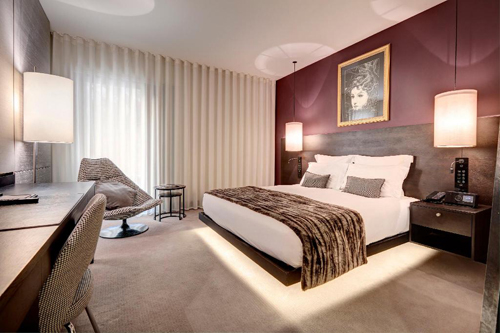
Where to stay: South Place Hotel

In nearby Moorgate, Conran designed the South Place Hotel, a hotel worth a visit if you like sculptures, paintings, photographs, or video installations. A set of Lichenstein-inspired comic strip style prints by John Vincent Aranda can be seen on the brasserie’s wall. Above the bed of each room hangs a print of a work by an artist of the local Hoxton Art Gallery.

Mathaf: Arab Museum of Modern Art, ArRayyan

Mathaf: Arab Museum of Modern Art is designed by French architect Jean-Francois Bodin. This one-of-its-kind museum in the region presents modern Islamic arts and artefacts dating back as early as the 1840s. Painting and sculpture dominate the vast permanent collection of works assembled over several decades by Sheikh Hassan bin Mohamed bin Ali Al Thani. It also runs educational programmes and supports research related to modern and contemporary Arab art.

Where to stay: W Doha

A quick ride to the city centre gets you to W Doha. The hotel’s interior has an artistic and playful design. Art 29, which spans the hotel’s 29th floor, is an expansive platform dedicated to showcase the works of emerging local, regional, and international artists.

Easier getting around with Aeroflot

ศาสตร์เกษตรดินปุ๋ย : ขอบคุณแหล่งข้อมูล : หนังสือพิมพ์ The Nation

http://www.nationmultimedia.com/detail/world/30371706

Easier getting around with Aeroflot

World June 25, 2019 15:00

By The Nation

2,834 Viewed

This summer Aeroflot has launched flights to more destinations in Russia and abroad.

Easier getting around with Aeroflot

From June 1, Aeroflot is operating five weekly flights from Moscow to Marseille, France’s second largest city and a renowned cultural and historical centre.

Another destination in the Mediterranean added to Aeroflot’s route network is Palma de Mallorca. Aeroflot is now operating four weekly flights to the largest city of the Balearic Islands.

In addition, to support the further development of services in Asia, Aeroflot has increased flight frequencies between Moscow and Seoul.

Aeroflot’s offering in the Asian market is further supported by a codesharing agreement with Vietnam Airlines. The codesharing on both domestic and international routes began last week.

Boosting Russian citizens’ mobility remains one of Aeroflot’s key priorities. In accordance with the plan to increase the number of interregional flights that bypass Moscow, this summer Aeroflot has launched new direct flights between major cities in the south of Russia – Volgograd and Sochi, Krasnodar and Simferopol.

Flights between these cities will operate on a daily basis.

Aeroflot is continuously expanding its route network and increasing flight frequencies to popular destinations. This summer Aeroflot will fly to 159 destinations in 54 countries, including 58 destinations in Russia.

As a proud member of the SkyTeam global airline alliance, Aeroflot serves 159 destinations in 54 countries.

Aeroflot’s 252-strong fleet is the youngest of any airline with more than 100 aircraft. In 2018 Aeroflot carried 35.8 million passengers.

Further information is available round the clock at +7 495 223 5555 and at http://www.Aeroflot.ru.

Star Alliance racks up more airline awards

ศาสตร์เกษตรดินปุ๋ย : ขอบคุณแหล่งข้อมูล : หนังสือพิมพ์ The Nation

http://www.nationmultimedia.com/detail/world/30371634

Star Alliance racks up more airline awards

World June 24, 2019 13:45

By THE NATION

3,420 Viewed

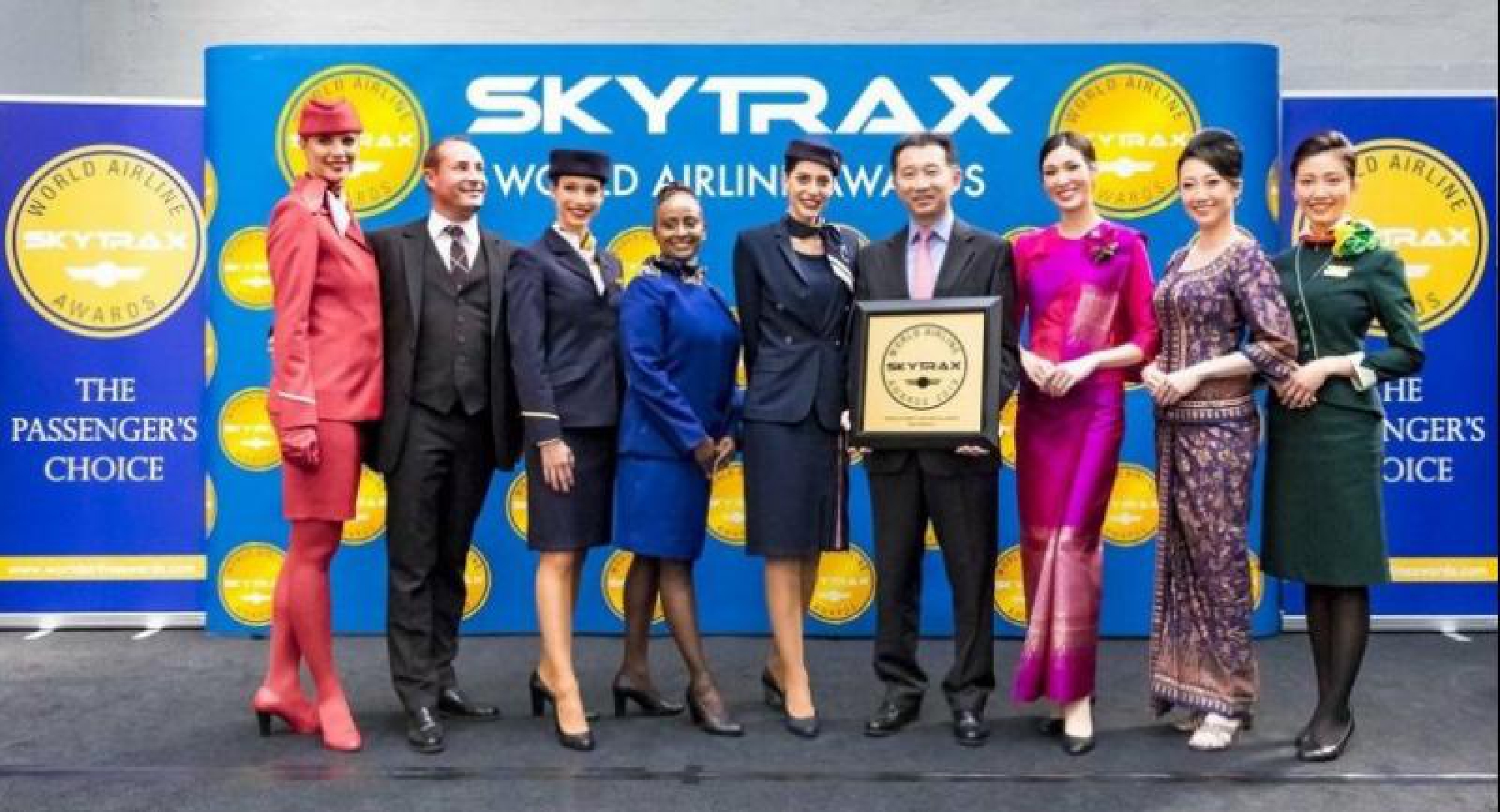
Star Alliance has has been named the globe’s Best Airline Alliance for the fourth year running and its Los Angeles Lounge Best Airline Alliance Lounge for the fifth year in a row.

Star Alliance racks up more airline awards

The feats were announced at the Skytrax World Airline Awards, part of the recent Paris Air Show.

Star Alliance CEO Jeffrey Goh credited “the trust and loyalty of the many hundreds of millions of customers’ that fly with the network each year.

“Their confidence [is] an affirmation of our efforts and innovation to further improve their journey,” he said.

Goh also paid tribute to the “vigour and dedication of the Star Alliance workforce, who consistently go to great lengths to make the customer journey more efficient, seamless and enjoyable every day.

“We benefit from the diverse strengths of over 430,000 proud employees across our 28 member airlines, which affords us the capacity to offer a holistically unrivalled passenger experience.”

The World Airline Awards were introduced in 1999 to provide a customer satisfaction study that’s truly global.

Star was the first airline alliance to receive the Best Alliance Award from Skytrax when the category was introduced in 2005.

More than 100 customer nationalities participated in the latest survey, with 21.65 million eligible entries counted in the results. More than 300 airlines are featured in the survey results.

“We congratulate Star Alliance for their remarkable achievement, and this underlines the fact that they are delivering a range of products and services to customers that are popular,” said Edward Plaisted of Skytrax.

“Star Alliance have now won this coveted award 10 times since 2005 and remain at the forefront of global airline alliances.”

Complementing the awards, 15 Star Alliance member-carriers received distinctions in 46 categories.

See the list at http://www.WorldAirlineAwards.com.

Where the lion guardians roam

ศาสตร์เกษตรดินปุ๋ย : ขอบคุณแหล่งข้อมูล : หนังสือพิมพ์ The Nation

http://www.nationmultimedia.com/detail/world/30371528

Yuichi Takahashi has collected many large shishi both in Japan and abroad. Each has a different expression and a distinctive personality.

Where the lion guardians roam

World June 22, 2019 01:00

By Asuka Kaji
Yomiuri Shimbun
Asia News Network

A private collection of stone cats amazes visitors to Shiraoka in Japan

THE SHISHI Museum in Shiraoka, Japan, looks like an ordinary house from the outside. The moment I entered, however, I stopped in my tracks. There was a pack of lions staring at me with round eyes, their mouths open.

On display are more than 2,000 items related to shishimai – the lion dance – that museum operator Yuichi Takahashi, 70, has collected from across the nation and abroad over 40 years.

In 1988 Takahashi opened a small shishi exhibition space in his reception room, and then the museum behind his house in 1993.

Shishi is a lion, the king of beasts. In ancient Eastern civilisations, lions were considered guardian deities, but they were also harmful animals that attacked livestock.

Shishi used in Bhutan masked dance

Yomiuri Shimbun

Shishimai may have originated from a depiction of the defeat of a wild lion.

The notion of the lion was introduced to East Asia, where lions did not exist, and records show that shishimai was being performed in China by the third century at the latest.

In Japan, shishimai was part of gigaku dance and music shows common in the 600s.

According to Takahashi, shishimai is performed at about 7,500 locations in all 47 prefectures, celebrating the guardian deity of each community.

Typically, the mock lion walks around the area conducting a purification ritual. However, the number of people involved in the dance and the design of the shishi vary from region to region.

For example, a lion’s head displayed at the museum, from the Haramamuro district in Konosu, also in Saitama Prefecture, is a shiny blue and white. From the head stream the tail feathers of long-tailed chickens, the Totenko red crower and Tomaru black crower.

You can also see various foreign shishi Takahashi has collected. Colourful lion heads, all with different faces, come from the Himalayan kingdom of Bhutan, a gift from a group that came to Japan in 2007.

Shishi is called “Simha” in India and “Singha” in Thailand. It’s no coincidence that the sounds are similar.

“Shishimai in Japan is based on a simple belief, not a specific religion or sect,” Takahashi says. “There may be a guardian deity in your town that is rooted in the area.”


DANCING LIKE A LION

>> The private Shishi Museum is in Shiraoka, Saitama Prefecture.

>> Reservations are required to visit.

Holidays for the kid in your heart

ศาสตร์เกษตรดินปุ๋ย : ขอบคุณแหล่งข้อมูล : หนังสือพิมพ์ The Nation

http://www.nationmultimedia.com/detail/world/30371378

Holidays for the kid in your heart

World June 19, 2019 01:00

By THE NATION

2,278 Viewed

The very young and the young at heart can have fun this summer in toy-themed accommodation all over the world that are designed to let your inner child run free.

Booking.com has explored its over 28 million listings across more than 150,000 destinations to curate a diverse selection of fun destinations in time for the release of the animated movie “Toy Story 4”.

Coupvray, France

Coupvray, located in the town of Marne la Vallee, just east of Paris is the home of a great Disney community and is the place to be for fans of animation. Most popularly known for being the host to guests visiting the magical nearby theme parks, it’s almost impossible to lose sight of the carefree child you once were with endless amounts of fun waiting at this destination.

Where to stay: Located just a short drive from the nearby theme parks Disney’s Hotel Cheyenne offers themed accommodation from the outset and throughout the hotel. The hotel honours our favourite pull string Sheriff with Wild West themed rooms, with the fun wallpaper, lighting and bedding all fitting within the theme. This fun hotel also features a western saloon-themed bar, but if that doesn’t unleash your inner cowboy, guests can even meet famous characters in this hotel, an offer irresistible for the child in you.

Billund, Denmark

Discover the beautiful small town of Billund in Central Denmark and all it has to offer. The town is best known as the birthplace of the famous system of interlocking plastic bricks. Since this toy likely played a role in your youth, take time out to soak up the town’s fascinating history and recapture your love for the colourful building blocks of your childhood.

Where to stay: Feel young again at Hotel Legoland where many rooms offer a themed decor with play tables and Lego bricks and also offer a great view of the Legoland Billund Theme Park. If you’re struggling to contain your excitement when visiting the theme park, then look no further as this hotel offers every adult and child the chance to feel like a VIP, with a private entrance to the popular theme park which is open from the end of March until October.

Patong, Thailand

For those who spent their childhood playing in the sand with a bucket and spade and want to relive the adult version, then look no further than this family-friendly beach resort town on the west coast of Phuket. Take to the sea at Patong Beach and snorkel and parasail to your heart’s desire or stop over at OTOP Patong, an open-air shopping paradise filled with local products and tasty street food.

Where to stay: Still looking to connect further with your inner child? The stylish yet bold Holiday Inn Resort Phuket is the perfect accommodation to feel like a kid again with toy-themed family rooms and kid suites. Located in the middle of everything Patong has to offer, this resort also boasts 10 swimming pools and a fully equipped fitness centre for when the adult in you starts tiptoeing back out.

Alton, United Kingdom

Alton is a charming town located in Hampshire, England and offers a delightful mix of historic beauty as well as modern comforts. If you’re looking to embrace your inner kid again, consider venturing into CBeebies Land or Alton Towers Resort, one of the UK’s most popular theme parks, Popularly known for its Mid Hants Railway Watercress Line and its iconic landmark, Jane Austen’s House Museum, you can indulge both the adult and child that lives within you.

Where to stay: If you grew up in the UK and dreamed of being a part of your favourite TV show when you were a kid, look no further and check into the CBeebies Land Hotel. With a decor immersed around a variety of fun and colorful CBeebies TV shows, you’re bound to feel like a kid again.

Orchard, Singapore

Orchard Road, located in central Singapore, is a shopper’s paradise. Featuring luxury retailers and irresistible worldclass cuisine for the adults and indoor playgrounds and toy shops for the kids, you’ll be kept thoroughly entertained throughout your trip and Singapore is a destination that truly caters to travelers of all ages.

Where to stay: If you are with children, the ShangriLa Hotel Singapore is a luxury hotel that offers three distinctive wings, the Tower wing, Garden Wing and the Valley wing. Each wing provides guests with different atmospheres and experiences. Family travellers can indulge in five themed suites allowing their imaginations to run free in a safari, a castle, outer space, underwater or the amid tree tops themed haven.

Chanthaburi on the table

ศาสตร์เกษตรดินปุ๋ย : ขอบคุณแหล่งข้อมูล : หนังสือพิมพ์ The Nation

http://www.nationmultimedia.com/detail/thailand/30371545

  • The chef table-style dining event organised by the Tourism Authority of Thailand’s Chanthaburi Office was held to promote local cuisine with a creative twist.
  • Sivaporn Iamjitkusol, far right, leads visitors to learn about her organic farming based on integrated and sustainable agricultural system in Klong Plu subdistrict of Chanthaburi.
  • Visitors to the organic farm of Sivaporn Iamjitkusol are served with foods prepared by the descendants of the Chong – the indigenous people of Chanthaburi.
  • A variety of fresh seafood and local favourite ingredients such as cha muang (garcinia cowa leaves) and kra waan (cardamom) are available at Charoen Suk Market in Muang district.
  • Chicken massaman with durian at the legendary restaurant Chanthorn Pochana

Chanthaburi on the table

Thailand June 22, 2019 01:00

By Khetsirin Pholdhampalit
The Nation Weekend
Chanthaburi

2,043 Viewed

Thailand’s eastern province takes travellers’ tummies on a culinary journey through its culture

KNOWN FOR its orchards that produce such popular fruits as durian, mangosteen, rambutan and longkong, the eastern province of Chanthaburi is working hard to showcase its potential as a culinary destination where visitors can learn about the unique local produce, savour recipes cooked up by the old generation and sample the creative twists dreamt up by younger natives.

Of course, not everyone grows fruit on this fertile land. On her 30-rai farm in Klong Plu sub-district, about 40 kilometres from Muang district, Sivaporn “Bess” Iamjitkusol practises organic farming based on an integrated and sustainable agricultural system. Garden vegetables such as coriander, long bean, cucumber, kale, chilli, holy basil and water morning glory fertilised with bio compost are among her main produce.

Sivaporn Iamjitkusol, far right, leads visitors to learn about her organic farming based on integrated and sustainable agricultural system in Klong Plu sub-district of Chanthaburi. 

“My farm has 10 water gates to generate water flow to the crops. Growing rambutan requires a lot of water. It means that I have to open all my water gates for about two days to provide enough water to nurture the trees. For my vegetables, I only need to open the water gates for 15-minute sessions in morning and evening,” says Sivaporn, 65.

A severe drought three years ago caused tremendous damage to fruit orchards throughout the province but Sivaporn’s farm was able to survive the crisis. Mixed crops, she stresses, help in managing risks from unpredictable weather.

The practice involves multiple cropping and keeping different types of animals such as ducks, geese and cows. Some mangosteen, longkong and rambutan trees also grow but are not the main crops. Hardwood trees like takien thong (malabar ironwood) provide shade for the mangosteens and the fruit responds to its natural umbrella with a shining and smooth skin.

Visitors are also served foods prepared by the descendants of the Chong – the indigenous people of Chanthaburi.

A Bangkok native, Sivaporn worked in construction and lived in a polluted environment for several years. Her health suffered and she decided to quit her job and left the metropolis to buy this pot of land 28 years ago, following the sufficiency philosophy conceived and developed by the late King Bhumibol Adulyadej to sustain Thailand’s agricultural sector.

“I want to develop the organic products that are good for my own health and other people’s. Food should be produced with safe, quality materials, while the production process should be environmentally friendly, without the use of chemicals. I can guarantee that my products are 100-per-cent organic,” Sivaporn says.

She is happy to share her farming practices with interested visitors and also offers farm stays. She also promotes the culture of the Chong – the indigenous people of Chanthaburi – through their cuisine to anyone who visits her farm. Sivaporn can arrange a farm tour for a group of visitors (15 people up) and provide a set menu of five or six dishes prepared by Chong descendants together with fruit. The cost is a very reasonable Bt350 per person.

Papaya salad

Chong people are also found in the neighbouring provinces of Trat and Rayong and it is believed they have lived in the area since the Ayutthaya Kingdom. It is also thought they were early inhabitants of Cambodia, probably pre-dating the Khmer.

They were known as cultivators and gatherers of cardamom – the herb that is largely grown in Chanthaburi. In the past, they lived in small, remote, isolated villages that were often located in heavily forested areas. Only a handful of elderly people still speak the language that is linguistically similar to Khmer.

“There are still thousands of Chong descendants living in Chanthaburi’s three main districts of Khao Khitchakood, Pong Nam Ron and Makham as well as in Trat and Rayong. In the past, the Chong hunted animals for their antlers and tusks for merchants to export to China,” says Chong descendant Chern Panpai, the head of the Cultural Council of Chanthaburi’s Khao Khitchakood.

During the farm tour, Chern and his neighbours prepare Chong-style dishes such as coconut and shrimp paste dip and chicken curry with pumpkin and serve them with fermented rice noodles and boiled fruits like bananas and papayas, as well as shredded papaya salad.

“Herbs and vegetables are the primary foods of Chong, which is why they are healthy and live long lives. Nam prik kati (coconut and shrimp paste dip) is prepared in almost every home. The coconut cream is slowly simmered with shrimp paste until almost dry and the dip is eaten with fresh or blanched vegetables and boiled fruits. Minced pork or fish can be added,” he explains.

“Shredded papaya salad is also unique. The shredded papaya is seasoned with ma-euk (hairy-fruited eggplant), chilli, ground dried fish, and shredded onion. Grated coconut can also be roasted with salt and eaten with steamed rice,” says Chern, 82.

A variety of fresh seafood and local favourite ingredients are available at Charoen Suk Market in Muang district.

The best spot to learn about local produce is Charoen Suk Market in Muang district that is open daily from 2 to 8pm. Home to more than 200 merchants, the market was renovated four years ago and took its clean market model from the Aor Tor Kor market in Bangkok. The carefully selected products are categorised into sections and range from fresh seafood, meats, herbs and vegetables to cooked-to-order food and consumer goods.

At the Lek-Khiew Seafood stall, Pairoh Pohthong gathers fresh seafood sourced from the eastern part of the Gulf of Thailand. Her wares include longtail tuna, grouper, sea bass, squid and shrimp – all selected for their freshness and large size. Next door to her is a stall run by Nongkhran Satjasai who proudly presents the tiny-shaped mollusk the locals call hoy med krasun, which literally translates as bullet-shaped mollusks.

Cha muang leaves

“The rounded and ribbed shell is similar to hoy khaeng (cockle) but not as strong. These mollusks live in the deep sea and can normally be fished in June. However, for five years, fishermen didn’t find any. They seem to have come back this year. The locals normally blanch them and soak for a while in fish sauce before eating them,” says Nongkhran.

Cardamom

Kra waan (cardamom) and cha muang (garcinia cowa leaves) – the two main ingredients that Chanthaburi locals use in the curry and salad – as well as a variety of curry pastes can be found at the stall Paa Nual run by Suthida Thopsri. If you want to cook the popular local delicacy of gaeng moo cha muang (pork belly curry with sour cha muang leaves), Suthida can arrange a set of ingredients and explain how to prepare it.

The legendary restaurant Chanthorn Pochana, whose second branch is shown here, offers a variety of local delicacies.

If you don’t want to cook but prefer to try different local favourites, look no further than the legendary restaurant Chanthorn Pochana that has been in business for nearly 60 years and was the first restaurant in the province to receive the culinary hallmark of Shell Chuan Chim. The restaurant now has two outlets in the Maharaj and Benjama Rachutit areas. Here you can find pork curry with cha muang leaves that is cooked to order or packaged in a can to take home.

Som tum with durian

“We want to promote local favourites to a wider group of people and also use local fruits in both savoury and sweet menus. Our restaurant brings together many food products from different communities in the province to promote local wisdom,” says Noztagon Vananan, the manager of the Benjama Rachutit branch.

Chicken massaman with durian

This season, diners can sample som tum with shredded young durian, chicken massaman with durian, stir-fried long bean with shrimp paste and dried shrimp, as well as pad thai with the province’s unique chewy rice noodle called sen chan. Pad thai sen chan is normally cooked with crispy fried whole baby crab but the taste is relatively sweet.

The 100-seat chef table event called Proud Chan was held last weekend to promote local cuisine with creative twist.

To promote local cuisine with a contemporary twist, the Tourism Authority of Thailand’s Chanthaburi office organised the 100-seat chef table event called Proud Chan last weekend and invited two young Chanthaburi chefs to present a five-course menu based on local ingredients.

“Chanthaburi foods normally have sweet taste and make use of herbs such as cardamom and black pepper. They are partly influenced by Chinese and Vietnamese cuisine. We want to reinterpret the local delicacies like pad thai sen chan, moo liang (braised pork in herbal broth) and rice slightly stir-fried with fleur de sel – the salt that is largely available in the province,” says 30-year-old Peeranat L Lorrasamee who also operates the Garage Cafe in Muang district.

 Peeranat L Lorrasamee, left and Nisayanun Pinkachan prepare dishes for the chef table-style dining.

He worked with 23-year-old female chef Nisayanun Pinkachan to present the local cuisine in a contemporary style while maintaining the authentic tastes.

Local ingredients like raew hom (bustard cardamom), brown sugar, ma pued (calamondin), cinnamon, hoy takom (Pacific oyster), as well as different kinds of fruits from durian, mangosteen, mango, longan, malva nut and salacca had a starring role.

The first course was moo liang served with Chinese-style, boiled sticky rice shaped into triangles and drizzled with brown sugar and chilled mangosteen in syrup. Chanthaburi-style stir-fried noodles with crab were served with a forgotten part of pork called lai lee – a chewy cut from the diaphragm – that was grilled and seasoned with cha muang sauce, together with durian-flavoured kanom jak. Kanom jak is made from ground coconut mixed with sticky rice flour, coconut cream and palm sugar and poured into long nipa leaf lengths, then grilled over a charcoal fire.

Moo liang served with Chinese-style, boiled sticky rice and chilled mangosteen in syrup

The large hoy takom were served fresh and seasoned with Chanthaburi-style seafood sauce while the patong ko (deep-fried dough sticks) were lightly seasoned with sour-and-sweet clear sauce and served with mango sorbet.

Pacific oyster with Chanthaburi-style seafood sauce

“The theme was a one-day trip in Chanthaburi through a culinary journey. Diners today are increasingly interested in locally grown produce, artisanal and hand-crafted food and Chanthaburi has potential to match this food trend. I’m going to launch chef table-style dining called ‘One Night: One Table’ in the next two months at my own place for about 15 people at a time. So far, 20 groups have already booked,” says Nisayanun who trained at the Frog Hoxton restaurant in London.

The writer travelled as a guest of Tourism Authority of Thailand’s Chanthaburi Office. 
Thai travellers: the best to have around

ศาสตร์เกษตรดินปุ๋ย : ขอบคุณแหล่งข้อมูล : หนังสือพิมพ์ The Nation

http://www.nationmultimedia.com/detail/thailand/30371386

Thai travellers: the best to have around

Thailand June 20, 2019 01:00

By THE NATION

4,880 Viewed

Expedia’s 2019 global plane and hotel etiquette study finds that Thai travellers top the charts for their goodwill.

The global report deep dives into travellers’ preferences, behaviours and pet peeves, spanning from sea level to the stratosphere. While we all have travel horror stories to tell and social media is a perfect vehicle to vent, this year’s findings call out travellers who spread kindness and goodwill on the road. A total of 601 Thai travellers who had taken an average of either 11.2 personal flights or 10.1 business flight per year were surveyed.

“As the social media has portrayed, an act of kindness is still very much valued. And Thai travellers  top the chart when it comes to providing various acts of kindness to fellow travellers,” said Lavinia Rajaram, APAC head of communications for Expedia.

When it comes to acts of kindness, 41 per cent of all respondents worldwide have helped someone lift their luggage into the overhead compartment and Thai travellers top the chart with 50 per cent. Americans (42 per cent) and Taiwanese (40 per cent) are the most willing to change their seat while Thais come in midway (22 per cent) and the Dutch (21 per cent) and Japanese (9 per cent) are the least likely.

The Taiwanese (11 per cent) Japanese (13 per cent), and Thais (15 per cent) are the most sensitive to their neighbours, as the least likely to bring strong-smelling foods on flights. On the other hand, Indians (31 per cent) and Americans (30 per cent) are less likely to care.

The most generous when it comes to illness, offering a tissue or cough drop, are Austrians (57 per cent) and Thai (54 per cent). Japanese (19 per cent) and South Koreans (24 per cent) are much less likely to lend a helping hand to a coughing or sneezing neighbour.

Travellers are steering clear of alcohol to avoid being annoying in the air, with 95 per cent reporting they wouldn’t get drunk. That’s lucky because this year, 43 per cent of global respondents identified the drunk passenger as the most annoying person on a plane. Only 5 per cent of global respondents reported ever getting drunk on a flight.

The top five most annoying behaviour for Thai passengers are namely drunk passenger (43 per cent), germ spreader (35 per cent), aromatic passenger (27 per cent), seat kicker/bumper/grabber (25 per cent) and inattentive parent (24 per cent).

While being confined to an plane seat can bring out the worst in some people, most people don’t think of using social media to deal with rude fellow travellers. When it comes to unruly plane passengers, travellers are dealing with things directly. Thai passengers definitely prefer avoiding a confrontation.

The French (61 per cent), followed by the Swiss (57 per cent) and Germans (57 per cent) are the most likely to confront seat kickers directly, while Thai travellers (41 per cent) would ask the flight attendant to handle that conflict on their behalf. Thais (69 per cent) will go directly to flight attendants when experiencing rude behaviour towards another passenger, instead of confronting the rude traveller directly (16 per cent).

When it comes to armrest hogging, Thais (50 per cent) get straight to the point and would ask a passenger hogging the armrest to make room for them, coming close to the highest ranked, Austrians (60 per cent).

We may be kind on air, but how do Thai travellers react to bad hotel etiquette?

Globally, 70 per cent of all respondents say they would call the front desk for help if noise was an issue during their hotel stay. Thais come in higher than average at 74 per cent. Indians (30 per cent) are most likely to confront pool noise directly, with New Zealanders (44 per cent) and Australians (40 per cent) willing to take a laidback approach and ignore it. Thais (60 per cent) will raise the issue with the lifeguard or the hotel management instead of confronting the noise makers.

The top five most annoying guests for Thai travellers are inattentive parents (42 per cent), inroom revellers (36 per cent), bar boozers (31 per cent), loud lovers (27 per cent), and partygoers (25 per cent)

When it comes to good behaviour, souvenirs seems to be the universal sign of respect among Thai travellers — 18 per cent of Thai respondents said that they would appreciate either a small gift upon arrival. A quick inperson introduction to sights and restaurants in the area was a close second, with 26 per cent of all Thai travellers saying this was the most appreciated thing a host could do. These results highlight that while personal contact is still greatly appreciated when it comes to good hospitality, complimentary food is the way to travellers’ hearts.

US Fed leans toward a cut; don’t expect one this week

ศาสตร์เกษตรดินปุ๋ย : ขอบคุณแหล่งข้อมูล : หนังสือพิมพ์ The Nation

http://www.nationmultimedia.com/detail/world/30371167

File photo/AFP
File photo/AFP

US Fed leans toward a cut; don’t expect one this week

Breaking News June 16, 2019 09:26

By Agence France-Presse
Washington

As President Donald Trump’s trade wars drag on, and the global economy weakens, the US Federal Reserve is inching closer to its first interest rate cut in more than a decade.

But investors hoping to see the benchmark lending rate begin to drop this week are almost certain to be disappointed.

After preaching patience and leaving rates untouched since December, financial markets will be watching closely for a change of tone from the central bank and its chairman, Jerome Powell, and a sign the Fed is ready to step in to boost the economy.

Policymakers will hold two days of deliberations starting Tuesday, and for now are expected to keep the key interest rate in a range of 2.25-2.5 percent.

The Fed raised rates nine times in the last three years as the economy recovered and put millions of Americans back to work, and officials repeatedly said they expected the growth to continue.

But Trump’s aggressive tariff policies have shaken confidence, and some central bankers have begun to acknowledge a chill in the air.

The consensus is that the Fed is poised to switch directions and begin cutting rates. The only question is when.

James Bullard, president of the Fed’s St Louis regional branch, was the first to make the move, saying early this month that a rate cut could be needed “soon.”

Just days later, Powell himself opened the door to a possible move, saying the Fed would do whatever necessary “to sustain the expansion” — a noticeable shift in posture.

Then Fed Vice Chair Richard Clarida added to the mix the possibility of “insurance cuts” — preemptively lowering rates just in case the economic outlook starts to deteriorate.

Wall Street welcomed this dovish talk, which drove a recovery in stocks after the rout in May. Futures markets as of Friday were forecasting as many as three cuts for this year, in July, September and December.

“In the old days, we’d have used the language the Fed has an easing bias,” John Ryding, chief economist at RDQ Economics, told AFP.

“They are predisposed to cut.”

 It’s complicated 

Since the Fed’s last announcement at the end of May, the world’s largest economy has continued to send mixed signals.

But beyond the strictly economic factors are the political ones as Trump continues to flout tradition, repeatedly hammering Powell and the Fed on Twitter and in public comments for undermining his bid to supercharge the US economy.

In an interview with ABC, Trump acknowledged that his vocal criticism puts Powell in a box but said he would persist because he disagrees “entirely” with the Fed’s policy.

“I’m gonna do it anyway because I’ve waited long enough,” Trump said in the interview due to be aired Sunday.

Powell steadfastly repeated that central bankers pay no attention to political pressure. But criticism of the independent Fed can backfire, pushing officials to resist Trump’s preferred course in order to prove they cannot be browbeaten — even if a rate cut is justified.

In the absence of inflation pressures, the Fed has room to cut interest rates. But the timing remains in question, especially as most policymakers have said they expect the economy to pick up later this year.

Walking a tightrope 

Surveys of consumer confidence and business activity are running hot, unemployment is still near 50-year lows, and consumer spending continues apace.

But elsewhere the news has not been so good. Economic growth in the second quarter could be half the pace of the first, the manufacturing sector has continued to weaken and business investment has declined.

And Trump warned he could jack up tariffs on another $300 billion in Chinese goods, something that would no doubt send shockwaves through the global economy.

At the same time, recession indicators are flashing.

The New York Fed puts the odds of a recession in the coming year at about one in three — the highest since May 2008.

Oxford Economics said there is a 53 percent chance in the next six months, but warns that markets may be “excessively pessimistic.”

However, many of these readings are noisy and could reverse course in the coming months.

This leaves the Fed walking a tricky line, showing a willingness to cut rates if needed without committing to it.

“I think that Fed officials have done the right thing,” Kathy Bostjancic, chief US financial economist at Oxford Economics, told AFP, noting there are no “hard data” yet that clearly call for a cut.

“They essentially said they were listening to the markets and opened the door to a rate cut without promising one.”

Gaudi: working legally at last

ศาสตร์เกษตรดินปุ๋ย : ขอบคุณแหล่งข้อมูล : หนังสือพิมพ์ The Nation

http://www.nationmultimedia.com/detail/world/30371118

Visionary architect Antoni Gaudi requested a building permit for his Sagrada Familia basilica more than 137 years ago. He got one last week. /AFP

Gaudi: working legally at last

World June 15, 2019 01:00

By Agence France-Presse
Barcelona

The late designer’s Sagrada Familia in Barcelona has proceeded without a building permit for 137 years

CONSTRUCTION of Barcelona’s Sagrada Familia may have started 137 years ago, but the emblematic basilica only got a building permit on Friday.

The Spanish seaside city council awarded the licence to a committee in charge of finishing construction of the Catholic temple for 4.6 million euros (Bt162 million), said Janet Sanz, who’s in charge of urban planning.

In a quirk of history, authorities only discovered in 2016 that the building that draws millions of visitors every year had never had planning permission since construction began in 1882.

Sanz said the council had finally managed to “resolve a historical anomaly in the city – that an emblematic monument like the Sagrada Familia didn’t have a building permit, that it was being constructed illegally.”

Realising its tardiness, Barcelona City Council awarded a license to complete construction of the Catholic shrine for 4.6 million euros. 

According to the committee in charge of finishing construction of the not-yet-completed basilica, designer Antoni Gaudi had asked the town hall of Sant Marti, a village now absorbed into Barcelona, for a building permit in 1885 but never got an answer.

Some 137 years later, it is finally legal.

The new building permit states that the basilica will finally be finished in 2026, with a maximum height of 172 metres and a budget of 374 million euros.

Designed by Gaudi, a famous Catalan architect also known for the Park Guell, another tourist magnet in Barcelona, the Sagrada Familia was named a Unesco World Heritage site in 2005.

Construction, financed solely by donations and entrance tickets, is due to conclude in 2026, coinciding with the 100th anniversary of the death of Gaudi, who was run over by a tram.

The basilica is Barcelona’s most visited monument, with 4.5 million people in 2017, and one of the main tourist landmarks of the country.

Meet the goddesses of gondoleering

ศาสตร์เกษตรดินปุ๋ย : ขอบคุณแหล่งข้อมูล : หนังสือพิมพ์ The Nation

http://www.nationmultimedia.com/detail/world/30371117

Row Venice aims to preserve tradition, both of the rowing style itself and the crafting of the batela – a traditional workboat now out of production.

Meet the goddesses of gondoleering

World June 15, 2019 01:00

By Agence France-Presse
Venice, Italy

The dying crafts and skills of Venice might yet live on if a dedicated group of ladies has its way

“BIG WAVE incoming, use your legs!” shouts Gabriella Lazzari, as her laughing students try out their new gondoleering skills in the sunshine of Venice’s lagoon.

Lazzari is one of about 20 women who teach tourists from around the world how to row standing up, Venetian style, in batela coda di gambero – shrimp-tailed wooden boats.

“We take them out to the lagoon so they can do the gondoleering part without crashing into everybody,” quips Jane Caporal, who founded the Row Venice organisation more than eight years ago in a bid to save the voga alla veneta style of rowing.

“Obviously Venice is motorised now, so people don’t row around in their little boats anymore.”

“The idea is to save the tradition, not just the actual rowing but everything – the boat building, the oar making, the forcola [oar rowlock] making – crafts that have been going for centuries and centuries,” Caporal said.

Leading the lessons is Gabriella Lazzari, left, a member of Row Venice, a nonprofit organisation of passionate women and expert vogatrici (rowers). 

Yezi Jin, an accountant back home, shrieks in delight as she drives the blade into the water and propels the boat forwards, far from the peaceful canals of Italy’s floating city, in the vast open waters where vaporetto waterbuses sail back and forth.

“It’s hard work, my back’s aching, but it’s great fun!” says the 32-year old from Portland in the United States as her husband, gripping his own oar tightly, tries valiantly to match her pace.

“We see all the islands here. It’s very different from the Rialto Bridge or being in the crowds,” Jin adds.

Most of the women who teach voga also race professionally, and Row Venice sponsors them.

Caporal sees it as a way of attempting to level the playing field in a sport and profession dominated by men.

There is currently only one female gondolier in the whole city. She has had to fight tooth and claw for her share of the 20 million tourists who visit the Serenissima each year, Caporal says.

“The number of people certified as gondoliers is controlled by the gondoliers’ association. It’s a tightly closed shop. With Row Venice we’ve carved out a space for women to work too.”

The British-born Australian, who has lived in Venice for 30 years, picked the batela – a traditional work-boat now out of production – because it is more stable than the asymmetrical gondola and easier to manoeuvre.

“I came across one that was sold to me by a rowing club – it had been out of use for years. It was made by a master craftsman who had seen this kind of boat as a boy and remembered it,” she says.

Britishborn Australian Jane Caporal founded Row Venice more than eight years ago in a bid to save the voga alla veneta style of rowing. /AFP

The former stock analyst fell in love with it and was ready to shell out 14,000 euros (Bt437,000) for a replica to be made.

But the master craftsman had died. With no one left alive who knew how to make them, the boat builders had to get the plans from the city’s naval history museum.

“It’s a pleasure to enable tourists to live Venice by water and explain the pollution and high-water problems,” says Lazzari, in reference to the damage that cruise ships cause to the fragile ecosystem and floods that leave Saint Mark’s Square underwater.

Just a week ago a massive cruise ship lost control, crashing into the wharf and sparking fresh controversy over the damage the huge vessels cause to the city.

“I tell them about the types of boat there used to be, like the mascareta, so-called because it was used by masked ‘working women’, and the gondolas, which were the taxis of the rich,” Lazzari says.

The doges of Venice, the republic’s rulers until the 18th century, boasted golden, two-deck ships that were used yearly in a “Marriage of the Sea” ceremony, which symbolically wedded Venice to the water.

Row Venice pays tribute to the carnival city’s heyday by sponsoring parties held on boats in the lagoon on summer nights.

By day, its craft glide peacefully past ducks diving for crabs and disused boatyards transformed into canal-side gardens.

“It was a dream come true,” says Alice Hendricks, 71, her eyes sparkling as she gets out of the batela after her first lesson.

“It was very challenging. It looks so easy when you watch the gondolieri doing it, but after a few tries you kind of get a feeling for it. It’s a joy.”