The coastal road between Nakhon Si Thammarat’s Khanom and Sichon districts was crowded with tourists at the start of the long weekend holiday on Thursday.
The winding route is dotted with beauty spots and viewpoints where visitors parked their vehicles to take photos.
However, tourists are advised to keep safety in mind when grabbing shots, as the road can get busy.
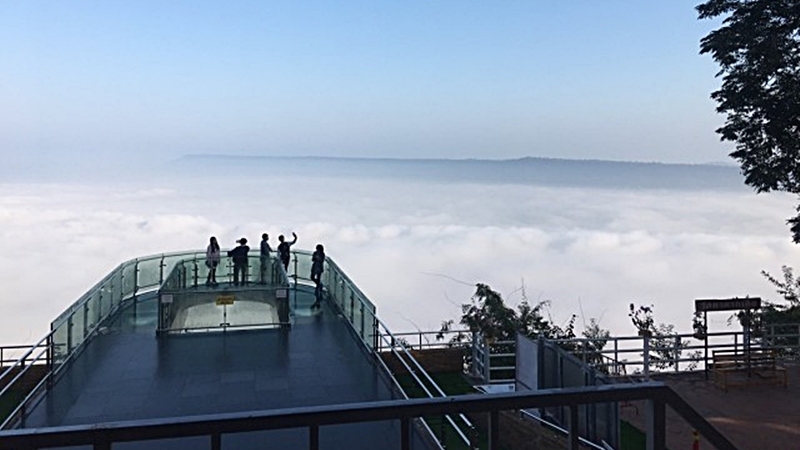
Travellers have been flocking to Nong Khai province to enjoy the beauty of morning mist covering farms and the Mekong River from Wat Pha Tak Suea temple’s skywalk.
Nong Khai is popular among visitors not only for its natural surroundings and cool temperatures but also because it provides easy connections to surrounding provinces such as Loei, which is famous for its Phu Kradueng National Park.
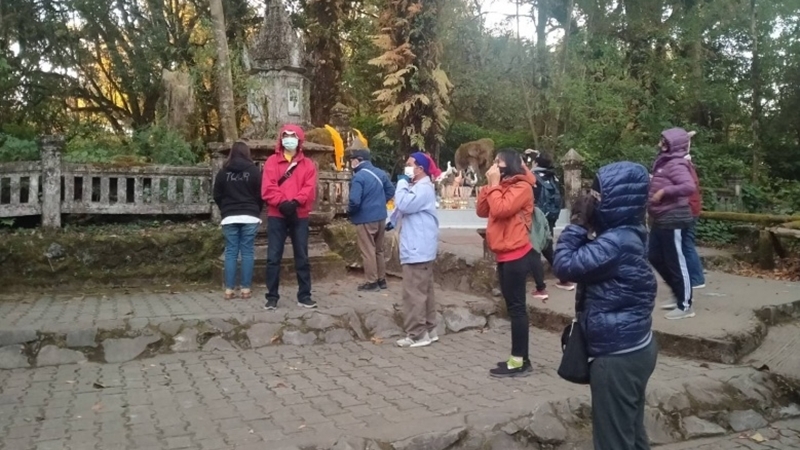
Tourists have been flocking to Chiang Mai and Chiang Rai in the North now that temperatures have dropped to as low as 1 degree Celsius and the peak of Doi Inthanon is glistening with frost.
The fear of Covid-19 infection is not keeping people out of Chiang Rai as the biggest attraction is frost at the Doi Inthanon National Park.
There were several Covid-19 cases in the province last week after several infected people snuck across the border from the Myanmar border town of Tachilek.
Park officials have put in place strict measures to ensure people’s safety by checking their temperature and ensuring most surfaces are sanitised.
For many people, a holiday’s not a holiday unless they can bring their best friend along.
But if that best friend happens to be furry, there could be a problem. Most hotels, resorts and accommodation in Thailand don’t allow animals. You don’t want to leave them at home alone with no one to feed them, or burden the people next door with their care.
However, there’s no need to despair. Next to buying a comfy cave for your pet, there are plenty of other options to give them a relaxing change of scenery. Here’s a few of the best pet-friendly destinations the country has to offer.
1.Gingerbread House
Describing itself as a pet-lover’s resort, the Gingerbread House sits just south of Khao Yai National Park and a couple of hours drive from Bangkok. Accommodation and restaurants have an eco-friendly design and fairy-tale atmosphere thanks to the Hansel and Gretel theme. Overnight guests can take advantage of the pet-sitting service for dogs and cats. Or you can just visit for a meal and take your dogs for a swim at the pool by the restaurant. A pet grooming service is also available, along with natural beauty spots perfect for selfies with your pampered pooch or pussy cat.
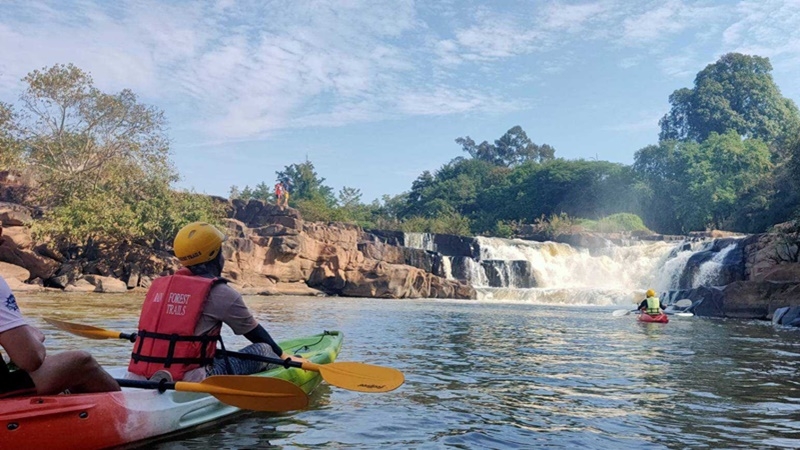
This luxury Kanchanaburi resort surrounded by nature has a Bali-like atmosphere, with a majestic lake and mountains where you and your four-legged friend can roam free. One room accommodates up to two pets without additional charge. Hiking trails, pedalboats and kayaks offer pets and their owners an action-packed but relaxing holiday.
Southeast Bangkok hides a paradise for health-conscious pet lovers. Megapark @ MegaBangna has seven zones specially built to have fun with your animals – including a pet gym. Each zone has an individual theme, while the surrounding mall is a pet-friendly zone with plenty of photo opportunities.
Catsanova is a non-profit Bangkok cafe where rescue cats are the star of the show. Come in for a cuddle, and if you find your friend-for-life you can take him/her home with you. The café and pet hotel also posts pics of adoptable cats online. Currently there are about 27 fabulous furballs available to forever homes.
A large community of pet lovers has created this “back to nature” concept in the heart of the city at Ekkamai 22. Dog Vibes is the largest park for pooches in the city, featuring over 3,200 square metres of real grass and a variety of activities. All breeds of four-legged friend can have fun and learn new skills.
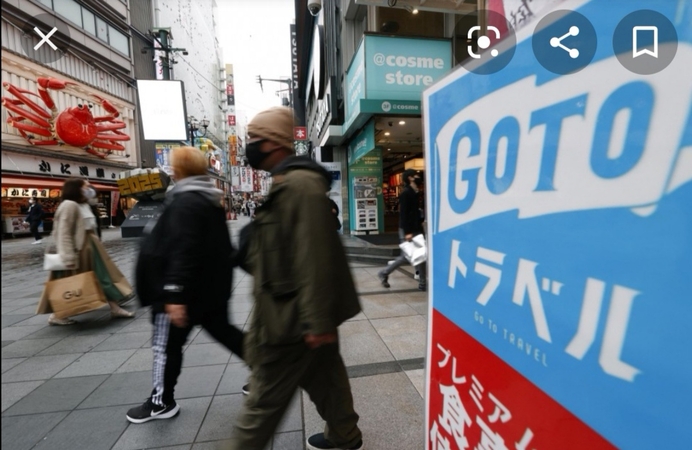
By Syndication Washington Post, The Japan News-Yomiuri · No Author · WORLD, ASIA-PACIFIC Prime Minister Yoshihide Suga has called on people in Osaka and Sapporo to refrain from travel outside the cities, where novel coronavirus cases are rising. Trips to the two cities had already been excluded from the Go To Travel campaign in a revision of the government’s tourism promotion program.
The government is aiming to curb the spread of infections through the suspension and call for restraint.
“I’ll immediately call on people to refrain from using [the program],” Suga said at a meeting of a government task force on the coronavirus at the Prime Minister’s Office on Friday, referring to travel from the cities.
“A measure will be taken to prevent campaign users, hotels and inns from shouldering the cancellation fees,” he said, indicating the government will be offering compensation.
In response to the government’s move, Osaka Gov. Hirofumi Yoshimura on Friday said: “I ask the residents of Osaka City for restraint. I want to prevent the spread of infections in cooperation with the central government.”
Hokkaido Gov. Naomichi Suzuki released a statement on Friday night, saying, “I will call on Sapporo residents to refrain from travel under the Go To Travel campaign if the risk of infection cannot be avoided.”
If the governors of other prefectures where infection cases are increasing consider suspending the campaign and calling for restraint, the central government intends to consult with them individually to respond to the situation.
The nation’s coronavirus response has been notable for the dissonance between the economy-focused government and the subcommittee on coronavirus measures, which is increasingly concerned about the spread of infections.
The government has apparently been forced to make minor changes to the Go To Travel campaign at the insistence of the subcommittee.
Suga had been cautious about reviewing the travel program with a view to prioritizing economic recovery, but he has now made successive changes.
The initial review, which included restrictions on travel destinations, was prompted by a subcommittee of experts who recommended on Nov. 20 that the government urgently consider excluding infected areas from the program. The government hastily held a task force meeting on the following day and decided to revise the program.
However, some members of the subcommittee voiced frustration as the government’s move was limited to restrictions on destinations.
“It’s halfhearted,” one subcommittee member said. “A sense of urgency hasn’t been conveyed to the government.”
After the government announced Tuesday that travel to Sapporo and Osaka would be excluded from the campaign, the subcommittee urged it the next day to also suspend benefits for travel from the cities.
Shigeru Omi, who chairs the subcommittee, expressed his view that the central and local governments should strengthen their coronavirus measures. “We’re past the stage of relying solely on individual effort,” Omi said at a meeting of the House of Representatives’ Committee on Health, Labor and Welfare.
However, the government has taken a stance that a causal relationship between the travel campaign and the spread of infections has not been established as the total number of travelers under the campaign who were infected with the virus stood at just 202 as of Thursday.
The prime minister appears to want to keep revisions to the program to a minimum. The subcommittee’s call to restrict travel from the cities has ruffled feathers at the Prime Minister’s Office, with a senior government official saying: “It’s a selfish opinion. They [members of the subcommittee] have gone beyond their authority.”
However, another senior government official said, “It would be best if we didn’t have to take action, but we can’t ignore the opinions of the subcommittee.”
The government stopped short of excluding travel from the cities from the program and has only asked for people to refrain from travel, apparently because the government decided it was not a good idea to fully accept the opinions of the subcommittee.
Yasutoshi Nishimura, the minister in charge of economic revitalization who serves as a bridge between the government and the subcommittee, has come under pressure.
“The government is making moves every time it is pressured by the subcommittee,” a government source said.
As many prefectural governors have praised the economic effects of the Go To Travel campaign, the central government intends to continue the campaign while working together with them.
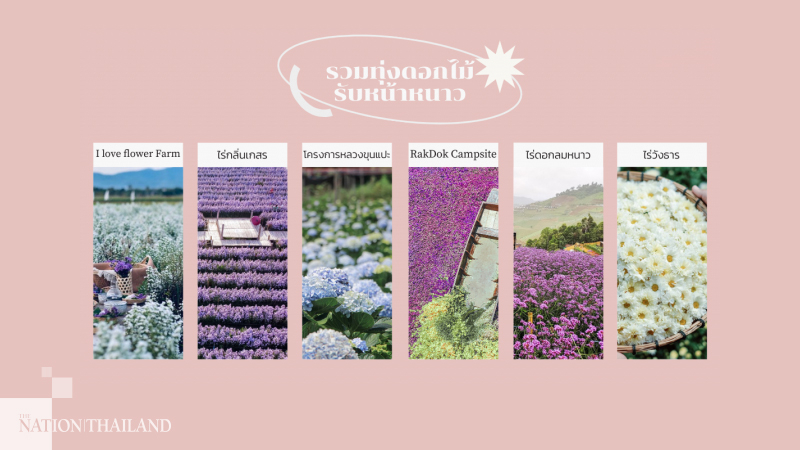
Six flower fields in Thailand are in full bloom and ready for visitors to enjoy their beauty during winter this year.
RakDok Flora Destination — The Hidden Picnics in the Hidden Floral Campsite, Bangkok: This exhibition is being held at Bueng Maitri Chit in Khlong Sam Wa district from November 17 this year to January 15 next year. It features pop-up floral recreation that enables visitors to take a walk and enjoy a view of the flowers.
Khun Pae Royal Project Development Centre, Chiang Mai: This centre in Ban Pae subdistrict features the country’s largest Hydrangea flower field, which blooms only once a year from October to March. It is a place where celebrities take beautiful pictures to show off on Instagram.
Klin Kesorn Farm, Chiang Mai: This farm in Pong Yaeng subdistrict features a purple and pink Margaret flower garden, where visitors can enjoy its beauty by walking along paths made of bamboo.
I Love Flower Farm, Chiang Mai: This famous farm in Muang Kaeo subdistrict features various species of flowers, such as Cutter and Hydrangea that draw visitors to take pictures. However, tourists must reserve a queue via Facebook page before visiting the farm in advance.
Rai Dok Lom Nao Farm, Chiang Mai: This farm is located in Mon Jam mountaintop, so visitors can enjoy a panoramic view of the mountaintop and ladder rice fields from there. Also, it features a variety of flowers that bloom since November, such as Verbena, Cosmos, Cockscomb, Aster and Sunflowers, while the entrance fee is only Bt40 per person.
Rai Wang Than Farm, Chiang Mai: This farm features yellow and white chrysanthemum flowers and many photography spots to take pictures. Also, chrysanthemum tea and noodles in a bamboo tube are available at the farm.
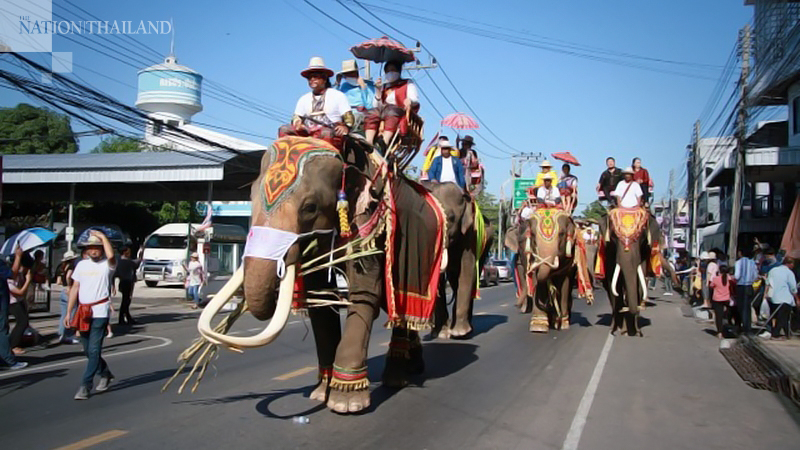
The earth shook in Surin on Friday morning as the annual Elephant Festival opened with a grand procession of 160 pachyderms through the streets of the city.
Visitors and locals lining the route at 8.45am witnessed Surin governor Suwapong Kitipatpiboon kick off the opening ceremony and launch three days of jumbo jamboree.
Now in its 20th edition, the Surin Elephant Round-up festival is rooted in the ancient practices of the indigenous Kuy people, who have been corralling the giant mammals for centuries.
In 2003 the festival registered a world record with the biggest elephant buffet in history – a 400-metre-long table piled with 50 tonnes of fruit.
The buffet will be back this weekend, along with a jumbo menu of other elephant performances.

 Photos by Charoon Thongnual

.jpg)