The coronavirus isn’t alive. That’s why it’s so hard to kill. #ศาสตร์เกษตรดินปุ๋ย

#ศาสตร์เกษตรดินปุ๋ย : ขอบคุณแหล่งข้อมูล : หนังสือพิมพ์ The Nation

https://www.nationthailand.com/lifestyle/30384693?utm_source=category&utm_medium=internal_referral

The coronavirus isn’t alive. That’s why it’s so hard to kill.

Mar 23. 2020
By The Washington Post · Sarah Kaplan, William Wan, Joel Achenbach · NATIONAL, SCIENCE-ENVIRONMENT

Viruses have spent billions of years perfecting the art of surviving without living – a frighteningly effective strategy that makes them a potent threat in today’s world.

That’s especially true of the deadly new coronavirus that has brought global society to a screeching halt. It’s little more than a packet of genetic material surrounded by a spiky protein shell one-thousandth the width of an eyelash, and leads such a zombie-like existence, it’s barely considered a living organism.

But as soon as it gets into a human airway, the virus hijacks our cells to create millions more versions of itself.

There is a certain evil genius to how this coronavirus pathogen works: It finds easy purchase in humans without them knowing. Before its first host even develops symptoms, it is already spreading its replicas everywhere, moving onto its next victim. It is powerfully deadly in some, but mild enough in others to escape containment. And, for now, we have no way of stopping it.

As researchers race to develop drugs and vaccines for the disease that has already sickened 200,000 and killed more than 8,700 people, and counting, this is a scientific portrait of what they are up against.

– – –

Respiratory viruses tend to infect and replicate in two places: In the nose and throat, where they are highly contagious, or lower in the lungs, where they spread less easily but are much more deadly.

This new coronavirus, SARS-CoV-2, adeptly cuts the difference. It dwells in the upper respiratory tract, where it is easily sneezed or coughed onto its next victim. But in some patients, it can lodge itself deep within the lungs, where the disease can kill. That combination gives it the contagiousness of some colds along some of the lethality of its close molecular cousin SARS, which caused a 2002-2003 outbreak in Asia.

Another insidious characteristic of this virus: By giving up that bit of lethality, its symptoms emerge less readily than SARS, which means people often pass it to others before they even know they have it.

It is, in other words, just sneaky enough to wreak worldwide havoc.

Viruses much like this one have been responsible for many of the most destructive outbreaks of the past 100 years: the flus of 1918, 1957 and 1968; and SARS, MERS and Ebola. Like the coronavirus, all these diseases are zoonotic – they jumped from an animal population into humans. And all are caused by viruses that encode their genetic material in RNA.

That’s no coincidence, scientists say. The zombie-like existence of RNA viruses makes them easy to catch and hard to kill.

Outside a host, viruses are dormant. They have none of the traditional trappings of life: metabolism, motion, the ability to reproduce.

And they can last this way for quite a long time. Recent laboratory research showed that, although SARS-CoV-2 typically degrades in minutes or a few hours outside a host, some particles can remain viable – potentially infectious – on cardboard for up to 24 hours and on plastic and stainless steel for up to three days. In 2014, a virus frozen in permafrost for 30,000 years that scientists retrieved was able to infect an amoeba after being revived in the lab.

When viruses encounter a host, they use proteins on their surfaces to unlock and invade its unsuspecting cells. Then they take control of those cells’ own molecular machinery to produce and assemble the materials needed for more viruses.

“It’s switching between alive and not alive,” said Gary Whittaker, a Cornell University professor of virology. He described a virus as being somewhere “between chemistry and biology.”

Among RNA viruses, coronaviruses – named for the proteins spikes that adorn them like points of a crown – are unique for their size and relative sophistication. They are three times bigger than the pathogens that cause dengue, West Nile and Zika, and capable of producing extra proteins that bolster their success.

“Let’s say dengue has a tool belt with only one hammer,” said Vineet Menachery, a virologist at the University of Texas Medical Branch. This coronavirus has three different hammers, each for a different situation.

Among those tools is a proofreading protein, which allows coronaviruses to fix some errors that happen during the replication process. They can still mutate faster than bacteria, but are less likely to produce offspring so riddled with detrimental mutations that they can’t survive.

Meanwhile, the ability to change helps the germ adapt to new environments, whether it’s a camel’s gut or the airway of a human unknowingly granting it entry with an inadvertent scratch of her nose.

Scientists believe the SARS virus originated as a bat virus that reached humans via civet cats sold in animal markets. This current new virus, which can also be traced back to bats, is thought to have had an intermediate host, possibly an endangered scaly anteater called a pangolin.

“I think nature has been telling us over the course of 20 years that, ‘Hey, coronaviruses that start out in bats can cause pandemics in humans, and we have to think of them as being like influenza, as long term threats,'” said Jeffery Taubenberger, virologist with the National Institute of Allergy and Infectious Diseases.

Funding for research on coronaviruses increased after the SARS outbreak, but in recent years that funding has dried up, Taubenberger said. Such viruses usually simply cause colds and were not considered as important as other viral pathogens, he said.

– – –

Once inside a cell, a virus can make 10,000 copies of itself in a matter of hours. Within a few days, the infected person will carry hundreds of millions of viral particles in every teaspoon of their blood.

The onslaught triggers an intense response from the host’s immune system: Defensive chemicals are released. The body’s temperature rises, causing fever. Armies of germ-eating white blood cells swarm the infected region. Often, this response is what makes a person feel sick.

Andrew Pekosz, a virologist at Johns Hopkins University, compared viruses to particularly destructive burglars: They break into your home, eat your food and use your furniture, and have 10,000 babies. “And then they leave the place trashed,” he said.

Unfortunately, humans have few defenses against these burglars.

Most antimicrobials work by interfering with the functions of the germs they target. For example, penicillin blocks a molecule used by bacteria to build their cell walls. The drug works against thousands of kinds of bacteria, but because human cells don’t use that protein, we can ingest it without being harmed.

But viruses function through us. With no cellular machinery of their own, they become intertwined with ours. Their proteins are our proteins. Their weaknesses are our weaknesses. Most drugs that might hurt them would hurt us too.

For this reason, antiviral drugs must be extremely targeted and specific, said Stanford virologist Karla Kirkegaard. They tend to target proteins produced by the virus (using our cellular machinery) as part of its replication process. These proteins are unique to their viruses. This means the drugs that fight one disease generally don’t work across multiple ones.

And because viruses evolve so quickly, the few treatments scientists do manage to develop don’t always work for long. This is why scientists must constantly develop new drugs to treat HIV, and why patients take a “cocktail” of antivirals that viruses must mutate multiple times to resist.

“Modern medicine is constantly needing to catch up to new emerging viruses,” Kirkegaard said.

SARS-CoV-2 is particularly enigmatic. Though its behavior is different from its cousin SARS, there are no obvious differences in the viruses’ spiky protein “keys” that allow them to invade host cells.

Understanding these proteins could be the key to developing a vaccine, said Alessandro Sette, head of the Center for Infectious Disease at the La Jolla Institute for Immunology. Previous research has shown that the spike proteins on SARS are what trigger the immune system’s protective response. In a paper published this week, Sette found the same is true of SARS-COV2.

This gives scientists reason for optimism, according to Sette. It affirms researchers’ hunch that the spike protein is a good target for vaccines. If people are inoculated with a version of the spike protein, it could teach their immune system to recognize the virus and allow them to respond to the invader more quickly.

“It also says the novel coronavirus is not that novel,” Sette said.

And if SARS-CoV-2 is not so different from its older cousin SARS, then the virus is likely not evolving very fast, giving scientists developing vaccines time to catch up.

In the meantime, Kirkegaard said, the best weapons we have against the coronavirus are public health measures like testing and social distancing and our own immune systems.

Some virologists believe we have one other thing working in our favor: the virus itself.

For all its evil genius and efficient, lethal design, Kirkegaard said, “The virus doesn’t really want to kill us. It’s good for them, good for their population, if you’re walking around being perfectly healthy.”

Evolutionary speaking, experts believe, the ultimate goal of viruses is to be contagious while also gentle on its host – less destructive burglar and more of a considerate house guest.

That’s because highly lethal viruses like SARS and Ebola tend to burn themselves out, leaving no one alive to spread them.

But a germ that’s merely annoying can perpetuate itself indefinitely. One 2014 study found that the virus causing oral herpes has been with the human lineage for 6 million years. “That’s a very successful virus,” Kirkegaard said.

Seen through this lens, the novel coronavirus now killing thousands across the world is still early in its life. It replicates destructively, unaware that there’s a better way to survive.

But bit by bit, over time, its RNA will change. Until one day, not so far in the future, it will be just another one of the handful of common cold coronaviruses that circulate every year, giving us a cough or sniffle, and nothing more.


What it’s like to be infected with coronavirus #ศาสตร์เกษตรดินปุ๋ย

#ศาสตร์เกษตรดินปุ๋ย : ขอบคุณแหล่งข้อมูล : หนังสือพิมพ์ The Nation

https://www.nationthailand.com/lifestyle/30384627?utm_source=category&utm_medium=internal_referral

What it’s like to be infected with coronavirus

Mar 23. 2020
Mike Saag, an infectious disease doctor at the University of Alabama at Birmingham, tested positive for covid-19, and is telling people that the best way to slow the spread of the virus is to stay at home. MUST CREDIT: Harry Saag

Mike Saag, an infectious disease doctor at the University of Alabama at Birmingham, tested positive for covid-19, and is telling people that the best way to slow the spread of the virus is to stay at home. MUST CREDIT: Harry Saag
By  The Washington Post · Joel Achenbach, Ben Guarino, Ariana Eunjung Cha · NATIONAL, HEALTH

Ritchie Torres, 32, a New York City councilman from the Bronx, first had nothing more than a “general sickly feeling.” Then came a bad headache. He felt terrible. But for Torres, the worst effects of covid-19 so far have been mental: “It is psychologically unsettling to know I am carrying a virus that could harm my loved ones.”

The Rev. Jadon Hartsuff, 42, an Episcopal priest in Washington, D.C., felt drained after a Sunday service on Feb. 23. He took a nap. No big deal – the service can be tiring. The next day at the gym, his muscles ached. He became fatigued, feverish, slightly dizzy. “I kept telling people I felt spongy,” he recalls. “Like a kitchen sponge.”

Mike Saag, 64, an infectious disease doctor in Alabama, developed a cough, like a smoker’s hack. He was bone-tired, his mind foggy. About five days in, the misery intensified. “This is not something anybody wants to go through,” he said Saturday. “I implore everyone to stay at home!”

These stories were offered in recent days by people in the U.S. who now know the new coronavirus and the disease it causes intimately. In sharing their experiences, they are helping to demystify this alarming contagion.

Covid-19 can be a severe illness, even deadly. But it varies from person to person, and most people with a confirmed infection do not require hospitalization.

It can induce intense fatigue and trigger a recurring cough and intermittent fever. This is a slow-developing illness, and it lingers, the whole process typically playing out in weeks rather than days.

Patients with covid-19 report a psychological toll. This disease is unfamiliar. It’s a pandemic virus that has alarmed the entire planet. A natural reaction is anxiety.

Jim, a 34-year-old from Long Island who asked that his full name be withheld, had mild symptoms for several days and then abruptly developed shortness of breath, fever and chest pains.

“The fear is real,” he said. “It’s impossible not to be scared at times that it’s just going to take this insane turn into uncontrollably bad.”

Saag, the doctor, teaches at the University of Alabama at Birmingham and fully understands the biological processes that take place when a virus invades the body. He knows, for example, that his immune system generates the symptoms – things like fever. He became sick after a long drive from the Northeast back to Alabama, and on Monday night, he experienced rigors – his body shaking uncontrollably.

“It was my immune system saying, ‘Hey, let’s fight this sucker off.’ ”

Still, even with his medical background, he had to suppress the natural fear any person would feel. His advice to other covid-19 victims: “Stay calm. Monitor yourself. The No. 1 thing to keep an eye on is breathing. If it becomes difficult to breathe, you should really get to a facility.”

As for fear and anxiety, “We got a disease that’s kind of scary, and anxiety is part of the equation. That’s why I started with ‘stay calm.’ ”

Torres, the youngest member of the New York City Council, tested positive for the coronavirus Monday after his chief of staff tested positive the previous weekend. Torres is under quarantine at his Bronx apartment. Busy with his job on the council and his campaign for the 15th congressional district’s open seat, he was unable to stockpile supplies as the contagion hit the city. He has been asking deliverers to drop off his meals at a safe distance.

“To feel so helplessly dependent is a painful adjustment for me,” he said. “The virus preys upon our need to be human, our need for social and physical affection. I struggle with depression, and the virus has left me struggling even more so.”

He added, “If you are young and a millennial and healthy, it is tempting to feel a false sense of security. That delusion could not be farther from the truth.”

Mark and Jerri Jorgensen and their friend Carl Goldman were among the passengers on the ill-fated voyage of the Diamond Princess. Jerri, 65, a former high school volleyball and track coach from St. George, Utah, tested positive after the ship docked in Yokohama, Japan, and was placed in quarantine. Authorities took her off the ship and placed her in isolation, but she never felt any symptoms.

“I never had a sore throat or headache or anything,” she said. She stayed in a hospital for 14 days until she tested negative twice. She spent her days doing Pilates via FaceTime with friends back home at 1 a.m. in the morning Japan time.

“I would do planks, push-ups and put my headphones on, and I’d have really good ’80s rock ‘n’ roll and just dance in the room,” she recalled.

Goldman, 67, who owns a radio station in Santa Clarita, California, tested negative while on the ship, but on the State Department-sponsored evacuation flight home, he fell asleep and woke up with a 103-degree fever. He was quickly quarantined in the back of the plane with plastic sheeting between him and the other passengers. By the time they landed in the States about eight hours later, his fever was gone.

“I had no headache, no sore throat, no sneezing, no dripping of the nose, no body aches. Just a dry cough,” he said. He had some shortness of breath for three or four days while walking around or talking, but nothing that required treatment. The cough persisted for two weeks.

He was taken to the University of Nebraska for treatment. He and 12 other covid-19 patients were isolated from one another, but they had a group “town hall” conference call each day with the doctors.

Goldman, who left on Monday, was one of the last to be discharged.

“We would cheer when they finally tested someone negative,” he said.

He was treated with a bit of ibuprofen at the beginning and told to drink a lot of Gatorade. (“The white blue is the bomb, and stay away from grape – it’s nasty.”)

Mark Jorgensen, 55, tested positive while in quarantine on Feb. 22.

“When they told me, I felt like, ‘Are you kidding me?’ I felt fine,” he recalled. They flew him to a hospital in Salt Lake City, where he continued to feel fine the whole time.

“It was kind of bizarre. I was perfectly healthy, but I was taking up this biocontainment unit, and they were all coming in hazmat suits and this whole bit,” he said.

Jorgensen is a two-time kidney transplant recipient taking immunosuppressants. As of this week, he said, he was still testing positive for the coronavirus, but the hospital released him to home quarantine.

A Syracuse, New York, woman in her 20s, who spoke to The Washington Post on the condition of anonymity, said her first symptom was shortness of breath. She went shopping with her mother in New York City on Saturday and began to cough and feel tired, as though she’d just finished a sprint.

“I feel like, because I’m so young my symptoms weren’t that big – but it definitely caught me off guard,” she said. “I haven’t felt anything like it. I’ve never had the flu before.”

On Sunday, in New York City, an urgent care facility declined to give her a test. “I got tremendously worse,” she said. Her temperature rose to 101, along with a headache that she described as “the worst part of my entire experience.”

Her mother drove her to Syracuse, in upstate New York, where Monday morning a physician’s office agreed to give her a test. The clinicians directed her through the back of the building, gave her a mask and had her wait in a disused room.

When a doctor in protective gear entered, the other clinicians stood outside the door. “They were kind of freaking out because they’re like, oh my God, it’s in Syracuse!” the woman said.

When the test results came back positive, the young woman became the third confirmed coronavirus case in New York’s Onondaga County. The health commissioner there ordered the family to quarantine at home.

Hartsuff, the priest, did not realize he had covid-19 until news broke on March 8 that a fellow priest in Washington, the Rev. Timothy Cole, had tested positive. They’d seen each other at a conference more than two weeks earlier. Hartsuff quickly informed his church that he’d been sick and was getting a test. The positive result came back three days later.

He doesn’t know whether he transmitted the infection to anyone at his church, but he’s feeling guilty that he didn’t self-quarantine earlier.

“I wasn’t staying home, I wasn’t staying away from church, and I have a lot of guilt around that,” he said by phone from his apartment, where he is feeling much better, symptom-free, but remains in self-quarantine.

“I’m trying to encourage people, and encourage myself, to differentiate between this whole thing being something that is very serious and something that is very scary. There is a very fine line between the two,” he said.

Now more than two weeks after his symptoms began, Jim from Long Island is still having difficulty breathing. He’s gone to urgent care twice and has been in communication with the health department but has been told he should just treat himself at home. He’s been living in the guest room downstairs while his wife and two children live upstairs. They leave him food at the door.

“I felt like I was raising the alarm everywhere I went, saying, ‘I think I have this!’ and being largely ignored,” he said.

Alison McGrath Howard, a Washington clinical psychologist with covid-19, said of her illness, “I’ve never had anything like this. The symptoms feel unfamiliar to me, and therefore I don’t know how to mentally make sense of them.”

The symptoms come and go. She feels better – for a while.

“And then I take my dog outside and feel like I’m going to fall down,” she said. “And my fever is gone, and then it comes back. And while I have been sicker with other things like bronchitis or stomach viruses or really bad colds, this feels like a constant fatigue. It’s the weirdest thing.”

Anne Kornblut, 47, a Facebook executive and former reporter and editor for The Post, suddenly developed a headache March 11, not long after she returned to her home in California after a trip to New York City.

“I had to get in bed and go to sleep. It hit me like a truck,” she said.

Her symptoms came and went. At times, she felt just “under the weather.” Although she didn’t think she had covid-19, she managed to get a test and was on the treadmill Sunday, feeling better, when her doctor called and said she was positive.

She posted her story on Facebook, and described the uncertainty that everyone is facing, including health officials: “The health department called to inform me to stay away from everyone, including my children. So who should take care of them if my husband tests positive, too? ‘We haven’t had that scenario yet,’ the public health nurse said, offering to call me back.”

By late Friday, her fever had spiked again, and she had another terrible headache. And her husband had tested positive.

How coronavirus overwhelmed Italy, with 4,000 deaths in one month #ศาสตร์เกษตรดินปุ๋ย

#ศาสตร์เกษตรดินปุ๋ย : ขอบคุณแหล่งข้อมูล : หนังสือพิมพ์ The Nation

https://www.nationthailand.com/lifestyle/30384549?utm_source=category&utm_medium=internal_referral

How coronavirus overwhelmed Italy, with 4,000 deaths in one month

Mar 21. 2020
By The Washington Post · Chico Harlan, Stefano Pitrelli · WORLD, HEALTH, EUROPE 

ROME – Police driving through the center of Rome blast loudspeaker messages telling people to stay indoors. The few who venture out are liable to be charged with crimes if their reasons are deemed frivolous. Most Italians have internalized the lockdown with a wartime-level commitment, scolding and shaming those who break the rules.

Still, even that hasn’t been enough.

A month after first cases exploded into view in northern Italy, the coronavirus has killed more than 4,000 Italians, including 627 reported on Friday alone. It has sickened tens of thousands more, and swiftly rendered the country unrecognizable – somber, desolate and scared. But for all the life-disrupting measures Italy has taken to slow the virus, it continues to spread and kill at an alarming clip.

The feeling is that battle against the virus, brutal and consuming as it has been, is only beginning.

As the first Western country to deal with a major outbreak, Italy has become a grim symbol of the virus’ dangers and the difficulty of contending with it. While other European countries and some U.S. states have borrowed Italy’s stay-home strategy, Italy is learning that the strategy does not work quickly, even when broadly adhered to.

Ten days since the beginning of a strict nationwide lockdown, the number of known coronavirus cases continue to rise some 15 percent every day. While that is shy of exponential growth, it is enough to overwhelm hospitals and morgues. More people are getting sick than can be cared for.


The lockdown, which included restrictions on travel and the closure of most stores aside from supermarkets and pharmacies, was initially put in place through April 3. But Prime Minister Giuseppe Conte made it clear in an interview with the Corriere della Sera that the measures would go on longer.

Conte said the “restrictions are working.” But even once the pace of transmission starts to wane – hopefully days from now, he said – “we won’t be able to immediately resume life as it was.”

Some politicians in Italy’s northern provinces have pressed for even harsher measures. They want narrower hours for supermarkets, a wider closure of factories and a mass-scale military deployment to keep people off the streets. Several leaders in the north have turned their ire toward people who continue to exercise outdoors, and have called on Conte to place a ban on jogging.

In an interview, the vice governor of the Lombardy region, Fabrizio Sala, said anonymized data provided by telecommunications companies indicated that 60 percent of all movement in the region had stopped, compared to a normal period before the virus. But even so, he said, too many people were leaving the house.


“People should stay at home more,” he said.

Polls indicate that the lockdown has wide support, and many of the Italians leaving their homes are doing so for essential work. Still, tens of thousands have been cited by police for breaking the lockdown rules.

In recognition of the limits on how democracies can contend with the virus, Italy has not used some of the more heavy-handed or invasive tools used successfully by China – including sustained monitoring outside apartment complexes and apps that log location and body temperature.

Italy’s biggest mistake, virologists say, was not instituting the nationwide lockdown more swiftly.

It is unclear if such a move, made weeks earlier, would have been as widely accepted – because the horrors of the virus had not yet come fully into view. Still, by the time Conte formally made his decree on March 10, the virus’s explosive growth had been set in motion.

“That move should have come from the beginning,” said Giorgio Palù, a professor of microbiology and virology at the University of Padova and the former president of the European and Italian Society for Virology.

Instead, when Italy was learning about the first burst of locally transmitted cases, it put only a fraction of the country – 50,000 people, in 11 towns – in strict lockdown. People in those towns were banned from exiting or entering, barring emergencies, and they were tested rigorously.

Experts say the disaster was likely set in motion weeks earlier, with people transmitting the virus well before officials realized there was any problem. The epicenter of the outbreak was Italy’s richest region, but also one of the oldest areas in a nation that has the world’s second-highest proportion of seniors. Because older people are more vulnerable to the coronavirus, Italy has been hit particularly hard. Among the people who have died, the median age is 80, according to Italy’s national health service.


Some initial signs suggest the localized lockdowns may have helped. Ten of those towns were in the Lombardy province of Lodi, where the pace of cases has risen at a rate far below other areas in the region. In a sealed-off town in a separate region further to the east, Vo’, the transmission of the illness has nearly stopped.

“You always pay a price for being first,” said Giuliano Martini, the Vo’ mayor. “But the others had time to act based on our experience, looking at the situation on the ground. They could’ve predicted it.”

Now under nationwide lockdown, all of Italy resembles Vo’ from several weeks ago. People stress about the economic cataclysm that is waiting the country, but those fears compete for more foundational concerns: about elderly parents, about the inability to see loved ones. In many neighborhoods across the country, stir-crazy Italians go to their balconies at night and either sing or open their windows and play music. At other times in the day, one of the public radio stations has started playing songs about the locked-down life. (“We are all cooks,” one lyric said.)

The moments are levity are fleeting, though, and there is widespread agreement that the country is facing its gravest challenge since at least World War II. This week, Italy surpassed China for the largest number of coronavirus-related deaths. Each of the last six days, the country has announced at least 300 dead. In Bergamo, the hardest-hit cities, military trucks have started lining up outside a hospital, to take the dead away to farther-away crematoriums.

On Friday, Sky News published footage from inside the main public hospital in Bergamo depicting a wrenching crisis: patients on gurneys struggling to breathe, including in the hallways, and exhausted-looking doctors and nurses without proper protective gear. In a public plea posted on the hospital’s Facebook page, the director of the department of medicine, Stefano Fagiuoli, said the facility was in “full emergency.”


“We are in desperate need of both nurses and physicians, together with ventilators” and protective equipment, he said.

He issued what amounted to an open call for nurses and doctors who wanted to come to Bergamo.

“If you are a health personnel, you are more than welcome to join us in fighting the coronavirus,” Fagiuoli said.

The situation is most dire in the north, but cases are increasing rapidly in most parts of the country, and authorities have been responding to a growing number of local hotspots. Some of the cases were transmitted by people who fled Lombardy and returned to their southern hometowns before travel restrictions were put in place. This week, authorities closed off a town of some 40,000 two hours south of Rome, after seeing a spike in cases. A new decree prevents people from leaving even for work purposes.

The spike had reportedly been triggered by a festival three weeks earlier.

Since then, according to the text of the restrictions place on the town, the increase in cases had been “remarkable.”

– – –

– Jan. 31: Italy confirms coronavirus in two Chinese tourists visiting Rome. The government declares a six-month state of emergency and becomes the first European country to suspend flights from China.

– Feb. 21: Italy reports its first cases of apparent community transmission and its first coronavirus death, a 78-year-old man from Vo, in the Veneto region.

– Feb. 22: Italy announces a lockdown affecting 50,000 people in the northern Lombardy and Veneto regions.

– March 4: With more than 2,500 cases confirmed, Italy announces closure of schools and universities.

– March 8: With nearly 5,900 cases confirmed, Italy orders a lockdown for 16 million people in the north, while also closing museums and theaters nationally.

– March 10: With nearly 7,400 total cases, the lockdown is extended to the rest of the country, limiting travel abroad and across regions.

– March 11: With nearly 12,500 cases confirmed, the government halts nearly all commercial activity aside from supermarkets and pharmacies.

– March 19: Italy surpassed China as the country with the most reported coronavirus deaths.

Cities struggle to protect vulnerable homeless populations as coronavirus spreads #ศาสตร์เกษตรดินปุ๋ย

#ศาสตร์เกษตรดินปุ๋ย : ขอบคุณแหล่งข้อมูล : หนังสือพิมพ์ The Nation

https://www.nationthailand.com/lifestyle/30384539?utm_source=category&utm_medium=internal_referral

Cities struggle to protect vulnerable homeless populations as coronavirus spreads

Mar 20. 2020
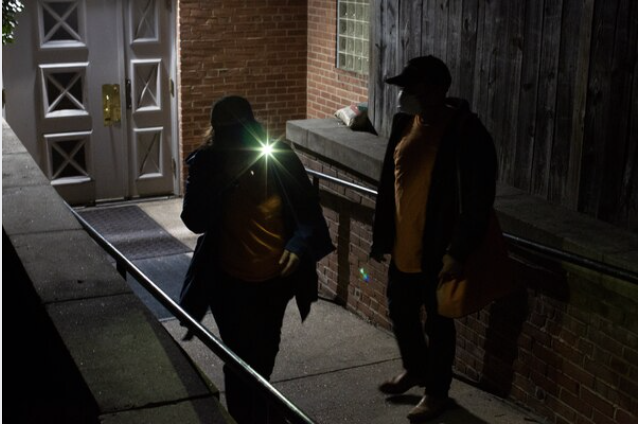
Gabriel Santos and Deborah Taylor of the outreach organization Bethesda Cares hand out fresh socks on March 17, 2020, in Silver Spring, Md. MUST CREDIT: Photo for The Washington Post by Robb Hill

Gabriel Santos and Deborah Taylor of the outreach organization Bethesda Cares hand out fresh socks on March 17, 2020, in Silver Spring, Md. MUST CREDIT: Photo for The Washington Post by Robb Hill
By The Washington Post · Marissa J. Lang, Justin Wm. Moyer, Nitasha Tiku · NATIONAL

WASHINGTON – The man was still yards away when she saw it – a white face mask, glowing in the predawn light.

Gabriel Santos, a homeless-outreach worker, had waked with cold symptoms. Not wanting to expose his clients to illness, he reached for the mask. It would be better this way, he thought. But now, as he approached the woman sheltering outside a building, its other effects became clear.

Gabriel Santos and Deborah Taylor of the outreach organization Bethesda Cares search for homeless people who sleep in various areas of Silver Spring, Md, on March 17, 2020. MUST CREDIT: Photo for The Washington Post by Robb Hill

Gabriel Santos and Deborah Taylor of the outreach organization Bethesda Cares search for homeless people who sleep in various areas of Silver Spring, Md, on March 17, 2020. MUST CREDIT: Photo for The Washington Post by Robb Hill

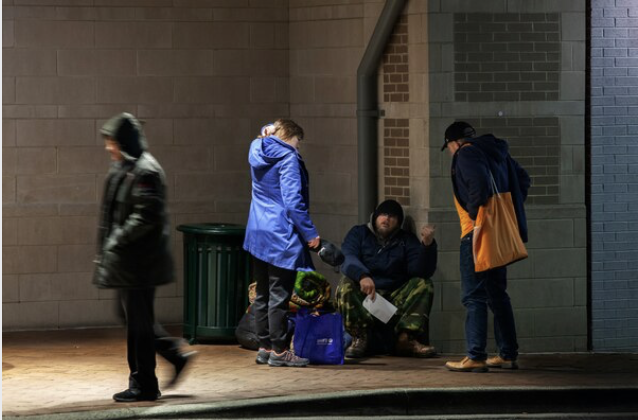
“Don’t come over here with no mask on,” shouted Debra, a chronically homeless woman who sat bundled in a winter coat, a black-and-white blanket pulled over her lap. “I said don’t you come over here!”

Santos pulled the mask down, hoping she would recognize his face. A senior outreach coordinator with the nonprofit Bethesda Cares, Santos sees her often on his morning patrols of suburban Silver Spring, Maryland. But it was no use.

Gabriel Santos and Deborah Taylor, of the outreach organization Bethesda Cares, talk with a homeless person about the coronavirus on March 17, 2020, in Silver Spring, Md. MUST CREDIT: Photo for The Washington Post by by Robb Hill

Gabriel Santos and Deborah Taylor, of the outreach organization Bethesda Cares, talk with a homeless person about the coronavirus on March 17, 2020, in Silver Spring, Md. MUST CREDIT: Photo for The Washington Post by by Robb Hill

“I don’t care who you are!” she shouted again. “Don’t come over here with no mask!”

News of the rapidly spreading coronavirus, which as of Thursday had killed more than 170 people in the United States, has reached America’s homeless. But protocols meant to keep the public safe may do little to protect those without homes to shelter in – and could expose some of society’s most vulnerable people to even greater risk.

From San Francisco to Chicago to Washington, best practices are meeting harsh realities in a patchwork of responses that vary state by state, city by city.

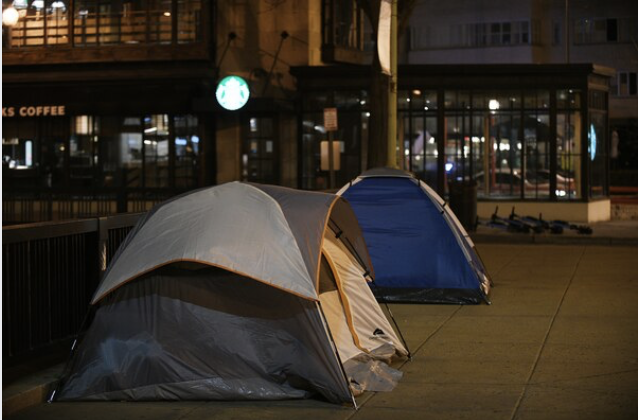
Tents of homeless men and women are set up in Washington, D.C.'s Dupont Circle area on March 16, 2020. MUST CREDIT: Photo for The Washington Post by Astrid Riecken

Tents of homeless men and women are set up in Washington, D.C.’s Dupont Circle area on March 16, 2020. MUST CREDIT: Photo for The Washington Post by Astrid Riecken

Several local and state governments this week have ordered restaurants, coffee shops, libraries and other public gathering places to close – cutting off access to places where homeless people on the street can go to use the bathroom and wash their hands.

Recommendations from the Centers for Disease Control and Prevention say to limit gatherings to 10 people and practice “social distancing,” keeping at least six feet from others. Implementing such guidelines at an emergency shelter meant to house dozens of homeless adults can be impossible.

Michele Hydier, near Washington, D.C.'s Union Station on March 17, 2020, is receiving a fraction of the money she used to receive when panhandling. MUST CREDIT: Washington Post photo by Michael S. Williamson

Michele Hydier, near Washington, D.C.’s Union Station on March 17, 2020, is receiving a fraction of the money she used to receive when panhandling. MUST CREDIT: Washington Post photo by Michael S. Williamson

Covid-19, the disease caused by the coronavirus, hits people over 60 and those with preexisting health conditions hardest. The virus is easily spread through touch and by lack of proper hygiene.

People experiencing homelessness are increasingly older and sicker. Many have underlying health conditions but lack access to primary-care physicians or preventive health screenings. They struggle to find public bathrooms to maintain basic hygiene. Those who live in tent encampments or crowded shelters might be unable to keep their distance from others or self-isolate if they show symptoms.

Even their fiercest advocates – experts who have long served the homeless in their communities – worry about inadvertently putting their clients’ health at risk by simply showing up and doing their jobs.

“The education we’re giving our staff going out and working with this population is they’re not the ones you have to worry about being a possible carrier of this virus right now – you are,” said Betsy Bowman, director for adult and community services at EveryMind, a nonprofit organization that works with the homeless in suburban Montgomery County, Maryland. “You’re the one who went to church and saw your friend who just got back from overseas. It’s more likely that you’re going to give it to them. And if an infection gets into that population, it’s going to be devastating.”

The U.S. Interagency Council on Homelessness estimates there are 567,700 homeless people in the country. The most underserved live in parts of Washington, California, Maine, Oregon and Washington state, according to a Washington Post analysis of data from the U.S. Health Resources and Services Administration.

In the nation’s capital, homeless shelters announced they would stay open around the clock, instead of the usual 12 hours, and emergency measures will allow Mayor Muriel Bowser, D, to temporarily house homeless families for up to 60 days.

Bowser said city officials are working to ensure any homeless person showing symptoms gets appropriate treatment – but what that looks like in practice is not clear.

“If we have a person who is experiencing homelessness who needs to quarantine, we will make sure this happens,” she said.

Wayne Turnage, the city’s deputy mayor for health and human services, said homeless residents are being given hand sanitizer while encampment cleanups – which typically force residents to move their tents before streets are power-washed – have been limited to trash pickups.

Those who stay in Washington shelters are being screened before entering, and residents are required to stay in the same bed in the same shelter to limit movement between facilities. The city’s guidance for homeless-service providers includes checking clients for fever, encouraging hand-washing, staggering bathing and meal times, and moving beds at least three feet apart.

Laura Green Zeilinger, director of the D.C. Department of Human Services, said it’s not known whether anyone in the city’s homeless population has tested positive because the city doesn’t report results based on housing status. She said the city has found space where up to 200 people could self-quarantine if they’re otherwise unable.

Shelter environments do not naturally lend themselves to social distancing behaviors, experts say.

In some shelters, people share rooms and sleep in bunk beds. In others, mats line the floor of empty rooms to squeeze in as many people as possible during the cold winter months. Meals are served and consumed in large cafeterias. Recreation rooms, bathrooms and laundry facilities are shared.

Many shelters do not have room to isolate someone for an extended period. Some already are running low on cleaning supplies, hand sanitizer, food and volunteers to relieve overworked staff. Others have told volunteers to stay home – an effort to limit the number of people in and out of shelters at a time when experts say even asymptomatic people can spread the coronavirus.

“Our homeless services here are countercyclical, so when all these services are shutting down, we have to be in ramp-up mode,” said Shannon Steene, executive director of Carpenter’s Shelter in suburban Alexandria, Virginia, which serves families with children. “The thought of a potential self-quarantine with everyone in the shelter at one time, that is very sobering for me.”

The homeless are exempt from a public health order to “shelter in place” in seven Northern California counties, but officials encouraged them to seek shelter. For many of that region’s most vulnerable residents, it isn’t an option.

The San Francisco Bay area, home to some of the biggest names in the technology sector, also struggles with one of the biggest homelessness crises in the country.

There were more than 8,000 homeless people in San Francisco last year, according to city estimates based on a single night. By other city measurements, the number is more than 17,000.

“When you layer on top of that the coronavirus and mass vulnerability, we’ve moved beyond crisis to something bigger,” said Karen Hanrahan, chief executive of the Glide Foundation, a nonprofit that provides services to the homeless.

San Francisco Mayor London Breed, D, announced a $5 million emergency fund and public health order earlier this month to help vulnerable populations, including the homeless. The money will pay for roving cleaning crews to minimize contagion and support expanded daytime hours at shelters.

Local outreach teams run by nonprofits and the city are offering hand sanitizer and information on how to stay healthy. San Francisco also has deployed additional hand-washing stations on the streets.

The city plans to offer temporary housing to help people exposed to covid-19 who can’t self-isolate, including dozens of recreational vehicles placed in neighborhoods. In its ongoing search for quarantine housing, the city is also looking at unoccupied residential properties and vacant hotel rooms.

Sarah Owens, a spokeswoman for Breed, declined to say how many additional spaces are still needed or whether testing for coronavirus is being done in vulnerable populations, citing patient privacy.

Jennifer Friedenbach, executive director of the nonprofit Coalition on Homelessness, estimated there are about 40,000 people in San Francisco who cannot self-quarantine, because their housing situation does not allow it, including people living on the streets or in shelters, jails or single-room-occupancy hotels.

In a region where many homeless people sleep in tents beneath overpasses, on sidewalks and in parks, Friedenbach said the city’s effort to protect vulnerable populations must include a moratorium on removing tents from encampments.

“I feel like the city is working really hard and trying to come up with stuff as fast as they can,” Friedenbach said. “I don’t think $5 million is going to get us to the place where we’re preventing the spread.”

In the Seattle area, where the first domestic coronavirus case was reported, care providers have been working on social distancing in shelters. Seattle city officials also are funding emergency hotel rooms for the homeless, said Daniel Malone, executive director of the Downtown Emergency Service Center, a homeless outreach organization.

Because testing for the coronavirus remains limited, city spokesman Scott Thomsen, Seattle has focused on spreading its homeless population out as much as possible.

No cases of coronavirus have been reported among Seattle’s homeless, said Malone, who added that the city was in need of additional tests for the homeless.

Tests have remained hard to get, even for those with health insurance and demonstrable symptoms. Shelters and homeless advocacy organizations said they are waiting – just like everyone else – for test kits to be more widely available.

“They’re asking me: ‘What if I want to get tested? Where do I go?’ ” said Kasia Shaw, a nurse practitioner with Arlington Homeless Services Center in Virginia. “I tell them: ‘Well, there are not enough tests. You’re more than welcome to call the emergency room, but they’re going to ask you screening questions, and if you don’t meet the criteria, then they’re just going to tell you to self-isolate.’ ”

Doug Schenkelberg, executive director of the Chicago Coalition for the Homeless, said the homeless population in the Windy City has been “way undertested.” He said a large proportion of Chicago’s homeless live not on the street but in small apartments with many other people.

“These are folks that don’t have stable housing, likely in crowded environments,” he said. “How do you provide support to them? They’re not as easily found as folks on the street or in the shelter system.”

To many advocates for the homeless, the North Star in this health crisis remains the same as it ever was – finding people stable housing.

Michael Clark, 35, has been staying at the men’s shelter in Montgomery County for three months. Though he is taking warnings about the coronavirus seriously, he said he feels as if it is a distraction from his most immediate needs.

“My goal here is to get my life on track,” Clark said. “If it’s not helping me move forward, then I just can’t have anything to do with it.”

Many shelters have begun to formulate no-contact supply drops and lunch donations. Workers and volunteers who assist the homeless are also increasingly anxious about their own safety.

“We have staff coming to work and handling business as usual, but we have volunteers saying, ‘I’m not sure I want to be there. It’s going to be more than 10 people,’ which is true,” said Pam Michell, executive director of New Hope Housing in suburban Virginia. ” ‘It’s really hard to be six feet away,’ which is true.”

Some homeless communities have started to self-police.

Shelter workers said grown men are following one another out of bathroom stalls, shouting to one another to wash their hands. Clients are staggering meal times and taking smoke breaks farther apart.

Washington’s largest homeless encampments are centered around Union Station, where people huddle in tents under two railroad underpasses.

Michele Hydier and her partner often sleep beneath the underpass after a day of panhandling. Business has been slow – on a recent day, she earned $1 and a fruit cup instead of the $20 she normally takes in.

Many stores in the area that encampment residents rely on for bathrooms, for Internet access and to charge their phones are closed. Residents are still leaving food and supplies for those in the encampments – just less of it.

“It’s like people are scared of us,” Hydier said.

Back in Silver Spring, five miles from the National Institutes of Health, a team of street outreach workers were handing out supplies – socks, snacks, a poncho. They did not have hand sanitizer to give. They were out of bottled water.

When Santos, the homeless-outreach worker, reached to hand Debra a bar of soap, she pushed it away.

“What the hell am I going to do with that?” she asked.

“I know they’re closing things down,” said Deborah Taylor, programs director at Bethesda Cares. “I want to make sure you have somewhere to go, to use the bathroom, wash your hands.”

The woman shrugged, her face shrouded by an oversize furry hood.

“I probably don’t,” she said.

12 วิธีดูแลสุขภาพผู้สูงอายุให้ห่างไกลจากโควิด-19 #ศาสตร์เกษตรดินปุ๋ย

#ศาสตร์เกษตรดินปุ๋ย : ขอบคุณแหล่งข้อมูล : หนังสือพิมพ์โพสต์ทูเดย์

https://www.posttoday.com/life/healthy/618442

วันที่ 22 มี.ค. 2563 เวลา 17:20 น.

12 วิธีดูแลสุขภาพผู้สูงอายุให้ห่างไกลจากโควิด-19

ห่วงใยกลุ่มเสี่ยง ใส่ใจผู้สูงอายุ ฟังคำแนะนำจากหน่วยงานป้องกันโรคติดต่อในสหรัฐอเมริกา และองค์การอนามัยโลก เพื่อปกป้องสุขภาพของผู้สูงวัยภายในบ้าน

ผู้เชี่ยวชาญทางการแพทย์จากหลายสำนัก ต่างระบุว่าถึงกลุมบุคคลที่มีความเสี่ยงต่อโรคตรงกัน นั่นก็คือ ผู้สูงอายุที่มีอายุมากกว่า 60 ปี จะมีความเสี่ยงที่จะติดเชื้อไวรัสและมีอาการรุนแรงถึงขั้นเสียชีวิตได้ แม้ว่าสุขภาพโดยรวมของคนคนนั้นจะแข็งแรงสมบูรณ์ดีก็ตาม ยิ่งผู้สูงอายุที่มีโรคประจำตัว อาทิ โรคหัวใจ โรคเบาหวาน ยิ่งมีความเสี่ยงมากยิ่งขึ้น จากหนึ่งในข้อสังเกตก็คืออาจมาจากระบบภูมิคุ้มกันโรคที่ต่ำลงตามวัย

เมื่อผู้สูงอายุบุพการีในครอบครัวของเราตกเป็นกลุ่มเสี่ยงต่อการติดเชื้อไวรัสแบบนี้ เราจะมีวิธีดูแลผู้สูงอายุไม่ให้ติดเชื้อในช่วงนี้ได้อย่างไร ลองปฏิบัติตามคำแนะนำจากหน่วยงานป้องกันโรคติดต่อในสหรัฐอเมริกา (Centers for Disease Control and Prevention หรือ CDC) และองค์การอนามัยโลก (World Health Organization หรือ WHO) เพื่อปกป้องสุขภาพของผู้สูงวัยในบ้านของทุกคนไปพร้อมกัน ดังนี้

  1. ให้ผู้สูงอายุล้างมือ หรือล้างมือให้ผู้สูงอายุด้วยสบู่นาน 20 วินาที (ชวนร้องเพลง Happy Birthday 2 รอบก่อนล้างน้ำสะอาด) หากไม่สะดวกล้างมือด้วยสบู่ สามารถใช้เจลล้างมือ หรือแอลกอฮอล์ได้
  2. หลีกเลี่ยงการสัมผัสมือกับผู้สูงอายุ และไม่ให้ผู้สูงอายุไปสัมผัสมือ และร่างกายของคนอื่น
  3. ไม่พา หรือปล่อยให้ผู้สูงอายุไปรวมกลุ่ม ร่วมกิจกรรม หรือไปที่สาธารณะที่มีคนอยู่รวมกันเยอะๆ
  4. ทำความสะอาดข้าวของเครื่องใช้ที่ผู้สูงอายุสัมผัสบ่อยๆ ทุกวัน (อาจจะวันละมากกว่า 1 ครั้ง)
  5. หลีกเลี่ยงไม่ให้ผู้สูงอายุใช้บริการขนส่งสาธารณะ เช่น รถเมล์ รถไฟฟ้า เป็นต้น
  6. งดกิจกรรมการเดินทางร่วมกับคนกลุ่มใหญ่ เช่น ทัวร์เที่ยวต่างประเทศ ขึ้นเรือสำราญ เป็นต้น
  7. หลีกเลี่ยงการพบปะกับคนอื่นๆ หรือญาติต่างๆ ที่กำลังป่วย
  8. หากจำเป็นต้องออกไปข้างนอก เช่น ไปซื้อของ เลือกไปที่ที่มีคนน้อยกว่า เช่น เลือกไปซูเปอร์มาร์เก็ตเล็กๆ มากกว่าไปห้างสรรพสินค้าขนาดใหญ่ เพื่อหลีกเลี่ยงการพบปะกับคนจำนวนมากให้ได้มากที่สุด
  9. หากมีโรคประจำตัวที่ต้องไปพบแพทย์ที่โรงพยาบาลเป็นประจำ ลองสอบถามแพทย์ประจำตัวดูว่ามีความจำเป็นต้องไปหรือไม่ สามารถพูดคุยปรึกษาผ่านวิดีโอคอลได้หรือไม่ หรือแม้กระทั่งการสั่งจ่ายยาออนไลน์โดยส่งยามาให้ที่บ้าน หรือให้ผู้ป่วยรับยาได้เองที่ร้านขายยาใกล้บ้าน เพื่อหลีกเลี่ยงการเดินทางไปโรงพยาบาล รวมถึงสอบถามแพทย์ด้วยว่าสามารถซื้อยามาเก็บตุนไว้โดยไม่ต้องออกไปซื้อยาบ่อยๆ เหมือนเดิมได้หรือไม่
  10. ระมัดระวังในการปล่อยให้ผู้สูงอายุอยู่คนเดียวด้วย แม้ว่าจะปลอดภัย แต่อาจส่งผลต่อสุขภาพจิตได้ คนในครอบครัวยังต้องดูแลเอาใจใส่ พูดคุย หรือใครที่อยู่ห่างไกลจากผู้สูงอายุที่เป็นญาติผู้ใหญ่ ยังควรโทรหา หรือวิดีโอคอลถามสารทุกข์สุกดิบบ้าง
  11. เตือนให้ผู้สูงอายุอย่าลืมทำกิจกรรมเดิมๆ ที่เคยทำแม้ว่าจะอยู่คนเดียว หรือไม่ได้เจอเพื่อน เช่น หากเคยทำอาหาร รดน้ำต้นไม้หน้าบ้าน หรือทำกายบริหารเบาๆ ก็ควรยังทำอยู่ต่อไป อย่าขาด
  12. หากมีอาการผิดปกติในร่างกาย เช่น มีไข้ น้ำมูกไหล ไอ จาม เจ็บคอ หายใจเหนื่อยหอบ ควรรีบติดต่อลูกหลานทันที โดยลูกหลานอาจตั้งเบอร์โทรด่วน (เช่น กด 1 ค้าง) แล้วโทรเข้าเบอร์ลูกหลานทันทีเอาไว้ในกรณีฉุกเฉินด้วย

ภาพ : freepik

COVID-19 : คำแนะนำเรื่องสุขภาพจิตโดยองค์การอนามัยโลก (WHO) #ศาสตร์เกษตรดินปุ๋ย

#ศาสตร์เกษตรดินปุ๋ย : ขอบคุณแหล่งข้อมูล : หนังสือพิมพ์โพสต์ทูเดย์

https://www.posttoday.com/life/healthy/618385

วันที่ 22 มี.ค. 2563 เวลา 07:50 น.

COVID-19 : คำแนะนำเรื่องสุขภาพจิตโดยองค์การอนามัยโลก (WHO)

คำแนะนำเรื่องสุขภาพจิต และเรื่องทางจิตสังคม ในช่วงการระบาดของ COVID-19 สำหรับประชาชนทั่วไปและผู้ปฏิบัติงานทางสาธารณสุข โดยองค์การอนามัยโลก (WHO)

ในเดือนมีนาคม 2563 องค์การอนามัยโลก (WHO) ทำการประกาศว่า COVID-19 (COVID) เป็นโรคระบาดระดับ pandemic ซึ่งทาง WHO และหน่วยงานด้านสาธารณสุขทั่วโลกกำลังพยายามควบคุมการระบาดของ COVID อยู่ อย่างไรก็ตาม วิกฤติครั้งนี้กำลังก่อให้เกิดความเครียดในหมู่คนทั่วไป WHO จึงได้ออกคำแนะนำในการดูแลสุขภาพจิตในกลุ่มประชากรต่างๆ ดังนี้

ประชาชนทั่วไป

1. COVID ส่งผลกระทบต่อผู้คนจากหลายประเทศในหลายพื้นที่โดยไม่เลือกเชื้อชาติหรือสัญชาติใด ๆ ขอให้ทุกคนช่วยกันเอาใจใส่ต่อผู้ที่ได้รับผลกระทบทั้งในและนอกประเทศ (ไม่เลือกปฏิบัติทางเชื้อชาติหรือสัญชาติ-ผู้แปล) ผู้ป่วยหรือผู้ที่ได้รับผลกระทบจาก COVID ไม่ได้ทำอะไรผิด พวกเขาสมควรได้รับการสนับสนุน ความเห็นอกเห็นใจและความเมตตาจากเราผู้ซึ่งเป็นมนุษย์เหมือนกัน

2. ขอความกรุณาอย่าตีตราหรือเรียกคนที่ป่วยเป็นโรคว่าเป็น “ไอ้/อี/นัง COVID”, “ครอบครัว COVID” หรือ “ตัวเชื้อโรค” เพราะพวกเขาเป็นเพียง “คนที่ป่วยด้วย COVID” เท่านั้น ซึ่งหลังจากหายป่วยจาก COVID แล้ว พวกเขาก็จะใช้ชีวิตได้ตามปกติ สามารถไปทำงาน และอยู่กับครอบครัวรวมถึงคนที่รักได้ สิ่งสำคัญคือเราไม่ควรสร้างตราบาปให้คนที่ป่วยด้วยโรคนี้

3. ลดการดู การอ่าน หรือการฟังข่าวที่ทำให้คุณรู้สึกวิตกกังวลเกินไป ควรอ่านข้อมูลจากแหล่งที่เชื่อถือได้เท่านั้น ไม่ควรเชื่อถือข่าวลือ โดยควรทำตามขั้นตอนปฏิบัติเพื่อป้องกันตัวเองและคนที่คุณรักต่อไป (เช่น ล้างมือบ่อย ๆ ไม่เอามือแตะหน้า ไอจามปิดปาก เว้นระยะห่างจากคนอื่น และสวมหน้ากากอนามัยรวมทั้งกักตัวเมื่อเจ็บป่วย-ผู้แปล) การค้นหาข้อมูลเกี่ยวกับโรคควรค้นตามเวลาที่กำหนดเพียงหนึ่งหรือสองครั้งต่อวันเท่านั้น เพราะกระแสข่าวต่าง ๆที่หลั่งไหลมาเร็วตลอดเวลาสามารถทำให้ทุกคนรู้สึกกลัวกังวลได้ง่าย ๆ การอ่านข้อมูลจากเว็บไซต์ขององค์การอนามัยโลกและหน่วยงานด้านสุขภาพในท้องถิ่นของคุณจะช่วยให้คุณแยกแยะข้อเท็จจริงจากข่าวลือ ซึ่งข้อเท็จจริงจะสามารถช่วยลดความกลัวกังวลได้

4. ปกป้องตนเองและอย่าลืมช่วยเหลือผู้อื่น การช่วยเหลือผู้อื่นในเวลาที่พวกเขาต้องการจะเป็นประโยชน์ต่อเขาเช่นเดียวกับเรา ตัวอย่างเช่น ลองเช็คดูสิว่าเพื่อนบ้านหรือคนบางคนในชุมชนของคุณอาจต้องการความช่วยเหลือเป็นพิเศษในเรื่องใดหรือเปล่า (โดยเฉพาะอย่างยิ่ง ผู้สูงอายุหรือผู้พิการ คนไร้บ้าน ผู้บกพร่องทางสติปัญญา-ผู้แปล) การทำงานร่วมกันเป็นกลุ่มจะสามารถช่วยสร้างความเป็นน้ำหนึ่งใจเดียวกันในการจัดการกับ COVID ได้

5. หาโอกาสในการพูดถึงเรื่องราวในเชิงบวกของคนที่เคยป่วยเป็น COVID ตัวอย่างเช่น การแชร์เรื่องราวของผู้ที่หายป่วย หรือเรื่องราวของผู้ที่เคยดูแลผู้ป่วยจนหายดีแล้ว

6. ให้เกียรติผู้ดูแลและผู้ปฏิบัติงานทางสาธารณสุขที่กำลังรักษาผู้ป่วยและผู้ที่ได้รับผลกระทบจาก COVID เพื่อให้พวกเขาช่วยชีวิตและรักษาคนที่คุณรักให้ปลอดภัย

บุคลากรทางสุขภาพ

7. สำหรับคนทำงานด้านสุขภาพ มันเป็นไปได้มากที่จะรู้สึกถึงความกดดันในช่วงเวลานี้ จัดเป็นความรู้สึกที่ปกติในสถานการณ์ปัจจุบัน ความเครียดและความรู้สึกที่ไม่สบายใจที่เกิดขึ้นไม่ได้หมายความว่าคุณอ่อนแอหรือจะไม่สามารถทำงานต่อไปได้ การจัดการกับความเครียดและดูแลสุขภาพจิตของคุณในช่วงเวลานี้มีความสำคัญเท่ากับการดูแลสุขภาพกายของคุณ

8. ดูแลตัวเองในเวลานี้ ลองใช้วิธีการจัดการอารมณ์ที่เป็นประโยชน์ เช่น การพักผ่อนอย่างเพียงพอทั้งที่บ้านและระหว่างพักเบรคจากทำงาน กินอาหารให้เพียงพอและถูกสุขอนามัย ออกกำลังกายสม่ำเสมอ และติดต่อกับครอบครัวและเพื่อนฝูงอย่างต่อเนื่อง พยายามหลีกเลี่ยงวิธีจัดการอารมณ์ที่ไม่ดีต่อตนเอง เช่น สูบบุหรี่ ดื่มเครื่องดื่มแอลกอฮอล์หรือใช้ยาเสพติดเพราะในระยะยาวสิ่งเหล่านี้อาจทำให้สุขภาพกายและใจของคุณแย่ลงได้ นี่เป็นสถานการณ์ที่เราไม่เคยเจอมาก่อนและไม่ได้เตรียมตัวมาล่วงหน้า ดังนั้นคุณควรจะใช้วิธีจัดการกับความเครียดที่เคยได้ผลในอดีตสำหรับตัวคุณเอง และคุณไม่ควรลังเลในการดูแลรักษาตัวเองทางด้านจิตใจ สถานการณ์นี้ไม่ใช่การวิ่งในระยะสั้น แต่มันเป็นการวิ่งมาราธอนระยะยาว

9. บุคลากรทางสาธารณสุขบางคนอาจถูกกีดกันจากครอบครัวหรือชุมชนเนื่องจากการรังเกียจหรือความกลัว ซึ่งทำให้สถานการณ์ที่ลำบากอยู่แล้วยากขึ้นไปอีก หากเป็นไปได้ คุณควรการติดต่อกับคนที่คุณรักอยู่สม่ำเสมอ ซึ่งวิธีการสื่อสารทางดิจิตอลเป็นวิธีหนึ่งที่จะช่วยได้ ลองหันไปคุยกับเพื่อนร่วมงานของคุณหรือบุคคลที่ไว้ใจได้สำหรับการให้กำลังใจซึ่งกันและกัน เพื่อนร่วมงานของคุณอาจมีประสบการณ์ที่คล้ายกันกับคุณซึ่งสามารถแชร์ความรู้สึกและเรื่องราวแก่กันได้

10. หาวิธีในการสื่อสารที่สามารถเข้าใจได้ง่ายกับผู้ที่มีปัญหาทางสติปัญญา ผู้มีปัญหาด้านความจำหรือระบบรู้คิด ผู้พิการ และผู้ด้อยโอกาสกลุ่มต่าง ๆ โดยไม่จำเป็นต้องเป็นข้อมูลในรูปแบบงานเขียนอย่างเดียว (อาจเป็นรูปภาพ คลิป หรือมีการใช้ภาษามือประกอบ-ผู้แปล)

11. ให้การช่วยเหลือแก่ผู้ป่วยและผู้ที่ได้รับผลกระทบจาก COVID และช่วยพวกเขาในการเข้าถึงทรัพยากรที่มีอยู่ (ระบบรักษา ส่งต่อ แพทย์ผู้เชี่ยวชาญ ข้อมูล ฯลฯ-ผู้แปล) สิ่งนี้สำคัญอย่างยิ่งสำหรับผู้ที่ต้องการความช่วยเหลือด้านสุขภาพจิตและการสนับสนุนทางสังคม ตราบาปที่เกี่ยวข้องกับโรคทางจิตเวชอาจทำให้เกิดความลังเลที่จะขอความช่วยเหลือได้

หัวหน้าทีมในสถานบริการทางสุขภาพ

12. การรักษาคนทำงานทุกคนให้ปลอดภัยจากความเครียดเรื้อรังและปัญหาทางสุขภาพจิตจะช่วยให้พวกเขามีความสามารถที่ดีขึ้นในการปฏิบัติงาน โปรดจำไว้ว่าวิกฤตินี้จะไม่หายไปในชั่วข้ามคืนและคุณควรมุ่งเน้นไปที่ความสามารถในการทำงานระยะยาวมากกว่าระยะสั้น

13. สื่อสารอย่างมั่นใจและหมั่นอัพเดทข้อมูลที่ถูกต้องให้แก่คนทำงานทุกคน ลองหมุนเวียนคนทำงานในระดับที่เครียดสูงสลับกับงานที่มีความเครียดต่ำบ้าง ให้คนทำงานที่ไม่มีประสบการณ์จับคู่กับเพื่อนร่วมงานที่มีประสบการณ์มากกว่าในการทำงาน ระบบบัดดี้จะช่วยเหลือซึ่งกันและกันในการให้กำลังใจ เฝ้าสังเกตและเพิ่มความปลอดภัยในการทำงาน ตรวจสอบให้แน่ใจว่าบุคลากรที่เข้าไปในชุมชนนั้นเป็นจับเป็นคู่กัน ควรมีช่วงพักการทำงาน ใช้ตารางเวลาที่ยืดหยุ่นสำหรับคนทำงานที่ได้รับผลกระทบโดยตรงหรือมีสมาชิกในครอบครัวที่ได้รับผลกระทบจากความเครียด และอย่าลืมให้กำลังใจและให้การสนับสนุนทางสังคมซึ่งกันและกัน

14. หัวหน้าทีมควรแจ้งคนทำงานให้รู้ว่าพวกเขาสามารถเข้าถึงบริการด้านสุขภาพจิต (นักจิตวิทยา และจิตแพทย์-ผู้แปล) และการสนับสนุนทางสังคม (เช่น ฝากลูกให้เลี้ยงขณะทำงาน-ผู้แปล) ได้ที่ไหน ซึ่งเป็นสิ่งที่หัวหน้าทีมที่กำลังเผชิญกับแรงกดดันที่คล้ายกันก็ควรจะทราบไว้ด้วย โดยหัวหน้าทีมควรจะเป็นแบบอย่างให้แก่ลูกทีมในการดูแลตนเองเพื่อบรรเทาความเครียดจากการทำงาน

15. ควรให้ความรู้แก่ผู้ปฏิบัติหน้างาน เช่นพยาบาล ผู้ขับขี่รถพยาบาล อาสาสมัคร ครู ผู้นำชุมชนและคนที่ทำงานในสถานที่กักกันว่าจะทำการปฐมพยาบาลทางจิตวิทยา (psychological first aid) ได้อย่างไร

16. ควรมีการจัดการปัญหาทางจิตฉุกเฉิน (เช่น อาการเพ้อสับสน อาการโรคจิต ความวิตกกังวลหรือภาวะซึมเศร้าขั้นรุนแรง) ในสถานพยาบาลอาจต้องจัดเจ้าหน้าที่ที่ผ่านการฝึกอบรมและมีคุณสมบัติที่เหมาะสมไปยังสถานที่เหล่านี้ ควรเพิ่มบริการในด้านสุขภาพจิตในช่วงเวลานี้

17. ตรวจสอบความพร้อมของยาจิตเวชที่จำเป็นในการดูแลผู้ป่วยทุกระดับ ผู้ที่ป่วยด้วยโรคจิตเวชเรื้อรังหรือโรคลมชักควรจะต้องเข้าถึงยาของพวกเขาได้อย่างต่อเนื่องและควรหลีกเลี่ยงการหยุดยาฉับพลัน

แปลและเรียบเรียงจาก: WHO (2020) Mental health and psychosocial considerations during COVID-19 outbreak

โดย อ.นพ. ธีรยุทธ รุ่งนิรันดร

8 คำแนะนำเรื่องไวรัสโควิด-19 จาก ‘หมอก้อง สรวิชญ์’ หมอทหารและนักแสดง #ศาสตร์เกษตรดินปุ๋ย

#ศาสตร์เกษตรดินปุ๋ย : ขอบคุณแหล่งข้อมูล : หนังสือพิมพ์โพสต์ทูเดย์

https://www.posttoday.com/life/healthy/618324

วันที่ 21 มี.ค. 2563 เวลา 08:38 น.

8 คำแนะนำเรื่องไวรัสโควิด-19 จาก ‘หมอก้อง สรวิชญ์’ หมอทหารและนักแสดง

คำแนะนำเรื่องไวรัสโควิด-19 จาก หมอก้อง-พันตรีนายแพทย์ สรวิชญ์ สุบุญ หมอทหารและนักแสดง ในวันที่คนไทยกำลังอยู่ในช่วงที่วิตกวังกล
  1. เชื้อไวรัสมันเก่ง แต่คนเราก็เก่งในการปรับตัวแข่งกับมันเหมือนกัน เพราะฉะนั้นเราก็ต้องทำให้เม็ดเลือดขาวของเราเก่งกว่าไวรัสให้ได้ ดูแลตัวเองให้ดี ทำตัวเองให้แข็งแรง พักผ่อนให้เพียงพอ ออกกำลังกาย อะไรที่เสริมได้ตอนนี้ให้เสริมไปเลย เช่น วิตามินต่าง ๆ
  2. อย่าวิตกกังวลมากเกินไป ผมพูดกับคนไข้ทุกคนว่า สมมุติเราซวยเกิดเป็นขึ้นมาจริงๆ เป็นแล้วยังไง เป็นแล้วก็เป็นสิ เป็นก็รักษาเท่านั้นเอง เพราะโรคนี้มันไม่ได้รุนแรงขนาดนั้น อัตราการเสียชีวิตน้อยกว่าไข้หวัดใหญ่ แต่ที่โรคนี้ดูน่ากลัวเพราะมันติดง่าย
  3. กลัวได้แต่ให้กลัวแบบระวังป้องกัน ตอนนี้หลายคนยังไม่ได้เป็นโควิด-19 เลย แต่จะเป็นบ้าแล้ว และเราจะหมดความเป็นคนแล้วเพราะเราบูลลี่กัน ถ้าเราใช้คำว่ามนุษย์เราต้องไม่บูลลี่กัน คนที่เอาแต่ด่าคนอื่นผมว่ามันไม่ใช่คน
  4. ตอนนี้ทุกคนได้รับผลกระทบกันหมด ยิ่งอาชีพผมยิ่งมีผลกระทบมากกว่าคนอื่น และมีโอกาสเจอเชื้อโรคเยอะกว่า เพราะผมตรวจคนไข้อยู่บ้านไม่ได้ ถามว่ากลัวไหม ไม่กลัวครับ มีใครไม่ตายบ้าง ถ้าเกิดจะตายเพราะติดโควิด-19 อย่างน้อยเราก็ป้องกันให้ดีที่สุดก่อนตายก็แล้วกัน
  5. การกลัวไม่แปลกเพราะมันก็น่ากลัว แต่ถ้าถึงขั้นวิตก ไม่เป็นอันกินอันนอน นั่นคือคุณยังไม่ทันติดโควิด-19 เลย แต่คุณเป็นโรคอื่นแล้ว เชื้อโรคไม่ได้ทำอะไรคุณเลย แต่คุณทำตัวเอง ให้เอาความกังวลมาทำสิ่งที่น่าทำมากกว่าการมานั่งกลัว นั่นคือการดูแลตัวเองและไม่ประมาท
  6. การป้องกันโควิด-19 ใช้แค่แมสก์ผ้าก็พอ ไม่จำเป็นต้องแมสก์เขียวแมสก์ฟ้า เพราะมันติดจากสารคัดหลั่ง จากเชื้อที่อยู่ในน้ำลาย ซึ่งแมสก์ผ้าก็กันได้ แล้วก็ซักเอา
  7. ที่สำคัญคือการล้างมือให้สะอาด กินอาหารสุก กินของร้อน ควรฝึกให้เป็นพฤติกรรม เดินไปไหนอย่าจับโน่นจับนี่ บางคนเดินไปรูดราวบันไดไป
  8. เจลล้างมือต้องพกไว้และเลือกที่มีแอลกอฮอล์ 70% ขึ้นไป การล้างมือนั้นสำคัญกว่าการใส่แมสก์ เพราะมือเราหยิบจับอะไรเยอะแยะในแต่ละวัน

ที่มา : เฟซบุ๊ก สร้างเสริมสุขภาพ รพ.กลาง

‘เลิกบุหรี่’ พลิกวิกฤติเป็นโอกาส ลดทรุด-เสี่ยงตายจากวายร้าย COVID-19 #ศาสตร์เกษตรดินปุ๋ย

#ศาสตร์เกษตรดินปุ๋ย : ขอบคุณแหล่งข้อมูล : หนังสือพิมพ์โพสต์ทูเดย์

https://www.posttoday.com/life/healthy/618191

วันที่ 19 มี.ค. 2563 เวลา 17:50 น.

‘เลิกบุหรี่’ พลิกวิกฤติเป็นโอกาส ลดทรุด-เสี่ยงตายจากวายร้าย COVID-19

เสียงจากแพทย์ ผู้เชี่ยวชาญ องค์การอนามัยโลก เห็นพ้องกันว่าบุหรี่เพิ่มโอกาสที่ผู้ป่วยจากเชื้อโคโรนาไวรัสจะทรุดและตายมากกว่าคนที่ไม่สูบบุหรี่ พร้อมชี้แนะเป็นโอกาสดีในการลด ละ เลิกบุหรี่

ดร.วศิน พิพัฒนฉัตร ผู้ช่วยผู้อำนวยการศูนย์วิจัยและจัดการความรู้เพื่อการควบคุมยาสูบ (ศจย.) คณะแพทยศาสตร์ โรงพยาบาลรามาธิบดี มหาวิทยาลัยมหิดล กล่าวถึงความเสี่ยงต่อการติดเชื้อ COVID-19 จากพฤติกรรมการสูบบุหรี่  2 ประการ คือ

ประการแรก คือ บุหรี่ทำให้ปอดไม่แข็งแรง

การสูบบุหรี่ไม่ว่าจะเป็นชนิดมวนหรือบุหรี่ไฟฟ้าย่อมส่งผลทำให้ปอดไม่แข็งแรง การสูบบุหรี่แม้เพียงมวนเดียวก็ส่งผลต่อระบบทางเดินหายใจและสุขภาพปอด และถ้าสูบเป็นระยะเวลานานก็สามารถนำไปสู่โรคปอดอุดกั้นเรื้อรัง (COPD) เสี่ยงติดเชื้อมากยิ่งขึ้น ซึ่งสอดคล้องกับรายงานจากวารสารการแพทย์จีน ระบุว่า ในผู้ป่วยที่มีอาการทรุดลงรวมถึงเสียชีวิตเป็นผู้สูบบุหรี่มากกว่าผู้ไม่สูบบุหรี่ถึง 14 เท่า

ประการที่สอง คือ แชร์กันสูบเสี่ยงติดเชื้อทางน้ำลายหรือเสมหะ

การแบ่งกันสูบบุหรี่มวนเดียวกัน หรือการใช้บุหรี่ไฟฟ้าร่วมกัน อาจจะส่งผลต่อการติดเชื้อ COVID-19 ได้จากทางน้ำลายหรือเสมหะ ดังจะเห็นได้จากที่มีข่าวคนไทย 11 คนติดเชื้อจากการสูบบุหรี่ ดื่มเหล้า ร่วมกับชาวฮ่องกงในช่วงเดือนกุมภาพันธ์ที่ผ่านมา ดังนั้น ช่วงเวลานี้จึงเป็นเวลาอันสมควรที่จะเลิกบุหรี่และบุหรี่ไฟฟ้า เพื่อเสริมสร้างสุขภาพปอดให้แข็งแรง ลดความเสี่ยงต่อการติด COVID-19

ขณะที่ ดร. ไมค์ ไรอัน ผู้อำนวยการบริหารโครงการเหตุฉุกเฉินด้านสุขภาพขององค์การอนามัยโลก ให้ความเห็นว่า การสูบบุหรี่น่าจะทำให้การป่วยจากโรคไวรัสโคโรนา 2019 หรือ COVID-19 มีอาการรุนแรงขึ้น

ซึ่งเรื่องนี้ ดร.จิสลี่ เจนกิ้นส์ ผู้เชี่ยวชาญโรคปอด มหาวิทยาลัยน็อตติ้งแฮม ประเทศอังกฤษ ได้ออกมาเตือนเช่นกันว่า การสูบบุหรี่น่าจะเป็นปัจจัยเสี่ยงอันหนึ่งที่เป็นสาเหตุให้ผู้ป่วยที่ติดเชื้อไวรัสโคโรนา 2019 เจ็บป่วยรุนแรงและเสียชีวิต เช่นเดียวกับกรณีโรคซาร์สและเมอร์สที่เกิดจากเชื้อโคโรนาไวรัสเช่นเดียวกัน ทั้งนี้ เพราะปอดของคนสูบบุหรี่จะถูกทำลายจนเกิดภาวะถุงลมโป่งพองซึ่งภาวะนี้จะทำให้เสี่ยงต่อการติดเชื้อที่ปอดสูงกว่าคนปกติ

นายแพทย์มานาบุ ซากุตะ ประธานสมาคมควบคุมยาสูบญี่ปุ่น ส่งจดหมายถึง รมต.สาธารณสุขญี่ปุ่น เตือนปัจจัยเสี่ยงสำคัญของไวรัส COVID-19 ได้แก่ ผู้สูงอายุ ผู้สูบบุหรี่ ผู้ที่มีโรคประจำตัว เช่น โรคหอบหืด ถุงลมโป่งพอง และเบาหวาน

นอกจากนี้ ยังมีงานวิจัย Clinical Characteristics of Coronavirus Disease 2019 in China หรือลักษณะทางคลินิกของผู้ป่วยโรคติดเชื้อไวรัสโคโรนา 2019 ในประเทศจีน พบว่า ผู้ชายอายุเยอะและสูบบุหรี่ เป็นกลุ่มที่ถ้าหากติดเชื้อแล้วจะมีโอกาสป่วยรุนแรง เช่น ต้องย้ายเข้าหอผู้ป่วยวิกฤต ใส่ท่อช่วยหายใจ หรือเสียชีวิต โดยคิดเป็นผู้ชายมากถึง 67.2% ช่วงอายุที่มีอาการรุนแรงสุดคือตั้งแต่ 65 ปีขึ้นไป (49.2%) และเมื่อเทียบระหว่างผู้ที่สูบบุหรี่อยู่จะมีอาการรุนแรงกว่าผู้ที่หยุดสูบไปแล้ว (25.8% กับ 7.6%) ดังนั้นปัจจัยเสี่ยงที่ยังพอปรับเปลี่ยนได้ก็คือการเลิกสูบบุหรี่

พญ.เริงฤดี ปธานวนิช คณะแพทยศาสตร์ โรงพยาบาลรามาธิบดี ให้ข้อมูลว่าเมื่อครั้งการระบาดของโรคเมอร์สที่เกิดจากเชื้อไวรัสสายพันธุ์โคโรนาเช่นกัน พบคนสูบบุหรี่จะป่วยรุนแรงกว่าเพราะเซลล์ปอดของคนสูบบุหรี่มีตัวรับเชื้อไวรัสเมอร์สมากกว่าคนที่ไม่สูบบุหรี่ซึ่งเป็นสาเหตุให้คนสูบบุหรี่มีอาการรุนแรงกว่า แม้ยังไม่มีการศึกษาความสัมพันธ์ระหว่างการสูบบุหรี่กับการติดเชื้อ COVID-19 แต่เชื่อว่ากลไกการติดเชื้อน่าจะคล้ายกัน

ศ.นพ.ประกิต วาทีสาธกกิจ ประธานมูลนิธิรณรงค์เพื่อการไม่สูบบุหรี่และแพทย์ผู้เชี่ยวชาญโรคปอด ให้ความเห็นเพิ่มเติมว่า การสูบบุหรี่จะทำลายระบบภูมิคุ้มกันของร่างกายทำให้กระบวนการกำจัดสิ่งแปลกปลอมและเชื้อโรคที่หลุดเข้ามาที่ปอดแย่ลง เริ่มจากการทำให้เซลล์ปอดเกิดการอักเสบสะสมเรื้อรัง จนกระทั่งปอดถูกทำลายลงเรื่อยๆ และทำให้สิ่งแปลกปลอมและเชื้อโรคเข้าสู่ปอดได้ง่ายขึ้น ซึ่งเมื่อมีการติดเชื้อปอดของผู้สูบบุหรี่จะเกิดการอักเสบที่รุนแรงกว่าผู้ที่ไม่สูบบุหรี่

คำชวนพลิกวิกฤติเป็นโอกาส

“ตอนนี้เป็นช่วงเวลาที่จะเลิกบุหรี่ เพราะคนที่สุขภาพไม่แข็งแรงมีความเสี่ยงต่อโคโรนาไวรัส”... ศาสตราจารย์ คริสโตเฟอร์ วิตตี้ หัวหน้าเจ้าหน้าที่ทางการแพทย์ของอังกฤษ

“การเลิกสูบบุหรี่เป็นทางเดียวที่จะช่วยลดการอักเสบของเซลล์ปอด ยับยั้งการที่เซลล์ปอดถูกทำลาย และทำให้ระบบภูมิคุ้มกันของร่างกายดีขึ้น” …ศ.นพ.ประกิต วาทีสาธกกิจ ประธานมูลนิธิรณรงค์เพื่อการไม่สูบบุหรี่และแพทย์ผู้เชี่ยวชาญโรคปอด

ผลดีที่ร่างกายจะได้รับเมื่อเลิกบุหรี่

ตามรายงานจากสำนักงานบริการสุขภาพแห่งชาติของอังกฤษเผยผลดีที่ร่างกายจะได้รับเมื่อเลิกบุหรี่ว่า

  • การเลิกสูบบุหรี่เพิ่มโอกาสมีสุขภาพที่ดีได้ภายใน 20 นาที
  • หลังเลิกสูบบุหรี่หัวใจจะกลับสู่อัตราการเต้นปกติ
  • การไหลเวียนของโลหิตดีขึ้น
  • ความดันโลหิตก็เริ่มลดลง
  • ภายใน 72 ชั่วโมงเซลล์ที่แข็งแรงจะเริ่มแทนที่เซลล์ที่เสียหายในปอด
  • ปอดก็จะกลับมาทำงานได้เต็มประสิทธิภาพอีกครั้ง

หลากเหตุผลที่คนดื่มเหล้าแก้วเดียวกันเสี่ยงติดเชื้อไวรัสโคโรนา #ศาสตร์เกษตรดินปุ๋ย

#ศาสตร์เกษตรดินปุ๋ย : ขอบคุณแหล่งข้อมูล : หนังสือพิมพ์โพสต์ทูเดย์

https://www.posttoday.com/life/healthy/617992

วันที่ 18 มี.ค. 2563 เวลา 09:00 น.

หลากเหตุผลที่คนดื่มเหล้าแก้วเดียวกันเสี่ยงติดเชื้อไวรัสโคโรนา

รศ.พญ.รัศมน กัลยาศิริ ภาควิชาจิตเวชศาสตร์ คณะแพทยศาสตร์ จุฬาลงกรณ์มหาวิทยาลัย ให้ความรู้เรื่องแอลกอฮอล์สาเหตุเพิ่มความเสี่ยงในโรคติดเชื้อ พร้อมเผยการดื่มเหล้าแก้วเดียวกันเพิ่มความเสี่ยงในการติดเชื้อไวรัสโควิด-19 มากแค่ไหน

จากสถานการณ์การพบผู้ติดเชื้อเพิ่มขึ้น 11 คน จากกรณีที่มีการสังสรรค์และดื่มแอลกอฮอล์ด้วยกันนั้น เครือข่ายเยาวชนป้องกันนักดื่มหน้าใหม่สภาเด็กและเยาวชนแห่งประเทศไทย สถาบันยุวทัศน์แห่งประเทศไทย ศูนย์วิจัยปัญหาสุรา (ศวส.) และศูนย์วิจัยและจัดการความรู้เพื่อการควบคุมยาสูบ (ศจย.) สนับสนุนโดยสำนักงานกองทุนสนับสนุนการสร้างเสริมสุขภาพ (สสส.) ได้จัดเวทีเสวนา “เหล้า บุหรี่ กับความเสี่ยง โควิด-19”

เหล้าเพิ่มความเสี่ยงในการติดโรคติดต่อมากแค่ไหน

รศ.พญ.รัศมน กัลยาศิริ ภาควิชาจิตเวชศาสตร์ คณะแพทยศาสตร์ จุฬาลงกรณ์มหาวิทยาลัย ได้ร่วมเสวนาผ่านการวิดีโอคอลว่า “แอลกอฮอล์” เป็นสาเหตุเพิ่มความเสี่ยงในโรคติดเชื้อ อาทิ วัณโรคปอด ปอดบวม โรคติดเชื้อในปอด ส่วนเชื้อไวรัสโควิด-19 เป็นไวรัสที่ก่อให้เกิดโรคในปอดได้เช่นกัน ผู้ที่ดื่มแอลกอฮอล์เป็นประจำ มีโอกาสรับเชื้อง่ายกว่าคนปกติ เพราะเมื่อดื่มเข้าสู่ร่างกายจะเข้าไปทำลายระบบภูมิคุ้มกัน ทำให้เม็ดเลือดขาวทำงานฆ่าเชื้อโรคในร่างกายได้ไม่เต็มที่ ส่งผลให้ติดเชื้อต่างๆ ได้

การตั้งวงดื่มเหล้ากับเพื่อนหรือเที่ยวในสถานบันเทิงยิ่งเสี่ยงหนัก หากมีผู้ติดเชื้อไวรัสโควิด-19 ในกลุ่มแค่หายใจ หรือหยิบจับภาชนะร่วมกันก็ติดเชื้อได้แล้ว เพราะนั่งในระยะใกล้ จากสถิติพบผู้ใหญ่ ติดไวรัสโควิด-19 ง่ายกว่าวัยอื่น ส่วนผู้ที่เสียชีวิตจะเป็นกลุ่มคนสูงวัยและคนที่มีโรคประจำตัวเรื้อรัง

ดื่มเหล้าแก้วเดียวกันจะติดเชื้อไวรัสโควิด-19 ทุกคนหรือไม่

อาจกล่าวได้ว่ามีสิทธิรับเชื้อกันทุกคน เพราะนักดื่มส่วนใหญ่มีกลไกในแง่ความเป็นอยู่ด้านสุขลักษณะหรือการดูแลตัวเองน้อย จึงมีโอกาสรับเชื้อมากขึ้น เชื้อไวรัสจะส่งผ่านแก้วที่ใช้ร่วมกัน เข้าสู่ทางเดินหายใจทางจมูกและปาก เพียงหายใจใกล้กันหรือนั่งใกล้กันก็สามารถติดเชื้อได้แล้วเพราะผู้ติดเชื้อจะมีอาการไอ และมีน้ำมูกเชื้อโรคจะอยู่ในเสมหะและน้ำลายถ้าเกิดการไอ ละอองน้ำลายจะฟุ้งกระจายไปสู่ภาชนะของผู้อื่นส่งผลให้โต๊ะเดียวกันติดเชื้อ

ความเสี่ยงของนักดื่มและคำแนะนำจากแพทย์

ผู้ที่ดื่มเหล้าเป็นประจำต้องระมัดระวังตัวมากกว่าคนปกติ เพราะจากงานวิจัยพบว่า

  • ผู้ที่ติดเหล้ามีความเสี่ยงที่จะเกิดโรคติดเชื้อในปอดถึง 2.9 เท่า
  • เหล้าเป็นสาเหตุของอัตราการเสียชีวิตในกลุ่มของผู้ติดเชื้อวัณโรค ปอดบวม ถึง 13.5 % ซึ่งเป็นตัวเลขที่สูงพอสมควร

ทั้งนี้ รศ.พญ.รัศมน เห็นด้วยกับการที่ภาครัฐกำลังออกมาตรการปิดสถานบันเทิง ซึ่งถือเป็นมาตรการทั่วไปในการสะกัดการแพร่ระบาดของเชื้อไวรัส อย่างไรก็ตาม ปัจจุบันก็พบว่ามีสถานบันเทิงหลายแห่งก็ทยอยปิดกันไปบ้างแล้ว การงดสังสรรค์ จัดกิจกรรมที่มีผู้คนแออัด รวมถึงปิดสถานบันเทิงจะช่วยชะลอการแพร่ระบาดของเชื้อไวรัสได้

จากวิกฤติครั้งนี้ถือเป็นจังหวะดีที่นักดื่มจะหันมาดูแลสุขภาพตนเองให้แข็งแรงขึ้น อย่างไรก็ตามเพื่อเป็นการปกป้องตนเอง ต้องพยายามเว้นระยะห่างกัน ไม่ใช้ภาชนะร่วมกัน ทานอาหารให้ถูกสุขลักษณะ ออกกำลังกายให้แข็งแรง การใส่หน้ากากอนามัย และล้างมือบ่อยๆ จะเป็นส่วนหนึ่งในการต่อต้านเชื้อโรคนี้ได้

รวมพิกัดสถานที่รับตรวจ COVID-19 #ศาสตร์เกษตรดินปุ๋ย

#ศาสตร์เกษตรดินปุ๋ย : ขอบคุณแหล่งข้อมูล : หนังสือพิมพ์โพสต์ทูเดย์

https://www.posttoday.com/life/healthy/617882

วันที่ 17 มี.ค. 2563 เวลา 09:50 น.

รวมพิกัดสถานที่รับตรวจ COVID-19

ประชาชนสามารถไปตรวจหาเชื้อไวรัสโคโรนา (COVID-19) ได้ที่สถานที่ใดบ้าง? รวมสถานที่ที่ประชาชนสามารถไปตรวจหาเชื้อ COVID-19 พร้อมเช็กพิกัดแผนที่จากมือถือ ใกล้ที่ไหน ไปที่นั่น!!

รายชื่อสถานที่ที่รับตรวจหาเชื้อไวรัสโคโรนา (COVID-19)

  1. คณะแพทย์ศาสตร์ ศิริราชพยาบาล
  2. คณะแพทยศาสตร์ รพ.รามาธิบดี
  3. คณะแพทยศาสตร์ จุฬาลงกรณ์มหาวิทยาลัย
  4. รพ.ราชวิถี
  5. สถาบันบำราศนราดูร
  6. คณะแพทยศาสตร์ มหาวิทยาลัยสงขลานครินทร์
  7. รพ.บำรุงราษฎร์
  8. คณะสหเวชศาสตร์ มหาวิทยาลัยธรรมศาสตร์
  9. รพ.มหาราชนครราชสีมา
  10. คณะเวชศาสตร์เขตร้อน มหาวิทยาลัยมหิดล
  11. รพ.ศรีนครินทร์ คณะแพทยศาสตร์ มหาวิทยาลัยขอนแก่น
  12. ศูนย์วิจัยมาลาเรียโซโคล ห้องปฏิบัติการจุลชีววิทยา
  13. รพ.ลำปาง
  14. รพ.สวรรค์ประชารักษ์
  15. บริษัท ไบโอ โมเลกุลาร์ แลบบอราทอรีส์ (ประเทศไทย)
  16. สถาบันวิจัยวิทยาศาสตร์การแพทย์ทหาร (ฝ่ายไทย)
  17. สถาบันวิจัยวิทยาศาสตร์การแพทย์ทหาร (ฝ่ายสหรัฐอเมริกา)
  18. สำนักป้องกันและควบคุมโรคเขตเมือง
  19. สำนักงานป้องกันควบคุมโรคที่ 4 สระบุรี
  20. รพ.นครปฐม
  21. สถาบันวิทยาศาสตร์สาธารณสุข (ส่วนกลาง)
  22. ศูนย์วิทยาศาสตร์การแพทย์ 14 แห่ง ประกอบด้วย
  • ศูนย์วิทยาศาสตร์การแพทย์ขอนแก่น
  • ศูนย์วิทยาศาสตร์การแพทย์ชลบุรี
  • ศูนย์วิทยาศาสตร์การแพทย์เชียงราย
  • ศูนย์วิทยาศาสตร์การแพทย์เชียงใหม่
  • ศูนย์วิทยาศาสตร์การแพทย์ตรัง
  • ศูนย์วิทยาศาสตร์การแพทย์นครราชสีมา
  • ศูนย์วิทยาศาสตร์การแพทย์พิษณุโลก
  • ศูนย์วิทยาศาสตร์การแพทย์สงขลา
  • ศูนย์วิทยาศาสตร์การแพทย์สมุทรสงคราม
  • ศูนย์วิทยาศาสตร์การแพทย์สุราษฎร์ธานี
  • ศูนย์วิทยาศาสตร์การแพทย์อุดรธานี
  • ศูนย์วิทยาศาสตร์การแพทย์อุบลราชธานี
  • ศูนย์วิทยาศาสตร์การแพทย์เชียงราย
  • ศูนย์วิทยาศาสตร์การแพทย์ภูเก็ต

เช็กพิกัดสถานที่

ประชาชนสามารถดูพิกัดรับตรวจโรค COVID-19 แผนที่คลิก https://map.nostramap.com/NostraMap/?layer/covid_19

อ้างอิง :  รัฐบาลไทย  กรมวิทยาศาสตร์การแพทย์