Thailand’s Commerce Ministry is matchmaking the Exim Bank with business entrepreneurs to help fund their foray into the RCEP markets after the world’s largest free-trade agreement came into force on January 1, Commerce Minister Jurin Laksanawisit said on Thursday.
The ministry’s project, called “Loan Matchmaking for Inroads into RCEP Markets”, aims to seek funding for small and medium-sized enterprises (SMEs), community ventures, and startup businesses so that they can export their products to 14 other member countries of the Regional Comprehensive Economic Partnership, which also includes Thailand.
Under the project, the Export-Import Bank of Thailand (Exim Bank) offers cheap loans with an annual interest rate of 2.75 per cent in the first year to SMEs seeking funds for their businesses.
Each eligible SME is allowed to borrow as much as Bt50 million as more than Bt3 billion have been allocated for this project, according to Jurin, who doubles as deputy prime minister.
The project is a collaboration between the ministry, businesses and financial institutions.
Thailand’s trade with the RCEP nations accounts for half of the total value. According to the FTA, 39,366 items of Thai-made products can be exported to other member countries with zero tariff, with immediate effect for 29,891 of those items since the agreement went into force on the New Year’s Day.
In addition to the function to launch the project in Bangkok on Thursday, the Commerce Ministry will also hold similar events in all four regions of the country, the commerce minister said.
RCEP is the world’s largest free-trade agreement, covering a third of the global population and accounting for about a third of the world’s total gross domestic products (GDP).
Its members are 15 Asia-Pacific nations — Australia, Brunei, Cambodia, China, Indonesia, Japan, South Korea, Laos, Malaysia, Myanmar, New Zealand, the Philippines, Singapore, Thailand, and Vietnam.
As Valentine’s Day approaches with love and infatuation filling the air, Mikimoto – the number one pearl jewellery brand from Japan.
As Valentine’s Day approaches with love and infatuation filling the air, Mikimoto – the number one pearl jewellery brand from Japan – is celebrating the day of love with a special “Valentine 2022” collection featuring impressive precious gifts that represent pure love.
Blending the purity and beauty of round, lustrous, high-quality Akoya pearl with Mikimoto’s famed design and haute craftsmanship, the collection comprises various accessories that include earrings, a pendant, ring and necklace deftly constructed with Akoya pearls and diamonds.
Eye-catching and impressive, the setting of either white or yellow gold is inspired by delicate ribbon tied into a bow, accented with shimmering diamonds that forever represent the sparkle of love.
This timeless collection also includes an Akoya pearl necklace with lustrous, round 7.00-7.50mm pearls with a ribbon-shaped clasp in white or yellow gold, which allows the necklace to be adjusted to desirable length or to be used as a bracelet.
Mikimoto also presents a meticulously designed set inspired by two hearts “that beat as one”. The set comprises Akoya pearl earrings and an Akoya pearl pendant with diamonds that symbolise luxury and stability. The brand also offers a bracelet with a “LOVE” pendant adorned with perfectly round Akoya pearls as a heartfelt gift for Valentine’s.
Experience these special festive gift collections throughout the month of love this February at Boutique Mikimoto, Level M, Siam Paragon, or call 0-2129-4444 for more details.
Country Group Holdings Plc (CGH) and its early-stage investment arm, Pi Ventures, have agreed to take a 16.6 per cent effective interest in digital wealth management platform Coinbag to update the market on a new initiative and partnership in financial technology space.
Country Group Holdings Plc (CGH) and its early-stage investment arm, Pi Ventures, have agreed to take a 16.6 per cent effective interest in digital wealth management platform Coinbag to update the market on a new initiative and partnership in financial technology space.
Coinbag was founded with a mission of making digital asset investing simple and stress-free. The platform uses algorithms to create personalised digital asset portfolios that match clients’ individual financial objectives and generate passive income by connecting with a range of decentralised finance (DeFi) applications.
The seed-stage fintech company from Europe is in the process of securing regulatory approval to open up access to major markets and launching automated digital asset staking at the next update.
CGH chief executive officer Tommy Taechaubol said Pi Ventures had identified Coinbag as a stand-out opportunity and ecosystem partner based on the quality of the end-to-end user experience the team has developed. Clients are on-boarded via a fully-online process which establishes their wealth-building goals and risk tolerance, and thereafter the platform’s technology stack handles the rest, he said.
All of the complexity and pain points typically involved in constructing and managing diversified digital asset portfolios (from a universe of potentially thousands of unique instruments), maintaining security and transacting with DeFi smart contracts are abstracted from the client, resulting in a customer journey which requires zero technical knowledge of cryptocurrencies and blockchain applications.
Clients can be comfortable that their allocation to digital assets is appropriately secured, appropriately diversified and most importantly appropriate for them, the company said.
Coinbag is part of a new generation of fintech developers operating at the intersection of digital assets and automated wealth management. These platforms, also known as ‘robo-advisers’, use algorithms to create personalised recommendations and portfolios at massive scale, a disruptive technological development affecting both the securities and wealth management industries and trending both globally and in Thailand.
CGH has been following this technology for many years and sees it playing a major role in the future of the Pi platform, consistent with Pi’s vision of being a true personal trading and investment companion for the fast-moving modern lifestyle.
Pi Ventures continues to seek investment opportunities globally in companies and projects that can add value to the Pi ecosystem, with notable additional transactions in the pipeline, the company said. The early-stage investment company is backed by a 500-million-baht capital commitment from CGH.
Real estate and retail developer Siam Pita is organising a travel fair at Siam Paragon from February 14.
The company, which is also the operator of Siam Paragon, Siam Centre and Siam Discovery and the joint venture partner of IconSiam and Siam Premium Outlet Bangkok, said it is organising the event to support travel operators. Many world-class hotels have partnered to offer special accommodation, dining, spa and other packages and promotions aiming to boost the economy and boost the tourism industry from upstream to downstream, the company said.
The seventh edition of the travel fair, called “Siam Paragon Thailand’s Luxury Summer Escape”, will take place from February 14 to 20 at Siam Paragon’s Fashion Hall on the 1st floor.
Thanaporn Tantiyanon, assistant managing director for marketing events at Siam Paragon Development, said from the beginning of the Covid-19 outbreak in early 2020 to the current situation, Siam Piwat has been working with many partners from government sectors, private organisations and local communities to help people affected by the pandemic.
Siam Piwat offers retail spaces and business channels with an aim to help revive the tourism industry and generate over 500 million baht revenue that will help over 10,000 travel operators to move forward, and their employees to continue their business and cope with the crisis, Thanaporn said.
“This is an event that travellers should not miss to avail of the best prices and best deals offered by the leading hotels.”
The event will bring together over 73 world-class hotels offering luxury travelling experiences for Thai travellers and expats, offering special accommodation packages, dining vouchers, spa treatments, and other lifestyle activities.
Leading hotels groups such as AWC (Asset World Corporation – Hospitality), ACCOR, Four Seasons Thailand, Hyatt Thailand, Marriott Thailand and Minor Thailand will be joining the event. The newcomers to the event are: Pimalai Resort and Spa, Soneva Kiri, THANN Wellness Destination, The Standard Hua Hin, Trisara Phuket and RAKxa Wellness & Medical Retreat. The accommodations cover all major tourist destinations such as Bangkok, Pattaya, Hua Hin, Chiang Mai, Chiang Rai, Phuket, Krabi, Samui and Phang Nga, she said.
“After the government resumed the ‘Test and Go’ entry scheme, the tourism industry has become more active. At the same time, the government’s latest tourism stimulus campaign ‘Rao Tiew Duay Kan’ [We Travel Together] in the fourth phase launched on February 1 has stimulated people to travel more than ever,” she said.
“We are confident that “Siam Paragon Thailand’s Luxury Summer Escape” will help boost the economy and boost the local tourism industry and customers will surely get the best-valued deals,” Thanaporn said.
The latest 2022 Data Centre Global Market Comparison report of Cushman & Wakefield ranks Asian Pacific cities Singapore, Hong Kong and Sydney among the top 10 data centre markets in the world.
Asia Pacific’s data centre market continues to grow at a relentless pace and is set to become the world’s largest data centre region over the next decade, according to a recent study. The latest 2022 Data Centre Global Market Comparison report of Cushman & Wakefield ranks Asian Pacific cities Singapore, Hong Kong and Sydney among the top 10 data centre markets in the world. Construction totals continue to grow globally, with 4.1 gigawatts (GW) currently underway in the markets covered, up from 2.9GW in the previous study and 1.6GW in the year before that. The largest clients continue to require larger builds, with 100 megawatt campuses becoming increasingly common.
Todd Olson. Managing Director, Japan & Korea, and Head of Asia Pacific Data Centre Practice Group at Cushman & Wakefield
The largest data centre market in the world, Northern Virginia, again finished on top of the overall standings for the third consecutive year. Along with a strong construction pipeline, it offers excellent connectivity, attractive incentives, and low-cost power, the study showed. Singapore tops the Asia Pacific ranking (2nd globally), moving up two spots globally from 2021, while Hong Kong comes in 2nd in Asia Pacific (6th globally), rejoining the top 10 after missing out last year. Rounding out the Asia Pacific top three is Sydney (8th globally). Further growth is expected throughout at least the next five to 10 years, as the region requires entirely new builds due to a lack of existing infrastructure for retrofit. Globally, regions across Latin America and Africa are also expected to enjoy considerable growth in coming years, as new undersea cables are bringing faster access to many markets for the first time. Secondary markets across the world continue to grow, with many soon to reach current primary market size.
Gareth Powell. Senior Director of Cushman & Wakefield Thailand.
“Asia Pacific’s outlook is exceptionally positive, with many multinational enterprises requiring further refinement in the cloud (or across multiple cloud services) and many regional governments pursuing online service access. Both established and emerging markets will see continued large-scale requirements for capacity by all participants,” said Todd Olson, managing director, Japan & Korea, and head of Asia Pacific Data Centre Practice Group at Cushman & Wakefield. “It is a great time to be investing in this sector and we look to continue leveraging our experience, expertise and access to relationships and supply to drive opportunities within both the asset and platform space.”
Thailand has been thrust to the forefront in recent weeks as a data centre market, with several new projects announced and more operators reviewing entry. Bangkok could become a proving ground for IoT deployments with the considerable high-tech manufacturing locally that contributes to the global IT supply chain. Despite the current moratorium on new builds, Singapore remains a strong location for data centre deployment, propelling them to the top of the regional rankings, while tying for second with Silicon Valley on the overall global rankings. The result is also a testament to its strong ecosystems, excellent connectivity, consistent demand, and all major cloud services available and expanding where possible. Ranked outside the overall top 10 markets last year, Hong Kong makes a big jump in 2022 to second in the region and comes in just behind the global top five markets. The market offers a robust development pipeline, excellent networks and all major cloud services are available. Considerable further growth is expected in Sydney (regional 3rd), Seoul (regional 4th) and Tokyo (regional 5th), as there is still some land and power available in key nodes despite their costs, the study said. Secondary markets continue to develop rapidly, so much so that many will be skipping directly to primary market size in the next three to five years. This includes Jakarta, Osaka, Seoul, and several core markets across India, with new tertiary markets beginning to arrive on the scene. Hyperscalers are the driving force behind this, with both US- and China-based companies battling for market share regionally. As such, there is an overwhelming need for new hyperscale capacity across the board, with the largest occupants looking to grow throughout the entire region, the study said. “The horizon for the data centre industry across the Asia-Pacific region is exceptionally bright, thanks to deep hyperscale demand and the billions of dollars in development in progress to support these key tenants,” said Gareth Powell, senior director of Cushman & Wakefield Thailand. “The 1.3 gigawatts under construction in the APAC markets reviewed is a small fraction of what is in planning regionally, with much action and growth coming over the next decade.”
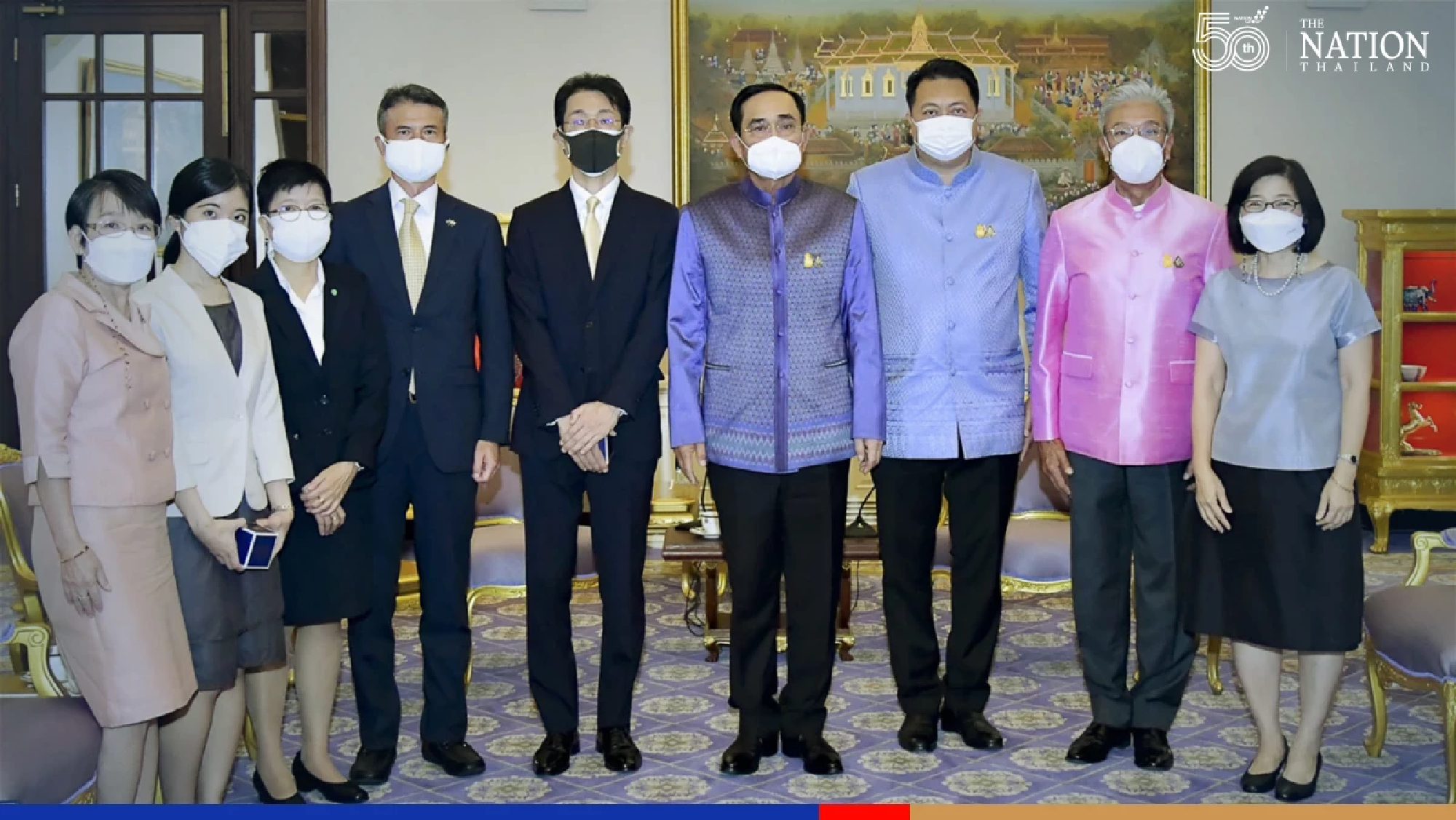
Senior executives of Japanese multinational company Minebea Mitsumi Inc met Prime Minister General Prayut Chan-o-cha on Tuesday to thank the Thai government for supportive measures to help private entrepreneurs, especially Japanese companies, to conduct business in Thailand during the Covid-19 situation.
“The government’s ‘Factory Sandbox’ initiative has greatly helped in ensuring that all employees can get Covid-19 vaccines and the company can keep its manufacturing workforce at full capability even during the lockdown period,” Tetsu Shiozaki, chairman and executive director of Minebea Mitsumi Inc, said on Wednesday.
Minebea Mitsumi is a major manufacturer of machinery components and electronics devices. It has 121 consolidated subsidiaries and affiliates worldwide and is headquartered in Minato City, Tokyo.
“This has enabled us to export key industrial components and medical devices from Thailand to other countries around the world and thus maintain a continued supply chain of several related industries,” Shiozaki said.
Minebea Mitsumi will continue to invest in Thailand as the company has confidence in the government’s policy and Thailand’s potential to build a strong industrial sector supported by stable and flexible supply chain, even while the country is still facing threats from Covid-19, he added.
“Among many countries that we have invested in, Thailand is the only place where we can maintain employment rate during the pandemic. Minebea Mitsumi, therefore, has chosen Thailand to be the base for our manufacturing expansion in the next generation,” he added.
Shiozaki said that the company’s additional investment in Thailand will correspond with the Thai government’s policies that support the BCG (Bio-Circular-Green) economy and the Japanese government’s “Green Growth Strategy” that promotes economic growth through the achievement of carbon neutrality. Minebea Mitsumi is expected to invest over 3 billion baht in building a new factory in Thailand with enhanced capability in greenhouse gases reduction, as well as in personnel development.
PM Prayut reportedly said he was glad that Thailand and Japan can continue to foster their long-standing partnership despite the difficulties posed by the pandemic. He added that the government would continue working to achieve the goal of achieving carbon neutrality within 2050 and net zero greenhouse gas emission in 2065.
Thailand’s trade representative has an ambitious plan to draw as much as Bt1 trillion in foreign investments over the next year or two, which is enough to boost GDP growth by a hefty 3 per cent a year.
ML Chayotid Kridakon, who also heads a proactive team tasked with attracting investments, said on Thursday that the focus would be on five key industries – automobiles, electronics, medicine, digital, and tourism.
“These five major industries have relied heavily on foreign countries. Thailand has no potential to go it alone, so we need investors from outside the country,” he said.
Autos, electronics and tourism account for 50 per cent of Thailand’s gross domestic product, according to the trade representative.
If things go as planned, increased investment in the three industries would help boost the country’s GDP by 3 per cent per year, he said.
Since the beginning of this year, his team has held discussions with the embassies of the United States and certain Asian and European countries, as well as trade chambers and foreign corporations about their requests regarding investment in Thailand.
“All of them want the government to ease the visa rules. The request has already been granted, and it will take effect in two months,” ML Chayotid said.
He explained that the maximum period for the long-term residency visa has been extended to 10 years, while visa renewal can be done every year, instead of every 90 days as was the case in the past.
The Federation of Thai Industries (FTI) is concerned about the energy price situation and has asked the government to cut utility bills and cap the diesel price at less than 30 baht per litre to prevent inflation.
FTI chairman Suphan Mongkolsuthree said on Wednesday that operators were facing pressure from increasing manufacturing costs in both energy and transportation, while currency volatility was also affecting material and importing costs.
On top of this, he said, the container and semiconductor shortage problem is not getting any better.
Suphan cited a FTI January survey in which 1,335 operators in 45 industry groups were asked which factors worried them the most.
According to the survey:
70.1% were worried about the oil price
45.5% were concerned about the political situation in the country
43.8% had worries about the currency rate, and
42.6% were perturbed about loan interest rates.
The FTI gave the government four suggestions:
Control inflation and solve the cost-of-living problem by cutting utility bills, reducing LPG gas prices, and increasing the budget for the “Khon La Khrueng” (Let’s Go Halves) campaign.
Keep the diesel price below 30 baht per litre and clear up the material shortage or high-price problem to decrease manufacturing costs.
Roll out economic stimulus measures to help the economy recover, including measures to assist businesses that have been affected by the Covid-19 crisis.
Ease entry measures for foreign visitors by at least reducing the number of RT-PCR tests to only one under the Test & Go scheme and using Antigen Test Kits instead on the fifth day of arrival.
The baht opened at 32.72 to the US dollar on Thursday, strengthening from Wednesday’s close of 32.77, the highest in two months.
The Thai currency is likely to move between 32.70 and 32.90 during the day, Krungthai Bank market strategist Poon Panichpibool predicted.
He said the baht strengthened more than expected as foreign investors bought Thai stocks and short-term bonds worth more than 33 billion baht. But the Thai currency might fluctuate on Thursday as investors await US inflation results.
The dollar, too, is advancing and will continue to strengthen just before the US results, Poon said.
The baht found support after the gold price surged and reached its key resistance level of $1,830 (THB59,916) per ounce. This will help the baht not to weaken much in case the dollar strengthens if US inflation data is better than expected, he said.
Poon believes importers are waiting to buy the dollar at 32.70 while exporters would sell the currency if it reaches 33.00.
Investors continued to be in a risk-on state as they were supported by better-than-expected reports by listed companies even as worries were eased over an interest rate increase by the US Federal Reserve.
Moreover, the market is finding support from talks between French President Emmanuel Macron and his Russian counterpart Vladimir Putin, which might decrease the chance of a Russia-Ukraine conflict, Poon added.
The Finance Ministry will begin registration of one million more users of the government’s Kon La Krueng (half-half) co-payment scheme Thursday morning, the ministry’s spokesman said on Wednesday.
Fiscal Policy Office director-general Pornchai Thiraveja, the spokesman of the ministry, said the registration will start at 6am and end at 10pm and will continue until one million new users sign up for Phase 4 of he co-payment scheme.
Those who wish to register should not have been recipients in Phase 3 because the Phase 3 co-payment scheme users were allowed to reactivate their accounts to use the scheme earlier.
Those who have received the co-payment scheme rights in phases earlier than Phase 3 can register by using the Pao Tang app or via the scheme’s website. Those who do not have the app can register via the Konlakrueng website.
Under Phase 4, each user will have Bt1,200 from the government transferred to their G Wallet account, opened via the Pao Tang app with Krungthai Bank. The electronic pocket can be used to make payments up to Bt150 a day to shops that support the scheme. Once a payment is made, half of the price will be paid with the money from the government and the user will have to pay the remaining half. The users must remit money to their G Wallet account before the co-payment can be made via the app.
Pornchai said 24.67 million people have been granted the Bt1,200 credit by the government so far, compared with 26.35 million users in Phase 3.
So far 1.33 million shops are participating in Phase 4.
As of 11pm on Tuesday, 21.17 million users have used the co-payment scheme in Phase 4 with the total spending of Bt16.334.6 million – Bt8.269 million from users and Bt8.065 million from the scheme. If a user makes a payment exceeding Bt300, he or she will have to pay the entire amount exceeding Bt150.
After the registration, the new users can use the scheme from February 17 to April 30.






 Mikimoto also presents a meticulously designed set inspired by two hearts “that beat as one”. The set comprises Akoya pearl earrings and an Akoya pearl pendant with diamonds that symbolise luxury and stability. The brand also offers a bracelet with a “LOVE” pendant adorned with perfectly round Akoya pearls as a heartfelt gift for Valentine’s.
 Experience these special festive gift collections throughout the month of love this February at Boutique Mikimoto, Level M, Siam Paragon, or call 0-2129-4444 for more details.
 Clients can be comfortable that their allocation to digital assets is appropriately secured, appropriately diversified and most importantly appropriate for them, the company said.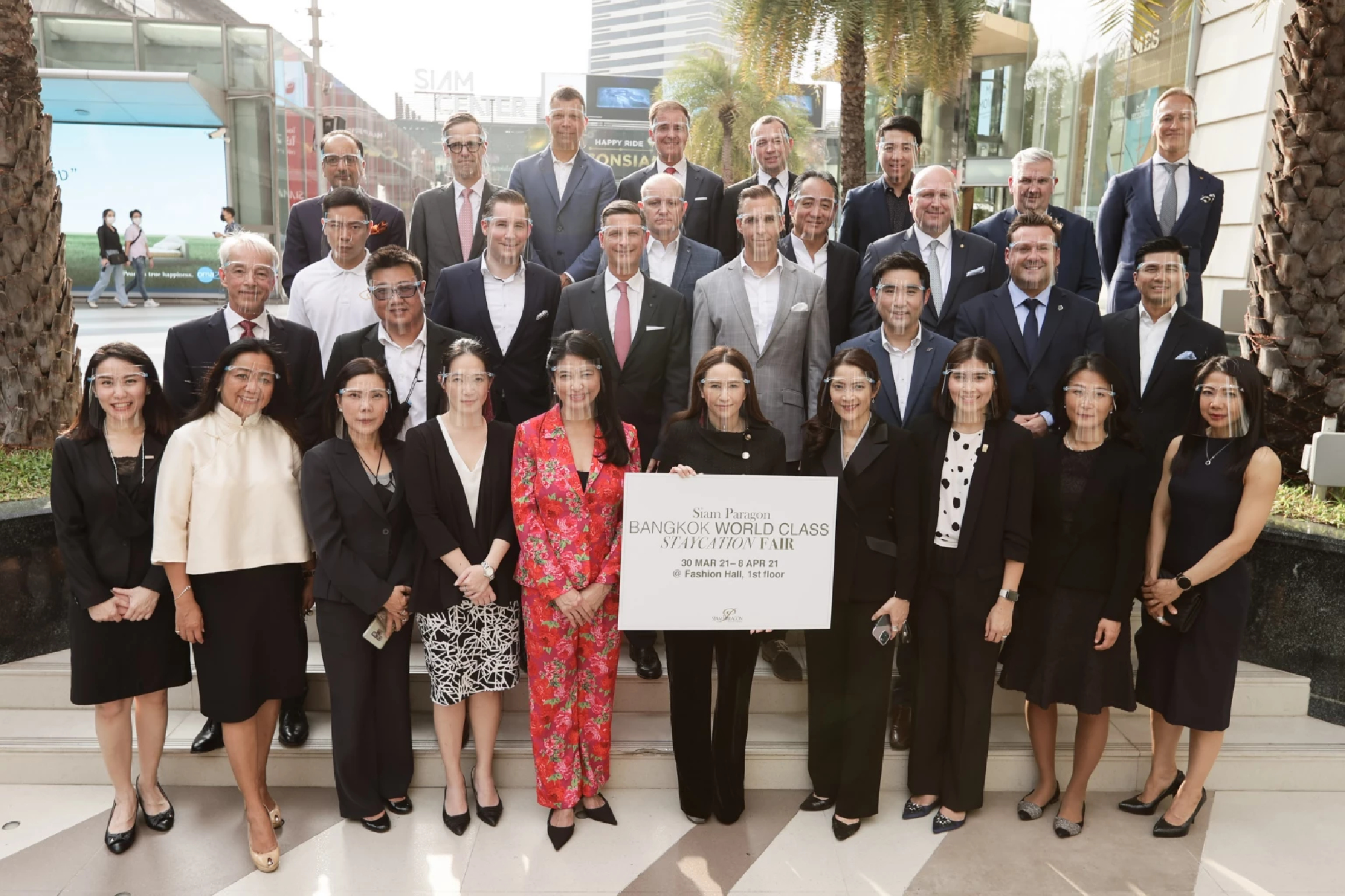


 “After the government resumed the ‘Test and Go’ entry scheme, the tourism industry has become more active. At the same time, the government’s latest tourism stimulus campaign ‘Rao Tiew Duay Kan’ [We Travel Together] in the fourth phase launched on February 1 has stimulated people to travel more than ever,” she said.
 Todd Olson. Managing Director, Japan & Korea, and Head of Asia Pacific Data Centre Practice Group at Cushman & Wakefield
 Gareth Powell. Senior Director of Cushman & Wakefield Thailand.