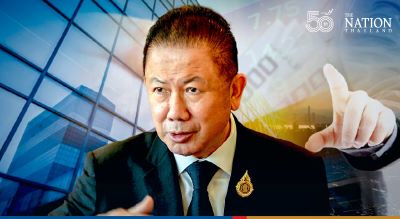
The Thai Chamber of Commerce (TCC) has urged the government to increase vaccination rate against Covid-19 especially in second and third jabs before the planned reopening on November 1 using the help of private sector.
Prime Minister Gen Prayut Chan-o-cha announced on Monday that the country will be reopening next month, whereas tourists from initial 10 low-risk countries will be allowed to travel to Thailand without having to quarantine provided they are fully jabbed and test negative. The list will be expanded to cover more countries in the first week of December and then again in January 2022.
“Private entrepreneurs who have been serving as vaccination units outside the hospitals are ready to support the campaign to provide 2nd and 3rd jabs to as many people as possible,” said TCC chairman Sanan Angubolkul on Wednesday. “Furthermore, the government must push out Covid-free setting measures to help strengthen the confidence of foreign visitors in Thailand’s safety, such as providing free ATK testing periodically to detect new cluster cases before they escalate.”
TCC also proposed that the government uses the Digital Health Pass approach to increase the capacity in which we can welcome foreign visitors while creating positive travel experience. “More visitors mean faster economic recovery not only in the tourism industry, but in other related sectors as well,” he said. “To achieve this, Thailand needs systematic and effective disease control measures to make sure that new wave of infections will not happen.”
Sanan estimated that after the reopening, Thailand will be welcoming additional 100,000 foreign visitors per month, which will help contribute to the expansion of gross domestic product (GDP) in 2021, but will still be in the range of previously estimated 0-1 per cent.
“Participants noted that if a decision to begin tapering purchases occurred at the next meeting, the process of tapering could commence with the monthly purchase calendars beginning in either mid-November or mid-December,” the Fed said in its minutes.
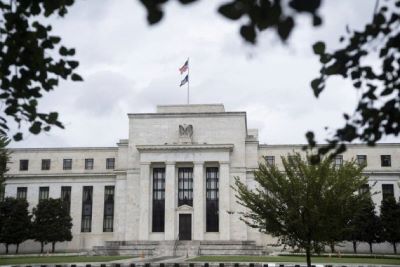
U.S. Federal Reserve officials broadly agreed last month the central bank could start tapering asset purchases in mid-November or mid-December, according to the minutes of the Fed’s recent policy meeting released Wednesday.
“Participants noted that if a decision to begin tapering purchases occurred at the next meeting, the process of tapering could commence with the monthly purchase calendars beginning in either mid-November or mid-December,” the Fed said in the minutes of its Sept. 21-22 meeting.
“Participants generally assessed that, provided that the economic recovery remained broadly on track, a gradual tapering process that concluded around the middle of next year would likely be appropriate,” the minutes said.
The Fed has pledged to continue its asset purchase program at least at the current pace of 120 billion U.S. dollars per month until “substantial further progress” has been made on employment and inflation. The central bank will hold its next policy meeting on Nov. 2-3.
Under plans discussed last month, the Fed would taper its 80 billion dollars in monthly U.S. Treasury purchases by 10 billion dollars a month, and it would reduce its 40 billion dollars in mortgage-backed securities purchases by 5 billion dollars a month, according to the minutes.
“Participants generally commented that the illustrative path provided a straightforward and appropriate template that policymakers might follow, and a couple of participants observed that giving advance notice to the general public of a plan along these lines may reduce the risk of an adverse market reaction to a moderation in asset purchases,” the minutes said.
The long-awaited greenlight from U.S. regulators for a Bitcoin exchange-traded fund might turn into a sell-the-news event.
Building speculation that the Securities and Exchange Commission could approve a futures-backed product as soon as this week has been touted as a catalyst for bitcoin’s torrent resurgence, with a deadline for a decision fast approaching. Crypto promoters such as Anthony Pompliano of Morgan Creek Digital Assets have seized upon the idea, tweeting that things could “get insane.”
Other industry veterans aren’t so sure. Given the ease of access to cryptocurrency markets relative to previous years, it’s unclear that a bitcoin ETF launch would spark a flood of demand, according to Juthica Chou, head of over-the-counter trading at Kraken Digital Asset Exchange. Individuals can already buy and sell digital assets on crypto exchanges worldwide and through more retail-oriented platforms such as PayPal and Square. Meanwhile, institutional investors have been able to gain crypto exposure through vehicles such as the Grayscale Bitcoin Trust — though plagued by persistent discounts — for years.
“Onboarding for individual investors, for retail, for institutions is already a lot better and safer and more approachable than let’s say crypto was back in 2017,” Chou said on Bloomberg’s “QuickTake Stock” streaming program. “An ETF will definitely be a positive, it’ll expand the breadth of the participants that can start buying Bitcoin and taking part in the ecosystem but it won’t be as impactful as it would have been years ago because we’re already seeing the institutional demand.”
Nevertheless, the optimism helped the world’s largest cryptocurrency soar to almost $58,000 this week for the first time since May. Bitcoin has surged by over 80% since breaking below $30,000 in late July.
The speed of the rebound could be setting bulls up for disappointment, with Bitcoin briefly entering overbought territory on its 14-day relative strength index. Not to mention, the past few months are checkered with pop-and-fizzle happenings, from Coinbase Global Inc.’s direct listing in April to El Salvador’s rollout of Bitcoin as legal tender in September.
For Stephane Ouellette, chief executive officer of the crypto-focused platform FRNT Financial Inc., ETF approval would undoubtedly be good news but would be far from a “gamechanger” at this point.
“Ultimately, I’m not sure this incrementally adds much access for investors who are struggling to access the space,” Ouellette said. “That said, were an ETF to be approved every US-based trading platform would conceivably offer access to Bitcoin exposure where only some do now.”
It’s been a long road to ETF advocates, with Cameron and Tyler Winklevoss, the twins best known for their part in the history of Facebook Inc., filing the first application for a Bitcoin ETF in 2013. In August, SEC Chair Gary Gensler signaled that policy makers may be more open to an ETF if it were based around futures rather than the cryptocurrency itself, setting the stage for a likely decision based on a deadline for approval or rejection of current futures-based ETF applications.
Even if approved, a futures-backed fund could limit the positive impact, according to Bloomberg Intelligence’s Eric Balchunas. Futures-linked ETFs are “not ideal” given that the ETF has to roll forward the futures contracts, which eats into performance, he said.
“Investors generally don’t like derivatives, and a lot of advisors don’t like derivatives,” Balchunas said on Bloomberg’s “QuickTake Stock” program. “A physically backed ETF would be a major catalyst. I see this as a very minor catalyst.”
Technology shares climbed amid lower Treasury yields after data showing inflation is running hot lifted companies seen as better equipped to pass on higher costs to consumers without harming their businesses.
Traders also assessed minutes of the Federal Reserve’s latest policy meeting, with officials broadly agreeing they should start reducing stimulus in mid-November or mid-December amid increasing concern over inflation. Central bankers discussed an illustrative tapering path featuring “monthly reductions in the pace of asset purchases, by $10 billion in the case of Treasury securities and $5 billion in the case of agency mortgage-backed securities.”
The tech-heavy Nasdaq 100 outperformed major equity benchmarks, while the NYSE FANG+ Index of giants such as Amazon.com Inc. and Google’s parent Alphabet Inc. climbed about 1%. The S&P 500 rebounded, following a three-day drop. Ten-year yields remained below 1.6%. The two-year rate — which is more sensitive to policy moves — rose. Delta Air Lines Inc. led losses in U.S. carriers after warning that rising fuel costs will threaten earnings this quarter.
Prices paid by U.S. consumers rose in September by more than forecast, underscoring inflationary pressures. The Biden administration is trying to relieve supply-chain bottlenecks ahead of the Christmas shopping season, but officials acknowledge their options are limited. Unprecedented shipping challenges, materials shortages, high commodities prices and rising wages have driven up costs for producers. Many have passed a portion of those costs to customers, leading to more persistent inflation.
“Wednesday’s still elevated consumer-price index marks about six-months worth of hot inflation data — suggesting that inflation is not as transitory as many investors previously expected,” said Nancy Davis, founder of the Greenwich, Connecticut-based firm Quadratic Capital Management. “The overall inflation story is being driven by supply-chain disruptions and a swift rise in prices, due to the labor shortage.”
Some corporate highlights:
– JPMorgan Chase & Co.’s dealmakers posted their best quarter yet, riding what’s on track to be a record year for mergers and acquisitions. Still, shares fell as consumer and commercial loan growth remained challenged.
– American Express Co. and other credit-card issuers tumbled as JPMorgan attributed weakness in its card business to rising costs on marketing and promotions, sparking concern over heightened competition.
Here are a few events to watch this week:
– Bank of America Corp., Morgan Stanley and Citigroup Inc. report earnings on Thursday
– U.S. initial jobless claims, PPI on Thursday
– Goldman Sachs Group Inc. reports earnings on Friday
– U.S. business inventories, University of Michigan consumer sentiment, retail sales on Friday
Some of the main moves in markets:
– – –
– The S&P 500 rose 0.3% as of 4 p.m. New York time
– The Nasdaq 100 rose 0.8%
– The Dow Jones industrial average was little changed
– The MSCI World index rose 0.5%
– The Russell 2000 index rose 0.3%
– – –
– The Bloomberg Dollar Spot Index fell 0.5%
– The euro rose 0.5% to $1.1593
– The British pound rose 0.5% to $1.3660
– The Japanese yen rose 0.3% to 113.29 per dollar
– – –
– The yield on 10-year Treasuries declined four basis points to 1.54%
– Germany’s 10-year yield declined four basis points to -0.13%
– Britain’s 10-year yield declined six basis points to 1.09%
– – –
– West Texas Intermediate crude fell 0.1% to $80.54 a barrel
Fresh from crowing over Europes gas crisis, Russian President Vladimir Putin now sees a chance to capitalize on it.
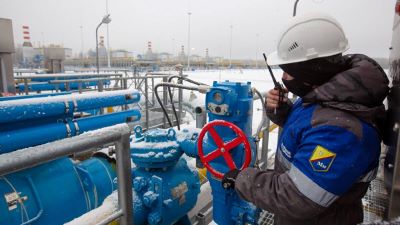
Putin wants to press the European Union to rewrite some of the rules of its gas market after years of ignoring Moscow’s concerns, to tilt them away from spot-pricing toward long-term contracts favored by Russia’s state run Gazprom, according to two people with knowledge of the matter. Russia’s also seeking rapid certification of the controversial Nord Stream 2 pipeline to Germany to boost gas deliveries, they said.
Russia is prepared to supply as much gas as Europe needs and is ready for dialogue with the EU on stabilizing the market, Putin said Wednesday at the Russian Energy Week conference.
“We always meet our partners halfway and are ready to discuss additional actions,” Putin said. Russian energy projects including Nord Stream 2 seek “to ensure the stability and predictability of gas supplies in the volumes needed by European countries for years to come,” he said.
European gas futures gained on Wednesday. Amid record daily swings of as much as 40% in European gas prices, Putin made a calculated intervention to cool the market last week by saying Gazprom can boost supplies to help ease shortages.
Still, even as the Kremlin casts the president as Europe’s energy savior, Russia’s under no illusion that it will gain political concessions from the EU or ease strained relations as a result of the crisis, according to a government official and a policy adviser close to the presidential administration.
“Putin senses an opportunity from the crisis,” said Andrei Kortunov, head of the Kremlin-founded Russian International Affairs Council. “Russia wants to prevent the EU from dragging its feet on certifying Nord Stream 2 and start talks on long-term stable prices for gas.”
Russia long opposed giving the spot market greater weighting in pricing, preferring to rely on less volatile long-term contracts that may cap some of the windfall when prices are high but provide downside protection when they slump. However, liberalization of the EU’s gas market forced Gazprom to adjust its pricing formulas, linking the bulk of them to spot and futures prices.
“Buying gas at reasonable prices is, of course, good,” Gazprom Deputy Chief Executive Officer Elena Burmistrova told the St. Petersburg International Gas Forum on Oct. 7. “But it’s even better to know exactly in advance how much it will cost in a month, a quarter and a year.”
Putin has blamed the energy crisis partly on “snobbish” EU officials and advisers who he said had pushed for the shift to spot pricing “and do not want to hear anything else.”
EU leaders will discuss the gas price surge and measures to blunt its impact at a summit in Brussels next week.
Europe relies on Gazprom for about a third of its natural gas supplies. While gas storage on the continent is being rebuilt from record-low levels for this time of year, there are limited options for deliveries from other sources such as liquified natural gas. With winter fast approaching, that leaves the region potentially more dependent on Russia for extra supplies to avoid shortages when cold weather hits.
Russia is still injecting gas into domestic storage facilities and will complete the process by Nov. 1, Deputy Energy Minister Evgeny Grabchak told reporters in Moscow on Wednesday. The country now has enough gas in storage to get through the winter, and while it’s not expecting colder-than-average weather, it’s ready for it, he said.
Deputy Prime Minister Alexander Novak, who oversees Russia’s energy policy, said Tuesday that a hasty transition away from traditional power sources toward renewables had contributed to Europe’s supply crunch. Last week, he told Putin that swift European approval of Nord Stream 2 for delivery of gas would give “a positive signal” to markets.
For its part, the EU is hoping the gas crisis is a short-term phenomenon. It’s focusing on helping member states get through the tough winter — with prices set to stay high and a risk that Nord Stream 2 may not be ready to start for months. Energy Commissioner Kadri Simson said Tuesday that its underground storage of gas in the region was at around 75% of capacity, far lower than the last decade, but adequate to cover demand.
The EU is also set to explore the possibility of joint gas purchases by member states to strengthen buying leverage with third parties in a toolbox that’s set to be outlined Wednesday. It means the bloc is unlikely to take imminent action to heed any overtures from Putin, especially given ongoing tensions over issues like Belarus and Ukraine.
Currently, some 20% of Gazprom’s European gas supplies are linked to oil prices, while a little over 50% is priced on either day-ahead or month-ahead pricing, Ron Smith, senior oil and gas analyst at BCS Global Markets, wrote in a note Friday following a webinar with Gazprom managers.
Russia is keen to restore the link to oil prices in gas contracts and shift away from spot pricing that the EU has increasingly insisted on in recent years, said the two people familiar with the matter. Gazprom has already begun filling Nord Stream 2 with gas and wants European regulators to make it operational as soon as possible, they said.
Gazprom’s exports to Europe were near a record in the first half of this year, but fell in September just as the EU was struggling to refill stockpiles. Russia has been replenishing its own storage sites, sparking claims it’s withholding supplies.
The Kremlin rejected the allegation, insisting Russia was fulfilling all of its contracted obligations as a trusted energy partner. German Chancellor Angela Merkel offered backing last week, saying Russia “can only deliver gas on the basis of contractual obligations.”
Gazprom has started pumping gas from its reserves to ease soaring prices and wants to work with European countries to calm the market, Russian Deputy Foreign Minister Sergei Ryabkov said in a BBC interview Tuesday.
“Gazprom is celebrating a big victory,” said Stanislav Tsygankov, a former head of the company’s international business department. “This is the perfect time to capitalize on the situation.”
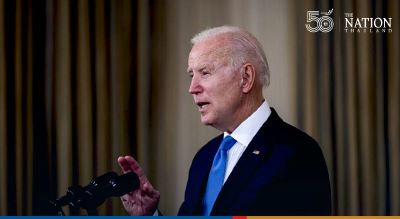
President Joe Biden said Wednesday that a new plan to keep a key U.S. port open “24 hours a day, seven days a week” would relieve pressure on an overworked supply chain that has frustrated Americans and blossomed into a major economic shortcoming.
Speaking at the White House, Biden also hailed commitments from top importers such as Walmart, FedEx and UPS to use the extended hours at the Port of Los Angeles to remove shipping containers that have slowed freight operations.
The president spoke following a 17-person “virtual roundtable” with port directors from Los Angeles and Long Beach, Calif., top officials from the Teamsters and AFL-CIO labor unions, the U.S. Chamber of Commerce, and other business groups.
As consumers confront random shortages of clothing, toys, groceries and cars, the disrupted supply lines that define the pandemic-era economy are evident in dozens of giant container ships anchored off the coast of Southern California. Some vessels wait two weeks for an unloading berth.
Similar delays await freight once it reaches the shore, where docks, rail yards and warehouses are jammed with goods, the fruits of an economic recovery the administration boasts is robust.
Administration officials promise a “90-day sprint” to clear a path for cargo. Several companies participating in the White House event, including Walmart, made “specific volume commitments” about containers they will remove from California docks. Leaders of the International Longshore and Warehouse Union have agreed to work longer hours, provided individual terminal operators pay up.
Biden said today’s announcement had “the potential to be a game changer” in unclogging the nation’s supply lines.
But the extended hours the administration is touting represent something less than the full around-the-clock operations that are typical of the world’s most advanced cargo-moving facilities.
The Port of Long Beach, which makes up one half of the nation’s chief import gateway, began a pilot program last month of late-night and predawn work. An administration official said Tuesday that Long Beach had “already gone to 24-7″ and Los Angeles would be “meeting that effort.” But only one of the Long Beach port’s six container terminals works 24 hours a day, and it does so only Monday through Thursday, according to Noel Hacegaba, the port’s deputy executive director of administration and operations.
Biden said the L.A. port, which is adjacent to the Long Beach facility, would be open for 60 additional hours each week. But Phillip Sanfield, a port spokesman, said he could not say how many L.A. terminals will now begin operating around-the-clock. And Gene Seroka, executive director of the L.A. port, said on twitter that “operational details are being discussed and worked out with the supply chain stakeholders.”
Some industry executives described the administration’s latest initiative, which the White House billed as “nearly doubling” the port’s cargo-handling hours, as incomplete. Matt Schrap, chief executive of the Harbor Trucking Association, whose members service the ports, said the measure will make a “big difference” only if terminals abandon requirements for truckers to return a specific type of empty shipping container before collecting a full one.
And Craig Grossgart, senior vice president for global ocean at SEKO Logistics, said: “It will accomplish zero. It’s just window dressing.”
Indeed, the administration said an additional 3,500 containers each week would move through the L.A. port during the new nighttime hours, thanks to promises from six companies – Walmart, FedEx, UPS, Target, Home Depot and Samsung.
The port expects to process 79,289 containers this week, according to its website.
The administration says the giant companies will set an example that will spur others to follow. But longer working hours at the neighboring ports, which operate as a single complex under dual management, will matter only if trains, trucks and warehouses all do the same. Already, truckers have been reluctant to show up at the Long Beach port during the 3 a.m.-to-7 a.m. slot known as the “hoot” shift – named for the hoot owl – because they have nowhere to take containers at that hour.
Major railroads “have long been 24/7 operations,” said Ian Jefferies, president of the American Railroad Association.
Supply headaches are posing a direct challenge to Biden’s hopes of a smooth economic recovery. Federal Reserve Chair Jerome H. Powell has said that logistics headaches are responsible for inflation lasting longer than he expected.
The mounting disruption, mirrored in multiple countries, is having an economic impact that extends beyond consumer and business irritation over delayed deliveries. Barclays economists this week lowered their growth forecast for the United States and Europe, citing enduring supply interruptions.
“These persistent supply disruptions are a stagflationary impulse to the global economy, as they now increasingly also affect activity, after having already caused stubbornly higher-than expected inflation,” Barclays wrote in a research note, referring to the 1970s phenomenon of soaring prices and anemic growth.
Fastenal, a Winona, Minn.-based industrial distributor, which has been struggling to move imported fasteners through clogged U.S. ports, told investors Tuesday that it is reducing its planned capital spending this year by $15 million to $25 million.
“Supply chain difficulties are limiting our purchases of vehicles, brand supplies and other products,” Holden Lewis, the company’s chief financial officer, said on an earnings call.
Bed Bath & Beyond’s share price fell 22% last month after higher freight costs and “unprecedented supply chain challenges” dented profits. The company does not expect any improvement in the supply chain situation through the end of November, chief financial officer Gustavo Arnal told analysts.
The White House is eager to demonstrate progress on a vexing host of supply chain snarls. Yet officials note that the cargo carriers, ports, terminal operators, trucking lines and warehouses involved are almost entirely private-sector entities, leaving the president with little power to command immediate improvement.
The federal government’s chief role is acting as an “honest broker” to bring together executives from each link in the globe-girdling supply chain, one official said.
In June, the president established a White House task force on supply chain issues, headed by Transportation Secretary Pete Buttigieg, Commerce Secretary Gina Raimondo and Agriculture Secretary Tom Vilsack.
This summer, Biden named John Porcari, a former Obama-era transportation official, as its “ports envoy.” (At Wednesday’s White House event, the president twice referred to Porcari as “Joe.”)
Porcari last month scored an early success by winning longer operating hours at the Ports of Los Angeles and Long Beach, the nation’s top import gateway. Yet the first night of longer hours at one Long Beach terminal did not draw a single truck, Grossgart said.
Since the experiment began three weeks ago, the number of ships at anchor in San Pedro Bay has dipped from 70 to 61. But that floating traffic jam – which was virtually unknown before the coronavirus pandemic – remains twice as big as it was in early August.
Ports are not a new concern for Biden. In 2014, while vice president, he described port improvements as “a passion of mine.” The administration’s bipartisan infrastructure package contains $17 billion to modernize the nation’s ports.
Administration officials acknowledge there is only so much they can do to solve the immediate supply crisis. Much of the nation’s freight-moving infrastructure relies on facilities that were built decades ago, long before the era of globalization and e-commerce.
“You can’t turn a light switch in this very complicated supply chain and have it change overnight,” one official said.
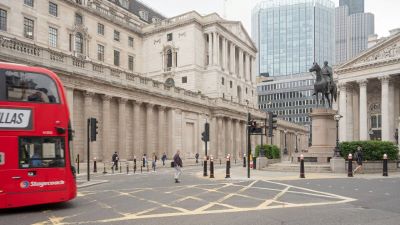
The guardians of the British economy are working to start reducing the supply of stimulus long before the fallout from the coronavirus crisis comes to an end.
After winning widespread praise for a quick, bold and coordinated response to the pandemic last year, the U.K. Treasury and the Bank of England now are preparing to be among the first among industrial nations to whip away that support.
Chancellor of the Exchequer Rishi Sunak is on course to raise taxes and cut spending to control the budget deficit, while BOE Governor Andrew Bailey has warned interest rates are likely to rise in the coming months to curb a rapid surge in prices. Together, those moves would mark a simultaneous major tightening of both policy levers just months after the biggest recession in a century — an unprecedented move since the BOE gained independence in 1997.
The action could leave the U.K. an outlier on the world stage after it suffered a greater economic loss than many of its peers during the pandemic. The speed of policy reversal also risks complicating what’s likely to be a difficult winter for Britain, which is facing up to slower growth, widespread labor shortages and a cost-of-living crunch for its poorest citizens.
Figures published on Wednesday show the economy grew less than expected in August following an unexpected drop in output in the previous month, raising doubt about whether output will return to pre-pandemic levels this year.
“We’re in a situation where both Rishi Sunak on the fiscal side and the BOE look like they are rushing to the exit,” said James Smith, a former BOE senior economist now serving as research director at the Resolution Foundation. “There are signs that momentum is fading, and you’re adding into that tightening from the chancellor and the bank, potentially.”
The result may further soften growth after post-lockdown euphoria fades. Britain’s economy may expand 6.8% this year, the fastest in the Group of Seven nations, according to the International Monetary Fund. But a comparison of 2024 forecasts and those made in pre-pandemic 2019 suggest the U.K. is at the bottom of the pack.
The twin tightening is being prompted by a shift in priorities for both the BOE and Treasury.
The central bank expects inflation to leap over 4% this year, more than double its target. That has prompted policy makers to shift away from stimulating growth and toward the risk of an upward spiral in prices setting in — a move economists say is part of an effort to would burnish the bank’s inflation-fighting credentials.
Bailey last month opened the door to raising borrowing costs this year. That would see the bank withdraw stimulus before the U.S. Federal Reserve at a time when the U.K. economy will probably remain smaller than before the crisis. Markets are pricing in the first move by December.
Sunak, who spent billions supporting jobs and incomes during the crisis, is shifting toward controlling debt. He’s closed the furlough program protecting wages for those out of work during the pandemic, scrapped a temporary increase in universal credit benefits and planned for a substantial tax increase in April, calling further largess “immoral.”
While that’s short of the kind of austerity that the Conservative government imposed after the financial crisis a decade ago, it’s still a rapid removal of support that will hit hardest for may of those on low incomes. It also will coincide with a surge in food and energy costs, driven by a series of global supply shortages.
Sunak will set out further plans in a budget and spending review scheduled for Oct. 27. The Institute for Fiscal Studies says he may need to make cuts of 2 billion pounds to spending just meet his existing commitments at a time when a public clamor is growing to add to funds for health and education.
The chancellor may be considering the political cycle, with strict limits now so he can offer giveaways around the time of the next election, which must be held by 2024, a lawmaker on the Treasury Committee said.
The risk is that the BOE and Treasury will removing support before the full impact of the Covid-19 crisis has passed, leaving business and consumers pushing for aid at a time when the government is taking it away. That dynamic is very much in play this week, with growing pressure from businesses for help to see them through a surge in energy prices.
What’s starting to unfold marks a sharp contrast with how David Cameron’s Conservative government handled the economy after the 2008 financial crisis, with the BOE’s loose monetary stance giving then Chancellor George Osborne room to tighten fiscal policy.
Sunak should be bolder in his approach because investors haven’t yet revolted, according to Jim O’Neill, a former Treasury minister and former chief economist at Goldman Sachs.
“I don’t think it’s going to happen,” O’Neill said. “We’ve reached levels of spending in this country and elsewhere in the world that conventional economic thinking wouldn’t have dreamt would have been possible without causing huge damage in the bond market. As of yet, there isn’t any.”
In both the monetary and fiscal spheres, the U.K. seems more worried than other nations about credibility, said Fabrice Montagne, an economist at Barclays.
“They have already made the mistake of rushing out of support measures thinking things are alright,” Montagne said.
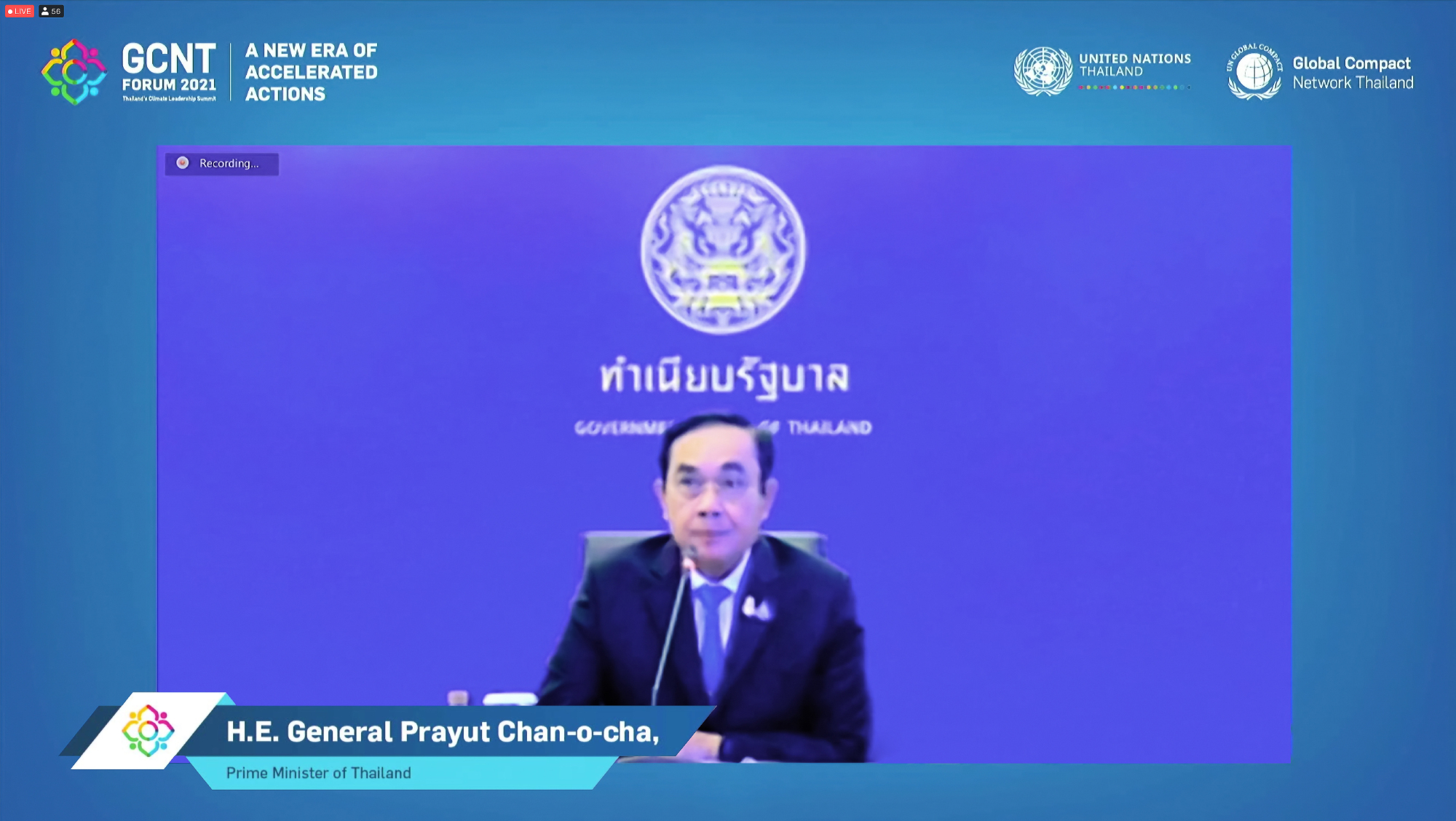
According to the Prime Minister of Thailand, General Prayuth Chan-o-cha, today’s commitment underscores the fact that climate action could not be more urgent, and leadership by the private sector is crucial to Thailand’s efforts in successfully tackling climate change.
Business leaders representing Thailand’s major industries today joined the Global Compact Network Thailand (GCNT) Forum 2021 and United Nations in issuing a strong call to action by the private sector community on climate sustainability ahead of the United Nations Climate Change Conference COP26 in November in Glasgow. They committed to transition to more sustainable business models at the annual GCNT Forum, including net zero emissions by 2050 at the earliest.
According to the Prime Minister of Thailand, General Prayuth Chan-o-cha, today’s commitment underscores the fact that climate action could not be more urgent, and leadership by the private sector is crucial to Thailand’s efforts in successfully tackling climate change. The country must swiftly enhance its knowledge and capacity to create new innovations and technologies to tackle climate change and other environmental concerns and, at the same time, adapt and transition to a low-carbon economy and build resilience. In order to do so, it is necessary to leverage available international funds and mechanisms such as the bilateral exchanges of knowledge and technology and the joint credit mechanism (JCM).
Achieving just transition to net-zero economy key to building climate-resilience in Thailand
ADVERTISEMENT
At the same time, the Government has integrated climate change into national policies under the thirteenth National Economic and Social Development Plan (NESDP), i.e. the tenth milestone – Development of a Circular Economy and Low-Carbon Society, and the eleventh milestone – Reduction of Risks from Natural Disaster and Climate Change. Accordingly, the Government is currently drafting the Climate Change Act, which will ensure comprehensive coverage of all climate-change related issues. In addition, in November this year, Thailand will join the COP 26 Conference in Glasgow, which he hoped will reach conclusions to address the climate crisis and operationalize the Paris Agreement.
“Thailand places importance on a balanced and environmentally-friendly economic growth based on the Bio-Circular-Green Economic Model (BCG), and has to likewise intensify its efforts in addressing climate change. This is an opportunity for Thailand to transform towards a value-added economy that will lead to a more balanced, sustainable and environmentally friendly growth. Most importantly, it is an opportunity to create new dynamism in our economy, which will benefit all businesses,” Prime Minister General Prayuth Chan-o-cha explained.
Achieving just transition to net-zero economy key to building climate-resilience in Thailand
According to Mr. Suphachai Chearavanont, Chairperson of GCNT and Group Chief Executive Officer of Charoen Pokphand Group, said one-third of the network’s members have delivered on their commitment to integrating the 17 Sustainable Development Goals (SDGs) into business strategies through 510 projects in the pipeline, which partially amounts to 420 billion baht. These actions mobilize sustainability within the Thai context, and likewise, today’s commitment to prevent and mitigate climate change will support government efforts in line with the Bio-Circular-Green Economic Model (BCG) that is low-carbon economy, while prioritizing clean energy and high-value bio-based or “S-curve” industries. At the same time, this requires investing in new technologies and innovations with a focus on efficiency, design-thinking and building a new generation of sustainability leaders. Saving the environment starts with us and it is through transparency in corporate reporting that we can build greater awareness and resiliency to climate change.
“We must act swiftly and accelerate the Thai economy’s transformation for the net zero era, to truly embrace the ‘Race To Zero’ with the focus on a clean energy-driven economy and society. Achieving a just transition to a green economy that is fair, leaves no one behind and reduces all dimensions of inequality especially gaps in gender parity and economic and educational opportunities,” he said.
United Nations Resident Coordinator in Thailand, Ms. Gita Sabharwal pointed out that “the shift away from fossil fuel dependency and reducing carbon emissions are among the most pressing priorities, for which we have a finite window of opportunity to act.” She stressed the urgent necessity to expand carbon markets, increase innovation and investments in sustainable technologies, and provide more support for small and medium-sized enterprises in the transition to net-zero. “GCNT recognizes that while sustainability goals are universal, companies have to go at their own pace, to learn and unlearn, in a challenging environment. This period of creative disruption is the key commercial opportunity of our time,” she added. “The economy needs to move in unison, which makes platforms such as the GCNT all the more important.”
In her video message to the GCNT Forum, Ms. Sanda Ojiambo, Chief Executive Officer of the United Nations Global Compact, congratulated the GCNT members on advancing both the 2030 Agenda and the Paris Agreement. However, she also urged all participants to reduce their corporate carbon footprint and shift to renewable energy as well as a more circular economy of reuse and recycling. “These are challenging goals, but they are also opportunities for transformative change,” she said, in encouraging companies to join the United Nations Global Compact and become part of that change.
Achieving just transition to net-zero economy key to building climate-resilience in Thailand
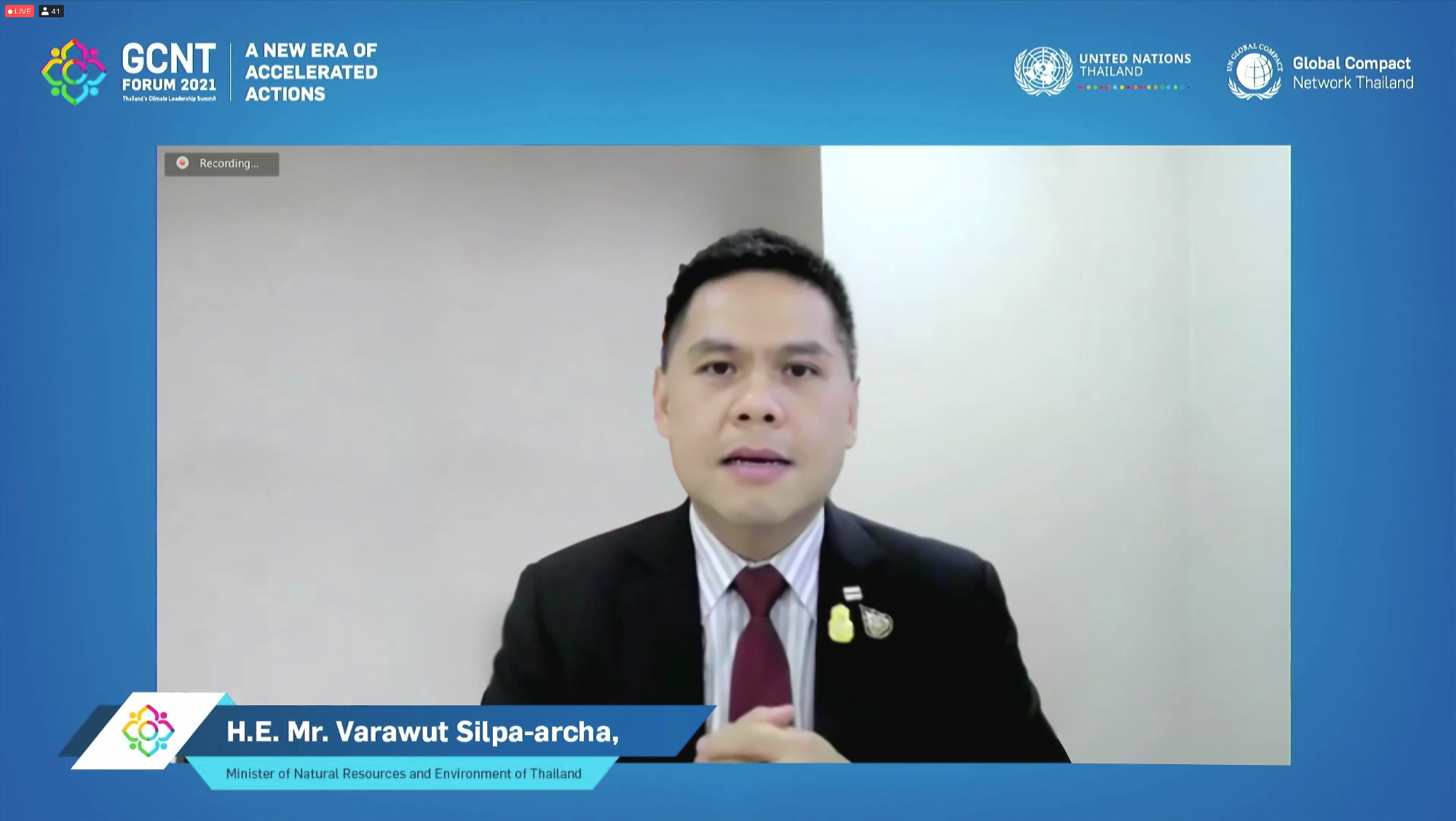
The Minister of Natural Resources and Environment of Thailand, Mr. Varawut Silpa-archa emphasized the need for collective action on the converging global crises of climate change and the COVID-19 pandemic, saying this was a roadmap for sustainable recovery. “It is not the responsibility of any one individual, not the sole responsibility of the Government or the opposition or the private sector. It is a mutual obligation that requires collaboration because climate and environmental degradation will affect us all,” he said. “We must focus on greenhouse gas reductions and integrate environmental and green measures into all industrial operations and business sectors, to achieve a low-carbon society.”
Five high-level panel discussions were held during the Forum, during which the participants discussed responsible business practices, with the focus on pressing issues such as the state of sustainability, credible climate actions via sustainable finance, the role of innovation and technology in addressing climate impacts, and business leadership and investment in carbon markets.
Speaking on the role of market regulators in climate sustainability, the Secretary-General of the Thailand Securities and Exchange Commission (SEC), Ms. Ruenvadee Suwanmongkol, said her organization was determined to develop enabling ecosystems for Thailand’s sustainable capital market. This has already led to the introduction of the mandatory “56-1 One Report” annual reporting criteria, in which listed companies and all future IPO filing forms submitted to the SEC must disclose updated information on greenhouse gas emissions. “It is critical that the voices of all sectors are heard, and sustainability markets are supported. The SEC supports the issuance of investment products to promote that ambition,” she explained.
Against this backdrop, the Stock Exchange of Thailand (SET) has been working closely with the Thailand Greenhouse Gas Management Organization and the Federation of Thai Industries “to establish a carbon credit market as a fundamental infrastructure for efficient energy consumption,” according to the SET President, Dr. Pakorn Peetathawatchai. This follows the introduction of similar measures to enable innovation and development of environmentally-friendly businesses in Thailand.
Normally held in Bangkok, the Forum this year was virtual, organized by GCNT in partnership with the United Nations in Thailand. More than 800 participants attended the event, including members of the Thai private, public and social sectors as well as representatives from the United Nations Industrial Development Organization, United Nations Environment Programme and United Nations Development Programme. Business members of GCNT participating in the forum included Charoen Pokphand Group, Thai Bev, CP All, Charoen Pokphand Foods, HSBC, Huawei Technologies (Thailand), NR Instant Produce, True Corporation, Bangchak Corporation, BCPG, CP Intertrade, Charoen Pokphand Produce, IRPC, Ek-chai Distribution, Siam Makro, Oklin Thailand, Pranda Jewelry, PTTEP, PTT Global Chemical, PTT Group, Thai Oil, and Krung Thai Bank.
Fitch Ratings-Bangkok-12 October 2021: Fitch Ratings expects Thailands economic recovery to gain traction in 2022, supported by a significant improvement in Covid-19 vaccination rates, business reopening and a still-supportive global growth environment.
The return of tourism is likely to be gradual, and Fitch expects GDP to recover to pre-pandemic levels by early 2023. The ratings of most large Thai corporates have stabilised, although some sectors, such as banks, retail and hospitality, remain under earnings pressure due to the pandemic, according to the Fitch analysts that spoke at the annual conference on Thailand held via webinar today.
Mr Stephen Schwartz, Senior Director and Head of Asia-Pacific Sovereigns at Fitch, commented on the global economy, noting that strong external demand should continue to support Thailand’s exports. However, he noted that supply constraints are limiting the pace of global recovery and contributing to price rises in the US. Fitch expects the US Federal Reserve to begin tapering next month, but for interest rate increases to begin only in 2023.
ADVERTISEMENT
The regional outlook has been set back by a slowdown in China and the recent surge in the Delta Covid-19 variant. However, a significant improvement in vaccination rates for most Asian sovereigns over 2H21 should put their recovery from the pandemic shock on a firmer footing. We expect the region to average growth of 6.3% in 2021 and 5.3% in 2022 as pandemic-related restrictions are gradually lifted. This compares with our forecast growth in Thailand of just 0.8% and 4.8%, respectively, where vaccination rates are picking up after a slow start. Slower growth in China, together with US Federal Reserve tapering, could be negative for Asia’s emerging and frontier markets.
Mr Parson Singha, Senior Director of Financial Institutions at Fitch Ratings Thailand, highlighted that Thai banks’ asset quality remains obscured by ongoing regulatory measures; around 14% of commercial bank loans are under regulatory relief, and there is also forbearance on loan classifications. Fitch expects the SME segment, which accounts for around 23% of loans, to remain under particular pressure from weak business and economic activity. Fitch believes non-performing loans will continue to rise and profitability will remain challenged in 2022, but Thai banks have built up reasonable reserves and capital buffers. Credit losses should remain manageable across south-east Asian emerging markets, although loss absorption buffers differ by country.
Mr Obboon Thirachit, Director of Corporate Ratings at Fitch Ratings Thailand, said the recovery in the Thai economy should support continued earnings growth for domestic Fitch-rated corporates in 2022. Most sectors, including oil, gas and petrochemicals – which were hardest hit in 2020 – are now on Stable Outlook, with earnings recovering to pre-pandemic levels. The retail and hospitality sectors, which were heavily affected by the resurgence of Covid-19 cases and travel restrictions in 2021, should see a gradual improvement in 2022, although a recovery to pre-pandemic levels could take another two years.
Thai corporates are stepping up their investment and M&A to support medium-term growth, digitalisation and low-carbon business transformation. This will keep financial leverage elevated and constrain rating improvement.
Bangkok, Today (11 October 2021) – Princess Ubol Ratana Rajakanya Sirivadhana Barnavadi, as Honorary President, presided over the 13th Thailand Tourism Awards Ceremony for 2021, and presented the awards to entrepreneurs, local organisations, and communities in the tourism industry.
There was a total of 185 awards. This competition was organised by the Tourism Authority of Thailand (TAT) and accepted entries from March to May 2021. The competition aimed to raise the standards of Thai tourism products and services, as well as to build confidence and create a positive impression on tourists in a new form of tourism, which is safe from COVID-19. The event took place at the PM Studio, Bangkok and was live online via the Facebook fan pages of Thailand Tourism Awards and Amazing Thailand.
The 13th Thailand Tourism Awards Ceremony, 2021: Quality assurance of Thai tourism products and services to the world.
ADVERTISEMENT
H.E. Mr. Phiphat Ratchakitprakarn, Minister of Tourism and Sports, stated that under the COVID-19 pandemic situation, the tourism industry has been severely affected by travel restrictions for both Thai and foreign tourists. This includes travel behavior that takes safety into account. He continued that the Thailand Tourism Awards, therefore, was a mechanism for raising the standard of tourism products and services. This year, the standard for hygiene and safety that meets the criteria of the Amazing Thailand Safety and Health Administration (SHA) had been added. This was to create an image of Thailand’s tourism as “White Tourism” (clean, convenient, safe, fair, and environmentally friendly) and also to build confidence for both Thai and foreign tourists in a new way of tourism. This would lead to the creation of a safe and impressive travel experience, especially participation in social and environmental sustainability.
Miss Thapanee Kiatphaibool, Deputy Governor for Domestic Tourism, Tourism Authority of Thailand stated that TAT organised the Thailand Tourism Awards biannually, and these awards serve as a vital benchmark for guaranteeing the quality of the products and services within the tourism industry, as well as provide assurance that these products and services show sufficient social and environmental responsibility. The awards are also a way of promoting and supporting the development of products and services within the industry, as well as creating a healthy level of competition in order to achieve new levels of efficiency and quality, to ensure the industry conforms with the latest SHA hygiene and safety standards, and to emphasise the quality of Thai tourism on an international level. A team of experts from the industry analysed and judged the entries and awarded the prizes according to the five project criteria, which were as follows: 1. White Tourism, 2. Compliance with the BCG Model, 3. SHA Hygiene and Safety Standard, 4. Environmental Responsibility, and 5. Voice of the Customer.
There was a grand total of 346 entries in this year’s competition with 185 of those entries completing the criteria and receiving awards. The awards were divided into three categories: 1) Tourist Attraction, a total of 83 prizes, 2) Accommodation, a total of 69 prizes, and 3) Health and Wellness Tourism, a total of 33 prizes, with each category featuring Thailand Tourism Awards (Outstanding), Thailand Tourism Gold Awards (Excellence), and Hall of Fame Awards for entrants who had received three consecutive Thailand Tourism Gold Awards.
The 13th Thailand Tourism Awards Ceremony, 2021: Quality assurance of Thai tourism products and services to the world.
In this year’s competition, a total of 10 Hall of Fame awards were presented. Three awards were in the attractions category: Chiang Mai Night Safari (Chiang Mai), Tiffany Show Pattaya (Chon Buri), and Flying Hanuman (Phuket), one award in the accommodation category: Siam Bayshore Resort Pattaya (Chon Buri), and finally six awards in the Health and Wellness Tourism category: Banyan Tree Spa (Phuket), Banyan Tree Spa Samui (Surat Thani), Fah Lanna Spa (Chiang Mai), RarinJinda Wellness Spa Resort (Chiang Mai), Oasis Turquoise Cove Spa (Phuket), and Oasis Spa Pattaya (Chon Buri).
TAT hopes that the Thailand Tourism Awards project could achieve its purpose of acting as a tool, which would create and stimulate sustainable ethical interaction between the public and private sectors and local communities, as well as encourage the development of attractions within the tourism industry, thus creating a wider market for the products and services offered by the Thai tourism industry. It is also hoped that the awards would create opportunities for employment and income across the entire economy and help to maintain sustainable tourism in Thailand.



 Achieving just transition to net-zero economy key to building climate-resilience in Thailand
 Achieving just transition to net-zero economy key to building climate-resilience in Thailand
 Achieving just transition to net-zero economy key to building climate-resilience in Thailand

 The 13th Thailand Tourism Awards Ceremony, 2021: Quality assurance of Thai tourism products and services to the world.
 The 13th Thailand Tourism Awards Ceremony, 2021: Quality assurance of Thai tourism products and services to the world.
