The Bank of Thailand (BOT) on Friday said that the impact on the economy from the second Covid-19 outbreak was milder than from the first outbreak at the beginning of 2020.
BOT senior director Chayawadee Chaianant said that the second outbreak was less severe compared to the first one, while medical preparations were better than before.
She added that government measures implemented at present were less stringent than in the last year, as a result exports were still expanding.
The BOT added that the red provinces were areas where the Covid-19 outbreak had hit the highest level. The impacted persons in the areas were mostly daily wage workers, whose working hours have been reduced from the new virus crisis.
To deal with the virus’ effects, Chayawadee said business operators and their workers must be helped at the earliest. Focus must be on people in the fragile group.
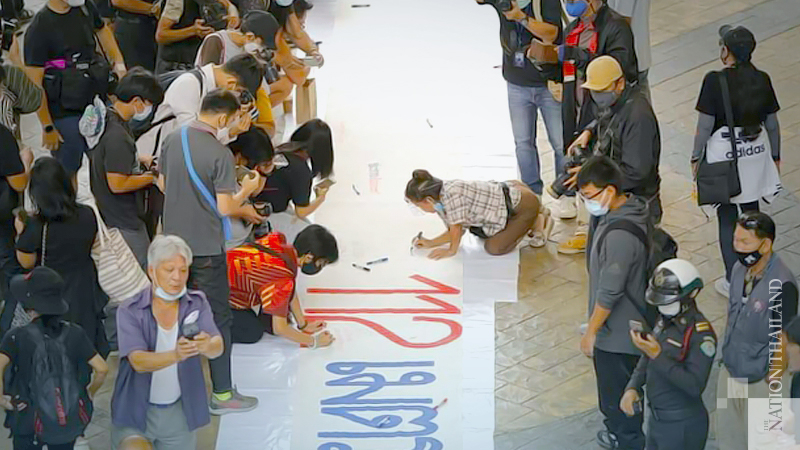
Two leaders of the pro-democracy group Guard Plod Aek were arrested on Saturday afternoon at Victory Monument in Bangkok’s Ratchathewi district.
The group held a gathering at the monument to write criticisms of the premier on a 112-metre-long banner.
The arrested protesters were reportedly taken to Phya Thai Police Station and charged with violating the Emergency Decree on Public Administration in Emergency Situations and the Communicable Disease Act, before being sent to Border Patrol Police Region 1 headquarters in Pathum Thani province. Other participants dispersed from the area after the arrests.
The gathering on Saturday was organised for protesters to write their opinions on a long fabric banner about Prime Minister General Prayut Chan-o-cha’s failures in handling crisis situations, as well as urging the abolition of lese majeste law, also known as Article 112, as symbolised by the 112-metre long banner.
Lese majeste has been an offence under Thailand’s Criminal Code since 1956. Article 112 of the code states: “Whoever defames, insults or threatens the King, the Queen, the Heir-apparent or the Regent shall be punished with imprisonment of three to 15 years.”
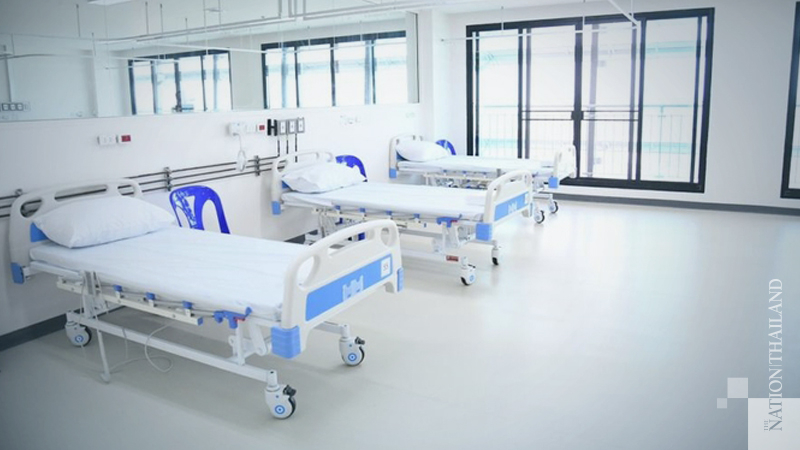
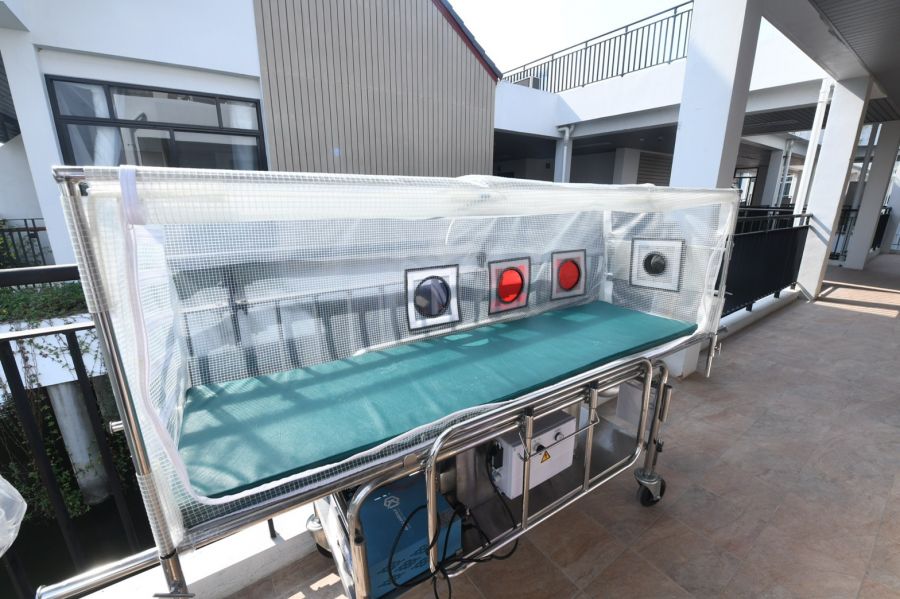
The Bangkok Metropolitan Administration (BMA) is converting the Bangkhuntian Geriatric Hospital into a field hospital for Covid-19 treatment and quarantine centre with a 509-bed capacity.
BMA permanent secretary Silapasuai Rawisaengsun said on Friday that the hospital in Tha Kham subdistrict of Bangkhuntian district is now functioning as a Covid-19 treatment and quarantine facility to cope with the new wave of Covid-19 that has been reported since last December.
“With each bed placed more than 1.5 metres apart, the six-storey hospital can accommodate 509 patients simultaneously,” she said.
“The patient quarter is at least eight metres away from community area to ensure public safety.
“The hospital has 10 restrooms, six shower rooms, a cafeteria, a conference room and separate staff station. It also provides Wi-Fi signal throughout the area to allow patients to communicate with staff. The hospital communal areas are also monitored 24/7 via CCTV cameras,” she added.
The BMA permanent secretary added that the hospital uses an air handling unit to manage the ventilation system to ensure staff and patients’ safety, while the exhaust air from the hospital was released via vents positioned at least eight metres away from community areas. “Furthermore, all the waste from the hospital will be treated as infectious waste under public health standards,” she added.
From December 20 to January 14, Bangkok reported 526 cases of Covid-19, 396 are local residents while 130 have travelled from other provinces. Most of the confirmed patients are linked to the outbreak in Samut Sakhon, Rayong and Nonthaburi provinces.
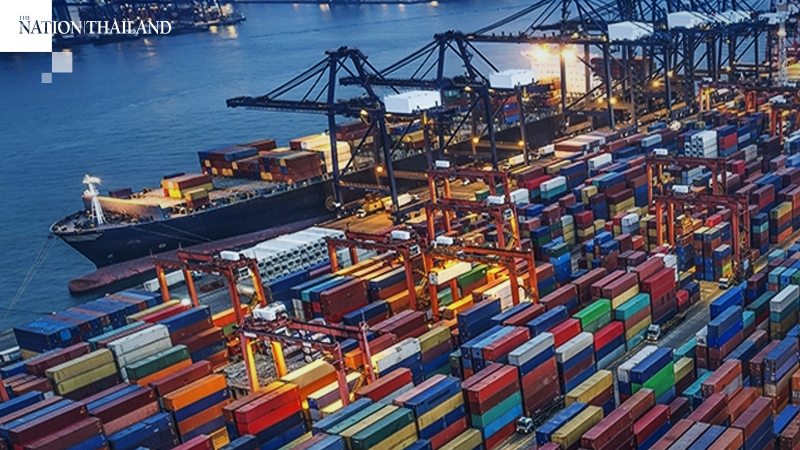
The global Covid-19 situation has driven up demand for canned food and tuna, but deliveries by Thai exporters are affected by a shortage of containers, industry experts said.
Chanin Chalisaraphong, president of Thai Tuna Industry Association said that Thai export of tuna in 2020 is expected to net Bt80 billion, increasing from Bt77 billion in 2019.
“This year we estimate that tuna exports will expand by at least 5 per cent, as orders are now pouring in for delivery within the first quarter of 2021,” he said. “The biggest problem exporters are facing right now is inadequate supply of containers, as over a thousand containers are still stuck in the United States and Europe due to Covid-19 restrictions. Containers that came back on time are being sent to China.
“The association is urging the ministries of Commerce and Transport to coordinate with foreign authorities to send back our containers as soon as possible,” he added.
Meanwhile, Korakot Kittiphol, deputy director of foreign markets at Thai Hua Rubber Pcl, has added that since December the company has received increasing orders from China who require rubber for manufacturing tyres and rubber gloves.
“We must deliver the rubber within the next few months but currently we do not have enough containers,” he said. “Furthermore, the freight fee has increased to the highest in 15 years, from last year’s rate of $20-$50 per 20-foot container to $600-$800 per container.”
Boonchai Srichaiyongpanich, president of the Thai Tapioca Trade Association, has said that China is currently ordering tapioca chips at 300,000 tonnes per month, compared to 80,000-90,000 tonnes per month during the same period in 2020. “China switched to using tapioca chip as the main ingredient in alcohol manufacturing after local corn price rose sharply,” he said. “We expect that total export of tapioca this year will reach 4-5 million tonnes, increasing from last year’s total of only 3 million tonnes.”
Not all exports enjoy higher orders, however. The honorary president of Thai Rice Exporters Association, Chukiat Opaswong, has said the orders for delivery in first quarter of 2021 are still at the same level as last year. “This is due to the strengthening of the baht that has made Thai rice more expensive than competitors,” he said. “We estimate that total rice exports this year will be 6.5 million tonnes, increasing from last year’s total of 5.8 million tonnes, which was the lowest in the past 20 years.”
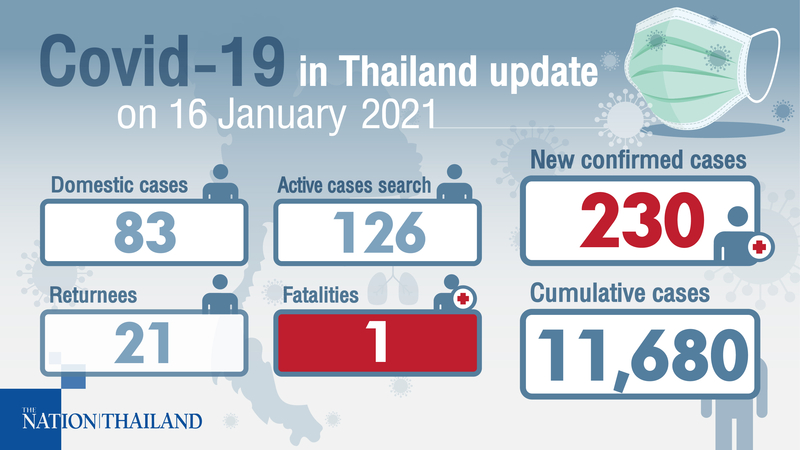
The Centre for Covid-19 Situation Administration (CCSA) reported 230 new cases and one death on Saturday.The new cases consisted of 83 domestic cases, 126 cases from active search operation, and 21 patients in quarantine.The 83 domestic cases included 55 cases in Samut Sakhon, 12 in Bangkok, six in Ang Thong, five in Chonburi, two in Khon Kaen, and one case each in Chanthaburi, Chaiyaphum and Pathum Thani provinces.
Of the 126 cases,110 were found in Samut Sakhon, five in Chonburi, four in Rayong, three in Pathum Thai, two in Samut Prakan and one each in Chachoengsao and Chanthaburi provinces. Most of these patients were foreign workers.
The infected travellers from overseas consisted of seven from the UK, six from Turkey, three from Germany and one each from Qatar, Ethiopia, Russia, the US and Malaysia.
CCSA spokesperson Taweesin Visanuyothin informed that total patients this week (as of Saturday) were 1,627, down from 2,674 last week.
Regarding the clusters in Thailand, Taweesin said they were from gambling dens in eastern provinces, entertainment venues in Bangkok, a cockfight ring in Ang Thong, and Samut Sakhon’s shrimp market.
As of January 13, total new patients from each cluster showed a decrease, especially those related to gambling dens.
The total number of confirmed cases in Thailand has risen to 11,680 – 9,413 of which were contracted domestically, including 3,386 found via proactive testing, and 2,267 returnees. So far, 8,906 have recovered and been discharged, 2,704 patients are still in hospital and the death toll has increased to 70.
Taweesin explained that the 70 fatality was a man in Bangkok, who died on January 14. He had visited an entertainment venue two times in December.
According to Worldometer, as of midnight on Friday, the total number of confirmed cases globally had risen to 94.3 million (up by 761,554), 67.34 million have recovered, 26.96 million are active cases (111,481 in severe condition) and 2 million have died (up by 14,816).
Thailand ranks 127th on the global list of most cases, while the US tops the list with 24.1 million, followed by India 10.54 million, Brazil 8.39 million, Russia 3.52 million and the United Kingdom 3.31 million.
The governor of Samut Sakhon province is on continuous respirator support, due to bacterial infection in his respiratory system, Siriraj Hospital said on Friday.
Governor Verasak Vichitsangsri was admitted to Siriraj Hospital on December 28, after he was found to be infected with the Covid-19 virus.
According to a report, doctors had thought of discontinuing his use of the respirator, but changed their minds as the governor’s respiratory system was found to be infected on Thursday.
The hospital said that the governor was conscious, but could not speak due to the respirator.
Doctors will evaluate his condition and response to medication within a few days.
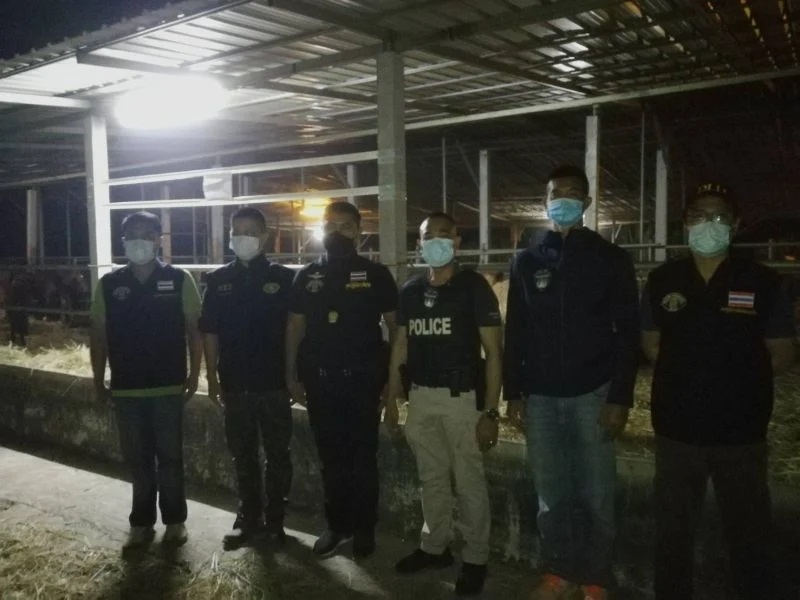
Officials from the Natural Resources and Environmental Crime Division on Friday raided a slaughterhouse in Khon Kaen province for alleged illegal sale of horse meat.
The raid in Waeng Yai district followed a tip-off from Watchdog Thailand Foundation which had informed officials about illegal sale of horses to a slaughterhouse in Nakhon Ratchasima-Khon Kaen areas for export to Vietnam and China.
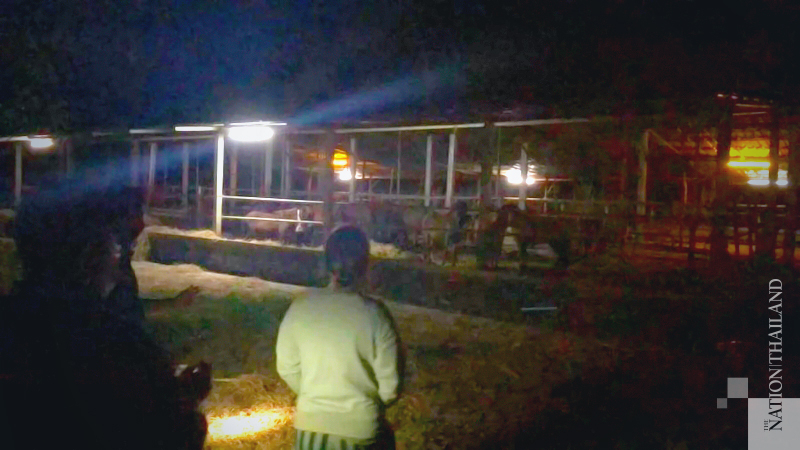
Police had earlier arrested Kanyarat (last name withheld), aged 44 years, a Khon Kaen local who operates a horse stable in Waeng Yai. Kanyarat reportedly confessed that she had sold 23 horses to a nearby slaughterhouse. Officials then investigated the slaughterhouse and found 44 horses which were about to be slaughtered. The animals had no proper registration with the provincial veterinary office.
The slaughterhouse owner reportedly said that he planned to sell the horse meat at Bt100 per kilogram to a middleman, who would later export it to buyers in Vietnam and China via natural channels.
Police are gathering evidence to track down the horse meat export operation.
Kanyarat was slapped with three charges: Failing to register animals with the provincial veterinary office, selling animals without permission and moving animals to an outbreak control area.
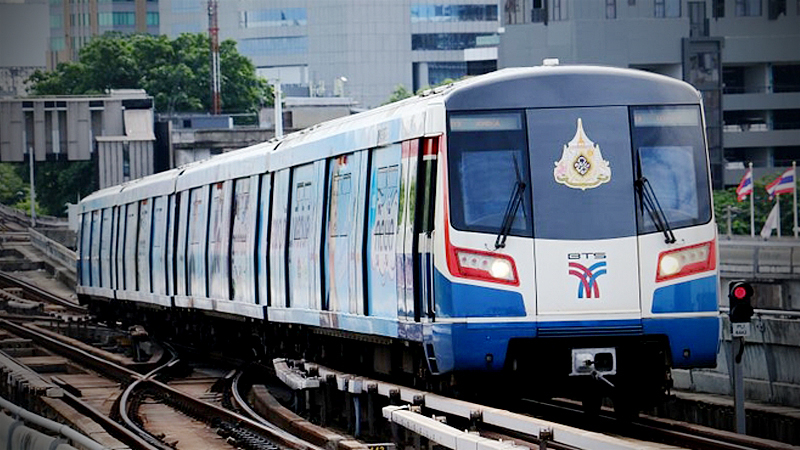
Fares on some of the Green Line routes have been hiked by Bt3 per station.
On Friday evening, Bangkok Metropolitan Administration (BMA) announced the new fares for the Green Line BTS Skytrain.
The new fares are:
– From Ha Yaek Lat Phrao station (N9) to Ku Kot station (N24), comprising 16 stations, — Bt15-Bt45 (increasing from the current rate by Bt3 per station)
– From On Nut station (E9) to Mo Chit station (N8), comprising 17 stations; from National Stadium station (W1) to Saphan Taksin station (S6), comprising six stations; and from Krung Thon Buri station (S7) to Wongwian Yai station (S8), comprising two stations, will remain unchanged.
– From Bang Chak station (E10) to Bearing station (E14), comprising five stations, and from Samrong station (E15) to Keha Samut Prakarn station (E23), comprising nine stations — Bt15-Bt45 (up by Bt3 per station)
– From Pho Nimit station (S9) to Bang Wa station (S12), comprising four stations — Bt15-Bt24 (up by Bt3 per station)
– The maximum fare for all Green Line routes will be Bt104.
The new fares will be effective from February 16.
The BMA had earlier on Friday issued a statement saying the ceiling on fares shall be set at Bt65.
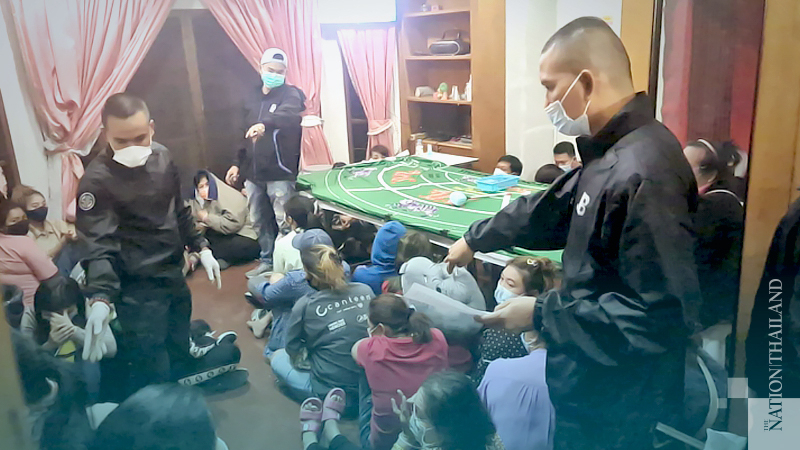
The Nonthaburi Provincial Court on Friday jailed Somjit Hinkerd and Sorasak Janthamanee for jointly operating a gambling den in the Bang Bua Thong district of Nonthaburi province.
Officers from the Central Investigation Bureau had raided a house in Soi Wat Lad Pla Duk on Kanchanaphisek Road on the night of January 14 and arrested 39 gamblers at the scene while they were playing Dragon-Tiger card game.
The investigation officers told the court that the house was owned by Sorasak while Somjit organised the gambling in the form of a “moving casino”, which means they would change the venues periodically to avoid police investigation.
All 41 offenders reportedly confessed to their crimes.
The court sentenced Somjit and Sorasak to three months and 15 days’ jail each with no suspension. The 39 gamblers were given a 15-day jail time under one-year suspension and Bt10,000 fine each.
The Thailand Meteorological Department said on Saturday that the weakening high-pressure system over upper Thailand would push temperatures up by 1-3 degrees Celsius.
Morning fog with isolated thick patches is also forecast for the upper country where cool to cold weather continues. Mountaintops are still cold to very cold. All transport should move with caution in the foggy areas, the departnent said.
Meanwhile, the weakening northeast monsoon across the Gulf of Thailand and the South brings moderate winds to the Gulf. Waves are expected to be 1-2 metres high in the lower Gulf. All ships should proceed with caution, the department said.
The weather forecast for the next 24 hours:
North: Cool to cold weather with morning fog and thick fog in some areas; minimum temperature 14-18 degrees Celsius, maximum 29-34°C; temperature on hilltops is likely to drop to 5-12°C.
Northeast: Cool to cold weather with morning fog and thick fog in some areas; minimum temperature 14-18°C, maximum 30-33°C; temperature on hilltops is likely to drop to 6-13°C.
Central: Cool weather with morning fog and thick fog in some areas; minimum temperature 17-19°C, maximum 32-34°C.
East: Cool weather with morning fog; minimum temperature 18-22°C, maximum 31-34°C; waves a metre high and 1-2 metres offshore.
South (east coast): Cool weather with thundershowers in 10 per cent of the areas; minimum temperature 20-24°C, maximum 30-31°C; waves 1-2 metres high and over two metres during thundershowers.
South (west coast): Partly cloudy with thundershowers in 10 per cent of the areas; minimum temperature 22-24°C, maximum 32-34°C; waves 1-2 metres high and two metres offshore.
Bangkok and surrounding areas: Cool weather with morning fog and thick fog in some areas; minimum temperature 19-22°C, maximum 32-34°C.