Seven out of 19 illegal immigrants arrested following a tip-off have tested positive for Covid-19, a senior Bangkok administration official said.
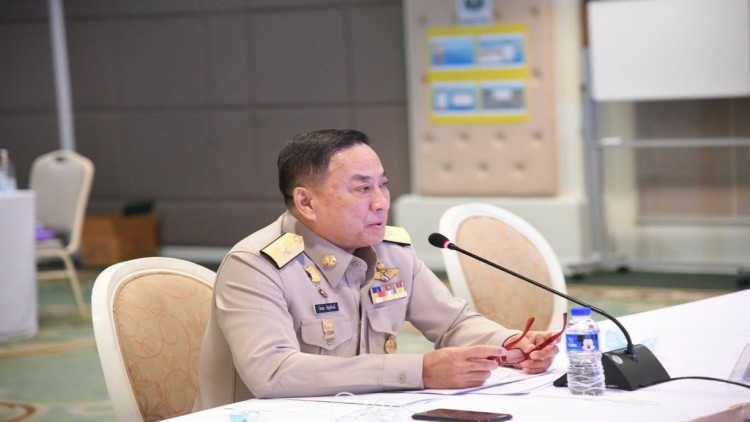
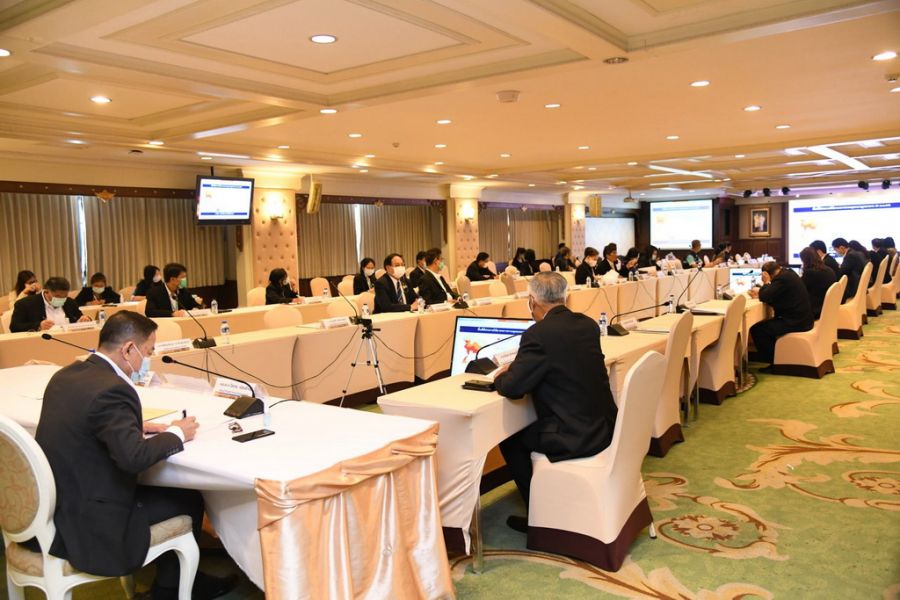
At the meeting of Bangkok’s Centre for Covid-19 Situation Administration on Tuesday, Pol Lt- General Sophon Phisutthiwong, deputy governor of the Bangkok Metropolitan Administration (BMA), said that since the second wave of the Covid-19, BMA has urged people in Bangkok and its perimeter areas to report to the authority if they have information about illegal migrants in the communities.
“Thanks to the tip-off from people, so far the authorities have arrested 19 illegal migrants and tested them,” he said. “Seven have tested positive for Covid-19, while 12 people remain in quarantine and are closely observed. After the 14-day mandatory period has passed, they will be tested again to confirm the result.”
The meeting on Tuesday also urged district officials to inspect restaurants in metropolitan areas and advise dining business owners to comply with BMA rules that allow customers to eat in restaurants only until 9pm. “Restaurants need to arrange their tables in line with social-distancing practices to prevent the spread of Covid-19,” he said. “Tables must be spaced at a distance of at least 1.5 metres in case there is no barrier between them, or one metre if they have a barrier.”
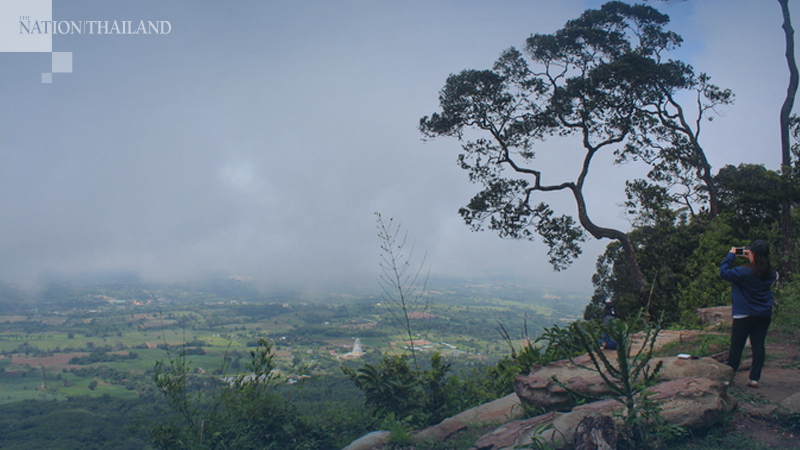
The Thailand Meteorological Department said on Wednesday that the weakening high-pressure system over upper Thailand and the South China Sea would bring cool to cold weather in the North and the Northeast with thick fog in some areas.
Those driving vehicles must take precautions due to poor visibility, the department said.
Meanwhile, a rather strong northeast monsoon prevails over the Gulf and the South, bringing isolated heavy rains to the lower South. People should beware of the severe conditions that may cause flash floods, the department said. Waves in the Gulf rise about two metres and above three metres high during thundershowers. All ships should proceed with caution.
The weather forecast for the next 24 hours:
North: Cool to cold weather with fog in the morning and thick fog in some areas; minimum temperature 14-20 degrees Celsius, maximum 30-35°C; temperature on hilltops is likely to drop to 4-12°C.
Northeast: Cool to cold weather with fog in the morning and thick fog in some areas; minimum temperature 14-21°C, maximum
30-33°C; temperature on hilltops is likely to drop to 9-14°C.
Central: Cool weather with fog in the morning and thick fog in some areas; minimum temperature 22-24°C, maximum 33-35°C.
East: Cool weather with fog in the morning and thick fog in some areas; minimum temperature 21-23°C, naximum 31-33°C; waves 1-2 metres high and two metres offshore.
South (east coast): Mostly cloudy with thundershowers in 60 per cent of the areas and isolated heavy rain; minimum temperature 22-25°C, maximum 28-33°C; waves two metres high and over three metres during thundershowers.
South (west coast): Mostly cloudy with thundershowers in 40 per cent of the areas; minimum temperature 23-25°C, maximum 31-33°C; waves 1-2 metres high and two metres offshore.
Bangkok and surrounding areas: Partly cloudy with fog in the morning; minimum temperature 23-24°C, maximum 32-35°C.
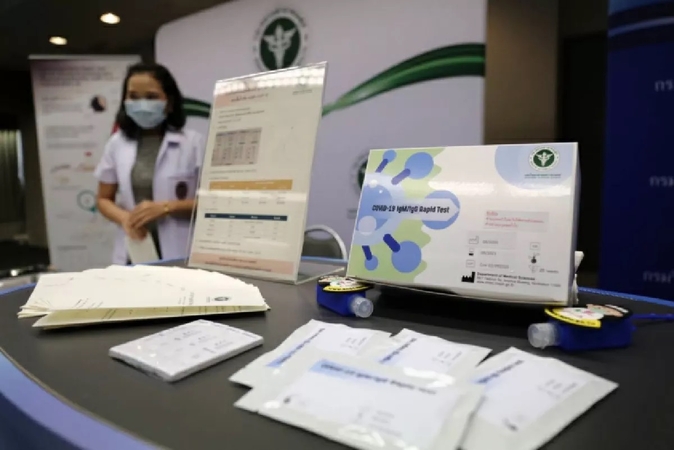
The Thailand Food and Drug Administration (FDA) has warned people not to buy Covid-19 rapid test kits to perform testing at home.
“During the second wave of Covid-19 in Thailand, people have become more concerned about virus testing, while some are opting to buy rapid test kits from online sellers to perform the tests themselves,” said Dr Surachoke Tangwiwat, FDA deputy secretary-general.
“Rapid tests kits are not an accurate way of testing for Covid-19, as they test the person’s immunity level and not the virus itself. Using only a rapid test kit could therefore lead to misdiagnosis.”
Surachoke added that the change in immunity level would only be detected by a rapid test kit after a person has contracted the virus some times, therefore it should be used only by doctors and experienced health technicians who could accurately analyse the result.
“In some cases, test-takers found the results to be negative, but in fact they had just contracted the virus and it could spread to others if they do not isolate themselves,” he warned.
“According to the Ministry of Public Health announcement, Covid-19 rapid test kit is a medical equipment that must be sold only to hospitals, clinics or licensed medical professionals, and the sales must be reported to the FDA,” he said.
The FDA deputy secretary-general also advised people who have travelled to risky zones, or have had close contact with a confirmed patient, or have symptoms, such as over 37.5 degrees fever, loss of taste and sense of smell, coughing, sore throat or muscle ache to receive a test at the hospital within 48 hours for accurate diagnosis.
The Cabinet on Tuesday approved a draft law for expropriation of land to build the 336-kilometre Northeast railway between Khon Kaen and Nakhon Phanom. The plan hands the State Railway of Thailand a budget of Bt10 billion to requisition land along the route linking Ban Phai in Khon Kaen, Maha Sarakham, Roi Et, Mukdahan and Nakhon Phanom.
The Cabinet has approved a total budget of Bt66.84 billion for the project, which includes expropriation expenses.
Residents whose homes are expropriated will be compensated with affordable rental housing at an eight-storey project of 360 units on Kamphaeng Phet 6 Road in Don Mueang District, Bangkok. Construction of the project is due to begin in April next year for scheduled opening in October 2022.
The SRT will negotiate compensation payments for households who do not take up the affordable housing option.
Separately, the Cabinet heard performance results from the SRT and the Bangkok Mass Transit Authority (BMTA) bus agency for fiscal year 2019 and the first half of 2020. The SRT reported a loss of Bt2.893 billion in 2019 and Bt1.494 billion in the first half of 2020. The BMTA reported losses of Bt2.255 billion and Bt996 million, respectively, for the two periods.
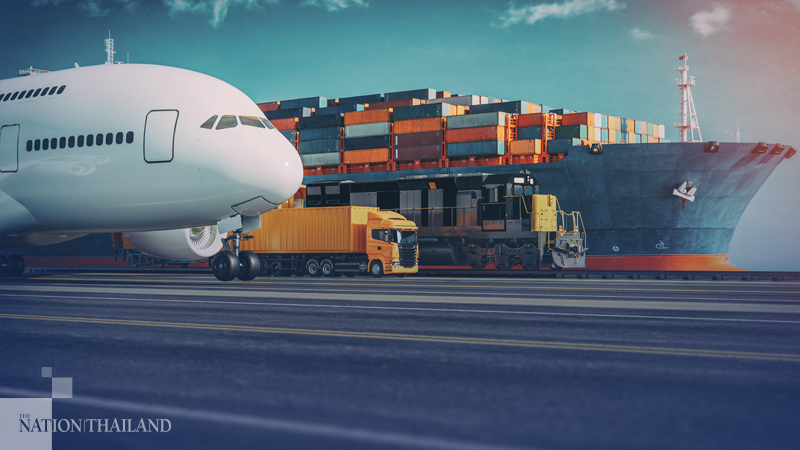
Thai National Shippers Council (TNSC) expects exports this month to only grow by 3 to 4 per cent, as the new wave of Covid-19 infections is expected to further affect the export sector.
TNSC president Kanyapak Tantipipattanapong, however, admitted that the new normal and the work-from-home trend has somewhat boosted the demand for food, medical supplies and consumer products.
However, she pinpointed four negative points that will affect Thailand’s export sector this year, namely:
• A new wave of Covid-19 outbreak, which is likely to be more severe, especially in the UK, rest of Europe, South Korea and Japan.
• A shortage of containers and rise in freight rate.
• Appreciation of the baht after Thailand was added to the US watchlist for currency manipulation, which has resulted in foreign exchange speculation.
• A likely drop in oil price due to a slowdown in production, tourism and export of goods made from petroleum.
In order to deal with these problems, she said the government and central bank should launch urgent measures to mitigate the outbreak’s impact on businesses, such as cutting fees for contacting government agencies, extending the period of soft loans and reducing expenses.
“The government should also solve the shortage of containers as soon as possible by either using the Thai Customs Department’s containers, launching measures that allow the export of goods without requiring containers, allowing 400-metre vessels to enter Laem Chabang port or checking for the availability of containers elsewhere in the country. The government should also cut port charges,” she said.
“In the long-term, the government should launch measures to stimulate the economy, transform the current economic system into a digital one and accelerate free-trade agreements.”
She added that locking down the country to curb Covid-19 has brought the logistics process to a halt.
“The government should take care of the transport sector if it has to impose lockdown measures in the East of the country,” she added.
Thailand’s exports for the first 11 months of last year stood at $211.38 billion, down 6.92 per cent year on year, while import was $187.87 billion, down 13.74 per cent year on year, resulting in a $23.51 billion trade surplus. The export of agricultural and industrial products from January to November last year dropped by 4 per cent and 6.6 per cent, respectively.
In November alone, export was $18.93 billion, down 3.65 per cent year on year, while import was $18.88 billion, down 0.99 per cent year on year, resulting in $52.59 million trade surplus. The export of agricultural and industrial products in November dropped by 2.4 per cent and 2.9 per cent, respectively.
People who have recently visited any of 11 areas linked to the Covid-19 outbreak should contact the Health Department immediately, the Bangkok Metropolitan Administration (BMA) said on Tuesday.
BMA spokesman Pongsakorn Kwanmuang said people can contact the Health Department via the website http://bkkcovid19.bangkok.go.th/.
The 11 risky areas are:
1. Samut Sakhon
2. Nakhon Pathom: Nakhon Chai Si district (Bang Rakam subdistrict), Kamphaeng Saen district (Sa Si Mum, Huay Muang and Sa Phatthana subdistricts), and Bang Len district (Bang Luang and Don Tum subdistricts)
3. Nonthaburi: Bang Yai Central Market in Sao Thong Hin subdistrict, Bang Yai district
Thailand’s measures to control the spread of Covid-19 are strong enough to not warrant special measures against travellers from the United Kingdom, Foreign Ministry spokesperson Thanee Saengrat said.
As for the mutated strain of Covid-19 in the UK, she said the British family of four went into 14-day quarantine immediately upon arrival and though they tested positive on Sunday, they had not come in contact with anyone.
Meanwhile, the Centre for Covid-19 Situation Administration has said there is no conclusive evidence on how serious this strain of Covid-19 is and there is no information as to whether it is exclusively from the UK.
Prime Minister Prayut Chan-o-cha said the first 200,000 doses should arrive in Thailand in February, followed by another 800,000 in late March and 1 million by late April.
The government has also signed an agreement for an additional 35 million doses of the Oxford/AstraZeneca vaccine, which are due to arrive in May or June. Thailand had already ordered 26 million doses of the AstraZeneca vaccine.
“The total doses of Covid-19 vaccine ordered will be enough to inoculate 60 million people, who will receive two doses per person,” said Prayut.
All of the Covid-19 vaccines ordered must be approved by Thai and international health authorities, he said.



 Pongsakorn Kwanmuang
 Prayut Chan-o-cha

