Dining at restaurants will only be allowed from 6am to 7pm, after which only takeaways will be allowed. Eateries are required to arrange tables in line with social-distancing practices and prohibited from serving alcohol.
People planning to hold a party or large gatherings must seek permission from the BMA or health officials first.
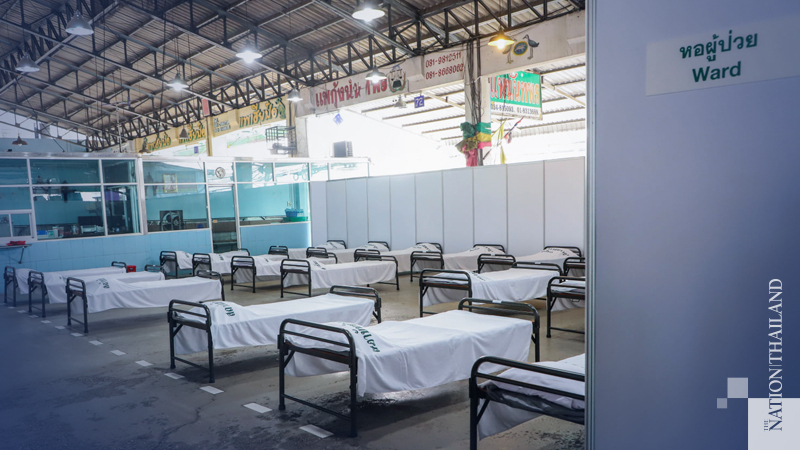
Authorities in Samut Sakhon say they urgently need 3,000-4,000 beds to accommodate Covid-19 patients in order to prevent the virus from spreading further.
Wuttiphong Suphakawanich, head of Samut Sakhon Provincial Office, said the province needs another large field hospital to quarantine the rising number of new cases. A field hospital has already been set up at the central shrimp market in Muang district, thought to be the source of an outbreak in December that has now expanded to 54 provinces.
Wuttiphong warned that if no place could be found to isolate fresh Covid-19 cases in the province, the outbreak may spread even more widely.
He also urged local businesses who run more than 7,000 factories in Samut Sakhon to help equip a new field hospital, adding that the province could not afford to wait for state budget.
Equipment desperately needed includes tents, mattresses and blankets, and toilets and showers which can be assembled in 3-4 days.
The Committee of the Centre for Covid-19 Situation Administration (CCSA) on Monday approved extending the state of emergency to the end of February.
Approval for a 45-day extension to the emergency decree, instead of the usual month-long extension, comes as Thailand faces a surge in new Covid-19 cases following a fresh outbreak last month.
The 45-day extension will be put to the Cabinet on Tuesday.
Fishing boats and vessels off Songkhla’s Koh Nu and Koh Maew islands rock and roll in rough seas whipped up by the northeast monsoon on Monday.
The monsoon brought waves of 2-3 metres high in the Gulf of Thailand, as well as heavy rain to the southern provinces of Phatthalung, Songkhla, Yala, Pattani and Narathiwat.
The Meteorological Department has warned people who live in flood-prone areas to beware of flash floods from January 4-8.
Chonburi’s Koh Larn island will be closed to tourists from Tuesday to January 20 in a bid to curb the spread of Covid-19, community members said on Monday.
The community has also set the following criteria:
• Hotel and resort operators are required to ensure guests leave the island on Monday and no bookings are taken until the situation is resolved. Tourists with Covid-19 symptoms are required to inform the authorities immediately.
• Residents are not allowed to leave the island unless absolutely necessary, while outsiders wanting to enter the island must seek permission from the Covid-19 administration centre at the pier.
• Every individual on the island must monitor their symptoms, and those with a cough, fever or sore throat must contact the community’s medical centre via (038) 434 144.
• Residents must avoid gatherings or outdoor activities unless absolutely necessary and cannot venture out of their home from 10pm to 5am.
• Hawkers and stall operators from Pattaya city are not allowed to enter the island, though mail and goods can be dropped off at the pier.
• Speed boat operators have been told to suspend services, with people required to seek permission from the Covid-19 administration centre if they wish to use one. Ferry services to and from Pattaya City have been cut down to three daily – 7am, noon and 6pm.
• Operators of floating restaurants have been told to suspend their services. Restaurants are only allowed to provide takeaway services.
• Transporting migrant workers is banned.
• Island residents must strictly follow the guidelines.
Local production of AstraZeneca vaccine kicks off, Thailand signs up for 2 million doses from Chinese firm
NationalJan 04. 2021Photo Credit: Public Health Ministry PR
By The Nation
The Public Health Ministry said on Sunday the production of Covid-19 vaccines under the technology transfer deal signed with AstraZeneca/Oxford University has kicked off, with the first batch expected to be ready by May.
The ministry has also ordered 2 million doses of Covid-19 vaccine made by Chinese manufacturer Sinovac, even though it has not yet won the “Phase 3” status. The vaccine will be delivered in three batches – some 200,000 doses arriving in late February, 800,000 in late March and 1 million by late April.
Thailand is racing to curb the spread of a new wave of local infections, now that the number of Covid-19 cases in the country has gone beyond 8,000 cases.
Supakit Sirilak, director-general of the Department of Medical Science, said it is important to ensure all vaccines have undergone quality and safety control measures, adding that vaccines that have not completed the Phase 3 round of testing will not be brought into the country.
He also said that private firms selling the vaccine must register with Thailand’s Food and Drug Administration, and most importantly certified by the Department of Medical Sciences.
Meanwhile, the Public Health Ministry expects to have at least 50 per cent of the population vaccinated this year, with the first batch of the 26 million doses bought from AstraZeneca expected to be delivered in May.
Under the technology-transfer deal with AstraZeneca, 200 million doses of the vaccine will be produced by Siam BioScience.
The government is also negotiating the purchase of vaccines from other manufacturers, including Pfizer, Moderna and Chinese companies, or may sign up for more vaccines from AstraZeneca.
Four types of Covid-19 vaccines that have been approved by the US FDA’s emergency use authorisation (EUA) – viral vector, mRNA, inactivated and protein subunit, said Dr Nakhon Premsri, director of the National Vaccine Institute (NVI).
So far, only vaccines produced by Pfizer, Moderna and AstraZeneca have been approved, while the rest, including the ones being produced in China and Russia, have not reached Phase 3 of testing.
“The number of vaccines is limited. Every company is expanding its production capacity to cover the global population. When vaccines are used on large swathes of the population, the chance of side effects increases substantially,” Dr Nakhon said.
Separately, Dr Songpon Deechongkit, managing director of Siam Bioscience, said the company received knowledge and technology from AstraZeneca in October last year. Since then Siam Bioscience has been making preparations and should be able to produce some 200 million doses yearly or about 15 million to 20 million doses per month.
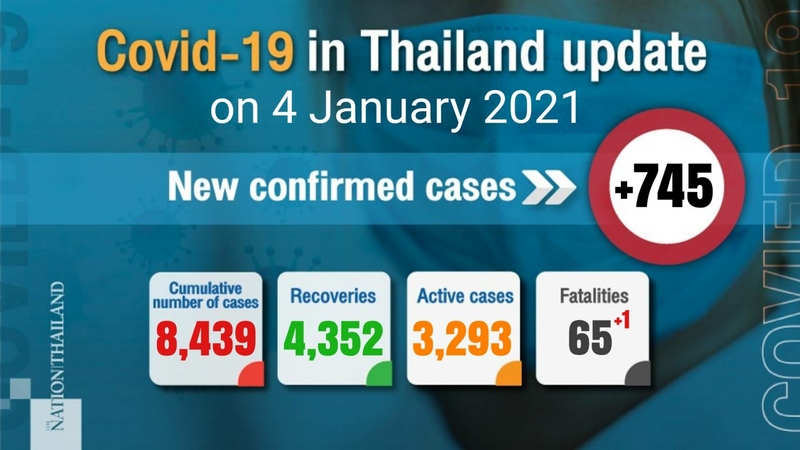
The Centre for Covid-19 Situation Administration (CCSA) announced 745 confirmed cases, including 16 in quarantine facilities, on Monday, one of the highest on a single day.
Of the domestic cases, 60 were occupations that exposed them or took them to risky places, and 577 were migrant workers, found positive in proactive testing.
Most of the cases were in Samut Sakhon (505), followed by Rayong (25), Chonburi (22), Chanthaburi (22), two in Trat and one in Chainat. Meanwhile, 92 patients are under investigation to find the source of the infection in Samut Sakhon (36), Samut Prakarn (20), Rayong (17), Chonburi (13), Chanthaburi (5) and Bangkok (1).
Ten of the 16 patients testing positive in quarantine facilities were foreigners — a Kazakhstan citizen from Russia, a Canadian and two French nationals from Sweden, a Cameroonian from Ethiopia, and two Turks, an Indian, a Swiss national and a Japanese from their respective countries. The others included two Thai nationals returning from Italy, three Thais from the United Kingdom and one Thai from Egypt.
CCSA spokesperson
Dr Taweesin Visanuyothin said one person infected with Covid-19 had died. The 56-year-old Bangkokian had diabetes and high blood pressure, and had travelled to Samut Prakarn and Klongtoey district of Bangkok. The patient went for treatment on December 28 after having high fever, muscle ache, and being unable to swallow food. He was admitted to a hospital on December 30 as the oxygen level in his blood dropped to 80 per cent and he was found to have pneumonia. He tested positive for Covid-19 on January 1. On the same day, the patient needed a respirator. He passed away on January 3 due to respiratory failure.
Meanwhile, 15 patients have recovered and been discharged.
The total number of confirmed cases in Thailand has risen to 8,439 – 6,379 of which were contracted domestically, including 2,037 migrant workers, and 2,060 returnees. So far, 4,352 have recovered and been discharged, while the death toll has increased to 65.
According to Worldometer, as of 10am on Monday, the total number of confirmed cases globally had risen to 85.5 million (up by 510,153), 60.45 million have recovered, 23.19 million are active cases (106,019 in severe condition) and 1.85 million have died (up by 7,099).
Thailand ranks 134 in the global list of most cases, while the US tops the list with 21.11 million, followed by India 10.34 million, Brazil 7.73 million, Russia 3.23 million and France 2.65 million.
The government has issued new restrictions to control the spread of Covid-19.
The country is currently under a state of emergency until January 15, 2021.
The curbs came into force from 6am on Monday.
The new restrictions, published in the Government Gazette, ban entry into buildings or places at risk of transmission of the disease.
Schools and educational institutions located in the areas designated as red zone are prohibited from organising classes, examinations or workshops, except small schools or educational institutions with the number of students not exceeding 120 people, including border patrol police school.
Online schooling is allowed as well as providing assistance, aid, fostering or treatment of patients.
Activities for public benefit must be done with permission from the provincial governor.
Meetings, seminars, catering, food distribution, etc are prohibited unless it is undertaken by an accountable official or authorised by the accountable official or is an activity in an area designated as a quarantine facility with public health measures.
The government has empowered the governor of Bangkok to act on the recommendations of the Bangkok Communicable Disease Committee and provincial governors with recommendations of the Provincial Communicable Disease Committee to determine the rules according to the situation.
The provincial governor can order the closure of service establishments like entertainment spots, pubs, bars, and karaoke booths located in high-risk areas.
In high-risk areas, food services can be limited to allowing only take-away orders.
Consumption of liquor and alcoholic beverages is prohibited in the store or shop.
Department stores, shopping centres, community malls, exhibition centres, convention centres or other similar establishments can open at the normal hours, with strict preventive measures in place.
There will be strict screening of inter-provincial travellers from red zone provinces.
The Centre for Covid-19 Situation Administration (CCSA) has proposed that the measures must not cause unnecessary trouble to the public.
People shall refrain from or postpone their journey across red zone areas, unless there is a strong reason and evidence must be shown to the competent official, including being screened and required to comply with governmental disease prevention measures. This may make it inconvenient to travel and cause a longer travel time than usual.
Private entrepreneurs have been urged to allow staff to work from home or have arrangements to reduce the number of people travelling and help reduce the chance of infection.
The committee of the CCSA will review, screen, and propose to the prime minister to consider allowing relaxation or tightening of measures applicable to additional places, businesses or activities to suit the situation as appropriate.
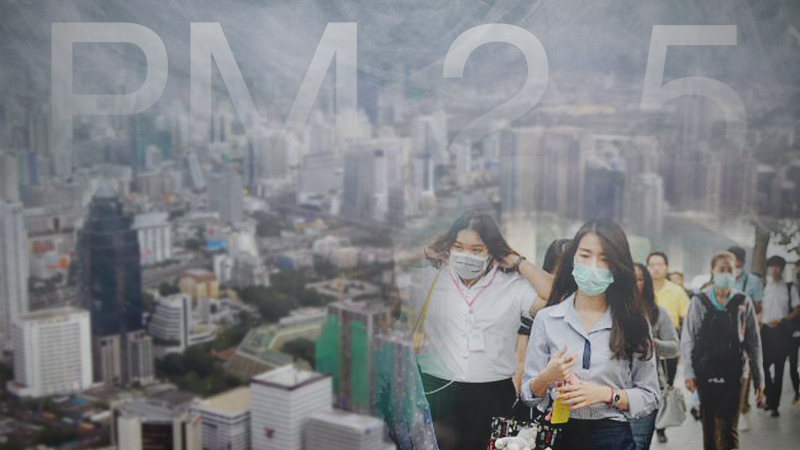
Air pollution in 17 areas around Bangkok and its vicinity hit unsafe levels on Monday morning with PM2.5 readings coming in at 34 to 60 micrograms per cubic metre (μg/m3), the Pollution Control Department reported.
Thailand’s standard for safe levels of PM2.5 (particles less than 2.5 micrometres in diameter) is 50μg/m3.
The 17 areas are:
1. Kanchanaphisek Road, Bang Khun Thian district (52μg/m3)
2. Rama IV Road, Pathumwan district (52μg/m3)
3. Lat Phrao-Chokchai 4 Road, Wang Thonglang district (60μg/m3)
4. Din Daeng Road, Din Daeng district (57μg/m3)
5. Rama III Road, Yannawa district (51μg/m3)
6. Sukhaphiban 5 Road, Sai Mai district (57μg/m3)
7. Nawamin Road, Bang Kapi intersection (52μg/m3)
8. Sihaburanukit Road, Minburi (54μg/m3)
9. Liabwaree Road, Nong Chok district (51μg/m3)
10. Hiran Ruchi subdistrict, Thonburi district (51μg/m3)
11. Paknam subdistrict, Muang district, Samut Prakarn province (52μg/m3)
12. Mahachai subdistrict, Muang district, Samut Sakhon province (54μg/m3)
13. Suan Siam-Ram-Indra intersection, Khan Na Yao district (55μg/m3)
14. Klong Toei subdistrict, Klong Toei district (52μg/m3)
15. Lat Phrao district (52μg/m3)
16. Khlong Kum subdistrict, Bueng Kum district (53μg/m3)
17. Klong Sam Wa district (54μg/m3)
People in areas where PM2.5 pollution is bad have been advised to monitor their health and reduce time spent on outdoor activities, especially the elderly, children, and patients with respiratory diseases.
The atmosphere at the Bangkok Bus Terminal (Chatuchak) or Mo Chit 2 this year is different from previous years due to the new wave of Covid-19. There is none of the usual crowding and throbbing with activity.
People have been gradually returning to the capital from their home provinces since Sunday after a long break to celebrate New Year with their families.
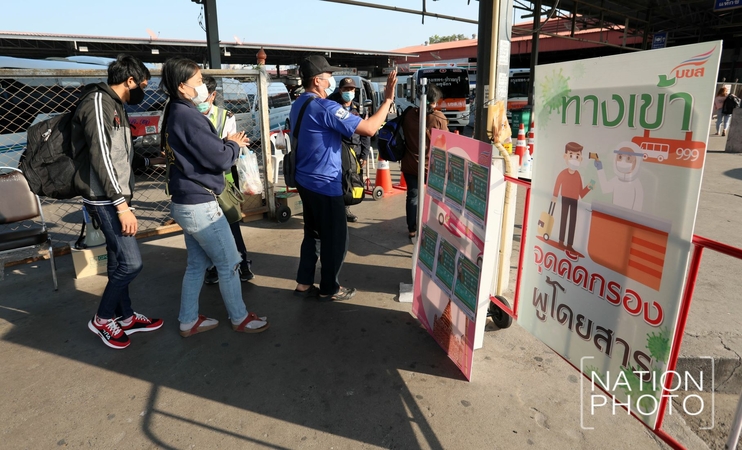
The bus terminals are uncharacteristically quiet. The usual congestion at Mo Chit 2 terminal is missing. People who return or enter Mo Chit 2 bus terminal must check their temperature and get a hand sanitizer to wash their hands.
Transport Co said there would be approximately 65,000-70,000 passengers returning to Bangkok, down 20-30 per cent compared to the previous year. So far, no passenger problems have been reported during the trips and there have been no cases of infections.
The company said it is taking strict measures to prevent the spread of Covid-19 by setting up screening points and providing disinfectant alcohol gel to passengers, registering passengers through the ThaiChana application to keep a record of travel history and speeding up investigations in suspected cases of infections.


 Photos by Charoon Thongnual
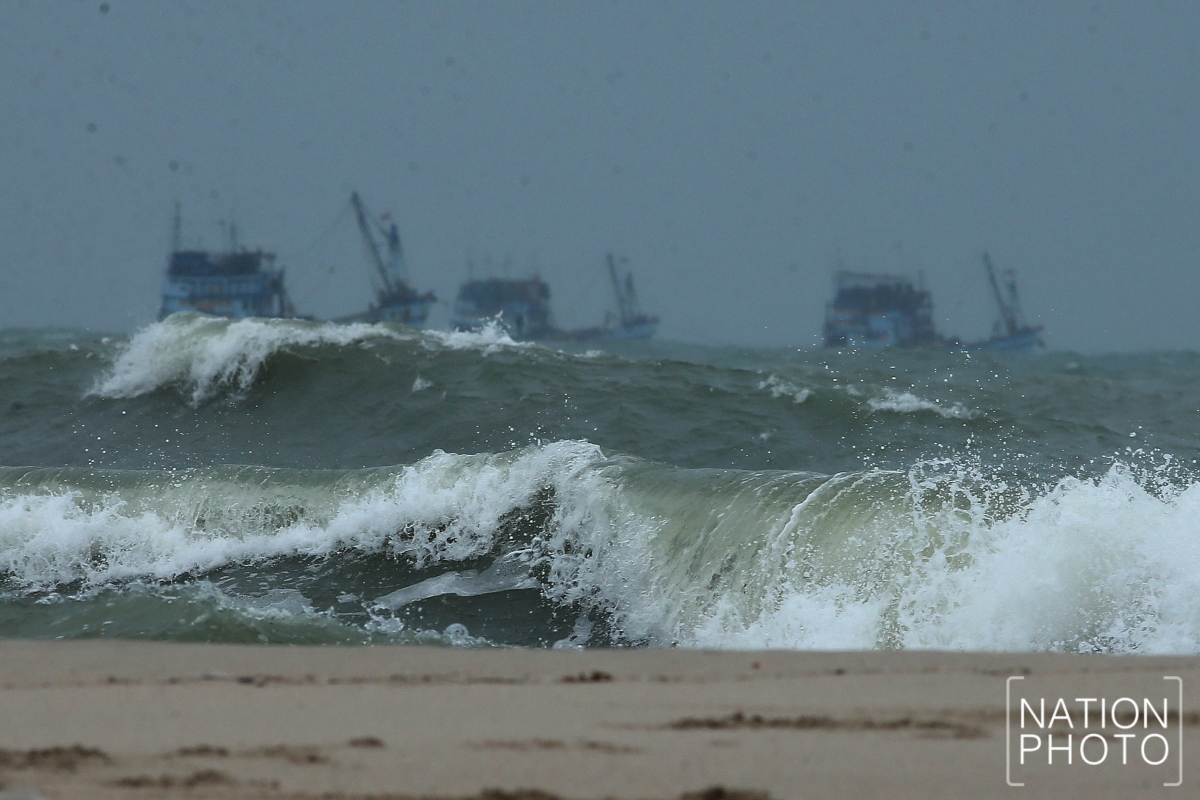
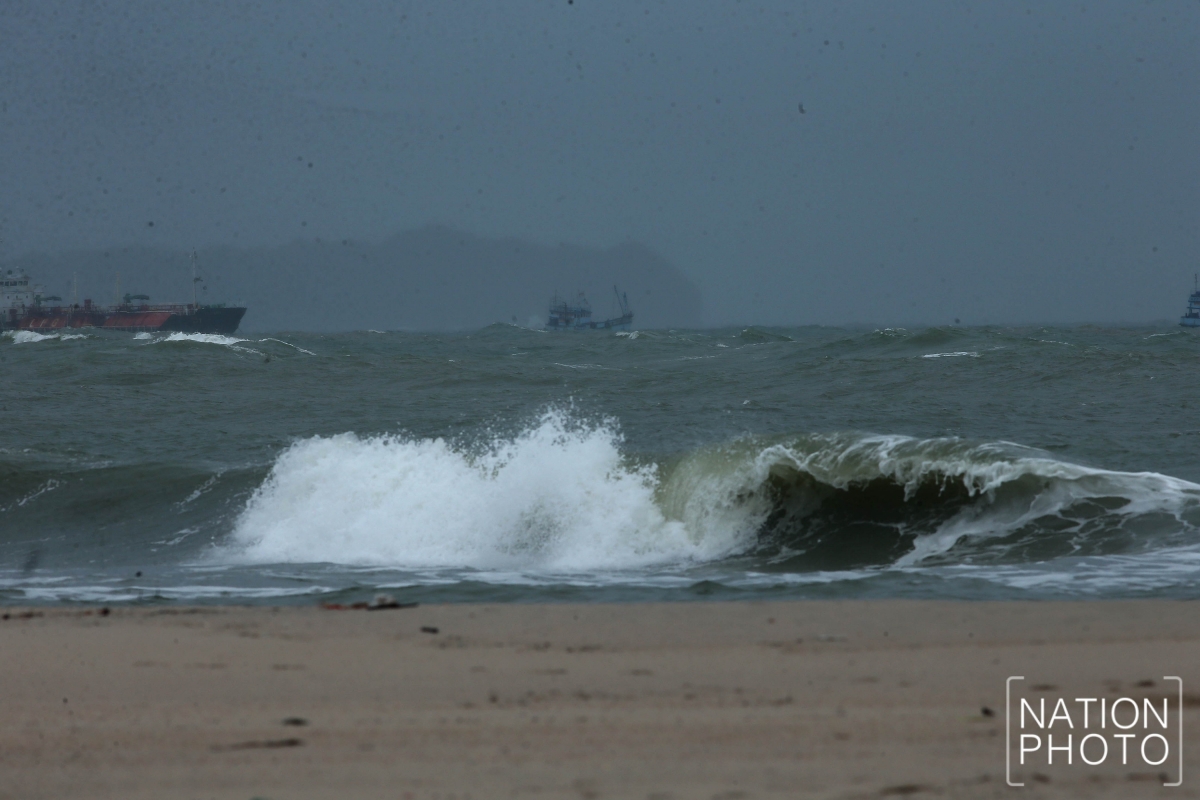
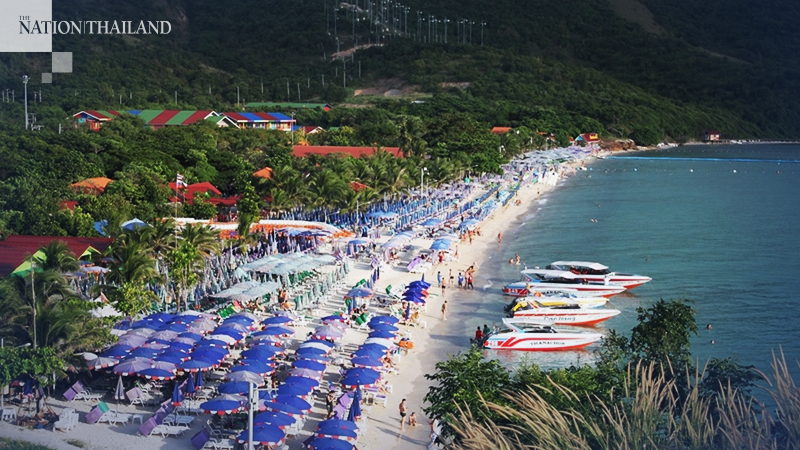
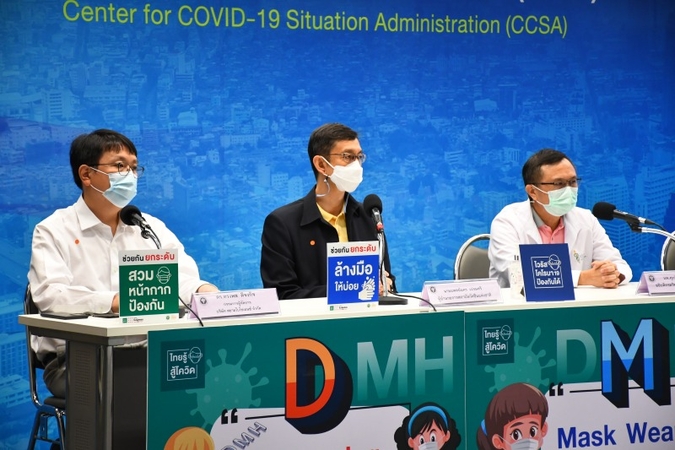 Photo Credit: Public Health Ministry PR