With the government removing travel restrictions at the country’s land borders on May 1, Ranong has witnessed 8,108 people travelling in and out of the province, most being via the Grand Andaman Pier, which provides ferry services to a casino at Grand Andaman Hotel on Myanmar’s Thathay Kyun Island.
Thathay Kyun is called Koh Son by Thais. Besides the casino, the island features hotels, a golf course, restaurants and duty-free shops. People can travel to the island via speed boats, which depart every 30 minutes, from 8am to 11.30pm.
“Many tourists have visited Ranong as a gateway to the casino, helping generate income for local tourism businesses, including hotels, restaurants and public vans,” Ranong Chamber of Commerce president Nit Uitekkheng said on Wednesday. “Meanwhile, the Covid situation in the province is also gradually improving, with more people dining out after disease control measures on establishments were eased.”
Ranong Governor Somkiat Srisanet said this week that 90 per cent of the province’s population had received two shots of vaccine, or more than 470,000 doses.
“To prepare for the transition to the endemic stage of the disease, we aim to provide booster shots to more than 60 per cent of people in risk groups within July,” he said.
“Ranong residents can now walk into any of 46 public hospitals in the province and get vaccinated for free,” he added.
Ministry of Public Health reported on Thursday (June 23) morning that in the past 24 hours there are 2,299 new patients who tested positive for Covid-19, five of whom have arrived in Thailand from abroad.
Death toll increased by 18, while 1,783 patients were cured and allowed to leave hospitals.
Cumulative cases in the country since January 1, 2022 are at 2,283,793.
The country’s total caseload from Covid-19 stands at 4,507,228 – 4,455,035 of whom have recovered, 21,650 are still in hospitals and 30,543 have died.
Separately, another 13,129 people were given their first Covid-19 shot in the last 24 hours, 28,081 their second shot and 78,038 a booster, bringing the total number of Covid-19 vaccine doses administered nationwide to 139,293,613.
According to Worldometer, confirmed cases globally had risen to 546.65 million on Thursday, 522.25 million of whom have recovered, 18.05 million are active cases (36,347 in severe condition) and 6.35 million have died (up by 1,519).
Thailand ranks 26th in the global list of most cases, which is topped by the US with 88.44 million, followed by India with 43.35 million, Brazil with 31.89 million, France with 30.35 million and Germany with 27.45 million.
With Thailand set to host the Apec Summit in less than six months, the Ministry of Foreign Affairs is stepping up its efforts to explain what the mega-event involving 23 economies is all about and how it will impact Thai people’s lives.
Vitaya Saeng-Aroon
The Nation
Khon Kaen’s smart city model was highlighted to make it easier to understand the Asia Pacific Economic Cooperation, at a seminar “Apec Media Focus Group 2022 #4” held on Wednesday at Khon Kaen University International College.
Established in 1989, Apec serves as a major economic platform to promote regional economic integration.
Thailand has prepared a year-long promotion about the summit through events and activities across the country to ensure people will benefit from the series of Apec meetings scheduled to be held in Bangkok, Chiang Mai in the North, Phuket in the South, and Khon Kaen in the Northeast on November 18-19.
The theme of the Thailand-hosted summit is: “Open. Connect. Balance”.
“What is Thailand’s role in Apec?,” Cherdchai Chaivaivid, director-general at the Department of International Economic Affairs and Apec Senior Official at Apec Media Focus Group 2022, asked, and proceeded to answer:
Cherdchai Chaivaivid, Director-General, Department of International Economic Affairs and Thailands Senior Official for Apec
“To give impetus to the development of Apec, Thailand will push the BCG [Bio, Circular, Green] model of growth. In the next six months, Apec will significantly cover issues on food security, women and economy, forest, health, economy and MSME [micro small and medium-sized enterprises] development. But the key is responsibility.
“We will push bio and circular as the main issues in the Apec meeting,” he said.
Charnarong Buristrakoon, president of Khon Kaen Chamber of Commerce, said Khon Kaen province has been turning itself into a smart city. Once it achieves the goal, the province expects to attract people to live and work here.
Charnnarong Buristrakoon, President of Khon Kaen Chamber of Commerce.
“To become a smart economy, we must create things that people would want, then the economy will grow. Without such development, people will move to bigger cities or move out of the country,” he said.
The concept of “smart city” is credited to Boyd Cohen from EADA Business School in Barcelona, Spain. He coined the terms “Smart City Wheel”, comprising six aspects: environment, mobility, people, governance, living, and economy.
In Europe, most countries concentrate on the six aspects to develop a smart city. In China, the country’s priorities centre around environment, economy, governance, people, and infrastructure, while Thailand’s focus is on environment, economy, mobility, energy, people, living, and governance.
Dubbed as the first province in the country to get “smart”, Khon Kaen has seen its business community forming a new business entity in a bid to bring changes to the province, which is strategically situated in the heart of the northeastern economic development plan of the government.
It took two years for Khon Kaen Think Tank (KKTT), with registered capital of 200 million baht, to bring the vision into reality through its networking with local businesses, local government administrative agencies, and the central government.
Khon Kaen has become the first province in the country where the local private sector has led the provincial planning, development, and infrastructure.
However, the province has been experiencing delays in creating new facilities and infrastructure, including the highly anticipated Light Rail Transit System.
“More businesses here will make Khon Kaen a new economy that does not necessarily rely on agriculture, Investing in the light rail will change the economic landscape of the province. People should love to come here, not be forced to come here. Big companies would want to open branches here in Khon Kaen,” said Charnarong.
Charoenlak Phetpradab, secretary-general of Khonkaen For The Future Foundation, which was an inspiration behind the establishment of KKTT, said developing a city is not about going out on the streets and staging protests; there are other ways.
Charoenlak Phetpradab, Secretary-Genaeral, Khonkaen For The Future Foundation
“Our foundation uses three pillars of power: academic, society, and policies to drive changes, what we believe is deliberative democracy,” he said, citing a form of democracy that requires deliberation along with consensus decision-making and majority rule.
The Smart City Model in Khon Kaen is practically driven by Khon Kaen University International College, as a strategic and academic partner. The college has served as a catalyst in research, survey, and directions.
“In the development of a circular economy, we have to make sure that zero waste is in focus at every stage of production,” Assistant Professor Chavis Ketkaew, associate dean for strategy, research, and international affairs, Khon Kaen University International College, said.
Chavis Ketkaew, Associate Dean for Strategy, Research, and International Affairs, Khon Kaen University – International College (KKUIC)
He cited a project on how to manage the waste of fruits like mango. The college’s research found scientific processes in running a so-called Agri-Waste Management Platform to turn mango waste into new products, such as mango seed butter, mango peel paper, and Kombucha leather.
“With the attempt to implement a circular economy, the concept is needed in every part of the supply chain. Fruit or vegetable growers can use a digital platform to find those who want the waste. This way the waste is added with value instead of giving them away as only animal feeds,” Chavis said.
Another factor in drawing people to a smart city is how to manage tourism, Sirimonbhorn Thipsingh, dean of the International College, said, mentioning a survey entitled “How people perceive the image of a smart tourism destination”.
Sirimonbhorn Thipsingh, Dean of Khon Kaen University International College
A research survey titled “Smart Tourism Destination Image and the Influence on Tourist Motivation and Travel Intention” surveyed 389 tourists from Gen Z. The tech-savvy generation said they focus on three areas when making a visit to a province: smart people, smart living, and smart mobility.
“Khon Kaen University has a policy to blend the concept of global citizen into the operation and other parts of the university,” Sirimonbhorn said.
Khon Kaen served 2.92 million visitors in 2020, generating approximately 8.6 billion baht. The province has been selected as one of the country’s centres for being creative for tourism and conferences along with Bangkok, Chiang Mai, Chonburi (Pattaya), and Phuket.
Sa-nga Sattanun, Program Manager, Trade and Investment Facilitation (Mekong Institute)
Sa-nga Sattanun, program manager, Trade and Investment Facilitation at Mekong Institute, said that Khon Kaen has played a vital role in the development of Greater Mekong Sub-Region, as the province is one the country’s leaders of the Northeastern Economic Corridor, or NeEC.
The other three provinces are Nakhon Rachasima, Udon Thani, and Nong Khai.
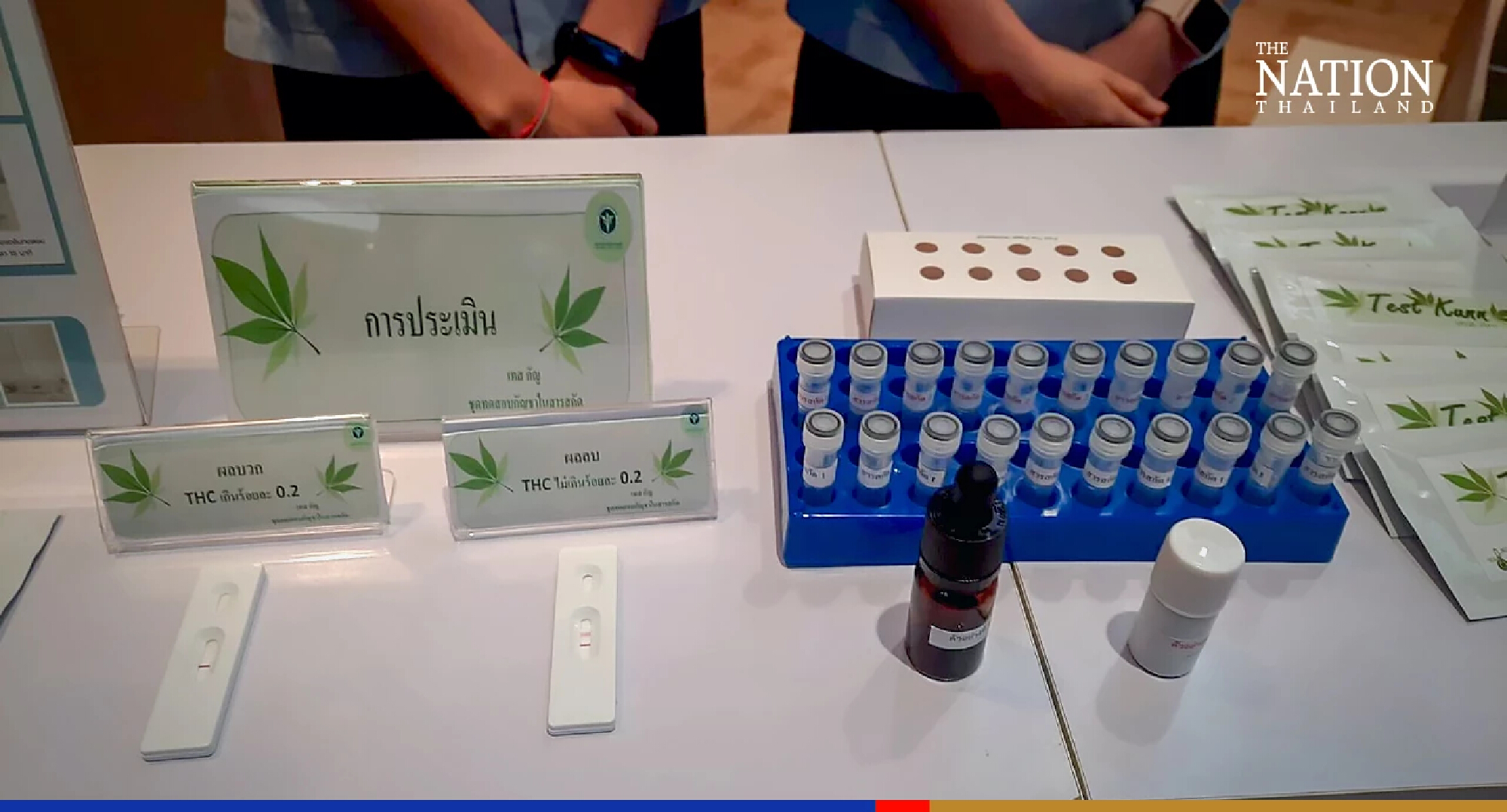
The Department of Medical Sciences aims to offer 15,000 sets of cannabis extract test kits free to enable citizens and entrepreneurs to check whether the cannabis extract in their possession is considered narcotics or not.
Even though cannabis has been legalised for medical and commercial use from June 9, cannabis extract with Tetrahydrocannabinol (THC) more than 0.2 per cent is still considered narcotics.
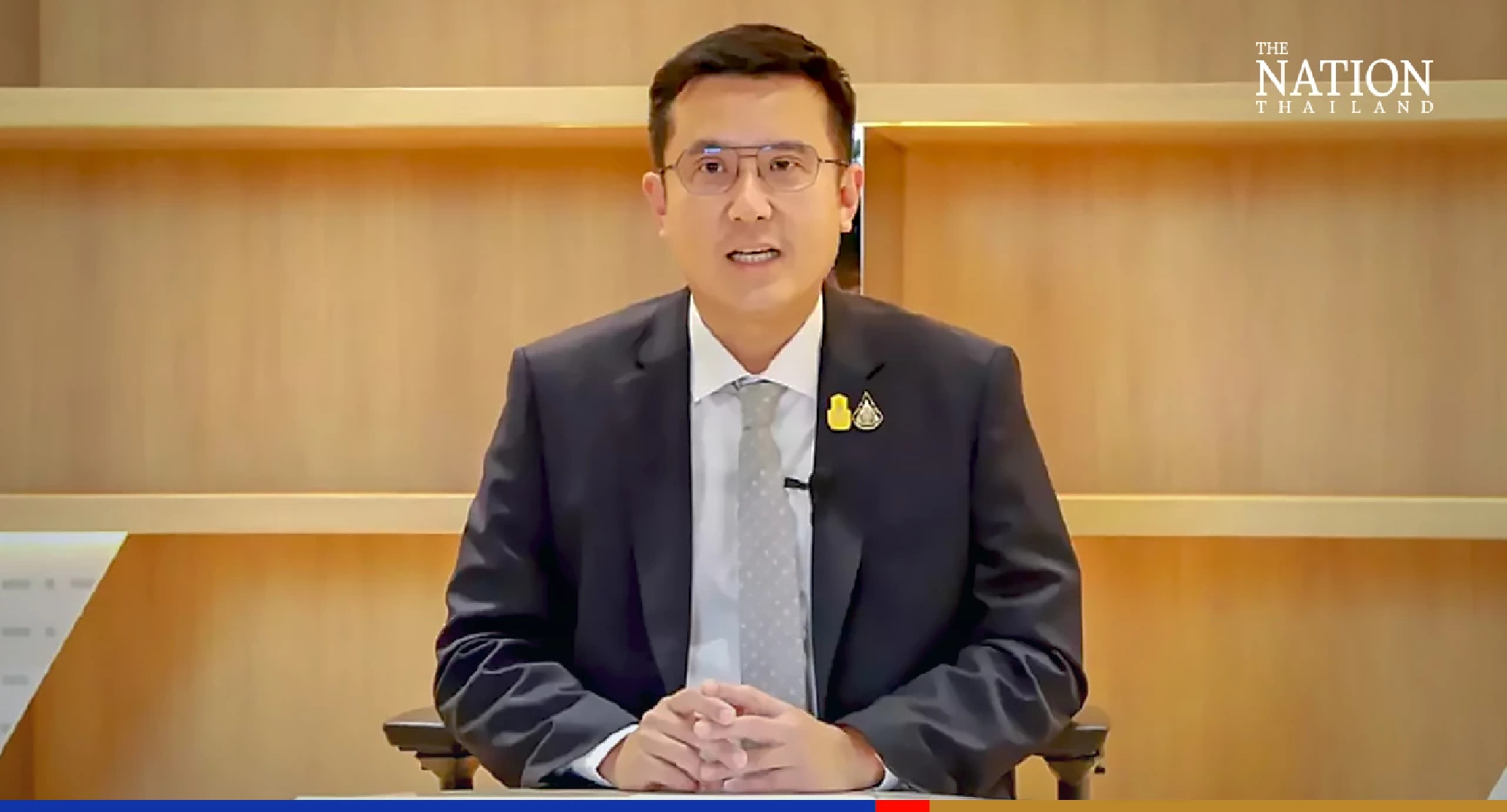
The department’s director-general, Dr Supakit Sirilak, said if cannabis extract has THC more than 0.2 per cent, the extract must be sent to laboratories for further tests.
This move aims to enable people to access cannabis safely, as well as boosting laboratories’ efficiency on cannabis extract verification in medicine, food, beverages and human blood, he said.
He explained that the “Test Kann” kit can provide results within 15 minutes and can be used outdoors similar to the Covid-19 antigen test kit.
Only one red-purple bar will appear on the test kit if THC exceeds 0.2 per cent, while two red-purple bars means THC does not exceed 0.2 per cent, he explained.
He said the department is currently considering which groups of people should receive the free 15,000 sets of test kits and when the giveaway should start.
He added that the department is ready to pass on technology related to the test kit to private organisations, so they will be able to produce the test kits for sale.
The production cost of this test kit is around 100 baht per set, he added.
Thailand’s Deputy Prime Minister Prawit Wongsuwan thanked Cambodia for its help in cracking down on call centre scammers and tackling transnational crime.
Defence Ministry spokesman General Kongcheep Tantravanich said Prawit travelled to Cambodia to participate in the 16th Asean Defence Ministers Meeting (ADMM) on Wednesday in Phnom Penh.
On Tuesday evening, Prawit met with Cambodian Deputy Prime Minister and Defence Minister General Tea Banh at Sokha Phnom Penh hotel.
They talked about how to support and improve the security and safety of people in Thailand and Cambodia, while also discussing how to strengthen Asean unity for increased peace in the region.
Prawit also thanked Cambodia for “taking care” of Thais in Cambodia and boosting border security.
He said Thailand was ready to support and cooperate with Cambodia on a variety of issues, especially military for the “security and peace” of the people of the two countries.
Tea Banh thanked Thailand for supporting Cambodia as the host of the 16th ADMM meeting and for the security between the two countries.
He emphasised that Thailand and Cambodia must cooperate closely to strengthen the region as the world situation was getting more complicated.
Natural Resources and Environment Minister Varawut Silpa-archa is leading a team to Switzerland and Portugal to sign a climate change pact and attend a conference on enhancing ocean preservation in a June 22-July 1 trip.
He said his team will first head to Switzerland to sign a memorandum of understanding to continue development on dealing with climate change.
Thailand and Switzerland will enter into carbon credit trade under Article 6.2 of the Paris Agreement as well, he said.
Varawut confirmed that the Thai private sector will not face losses from carbon credit trading as the Paris Agreement indicated that traders will receive technology or investment which is worth more than the amount of carbon released.
The minister went on to say that the team would subsequently head to Portugal to attend a United Nations’ meeting on ocean preservation, to publicise Thailand’s efforts.
Thailand, he said, had been listed 6th in the world for the amount of plastic waste in its oceans when he took over as Natural Resources and Environment minister.
The country is now ranked 10th, thanks to cooperation from its residents and agencies, he pointed out.
Varawut said the visit to the two European countries would prove the government’s intentions in seriously tackling climate change and acting to preserve the environment.
The Royal Thai Embassy in Jakarta warned Thais not to carry cannabis or hemp into Indonesia as they could face the death penalty.
Thailand’s Public Health Ministry removed cannabis from the list of prohibited narcotics on June 9, allowing it to be used for medical purposes and as a cash crop.
The embassy took to Facebook on Tuesday to warn Thais not to bring into Indonesia cannabis, hemp or any products that use the two crops as ingredients.
According to the embassy’s post, violators can face a fine of at least 1 billion Indonesian rupiah (2.3 million baht), a jail sentence from five years to life imprisonment, or even the death penalty.
The embassy also warned people not to accept things from others when travelling to Indonesia.
Prime Minister Prayut Chan-o-cha has instructed the Public Health Ministry to prepare a contingency plan in case there is resurgence of new Omicron sub-variants of the Covid-19 virus following arrival of European tourists next month.
Government Spokesman Thanakorn Wangboonkongchana said Prayut had told the ministry to monitor the Covid-19 situation in Europe and come up with a plan to cope with increased numbers from Europe after the Thailand Pass registration requirement is lifted from July 1.
Thanakorn said Prayut is concerned about new Omicron sub-variants BA.4 and BA.5, which have significantly increased in several European nations, including Portugal, the United Kingdom, Austria, the Netherlands, France and Germany.
The spokesman said Prayut was worried the tourists could bring the sub-variants of Omicron, which could lead to a new round of outbreak.
The spokesman said data from the GISAID showed that there were 23 BA.4 confirmed cases, 26 BA.5 confirmed cases and 18 BA.2.12.1 confirmed cases in Thailand but the number was not worrying so far, as the state could still control the situation.
The prime minister was quoted as saying that the Covid-19 situation in Thailand has become stable and is improving and the trend would continue if all people cooperate to comply with preventive measures suggested by the Public Health Ministry.
The spokesman quoted Prayut as urging all Thais to join hands to make Thailand safe for local people and arriving foreign tourists.
On Wednesday morning, the Public Health Ministry reported 2,383 new Covid-19 cases were recorded during the previous 24 hours and there were 19 new fatalities.
The Digital Economy and Society (DES) Ministry has announced four organic laws, including one to exempt small-and-medium enterprises and community enterprises from enforcement of the Personal Data Protection Act (PDPA).
DES Minister Chaiwut Thanakhamanusorn said the four organic laws were published in the Royal Gazette on Monday and took effect immediately after they were approved by the Personal Data Protection Committee a week earlier.
The first organic law would exempt SMEs and community enterprises from having to log working records of data controllers.
Chaiwut said the exemption would be applied to the following organisations:
– SMEs and factories that hire no more than 200 workers with an income not exceeding 500 million baht a year or a retail shop or company that hires no more than 100 employees with an income of 300 million baht a year.
– Community enterprises
– Enterprises that work for society
– Cooperatives
– Foundations, associations, religious organisations and NGOs
– Family enterprises or similar businesses.
Chaiwut said the second organic law granted a 180-day grace period for other companies or orgnaisations to make preparations for the enforcement of the PDPA.
Chaiwut said the third organic law set minimum requirements for protecting personal data in line with safety measures announced by the DES Ministry, which have been in use for two years.
He said the minimum safety requirements would not add a big cost burden on private firms.
Chaiwut said the fourth organic law allows a committee of experts to be lenient to companies that are found to violate the PDPA without intention. They could be fined or warned instead of being sent to court for harsher penalties.
He also said the ministry wanted to see minimum obstacles to the enforcement of the PDPA, which began on June 1, so it enacted the four organic laws.
The Personal Data Protection Committee is considering four other PDPA draft organic laws, which may be announced this month, he added but not elaborate.
The Land Transport Department (DLT) is making efforts to help commuters get familiar with new bus numbers after receiving a lot of criticism, DLT director-general Jirut Wisanjit said on Tuesday.
His reaction followed criticism from netizens over the project to tweak bus routes and change bus route numbers, as it was more complex and difficult to remember.
Jirut explained that the decision was in line with the master plan to develop a bus system in Bangkok and its vicinity by King Mongkut’s Institute of Technology Ladkrabang in 2017.
He said the route numbers were separated into four zones based on direction. The first number represents zone while the second number will be route number.
The four zones are:
Zone 1 – Northern (Bangkok North and Northeastern; Phahonyothin Road) Zone 2 – Western (Inner Bangkok and Northwestern) Zone 3 – Eastern (Bangkok Southeastern; Sukhumvit Road) Zone 4 – Southern (Bangkok Southern and Southwestern; Phet Kasem Road)
For example, Bangkok bus No. 8 will change to bus No. 2-38.
Jirut said that the new route number would be beneficial for people to know which area the bus was coming from, even to people who have never used the bus as well as foreign travellers.
The DLT has also told Bangkok Mass Transit Authority and private bus operators to use the old route number alongside the new one for at least a year until users become familiar with the change.
The DLT will also publicise for people to know about this change through buses, stops, and pamphlets.
Moreover, the DLT will utilise technology with an application in the future. It is studying and developing an application to be in line with this change. With a GPS system, users will be able to know where the bus will travel to and how long it will take.


 Cherdchai Chaivaivid, Director-General, Department of International Economic Affairs and Thailands Senior Official for Apec
 Charnnarong Buristrakoon, President of Khon Kaen Chamber of Commerce.
 Charoenlak Phetpradab, Secretary-Genaeral, Khonkaen For The Future Foundation
 Chavis Ketkaew, Associate Dean for Strategy, Research, and International Affairs, Khon Kaen University – International College (KKUIC)
 Sirimonbhorn Thipsingh, Dean of Khon Kaen University International College
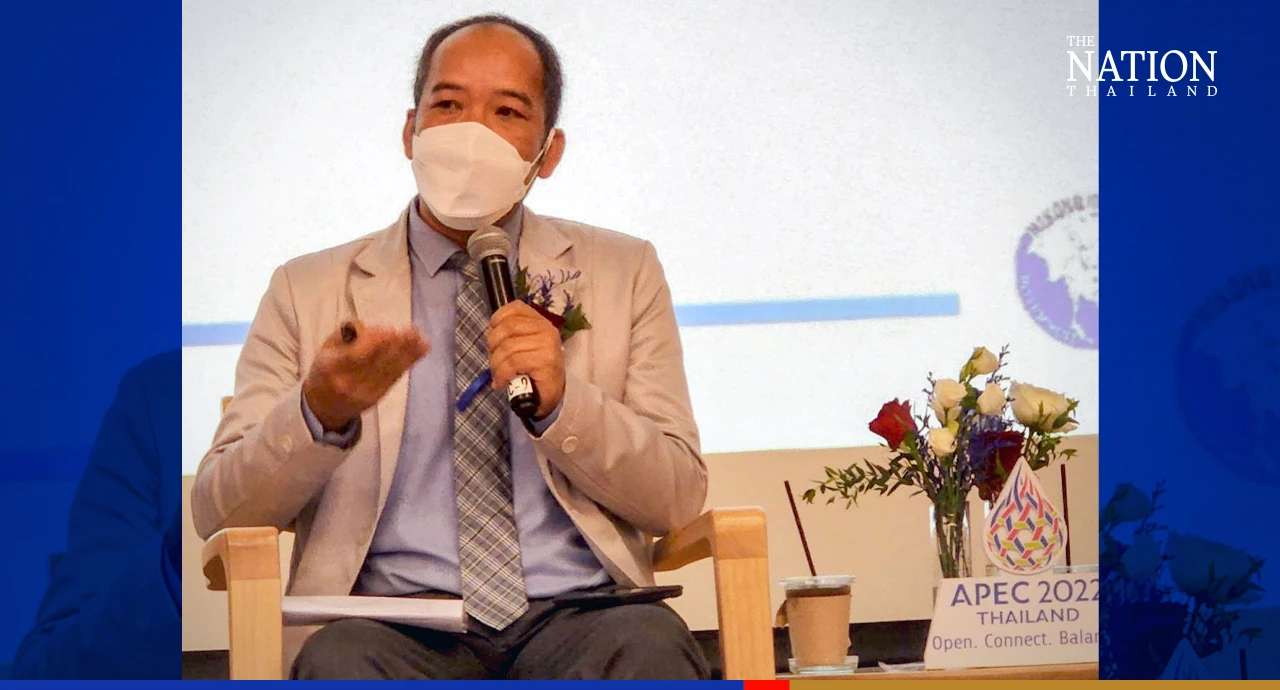 Sa-nga Sattanun, Program Manager, Trade and Investment Facilitation (Mekong Institute)