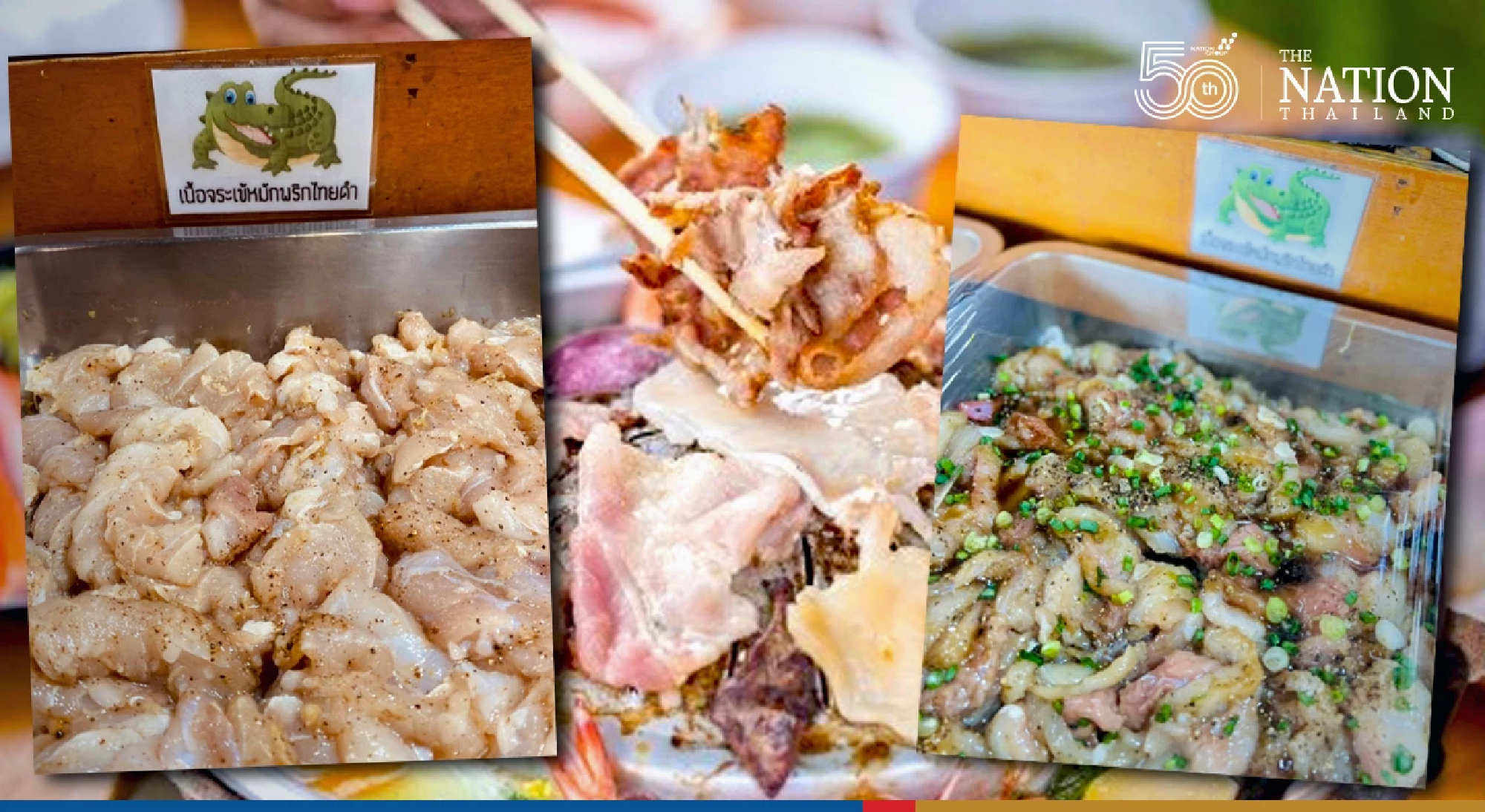
In response to the soaring price of pork, a Nakhon Pathom shabu-shabu restaurant has come up with a new menu offering crocodile meat – a deal that is grabbing a lot of attention on social media.
The owner of Tidmor Moo Kratha Buffet on Buddhamonthon 5 Road in Nakhon Pathom’s Samphran district said she has been offering crocodile meat for two weeks now and it has proved to be very popular.
In fact, she said, the demand is so high that she has upped her daily purchase from seven kilos to 25kg. This is because she opts for tail meat, which is soft with a little fat and tastes like pork.
Apart from being used as a shabu-shabu ingredient, the crocodile meat is also used for several other dishes, including meat sauteed with garlic and “larb”, a traditional Northeast spicy dish made with minced meat.
Yet, despite the soaring prices, the restaurant also offers pork in the 168 baht, all-you-can-eat shabu-shabu buffet.
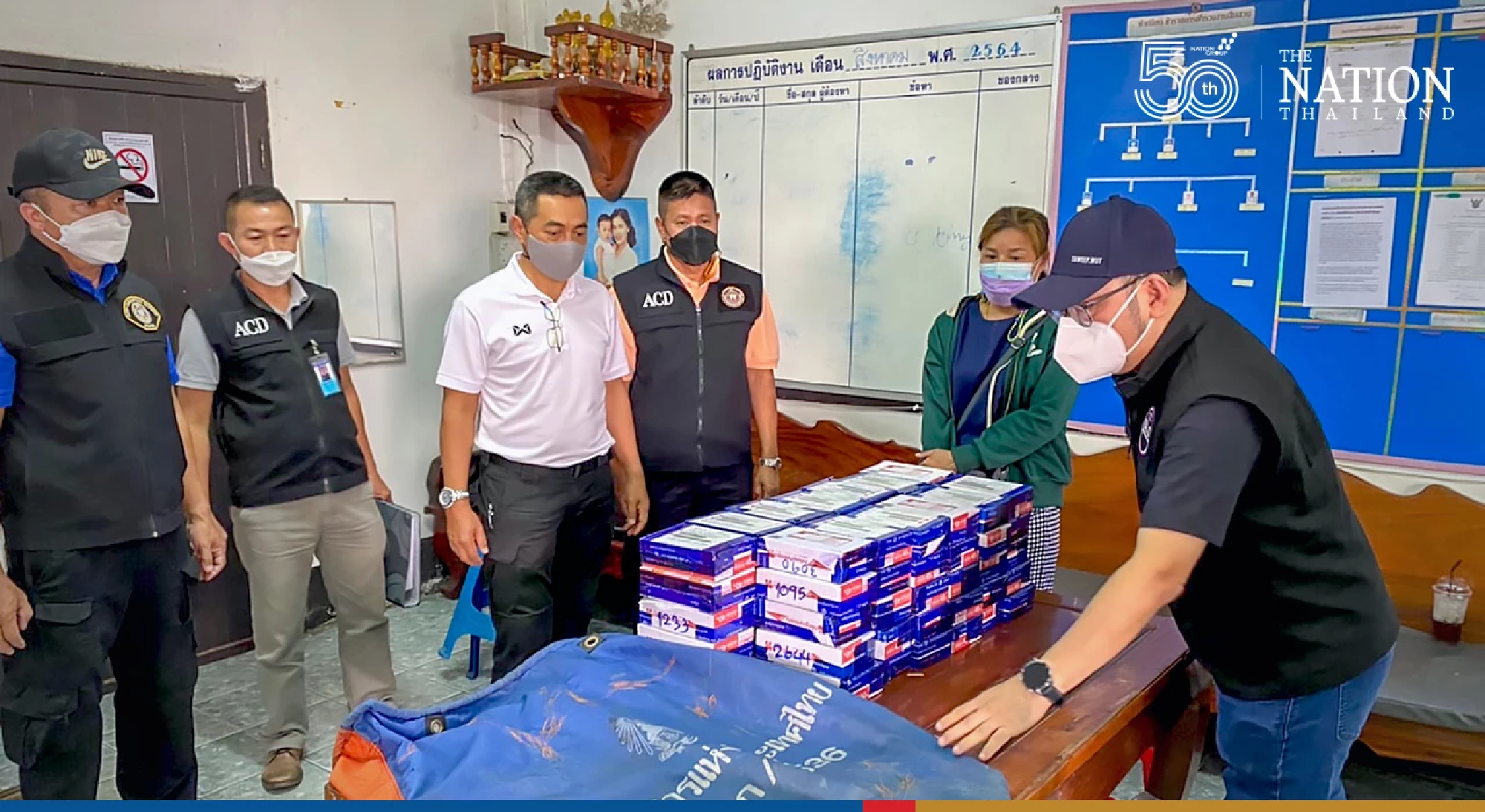
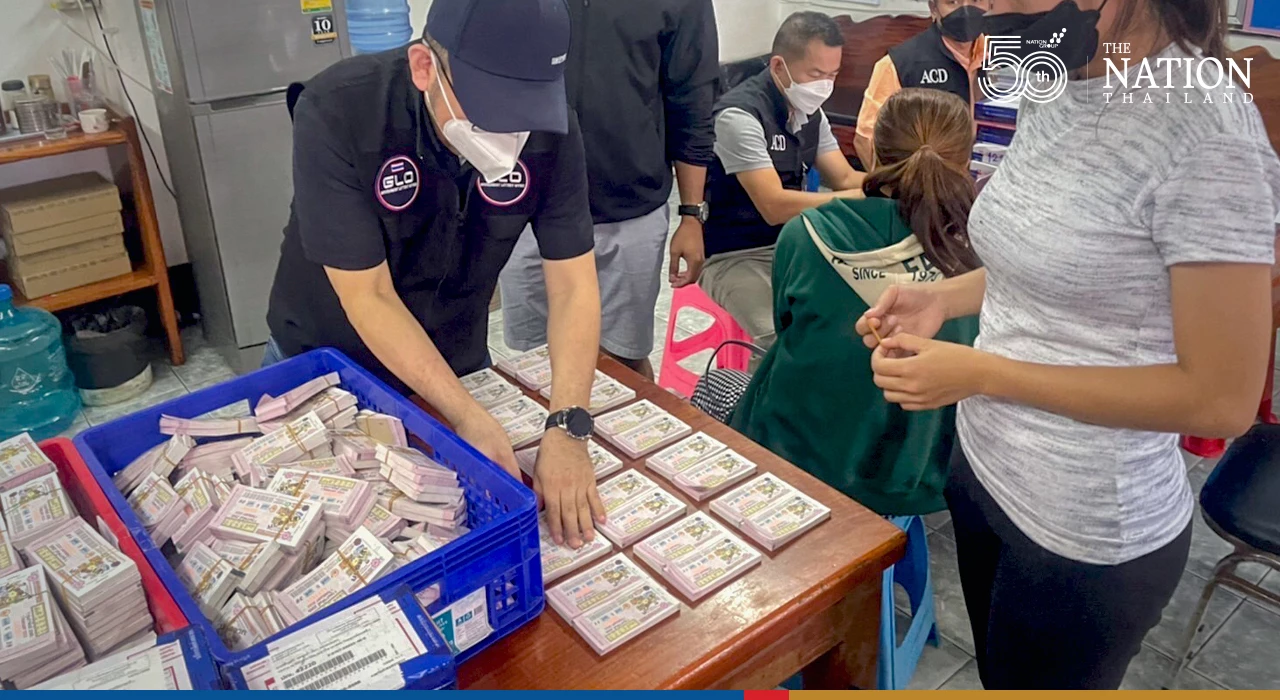
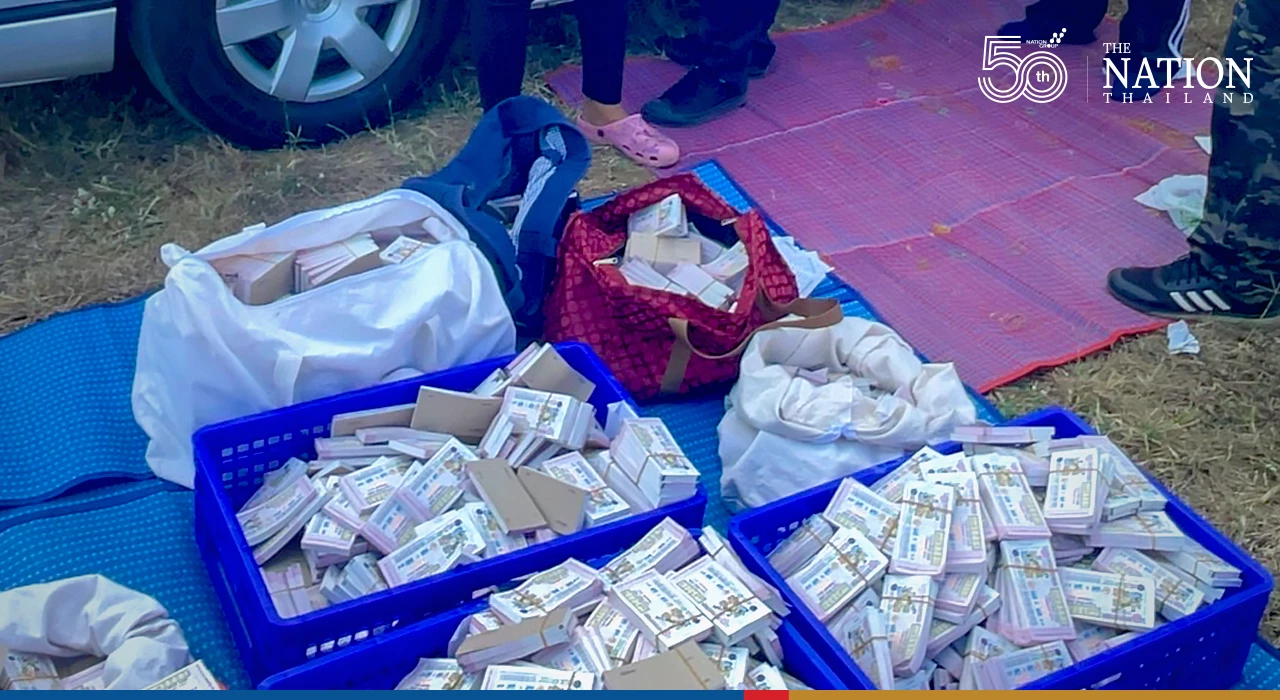
Three lottery sellers were nabbed on Thursday in Loei’s Erawan district for allegedly moving 200,000 unregistered lottery tickets worth over 20 million baht.
The arrest came after someone filed a complaint saying a group of lottery sellers was cooperating with postal workers to jack up the price of lottery tickets, the Anti-Corruption Division’s chief Pol Maj-General Jaroonkiat Pankaew said.
The first team of police officers and officials from the Government Lottery Office arrested Chaisit, 32, and Paweena, 26, (last names withheld) behind the Erawan Thailand Post Office. The team also found more than 200 boxes containing lottery tickets inside a silver-grey Toyota van.
“Another team arrested Kanya, 43, [last name withheld] at the Bangchak petrol station,” Jaroonkiat said. “They found 65 boxes of lottery tickets inside a bronze-coloured Mitsubishi Pajero SUV.”
The suspects have reportedly pleaded guilty, saying Erawan postal worker Pairoj (last name withheld) and his accomplices helped them smuggle lottery tickets.
“The suspects also claimed that they had to pay postal workers an extra 100 baht per unregistered box,” he added.
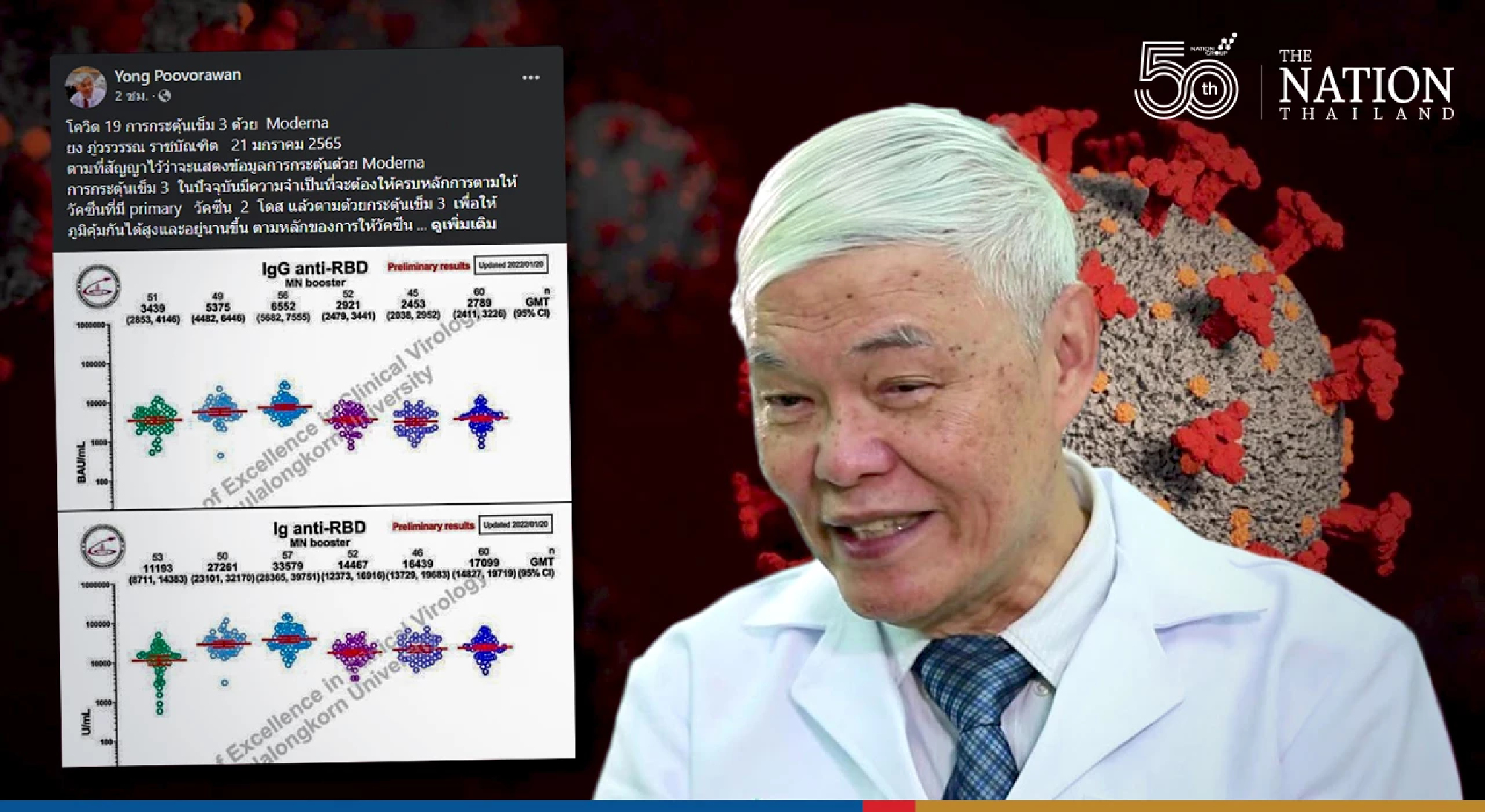
In a Facebook post on Thursday, expert virologist Dr Yong Poovorawan said that many people have been asking how many Covid-19 shots are necessary for protection against the novel coronavirus.
“Some people are so concerned that they have already had five jabs – the first two Sinovac, followed by one AstraZeneca and then two Moderna shots,” Yong said. “The jab recipients claim Sinovac should not be counted as an effective vaccine because it offers significantly low immunity against the virus.
“In reality, getting vaccinated to boost immunity is like filling a container with water,” Yong said. “A container can only hold a certain amount of liquid based on its capacity. Adding more water after it has been filled is only wasteful.
“To stay safe from Covid-19, getting the first two jabs is mandatory. After an appropriate time, the recipient should get a booster shot to keep their immunity high,” Yong said. “One should not get a fourth or fifth shot too soon, as the immunity built by the third shot has not reduced and the additional doses will be a waste.”
Yong added that the fourth shot should only be taken three to six months after the third shot, and if it is an mRNA vaccine, then a six-month waiting period is recommended.
“Though there is no such thing as a vaccine overdose, vaccines can still have adverse side effects,” Yong added.
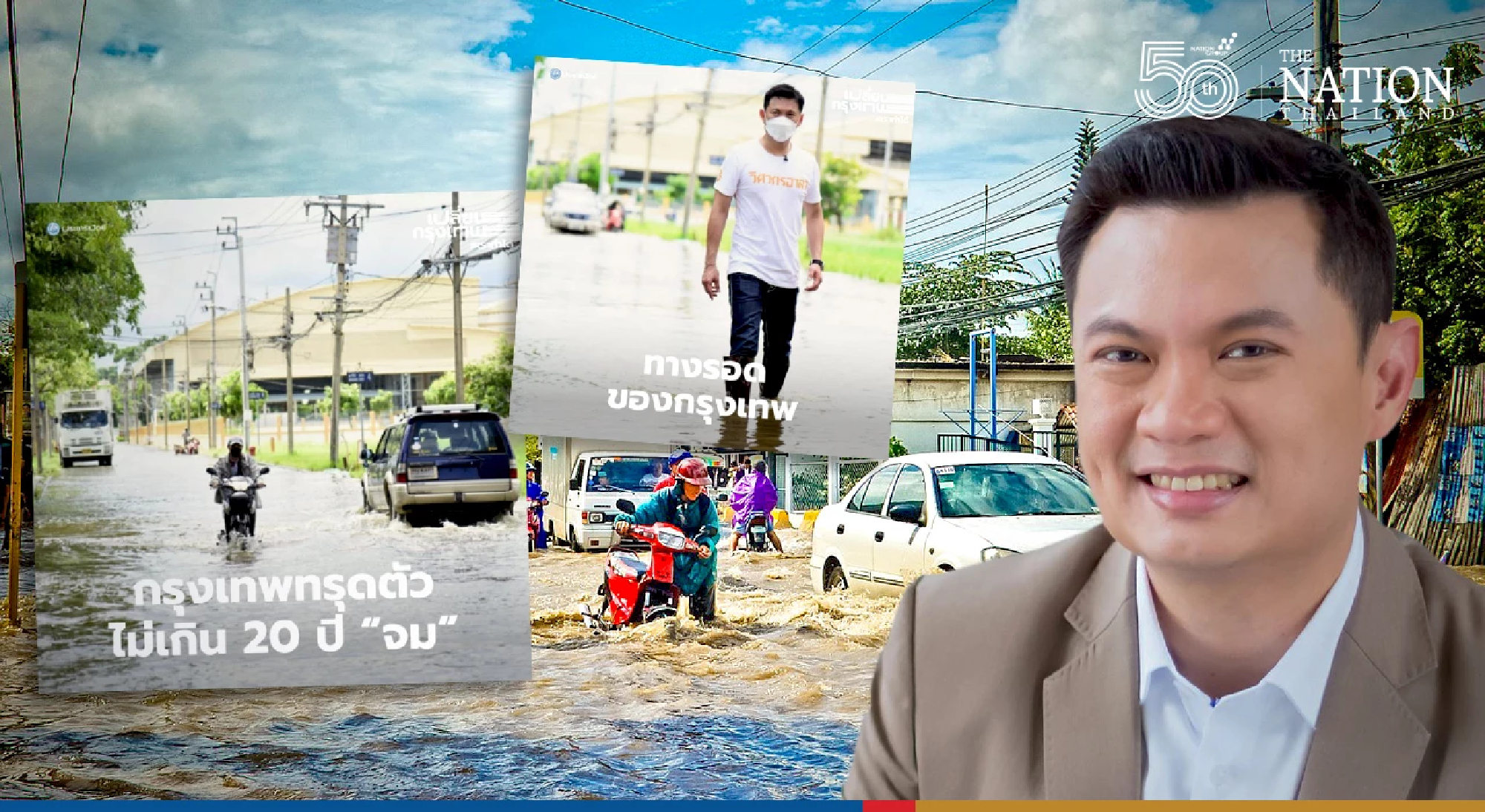
Gubernatorial candidate Suchatvee Suwansawas said in a Facebook post on Thursday that he has no plans to shift the country’s capital to avoid floods that have been plaguing Bangkok for decades.
Suchatvee, former president of King Mongkut’s Institute of Technology Ladkrabang, is running for the Bangkok governor’s position under the Democrat Party’s banner.
“I have learned that Indonesia is planning to move the capital from Jakarta to an East Kalimantan province to avoid the yearly flooding problem. The new capital will be called ‘Nusantara’,” he said. “I will not criticise Indonesia’s move because I believe their government has studied this issue thoroughly.
“However, this news made me think of Bangkok, which suffers similar problems,” he said. “If we don’t do anything now, it may be too late for our capital.
“Bangkok is my home and I have no plans to move the capital elsewhere,” he pointed out. “The flooding problem is on top of my agenda, and that’s why I have decided to run as a governor. I believe we can fix Bangkok’s flooding problem without having to move away.”
The Bangkok gubernatorial elections are expected to be held this year, though the exact date is yet to be announced by the Election Commission.
Though a Bangkok governor’s term lasts no more than four years, the incumbent – Pol General Aswin Kwanmuang – has been in office since October 18, 2016. Gubernatorial elections have been pushed back indefinitely due to the Covid-19 outbreak and political rallies.
Netizens on Thursday were amazed by images from Phayao’s Phu Kamyao district showing roads covered in what looks like a dusting of snow after the area was bombarded by a hailstorm, leaving a layer of crushed ice on the ground.
Though many netizens compared the scene to something out of a Hollywood film, many others put the storm down to climate change, which may signify the end of the world is nigh.
The Thailand Meteorological Department said on Thursday that the westerly trough had moved through the North and upper Central Thailand, forecasting thundershowers, gusty winds and hailstorms. It also warned people to stay indoors and avoid large trees and unsecured billboards.
Phayao local Som Boonjaroen, 59, said that apart from several roads being covered with ice, a tree and power pole knocked down by the storm were now blocking the Padaed-Phukamyao Road near his house. He called on relevant authorities to remove the obstacles immediately so traffic can be restored.
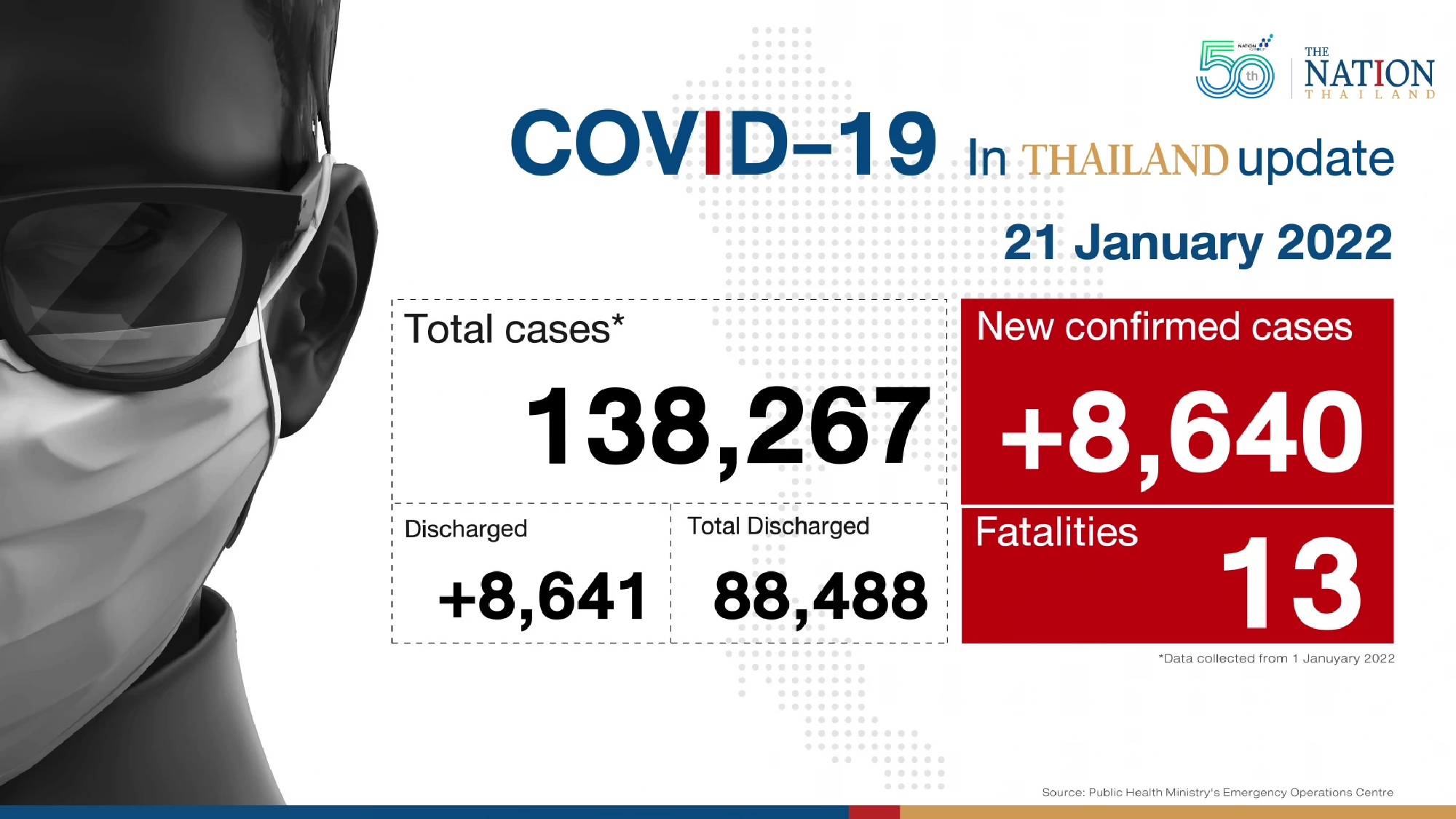
Ministry of Public Health reported on Friday (January 21) morning that in the past 24 hours there are 8,640 new patients who tested positive for Covid-19, 195 of whom have arrived in Thailand from abroad.
Death toll increased by 13, while 8,641 patients were cured and allowed to leave hospitals.
The country’s total caseload from Covid-19 stands at 2,361,702 – 2,256,982 of whom have recovered, 82,720 are still in hospitals and 22,000 have died.
Separately, another 46,078 people were given their first Covid-19 shot in the last 24 hours, 110,971 their second shot and 366,041 a booster, bringing the total number of Covid-19 vaccine doses administered nationwide to 111,323,026.
According to Worldometer, confirmed cases globally had risen to 343.27 million on Friday, 276.42 million of whom have recovered, 61.26 million are active cases (95,913 in severe condition) and 5.59 million have died (up by 9,084).
Thailand ranks 26th in the global list of most cases, which is topped by the US with 70.54 million, followed by India with 38.56 million, Brazil with 23.59 million, the UK with 15.61 million and France with 15.6 million.
The Thailand Meteorological Department said on Friday (January 21) that the westerly trough moves through the North, the Northeast, the Central and the East. Thundershowers, gusty winds and hails are likely in these areas. People should beware of the severe condition by keeping off outdoor places, big trees and unsecured billboards. Farmers should prevent for crop damage.
Meanwhile, the weak high pressure-system covers the South China Sea while the weak northeast monsoon prevails over the Gulf and the South, bringing isolated thundershowers to the South.
The weather forecast for the next 24 hours is as follows:
North: Cool to cold weather with thundershowers in 60 per cent of the areas, gusty winds and hails; temperature lows of 15-20 degrees and highs of 25-29 degrees Celsius. Temperature on hilltops is likely to drop to 7-14 degrees Celsius.
Northeast: Cool weather with thundershowers in 40 per cent of the areas, gusty winds and hails; temperature lows of 16-20 degrees and highs of 26-32 degrees Celsius. Temperature on hilltops is likely to drop to 10-15 degrees Celsius.
Central: Cool weather in the morning with thundershowers in 30 per cent of the areas and gusty winds; temperature lows of 20-22 degrees, highs of 27-30 degrees Celsius.
East: Cool weather in the morning with thundershowers in 40 per cent of the areas and gusty winds; temperature lows of 20-23 degrees, highs of 29-31 degrees Celsius; waves less than a meter high and about a meter high offshore.
South (east coast): Partly cloudy with thundershowers in 10 per cent of the areas; temperature lows of 21-24 degrees, highs of 28-33 degrees Celsius; waves a meter high and 1-2 meters high during thundershowers.
South (west coast): Partly cloudy with isolated light rains; temperature lows of 22-25 degrees, highs of 33-35 degrees Celsius; waves less than a meter high and about a meter high offshore.
Bangkok and surrounding areas: Thundershowers in 30 per cent of the areas and gusty winds; temperature lows of 21-24 degrees, highs of 30-31 degrees Celsius.
The Public Health Ministry’s controlled drugs committee on Thursday approved the removal of cannabis from the list of illicit drugs.
The revised Narcotics Code in force since January 9 no longer has cannabis and hemp on it, but people have been arrested for growing marijuana.
The panel meeting, chaired by Public Health Ministry deputy permanent secretary Dr Thongchai Keeratihatthayakon, agreed to remove marijuana from the Category 5 narcotics list.
The decision will be referred to the Office of the Narcotics Control Board, which is chaired by Prime Minister Prayut Chan-o-cha, for approval. If approved at the board’s next meeting on January 25, the change will be stated in an annoucement to be signed by Public Health Minister Anutin Charnvirakul.
The announcement is expected to exclude cannabis from the list of illicit drugs, except the cannabidiol extracts with tetrahydrocannabinol of more than 0.2 per cent, Food and Drug Administration secretary-general Dr Paisarn Dunkum said.
He added that the legal exemption applies only to cannabis grown in the country.
Panthep Pongpuapan, a specialist in herbal plants, said he expected additional measures to restrict the use of marijuana in the future, similar to cigarettes and alcoholic drinks.
#SootinClaimon.Com : ขอบคุณแหล่งข้อมูล : หนังสือพิมพ์ The Nation.
A political scientist of Thammasat University sees the expulsion of a group of 21 Palang Pracharat Party MPs as a sign of rift that could land Prime Minister General Prayut Chan-o-cha in hot waters.
Dr. Charupol Ruangsuwan from the Faculty of Political Science Thammasat University said Prayut would eventually have to dissolve the House before a censure showdown in the House.
Charupol was commenting on the decision of the Palang Pracharath’s executive board on Wednesday to expel the party’s former secretary-general Thamanat Prompow and 20 other MPs from the party.
Although a party source said the move was just a tactic to allow the 21 MPs to stay in the new New Economics Party while they would still be a part of the coalition, some observers see it as a sign of severe rifts between Prayut and Thamanat.
Prayut had earlier removed Thamanat from his Cabinet, suspecting the Phayao MP of trying to engineer his ouster in a no-confidence debate.
Charupol said if the rifts, as perceived by political observers, were true the new party of Thamanat would not support Prayut in Parliament and would pressure the prime minister to consider dissolving the House.
Prayut said on Thursday that he had no intention of dissolving the House as the government had yet to enact key legislation.
Charupol said that without support from the 21 MPs, the government would have to try its best to buy time and stay in office for as long as possible.
The lecturer said although the government would definitely want to complete its term, the expulsion of the 21 Palang Pracharat MPs could be a crucial factor for the government to plan its game accordingly.
“If the government can last until the next censure debate, which may be held around the middle of the year, the coalition will be in a very risky situation by then,” Charupol said.
He explained that the situation could be very volatile as both sides in the House would lobby hard for MPs to sway support.
“Anything can happen in politics,” Charupol said.
By that time, Prayut may have to think about whether to dissolve the House before a censure motion is submitted against him or he will have to risk losing the censure vote, the lecturer added.
“The prime minister cannot afford to lose a censure vote. If he sees the likelihood of losing a no-confidence vote, House dissolution will be a better choice,” Charupol said.
“In this scenario, the prime minister may dissolve the House around the middle of the year and call a general election within this year.”
But if the expulsion of the group of MPs is just a tactic for MPs to move to another party, the government would stay until the end of its term or whenever the coalition sees it is ready to contest the next election, Charupol said.
But the lecturer pointed to a report that Watcharawat Wongsuwan, a brother of Deputy Prime Minister Prawit Wongsuwan, would be an adviser of the Thai Economy Party.
Charupol said if it were true, Watcharawat’s presence in the new party could be a sign of rifts between Prayut and Prawit, two of three key generals in the previous coup.
“If that happens as reported, we may witness a conflict between the two generals, Charupol concluded.
Israel’s ambassador-designate, Ms. Orna Sagiv, visited the offices of The Nation and Krungthep Turakij, seeking cooperation and providing information to the editorial teams regarding opportunities to explore a vast array of Israeli expertise in startups and technology, among others.
The delegation was accompanied by Ariel Seidman, the embassy’s charge d’affaires, and welcomed by The Nation’s Managing Editor Vitaya Saeng-Aroon and Krungthep Turakij’s Managing Editor Weerasak Pongaksorn.
Sagiv said the embassy wished to work closely with media representatives and foster a good relationship with Thailand through social contribution programmes and other activities.
Last year, the embassy donated 1,000 survival bags filled with dry food. With assistance from the office of Nakhon Ratchasima’s governor and local administrators, the delegation helped distribute the survival bags to families severely affected by floods.
Israel and Thailand have had close cooperation in various fields, including knowledge exchange, agriculture technology, water management. Israel also expects to sign a free trade agreement with Thailand.
Before the Covid-19 outbreak at the end of 2019, Israelis topped the total number of tourists from the Middle East visiting Thailand.
The Nation is undergoing a rebranding process aimed at providing more diverse digital content to meet the changing needs of its audience.
Sagiv graduated in diplomacy and defence from Tel Aviv University in Israel. Before being designated to Thailand last year, she served her country’s diplomatic missions in Taiwan, China, Australia, New Zealand, and India.
Photo caption: Israel’s delegation led by ambassador-designate Orna Sagiv visits the offices of The Nation and Krungthep Turakij.